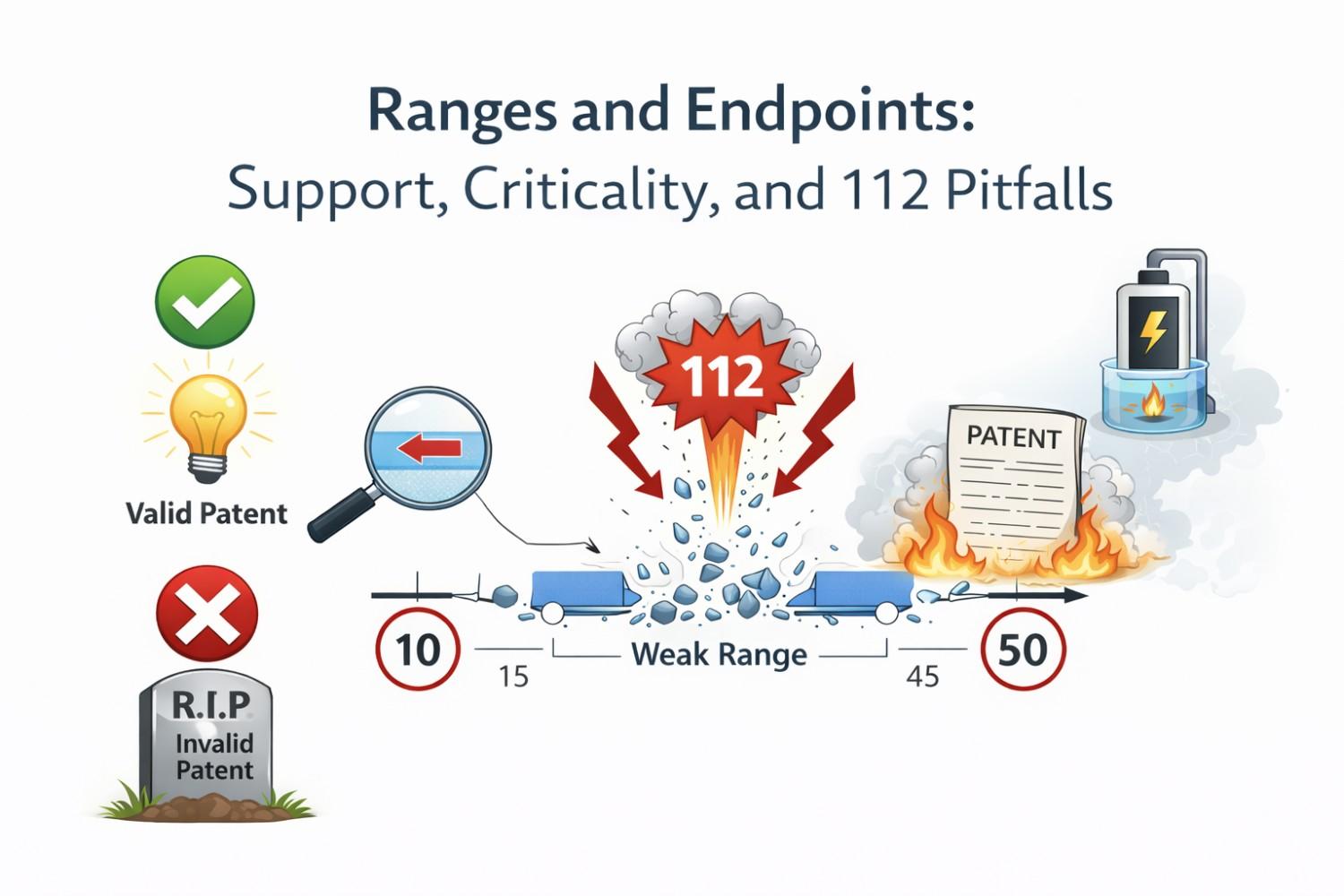
If you are building real tech, ranges will show up in your patent. Voltage ranges. Data size ranges. Time ranges. Threshold ranges. And this is where many strong inventions quietly break. Most founders do not lose patents because their idea is weak. They lose them because a single number, or the edge of a range, was not written the right way. Section 112 of U.S. patent law is ruthless about this. It does not care how smart the invention is. It only cares about what the patent actually supports. This article will show you how ranges really work, why endpoints matter more than you think, how courts attack them, and how to write them so they hold up. No fluff. No legal fog. Just clear guidance you can use.
Why Ranges Quietly Decide Whether a Patent Lives or Dies
Ranges look harmless. They feel like filler. Many founders treat them as background details that simply describe how their system behaves. In reality, ranges are often the first thing an examiner, judge, or competitor attacks.
They are quiet, technical, and easy to misunderstand, which makes them dangerous. This section explains why ranges carry so much weight and how businesses can use them as a strength instead of a hidden risk.
Ranges Are Where Examiners Look First When Claims Feel Broad
When a patent claim feels wide, the examiner does not argue philosophy. They go hunting for weak spots. Ranges are the easiest target because they appear precise but often lack real support underneath.
If you claim a system works between two numbers, the examiner immediately asks a simple question. Does the description truly explain how the system works across that entire span?
If the answer is unclear, the claim becomes fragile. Many rejections start here, even if the invention itself is strong.
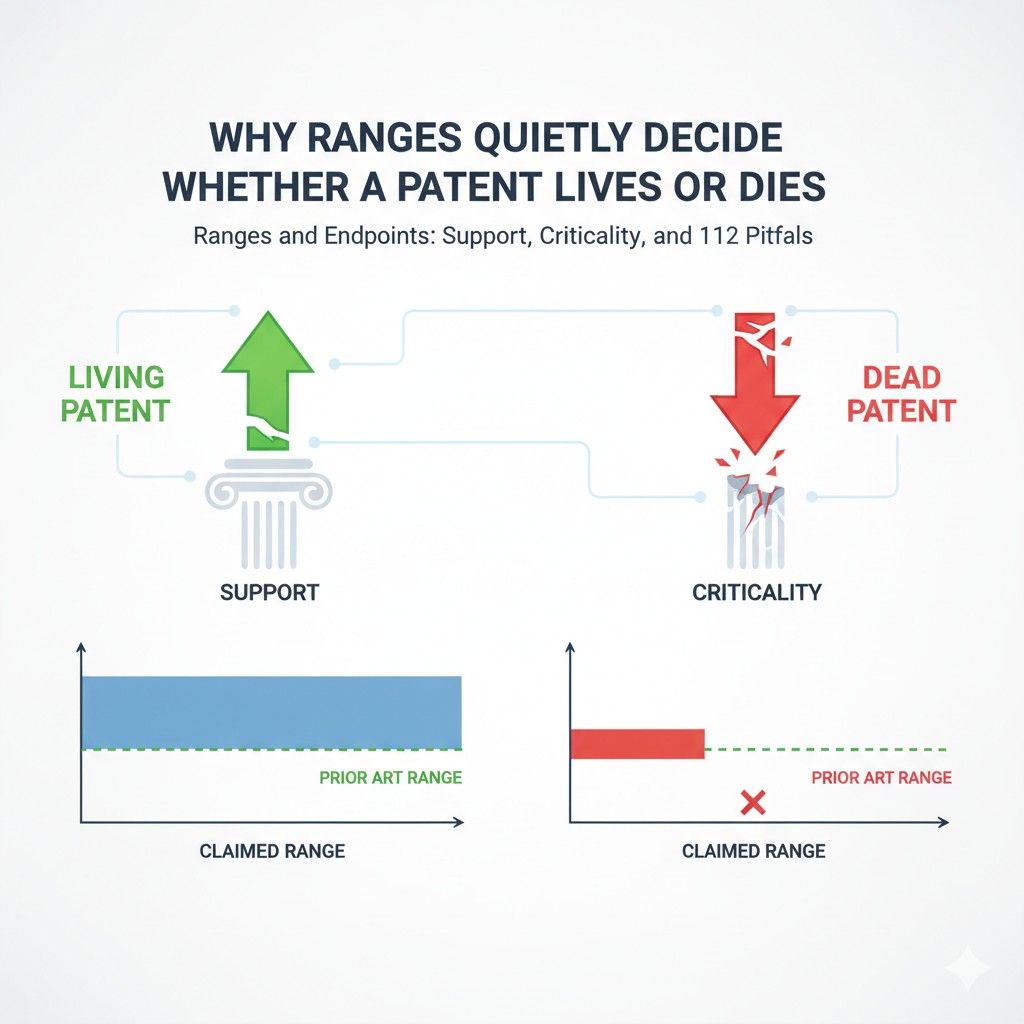
For businesses, this means ranges are not neutral. They actively shape how broad your protection can be. A poorly supported range can shrink your claim without you realizing it.
Ranges Often Decide Whether Competitors Can Design Around You
Competitors do not read patents the way founders do. They scan for gaps. A range with weak edges gives them an easy exit.
If your claim says a value is between A and B, and your description barely talks about A or B, a competitor can safely build just outside one edge and sleep well at night.
Strong patents force competitors into uncomfortable choices. Weak ranges hand them a roadmap. This is why ranges quietly decide market control long after filing.
From a business view, ranges should be chosen with real-world competition in mind, not just technical accuracy.
Numbers Feel Concrete but Courts Treat Them With Suspicion
Founders trust numbers because numbers feel factual. Courts do not share that trust. A number in a claim is not proof. It is a promise that the inventor actually knew how the invention behaved at that value.
If your patent says a system works at a lower bound, the court expects the patent to show real understanding at that point. If all examples cluster in the middle of the range, the endpoints start to look invented after the fact.
This is why many patents fail years later, not during filing. The danger stays hidden until enforcement.
Ranges Create Implied Claims You May Not Notice
Every range quietly creates many sub-claims in the reader’s mind. If you say between 1 and 100, you are implying 2 to 50, 10 to 90, and countless others. Courts know this. Examiners know this. Competitors know this.
If your description only supports one narrow slice, the rest becomes vulnerable. The law treats unsupported implied claims as overreach.
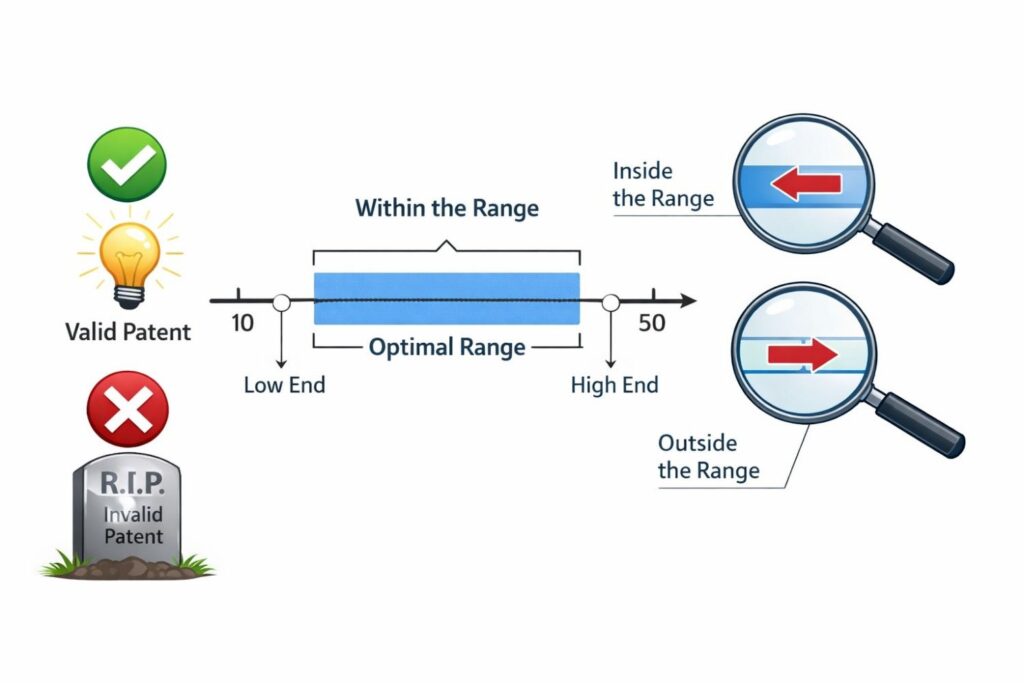
Businesses should treat every range as a bundle of promises, not a single line of text.
Business Reality Often Changes Faster Than Patent Text
Startups evolve. Products pivot. Performance improves. What felt like a safe range at filing may later become a liability if your real product lives near an endpoint you barely explained.
This is one of the most common traps for fast-moving teams. They file early, guess at ranges, and later discover their commercial product sits right where the patent is weakest.
Smart range drafting anticipates future scaling, not just current prototypes.
Ranges Are Interpreted Through the Story of the Invention
Courts do not read ranges in isolation. They read them through the story told in the patent. If the story focuses on stability, safety, or efficiency in a narrow zone, wide ranges start to look suspicious.
This means ranges must align with the narrative of why the invention works. Randomly wide ranges without explanation break trust.
For businesses, this means your technical story and your claim language must feel consistent to an outsider.
Ranges Can Trigger Section 112 Without Warning
Section 112 is not about bad faith. It is about clarity and support. A range can trigger a rejection even if everything else in the patent is solid.
The most painful part is that 112 issues often appear late. They surface during enforcement or litigation, when fixes are no longer possible.
Founders should think of 112 not as a filing hurdle but as a long-term risk multiplier.
The Middle of the Range Is Not Enough
Many patents describe only the sweet spot where the system performs best. The assumption is that the rest is obvious. The law does not reward that assumption.
If the patent does not explain why performance degrades, changes, or still works near the edges, those edges are weak. Silence is not neutral. Silence is a red flag.
From a strategy view, you should decide which parts of the range you truly want to defend and make sure the description supports them.
Ranges Shape Claim Construction Years Later
When disputes arise, judges must interpret what your range really means. They rely heavily on the description. Vague language leads to narrow interpretations.
A range that once looked broad on paper can collapse into a thin slice during claim construction. At that point, the business impact is immediate and often irreversible.
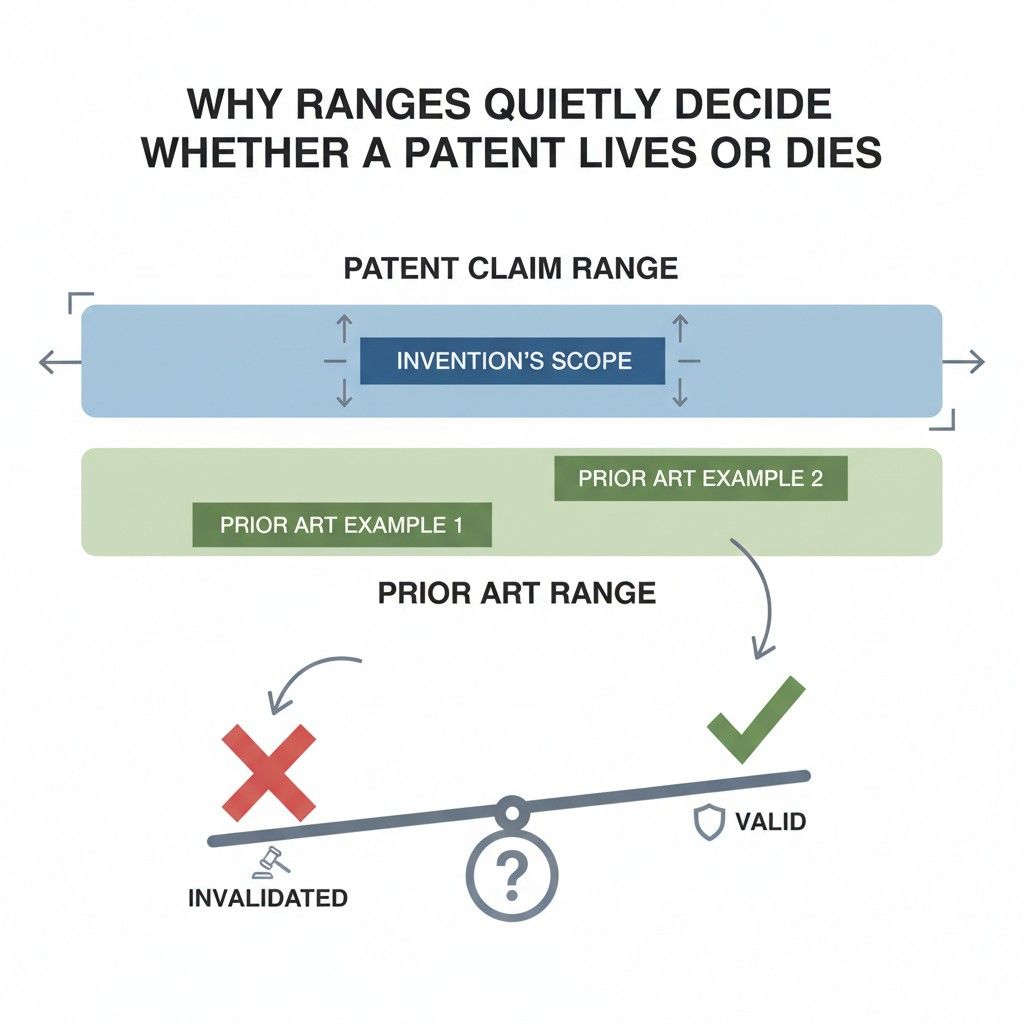
Strong ranges give judges confidence. Weak ones invite narrowing.
Ranges Are One of the Few Places Where Precision Hurts You
In most engineering work, precision is good. In patent drafting, precision without explanation can be deadly.
A specific endpoint invites scrutiny. Why that number? Why not slightly more or less? If the patent does not answer this, the endpoint looks arbitrary.
The lesson is not to avoid precision, but to justify it clearly in plain language.
How Smart Businesses Think About Ranges Early
Strong companies treat range drafting as a product decision, not a paperwork task. They ask where competitors might push. They think about future versions. They consider regulatory and performance limits.
They also understand that ranges should grow from real data, not guesses. Even rough testing across a span can dramatically strengthen support.
This mindset turns ranges from a weakness into a moat.
Ranges Are a Silent Signal of Patent Quality
Examiners and judges subconsciously use ranges as a quality signal. Well-explained ranges suggest real invention. Sloppy ones suggest rushed filing.
That signal affects everything from how hard an examiner pushes back to how a court views credibility.
For founders, this means range quality affects outcomes far beyond the numbers themselves.
Using Ranges to Control How Broad Your Protection Feels
Ranges are one of the few tools that let you control perceived breadth without sounding aggressive. A thoughtfully supported range can cover wide ground while still feeling reasonable.
This is especially powerful for software, hardware, and systems patents where exact limits evolve over time.
The key is alignment between what you claim and what you teach.
The Cost of Fixing Range Mistakes Is Always Higher Later
You can fix many patent issues during drafting. You cannot fix unsupported ranges once filed. Continuations help, but only if the original description supports them.
This makes early decisions about ranges far more important than they appear.
From a business cost view, time spent here saves massive expense later.
Where PowerPatent Helps Founders Avoid These Traps
Most founders are not trained to think like examiners or litigators. PowerPatent is built to surface these issues early, while fixes are still cheap and easy.
By combining smart software with real attorney review, founders get feedback on whether ranges actually hold up, not just whether they sound good.
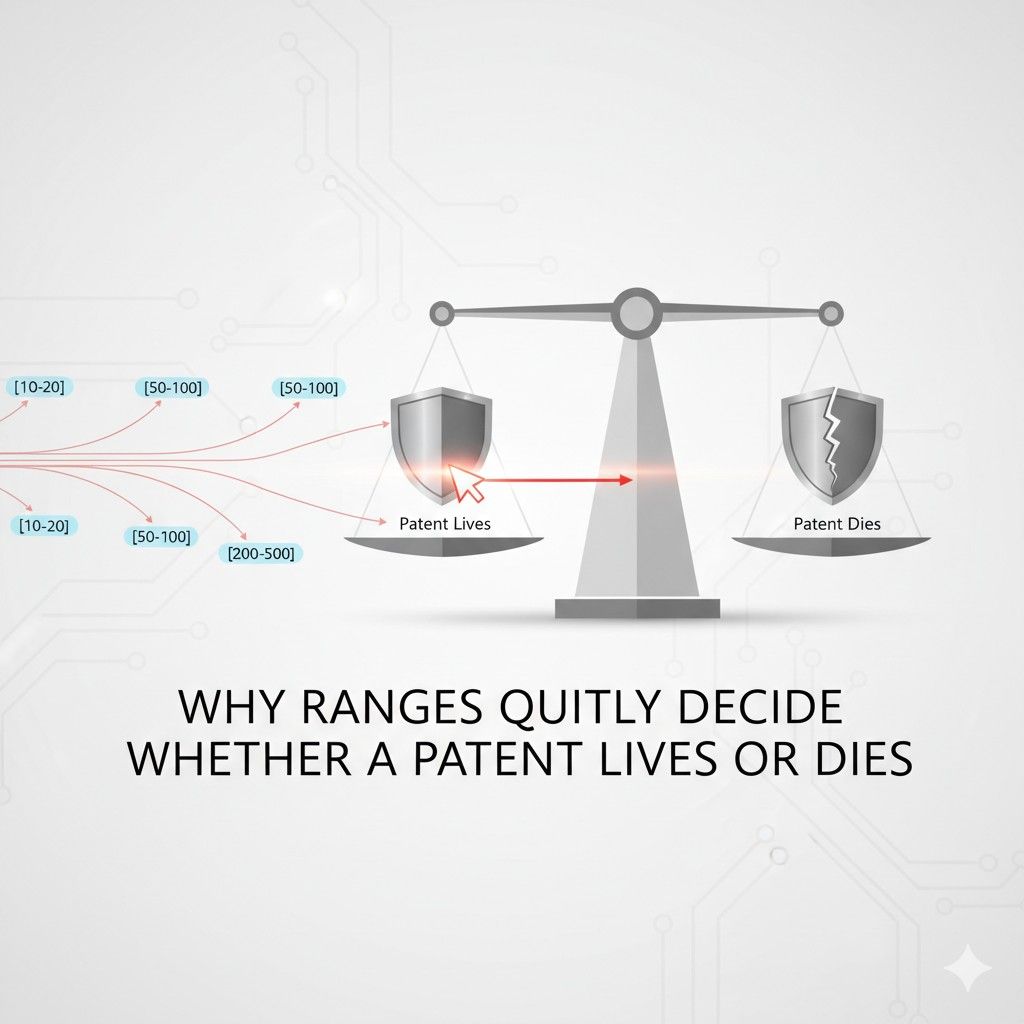
If you want to see how this works in practice, you can explore the process here: https://powerpatent.com/how-it-works
Endpoints Are Not Small Details — They Are the Invention
Endpoints do not just describe limits. They reveal how deeply the inventor understood the problem. Courts, examiners, and competitors treat them as proof of real knowledge.
This section expands on why endpoints often matter more than the rest of the claim and how businesses can use them to lock in real protection instead of accidental weakness.
Endpoints Reveal Whether the Invention Was Discovered or Just Described
An invention that was truly built leaves fingerprints at its edges. The inventor knows what happens when things are pushed too far or pulled too tight. When a patent explains those moments, it feels real.
When endpoints appear without explanation, they feel copied or guessed. That difference matters. Courts assume real inventors understand failure modes. If the patent avoids them, credibility drops.
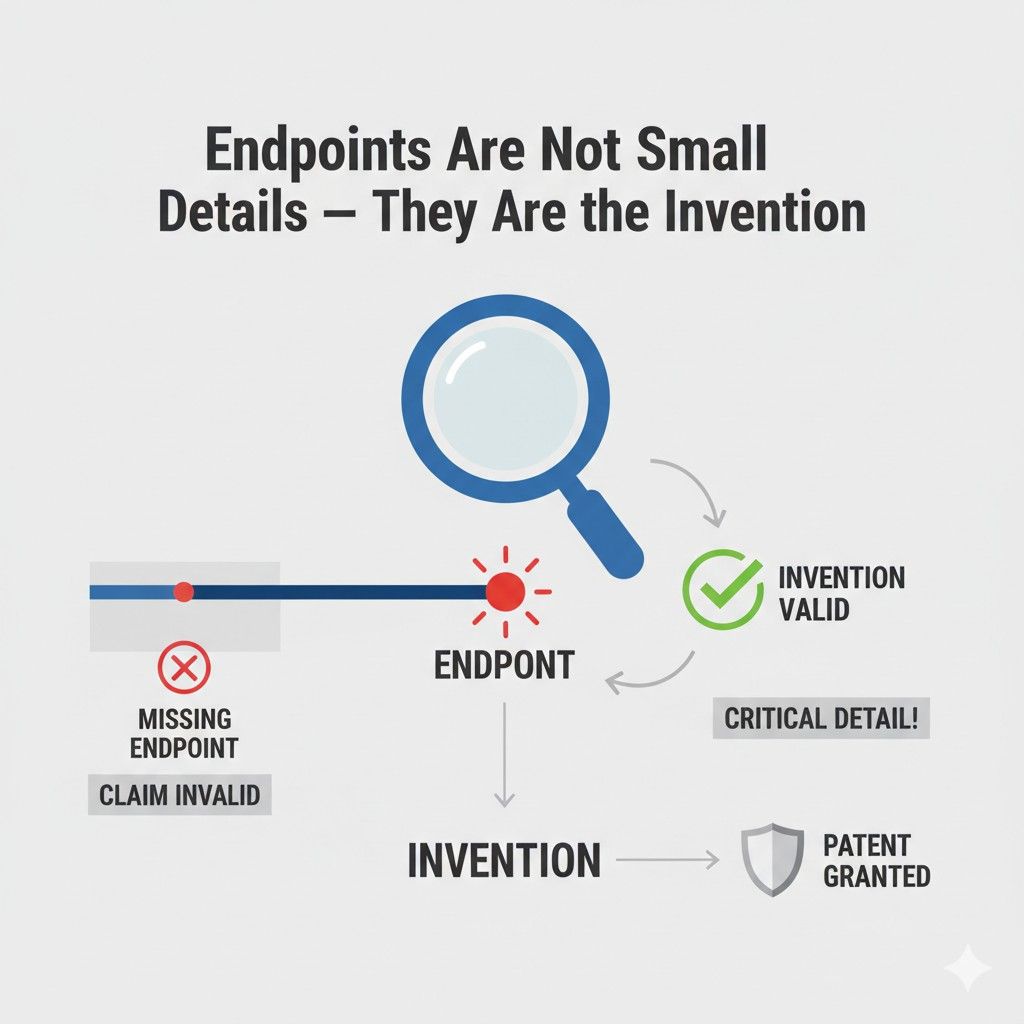
For businesses, this means endpoint explanations are evidence of invention, not filler.
Endpoints Are Where Assumptions Get Exposed
Many patents quietly rely on assumptions. That an algorithm still converges. That a signal remains stable. That performance does not collapse. These assumptions often hold in the middle and break at the edge.
Endpoints force those assumptions into the open. If the patent does not explain why the assumption still holds, the endpoint becomes vulnerable.
Strong patents do not hide assumptions. They frame them and explain their limits.
Endpoints Convert Engineering Judgment Into Legal Protection
Engineers constantly make judgment calls. This value is too slow. That size is too large. This delay is unacceptable. Endpoints are where those judgments live in the patent.
If those judgments are not written down, the law cannot protect them. The endpoint becomes just a number instead of a decision.
Businesses that capture engineering judgment at endpoints protect more than implementation. They protect intent.
Endpoints Are Often the First Thing a Judge Reads Closely
Judges do not have time to read every line with equal care. They focus on pressure points. Endpoints are one of them.
They ask whether the inventor really understood the full scope being claimed. Endpoints answer that question quickly.
A clear explanation builds trust early. A vague one creates skepticism that colors the rest of the case.
Endpoints Define What the Inventor Chose Not to Claim
Every endpoint is also a line the inventor refused to cross. That refusal must make sense.
If a patent claims up to a value but never explains why it stops there, the line feels artificial. Courts prefer boundaries tied to function, not convenience.
For businesses, this means endpoints should reflect deliberate tradeoffs, not drafting habits.
Endpoints Control How Broad the Claim Feels Without Sounding Aggressive
A claim can feel reasonable and still be broad if its endpoints are well explained. The explanation does the work that aggressive language cannot.
This is especially important in crowded fields. Clear endpoints reduce examiner resistance while preserving scope.
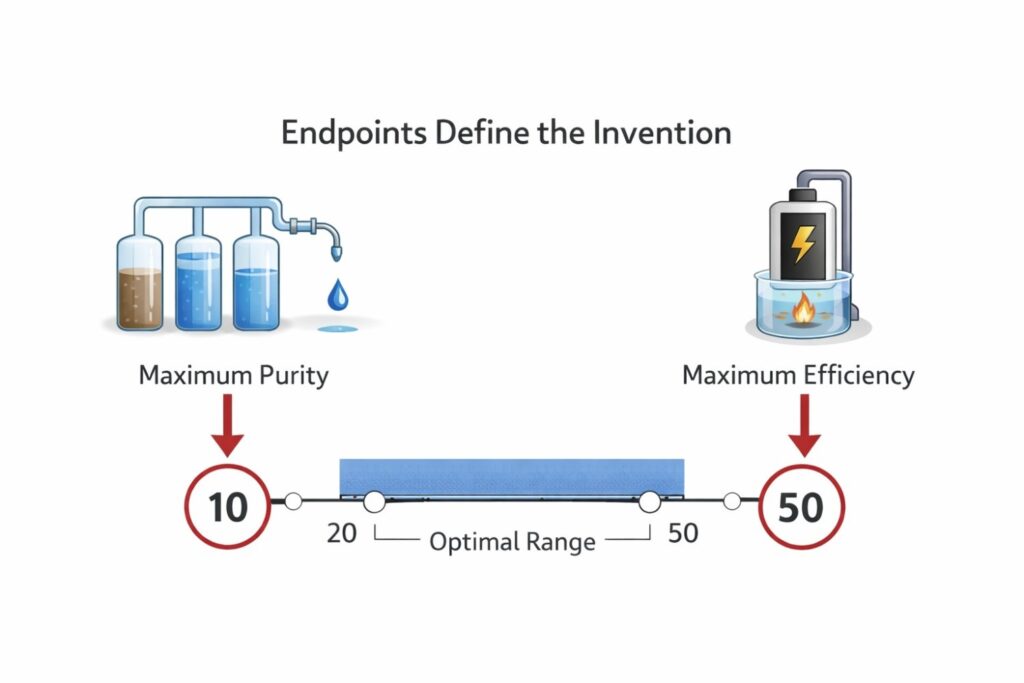
It is one of the few ways to be both broad and believable.
Endpoints Are Where Enablement Quietly Breaks Down
Enablement requires that the patent teach how to make and use the invention across the full claim scope. Endpoints are where teaching often stops.
If the description never explains how behavior changes near the boundary, enablement becomes questionable even if the middle is well taught.
This is why some patents survive novelty attacks but fail under Section 112.
Endpoints Must Be Supported Even If They Are Rarely Used
Founders often argue that nobody will operate at the edge anyway. Courts do not care.
If the claim covers it, the patent must support it. Frequency of use is irrelevant.
Businesses should only claim endpoints they are willing to explain and defend.
Endpoints Are Stronger When Tied to Physical or Logical Consequences
An endpoint backed by cause and effect is hard to attack. Something overheats. Latency crosses a human tolerance. Memory usage exceeds a system limit.
These explanations turn endpoints into natural laws of the invention.
Abstract endpoints without consequences look arbitrary and invite attack.
Endpoints Are Where Overclaiming Becomes Obvious
Overclaiming is easiest to spot at the edges. The middle often feels reasonable. The extremes reveal ambition without support.
Courts are sensitive to this. They narrow claims to match what feels earned.
For businesses, conservative endpoints with strong explanation often protect more than aggressive ones that collapse.
Endpoints Can Quietly Shift Claim Interpretation Years Later
Even if an endpoint survives examination, it may be reinterpreted later. Judges look back to the description to decide what the endpoint really means.
If the description is thin, the endpoint shrinks. If it is rich, the endpoint holds.
This delayed effect is why endpoint drafting is a long-term business decision.
Endpoints Are Where Software and Hardware Patents Diverge
Software endpoints often rely on human perception, system load, or abstract thresholds. Hardware endpoints often rely on physics.
Both can be strong, but software endpoints demand more explanation because they are easier to manipulate.
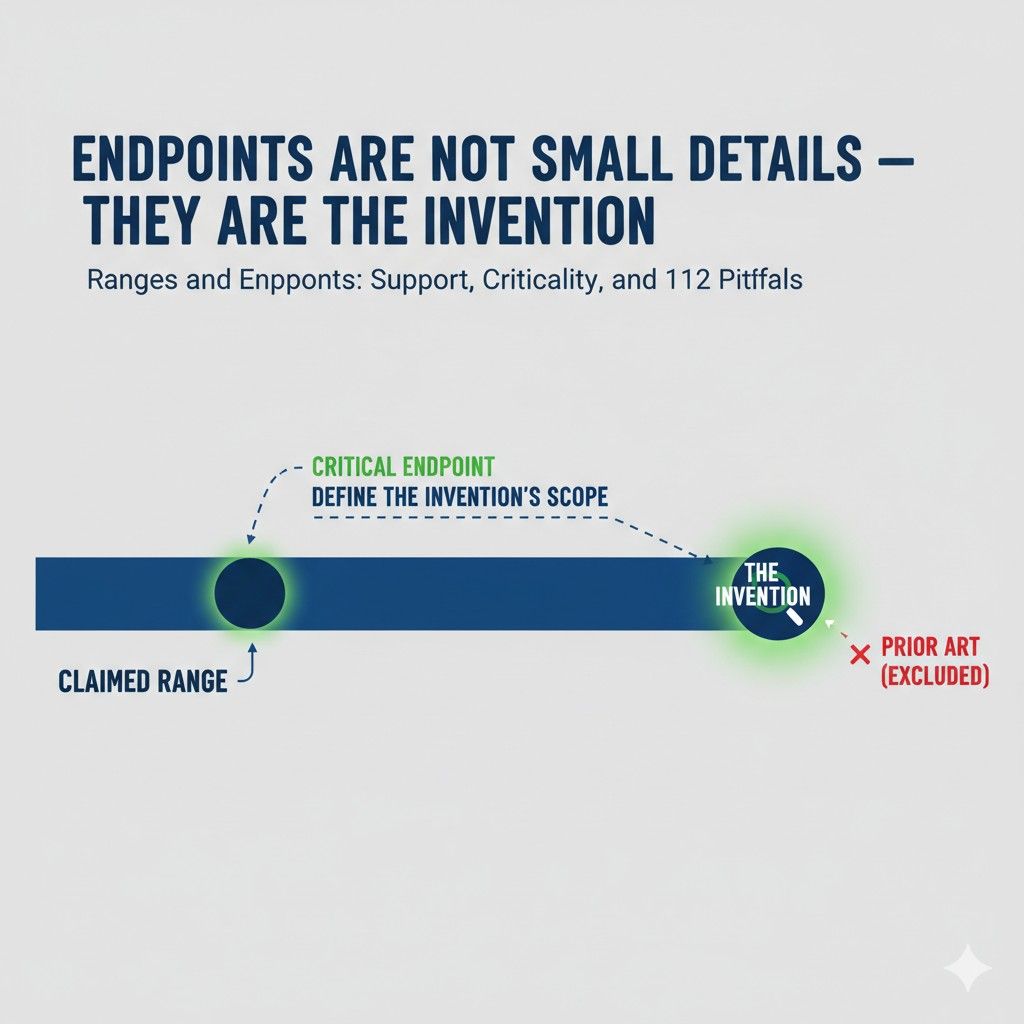
Businesses building software must be especially careful to explain why a number matters, not just that it exists.
Endpoints Are a Signal to Acquirers and Investors
Sophisticated buyers look at claim edges. They know where patents usually break.
Strong endpoints increase confidence that the patent will hold under pressure. Weak ones lower valuation quietly but significantly.
This makes endpoint quality a financial issue, not just a legal one.
Endpoints Should Reflect the Problem, Not Just the Solution
Good endpoints are rooted in the problem being solved. They explain where the problem changes character.
When endpoints reflect the problem space, the claim feels grounded. When they reflect only the solution, they feel narrow or arbitrary.
This perspective strengthens both patent quality and business storytelling.
Endpoints Are Easier to Get Right Before Filing Than After
Once filed, endpoints are frozen unless the original description supports changes. Many founders learn too late that their edges are weak.
Early review focused on endpoints prevents painful surprises.
This is where having real attorney review combined with structured software guidance matters most.
How PowerPatent Helps Founders Capture Endpoint Insight
Founders usually know their limits instinctively. They just do not realize those instincts must be written clearly.
PowerPatent’s process is designed to surface boundary knowledge, test whether endpoints make sense, and ensure the description supports them before filing.
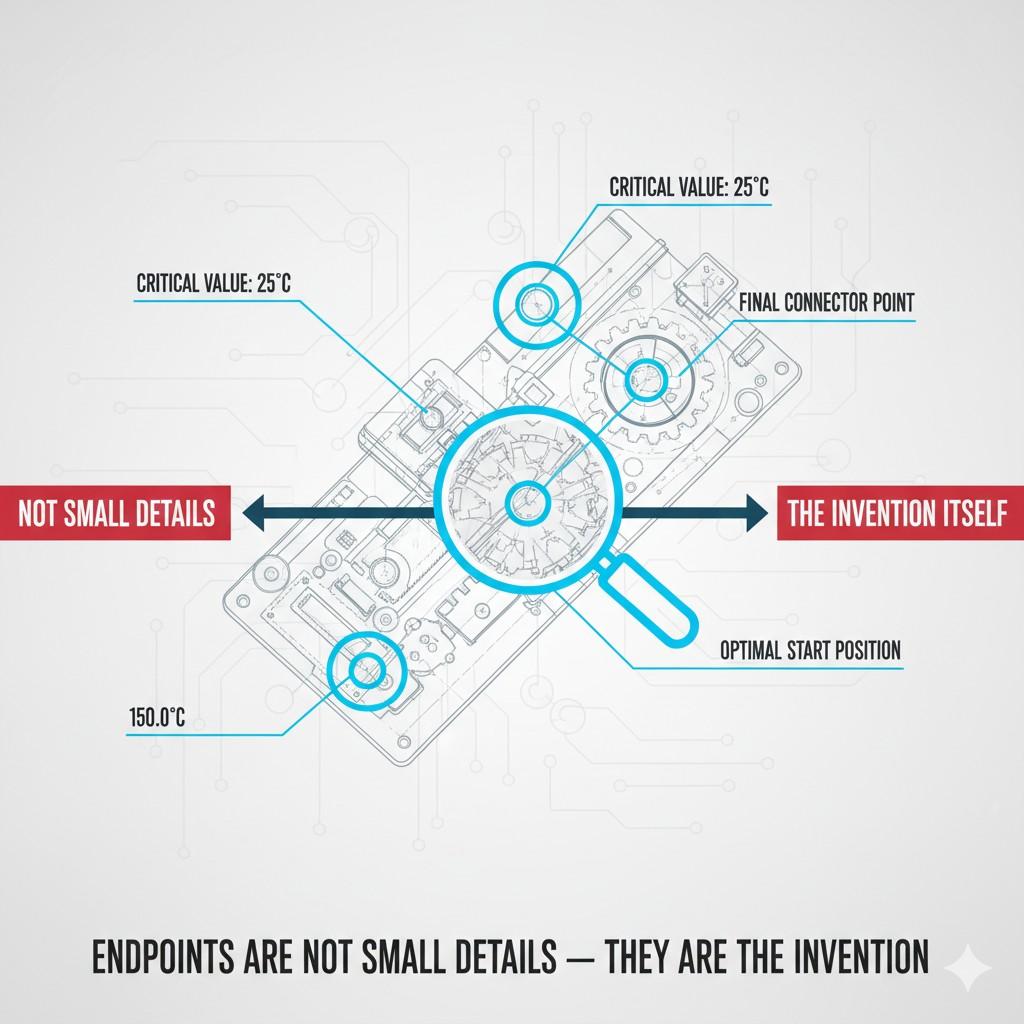
That is how endpoints become assets instead of liabilities.
If you want to see how this works step by step, you can explore it here: https://powerpatent.com/how-it-works
How Section 112 Destroys Weak Ranges Without Warning
Section 112 rarely feels dangerous at first. Most founders think of it as a formality, something about clarity and description that gets handled during drafting.
In reality, it is one of the most common reasons strong-looking patents fail later, often without any dramatic moment.
This section explains how Section 112 quietly attacks weak ranges, why the damage often shows up years after filing, and how businesses can avoid walking into these traps.
Section 112 Does Not Care How Novel the Idea Is
Many founders believe novelty protects them. They assume that if no one has built this before, the patent should stand. Section 112 does not work that way.
Section 112 asks a different question. Did the inventor clearly describe what they claimed? Did they show they actually had it? If the answer is no, novelty does not matter.
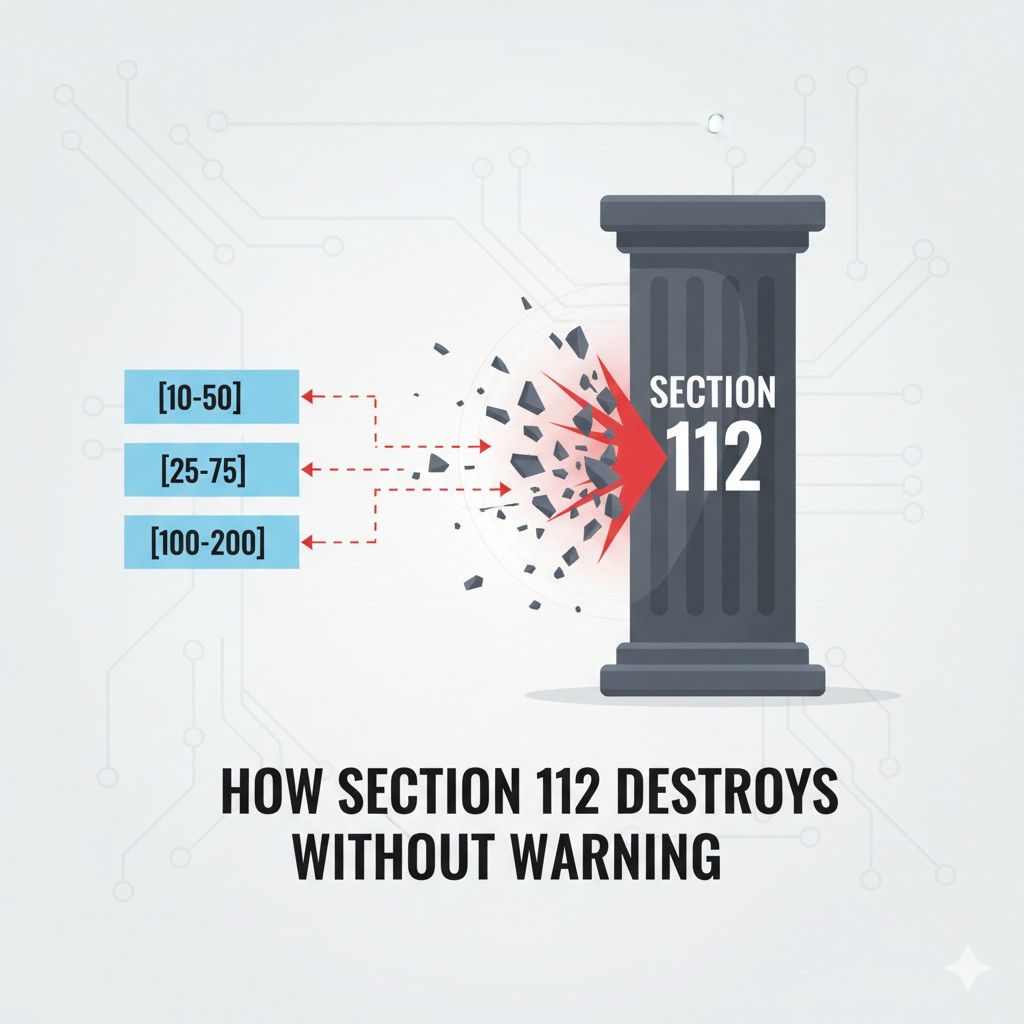
This is why breakthrough inventions still lose patents. Weak ranges give Section 112 an easy opening.
Section 112 Attacks Quietly During Interpretation, Not Examination
Most Section 112 damage does not happen at the patent office. It happens later, when someone tries to enforce the patent.
At that point, no one announces a Section 112 rejection. Instead, the court simply reads the claim narrowly. The range shrinks. Endpoints lose meaning. Protection evaporates.
From the outside, the patent still exists. From a business perspective, it is already dead.
Vague Ranges Trigger Written Description Failures
Written description is about possession. It asks whether the patent shows that the inventor truly had the full scope of the claim in mind.
Ranges are a common failure point. If the description talks broadly but never explains behavior across the range, courts assume the inventor only possessed a slice.
This assumption is devastating because it does not require bad intent. Silence is enough.
Enablement Breaks First at the Edges
Enablement requires that someone skilled in the field could use the invention across the full range without undue effort.
Most patents explain how things work in ideal conditions. Section 112 tests the edges. If the patent does not explain how to operate near the endpoints, enablement quietly fails.
Courts rarely need expert drama to see this. The text alone is often enough.
Section 112 Punishes Guessing More Than Overconfidence
Many weak ranges come from guessing early. Founders estimate future performance or assume scalability.
Section 112 does not forgive optimism. It expects explanation tied to real understanding.
A guessed range without reasoning looks indistinguishable from overclaiming, even if the guess later proves correct.
Why Saying “Can Be” Is Often a Red Flag
Patents often say a parameter can be between two values without explaining why. This language feels flexible but is dangerous.
Courts see “can be” as a signal that the inventor did not test or understand the limits. Without explanation, the phrase weakens the entire range.
Strong patents explain why it can be that way, not just that it can.
Section 112 Does Not Require Total Failure to Invalidate a Range
A range does not need to be completely unsupported to fail. Partial weakness is enough.
If one endpoint lacks support, the court may cut it off. If the middle is well explained but the edges are not, the claim shrinks to the middle.
This surgical damage is common and often overlooked until enforcement fails.
Silence About Tradeoffs Is Treated as Lack of Knowledge
Real systems involve tradeoffs. Speed versus accuracy. Power versus heat. Memory versus latency.
If a range ignores these tradeoffs, Section 112 assumes the inventor did not consider them.
Courts expect tradeoffs to appear naturally in the description, especially near endpoints.
Section 112 Uses the Specification Against the Claims
Founders often think claims stand alone. They do not.
Section 112 forces courts to read claims through the lens of the description. If the description narrows understanding, the claim follows.
A wide range in the claim cannot escape a narrow explanation in the specification.
Section 112 Is Especially Harsh on “Result-Based” Ranges
Some ranges are defined by outcomes, like acceptable error or desired performance. These are common in software and AI patents.
Without explanation of how those results are achieved across the range, Section 112 steps in.
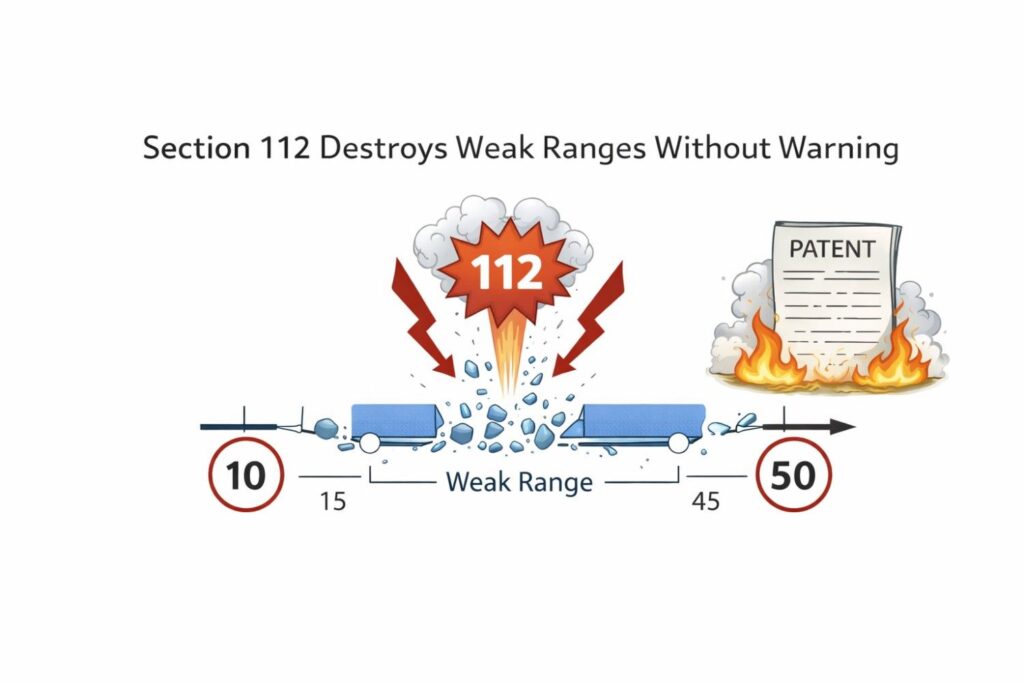
Courts do not accept results alone. They want understanding.
Section 112 Punishes Patents That Avoid Discussing Failure
Many patents try to sound perfect. They avoid discussing breakdowns, instability, or limits.
Section 112 reads that avoidance as lack of possession. Failure modes are proof of understanding.
Patents that admit limits often survive longer than those that pretend none exist.
Section 112 Works Retroactively and Ruthlessly
The most dangerous part of Section 112 is timing. It applies years later, using only what was written at filing.
No amount of later success can fix a weak description. No new data can be added.
This retroactive effect is why founders are often shocked by outcomes.
Section 112 Makes Continuations Only as Strong as the Original Text
Many founders rely on continuation filings to fix early mistakes. Section 112 limits this.
If the original filing did not support a range, continuations cannot invent that support later.
Weak ranges in the first filing limit everything that follows.
Section 112 Is a Favorite Tool for Defendants
When patents are enforced, defendants look for clean arguments. Section 112 is attractive because it relies on the patent’s own words.
No need to find prior art. No need to challenge novelty. Just show that the range was not truly supported.
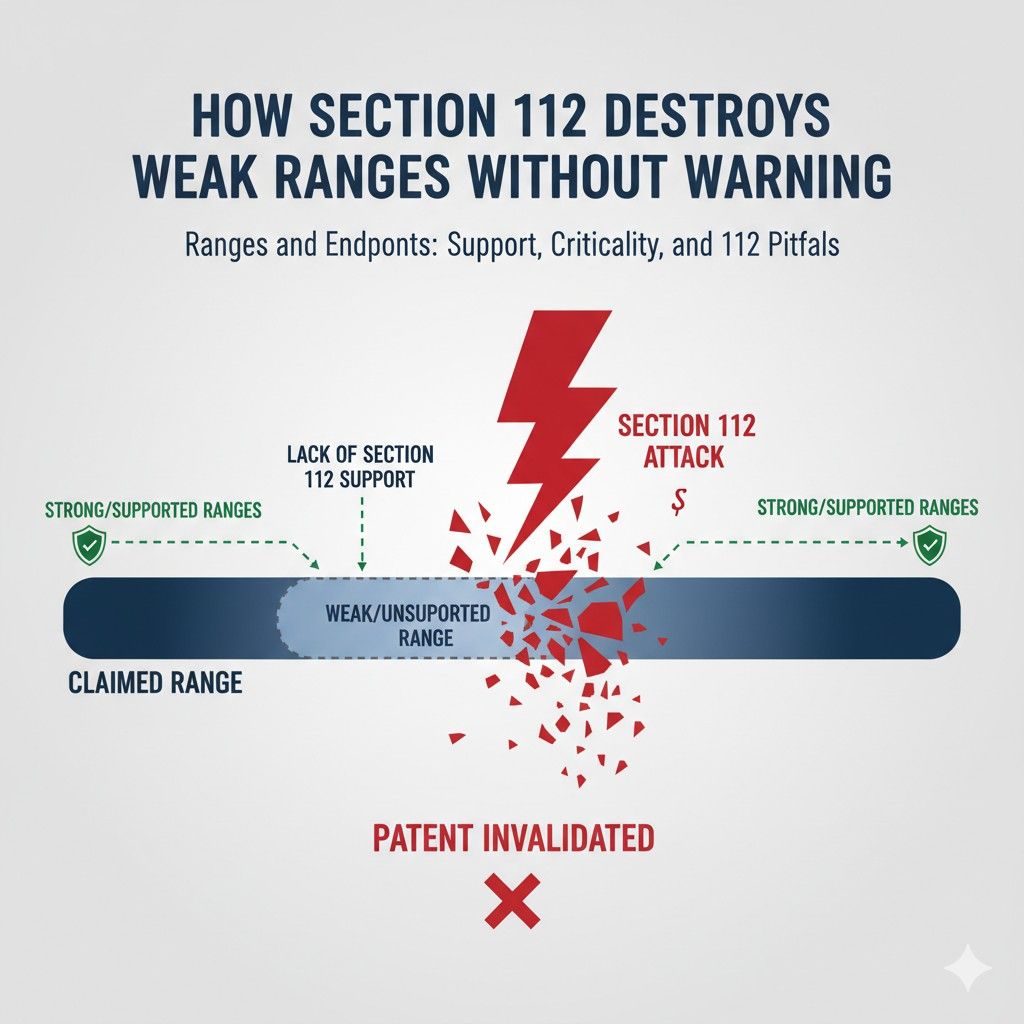
Weak ranges make this argument easy.
Why Section 112 Rarely Feels Like a Single Fatal Blow
Section 112 usually kills by narrowing, not explosion. Claims are interpreted narrowly. Coverage disappears gradually.
Founders often do not realize what happened until the patent no longer covers the product.
By then, it is too late.
How Strong Range Drafting Neutralizes Section 112
Section 112 is not an enemy if ranges are written well. Clear explanation, honest boundaries, and technical reasoning disarm it.
When the patent shows real understanding, Section 112 becomes a formality instead of a weapon.
This is why range quality is one of the highest leverage parts of patent drafting.
Why Founders Rarely Catch These Issues Alone
Most founders are too close to their invention. They know how it works and assume the text reflects that knowledge.
Section 112 tests what is written, not what was known.
This gap between knowledge and writing is where most failures live.
How PowerPatent Helps Prevent Section 112 Range Failures
PowerPatent is designed to surface these hidden weaknesses before filing, when fixes are still possible.
By combining structured software prompts with real attorney review, founders are guided to explain ranges, endpoints, and boundaries clearly and honestly.
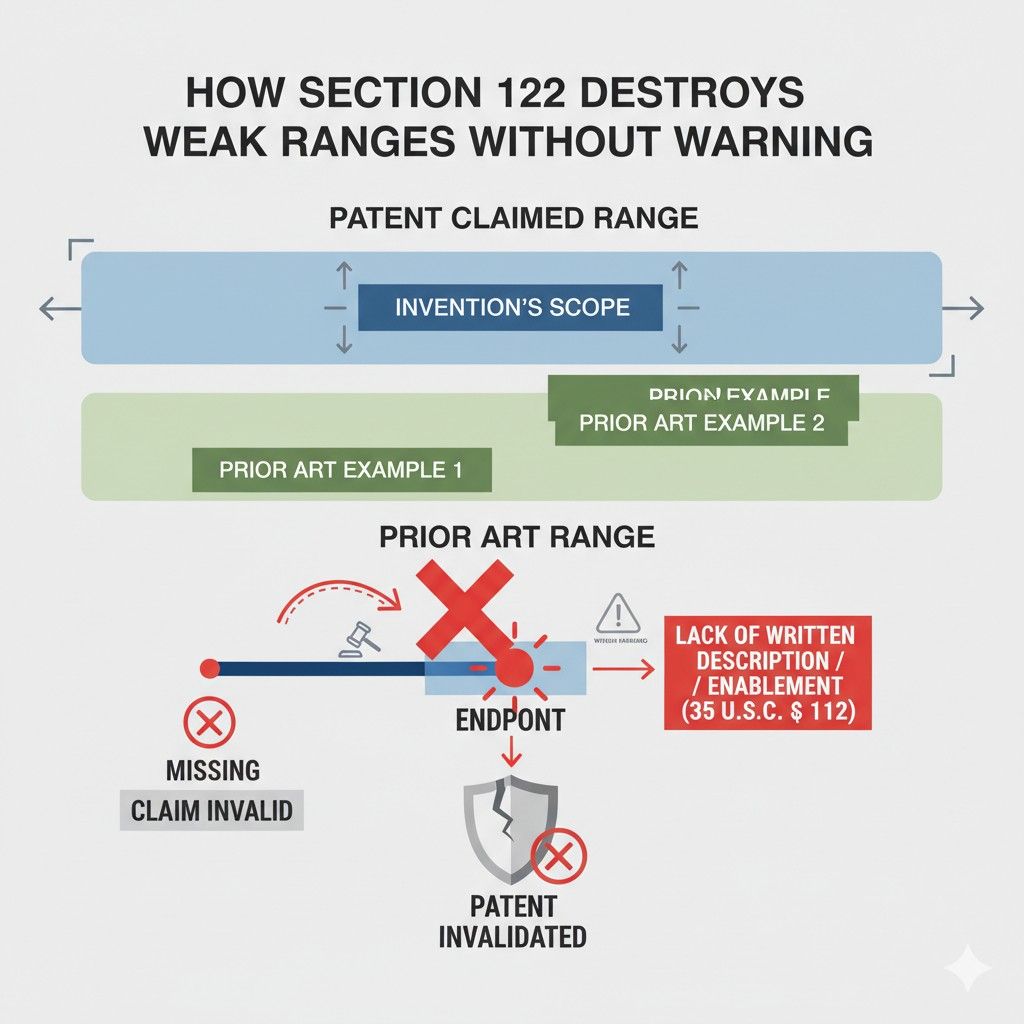
This reduces the risk that Section 112 will quietly erase protection years later.
If you want to see how this process works in detail, you can explore it here: https://powerpatent.com/how-it-works
Wrapping It Up
Most patents do not fail because the idea was weak. They fail because the edges were careless. Ranges and endpoints look small on the page, but they carry the full weight of credibility, ownership, and long-term value. They are where courts decide whether an inventor truly understood what they built or merely described a result. Support, criticality, and Section 112 are not abstract legal concepts. They are practical tests of honesty and depth. Did the patent explain how the invention behaves across what it claims? Did it show why the boundaries matter? Did it admit limits instead of hiding them? When the answer is yes, ranges become protection. When the answer is no, ranges become traps.