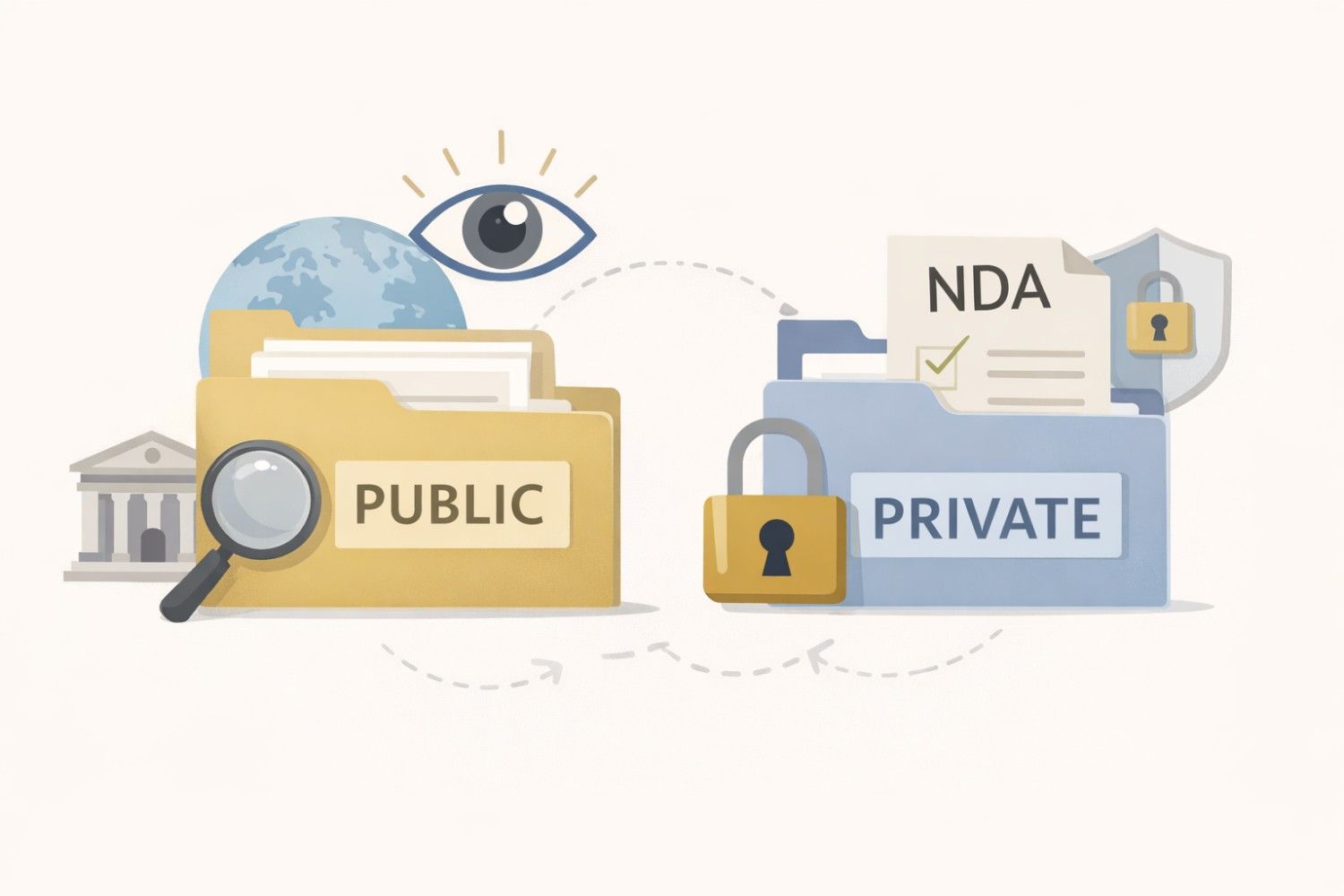
Most founders do not think about public records until it is too late. You are busy building your product, hiring your team, and talking to users. But the moment you file a patent, form a company, raise money, or sign certain documents, parts of your work can become visible to the public. The question is not just what becomes public. The real question is when it becomes public, and what you can still control before that moment happens. In this article, we will break down what shows up in public records, what stays private, and how smart founders protect their edge before information goes live. If you are building something valuable and want to understand how to protect it the right way, you should also see how modern patent filing works today at https://powerpatent.com/how-it-works.
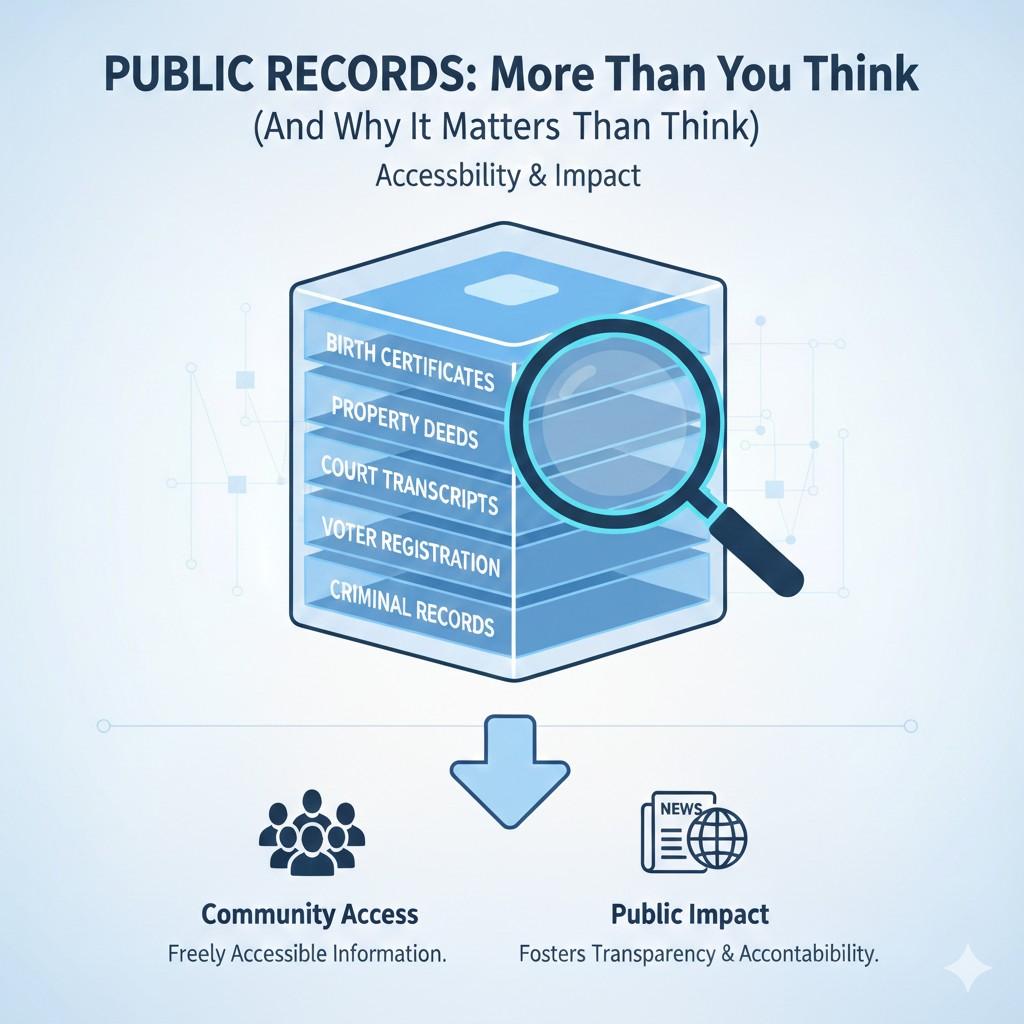
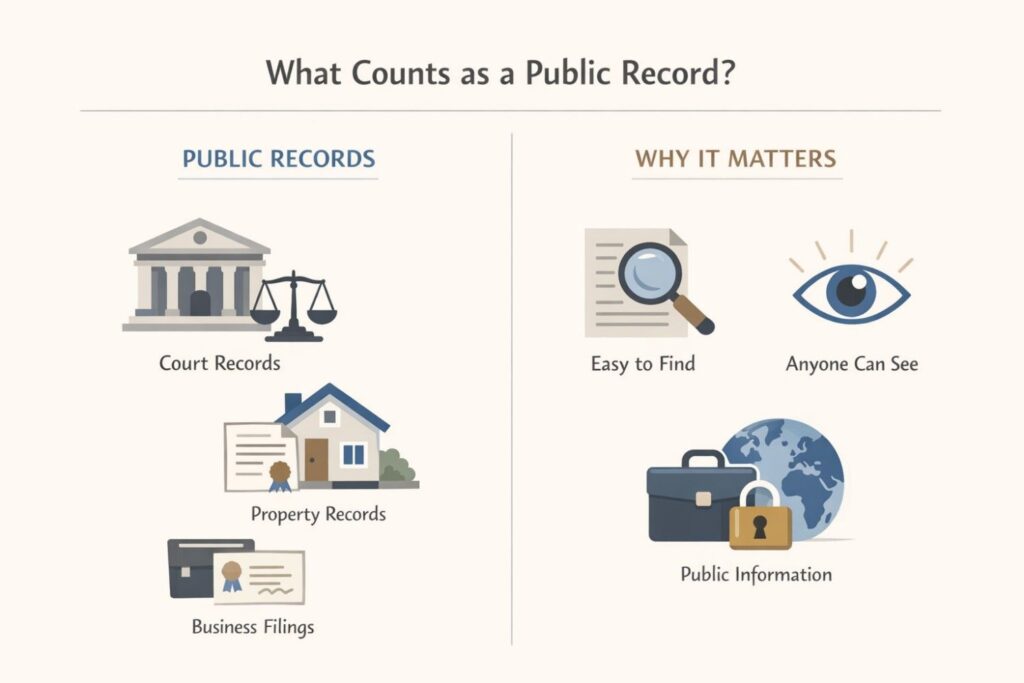
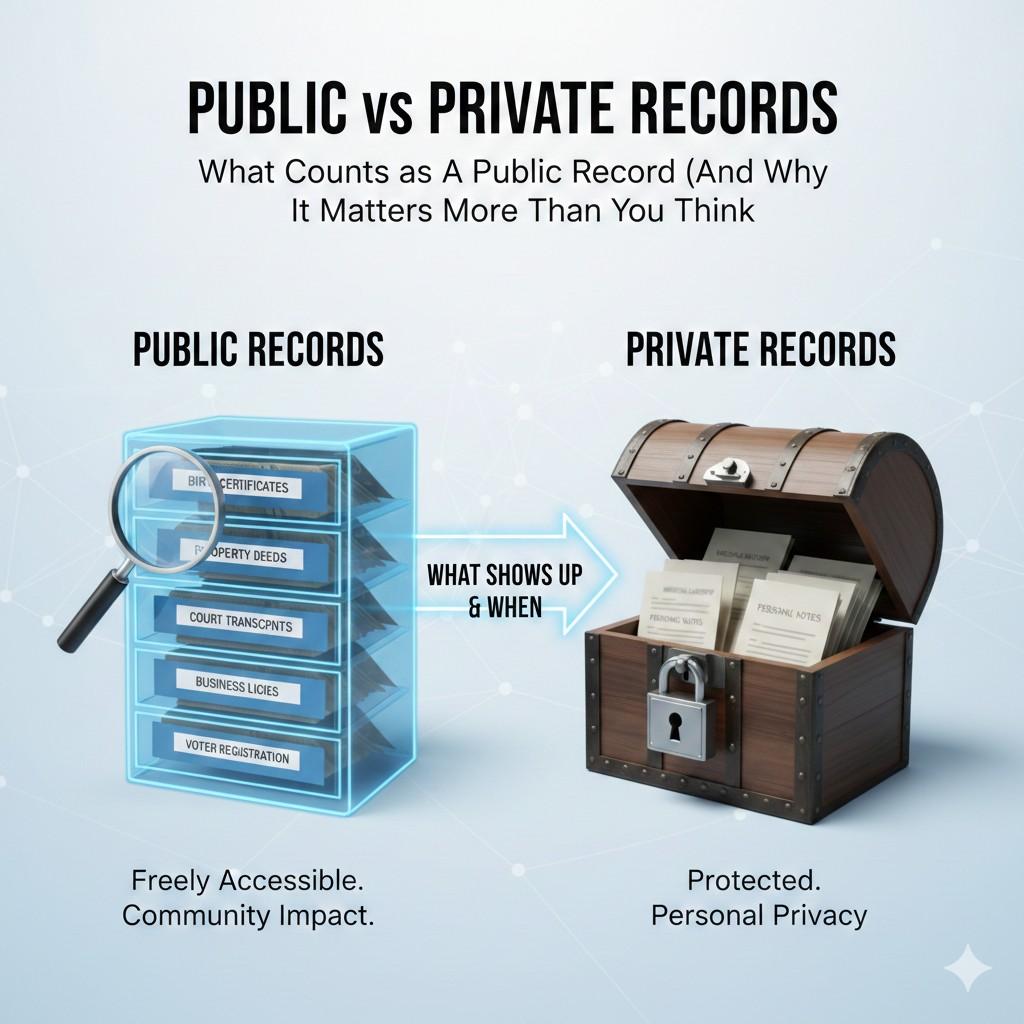
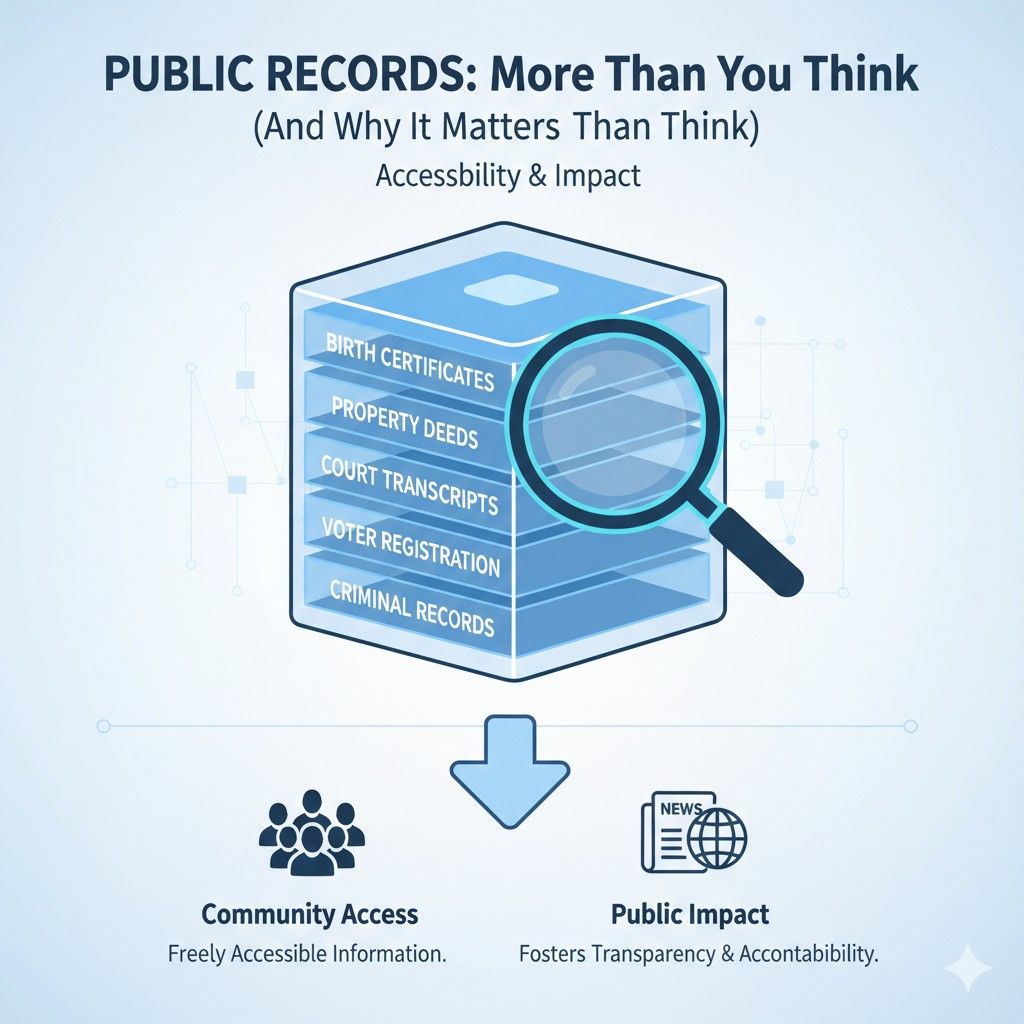
What Counts as a Public Record (And Why It Matters More Than You Think)
Most founders think public records are just boring government files sitting in a database somewhere. That is not true.
Public records are often the first place investors, competitors, partners, and even future acquirers go when they want to understand your company.
If you are building real technology, what becomes visible in these records can shape how others see your innovation.
It can impact your leverage in deals. It can affect your valuation. It can even shape how easy it is for someone to copy you.
To make smart moves, you need to understand what counts as public and why timing and strategy matter so much.
Patent Filings: The Clock Starts Ticking
When you file a patent application, many founders assume it stays private until it is approved. That is not how it works.
In most cases, your patent application becomes public 18 months after your first filing date. That means your technical details, your diagrams, your claims, and your ideas can be viewed by anyone.
That includes competitors.
The key detail most startups miss is this: once it is public, you cannot take it back. If the application is weak, unclear, or too narrow, you have just shown the world your roadmap without building a strong fence around it.
This is why the way you draft the application matters so much. It is not just about filing fast. It is about filing smart.
Before you submit anything, ask yourself if your claims are broad enough to cover future versions of your product. Think about where your tech will be in two years, not just today.
A rushed filing can expose your ideas without protecting them.
If you want to see how to file in a way that protects your long-term roadmap, not just your current build, you can explore how it works here: https://powerpatent.com/how-it-works
Provisional Applications: Private, But Not Invisible
Many founders start with a provisional patent application. This is smart. A provisional can stay private and does not publish on its own.
But here is the catch. When you later convert it into a full patent application, the content of that provisional becomes part of the public record.
If your provisional was messy, vague, or incomplete, those weaknesses follow you into the public phase.
Treat your provisional like it will one day be read by your toughest competitor. Because one day, it might be.
Use that early filing to document your system clearly. Include alternative versions. Describe edge cases. Capture your core logic in plain but precise language. Think beyond what works today and include what you know will evolve.
Private today does not mean private forever.
Company Formation Documents: The Paper Trail Begins Early
The moment you form your company, you create public records.
Your company name, formation date, registered agent, and sometimes even the names of founders can appear in state databases.
On its own, that may not seem risky. But it creates a timeline. It shows when your company began operating. It can be matched against patent filings and domain registrations.
Savvy competitors sometimes track new filings in certain industries. They look for patterns.
This does not mean you should avoid forming your company. It means you should align your legal steps with your IP strategy.
If you have built something meaningful before forming the company, make sure your intellectual property is properly assigned to the company once it exists.
That assignment itself can become part of public records if tied to patent filings.
Make sure ownership is clean and clear before outside investors start reviewing your documents.
Trademark Applications: Your Brand Becomes Searchable
When you apply for a trademark, your brand name enters a public database.
Your logo, your description of goods and services, and sometimes examples of use can be searched by anyone.
This can be powerful. It shows you are serious. It signals growth. But it can also signal direction.
The description you choose for your trademark matters. It can reveal how you see your product category and future expansion plans.
Think carefully about how wide or narrow to describe your services. Too narrow, and you may box yourself in. Too broad, and you may invite pushback.
Brand strategy and product roadmap are often connected. Your trademark filing is not just a brand step. It is a public statement.
Fundraising Documents: What Investors See, Others May Too
Most startup financing documents stay private. Term sheets and cap tables are not public by default.
But certain filings tied to fundraising can appear in public databases. In the United States, for example, Form D filings for certain funding rounds become visible.
These filings may show your company name, executives, and the size of your raise.
That information can attract talent and partners. It can also attract attention from competitors.
Plan your announcements and public filings together. Do not let official records reveal more than your marketing strategy intends.
Control the story before the story controls you.
Litigation Records: Disputes Become Public Fast
If your company gets involved in a lawsuit, many details can become public almost immediately.
Court filings often include descriptions of your technology, contracts, internal communications, and strategic decisions.
Even if you win, the filings remain searchable.
The best way to manage litigation risk is to prevent it. Clean contracts, clear IP ownership, and well-drafted patents reduce the chance of messy disputes later.
When your IP is strong and your documentation is solid from day one, you reduce the risk of being forced into public conflict.
This is another reason not to treat early legal work as an afterthought.
Regulatory Filings: Industry-Specific Exposure
If you operate in health, finance, energy, or other regulated spaces, filings with agencies can create public records.
Some applications and approvals are searchable. Product details, safety summaries, and compliance documents may become visible.
In these industries, patent timing becomes even more critical. You do not want regulatory disclosures to reveal key technical elements before your IP is secured.
Map your regulatory timeline alongside your patent timeline.
File before you disclose.
If you are unsure how to sequence these steps without slowing down product development, take a look at how modern patent workflows are designed to move fast without cutting corners: https://powerpatent.com/how-it-works
Domain Registrations and Digital Footprints
Even your domain registration can leave clues.
While some founders use privacy services, others do not. Domain records can show registration dates and contact information.
Product landing pages, early marketing materials, and beta sign-up forms also create timestamps.
These digital traces can matter in patent disputes. They can be used to challenge who invented something first or when a product was publicly disclosed.
Before you launch a teaser page describing core features, ask yourself if your patent filings are already in place.
Once your product details are publicly available online, that disclosure can impact your patent rights in some countries.
Speed is good. Smart timing is better.
Employee Agreements and IP Assignments
Internal documents are usually private. But when tied to patent filings or disputes, assignment agreements can enter the public record.
If a former co-founder claims ownership of part of the invention, those agreements can be examined closely.
Do not wait for conflict to clean up paperwork.
Make sure every employee and contractor signs agreements that clearly assign inventions to the company. Keep them organized. Store them securely.
Investors will ask for these documents during due diligence. If anything is unclear, it can slow down deals or reduce trust.
Clean ownership is not just about legal safety. It is about leverage.
The Real Risk: Partial Visibility
The biggest danger is not full exposure. It is partial exposure.
A competitor might see your patent application but not understand your full roadmap. They might see your trademark and guess your expansion plans. They might see your fundraising and assume your traction.
Public records often show fragments.
Those fragments can be pieced together.
This is why strategy matters. Each filing, each document, each disclosure should be part of a bigger plan.
Ask yourself three questions before creating any record that could become public.
Does this protect us?
Does this reveal more than necessary?
Is the timing aligned with our growth plan?
When you treat public records as strategic tools instead of admin tasks, you gain control.
And when you combine smart software with real patent attorneys who understand startups, you move faster without risking exposure.
If you are building something that truly matters, do not wait until your ideas are already searchable to think about protection. Learn how to protect your work the right way, from the start: https://powerpatent.com/how-it-works
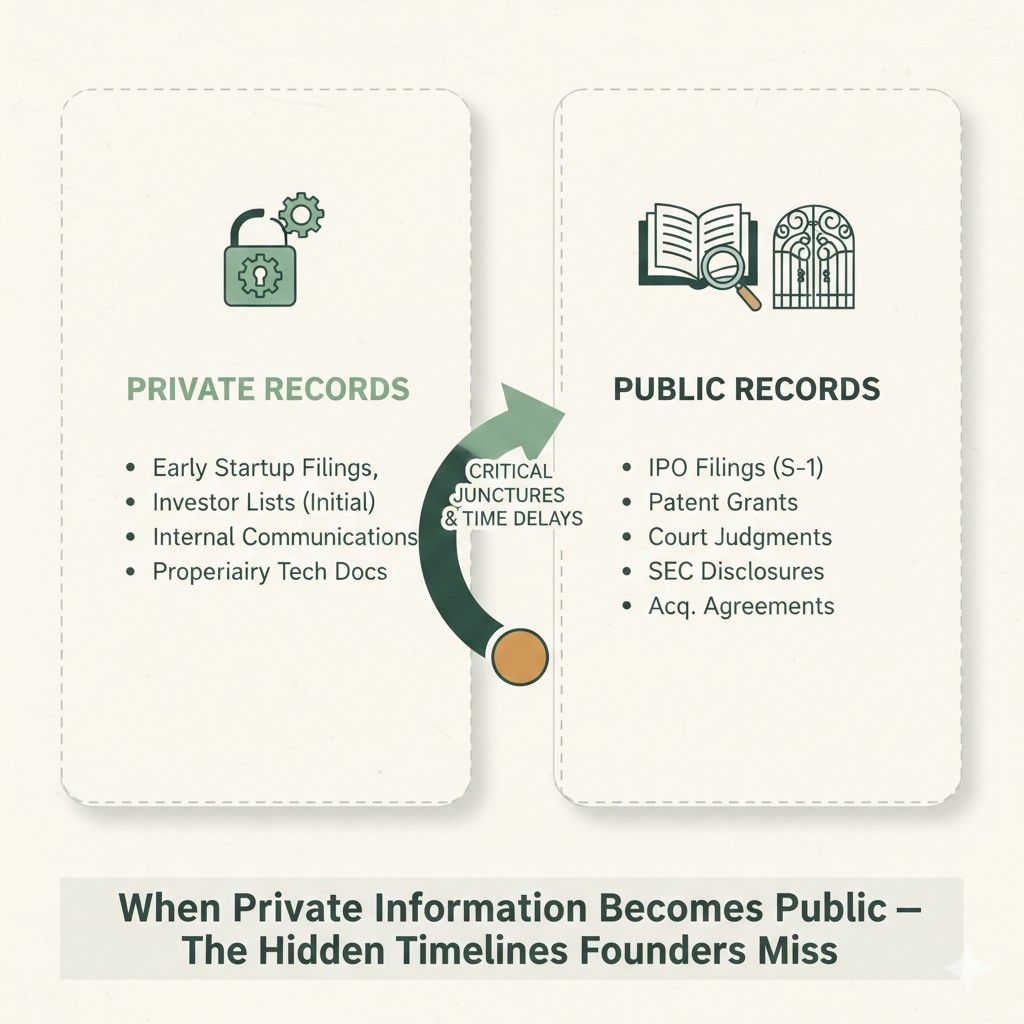
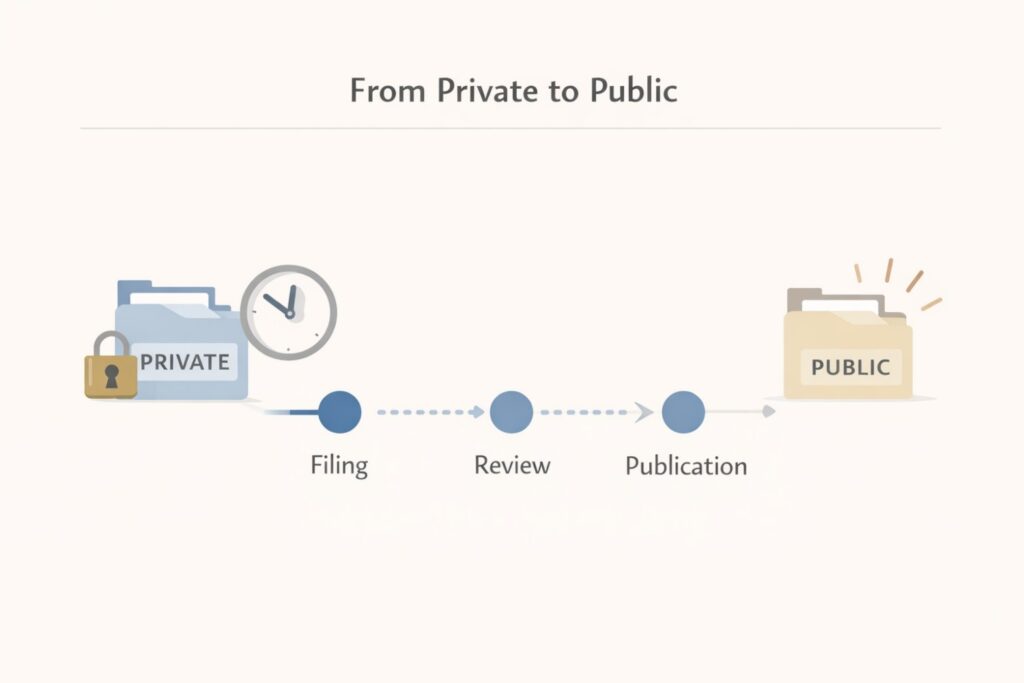
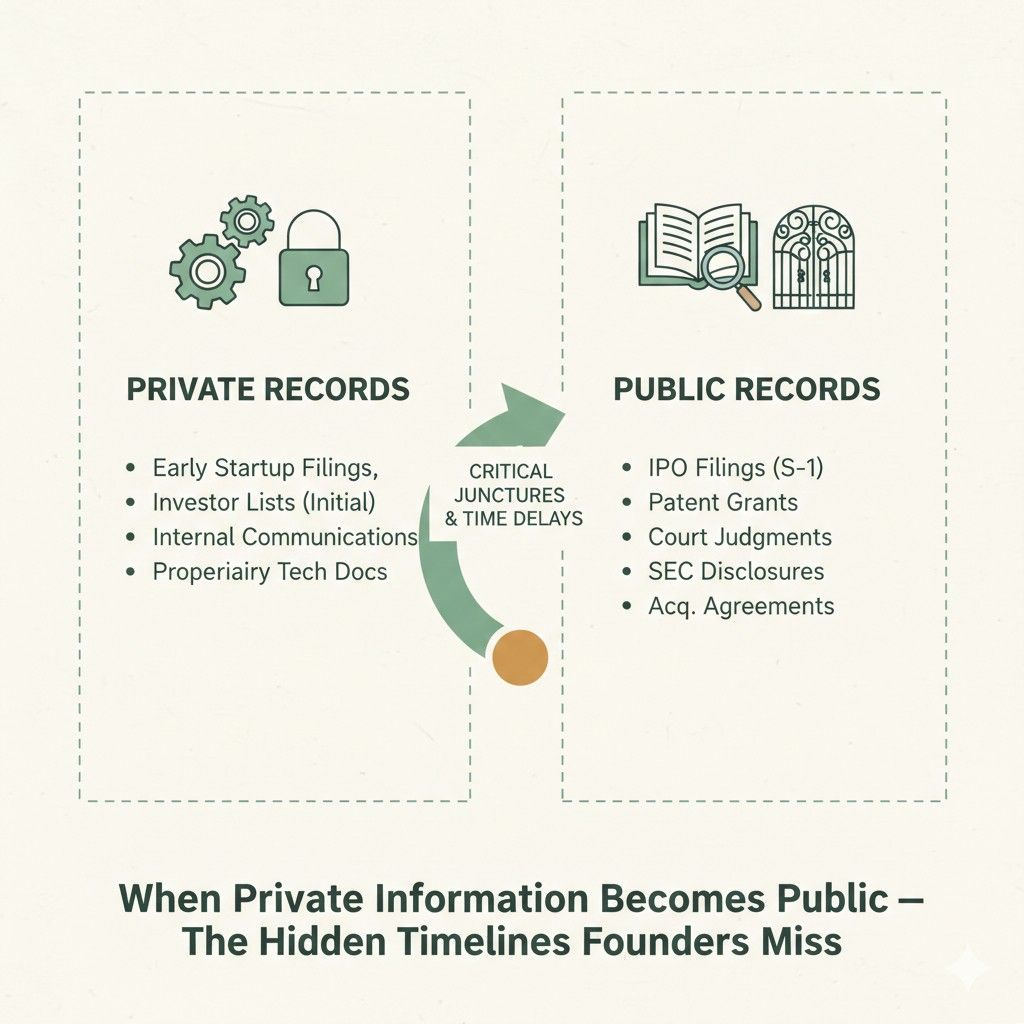
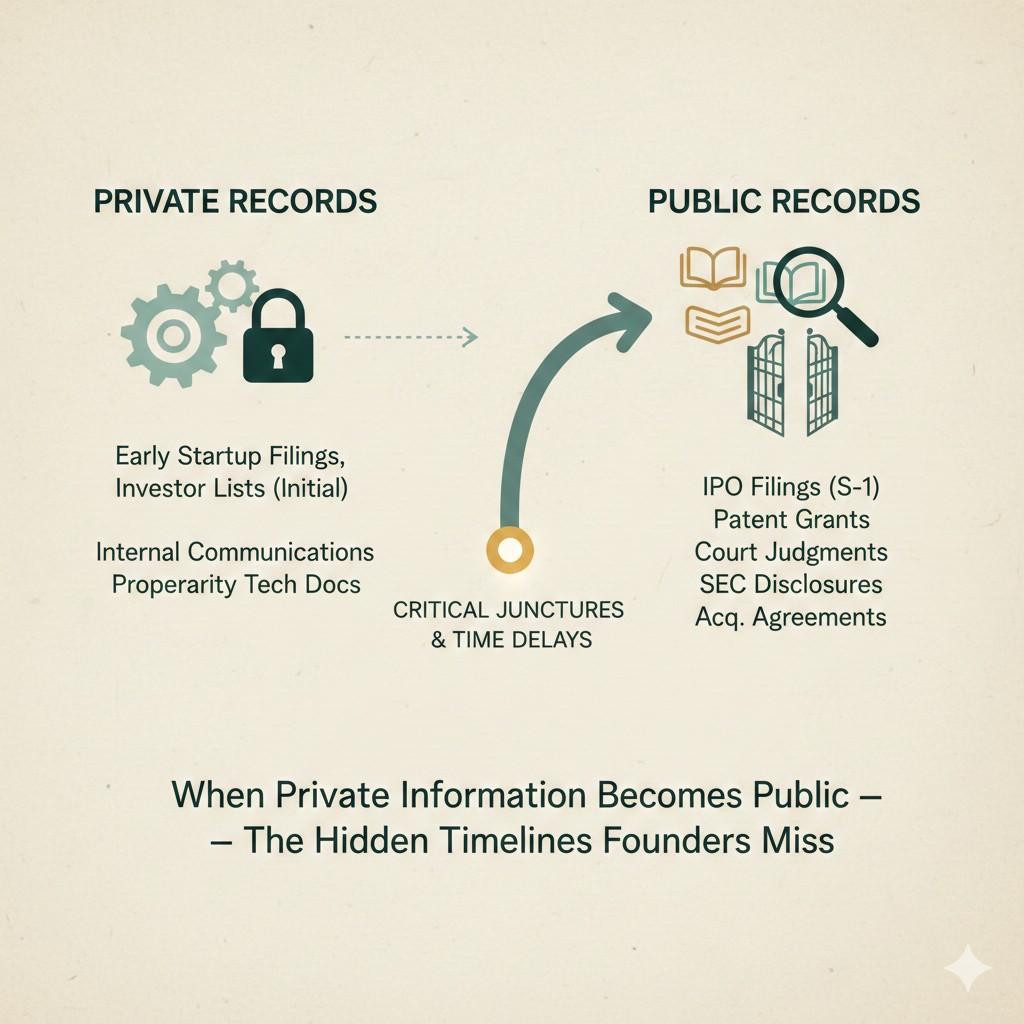
When Private Information Becomes Public — The Hidden Timelines Founders Miss
Most founders do not lose leverage because they were careless. They lose leverage because they misunderstood timing.
They assumed something would stay private longer than it actually would. They thought they had more control than they did. They believed disclosure only happens when a patent is granted or when a press release goes live.
In reality, exposure often happens quietly, on a schedule you did not fully map out.
This section is about timing. Because in startups, timing is power.
The 18-Month Patent Publication Rule
There is one date almost no early-stage founder plans around properly.
Eighteen months after your earliest patent filing date, your application is published in most cases. It does not matter if your product is ready. It does not matter if you are still iterating. It does not matter if you have raised funding yet.
The clock runs in the background.
When publication happens, your invention becomes searchable in public patent databases. Engineers at large companies review new publications every week. So do patent analysts. So do well-funded competitors.
If your claims are narrow, they will see the gaps.
If your description is thin, they will see what you left out.
This is why filing “just to get something on file” can backfire. The moment it publishes, you have shown your cards.
The smart move is to file with long-term coverage in mind. Think about how your system will evolve over the next two product versions. Think about edge cases. Think about alternative models or architectures you might adopt later.
You only get one first impression when your patent goes public.
If you want to understand how to draft filings that anticipate growth instead of freezing you in time, study how modern founders approach it here: https://powerpatent.com/how-it-works
The One-Year Grace Period Trap
In the United States, you generally have a one-year window after public disclosure to file a patent application. Many founders hear this and relax.
That is dangerous.
First, that grace period does not apply the same way in most other countries. In many places, public disclosure before filing can permanently block patent rights.
Second, founders often misjudge what counts as public disclosure. A conference talk. A demo day pitch. A YouTube walkthrough. A detailed blog post.
A product hunt launch. Even sharing detailed slides without a proper confidentiality agreement can count.
You may think you are just marketing. In reality, you may be starting a legal countdown.
If you plan to speak publicly about your technology, align your patent filings first. File before you present. File before you publish. File before you post deep technical details online.
You can still move fast. You just need to move in the right order.
Fundraising Announcements and Strategic Signaling
Raising capital often brings press coverage. That coverage can reveal more than you intend.
When reporters write about your startup, they often describe your product in detail. They quote founders. They summarize your technical edge. They compare you to competitors.
That article becomes a public timestamp.
If your patent filings are not already in place, that public coverage can affect your ability to protect what you described.
Beyond patent concerns, fundraising announcements can signal direction. If you mention expansion into a new vertical, competitors may accelerate their own moves into that space.
The key is coordination.
Before you announce a round, ask yourself whether your core innovations are properly documented and filed. Make sure ownership is clean. Confirm that key technical elements are protected.
Do not let your growth outpace your protection.
Product Launches and Beta Releases
Early access programs feel private. Invite-only betas feel controlled. But users talk.
Screenshots get shared. Product demos get recorded. Feature breakdowns get discussed in online communities.
Once detailed product information spreads beyond strict confidentiality, it becomes public in a practical sense.
Many founders underestimate how quickly information leaks in the age of social media.
Before launching even a limited beta, consider whether your core technical systems are documented in a patent filing. If not, prioritize that step.
You can still ship quickly. You can still test aggressively. Just secure your position first.
A well-timed provisional application can give you breathing room while you iterate.
Employment Transitions and Departing Team Members
When employees leave, information sometimes leaves with them.
Even with strong agreements in place, former team members may join competitors or start their own ventures. If your patent filings are incomplete or unclear, enforcement becomes harder.
What was once private inside your Slack channels and internal docs can become part of another company’s roadmap.
Strong internal documentation combined with timely patent filings reduces this risk. If your inventions are clearly described and legally protected before someone exits, your position is stronger.
Timing here is subtle. File while the team is intact. Do not wait until conflict appears.
Mergers, Acquisitions, and Due Diligence
When larger companies evaluate your startup, they examine everything.
If your patent filings are weak or your ownership chain is messy, it shows up during diligence. And if your applications have already published, buyers can see exactly how strong or fragile your protection is.
If your invention is public but poorly protected, your valuation can suffer.
On the other hand, if your filings are clear, broad, and aligned with your product roadmap, publication can work in your favor. It shows strength. It signals seriousness.
The difference comes down to preparation before the publication date.
International Expansion and Global Exposure
Expanding into new countries adds another layer of timing risk.
Different countries have different disclosure rules. Some do not offer grace periods. Some require earlier filings to preserve rights.
If you are planning global growth, your patent strategy must move ahead of your geographic expansion.
Do not assume that because you filed in one country, you are safe everywhere.
Align your expansion roadmap with your filing strategy. That way, when your technology becomes public through patent publication, you have already secured protection in key markets.
The Illusion of Confidential Conversations
Many founders rely too heavily on informal trust.
They discuss detailed technical architecture with potential partners without clear agreements. They share internal roadmaps during early business development talks.
Not every conversation becomes public. But if relationships break down, emails and presentations can surface in disputes.
Formal confidentiality agreements matter. Clear documentation matters. And timely patent filings matter even more.
File first. Talk second.
That sequence protects you without slowing you down.
Building With the End in Mind
Every private decision eventually meets a public moment.
Your patent publishes. Your funding gets reported. Your product is reviewed. Your growth becomes visible.
You cannot avoid public records. But you can control how prepared you are when they appear.
The founders who win long term are not secretive. They are strategic.
They understand that exposure is inevitable, so they design their protection early. They align filings with launches. They align documentation with fundraising. They align ownership with hiring.
And they use tools that let them move at startup speed without sacrificing strength.
If you are building something that could define a market, do not wait for the clock to run out quietly in the background. Learn how to align protection with growth from day one: https://powerpatent.com/how-it-works
How Smart Builders Stay in Control Before Anything Goes Live
Most founders do not fear public records. They fear losing control.
Control over timing. Control over narrative. Control over who can copy what they built.
The truth is simple. You cannot stop information from becoming public forever. But you can decide how prepared you are when it does.
The best builders do not treat patents, filings, and legal steps as paperwork. They treat them as leverage tools. They design protection the same way they design product architecture.
This is where strategy separates reactive founders from disciplined ones.
Control Starts Before You File Anything
Control does not begin with a submission. It begins with clarity.
Before you file a patent, before you register a trademark, before you announce anything, you need to clearly define what your real advantage is.
Is it your model architecture? Your training pipeline? Your hardware integration? Your data processing method? Your system design?
If you cannot describe your core innovation in simple terms, you cannot protect it properly.
Many startups rush into filing because they want to say “patent pending.” That mindset creates weak coverage. It focuses on speed without depth.
Smart founders pause just long enough to map their invention fully. They think about variations. They think about competitors trying to design around them. They think about where their tech will evolve in the next 24 months.
That reflection creates strength.
Once you know what truly matters, your filings become intentional, not reactive.
If you want a system that helps you turn your real technical work into clear, strong filings without slowing development, you can see how it works here: https://powerpatent.com/how-it-works
Build and Protect in Parallel, Not in Sequence
Many teams treat protection as something that happens after building.
That is a mistake.
By the time your product is polished, demo-ready, and marketed, your exposure risk is already high. Investors have seen it. Early users have seen it. Advisors have discussed it.
Protection should move in parallel with product development.
When a major feature is architected, document it. When a core technical problem is solved in a unique way, capture that solution in writing. When your team invents a new process, record the details.
You do not need to stop building to do this. You need a workflow that integrates with your engineering process.
This creates a habit of continuous protection instead of last-minute scrambling.
And when your patent application eventually becomes public, it reflects a well-thought-out system, not a rushed summary.
Design Your Claims Around Future Versions
The biggest mistake founders make is protecting version one of their product while building version three in their heads.
When your patent publishes, competitors read it carefully. They look for ways around your claims. They search for gaps.
If your claims are tied too tightly to your current implementation, they can adjust one element and avoid infringement.
Smart builders draft claims that capture the core idea at a deeper level.
Instead of protecting only one configuration, they describe multiple implementations. Instead of limiting themselves to one technical path, they outline alternatives.
This does not mean being vague. It means thinking broadly.
Imagine how you would copy your own product if you were forced to redesign it from scratch. Then make sure your filing anticipates that.
That kind of forward thinking changes how your public record works for you.
Control the Order of Disclosure
Exposure is often about sequence.
If you speak publicly before filing, you risk limiting your rights. If you file before speaking, you protect your position.
If you launch globally before considering international filings, you may lose options abroad. If you align your global patent plan before expansion, you preserve flexibility.
The order matters more than most founders realize.
Before any major announcement, pause and ask one question. Is our core innovation already protected in the jurisdictions that matter?
If the answer is no, adjust your sequence.
You do not have to slow momentum. You just need to shift steps slightly so protection leads publicity.
Keep Ownership Clean From Day One
Public records do not just reveal your technology. They reveal who owns it.
If your patent filing lists inventors but the assignment to the company is unclear, that becomes visible. If a co-founder leaves and ownership was never properly documented, that can surface during diligence.
Clean ownership is not glamorous. But it is powerful.
From the start, make sure every founder agreement clearly assigns intellectual property to the company. Make sure contractor agreements do the same. Keep signed copies organized and accessible.
When your filings become public, there should be no confusion about who controls the rights.
This clarity increases investor confidence. It increases acquisition value. It reduces dispute risk.
Control over ownership is control over leverage.
Prepare for Competitor Scrutiny
Once your patent publishes, assume your competitors will read it.
That is not paranoia. That is reality.
Large companies often have teams dedicated to reviewing newly published applications in their industry.
Ask yourself honestly. If your biggest competitor read your application tomorrow, would you feel confident? Would you believe your protection meaningfully blocks them? Or would you worry they could design around it easily?
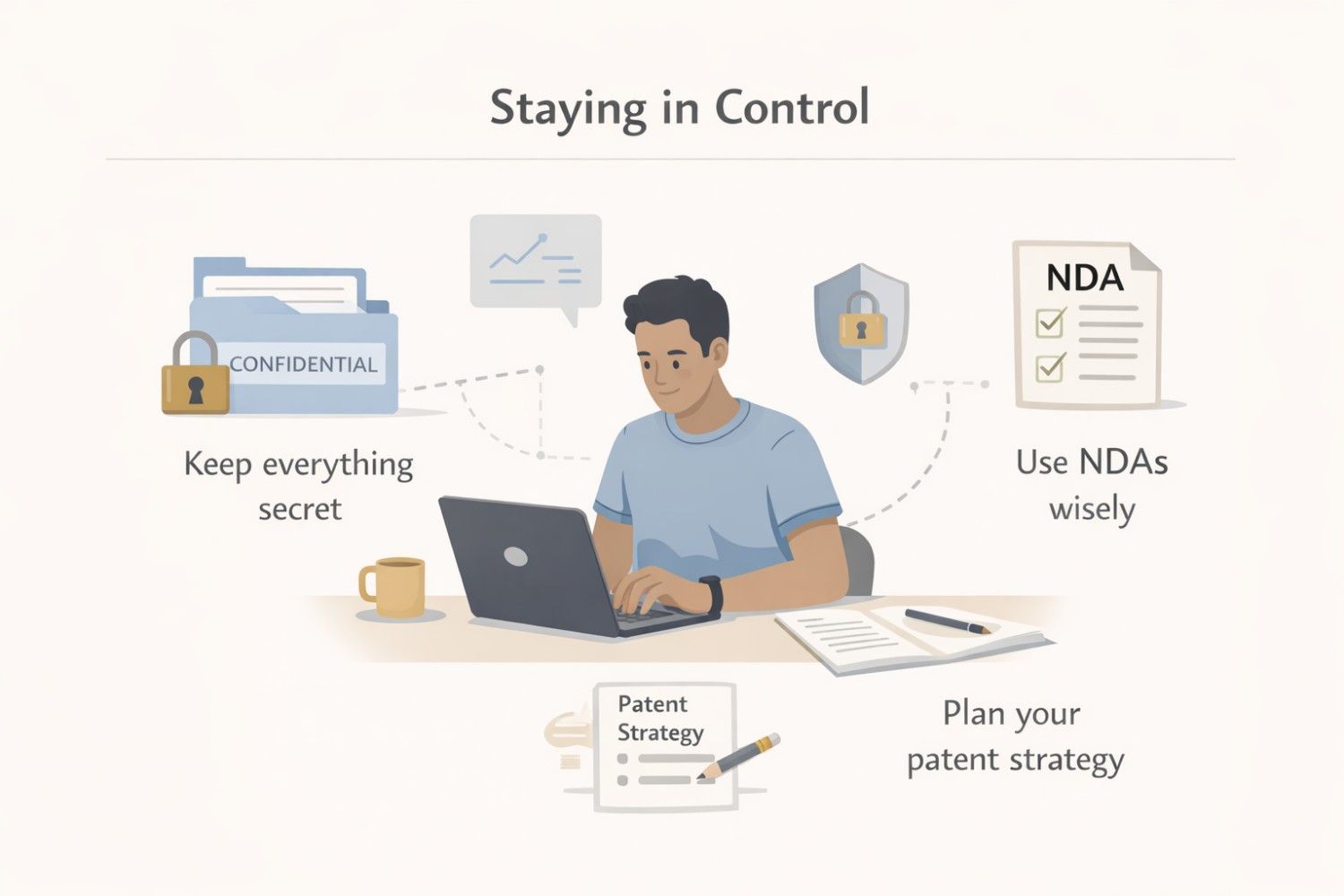
This mindset sharpens your drafting strategy.
Strong filings do not just describe what you built. They describe the broader concept in a way that makes workarounds harder.
When your public record signals strength, it can deter copying before it even begins.
Use Public Records as Strategic Signals
Not all exposure is negative.
A well-written patent application that publishes can signal leadership. It can show technical depth. It can position your company as an innovator.
Investors often search patent databases during diligence. Seeing thoughtful, comprehensive filings builds trust.
Potential partners may take you more seriously when they see protected technology.
The difference lies in quality.
Weak filings create vulnerability. Strong filings create authority.
If you treat publication as inevitable, you can design your filings to support your brand, not just your legal position.
Move Fast Without Cutting Corners
Founders often feel trapped between speed and strength.
Traditional legal processes feel slow and expensive. So they delay protection. Or they rush it.
There is a better path.
Modern tools combined with real patent attorneys allow startups to move quickly without sacrificing quality. You can draft using structured workflows. You can collaborate efficiently. You can align filings with sprint cycles.
Protection does not need to stall innovation.
In fact, when done right, it enhances it. It gives you confidence to share. Confidence to pitch. Confidence to scale.
And when your records become public, you know they reflect thoughtful strategy, not rushed paperwork.
If you are serious about building long-term value, do not treat patents and public records as afterthoughts. Make them part of your core strategy from the beginning.

See how founders are protecting their work without slowing down growth: https://powerpatent.com/how-it-works
Wrapping It Up
At some point, parts of your company will become visible. Your patent application will publish. Your funding round will be reported. Your brand will show up in trademark databases. Your company formation date will sit in a state registry. Your product pages will be archived online.You cannot build a serious company in total secrecy.But you can choose whether what becomes public makes you stronger or more exposed.That is the real difference.