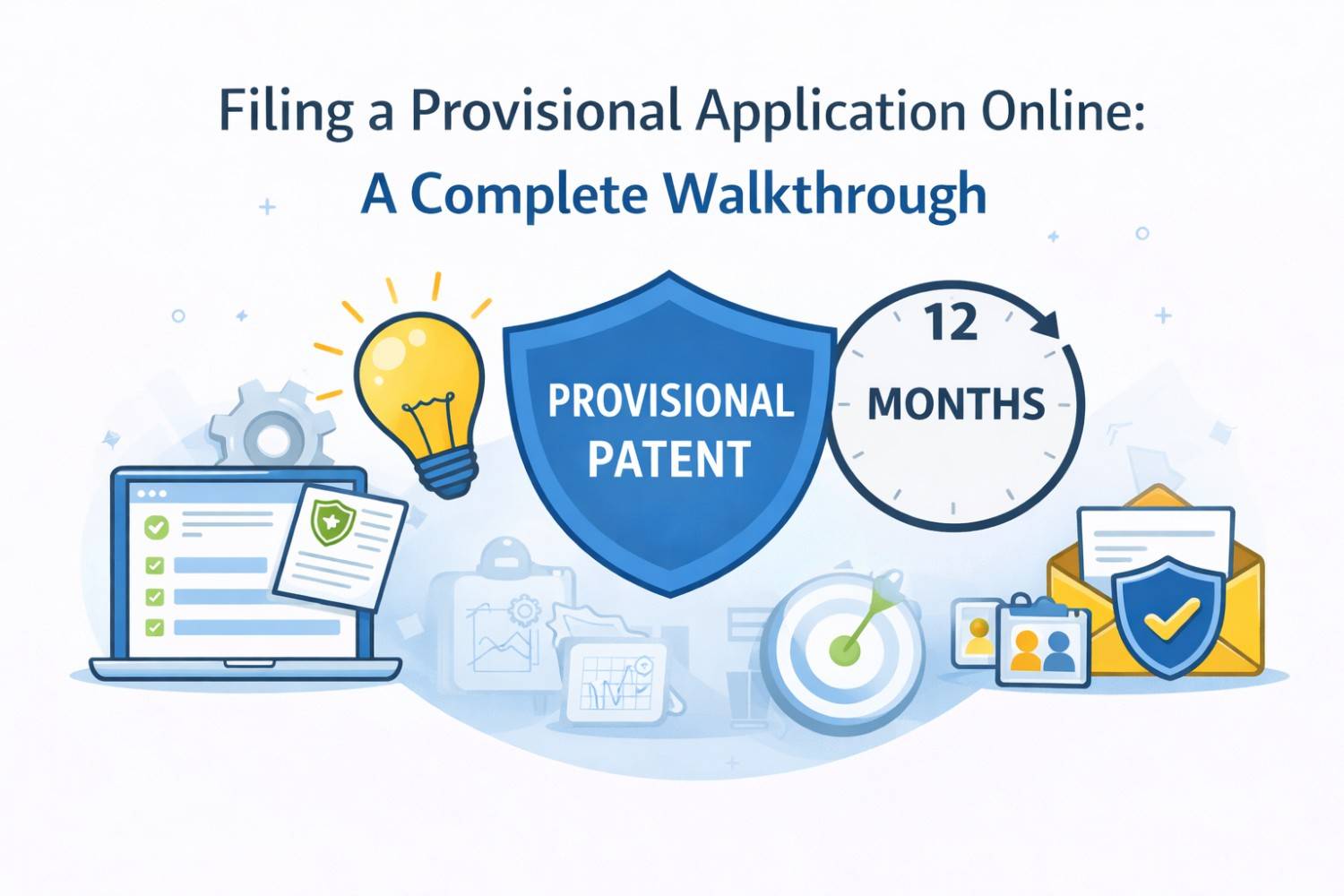
If you are building something new, speed matters. So does protection. Filing a provisional patent application online is often the smartest first move you can make to protect what you are creating without slowing down your work. It gives you a clear date, real confidence, and room to keep building while your idea stays safe. This guide will walk you through the full process in plain, simple words, so you know exactly what to do and why it matters. No law talk. No guesswork. Just clear steps and real insight from people who work with founders every day. If you want to see how modern teams handle this fast and clean, you can explore how PowerPatent helps founders file strong provisionals online with real attorney support here: https://powerpatent.com/how-it-works.
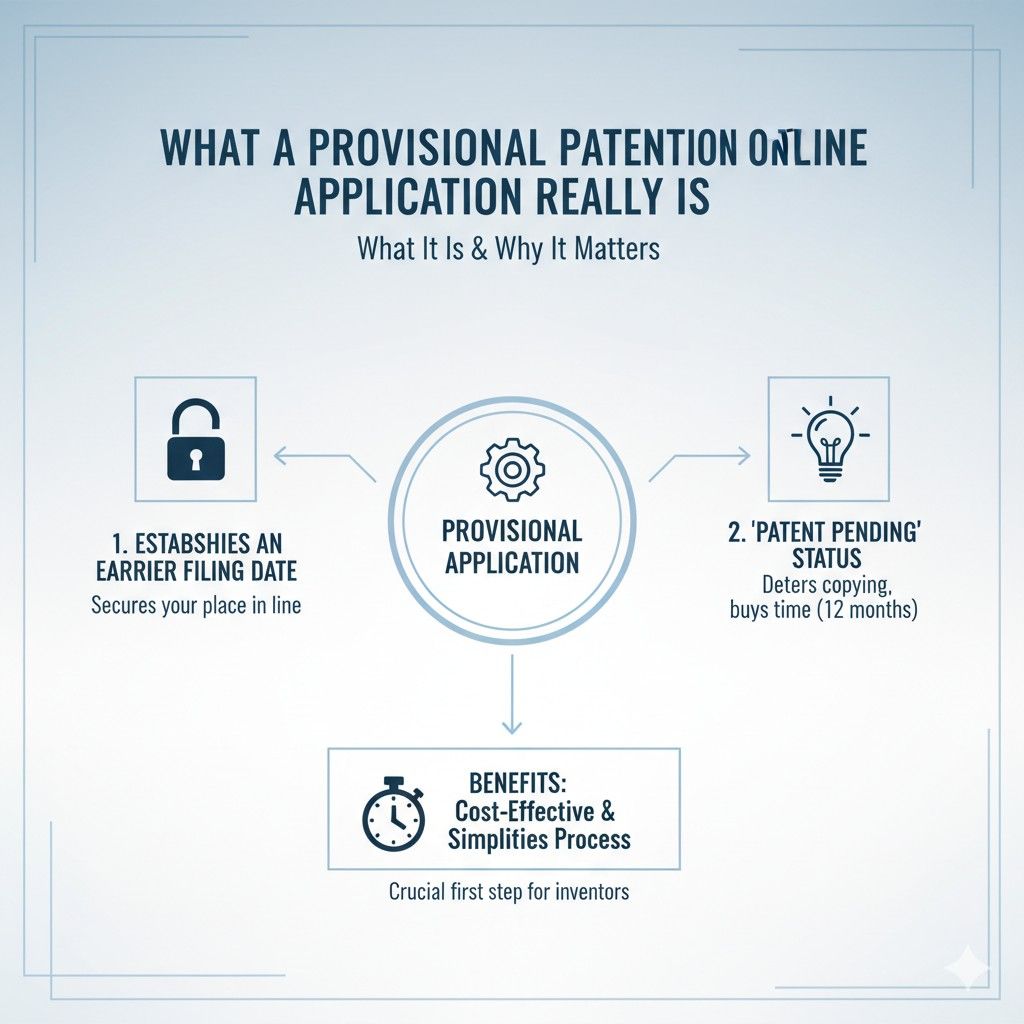
What a Provisional Patent Application Really Is and Why It Matters
A provisional patent application is often misunderstood. Many founders think it is a weak placeholder or a shortcut that does not really count.
In reality, it is one of the most powerful tools a business can use early on, if it is done the right way.
This section breaks down what it truly is, how it works in practice, and why it plays a critical role in protecting fast-moving companies.
Understanding the real purpose of a provisional filing
At its core, a provisional application is about time and control. It locks in your filing date while giving you space to keep building. Once it is filed, you can legally say “patent pending,” which is not just a label.
It signals ownership. It tells investors, partners, and competitors that you were here first.
For businesses, this matters because timing is everything. Ideas move fast. Teams iterate. Products change.
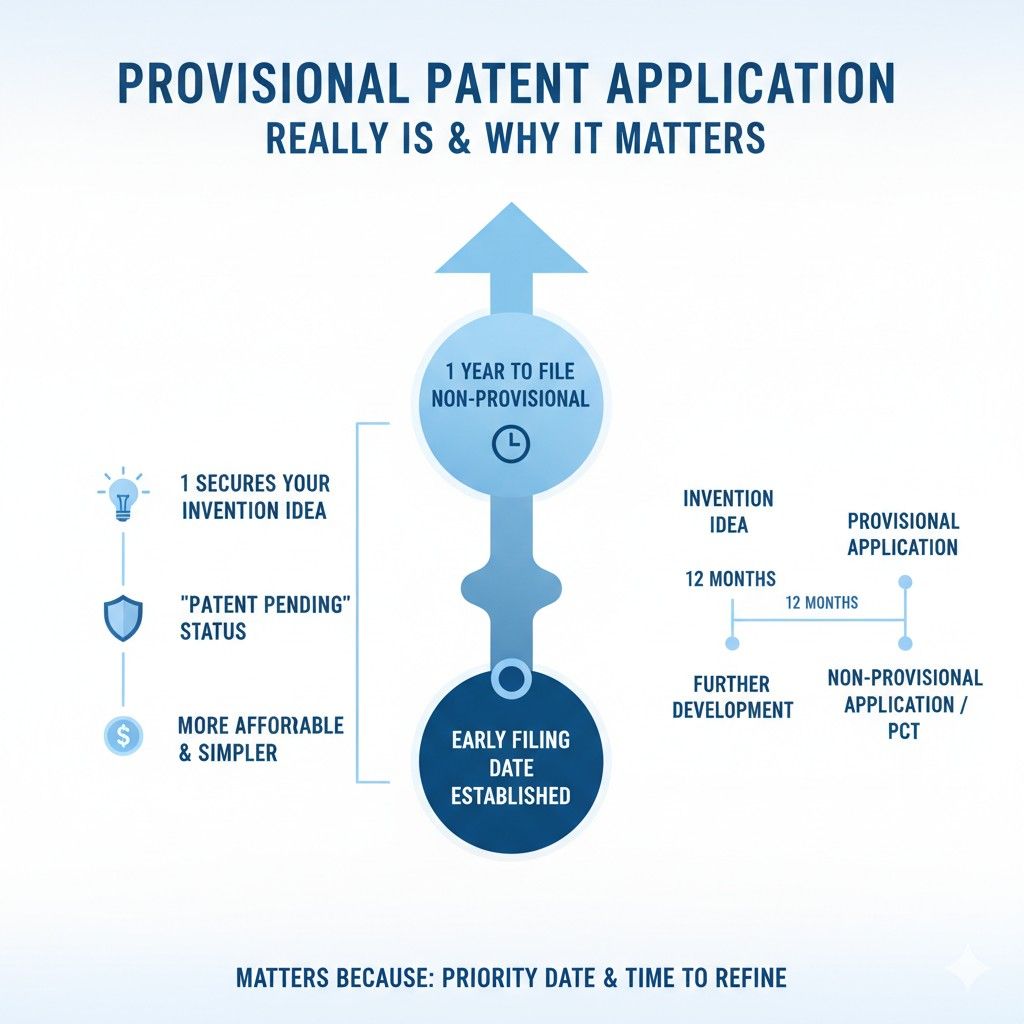
A provisional lets you capture your invention as it exists today without forcing you to freeze progress or wait months to file a full patent. You are buying yourself a 12-month window to move smarter, not slower.
Why early-stage companies rely on provisionals
Early companies live in uncertainty. The product may shift. The market may respond in unexpected ways. A provisional application fits this reality. It gives protection without demanding perfection.
From a business view, this is strategic. You can file when your core idea works, even if it is not polished.
You can keep testing, refining, and improving while knowing your original concept is protected. This approach reduces risk and avoids the costly mistake of waiting too long and losing priority to someone else.
The filing date is the real asset
Many founders focus on the document itself and forget the most valuable part: the filing date. In patent law, earlier usually wins. If two people invent similar things, the one who files first has the advantage.
A provisional application secures that date. Once it is filed, that date becomes your anchor.
Every future patent claim you file can point back to it, as long as your provisional explains the idea clearly. For businesses, this can mean the difference between owning a market and watching someone else do it.
How provisionals support fundraising conversations
Investors care about risk. Intellectual property is a major part of that equation. When a startup has a well-written provisional on file, it shows seriousness. It shows foresight.
It shows that the team is thinking beyond just building features.
A provisional also gives founders confidence in the room.
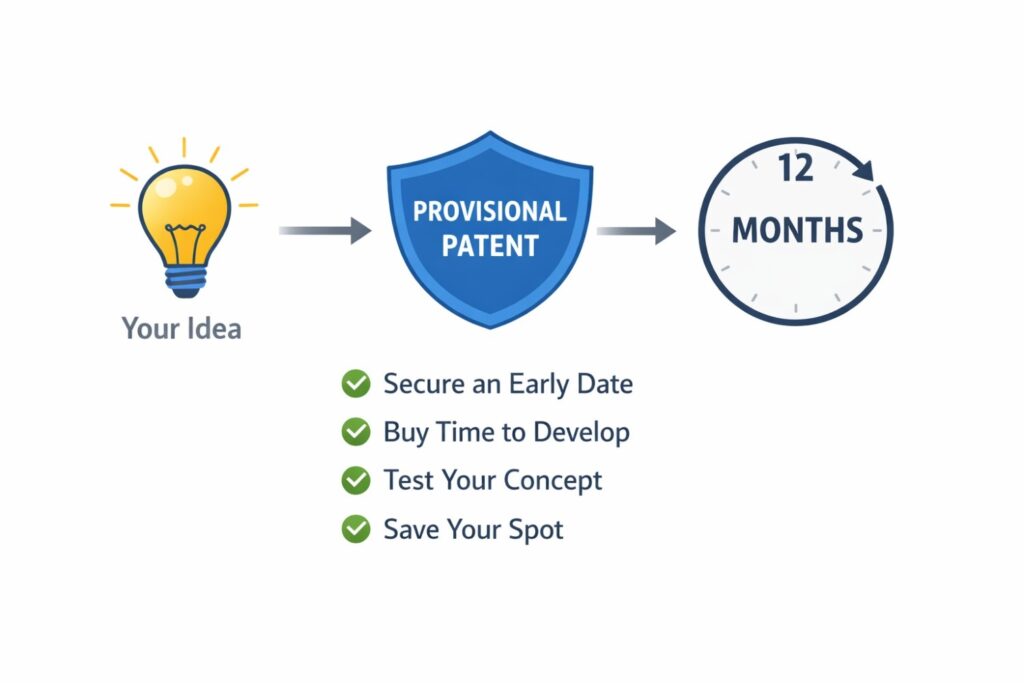
You can talk openly about your technology without fear. You can share details knowing there is a filing date behind you. This often leads to better conversations and stronger trust with investors.
Why quality matters more than speed alone
It is true that provisionals can be filed quickly. But speed without care can backfire. A weak provisional that lacks detail may not protect much at all. The goal is not just to file fast, but to file smart.
For businesses, this means treating the provisional as a real technical document, not a rough note. It should clearly explain how the invention works, what problem it solves, and how it is different.
The more clearly this is done, the more valuable the filing becomes later.
This is where many teams make mistakes. They rush, submit thin descriptions, and assume they are covered.
Later, when converting to a full patent, they find gaps that cannot be fixed. A strong provisional avoids this trap.
Using the provisional year as a strategy window
The 12 months after filing are not passive time. This period should be used intentionally. It is a chance to gather feedback, validate the market, and see which parts of the invention matter most.
Smart businesses use this time to track changes. As the product evolves, they note what stays core and what shifts. This helps shape the future full patent filing. The provisional becomes a baseline, not a final answer.
Teams that treat this year as a planning phase often end up with much stronger patents. They file the full application with real data, real use cases, and a clearer understanding of value.
How provisionals reduce fear of sharing ideas
One hidden benefit of a provisional application is psychological. Before filing, founders often hold back. They avoid sharing details. They stay vague in demos or pitches.
After filing, that fear drops. You can speak more freely. You can collaborate. You can explore partnerships without constant worry. For businesses that depend on feedback and collaboration, this openness can speed growth.
The difference between checking a box and building leverage
Some companies file provisionals just to say they did. Others use them to build leverage. The difference lies in intent and execution.
A strategic provisional is written with the future in mind. It is designed to support a full patent, defend against competitors, and align with business goals. It is not just about having something on file. It is about creating options.
When done right, a provisional becomes a foundation. It supports future filings, strengthens negotiations, and adds real value to the company.
Why modern teams file provisionals online
Online filing has removed many old barriers. Teams no longer need to wait months or navigate confusing systems alone. With the right tools and guidance, filing can happen quickly and correctly.
For businesses, this means less disruption. Engineers can focus on building. Founders can stay focused on growth. The patent process becomes part of the workflow, not a roadblock.
Platforms like PowerPatent are built around this reality. They help teams turn real product work into strong provisional filings, with attorney oversight to avoid costly mistakes.
If you want to see how this works in practice, you can explore the full walkthrough here: https://powerpatent.com/how-it-works.
What You Need Before You File Anything Online
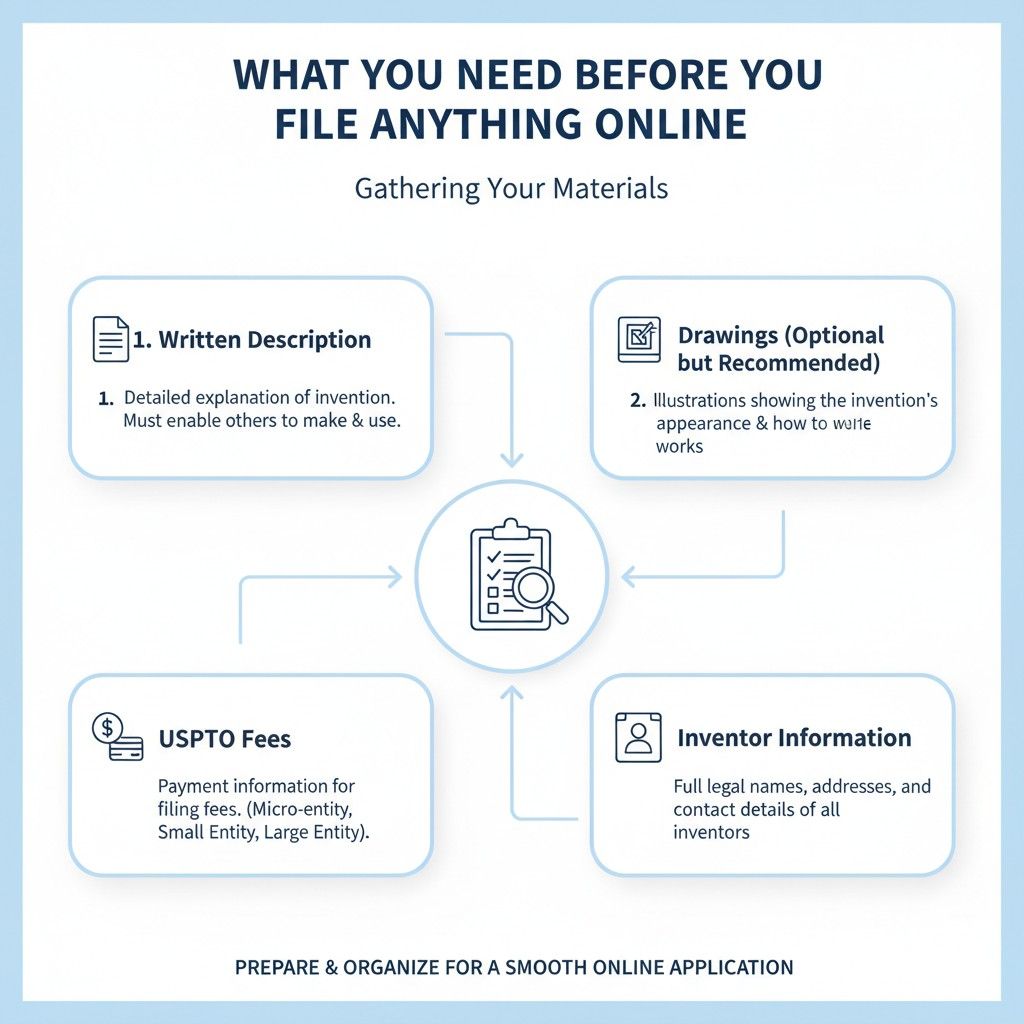
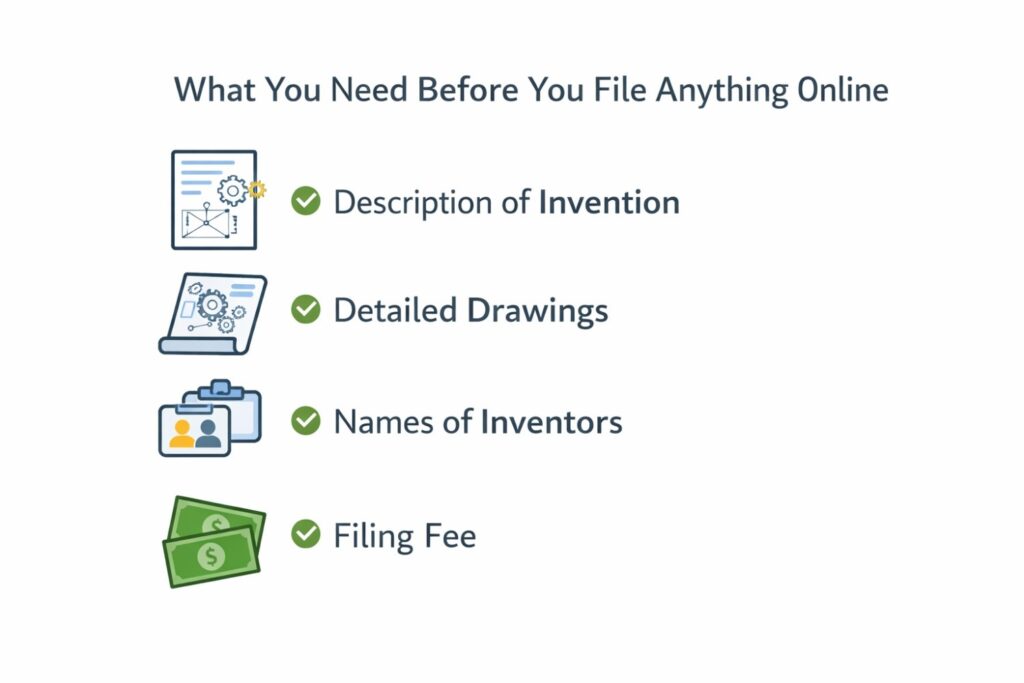
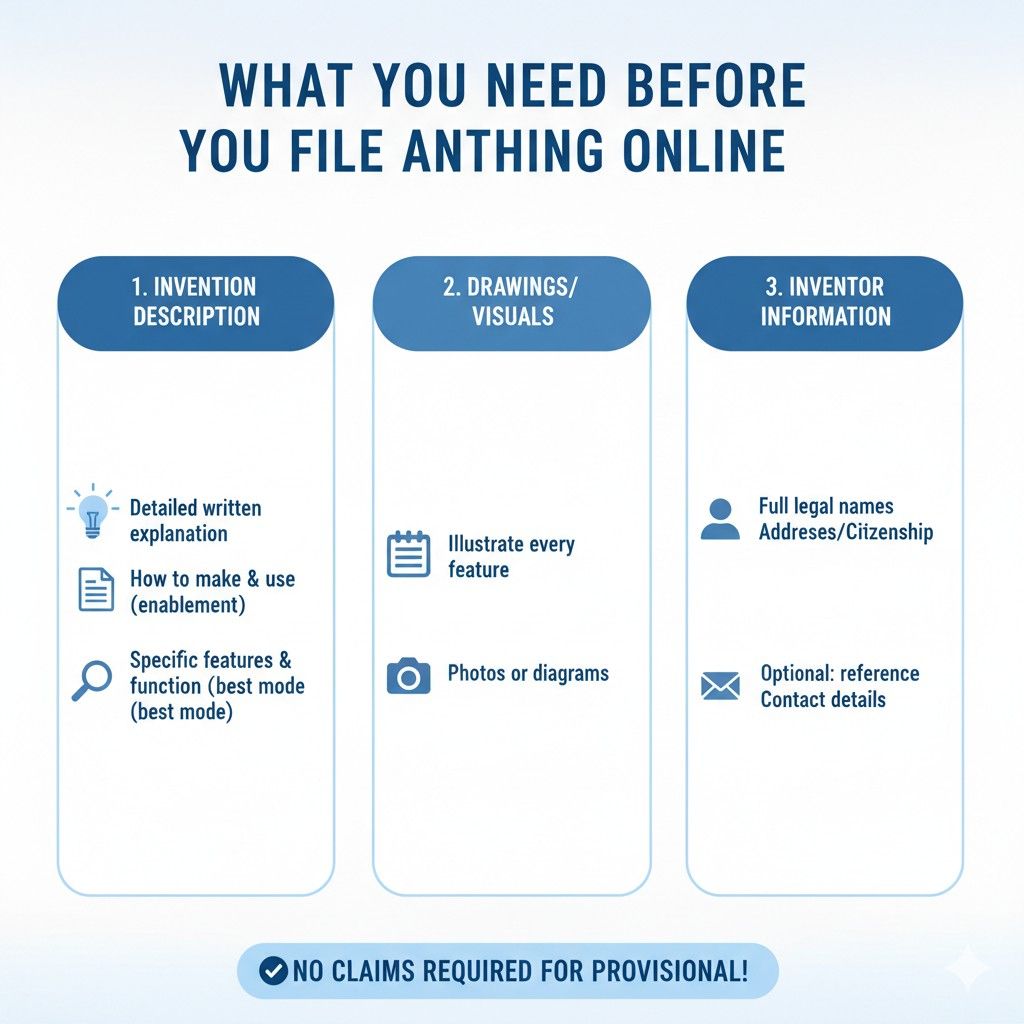
Before you file a provisional application online, there is a short but very important preparation phase. This step decides whether your filing will actually protect your business or just give a false sense of safety.
Many teams rush past this part. The smartest ones slow down just enough to get it right. This section explains what you truly need in place before you click submit, in a way that fits how real companies work.
Clarity on what you are actually protecting
The first thing you need is clarity. Not legal clarity, but product clarity. You must be able to explain what you built, how it works, and why it is different.
If you cannot explain it in simple words to a smart friend, you are not ready to file yet.
This does not mean your product must be finished. It means the core idea must be real and repeatable. There should be something technical that makes it work and something specific that makes it new. For businesses, this usually means the engine under the hood, not the surface design.
Take time to write this out in plain language. Imagine someone else trying to rebuild your product just from your explanation. If they could not do it, you likely need more detail.
A stable snapshot of your current product
A provisional application captures your invention at a moment in time. Because of that, you need a snapshot of where the product is right now. This includes how it works today, not how you hope it will work in a year.
For software teams, this might mean the current system flow or model logic. For hardware teams, it could mean the current design and components. The goal is not polish. The goal is accuracy.
Businesses that do this well often pull directly from real work. They use internal docs, diagrams, and even code comments as raw material. This keeps the filing grounded in reality and reduces the risk of missing something important.
Understanding what makes your solution different
One of the biggest mistakes founders make is focusing only on what their product does, not how it is different. A provisional application should clearly show what sets your solution apart.
This does not require deep research. It requires honest thinking. Ask yourself what problem others struggle with and how your approach solves it in a new way. Often the difference is in the process, not the result.
From a business view, this step is critical. This is what gives your patent power later. Without clear differences, your filing becomes weak and easy to work around.
Internal alignment before external filing
Before you file anything, your core team should be aligned. Everyone should agree on what the invention is and why it matters. This avoids internal confusion later when the patent is referenced in deals, pitches, or disputes.
Alignment also helps with accuracy. Engineers catch technical gaps. Product leaders catch use case gaps. Founders catch business logic gaps. A strong provisional often reflects input from more than one role.
This does not need to be a long process. A short review can surface issues that would be expensive to fix later.
Choosing what to include and what to leave out
A provisional application should be detailed, but it should also be focused. Not every feature needs to be included. The goal is to protect the core idea that gives your product value.
For businesses, this means thinking strategically. What part of this invention would hurt the most if a competitor copied it? That is where depth matters most.
At the same time, avoid being too narrow. You want enough breadth so small changes do not escape your protection. This balance is easier to find when you understand your product deeply.
Preparing materials that already exist
You do not need to create everything from scratch. In fact, some of the best provisional applications are built from existing materials. Product specs, technical docs, internal wikis, and design notes are all useful.
Using real materials saves time and increases accuracy. It also reflects how the invention actually works, not how someone thinks it should work.
For fast-moving teams, this approach keeps filing from becoming a distraction. You are documenting what you already know, not inventing new explanations under pressure.
Knowing what a provisional does not do
It is just as important to know what a provisional application does not do. It does not get examined. It does not turn into a patent by itself. It does not protect ideas that are not clearly explained.
Understanding these limits helps businesses set the right expectations. A provisional is a starting point, not the finish line. Its value depends on what you put into it and what you do next.
Teams that see it as part of a larger strategy get far more value than those who treat it as a checkbox.
Deciding when the timing is right
Timing is a business decision. File too early and you may lack detail. File too late and you may lose priority. The right moment is when the core idea works and the direction is clear.
This often happens sooner than founders expect. Waiting for perfection usually creates more risk, not less. A strong provisional can be filed while things are still moving, as long as the foundation is solid.
Modern teams often file earlier, then build on that foundation with future filings as the product evolves.
Why support matters even before filing
Even though a provisional can be filed without heavy legal process, guidance still matters. A second set of eyes can catch gaps you cannot see. It can also help shape the story in a way that supports future patents.
For businesses, this support reduces long-term risk. Fixing mistakes later is far more expensive than getting it right upfront.
This is why many founders use platforms that combine software speed with real attorney oversight. It keeps the process fast while protecting against common errors. If you want to see how this works in practice, you can explore the full process here: https://powerpatent.com/how-it-works.
How to File a Provisional Application Online Step by Step
Filing a provisional application online is not hard, but it is easy to do poorly. The difference between a filing that truly protects your business and one that simply exists comes down to how you approach each step.
This section walks through the process in a practical way, focusing on decisions that matter and actions that create real value.
Starting with the right mindset
Before you touch any forms, it helps to reset your mindset. This is not an admin task. It is a business move. The words you submit can shape your company’s future options, partnerships, and defenses.
When teams rush, they often copy short descriptions and assume that is enough.
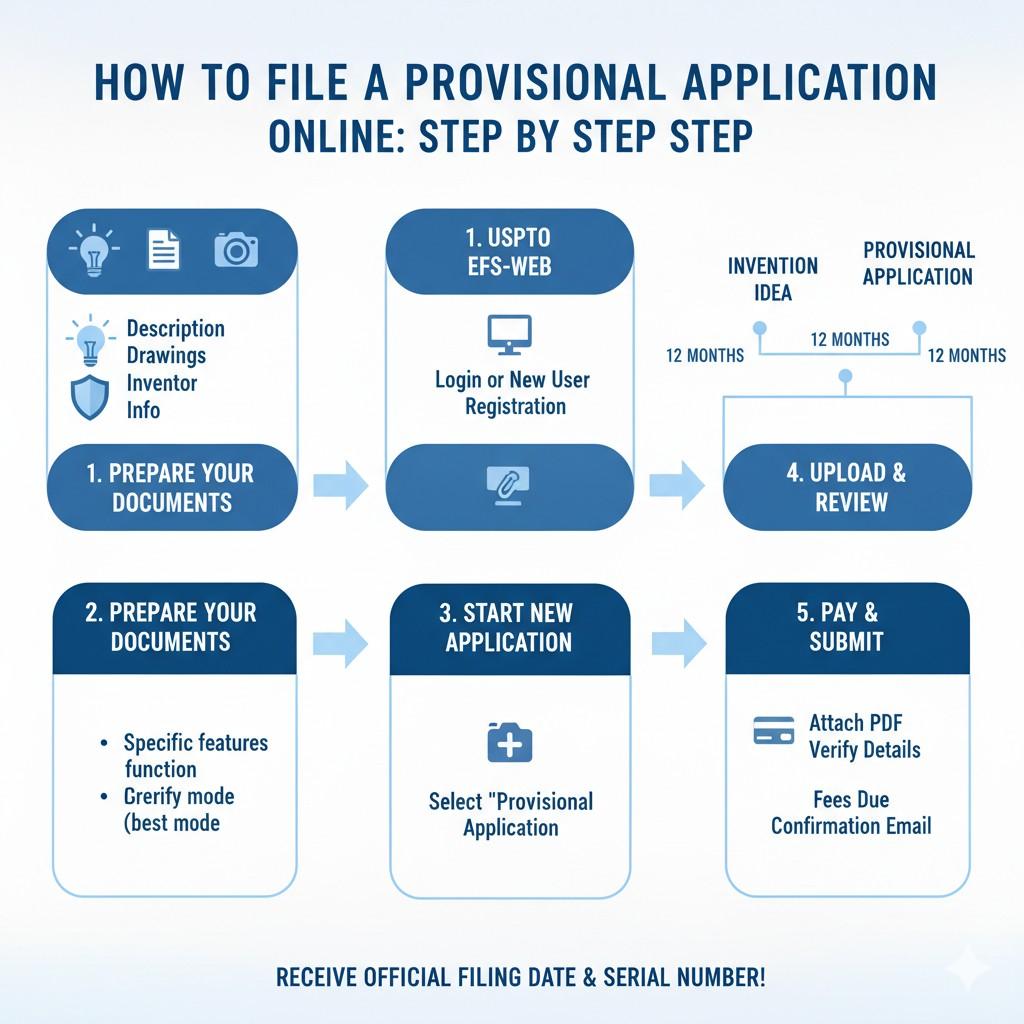
A better approach is to treat this like writing instructions for someone else to rebuild your invention. This mindset leads to clearer explanations and stronger protection.
Turning your product into a clear written story
The heart of the provisional application is the description. This is where most of the work should go. You are telling the story of how your invention works, step by step, in simple language.
Start from the problem. Explain what is broken or missing in current solutions. Then walk through how your invention solves it. Use real examples from your product. If it is software, explain the flow. If it is hardware, explain the structure and operation.
Avoid marketing language. This is not about being impressive. It is about being clear. Businesses that do this well often imagine a new engineer joining the team and needing to understand the system from scratch.
Being specific without locking yourself in
One challenge when filing is knowing how specific to be. Too vague, and the filing becomes weak. Too narrow, and you may limit future versions.
A good balance is to describe the core idea in detail, while also explaining variations. Show that the invention can work in more than one way. This protects you if the product evolves.
From a business view, this flexibility is key. Markets change. Customer needs shift. A well-written provisional leaves room to grow without losing protection.
Using drawings and visuals the right way
Visuals can add a lot of strength to a provisional application. They help explain complex ideas quickly and clearly. These do not need to be formal patent drawings. Simple diagrams often work best.
The goal of a drawing is understanding, not beauty. A basic flow diagram, system layout, or component sketch can make your written explanation much stronger.
Teams often pull these from existing materials. Product diagrams, architecture charts, and even whiteboard sketches can be included if they clearly show how things work.
Reviewing for gaps and assumptions
Once the draft is written, step back and review it with fresh eyes. Look for assumptions. Ask whether each step is fully explained or if it relies on insider knowledge.
This review is where many issues surface. A process step may be obvious to you but unclear to someone else. Filling these gaps now strengthens your filing and reduces future risk.
For businesses, this step is often where outside feedback helps most. A neutral reviewer can spot unclear areas that the team overlooks.
Filing through the online system
Once the content is ready, the actual online filing is straightforward. You upload the document, attach any drawings, and submit through the patent office system or a platform that handles this for you.
The key here is accuracy. Make sure names, titles, and dates are correct. Small errors can create confusion later.
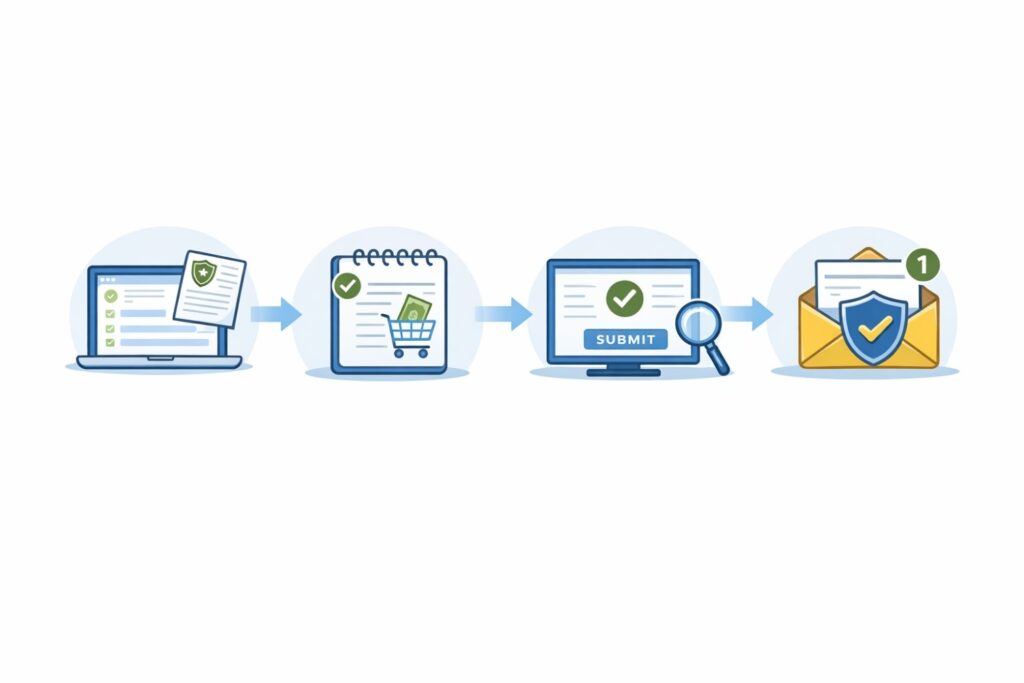
After submission, you will receive confirmation and a filing receipt. This is your proof. Save it. Share it with your team. This date now matters.
What happens immediately after submission
Once the provisional is filed, you can say “patent pending.” More importantly, you can operate with more confidence. You can pitch, demo, and discuss your technology with less fear.
For businesses, this often unlocks momentum. Conversations move faster. Decisions feel less risky. The filing acts as a safety net while you push forward.
However, this is not the end. It is the start of a new phase.
Tracking changes after filing
From the moment you file, your product will likely continue to change. It is important to track those changes. Keep notes on new features, new approaches, or major improvements.
These notes help later when you prepare the full patent application or additional filings. They also help you decide whether a second provisional is needed to cover new ideas.
Teams that track this actively tend to build stronger long-term protection.
Avoiding common filing mistakes
Many businesses make the same mistakes. They file too thin. They skip explanations. They assume future filings can fix gaps.
The truth is that you cannot add new material later and claim the old filing date. What is missing stays missing. This is why care upfront matters so much.
Using a system that guides you through this process can prevent these errors. The goal is not perfection, but completeness.
Why modern tools change the process
Today, filing does not have to mean wrestling with old systems alone. Modern platforms guide you through each step, help structure your content, and add professional review.
For businesses, this saves time and reduces stress. It also improves quality. You get the speed of software with the safety of real oversight.
PowerPatent was built for this exact reason. It helps teams file strong provisional applications online without slowing down product work.
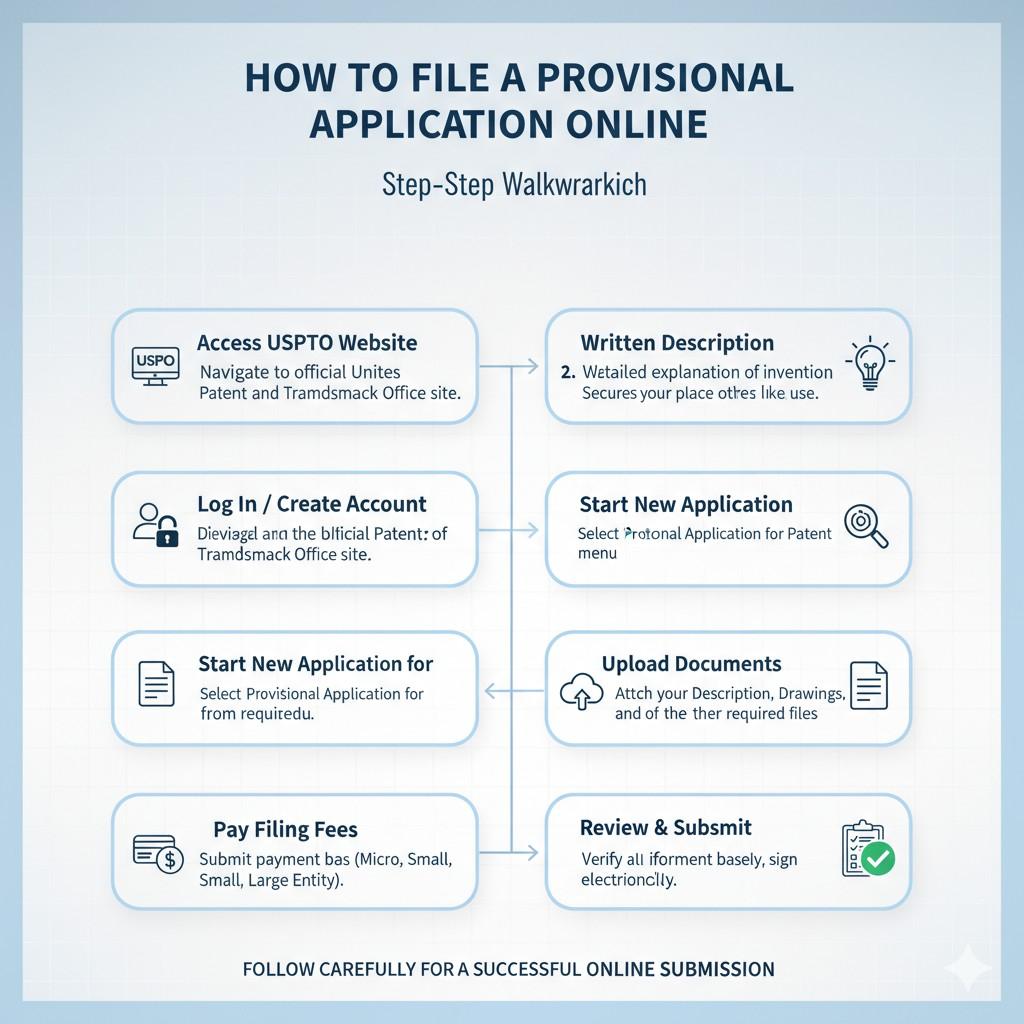
If you want to see how the process works in detail, you can explore it here: https://powerpatent.com/how-it-works.
What Happens After You File and How to Use the Next 12 Months Wisely
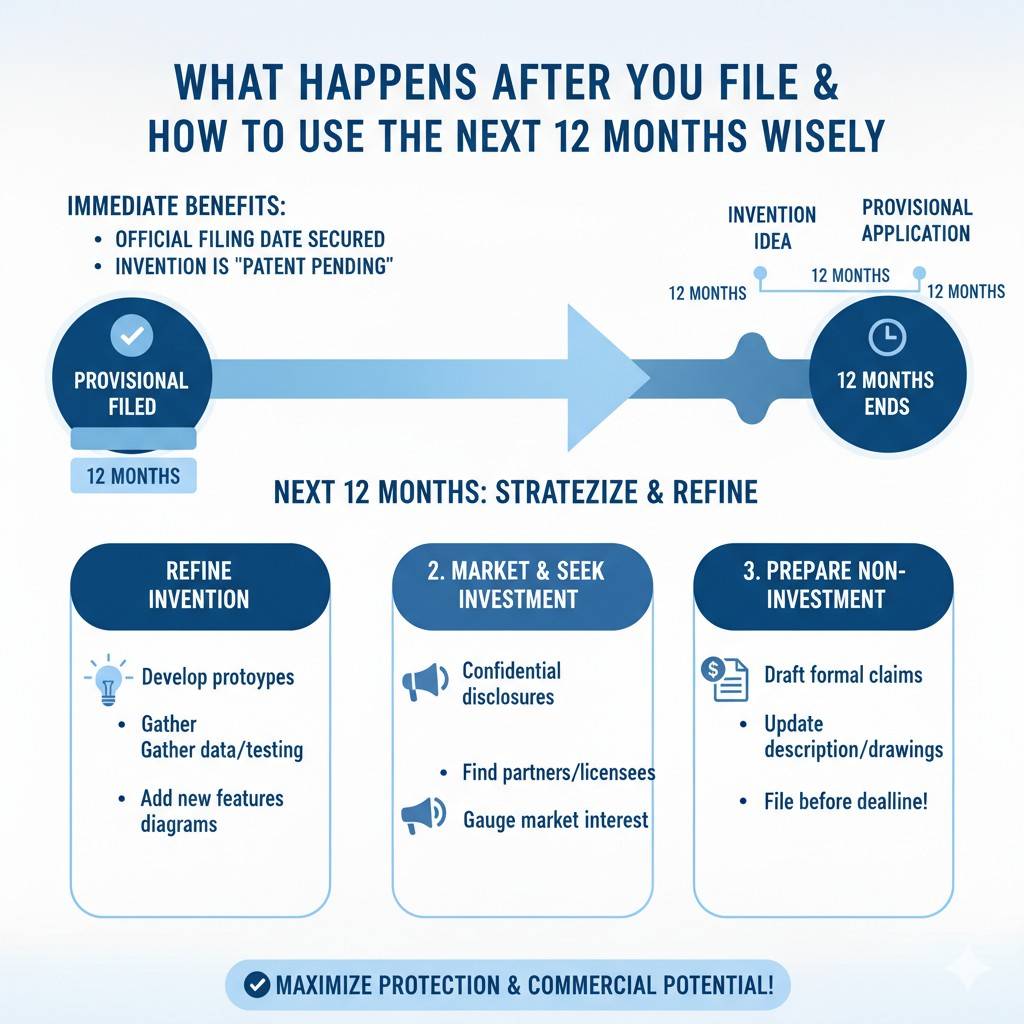
Filing the provisional application is a major step, but it is not the finish line. For many businesses, the 12 months that follow are even more important than the filing itself.
This period shapes the strength of your future patent and the leverage it gives your company. This section explains how to use that time with purpose instead of letting it quietly slip away.
Shifting from filing mode to growth mode
Once the provisional is filed, the pressure to rush eases. You no longer need to protect the idea before every conversation. This is the moment to shift focus back to growth.
For businesses, this often means leaning into sales, partnerships, and testing. You can show more of your product. You can ask better questions. You can move faster because the core idea has a timestamp behind it.
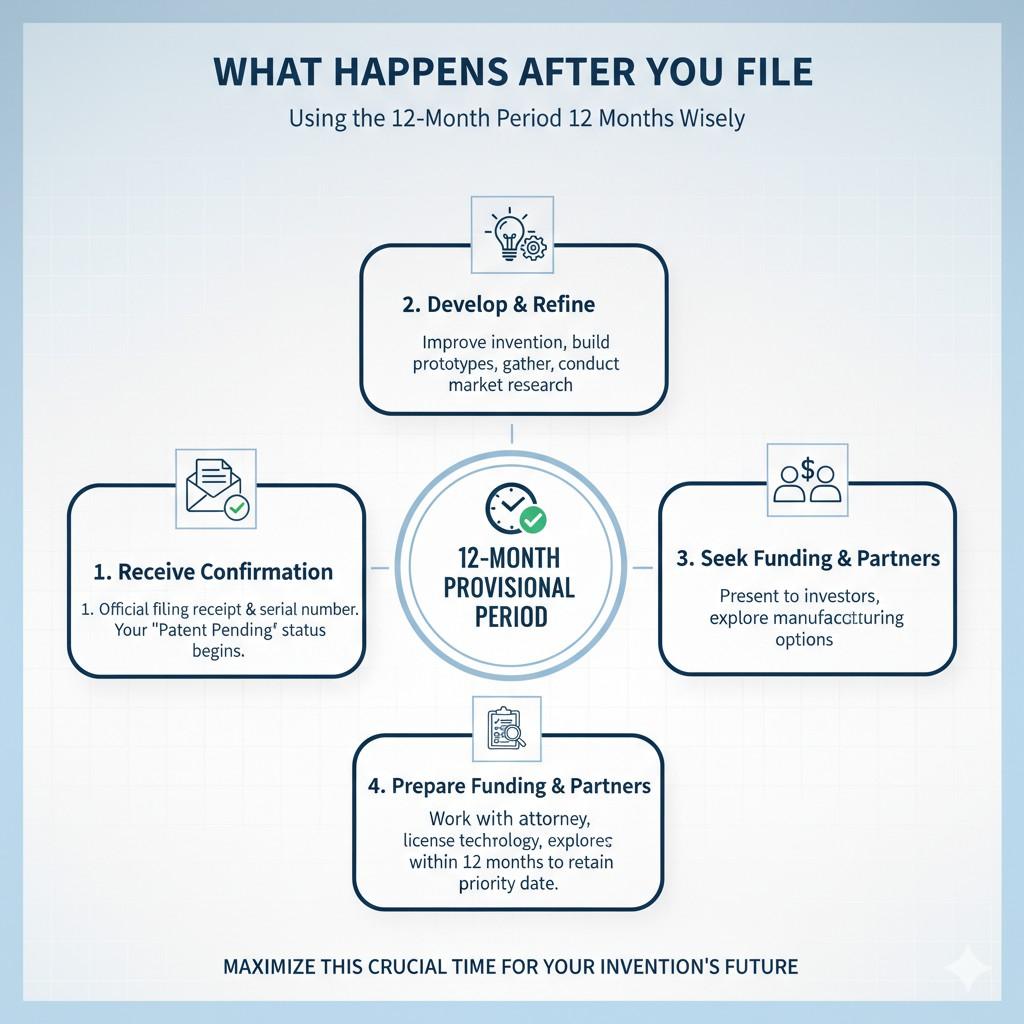
This shift is one of the biggest practical benefits of filing early.
Using real-world feedback to strengthen your patent
As customers use your product, you will learn things you did not expect. Some features will matter more than others. Some problems will turn out to be bigger than you thought.
This feedback is valuable not just for the product, but for your patent strategy. It helps you see what is truly central to your invention. When it is time to prepare the full patent application, this insight can shape stronger claims.
Businesses that listen closely during this phase often end up with patents that align better with real market value.
Watching how competitors react
After you start talking more openly, pay attention to the market. Watch how competitors respond. Do they shift messaging? Do they release similar features? Do they avoid certain areas?
These signals can guide future filings. If you see others circling the same space, it may be smart to file additional provisionals to cover improvements or new angles.
For companies in fast-moving markets, this awareness can protect against being boxed out later.
Deciding if and when to file another provisional
Many teams think one provisional is all they get. That is not true. You can file multiple provisionals as your product evolves.
If you develop a major improvement or discover a new approach, a second provisional can capture that new value. Each filing gets its own date.
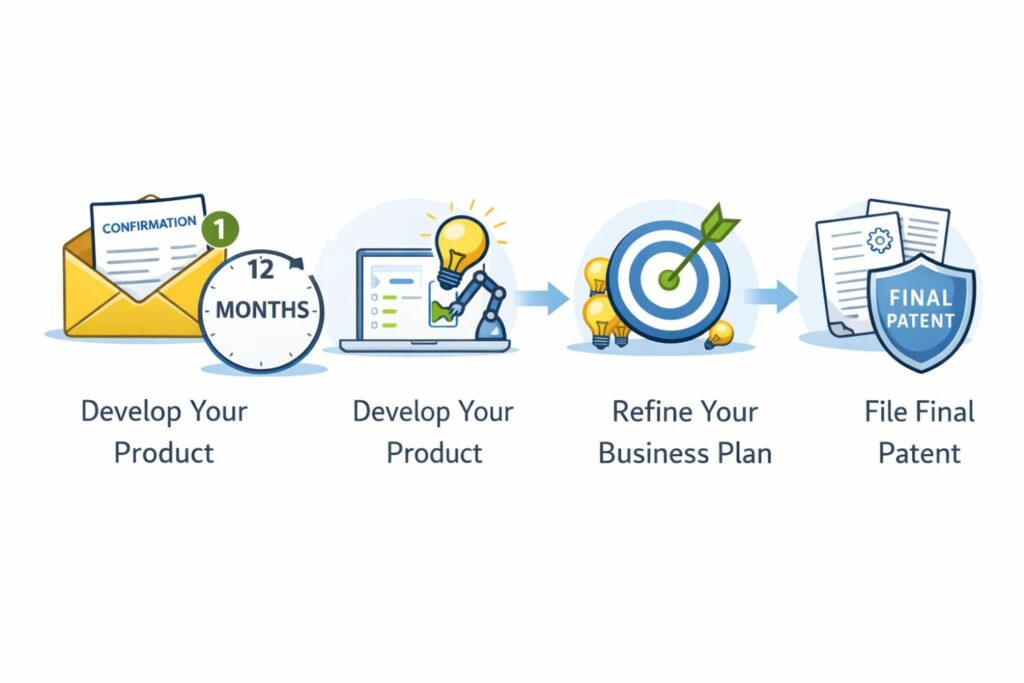
From a business perspective, this creates a layered defense. You are not relying on a single snapshot. You are building a timeline of innovation that supports your story.
Preparing early for the non-provisional application
The full patent application, often called the non-provisional, must be filed within 12 months of the first provisional. Waiting until the last minute is risky.
Smart teams start preparing months in advance. They review the original filing. They gather updates. They decide what stays core and what can be left out.
This preparation makes the final filing smoother and stronger. It also reduces stress and rushed decisions.
Aligning patent strategy with business direction
As your company grows, your priorities may change. Maybe a feature you thought was central is no longer important. Maybe a new use case becomes the main focus.
Your patent strategy should follow the business, not the other way around. The 12-month window is a chance to realign. You can shape the final patent to protect what truly matters now.
This alignment is what turns a patent into a real business asset instead of a dusty document.
Using your patent pending status in deals
During this period, your patent pending status can support many conversations. It can strengthen partnership talks. It can add confidence in enterprise sales. It can support valuation discussions.
The key is to use it honestly. Be clear about what is filed and what is still in progress. Transparency builds trust.
Businesses that use their IP status thoughtfully often see it open doors, not just check boxes.
Avoiding the trap of doing nothing
One of the biggest risks after filing is inactivity. Teams get busy. The deadline feels far away. Months pass quickly.
To avoid this, set simple checkpoints. Review your product and IP strategy every few months. Ask whether anything new needs protection.
This light structure keeps the patent process connected to real work, not buried under it.
Getting help before it is urgent
The best time to get guidance is before you are under pressure. Reviewing your provisional with an expert months before the deadline can surface issues early.
For businesses, this often saves money and avoids panic. You have time to adjust, clarify, and strengthen your position.
Platforms that combine software and attorney support are especially useful here. They provide continuity from provisional to full filing without forcing you to start over.
Turning a filing into a long-term advantage
A provisional application is not just a form you submit. It is the first chapter in your company’s intellectual property story.
When used well, it supports growth, reduces risk, and creates leverage. When ignored, it becomes a missed opportunity.
Modern teams treat this process as part of building the company, not a side task. With the right approach and tools, it can be fast, clear, and surprisingly empowering.
If you want to see how founders use PowerPatent to manage this entire journey, from first filing through full protection, you can explore the process here: https://powerpatent.com/how-it-works.
Wrapping It Up
Filing a provisional application online is not about paperwork. It is about control. It is about making sure the work you are putting years into does not slip through your fingers because you waited too long or moved without a plan. For modern businesses, especially fast-moving startups, the provisional application is often the smartest first step. It lets you protect what you have built without slowing down progress. It gives you a real filing date, the freedom to talk openly, and the space to keep improving your product while staying protected.