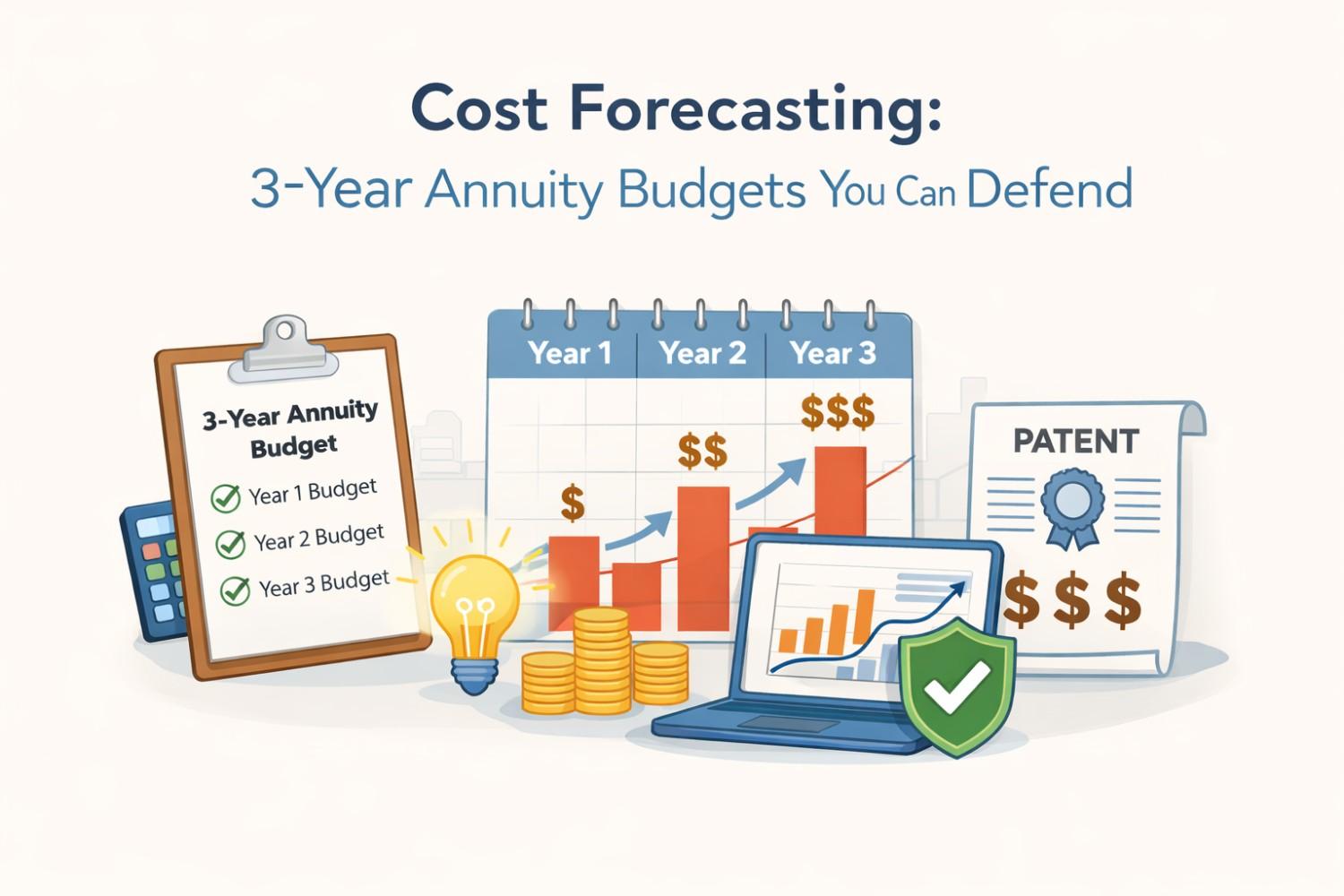
Patents do not just cost money once. They cost money over time. If you do not plan for that, the surprise bills will hurt. Many founders file a patent and then forget about the next three years of payments that keep it alive. Then the finance team asks hard questions. This guide will show you how to forecast your patent annuity costs for the next three years in a way you can clearly explain to your board, your CFO, and your investors. No confusion. No guesswork. Just a clean, simple plan you can defend with confidence.
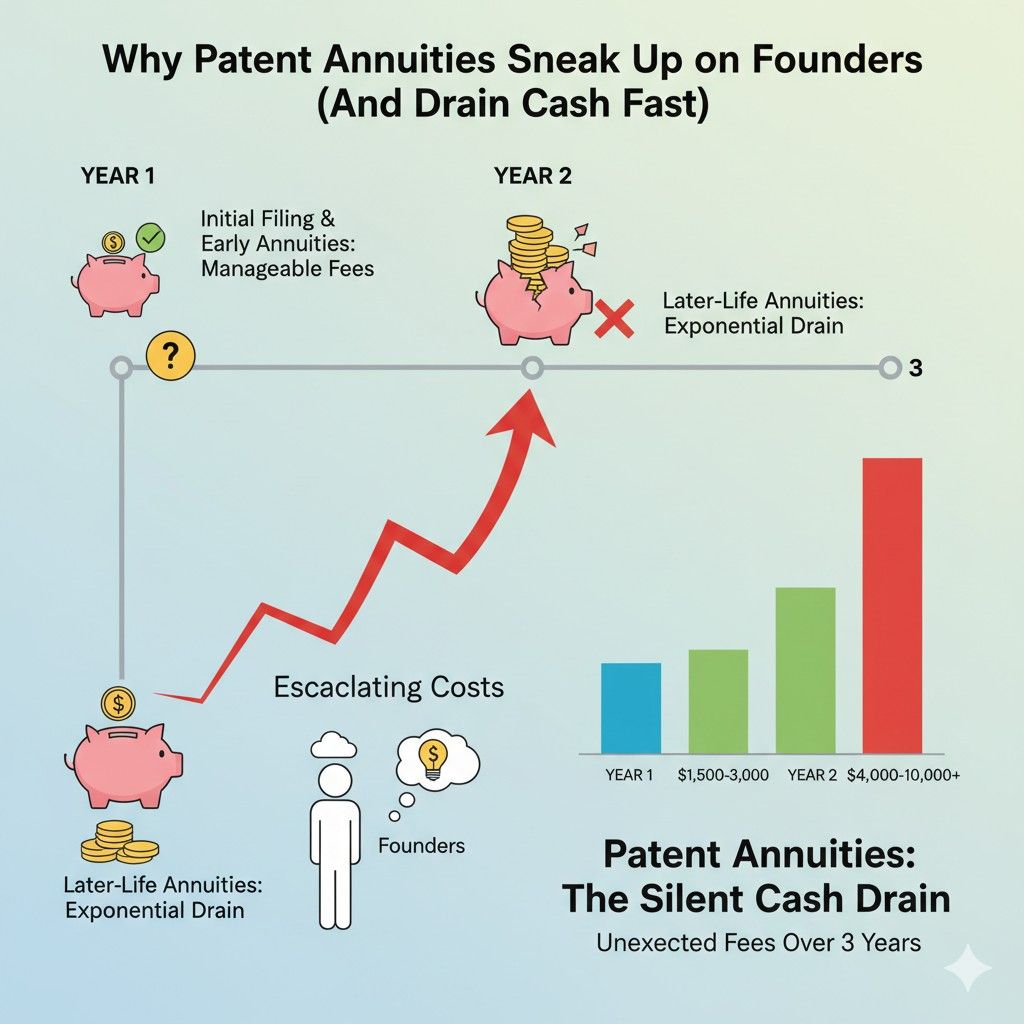
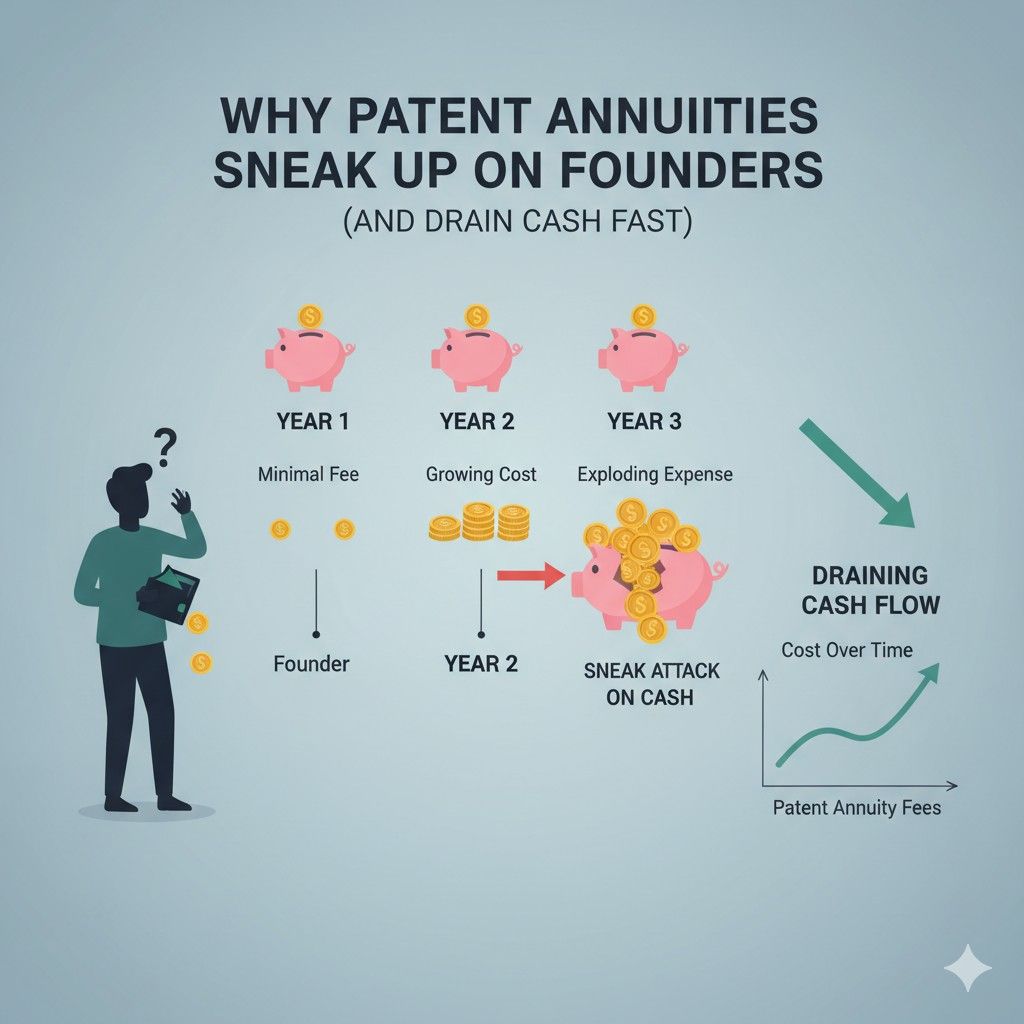
Why Patent Annuities Sneak Up on Founders (And Drain Cash Fast)
Most founders think the hard part is filing the patent. They focus on writing claims, responding to office actions, and getting the patent granted. Once it is approved, it feels like the job is done.
But that is when a quiet timer starts running. Patent annuities are the payments you must make to keep your patent alive. Miss them, and your protection can disappear.
Over three years, those payments can stack up fast. If you do not forecast them early, they can disrupt your runway, slow hiring, or even block a funding round.
The “We Already Filed” Trap
After a patent gets filed or granted, it moves into the background. Your team goes back to shipping product. Investors ask about growth. Customers want features. No one wakes up thinking about maintenance fees.
This is where annuities sneak in.
The patent system is designed so that you pay over time. The longer you keep the patent alive, the more you pay. That means your cost curve is not flat. It rises. If you file in multiple countries, it rises even faster.
A smart move is to treat every patent as a three-year financial commitment from day one.
When you approve a filing, you should already know what years one, two, and three will cost to maintain it. Do not let filing be a one-time line item. Build a mini forecast the same week you decide to file.
If you are using a system that does not show you this clearly, you are flying blind. This is exactly why modern founders work with platforms like PowerPatent.
You can see your pipeline and future obligations clearly instead of guessing. You can explore how it works here: https://powerpatent.com/how-it-works
The Multi-Country Multiplier Effect
Many startups file in the United States first. Then they expand into Europe, Canada, or Asia. On paper, it sounds simple. In reality, each country has its own fee schedule. Each has its own due dates. Each has its own increases over time.
What looks like one patent can turn into five streams of payments.
This is where the drain happens. A founder may approve expansion into three regions without realizing that the next three years now include three separate sets of annuities. Finance sees a spike but does not understand why.
The strategic move is to model expansion before you file internationally. Ask a simple question: if we enter three countries this year, what will the next three years of maintenance look like across all of them?
Then align that with your revenue plan. If Europe is not projected to drive revenue in the next three years, you may decide to delay or narrow coverage.
This is not about cutting protection. It is about matching protection to business goals.
The Board Meeting Surprise
Nothing feels worse than being asked in a board meeting, “Why did IP costs jump this quarter?” and not having a clear answer.
Annuities often show up as surprise spikes. They do not hit every month. They hit at certain intervals. That makes them easy to forget and hard to explain.
The fix is simple but powerful. Build a rolling three-year annuity calendar. Tie each payment to a patent family and to a product line.
When someone asks why costs increased, you can say, “This payment keeps our core AI model protected in the U.S. and Europe for another year.” Now the cost has a story. It has purpose.
When you use a structured system with attorney oversight, like PowerPatent, you reduce the risk of missing dates and scrambling.
You move from reactive to planned. If you want to see how founders manage this without chaos, start here: https://powerpatent.com/how-it-works
The Illusion of Small Numbers
At first, maintenance fees can look small. A few thousand dollars here. A few thousand there. Compared to payroll or cloud costs, it does not feel huge.
But stack them across multiple patents and multiple countries over three years, and the number changes fast.
Founders often underestimate how quickly a portfolio grows. One strong year of innovation can mean three to five filings. Three years later, you are paying to maintain all of them at once.
A strong habit is to calculate total portfolio carry cost each quarter. Not just per patent, but as a full portfolio view.
Ask: if we freeze new filings today, how much will we still owe over the next three years just to keep what we already have? That number gives you a baseline commitment.
When you know your carry cost, you can decide how aggressive to be with new filings. You are no longer guessing.
The “Future Us Will Handle It” Problem
Startups are built on speed. You focus on what moves the needle now. It is easy to think that future revenue will cover future patent costs.
Sometimes it does. Sometimes it does not.
If growth slows or fundraising takes longer than planned, those annuities do not pause. They still come due.
The strategic way to handle this is to tie patent decisions to funding milestones. For example, you may decide that certain foreign filings will only proceed if you close a specific round.
Or you may plan to review low-performing patents before key annuity deadlines.
This turns annuities into decision points instead of automatic expenses. You keep control.
Working with real patent attorneys through a smart platform makes this easier. You are not just filing. You are reviewing your portfolio with real guidance.

PowerPatent was built for founders who want that balance between speed and oversight. You can see the approach here: https://powerpatent.com/how-it-works
The Silent Risk of Missed Payments
Beyond cost, there is risk. Miss an annuity payment, and your patent can lapse. In some cases, you can fix it. In others, you lose rights. Competitors can step in. Investors can lose confidence.
Many startups rely on scattered reminders, old spreadsheets, or outside agents they rarely speak to. That works until it does not.
A smarter approach is to centralize your portfolio view. Make sure your leadership team has visibility. Do not hide patent deadlines in someone’s inbox. Treat them like payroll or tax deadlines.
When your system combines software tracking with real attorney review, the risk drops. You gain confidence that nothing critical will slip through. That is the core idea behind PowerPatent. It is not just filing help.
It is ongoing structure with human oversight. Learn more here: https://powerpatent.com/how-it-works
The Hidden Opportunity Inside the Cost
Here is the part many founders miss. Annuities are not just costs. They are signals.
Every time a maintenance fee comes due, you have a choice. Is this patent still aligned with our roadmap? Does it still block competitors? Does it support our next raise?
Instead of auto-paying everything, use each annuity as a review moment. Meet with your team. Look at product direction. Decide if this asset still matters.
This simple habit can save real money over three years. It also sharpens your strategy. Your portfolio becomes lean and strong, not bloated and expensive.
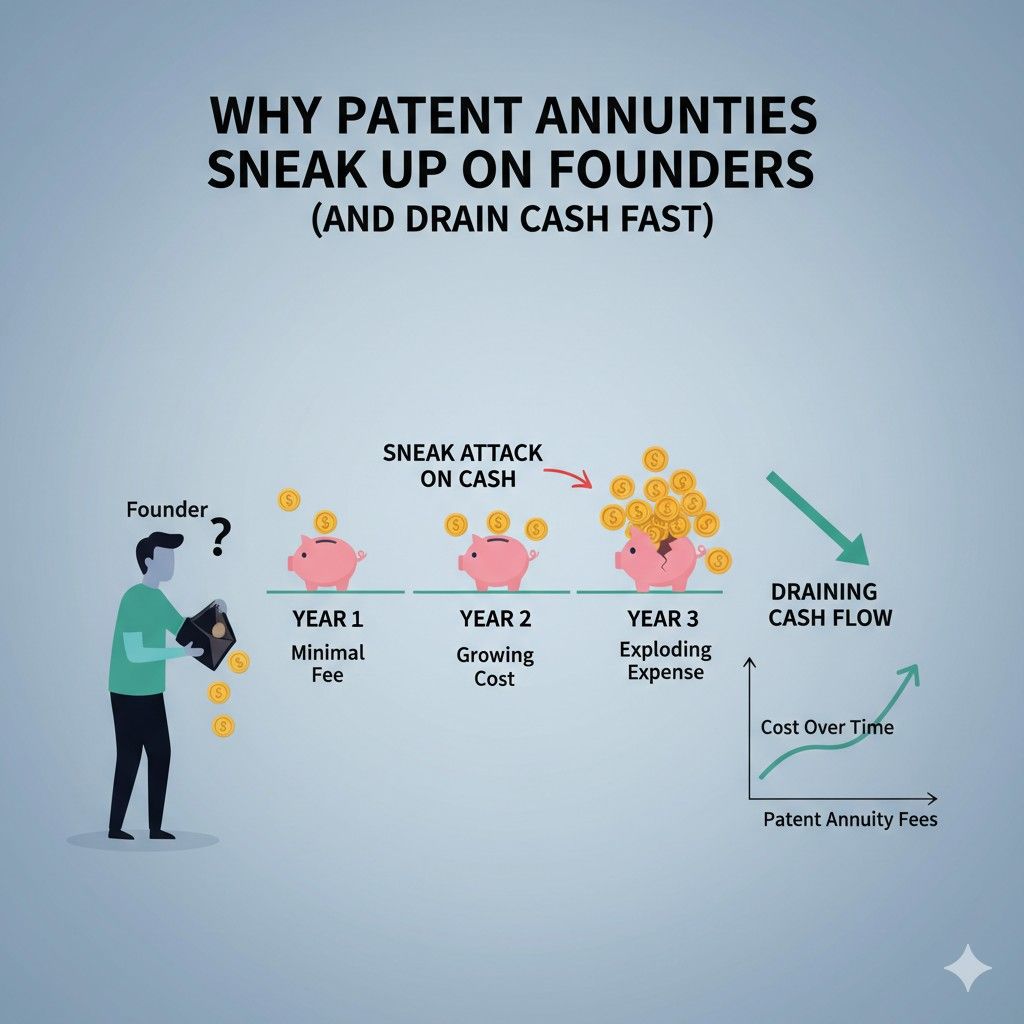
When you forecast annuities clearly, you stop being surprised. When you review them strategically, you turn cost into control.
And that is the shift. Patent annuities only drain cash when you ignore them. When you plan for them, track them, and align them with growth, they become a smart investment in protecting what you are building.
How to Build a 3-Year Annuity Budget You Can Actually Defend
A budget is not just a spreadsheet. It is a story. When you present a three-year annuity forecast, you are not only showing numbers. You are showing that you understand your assets, your risk, and your long-term plan.
A defendable budget means you can explain every dollar. You can connect each payment to product, growth, and competitive edge. That level of clarity builds trust with investors and gives your team confidence.
Start With Your Current Portfolio Reality
Before you forecast anything, you need a clean picture of what you already own. Many startups do not have this fully organized. Patents are spread across folders, email threads, and outside counsel systems.
You need one clear view.
Gather every active patent and pending application. Group them by product line or core technology. Then map out the next three years of expected annuities for each one. Do not guess. Get the real dates and expected fee ranges.
This is where founders often realize they have blind spots. Some patents may have upcoming jumps in cost that no one flagged. Others may be nearing a key deadline that forces a business decision.
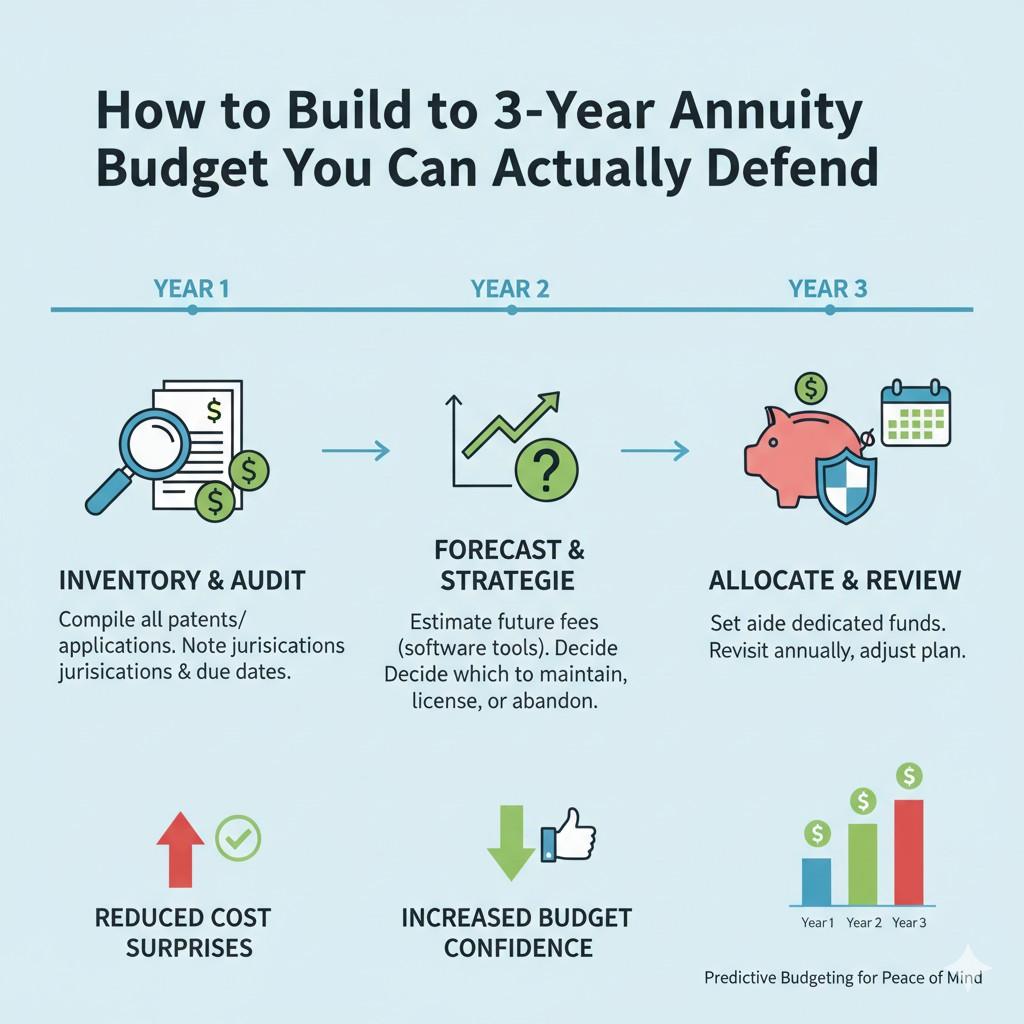
Using a modern platform that tracks this automatically saves hours and reduces risk. PowerPatent gives you that live visibility while still keeping real patent attorneys in the loop.
That mix of software and human oversight is what makes the numbers reliable. You can see how it works here: https://powerpatent.com/how-it-works
Forecast Based on Business Scenarios, Not Just Dates
A strong three-year budget does not assume the future is fixed. It accounts for possible growth paths.
If you plan to expand into new markets, model what happens to your annuities if you file internationally. If you expect to launch two new core features next year, assume at least one new patent family. Add that into your projection.
Then create two views. One where you move aggressively. Another where you stay lean.
When you present this to your board or CFO, you are not just saying, “Here is what we owe.” You are saying, “Here is what we owe if we grow fast, and here is what we owe if we slow down.” That shows maturity. It shows control.
It also prevents shock later.
Tie Each Patent to Revenue Strategy
The easiest way to defend a patent budget is to connect it directly to money.
For each patent family, write a simple statement. This protects our core AI engine. This covers our hardware design. This blocks competitors in our top market.
When an annuity comes due, you can say exactly what you are protecting and why it matters.
If you cannot explain the link between a patent and your business direction, that is a signal. Maybe the patent is not aligned anymore. Maybe it needs review before the next payment.
This exercise forces discipline. It turns patents from abstract legal tools into clear business assets.
When you work with real attorneys who understand startups, you can have these conversations early.
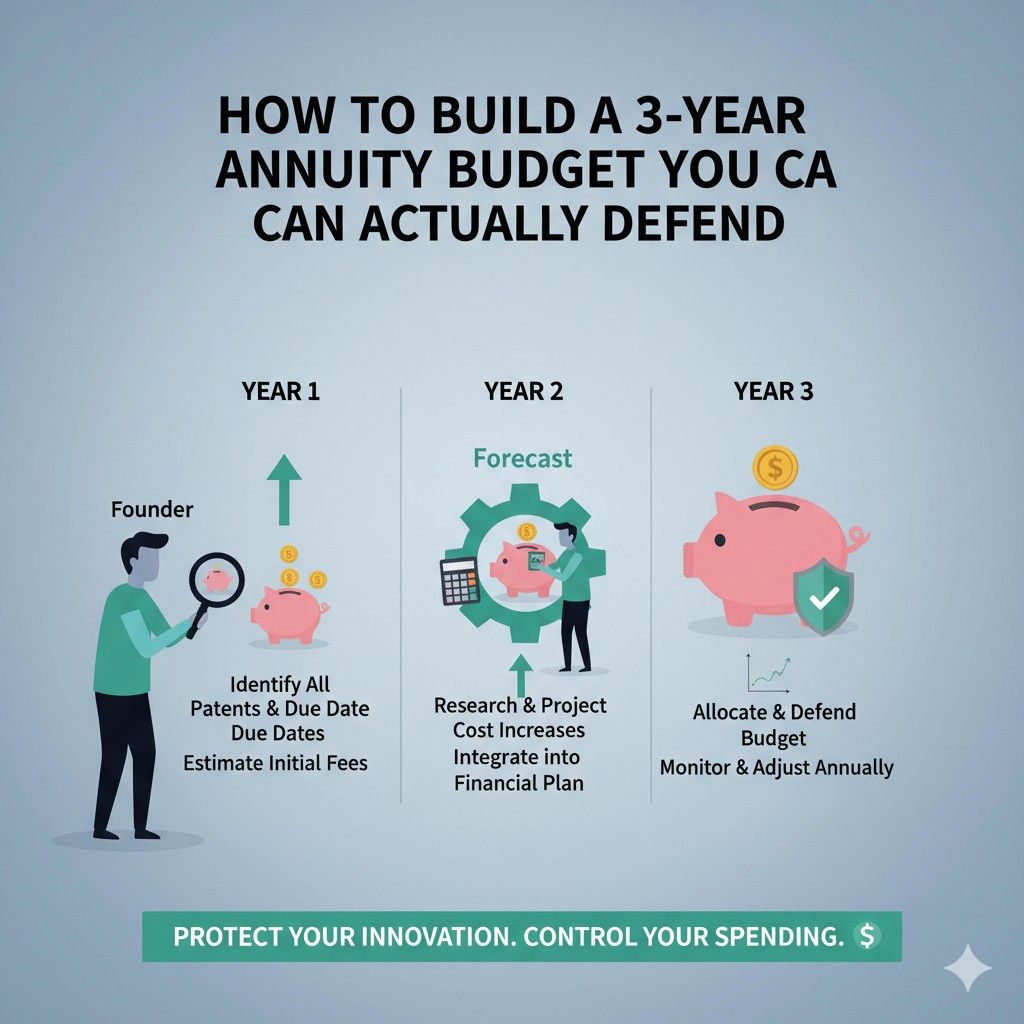
PowerPatent is built for that kind of collaboration. You are not left alone with a bill. You have guidance tied to your growth. Explore it here: https://powerpatent.com/how-it-works
Build a Rolling 12-Quarter View
Three years can feel far away. Break it into quarters.
Create a simple rolling 12-quarter chart. Place each expected annuity payment in the quarter it will hit. Now you can see spikes before they happen.
This helps with cash flow planning. If you know a large cluster of payments hits in Q3 next year, you can plan fundraising, revenue pushes, or cost controls around it.
It also helps avoid emotional decisions. When a big bill arrives unexpectedly, teams panic. When you saw it coming two years ago, it becomes routine.
Update this view every quarter. Remove patents you decide not to maintain. Add new filings as they occur. Keep it alive.
Set Decision Checkpoints Before Each Major Payment
A defendable budget is not rigid. It includes built-in review moments.
For each major annuity jump, schedule a review 90 days before the due date. At that meeting, ask one core question: does this patent still support our next three years?
If the answer is yes, the payment is easy to justify. If the answer is unclear, you still have time to analyze and decide.

This simple habit keeps you proactive. It also gives finance comfort. They know you are not blindly paying everything.
Coordinate With Fundraising Timelines
Investors look closely at burn rate and long-term obligations. Patent annuities are part of that story.
When preparing for a raise, include your three-year annuity forecast in your internal planning. Know how much of the new capital will support IP protection.
This does two things. First, it prevents underestimating runway. Second, it allows you to frame patents as part of your moat. Instead of appearing as cost centers, they become assets backed by a clear maintenance plan.
Sophisticated investors respect founders who understand their IP commitments. It signals that you are building something durable.
Avoid the “All or Nothing” Mindset
Some founders think they must maintain every patent forever. Others feel tempted to cut all IP costs during tight times.
Neither extreme works well.
A strategic three-year forecast allows selective focus. You might double down on patents tied to your core product while letting less critical ones lapse. That choice is easier when you see the full cost path clearly.
Clarity reduces stress. It replaces reaction with intention.
With the right tools, you can simulate these choices before money leaves your account.
PowerPatent helps founders think this way by combining smart tracking with attorney guidance. You can review the model here: https://powerpatent.com/how-it-works
Document the Logic Behind Your Budget
A defendable budget is documented.
Write down why each major patent family exists. Write down why you chose to maintain it in certain regions. Keep notes on decisions to drop others.
This record protects you in future board meetings. It also helps new team members understand past strategy.
When you treat patent budgeting with the same discipline as product roadmaps, it elevates the entire company.
Over three years, this structured thinking can save serious money. More importantly, it keeps your protection aligned with your growth.
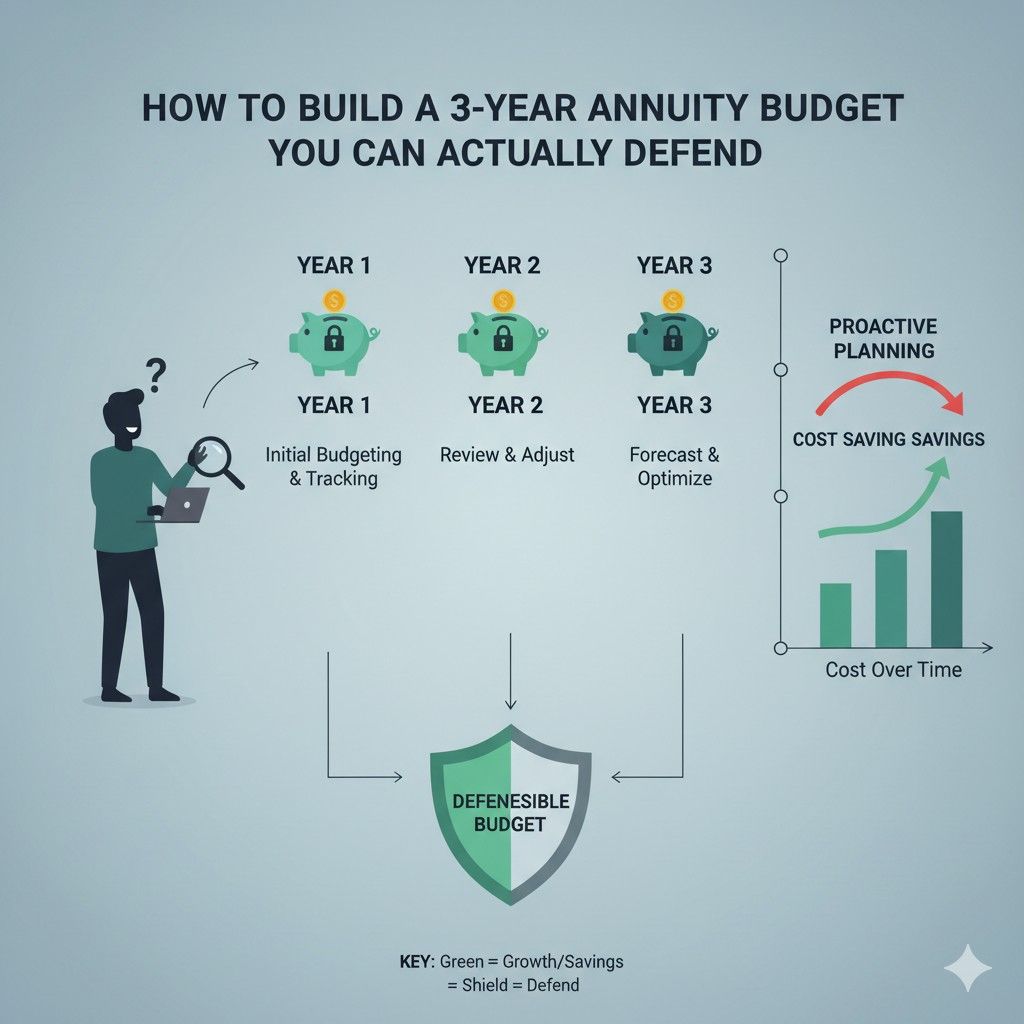
Annuity costs will always exist. The question is whether they surprise you or serve you.
Turning Patent Costs Into a Strategic Advantage Instead of a Surprise Bill
Most founders see patent costs as a line item. Something that must be paid. Something that slowly chips away at runway.
That mindset limits you. When you forecast and manage annuities the right way, they stop being random expenses. They become proof that you are building something real and protecting it with intent.
This shift is not about spending more. It is about spending with purpose.
Reframing Annuities as Asset Preservation
A patent is not a framed certificate. It is a business tool. It can block competitors. It can increase valuation. It can support licensing deals. It can make your startup more attractive in an acquisition.
Annuities are what keep that tool alive.
When you view each payment as preserving an asset, the conversation changes. You are not paying a bill. You are maintaining control over a piece of technology that may define your market position.
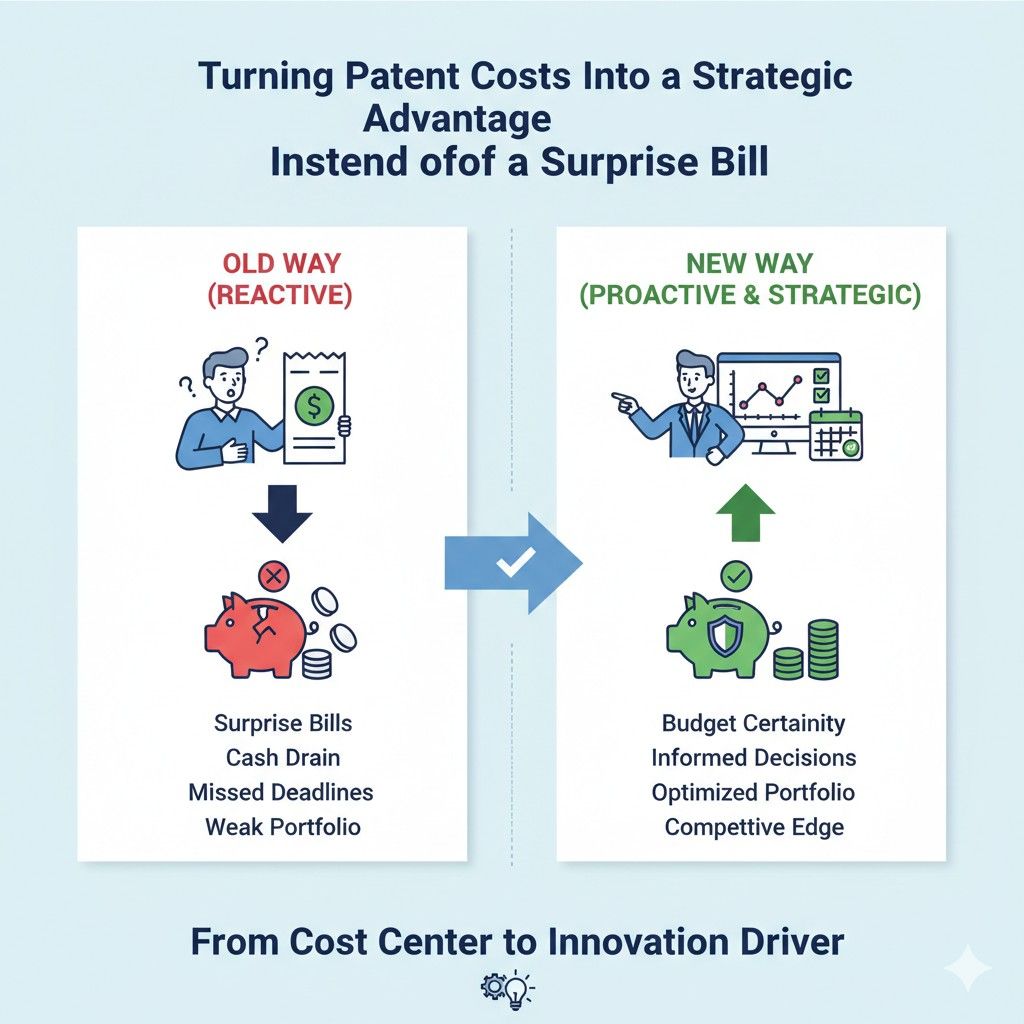
This is how you defend the budget. You explain that these payments protect your edge. You connect each dollar to risk reduction and long-term leverage.
If your IP is central to your product, then maintaining it is not optional. It is part of your strategy.
Using Forecasting to Strengthen Negotiations
Clear annuity forecasting does more than protect cash flow. It gives you leverage in conversations.
When talking to investors, you can show a clean three-year IP plan. You can explain which patents are core and why you are maintaining them. You can also show discipline in letting weaker ones go.
That balance signals strength.
When speaking with potential acquirers or partners, you can present a portfolio that is current, well-managed, and aligned with your roadmap. No missed deadlines. No confusion over status.
This increases trust. It also reduces due diligence friction. Buyers want certainty. A structured annuity forecast provides it.
Platforms that combine software tracking with attorney oversight make this easier.
PowerPatent was designed so founders are never guessing about status or upcoming costs. You can see the structure here: https://powerpatent.com/how-it-works
Turning Review Cycles Into Strategy Sessions
Every annuity deadline is a chance to pause and think.
Instead of auto-approving payments, treat each major one as a short strategy session. Look at your product roadmap. Look at market shifts. Look at competitor moves.
Ask whether this patent still blocks a real threat or supports a real opportunity.
Sometimes the answer will be yes, and you pay with confidence. Sometimes you will decide that the market moved and the protection is no longer needed. That decision frees up capital for new innovation.
This habit keeps your portfolio sharp. It prevents bloat. It ensures that your IP reflects your current strategy, not your past assumptions.
Aligning IP Spend With Product Milestones
A powerful way to defend a three-year annuity budget is to tie it directly to product milestones.
If your core technology is entering a major release cycle, maintaining strong protection in key markets makes sense. If you are testing a feature that may pivot, you may hold back on broader filings until traction is clear.
When your IP spend mirrors your product roadmap, it feels intentional. Finance sees the connection. The board understands the logic.
You are not just maintaining patents because they exist. You are maintaining them because they support growth at specific stages.
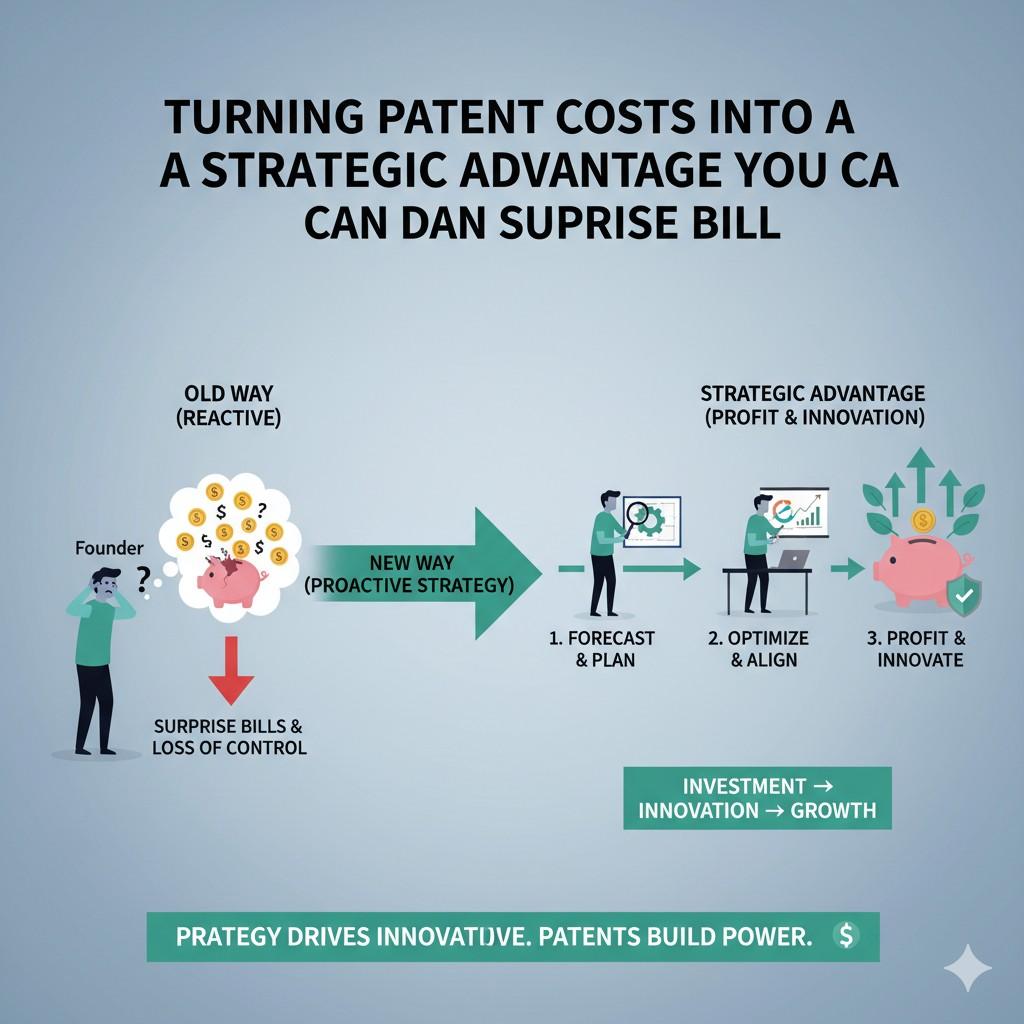
This approach requires visibility and coordination. That is where structured systems and real attorney input matter. PowerPatent helps founders manage this balance without slowing down development.
You can explore the process here: https://powerpatent.com/how-it-works
Avoiding Panic During Tight Cash Periods
Every startup faces tight quarters. Revenue dips. Funding rounds take longer. Unexpected costs appear.
If your annuity forecast is clear and up to date, you can respond calmly. You already know which payments are critical and which are optional. You can prioritize without scrambling.
Without forecasting, panic sets in. Teams rush decisions. Important patents may lapse simply because no one prepared.
A three-year plan creates breathing room. It gives you time to choose wisely instead of reacting under pressure.
Building a Culture of IP Awareness
Patent strategy should not live in a single inbox. It should be understood by leadership.
When product leads know which features are heavily protected, they design with confidence.
When finance understands upcoming IP obligations, they plan cash flow smoothly. When executives see the long-term IP map, they make smarter expansion decisions.
Annuity forecasting becomes part of company rhythm. It is reviewed alongside budgets and product plans.

This culture reduces risk. It also increases respect for the technology you are building.
Creating Confidence for Future Exits
If your goal is acquisition or public markets, a clean IP history matters.
Buyers and public investors look at your portfolio health. They check whether patents were properly maintained. They examine whether key markets are covered.
Missed annuities or unclear records can lower perceived value.
When you manage three-year budgets consistently, you create a track record of discipline. Your portfolio tells a story of intention, not neglect.
That story can influence valuation.
The Real Advantage: Control
In the end, the true advantage of forecasting annuities is control.
You control which assets live. You control where you invest. You control how IP aligns with growth.
You stop being surprised by invoices. You stop fearing board questions. You stop hoping nothing slips through the cracks.
Instead, you operate with clarity.
PowerPatent was built for founders who want that clarity without the old-school friction. You get smart tools, real attorney oversight, and a clean view of your patent lifecycle.
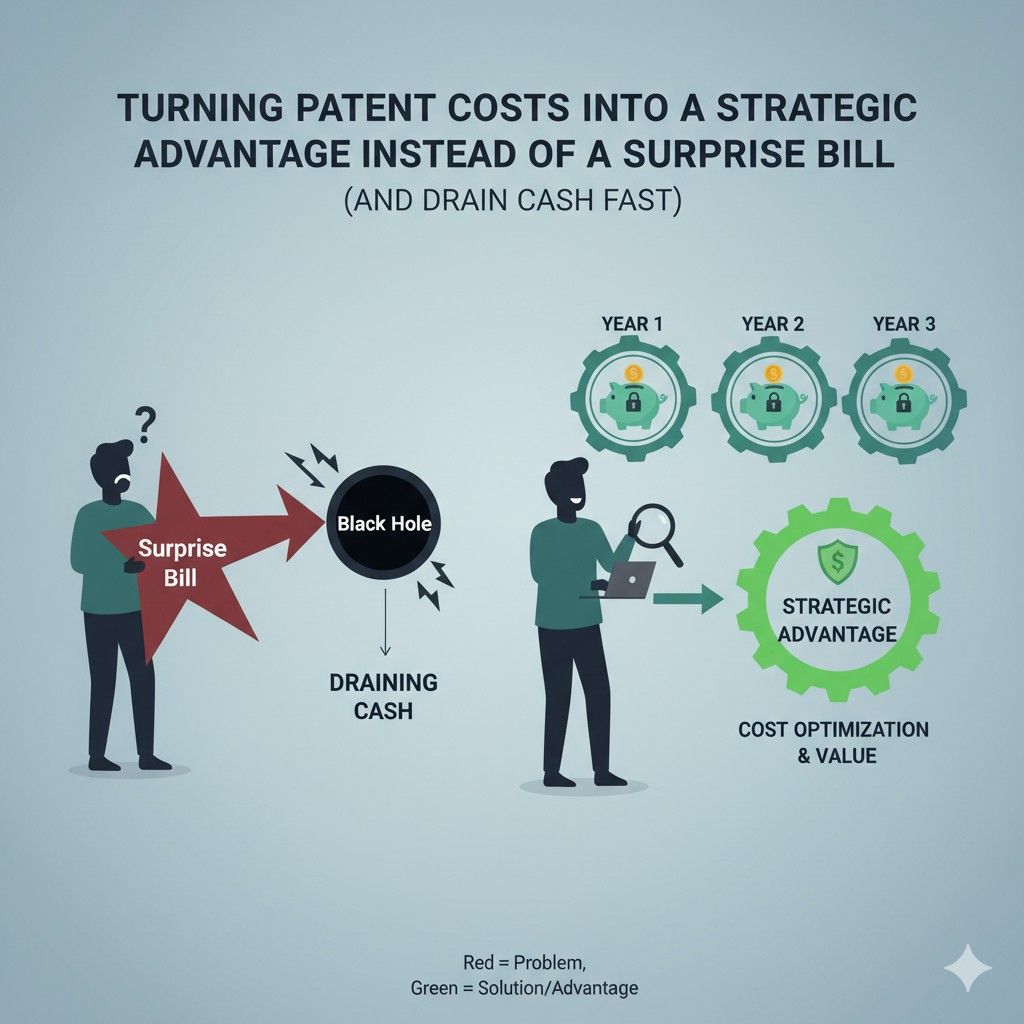
If you are ready to move from reactive to strategic, start here: https://powerpatent.com/how-it-works
Cost forecasting is not about cutting spending. It is about protecting what matters while staying agile. When done right, a three-year annuity budget is not just defendable. It becomes a competitive edge.
Wrapping It Up
Patent costs are not random. They are predictable. They follow a schedule. The only reason they feel painful is because many founders do not see them early enough. A three-year annuity budget changes that. When you forecast clearly, you remove surprise. When you review each payment with intent, you remove waste. When you align IP spend with product and revenue plans, you remove doubt.