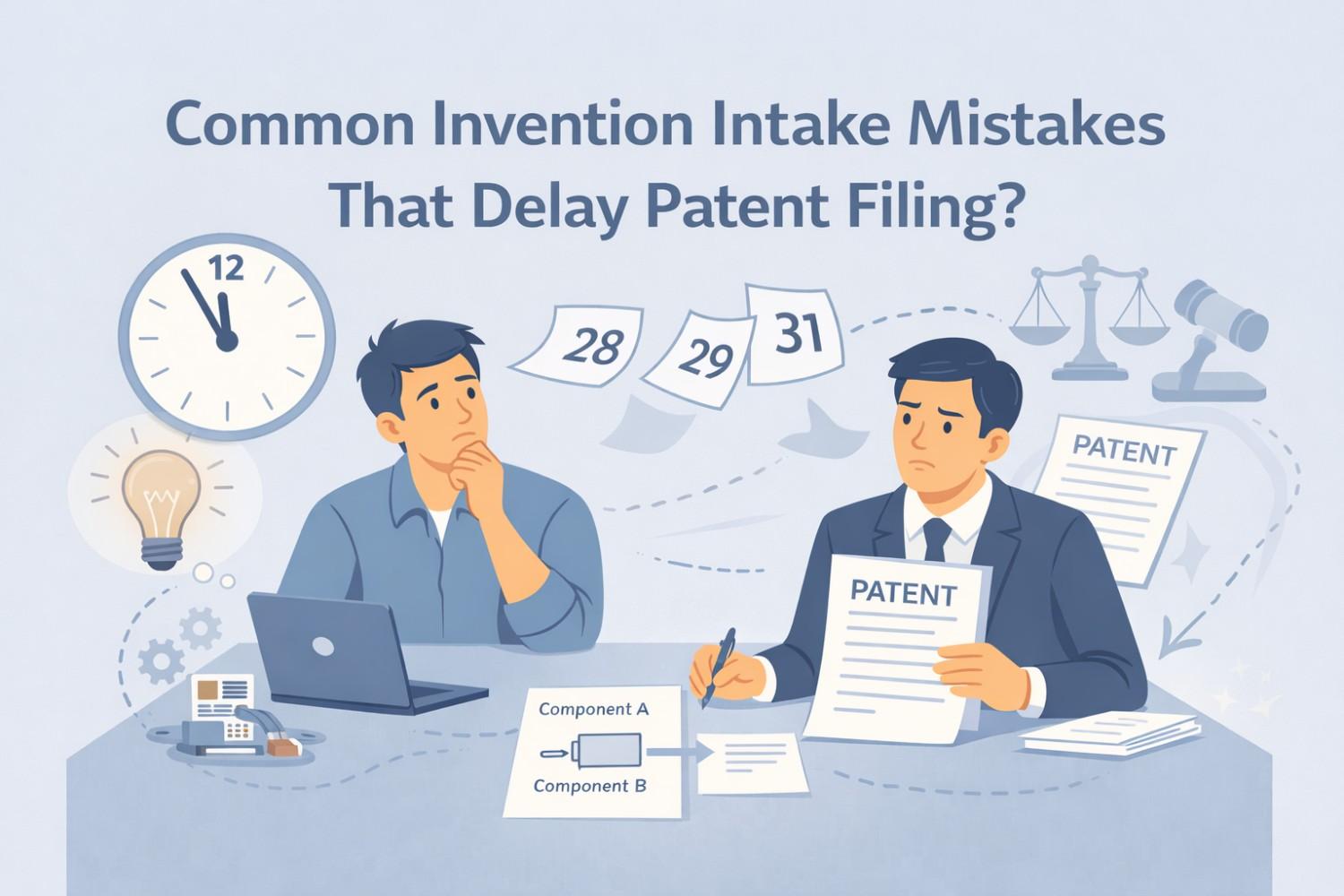
You can build the most brilliant product in the world, but if your invention intake is messy, slow, or incomplete, your patent filing will stall before it even starts. We see this all the time. Founders wait too long. Engineers forget key details. Teams assume someone else is handling it. Weeks turn into months. And during that time, competitors move. Investors ask hard questions. Launch dates creep closer. The truth is simple: most patent delays are not caused by the patent office. They start inside your own company, during invention intake. In this guide, we’ll break down the most common mistakes that quietly slow down patent filing—and exactly how to avoid them—so you can protect what you’re building without losing speed. If you want to see how modern founders handle this the smart way, you can explore how it works here: https://powerpatent.com/how-it-works.
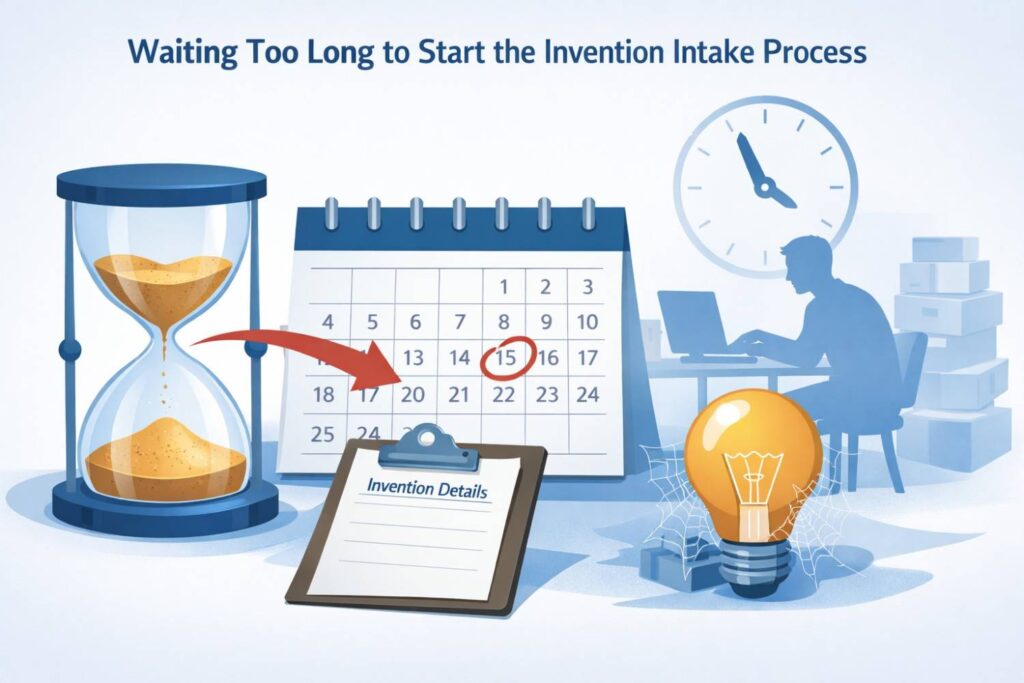
Waiting Too Long to Start the Invention Intake Process
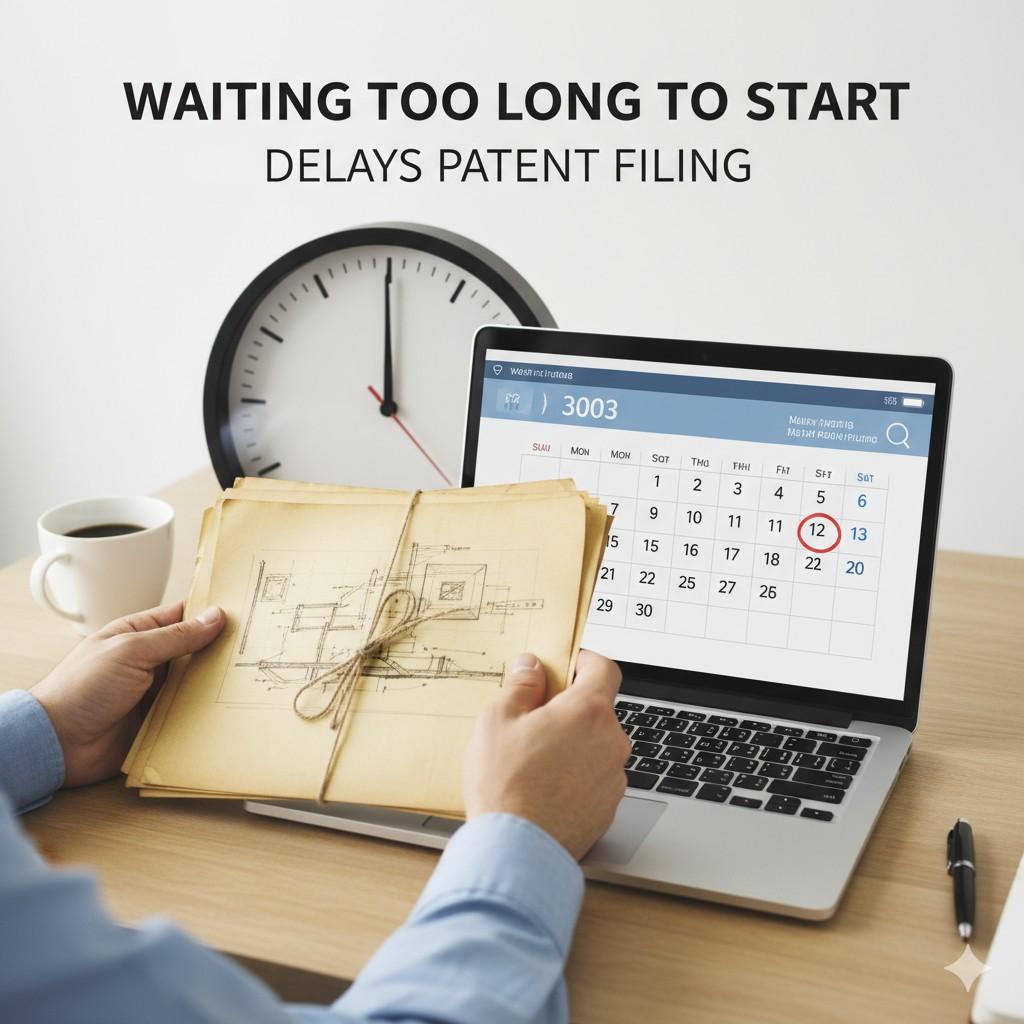
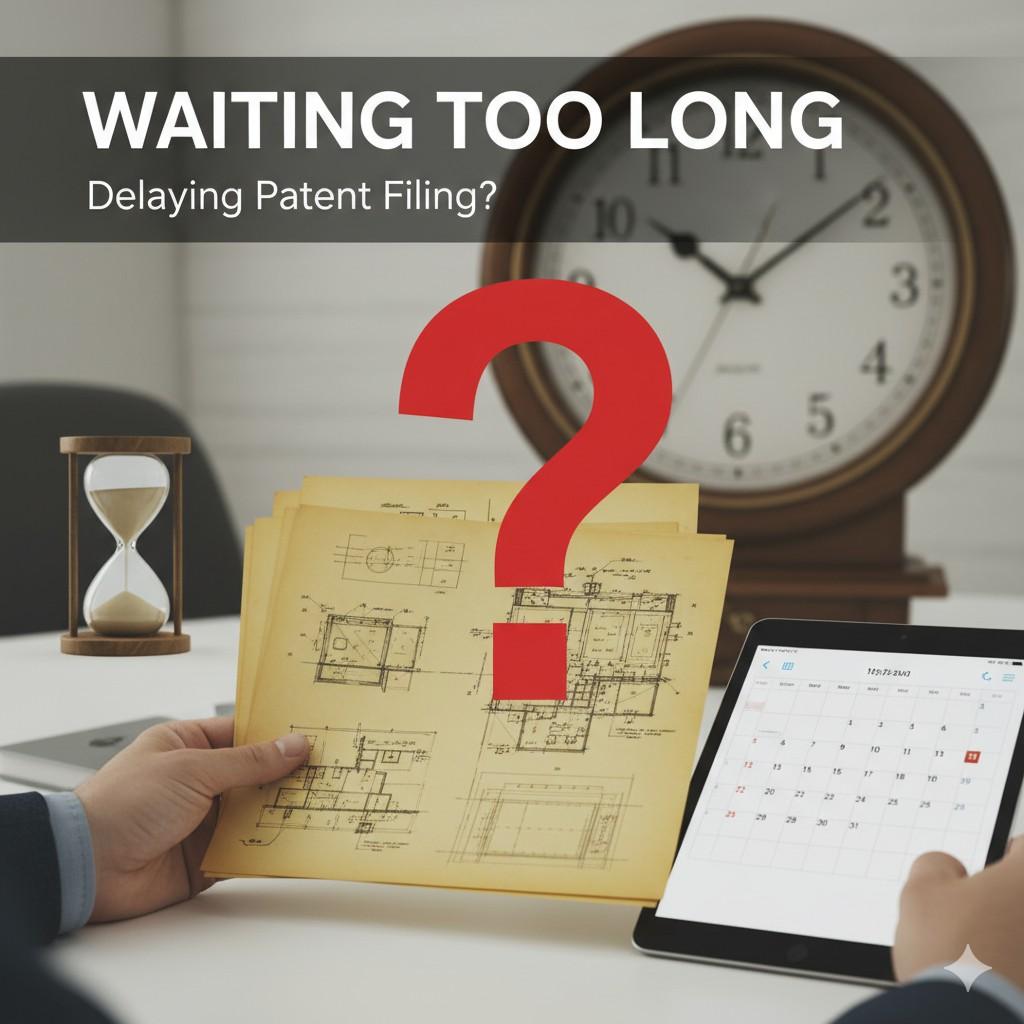
Most patent delays do not begin with lawyers or paperwork. They begin with hesitation. A founder says, “We’ll file once the product is more stable.” An engineer says, “Let’s wait until we finish this sprint.” A team says, “We’ll handle patents after launch.” That small delay feels harmless. It rarely is.
When you wait too long to start invention intake, you create risk that grows silently in the background. You lose clarity. You lose memory. You lose leverage. And in fast-moving markets, time is not neutral. It works against you.
Let’s look deeper at how this mistake shows up inside real companies, and what you can do to fix it before it costs you speed, protection, or investor trust.
The Hidden Cost of “We’ll Do It Later”
When teams delay invention intake, it usually feels logical. The product is still changing. The roadmap is not locked. The team is focused on shipping. Filing a patent feels like a future problem.
But here is what really happens behind the scenes.
Details fade. The early insight that made the system clever gets buried under new features. The engineer who wrote the core algorithm moves to another project. Slack threads get lost. Whiteboard drawings get erased.
By the time someone finally says, “We should file this,” the clean story of the invention is harder to reconstruct. That means more back-and-forth, more time, and more cost.
Strategically, this hurts you in two ways. First, it slows the filing itself. Second, it weakens the quality of the patent because key decisions were never captured clearly.
If you want strong protection, intake must happen when ideas are fresh, not when they are old.
Product Momentum Does Not Replace Protection
Many founders believe strong traction is enough. If the product is live and users love it, they assume that is the real moat.
Momentum is powerful. But it does not replace legal protection.
If you start invention intake only after you gain traction, you are reacting. You are no longer setting the pace. At that point, competitors may already be watching.
Investors may start asking about defensibility. And if you rush intake under pressure, you make mistakes.
The smart move is to treat invention intake as part of product momentum, not separate from it. Protection should grow alongside your roadmap. It should not lag behind it.
This is exactly why modern teams use structured intake systems that move at startup speed. If you want to see how that works in practice, you can review the process here: https://powerpatent.com/how-it-works.
Delayed Intake Weakens Investor Confidence
Investors may not ask about patents on day one. But at some point, they will ask about your edge.
If your answer is vague or reactive, it signals risk. If you say, “We plan to file soon,” that sounds like unfinished homework.
Starting intake early sends a different signal. It shows discipline. It shows long-term thinking. It shows you understand how to protect value.
From a business strategy standpoint, early intake increases your negotiating power. When your patent process is already underway, you are not scrambling during diligence. You are prepared.
Preparation creates leverage. Leverage improves terms.
Engineers Forget What Felt “Obvious”
At the time an invention is created, many details feel simple. The engineer understands the architecture deeply. The trade-offs are clear. The technical insight seems obvious.
Six months later, it is not obvious anymore.
Memory fades. Teams change. The system evolves. When you try to reconstruct the invention later, you end up guessing. That guesswork slows drafting and creates confusion.
The best strategy is to capture invention details close to the moment of creation. Not perfectly. Not in legal language. Just clearly.
Encourage engineers to explain what makes the system different as soon as a real breakthrough happens. Record the problem it solves. Capture the core logic. Save architecture diagrams before they change.
You do not need a long report. You need accurate memory while it is still fresh.
When intake starts early, drafting becomes smoother and faster because the raw material is strong.
Product Iteration Can Destroy Patent Clarity
Startups iterate quickly. That is good. But iteration can blur what the true invention is.
If you wait too long, multiple versions of the system blend together. You struggle to define what was actually new at the beginning.
That confusion delays filing because attorneys must untangle the timeline. They must figure out what existed when.
From a strategic view, clarity about the first working version of your innovation is powerful. It anchors your patent around the original core insight.
To avoid delay, treat each major technical milestone as a potential intake trigger. When you ship a new engine, model, or architecture shift, pause briefly and ask: “Did we just create something new?”
That small check-in can prevent months of delay later.
Launch Pressure Creates Risky Shortcuts
If you postpone intake until launch is near, stress takes over. The team is busy fixing bugs. Marketing is pushing. Sales is preparing.
Patent intake becomes rushed.
Rushed intake leads to incomplete technical descriptions. It leads to missed variations. It leads to weaker claims because there was no time to think deeply about scope.
Strategically, patents written under pressure are rarely as strong as patents written with calm focus.
Starting intake earlier spreads the work out. It removes the panic. It allows thoughtful review.

The goal is not to slow your launch. The goal is to remove last-minute chaos.
Early Intake Does Not Mean Early Filing Every Time
Some founders resist starting intake because they think it forces immediate filing. That is not true.
Early intake is about capturing knowledge. Filing strategy can still be timed carefully.
When you document inventions early, you create optionality. You can decide when to file based on funding, roadmap, or market timing. But you are deciding from a position of clarity, not confusion.
That difference is strategic power.
Without intake, you are guessing. With intake, you are choosing.
Build Intake Into Your Engineering Rhythm
The most effective companies do not treat patent intake as a separate legal event. They weave it into their engineering culture.
After major sprints, they review breakthroughs. During architecture reviews, they ask whether new methods were created. When technical experiments succeed, they capture what changed.
This does not slow development. It adds a thin layer of discipline.
From a leadership standpoint, you can create a simple rule: whenever a team member says, “No one else is doing it this way,” that is a signal to capture the idea.
You are not filing every idea. You are identifying which ones deserve protection.
Modern platforms make this easy by guiding engineers through structured questions in plain language, while real patent attorneys oversee the final work.
That combination prevents early mistakes without slowing the team. If you want to understand how that system works in detail, you can explore it here: https://powerpatent.com/how-it-works.
Waiting Feels Safe, But It Is Not
Delay feels comfortable because it avoids immediate work. But it increases long-term friction.
Every week you wait, your product evolves. Your memory shifts. Your timeline blurs. Your exposure grows.
Starting intake early does not require perfection. It requires attention.
If your company wants to move fast and stay protected, the solution is simple: do not wait for a “perfect time.” Build invention intake into your normal workflow.
Capture insights while they are alive. Keep records clean. Make protection part of building, not something that happens after building.
That shift alone can remove months of delay from your patent journey and give you real control over your intellectual property strategy.
Leaving Out Critical Technical Details Engineers Assume Are “Obvious”
This mistake is quiet, but it causes massive delay. Engineers explain an invention the way they think about it in their own head. They skip steps. They gloss over system flows.
They leave out edge cases. They assume the reviewer will “get it.”
But patent drafting does not work on assumptions.
If key technical details are missing during intake, the entire filing slows down. Attorneys must ask follow-up questions. Engineers must dig back into old code.
Meetings get scheduled. Timelines stretch. What could have moved quickly now stalls because the foundation was thin.
Let’s break down why this happens and how to fix it in a way that protects both speed and quality.
Engineers Think in Systems, Not Stories
Engineers see architecture. They see modules, inputs, outputs, and data flows. When they describe an invention, they often jump straight to the most interesting part.
But patent drafting requires a full story.
It needs the problem. It needs the prior approaches. It needs the failure of older methods. It needs the specific improvement. It needs alternative ways the same idea could be built.
If intake only captures the “cool part,” the rest must be reconstructed later. That reconstruction takes time.
The strategic fix is simple but powerful: during intake, do not just ask what the system does. Ask why it exists. Ask what was broken before. Ask what trade-offs were removed. Ask what happens if one part is swapped out.

When you capture the full arc of the invention, drafting becomes smoother because the story is already complete.
“It’s Just a Simple Optimization” Is a Red Flag
One of the most dangerous phrases during intake is, “It’s just a small optimization.”
Small improvements are often the most valuable inventions. But because they feel incremental, teams do not describe them in detail.
They skip how the old system worked. They skip performance metrics. They skip experimental data.
Later, when the attorney tries to draft strong claims, there is not enough substance to show why the change matters. That triggers more questions. More analysis. More delay.
If your team improves speed, accuracy, memory use, cost, or reliability, document exactly how. Capture before-and-after comparisons. Save benchmarks. Explain the logic behind the change.
Even if the numbers feel minor, they are proof of value. Proof strengthens patents and prevents slow rewrites.
Diagrams Without Explanation Slow Everything Down
Many founders send over architecture diagrams during intake. That is helpful. But a diagram alone is not enough.
Boxes and arrows do not explain reasoning. They do not explain conditional logic. They do not explain fallback mechanisms.
When attorneys review diagrams without context, they must schedule clarification calls. Each call adds days or weeks.
Instead, pair every diagram with a short written walkthrough. Explain what happens step by step. Describe why each component exists.
You do not need formal language. Plain explanation works best. The key is clarity.

Clarity upfront prevents clarification later.
Failing to Capture Variations Shrinks Protection
Engineers usually describe the exact version they built. That makes sense. It is the working system.
But patents are not just about what you built. They are about what others might copy.
If intake does not explore variations, the patent may end up too narrow. That forces revisions during drafting when attorneys realize the scope is limited.
This revision cycle causes delay.
During intake, always ask: could this method work with a different data source? Could it run on another platform? Could the logic be reordered? Could the model type change?
Exploring these variations early expands protection without adding much time. It also reduces back-and-forth later.
Missing the Real Inventive Step
Sometimes the most important part of an invention is not the obvious feature. It is the subtle logic behind it.
If intake focuses only on surface features, the true inventive step can be buried.
When that happens, attorneys must dig for it. They may misinterpret the core idea at first. That misalignment leads to rewrites.
To prevent this, ask your engineers a deeper question during intake: what part of this system required the most thought? What decision took the longest to get right? What part would a competitor struggle to recreate?
The answer to those questions often reveals the true invention.
Capturing that insight early prevents wasted drafts and delays.
Code Without Context Creates Friction
Some teams believe sending raw code is enough. They assume the patent team can extract the invention from it.
Code is powerful, but without explanation, it slows everything down.
Patent drafting is not about copying code. It is about describing the functional logic in a way that protects the concept broadly.
If attorneys must reverse-engineer your code to understand it, intake becomes a technical decoding session. That eats time.
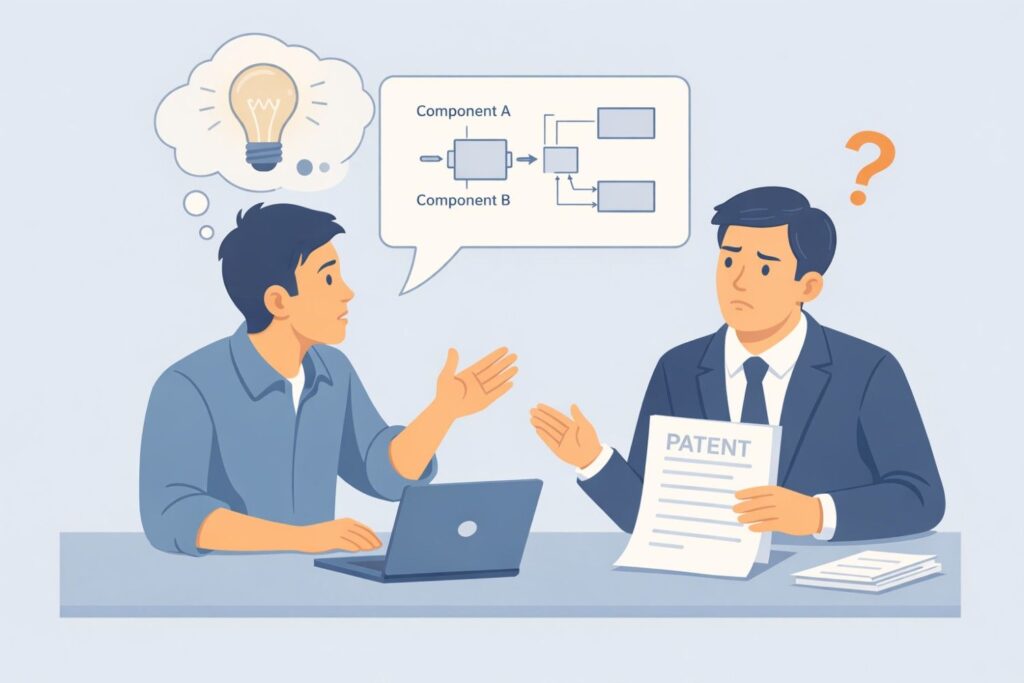
Instead, provide a high-level explanation of what the code accomplishes. Describe the inputs, outputs, transformations, and key decisions. Use code as support, not as the main explanation.
This approach speeds up drafting and improves clarity.
Not Documenting the Development Timeline
Timing matters in patent law. But many teams do not track when specific features were created.
When intake begins months later, no one remembers exact dates. That uncertainty can slow filing, especially if there were public disclosures, demos, or beta releases.
Strategically, you should document invention milestones as they happen. Record when a working version was completed. Note when it was shown externally. Keep lightweight records.
You do not need complex logs. A simple internal note with a date can save major headaches later.
That preparation avoids emergency rush filings and stressful timeline reconstruction.
Assuming Attorneys Will “Figure It Out”
A common mindset during intake is, “We’ll just give them the basics. They’ll turn it into a patent.”
Good attorneys can ask smart questions. But they cannot read minds.
If intake is thin, drafting becomes a slow loop of question, answer, revise, repeat.
The faster path is collaborative. Engineers provide depth. The platform structures the intake. Attorneys refine and strengthen.
When each side does its part fully, the process moves quickly and cleanly.
This is why a modern approach that blends structured software with real attorney oversight works so well.
It guides engineers to share the right details from the start while ensuring legal strength at the end. You can see how that combination works here: https://powerpatent.com/how-it-works.
Strategic Discipline Prevents Technical Delays
Leaving out technical details is rarely intentional. It happens because teams are busy.
But from a business view, incomplete intake is expensive. It slows filing. It weakens scope. It increases revision cycles.
The solution is not more meetings. It is better structure.
Create a simple internal habit: whenever an invention is captured, explain it as if you are teaching it to a smart engineer who has never seen your system before.
Walk through it step by step. Explain why it matters. Document alternatives.

That small shift eliminates most intake-related delays and turns patent filing into a smoother, faster process.
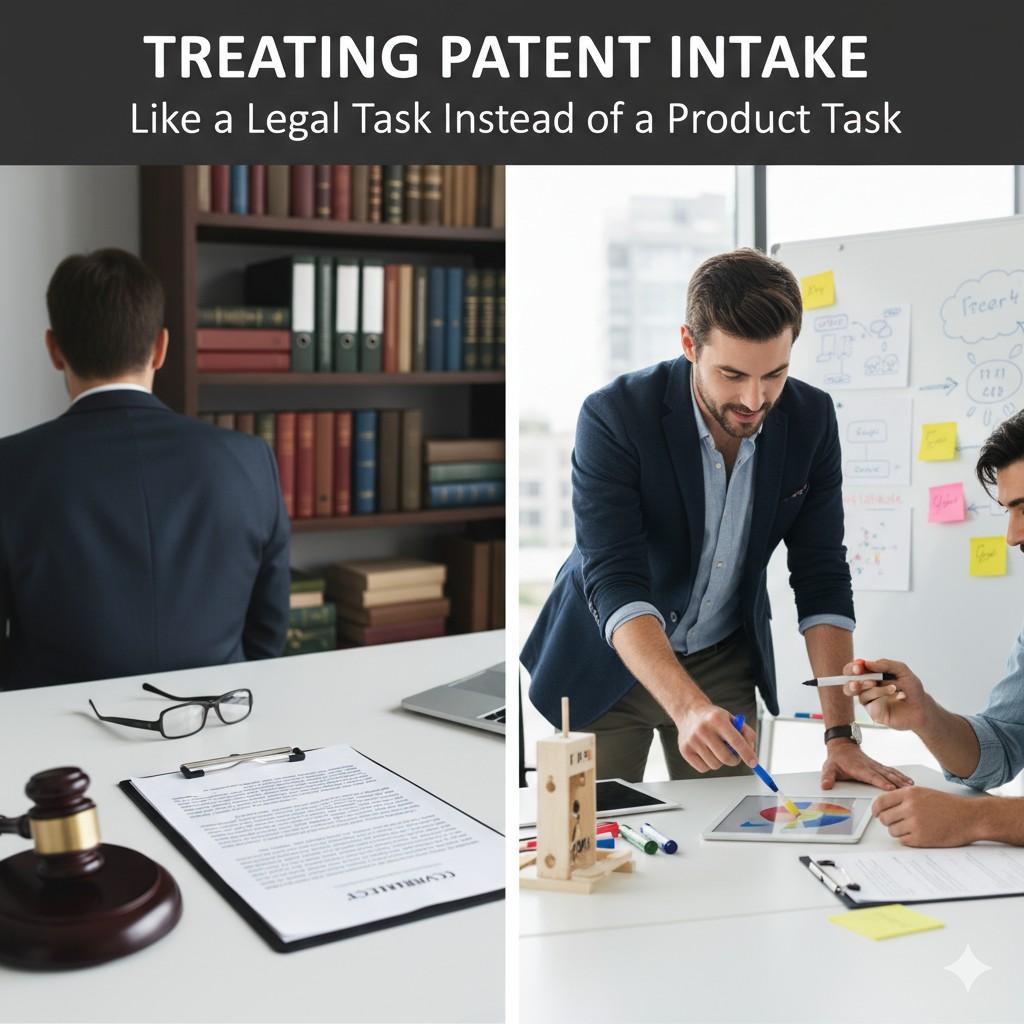
Treating Patent Intake Like a Legal Task Instead of a Product Task
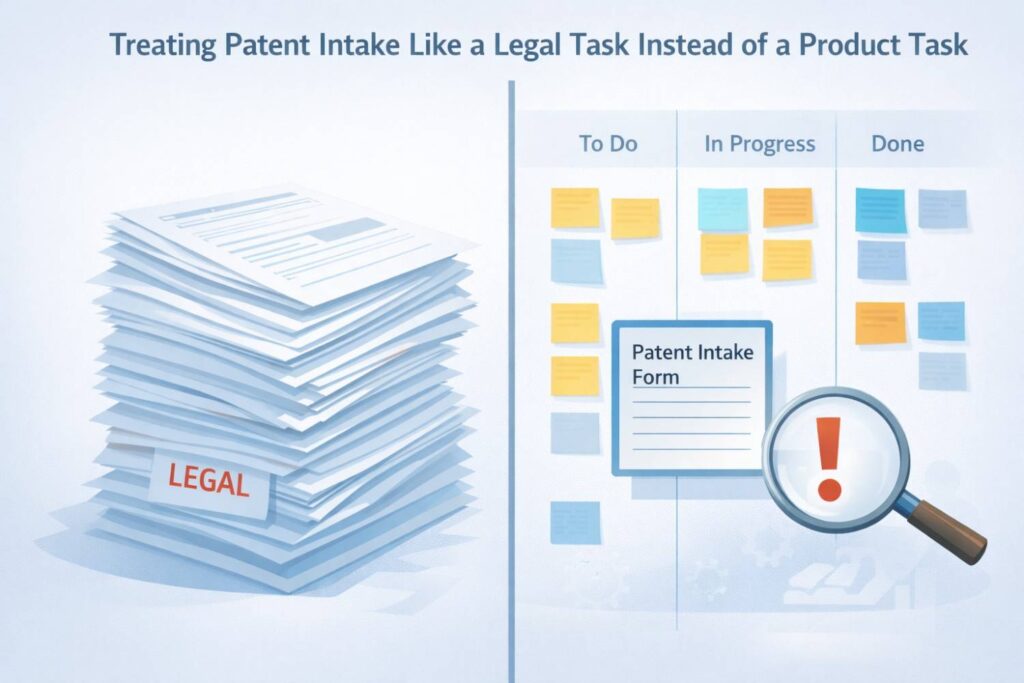
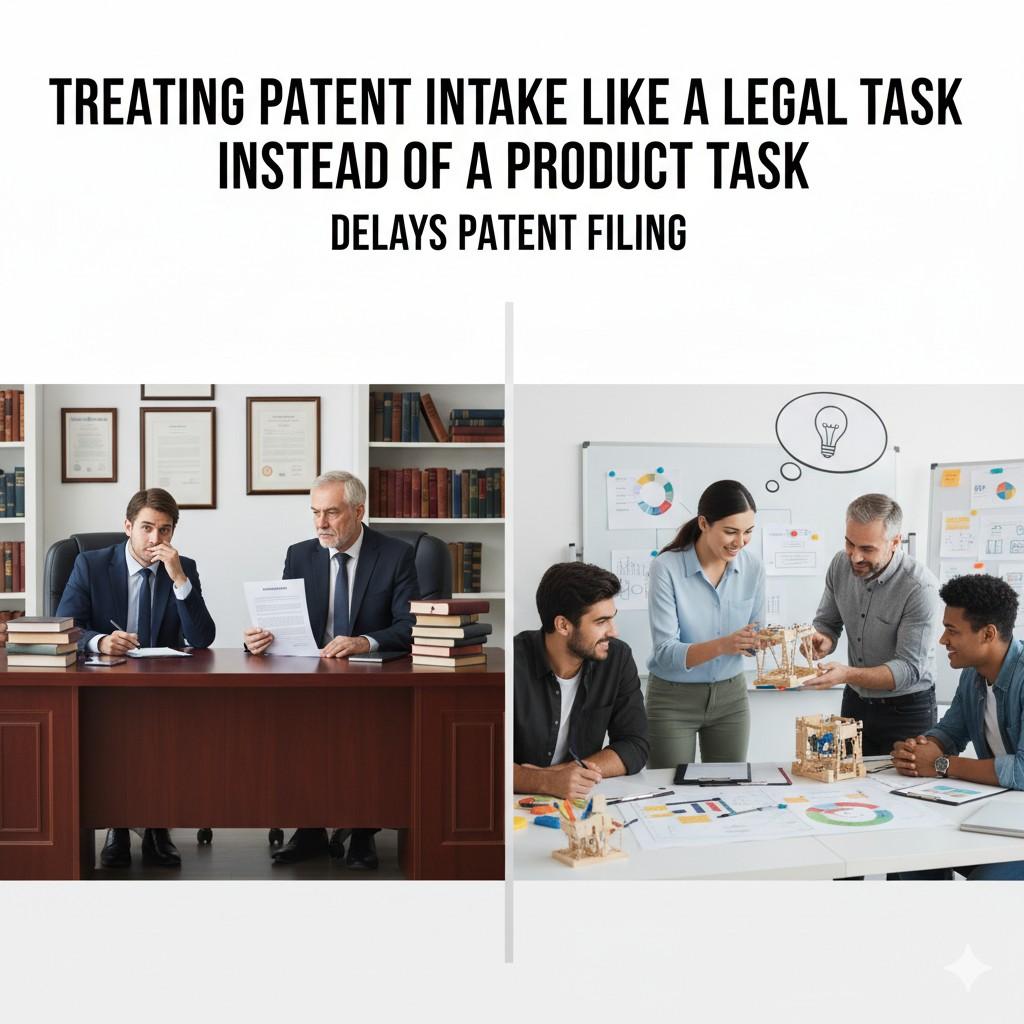
This mistake is cultural. It starts at the leadership level. When patent intake is treated as a legal chore instead of a product decision, it gets pushed to the side. It becomes paperwork. It becomes something you do after “real work” is done.
That mindset slows everything down.
Patents protect product value. They protect technical advantage. They protect the thing you are building. When intake is separated from product thinking, it loses urgency and clarity. The result is delay, confusion, and weaker protection.
Let’s unpack what this looks like inside growing startups and how to fix it in a way that strengthens both speed and strategy.
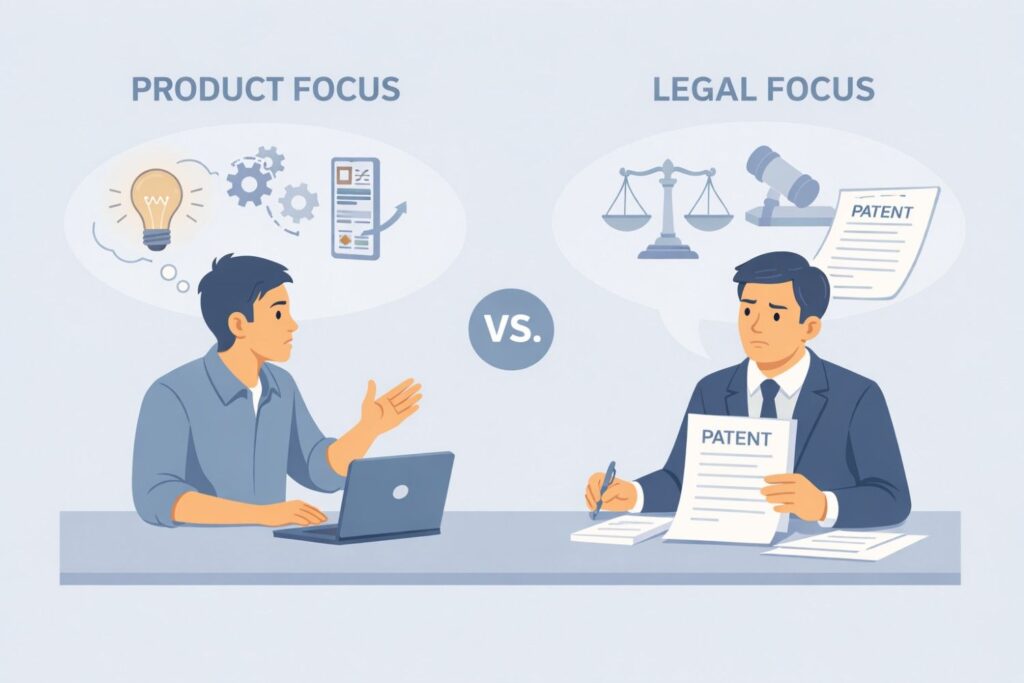
When Legal Owns It Alone, Product Disengages
In many companies, patents get handed off to legal with very little involvement from product or engineering leadership. The mindset is simple: “The lawyers will handle it.”
But lawyers cannot invent your product. They cannot see roadmap priorities. They cannot predict which features will drive revenue next year.
When patent intake is isolated from product thinking, filings often lag behind innovation. The legal team waits for instructions. The product team forgets to give them.
The smarter approach is alignment. Patent intake should sit close to product strategy conversations. When roadmap decisions are made, someone should ask: does this create protectable value?
This small habit prevents months of drift.
Patents Should Follow the Roadmap, Not Chase It
If patent intake is treated as a reactive legal task, it often happens after features are shipped. That creates a chasing pattern.
The product evolves first. Protection tries to catch up.
From a strategic view, this is backward.
Your patent plan should mirror your roadmap. When you invest engineering time into a new engine, model, or architecture shift, protection should begin in parallel. Not later.
This does not mean filing instantly every time. It means capturing inventions early so protection moves alongside development.
When intake runs in sync with the roadmap, filings feel natural. They do not feel rushed.
Product Managers Often Miss the Patent Signal
Product managers think about user value, metrics, growth, and retention. That is their job.
But many product managers are not trained to recognize patent triggers.
They may prioritize a feature because it improves engagement. They may celebrate a breakthrough because it lowers costs. But they do not pause to ask whether the underlying method is novel.
This gap causes delay because inventions are not flagged early.
Leadership can fix this by adding one simple lens to product reviews: what did we build here that others cannot easily copy?
When product managers start thinking this way, intake becomes proactive instead of reactive.
Engineering Breakthroughs Deserve Immediate Capture
Engineers often solve hard technical problems quietly. They refactor systems. They invent new data flows. They redesign logic to scale.
If patent intake is viewed as legal paperwork, engineers will not raise their hand. They will assume it is not their role.
But engineering is where most invention happens.
You must create a culture where engineers see invention capture as part of shipping great systems. Not as extra work. Not as a legal burden.
One way to do this is to connect patents directly to engineering pride. Make it clear that protecting their breakthroughs strengthens the company’s future.
When engineers understand that patents are strategic assets, not legal chores, they engage early. Early engagement prevents delay.
Waiting for a Funding Round Is a Costly Habit
Some startups only think about patents when they prepare for a funding round. Investors ask about defensibility, and suddenly the team scrambles.
This is a reactive pattern driven by legal fear, not product strategy.
When intake begins only because investors asked, it is usually rushed. The team gathers half-remembered details. Attorneys work under tight deadlines. Stress replaces clarity.
Instead, treat patent intake as long-term value creation. If you build protection steadily over time, funding conversations become easier.
You walk into investor meetings with confidence because your IP strategy is already active.
That calm preparation is powerful.
Product Strategy and IP Strategy Must Talk
Every startup has a product strategy. Few have a clear IP strategy.
If patent intake is treated as legal paperwork, there is no deeper plan. Filings become random. They cover isolated features without a clear connection to business goals.
But when product and IP strategy are linked, something different happens.
You protect the core engine first. Then the key improvements. Then the scaling methods. Then the extensions into adjacent markets.
Protection becomes layered and intentional.
This alignment only happens when intake is part of strategic planning, not just legal execution.
Delayed Intake Weakens Competitive Positioning
When you treat patent intake as secondary, competitors gain time.
If they see your product gaining traction, they may start building similar features. If your protection is not already in motion, you lose advantage.
Starting intake early signals seriousness. It strengthens your long-term market position. It gives you optionality for partnerships, licensing, or defensive moves.
From a business perspective, early protection supports pricing power and acquisition value.
These are product-level outcomes, not legal details.
Make Patent Intake a Product Ritual
To prevent delay, patent intake should become a normal rhythm inside your product cycle.
After major technical releases, review the core logic changes. During quarterly planning, identify upcoming innovations that may deserve protection.
This does not require heavy process. It requires awareness.
When invention capture becomes routine, delays disappear. There is no panic. No scramble. No last-minute rush before launch or funding.
Modern tools make this integration simple. Structured software can guide teams through clear questions in plain language. Real patent attorneys can then refine and strengthen what is captured.
This model removes friction while keeping quality high. If you want to see how startups combine product thinking with strong patent strategy, you can explore the process here: https://powerpatent.com/how-it-works.
Shift the Mindset, Remove the Delay
At its core, this mistake is about mindset.
If patents feel like paperwork, they will always be delayed.
If patents are seen as product assets, they will be prioritized.
The companies that move fastest are not the ones who ignore protection. They are the ones who build it into their development rhythm. They capture invention as they build. They align protection with growth.
When you make that shift, patent filing stops being a slow legal task and becomes a strategic advantage that moves at the same speed as your startup.
Wrapping It Up
Most patent delays do not start at the patent office. They start inside the company. They begin with small habits that feel harmless. Waiting a few weeks. Skipping technical detail. Treating protection like paperwork. Individually, each mistake seems minor. Together, they create friction that slows filing, weakens protection, and adds stress at the worst possible time. If you step back, the pattern is clear. Delays happen when invention intake is reactive instead of proactive. When it is rushed instead of structured. When it is treated as legal cleanup instead of product strategy. The good news is this is fully within your control.