Most companies do not lose patents because they lack ideas. They lose them because they lack a system. Great engineers build fast. Product teams ship weekly. AI models evolve every month. But when it comes to protecting those ideas, everything slows down. Emails get lost. Forms are confusing. Engineers do not know what counts as an invention. IP teams chase people for details. Deadlines slip. Risk grows. Standardizing invention intake fixes this. When done right, it turns patent chaos into a clean pipeline. Ideas move from whiteboard to filed patent without drama. Engineers stay focused. IP teams stay in control. Leadership sees clear value.
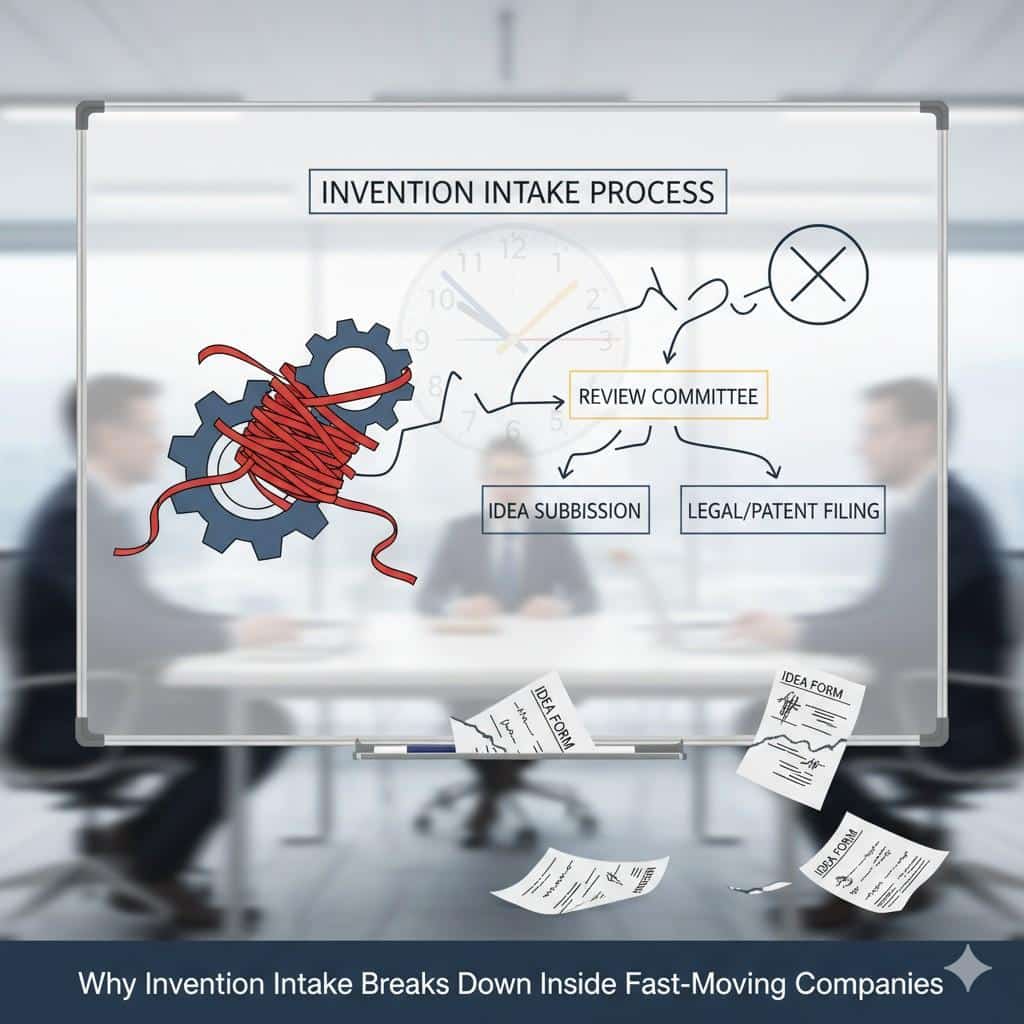
Why Invention Intake Breaks Down Inside Fast-Moving Companies
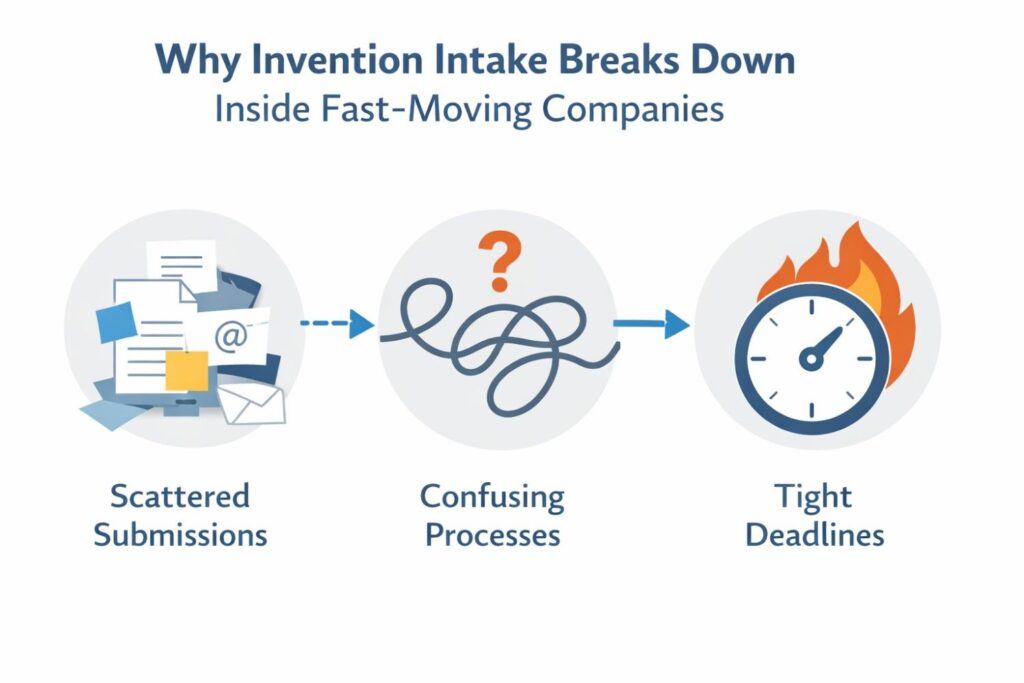
In fast-growing companies, invention intake rarely fails because people do not care. It fails because speed wins over structure. Teams are rewarded for shipping, not documenting.
Engineers are praised for solving hard problems, not for writing detailed disclosures. Over time, this creates a silent gap between innovation and protection. The company keeps building. The IP pipeline quietly stalls.
If you lead an in-house IP team, this is not a small problem. It is a compounding risk.
Missed filings turn into lost market position. Weak disclosures turn into narrow claims. Delays turn into higher legal spend later. To fix it, you first need to understand why intake breaks in the first place.
Innovation Moves Faster Than Process
When product cycles shrink, legal systems often stay the same. That mismatch creates friction.
Engineering teams may ship new features every two weeks. AI teams may retrain models every month.
Hardware teams may iterate prototypes rapidly. But invention intake might still rely on long forms, static templates, or email threads that feel heavy and slow.
Engineers will not stop building to fill out something that feels disconnected from their workflow. If intake requires too much manual effort, it simply will not happen in time.
To address this, IP teams must study how engineers actually work. Look at sprint cycles. Sit in on roadmap meetings. Understand when major technical leaps happen.
Then align intake triggers with those real moments. Instead of waiting for someone to “remember” to submit an idea, connect intake to release milestones, architecture changes, or performance breakthroughs.
When intake is tied to natural product events, participation rises without constant chasing.
Engineers Do Not Think in Patent Language
Engineers think in systems, code, and performance gains. They do not think in claims, embodiments, or novelty standards.
When an intake form asks, “Describe the inventive concept,” many engineers freeze. They are not trained to frame their work in patent terms. So they under-explain. They over-assume. Or they skip submission entirely.
This gap creates weak disclosures. And weak disclosures create weak patents.
Instead of asking engineers to write like patent lawyers, IP teams should translate the process into plain engineering language. Ask what problem was solved.
Ask what changed in the architecture. Ask what made performance better than before. Ask what competitors cannot easily copy.
These questions are natural for technical minds. They lead to stronger material without requiring legal expertise.
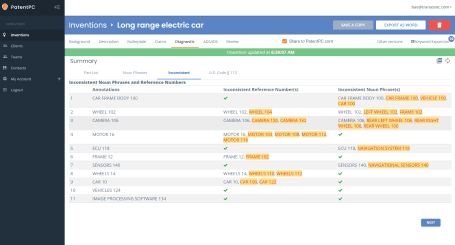
Modern platforms like PowerPatent make this easier by guiding engineers through simple, structured prompts and then layering attorney review on top. The engineer focuses on the technical truth.
The system and legal team shape it into defensible claims. This removes the fear and friction that often block submissions.
If your intake system feels like a law school exam, it will fail. If it feels like a technical debrief, it will succeed.
No Clear Ownership Creates Delays
In many companies, no one truly owns invention intake. Engineers assume legal will ask. Legal assumes engineering will submit. Product assumes it is someone else’s responsibility.
This ambiguity slows everything down.
Strong IP teams define ownership clearly. There is one intake gatekeeper. There is one review rhythm. There is one place where disclosures live. Even in large organizations, clarity beats complexity.
Ownership does not mean control. It means accountability. Someone tracks submissions. Someone follows up. Someone ensures deadlines are met before public launches or conferences.
A practical step is to create a shared visibility dashboard. Leadership should be able to see how many disclosures were submitted this quarter, how many were reviewed, and how many were filed.
Transparency creates momentum. When intake metrics are visible, participation improves.
PowerPatent helps centralize this flow so nothing gets buried in inboxes. Every invention lives in one system. Every stage is visible. That kind of clarity reduces internal friction immediately.
Product Teams Fear Slowing Down
One hidden reason intake breaks is fear. Teams worry that involving IP will delay launches.
If past experiences included long review cycles or last-minute red flags before a release, product leaders may avoid early engagement. They may think, “Let us ship first. We can patent later.”
But filing after public release can destroy patent rights in many regions. That delay can be fatal.
IP teams must prove they enable speed rather than block it. This requires faster review cycles and predictable timelines.
When engineers know that submitting a disclosure will not stall a release, they are more willing to participate.
One effective approach is to commit to a fixed review window. For example, disclosures submitted before a certain date receive feedback within a defined number of days. Predictability builds trust.
Using AI-powered drafting tools supported by real attorneys, like PowerPatent, shortens turnaround dramatically. That changes the internal story from “legal slows us down” to “IP moves as fast as we do.”
Knowledge Stays in People’s Heads
In fast-moving companies, knowledge is tribal. Senior engineers carry architecture insights in their heads.
Founders make strategic decisions without formal documentation. If those people are busy or leave the company, their insights leave too.
Invention intake systems that rely on memory or voluntary reporting are fragile. They miss critical breakthroughs simply because no one paused to write them down.
To counter this, IP teams must embed lightweight capture moments into existing workflows.
After major sprints, hold short technical review sessions focused only on new technical improvements. Record them. Summarize them. Convert them into draft disclosures quickly.
This does not need to be heavy. A 30-minute debrief after a big milestone can surface multiple patentable ideas.
The key is consistency. When teams expect that technical reviews include IP capture, it becomes normal rather than optional.
Early-Stage Chaos Becomes Long-Term Risk
Startups often postpone structure. In the early days, that makes sense. Speed matters. But as funding grows and competitors emerge, early chaos becomes dangerous.
If invention intake was informal for years, there may be no clear record of who invented what and when. That creates ownership disputes. It complicates investor diligence. It weakens enforcement later.
Standardizing intake early protects future value.
Even if your company is still small, create a repeatable pathway now. Make submission simple.
Track inventor contributions clearly. Store disclosures in a secure, centralized system. Have real attorneys review and refine filings before submission.
PowerPatent was built specifically for this stage. It combines smart automation with attorney oversight so startups can create strong IP foundations without hiring a full legal team.
The earlier structure is built, the easier scaling becomes.
Communication Gaps Between Legal and Engineering
Another common breakdown happens at the communication layer. Legal teams often speak in risk language. Engineers speak in build language. When these worlds do not connect, intake suffers.
IP leaders should invest time in education, but in simple terms. Host short sessions explaining how patents protect product strategy. Share examples where competitors copied features.
Show how early filings helped block them.
When engineers understand that patents protect their work and strengthen the company’s position, motivation increases.
Communication should also be two-way. Legal should ask engineering where friction exists. Adjust forms. Shorten steps. Remove unnecessary questions. Iterate like a product team would.

Treat invention intake like a product. Test it. Improve it. Measure adoption. Refine continuously.
Lack of Incentives Lowers Participation
If invention disclosure brings no recognition, it often becomes low priority.
Companies that succeed with intake create internal acknowledgment. That does not mean large bonuses. Even simple recognition in team meetings helps. Publicly thanking inventors for submissions reinforces behavior.
More importantly, link patents to company impact. When a patent supports fundraising, mention it. When it strengthens a partnership deal, explain the connection. Engineers should see the real-world value of their disclosures.
This reinforces that invention intake is not paperwork. It is strategic leverage.
Tooling Is Outdated
Many in-house teams still rely on static forms, shared drives, and manual tracking spreadsheets. In fast-moving environments, this creates bottlenecks.
Modern intake requires structured digital workflows, automated reminders, secure storage, and collaborative editing. It also requires smart drafting support to reduce back-and-forth cycles.
Platforms like PowerPatent transform intake from a document collection process into an interactive system. Engineers answer guided questions. The system organizes technical details.
Real attorneys refine and finalize. Everything is tracked. Nothing is lost.
Outdated tools are often the invisible reason intake breaks. Upgrading infrastructure alone can significantly increase disclosure volume and quality.
Strategic Takeaway
Invention intake breaks down when it is treated as an afterthought. It succeeds when it is treated as core infrastructure.
Fast-moving companies need systems that match their speed. They need intake that feels natural to engineers, predictable to product teams, and strategic to leadership.
The solution is not more complexity. It is clarity, alignment, ownership, and modern tools that reduce friction.
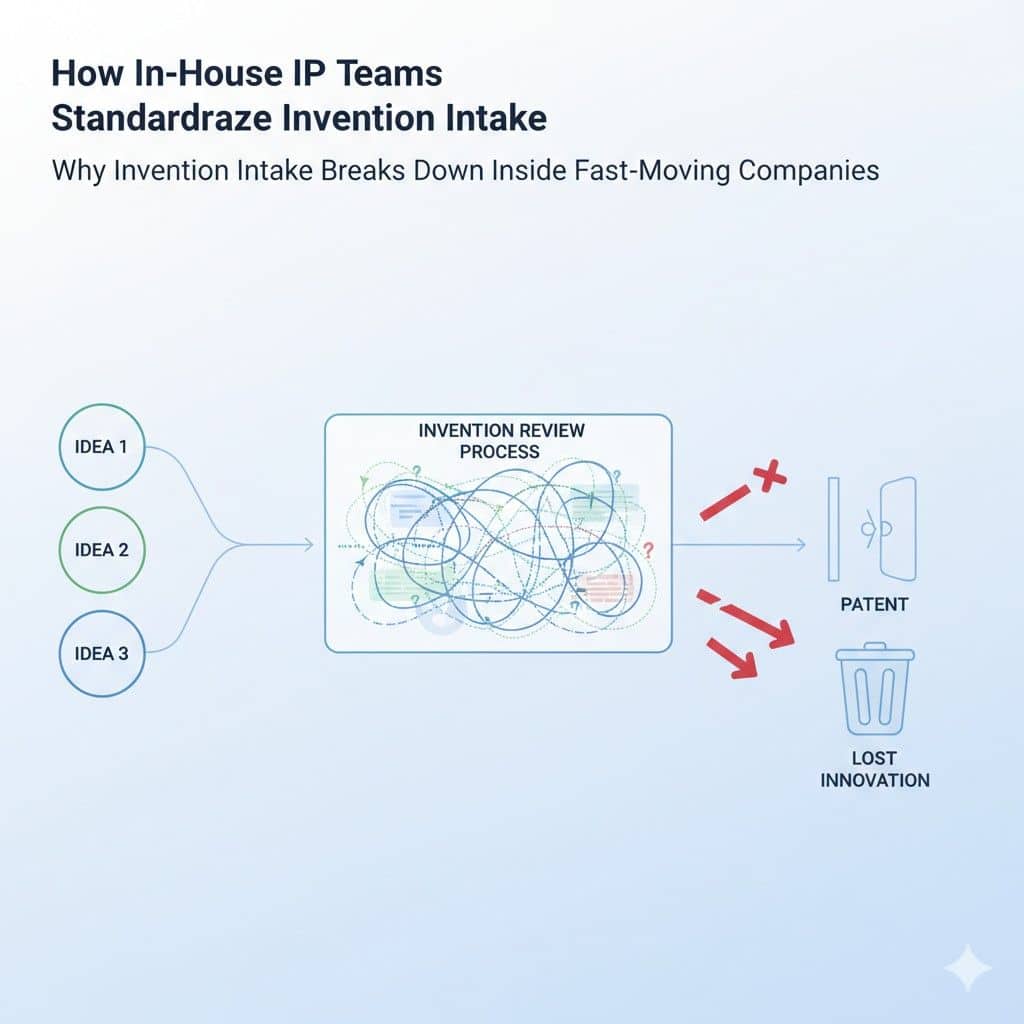
When intake works, ideas move smoothly from brainstorm to filed patent. Risk drops. Confidence rises. Competitive advantage strengthens.
Building a Repeatable, Engineer-Friendly Invention Intake System
A strong intake system does not happen by accident. It is designed with care. It respects how engineers work. It protects company value without slowing product momentum.
And most important, it runs the same way every single time.
Repeatability is power. When intake becomes predictable, submissions increase, quality improves, and leadership gains clear visibility into innovation output.
The goal is not more paperwork. The goal is a clean, reliable pipeline from idea to filed patent.
Start With a Clear Trigger Point
Every system needs a starting line.
Many companies fail because there is no clear moment when an invention should be submitted. Engineers are left guessing. Should they file after a prototype works? After code is merged? After customer feedback confirms value?
Ambiguity creates delay.
High-performing IP teams define exact trigger moments. These triggers often connect to existing workflows. A major architecture change. A performance milestone.
A new model approach that beats previous benchmarks. A hardware revision that solves a core constraint.
The intake system should activate naturally during these events. When engineering closes a sprint that includes a technical breakthrough, intake should be the next logical step.
One practical approach is to align intake reminders with sprint retrospectives. During the review, the team identifies what was technically new. A short capture session follows.
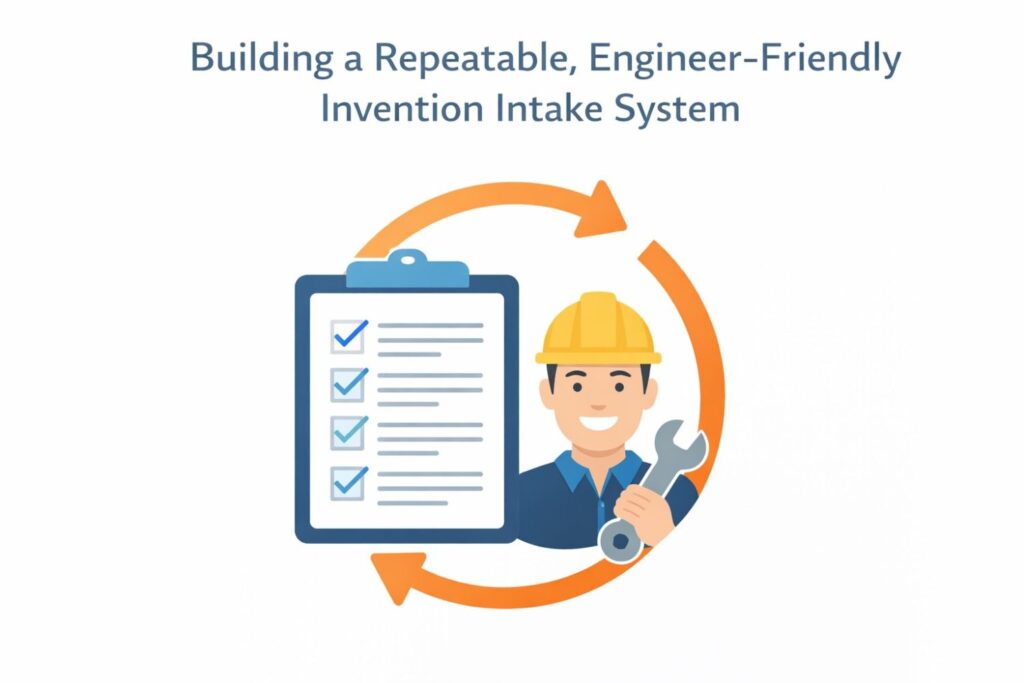
This reduces reliance on memory and avoids last-minute rushes before product launches.
When intake is tied to work already happening, participation becomes routine rather than forced.
Make Submission Simple and Fast
If it takes an hour to submit an invention, most engineers will postpone it.
Simplicity wins.
The intake interface should feel like a technical conversation, not a legal form. Instead of asking for formal patent language, ask structured, clear questions that engineers already know how to answer.
What problem did you solve?
How did you solve it differently than before?
What makes this hard for others to copy?
Where in the system does this change live?
These prompts guide technical clarity without overwhelming the inventor.
Modern platforms like PowerPatent are built exactly for this moment. Engineers input real technical details through guided prompts. The system organizes the content.
Real patent attorneys then refine it into strong filings. This approach removes the heavy lift from the engineer while preserving quality.
When submission feels lightweight, volume increases. When quality improves, downstream drafting becomes faster and more strategic.
Standardize the Review Rhythm
Intake without a review schedule creates backlog. Backlog creates frustration. Frustration reduces trust.
A repeatable system includes a fixed review rhythm. This could be weekly or biweekly depending on company size. The key is consistency.
Disclosures submitted before a set cutoff date are reviewed during the next session. Feedback is shared quickly. Filing decisions are made without unnecessary delay.
Engineers should know exactly when to expect a response. Predictability builds confidence.
If your team struggles with capacity, technology can help reduce drafting time and early-stage sorting.
AI-assisted analysis combined with real attorney oversight, like the model PowerPatent uses, significantly shortens early review cycles while maintaining strong legal quality.
A reliable cadence prevents intake from becoming a black hole.
Centralize Everything in One System
Scattered documents create confusion.
When disclosures live in email threads, shared drives, and personal notes, tracking becomes impossible. Ownership becomes unclear. Deadlines are missed.
A centralized platform ensures every invention lives in one secure place. Inventor names, dates, technical descriptions, and review status are all visible. Leadership can see pipeline health in real time.
Centralization also reduces risk during investor diligence. When potential investors ask for proof of IP development, you can show a clear, organized record of invention history.

PowerPatent offers a unified system that tracks each idea from submission through filing, giving both engineering and legal teams visibility without chaos.
Clarity reduces stress. Transparency increases accountability.
Educate Without Overloading
Engineers do not need deep patent law training. They need context.
A short internal session explaining what qualifies as a patentable improvement can dramatically increase submission quality. Use real examples from your own product.
Show how small technical shifts can create strong claims when captured correctly.
Education should be short and focused. Fifteen minutes during an all-hands meeting can be enough. Reinforce the message periodically. Keep language simple. Avoid legal jargon.
The purpose is not to turn engineers into lawyers. It is to remove uncertainty.
When engineers understand that patents protect their work and strengthen the company’s position, they become proactive rather than reactive.
Create a Fast Pre-Screen Filter
Not every disclosure should move forward.
A lightweight pre-screen process helps prioritize high-value inventions quickly. This does not require deep analysis at first. It simply answers strategic questions.
Does this align with our core product direction?
Is this technically differentiated?
Could this block competitors in a meaningful way?
Early filtering saves cost and keeps focus on impactful filings.
With AI-supported drafting systems like PowerPatent, early evaluation becomes faster because technical details are structured clearly from the start.
Attorneys can assess strength quickly without chasing inventors for clarification.
Efficiency at this stage compounds across the entire IP program.
Protect Speed While Improving Depth
The biggest fear inside product teams is delay.
A well-designed intake system proves that protection and speed can coexist. Engineers submit ideas quickly. Review cycles are short. Drafting leverages structured inputs.
Attorney oversight ensures quality without endless back-and-forth.
Speed does not require sacrificing strength. It requires reducing friction.
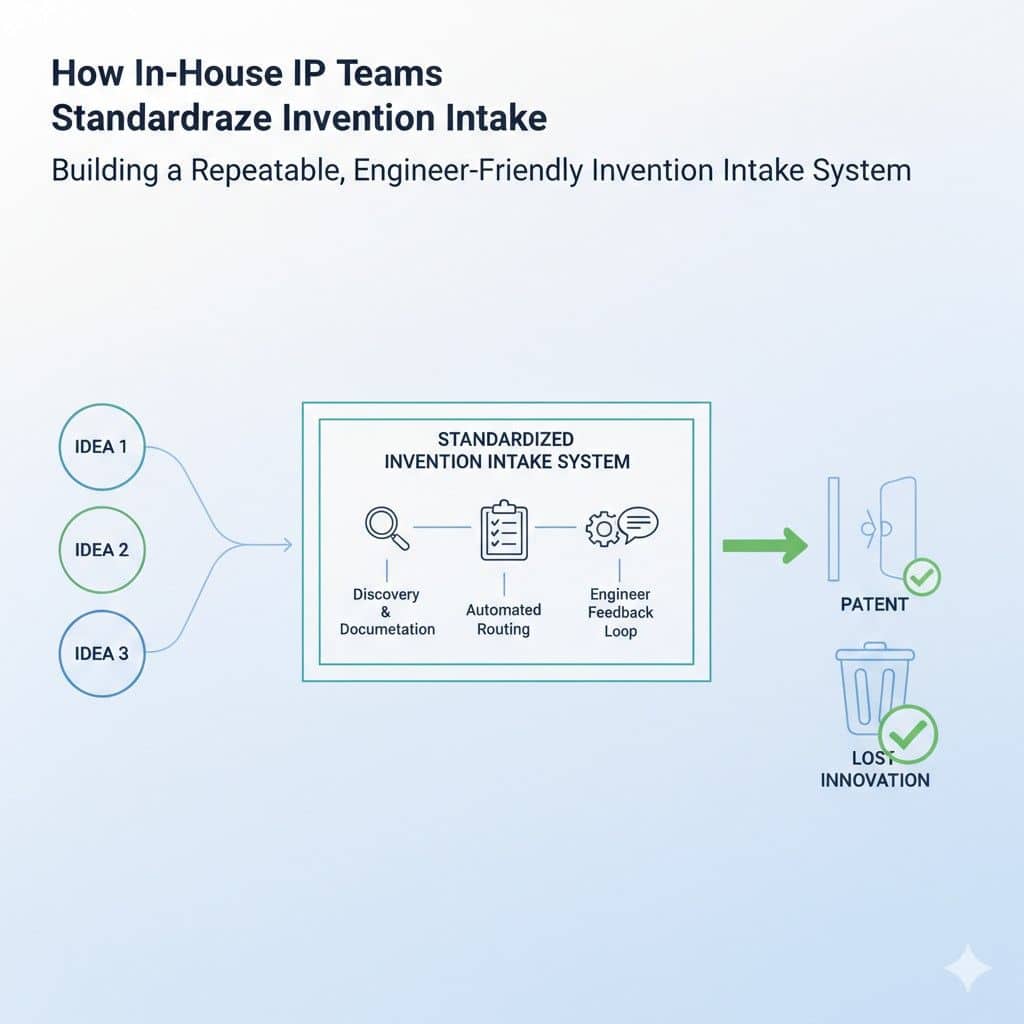
When the intake pipeline runs smoothly, product teams stop seeing IP as an obstacle. Instead, they see it as a layer of strategic defense built quietly in the background.
That shift in perception changes everything.
Build Feedback Loops
A repeatable system improves over time.
After each filing, ask inventors what felt confusing. Was the submission process clear? Did feedback arrive quickly? Was drafting collaborative or frustrating?
Small adjustments compound. Remove extra steps. Clarify prompts. Adjust timing.
Treat intake like a product feature. Iterate on it.
When engineers see that their feedback shapes the system, engagement increases. Ownership grows.
Modern digital platforms allow easy adjustments without rebuilding processes from scratch. That flexibility keeps intake aligned with evolving product cycles.
Align Intake With Business Strategy
Invention intake should not operate in isolation. It must connect directly to company goals.
If your company plans to enter a new market, intake should prioritize innovations supporting that expansion. If fundraising is approaching, filings that demonstrate core differentiation should move faster.
IP leaders should attend strategic planning meetings. Understand where the company is heading. Shape intake focus accordingly.
PowerPatent makes it easier to align technical disclosures with strategic themes because every submission is structured and searchable. Leadership can quickly identify clusters of innovation tied to specific initiatives.
Strategic alignment turns patents from defensive paperwork into growth assets.
Measure What Matters
A repeatable system produces data.
Track how many disclosures are submitted per quarter. Track average time from submission to filing. Track inventor participation rates across teams.
These metrics reveal health. If submission numbers drop, investigate early. If review times increase, adjust resources.
Visibility drives improvement.
Over time, a strong intake system becomes part of company culture. Engineers expect to submit ideas. Legal expects structured input. Leadership expects measurable output.
That consistency protects innovation at scale.
The Bigger Picture
Standardizing invention intake is not about control. It is about unlocking value that already exists inside your company.
Engineers are building breakthroughs every day. Without a repeatable system, those breakthroughs fade into product updates without long-term protection.
With the right structure, supported by modern tools and real attorney oversight, innovation turns into defensible assets.
PowerPatent was built for exactly this balance. It helps in-house teams move fast, capture ideas clearly, and file strong patents without the delays and confusion of traditional processes.
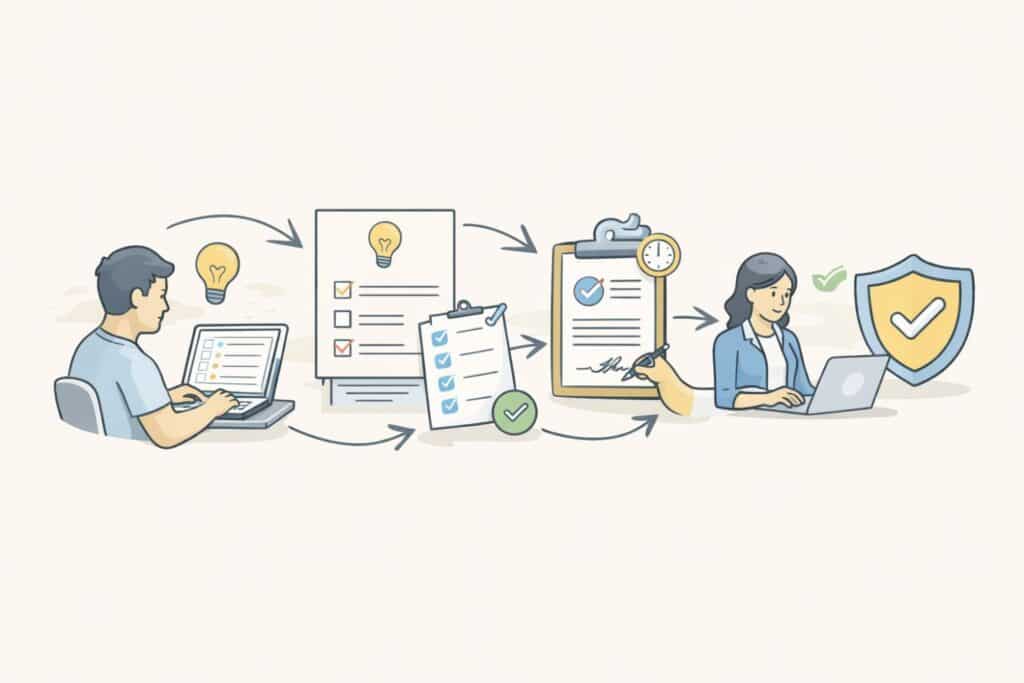
When intake becomes simple, predictable, and aligned with business goals, the entire organization moves with more confidence.
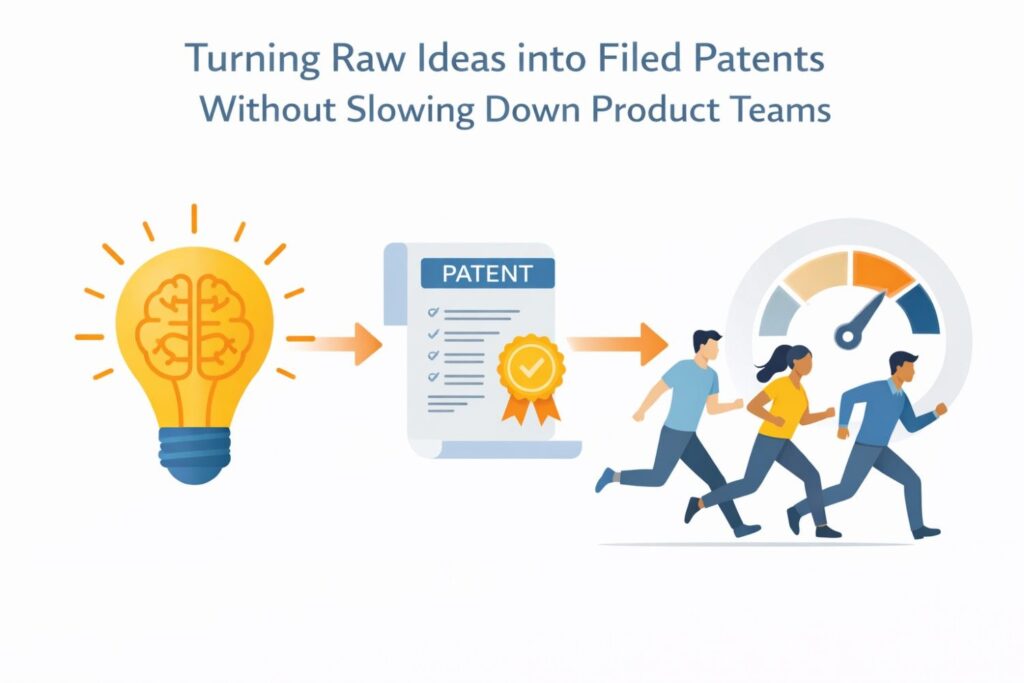
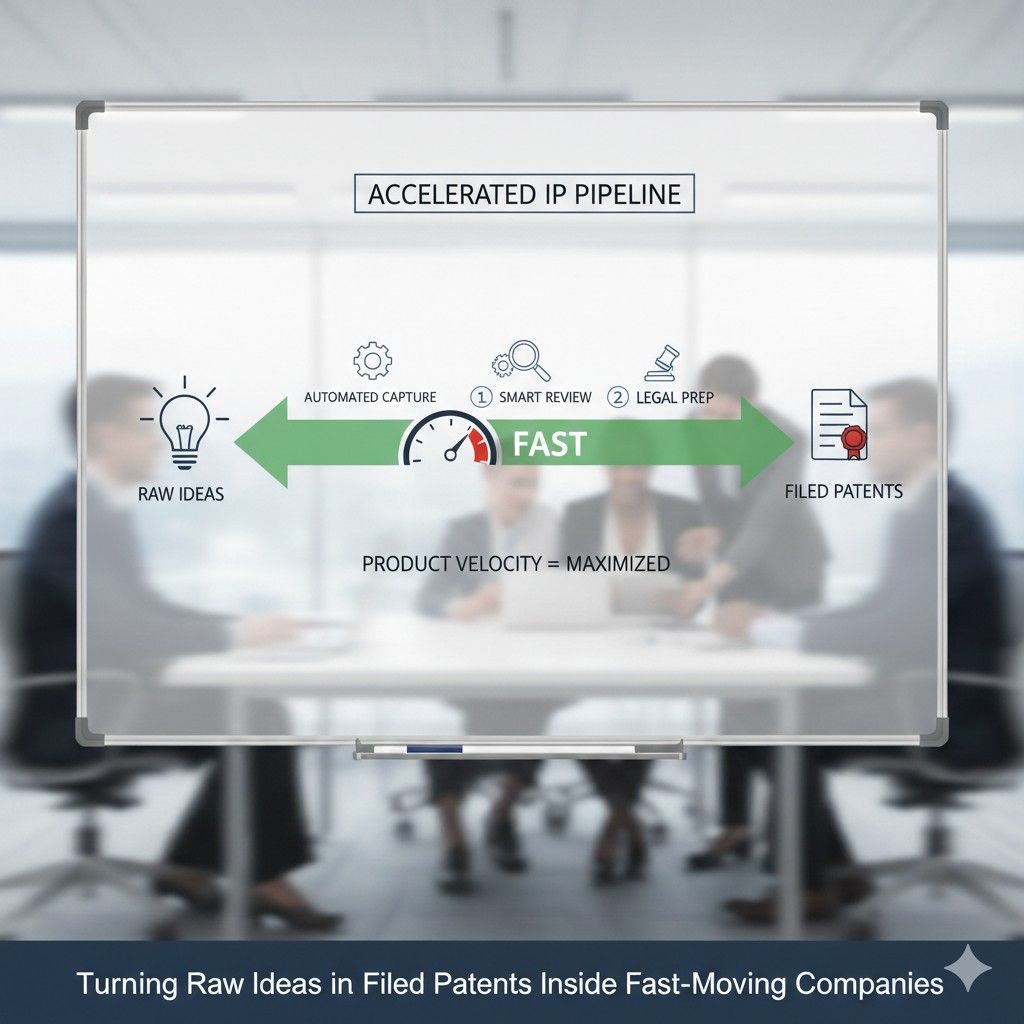
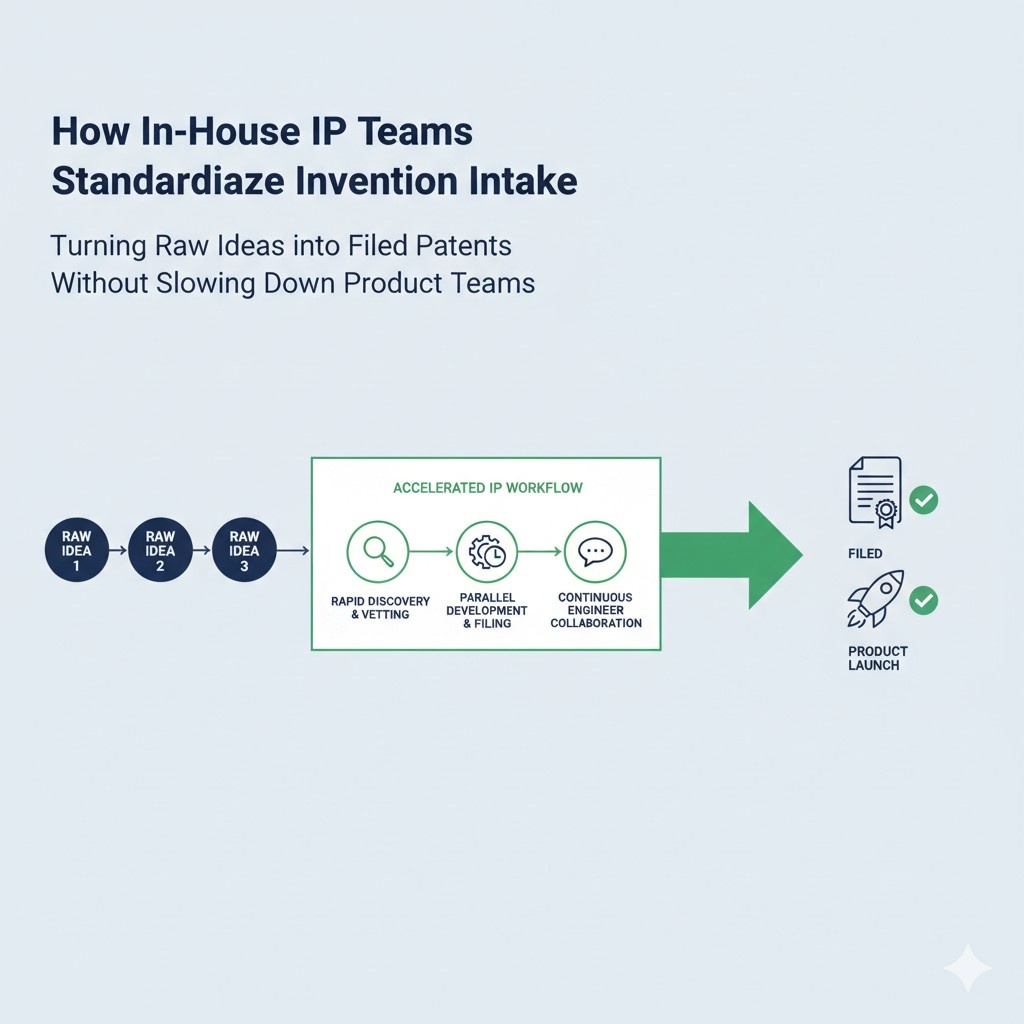
Turning Raw Ideas into Filed Patents Without Slowing Down Product Teams
Capturing ideas is only half the battle. The real test comes after submission. This is where many in-house IP programs lose momentum. Disclosures sit in review queues.
Drafting stretches for months. Engineers are pulled into long calls. Product timelines keep moving while patent work lags behind.
A standardized intake system must flow directly into a streamlined filing process. If that second half breaks, trust disappears quickly.
The goal is simple. Move from raw idea to filed patent smoothly, without interrupting product velocity.
Move From Capture to Clarity Immediately
The moment a disclosure is submitted, momentum matters.
If weeks pass before anyone reviews it, important context fades. Engineers forget key details. Technical nuance gets lost. Follow-up becomes harder.
High-functioning IP teams review disclosures quickly, even if full drafting happens later. Early review confirms novelty, aligns scope with product direction, and flags timing risks related to public releases.
This early clarity prevents last-minute emergencies.
Using structured submission tools like PowerPatent helps here. Because the input is already organized in a logical way, attorneys can assess strength faster.
They spend less time decoding messy notes and more time shaping strategy.
Speed at this stage does not mean rushing. It means eliminating idle time.
Translate Technical Detail Into Strong Claims Without Endless Back-and-Forth
One of the biggest bottlenecks in traditional patent drafting is miscommunication.
An engineer explains a solution in highly technical language. An external firm interprets it. Drafts circulate. Clarifications are requested. More calls are scheduled. Weeks pass.
This loop drains time and energy.
To avoid this, the intake system must capture enough technical depth upfront. Engineers should describe system architecture, data flow, hardware configuration, model structure, and performance results clearly at submission.
When this information is structured properly, drafting becomes more about refinement than reconstruction.
Modern AI-assisted drafting platforms, combined with real attorney review, dramatically reduce revision cycles.
PowerPatent, for example, helps convert detailed technical input into organized draft content quickly, while experienced attorneys ensure the claims are strong and defensible.
This balance preserves quality without pulling engineers away from product work repeatedly.
Protect Launch Timelines Proactively
Product launches often create pressure.
If a team plans to announce a feature at a conference or publish a technical blog post, patent filing must happen before that disclosure. Waiting until the last minute creates stress.
Standardized intake systems solve this by connecting product roadmaps with IP planning. IP leaders should have visibility into upcoming releases. Filing decisions should happen early enough to avoid panic.
This requires coordination, not control.
When IP teams are included in roadmap discussions, they can anticipate filing windows. When engineers trust that the intake process is efficient, they are more willing to flag upcoming disclosures.
PowerPatent supports faster drafting cycles, which makes pre-launch filings realistic even in tight schedules. This reduces friction between legal protection and marketing goals.
Proactive planning protects both speed and rights.
Reduce Meeting Load Through Structured Collaboration
Meetings are expensive.
In many companies, patent drafting involves multiple long calls. Engineers walk through architecture live. Attorneys ask basic clarifying questions. Time drains quickly.
A strong intake system minimizes unnecessary meetings by capturing core details upfront. Structured prompts can request diagrams, flow descriptions, and performance comparisons early in the process.
When this material is clear, meetings become strategic rather than exploratory. Instead of asking what the invention is, discussions focus on how broad claims should be and what competitive risks exist.
This shift saves time for both engineering and legal teams.
Digital collaboration tools also allow asynchronous feedback. Engineers can review draft sections directly in the platform rather than scheduling calls for every revision.
PowerPatent’s approach supports this streamlined collaboration while maintaining attorney oversight.
The result is fewer interruptions and faster progress.
Maintain Quality While Moving Fast
Speed without strength is dangerous.
Filing quickly does not help if the patent is narrow or poorly written. Weak claims fail during enforcement. They also fail during investor diligence.
The key is structured speed.
By standardizing intake, capturing detailed technical input, and using technology to accelerate drafting, teams can move quickly without sacrificing depth.
Real attorney review remains critical.
AI tools help with organization and efficiency, but experienced patent professionals ensure that claims are strategically positioned, that edge cases are considered, and that future product evolution is protected.
PowerPatent combines both elements. Smart software handles structure and early drafting efficiency. Real attorneys shape the final filing. This hybrid approach supports both speed and defensibility.
Quality and velocity can coexist when the system is designed intentionally.
Keep Engineers Focused on Building
The best intake systems respect engineering time.
Engineers should not feel like part-time legal assistants. Their role is to explain the technical truth clearly once. After that, the system should carry most of the load.
When drafting requires repeated deep involvement, frustration builds. Over time, submission rates drop.
To prevent this, define clear participation boundaries. Engineers provide detailed input at submission. They review one or two draft iterations. Final polishing happens within the IP team and external counsel if needed.
Structured tools reduce confusion during these reviews. When drafts mirror the original technical structure provided during intake, engineers can verify accuracy quickly.
PowerPatent’s guided format helps maintain this alignment, reducing cognitive friction during review cycles.
The less disruptive the process feels, the more sustainable it becomes.
Create Clear Decision Gates
Not every disclosure becomes a filing. Strategic filtering is necessary.
However, decisions must be timely and transparent.
After initial review, communicate clearly whether the company will proceed, pause, or decline. If declining, explain briefly why. This feedback educates inventors and improves future submissions.
Ambiguity damages engagement.
A standardized intake system should define decision points. For example, within two weeks of submission, a go-or-no-go decision is made. Within a defined window after approval, drafting begins. Within another defined period, filing occurs.
Clear gates reduce uncertainty.
With centralized platforms like PowerPatent, these stages are visible to all stakeholders. Status tracking builds trust.
Turn Filed Patents Into Strategic Assets
The process does not end at filing.
After submission, connect the patent to product strategy. Inform sales teams when protection strengthens competitive positioning.
Brief leadership on how the filing supports market expansion. Highlight filings during fundraising conversations.
This reinforces the value of standardized intake.
When engineers see that their inventions directly support company growth, motivation increases.
A strong system creates a virtuous cycle. Better intake leads to better filings. Better filings strengthen strategy. Stronger strategy reinforces the importance of intake.
The Long-Term Impact
When raw ideas consistently turn into filed patents without slowing product teams, the company gains a powerful advantage.
Innovation stays protected. Engineers stay focused. Leadership gains confidence. Investors see maturity. Competitors face barriers.
This is not about paperwork. It is about building a protective wall around your core technology while continuing to move fast.
PowerPatent was designed for this exact reality. It helps in-house IP teams standardize intake, accelerate drafting, and maintain high-quality filings with real attorney support. It removes friction without removing rigor.
In fast-moving markets, protection cannot lag behind innovation.

When the system works, patents become a natural extension of product development rather than an afterthought.
Wrapping It Up
In-house IP teams do not standardize invention intake to create more process. They do it to protect momentum. When intake is messy, everything downstream suffers. Strong ideas are missed. Filing windows close. Engineers lose patience. Legal teams scramble. Leadership loses visibility. Over time, the company builds innovation that competitors can study, copy, and commercialize. But when intake is structured, simple, and aligned with how engineers already work, something shifts. Innovation flows into protection naturally. Filing becomes predictable. Product teams stay focused. Legal teams stay ahead. Leadership gains confidence that core technology is secure.