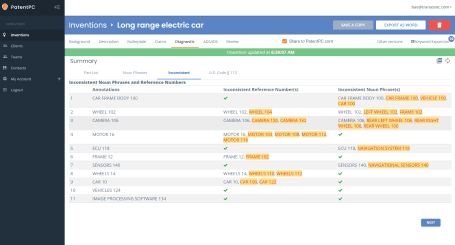
Track One sounds simple on paper. File your patent and get a fast answer. In real life, many founders miss it by days, make small filing mistakes, or choose the wrong setup and lose the speed they wanted. This article shows exactly how to use Track One the right way from day one, so you do not waste time, money, or momentum. If you are building something real and want fast, strong protection without slowing down, this matters. PowerPatent was built for this moment, combining smart software and real patent attorneys to help you file clean and fast from the start. You can see how it works here: https://powerpatent.com/how-it-works
What Track One Really Is and Why Founders Get It Wrong
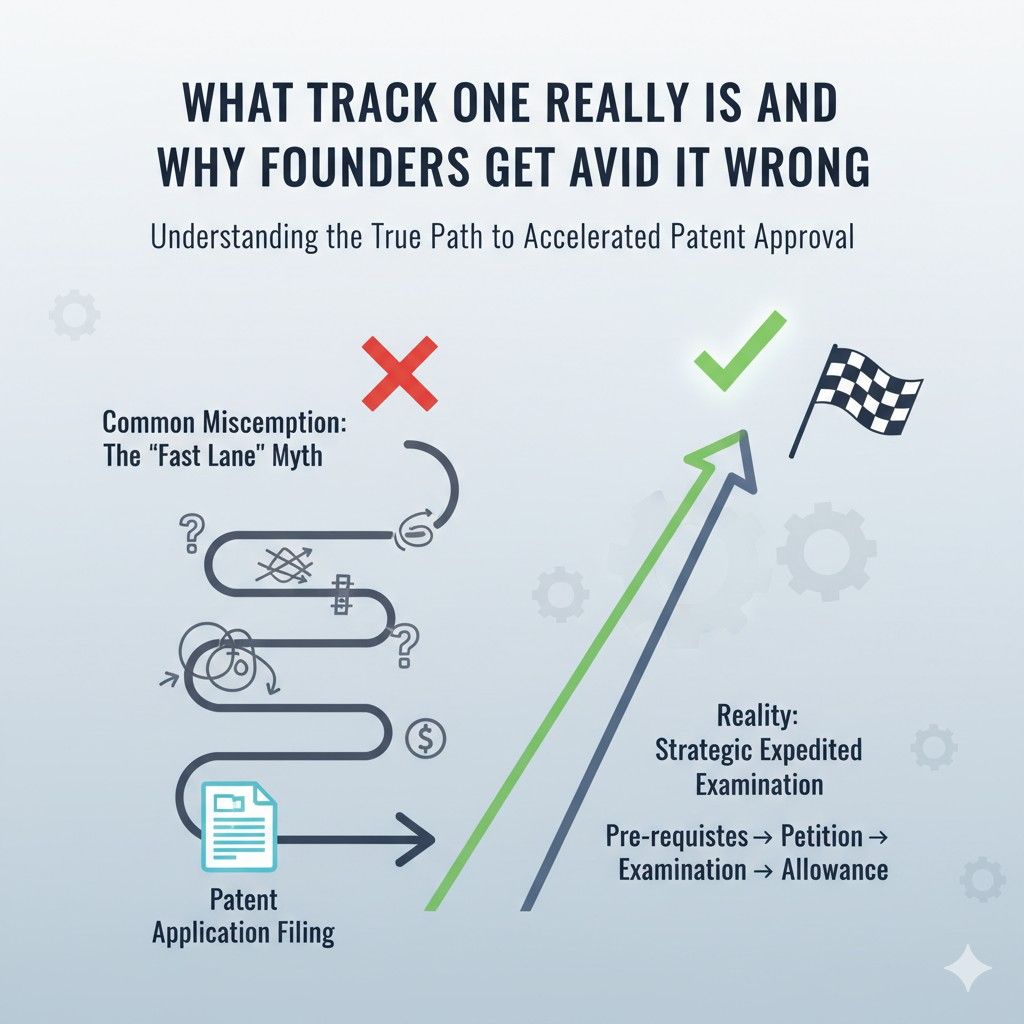
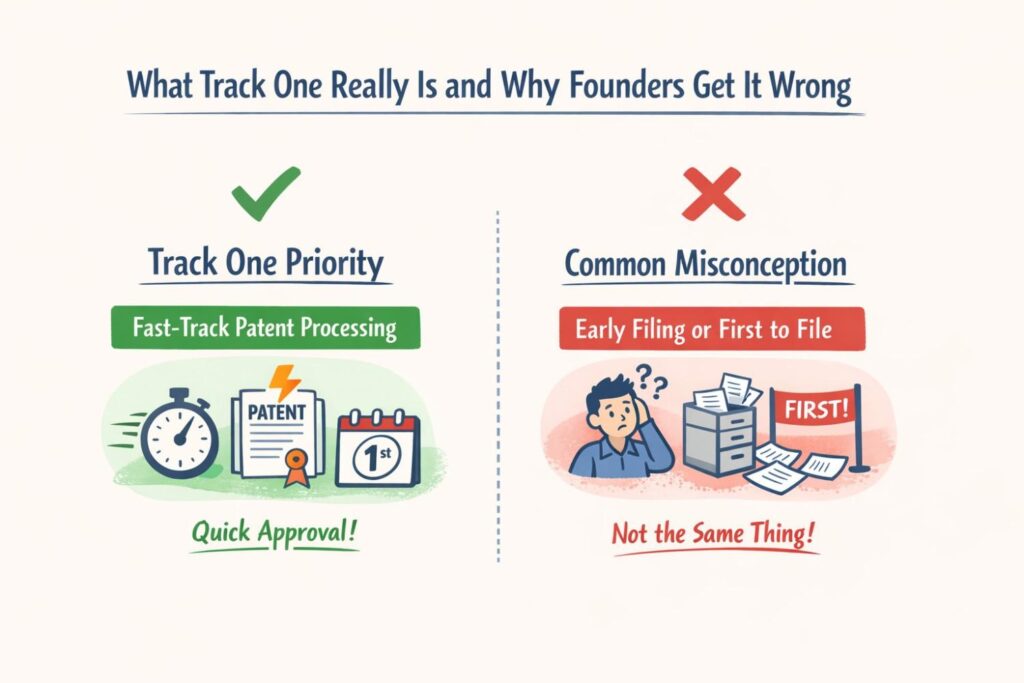
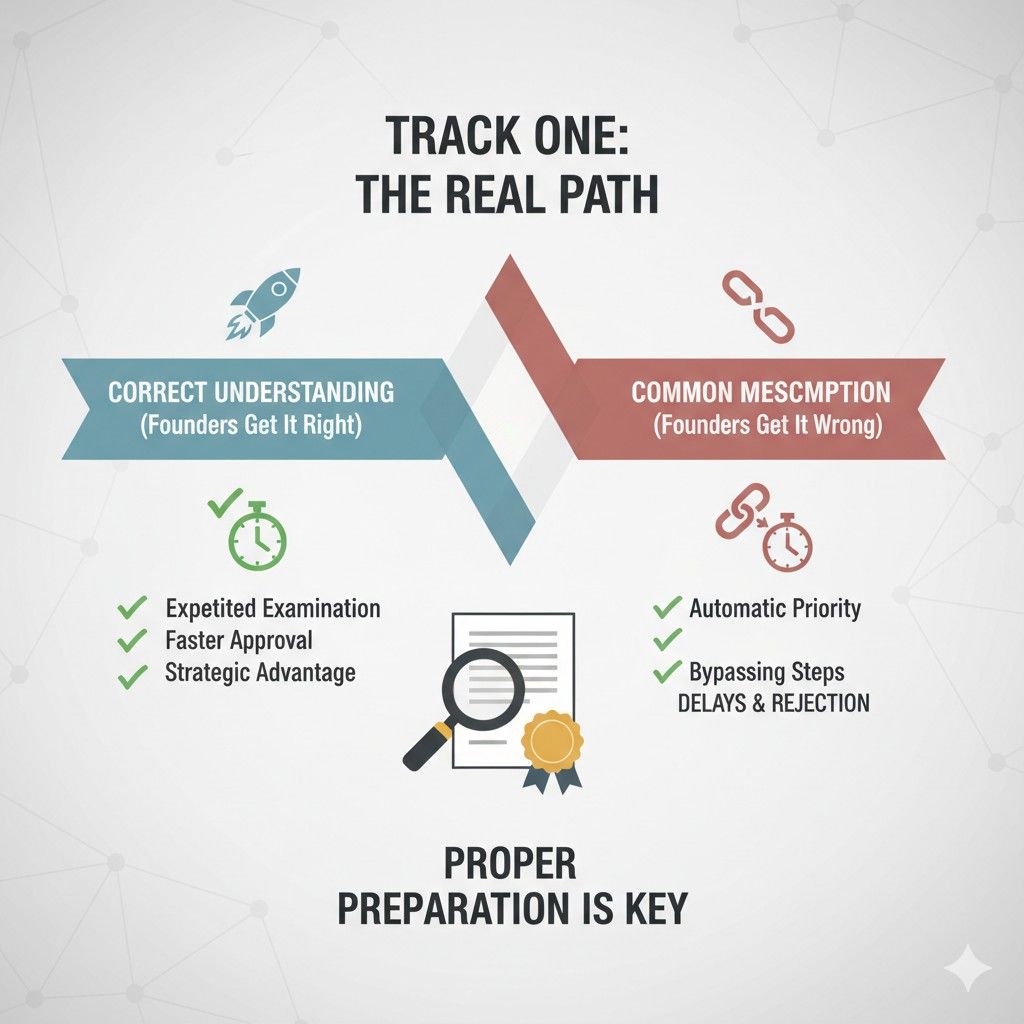
Track One is not a shortcut. It is a fast lane with very strict rules. Many businesses hear “fast patent” and assume it means relaxed standards or flexible timing.
That assumption is the reason so many Track One requests fail or get delayed.
To use Track One well, you need to understand what it actually is, how the patent office treats it, and why small decisions made early can quietly knock you out of the fast lane without warning.
Track One is best understood as a priority service. You are asking the patent office to look at your application ahead of others. In exchange, they expect a clean, complete, and carefully prepared filing.
When founders treat Track One like a checkbox instead of a strategy, delays almost always follow.
Track One Is About Speed, Not Forgiveness
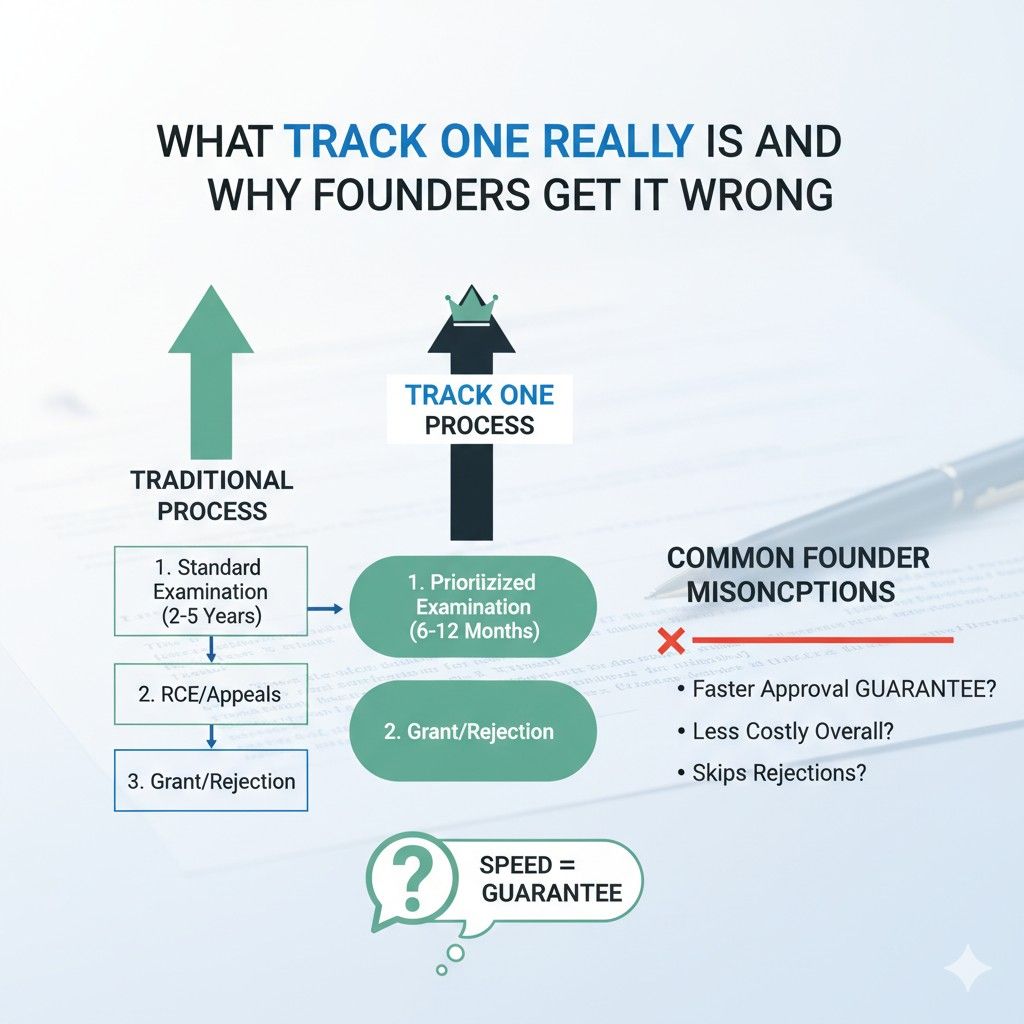
Track One does not forgive mistakes. It amplifies them.
When you file normally, small errors can sometimes be fixed later without much damage. With Track One, those same errors can remove you from fast review entirely.
The patent office does not slow down to help you fix issues. They simply move you back to the normal line.
This is where many businesses get caught off guard. They assume paying the Track One fee buys flexibility. It does not. It buys attention. That attention means your application is reviewed quickly, including its weaknesses.
If your claims are unclear, if your paperwork is inconsistent, or if your filing choices do not line up, the examiner will see it fast. That can lead to early objections, extra back and forth, or losing Track One status altogether.
The practical takeaway is simple. Speed rewards preparation. If you want Track One to work, your application needs to be strong the moment it is filed.
Track One Is a Filing Decision, Not a Later Upgrade
One of the most common misunderstandings is timing. Many founders believe they can file a regular application and decide on Track One later. That belief costs months.
Track One works best when chosen at filing. Waiting even a short time can create problems, especially if anything in the application needs correction or adjustment.
By the time people realize they want speed, the structure of their filing may already limit their options.
From a business standpoint, this matters because patent timelines affect fundraising, partnerships, and competitive positioning. If speed is important, it must be part of the plan before anything is submitted.
This is why teams that use systems like PowerPatent often decide on Track One early. The software and attorney guidance help you structure the application correctly from the start, so speed is not something you gamble on later.
Track One Is Not Just for Big Companies
Another reason founders get Track One wrong is thinking it is only for large companies with large budgets. That belief stops many startups from even considering it.
Track One was designed to give certainty, not just speed. For a startup, certainty can be more valuable than anything else. Knowing when you are likely to get feedback or allowance helps you plan product launches, investor conversations, and long-term strategy.
The key is not size. The key is clarity. If you know what you are building and can explain it well, Track One can be a powerful tool even for early-stage teams.
The mistake is assuming Track One requires perfection. It does not. It requires focus. A clear invention story, a clear scope, and clean execution.
Track One Does Not Fix a Weak Invention Story
Speed cannot compensate for confusion.
Some founders think Track One will help them “figure it out faster.” In reality, it exposes weak thinking faster.
If your invention is described in a scattered way, or if the core idea is not clearly framed, fast review just means fast rejection or fast narrowing.
This is why invention clarity matters more than technical depth at this stage. The patent office needs to understand what problem you are solving and how your solution is different. If that story is not clear, no amount of speed helps.
A strong approach is to treat Track One as a forcing function. Before filing, ask whether someone unfamiliar with your product could explain it after reading your application. If the answer is no, speed will hurt more than help.
Track One Requires Discipline in Scope
Another common error is trying to cover too much at once. Founders often want one patent to protect everything they are building now and everything they might build later.
With Track One, that instinct can backfire. Broad, unfocused claims invite more questions. More questions mean more office actions. More office actions slow things down.
The smarter approach is strategic focus. Protect the core idea that creates real value today. You can always file more later. Track One works best when the scope is deliberate and well-supported.
This does not mean giving up future protection. It means sequencing it. Businesses that understand this use Track One to lock in a strong first position, then build outward over time.
Track One Is a Commitment to Fast Responses
Track One is not passive. When the patent office moves quickly, they expect you to move quickly too.
Many founders are surprised by how fast responses are required. If you are not ready to review office actions, make decisions, and respond within tight windows, Track One becomes stressful instead of helpful.
This is where planning matters. Before choosing Track One, businesses should ask whether they have the bandwidth to engage quickly. That includes internal review time and access to legal support.
Platforms like PowerPatent are built with this in mind. By keeping everything organized and clear, they reduce response time and help teams stay in control instead of scrambling.
Track One Is a Business Tool, Not a Legal Trick
The final misunderstanding is treating Track One as a legal tactic instead of a business decision.
Track One should serve a clear business goal. That goal might be investor confidence, market signaling, or competitive defense. When that goal is clear, decisions around scope, timing, and responses become easier.
When the goal is unclear, Track One feels risky. Founders worry about cost, speed, and outcomes because they are not tied to a larger plan.
The most successful teams treat Track One as part of their growth strategy. They align it with funding milestones, product launches, and long-term vision. Speed then becomes an advantage instead of a gamble.
If you are considering Track One, the first question is not how fast it is. The first question is why you want speed at all. When that answer is clear, the rest of the process becomes far more predictable.
PowerPatent was designed to support this exact way of thinking. It helps founders make smart filing decisions early, avoid silent mistakes, and move quickly with confidence.
If speed matters to your business, understanding Track One at filing is not optional. It is foundational.
What You Must Have Ready Before You File Anything
Track One rewards readiness. Before anything is submitted, before any fee is paid, and before speed is requested, there is quiet work that must already be done. This work is not about legal forms or fancy language.
It is about clarity, alignment, and making sure your business is actually ready for fast review. Most delays tied to Track One do not come from the patent office. They come from founders filing before they are truly prepared.
This section focuses on what needs to exist before filing so Track One works the way you expect it to.
A Clear Reason for Wanting Speed
Speed should never be vague.
Before filing, the business needs a clear answer to why Track One matters right now. Is it for fundraising?
Is it for a key partnership? Is it to block a competitor? When this reason is clear, filing decisions become sharper and faster.
Without a reason, founders tend to hesitate after filing. They second-guess claim scope, delay responses, or rethink strategy midstream. That hesitation alone can cancel out the benefit of Track One.

Businesses that succeed with Track One decide upfront what outcome they want and treat speed as a tool to reach that outcome, not as an experiment.
Alignment Between Product and Patent Timing
One of the biggest mistakes is filing while the product story is still shifting.
If core features are still changing weekly, Track One may be premature. Fast review locks you into decisions earlier than standard filing. That is powerful when the product is stable and dangerous when it is not.
This does not mean everything must be finished. It means the core idea must be settled. The problem you are solving, and the way you solve it, should no longer be in flux.
A simple test helps here. Ask whether you would feel confident explaining your product the same way six months from now. If the answer is yes, you are likely ready. If not, speed may work against you.
Internal Ownership of the Patent Process
Track One moves too fast for confusion about who is responsible.
Before filing, the business must decide who owns patent decisions. This includes reviewing drafts, approving responses, and making scope calls. When this ownership is unclear, days are lost to internal back and forth.
Those lost days matter more under Track One. Fast timelines compress everything. Even small delays can snowball into missed deadlines or rushed decisions.
Companies that plan ahead assign a single point of ownership. That person may not be a lawyer, but they are empowered to move things forward.
A Stable Explanation of the Invention
The patent office does not see your code, your demos, or your pitch deck. They see words.
Before filing, your invention needs a stable explanation that can be written down clearly. This explanation should not change every time a new person reads it.
Founders often underestimate how hard this is. They know their product deeply, but explaining it simply takes work. Track One magnifies this challenge because there is less time to refine explanations after filing.

A helpful approach is to write a short plain-language description before any legal drafting begins. If that description feels solid and consistent, you are closer to being ready.
Comfort With Early Feedback
Track One means you will hear back sooner. That feedback may not always be what you want.
Before filing, founders should be ready for early objections, questions, or narrowing. This is not failure. It is information. But emotionally, fast feedback can feel intense if you are not prepared for it.
Businesses that handle Track One well treat early responses as part of the process. They expect dialogue. They plan for it. That mindset prevents panic-driven decisions.
Being ready for Track One is as much mental as it is procedural. Speed requires confidence.
Budget Certainty From the Start
Track One has known costs. Uncertainty around budget creates hesitation later.
Before filing, the business should be comfortable with the full expected cost, including responses. When cost questions come up midstream, speed slows down.
This is another reason many founders choose platforms like PowerPatent. Predictable pricing and guided workflows remove financial guesswork, making it easier to commit fully to fast review.
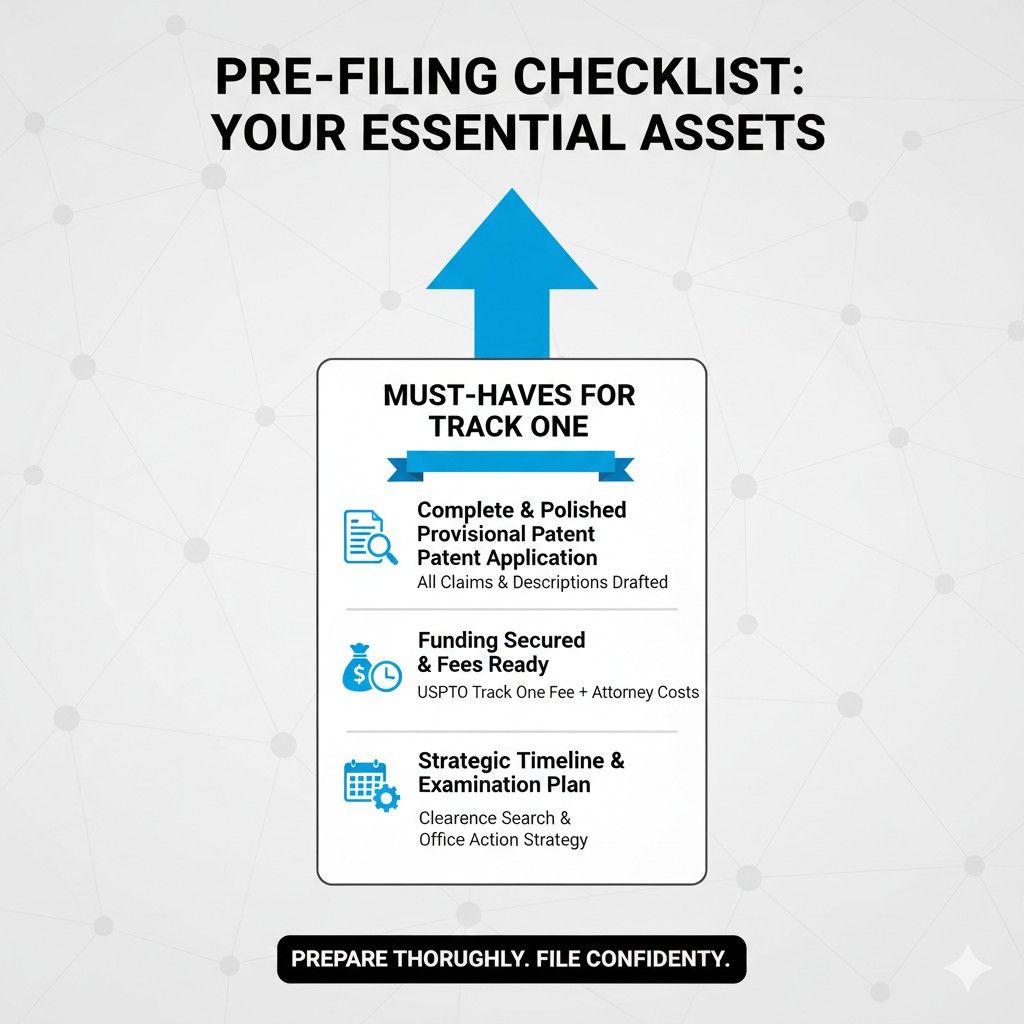
When budget is settled early, decisions stay focused on strategy instead of surprise expenses.
Access to Fast, Clear Legal Guidance
Track One does not leave room for waiting weeks for answers.
Before filing, make sure you have access to legal support that can move at the same pace as the patent office. Delayed advice can quietly derail speed goals.
This does not mean constant meetings. It means clarity, availability, and the ability to make informed decisions quickly.
The combination of smart software and real attorneys is designed for this exact need. It keeps momentum high without sacrificing quality.
Readiness Is the Real Accelerator
Many founders think Track One itself creates speed. In reality, readiness creates speed.
When the invention is clear, the business goal is defined, and ownership is aligned, Track One becomes a powerful accelerator. When those pieces are missing, Track One simply reveals the gaps faster.

Preparing before filing is not extra work. It is the work that makes speed possible.
How Small Filing Choices Create Big Delays
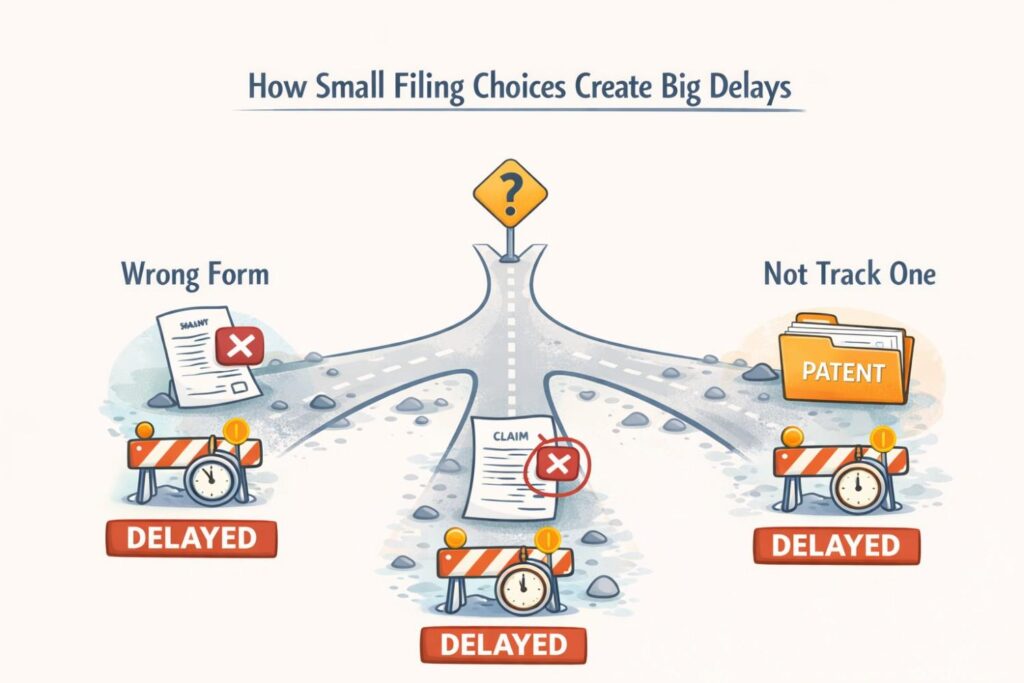
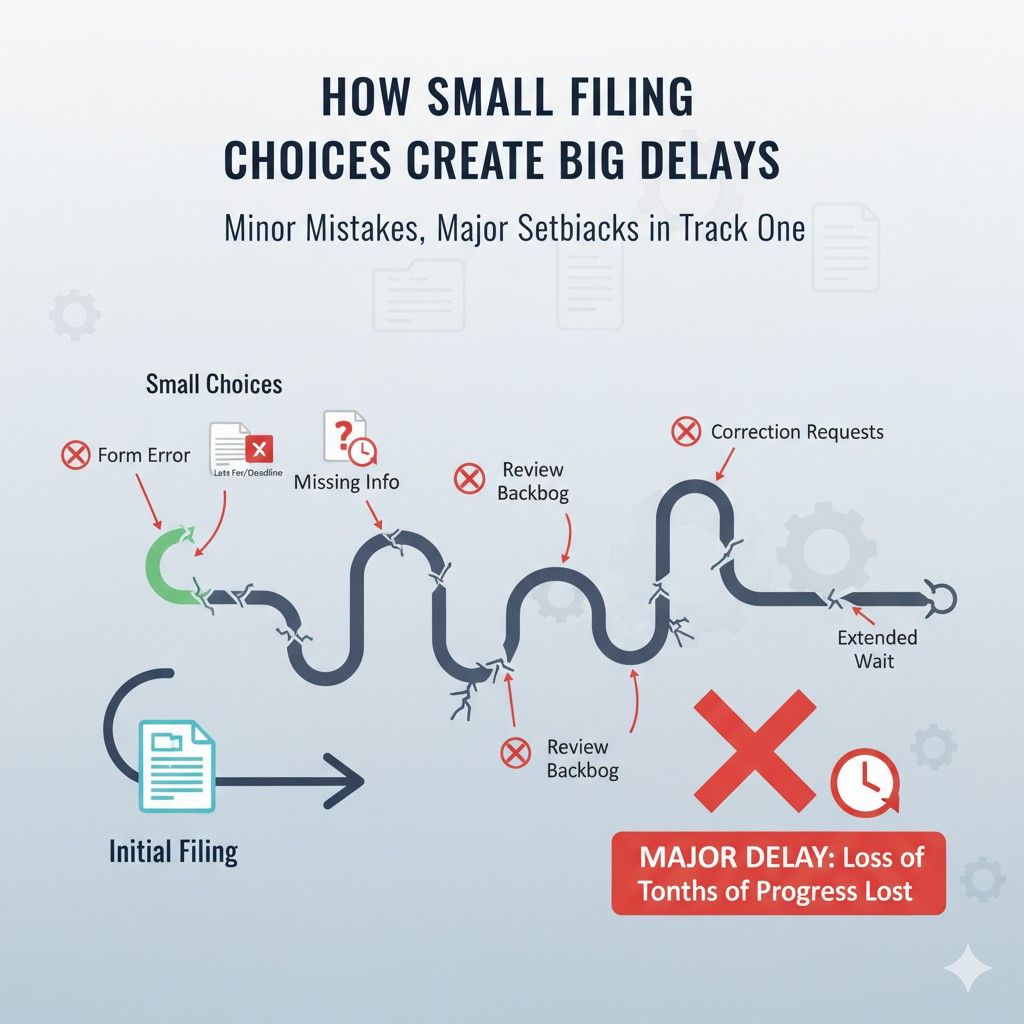
Track One failures rarely come from one big mistake. They come from a series of small choices that seem harmless at the moment but quietly slow everything down later.
These choices often happen during filing, when founders are focused on getting something submitted instead of getting it submitted right.
Under normal timelines, these issues might only cause minor friction. Under Track One, they can completely undo the benefit of fast review.
This section explains how seemingly minor filing decisions can create real business delays and how to avoid them.
Choosing Speed Without Choosing Precision
One of the most common problems is rushing the filing itself.
Founders often feel pressure to file quickly to “get in line” for Track One. In that rush, precision suffers. Claims may be loosely written. Descriptions may rely on assumptions instead of clarity. These gaps are not invisible to examiners.
Fast review means fast scrutiny. When the application lacks precision, the examiner responds with questions instead of progress. Each question adds time, even in Track One.
The better approach is deliberate speed. Move quickly, but not casually. Every sentence in the application should earn its place. If something feels unclear during drafting, it will almost certainly feel unclear during examination.
Overloading the Application With Features
Another subtle delay comes from trying to include too much.
Founders often want their first patent to cover every feature, variation, and future idea. This instinct makes sense emotionally, but it creates complexity that slows examination.
When an application tries to do too much, the examiner has more to analyze, more to question, and more to challenge. That increases the chance of multiple rounds of feedback.
Under Track One, focus beats coverage. Protecting the core idea cleanly often leads to faster allowance and stronger positioning. Additional ideas can be protected later through follow-on filings.
Speed improves when scope is intentional rather than maximal.
Misjudging Claim Count and Structure
Claim choices matter more than most founders realize.
Track One has limits on claim counts. Filing too many claims or structuring them poorly can trigger extra review or force changes that cost time. Even if technically allowed, crowded claim sets invite more examiner attention.
The strategic move is to prioritize quality over quantity. A smaller set of well-thought-out claims often moves faster than a large set of overlapping ones.
Businesses that plan ahead use claims to tell a clear story. Each claim builds logically on the last. That clarity helps the examiner move faster and with more confidence.
Treating Forms as Paperwork Instead of Strategy
Filing forms are not just administrative. They are signals.
Choices around application type, declarations, and supporting documents all affect how smoothly Track One proceeds. When these are treated as afterthoughts, inconsistencies can appear.
Even small mismatches between documents can trigger requests for correction. Each correction introduces delay.
Founders who succeed with Track One treat filing as a single integrated action. Everything lines up. Nothing contradicts. That coherence reduces friction before examination even begins.
Assuming You Can Fix Things Later
Normal patent filing encourages a mindset of “we can clean this up later.” Track One punishes that mindset.
Fast timelines compress opportunities for correction. If something is wrong or unclear at filing, it becomes a problem immediately. There is less time to rethink, rewrite, or restructure.
The practical advice here is simple. File only what you are comfortable standing behind. If something feels unfinished, it probably is.
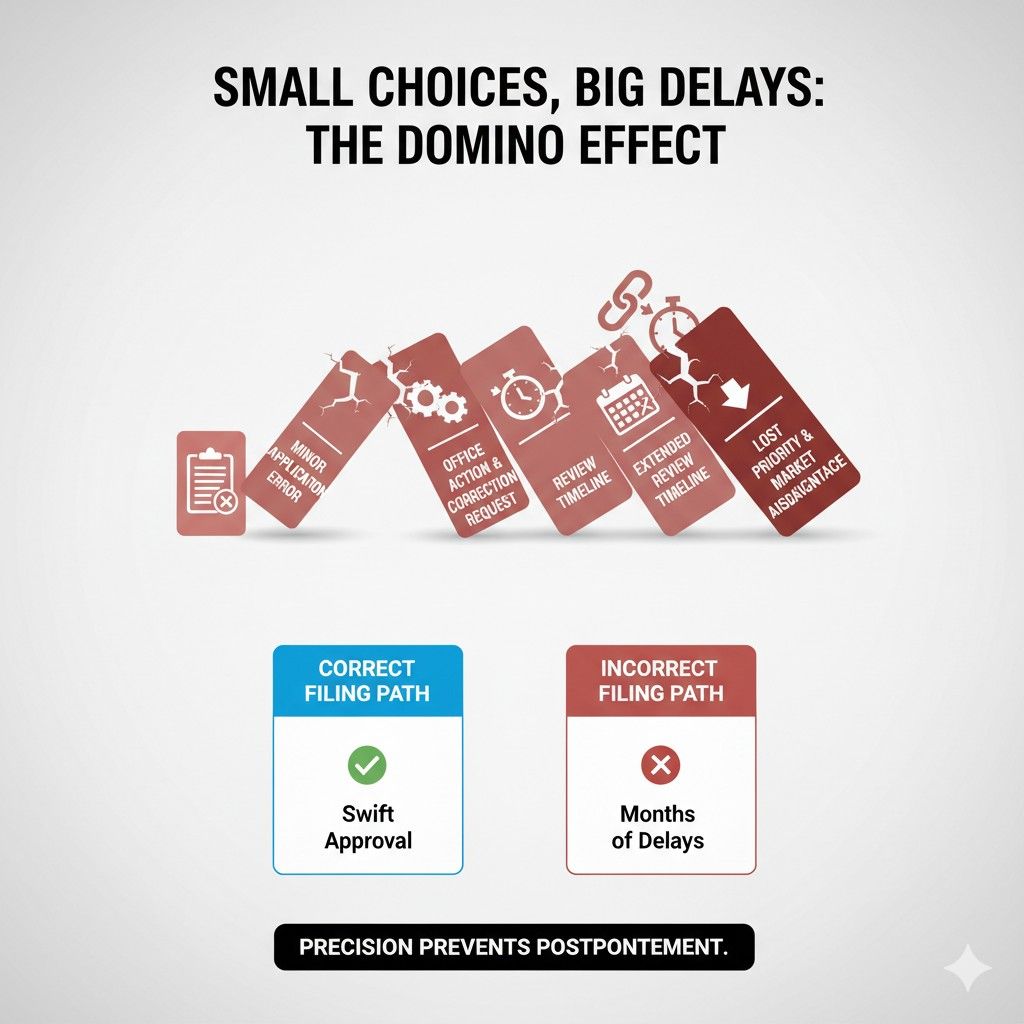
Track One rewards confidence in the present, not optimism about future fixes.
Letting Legal Language Hide Business Intent
Sometimes delay comes from overcomplicating language.
Founders often believe patents must sound complex to be strong. In reality, complexity can slow things down. When legal language hides the business logic of the invention, examiners have to work harder to understand it.
Harder understanding leads to more questions. More questions lead to delay.
Clear language that reflects real-world use cases often moves faster. It aligns the invention with how it actually creates value, which helps examiners assess it efficiently.
Forgetting That Examiners Are Human
Track One review is still done by people.
When applications feel disorganized or overly dense, examiners slow down. When applications are clear and purposeful, examiners move faster.
Small choices like logical flow, consistent terms, and straightforward explanations all affect human reading speed. These are not cosmetic details. They are functional.
Businesses that respect the reader experience of the application often see smoother and faster outcomes.
Small Choices Add Up Quickly
No single filing choice determines success or failure under Track One. But together, they create momentum or resistance.
The key insight is that speed is cumulative. Every clear decision adds momentum. Every unclear one adds friction.
This is why guided systems and experienced oversight matter. They catch small issues before they become big delays. They keep the filing aligned with the goal of speed from start to finish.
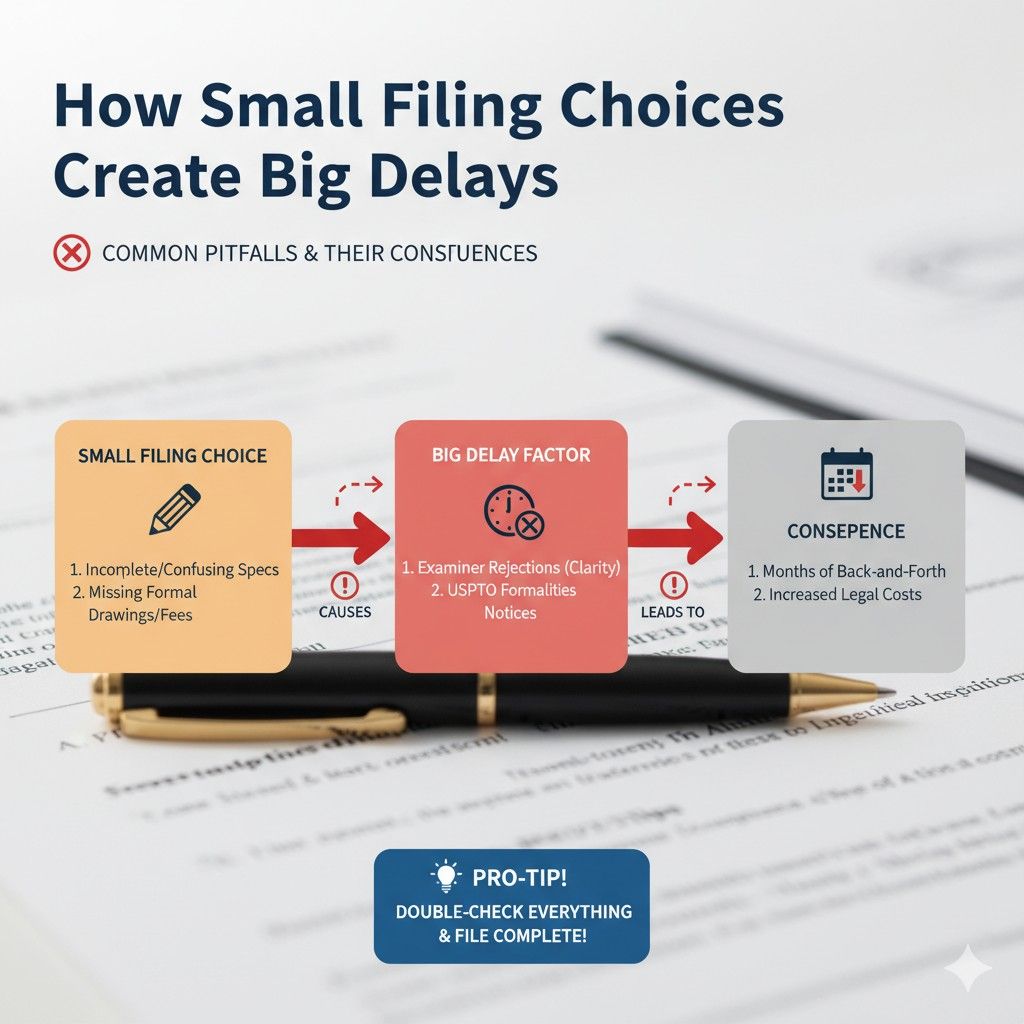
When Track One works well, it feels effortless. When it fails, it often feels confusing. The difference is almost always found in the small choices made at filing.
Wrapping It Up
Track One at filing is not about luck, shortcuts, or pushing a button and hoping for the best. It is about making the right decisions early and understanding that speed is earned, not granted. When founders miss the mark with Track One, it is rarely because the system failed them. It is because the filing was treated as a task instead of a strategy. The fastest patent outcomes come from clarity. Clarity about why speed matters. Clarity about what the invention truly is. Clarity about who owns decisions and how quickly those decisions can be made. When these pieces are in place, Track One becomes a powerful business advantage instead of a risky experiment.