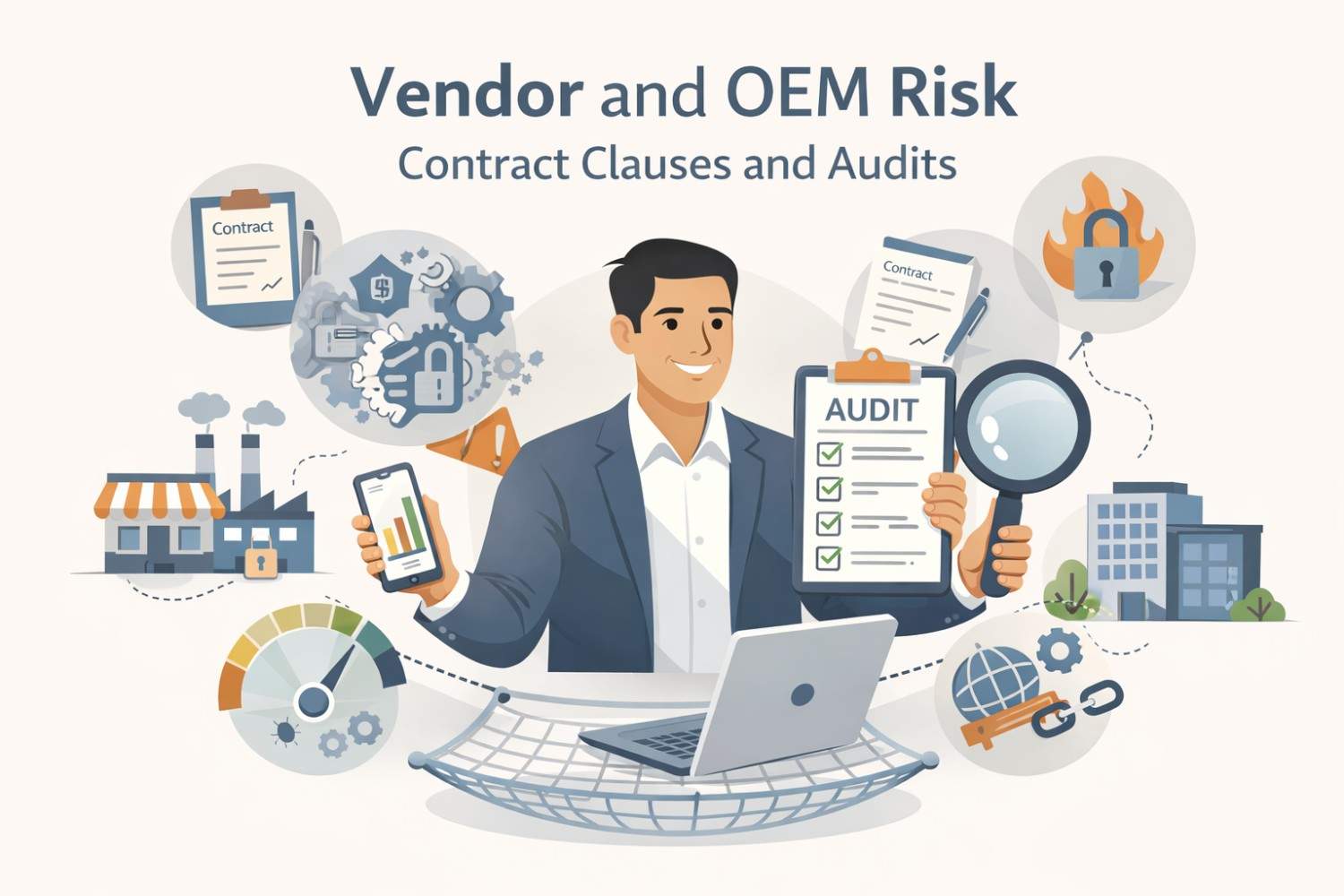
Most startups think risk lives in code, servers, or cash. It often does not. It lives in contracts you signed too fast and vendors you trusted too easily. One bad clause. One missed audit. One unclear ownership line. That is all it takes for your company to lose control of what it built. Vendor and OEM risk is quiet. It does not crash your system. It shows up later, when you raise money, sell the company, or face a legal threat. That is when someone asks a simple question: Do you actually own this? If the answer is unclear, everything slows down or falls apart.
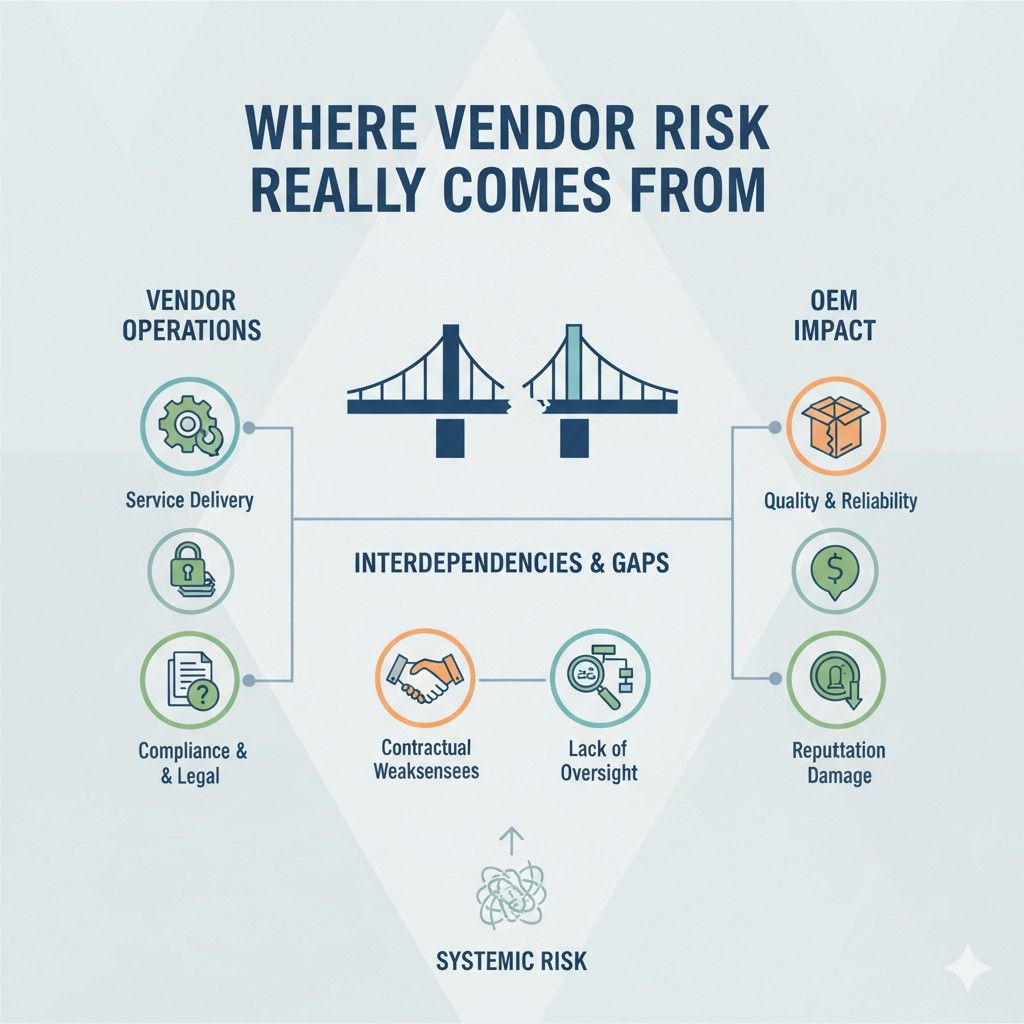
Where Vendor Risk Really Comes From
Vendor risk rarely starts with bad intent. It usually starts with speed. Founders move fast, vendors promise delivery, and everyone wants to ship. In that rush, small decisions stack up.
Those decisions later turn into big problems that feel sudden but were actually baked in from day one. This section breaks down the real sources of vendor risk and shows how they quietly creep into growing companies.
Speed Over Clarity
Most vendor risk begins the moment a founder chooses speed instead of clarity.
This is not because founders are careless. It is because early-stage companies survive by moving faster than everyone else. When a vendor says, “This is our standard contract,” most teams sign and move on.
The risk comes from what was not discussed. Ownership, reuse, sublicensing, and future changes often get skipped. At the time, none of it feels urgent. You just need the work done.

But later, when your product works and money is on the table, those skipped conversations come back as hard limits.
A practical move here is to slow down only one step. Before signing, ask yourself one question: if this vendor disappears tomorrow, do we still control what they touched? If the answer is not clear, the risk is already present.
Vendors See Your Product as Their Input
Vendors and OEMs often see your product as one of many projects. They reuse ideas, patterns, and tools across customers. From their point of view, this is normal business. From your point of view, it can be dangerous.
The risk shows up when a vendor assumes they can reuse what they built for you. Maybe it is firmware logic, model tuning, hardware layouts, or test methods.
If the contract is vague, they may legally be right. That means your edge may not be as exclusive as you think.
To reduce this risk, founders should clearly define what is unique to their business versus what is general know-how.
Even simple language that says work created for your company stays with your company can change the outcome later.
OEM Relationships Hide Long-Term Control Issues
OEM relationships feel safe because they are often large and established. That is exactly why the risk is harder to see. OEMs tend to lock in terms that favor them over time, not immediately.
You might agree to buy parts, integrate systems, or rely on their manufacturing process. Over time, you realize switching is costly or impossible.
If the OEM controls tooling, specs, or key processes, they may control your future options.
Founders should treat OEM deals like long-term marriages, not short-term tasks.
Ask early what happens if you want to move production, change partners, or bring work in-house. If those paths are blocked, the risk is already real.
Assumptions Replace Written Truth
A major source of vendor risk is assumption. Founders assume ownership because they paid. Vendors assume reuse because nothing says they cannot. Both sides believe they are right.
Contracts exist to replace assumptions with truth. When they fail to do that, risk fills the gap. Many disputes come down to one sentence that was never written.
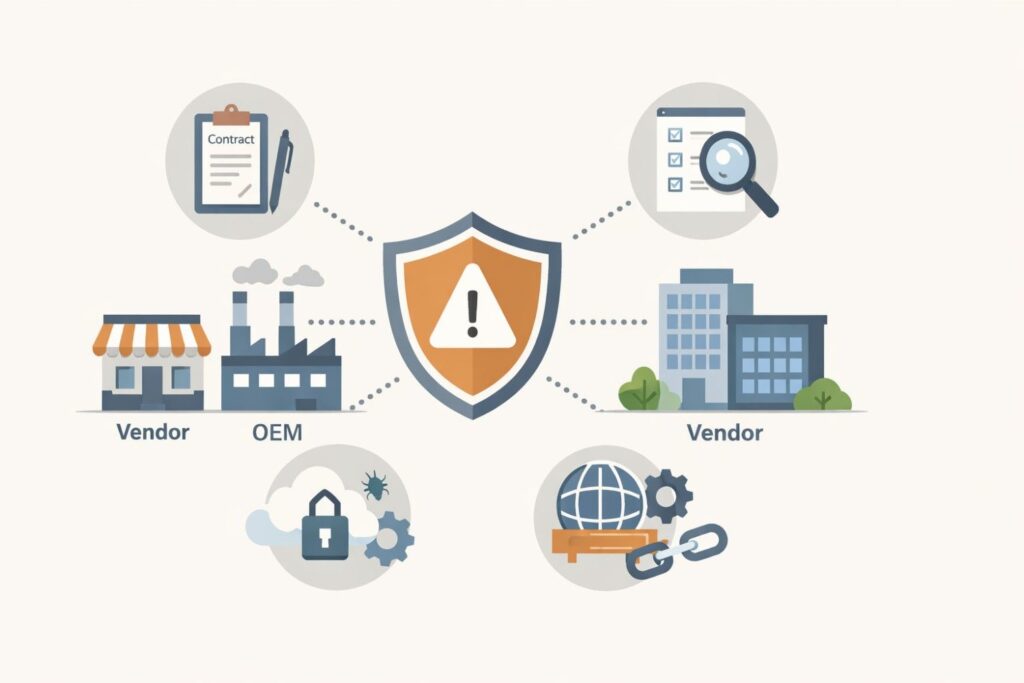
A smart habit is to write down your assumptions in plain words before reviewing a contract. Then check if the contract actually supports them. If it does not, the contract will win later, not your memory.
Early Prototypes Create Late-Stage Problems
Early-stage work feels temporary. Prototypes, experiments, and pilots seem disposable. That mindset creates risk because early work often becomes the foundation of the final product.
If a vendor helped with early designs or proof-of-concept work, that contribution may still matter years later. If ownership was never locked down, that early help can cloud the entire product.
Founders should treat early vendor work as potentially permanent. Even if you plan to rewrite or rebuild, protect it as if it will ship. That mindset avoids painful cleanup later.
Risk Grows Quietly as You Scale
Vendor risk compounds as your company grows. Each new vendor adds another layer. Each new contract adds another rule. Over time, it becomes hard to track who touched what and under what terms.
This is where many companies lose control without noticing. No single contract is fatal. The combination is. By the time investors or acquirers review everything, the risk feels overwhelming.
An actionable step is to maintain a simple internal record of vendors, what they worked on, and who owns the output. This does not need to be complex. It just needs to exist and stay updated.
Why Founders Often Learn Too Late
Vendor risk is invisible when things are going well. It appears when stakes rise. Fundraising, partnerships, and exits force clarity. That is when missing terms become blockers.
By then, your leverage is lower. Vendors know you need fixes fast. Costs go up. Timelines slip. Deals get delayed or re-priced.
The goal is not to eliminate all vendor risk. That is impossible. The goal is to see it early and shape it while you still have leverage. That is how strong companies protect their future without slowing down the present.
If you want help turning vendor-heavy work into clean, defensible ownership that stands up under pressure, PowerPatent was built for that moment. You can see how it works at https://powerpatent.com/how-it-works.
The Contract Clauses That Quietly Hurt Founders
Contracts rarely fail loudly. They fail silently, one sentence at a time. Most founders do not lose control because of obvious traps.
They lose control because of small clauses that sound reasonable, feel standard, and get ignored.
This section breaks down how those clauses actually work against you and what you can do about them while you still have leverage.
The Danger of “Standard Terms”
Every vendor says the same thing. These are our standard terms. That phrase is one of the biggest warning signs in early-stage contracting. Standard usually means optimized for the vendor, not for you.
The risk is not that the terms are unfair in an obvious way. The risk is that they quietly favor the party who wrote them. Ownership defaults, reuse rights, and future control are often buried in language that looks harmless.
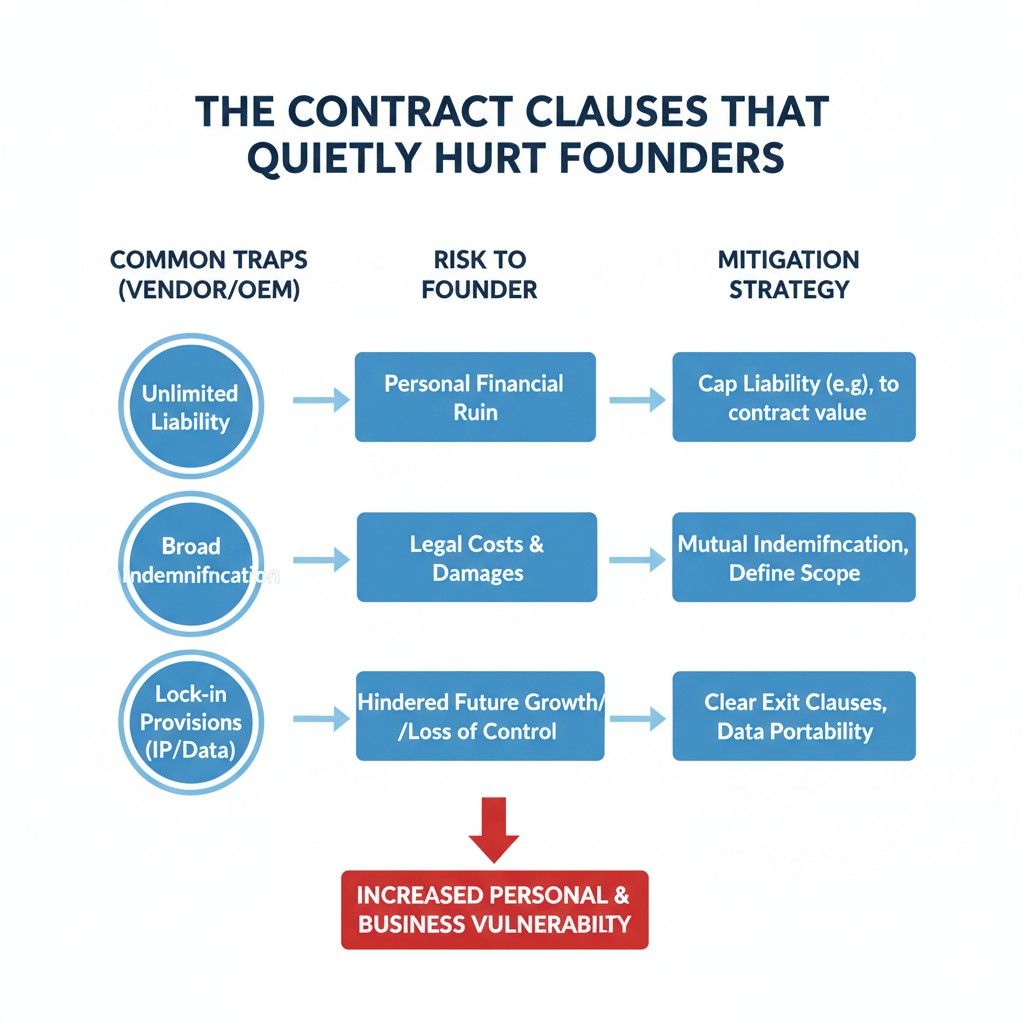
A smart move is to treat standard terms as a starting point, not an ending point. Even small changes can shift long-term control back to your company.
Ownership Language That Sounds Right but Is Not
Many contracts say something like each party owns what they bring in. On the surface, that feels fair. In practice, it can be dangerous.
If the vendor builds something new using your ideas, data, or systems, that work may fall into a gray zone.
The problem is that contracts often fail to define who owns what gets created during the work. Without clarity, ownership can default to the vendor or become shared in ways that block future use.
Founders should look for clear language that says work created for the company belongs to the company. If that sentence is missing or softened, risk is already present.
License Language That Limits Growth
Some contracts avoid ownership fights by offering licenses instead. This can feel safe at first. You get the right to use the work, so what is the problem?
The problem shows up later. Licenses can be limited by scope, time, geography, or use case. What works for today’s product may not cover tomorrow’s pivot, expansion, or new market.
An actionable step is to read license language while imagining your company five years out. If the license would block that future, it is a risk today.
Improvement Clauses That Shift Power
Improvement clauses are subtle and powerful. They often say that if you improve on the vendor’s work, the vendor gets rights to those improvements. That can mean giving away future value without realizing it.
This is especially risky in deep tech, where small improvements create big advantages. A clause like this can turn your innovation into shared property.
Founders should push for clear separation. Improvements to your product should stay with your company, even if they build on vendor input.
Termination That Leaves You Empty-Handed
Termination clauses usually focus on timelines and notice periods. What they often ignore is what happens to the work when the relationship ends.
Some contracts allow vendors to keep partial work, revoke access, or limit continued use. That can leave you stuck mid-project with no clear path forward.
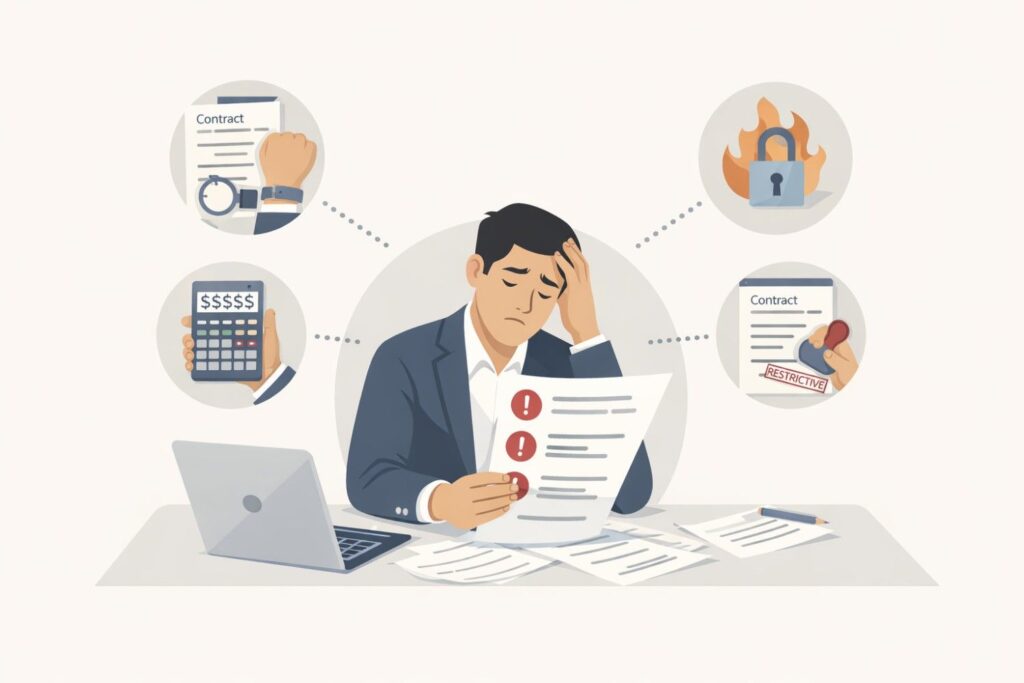
Before signing, founders should ask one simple question. If this ends tomorrow, can we keep using everything we paid for? If the contract does not clearly say yes, that is a problem.
Confidentiality That Protects the Wrong Side
Confidentiality clauses feel safe because they exist. The risk is in how they are written. Some protect vendor information more strongly than your own. Others expire too soon or allow broad exceptions.
Weak confidentiality can expose product plans, designs, or data. Over time, that exposure can leak into competitors or other vendor projects.
A practical step is to ensure confidentiality survives the contract and clearly covers your sensitive information, not just theirs.
Governing Law and Venue as Hidden Leverage
These clauses feel technical and distant. They decide where disputes happen and under what rules. For early-stage companies, this matters more than it seems.
If disputes must be handled far away or under unfamiliar rules, enforcement becomes expensive and slow. Vendors know this and may rely on it.
Founders should aim for terms that do not add friction if something goes wrong. You may never use them, but if you do, you will be glad they are fair.
Why Small Changes Matter More Than Big Fights
Many founders avoid contract changes because they fear pushback. The truth is most vendors expect some negotiation. Small, reasonable changes are often accepted without drama.
You do not need to rewrite everything. One or two clear sentences about ownership, use, and survival can protect years of work.
The key is to focus on outcomes, not legal language. Ask what happens to your product in real life, not what sounds balanced on paper.
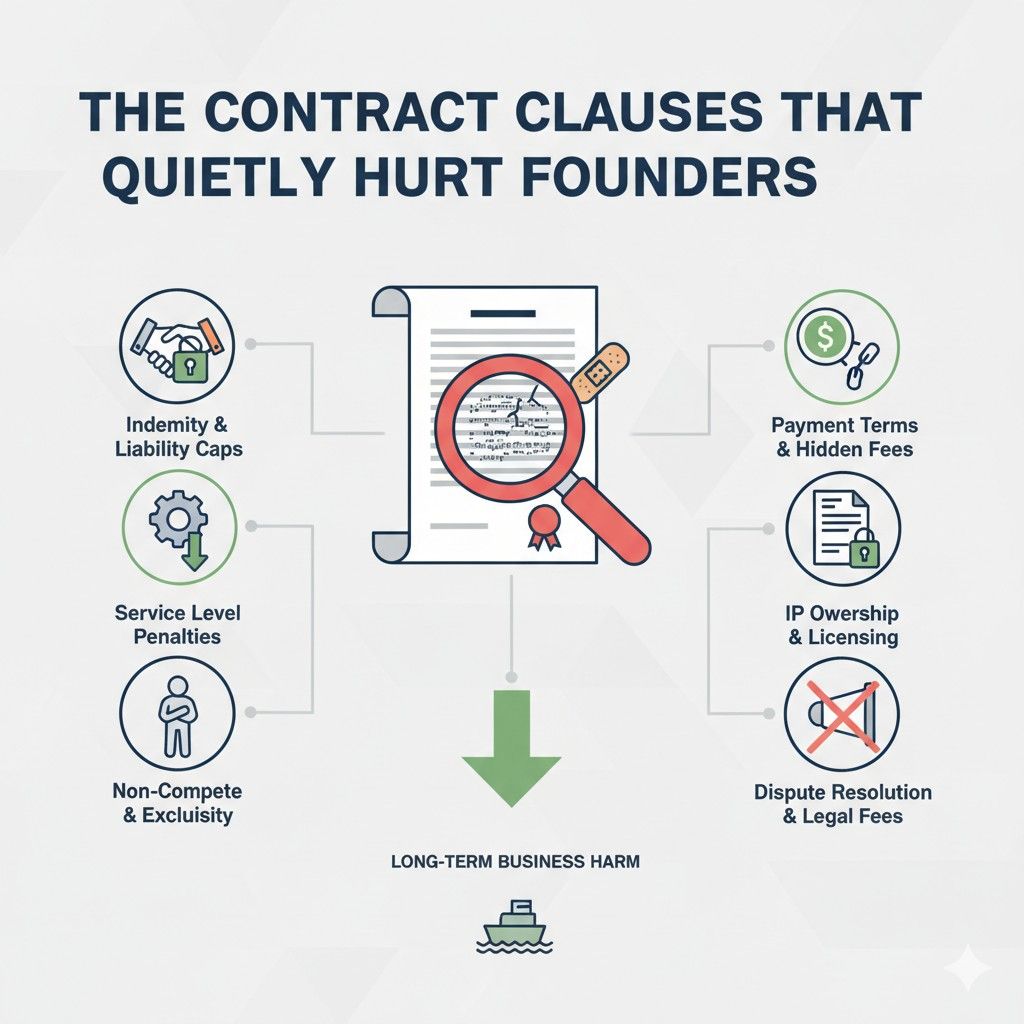
PowerPatent helps founders think through these risks early and lock in protection without slowing down execution.
If you want to see how smart software and real attorneys work together to do that, visit https://powerpatent.com/how-it-works.
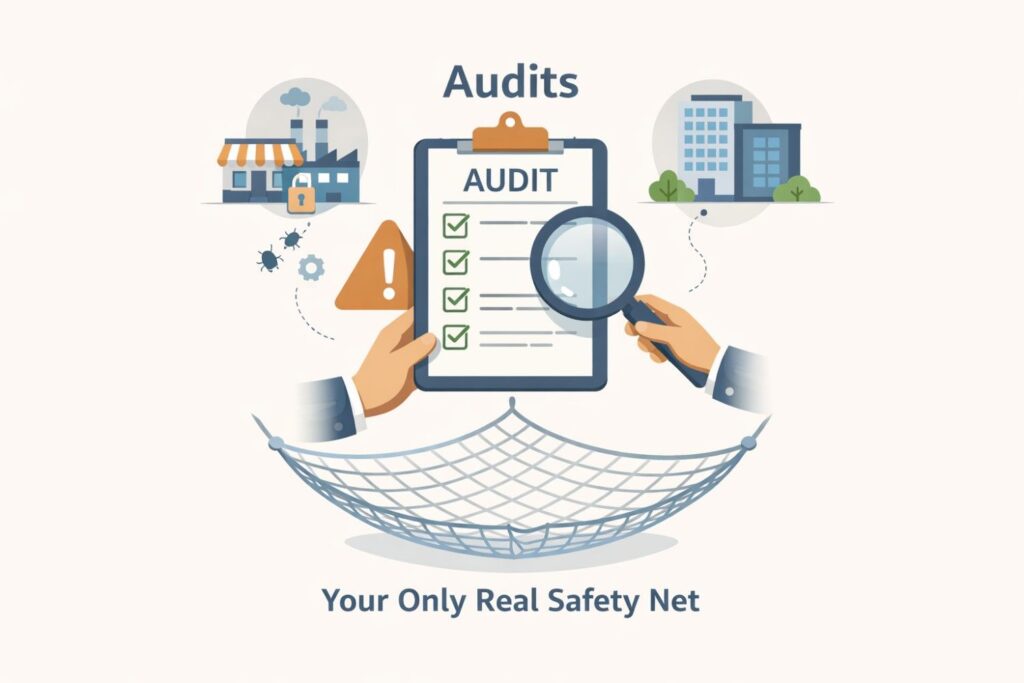
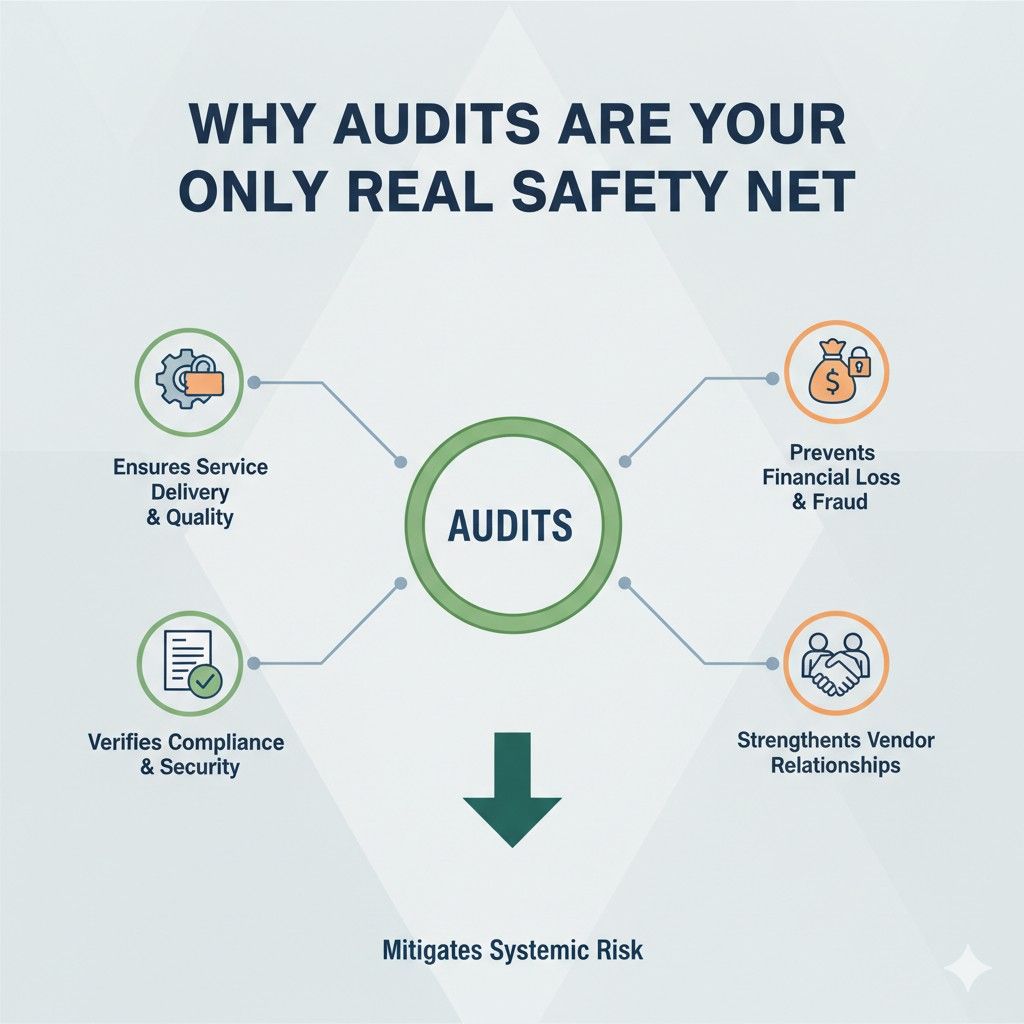
Why Audits Are Your Only Real Safety Net
Most founders think audits are something big companies do after something breaks. That belief creates risk. Audits are not about blame or paperwork. They are about visibility.
When vendors and OEMs are involved, visibility is the only thing that protects you when stakes rise.
Audits do not mean sending angry emails or hiring a large firm. In this context, an audit simply means checking reality against what you believe is true.
It is the act of confirming who owns what, who can use what, and what happens if things change.
Audits Reveal Gaps Before They Become Crises
Vendor risk grows in silence. Everyone assumes things are fine until someone looks closely. Audits force that look. They reveal gaps that feel small today but can become deal-breakers later.
Many founders only learn about problems during fundraising or acquisition due diligence. At that point, the audit is no longer preventive. It is reactive. Fixing issues under pressure costs more and gives others leverage.
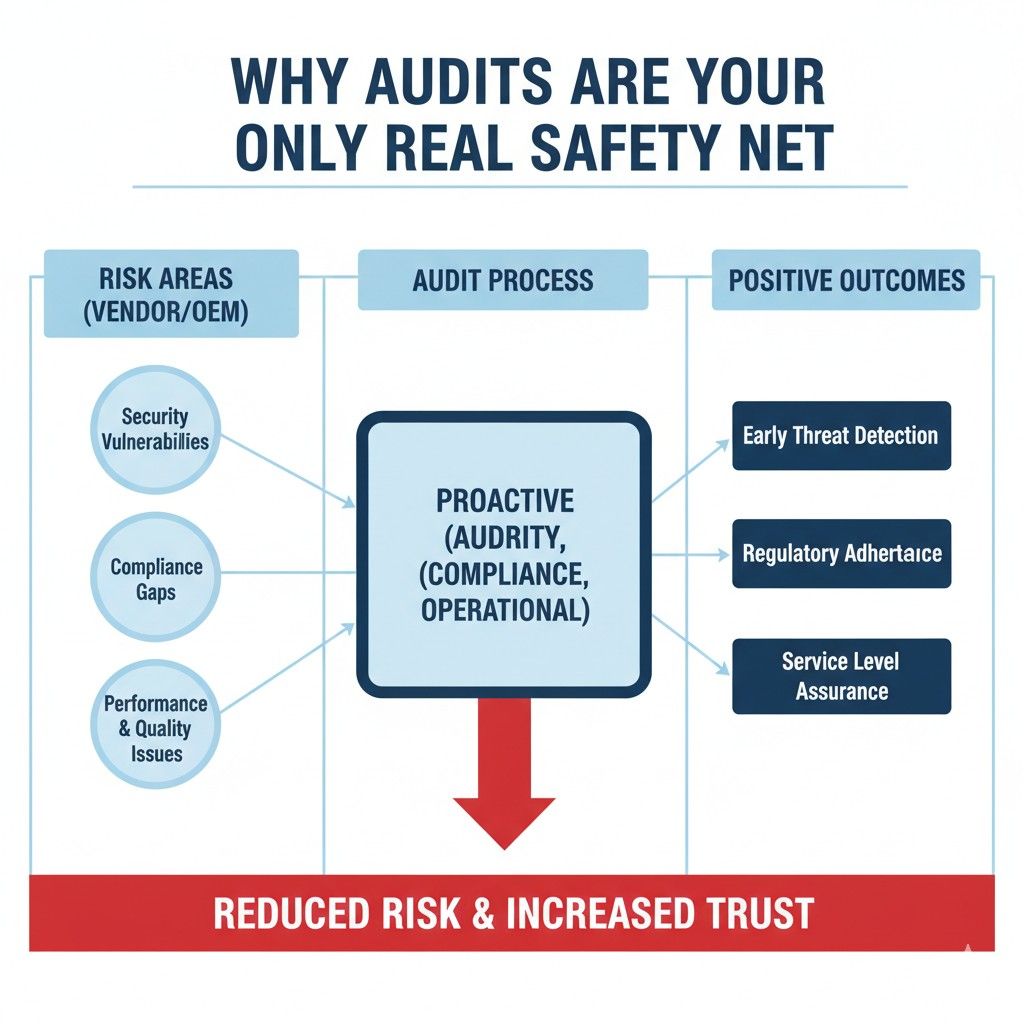
Running simple audits earlier lets you fix problems while time is on your side. That alone can save months and protect valuation.
Contract Audits Are About Meaning, Not Paper
A contract audit is not about counting clauses. It is about understanding meaning. You are checking whether the contract actually supports how your product works and how your business plans to grow.
For example, if a vendor helped build a core system, does the contract clearly say you can modify, sell, and expand that system without limits? If the answer is unclear, that is a risk worth fixing now.
Founders should read contracts with real scenarios in mind, not just legal language. Ask how the contract behaves under stress, not just during normal operation.
Technical Audits Expose Hidden Dependencies
Vendor risk is not only legal. It is technical. Vendors often control parts of your stack without you realizing how deep that control goes. That can include build systems, deployment tools, keys, credentials, or proprietary processes.
A technical audit asks simple questions. Can we rebuild this without them? Do we have access to everything we need? Is knowledge centralized or spread out?
The goal is not independence at all costs. The goal is awareness. You should know where you are dependent and whether that dependency is acceptable.
Process Audits Protect Against Knowledge Loss
People move on. Vendors change teams. OEM contacts rotate. Over time, critical knowledge can disappear. Process audits help prevent that loss.
This means checking whether workflows, designs, and decisions are documented and accessible. If a vendor holds key knowledge in their heads or systems, that is a risk even if the contract is perfect.
Founders should push for documentation as part of delivery, not as an afterthought. Knowledge transfer is part of ownership, even if it is never labeled that way.
Audit Timing Is a Strategic Advantage
The best time to audit is when nothing is wrong. That is when vendors are cooperative and changes are easy. Waiting until a dispute arises shifts power away from you.
Smart founders schedule audits around natural business moments. Before a major release. Before fundraising. Before scaling production. These moments justify review without raising alarm.
Audits framed as routine business hygiene are rarely resisted. They show maturity, not distrust.
Audits Strengthen Negotiation Position
When you understand your risks, you negotiate from strength. Audits give you facts instead of fears. That changes how conversations go.
Instead of asking vendors to fix vague issues, you can point to specific gaps and propose clear solutions. This makes negotiations faster and more productive.
Vendors are more likely to agree when requests are precise and reasonable. Audits make that possible.
Documentation Turns Audits Into Assets
The output of an audit should not disappear into a folder. It should inform future decisions. Documentation helps new hires, advisors, and investors understand your foundation.
Clear records show that you take ownership seriously. That builds trust and speeds up diligence later.
Even a simple summary of findings and actions taken can become a powerful asset over time.
Why Founders Avoid Audits and Why That Is a Mistake
Founders often avoid audits because they fear what they might find. That fear is understandable but misplaced. Problems do not become less real by ignoring them.
Early discovery gives you options. Late discovery removes them. Audits are not about perfection. They are about control.
Companies that win long-term are not those without problems. They are those who see problems early and act decisively.
PowerPatent helps founders turn audit insights into real protection by aligning contracts, ownership, and patents around how the product actually works.
If you want to see how that process works in practice, you can explore it at https://powerpatent.com/how-it-works.
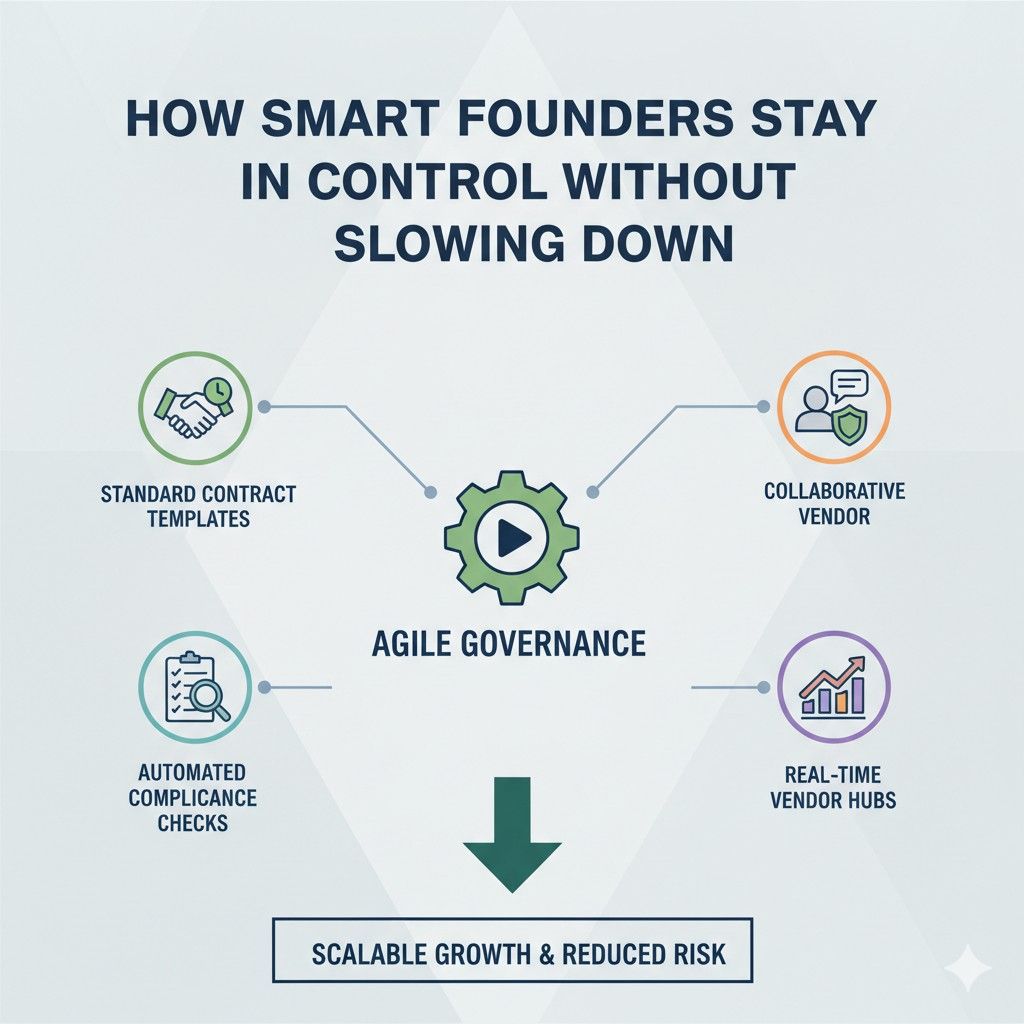
How Smart Founders Stay in Control Without Slowing Down
The biggest myth about managing vendor and OEM risk is that it slows companies down.
In reality, the opposite is true. Founders who stay in control move faster because they avoid rework, renegotiation, and last-minute surprises. Control is not about caution. It is about clarity.
This final section focuses on how strong teams protect ownership and flexibility while still shipping, scaling, and experimenting at full speed.
Control Starts With Intent, Not Paperwork
Smart founders begin with intent. Before contracts, before audits, before tools, they decide what matters most. They know which parts of the product define the company and which parts are replaceable.
That clarity guides every decision. When you know what must stay yours, you can be flexible everywhere else. This prevents over-lawyering and focuses energy where it counts.

A practical step is to write a short internal statement about what your company must always control. This becomes a filter for every vendor relationship.
Simple Language Beats Perfect Language
Founders often assume contracts need complex wording to be strong. That is rarely true. Clear, simple language is harder to argue with later.
Sentences that say work created for the company belongs to the company are powerful because they are easy to understand. Ambiguity creates room for dispute. Clarity closes it.
When reviewing contracts, focus on whether a non-lawyer could explain the outcome. If not, the risk is higher than it needs to be.
Reusable Vendor Playbooks Save Time
Smart teams do not reinvent the wheel for every vendor. They create simple playbooks that define how vendors are onboarded, managed, and reviewed.
This does not mean rigid templates. It means consistent thinking. Ownership expectations, documentation standards, and exit plans should not change every time.
Over time, this consistency speeds up decisions and reduces negotiation friction. Vendors learn what to expect and adapt quickly.
Align Legal and Technical Reality Early
One of the most common mistakes is treating legal and technical work as separate. They are deeply connected. Ownership depends on how systems are built, not just how contracts read.
Founders who align these early avoid mismatches. If a vendor controls deployment, access, or keys, legal ownership alone may not help. Control must exist in practice.

Regular check-ins between technical and business teams help surface these gaps before they grow.
Use Milestones to Lock in Control
Milestones are natural points of leverage. Payments, deliverables, and approvals create moments where expectations can be reinforced.
Smart founders tie key ownership and documentation outcomes to these milestones. This keeps protection part of execution, not a separate task.
When control is built into delivery, it does not slow anything down. It simply becomes part of how work gets done.
Treat Vendor Risk as a Living System
Vendor risk is not a one-time problem. It changes as your company grows. New products, new markets, and new partners all shift the landscape.
Founders who revisit vendor relationships periodically stay ahead. Small adjustments over time prevent large corrections later.
This mindset turns risk management into maintenance, not crisis response.
Patents as the Final Layer of Control
Contracts and audits protect relationships. Patents protect outcomes. When done right, patents lock in what your company owns regardless of who helped build it.
For vendor-heavy products, patents provide clarity that contracts alone cannot. They create a public record of ownership that investors trust and competitors respect.
The key is speed and accuracy. Patents should reflect how your product actually works, not how it was imagined early on.
PowerPatent was built to help founders do exactly this. It turns real work, including vendor-supported development, into strong patents without slowing teams down.
Smart software and real attorneys work together so protection keeps pace with progress.
If you are building something valuable and want to stay in control as you scale, you can see how PowerPatent works at https://powerpatent.com/how-it-works.
Wrapping It Up
Vendor and OEM risk does not come from bad actors. It comes from unclear ownership, rushed decisions, and silence where clarity should exist. Most founders do not lose control all at once. They lose it slowly, through small gaps that stack up over time. The companies that win are not the ones who avoid vendors. They are the ones who work with vendors deliberately. They know what must stay theirs. They write it down clearly. They check it regularly. And they fix issues while they still have leverage.