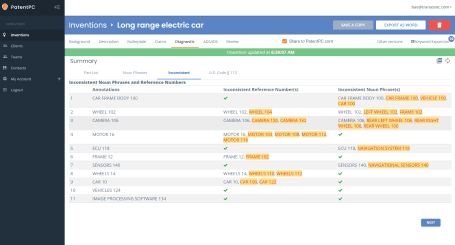
Most patent portfolios grow in messy ways. A startup files a few early ideas. Engineers build new features. A new hire suggests something bold. Investors push for “more IP.” Before long, you’re sitting on a pile of patents and applications that may—or may not—match where your company is heading.
Why Every Startup Needs a Portfolio Audit (Even If You’re Moving Fast)
A startup moves fast because it has to. New features get pushed, experiments shift direction, and the product you started building six months ago may look nothing like the one your users rely on today.
In the middle of that speed, patents often become something you file once and then forget. But the truth is simple: your IP should evolve as quickly as your company does.
A portfolio audit helps you see where your patents stand right now, not where they were when you first filed them. It gives you a clear view of what supports your strategy, what no longer lines up with your roadmap, and what you might be missing altogether.
Without this clarity, it’s easy to waste money and miss valuable protection that could shape your future.
And when you pair that audit with a tool like PowerPatent, you get a system that guides you through each insight while keeping the entire process fast and founder friendly.
The Gap Between What You Filed and What You Now Build
Every startup has a moment where it looks at an old patent and thinks, this has nothing to do with where we are anymore. It happens because early filings often reflect early assumptions.
You were learning, building, and finding your way. A portfolio audit helps you see how far you have moved and whether those early filings still protect what matters today. Many founders are surprised when they realize a huge part of their current product is not actually covered by any of their old patents.
That gap can create real risk, especially if you are heading toward fundraising or a market where copycats move fast.
By taking time to look closely at what you own, you get a chance to patch those holes before they become a threat.

And if you need help turning those gaps into strong applications, PowerPatent gives you step-by-step support with real attorney oversight.
How Speed Can Create Blind Spots You Don’t Notice Until It’s Too Late
Moving fast is great for product progress, but it is also the easiest way to overlook quiet IP problems.
When engineering sprints pile up, nobody has time to check whether a new method, model, or workflow should be protected.
When founders are buried in shipping, they often forget how quickly a competitor can reverse engineer or replicate what they just built. A portfolio audit slows things down just enough to see where risk may already be forming beneath the surface.
You get a chance to catch assets that are drifting out of sync with your roadmap, technologies that are no longer used, and features that are now central to your value but never received protection.
This helps you stay in control instead of waiting for the moment when a partner, investor, or buyer asks questions you are not ready to answer.
Turning a Messy Pile of Patents Into a Clear Strategic Map
Most portfolios grow without a plan. That is normal. A portfolio audit gives that pile structure. It shows which filings support your core product, which ones back your long-term vision, and which ones sit off to the side doing very little for your growth.
Once you have that map, you can make clean strategic choices. You can double down on the areas that drive your advantage, shift attention toward assets that support your next milestone, and stop spending money on filings that add no real value.

This is where PowerPatent becomes a powerful partner. Its software helps you trace connections between features, claims, competitors, and long-term goals, while real attorneys help you understand what those links mean in plain language.
You end up with a strategy you can act on without feeling lost in legal details.
The Advantage of Spotting Value That Others Miss
A good audit often uncovers assets you did not realize were valuable. Sometimes an old invention becomes important again because your product direction has shifted. Sometimes a small feature turns out to be a key differentiator.
Sometimes an idea you set aside fits perfectly with where the industry is moving. These moments matter because they help you redirect attention and unlock value you already own.
Investors love seeing founders who understand the hidden strengths in their portfolio. It signals discipline and foresight. With PowerPatent, this process becomes easier because the system highlights patents that match your growth direction, show competitive strength, or need reinforcement.
Instead of guessing, you get clear insight that helps you make decisions with confidence.
Why Regular Audits Keep You Ready for Funding, Partnerships, and Exits
When investors or partners look at your company, they want to know whether your IP protects what you actually sell. They also want to see that you have a grip on the risks around your technology.
A portfolio audit gives you that readiness. It lets you answer hard questions without scrambling. It also gives you a chance to fix issues before someone else points them out.
Even if you are not raising today, an audit prepares you for the moment when growth demands outside support. It shows that you are a founder who understands the business value of IP, not just the technical side.
And when your audit is powered by a platform built for speed, like PowerPatent, you can stay prepared without slowing down your roadmap.
How to Make an Audit Actionable Instead of Just Informational
Many audits fail because they sit in a folder and nobody uses the insights. A strong audit should lead directly to action.
It should show you which patents to strengthen, which claims to expand, which ideas deserve new filings, and which assets you can let go without regret.
It should help you align your engineering work with your protection strategy. With PowerPatent, each insight comes with clear next steps, so you always know what to do next.

The process feels more like improving your product roadmap than dealing with legal paperwork. You move from confusion to clarity, and from clarity to action, quickly and with confidence.
How to Spot Dead Weight That Drains Time, Money, and Focus
Every patent portfolio carries a few assets that no longer serve the company. Some were filed too early. Some cover features that were removed long ago. Some never aligned with the real value of the product in the first place.
Dead weight is normal, but leaving it untouched is not. A portfolio audit helps you see which assets deserve your attention and which ones quietly drain your budget while adding no real protection.
When you can spot these issues early, you free up money, time, and focus for patents that actually move the business forward.
And when you run this process through a fast, guided system like PowerPatent, it becomes even easier to see what matters and what does not.
Understanding the Patents That No Longer Reflect Your Product
As a startup grows, the product evolves. New features replace old ones. Entire modules get rewritten. Infrastructure changes shape how everything works under the hood.
But the early patents you filed do not update themselves. They stay locked in time.
A portfolio audit helps you compare each patent with your current product and see where the mismatch is strongest.
If a filing protects a workflow you no longer use, or a model you rebuilt from scratch, or a feature users stopped caring about, it may no longer serve you.

This does not mean the patent is useless. It simply means you need to confirm whether the asset still supports your strategy. In many cases, the right move is to reduce future spending on that patent and focus on assets that match where your product is heading.
With PowerPatent guiding the review, you can map the claims against real product details and identify gaps without getting lost in technical paperwork.
When a Patent Sounds Impressive but Adds No Real Advantage
Some patents look strong on paper but do not give you an edge in the market. They may describe a clever idea, but clever is not the same as strategic. You want patents that stop competitors from copying your core value.
You want protection that strengthens what you sell, not just what you once explored. A portfolio audit helps you see the difference. It shows which filings keep competitors at bay and which ones only protect ideas that never turned into features.
This kind of insight is crucial, especially for startups that move quickly and experiment often.
When you clear out the noise, you get a portfolio that reflects the business you are actually building. PowerPatent helps you evaluate the competitive strength of each asset so you can make decisions without guessing.
Why Some Patents Cost More Than They Are Worth
Every maintained patent costs money. Renewal fees add up year after year. International filings multiply that cost. Even a single asset that no longer supports your strategy can drain funds that should be fueling growth.
A clear audit helps you understand the real cost of each asset, not just the yearly fee but also the opportunity cost of carrying something that no longer protects your value.
Once you see those numbers, the decision becomes easier. You can shift resources toward new filings that matter or toward strengthening patents that cover your most important technology.

With PowerPatent, this financial clarity becomes fast and simple because the platform shows cost, value, and risk in a way that founders can understand without legal training.
How to Tell When a Patent Needs Reinforcement Instead of Retirement
Not all weak assets should be abandoned. Some need strengthening. Some need updated claims. Some need new companion filings. A portfolio audit reveals which patents still have potential but require a bit of care to deliver real value.
This is often the case with early filings that captured the core idea but missed critical details that later became important. It also happens when the technology evolved in ways that make the original claims too narrow.
When you can see these issues clearly, you can fix them before a competitor notices the same gaps.
PowerPatent makes this work easier by helping you generate updates or new filings based on the latest version of your technology, backed by real attorney review so your protection stays solid.
Identifying Assets That No Longer Match Your Long-Term Roadmap
A healthy portfolio should follow your product roadmap and your business strategy. If the company shifts direction, your IP should shift too. When a patent no longer aligns with the future you are building, it becomes dead weight even if it once felt important.
A portfolio audit brings this into focus. It helps you compare each patent to your long-term goals so you can decide what deserves ongoing investment. This alignment gives your portfolio power and makes every dollar you spend on patent work count toward something real.
PowerPatent supports this process by helping founders map technology evolution against their filings, giving a clear picture of what fits and what does not.
Why Letting Go of Old Patents Can Make Your Portfolio Stronger
Many founders hesitate to drop patents because it feels like giving up something valuable. But letting go of assets that no longer serve you actually makes your portfolio stronger.
It allows you to invest in protection that matters today rather than carrying the weight of outdated ideas. It also signals to investors and partners that you are disciplined with your IP strategy.
A portfolio audit helps you make these choices with clarity instead of guesswork.
And when you use a system built for speed and accuracy, like PowerPatent, the review becomes less about stress and more about growth.

You get a clear picture of where to cut, where to keep, and how to rebuild for the next phase of your company.
How to Find the Hidden Gems Sitting Quietly in Your IP
Every patent portfolio contains a few quiet assets that nobody thinks about until an audit brings them into the light. These hidden gems are often the patents that seem small at first glance but hold surprising strategic value.
They may cover a method that suddenly aligns with a new product direction. They may protect a workflow that competitors are just beginning to explore.
They may even represent the foundation for a future feature you have not built yet but will soon depend on. When you uncover these gems, your whole view of the portfolio changes.
You gain leverage you did not realize you had, and you open doors to new opportunities inside and outside the company. With a platform like
PowerPatent, this discovery process becomes clearer, faster, and far more actionable because the system helps founders connect technical details with real business outcomes.
Seeing Value in Patents You Filed Before Your Vision Evolved
Early-stage patents often capture the raw spirit of your invention, even if the product later took a different form. Many founders assume these early filings have little value once their roadmap shifts.
But in reality, these patents often contain broad ideas that continue to matter, even if the original implementation changed. A portfolio audit helps you revisit these early filings with fresh eyes.
You can trace how a once-small idea has grown into a core part of your platform or how a method you abandoned has re-emerged as the basis of something new.
This kind of discovery feels exciting, because it shows you that your portfolio already has tools you can use today.

And with PowerPatent guiding the comparison between old claims and current architecture, spotting these links becomes far easier than trying to dig through old documents on your own.
When a Small Feature Hides a Big Strategic Advantage
Some patents protect features that seem simple or routine when you first build them. Maybe it was a function you added to improve usability. Maybe it was a quiet improvement to a model or workflow.
At the time, it might not have felt like the center of your innovation. But the market evolves. User needs shift. Competitors start chasing similar ideas.
Suddenly, that small feature becomes a powerful differentiator. A portfolio audit helps you catch this moment. It helps you see which filings protect something that competitors are now eager to match. These are the assets that give you real leverage.
They let you guard a meaningful slice of your value and position your company as the leader in that specific direction.
PowerPatent makes this even clearer by surfacing connections between protected methods and the trends happening across your space, helping you understand how your IP fits into the bigger picture.
Identifying Overlooked Claims That Could Support New Filings
Sometimes, the hidden value is not in the patent as a whole but in a few specific claims that have not been fully explored. Claims that once felt minor can become the foundation for a new family of applications. A portfolio audit helps you isolate these opportunities before competitors do.
It lets you see where your existing filings hint at deeper methods or broader uses that deserve new protection. This is especially important for fast-growing startups, where a small breakthrough can quickly expand into a suite of related products or features.
When you uncover these moments early, you can file new applications that strengthen your position and create a tightly connected shield around your most important technology.
PowerPatent supports this by helping founders generate new filings that build naturally on the claims they already own, backed by real attorney insight to make sure the new material stays strong.
Understanding Which Patents Carry Unexpected Market Value
The value of a patent is not always tied to how much you personally use the idea. Sometimes, the market assigns value based on trends you did not anticipate.
For example, a method you developed for internal use might align with a broader industry shift. Or a system you built for your product might match what another company is trying to develop.
A portfolio audit helps you see these possibilities before the rest of the industry catches on. When you find an asset that aligns with a rising trend, you gain the ability to shape partnerships, licensing deals, or even new revenue streams.
These opportunities often become clear only when you examine the claims through the lens of where the market is heading, not where it was when you first filed.

With PowerPatent’s combination of software insight and attorney review, you can understand this alignment in a straightforward way that helps you make confident decisions.
How Hidden Gems Become Anchors for Future Growth
A strong IP strategy is not just about protecting what you built yesterday. It is about preparing for what you plan to build next. Hidden gems often serve as anchors for the next phase of your company.
They help define the technical space you can control and shape the direction your roadmap can safely expand into. When you know which patents have this potential, you can build new features with more confidence.
You also gain a powerful story to share with investors and partners, showing that the company is not just reacting to the market but actively shaping it.
PowerPatent helps founders translate these insights into action by linking each valuable asset to clear next steps, whether that means expanding claims, filing new related applications, or reinforcing protection around key ideas.
Why Knowing Your Hidden Strengths Changes How You Compete
When you uncover hidden gems in your portfolio, your entire competitive strategy becomes sharper. You know where you can push harder, where you can defend more strongly, and where you already hold ground that others have not noticed.
This kind of insight gives startups real power, especially when competing against larger companies with more resources. Once you understand the hidden strengths in your IP, you no longer play defense. You take control.
A portfolio audit, supported by a fast and founder-friendly platform like PowerPatent, gives you this clarity without slowing down your product cycle.

It helps you build a future where your best ideas are not just protected but strategically positioned to drive meaningful growth.
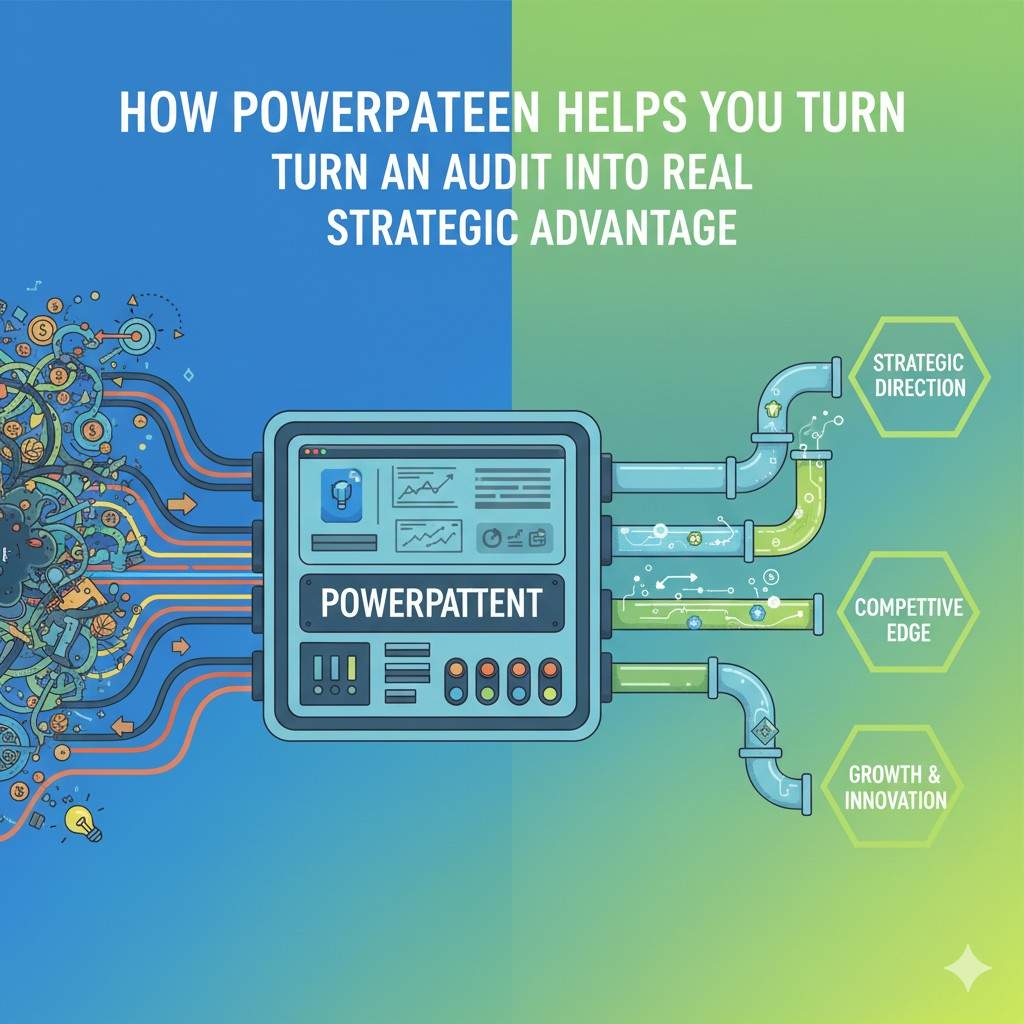
How PowerPatent Helps You Turn an Audit Into Real Strategic Advantage
A patent portfolio audit is only as good as what you do with the insights. Many companies collect observations, highlight risks, flag opportunities, and then let everything sit untouched because the next product sprint feels more urgent.
This is the moment where founders lose momentum and where audits become just another document in a folder. What you want instead is an audit that turns straight into action.
You want a clear path from insight to improvement, from uncertainty to protection, from questions to confident next steps. PowerPatent was built for exactly this.
It helps founders move quickly, stay protected, and avoid the confusion that usually comes with IP work. With simple workflows, smart automation, and real attorney oversight, the platform turns every part of the audit into something you can actually use to strengthen your business.
Turning Audit Findings Into Clear, Practical Steps You Can Act On
Many founders understand audit results but struggle to figure out what to do next. The advice might feel vague. The legal language may not map to real engineering tasks.
The problems might seem too big to handle. PowerPatent removes that confusion by translating each insight into a plain, simple next step. If a patent needs reinforcement, you see exactly what kind of update will help. If a claim is too broad or too narrow, you see how to fix it.
If a new filing is needed, the platform guides you through it with structured prompts that feel like documenting your own work, not wrestling with legal forms.

This makes the audit feel like a natural part of your product workflow rather than a separate legal exercise. It also helps you move faster because every insight leads directly to action.
Making Complex Portfolio Decisions Feel Simple and Founder Friendly
Most portfolio decisions feel complicated because traditional firms rely heavily on legal jargon. Words pile up. Documents multiply. Everything feels heavy and slow. Startups do not have time for that. PowerPatent takes the opposite approach.
It breaks down the audit into simple ideas, simple explanations, and simple choices. You see plain descriptions of what each patent does, how it connects to your product, and why it matters.
You also see where the gaps or risks are without needing a law degree to interpret them. This clarity helps founders make decisions quickly and confidently.
It shifts IP work from something intimidating to something manageable. It also ensures your portfolio stays aligned with the reality of your technology instead of drifting into a world of complex paperwork.
Keeping Your Portfolio in Sync With Your Fast-Changing Product
Your product evolves every week. Your patents do not. Unless you actively maintain them, they fall out of sync.
PowerPatent helps you stay ahead of this drift by making updates easy, predictable, and fast. When you finish an audit, you already know which patents are out of date.
With PowerPatent, you can rebuild those filings to match your latest architecture, your newest models, and your current feature set.
Instead of letting outdated claims weaken your protection, you can bring everything back into alignment with the business you are growing today.
This kind of ongoing sync gives you a strong backbone for scaling. As new features launch, new filings follow. As old features retire, old filings shift. Your portfolio becomes a living system that grows with you, not a frozen archive from an earlier phase of the company.
Using Attorney Oversight Without Slowing Down Your Momentum
Founders often worry that working with attorneys will slow everything down. Traditional firms do make the process slow because they rely on long calls, complex emails, and documents that take weeks to deliver.
PowerPatent was built to solve this exact problem. You get real attorney oversight, but the experience feels fast and lightweight because the software handles the heavy lifting.
The attorney steps in only where judgment truly matters, such as reviewing claims, confirming strategy, or ensuring compliance. Everything else flows through clear software steps that founders can complete in minutes.
This gives you the confidence of expert review without the drag of old systems. You move fast, stay protected, and avoid mistakes that could cost you later.
Making Your Portfolio Ready for Investors, Partners, and Future Buyers
When an investor or buyer looks at your company, they want to see a clean, strong IP story. They want a portfolio that clearly protects your core value, supports your roadmap, and eliminates major risks.
A PowerPatent-driven audit helps you prepare this story long before anyone asks for it. You get a clear view of your portfolio’s strengths, gaps, opportunities, and weaknesses. You also get a structured plan for fixing anything that needs attention.
This prepares you for due diligence and makes your company easier to trust. Investors appreciate founders who treat IP as a strategic asset, and a well-organized audit shows exactly that.
With PowerPatent, you can turn a messy or outdated portfolio into something tight, aligned, and compelling in a fraction of the time it would take through traditional methods.
Turning IP Into a Competitive Weapon Instead of a Cost Center
Many startups treat patents as a necessary expense. They file a few applications, keep them alive, and accept the cost as part of doing business. But with the right audit, patents become something far more powerful. They become a shield around your core technology.
They become a story that strengthens your market position. They become a set of tools you can use during partnerships, negotiations, or acquisitions.
When you run an audit through PowerPatent, you uncover these possibilities quickly because the platform helps you see not only what you own but how each piece contributes to your growth.
This shift is transformative. You stop managing patents. You start using them. They become an active driver of strategy rather than a passive line item.
Building a Portfolio That Supports You Not Just Today, but Years From Now
A strong patent portfolio does not happen by accident. It is built with intention. It reflects your product, your mission, your market, and your future. After a full audit, you can see where you want the portfolio to go in the next stage of your company.
You can identify which technologies deserve deeper protection, which ideas should expand into new families of filings, and which emerging features will soon require coverage.
PowerPatent helps you build this plan in a simple, structured way. It brings clarity to what used to feel unclear. It brings order to what used to feel chaotic.

And it does it all while keeping the workload light enough for founders who are already moving fast. The result is a portfolio that grows in step with your vision and becomes stronger as your company scales.
Wrapping It Up
A strong patent portfolio is built on clarity, not guesswork. A full audit helps you see what still matters, what no longer fits, and what hidden strengths you can use as your company grows. When you understand these pieces, you stop reacting and start making decisions with intention. You know where to invest, where to adjust, and where to strengthen your protection.