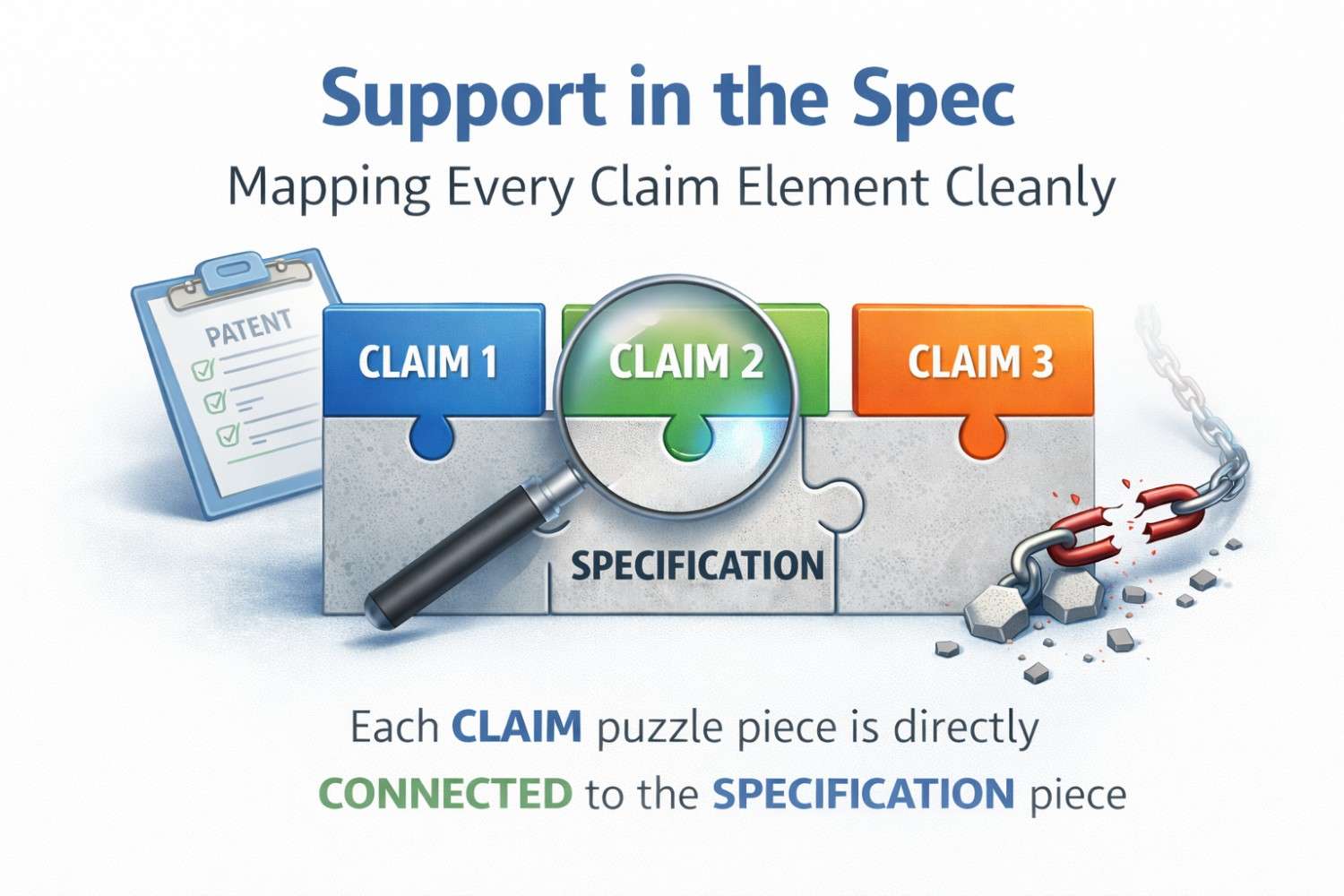
Most patents fail for one simple reason. The idea was strong, but the words did not line up. That is what support in the spec really means. Every part of your claim must be clearly backed by what you wrote in the description. There can be no guessing, no stretching, and no relying on what feels implied. If a claim says something, the spec must show it, explain it, and fully own it. This is not a small detail. It is the difference between a patent that truly protects your startup and one that quietly breaks when it matters most. Founders are rarely told this early.
Why Claims Break When the Spec Is Weak
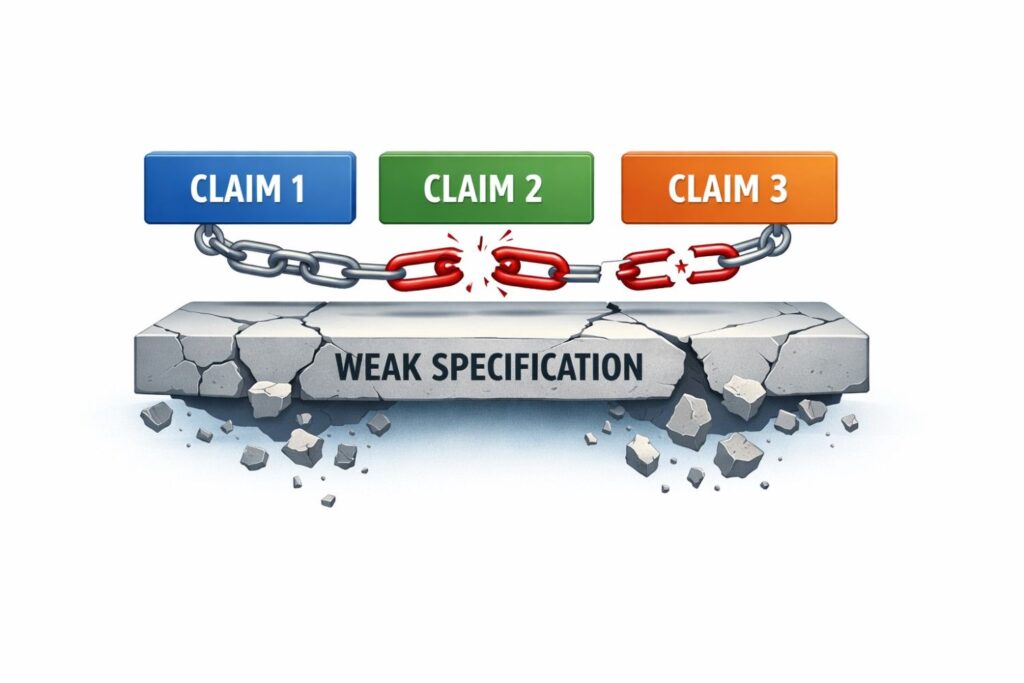
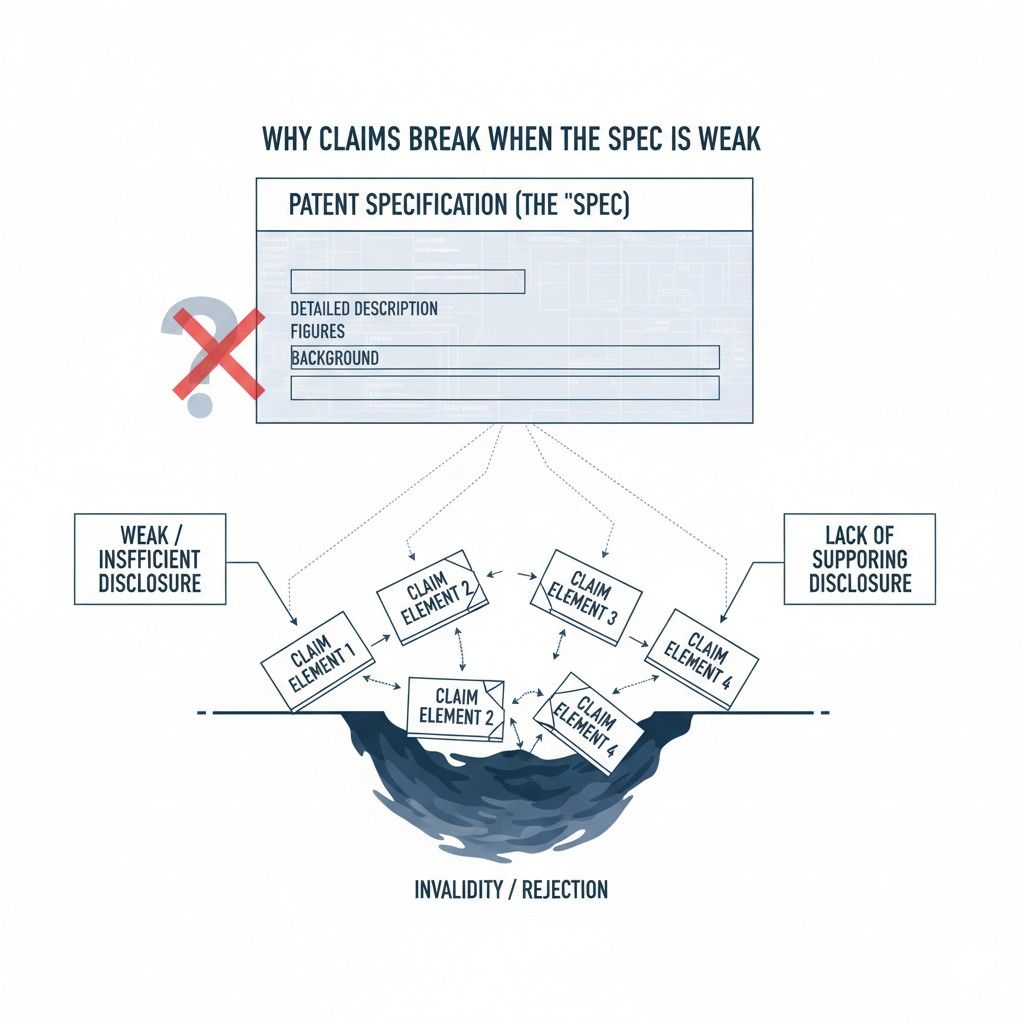
A weak spec does not fail loudly. It fails quietly, months or years later, when the patent is examined, challenged, or relied on in a real business moment. Founders often believe the claims are the patent.
In reality, the claims are only as strong as the story underneath them. When the spec does not fully support what the claims say, the claims start to crack.
This section explains where those cracks come from and how businesses can prevent them before they turn into costly problems.
The Claim Sounds Right but the Spec Never Truly Said It
Many claims look clean on the surface. They use clear words. They follow a structure. They seem logical. The problem appears when someone asks a simple question.
Where exactly is this explained in the spec. If the answer is vague or indirect, the claim is already in trouble.
This usually happens when the spec describes an idea in broad strokes but the claim gets more specific later. The founder may understand the connection in their head, but patents do not work on understanding.
They work on what is written. If the spec never clearly states that exact feature, step, or behavior, the claim has nothing solid to stand on.
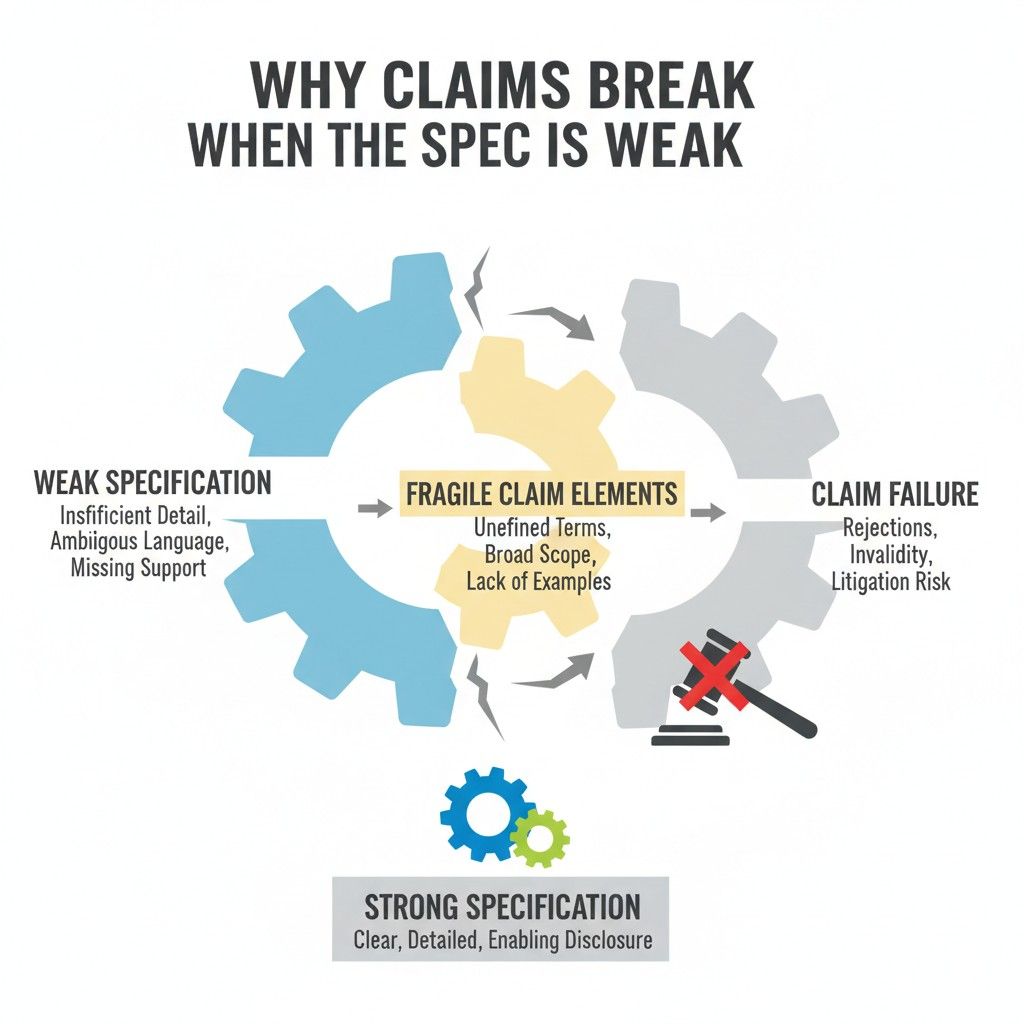
Action here starts during drafting. Every time a claim idea comes up, pause and check whether the spec already explains it in plain terms. If it does not, the spec must be expanded before the claim is locked.
This simple habit prevents silent gaps that later become fatal.
Assumptions Kill Claims Faster Than Errors
A common reason specs weaken claims is assumption. Engineers assume certain steps are obvious. Founders assume common industry knowledge fills the gaps. Patent examiners and judges do not assume. They only read.
When a spec skips steps or shortens explanations because something feels obvious, it creates holes.
Those holes give others room to argue that the claim is broader than what was actually disclosed. Once that argument sticks, the claim can be rejected or narrowed beyond usefulness.
Businesses should treat the spec as if the reader knows nothing about the system. That does not mean writing more fluff. It means writing with precision.
Every moving part, every action, every decision point should be explained once, clearly, and in simple language. This approach strengthens claims without making the patent longer than needed.
Vague Language Leads to Narrow Outcomes
Words like configured to, adapted to, or capable of are often used to sound flexible. But if the spec does not show real examples of how those things happen, the flexibility disappears. The claim may survive, but only in a very narrow form.
A weak spec forces claims to be interpreted in the smallest possible way. That is the opposite of what startups want. Strong patents protect space. Weak ones protect a single point.
The fix is practical. When using flexible language in claims, the spec must include concrete descriptions that show how that flexibility works. Explain multiple paths.
Explain variations. Explain alternatives. This gives the claim room to breathe while staying supported.
The Spec Describes One Thing but the Claim Tries to Cover Many
Another break point happens when the spec is written around a single example, but the claims try to cover a whole category. This mismatch is one of the fastest ways to lose coverage.
If the spec only explains one version of a system, the claims cannot suddenly protect all versions. Examiners and courts will pull the claim back to match the narrow disclosure. The broader intent does not matter if it was never written down.
For businesses, this means thinking about scope early. If the product may evolve, the spec should describe that evolution path. Not in marketing terms, but in functional terms.
Show how the core idea works across different setups. This gives claims a wider foundation without guessing.
Missing Links Between Steps Break Method Claims
Method claims fail often because the spec describes steps in isolation. The claim strings them together, but the spec never explains how one step leads to the next.
A reader should be able to follow the flow without filling in gaps. If step two depends on the output of step one, that dependency must be explained. If a decision changes the path, that logic must be written.
Actionable advice here is to read the spec like a story. Does each action naturally lead to the next. If not, add a sentence. One clear sentence can save an entire claim from rejection later.
Over-Reliance on Drawings Without Words
Drawings help, but they do not replace explanation. A spec that leans too heavily on figures without clear written support leaves claims exposed.
A drawing can show structure, but it rarely explains behavior, rules, or conditions in enough detail.
When claims rely on features that only appear in drawings, opponents can argue that the feature was never actually described. That argument often works.
The solution is simple and strategic. Every important element shown in a figure should also be described in text. The text does not need to repeat the drawing. It needs to explain what the element does, how it interacts, and why it matters.
Rushing the Spec to File Fast Creates Long-Term Risk
Speed is important for startups. But rushing the spec is one of the most expensive shortcuts a company can take. A fast filing with a thin spec often leads to years of cleanup, amendments, and lost coverage.
Claims may be filed quickly, but once the spec is locked, it cannot be expanded. That means every missing explanation becomes a permanent limit.
Smart businesses balance speed with completeness. They file quickly, but they do not file carelessly.
Platforms like PowerPatent exist to make this balance possible by helping founders capture real detail fast, without slowing down building. If you want to see how that works in practice, you can explore the process at https://powerpatent.com/how-it-works.
Weak Specs Invite Aggressive Challenges
A final and often overlooked issue is that weak specs attract challenges. Competitors look for patents they can work around or invalidate. A spec that barely supports its claims is an easy target.
Strong specs discourage attacks. They show depth. They show intent. They show that the inventor understood the problem and the solution fully at the time of filing.
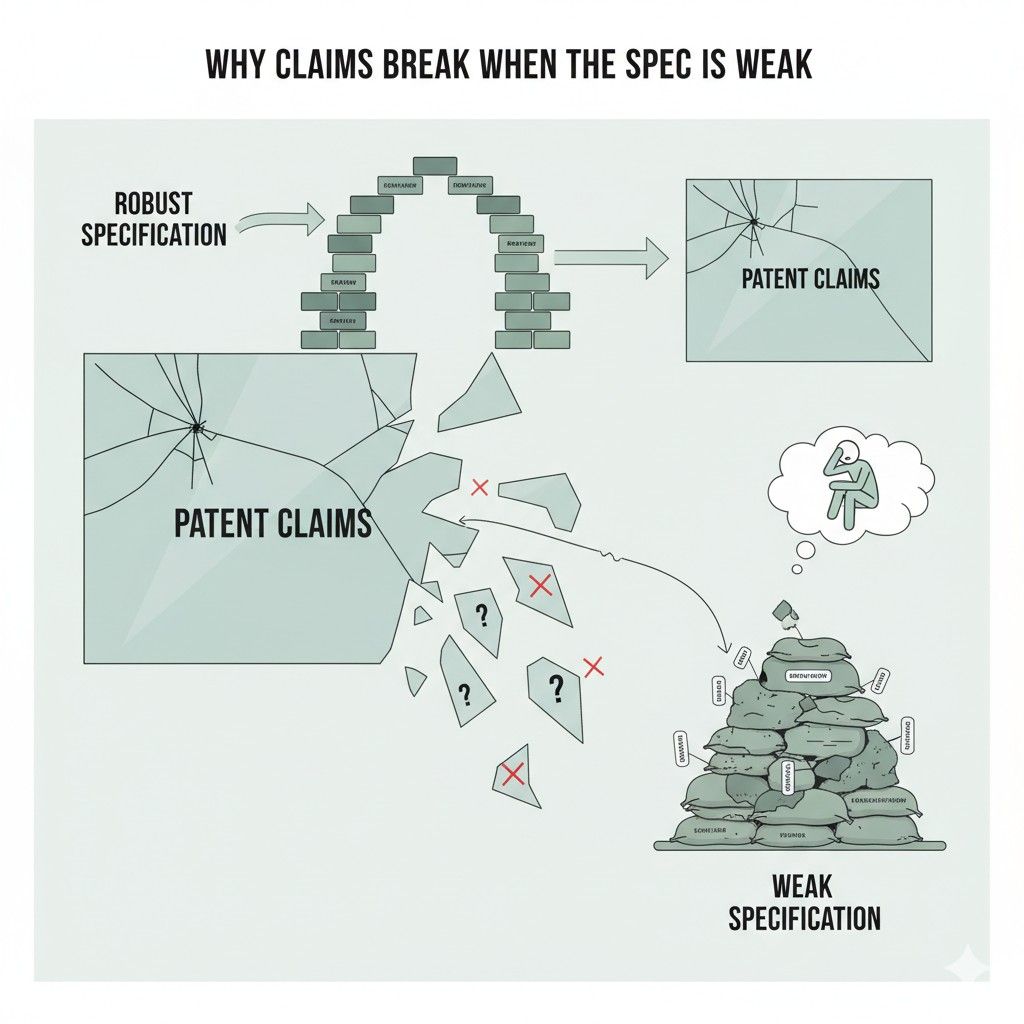
For businesses, this is about confidence. When the spec is solid, claims become tools, not risks. That confidence matters in funding talks, partnerships, and exits.
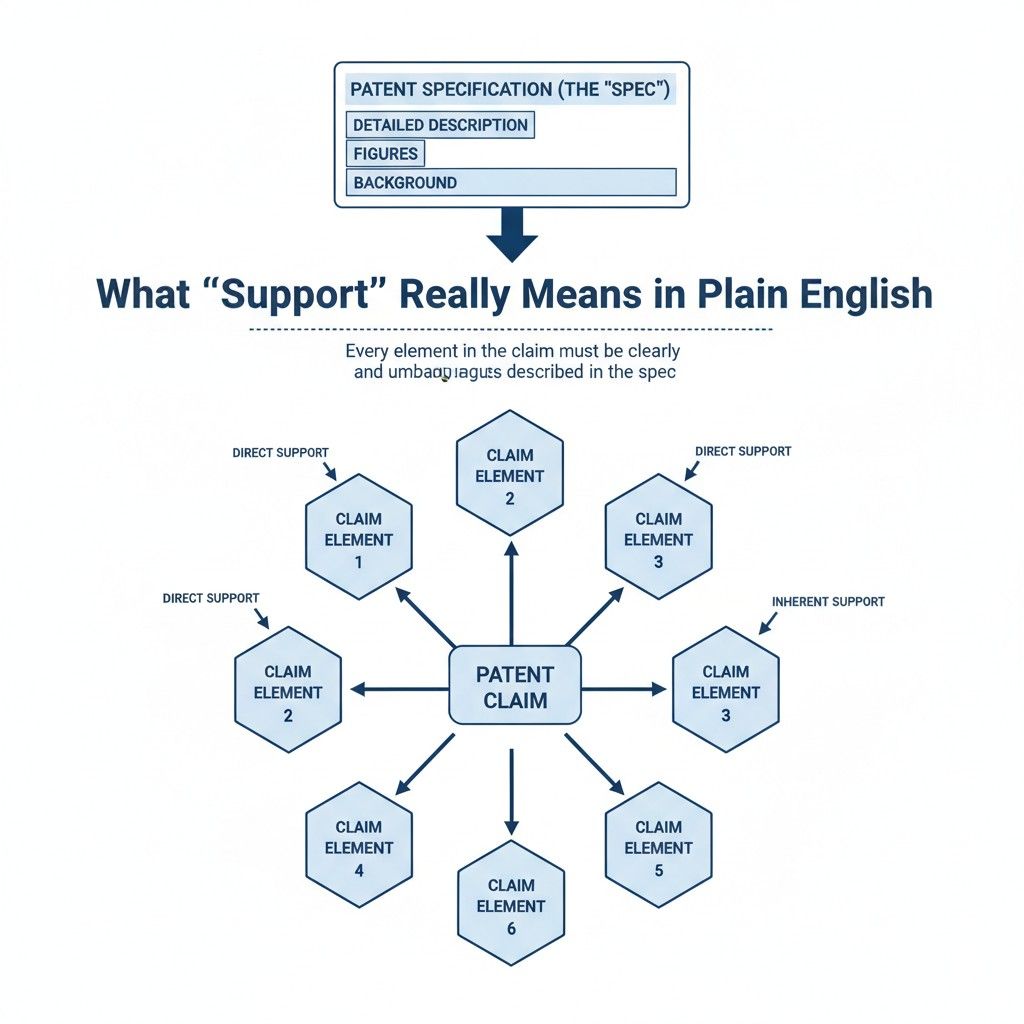
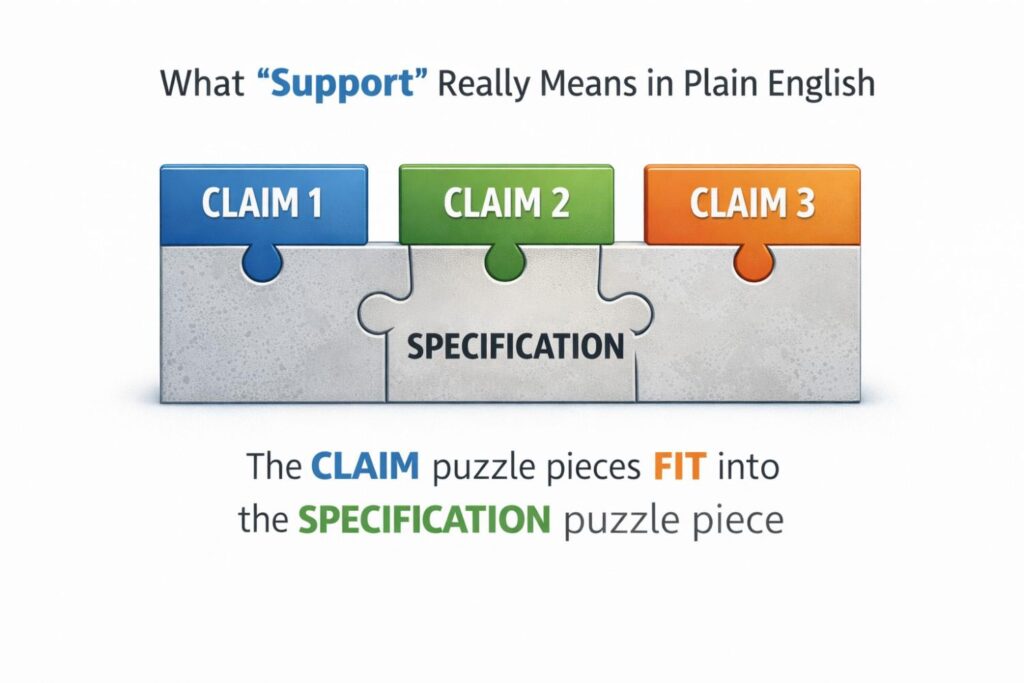
What “Support” Really Means in Plain English
Support is not about fancy words or long explanations. It is about proof on paper.
When a claim says something, the spec must already show it clearly, using normal language, as if you were explaining it to a smart new hire on their first week. If the idea only exists in your head, it does not count.
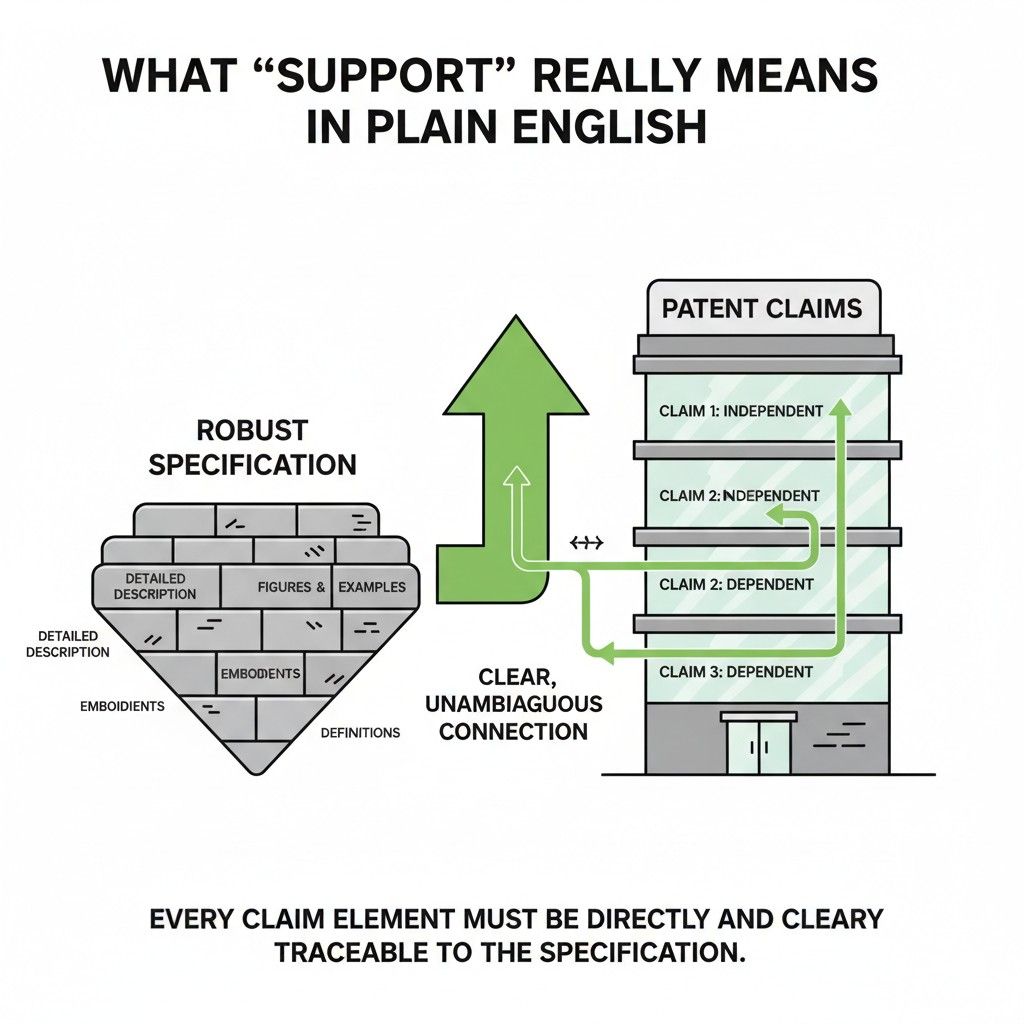
If it is only hinted at, it does not count. Support means the reader can point to the spec and say, this exact thing was already described here.
Support Is About Matching, Not Interpreting
Many founders think support means the idea is generally there. In reality, support means the claim and the spec match in a very direct way. The words do not have to be the same, but the meaning must be unmistakable.
If a claim talks about detecting a condition and then changing behavior, the spec must explain both the detection and the change, and also explain that they are connected.
If the spec only talks about detection and separately talks about a response, the link is missing. That missing link is where claims start to fall apart.
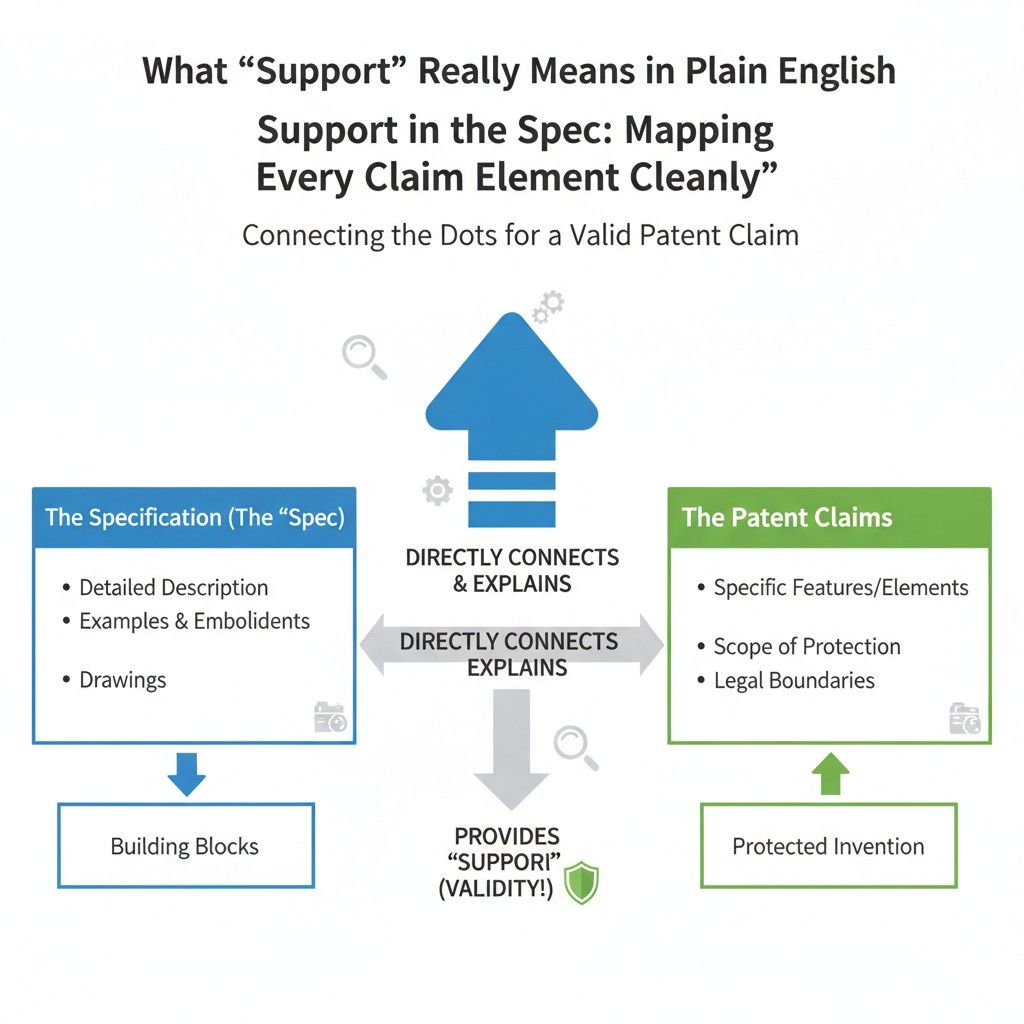
A strong habit for businesses is to treat claims like questions and the spec like answers. For every part of the claim, ask where the answer lives in the spec. If you cannot point to it quickly, support is weak.
Support Exists at the Time of Filing or It Does Not Exist
One of the hardest lessons for startups is that support cannot be added later. You cannot explain more after filing and expect earlier claims to benefit. The spec is frozen in time.
This means support is not about what you plan to build or what you later realize is important. It is only about what you wrote down on that day. That is why so many patents look fine at first and then struggle later.
The product grew, but the spec did not.
Strategically, this means founders should describe the core idea more deeply than the current product requires.
Not future promises, but real technical paths. If there are multiple ways something could work, write them down. That depth creates support for broader claims from day one.
Support Is Not Length, It Is Clarity
A long spec can still lack support. A short spec can be strong if it is clear. Support comes from clarity, not volume.
Clarity means each concept is introduced, explained, and then used. The reader should not have to connect dots across pages.
When claims use a term, that term should already feel familiar because the spec explained it earlier in simple terms.
Businesses can improve clarity by writing the spec in layers. First explain the idea at a high level. Then explain how it works step by step. Then explain variations. This layered approach creates natural support without repetition.
Support Requires Explaining Why, Not Just What
Specs often describe what happens, but skip why it happens. Claims, however, often depend on purpose and effect. When the spec misses the why, support weakens.
For example, saying a system performs a step is not always enough. Explaining why that step matters or what problem it solves gives context. That context helps claims survive scrutiny because it shows intent and understanding.
Founders should ask themselves one simple question while drafting. If someone asked why this step exists, is the answer already written down. If not, add it. One sentence of reasoning can dramatically strengthen support.
Support Must Cover Edge Cases, Not Just the Happy Path
Many specs only describe the ideal flow. Claims, however, often cover more than the ideal flow. When edge cases are missing, support becomes fragile.
If a system can fail, retry, skip, or choose a different path, those behaviors matter. Claims that cover decision-making or conditional actions need backing in the spec.
This does not mean describing every possible failure. It means acknowledging that alternatives exist and showing at least some of them. That signals to the reader that the inventor understood the system fully, not just when everything works perfectly.
Support Is Stronger When the Spec Teaches
The best specs feel like teaching documents. They explain the idea in a way that builds understanding. When a spec teaches well, claims naturally feel supported.
Teaching means using examples. It means walking through scenarios. It means explaining interactions, not just listing components.
For businesses, this is a mindset shift. The spec is not a form to fill out. It is a chance to show mastery. When you teach the reader, you also protect yourself.
Support Makes Claims Defensible, Not Just Allowable
Some claims get allowed even with weak support. That does not mean they are safe. Allowance is not the finish line. Defense is.
A claim that barely clears examination can still collapse under challenge. Strong support makes claims harder to attack because there is less room to argue meaning or scope.
This matters deeply for startups. Investors, acquirers, and partners look beyond allowance. They care about whether the patent can actually hold value. Support is what turns a document into an asset.
Support Is Easier When Tools and Guidance Are Built In
Most founders struggle with support because they are doing it alone. They write specs without feedback, without structure, and without knowing what examiners look for.
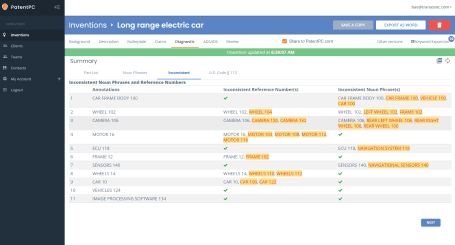
Modern tools can change this. When software guides you to explain each element clearly and real attorneys review for gaps, support becomes a built-in outcome, not an afterthought.
That is exactly why PowerPatent focuses so much on spec quality. The goal is not just to file, but to file with confidence. If you want to see how this approach works step by step, you can explore it here https://powerpatent.com/how-it-works.
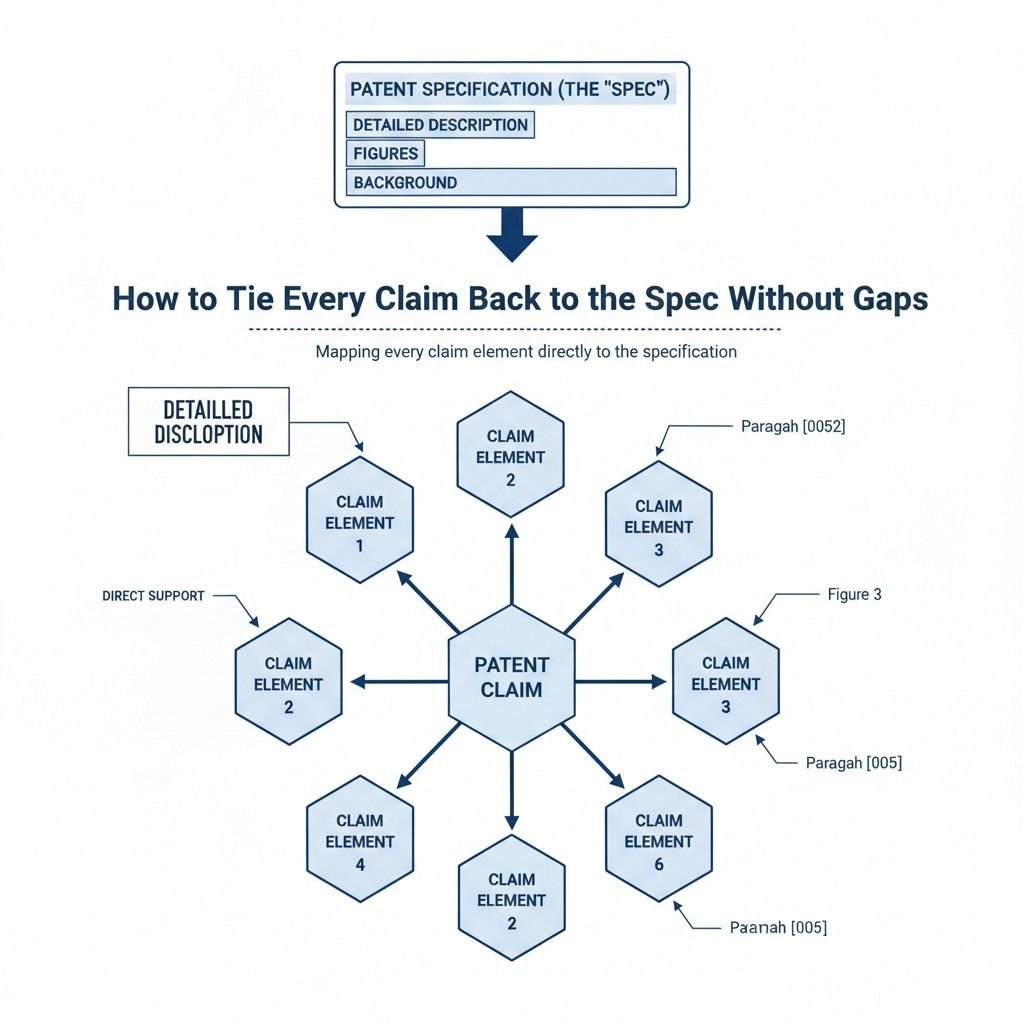
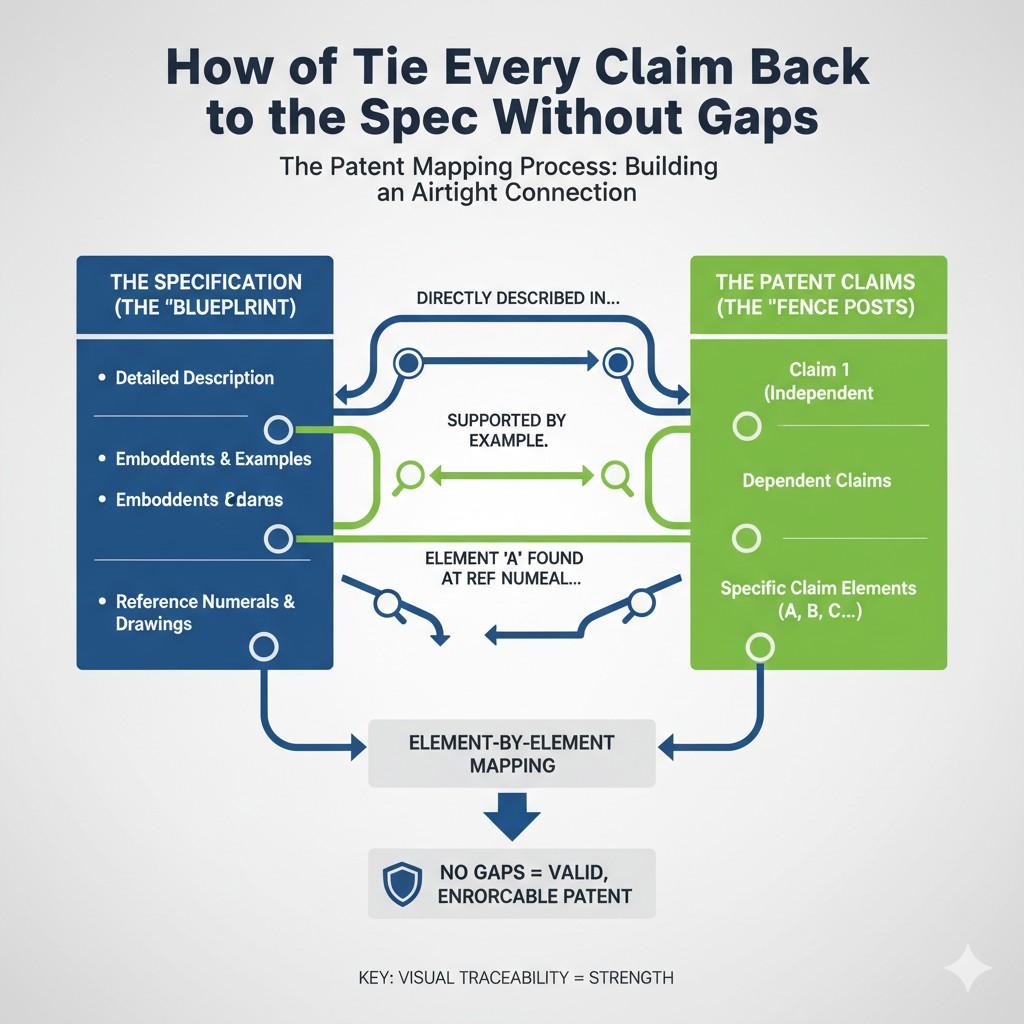
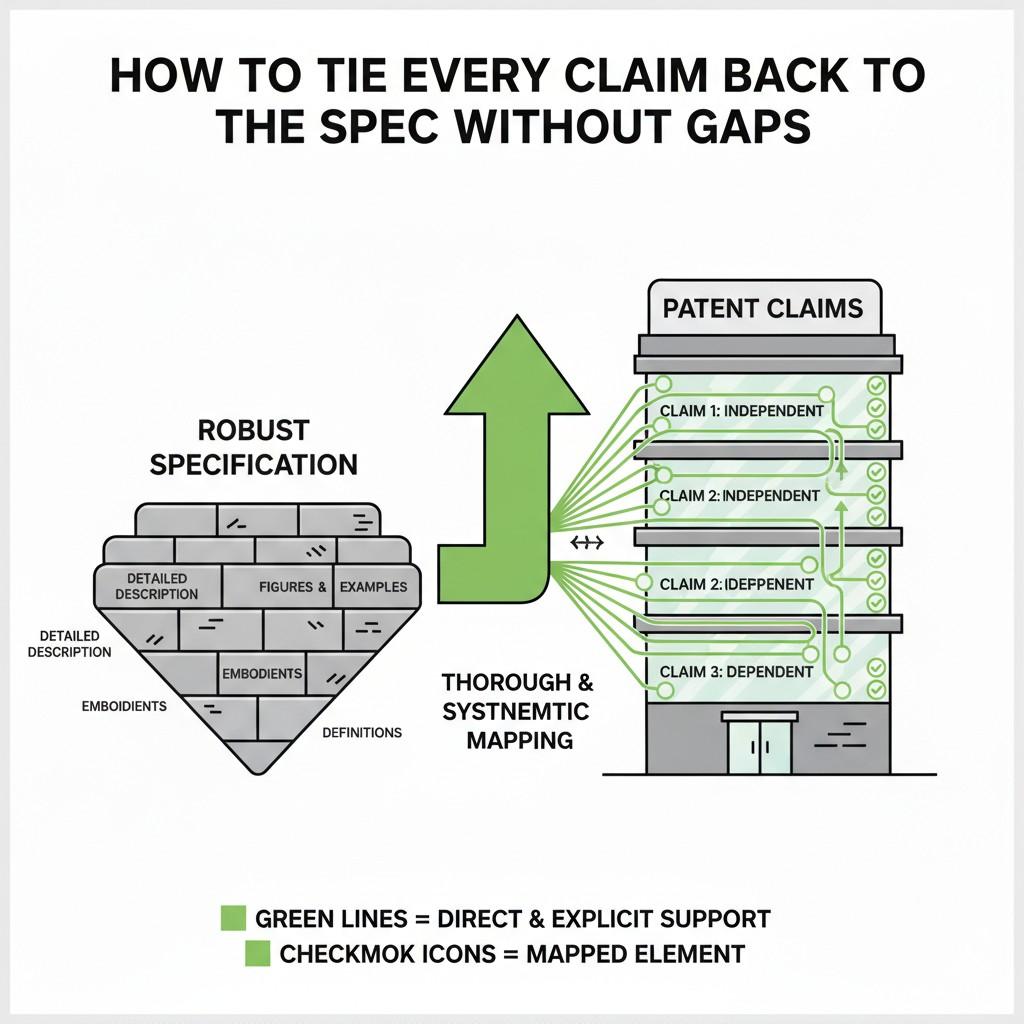
How to Tie Every Claim Back to the Spec Without Gaps
This is where strong patents are actually built. Not in the idea. Not in the claims alone. But in the quiet, careful work of making sure every single part of a claim can be traced back to something clearly written in the spec.
When this mapping is done well, patents become stable, flexible, and hard to attack. When it is skipped or rushed, even good ideas turn fragile.
Start With the Claim and Read It Like a Stranger
The first step is mental, not technical. You must read the claim as if you did not write it. Pretend you are seeing it for the first time. Every phrase should raise a question in your mind. What does this mean. How does this work. Where is this explained.
This mindset exposes gaps quickly. Founders often read claims with their own understanding filling in blanks.
That understanding does not exist for an examiner or a competitor. Reading like a stranger forces you to rely only on what is written, which is exactly how patents are judged.
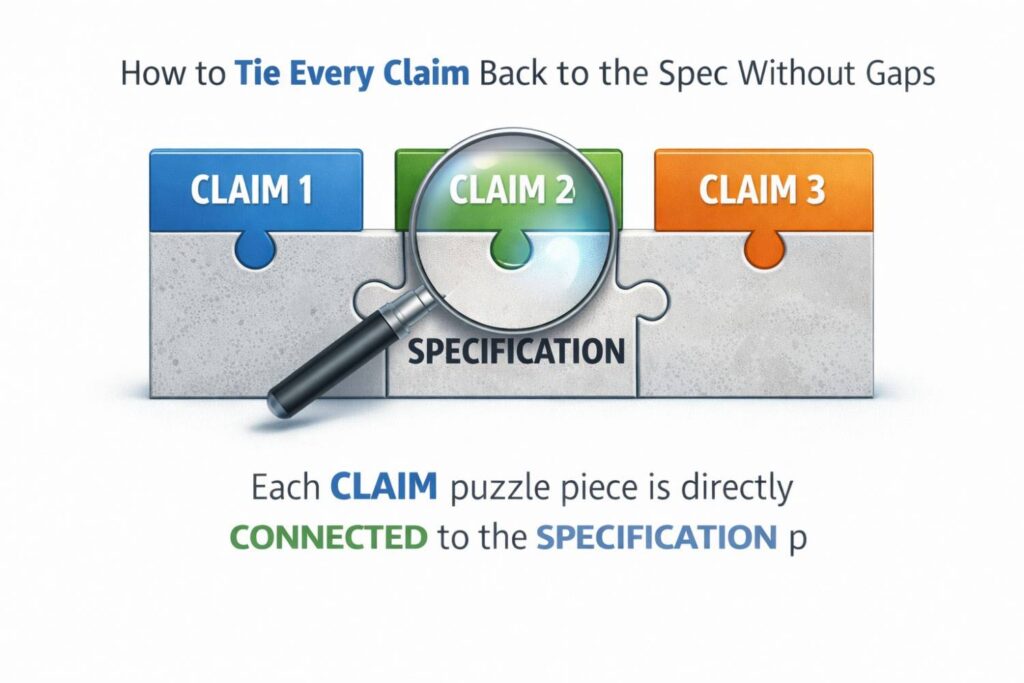
A useful habit is to pause after each claim sentence and ask whether the spec answers it clearly. If the answer feels fuzzy, there is a gap that needs to be closed.
One Claim Element Should Point to One Clear Explanation
Each element in a claim should have a home in the spec. Not multiple vague references. Not a general section that kind of touches on it. One clear explanation that makes the element obvious.
This does not mean repeating the claim word for word. It means explaining the same idea in a way that is natural in the spec. When the mapping is clean, someone reading the spec should understand the element even if they never saw the claim.
For businesses, this is about discipline. Resist the urge to assume the reader will connect dots across sections. Make the connection for them once, clearly, and move on.
Use the Spec to Define Meaning Before Claims Use It
Claims often fail when they introduce ideas before the spec explains them. This creates confusion and weakens support.
The spec should always lead. It should introduce terms, explain behaviors, and describe relationships before the claims rely on them. When claims come later, they should feel like a summary, not a surprise.
A strategic approach is to scan claims for key terms and then check whether those terms are explained earlier in the spec. If a term appears in a claim without a clear explanation beforehand, support is at risk.
Show Relationships, Not Just Components
Many specs do a good job listing parts but a poor job explaining how those parts work together. Claims, however, often depend on interaction.
If a claim says one component triggers another, the spec must explain that trigger. If a claim relies on order, the spec must show that order matters. Relationships are where support often breaks down.
Businesses should focus less on naming components and more on describing flows. What talks to what. What causes what. What changes when something else happens. These explanations strengthen multiple claims at once.
Write the Spec as If Claims Will Change Later
Claims evolve. They are narrowed, rewritten, and adjusted during examination. The spec must be ready for that.
A spec written only to support the first version of claims is brittle. A spec written to support the idea in depth is resilient.
Founders should assume claims will shift and ask whether the spec can handle those shifts. Does it explain the idea broadly enough. Does it describe variations that claims could later rely on. This foresight keeps patents valuable even after amendments.
Use Examples to Lock in Support
Examples are one of the strongest tools for support. They turn abstract ideas into concrete understanding.
When a spec includes an example of how something works, it becomes much harder to argue that the idea was not disclosed. Examples anchor meaning and show real application.
For businesses, examples should reflect real use cases, not hypothetical fluff. Walk through how the system behaves in a normal scenario. That single walkthrough can support many different claim angles later.
Avoid Overloading One Paragraph With Too Much Work
A common mistake is trying to support many claim elements with one dense paragraph. This makes mapping harder and weaker.
Clear support comes from focused explanations. One idea per paragraph. One relationship at a time. This structure makes it easy to point to support and defend it later.
Founders do not need to think like lawyers to do this well. They just need to explain ideas the way they would in a design review. Clear, direct, and organized.
Mapping Is Easier When It Is Built Into the Process
Trying to map claims to the spec after everything is written is painful. It feels like cleanup. It is much easier when mapping is part of the writing process from the start.
Modern patent tools can guide this by prompting explanation where claims will later rely on it and flagging weak areas early. When combined with attorney review, this approach catches gaps before filing, when they are still easy to fix.
This is exactly how PowerPatent approaches patent drafting. The goal is to help founders write specs that naturally support strong claims without slowing down product work. If you want to see how that process works in practice, you can explore it here https://powerpatent.com/how-it-works.
Clean Mapping Turns Patents Into Business Assets
When every claim element maps cleanly to the spec, the patent changes character. It stops being a document you hope no one looks at closely. It becomes something you can rely on.
This matters in negotiations. It matters in fundraising. It matters when competitors appear. Clean mapping gives confidence because the patent is not fragile.
Strong businesses plan for those moments early. They do the quiet work up front so they are not scrambling later.
Wrapping It Up
A strong patent is not about clever wording or long documents. It is about alignment. When the claims and the spec move together, the patent holds. When they drift apart, it breaks. Everything in this article comes back to that simple truth. Support in the spec is not a legal trick. It is a discipline. It forces founders to slow down just enough to explain what they are building in a clear and honest way. That explanation becomes the foundation for every claim, every amendment, and every future use of the patent.