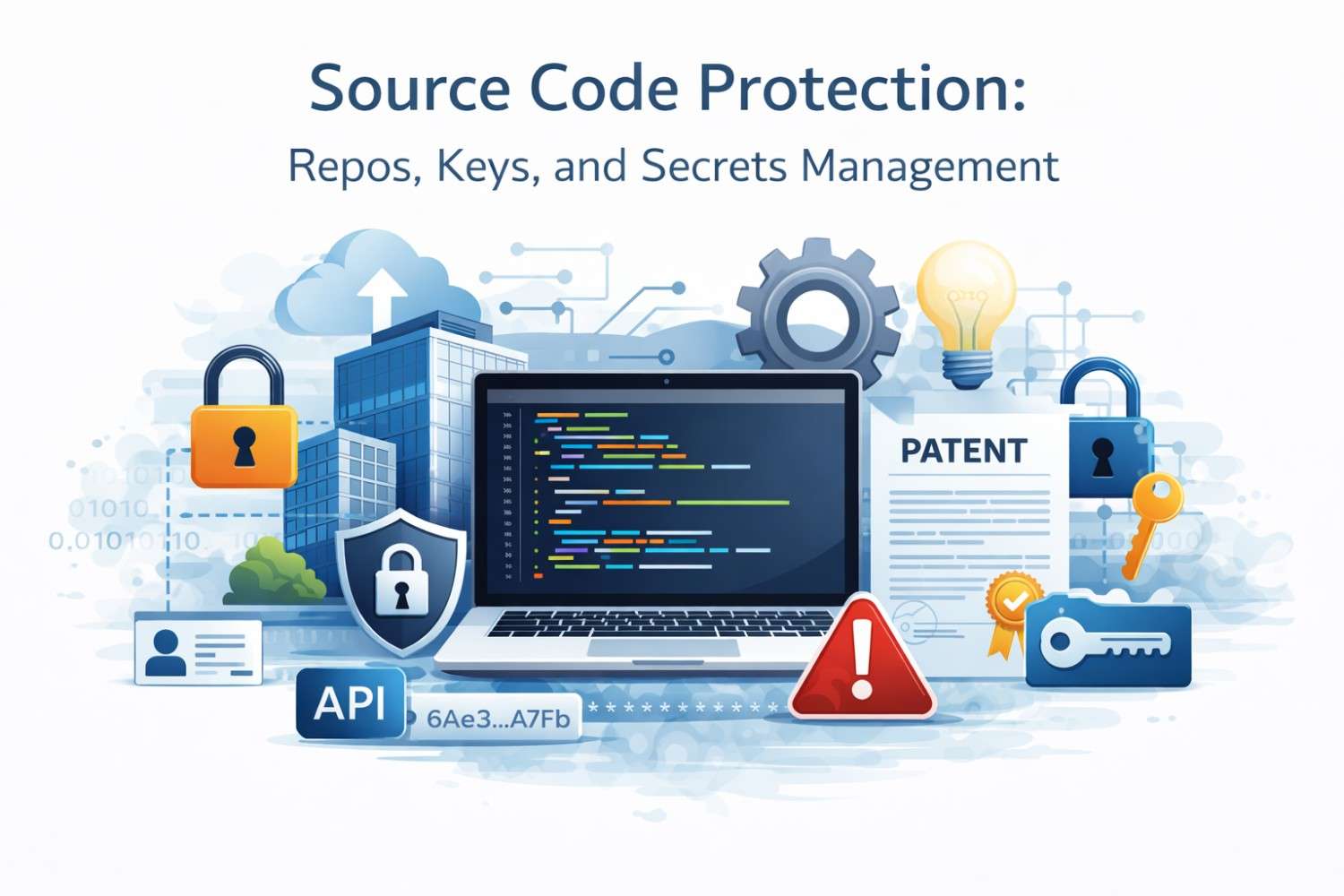
If you are building real software, your source code is not just text on a screen. It is your edge. It is your speed. It is your future leverage. And if it leaks, gets copied, or walks out the door, you do not get a second chance to fix that mistake.
Most founders think protection starts when they file a patent or talk to a lawyer. That is already too late. Protection starts the moment the first line of code is written. It starts with how your repos are set up, how access is handled, how keys are stored, and how secrets are treated inside your company. These choices decide whether you truly own what you are building or whether you are hoping nothing goes wrong.
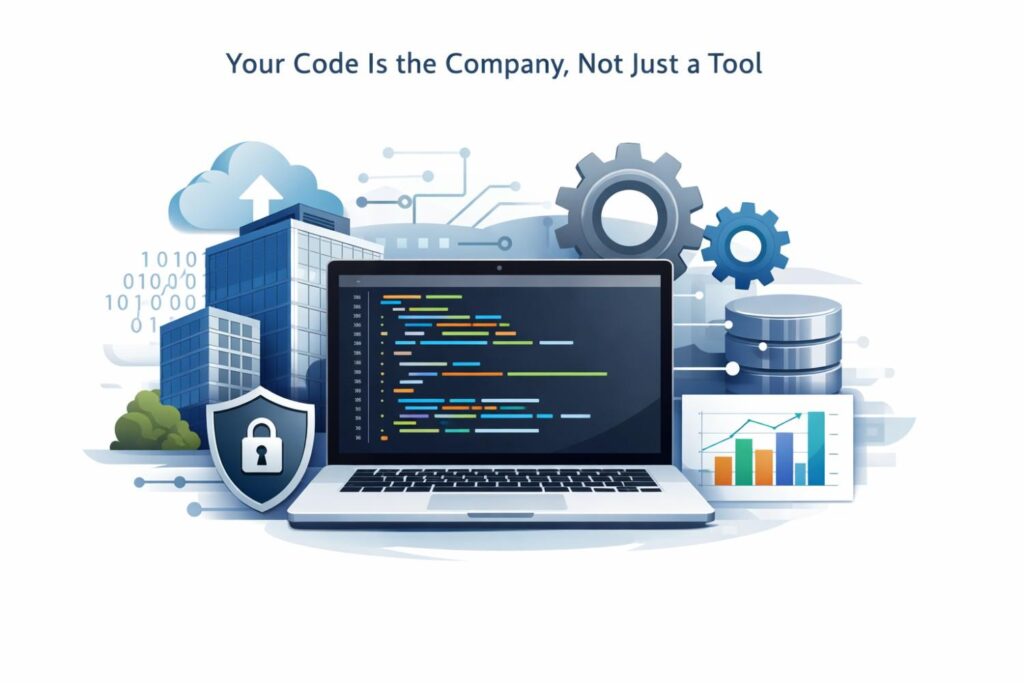
Your Code Is the Company, Not Just a Tool
At the earliest stage, it is easy to believe the company is the idea, the pitch deck, or the people. In reality, none of those things hold value without the code that turns them into something real.
Code is where decisions live. It is where tradeoffs are locked in. It is where your advantage takes shape.
Treating code like a simple tool instead of the company itself is one of the most expensive mistakes a startup can make, and it often happens without anyone noticing.
This section is about shifting how you think. Once that shift happens, better decisions around repos, access, patents, and ownership become obvious rather than forced.
Code Is Where the Business Logic Lives
Most founders explain their product in terms of features or outcomes. What actually matters is the logic underneath.
That logic is what decides how data flows, how models learn, how systems scale, and how users are locked in. That logic lives only in the code. Not in your head. Not in your roadmap. Not in your slides.
When someone copies your code, they are not copying syntax. They are copying decisions you spent months or years refining.
They are copying mistakes you already paid for and improvements you earned the hard way. This is why source code protection is not a technical hygiene issue. It is a business survival issue.
The moment you accept that your code is the business, every shortcut around protection starts to feel reckless instead of efficient.
Early Code Sets Permanent Patterns
The first versions of a codebase feel temporary. Founders often assume everything will be rewritten later. In practice, early patterns almost always survive.
They get wrapped, extended, and optimized, but rarely replaced. Access rules, repo structure, and ownership decisions made in the first six months tend to stick for years.
If contractors push code into a repo they control, that pattern lingers. If secrets are hardcoded early on, that habit spreads.
If no one tracks who owns what, cleaning it up later becomes risky and slow. These early choices quietly define who can claim ownership and who cannot.
Smart teams treat even throwaway code as if it might become permanent, because it often does.
Ownership Is Proven, Not Assumed
Founders often assume they own the code because they paid for it or because someone worked on their team. That assumption does not hold up under pressure.
Ownership is proven through clean records, clear access control, and traceable authorship. When those are missing, disputes become messy very fast.
This matters most when the company hits an inflection point. Fundraising, acquisition talks, or patent filing all trigger scrutiny.
Investors and attorneys will look at how code was created, who touched it, and whether rights are clear. If that trail is blurry, deals slow down or fall apart.
Protecting your code means creating proof, not just believing you are right.
Repos Are Legal Artifacts, Not Just Storage
A repository is more than a place to store files. It is a timeline of creation. It shows who contributed, when changes happened, and how the system evolved.
That history can support or undermine claims of ownership and invention.
When repos are shared casually, copied between accounts, or mixed with personal projects, that history becomes unreliable.
Even if nothing bad happens, you lose the ability to confidently say this code belongs to the company.
Treat your repos like formal records from day one. Company-owned repos, company-controlled access, and clean commit history are not overkill. They are the foundation of defensible IP.
The Cost of Casual Access
Many teams give broad access because it feels faster. Everyone gets admin rights.
Everyone can clone everything. It feels collaborative and modern. The cost of this approach shows up later, when you try to limit exposure or prove control.
Once access is wide, it is hard to narrow without disrupting work. Former contractors keep copies.
Old employees still have credentials. Secrets spread across machines and backups. At that point, the question is no longer who should have access, but who already does.
Limiting access early is not about distrust. It is about containment. You cannot protect what you cannot contain.
Code Leakage Is Usually Accidental
Most code leaks are not theft. They are accidents. A public repo created by mistake. A shared gist.
A debug log with keys inside. A contractor reusing snippets in another project. These moments happen when systems rely on memory instead of structure.
The safest teams assume mistakes will happen and design around that reality. They reduce blast radius by default. They make it hard to expose sensitive code even when someone slips.
Protection is not about perfect behavior. It is about forgiving systems.
Technical Protection Supports Patent Strength
Patents are built on proof of invention. That proof often comes from source code, commit history, and internal documentation.
If your codebase is messy or shared loosely, it becomes harder to show when something was invented and by whom.
Strong code hygiene makes patent work easier, faster, and cheaper. Clean repos let attorneys trace invention timelines. Clear ownership avoids uncomfortable questions.
Protected secrets show that the company treated its innovation as valuable from the start.
This is one reason modern founders use platforms like PowerPatent early. When protection and documentation happen alongside development, patents stop feeling like a separate, painful process.
You can see how that flow works at https://powerpatent.com/how-it-works.
Code Reflects Discipline to Outsiders
Whether you like it or not, your code tells a story about your company. Clean structure, controlled access, and thoughtful protection signal maturity. Sloppy handling signals risk.
This perception matters to investors, partners, and acquirers who cannot see everything else.
They know that teams who protect their code are more likely to protect customer data, comply with rules, and manage risk overall.
They also know that teams who ignore code protection early often struggle to fix deeper issues later.
You may never be asked directly about repo access or secrets management, but the consequences of those choices still show up in how others judge the business.
Building Fast Does Not Mean Building Carelessly
There is a myth that protection slows teams down. In reality, confusion slows teams down.
Clean ownership, clear access, and structured repos reduce friction. People know where to work, what they own, and what they should not touch.
When protection is built into the workflow, it fades into the background. Engineers focus on building, not on fixing messes or undoing damage. Founders focus on growth, not on legal cleanup.
Speed and protection are not opposites. Sloppiness and speed are.
Treat Code as an Asset From Day One
Assets are tracked, protected, and maintained. Code deserves the same treatment.
This mindset shift changes how decisions are made. You stop asking whether protection is worth it and start asking how much risk you are willing to accept.
Teams that win long term respect their code early. They set boundaries before problems arise.
They make ownership boring and obvious. And when the time comes to raise money, file patents, or sell the company, they are ready instead of scrambling.
Repo Access and Ownership Decide Who Really Controls the Product
Most founders believe control comes from titles, equity, or decisions made in meetings. In software companies, real control lives somewhere quieter. It lives in repository access, permission levels, and who holds the keys to the codebase.
These details feel small when things are moving fast, but they quietly decide who actually controls the product when it matters most.
This section is about understanding how repo access becomes power, how ownership gets blurred without anyone meaning to, and how to set things up so control stays with the company, not with chance.
Repos Are the Single Source of Truth
Every serious software product eventually funnels into one place. The main repository. That repo becomes the official version of reality. What is merged there is the product. What is not merged does not exist.
If that repo is not clearly owned and controlled by the company, then the product itself is not clearly owned.
It does not matter what contracts say if the operational truth tells a different story. When outsiders control the repo, they control the pace, direction, and even the survival of the product.
Company ownership of the primary repo is non-negotiable. Anything else is borrowed control.
Admin Rights Are Real Authority
Admin access often gets handed out casually. It feels helpful. It avoids blockers.
But admin rights are not just about convenience. They allow deletion, permission changes, and history rewrites. In extreme cases, they allow someone to lock the founders out of their own code.
The safest pattern is simple. Very few people need admin rights. Most contributors do not.
Limiting this early prevents future conflict and accidental damage. It also makes the chain of authority obvious to anyone looking from the outside.
When control is clear, trust actually increases rather than decreases.
Contractors Change the Risk Profile
Contractors are common, especially early on. They bring speed and experience.
They also introduce risk if repos are not handled correctly. When contractors push code from personal accounts or work inside repos they created, ownership becomes murky.
Even when intentions are good, this setup can cause problems later. Contractors move on. Accounts disappear. Access is forgotten. Copies remain on personal machines. The company loses clean control without realizing it.
The fix is not complicated. Contractors should work inside company-owned repos, using company-managed accounts, with access scoped to what they actually need. This protects both sides and keeps ownership simple.
Forks and Copies Create Shadows
Developers love forking repos. It is a natural workflow. But forks create shadows of your codebase that are easy to lose track of.
Over time, these copies drift, mix with other projects, and blur the line between company code and personal code.
From an ownership perspective, uncontrolled forks are dangerous. They make it harder to prove what code is original, what belongs to the company, and what was reused elsewhere.
Clear policies and technical limits reduce this risk. If forks are needed, they should live under company control. If they are not needed, access should prevent them by default.
Access Should Match Responsibility
Not everyone working on a product carries the same responsibility. Repo access should reflect that reality. Giving everyone full access feels equal, but it creates unnecessary exposure.
When access matches role, mistakes become smaller. A junior engineer cannot accidentally expose sensitive infrastructure. A designer cannot delete core logic. A short-term contributor cannot rewrite history.
This is not about hierarchy. It is about aligning risk with responsibility in a way that protects the product.
Offboarding Is as Important as Onboarding
Founders spend time setting up access when someone joins. Very few spend equal time removing it when someone leaves. This is one of the most common ways control slowly erodes.
Former employees often keep access longer than intended. Contractors are forgotten. Old credentials still work months later. Each of these is a silent liability.
Clean offboarding should be routine, fast, and thorough. When access ends, it ends everywhere. Repos, CI systems, cloud accounts, and secret stores should all be updated together.
Repo History Tells a Story
Commit history is more than a log. It tells the story of how the product was built. Who made key decisions. When features were created. How the system evolved.
When history is clean and centralized, that story is easy to tell. When it is fragmented across repos, accounts, and forks, the story becomes confusing. Confusion weakens claims of ownership and invention.
Teams that care about long-term value protect repo history as carefully as they protect the code itself.
Control Today Prevents Conflict Tomorrow
Most ownership disputes do not start with bad actors. They start with unclear systems. When control is vague, people fill the gaps with assumptions. Those assumptions clash later under stress.
Clear repo ownership and access rules remove ambiguity. They make expectations explicit. They prevent misunderstandings from turning into legal or operational problems.
This clarity becomes especially valuable during fundraising, acquisitions, or patent work, when every loose end gets examined.
Repos and Patents Are Tightly Linked
Patents rely on evidence. Repos provide that evidence. Clean access control shows that the company treated its inventions as assets. It supports claims that the company, not individuals, owns the innovation.
When repo control is weak, patent work becomes harder. Attorneys need to ask more questions. Founders need to dig up old records. Timelines become uncertain.
Platforms like PowerPatent are designed to reduce this friction by aligning how teams build with how they protect.
When code ownership is clear, turning real work into real protection becomes much easier. You can see how that process works at https://powerpatent.com/how-it-works.
Control Does Not Mean Slowing Down
Some founders worry that tighter access will slow development. In practice, the opposite is usually true. Clear boundaries reduce confusion. Fewer people touch critical areas. Reviews become faster. Mistakes become rarer.
The best teams move fast because they are disciplined, not because they are loose. Control is what allows speed to scale without breaking.
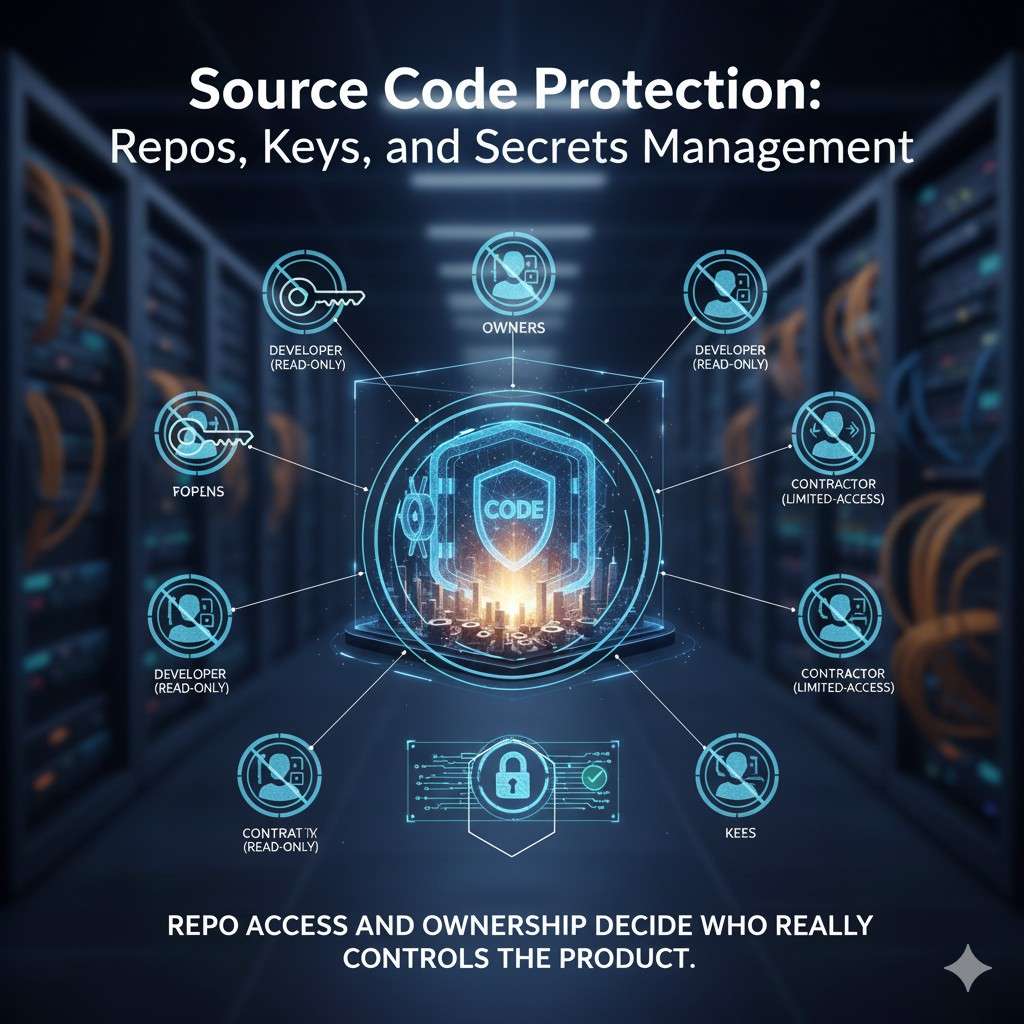
Repo access and ownership are not background details. They are the levers that decide who truly controls the product. Get them right early, and many future problems never appear.
API Keys and Secrets Are Silent Failure Points
Secrets rarely fail loudly. They do not break builds in obvious ways. They do not usually cause immediate outages. Instead, they sit quietly in the background, waiting for the wrong moment to surface.
When they do, the damage is often already done. Lost data, compromised systems, and questions about trust appear all at once, with very little warning.
This section focuses on why secrets management is one of the most overlooked parts of source code protection, and how small, intentional changes can eliminate some of the biggest hidden risks in a modern software company.
Secrets Are Not Just Technical Details
API keys, tokens, certificates, and passwords are often treated as plumbing. Necessary, but unimportant.
In reality, they are direct access to power. A single exposed key can allow someone to read data, write data, spend money, or impersonate your system entirely.
Because secrets feel abstract, teams underestimate their value. They forget that a secret is often more powerful than the code itself. Code explains how things work. Secrets allow things to happen.
Once you see secrets as control points instead of configuration details, protecting them becomes an obvious priority.
Hardcoding Secrets Creates Permanent Risk
One of the most common mistakes is placing secrets directly into source code. It feels convenient, especially early on. It works locally. It works in staging. It even works in production for a while.
The problem is that code lives forever. Even if you delete a secret later, it still exists in commit history, forks, backups, and local machines. That exposure cannot be undone. You can rotate keys, but the habit remains dangerous.
The safest assumption is that any secret placed in code will eventually be seen by someone who should not see it.
Public Repos Are Not the Only Threat
Many founders worry about public repositories, but private repos can be just as risky. Access expands over time. Contractors join. Interns come and go. Tools integrate. Every new connection increases the chance that secrets leak.
Secrets spread through logs, error messages, screenshots, and copied snippets. They move faster than expected and farther than intended. Even well-meaning team members can expose them without realizing it.
Protection requires systems that assume exposure will be attempted, not behavior that assumes perfection.
Environment Separation Reduces Damage
One of the simplest ways to reduce risk is separating secrets by environment. Development, testing, and production should never share the same keys. When they do, a small mistake in one place becomes a full-scale incident everywhere.
Separate environments create natural firebreaks. A leaked development key is annoying. A leaked production key can be catastrophic. Designing for this difference limits the blast radius of mistakes.
This separation also makes audits and reviews easier, because the intent of each secret is clear.
Centralized Secret Storage Builds Discipline
Secrets should live in one place, not scattered across files, machines, and messages. Centralized secret storage creates a single source of truth and makes rotation manageable.
When secrets are centralized, access can be logged, limited, and revoked. When they are scattered, no one knows who has what. Cleanup becomes guesswork.
Teams that centralize secrets early avoid painful migrations later, when the number of secrets has grown and the risk has multiplied.
Rotation Is a Habit, Not a Reaction
Most teams rotate secrets only after something goes wrong. By then, the damage may already be done. Regular rotation turns secrets into temporary tools instead of permanent liabilities.
When rotation is expected, systems are built to handle it smoothly. Downtime decreases. Panic disappears. Security becomes routine instead of reactive.
Even if a secret leaks, its usefulness is limited by time. That alone can prevent serious harm.
Secrets Define Trust Boundaries
Every secret defines a boundary of trust. Who has it. What they can do with it. How long it remains valid. These boundaries shape how secure your system really is.
When secrets are shared casually, trust boundaries collapse. People gain power they do not need. Systems become harder to reason about. Risk becomes invisible.
Clear boundaries make it obvious where responsibility lies and where it does not.
Leaked Secrets Undermine IP Claims
From an intellectual property perspective, leaked secrets send the wrong signal.
They suggest the company did not treat its technology as valuable or confidential. That perception can weaken claims during disputes or due diligence.
Strong secret management shows intent. It shows that the company took reasonable steps to protect its innovation. This matters when turning code into patents or defending ownership later.
Protection is not just about prevention. It is about demonstrating care.
Secrets and Speed Can Coexist
There is a belief that proper secrets management slows teams down. In practice, it often speeds them up. Fewer outages. Fewer emergency rotations. Fewer late-night incidents.
When secrets are handled cleanly, developers stop worrying about breaking things accidentally. They focus on building. Operations become calmer. Confidence increases.
Speed comes from stability, not shortcuts.
Building With Protection in Mind
Founders who plan for secrets early avoid costly rewrites later. They choose tools and workflows that assume growth, not just survival. This mindset aligns well with long-term IP strategy.
Platforms like PowerPatent support this way of thinking by helping teams capture and protect what they build as they build it.
When operational discipline and legal protection move together, the company becomes harder to copy and easier to defend. You can see how that approach works at https://powerpatent.com/how-it-works.
Secrets are silent failure points because they fail when no one is looking. Treating them with the same care as core code removes one of the biggest hidden risks in modern software.
How Smart Protection Supports Strong Patents and Clean IP
Patents often feel far away from daily product work. Founders see them as something to deal with later, after traction, after funding, after things calm down.
In reality, the strength of a patent is shaped long before any application is drafted. It is shaped by how the code was built, stored, protected, and documented from the start.
This section explains how smart source code protection quietly sets the foundation for strong patents and clean intellectual property, without slowing teams down or pulling them into legal complexity.
Patents Are About Proof, Not Just Ideas
A common misunderstanding is that patents protect ideas. They do not. They protect specific ways of doing things. Those ways live in code, system design, and implementation details.
When it comes time to file a patent, the question is not whether the idea was good.
The question is whether you can clearly show what was built, how it works, and when it was created. Source code, commit history, and internal documentation become evidence.
Teams that protect their code naturally create better proof. Teams that treat code casually often struggle to reconstruct the story later.
Clean Repos Make Invention Timelines Obvious
One of the hardest parts of patent work is establishing timelines. When was this method first implemented? When did this approach replace the old one? Who contributed to the core logic?
Clean repositories answer these questions without debate. The history speaks for itself. Commits show progression. Branches show experimentation. Merges show decisions.
When repos are messy or fragmented, attorneys have to rely on memory and explanations. That slows everything down and increases risk.
Access Control Reinforces Ownership Claims
Patents depend on ownership. If multiple people or entities could plausibly claim rights to the same code, problems arise. This is where access control becomes legally meaningful.
When only company-managed accounts contribute to company-owned repos, ownership is clear. When access is wide and informal, ownership becomes easier to challenge.
Strong access control does not just protect the code. It protects the company’s right to claim that code as its own invention.
Secrets Show Intent to Protect Innovation
How a company handles secrets sends a signal. Keeping sensitive logic, keys, and configurations protected shows that the company understood the value of what it was building.
In patent disputes or due diligence, this matters more than most founders realize. It demonstrates that the company took reasonable steps to keep its innovation confidential before filing.
That intent strengthens claims and reduces arguments that the technology was effectively public or poorly guarded.
Documentation Happens Naturally in Disciplined Teams
Good source code protection often leads to better documentation without forcing it. When systems are structured, people write clearer commit messages. When repos are organized, design decisions are easier to explain.
This documentation becomes gold during patent drafting. Instead of starting from scratch, attorneys can work from real artifacts created during development.
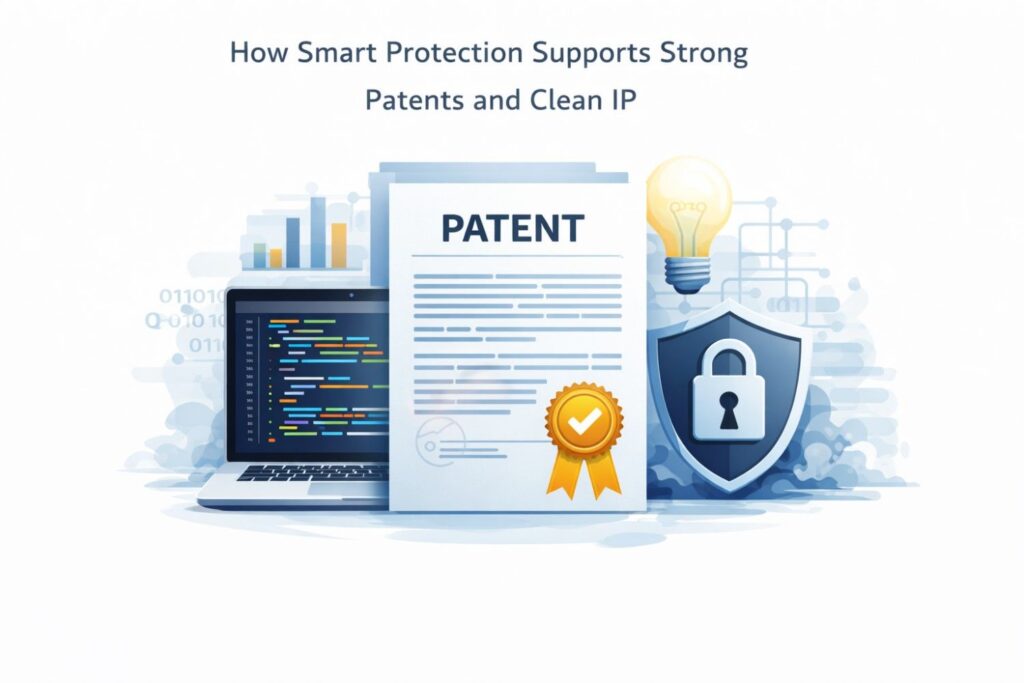
The result is patents that are more accurate, more defensible, and more closely tied to the actual product.
Patents Should Follow the Product, Not Lag It
The strongest patents reflect what a company is truly doing, not what it hoped to do years ago. That alignment is easier when protection and product development move together.
When teams wait too long, they forget details. They simplify stories. They miss nuances that make the invention special.
Smart protection keeps the trail warm. It allows patent work to follow naturally from real progress rather than memory.
Clean IP Makes Companies Easier to Buy and Fund
Investors and acquirers care deeply about intellectual property. They want confidence that what they are backing or buying is owned cleanly and defensibly.
When source code protection is strong, IP reviews move faster. Fewer questions come up. Fewer red flags appear. Trust builds quickly.
This can be the difference between a smooth deal and a stalled one.
Protection Reduces Legal Costs Later
Fixing IP problems late is expensive. Rewriting history, chasing signatures, cleaning repos, and rotating leaked secrets all take time and money.
Early protection avoids these costs. It turns legal work into confirmation instead of repair. That efficiency matters, especially for startups watching every dollar.
Founders who invest in protection early often save far more than they spend.
PowerPatent Fits Into Real Workflows
One reason founders delay patents is fear of disruption. They worry it will slow engineers down or add complexity. Modern tools change that equation.
PowerPatent is built to work alongside real development, not interrupt it. It helps founders turn real code and systems into real protection, with attorney oversight that understands how modern software is built.
When protection becomes part of the workflow, patents stop feeling like a burden and start feeling like leverage. You can see how that works in practice at https://powerpatent.com/how-it-works.
Strong IP Is a Side Effect of Good Habits
The most important takeaway is this. Strong patents are rarely the result of heroic legal effort at the end. They are the side effect of good technical habits from the beginning.
Clean repos, controlled access, protected secrets, and thoughtful documentation quietly build defensible IP over time. By the time you need patents, much of the hard work is already done.
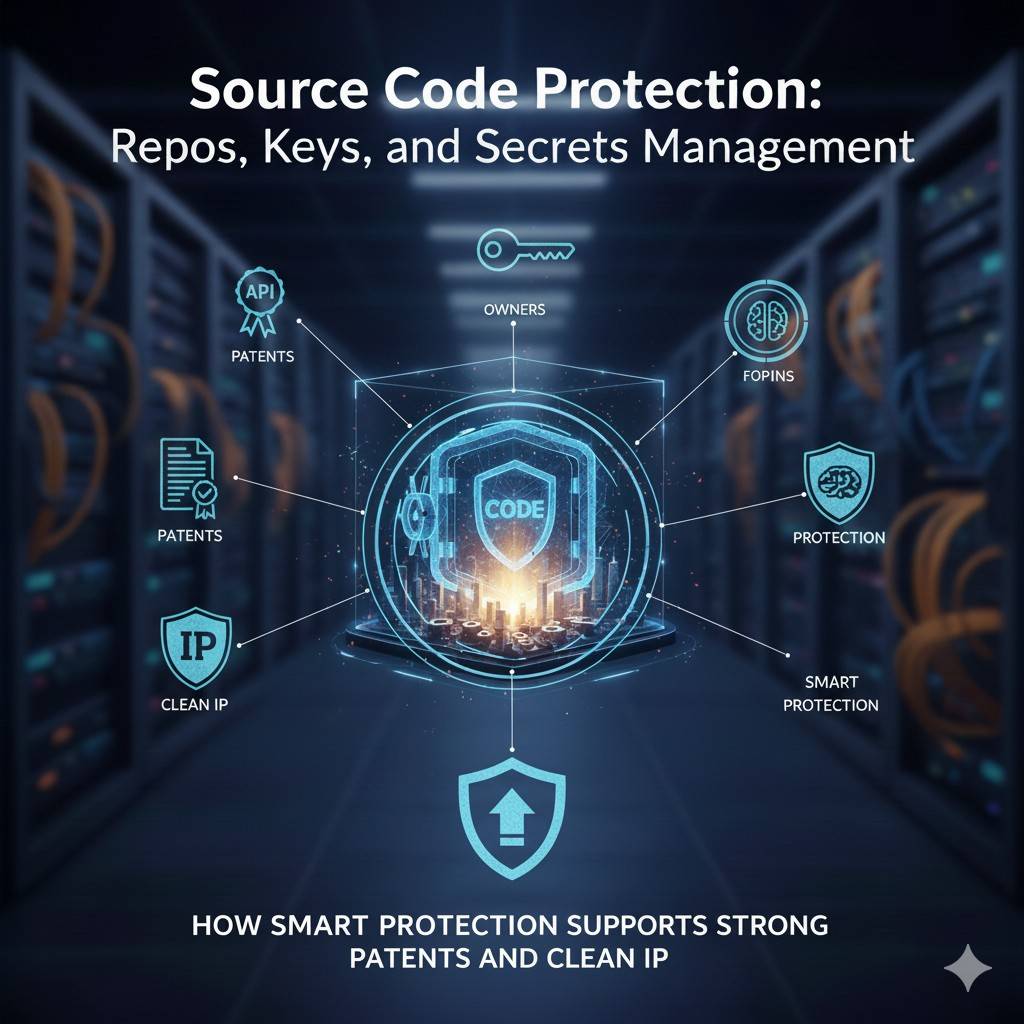
Source code protection is not just about avoiding disasters. It is about setting your company up to own its future with confidence.
Wrapping It Up
Most founders think about protection only when something goes wrong. A leak. A dispute. A due diligence surprise. By then, protection feels like damage control. The smartest teams flip that mindset early. They treat source code protection as part of growth, not a response to risk. When your repos are clean, access is intentional, and secrets are handled with care, the company runs smoother. Decisions are clearer. Trust is higher. Engineers move faster because they are not working inside chaos. Founders sleep better because ownership is obvious rather than assumed.