When a company buys another company, or when two teams sign a licensing deal, the patents don’t update themselves. Someone has to clean up the ownership records. Someone has to tell the patent office who owns what now. And if this step gets skipped, delayed, or done wrong, it can quietly damage the value of the deal you just closed.
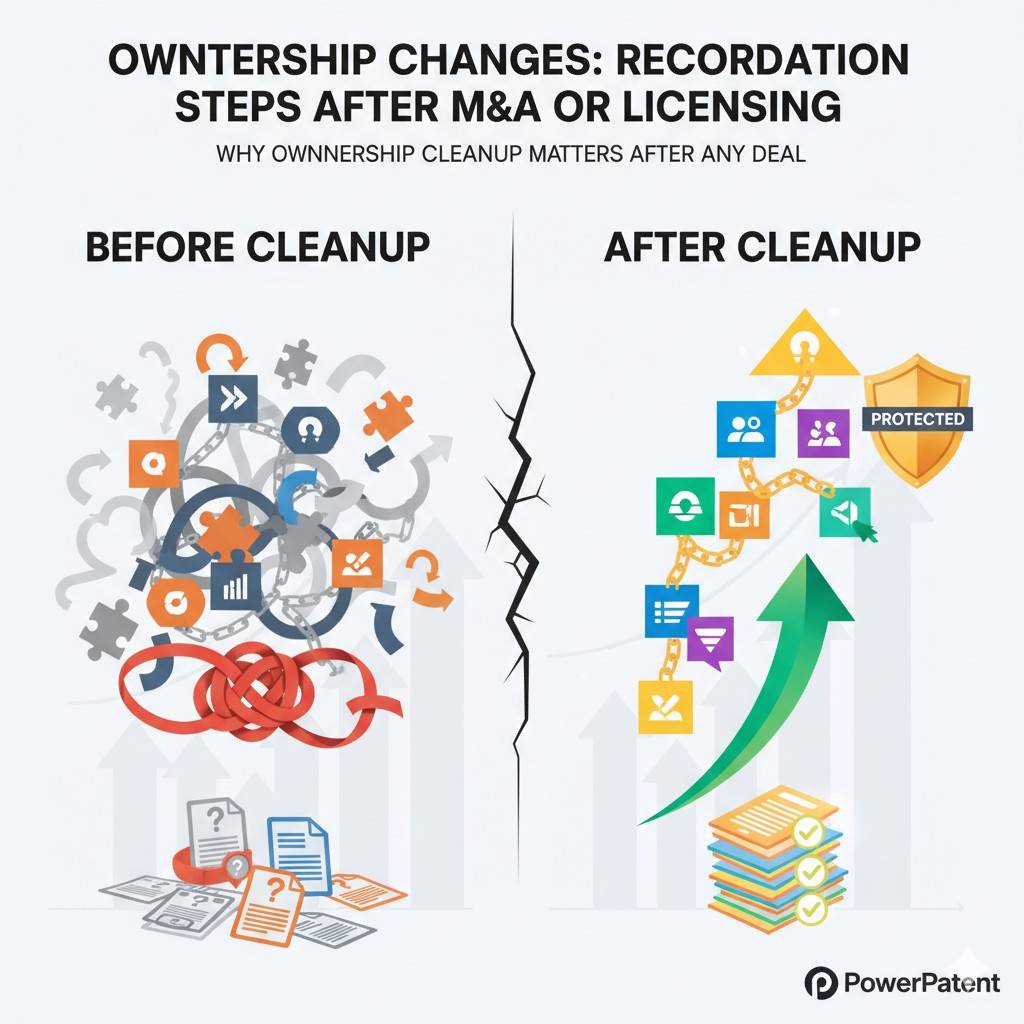
Why ownership cleanup matters after any deal
When a company goes through a merger, an acquisition, or even a simple licensing agreement, everyone celebrates the moment the papers are signed.
But underneath that excitement sits a quiet and very real truth: patents only protect you if the world can clearly see who owns them.
Ownership cleanup is the step that turns a deal from something symbolic into something legally solid. Without it, the value you think you acquired may not fully transfer, and the rights you believe you own may not fully activate.
This is why smart founders treat recordation not as paperwork but as a core part of protecting the business they are building.
Ownership clarity drives deal value
Every startup team dreams of raising bigger rounds, landing strategic partners, or moving toward an exit.
Investors and acquirers always look at the strength of your IP, and one of the first things they check is whether ownership is clean.
If records show an old company name, a previous owner, or a missing assignment, it raises doubts about enforceability. Even if the underlying invention is strong, unclear ownership creates friction.
The process slows down, lawyers get involved, and your valuation can take a hit. When you clean up ownership right after the deal, you remove that friction before it ever shows up.
Why timing affects legal strength
Many founders don’t realize that changing ownership in an agreement does not automatically change ownership at the patent office. The office only recognizes what is recorded in its system.
Until those updates are made, a company may not have the legal standing to enforce the patent. That means if someone copies your technology in the middle of this gap, you could be blocked from taking action.
The timing matters because the rights you expect to have only truly begin once the update is filed. By moving fast, you turn contractual rights into enforceable rights without leaving open space for risk.
How clean ownership improves internal operations
Beyond investor trust and legal strength, clear ownership also helps teams work faster. Engineering teams know what they can build on. Product teams understand what technology is fully under the company’s control.
Legal teams avoid confusion during audits or when preparing regulatory filings. When ownership is messy, simple tasks take longer, and teams hesitate because they are unsure what is actually owned.
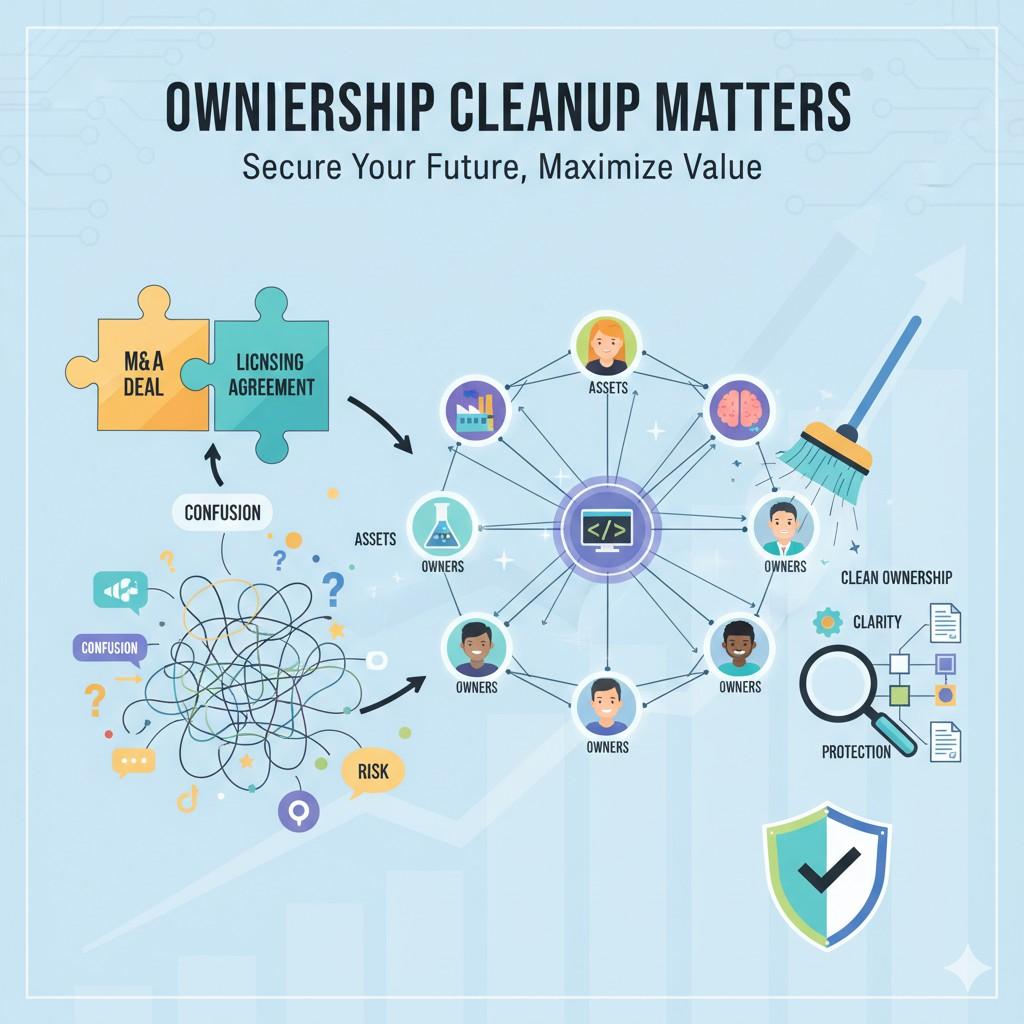
The goal is to remove any guesswork. Once the records match reality, you unlock smoother decision-making across the company.
The hidden cost of ignoring recordation
When ownership cleanup is ignored or pushed aside, problems tend to multiply quietly. A patent might sit under a former corporate entity long after that entity is dissolved.
A licensing deal might give rights to a partner, but the office might still show the original owner, creating confusion about who controls enforcement. These gaps rarely show up immediately.
They surface during fundraising, acquisition due diligence, or litigation, and by then fixing them becomes slower, more expensive, and sometimes even impossible. Getting this right early prevents these future bottlenecks.
Practical ways founders can strengthen ownership after a deal
There is a simple mindset shift that helps every team move faster. Instead of viewing recordation as paperwork, treat it as part of operational hygiene, like updating payroll after adding a new hire.
Make it a standard part of your M&A or licensing workflow.
Right after a deal closes, collect every assignment document, confirm signatures, verify the exact legal names of the parties, and make sure the assets in question are properly identified with their exact filing numbers.
This ensures nothing gets lost and no mismatches appear in the official records. When you keep everything clean and consistent, you protect long-term value without slowing the company down.
Why the right tools matter
Even when teams understand the importance of ownership cleanup, the process can still feel confusing.
Patent offices each have their own rules. Missing a detail or using an outdated form can delay filings by weeks. This is where smart software and attorney oversight become a game changer.
When your system guides you through every step, checks your documents, and ensures compliance, the entire process becomes smoother and faster.
This is exactly what PowerPatent was built to do. It gives founders a simple, guided way to update ownership without hiring a big firm or dealing with back-and-forth emails.
If you want to see how it works in practice, you can explore it anytime at https://powerpatent.com/how-it-works.
What really happens when patents change hands
When a company goes through an M&A event or signs a licensing deal, everyone usually focuses on the high-level idea that the patents are now part of the agreement.
But behind the scenes, the actual movement of those rights is far more mechanical. It is not automatic, it is not instant, and it does not happen just because two parties agreed in writing.
What really happens is a chain of actions, each one needing to line up perfectly so that the ownership the contract promises becomes the ownership the law recognizes.
Understanding this process helps your team avoid delays, protect deal value, and keep control over the technology that drives your business.
How patent rights actually move from one entity to another
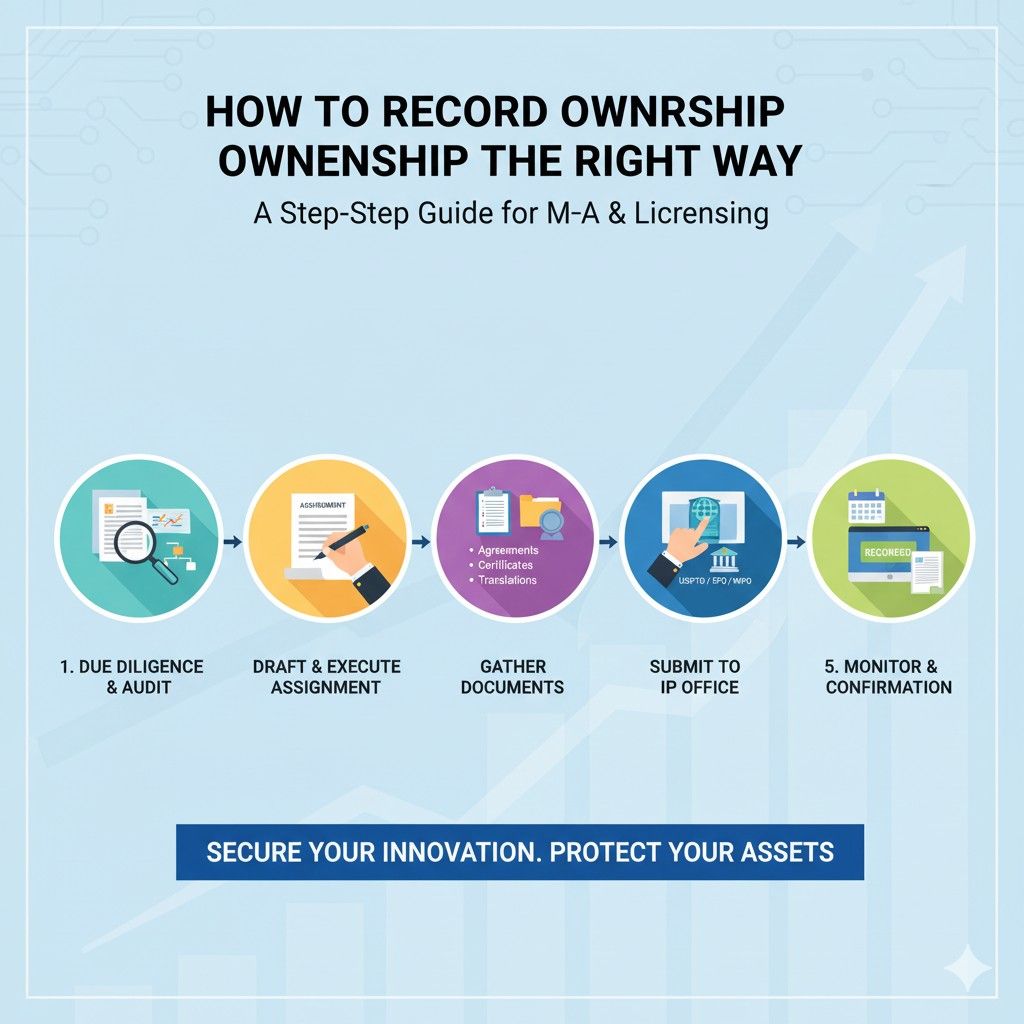
When a company acquires another business or enters into a licensing relationship, the first thing that must happen is the execution of an assignment document.
This document is the legal bridge that carries the rights from the old owner to the new owner or licensee. It must name the correct parties, reference the correct patent numbers, and match the exact language required by the patent office.
A tiny mismatch in any detail can cause a rejection or delay, which means your rights sit in limbo longer than you expect.
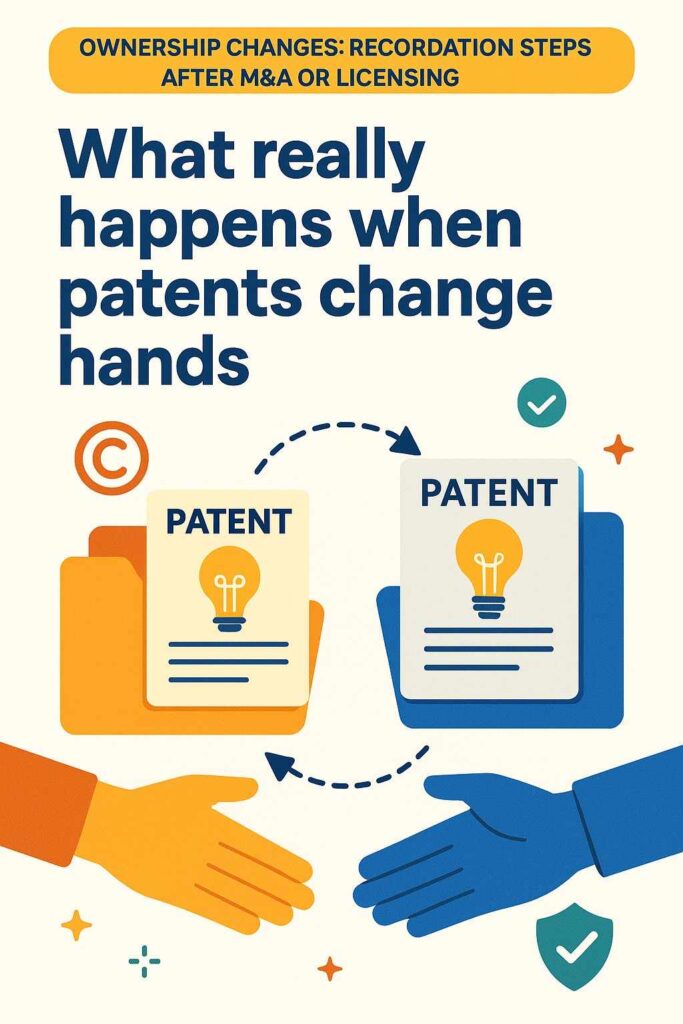
Once the assignment is signed, the document still needs to be submitted to the patent office so it becomes part of the official public record. Until that filing is completed and accepted, the transfer is not fully recognized.
Why patent offices care about exact details
Patent offices operate with strict precision. They rely on exact names, addresses, and case numbers. If your contract says one thing but the office records say something slightly different, the system cannot connect the dots.
It cannot assume that two similar names are the same legal entity or that a missing middle initial is harmless.
This is why the most successful companies treat the recordation step with the same seriousness as the deal itself. They understand that clarity prevents disputes, strengthens enforcement, and reduces the risk of ownership being challenged in the future.
What happens when ownership is not recorded promptly
If the transfer is delayed, the practical outcomes can stack up in ways founders do not expect. A company may believe it owns a patent, but if the recordation has not been completed, another party may still appear as the official owner in the database.
If a competitor searches the records, they may think the patent is still held by the seller. If investors run due diligence, they may question why the chain of title is incomplete.
If the company needs to enforce the patent, a court may challenge the company’s standing to sue. All these issues slow operations, introduce risk, and create friction that could have been prevented with timely recordation.
The hidden work inside due diligence
Whenever a company raises funding or prepares for an exit, one of the first tasks investors or acquirers perform is a chain-of-title review.
They want to see that every patent is properly assigned, that every ownership change is recorded, and that every license has been handled with clean documentation.
If anything is missing, incomplete, or mismatched, the process stops. Teams scramble to correct the issues. Lawyers get involved. Time is lost. This is why clean ownership is not just good practice; it is a competitive advantage.
Companies with clear records move through diligence faster and with fewer questions. In a world where time kills deals, this matters.
How licensing complicates ownership
Licensing deals do not transfer ownership, but they do transfer rights. And those rights can be just as important as ownership itself. Some licenses give full control over how the technology can be used. Others give limited or field-specific rights.
Certain licenses require recordation, while others must not be recorded because the terms are private. The key is understanding what the license actually grants and what must be formally documented to protect both parties.
Many startups make the mistake of assuming licensing is simpler than acquisition. In reality, licensing often involves more nuance because two parties now share responsibilities for the same asset.
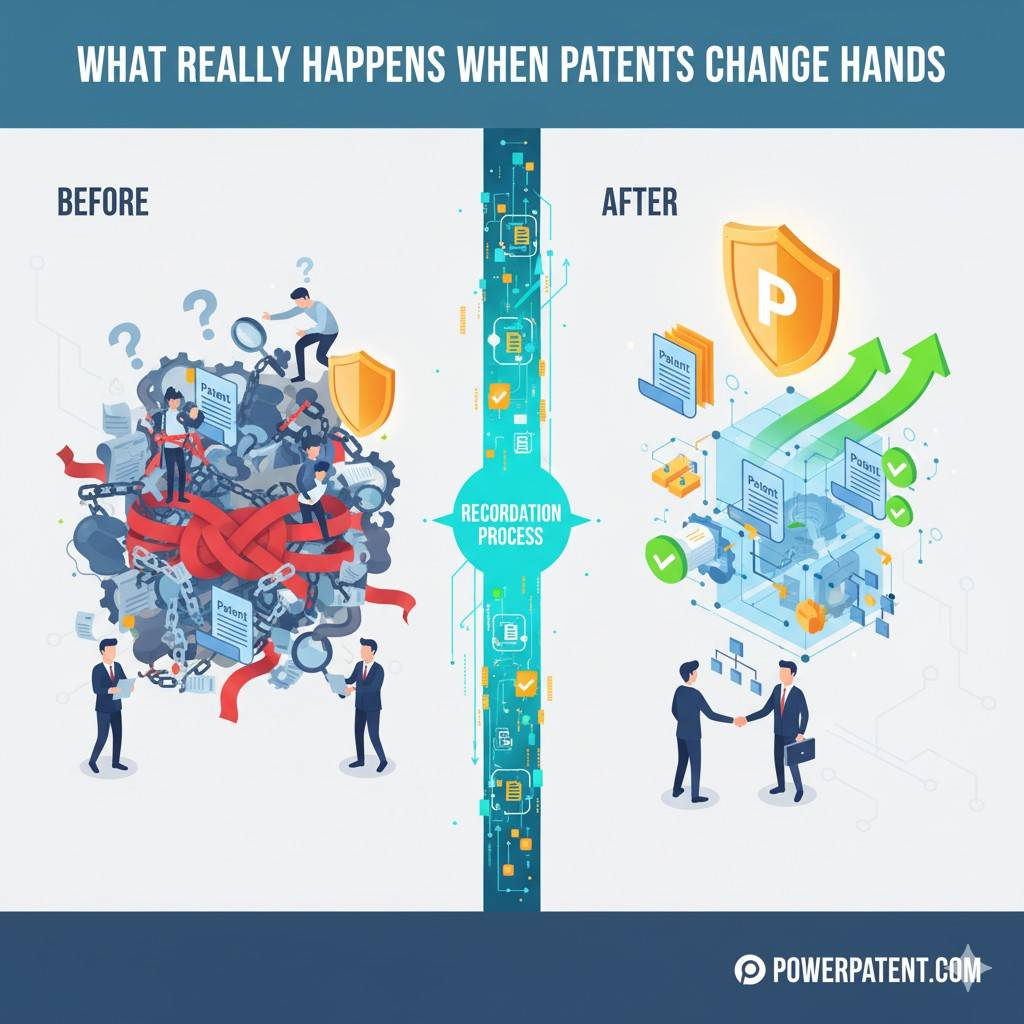
Clean documentation keeps these boundaries clear and prevents interference later.
Why precise documentation protects everyone involved
When someone looks at a patent file years from now, they should be able to see exactly how rights moved: who owned it first, who received it next, and what agreements modified the rights along the way. If the file is clear, nothing is left to interpretation.
Future investors, partners, buyers, and courts can see the full story instantly. When the file is messy, people have to guess. Guessing invites questions. Questions invite delays. Delays create doubt.
Doubt can lower deal value. In this way, documentation is not paperwork. It is a silent shield protecting your company’s most valuable assets.
Why founders should treat recordation as a strategic move
The faster you record ownership, the faster you gain full control. Control means you can enforce rights, negotiate new deals, bundle patents into a portfolio, or license them out without obstacles.
Clean records make everything easier: inspections, audits, investor conversations, and regulatory interactions.
When ownership is clear, your entire business moves with more confidence. It is the difference between running on a smooth road and running on a road filled with small but endless speed bumps.
How modern tools streamline the entire process
The traditional path for recordation involved endless emails, manual paperwork, and slow attorney response times. Today, founders do not need to accept that pace.
PowerPatent gives you a guided workflow that makes the entire ownership transfer smooth and stress free.
It checks your documents, catches errors early, and ensures the submission matches the exact requirements of the patent office.
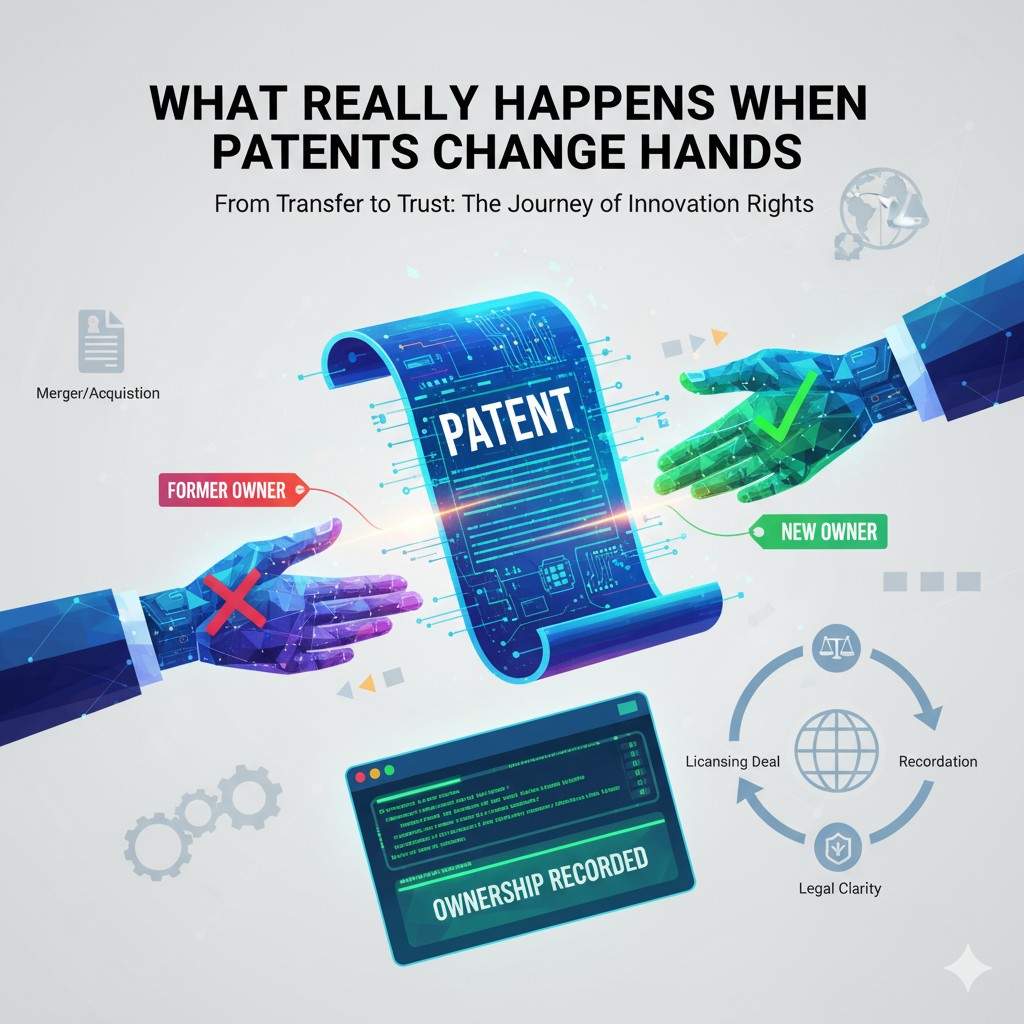
This means your team spends less time managing documents and more time building the technology that actually drives your company forward. You can see how this works in real use cases at https://powerpatent.com/how-it-works.
How to record ownership the right way after M&A or licensing
Every deal that shifts patent rights, whether it is a full acquisition or a targeted licensing agreement, must eventually meet one simple test: the patent office must recognize the new owner or rights holder.
This step sounds small, but it shapes the legal strength of everything that comes after. When you understand how recordation really works, the entire process becomes smoother, faster, and far less stressful.
The goal here is not only to explain the mechanics but to help you move through them with confidence so your rights activate without delay.
Understanding the moment ownership actually changes
Many founders assume ownership changes at the moment the deal closes. But in reality, the transfer happens in stages. The contract creates an intention. The assignment document creates the legal bridge. The recordation filing is what completes the journey.
Until all three line up, the transfer is not fully recognized. This means the ownership in your internal company records may differ from what the public sees in the patent database. Closing that gap is the heart of the recordation process.

You want the contract, the assignment, and the official records to tell the exact same story. When they do, you gain clear, enforceable rights that you can rely on without hesitation.
Why clean paperwork accelerates every later step
If a patent office cannot match the information in your assignment document to the application or patent on file, the filing will be delayed.
These delays often come from simple issues such as typos in the corporate name, wrong addresses, outdated entity names, or incomplete signatures. While these mistakes seem minor, the effect can be painful.
Each error triggers a notice, which triggers a correction, which extends the time before ownership becomes official.
This is why the most efficient teams review their documents before submission with an eye for tiny details. When the names, numbers, dates, and signatures are clean, the recordation moves quickly and smoothly.
How to handle ownership transfers in complex corporate structures
When a merger or acquisition involves parent companies, subsidiaries, or international entities, the assignment process becomes more layered.
The entity that signs the assignment must actually be the one with authority to transfer the rights.
If a subsidiary holds the patent but the parent signs the document, the assignment may be invalid. Likewise, if two merging companies hold overlapping rights, you may need multiple assignments to create a clean chain.
This is why founders working inside larger structures must ensure they know exactly which legal entity owns each patent before the transfer begins. Getting this right at the start avoids costly fixes later.
Why identifying each asset correctly makes everything easier
Every patent has a specific identifying number, and for applications, these numbers can vary by jurisdiction.
A small mismatch, such as referencing the international application instead of the national stage entry, can lead to incorrect filings. When a portfolio is large, these mismatches multiply quickly.
The best practice is to create a simple internal map of every asset involved in the deal. This map connects each patent number, each jurisdiction, each inventor where needed, and each legal entity.
With this map in place, the recordation step becomes far more organized. Your team has exactly what they need, all in one place, without hunting across old emails or outdated spreadsheets.
How to manage rights when only part of a portfolio changes hands
Sometimes a buyer acquires some patents but not others. In licensing deals, the company may grant use rights without transferring ownership at all. Each scenario changes how the paperwork looks and how it gets recorded.
If only some assets transfer, the assignments must list only those assets, not the entire portfolio. If granting a license, you must determine whether the rights must be recorded or kept confidential.
Mistakes here can expand or shrink rights unintentionally. The most strategic founders take time at the start to define the exact scope of rights for each asset.
When the boundaries are clear, the filings become straightforward, and the terms of the deal stay intact.
Why international patents require a different level of attention
When patents exist in multiple countries, each jurisdiction has its own rules, timelines, forms, and fee structures. Some offices require the original assignment document, while others accept copies. Some need notarization. Some require translations.
A single acquisition involving patents in five or ten countries can quickly become a maze of small requirements. This is where teams often make mistakes, because managing these variations manually is difficult.
Founders who prepare early by gathering all country-specific requirements reduce overwhelm dramatically.
Better yet, using a system that automatically guides you through each jurisdiction lowers the risk of missed requirements and repeated filings.
How recordation affects enforcement strength
If a company wants to enforce a patent, courts will check whether the plaintiff is the rightful owner at the time the lawsuit is filed. If the assignment is not recorded, a competitor can argue that the plaintiff lacks standing.
This challenge can derail enforcement entirely or delay it long enough to harm the company’s position. This is why recording ownership early is not just a compliance task but a strategic protection move.
Once the patent office recognizes you as the owner, your enforcement rights lock into place, giving you the confidence to act quickly if someone copies your technology.
How clear ownership builds trust with partners
When you collaborate with suppliers, customers, or development partners, they often need assurance that you truly own the technology you bring to the relationship.
Clear recordation removes any doubt. It shows that the chain of title is complete and that no other party can claim rights. This clarity smooths contract negotiations, strengthens partnerships, and reduces legal review times.
If a future partner sees messy ownership records, they may hesitate or request additional warranties to protect themselves. Clean records remove those barriers and help teams move faster with less friction.
Creating a repeatable process for future deals
Once you understand how recordation works, the next step is to build a simple internal workflow your team can reuse.
This can be as straightforward as having a dedicated folder for each deal, storing every signed assignment, tracking each patent number, and noting the date each recordation was filed.
When your process is repeatable, future M&A or licensing activities become easier, faster, and more predictable.
Your team does not start from scratch each time, and the consistency reduces errors. This is how startups scale their operations without adding unnecessary overhead.
Why using structured tools saves time and prevents mistakes
Trying to manage ownership updates through email threads and static documents leads to lost files, outdated versions, and missed deadlines. A structured system designed for patent recordation changes everything.
PowerPatent gives you a clean, guided workflow that walks you through each step, ensures your documents match office requirements, and reduces the risk of rejection.
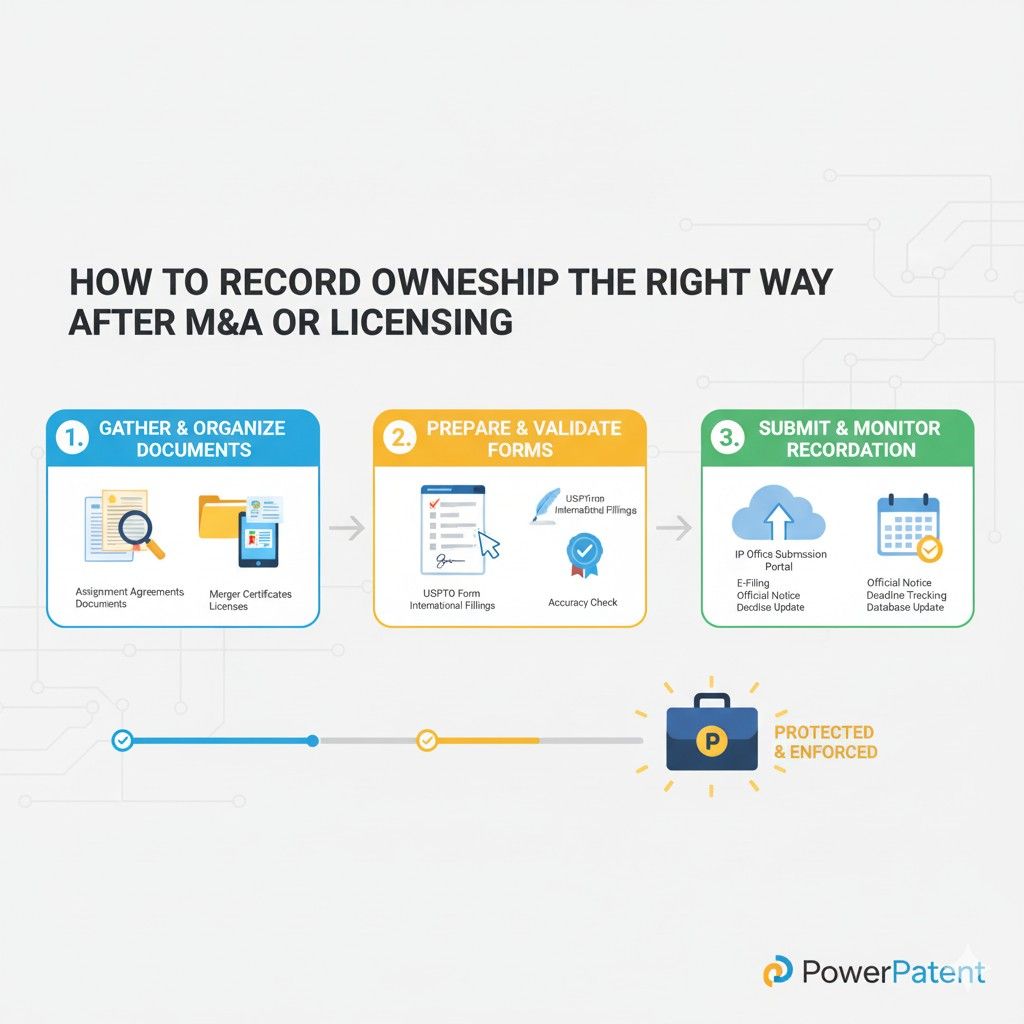
This combination of software and legal oversight helps startups move quickly without worrying about technical mistakes.
It is the simplest way to keep your ownership chain clean and your rights protected. You can explore how the process works at https://powerpatent.com/how-it-works.
How PowerPatent helps you stay fast, clear, and fully protected
When a company goes through an acquisition or signs a new licensing deal, the last thing the team wants is weeks of slow paperwork or confusing legal steps. Founders want clarity.
They want certainty. They want to know that everything they just purchased or granted is secure and recognized in the official records. This is exactly where PowerPatent steps in.
Instead of dealing with scattered documents, long attorney email chains, or uncertain timelines, you get a simple system that guides you from start to finish.
This section walks you through how PowerPatent makes ownership cleanup smoother, safer, and far easier for any startup moving through M&A or licensing.
A workflow that removes the guesswork
Most founders do not specialize in recordation rules, and they should not need to.
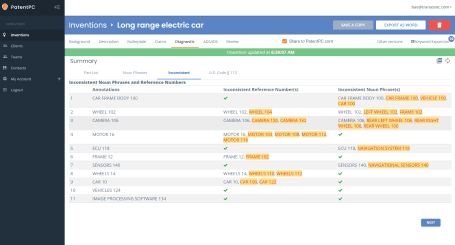
PowerPatent gives you a guided flow that explains each step in plain language and shows you exactly what is required to record a transfer after a deal.
The system checks your documents, looks for mismatches, and helps you correct issues before they become delays.
This shifts the process from reactive to proactive. Instead of waiting for the patent office to flag errors, you catch them early and move forward with confidence.

The entire workflow is designed to feel natural, even for teams with no legal background, because the goal is to help you protect your assets without slowing your momentum.
How automation saves time and reduces stress
The traditional way to manage recordation involves passing documents back and forth between internal teams and attorneys. Every correction takes another round of emails.
Every missing detail adds another day. PowerPatent removes that drag. The system automatically extracts patent numbers, checks fields for accuracy, and formats the forms in the way the patent office expects.
When repetitive tasks are automated, your team can focus on the strategic parts of the deal instead of administrative steps.
This also means fewer delays and faster recognition of your new ownership, which protects your rights sooner.
Keeping every document in the right place
One of the biggest challenges after M&A or licensing is managing documents.
Assignment agreements, signature pages, amendments, translated copies for international filings, and other assets all move around quickly, and things can get lost.
PowerPatent centralizes everything in one secure place so your team always knows where each document lives.
This prevents the common situation where a founder must dig through email threads to find the latest signed copy or verify which version was submitted. When everything is organized, the filing process becomes faster, cleaner, and far less stressful.
Real attorney oversight without the friction
Founders want expert review, but they do not want slow turnaround times or high hourly billing.
PowerPatent solves that balance by pairing modern software with real attorneys who step in where expertise is needed. The platform handles the repetitive parts, and the attorneys handle the judgment calls that protect your rights.
This gives you the best of both worlds. You get expert guidance, but you also move at startup speed. You stay in control, and you never feel like you are waiting for someone else to catch up.
This blend of automation and human review helps founders avoid costly mistakes that often appear during due diligence.
A clear view of your entire ownership chain
When patents move during M&A or licensing, teams often struggle to see which assets have updated records and which still need work. PowerPatent gives you a clean dashboard that shows the status of every asset in real time.
You can see what has been recorded, what is pending, and what needs attention. This level of visibility is especially valuable during fundraising or audits.
Instead of scrambling to gather information, you can show investors a clear, organized picture of your portfolio.
A strong portfolio signals stability, preparation, and professionalism, which increases trust and speeds up deal conversations.
Helping global teams with international recordation
When rights move across borders, complexity skyrockets. Different countries require different forms, signatures, and supporting documents. If you try to manage this manually, the chance of mistakes rises quickly.
PowerPatent simplifies this by guiding you country by country, explaining what is required in each one, and ensuring your documents follow the correct format.
This saves enormous time for global teams and prevents delays that could weaken your rights or slow down enforcement.

With the right structure, an international portfolio becomes manageable instead of overwhelming.
The protection of knowing your rights are enforceable
Recording ownership is not just about updating records. It is about activating your ability to enforce your patents. If someone copies your technology, you want to know you can act quickly.
PowerPatent helps make sure your ownership filings are complete and accurate so you gain full standing the moment you need it.
This is one of the most important benefits for founders, because a patent that cannot be enforced is not truly an asset. A clean ownership chain becomes a shield you can trust.
Why simple, fast processes matter for startup teams
Startups move quickly. They pivot. They build new features. They enter new markets. When the company evolves, the ownership of patents must keep pace.
If the recordation process is slow or difficult, teams often delay it, and that delay creates risk.
PowerPatent gives you a way to update ownership with minimal friction so your legal foundation stays as fast as your product development.
When you remove slow or confusing steps, you free your team to focus on building rather than managing paperwork.
How PowerPatent supports long term scalability
As a company grows, its portfolio grows too. More patents, more assignments, more licenses, more international filings.
If you do not build a strong system early, the complexity expands in ways that are hard to fix later. PowerPatent gives you a scalable structure from day one.
Each update builds on a clear foundation. Each assignment fits into a documented chain.
Each license aligns with the rights defined in your workflow. Over time, you end up with a portfolio that is clean, organized, and ready for big opportunities such as partnerships, major fundraises, or exits.
A smoother path through future audits and exits
Every due diligence process starts with one question: does this company own the rights it claims to own? Founders who use PowerPatent walk into these moments prepared.
Their documents are organized, their recordations are current, and their ownership chain is clear. Instead of scrambling or explaining inconsistencies, they move smoothly through the review.
This not only reduces stress but also signals strength to buyers and investors.
Clean records show that your company is thoughtful, prepared, and serious about protecting what it builds. That confidence can raise valuations and shorten negotiation timelines.
Why early adoption creates a powerful habit
When founders get comfortable with the recordation process early, it becomes second nature. Every acquisition, every internal reorganization, every licensing deal flows through the same clean workflow.
PowerPatent helps teams turn something that feels complicated into something routine. This habit compounds over time.
The company becomes known for its strong IP hygiene, which is a valuable reputation in deep tech and other innovation driven markets. A clean portfolio is easier to defend, easier to license, and easier to sell.
How PowerPatent turns ownership cleanup into momentum
Ownership updates should not slow you down. They should strengthen you. When PowerPatent handles the complexity, your team gains momentum instead of losing it.
You can integrate new patents quickly after acquisition, sign licensing deals with confidence, and step into new partnerships knowing your rights are secure.
The platform helps founders stay focused on building technology, not drowning in forms or tracking scattered documents.
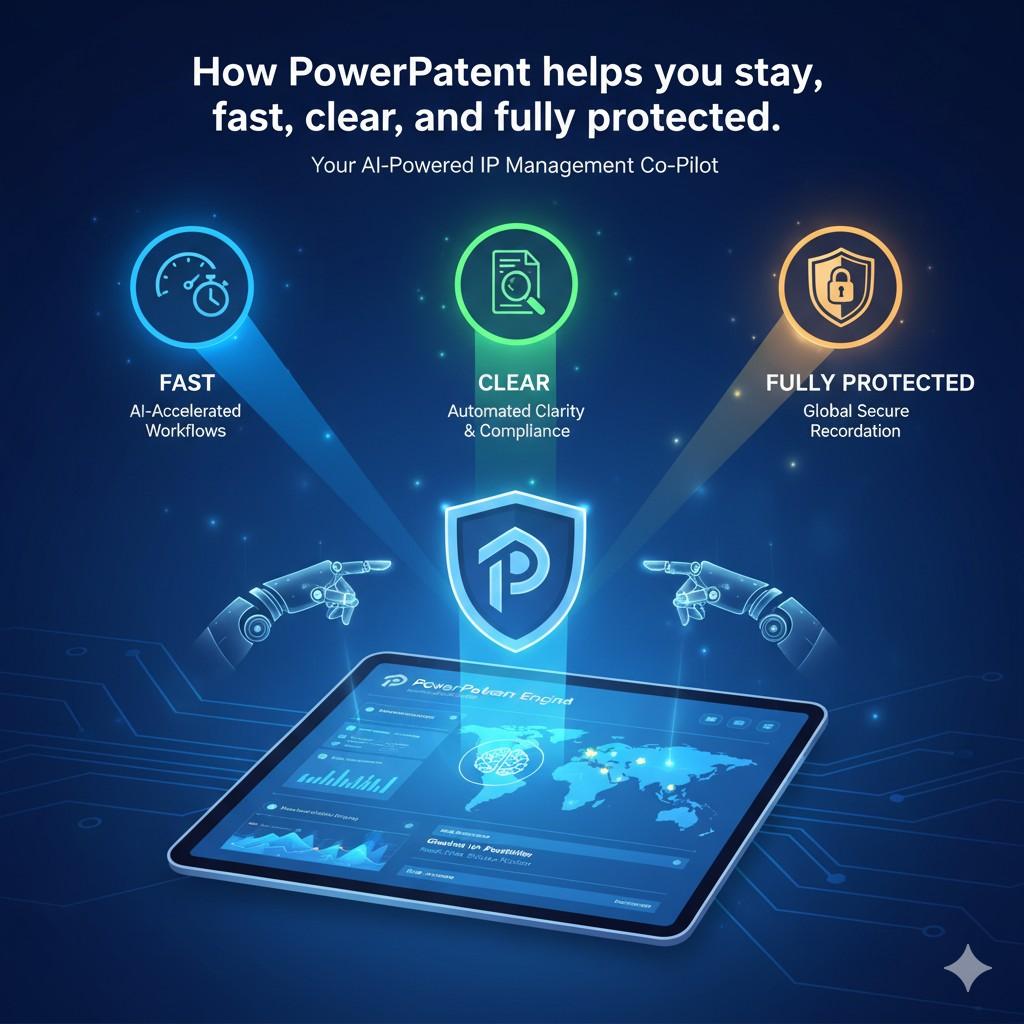
When your IP engine runs smoothly, your entire business runs more smoothly. It is that simple.
Why founders choose PowerPatent for high stakes transitions
The moments after M&A or licensing are high stakes. Rights shift. Teams merge. Markets expand. You want a system that protects your assets while matching your speed.
PowerPatent is built for these moments. It gives you clarity, structure, automation, and expert oversight in one place.
Instead of reacting to problems, you stay ahead of them. Instead of guessing, you move with certainty. Instead of slowing down, you accelerate.
To see exactly how PowerPatent supports ownership transfers and keeps founders safe during major deals, you can explore the process anytime at https://powerpatent.com/how-it-works.
Wrapping it up
Every merger, every acquisition, and every licensing deal comes down to one simple truth: your patents only protect you if the world can clearly see who owns them. Ownership cleanup is not paperwork. It is not something you do at the end just to check a box. It is the move that locks in the value of your deal, secures your rights, and gives your company the power to enforce what it has worked hard to build. When the chain of title is clean, investors trust you more, partners negotiate with more confidence, and future buyers see a business that is ready for growth instead of one that might have hidden risks.