Most SaaS founders know they should protect what they are building, but very few know what a patent should actually cover in a cloud product. That is where things get risky. If your claims are too narrow, competitors can work around them. If they are too vague, they may not hold up when it counts. In SaaS, the real value often sits inside the flow of data, the way systems talk to each other, the rules that drive decisions, and the hidden engine that makes the product work better, faster, or smarter. That means strong patent claims should not just chase surface features like dashboards or buttons. They should focus on the real moving parts that make the product hard to copy.
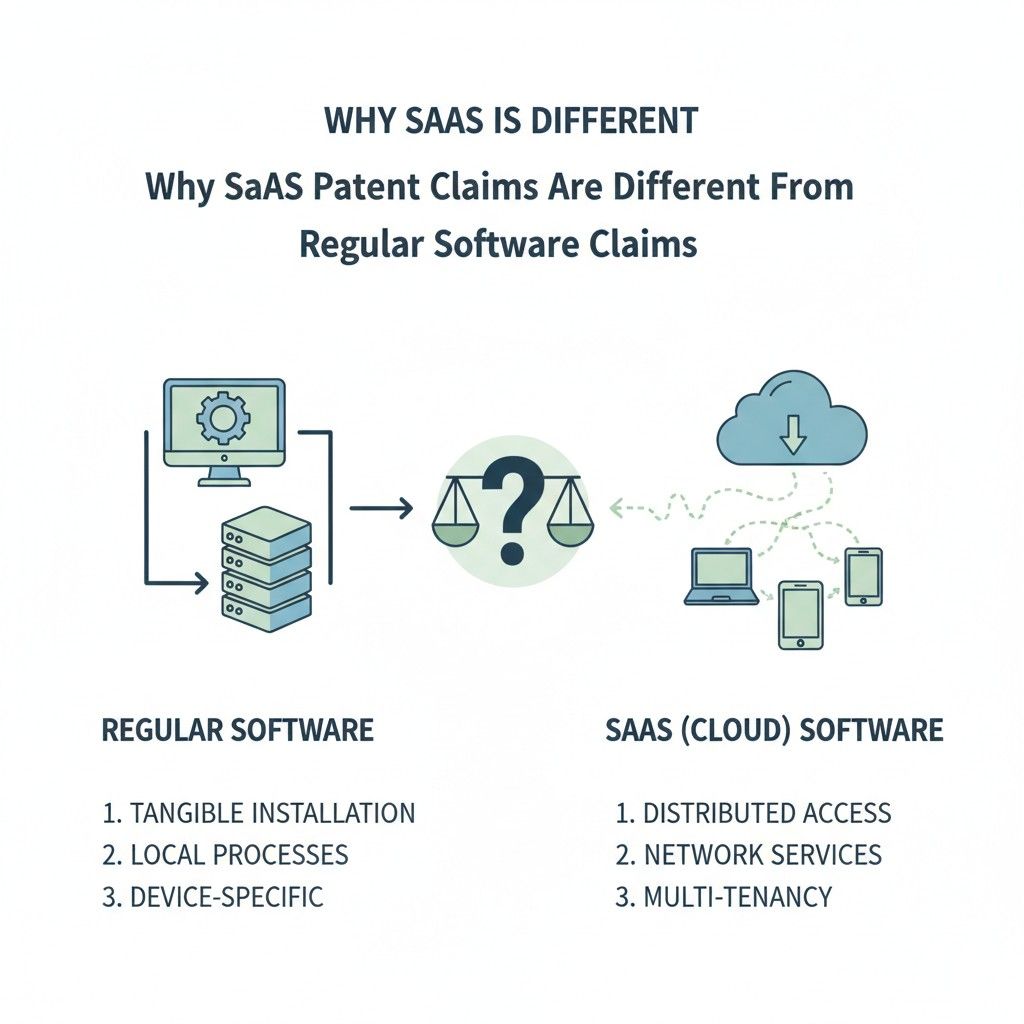
Why SaaS Patent Claims Are Different From Regular Software Claims
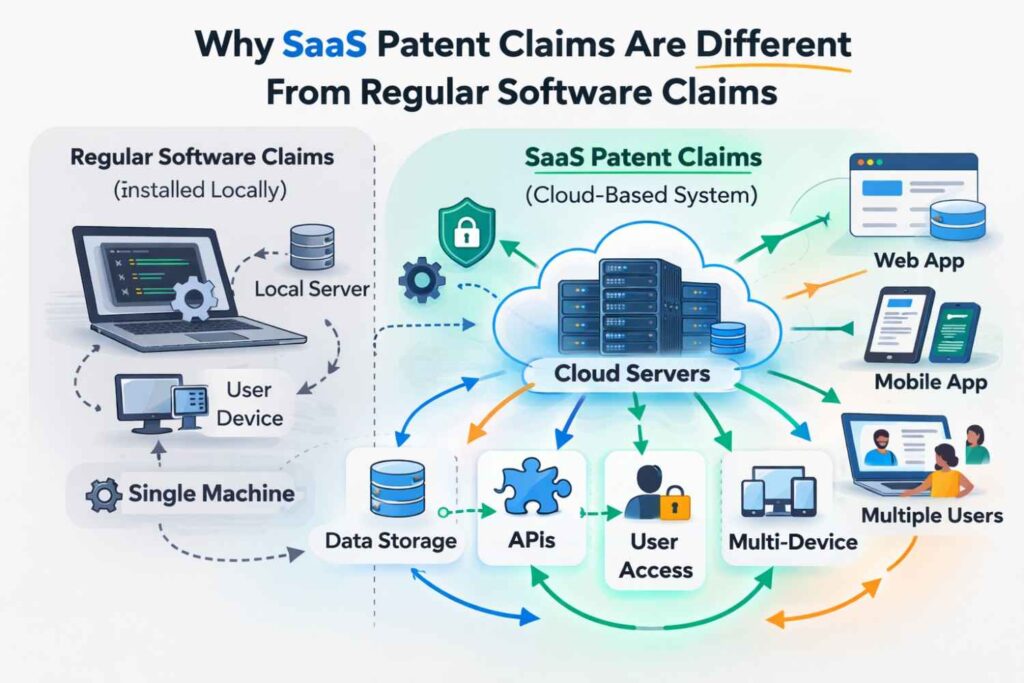
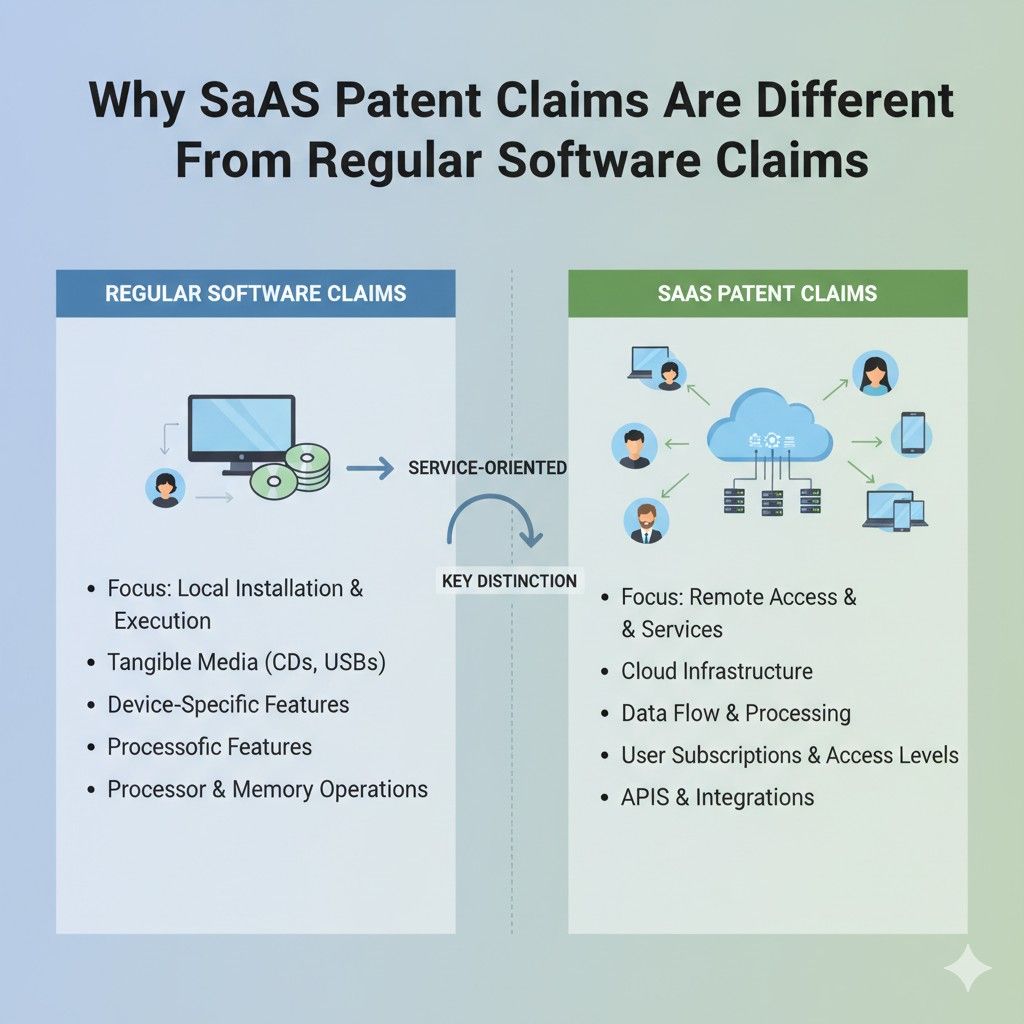
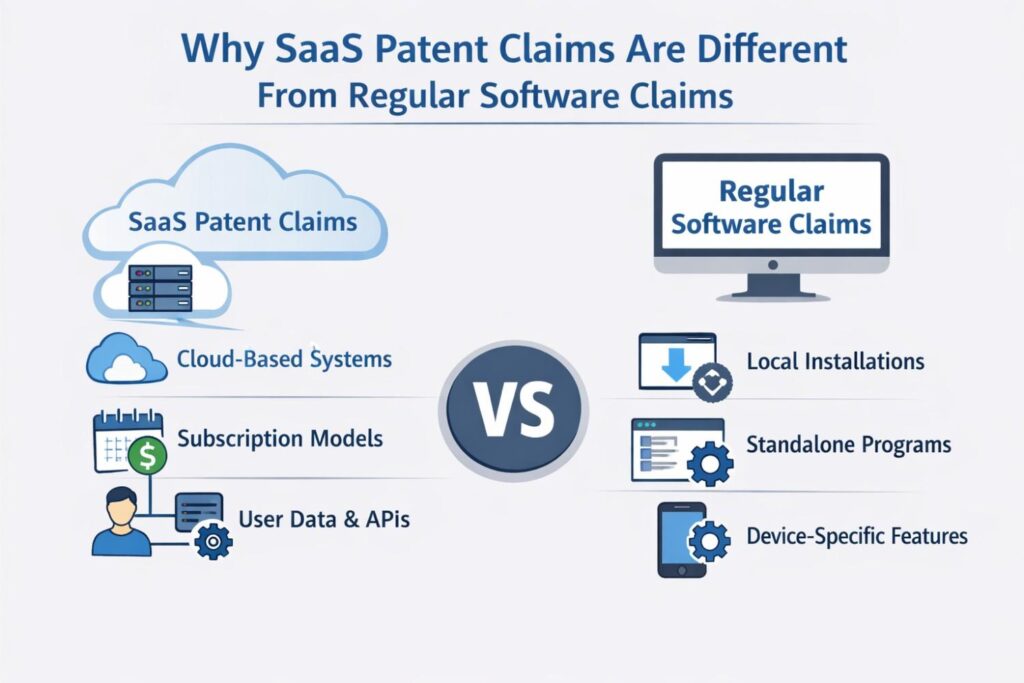
SaaS products do not work like old software. That changes what smart patent protection looks like. In a normal software setup, the product may live on one device or inside one company system.
In a cloud product, the value is often spread across servers, user devices, APIs, data stores, admin tools, and automated back-end steps that users never see. For a business, this means patent claims need to do more than describe a feature.
They need to protect the full system that delivers the result. That is why SaaS patent claims must be planned with more care, more business thinking, and a sharper focus on how the product really works under the hood.
The product is not just the screen
Many SaaS founders first describe their product by talking about what the user sees. They mention the dashboard, the workflow, the alerts, or the settings page.
That is normal, but it is not enough for strong claims. In cloud software, the screen is often the least defensible part of the product because it is the easiest thing for a competitor to change.
A better approach is to look behind the screen and ask what is doing the real work. The stronger invention usually lives in the back-end process.
It may be the way data is collected from many sources, the way the system cleans that data, the way it ranks options, or the way it triggers actions without manual input.
Businesses that understand this early can protect more valuable ground. Instead of claiming a feature that looks nice in a demo, they can claim the engine that makes the outcome possible.
The real value often sits across many systems
A cloud product usually does not win because of one isolated step. It wins because several steps work together in a useful way.
Data may enter through one source, get processed in another layer, be checked against business rules in a third layer, and then cause an action somewhere else. That full chain is often what creates real market value.
This matters for patent claims because a business should think in terms of connected systems, not single screens or narrow actions.
If the product creates value through coordination between components, the claims should reflect that coordination.
This gives the company a better shot at covering how the service actually solves the problem. It also makes it harder for others to copy the same business result by making only small cosmetic changes.
Competitors can copy the outcome without copying the interface
In SaaS, buyers do not pay for a button. They pay for a result. They want faster onboarding, cleaner reporting, lower fraud, better scheduling, improved compliance, or stronger forecasting.
A competitor may present that same result through a different user interface while copying the core logic behind the scenes.
That is why businesses should avoid treating the visual experience as the main thing to protect. The more strategic move is to ask what steps are truly required to create the outcome customers care about.
When a company claims those deeper steps, it protects more than the look and feel. It protects the commercial value of the product. This can matter a great deal during fundraising, market expansion, licensing talks, and future enforcement.
SaaS products are built on flows, not static tools
Traditional software is often described like a tool someone uses. SaaS is more often a living flow. Data comes in, decisions happen, rules update, outputs go out, and feedback returns into the system. In many products, this happens all day with no pause.
This creates a different patent strategy. Businesses should think about what happens over time, not only what happens in one click.
A useful claim may involve detecting a condition, applying a model, updating a record, sending a command, and changing future system behavior based on the result.
That kind of flow can be much more important than any one screen or report. A company that captures this in its patent work is often protecting the part of the product that truly drives revenue and retention.
The best claim target is often hidden from the customer
Founders sometimes worry that their invention is too technical or too invisible to protect. In fact, that hidden layer is often where the strongest claim material lives.
Customers may never see how jobs are queued, how resources are assigned, how model outputs are weighted, or how events are resolved when data conflicts appear.
Yet those hidden decisions may be the exact reason the product works better than other options.
For businesses, this is good news. It means the most defensible part of the company may already exist inside the system design. The key is to document it properly.
Teams should not wait until they are preparing a filing to figure this out.
Product leaders and engineers should capture architecture choices, rule logic, unusual processing steps, fallback methods, and performance-driven design choices as they build. That creates stronger raw material for patent claims later.
Cloud products change fast, so claims must be built to last
SaaS companies ship updates all the time. A workflow that exists today may look different in six months. A model may improve. A settings panel may disappear.
A page may move from desktop to mobile. If patent claims are tied too tightly to a current product layout, they can age badly.
A more strategic approach is to claim the durable idea behind the feature. Instead of locking the claim to one exact user flow, businesses should identify the stable logic that still matters even when the interface changes.
That might be the decision method, the data handling structure, the sequence of system actions, or the condition-based automation that creates the outcome. This helps the patent stay useful as the product evolves.
Patents in SaaS should follow the business moat
A cloud product is not valuable just because it runs online. It becomes valuable when it creates a moat.
That moat may come from better automation, lower human effort, smarter use of messy data, faster response time, or more trusted outputs in a hard setting. Patent claims should be tied to that moat.
This is where business leaders need to work closely with technical teams. The right question is not only what the software does.
The right question is what the company does better than others in a way that matters to customers and is hard to copy.
When a business frames the patent around that answer, the protection becomes more than a legal asset. It becomes a strategic asset tied to the company’s growth story.
A strong claim starts with the business problem, not the code
Founders often explain inventions by walking through code or system modules. That can help, but it should not be the starting point. The stronger starting point is the business problem.
What friction did the product remove? What cost did it cut? What delay did it reduce? What risk did it avoid? What job did it automate that used to take human effort?
Once that is clear, the next step is to explain how the system achieves that result in a new way. This shift matters because it helps the company frame its claims around practical value instead of raw implementation detail.
That is more useful for strategy, easier to explain to decision makers, and often stronger in the long run. A business that can connect technical design to commercial impact is in a much better position to claim the right thing.
Founders should map the claim before they map the feature story
Product teams usually write release notes, demo scripts, and sales pages. Very few write claim maps.
That is a missed chance. Before a company files, it should map the full path from input to result and identify where novelty sits. This exercise often reveals that the invention is broader than the team first thought.
A practical move is to break the system into stages and ask at each stage what is ordinary and what is special. Is the input handled in a unique way? Is the system classifying or ranking information using a custom method?
Is it triggering actions based on a rule structure that saves time or improves accuracy?
Is it adapting based on prior outcomes? This kind of internal review helps a business see where to focus patent coverage and where to avoid wasting space on generic software behavior.
Turn product reviews into patent insight
A simple but powerful habit is to review customer calls, onboarding notes, and lost-deal feedback with a patent lens. These materials often show what buyers think is special.
If customers keep praising one workflow because it saves hours, lowers mistakes, or gives answers faster, that may point to the heart of the invention.
This does not mean every loved feature belongs in a patent. It means customer language can help a company spot which technical process creates real business value. That is a useful filter. Good patent claims protect what matters both technically and commercially.
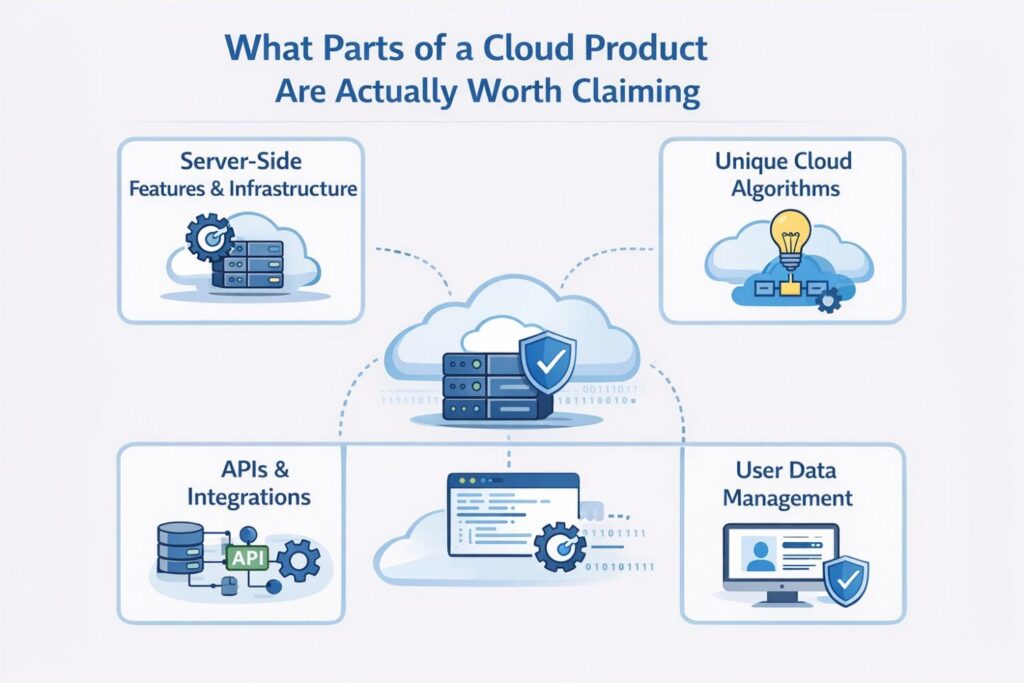
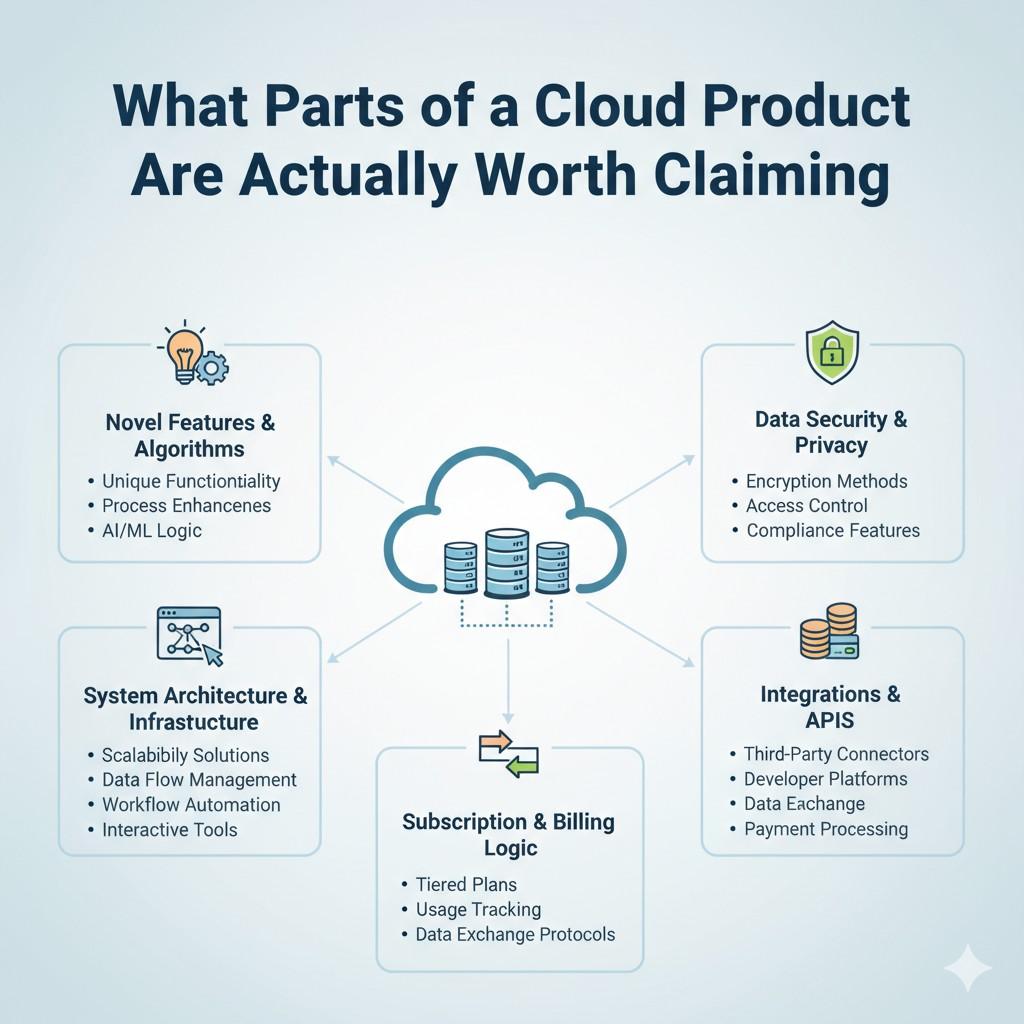
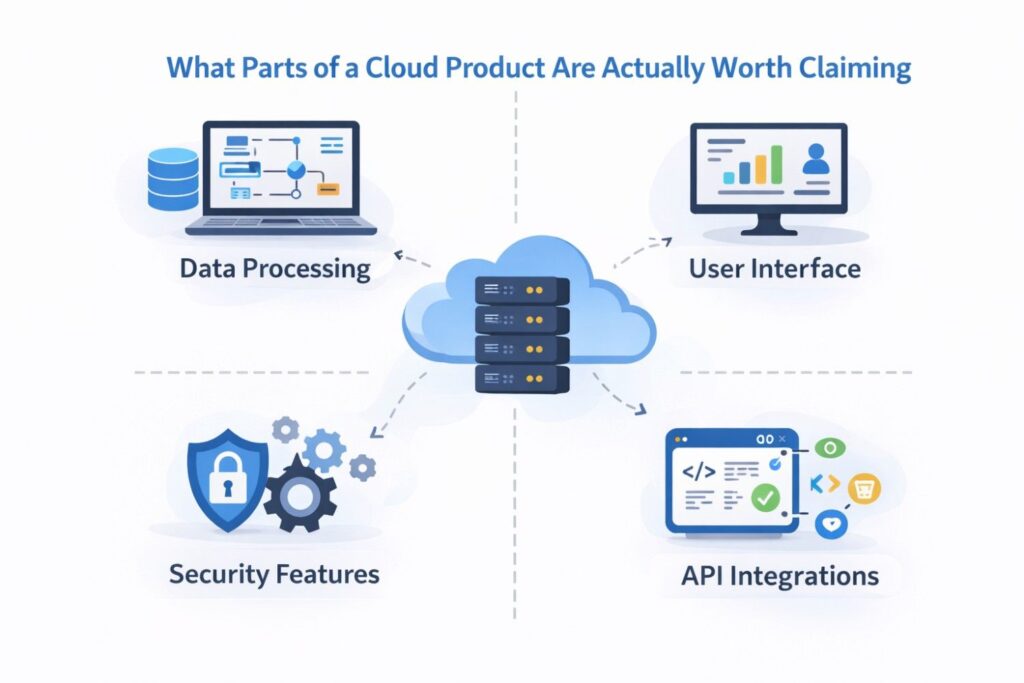
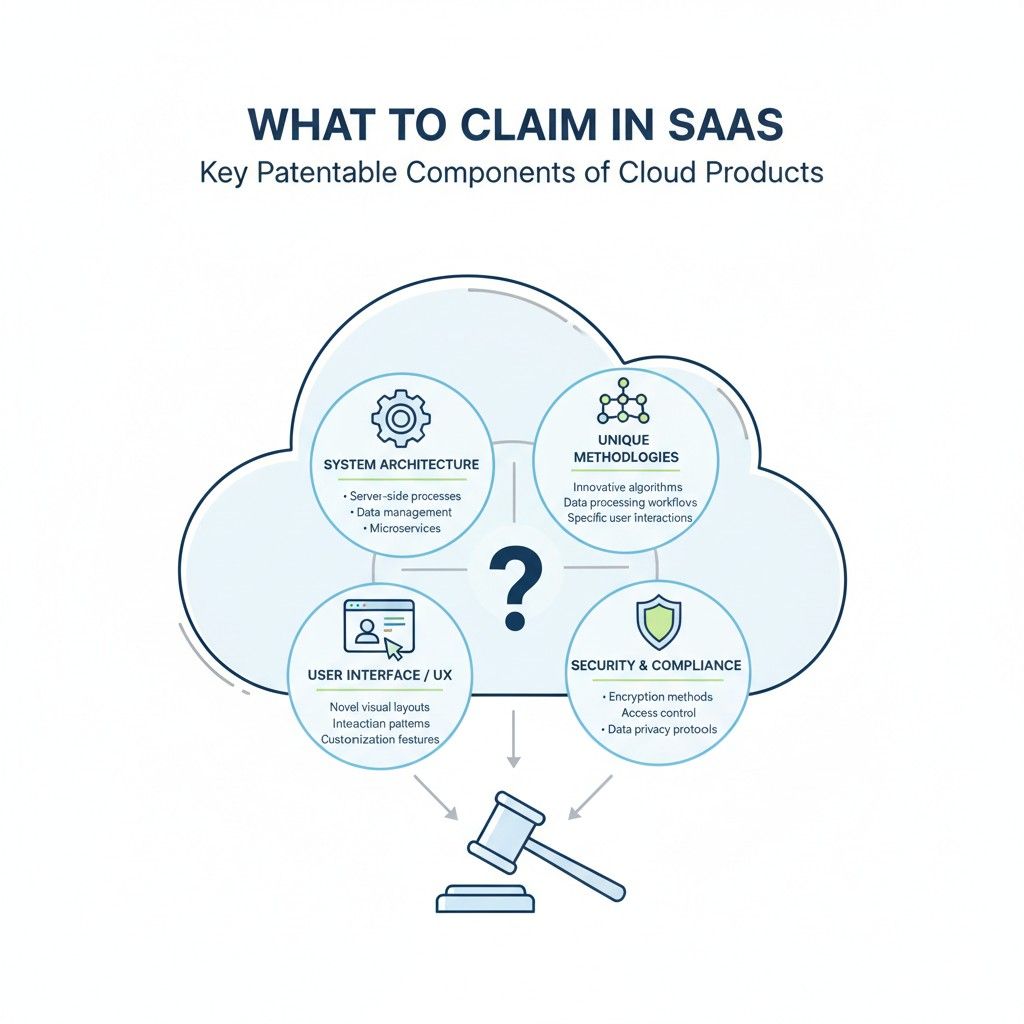
What Parts of a Cloud Product Are Actually Worth Claiming
In a SaaS company, not every feature deserves patent attention. That is the first thing to get clear. Many parts of a cloud product are useful, but only some parts create real protection value.
The goal is not to claim everything. The goal is to claim the pieces that make the business hard to copy.
That usually means the parts that drive a better result, reduce work, improve speed, lower error, or make the system smarter over time. When founders understand where that value sits, they stop chasing surface details and start protecting the real edge in the product.
Start with the part that creates the outcome
A cloud product is bought for what it does, not for how many screens it has. Customers care about the outcome.
They want faster approvals, cleaner data, better forecasting, smoother onboarding, lower fraud, or stronger automation. The part worth claiming is often the part of the system that makes that outcome happen in a new way.
This is where many businesses make the wrong move.
They focus on what looks impressive in a demo instead of what delivers the result behind the scenes.
The smarter move is to ask one simple question: if a competitor copied the product’s core value, what exact system behavior would they need to copy to get the same result? That answer usually points straight to the claim-worthy material.
Claim the process, not just the feature
A feature is often too shallow on its own. A process is where the real value lives. In cloud products, the important invention is usually not the existence of a workflow, but the way the workflow operates from start to finish.
That includes what enters the system, how it gets handled, what rules are applied, what decisions are made, and how outputs are delivered.
A strong patent strategy looks closely at this flow.
If your product takes messy inputs from different sources, turns them into a usable structure, applies decision logic, and then triggers an action with little or no human effort, that full sequence may be far more valuable than any single feature page.
Businesses should claim the engine of the workflow, not just the label on the button.
Data handling is often one of the best places to look
Many cloud products live or die by how they handle data. Some products gather data from several systems. Some clean bad records. Some join different data types together.
Some rank, score, or tag information so that later steps become easier or more accurate. These are not small details. In many SaaS products, this is the heart of the invention.
If your system has a special way of turning raw input into something useful, that deserves careful attention. This is especially true when the product deals with messy, delayed, incomplete, or conflicting data.
A business that solves that problem in a clean and repeatable way may have something very worth claiming. The key is to describe exactly how the system changes the data state and why that change improves the final result.
Claim the decision logic that makes the system useful
A cloud product often becomes valuable at the point where it decides what should happen next.
That decision may be simple or complex. It may involve business rules, thresholds, ranking logic, model outputs, exception handling, or combinations of all of those.
Whatever form it takes, this decision layer is often one of the most defensible parts of the system.
If your product does more than store and display information, there is a good chance it includes a decision point that matters. That point may tell the system whether to escalate, block, approve, route, notify, predict, recommend, or update.
When a business has developed a unique way to make that decision with better speed or quality, that logic may be one of the strongest things to claim.
Look for rules that replaced human judgment
A useful sign is this: did your software take a job that used to depend on human judgment and turn it into a system-driven step? If so, that may be strong patent material.
Many SaaS products win because they reduce manual review, remove guesswork, and make outcomes more consistent.
This does not mean every rule is special. But when the system uses a thoughtful structure to reach a decision that used to take human effort, that is worth exploring.
The business value is often easy to show because it connects directly to saved time, lower cost, and better scale.
Workflow orchestration can be far more valuable than a single task
Some SaaS inventions are not about one new action. They are about how many actions are coordinated across the product.
A system may gather input, check permissions, verify data quality, apply scoring logic, send a request to another service, wait for a response, and update records in real time. That orchestration may be the actual moat.
This matters because many businesses underclaim the value of coordination. They focus on one piece of the flow and miss the fact that the true advantage comes from how the entire chain works together.
A competitor might be able to mimic one isolated step, but struggle to recreate the full sequence with the same speed and reliability. That broader system behavior is often where patent value sits.
Integration behavior is often more valuable than the integration itself
Many founders say, “We connect to other platforms,” as if the connection alone is the invention. Usually it is not. Simply integrating with another system is often not enough.
What matters is what your product does through that integration.
A cloud product may use external systems in a way that creates real advantage. It may pull in specific signals, detect changes, trigger downstream actions, or adapt behavior based on the response.
The smart claim is usually not “a system connected to X.” The smart claim is the specific method by which that connection is used to achieve a business result.
That difference is huge. It moves the claim from generic plumbing to strategic product value.
Claim what happens when the system meets real-world mess
In theory, software looks clean. In practice, cloud products deal with delays, missing fields, broken inputs, duplicate events, conflicting records, and partial responses.
If your system has a useful way to handle these messy conditions, do not ignore that. It may be one of the best places to build protection.
Many good inventions are born from edge cases. A team may create a fallback path, a retry process, a conflict resolution method, or a prioritization model because real users forced the system to get smarter.
Those improvements often seem ordinary to the team because they built them slowly over time. But from a patent view, these can be high-value details, especially when they improve reliability in a way competitors will find hard to match.
The ugly part of the system may be the most valuable part
Teams often feel proud of clean user experiences and polished flows. That makes sense.
But the parts worth claiming are sometimes the ugly internal pieces that keep the product from breaking.
A smart queue design, a special sync method, or a careful conflict resolver may not look exciting in a pitch deck, yet it may be central to the company’s advantage.
That is why businesses should spend time reviewing technical pain points they solved.
The answer is often hiding there. If a hard engineering problem had to be solved for the product to work at scale, there is a serious chance that solution is worth claiming.
Automation logic is often a prime target
Cloud products often sell on automation. But “automation” is too broad to protect by itself.
What matters is the specific logic behind it. What starts the automation, what conditions are checked, what action is chosen, what exceptions are handled, and how the system learns or updates over time all matter.
If your product automates a task in a way that saves customers meaningful time or reduces costly mistakes, that deserves careful review. The goal is to capture the exact logic that makes the automation more than a generic shortcut.
Businesses should ask what the software is actually doing that a plain rule engine or simple script would not do as well.
Personalization can be worth claiming when it changes system behavior
A lot of SaaS products adapt outputs for different users, teams, or accounts. Not all personalization is important. Changing colors, layouts, or labels usually is not the main story.
But when personalization changes how the system processes information or chooses actions, that can be very important.
For example, if the platform adjusts its logic based on account history, role type, usage signals, risk level, or prior outcomes, then personalization may be part of the invention.
The claim-worthy part is not that different users see different things. It is that the system operates differently in a structured way to improve results.
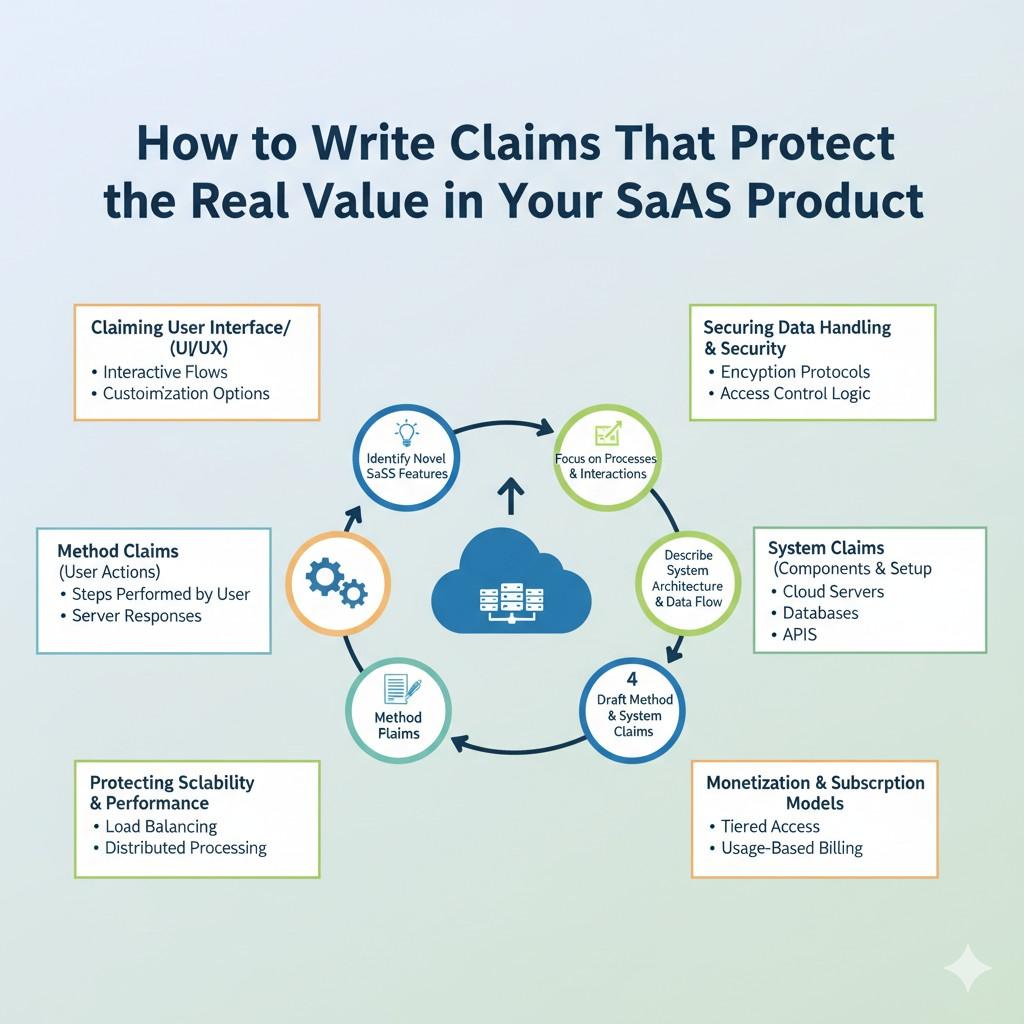
How to Write Claims That Protect the Real Value in Your SaaS Product
Writing strong SaaS claims is not about sounding technical. It is about protecting what makes your product matter in the market. A weak claim describes a feature.
A strong claim protects the system behavior that gives customers a better result and gives your company a real edge. That is the shift founders need to make.
You are not trying to describe your app. You are trying to lock down the logic, flow, and machine behind the business value.
Start with the customer result, then work backward
The best claims usually begin with a simple business truth. Your product helps a customer do something better.
It may save time, cut manual work, reduce errors, improve decisions, or speed up actions across systems. That result is where claim thinking should begin because it helps you find the part of the product that actually matters.
Once you know the result, work backward through the system. Ask what the software must do, in what order, and under what conditions to create that result.
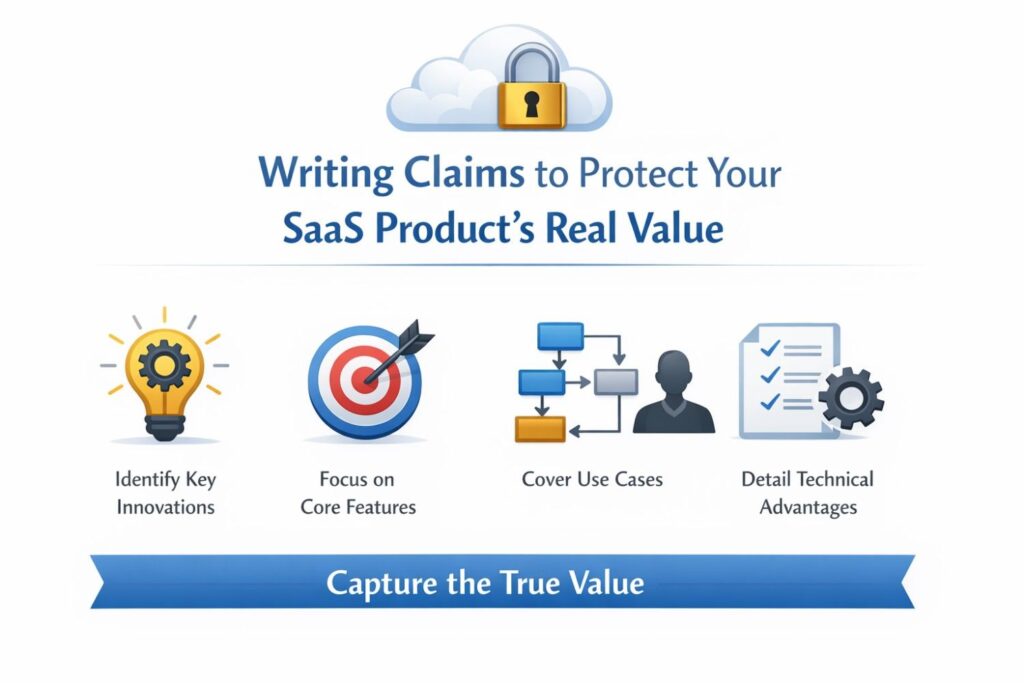
This helps you avoid writing claims around surface details. It keeps the focus on the true mechanism that drives value. That is what you want to protect.
Do not claim the interface when the value lives in the engine
A common mistake in SaaS is writing too much around what the user sees. Teams often talk about dashboards, views, buttons, prompts, and reports because those are easy to show.
But in many cloud products, the real invention is not the display. It is the processing that happens before anything appears on the screen.
That means your claims should usually focus on how data moves, how rules are applied, how decisions are made, and how actions are triggered. A user interface can change many times.
The system logic behind the result often stays much more stable. If you claim the interface too tightly, you protect the least important part of the product.
A screen is often just the final stop
The screen may be the visible part of the product, but it is often the last step in a much bigger process.
If your patent claims stop at that last step, you leave a lot of value unprotected. A competitor can redesign the surface and still copy the core method.
This is why claim writing should look beneath the interface. The question is not what the user clicked. The question is what the system did that mattered.
Define the invention as a flow, not a feature
Strong SaaS claims often read like a process with a purpose. They capture how information enters the system, how it is transformed, how a decision is made, and how the system responds.
This is far more useful than claiming a named feature in a vague way.
A feature can sound impressive in product language but weak in claim language. A flow is different.
A flow shows cause and effect. It shows system behavior. It shows why the output is not random. This is what helps a claim protect the real value instead of just describing a product label.
Focus on what is different from normal software behavior
Not every step in your product needs to be in the claim. In fact, adding too much generic software activity can make the claim weaker. The goal is to identify what is truly different from ordinary system behavior and center the claim around that.
This requires discipline. Data storage alone is rarely the point. Sending a notification alone is rarely the point. Displaying a result alone is rarely the point.
What matters is the special way your system handles inputs, resolves a problem, chooses an action, or improves over time. Those are the parts that deserve the most attention.
Separate the ordinary from the special
A useful exercise is to draw a line between what any basic engineer could build and what your team had to figure out through real product work. The second category is often where the claim value lives.
If your team had to solve a hard data issue, create a new decision path, or design a special fallback method, that deserves focus.
This is how you keep claims from becoming generic. You remove the noise and center the invention.
Write around the business logic that competitors would need to copy
A very practical way to write better claims is to ask what a fast-moving competitor would need to copy if they wanted to deliver the same customer result.
They may not copy your code line by line. They may not copy your interface. But they will need to copy certain system behaviors if they want to match the outcome.
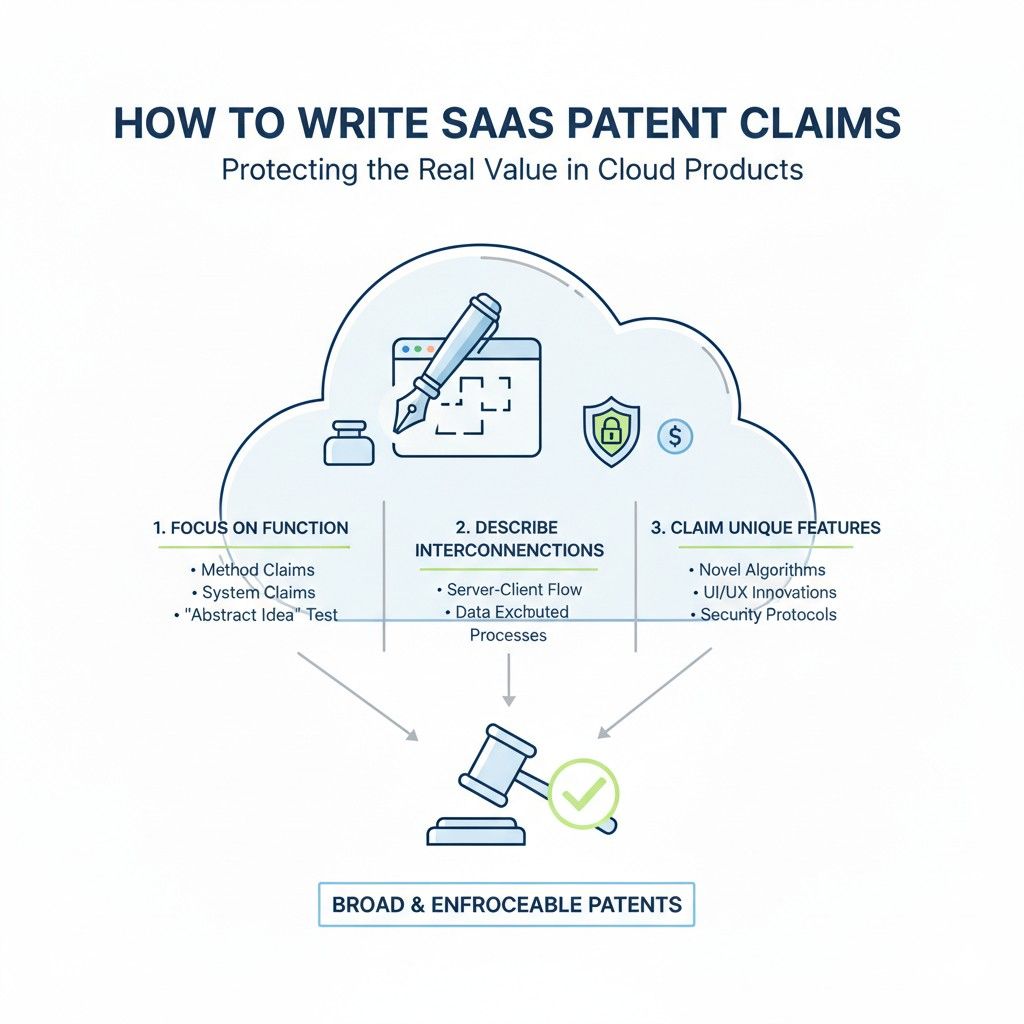
Those system behaviors belong near the center of the claims. This turns patent drafting into a strategic business exercise. You are not only documenting technology. You are identifying the parts of the product that support your moat.
Claim the decision points, not just the steps
In many SaaS products, the value is not only in the steps the system takes. It is in the choices the system makes during those steps.
The software may decide whether to route, approve, block, rank, flag, defer, escalate, or adapt. Those decision points often carry the core intelligence of the product.
When writing claims, it helps to make those points clear. What inputs are considered? What condition is checked? What happens if the condition is met?
What happens if it is not? This gives the claim more strength because it reflects useful system logic instead of a flat sequence with no real substance.
Cover the hidden layer that makes the result possible
Founders sometimes think the most important thing to describe is the polished outcome. But a patent claim becomes stronger when it captures the hidden layer that makes that outcome possible.
This may include internal scoring, conflict handling, event processing, rule application, signal weighting, or cross-system coordination.
That hidden layer is often where the hard work happened. It is also often the part a competitor would struggle most to rebuild quickly.
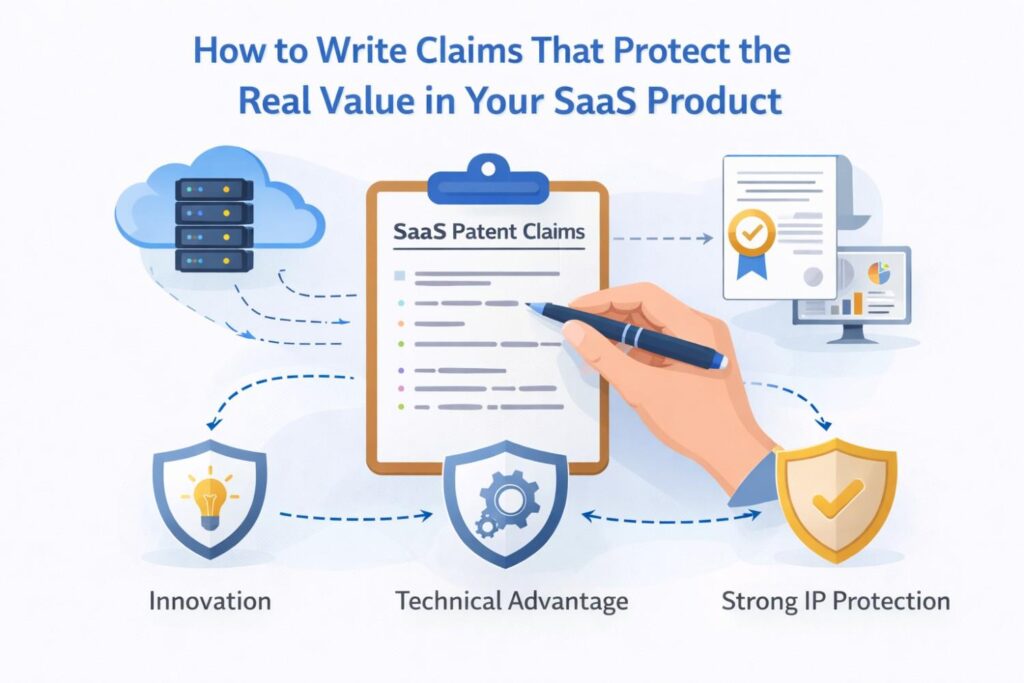
If you leave it out, you may end up with claims that sound broad but do not protect the real engine of the business.
Internal system work is often the true asset
Some of the best product work is invisible to the user. It happens in the back end, across services, inside data handling, or in timing logic that keeps the system stable.
That work may not be flashy, but it can be the difference between a product that looks good in a demo and one that truly performs in the market.
Claims should reflect that difference. They should not ignore the invisible part just because it is harder to explain.
Build claims at more than one level
A strong SaaS patent strategy usually does not depend on one single claim angle. The best approach is to protect the invention at different levels of detail.
One level may describe the broader workflow. Another may focus on a tighter implementation of the decision logic. Another may capture a useful fallback or improvement path.
This matters because it gives the protection more depth. If one framing is challenged or designed around, another may still matter.
It also helps align the patent with how real products evolve. Your software may change at the surface, but the deeper layers of the flow often remain connected.
Use language that is broad enough to last, but specific enough to matter
Claim writing is always a balance. If the claim is too narrow, others can work around it. If it is too broad, it can become weak or detached from the real invention.
SaaS founders need to understand this balance because cloud products change fast.
The smart move is to anchor the claim in the real logic that creates the result, while avoiding details that are too tied to one screen, one customer setup, or one temporary version of the product.
You want the claim to stay useful as the product grows. That means protecting the durable idea, not the current packaging.
Write for the next version too
Many founders describe the product exactly as it exists today. That is understandable, but not always strategic.
A better claim often describes the logic in a way that still fits after future product updates. It should survive redesigns, added integrations, and changed user flows.
That does not mean writing vague claims. It means finding the core system behavior that will still matter a year from now.
Connect every claim idea to a real business reason
A useful test is this: if this claim were granted, what business value would it protect?
Would it help defend pricing power? Would it make copying harder? Would it protect a core workflow that drives retention? Would it cover the piece of the product that enterprise buyers care about most?
If there is no clear answer, the claim target may not be the best use of time. This test helps businesses stay focused. Patent work should support the company’s real leverage, not just describe technical activity for its own sake.
Document the invention while the context is fresh
The quality of the final claims depends a lot on the quality of the raw material. That is why teams should record their invention thinking while product choices are still fresh.
When a key workflow is built, changed, or improved, someone should capture what problem existed before, what the new system does, and what benefit came from that change.
This habit pays off in a big way. It gives you better language, better examples, and better support for future claims. It also reduces the risk that important details get forgotten after the team moves on to the next sprint.
Good claim writing starts long before drafting
By the time a company starts writing patent claims, the most valuable thinking should already be on paper somewhere. It does not need to be formal. It just needs to be clear.
A short invention note from an engineer or founder can become the foundation for very strong protection later.
Waiting until memory fades is one of the easiest ways to lose important value.
Wrapping It Up
SaaS patent claims should protect the part of the product that creates real business value, not just the part that looks good in a demo. In cloud products, the strongest protection usually sits in the hidden logic. That includes how data moves, how the system makes decisions, how workflows run across services, and how the product gets better over time. That is the layer competitors need to copy if they want the same result.