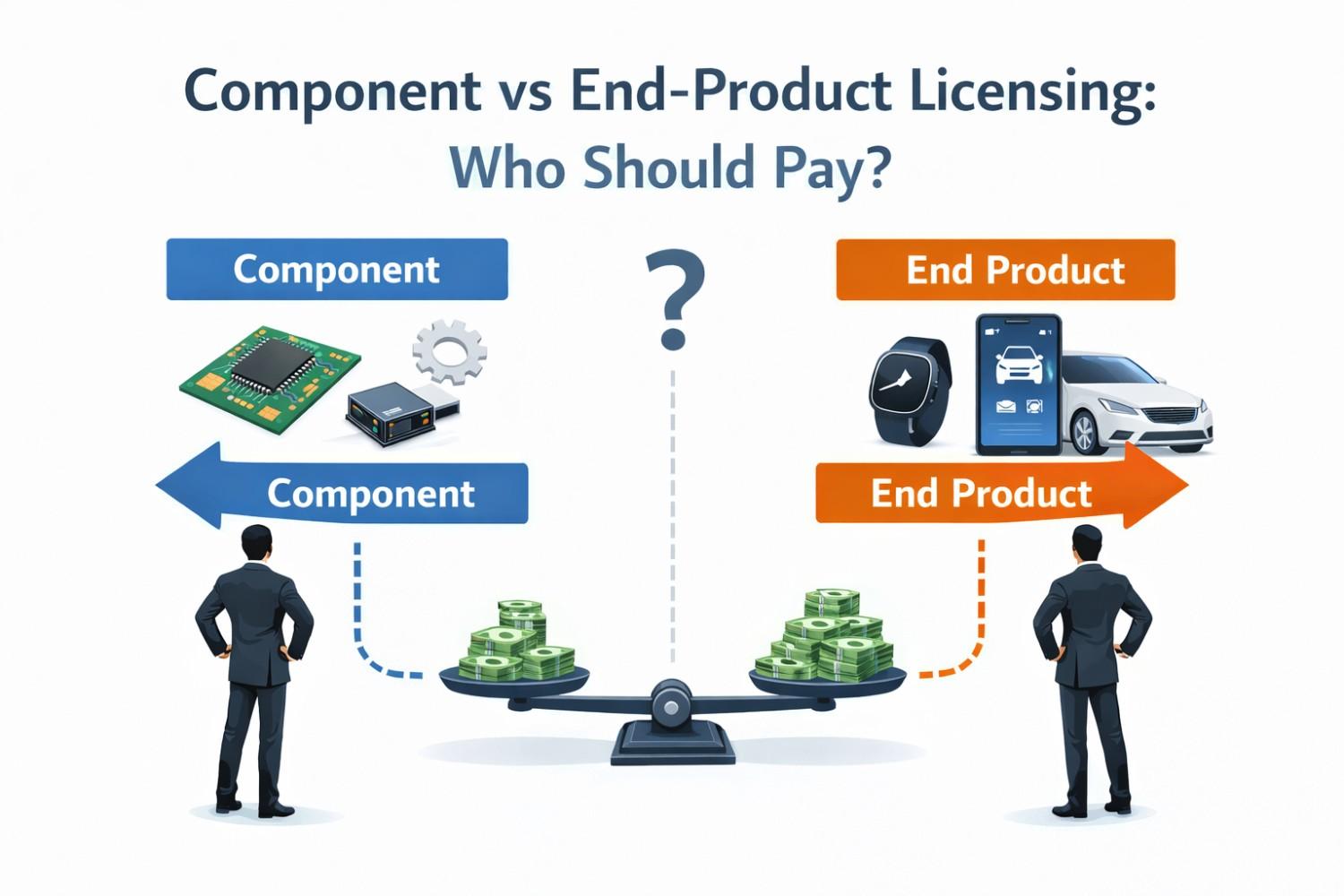
If you are building a core piece of tech that other products depend on, one quiet decision can shape your entire future: do you charge the maker of the component or the seller of the final product? This choice affects how much leverage you have, how easy it is to get paid, and whether your patent becomes a real business asset or just paperwork.
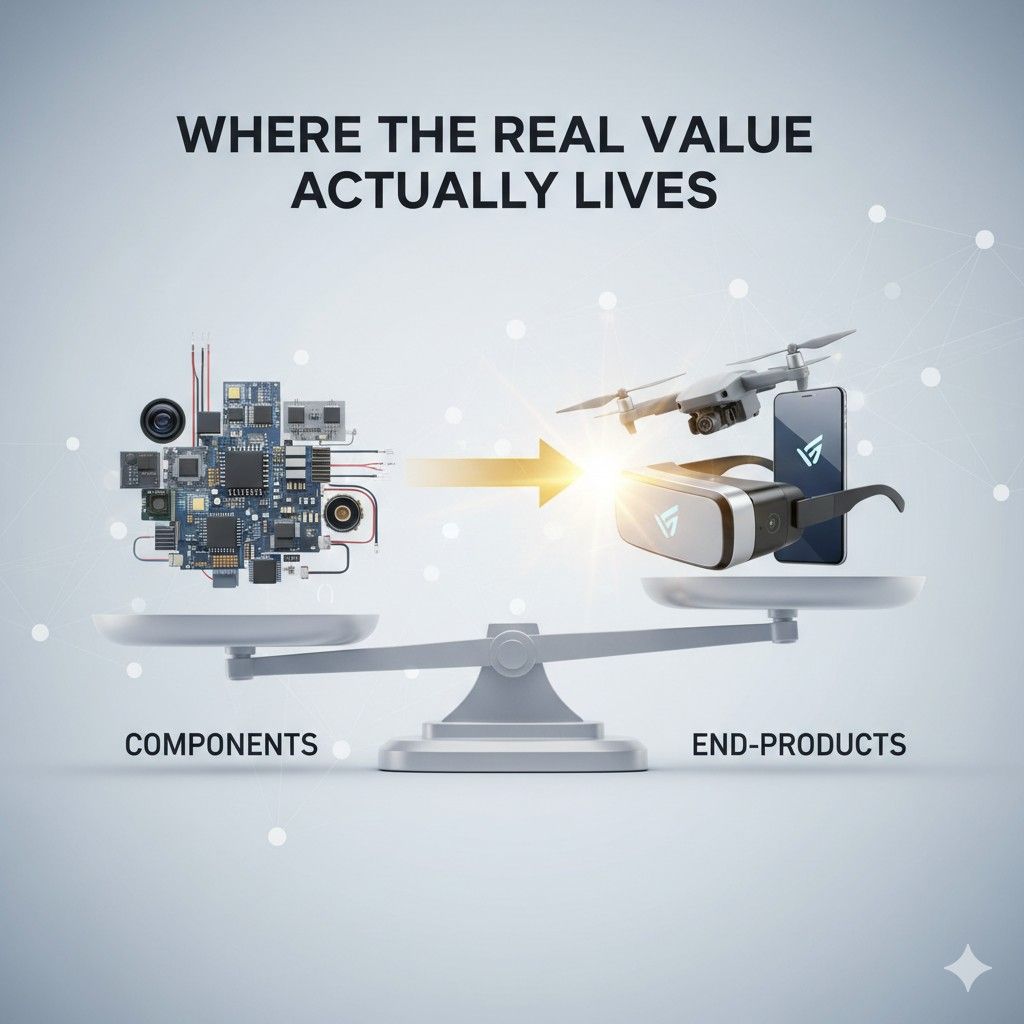
Where the Real Value Actually Lives
Before you decide who should pay, you have to be honest about one thing most founders avoid.
You need to know where the real value of your invention actually sits. Not where you hope it sits. Not where it sounds nice in a pitch. But where it truly shows up when money changes hands.
This section is about learning how to see your technology the way buyers, partners, and large companies see it. Once you understand that, the licensing decision becomes much clearer and much easier to defend.
Value Is Not the Same as Function
Many founders think value equals function. If something does an important job, they assume it holds the value. That is almost never how the market works.
The market rewards outcomes, not effort. A component can be brilliant, complex, and hard to build, yet still be treated as a replaceable part if it does not clearly drive the final result the customer cares about.
If your technology makes a product faster, cheaper, safer, or easier in a way the end customer notices, value starts to shift toward the end product.
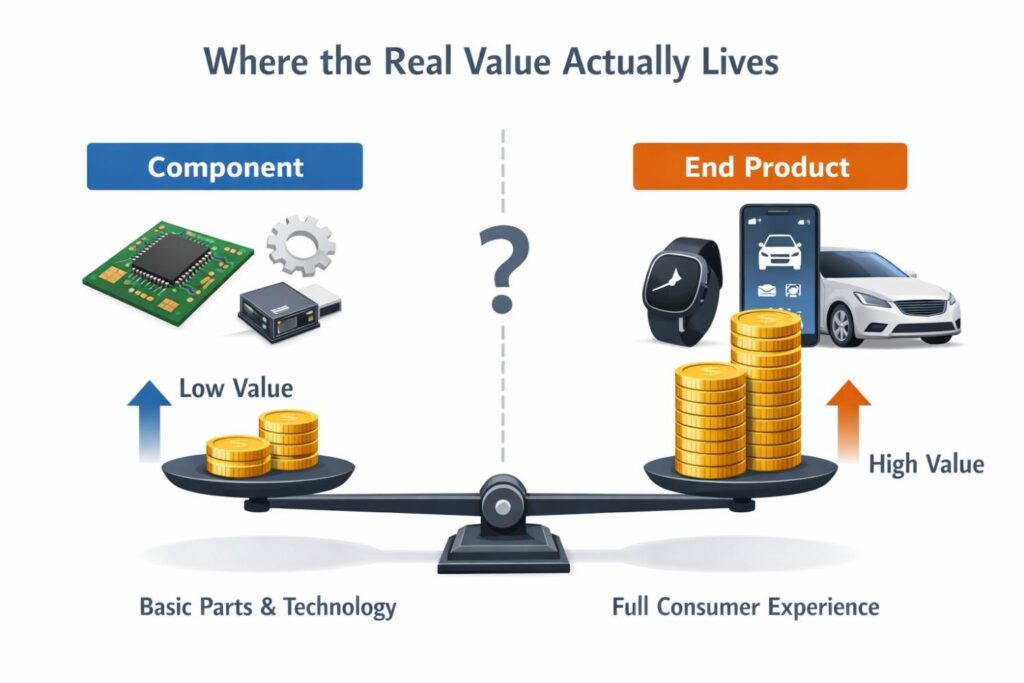
If your technology quietly solves a deep technical problem that few teams can solve and everything breaks without it, value may live inside the component.
Your job is to trace the value chain, not admire the engineering.
Follow the Pain, Not the Pride
A fast way to locate value is to ask where the pain shows up when your technology is missing.
If your component is removed and the end user barely notices, then the value does not live there.
If removing your component forces the end-product company to delay launch, fail compliance, lose accuracy, or rebuild months of work, that is a strong signal.
Founders often fall in love with what was hard to build. Buyers fall in love with what is hard to replace. These are not the same thing.
When you think about licensing, always anchor your decision to replacement pain, not technical pride.
Who Feels the Risk First
Value and risk travel together. Whoever feels the risk first is often the right party to pay.
If a component fails and the component maker gets blamed, pulled, or sued, then that component carries risk. That risk supports component-level licensing.
But if failure only becomes visible when the final product reaches customers, regulators, or enterprise buyers, the end-product company holds the risk.
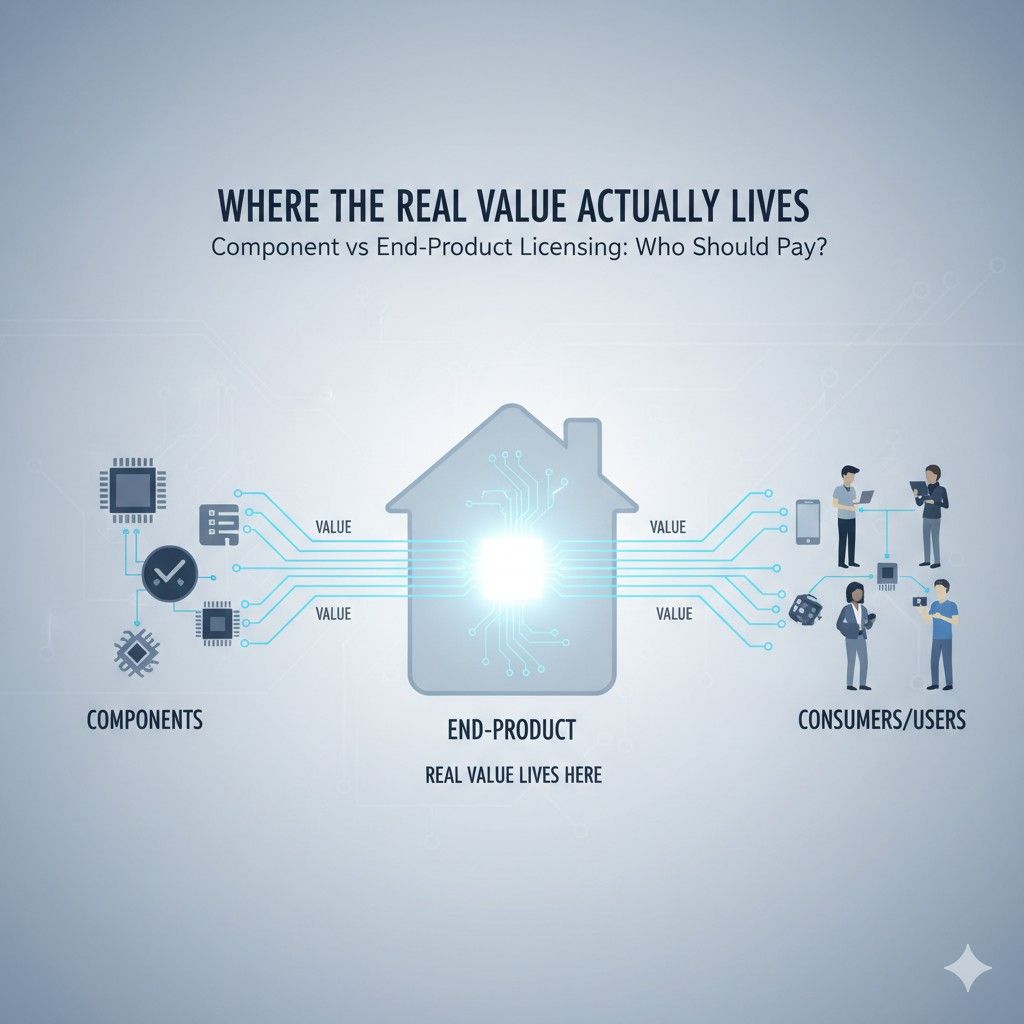
Licensing works best when payment lines up with risk exposure. When it does not, deals stall or collapse later.
This is why many strong patents fail to generate revenue. They ask the wrong party to pay for a risk they do not feel.
The Visibility Test
One of the simplest tests for value is visibility.
Ask yourself a direct question. Can the end customer tell that your technology exists without being told?
If the answer is yes, then end-product licensing often makes sense. The value is visible. It can be marketed. It can justify a premium price.
If the answer is no, and your technology works behind the scenes, then component licensing may be stronger. Invisible value is still value, but it must be captured closer to where it is understood.
Founders who ignore visibility often struggle to explain why their patent matters during negotiations.
Where Budget Authority Lives
Value does not matter if the buyer cannot approve payment.
In large companies, component teams often have smaller budgets and tighter constraints. End-product teams usually control revenue targets, margins, and pricing power.
If your technology meaningfully improves the final product’s business results, the end-product team is more likely to justify licensing costs internally.
If it improves internal workflows or system performance, the component team may be the only realistic buyer.
This is not about fairness. It is about how money actually moves inside companies.
Smart licensing aligns with budget authority, not organizational charts.
Why Early Decisions Lock You In
The first way you frame your patent often locks you into a payment path without you realizing it.
If your patent reads like a deep technical building block, companies will treat it as a component asset. If it reads like a system-level improvement tied to user outcomes, it will be seen as end-product value.
This is why patent strategy is not paperwork. It is positioning.
Once companies start evaluating your patent in a certain frame, changing that perception is extremely hard. This is where founders lose leverage without ever knowing it happened.
This is also why tools like PowerPatent matter early. They help founders describe inventions in a way that preserves optionality, instead of locking them into a weak licensing lane.
You can see how that works here: https://powerpatent.com/how-it-works
The Margin Magnet Effect
Value tends to flow toward margins.
If your technology enables higher margins at the end-product level, companies will protect that value fiercely.
That often makes end-product licensing attractive, but also harder to negotiate because you are touching revenue directly.
If your technology protects margins by reducing cost, error, or risk internally, component licensing may be easier and faster.
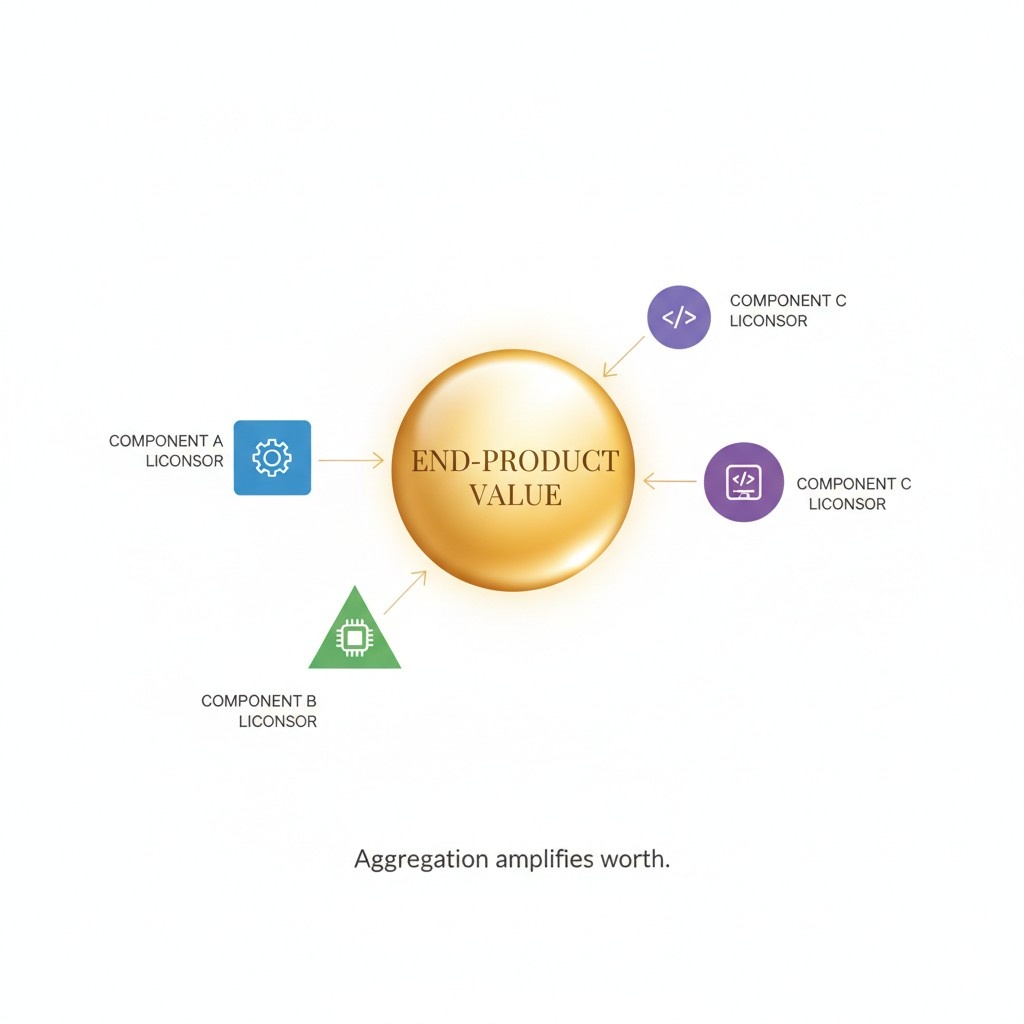
Founders should map how their invention touches margins, not just performance metrics. Margin impact is what executives care about when writing checks.
Avoid the Middle Trap
One of the worst positions is sitting in the middle.
If your technology is too abstract to justify end-product licensing but too strategic to be treated as a simple component, companies will hesitate. Deals drag. Pilots stretch. Decisions stall.
The way out is clarity.
You must clearly anchor your invention either as a must-have building block or as a value-driving system improvement. Anything fuzzy creates friction.
Clear positioning makes licensing conversations shorter and more predictable.
Designing for Leverage, Not Adoption
Many founders optimize for adoption. They want everyone to use their tech. Licensing requires a different mindset.
You should design your patent and story for leverage, not usage volume. Sometimes fewer buyers with higher dependence create stronger outcomes than widespread casual use.
This means being comfortable saying no to weak licensing structures early. It means protecting how your technology is framed, even if it slows initial conversations.
Leverage compounds. Adoption alone does not.
Action You Can Take This Week
You do not need lawyers or meetings to start.
Take one hour and write down what breaks first if your technology disappears. Write who gets blamed. Write who loses money. Write who has to explain it internally.
That exercise alone will tell you where value lives more clearly than any abstract theory.
If you want help turning that insight into a patent strategy that keeps your options open, that is exactly what PowerPatent is built for.
Founders use it to move fast without boxing themselves into weak licensing paths later. You can explore it here: https://powerpatent.com/how-it-works
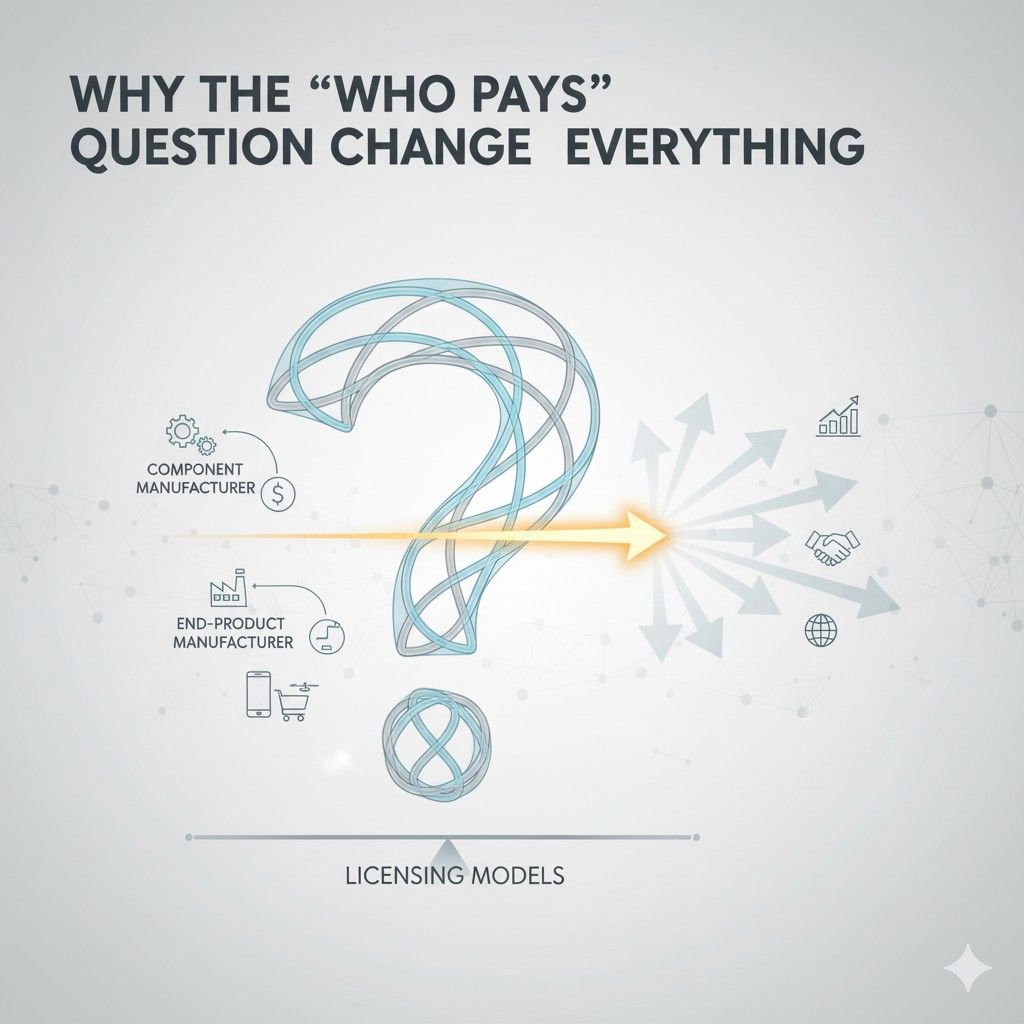
Why the “Who Pays” Question Changes Everything
The moment you decide who should pay for your technology, you quietly decide how much power you will have later. This choice shapes negotiations, timelines, pricing, and even how seriously companies take you.
Many founders treat it like a small business detail. In reality, it is a structural decision that affects the life of your patent.
This section explains why that single question changes everything, and how to approach it with clear intent instead of guesswork.
Payment Choice Sets the Power Dynamic
Every licensing conversation has an invisible power balance. The party you ask to pay immediately asks themselves how badly they need you.
If you license at the component level, you are often dealing with teams that see many options. They compare you to alternatives. They negotiate hard. They move slowly. Power is shared or tilted away from you.
If you license at the end-product level, you are closer to revenue, deadlines, and external pressure. Power shifts. Decisions speed up. Conversations become more direct.
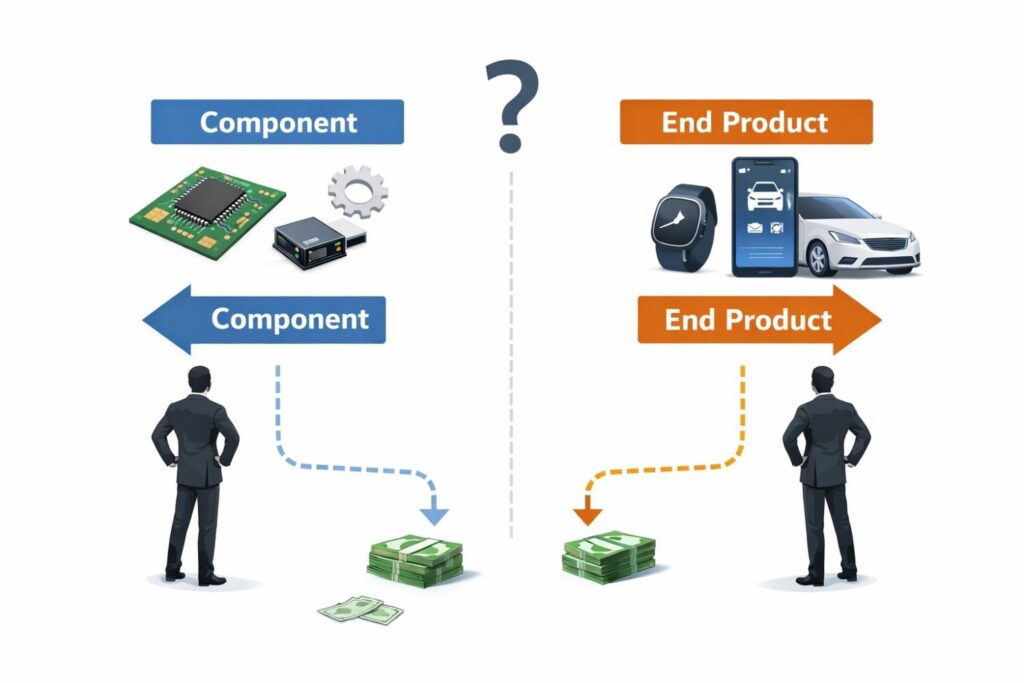
Neither path is always better. But pretending they are equal is a mistake.
The moment you pick who pays, you pick which side holds leverage.
Time-to-Decision Is Not Equal
Component teams and end-product teams operate on different clocks.
Component teams optimize for stability. They avoid risk. They resist change. Even when they want your technology, approvals can take months.
End-product teams live on deadlines. Launch dates, customer commitments, and market windows force action. When your technology becomes part of that timeline, delays cost real money.
If your startup needs speed, this matters.
Founders often underestimate how long component licensing can take. Long cycles drain momentum and distract teams. Choosing the wrong payer can quietly slow your company down.
Pricing Logic Changes Based on Payer
Who pays also changes how pricing is justified.
Component pricing is often cost-based. Buyers look at engineering effort, alternatives, and internal benchmarks. They push prices down because they see your tech as an input.
End-product pricing is outcome-based. Buyers look at revenue impact, differentiation, and competitive advantage. Prices can go up because value is clearer.
If you price a high-impact invention like a low-level part, you cap your upside early.
Your patent does not just protect technology. It supports a pricing story. That story depends on who you are talking to.
Negotiation Friction Comes From Misalignment
Many failed licensing talks fail for one simple reason. The founder is talking to the wrong payer.
You pitch an end-product level benefit to a component team that cannot approve it. Or you ask an end-product team to pay for something they see as internal plumbing.
This mismatch creates friction that feels personal but is structural.
When the payer matches the value narrative, negotiations feel smooth. When they do not, everything feels harder than it should.
Most founders blame negotiation skills. The real issue is alignment.
Enforcement Reality Is Different
Patents only matter if they can be enforced.
Component-level enforcement often requires deep technical analysis. Proving use can be complex. Detection may require access you do not have.
End-product enforcement is often simpler. Products are public. Features are visible. Usage is easier to demonstrate.
This does not mean one is always better. It means you should understand enforcement reality before choosing a path.
A patent that cannot be practically enforced loses leverage fast.
Scale Works Differently Than You Expect
Founders often assume component licensing scales better. One component, many buyers.
In practice, scale depends on dependency, not quantity.
If many end products rely on your invention in a critical way, end-product licensing can scale faster with fewer deals. Each deal is larger. Each relationship matters more.
Component licensing may require many small deals to reach the same impact. That increases overhead and distraction.
Scaling licensing revenue is about deal quality, not deal count.
Internal Politics Shape Outcomes
Large companies are political systems.
Component teams may love your technology but lack influence. End-product teams may have power but limited patience.
Choosing who pays also chooses whose internal politics you are entering.
When your champion lacks authority, deals stall. When your champion owns revenue, things move.
Smart founders map influence before choosing a licensing target.
Early Signals Matter More Than You Think
The first licensing conversations you have send signals to the market.
If companies see you as a component vendor early, it is hard to later reposition as a strategic end-product licensor. Perception sticks.
This is why early patent framing matters. It influences how companies categorize you before money is discussed.
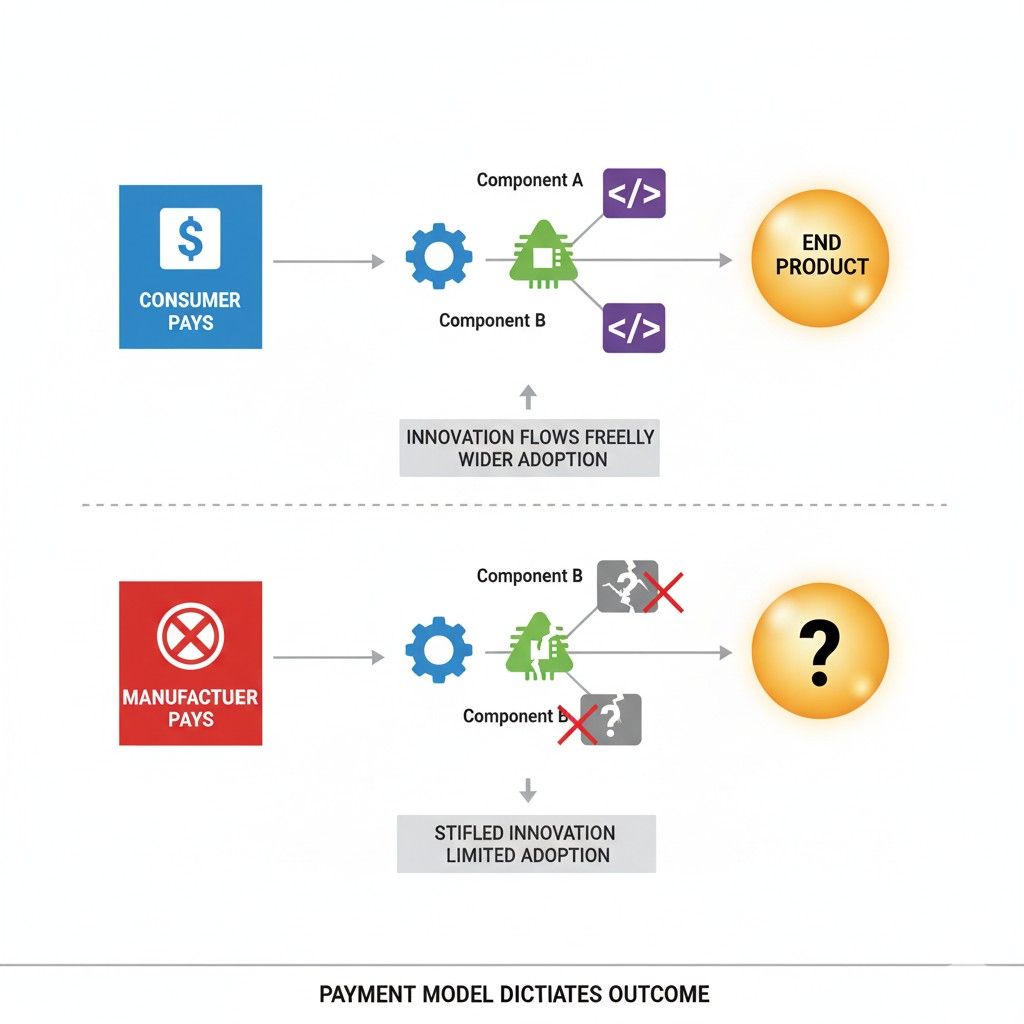
Founders who rush early deals often regret the positioning they lock in.
Using Patents to Keep Options Open
The smartest approach is often optionality.
A well-written patent can support both component and end-product licensing. A narrow one cannot.
This is where many founders make irreversible mistakes without realizing it.
They file fast, describe narrowly, and later discover they only have one weak path.
Platforms like PowerPatent are designed to avoid that trap. They help founders file patents that protect core ideas while keeping licensing paths flexible. That flexibility is leverage later.
You can see how it works here: https://powerpatent.com/how-it-works
Action You Can Take Right Now
Before your next conversation with a potential licensee, ask yourself one question.
If this deal succeeds, who inside that company looks good?
If you cannot answer clearly, you are likely talking to the wrong payer.
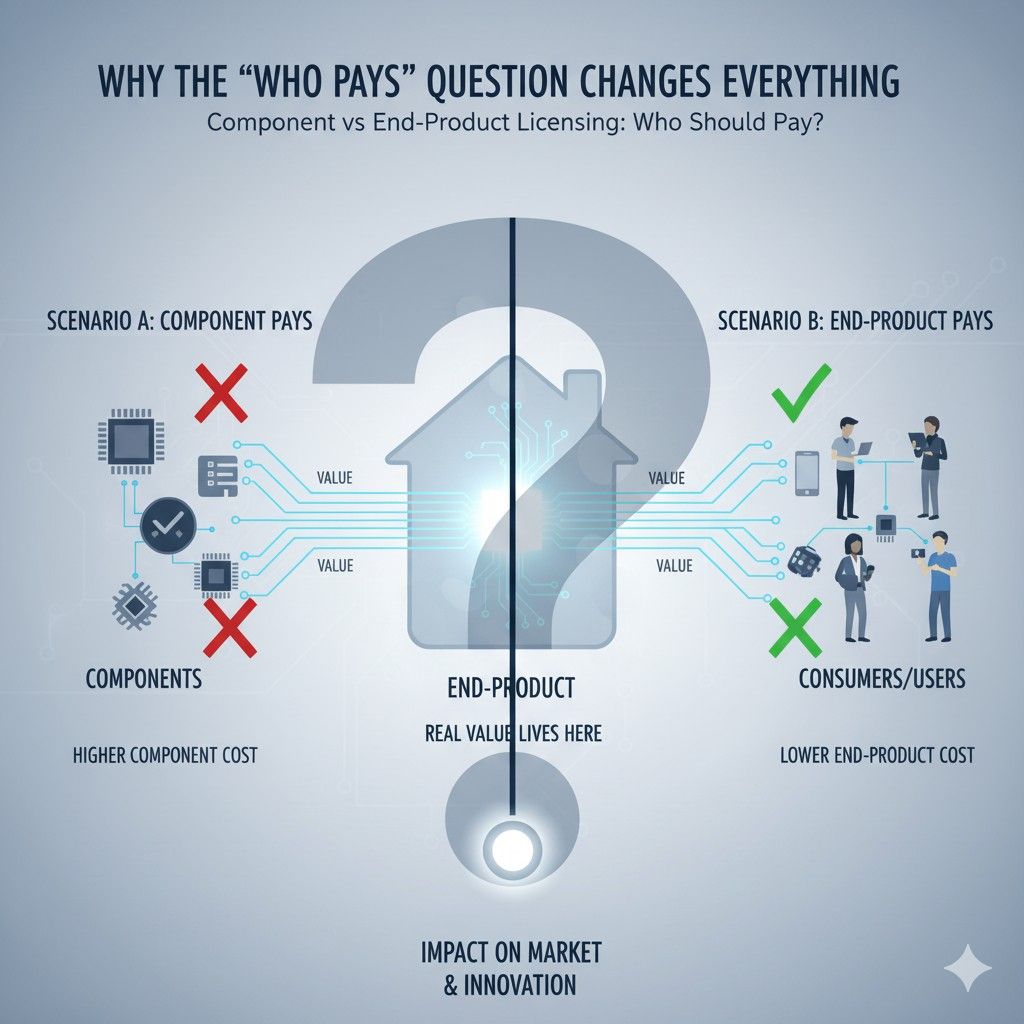
That clarity alone can save months of wasted effort.
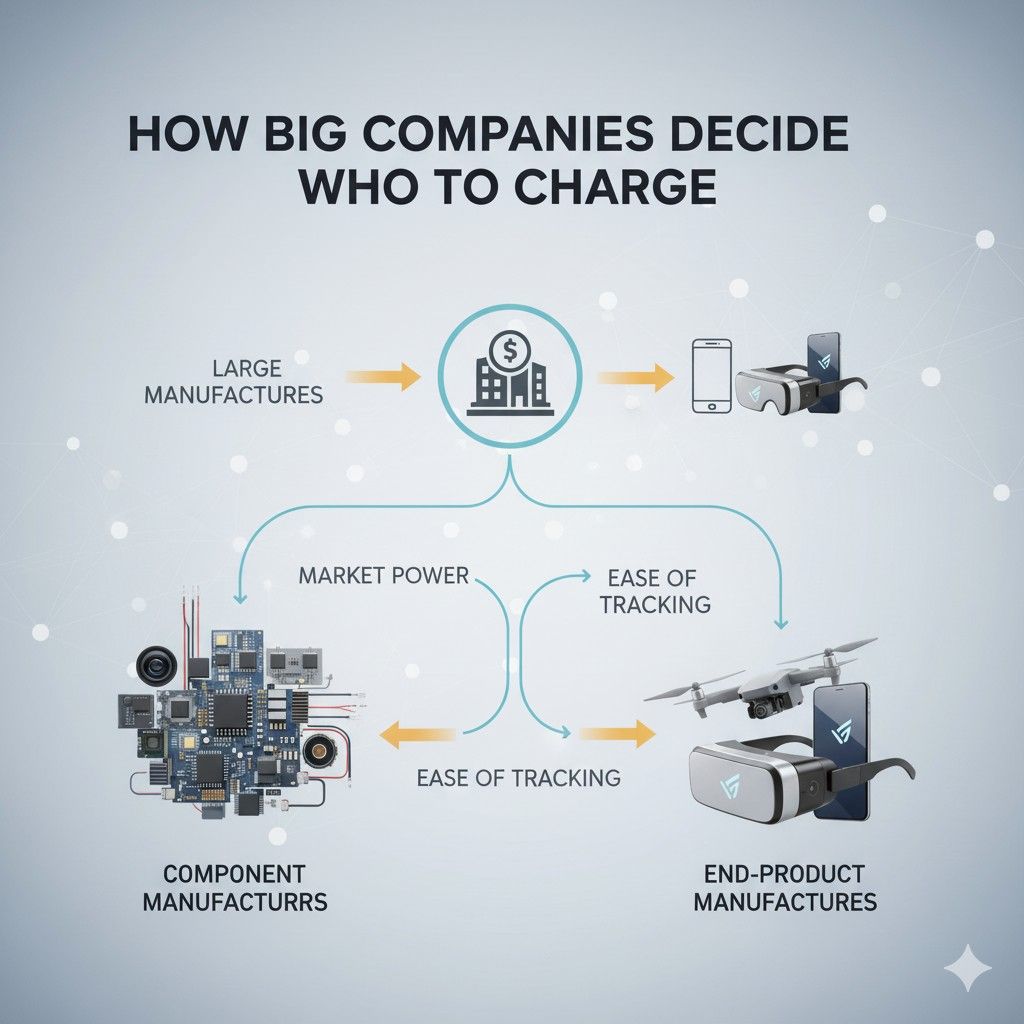
How Big Companies Decide Who to Charge
Big companies do not decide who pays based on fairness or logic alone. They decide based on incentives, internal pressure, and how risk flows through their organization.
If you understand how these decisions are actually made, you stop guessing and start positioning your patent in a way that fits how they already think.
This section shows you how large companies really decide who should pay, and how you can align your licensing strategy with that reality instead of fighting it.
Big Companies Do Not Think in Terms of Patents
One of the biggest mistakes founders make is assuming large companies care about patents the way inventors do.
They do not.
They care about shipping, margins, risk, and accountability. A patent only matters if it affects one of those things in a clear way.
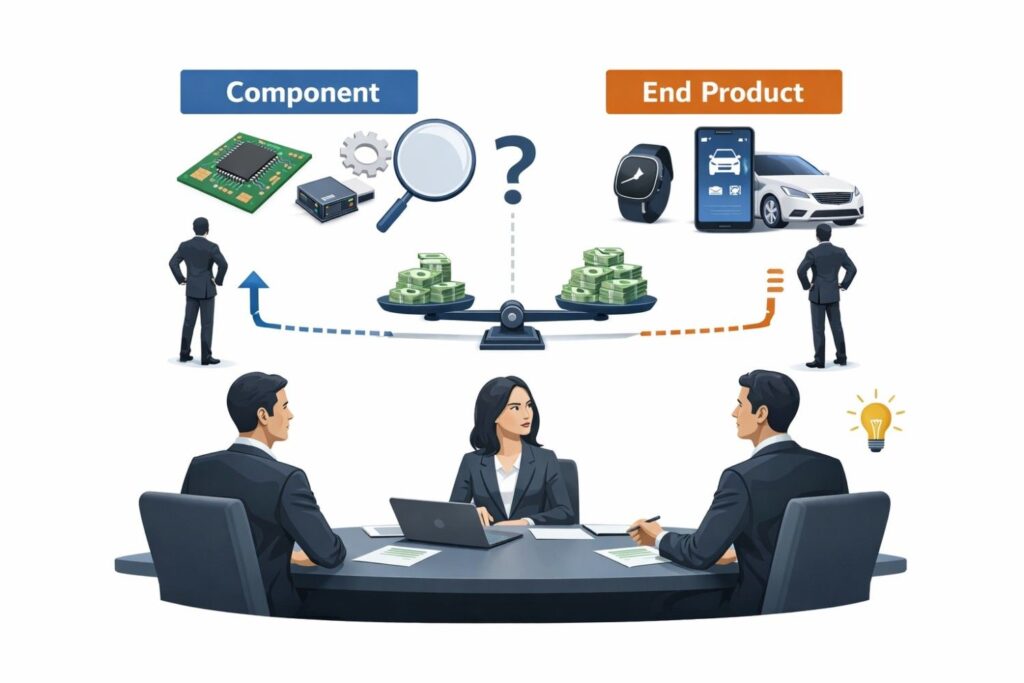
When you walk into a licensing conversation talking about novelty and claims, you lose attention. When you talk about what breaks, who gets blamed, or what delays launch, you gain it.
Understanding who pays starts with understanding what they care about.
Ownership Drives Payment
Inside large companies, payment almost always follows ownership.
If a team owns a system, they are expected to fund it. If they do not own it, they resist paying for it, even if they benefit from it.
Component teams own infrastructure. End-product teams own customer-facing outcomes. This ownership line strongly influences who feels responsible for licensing costs.
Your job is to anchor your invention to the owner with both budget and accountability.
If you fail to do that, everyone agrees your tech is valuable, and no one agrees to pay.
Risk Avoidance Shapes Behavior
Big companies are built to avoid risk.
Component teams avoid risk by standardizing and minimizing change. End-product teams avoid risk by protecting launch timelines and revenue commitments.
If your technology reduces technical uncertainty deep in the stack, component teams may support it. If it reduces market or customer risk, end-product teams are more motivated.
Licensing decisions are often disguised risk decisions. Whoever feels exposed will move first.
Founders who frame licensing as risk reduction close deals faster than those who frame it as innovation.
Budget Cycles Matter More Than Interest
A team can love your technology and still not buy it.
Why? Budget cycles.
Component teams often operate on fixed annual budgets planned far in advance. Adding new licensing costs mid-cycle is painful.
End-product teams sometimes have more flexibility, especially when revenue or launch success is at stake.
Timing your approach matters. Understanding when budgets reset matters. Choosing the wrong payer at the wrong time can kill momentum even when interest is high.
This is why patience without strategy is dangerous. You wait, but nothing changes.
Internal Champions Need Cover
Every licensing deal needs a champion inside the company.
That champion needs cover. They need a story that makes sense to their boss and their finance team.
If you ask a component leader to pay for something that primarily helps the end product, you put them in a weak position. They will hesitate, stall, or quietly disengage.
If you ask an end-product leader to pay for something that looks like internal plumbing, the same thing happens.
Successful founders make their champion look smart. Failed ones make their champion uncomfortable.
Legal Teams Are Not the Decision-Makers
Another common misunderstanding is the role of legal teams.
Legal teams review deals. They do not decide them.
They step in once business alignment exists. If business teams are unsure who should pay, legal review becomes an excuse to delay.
Founders who think licensing stalls because of lawyers are often missing the real issue. The business case is not clear enough to support a payment decision.
When the payer is obvious, legal moves faster.
How Procurement Sees You
Procurement teams categorize vendors quickly.
If you look like a component supplier, they treat you like one. They push on price. They demand alternatives. They slow the process.
If you look like a strategic technology partner tied to revenue or differentiation, the tone changes. Procurement still negotiates, but with more respect for value.
This categorization happens early and is hard to reverse.
Your patent framing, pitch, and initial conversations shape how procurement sees you before you ever meet them.
The Silent Question Every Executive Asks
Every executive silently asks the same question when licensing comes up.
What happens if we do nothing?
If the answer is very little, they will not pay. If the answer is delays, risk, lost revenue, or exposure, payment becomes easier to justify.
Your licensing strategy should be built around making that answer uncomfortable for the right payer.
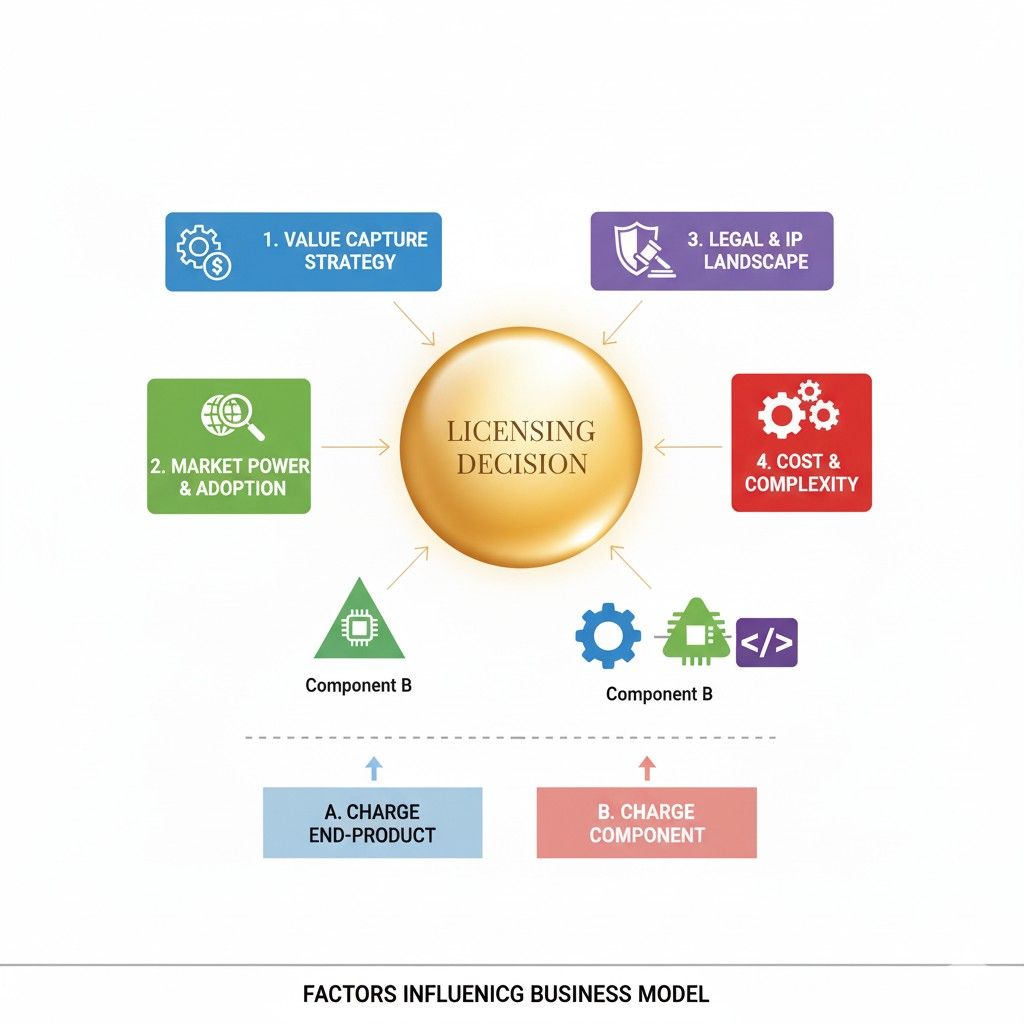
That is not about threats. It is about clarity.
Why Founders Get Pushed Down the Stack
Many founders start aiming high and end up pushed down the stack.
They begin by talking to end-product teams. Then they are redirected to platform teams. Then to infrastructure teams. Then to no one.
This usually happens because the invention was not clearly tied to an outcome the end-product team owned.
Big companies will always try to move cost away from revenue owners if they can. Your job is to resist that slide with a clear value anchor.
Designing Your Patent Story for Their Reality
Your patent is not just a legal document. It is a narrative tool.
A strong patent story speaks the language of ownership, risk, and outcomes. It makes it obvious who should care and who should pay.
This is where many founders lose leverage without noticing. They describe how something works, not why it matters at the right level.
PowerPatent helps founders build patents that support these stories without slowing down product work.
That early framing gives you options later instead of boxing you in. You can see how that works here: https://powerpatent.com/how-it-works
Action You Can Take Before Your Next Pitch
Before your next licensing conversation, write down one sentence.
If this technology fails, who gets the call at midnight?
That person is closer to the right payer than anyone else.
If you cannot identify that person, your positioning needs work.
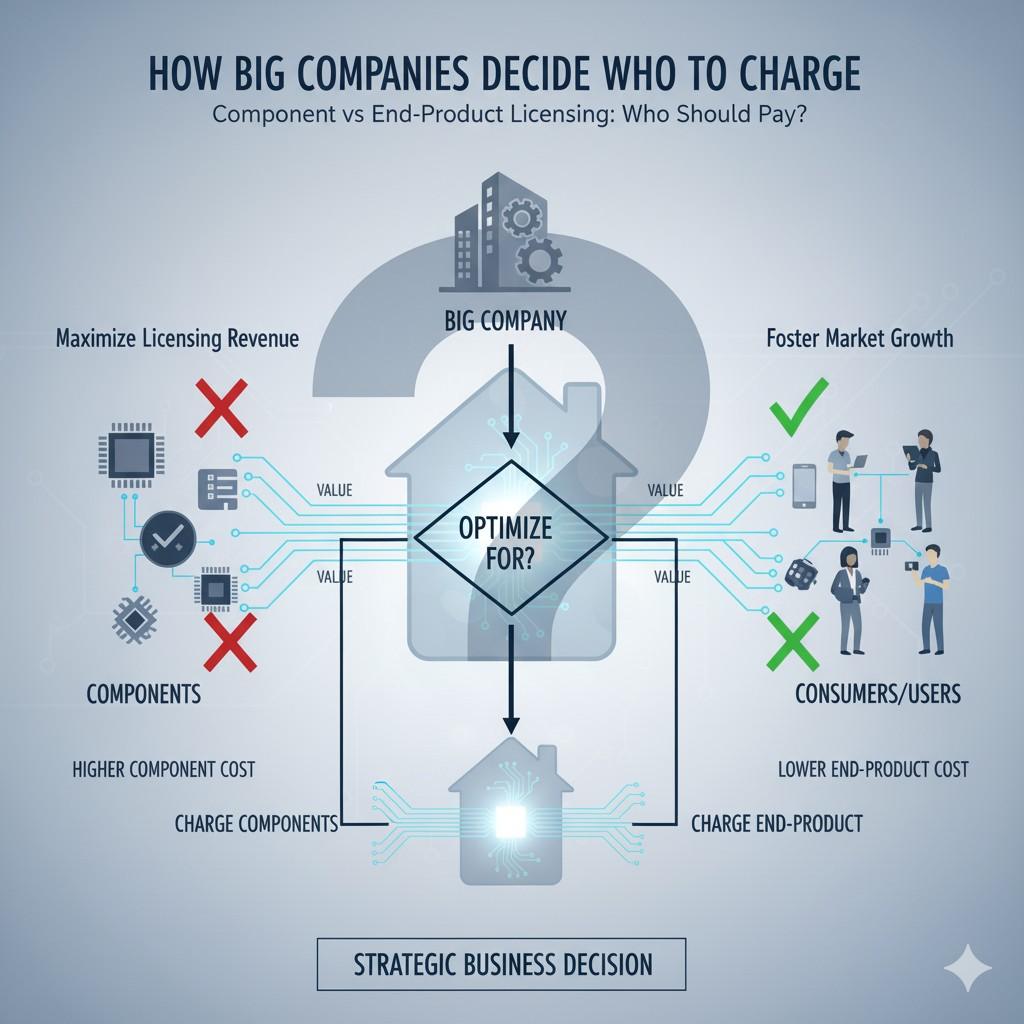
Understanding how big companies decide who pays does not guarantee success. But ignoring it almost guarantees friction.
Wrapping It Up
Licensing is not about paperwork. It is about power, clarity, and timing. The question of component versus end-product licensing is really a question about where value shows up, who feels the risk, and who has the authority to say yes. When founders get this right early, their patents become living assets that support growth, deals, and confidence. When they get it wrong, even great inventions struggle to earn what they deserve.