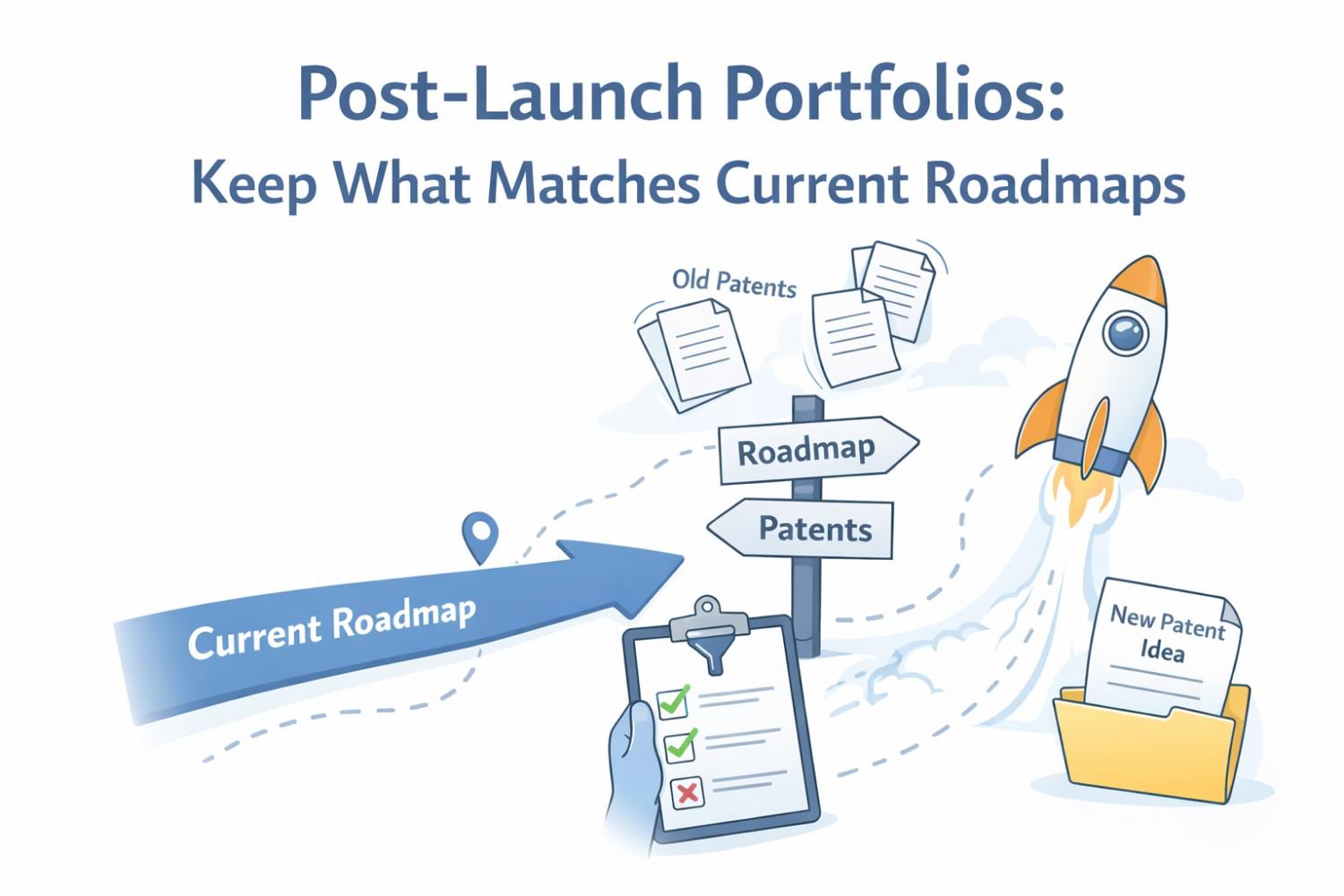
You shipped the product. You raised the round. You pushed code that real users now touch every day. That feels great. But here is the part most founders miss: your patent portfolio must grow and shift with your roadmap. What you planned two years ago is not what you are building now. If your patents do not match your current direction, you are wasting money, time, and protection. Post-launch is not the time to relax. It is the time to sharpen your edge and protect what truly matters today.
Before we go deeper, take a quick look at how modern patent filing should work for fast teams like yours → https://powerpatent.com/how-it-works
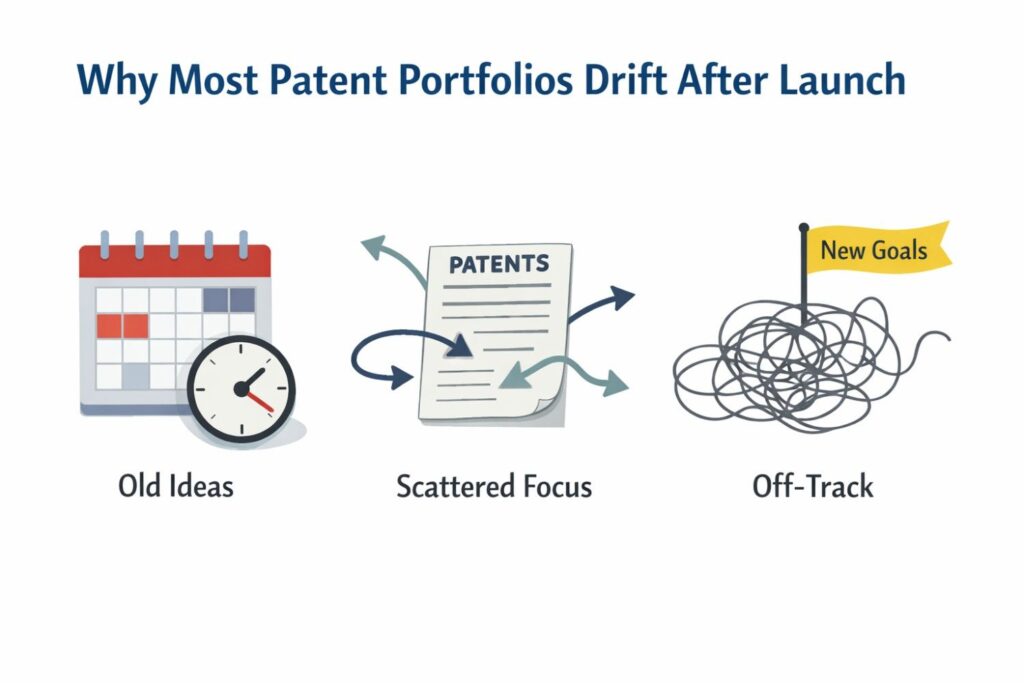
Why Most Patent Portfolios Drift After Launch
After launch, everything speeds up. Your product changes. Your users ask for new features. Investors push for growth. Your team rewrites parts of the system to scale.
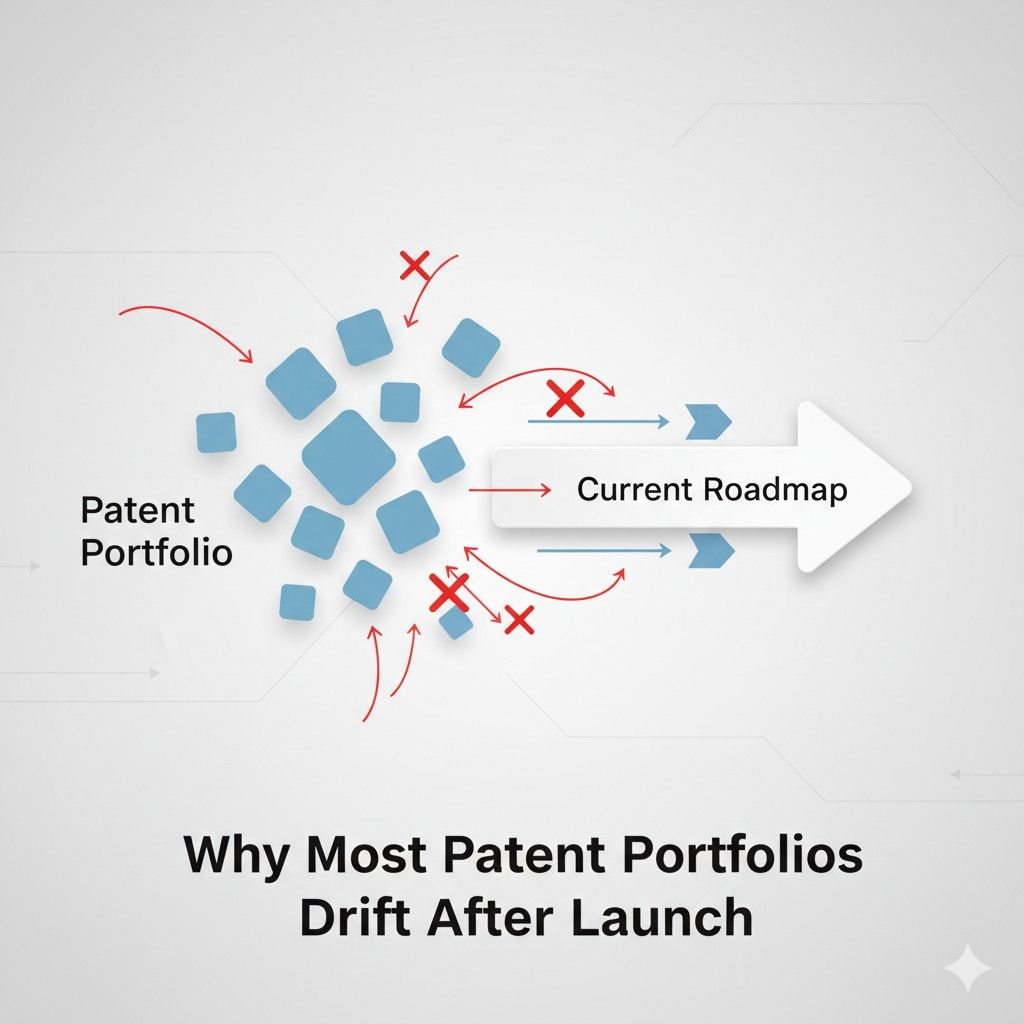
In the middle of all that movement, your patent portfolio often stays frozen in time. It reflects what you thought you would build, not what you are actually building today.
That gap creates risk. And most founders do not even see it happening.
A drifting portfolio is not a small issue. It means you are spending money to protect ideas that may no longer drive your business.
It means your strongest innovations may not be covered at all. The longer this goes on, the harder it is to fix.
The Roadmap Moves Faster Than Legal Planning
When you first filed patents, you were planning. You had a vision. You had slides. You had early prototypes. But once the product went live, real feedback started shaping your decisions.
You cut features that users ignored. You doubled down on the features they loved. You changed your pricing model. You shifted from one customer type to another.
Your roadmap today likely looks very different from your original pitch deck. But your patents may still reflect that old version of the company.
This happens because product teams move in sprints, while patent work often feels slow and separate. If your IP strategy is not directly tied to your current roadmap reviews, it will fall behind.
A smart move is to tie patent check-ins to the same cycle as product planning.
When your team reviews the next two quarters of features, someone should ask a simple question: are we protecting the parts that truly matter? If the answer is not clear, that is a red flag.
If you want a system that keeps patent strategy close to your actual build cycle, see how it works here → https://powerpatent.com/how-it-works
Founders File for the Vision, Not the Execution
Early patents often focus on the big idea. The dream. The concept that got investors excited. But what wins in the market is execution. The small technical details.
The way your system handles edge cases. The way your model adapts to new data. The way your backend scales without breaking.
Over time, these execution details become your real moat. Yet many portfolios ignore them because they were not obvious at day one.
To avoid this, you need to sit with your engineers and walk through what makes your system hard to copy today. Not in theory.
In practice. Ask them what would frustrate a competitor trying to rebuild your product. That is usually where the strongest new filings should focus.
A strong post-launch portfolio protects the real machine, not just the story behind it.
Growth Changes What Needs Protection
After launch, growth brings pressure. You expand to new markets. You add integrations. You form partnerships. You build APIs. Each move changes your risk profile.
For example, if you move from a closed platform to an open one, your exposure increases. If you shift from serving small teams to large enterprises, competitors start watching you more closely.
If you enter a regulated space, your technical methods may become more valuable.
Yet many companies never adjust their patent scope to match this new stage.
A practical step is to review your competitive landscape every six months and map it against your patent coverage. Not a surface check. A deep one. Look at your main revenue drivers.
Then ask: if a competitor copied this exact feature tomorrow, would our current patents give us leverage?
If the answer feels weak, you need to act fast. Filing sooner is always better than filing after a competitor has already moved.
Team Turnover Silently Weakens IP Strategy
Startups change people fast. Engineers leave. New hires join. Sometimes the original inventors who helped draft early patents are no longer around.
When that happens, knowledge walks out the door.
The new team may build powerful improvements without realizing they should document them.
They may not even know what has already been filed. This creates gaps. Over time, your portfolio becomes disconnected from the people actually building the product.
You can fix this by making invention capture part of your engineering rhythm. When major features ship, schedule a short technical review focused only on patent potential.
Keep it simple. What did we solve? What was hard? What is unique? Capture it early while the memory is fresh.
With the right tools and attorney support, this process can take hours, not months. That is exactly how modern teams should approach it → https://powerpatent.com/how-it-works
Funding Events Create False Security
Raising a round often makes founders feel protected. Investors see patents in the data room. There is a sense that “we have IP covered.”
But those patents usually reflect an earlier stage of the company. After a big raise, product scope expands. Teams double in size. Experiments multiply.
If your filing pace does not increase with your innovation pace, your protection lags behind your growth.
A smart founder treats funding as a trigger for a portfolio refresh. Right after a round closes, review what you are building next. Identify the features that will define the next phase of growth.
Make sure your patent plan aligns with that future, not just the past.
Feature Creep Creates IP Noise
As products evolve, some features fade in importance. They may still exist in the codebase, but they no longer drive user value. Yet you might still be paying to maintain patents that focus on those features.
This is how portfolios become bloated.
A drifting portfolio is not just about missing protection. It is also about protecting the wrong things.
You should regularly ask whether each patent aligns with your current revenue engine.
Does it support your main product line? Does it cover something customers truly care about? If not, it may not deserve more investment.
This does not mean abandoning protection lightly. It means being strategic. Strong portfolios are focused. They reflect what the company is now, not what it once was.
Competitive Pressure Changes the Game
In the early days, you may have been alone. Now, competitors are studying your product. Some may have more money. Some may move faster.
If your portfolio does not cover your strongest differentiators today, you have little defense.
Watch your competitors’ updates. Study their releases. If they begin building features similar to yours, that is a signal. It may mean your innovation is valuable. It may also mean you need tighter protection around that space.
Patent strategy should not be reactive, but it should be aware. The goal is not to file everything. The goal is to file what blocks others from taking your core advantage.
Internal Misalignment Slows Action
In many startups, patents are seen as a side project. Something legal handles. Something that sits outside product and engineering.
That separation is dangerous.
When IP strategy is not embedded into product conversations, drift is guaranteed. Engineers will focus on shipping. Legal will focus on compliance. No one will focus on alignment.
You can fix this by making IP a leadership topic. Not a legal topic. During roadmap planning, ask how new features strengthen your defensibility.
When discussing long-term strategy, include patent coverage in the same breath as revenue and growth.
Protection is not a separate lane. It is part of building a strong company.
Speed Without Structure Leads to Gaps
Startups pride themselves on moving fast. That speed is your strength. But speed without a system creates blind spots.
If invention capture is random, if patent decisions depend on memory, if filings are delayed until “things calm down,” your portfolio will drift further from reality every quarter.
The solution is not to slow down. It is to create a lightweight structure that moves at startup speed.
Modern patent platforms combine smart software with real attorney guidance so you can file quickly without losing quality.
That way, your IP strategy keeps up with your roadmap instead of chasing it months later → https://powerpatent.com/how-it-works
The Cost of Doing Nothing
Drift feels harmless at first. The product works. Customers are happy. Revenue grows.
But if a competitor copies your key feature and you realize it was never protected, the cost becomes clear. If you try to raise another round and investors see gaps in coverage, that affects leverage.
If you want to sell the company and your patents do not match your core product, value drops.
Post-launch is not the end of patent strategy. It is the beginning of a more serious phase.
Your portfolio should be a living asset. It should reflect your current roadmap, your real technical edge, and your growth plans. If it does not, now is the right time to fix it.
How to Audit Your Portfolio Against Your Real Roadmap
Most founders think a patent audit means calling a law firm and asking for a stack of documents. That is not what we are talking about here.
This is not a paperwork exercise. This is a business alignment exercise.
Your goal is simple. You want to make sure what you are protecting matches what you are building now and what you plan to build next. If those two things are not in sync, you are either exposed or overspending.
A smart audit does not take months. It takes clarity, focus, and the right structure.
Start With What Drives Revenue Today
Before you look at a single patent, look at your product.
What features bring in the most revenue? What part of your system makes customers stay? What technical engine powers your growth?
Do not answer this based on what you hoped would win. Answer based on real usage and real numbers.
If eighty percent of your value comes from one core workflow, that workflow should be protected. Not loosely. Not in general terms. It should be covered in a way that makes it hard for someone else to copy the method behind it.
Now compare that core workflow to your existing patents. Do they clearly map to it? If someone read your patent, would they see your current product inside it?
If the answer is unclear, you have a gap.
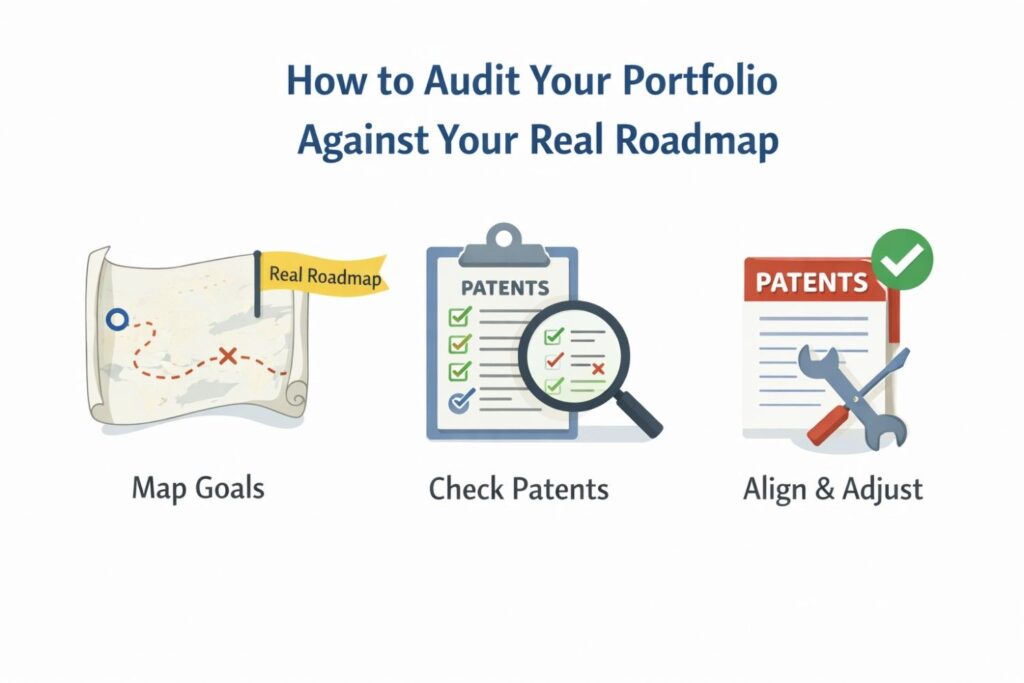
Many startups discover during this step that their strongest revenue engine was built after their last filing. That means their most important asset is unprotected.
This is where speed matters. The earlier you capture and file, the stronger your position becomes. See how modern teams do this without slowing down development → https://powerpatent.com/how-it-works
Map Each Patent to a Live Product Feature
Once you know what drives revenue, you need to get specific.
Take each active patent or application and ask a direct question. What live feature does this protect?
If you cannot point to something inside your product today, you need to pause.
Sometimes the patent protects infrastructure that is not visible to users. That is fine. But you should still be able to connect it to a real system component that is in use.
If a patent covers a feature that was removed or replaced, you may be maintaining protection that no longer supports your strategy.
This does not mean you cancel everything old. It means you evaluate value based on present reality, not past plans.
A focused portfolio is stronger than a scattered one.
Review the Next 12 Months, Not Just the Past
A good audit is not only backward looking. It must also be forward looking.
Pull up your roadmap for the next year. Look at the major technical bets. New architectures. New AI models. Platform expansions. Hardware upgrades. Anything that will define your next phase.
Now ask a key question. When these features launch, will they already be protected?
If your patent process starts after launch, you are late.
The best time to file is when the idea is clear but before it becomes public. That gives you the strongest position and the widest protection.
Founders often delay because they feel too busy building. But that is exactly when protection should be happening. If a feature is important enough to make the roadmap, it is important enough to review for patent coverage.
Sit With Your Engineering Leads
Do not run this audit alone.
Your engineers know where the real innovation lives. They know what was easy and what required deep problem solving. They know what a competitor would struggle to copy.
Schedule focused sessions with your technical leads. Keep it practical. Walk through the system layer by layer.
Ask them where your product is most unique. Ask what parts took the longest to design. Ask what pieces are hardest to replace.
These conversations often uncover new patent opportunities hiding in plain sight.
Many founders are surprised by how much innovation never gets documented. Engineers move fast. They solve problems and move on. Without a system, those insights disappear.

A structured but simple invention capture process changes that. It allows you to turn real engineering work into strong protection without adding heavy meetings or paperwork → https://powerpatent.com/how-it-works
Look at Competitive Risk Zones
Your roadmap does not exist in a vacuum.
Look at where competitors are investing. Are they moving toward the same core features? Are they entering the same vertical markets? Are they building similar integrations?
Where overlap exists, risk increases.
If a competitor is strong in one area and you are entering that space, your patent coverage needs to be tight. If you are leading in a feature others are starting to copy, that area becomes high priority.
This step is not about fear. It is about leverage.
Strong patent alignment gives you options. It gives you negotiation power. It gives you confidence in partnerships and enterprise sales.
Without alignment, you are relying only on speed.
Speed is powerful, but protection adds durability.
Identify Dead Weight Without Emotion
This part can feel uncomfortable.
Some patents may no longer match your strategy. They may cover products you sunset. They may focus on markets you exited. They may protect technical paths you abandoned.
Holding onto everything “just in case” drains budget and focus.
You need to review each asset calmly. Does it support your current or future roadmap? Does it increase company value in a meaningful way?
If not, you may choose to stop investing further in it.
This is not about cutting corners. It is about sharpening your edge.
Strong portfolios are intentional. Every asset has a purpose.
Check Timing and Filing Gaps
An audit should also review timing.
When was your last filing? How much has your product changed since then?
If it has been more than six to nine months in a fast moving startup, chances are high that major innovation has happened without protection.
This is especially true in AI, biotech, hardware, and deep tech where progress can be rapid and technical.
Set a rhythm. Decide that every quarter or every two quarters, you will review innovation and decide whether to file.
Make it part of your operating system, not a random event.
When patent review becomes routine, drift becomes rare.
Align Budget With Strategy
Your IP budget should reflect your strategic focus.
If you are betting heavily on one technical pillar, your filings should reflect that. If you are expanding into a new platform, allocate resources accordingly.
Do not spread your budget thin across outdated concepts.
Invest deeply where your future lies.
Modern patent platforms make this easier by giving you visibility and control.
Instead of sending emails back and forth for months, you can see what is filed, what is pending, and what is planned in one place, with real attorney oversight guiding each step → https://powerpatent.com/how-it-works
Turn the Audit Into Action
An audit without action is just analysis.
At the end of this process, you should have clear answers.
You should know which patents strongly match your core product. You should know where gaps exist in your next phase roadmap. You should know which areas deserve new filings soon.
Then you move.
File the improvements that matter. Tighten claims around your core systems. Capture upcoming innovations before launch.
When your patent portfolio reflects your real roadmap, you gain something powerful.
Clarity.
You know what is protected. You know where you stand. You know that as your company grows, your protection grows with it.
That confidence changes how you build.
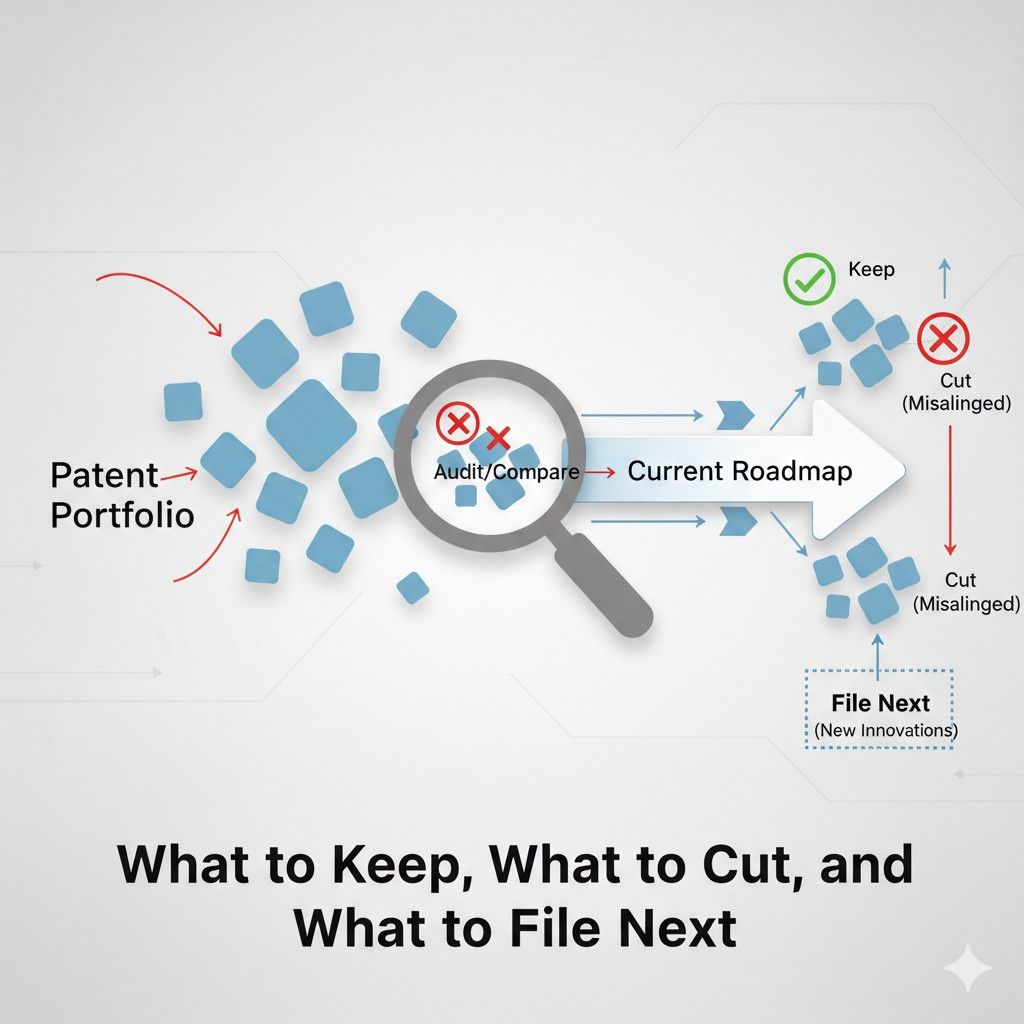
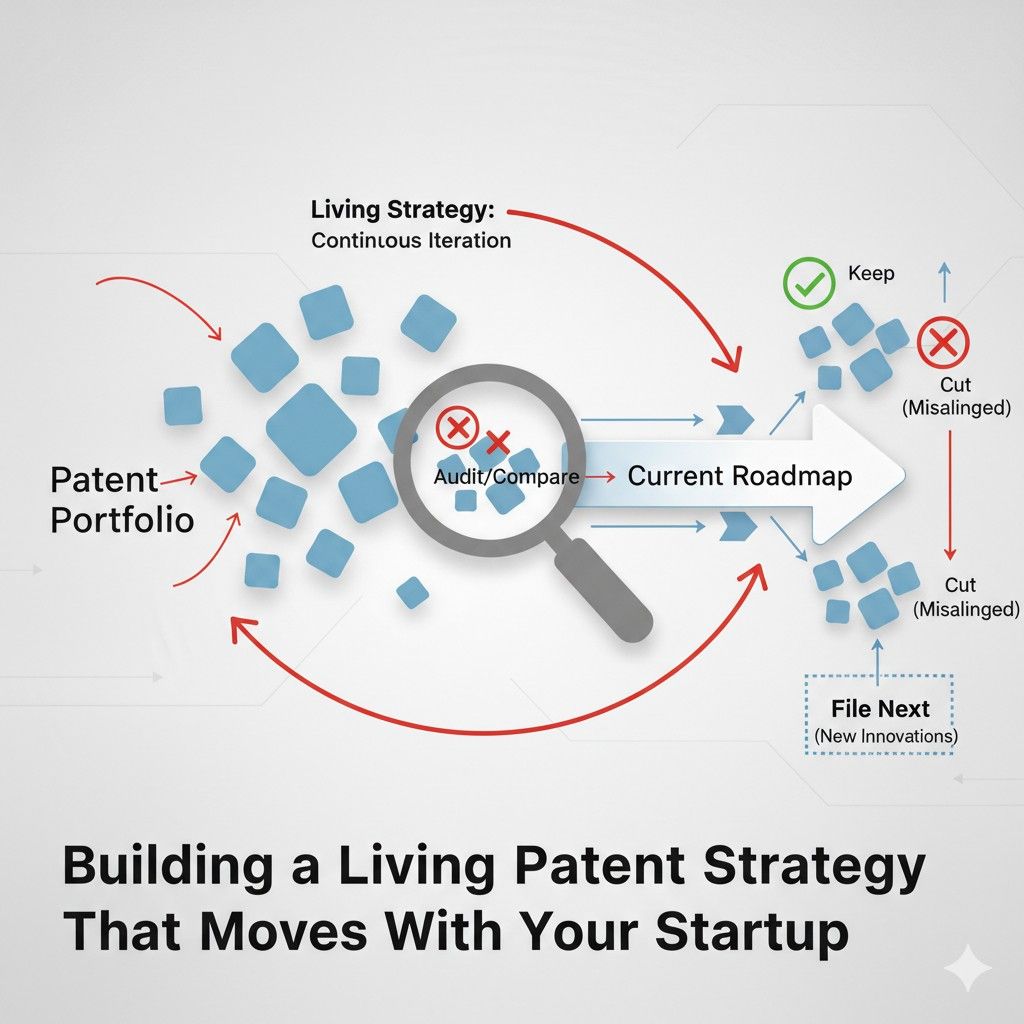
What to Keep, What to Cut, and What to File Next
Once you audit your portfolio against your real roadmap, you will see the truth. Some patents clearly support your future. Some sit in the middle. Others no longer fit who you are becoming.
This is where strategy turns into decisions.
The goal is not to have the most patents. The goal is to have the right patents. A focused portfolio that protects your core engine is far more powerful than a large collection of scattered filings.
You are not managing paperwork. You are shaping leverage.
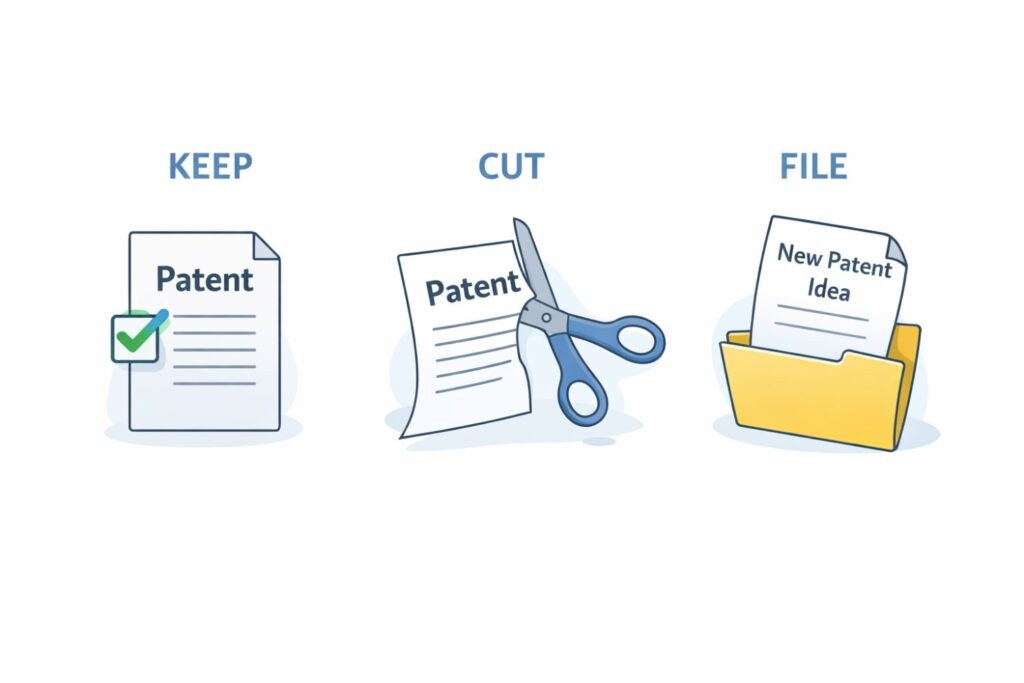
Keep What Protects Your Core Advantage
Every strong startup has a technical center. It might be a model architecture. A hardware design. A data pipeline. A system that connects pieces in a unique way.
This center is what makes your company hard to copy.
If a patent directly protects that center, it is likely a keeper. If it covers the technical process that drives your product’s main outcome, it matters. If it blocks a competitor from replicating your strongest feature, it earns its place.
But do not assume. Read your claims carefully. Do they actually cover what you built, or do they describe a high-level concept that leaves room for easy workarounds?
If needed, strengthen them through continuation filings or additional applications that narrow in on how your system works today. A living product needs living protection.
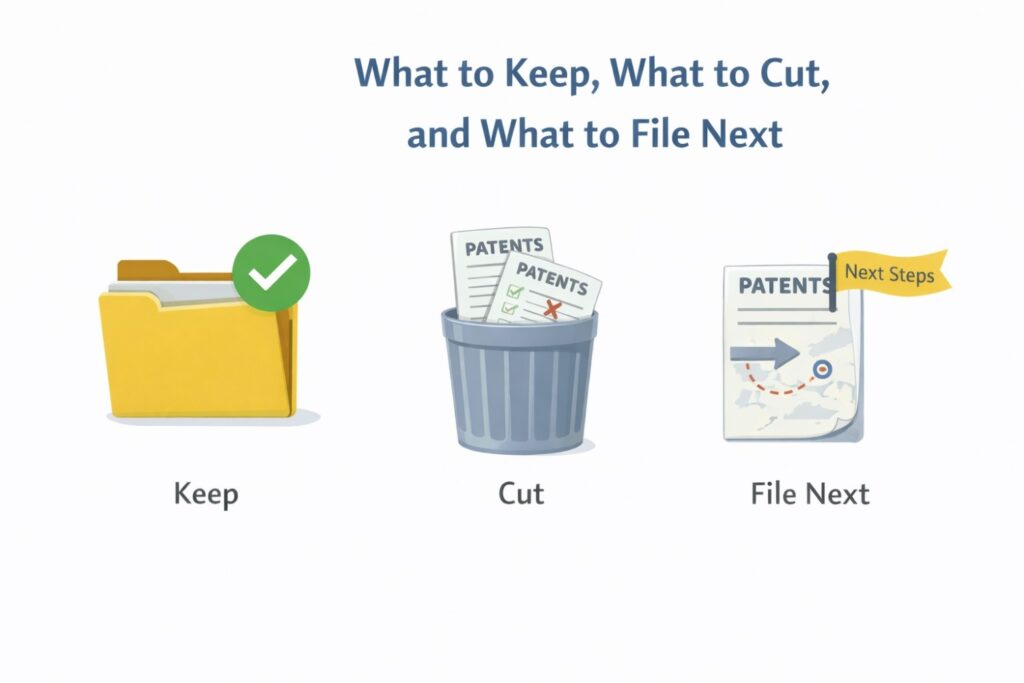
This is where having real attorneys working alongside smart software makes a difference. You can refine and expand coverage without restarting from scratch → https://powerpatent.com/how-it-works
Keep What Supports Future Expansion
Some patents may not map directly to today’s revenue, but they align with where you are heading.
If your roadmap includes moving into a new vertical, launching an enterprise version, or opening your platform, protection around those areas becomes strategic.
Ask yourself whether the patent creates options. Does it give you freedom to expand without fear? Does it give you negotiating power if a larger company enters your space?
If the answer is yes, that asset has future value.
The key is alignment with intention. If you have a clear plan to build into that space, protection makes sense. If the direction is vague or unlikely, reassess.
Strategy is about focus.
Cut What No Longer Matches Reality
This is the hardest part emotionally.
Founders remember the excitement around early ideas. They remember late nights drafting the first patent. But businesses evolve.
If a patent covers a feature you removed two years ago, and there is no plan to revive it, you need to question continued investment.
Maintenance fees add up. Attorney time adds up. Mental space adds up.
Letting go of outdated protection is not weakness. It is discipline.
When you cut what no longer fits, you free budget and attention for what truly matters now.
Think of your portfolio like your product. You would not keep a broken feature just because you once believed in it. You would improve or remove it.
Apply the same logic here.
File Around What Is Working Right Now
Your most valuable patent opportunities usually sit inside the features that are gaining traction today.
If users love a specific workflow, there is likely unique logic behind it. If your churn dropped after a technical change, there may be innovation in that improvement. If your system processes data in a way others cannot easily replicate, that is worth protecting.
The best time to file around these areas is when they are proven but not yet widely copied.
Do not wait for a competitor to validate your idea by copying it. Act while you are ahead.
Sit with your product and engineering teams. Walk through the technical layers of the feature that drives engagement. Identify what is unique about how you achieve the result, not just the result itself.
Strong patents protect the “how,” not just the “what.”
File Before Major Releases, Not After
Timing shapes strength.
If you are preparing to launch a major upgrade or announce a breakthrough, review it for patent potential before it becomes public.
Public disclosure can limit your options. Filing before launch keeps your position strong and flexible.
Make this a habit. When planning a large release, include a quick patent review in the checklist.
It does not have to slow down shipping. With the right system, capturing and filing can happen in parallel with development.
Modern teams do not treat patent work as a long, separate process. They integrate it into their build cycle so protection moves at startup speed → https://powerpatent.com/how-it-works
Expand Around Defensible Architecture
Often the deepest value sits in your architecture.
Users see the interface. Investors see growth charts. But under the hood, your architecture determines performance, scalability, and reliability.
If you redesigned your backend to handle ten times more load, that redesign may contain patentable innovation. If your AI pipeline reduces compute cost in a new way, that method matters.
These improvements may feel routine to your team because they built them step by step. But to an outside competitor, they may be hard to recreate.
File around architectural advantages that give you durable edge.
These are not flashy features. They are structural strengths.
Structural strengths create long-term moats.
Protect Integration Points and Ecosystem Moves
As your startup grows, you likely integrate with other platforms. You may offer APIs. You may embed into larger systems.
Each integration creates value and risk.
If your system connects to others in a unique way, or if your API enables workflows competitors cannot match, that is worth reviewing for protection.
Ecosystem positioning becomes powerful over time. Protecting the methods that allow seamless integration can increase your leverage with partners and acquirers.
Think beyond the core product. Think about the network around it.
Use Data to Guide Filing Decisions
Your product generates data every day.
Look at usage patterns. Look at which technical paths are most active. Look at where performance gains had the biggest impact.
Data shows you where value lives.
If a technical component is rarely used, it may not deserve heavy protection. If another component supports most transactions, it likely deserves deeper coverage.
Let your numbers inform your IP focus.
This keeps your portfolio grounded in reality.
Create a Simple Decision Framework
When deciding what to keep, cut, or file next, anchor every choice to three questions.
Does this protect a current revenue driver?
Does this align with our next phase roadmap?
Does this strengthen our position against competitors?
If a patent answers yes to at least one of these clearly, it likely deserves attention.
If it answers none, reconsider.
Clarity removes emotion from the process.
Move From Static to Living Protection
The biggest shift you can make is mental.
Stop viewing your patent portfolio as a one-time project. It is not something you “finish.”
It is a living asset that should evolve with every major product shift.
As your roadmap changes, your protection should adjust. As your technical edge deepens, your filings should reflect that depth.
When you treat your portfolio as part of your growth engine, not a legal side task, everything changes.
You build with more confidence. You negotiate with more strength. You raise capital with clearer proof of defensibility.
And you avoid the painful realization that your strongest innovation was never protected.
If you want a system that makes this ongoing alignment simple, fast, and backed by real attorneys who understand deep tech, explore how PowerPatent works → https://powerpatent.com/how-it-works
Building a Living Patent Strategy That Moves With Your Startup
Most startups treat patents like a milestone. File once. Maybe file twice. Then move on.
That approach breaks the moment your company starts growing fast.
Your product changes. Your team grows. Your customers evolve. Your market shifts. If your patent strategy does not move at the same pace, it slowly becomes a snapshot of your past.
A living patent strategy is different. It adapts. It follows your roadmap. It protects what you are building now and what you plan to build next.
This is how serious companies create long-term leverage.
Tie Patent Reviews to Product Sprints
Your product team likely works in cycles. Two weeks. One month. One quarter. There is rhythm.
Your patent strategy should follow that same rhythm.
You do not need to review filings every week. But at set points in your roadmap planning, protection should be part of the conversation.
When you finalize a major feature for the next quarter, ask one simple question. Is there something technically unique here that competitors would struggle to copy?
If the answer is yes, capture it immediately. Do not rely on memory six months later.
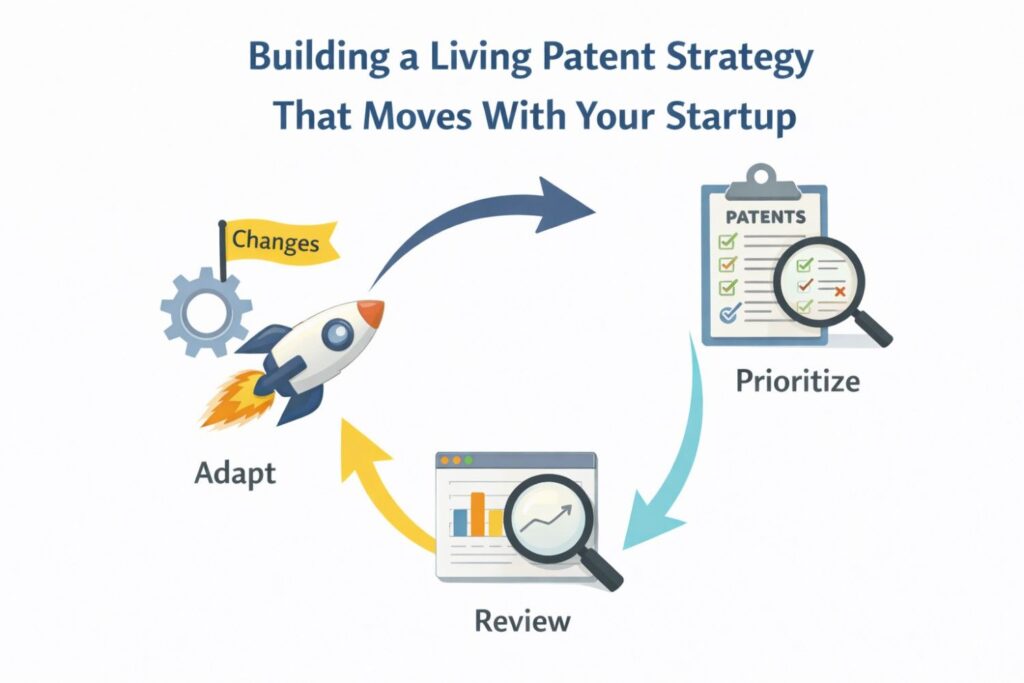
By linking patent reviews to product sprints, you remove the lag that causes drift.
Protection becomes part of building.
Make Engineers Part of the Process
Many companies treat patents as a legal task. That mindset limits quality.
Your engineers understand the deep logic of your system. They know the trade-offs. They know what failed before something worked.
If they are not involved early, your filings may miss the strongest angles.
Create a culture where engineers see patents as documentation of their best work, not paperwork.
When a major technical problem gets solved, pause and record it. What was the challenge? What approach did you take? Why is it better than common solutions?
With the right tools, this does not require long meetings. It can be structured, fast, and guided by experts who translate technical insight into strong filings without slowing your team down → https://powerpatent.com/how-it-works
Track Innovation as It Happens
Startups often underestimate how much innovation they generate.
Small improvements stack up. Performance increases. System stability improves. New workflows emerge.
If you wait until year end to think about patents, most of that detail is lost.
Instead, create a lightweight internal log of meaningful technical advances. Not every code commit. Only changes that improve capability, speed, cost, or scalability in a meaningful way.
Review that log on a fixed schedule. Decide what deserves filing.
This approach turns random inspiration into structured protection.
Align IP Strategy With Fundraising and Exit Plans
A living patent strategy is not just about engineering. It connects directly to capital and long-term plans.
Investors look for defensibility. Acquirers look for assets that strengthen their position. Strategic partners look for companies that own their core technology.
If your roadmap includes raising a larger round or positioning for acquisition in the next few years, your patent coverage should clearly map to your strongest growth drivers.
When you walk into due diligence, you want to show that your key systems are protected. Not just in theory, but in filed applications and issued patents.
This confidence can increase valuation and strengthen negotiation power.
That outcome does not happen by accident. It comes from steady alignment between roadmap and protection.
Adjust as Your Market Sharpens
In early stages, your market may be broad. Over time, it becomes clearer.
You may discover that one vertical responds better. Or that one use case drives most adoption. Or that your platform becomes known for one core capability.
As your focus sharpens, your patent strategy should sharpen as well.
File deeper in the areas that define you. Expand coverage around the technical flows that make you stand out.
Let go of protection that no longer reflects your identity.
A strong portfolio tells a story about who you are as a company. Make sure that story matches reality.
Build a Simple Operating System for IP
Living strategies need systems.
Decide how often you review innovation. Decide who is responsible for triggering discussions. Decide how decisions are made.
Keep it simple. The goal is consistency, not complexity.
Many startups fail here because traditional patent processes feel heavy and slow. That friction causes delay.
Modern platforms remove that friction. They give you visibility into filings, deadlines, and coverage in one place. They combine software speed with real attorney oversight so quality stays high while timelines stay tight.
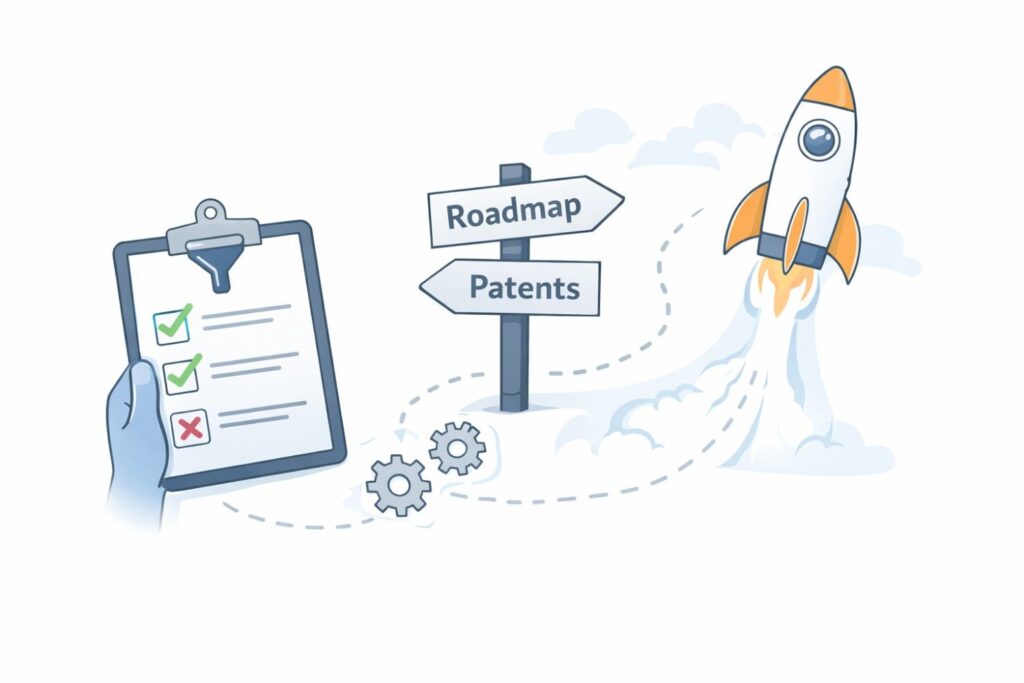
When the process feels manageable, teams actually use it.
If you want to see how a modern patent operating system works for fast moving startups, take a look here → https://powerpatent.com/how-it-works
Focus on Durability, Not Volume
It can be tempting to chase numbers. More patents sounds impressive.
But smart founders focus on durability.
Does this filing make it harder for a competitor to copy our core system?
Does it protect our long-term architecture?
Does it strengthen our hand in partnership or acquisition talks?
A small set of well-aligned, well-written patents often provides more value than a large stack of loosely connected filings.
Living strategy means quality first.
Revisit and Refine Over Time
Your first filing around a feature may be broad. Later, as the product matures, you may discover deeper technical layers worth protecting.
Use continuation filings or follow-up applications to refine and strengthen coverage.
This layered approach builds a wall over time. Early protection secures the foundation. Later filings reinforce the structure.
The key is staying engaged.
When your team views patents as part of long-term strategy rather than a one-time checkbox, refinement becomes natural.
Create Confidence Inside the Company
A living patent strategy does more than protect against competitors.
It builds internal confidence.
Your team knows their work is valued. Leadership knows core assets are secured. Investors see intentional growth.
That confidence changes how bold you can be.
You can enter new markets knowing your foundation is protected. You can negotiate partnerships from a position of strength. You can raise capital with clear proof of defensibility.
Protection becomes fuel for growth, not a drag on momentum.
Move Forward With Intention
Post-launch is when real companies are built.
It is also when many patent portfolios quietly fall out of sync.
You now know how to prevent that.
Tie protection to your roadmap. Review regularly. Keep what strengthens your core. Cut what no longer fits. File around what drives growth. Build a simple system that evolves with your startup.
When your patent portfolio matches your current roadmap, you gain clarity and control.
And when you combine smart software with real attorney oversight, you can move fast without sacrificing strength.
Wrapping It Up
You did not build your startup to play defense. You built it to create something new. To solve a real problem. To move fast and win. But once you launch, the game changes. It is no longer just about building. It is about protecting what you build so it cannot be easily taken. Your roadmap will keep evolving. Features will shift. Markets will sharpen. Competitors will appear. That is normal.