Licenses are supposed to be simple: you build something valuable, others pay to use it, and both sides win. But in the real world, licensing turns messy fast. Fees don’t match the buyer’s revenue. Renewal terms feel random. Founders guess instead of plan. And value—real value—gets lost in the noise.
Why Revenue-Aligned Licensing Creates Fair, Predictable Growth
When a license fee rises and falls with the customer’s revenue, something powerful happens: both sides finally move in the same direction. The licensor stops feeling like they are charging too much.
The licensee stops feeling like they are overpaying for something they are not fully using. Instead of tension, there is shared momentum. This shift turns a simple agreement into a long-term engine for growth.
Revenue alignment builds trust from day one
Most friction around licensing comes from uncertainty. Buyers worry they will lock themselves into a fee that grows faster than their business. Founders worry they will charge too little and leave value on the table.
When fees track revenue, you remove the guessing. Your customer knows the price will always match reality. You know your invention will be valued at the level it deserves.
This trust does not come from clever words. It comes from structure. A clear revenue-aligned formula shows that you are not trying to squeeze a sale but build a relationship.
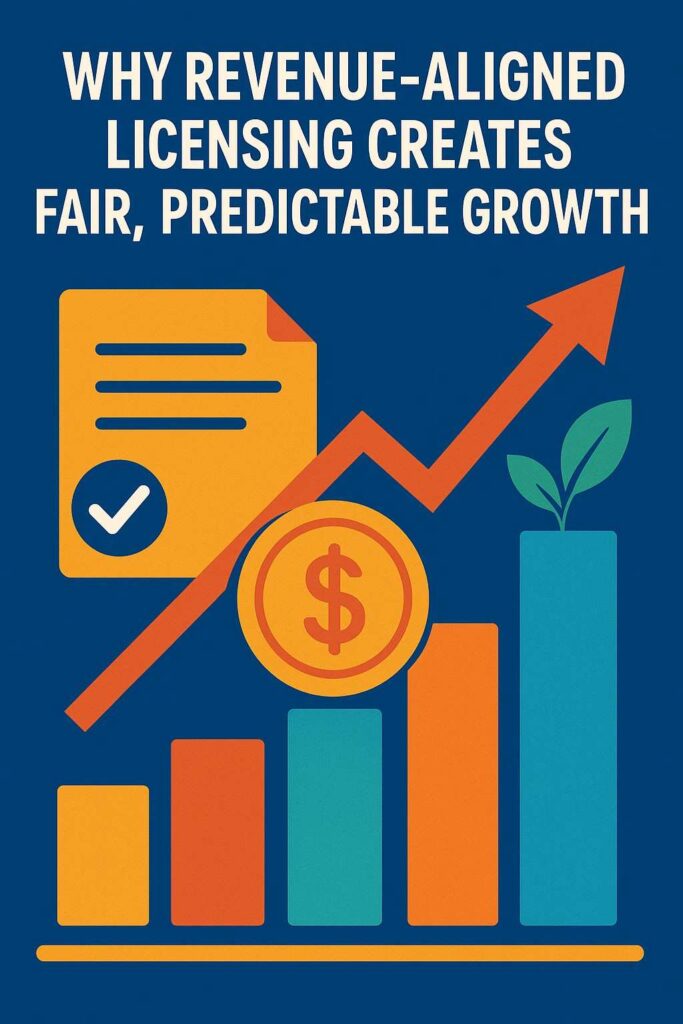
This type of structure shows strength, not softness. It communicates that your technology is valuable enough to grow with the customer, not sit as a one-time cost on their books.
Predictable growth depends on predictable behavior
Companies behave differently when their fees match their performance. They adopt faster. They integrate more deeply. They roll out to new teams sooner.
They rely on your tech because the cost will never outpace their ability to pay. This creates the type of predictability that founders crave: recurring revenue that grows without constant renegotiation.
A fixed-fee license may look simple, but it forces both sides to take on risk they do not want. One party always feels like they are carrying more than their share.
Revenue alignment removes that imbalance. Each month reflects real usage, real traction, and real value. Predictability becomes the natural byproduct.
Aligning incentives changes how customers talk about your product
When the customer wins, you win. That is the cleanest way to describe incentive alignment.
It also shifts the internal narrative around your product. Instead of being seen as a static overhead cost, your invention becomes a partner in the customer’s growth.
Teams inside the buyer’s company start framing adoption as an investment, not an expense. This subtle change drives deeper loyalty than almost any marketing message ever could.
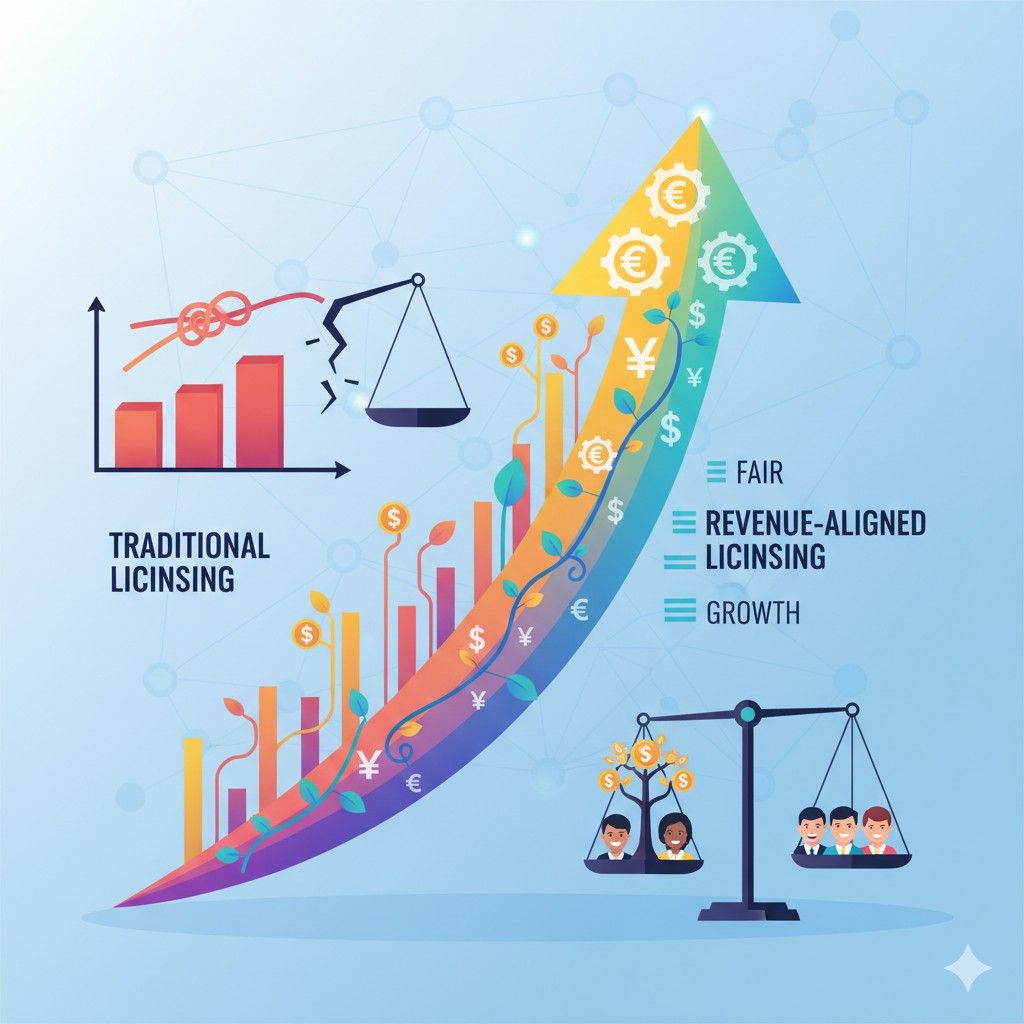
If a customer knows the fee rises only when their revenue rises, they stop hesitating. They stop delaying deployment. They stop trying to trim usage to save money.
Instead, they do what you want them to do: integrate fully, share results, and expand usage across new product lines or markets.
Actionable ways to make revenue alignment work in practice
To make this approach succeed, you need clarity. Begin by defining the revenue metric with precision.
Some companies want gross revenue, while others prefer net revenue or revenue directly tied to the product using your invention. Make this definition airtight.
The biggest reason revenue-aligned deals fail is ambiguity, not disagreement.
Once you define the revenue base, choose a percentage that reflects real value. Too high, and customers will resist. Too low, and you undermine your IP.
The right rate is rarely a perfect number; it is a range you refine through real conversations.
Start with a percentage that makes sense for your category. If your invention impacts core product functionality, the number may be higher. If it plays a supportive role, the number may be lower.
Then establish a simple reporting process that does not feel burdensome. The best systems use automated revenue data, not manual uploads or spreadsheets.
The more seamless the reporting, the less friction you create. Customers should feel like the fee is adjusting naturally, not through extra work.
Finally, anchor everything in transparency. Explain the reasoning behind the structure. Show examples. Walk customers through how the numbers change under different scenarios.
When people understand the mechanics, they stop worrying about the unknown and start embracing the upside.
Why this structure matters more as your IP grows
As your invention reaches new markets or is licensed across multiple partners, revenue-aligned terms become even more valuable. They remove the need to renegotiate every time a partner grows.
They ensure your earnings scale with usage even if you cannot track every internal deployment.
They also prevent stagnation. A partner may double their revenue without doubling their license fee if the agreement is fixed. With revenue alignment, the growth naturally reflects in your own numbers.
This model also protects you when customers shrink or pivot. If their revenue drops, they pay less. That may sound like a downside, but it is actually a safeguard.
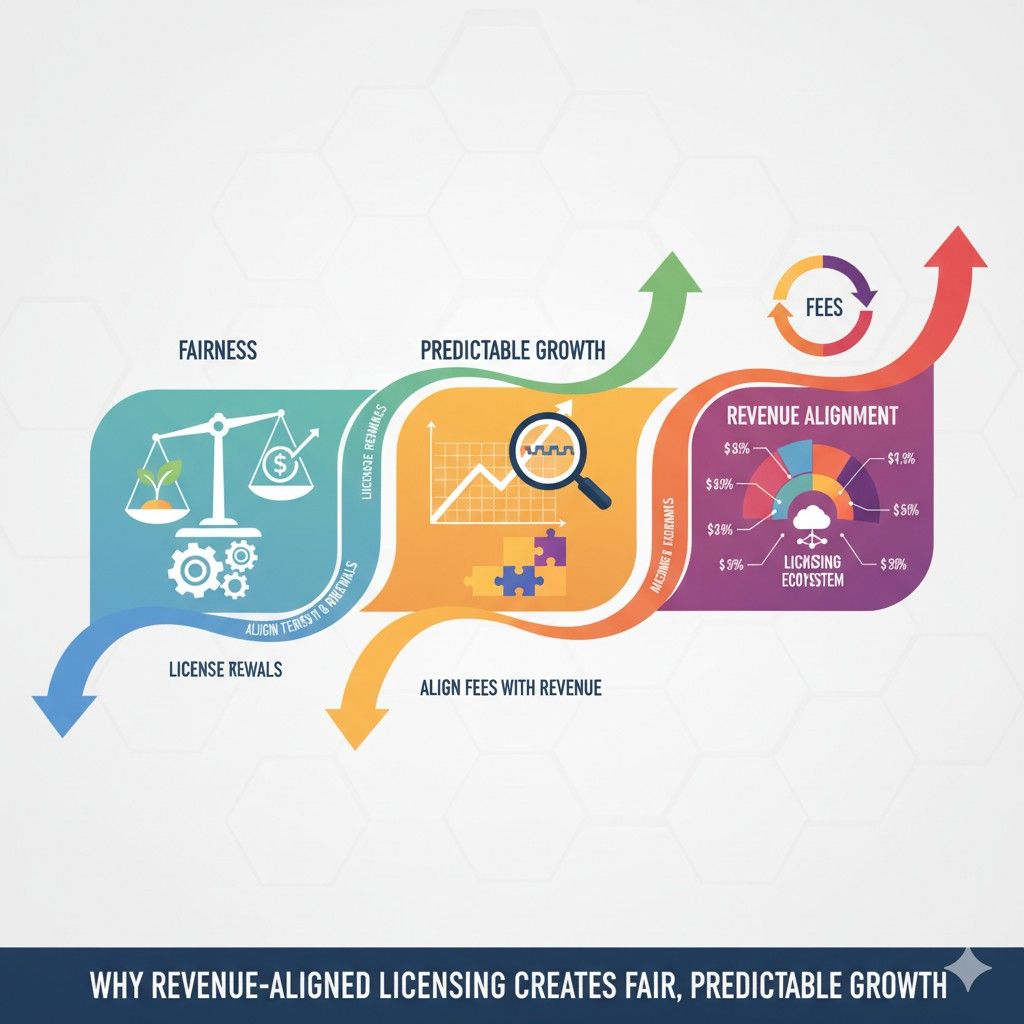
It keeps the partnership alive during hard times instead of forcing cancellations. A customer that stays is far more valuable in the long term than a customer forced out by rigid terms.
How to Structure License Fees That Scale With Real-World Use
When you set license fees that rise and fall with actual revenue, you create a system that feels natural, not forced. A system that matches how companies actually grow, slow down, pivot, or expand.
But the real power comes from structuring the agreement in a way that feels clean, fair, and easy for both sides to manage.
Most founders think this part is complicated, but it becomes simple once you focus on what the customer truly cares about: clarity, fairness, and zero surprises.
Start with the value your invention creates
Before you can set a revenue-aligned fee, you need to understand the type of value your invention produces. Some inventions create direct revenue. Others create efficiency, reduce risk, or make scaling easier.
The closer your invention is to generating revenue itself, the stronger your argument for a higher percentage.
When you tie the fee directly to the impact your invention has on their business, customers immediately see the logic. Instead of debating numbers, you start discussing impact.
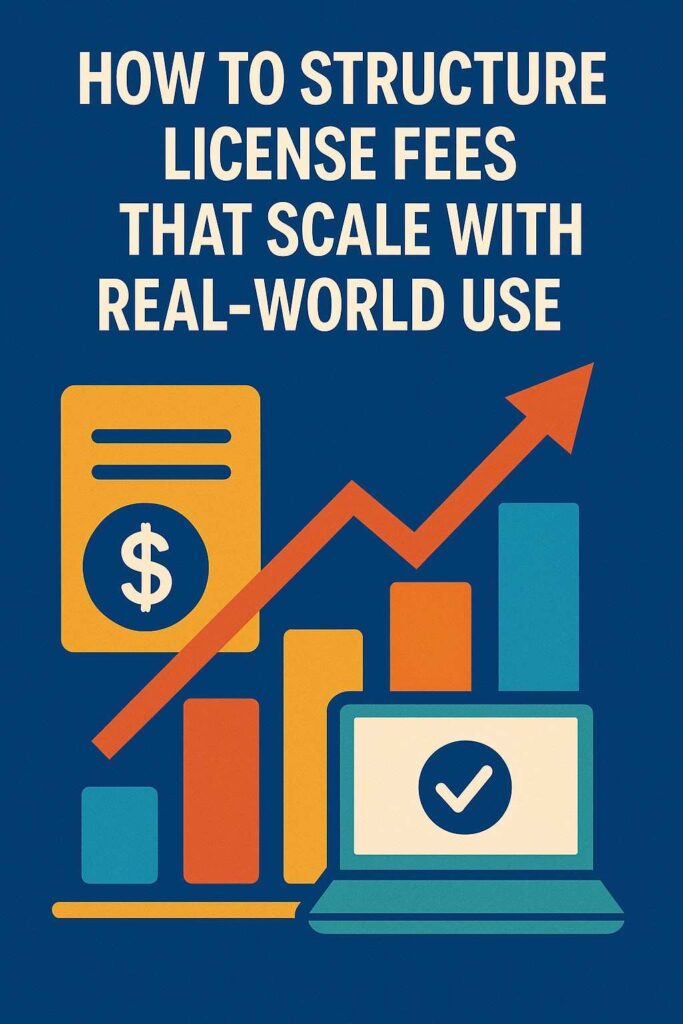
This approach works because it shifts the conversation away from cost and toward partnership. You are not selling a tool. You are providing leverage. And leverage is always easier to price when the structure mirrors the benefit.
Let the reporting mechanism reinforce trust, not suspicion
If the customer feels like the reporting process is a trap, the relationship weakens from the start. To prevent this, build the reporting system around automation, simplicity, and zero friction.
Many founders make the mistake of asking for custom reports or monthly statements that make the other side work harder. This creates invisible resentment. Instead, rely on existing revenue data the customer already tracks. The more familiar the metric, the faster they accept the structure.
If your customer already uses a standard accounting platform, tie reporting to those records. If they measure revenue at the product level, use those numbers.
The goal is always to avoid extra labor. When reporting feels effortless, the entire agreement feels lighter and more trustworthy.
Make the percentage feel natural, not arbitrary
The number you choose matters less than the way you explain it. A percentage with no story feels random. A percentage tied to the real-world value you deliver feels obvious.
Customers want to understand the reasoning behind the terms because it shows them you are not bluffing or guessing. You want them to feel like the fee is a natural part of their growth cycle, not a hidden penalty.
A good way to anchor your percentage is to show how it behaves under different revenue ranges. For example, show how the number looks at the customer’s current revenue, at half that amount, and at double that amount.
This helps the customer feel safe because they can see that the pricing never suddenly spikes. It grows gently and predictably.
Build in flexibility without weakening your position
Founders often fear flexibility because they think it shows weakness. In reality, controlled flexibility shows confidence. You can offer a ramp-up period where the customer pays a slightly lower percentage during the first months of adoption.
This encourages fast onboarding and early integration. After that period, the percentage rises to the standard rate. This structure helps the customer feel supported during the transition without compromising your long-term value.
You can also tie certain features or capabilities to specific revenue bands. This way, customers unlock new functionality as they grow, and the fee adjusts as part of that natural progression.

This feels less like a price change and more like a performance milestone. The customer sees their own advancement reflected in the agreement.
Allow the fee to scale without creating stress
A well-designed revenue-aligned license should never create panic for either side. Customers should feel comfortable growing without fear of runaway costs.
You should feel secure knowing that your invention receives fair compensation as usage expands.
To accomplish this, you can set gentle ceilings that adjust at certain intervals. These ceilings do not cap your growth forever; they simply keep the customer’s cash flow predictable during intense periods of scaling.
Once a certain revenue threshold is reached, the percentage can be reviewed or adjusted. This gives both sides a way to recalibrate without constant renegotiation.
It also keeps the structure aligned with market changes, product shifts, or new revenue streams that did not exist when the original agreement was signed.
Keep renewal simple and tied to performance
Renewal terms work best when they feel automatic. If customers know the license stays active as long as revenue-based fees are paid, renewals become a non-event.
You remove the anxiety and time drain of renegotiation. Instead, the agreement continues as long as both sides benefit. This makes renewals feel more like a natural continuation than a legal checkpoint.
If you do need to revisit terms, use revenue milestones, not dates, as your triggers. This removes the pressure of the calendar and replaces it with measurable business progress.
If the customer grows faster or slower than expected, the timing adjusts without disrupting the relationship.
Use transparency as your strongest negotiation tool
The easiest way to reduce resistance in licensing is through transparency. When customers understand how the fee is calculated, they relax. When they see how it scales with their revenue, they stop fearing hidden costs.
When they see the renewal structure, they stop worrying about future surprises. Transparency builds strength because it removes the fog around the agreement.
Explain the structure in plain language. Show simple examples. Walk through scenarios. Make sure nothing feels vague.
When a customer sees that you are clear, consistent, and open, they move faster, negotiate less, and trust more. That is the power of clarity in licensing.
This structure works even better when your IP is protected correctly
Revenue-aligned licensing only works if your IP is strong. When your patent is clear, defensible, and well-written, customers respect the structure. They see the uniqueness.
They understand the value. But when your IP is vague or incomplete, they push back. They challenge the terms. They question why the fee should scale with revenue at all.
This is why founders who plan to build licensing-based revenue should treat IP as a strategic asset, not an afterthought.
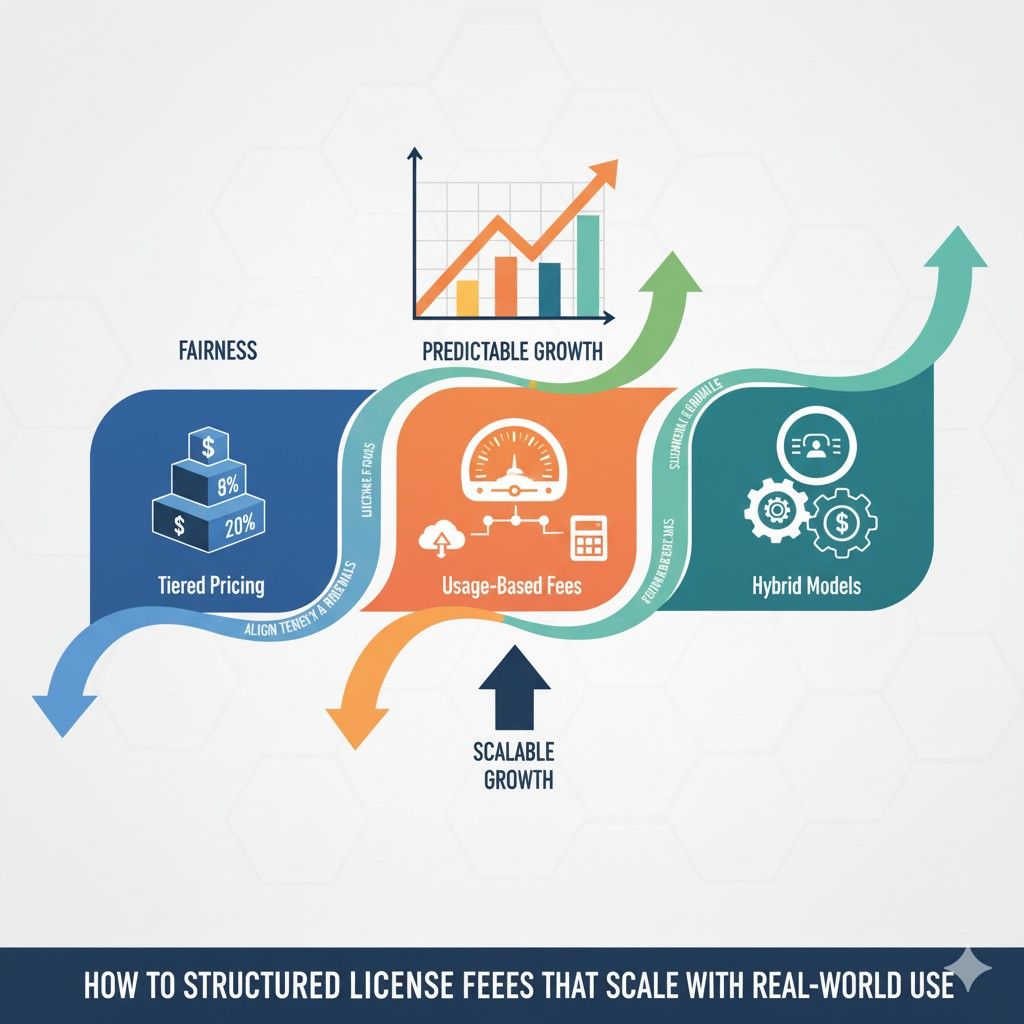
A strong patent foundation makes your licensing terms easier to defend, easier to negotiate, and easier to enforce. PowerPatent was built for this exact reason: to help founders create IP that supports growth, not slows it down.
Renewal Terms That Protect Your IP Without Slowing Deals
Renewals should never feel like a reset. They should feel like a natural continuation of a partnership that is already working. When renewal terms are designed well, they protect your rights, preserve your leverage, and keep revenue flowing without slowing momentum.
Many founders treat renewals as a formality or an afterthought, but renewal strategy is one of the strongest levers you have for long-term licensing success.
A smart renewal structure gives you predictability while removing unnecessary pressure from your customer. It strengthens the entire relationship by making the future feel stable instead of uncertain.
Renewals work best when they reinforce stability, not tension
Most of the tension around renewals comes from timing. If a customer sees the renewal date approaching, they often prepare for negotiation. Their legal team gets involved.
Their procurement team starts asking questions. Suddenly, what should be a simple continuation becomes a complicated process filled with back-and-forth and delays.
You can remove most of this friction by designing renewals that activate automatically.
If the customer continues using the invention and the revenue-aligned fee is paid each period, the license simply rolls forward. No re-signing. No new paperwork. No unnecessary drama.

This not only protects your revenue but also simplifies the customer’s internal workflow. Over time, your license becomes a quiet, dependable part of how their business runs.
Renewal terms should strengthen your leverage without feeling aggressive
You want your renewal terms to be firm, not forceful. A customer should feel like the default path is continuation, not renegotiation.
Instead of placing the burden on the customer to reinstate the license, you create a structure where the license continues unless they explicitly choose to end it.
This small shift in the default creates enormous leverage over time because inertia favors you.
Customers rarely want to disrupt systems that work. If your invention is integrated into their product or workflow, they will not want to pull it out without a very compelling reason.
A well-structured renewal clause quietly reinforces this dynamic. It helps your invention remain a long-term part of their ecosystem.
Build renewal pricing around clear performance triggers
The biggest mistake founders make is tying renewals to arbitrary dates rather than performance outcomes.
When renewal pricing is based on revenue milestones, the structure feels connected to real business results.
A customer who grows significantly should expect a meaningful adjustment at renewal. A customer who remains stable should not be punished with sudden price hikes.
This type of structure also allows you to adapt to changes in the customer’s market. If they expand into new territories, shift their revenue model, or launch a new product line that depends heavily on your invention, the renewal terms should adapt as well.
The key is using real data from the customer’s growth rather than relying on rough estimates or fixed increases.
Use renewals to maintain pricing discipline without creating anxiety
Many founders lose leverage over time because they hesitate to adjust pricing during renewal cycles. They worry that raising fees will scare the customer or introduce unwanted negotiation.
In reality, customers expect adjustments when the value they receive has increased. What they fear is unpredictability. If they know exactly how renewals work from day one, they will not feel surprised when the moment arrives.
This is why renewal terms should be explained clearly during the initial signing. When you outline how revenue triggers influence renewal pricing, the customer sees you as consistent rather than opportunistic.
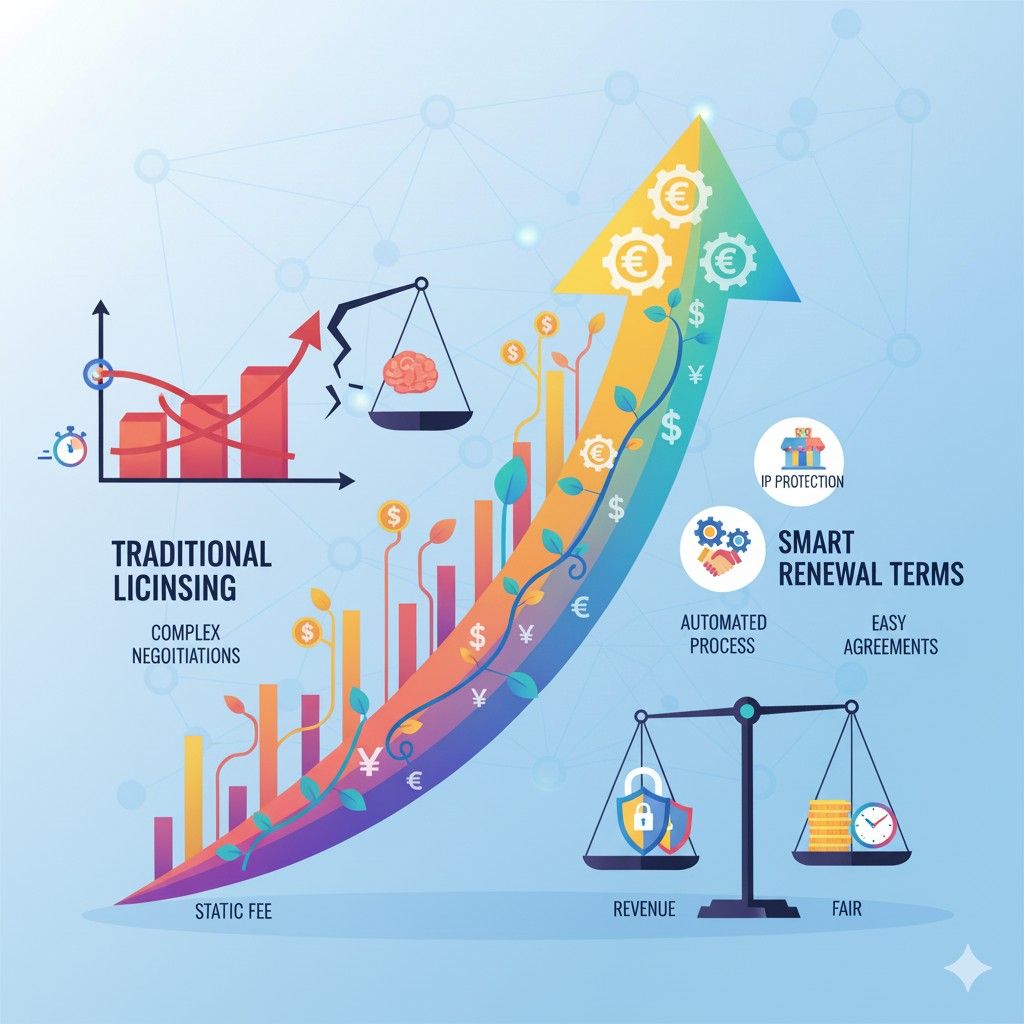
You stop being the party who suddenly increases the fee and instead become the party following a transparent structure. This transparency removes the emotional charge from pricing changes and keeps the relationship productive.
Build renewal conversations around impact, not cost
A renewal is not a moment to talk about price. It is a moment to talk about value. If your invention helped your customer enter new markets, run faster, reduce risk, or increase margins, the renewal conversation should reinforce that impact.
Customers renew because they remember why the invention matters. They need to see the story clearly, and you should guide them through it.
When you speak in terms of business results, not terms and conditions, you shift the entire tone of the renewal. Instead of asking whether they want to pay more, you help them see how the invention contributed to their success.
This makes renewal feel like a continuation of progress rather than a financial checkpoint.
Keep renewal timelines soft enough to avoid panic
Renewal dates should never catch a customer off guard. Even with automated renewals, you want to maintain gentle communication so the customer feels supported.
Offering reminders and guidance shows professionalism and keeps the process calm. If renewal requires any updates or switches to new terms, give the customer time to adjust without creating urgency.
When customers feel rushed, they begin pushing back. When they have time to consider the renewal, they relax into the decision and move forward more confidently.
Your goal is to remove stress from every part of the renewal cycle so customers associate your invention with ease, not tension.
Make renewals an extension of your growth relationship
Your renewal strategy should reflect where your business is headed, not just where it has been. If your technology evolves, your renewal terms should create room to grow into new offerings.
If your customer enters new markets, your renewal terms should adapt to that expansion. Renewal becomes a checkpoint where you can introduce upgrades, new features, or expanded rights without complicating the core agreement.
This is where having well-defined IP matters. When your patent protection is strong, your renewal terms carry more weight. You are not just renewing access to a tool.
You are renewing access to a protected invention that gives your customer a competitive edge. Customers treat the renewal more seriously because they know they cannot simply replace what you provide.
Strong renewals rely on strong IP, and strong IP starts with the right foundation
Licensing and renewals work best when your IP is solid, defensible, and easy to understand.
If you want customers to embrace revenue-aligned terms and long-term renewals, your invention needs to be protected in a way that makes its value undeniable.
PowerPatent helps founders and engineers build that kind of foundation. With clear, strong patents supported by real attorneys and smart software, you enter renewal discussions with confidence instead of hesitation.

You protect your invention. You preserve your leverage. You unlock the long-term growth that licensing was designed to create.
And you do it without slowing down product development or dragging your team into endless paperwork.
How PowerPatent Helps Founders Build Stronger, Smarter Licensing Foundations
Every smart licensing strategy begins with strong IP. When your invention is clearly protected, easy to explain, and backed by real legal strength, everything else becomes simpler. Your licensing terms become easier to negotiate.
Your renewal structure becomes easier to enforce. Your ability to connect fees to revenue becomes more credible. The entire system becomes smoother because your foundation is solid.
This is the part most founders underestimate. They jump straight into pricing, revenue share percentages, or renewal mechanics without realizing that the single biggest lever behind all successful licensing is the quality of the patent itself.
A strong patent makes deals effortless. A weak patent makes every conversation harder than it needs to be. PowerPatent exists to remove those weaknesses and transform your IP into a strategic growth engine.
Strong licensing starts with clear, defensible patents
A license is only as strong as the invention behind it. If your patent is vague or full of technical gaps, customers hesitate. They push back on pricing. They treat your technology as optional instead of essential.
But when your patent is precise, specific, and drafted with the right structure, the conversation flips completely. Customers recognize that your invention is distinct.
They see the competitive value. They understand why the terms are set the way they are.
This is why PowerPatent places so much focus on clarity. Not legal jargon. Not complicated language. Just a clean explanation of what the invention does, how it works, and why it matters.

When the language is simple and strong, customers understand the value faster. When the claims are solid, customers respect the structure. You gain leverage without ever needing to push for it.
Smart patents make revenue-linked licensing feel obvious
When your patent describes a real innovation that drives business outcomes, connecting fees to revenue feels natural. Customers see that your invention is part of their growth.
They understand why the fee scales with performance. They stop treating the license as a cost and start viewing it as participation in their success. But this clarity only exists when the patent explains the core value in clean, concrete terms.
PowerPatent helps founders express their invention in a way that makes its commercial impact clear.
Instead of filing a technical document that only an examiner can understand, you end up with a patent that helps your customer see exactly how the invention ties to their revenue. That is the foundation of a strong licensing model.
A strong IP foundation speeds up negotiations instead of slowing them down
One of the slowest parts of licensing is the negotiation phase. Legal teams want to understand what the invention does. Technical teams want to understand how it works.
Procurement teams want to understand the risk. When the patent is unclear, everyone asks more questions. Meetings multiply. Deals stall.
But when you walk in with an organized, clear patent supported by PowerPatent’s attorney oversight, everything moves faster. The customer sees professionalism.
They see detail. They see a partner who has taken the time to build a real asset worth paying for. This confidence cuts through weeks or months of friction.
The goal is simple: when the invention is easy to understand, the license becomes easy to accept.
Licensing becomes far more scalable when your patents are built to support long-term growth
Many early-stage patents are written narrowly because founders are focused on the first version of the product. But as the business grows, the invention evolves. New features get added. New markets open.
New use cases emerge. If your patent was drafted too narrowly, you lose leverage. You end up negotiating from a weaker position because the invention outgrew the protection.
PowerPatent helps founders avoid that trap. Patents created through the platform are built with future growth in mind. They are structured to cover not just the first release but the long-term evolution.

This matters because licensing agreements often run for many years. If your patent becomes outdated halfway through, you lose negotiating power during renewals. A stronger, future-ready patent keeps your leverage intact.
Clear patents reduce the need for legal escalation during renewal cycles
Renewals often bring tension. Customers want certainty. You want fair value. If the patent is ambiguous, both sides start pulling legal teams in. This slows deals, strains the relationship, and creates unnecessary cost.
A well-crafted patent reduces that friction. It gives you a stable foundation to stand on when explaining renewal terms. It gives the customer a clear reminder of what the invention protects and why it matters.
The renewal becomes a straightforward continuation, not a legal dispute. This is the environment where revenue-aligned terms thrive.
PowerPatent makes the entire IP process easier for founders who are building fast
Founders move quickly. They do not have time to translate their inventions into dense legal language or manage endless rounds of revisions.
PowerPatent exists to make the process feel simple, fast, and controlled. You bring the tech. The platform helps turn it into a patent that is both legally strong and commercially strategic.
You get attorney oversight without the delays of traditional firms. You get automation without losing human judgment. You get a clear, defensible patent without slowing your product roadmap.
This gives you the confidence to build licensing models that support your business instead of distracting from it.
Strong licensing depends on structure, and structure depends on clarity
When you want to connect license fees to revenue, you need a structure that customers can trust.
When you want renewals to roll smoothly, you need clarity around the invention itself. When you want long-term partners instead of one-time deals, you need a foundation that can grow with you.
PowerPatent helps you build that foundation. It removes the friction, the confusion, and the guesswork. It gives you a patent that supports your strategy instead of holding it back.
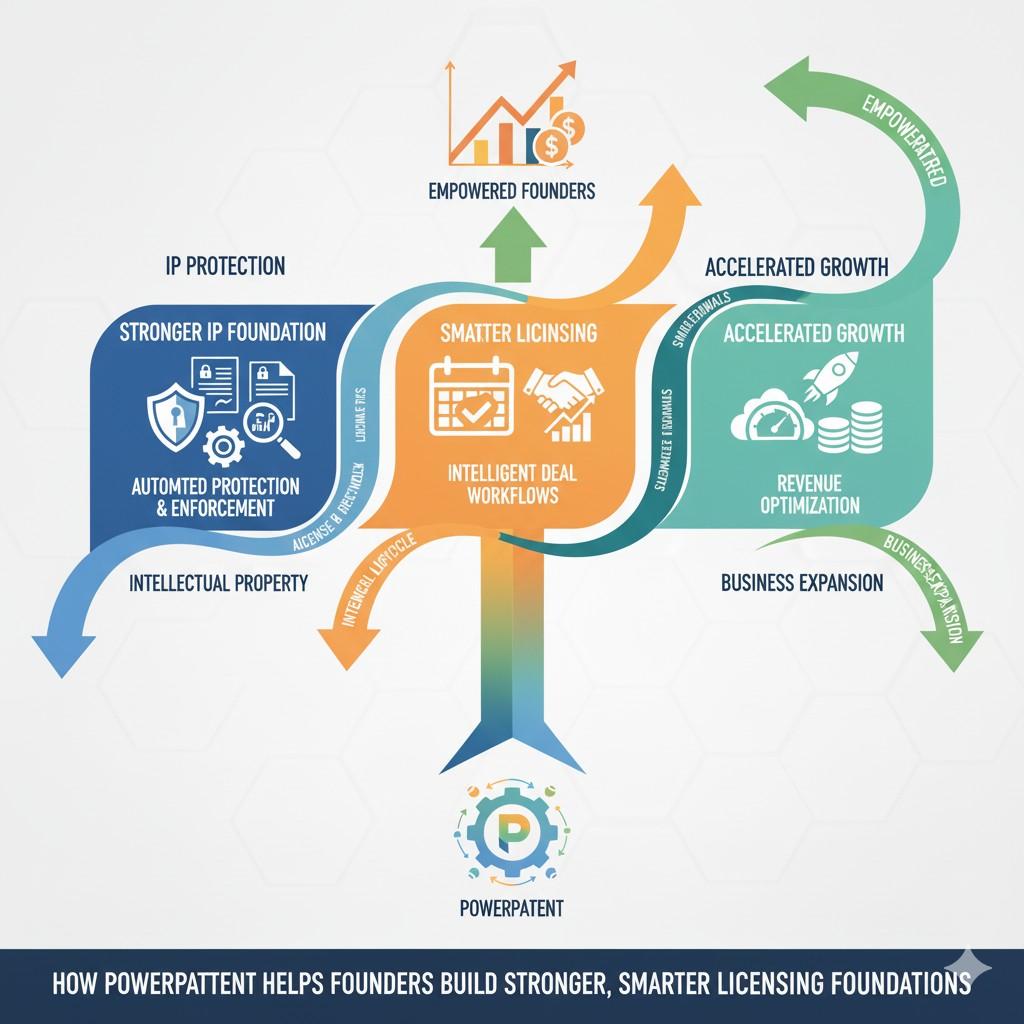
If you want to see how the platform works and how it can accelerate your licensing strategy, you can explore it here anytime: https://powerpatent.com/how-it-works
Wrapping It Up
Licensing works best when everything feels aligned. Your fees match the value your invention creates. Your renewal terms move with the customer instead of against them. Your IP foundation supports long-term growth instead of forcing constant reinvention. When these pieces fit together, licensing stops being a negotiation and becomes a partnership. It becomes the engine that helps your business grow without adding complexity or slowing your team down.