Fixing a patent after it’s granted sounds scary, but it shouldn’t be. Every founder, engineer, and inventor makes mistakes. Sometimes it’s a typo. Sometimes it’s a small detail that slipped through while you were racing to build your product. Sometimes the patent office makes an error on their end. And sometimes, after you finally get that issued patent in your hands, you spot something tiny but important that needs to be corrected before it turns into a real problem.
What a Certificate of Correction Really Is (And Why It Matters More Than You Think)
A Certificate of Correction may sound like a small administrative tool, but for a growing business, it can shape how strong your patent looks to investors, partners, competitors, and even future courts. This section helps you understand not just what it is, but why it can quietly protect the long-term value of your company. Many founders underestimate how much a single tiny mistake in a granted patent can snowball into a real risk. With the right moves, you can fix issues early, keep your IP clean, and avoid surprises during funding or due diligence.
Why small patent errors can turn into big business problems
Every company wants its patents to look solid and reliable, but simple filing mistakes can do more damage than people expect. When someone reviews your patent in the future, they do not know your intent.
They only see what is written. If they find inconsistent words or a technical typo that creates confusion, they may start questioning the rest of the document.
This doubt can change how investors judge you, how partners negotiate with you, or how rivals position themselves against you.
A Certificate of Correction removes this doubt before it spreads. It seals cracks that could weaken your protection later. Even if the correction seems tiny to you, cleaning it up early is a signal that your company takes its IP seriously.
Why the patent office cares about accuracy
Many founders think the patent office will overlook minor errors, but the truth is the office works hard to keep public patent records clean. When you submit a correction, you are not asking for special treatment. You are helping maintain a clear public record. The office wants your patent to be read and understood in the way it was meant to be. A Certificate of Correction is their approved channel for doing this.
This matters because a clean patent record makes the whole system more predictable. When your patent is easy to read and free from mistakes, it becomes harder for opponents to twist its meaning.
Why accuracy strengthens your negotiating power
If your company plans to raise money, partner with bigger companies, or license your technology, your patents will be inspected. A clean patent with no loose ends gives you stronger leverage. A corrected patent shows discipline. It communicates that your team reviews details and does not let mistakes linger.
Many founders do not realize how much this matters. Investors want to feel confident that your intellectual property is not only valid but well maintained. A Certificate of Correction is a simple way to show professionalism without slowing down your business.
When a small error can weaken legal strength
In legal disputes, every word in a patent matters. If a claim includes the wrong number, the wrong term, or a missing reference, a competitor might use that mistake to argue that your patent does not cover what you think it does. The gap might be tiny, but the argument can still cause trouble.
A Certificate of Correction closes these gaps fast. It creates an official record that the issue was fixed and that the meaning of the claim is clear. This reduces opportunities for opponents to attack your patent on technical grounds.
Why timing matters more than founders expect
The sooner you catch the mistake, the easier it is to correct. Early corrections are faster, cheaper, and less likely to raise questions.
The longer an error sits in your patent, the more likely someone is to notice it and use it against you. Early fixes show good faith and strong management of your intellectual property.
Timing also matters because a Certificate of Correction must be used before anyone challenges your patent. Once someone files a dispute, even a tiny correction becomes much harder to push through.
How corrections shape investor confidence
When investors perform due diligence, they look for friction. They look for problems that can slow down future deals or lawsuits.
A messy patent is a red flag. Even if the invention itself is great, a poorly maintained patent makes investors wonder what else might have been overlooked.
A Certificate of Correction is a small step that carries big weight. It removes red flags before investors find them.
It shows that your business understands both the technical side of the invention and the administrative side of protecting it.
How a corrected patent supports future licensing
If you plan to license your technology, your patent will become a bargaining tool. Licensees want clarity. They want to be sure they are paying for something that actually protects them.
A corrected patent looks polished and complete. It avoids awkward conversations where you have to explain an error during negotiation.
Cleaning up your patent early makes licensing discussions more predictable. It gives you smoother contract terms and avoids situations where the other side tries to discount the value of your IP because of small mistakes.
Why a Certificate of Correction helps protect company reputation
Your patents reflect your company. They show how well your team handles technical documentation and long term assets.
When a patent contains errors, even small ones, people make assumptions. Some believe it means the company rushed. Others worry about whether the patent truly covers the invention.
A Certificate of Correction helps you control that narrative. By fixing issues quickly, you show that your team cares about precision and that you take your invention seriously.
How to spot errors before they become real problems
One of the best habits a business can build is reviewing the issued patent as soon as it arrives. Do not assume everything printed is exactly what you submitted.
Compare the granted version to your final approved claims. Look for small formatting changes and unexpected edits. Many companies skip this step, and that is how problems grow unnoticed.
If you catch an error early, a Certificate of Correction becomes straightforward. If you wait too long, the same correction can turn into a longer legal process or even require a different type of amendment entirely.
Why moving fast avoids disruption later
The reason a Certificate of Correction works so well for businesses is because it keeps problems from piling up. It lets you stay ahead of issues instead of reacting to them.
When your patent portfolio grows, these early habits make your IP cleaner, stronger, and easier to manage.
Fixing things early also protects your team’s time. It avoids large corrections down the road that might require legal research, new filings, or back-and-forth discussions with partners or investors.
How PowerPatent helps companies stay ahead of mistakes
Many startups do not have the time or experience to watch for small errors in granted patents. That is where PowerPatent steps in.
The platform helps founders track their filings, review issued documents, and spot inconsistencies before they become real problems.
And when something does need correcting, the workflow makes it simple to prepare the right request with attorney oversight.
This keeps your IP clean without slowing down your product roadmap. It also reduces your legal spend, because catching small issues early is always cheaper than fixing big issues later.
If you want to see how this works in practice, you can explore the process anytime at https://powerpatent.com/how-it-works.
The Kinds of Mistakes You Can Fix After Your Patent Is Granted
Every patent goes through a long journey before it finally gets approved. With so many drafts, edits, office actions, and revisions, it is completely normal for small errors to slip in.
The good news is that a Certificate of Correction is designed exactly for these kinds of issues.
This section helps you understand what types of mistakes can be corrected, why the law allows these fixes, and how identifying them early protects your patent from future challenges.
Even simple errors can create confusion, so knowing what qualifies for a correction helps you act before the problem grows.
Why the correction must be minor in nature
The first thing to understand is that the correction has to be small enough that it does not change the meaning of your invention. The patent system is strict about this because you cannot expand or reshape your claims once the patent is granted.
A Certificate of Correction works only when the change is something that keeps the invention exactly as originally described.
That is why this tool is powerful but limited. It is meant for accuracy, not for restructuring your patent strategy.
This rule protects both you and the public. It ensures the correction does not surprise competitors with a last-minute change, and it saves you from reopening the entire examination process. The smaller the correction, the smoother the approval path.
When a typo becomes more than a typo
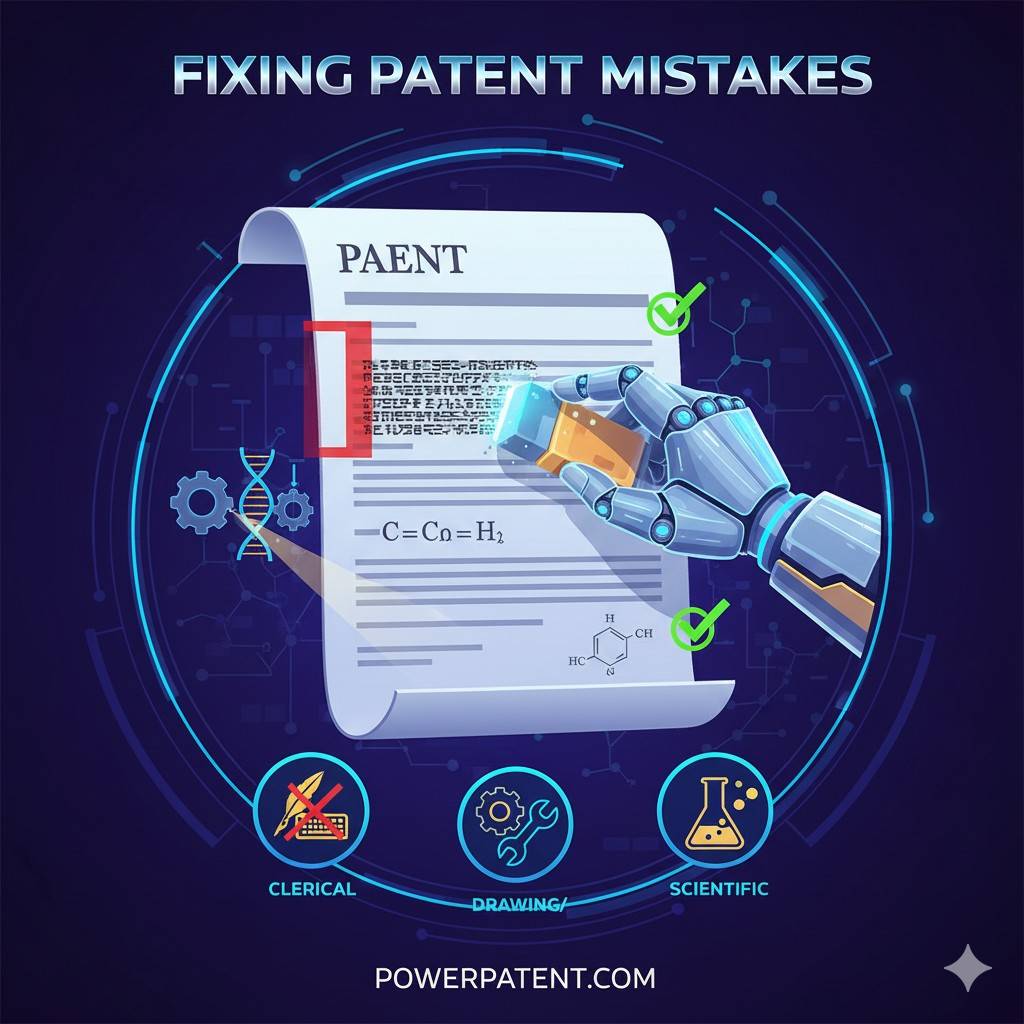
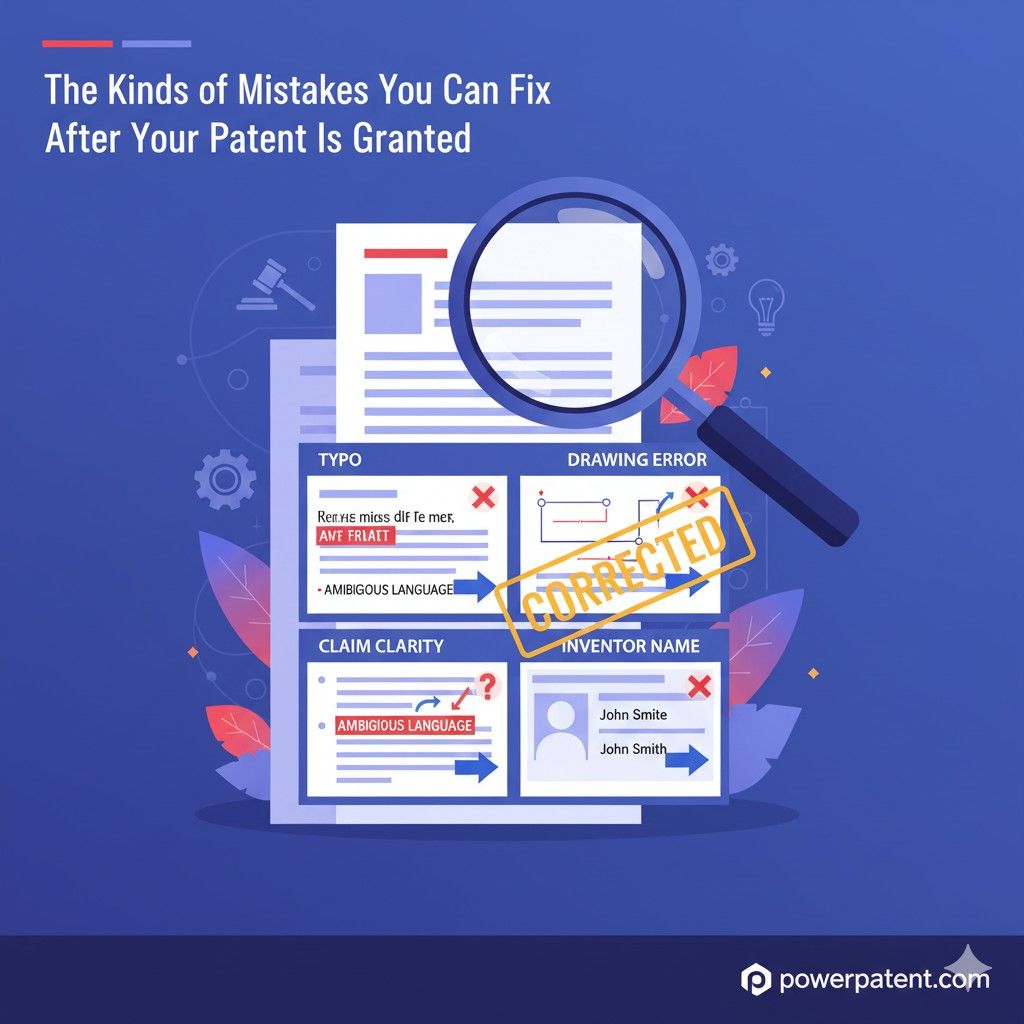
A simple spelling error might seem harmless, but sometimes it can disrupt the meaning of your claim or make the technical description confusing.
If a key term is misspelled, or if the same word appears in two different forms, someone reading the patent might wonder if they refer to the same thing. Small clarity issues like this can weaken your position later.
A Certificate of Correction helps you clean up these moments so the document reads clearly. When everything is spelled correctly and consistently, your claims stay strong.
When numbers or measurements are incorrect
Many patents rely on numbers, reference labels, and measurements. These values matter because they describe how the invention works. If a number is wrong, even by a small amount, the meaning of the invention can shift.
For example, if a component is supposed to be ten units long but the printed patent says one hundred units, the invention suddenly looks different.
Even if the mistake is obvious, you do not want a future reader guessing which value is correct. A quick correction restores accuracy and removes doubt.
When reference numbers do not match the drawings
Drawings and descriptions must match. If a drawing shows part 120 but the description calls it 210, a reader can get confused.
These mismatches happen more often than people expect because drawings are updated at different times than text. When there is pressure to finalize a filing quickly, these differences slip through.
A Certificate of Correction lets you align the numbers so everything matches. This is important because mismatches can lead someone to interpret your invention incorrectly, which can weaken enforcement later.
When the patent office introduces mistakes
Not every error comes from the inventor or the legal team. Sometimes the patent office introduces a formatting mistake or modifies text in a way that shifts a detail.
These printing errors can change spacing, punctuation, or even remove a word.
When the error comes from the office, the fix is usually straightforward. You simply point out what changed and why it is incorrect. The office understands these things happen and allows you to correct them without friction.
When the wrong inventor information appears
Inventorship is serious. If a name is misspelled or an initial is missing, it might sound like an easy oversight, but it can raise questions about ownership if left uncorrected.
A Certificate of Correction helps you fix these personal details so your ownership record stays clean.
Accurate inventor information also matters for investors because it shows your business manages intellectual property responsibly. Even small identity mistakes can distract from the strength of your technology.
When claim language contains small wording errors
Sometimes a claim includes a repeated word, a missing article, or a misplaced comma that alters the natural flow of the text. These small issues do not change what the invention is, but they can make the claim awkward to read.
Cleaning up these items makes your claim more precise. It also removes any chance that someone tries to exploit the awkward wording during a dispute. A smooth claim is harder to attack.
When abbreviations or terminology are inconsistent
If your patent uses a specific technical term, abbreviation, or acronym, that wording should stay consistent throughout the document.
When the same idea appears in two different forms, a reader may wonder whether the terms mean the same thing or describe two separate elements.
These inconsistencies are easy to fix through a Certificate of Correction, but they are also easy to miss if you are not looking closely. Correcting them strengthens your document without changing its substance.
When an error affects clarity but not meaning
The key idea behind a Certificate of Correction is clarity. If the correction makes the patent easier to understand without changing what the invention is, it usually qualifies.
Many founders assume they can only correct obvious typos, but the truth is that clarity issues are also valid grounds for correction.
This helps ensure your patent communicates exactly what you intended from the start. A clear patent is less vulnerable to misinterpretation, which gives your business more confidence in how it can be enforced.
When the correction protects future licensing or enforcement
One of the biggest reasons to fix small mistakes is that your future partners, investors, or acquirers will look closely at your patents.
If they see a confusing term, a mismatched number, or an unclear reference, it might slow the conversation or lead to more questions than expected.
Correcting these issues early helps your business present a clean patent portfolio. When the document looks sharp and accurate, it becomes easier for others to trust it. That trust builds smoother deals and stronger bargaining power.
Why identifying these mistakes early is a strategic advantage
The moment your patent is granted, you should review it with fresh eyes. Many founders assume that the guaranteed version of the patent will look exactly like the version they approved, but the final formatting often introduces small changes.
Treating this review as part of your process saves time, reduces future risk, and strengthens your IP foundation.
This early review is even easier with PowerPatent because the platform helps you compare drafts, track issues, and request corrections with attorney oversight.
The goal is to help you fix small mistakes before they turn into large problems. You can explore how this support works at https://powerpatent.com/how-it-works.
How the Certificate of Correction Process Works From Start to Finish
The process of getting a Certificate of Correction may look formal from the outside, but once you understand the steps, it becomes surprisingly predictable.
This section walks you through the flow from the moment you spot an error to the moment your correction becomes part of the official record.
The goal is to help you understand how to move quickly, avoid common mistakes, and keep your patent portfolio clean. When you know how the process works, you can act with confidence instead of hesitation.
Why the first review helps you move faster
The moment your patent is granted, it becomes a public document. That is why the first review you do right after issuance is so important.
You want to catch anything that looks off before the document spreads into the hands of investors, partners, or competitors.
This early review also helps you avoid delays because the patent office is more willing to approve corrections when they are submitted soon after grant.
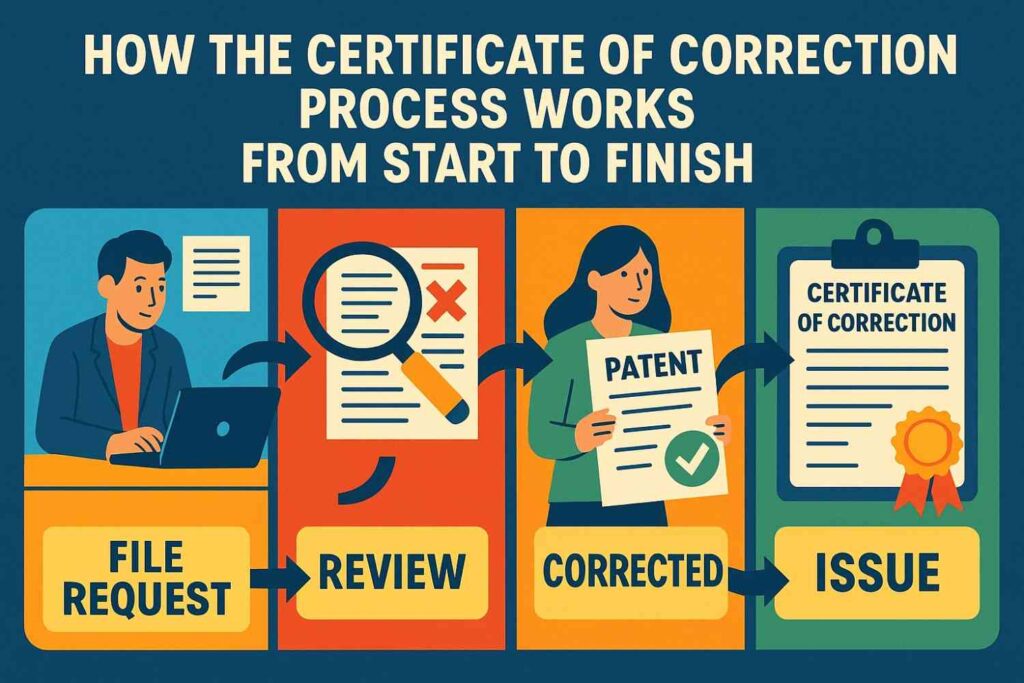
Doing this review with a calm and fresh mindset helps you see things you might have glossed over during prosecution.
The point is not to judge yourself. It is simply to protect your patent from misunderstandings that could appear later.
How to identify the kind of error you are dealing with
Before you file anything, you need to determine whether the error came from your side or from the patent office. This matters because the filing approach changes slightly.
If the mistake came from the office, the correction is handled more quickly. If the error came from you or your attorney, you must provide a short explanation showing that it was unintentional and that fixing it does not change the scope of your claims.
This small step of identifying the source of the error helps you prepare a clean submission. It also shows the office that you understand the rules, which makes the process smoother.
Why showing the correction clearly is essential
When you prepare a request for a Certificate of Correction, the patent office wants to see exactly what changed. That means you must show the original wording and the corrected wording in a clear way.
The office does not want to guess. They want to see the difference at a glance so they can confirm that the correction is minor and does not reshape the invention.
When corrections are presented clearly, the examiner can approve them faster. When they are vague, the office may ask for clarification, which slows everything down. That is why clean wording saves time and protects your momentum.
Why the correction must not alter claim meaning
The patent office pays close attention to whether your correction changes the meaning of the claim.
If it does, they will not allow it through this channel. The Certificate of Correction is only for small fixes. Anything larger must go through a different amendment process.
That is why you need to explain in simple terms why the correction does not change what was originally intended. When your explanation is clear and confident, the office can approve the correction without unnecessary delays.
How the request is submitted to the patent office
The actual act of submitting the correction is straightforward. You transmit it to the patent office, along with the small fee if the mistake came from you.
If the error came from the office itself, there is usually no fee. Once the request is filed, it enters a queue for review.
From this moment forward, the office examines the request to confirm two things.
First, that the correction is indeed minor. Second, that everything is presented in the required format. If the request meets those criteria, it moves to approval.
What happens during the internal review
Inside the patent office, the request goes through a brief review process. It is not like a full examination. There are no arguments or back-and-forth discussions unless something is unclear.
The reviewer simply checks that the correction fits the legal definition of a minor error.
If the office agrees that the correction is valid, the patent record is updated. If something is off, they send a notice asking for clarification. This is why clarity at the start prevents extra steps later.
Why the approval is added to the public record
Once approved, the correction becomes an official part of your patent. It is added to the public record so future readers can see exactly what was changed.
This transparency is important because it keeps the system fair. It shows that you made a correction but did not attempt to expand your invention or shift your claims after grant.
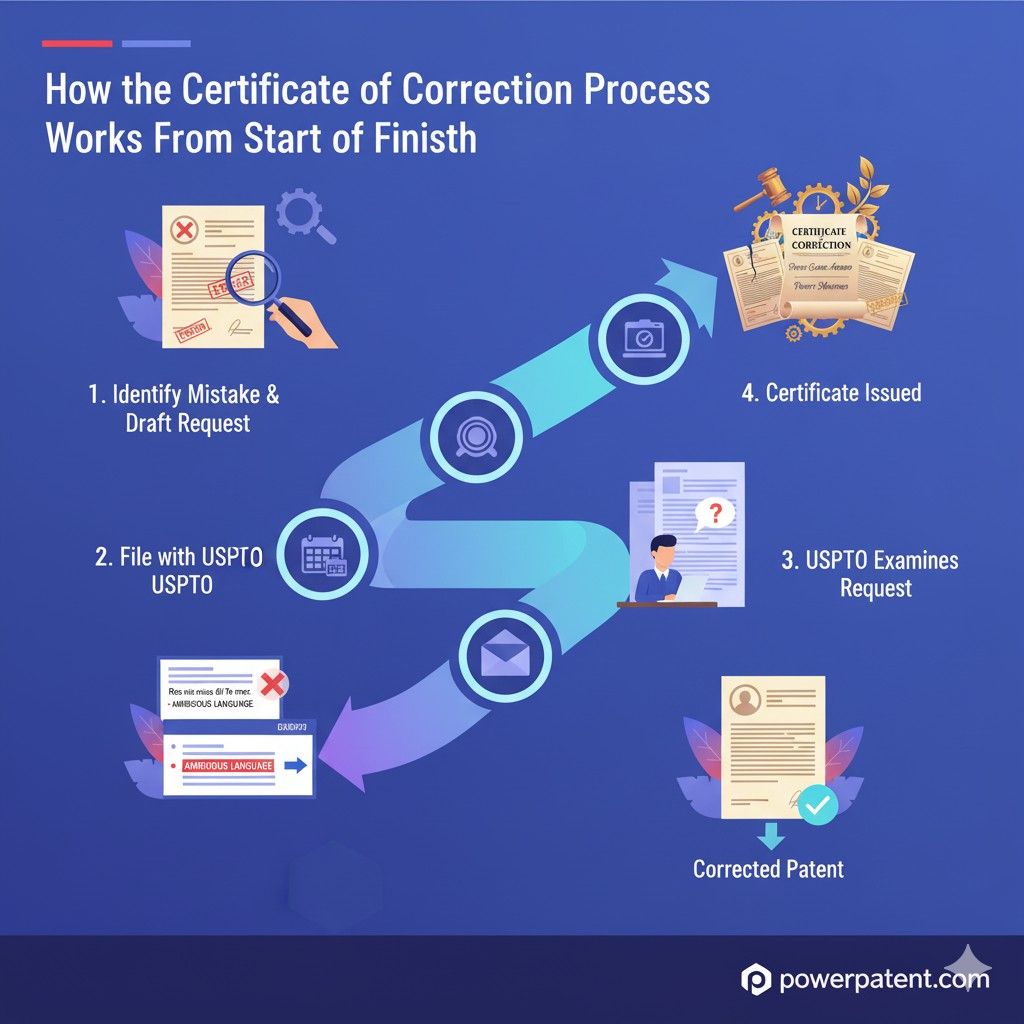
For your business, this official record becomes a shield. It proves that you fixed the mistake promptly and through the proper channel. It also prevents competitors from arguing that the original error weakens your protections.
How the corrected patent helps during investor diligence
The moment the correction is added to the record, your patent becomes cleaner. When investors review your portfolio, they will see a corrected document rather than an ambiguous one.
This strengthens your position and removes unnecessary discussion about what the patent actually covers.
A smooth diligence process can save weeks of backtracking. A corrected patent shows investors that you manage intellectual property responsibly, which adds quiet confidence to every conversation.
Why speed matters during the correction stage
Even though a Certificate of Correction is simple, timing still matters. If a dispute arises before you file the correction, the office may not allow it. That means you want to act before anyone challenges your patent.
Filing early protects you from claims that the correction was made in response to a lawsuit or conflict.
When you move fast, your patent remains stable. When you wait too long, the same small error can turn into a larger issue that requires more expensive legal steps.
How the corrected document influences enforcement strength
When you stand behind a corrected patent, your claims read clearly. You do not have to explain around an error or rely on assumptions. Everything is supported by the official record.
This clarity makes your patent easier to defend and harder to attack.
Competitors often look for technical weaknesses, not just inventive weaknesses. A corrected patent shuts those doors and directs attention back to the core invention itself.
How PowerPatent makes the process easier for businesses
Handling corrections manually can take time and attention that founders often do not have. PowerPatent makes the process smoother by helping you spot inconsistencies, compare versions, and prepare corrections with attorney oversight.
This reduces stress, saves money, and prevents the kinds of risks that show up during diligence or litigation.
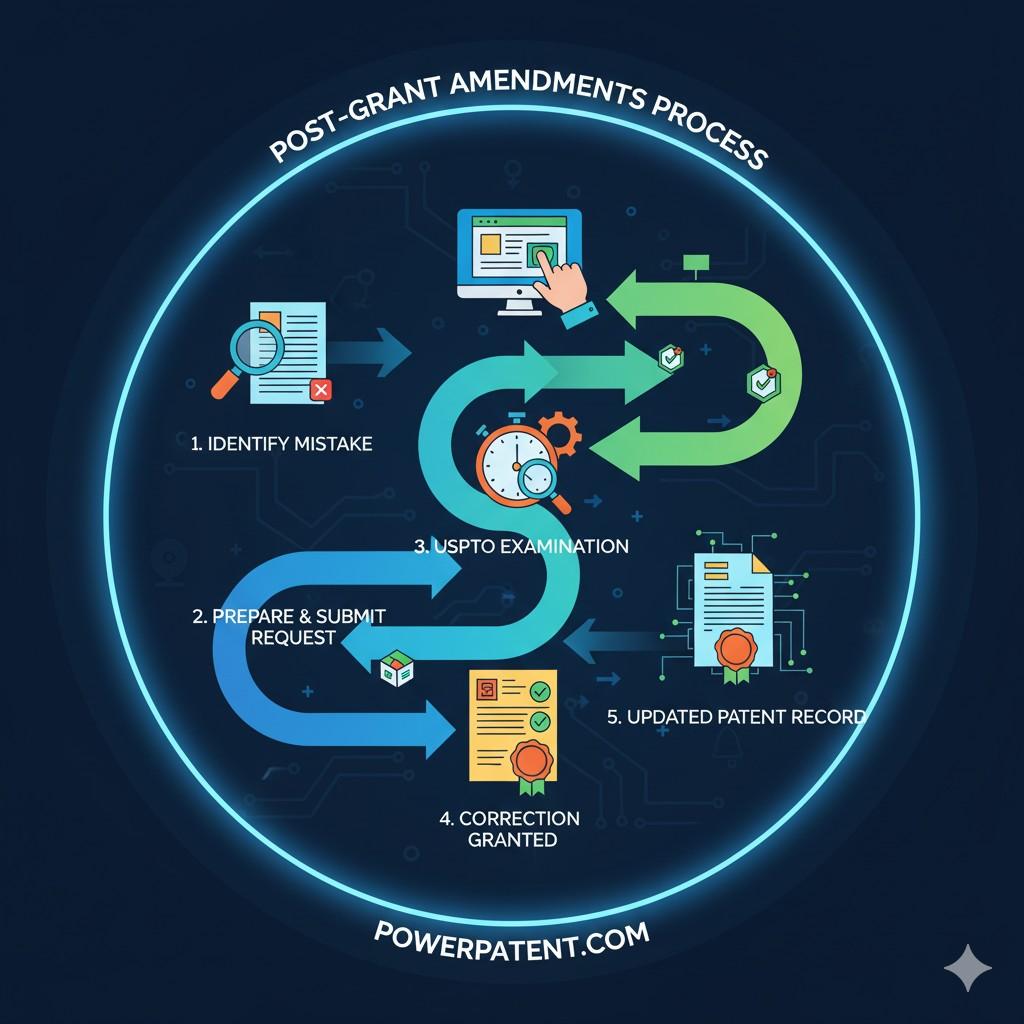
If you want to see how this works inside the product, you can explore it at https://powerpatent.com/how-it-works. The whole goal is to help you keep your patents clean without slowing your pace as a builder.
How PowerPatent Helps You Catch Mistakes Early and Fix Them Fast
Protecting your ideas is not just about getting a patent approved. It is about keeping that patent strong, clean, and ready for any moment where someone questions its value.
Startups move fast, and the reality is that early mistakes often hide inside granted patents simply because teams do not have time to read every line again once the approval arrives.
This is where PowerPatent becomes more than a tool. It becomes your system for spotting problems before they turn into real risks. It helps your team protect your future while letting you stay focused on your product.
Why early detection matters for fast-moving teams
Most founders do not notice small errors in their patents until someone else finds them. Sometimes that “someone else” is an investor during diligence. Sometimes it is a partner reviewing your IP.
And in the worst cases, it is a competitor looking for a crack they can use against you.
PowerPatent helps you catch these issues before they reach those eyes. It brings a structured layer of review that does not slow down your workflow but still keeps your IP clean.
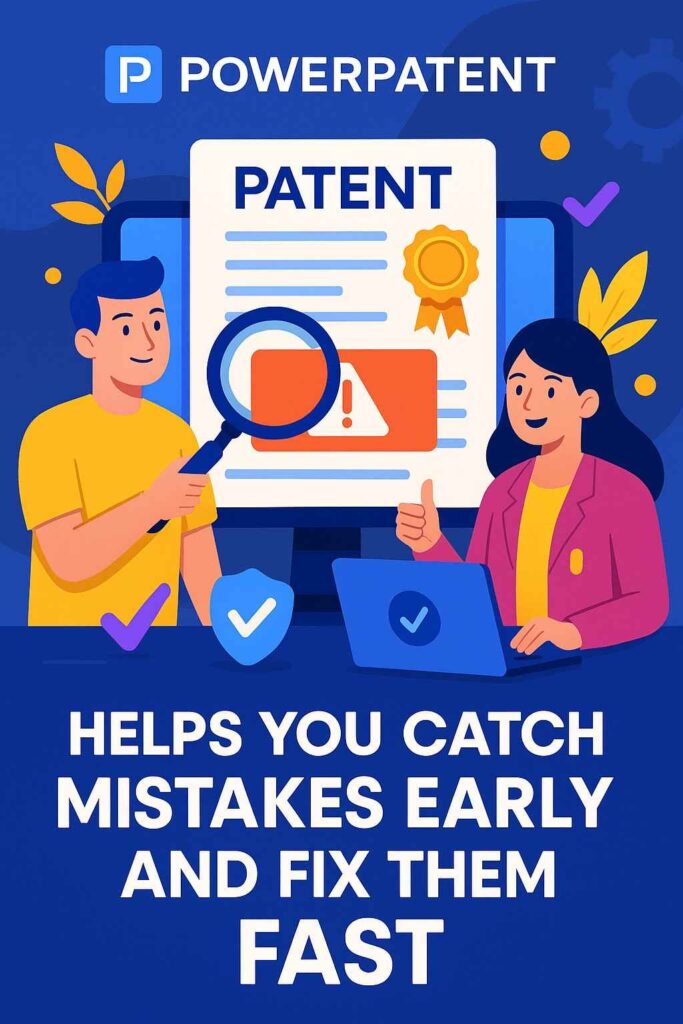
Early detection gives you control. When you find issues early, you correct them on your own schedule, not under pressure from an investor call or legal deadline.
How automated checks save founders countless hours
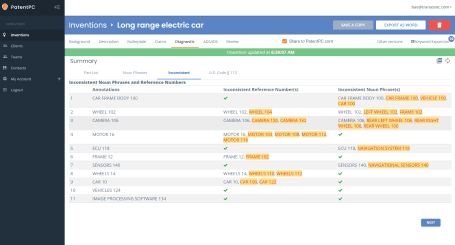
PowerPatent uses software to analyze your patent documents and flag inconsistencies. Instead of searching line by line, you see clear signals where something looks unusual.
These could be numbering mismatches, formatting inconsistencies, or small language changes made by the patent office during printing.
For founders, this automation is a relief. You get peace of mind without spending days on manual review. The tool works quietly in the background, while you stay focused on building your product and serving your customers.
Why attorney oversight matters even when software is strong
Even with smart software, patent work still benefits from expert guidance. PowerPatent includes real attorney oversight so you never feel like you are navigating the correction process alone.
When a correction is needed, you have human review ensuring the request is accurate, well-framed, and ready for fast approval.
This combination of automation and attorney support gives you something rare. It gives you speed without sacrificing quality. Startups often feel forced to choose between moving fast or being legally precise. PowerPatent lets you do both.
How comparison tools help you spot hidden changes
One of the most stressful moments for founders is comparing the granted patent with the final draft they approved. The documents often look similar, but tiny edits can hide inside new formatting.
PowerPatent gives you a direct comparison view so you can see what changed during printing or final processing.
This feature matters because even a small wording shift can create uncertainty later. With comparison tools, you no longer worry about missing something subtle.
Everything is highlighted clearly, which makes corrections faster and cleaner.
Why guided workflows remove the guesswork
Most founders are not sure how to format a Certificate of Correction request. They also are not sure what the patent office expects, how to phrase the explanation, or how to show the correction cleanly.
PowerPatent solves this by giving you a guided workflow that walks you through each step. You answer simple prompts, upload any necessary documents, and the system prepares a structured, office-ready submission.
This removes the fear of “messing it up.” It turns something that once felt like a legal puzzle into a calm, predictable task you can complete without stress.
How PowerPatent keeps your patent portfolio investor-ready
If your startup plans to raise money, every patent in your portfolio will be reviewed. Investors look closely at the details because they want to know you have protected the core of your technology.
A clean patent gives them confidence. A messy patent makes them pause.

PowerPatent keeps your portfolio polished. By spotting issues early and helping you correct them, the platform ensures you never walk into an investor meeting with a patent full of avoidable mistakes.
This saves you from awkward explanations and lets you present your IP as a true asset.
Why a clean patent reduces negotiation friction
When you negotiate a partnership, license, or acquisition, the other side will review your patents line by line. Even small errors can cause unnecessary conversations.
These slow down negotiations and give the other party leverage to push for better terms.
A corrected patent avoids these distractions. PowerPatent helps you resolve the issues before negotiations begin, which means the other side sees a well-maintained, trustworthy patent.
The conversation stays focused on value, not clean-up work.
How the platform prevents small errors from becoming large costs
The biggest danger of an uncorrected patent error is not the error itself. It is the cost of fixing it later.
If you miss the chance to use a Certificate of Correction and someone challenges your patent, the correction might require a more complex legal process. That process costs more money, takes more time, and brings more risk.
PowerPatent helps you avoid this by encouraging early corrections. It alerts you to small issues so you never let them linger until they grow into something bigger. This proactive approach protects your budget and your timeline.
How PowerPatent supports growing portfolios
As your company develops more inventions, your patent portfolio grows. Managing multiple granted patents can get overwhelming.
Tracking errors, checking versions, and preparing corrections for several documents at once can consume your team’s time.
PowerPatent scales with you. It organizes your patents, shows where attention is needed, and keeps everything in one simple interface.
The platform becomes your single source of truth, which lets your team stay organized even when your IP portfolio expands rapidly.
Why founders trust PowerPatent to guide post-grant corrections
Founders appreciate tools that remove complexity. PowerPatent does this by combining intelligent software with human expertise. The system does not ask you to understand legal rules or memorise patent office formatting.
It lets you act confidently with clean instructions, easy tracking, and attorney review where needed.
This trust grows because the tool earns it. It catches issues you would not see, helps you correct them before others notice, and keeps your IP strong without pulling you away from your core work. For a startup, this balance is priceless.
How to explore PowerPatent if you want to see it in action
If you want to understand how PowerPatent fits into your workflow or how it simplifies post-grant corrections, you can take a quick look at the process anytime at https://powerpatent.com/how-it-works.
The walkthrough shows how the platform spots errors, helps you prepare corrections, and supports your team through attorney oversight.

It is designed for inventors, engineers, and founders who want strong patents without slowing down their momentum.
Wrapping It Up
Every startup wants patents that feel solid, clean, and ready for the real world. But the truth is, mistakes happen in every patent. Some come from the rush of building. Some come from last-minute edits. Some come from the patent office itself. What matters is not whether the mistake happened. What matters is how quickly you catch it and how confidently you correct it.