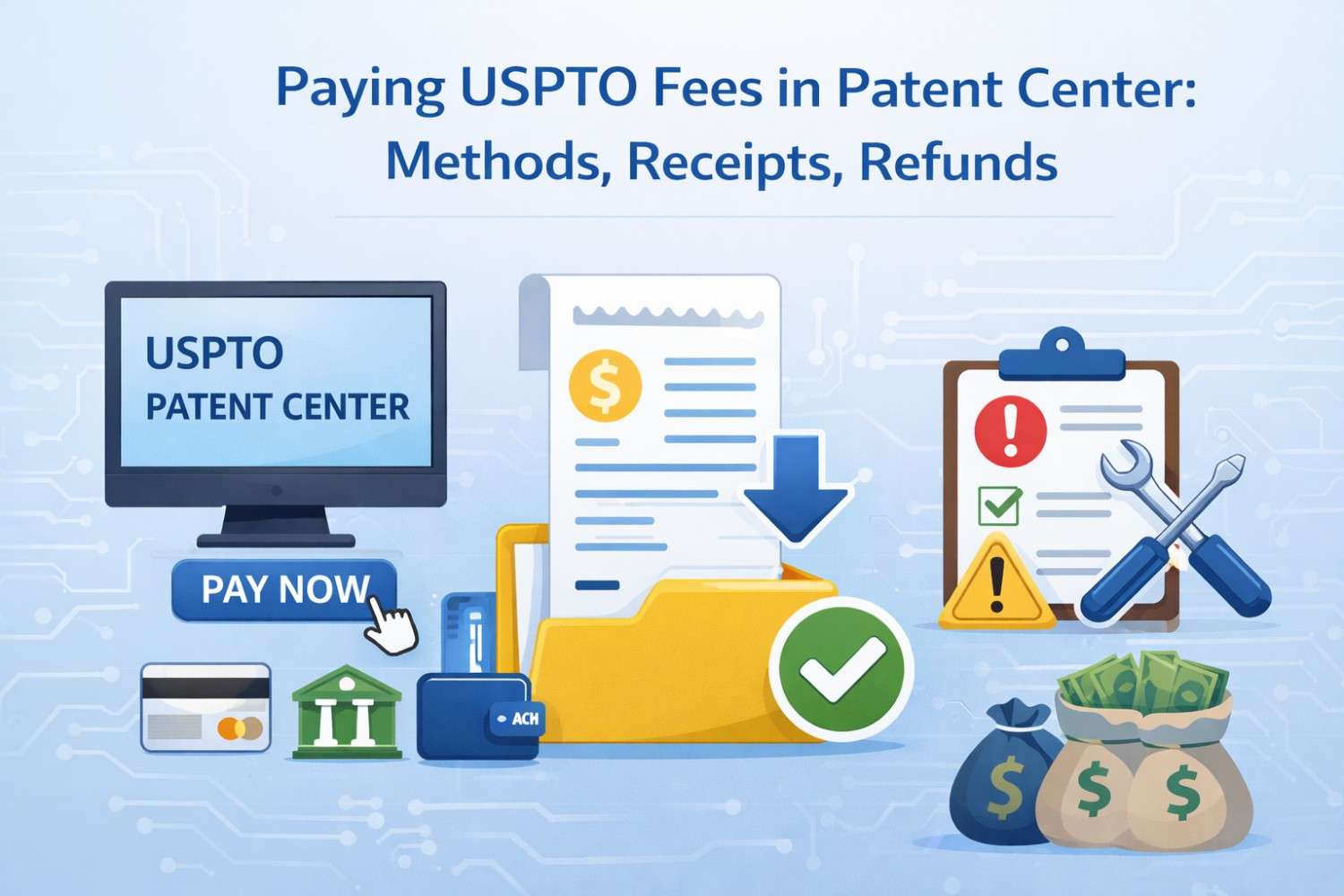
Paying patent fees should never feel confusing, risky, or slow, yet for many founders it still does. If you are using USPTO Patent Center, the moment you reach the payment step is where stress often spikes, mistakes happen, and time gets wasted. This article is written to remove that stress completely. We will walk through how payments really work inside Patent Center, what methods are allowed, how to prove you paid, what happens when something goes wrong, and how refunds actually work in the real world. No legal talk. No filler.
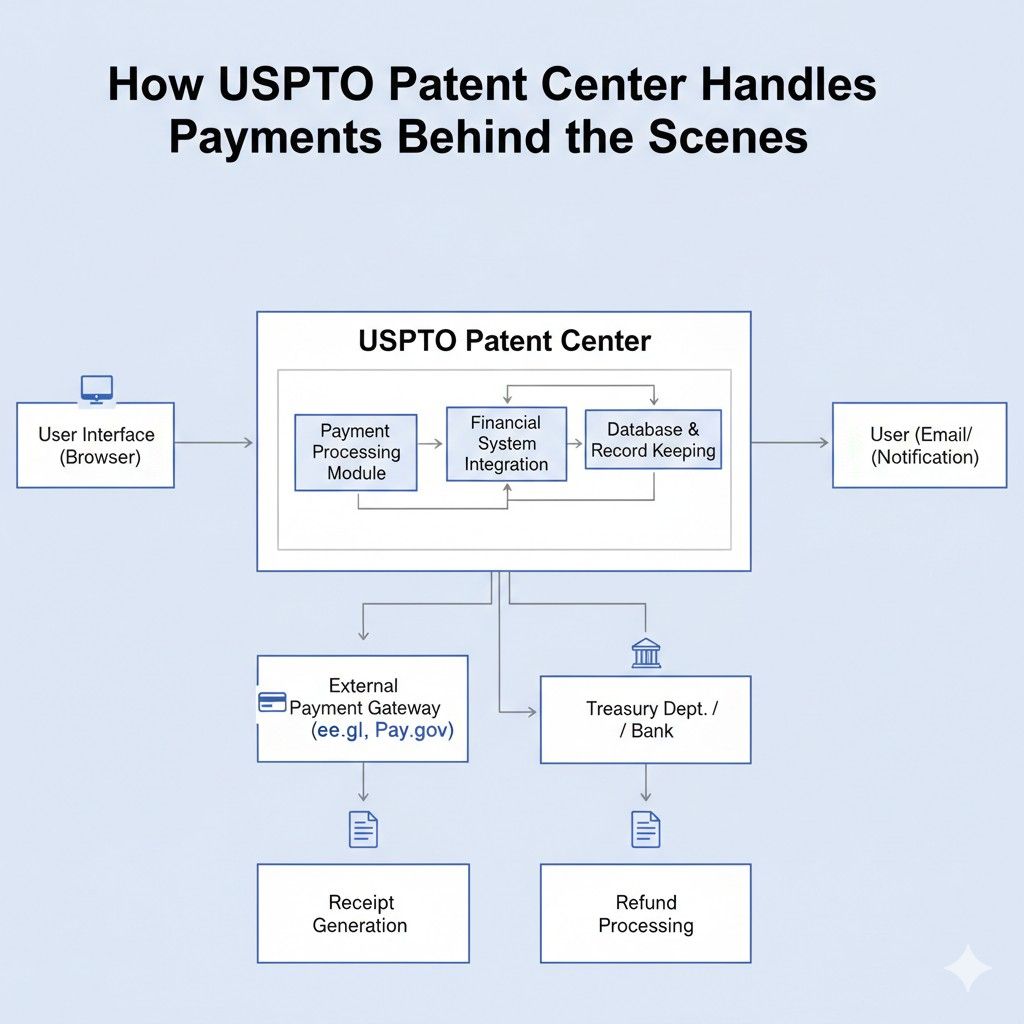
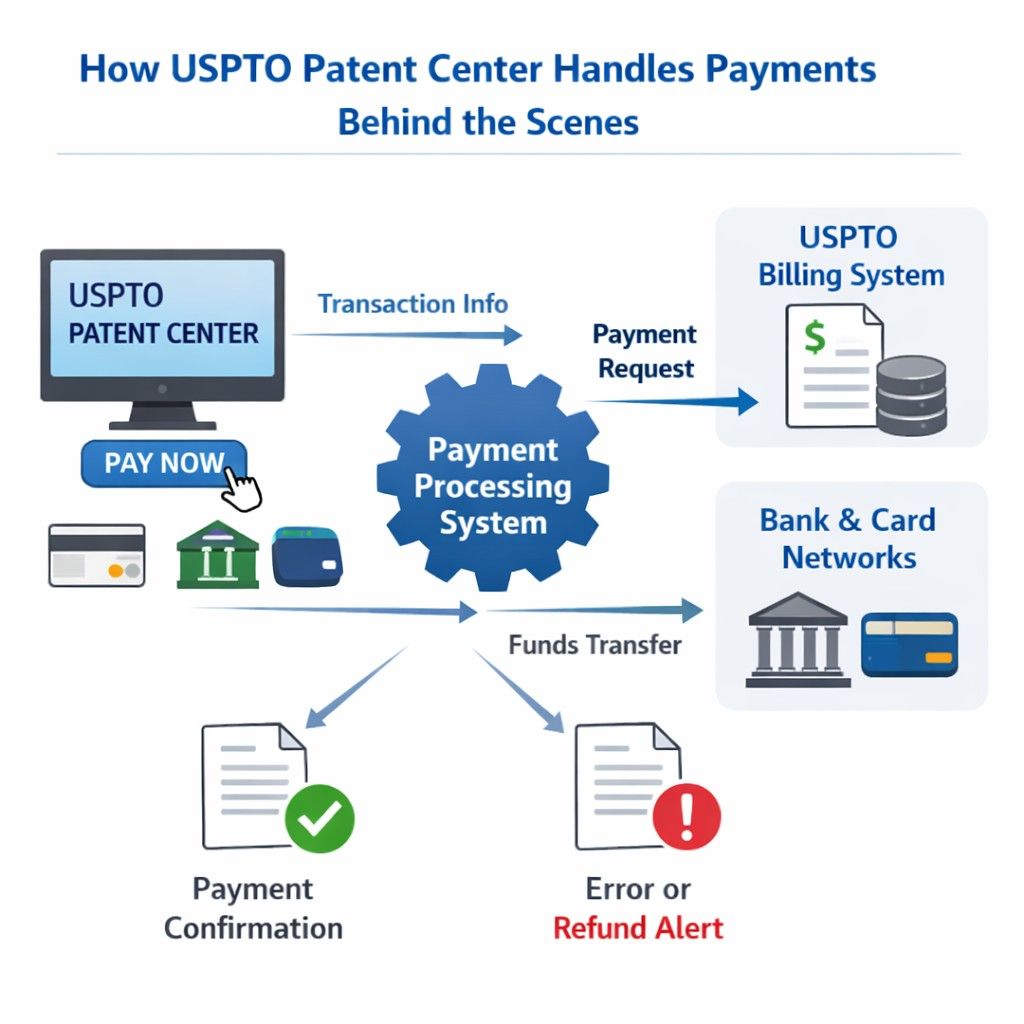
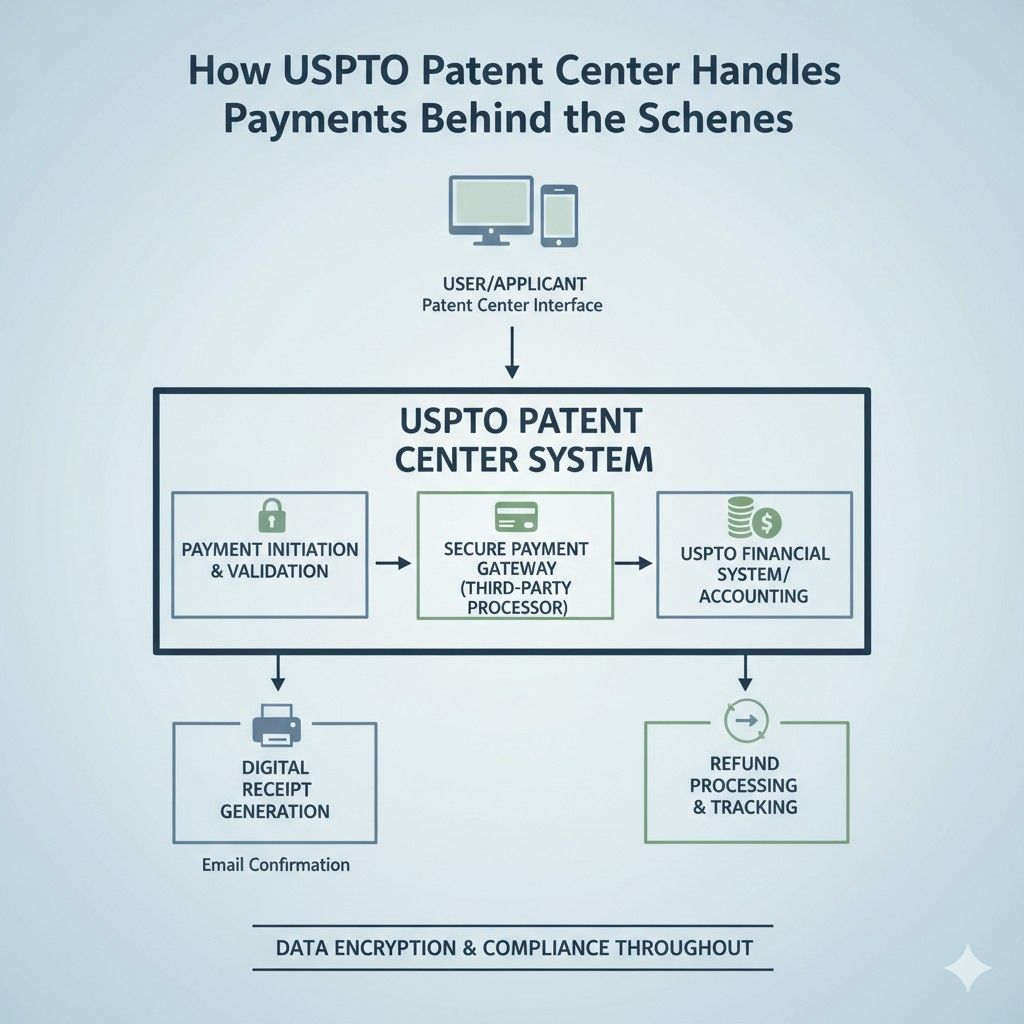
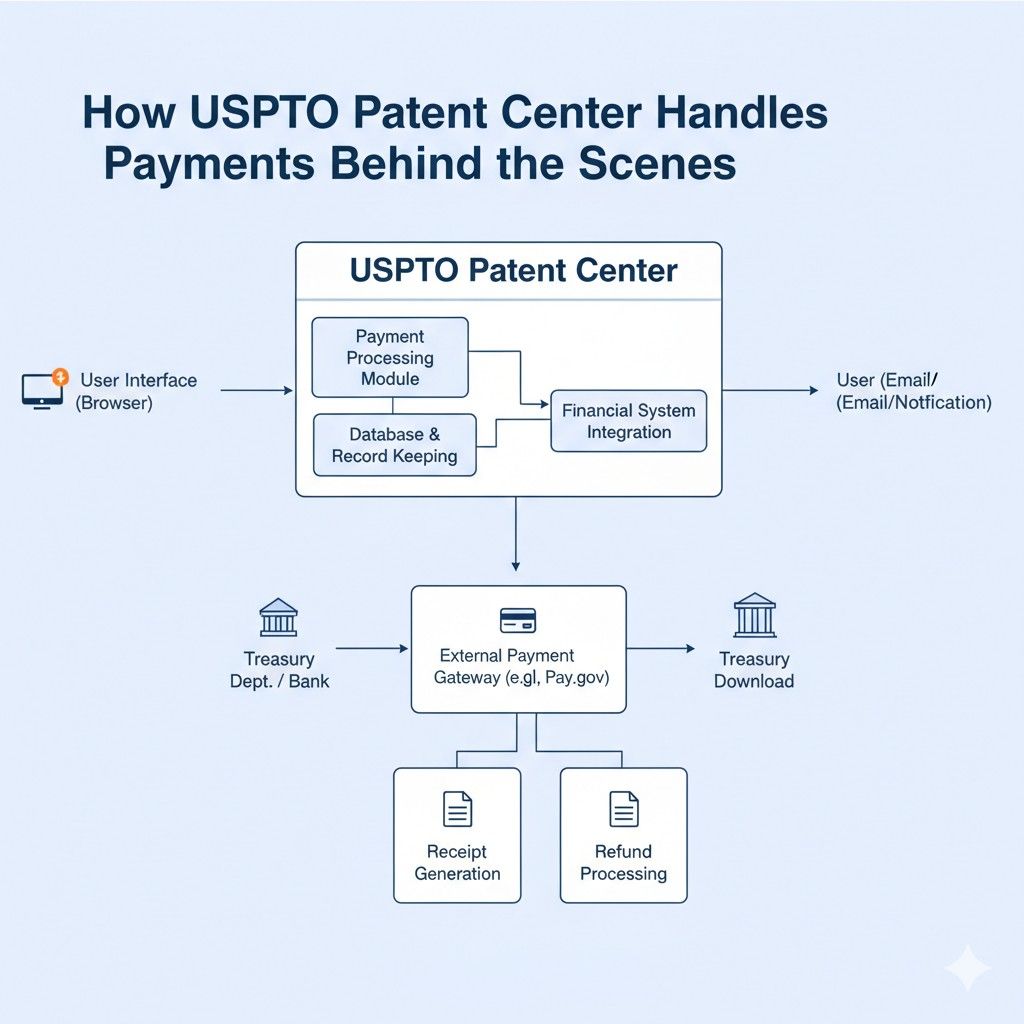
How USPTO Patent Center Handles Payments Behind the Scenes
Before you click the final submit button, it helps to understand what is really happening inside Patent Center.
Most payment mistakes happen not because founders are careless, but because the system works very differently than people expect.
Once you see how it actually processes money, timing, and confirmation, you can avoid delays that quietly weaken your patent position.
What Actually Happens When You Click “Pay”
When you submit a payment in Patent Center, the system does not instantly lock everything in the way most modern checkout systems do.
Patent Center first links your payment attempt to a specific filing action, then sends that payment request through the USPTO’s financial system. Only after that system confirms the transaction does the filing become fully accepted.
This matters because if your browser freezes, your session times out, or you close the page too early, the payment may go through without properly attaching to your application.
From the USPTO’s point of view, money arrived but the filing did not. From your point of view, everything looked fine. This gap is where many founders lose weeks fixing something they thought was done.
The most practical move is to never rush the payment screen. Let the page fully refresh after submission and wait until you see confirmation inside Patent Center itself, not just from your bank.
Why Patent Center Is Different From Other Government Portals
Patent Center was built to replace older systems, but it still carries a lot of legacy behavior. Unlike tax portals or business registration sites, it treats payments as part of the legal record, not just a transaction.
That means every fee is tied to deadlines, application status, and future examination steps.
For a business, this means payment is not just about money leaving your account. It is about preserving your filing date and keeping your application alive.
Missing or misapplied fees can quietly cause an application to go abandoned months later, even if the invention itself was solid.
This is why experienced teams treat payment as a core step in their IP process, not an afterthought.
Platforms like PowerPatent are designed to make sure that payment and filing are always aligned correctly → https://powerpatent.com/how-it-works
How Payment Timing Affects Your Patent Rights
One of the most misunderstood parts of Patent Center is timing. The USPTO runs on Eastern Time and applies strict cutoff rules.
If your payment clears after midnight Eastern Time, the filing date can shift, even if you started earlier in the day.
For startups racing competitors, this can be the difference between owning an idea and losing it.
The safest approach is to submit and pay well before the end of the day, especially when filing provisional or non-provisional applications tied to funding or launch milestones.
Businesses that build this buffer into their process avoid last-minute stress and reduce the risk of costly follow-up filings.
How Patent Center Matches Payments to Applications
Behind the scenes, Patent Center uses internal tracking numbers to match each payment to a specific submission.
If you are managing multiple applications or paying fees for more than one invention, it is easy to attach a payment to the wrong record.
Once that happens, the USPTO will not automatically fix it. The burden is on you to prove intent and request correction. This can take weeks and often requires formal communication.
A smart practice is to handle one application and one payment at a time, even if you are filing in bulk. Slower here is faster overall. It keeps your records clean and prevents confusion during later stages like examination or issuance.
What Patent Center Does Not Check For You
Patent Center does not warn you if you pay the wrong fee amount. It also does not confirm whether you qualify for small entity or micro entity status before accepting payment.
If you underpay, the system will still take your money and your application may later be flagged as incomplete.
For businesses, this means you must know your status and fee structure before paying. Guessing here can lead to surprise notices months later that force you to pay extra fees plus penalties.
Using a guided system that reviews your application and fee status before payment can save time and money.
This is one of the reasons founders choose PowerPatent instead of navigating Patent Center alone → https://powerpatent.com/how-it-works
How Errors Show Up Weeks Later
One of the hardest parts of Patent Center payments is that problems rarely appear right away. A payment issue often surfaces as a notice weeks or months later, long after the filing rush is over.
By then, teams have moved on, engineers are building, and investors assume the patent is secure. Fixing payment errors at that stage is slower and more stressful, and in some cases deadlines cannot be recovered.
The best defense is clean execution at the payment stage. Treat it as a critical step, double-check confirmation inside Patent Center, and store proof immediately.
How Smart Teams Build Payment Into Their IP Strategy
The most effective startups do not treat patent payments as paperwork. They treat them as part of their competitive strategy. They plan filings ahead of time, understand fee timing, and use systems that reduce human error.
Instead of reacting to deadlines, they control them. Instead of guessing at fees, they rely on clear guidance and attorney oversight.
This approach keeps momentum high and prevents small payment mistakes from turning into big legal problems later.
If you want patent payments and filings to feel simple, fast, and reliable, PowerPatent was built to support that exact workflow → https://powerpatent.com/how-it-works
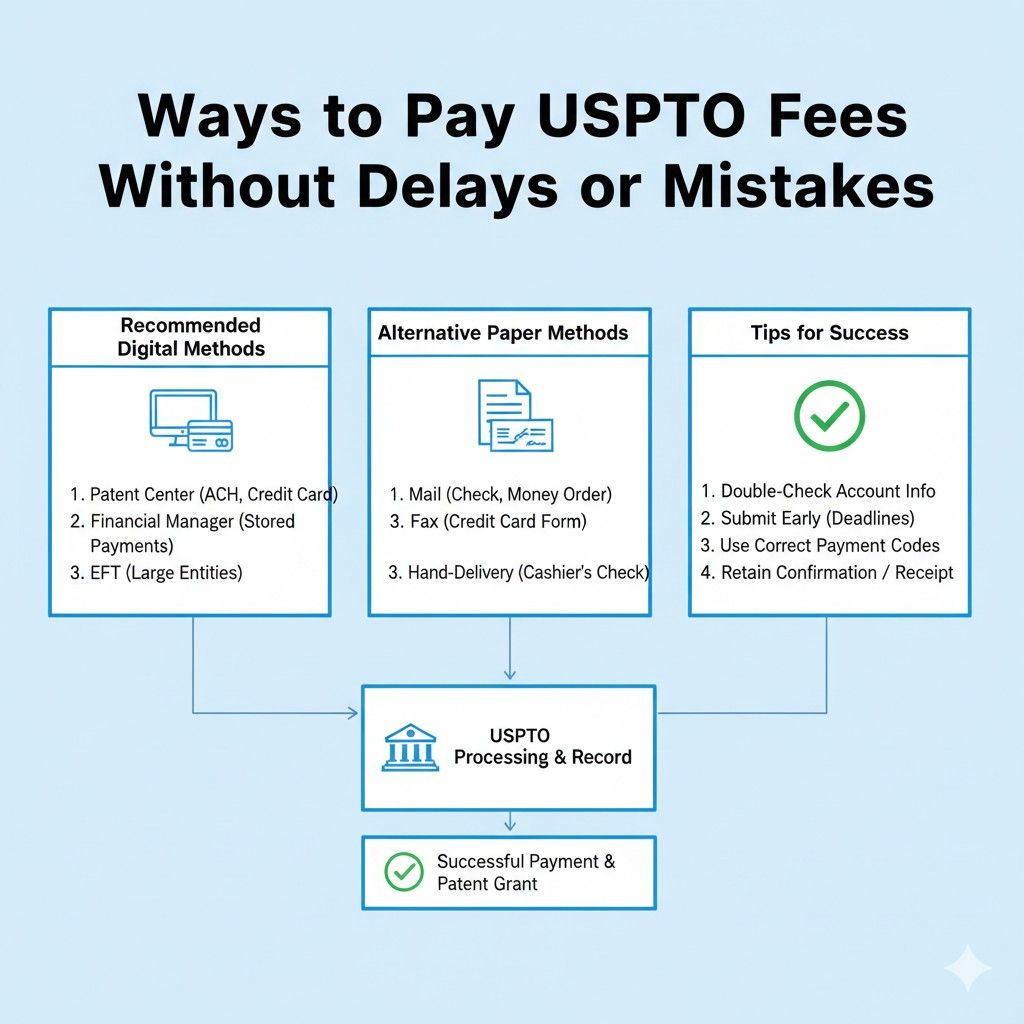
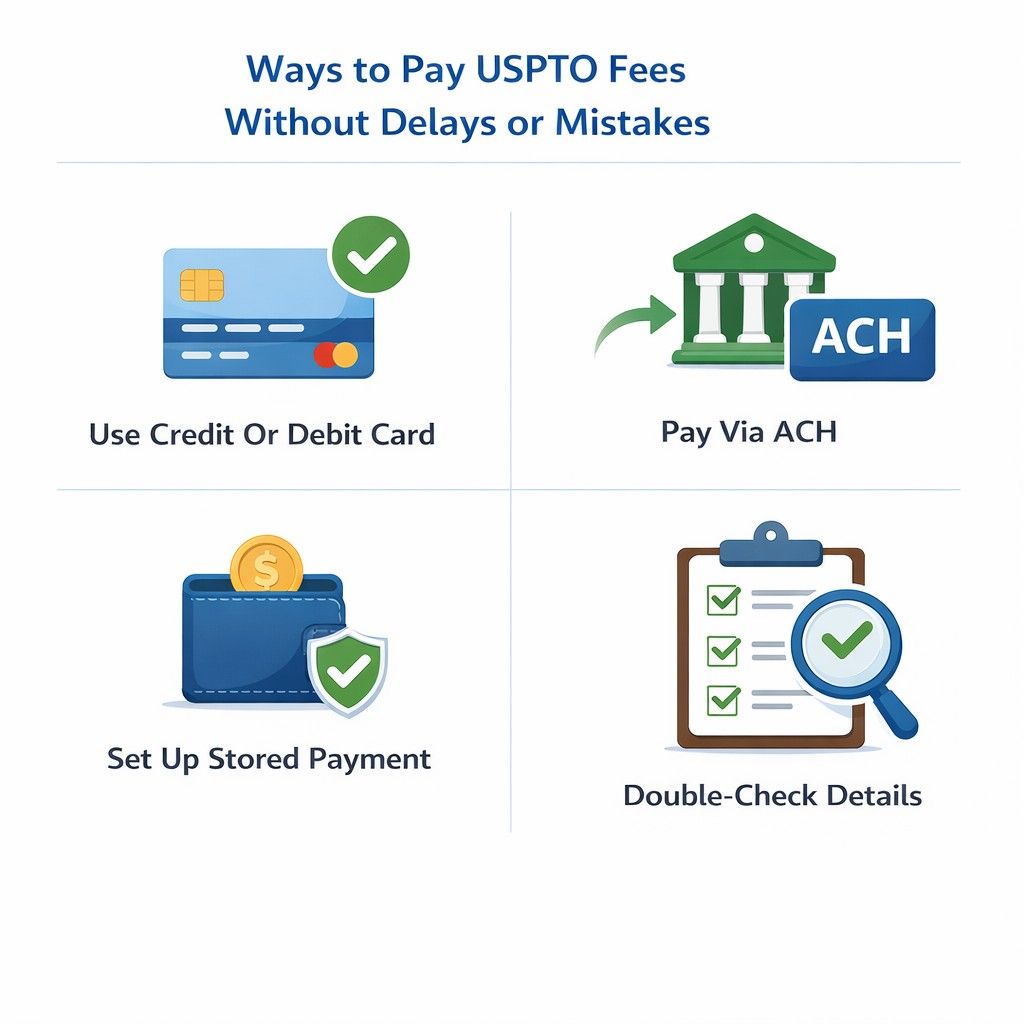
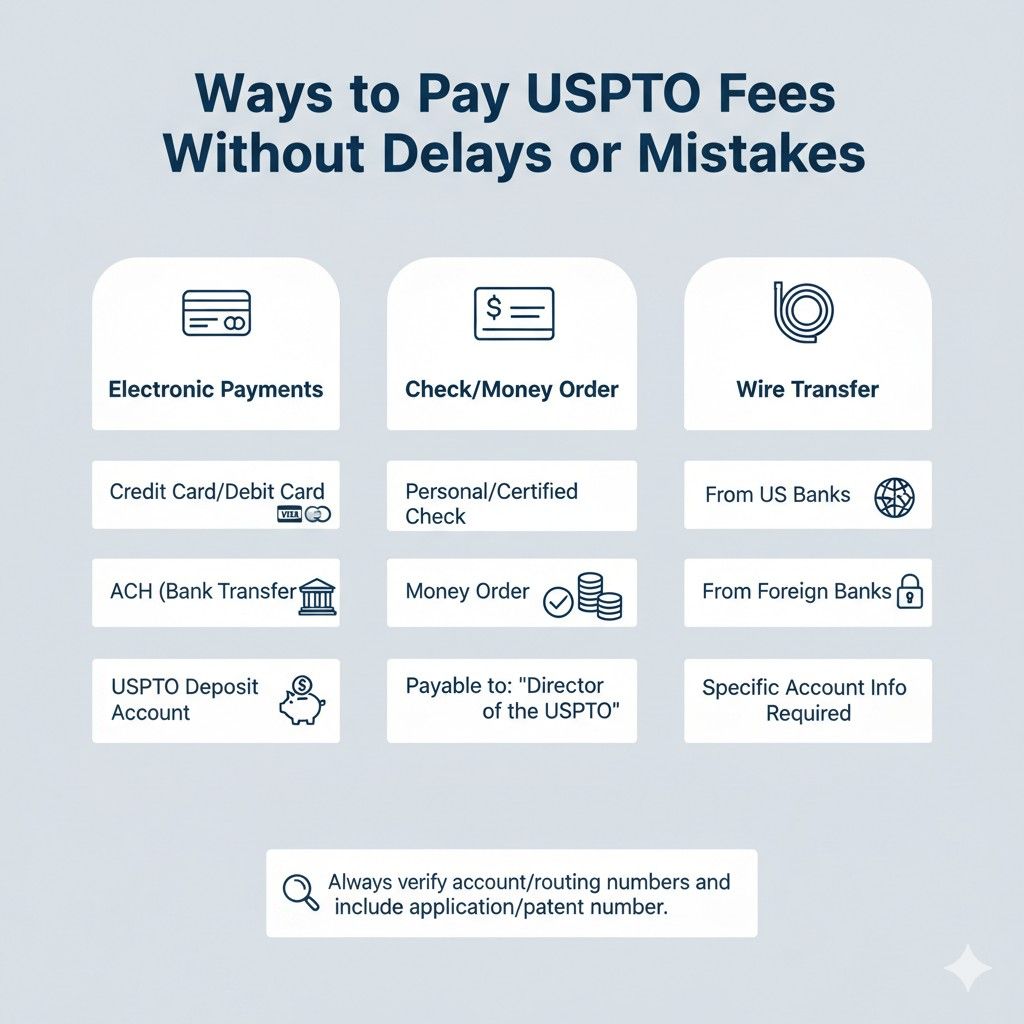
Ways to Pay USPTO Fees Without Delays or Mistakes
Paying USPTO fees looks simple on the surface, but in practice it is one of the most fragile steps in the entire patent process.
Many strong applications run into trouble not because the invention was weak, but because the payment step was rushed, misunderstood, or treated like a routine checkout.
For businesses, this section is about turning payment into a controlled, repeatable action instead of a stressful gamble.
Understanding Why the USPTO Treats Payment as a Legal Action
The USPTO does not view payment as a financial transaction alone. It treats payment as a legal signal that activates rights, deadlines, and obligations.
When a fee is paid correctly, the system unlocks the next step of prosecution. When it is paid incorrectly, nothing moves forward, even if the application itself is complete.
This is why the USPTO is unforgiving about payment errors. From their perspective, the burden is on the applicant to get it right.
Businesses that understand this mindset stop treating payment like admin work and start treating it like a core legal step.
Paying Through Patent Center Versus Paying in Isolation
All USPTO fees tied to applications should be paid through Patent Center, not through disconnected payment actions. The system is designed to link payment context directly to filing context.
When businesses try to pay fees separately or out of sequence, mismatches happen. The payment may exist, but the system cannot confidently attach it to the right action. That uncertainty slows everything down.
The safest approach is to always pay fees inside the same workflow where the filing or response is submitted. This keeps intent and execution aligned.
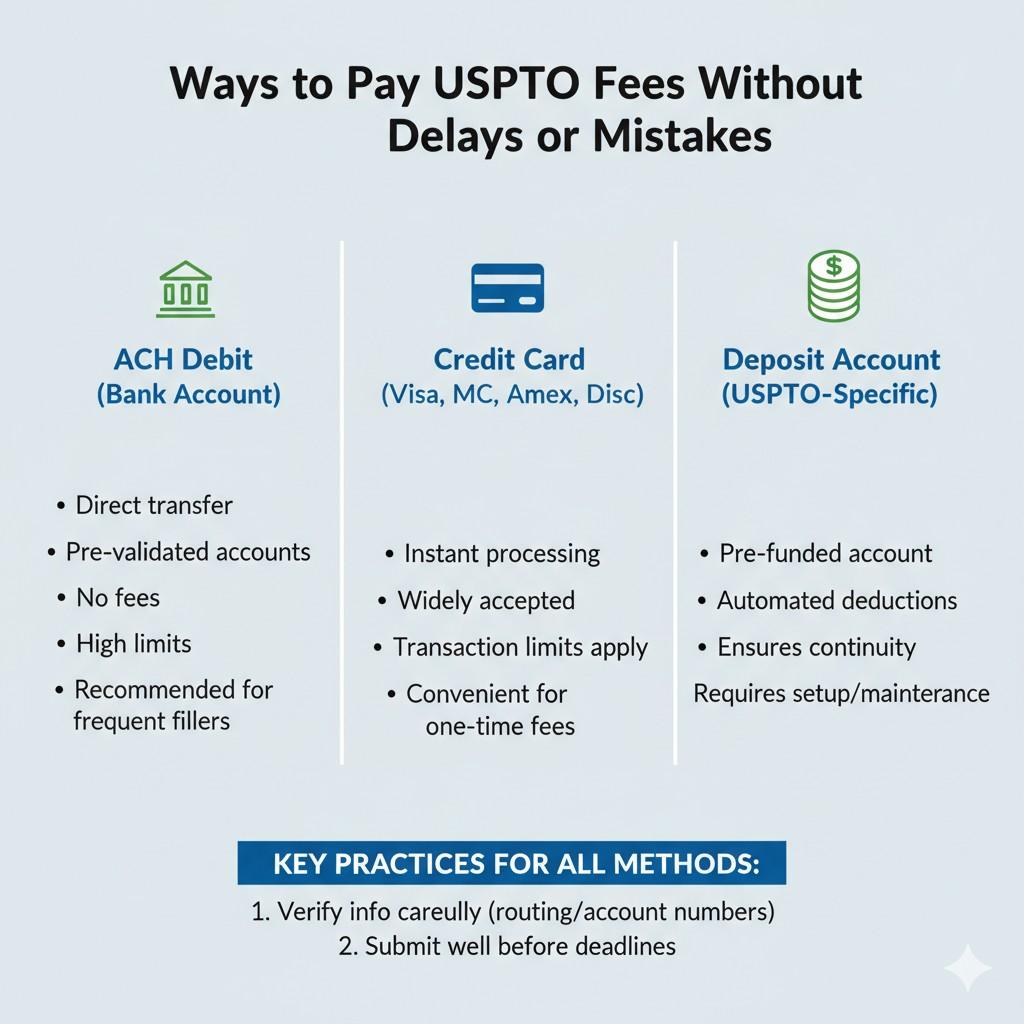
Credit Cards as a Convenience Tool, Not a Safety Net
Credit cards are popular because they feel fast and familiar. For one-off filings, they can work well. For businesses filing regularly, they introduce hidden risk.
Cards are subject to daily limits, fraud checks, and processor outages. Any one of these can silently block a payment at the worst possible moment. Patent Center does not always explain why a card fails, leaving teams guessing.
Companies that rely on cards should test them early and never wait until a deadline day to discover a limit. Better yet, they should treat cards as a backup, not a primary strategy.
Why Government Payment Processors Behave Differently
USPTO payments do not run through the same systems as online shopping or SaaS subscriptions. Government processors are slower, more rigid, and less forgiving.
A payment can appear successful on the bank side but fail to confirm inside Patent Center if the session drops or the browser closes. This gap is confusing and dangerous.
Businesses should always trust what Patent Center shows, not what the bank shows. Internal confirmation is the only confirmation that matters.
Deposit Accounts and Predictability for Growing Teams
A USPTO deposit account removes many variables from the process. Funds are already with the Office, so payments post cleanly and immediately.
For companies filing multiple applications or handling ongoing prosecution, this predictability is valuable. It reduces the chance of external failure and simplifies reconciliation.
The challenge is management. Someone must monitor balances and authorize replenishment. Without clear ownership, even deposit accounts can cause delays.
This is where guided platforms help, by combining reliability with visibility so founders stay informed without micromanaging.
Electronic Bank Transfers and Clearance Reality
Electronic bank transfers feel secure, but they operate on banking timelines, not startup timelines. Clearance can be delayed by weekends, holidays, or internal bank checks.
In the USPTO world, intent does not matter as much as clearance. A payment initiated before a deadline but cleared after may not protect rights.
Businesses using bank transfers should build in buffer time and avoid relying on them for urgent filings. Certainty beats comfort when deadlines are strict.
Handling Payments Across Multiple Applications
As companies grow, they often file several applications at once. This increases the risk of misapplied payments.
Patent Center tracks each payment by application number and fee code. Mixing submissions or paying in bulk without careful review increases error risk.
The most reliable approach is disciplined focus. One application, one payment, full confirmation, then move on. This rhythm reduces mental load and system errors.
Fee Accuracy Matters More Than Speed
The USPTO will accept incorrect amounts without warning. Underpayment creates future problems. Overpayment creates refund delays.
Neither outcome helps the business. Accurate payment keeps the application moving without interruption.
Companies should confirm entity status and fee type before paying. Guessing here often leads to notices that arrive months later, right when teams least expect them.
International Teams and Cross-Border Payment Friction
International businesses face extra friction when paying USPTO fees. Currency rules, bank approvals, and transaction delays all add uncertainty.
The USPTO does not adjust deadlines for international complexity. The clock runs the same for everyone.
Global teams should test payment methods well before real deadlines and avoid last-minute filings that rely on unfamiliar banking paths.
Why Paying Early Is Safer Than Paying Just in Time
Just-in-time payment works in manufacturing, not in patent filings. Systems fail, sessions expire, and approvals stall.
Paying early gives room to fix issues without risking rights. It also reduces stress and frees teams to focus on product work.
The strongest companies build payment buffers into their IP calendar and never assume everything will work perfectly at the last minute.
Turning Payment Into a Repeatable Business Process
The goal for any business is repeatability. Payment should follow a clear pattern that anyone on the team can execute without improvising.
This includes knowing which method to use, when to pay, how to confirm, and where to store proof. When this is documented and supported by the right tools, errors drop sharply.
PowerPatent was built to support exactly this kind of repeatable, low-risk workflow, combining smart software with real attorney oversight so payment never becomes the weak link in protecting what you are building → https://powerpatent.com/how-it-works
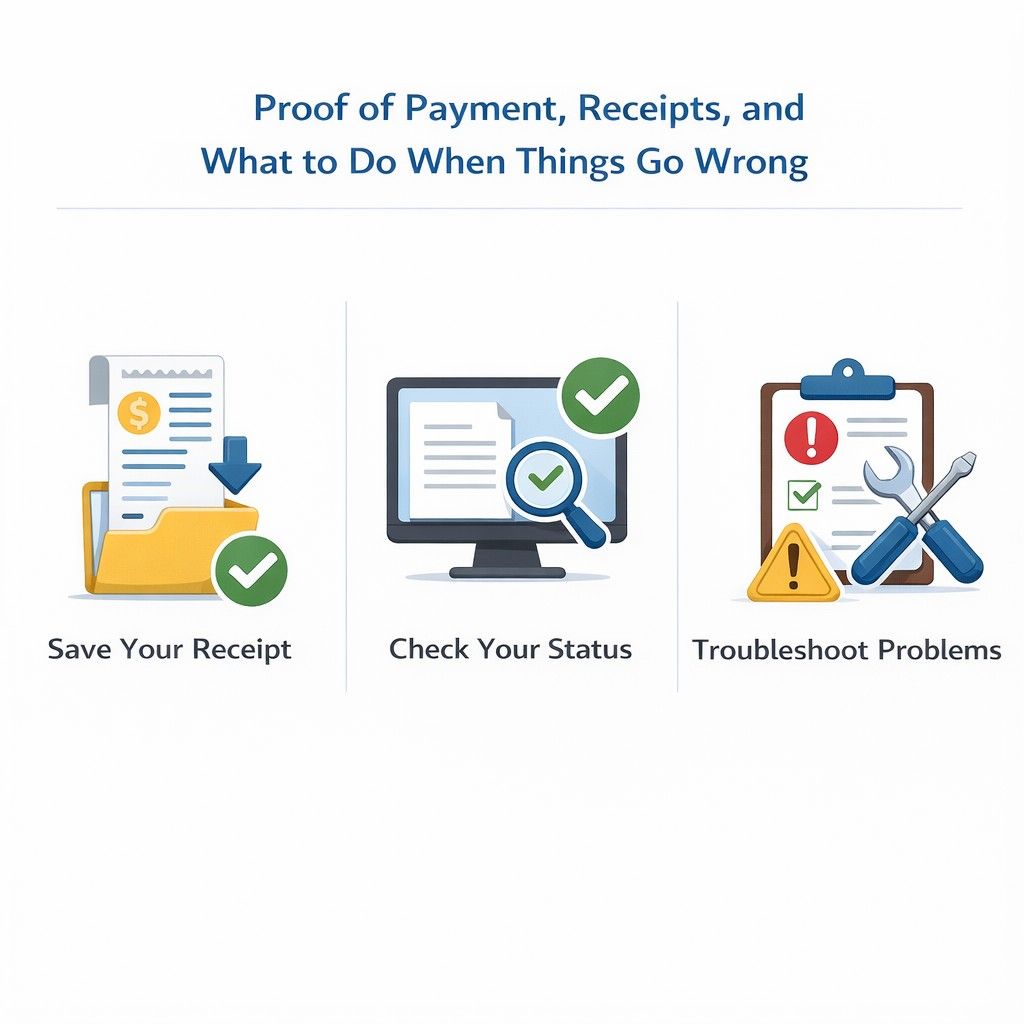
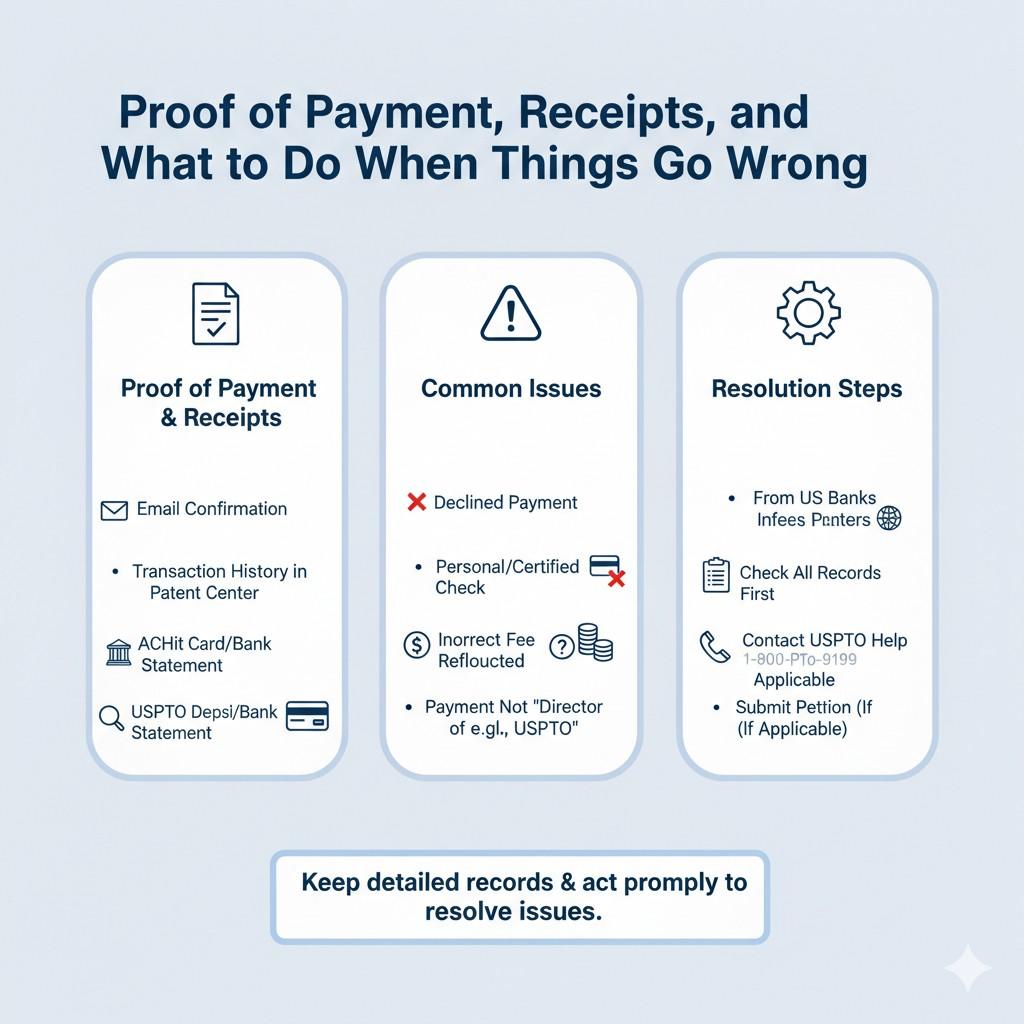
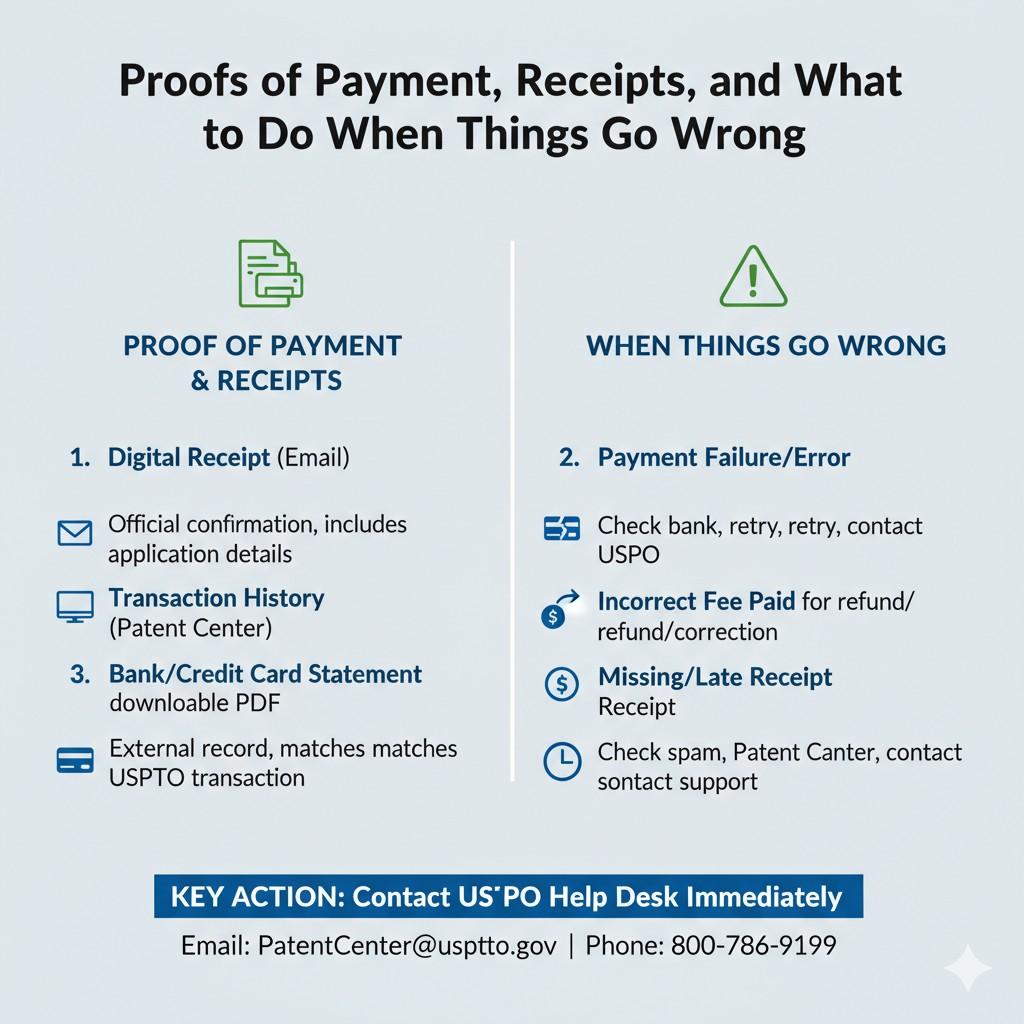
Proof of Payment, Receipts, and What to Do When Things Go Wrong
Once the payment is made, most founders mentally check the box and move on. That is understandable, but it is also where many long-term problems quietly begin. Inside the USPTO system, payment proof is not just a receipt.
It is evidence that keeps your application alive, protects your dates, and saves you during audits, funding rounds, or disputes.
Businesses that understand how proof works inside Patent Center gain a real advantage because they can move fast without fear.
Why USPTO Receipts Are Not Like Normal Receipts
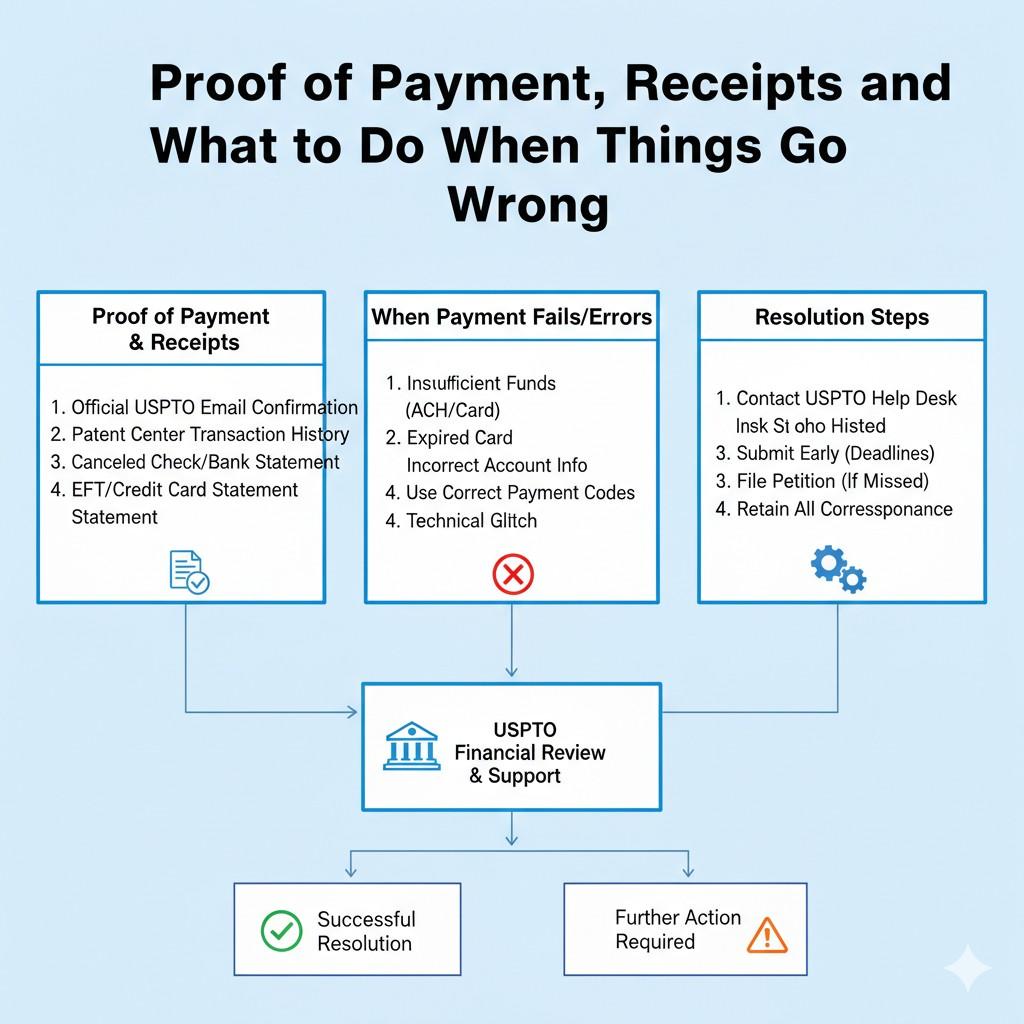
A USPTO receipt is not the same as a store receipt or a bank confirmation. Your bank only proves that money left your account. The USPTO receipt proves why it left, where it went, and which application it supports.
Patent Center generates its own confirmation records after a payment is correctly matched to a filing. If you only save a credit card statement or bank notice, you are missing the most important piece.
For businesses, this difference matters most when something goes wrong later. The USPTO will not accept a bank record as proof that a filing fee was properly paid. They rely on their internal receipt system.
Where Patent Center Stores Payment Proof
After payment, Patent Center attaches a transaction record directly to the application file. This record includes the fee code, amount, date, and application number.
The key detail is that this information lives inside the system, not in your email inbox. Email confirmations can fail, go to spam, or be lost when team members change.
Smart teams log back into Patent Center and verify that the payment appears under the application history. This internal record is what examiners and USPTO staff rely on.
Timing Gaps Between Payment and Receipt Visibility
One common source of panic is when a payment goes through but the receipt does not appear right away. This can happen because the payment processor and Patent Center update on slightly different schedules.
For most methods, this delay is short, but it is not always instant. Businesses should avoid re-paying fees during this window unless the system clearly shows failure. Duplicate payments are harder to unwind than short delays.
A calm, patient check inside Patent Center is often the right move.
How to Read a USPTO Payment Confirmation Correctly
Many founders glance at the confirmation screen and assume everything is fine. In reality, the wording matters. A successful payment confirmation should clearly state that the fee was received and applied to the specific application.
Vague language or missing application numbers can signal a problem. Businesses should train whoever handles filings to look for these details, not just a success message.
This small habit can prevent months of follow-up later.
Why You Should Download and Store Receipts Immediately
Patent Center does not guarantee long-term easy access to historical records in the way modern SaaS tools do. While records remain, finding them later can be time-consuming.
Businesses should download payment receipts as soon as they are available and store them with other IP records. This becomes invaluable during due diligence, audits, or when switching legal support.
Investors often ask for proof that patents are properly filed and maintained. Having receipts ready builds trust instantly.
What Happens When a Payment Is Missing or Misapplied
If the USPTO cannot find a required payment, it issues a notice, often weeks or months later. At that point, deadlines may already be tight.
The notice usually gives a short window to correct the issue, sometimes with extra fees. If the window is missed, the application can go abandoned.
Businesses that keep clear payment proof can respond quickly and confidently. Those without proof are forced into slow back-and-forth that risks deadlines.
How Refunds Actually Work at the USPTO
Refunds at the USPTO are not automatic and they are not fast. If you overpay or pay an unnecessary fee, the money does not simply flow back.
A refund requires a formal request, internal review, and approval. This process can take weeks or longer. During that time, the funds are unavailable for use elsewhere.
For startups managing cash carefully, this delay matters. Avoiding overpayment is far better than hoping for a refund.
Situations Where Refunds Are Commonly Requested
Refunds usually come up when fees are paid twice, when the wrong fee type is selected, or when an application is withdrawn early.
In all cases, the USPTO looks closely at intent and timing. Clear records and receipts speed up the process. Confusion slows it down.
This is another reason businesses benefit from systems that guide fee selection and prevent mistakes before they happen.
Why Refunds Do Not Fix Deadline Problems
A refund does not undo missed deadlines or restore lost rights. Even if money is returned, the legal timeline keeps moving.
Some founders assume that fixing payment later fixes everything. It does not. The USPTO treats deadlines strictly.
The real goal is clean payment the first time. Refunds are a last resort, not a safety net.
How Teams Use Payment Records During Fundraising
During fundraising, investors often perform IP checks. They want to see that patents are filed, active, and properly maintained.
Payment receipts are part of that story. Missing or unclear records raise questions that slow deals.
Businesses that keep organized payment proof move through diligence faster and with less friction. This can directly impact valuation and closing timelines.
Turning Payment From a Risk Into a Strength
When handled correctly, USPTO payments stop being a source of anxiety and become a sign of operational maturity. Clean records, clear confirmations, and confident responses show that a company takes its IP seriously.
Founders should not have to become USPTO experts to achieve this. The right tools and guidance make it simple.
PowerPatent was built to ensure payments, receipts, and filings stay aligned from day one, with software precision and real attorney oversight so nothing slips through the cracks → https://powerpatent.com/how-it-works
Wrapping It Up
Paying USPTO fees through Patent Center is not busywork. It is one of the few moments where a small mistake can quietly undo months of smart technical effort. The system does not forgive confusion, assumptions, or rushed clicks. It rewards clarity, timing, and intent. Once you understand how payments actually move through Patent Center, the fear fades and control comes back.