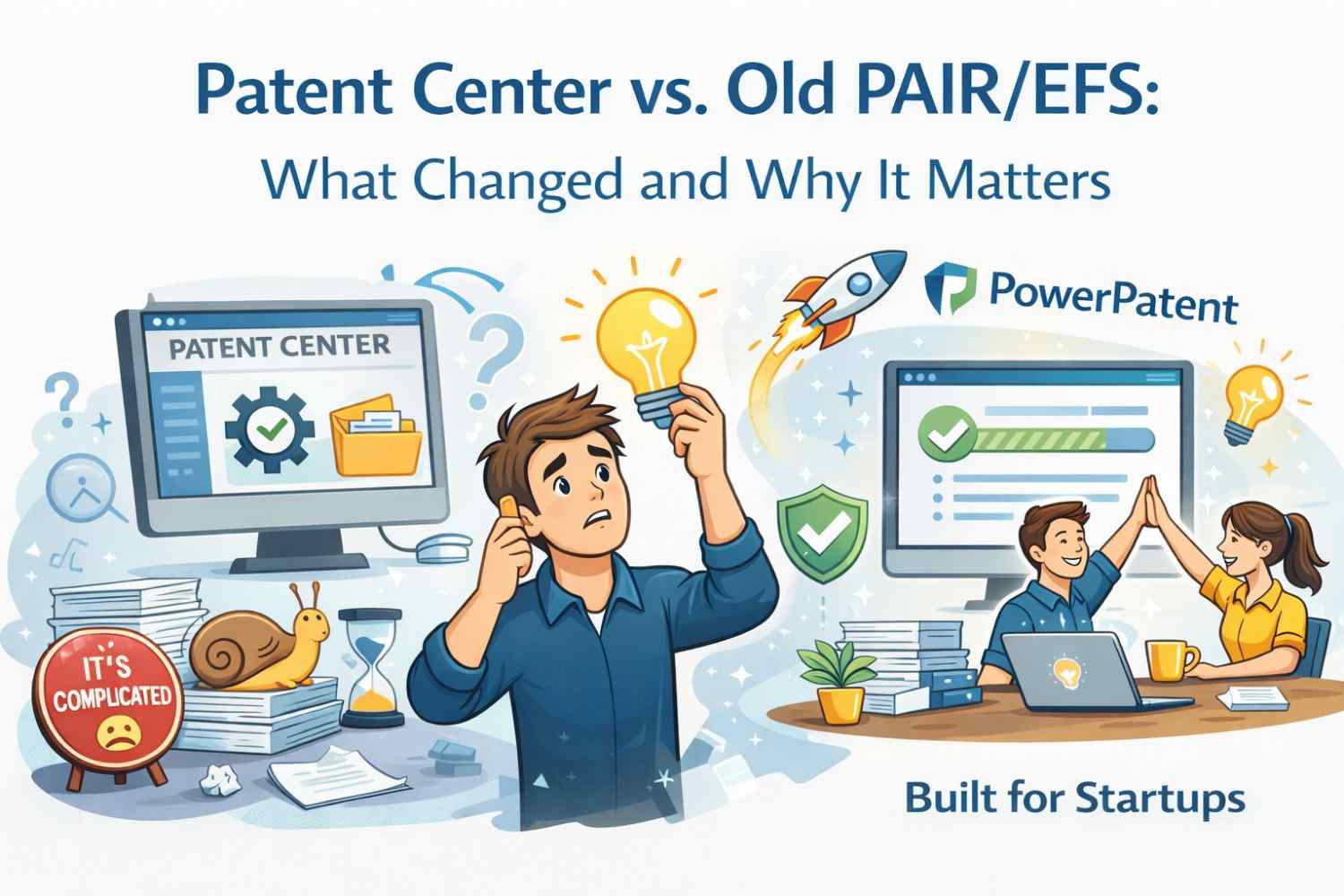
If you have ever tried to file or manage a patent with the USPTO, you know the pain. The tools were old. The screens were confusing. Simple actions took hours. Mistakes were easy to make and hard to fix. For founders and engineers moving fast, the system felt like it was built to slow you down. That is exactly why the USPTO shut down PAIR and EFS-Web and replaced them with Patent Center. This change is not cosmetic. It changes how patents are filed, tracked, fixed, and defended. If you are building real technology and care about protecting it the right way, this shift matters more than most people realize.
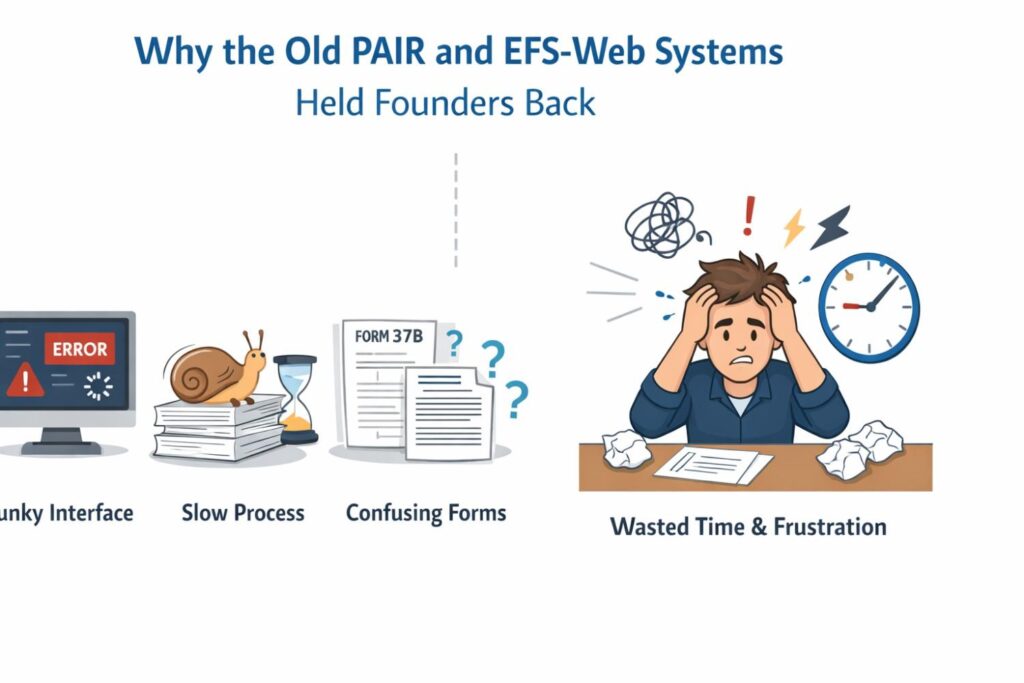
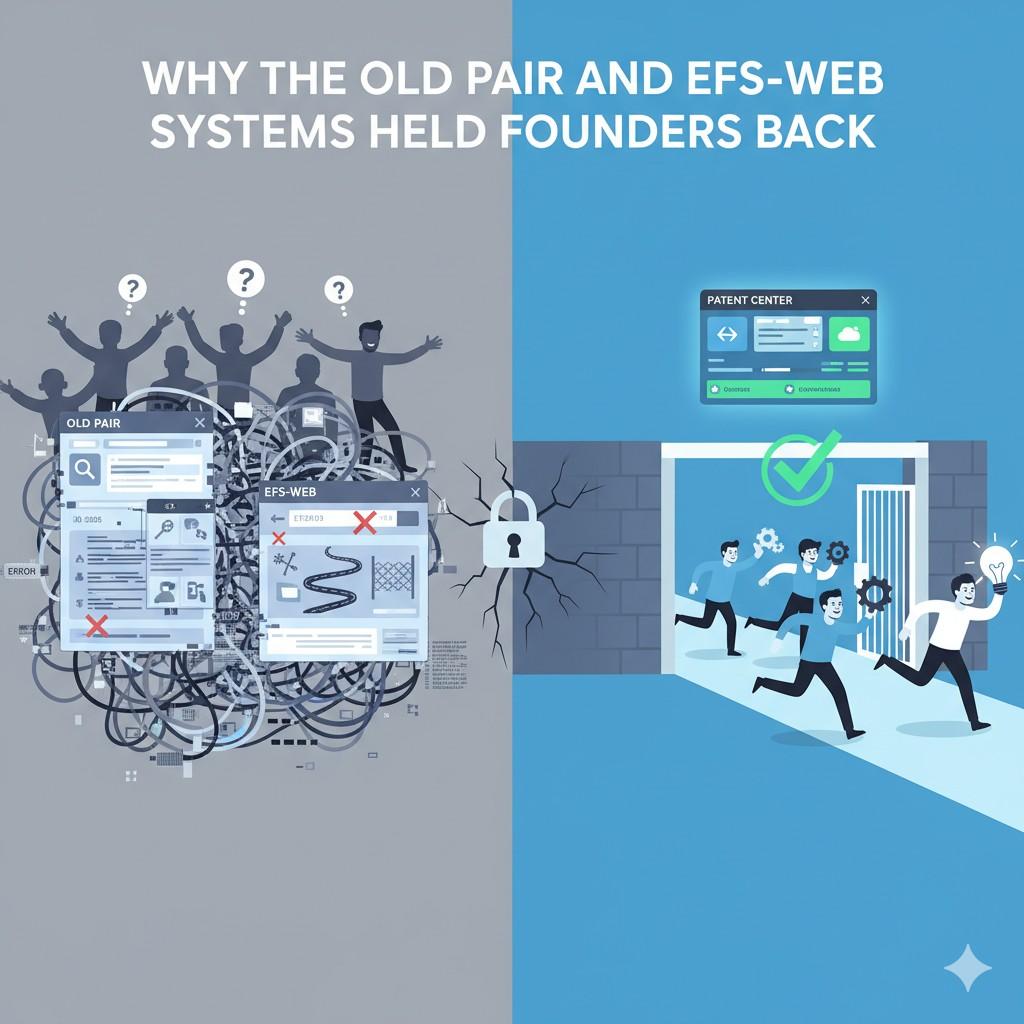
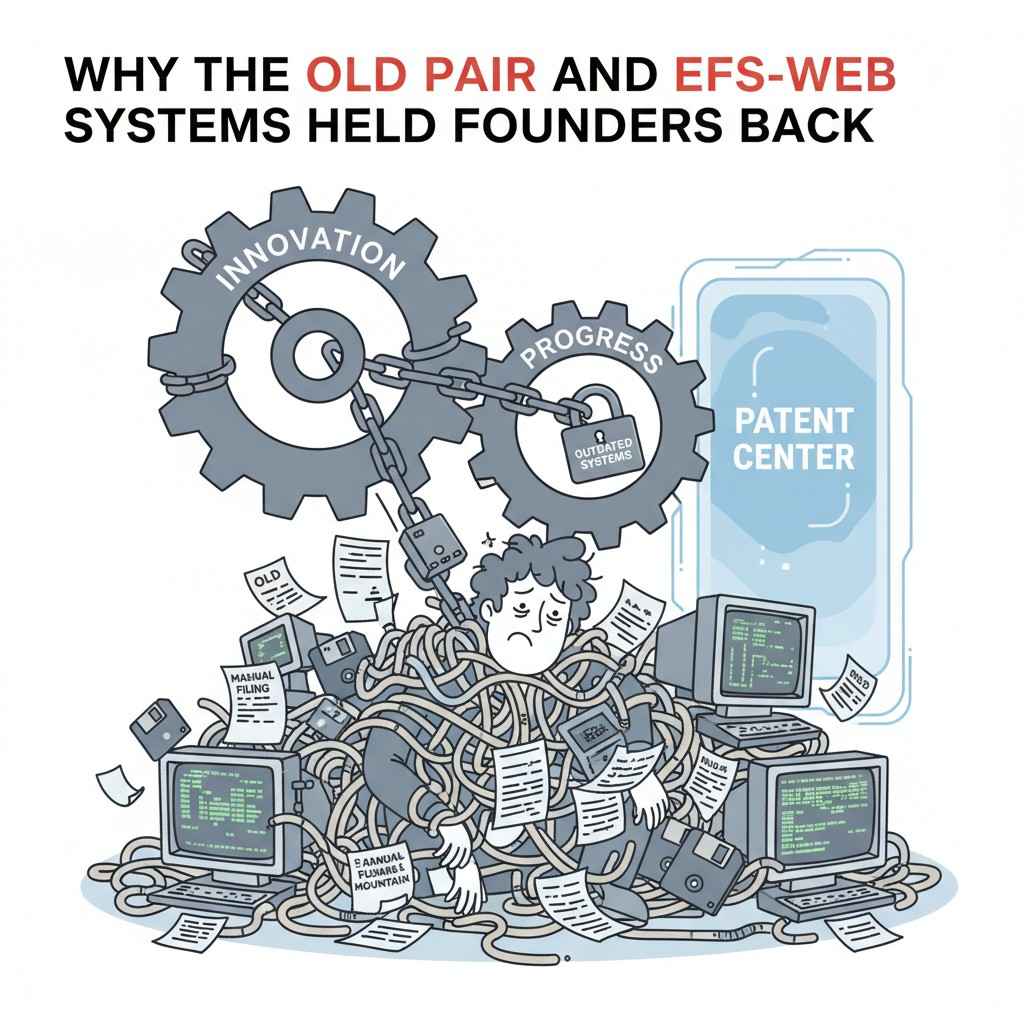
Why the Old PAIR and EFS-Web Systems Held Founders Back
The old USPTO systems were not just outdated. They were actively hostile to how modern companies build and move.
PAIR and EFS-Web were designed in a time when patents moved slowly, filings were rare, and most users were full-time patent staff at large law firms.
Founders, engineers, and small teams were never the target user. That mismatch created real business risk.
Below is a deeper look at how those systems worked against startups and what founders should learn from that era so they do not repeat the same mistakes today.
Built for Clerks, Not Builders
From the moment you logged into PAIR or EFS-Web, it was clear the system was not built for people who create things. Screens were packed with fields that assumed deep process knowledge.
Buttons were named after internal USPTO terms instead of real actions. There was no guidance, no flow, and no sense of what mattered most.
For founders, this meant every filing felt like walking into a locked room with no map. You had to already know what to do before the system would let you do it.
Actionable takeaway: if a tool assumes you already understand the process, it will not protect you from mistakes. Never rely on raw government systems alone to guide critical IP decisions.
Use platforms that explain what each step means and why it matters to your business.
PowerPatent was built specifically to solve this gap for founders who are not patent clerks. You can see how that works here: https://powerpatent.com/how-it-works
Error-Prone by Design
EFS-Web was unforgiving. One small formatting issue, one wrong document type, or one missing checkbox could invalidate a filing or delay it for weeks.
The system did not catch errors early. It let you submit broken filings and only told you later, after damage was done.
For startups, this was dangerous. Patent rights depend on dates. A delay of even one day can matter. Many founders thought they had filed correctly when they had not.
Actionable takeaway: never assume a successful upload equals a valid filing. You need tools and review processes that check substance, not just submission.
Modern patent workflows must validate claims, structure, and support before anything goes to the USPTO.
No Real-Time Awareness
PAIR was essentially a static viewer. It showed what had already happened, not what was coming next. You had to manually check for updates. There were no smart alerts.
No reminders tied to business risk. No warnings when deadlines were approaching.
Founders juggling product, fundraising, hiring, and sales simply forgot to check. That led to missed responses, abandoned applications, and lost rights.
Actionable takeaway: patent systems should work like modern dashboards, not filing cabinets. If you are not getting proactive alerts tied to deadlines and risk, you are flying blind.
Always choose systems that surface what needs attention before it becomes a problem.
Hard to Fix Mistakes After the Fact
Once something went wrong in PAIR or EFS-Web, fixing it was painful. Corrections required extra filings, more fees, and often direct back-and-forth with the USPTO.
For founders, this meant more cost and more delay at the worst possible time.
Many startups learned too late that early mistakes compound. A rushed provisional. A poorly structured claim. An unclear priority chain. The old systems offered no guardrails.
Actionable takeaway: the best time to prevent patent mistakes is before filing, not after. Your process should force clarity early. Tools that help you shape the invention, claims, and story before submission save far more time and money than any fix later.
No Support for Iteration
Startups iterate fast. The old systems did not. PAIR and EFS-Web treated each filing like a one-off event. There was no easy way to build on past drafts, track changes, or understand how one filing connected to the next.
This pushed founders into static thinking. They filed too early or too late because the system did not support gradual refinement.
Actionable takeaway: patents should evolve with your product. Use systems that support living documents, version history, and structured updates. That is how strong patent families are built, not through isolated filings.
Encouraged Outsourcing Without Understanding
Because the systems were so hard to use, founders handed everything to law firms and disengaged. They signed documents they did not understand. They approved claims they never read. The tools reinforced distance instead of ownership.
This created a dangerous dynamic where founders paid for patents but did not control them.
Actionable takeaway: founders should stay close to their IP. Even if attorneys are involved, the tools should keep you informed, educated, and in control.
PowerPatent was designed around this idea, combining real attorneys with software that founders can actually use. Learn more here: https://powerpatent.com/how-it-works
Slowed Down Critical Business Moments
During fundraising, acquisitions, or partnerships, founders needed fast answers about patent status. PAIR made this slow. Information was buried. Sharing access was clunky. Investors lost patience.
In fast-moving deals, slow IP systems kill momentum.
Actionable takeaway: your patent stack should support speed when it matters most. If you cannot quickly explain what is filed, what is pending, and what is protected, you are exposed.
Choose tools that make your IP easy to understand and easy to share.
The Hidden Cost: Founder Confidence
Perhaps the biggest failure of PAIR and EFS-Web was psychological. They made patents feel scary, fragile, and out of reach. Founders second-guessed themselves. Many delayed filing or skipped it entirely.
That hesitation cost companies defensibility and leverage.
Actionable takeaway: patents should give confidence, not stress. If your current process makes you avoid thinking about IP, it is broken. Modern founders need systems that reduce fear and increase clarity from day one.
What the USPTO Was Trying to Fix With Patent Center
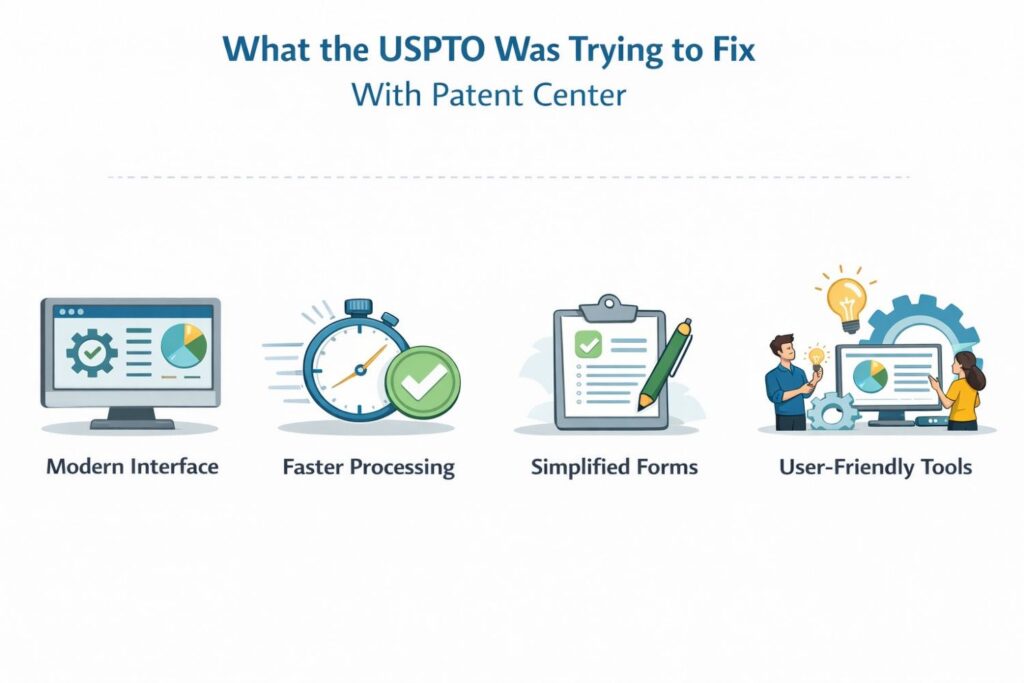
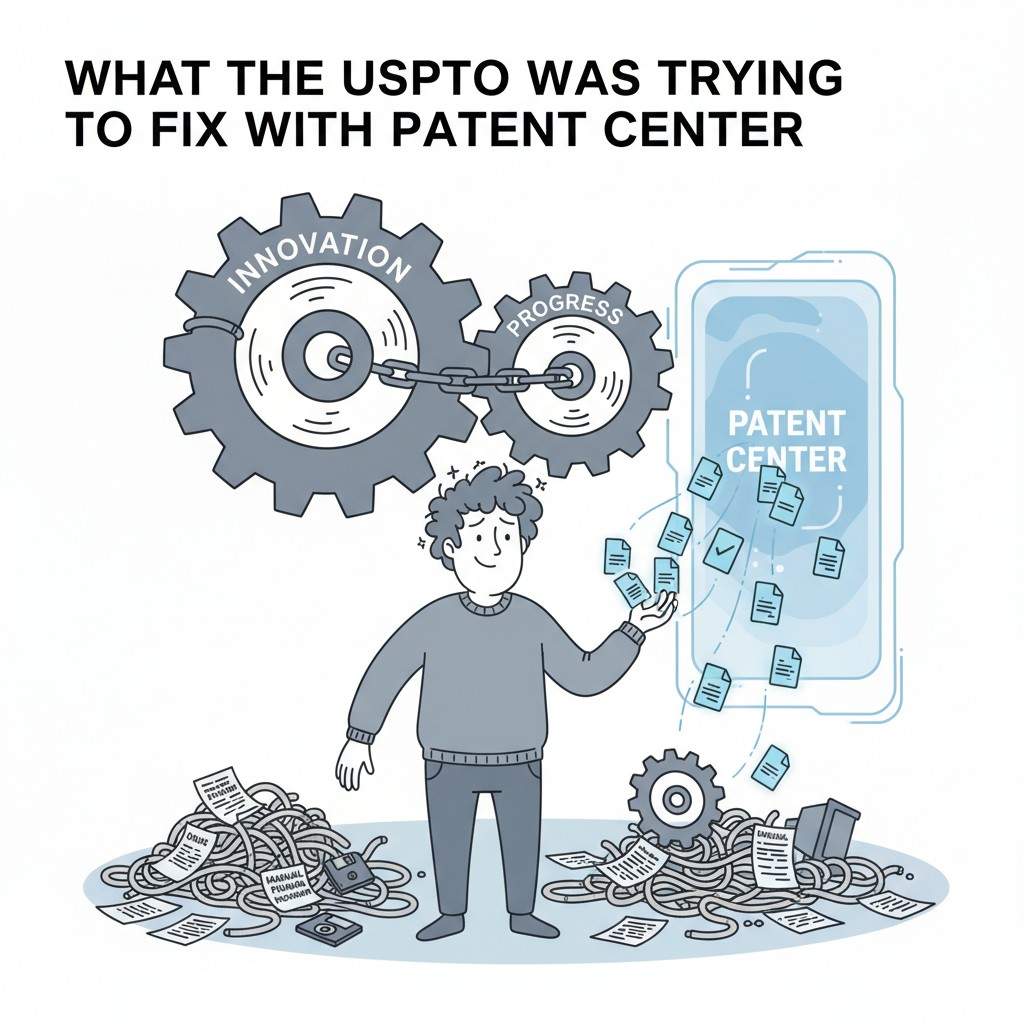
When the USPTO announced it was shutting down PAIR and EFS-Web, it was admitting something important without saying it out loud. The old systems were no longer usable for the world that exists today.
Innovation had moved faster. Startups had become the engine of new filings. Software, AI, and fast iteration were now normal. The tools had to catch up.
Patent Center was the USPTO’s attempt to modernize not just the interface, but the entire idea of how people interact with the patent office.
The intention was real. The execution, however, tells a more nuanced story that founders need to understand clearly.
A Single System Instead of Fragmented Tools
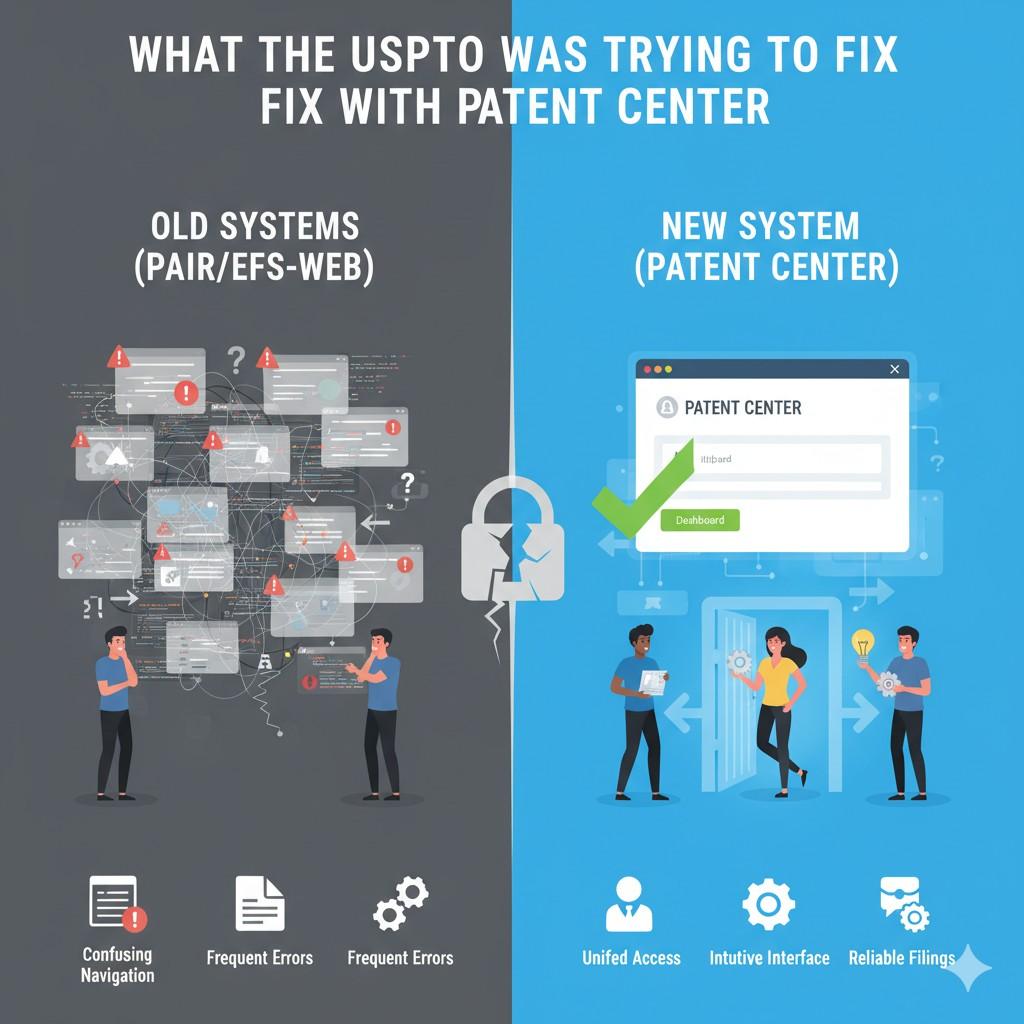
One of the biggest problems with PAIR and EFS-Web was fragmentation. Filing lived in one place. Status lived in another. Documents were scattered. Users had to jump between systems that barely spoke to each other.
Patent Center aimed to bring everything under one roof. Filing, reviewing, tracking, and managing applications were meant to live in a single environment.
This change matters because patents are not events. They are ongoing processes. When tools are split, context is lost. Founders could not see the full picture before.
Patent Center at least tries to show the entire lifecycle in one place.
Strategic advice for founders: even with a unified system, you still need a clear internal view of your patent strategy.
Do not rely on any government portal to explain how one filing supports another. Build your own narrative around your IP or use tools that do it for you automatically.
This is where platforms like PowerPatent add real value on top of Patent Center by connecting filings to business goals. You can explore that here: https://powerpatent.com/how-it-works
Moving Away From Legacy Technology
PAIR and EFS-Web were built on old infrastructure that was hard to update and easy to break. Every small change took years. Patent Center was designed on a newer technical foundation that could evolve faster.
This mattered to the USPTO because filing volumes were growing and the old systems were brittle. Downtime was common. Maintenance windows were frequent. Users often planned filings around system outages.
Patent Center was meant to be more stable and more flexible.
Strategic advice for founders: system stability is not just a technical issue. It is a business risk issue. If your filing depends on a tool that goes down, you are exposed.
Always file with buffer time and avoid last-minute submissions, no matter how modern the system claims to be.
Better Visibility Into Application Status
One clear goal of Patent Center was to improve transparency. PAIR showed data, but it was buried. Patent Center tries to surface timelines, document history, and examiner actions more clearly.
For the USPTO, this reduced support requests. For users, it reduced guesswork.
However, visibility alone does not equal understanding. Founders can now see more, but that does not mean they know what to do with it.
Strategic advice for founders: seeing an office action is not the same as knowing how to respond. If a system shows you information but does not explain its impact, you still need expert guidance.
Use tools that translate patent events into plain business meaning.
Supporting Ongoing Interaction, Not One-Time Filing
The old mindset treated filing as the main event. Everything else was secondary. Patent Center reflects a shift toward ongoing interaction. Responses, corrections, and updates are part of the core experience now.
This aligns better with how patents actually work.
For startups, this is important because patents rarely go through cleanly on the first try. Amendments are normal. Clarifications are expected. The system now assumes that back-and-forth will happen.
Strategic advice for founders: plan for iteration from the start. Do not treat your first filing as final. Build flexibility into your claims and descriptions so future changes are easier and cheaper.
Reducing Reliance on Insider Knowledge
PAIR assumed users knew USPTO language, rules, and timing. Patent Center tries, at least partially, to reduce that assumption. Labels are clearer. Workflows are more guided.
This is a step in the right direction, but it is not enough for first-time founders.
Strategic advice for founders: do not confuse improved usability with true accessibility.
Patent Center is still a government system. It is not designed to teach you strategy. Pair it with software and advisors who understand startups, not just patent rules.
Enabling Better Collaboration
Patent Center allows shared access and roles more cleanly than PAIR did. This helps teams, attorneys, and agents work together in one space.
For the USPTO, this reduced confusion around authorization. For startups, it made collaboration slightly easier.
But collaboration without clarity can still fail.
Strategic advice for founders: make sure everyone involved in your patent work understands the business objective behind each filing. Tools should support collaboration, but leadership must supply direction.
The USPTO’s Real Goal: Scale
At its core, Patent Center was about scale. More filings. More users. More complexity. The old systems could not handle the load.
Patent Center is built to handle volume. That is good for the USPTO. It does not automatically make it good for startups.
Founders need to remember this distinction. Patent Center was designed to serve the office first, users second.
Strategic advice for founders: always ask whether a tool was built for compliance or for outcomes. Patent Center helps you comply. It does not help you win. Winning requires strategy, foresight, and alignment with your product roadmap.
Where This Leaves Founders Today
Patent Center is a real improvement over PAIR and EFS-Web. It fixes many surface-level problems.
But it does not solve the deeper issues founders face: knowing what to file, when to file, how broad to go, and how to avoid costly mistakes.
That gap is exactly where modern platforms step in. PowerPatent was built to sit above Patent Center, not replace it.
It gives founders clarity, speed, and confidence while still working seamlessly with the USPTO’s system. If you want to see how that works in practice, visit https://powerpatent.com/how-it-works
This is about using the right layer of tools for the right job.
How Patent Center Changes the Day-to-Day Patent Workflow
Patent Center did not just replace old screens with new ones. It changed how founders and teams experience the daily reality of patents. Some of these changes are helpful.
Some create new risks that are easy to miss if you are moving fast. Understanding how the workflow truly shifts is critical for any business that wants strong protection without losing momentum.
This section focuses on what actually feels different week to week when you are using Patent Center and how to adjust your behavior to stay in control.
A More Centralized Starting Point
With Patent Center, most patent-related activity now starts in one place. Filing, checking status, reviewing documents, and responding to the USPTO all live inside the same system.
This reduces friction compared to the old days when you had to jump between tools.
For founders, this means fewer logins and less hunting for information. That alone saves time.
However, centralization can also create a false sense of completeness. Seeing everything in one place does not mean everything you need is there.
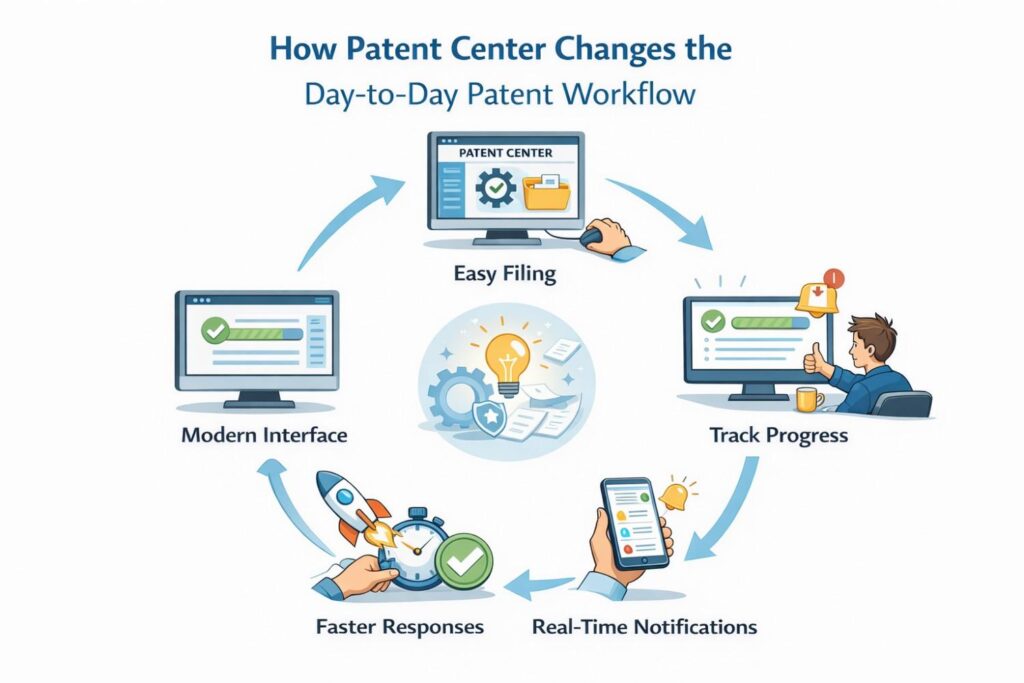
Practical advice: treat Patent Center as your submission and record system, not your planning system. Do your thinking, drafting, and strategy outside the portal. Use Patent Center only when you are ready to execute.
Filing Feels Simpler, but the Stakes Are Higher
Patent Center smooths out the filing flow. Uploads are cleaner. The process feels more modern. This can trick founders into thinking filing is now easier in a strategic sense.
It is not.
The system reduces friction, which means you can move faster. Moving faster without clarity increases risk. Founders may file earlier than they should or submit documents that are not fully thought through.
Practical advice: speed should come after certainty. Before filing anything, pause and ask whether the application clearly covers what you are building today and what you plan to build next.
Tools like PowerPatent are designed to force that pause by guiding founders through invention mapping before anything reaches Patent Center. You can see that approach here: https://powerpatent.com/how-it-works
Document History Is Clearer, Context Is Not
Patent Center makes it easier to see what has been submitted and when. Document timelines are more visible. This helps teams stay organized.
What is still missing is context. The system does not explain why a document exists or how it connects to your overall patent strategy.
A response looks the same whether it is routine or critical.
Practical advice: maintain your own internal notes for every major patent action. Write down why you filed something and what risk it was meant to address. This turns raw records into usable knowledge when decisions come up later.
Responses Become More Frequent and Visible
Because Patent Center emphasizes ongoing interaction, founders will notice more touchpoints. Office actions, notices, and updates feel more present.
This is good in theory. In practice, it can create noise.
Not every message requires panic. Some require careful thought. The system does not distinguish between the two.
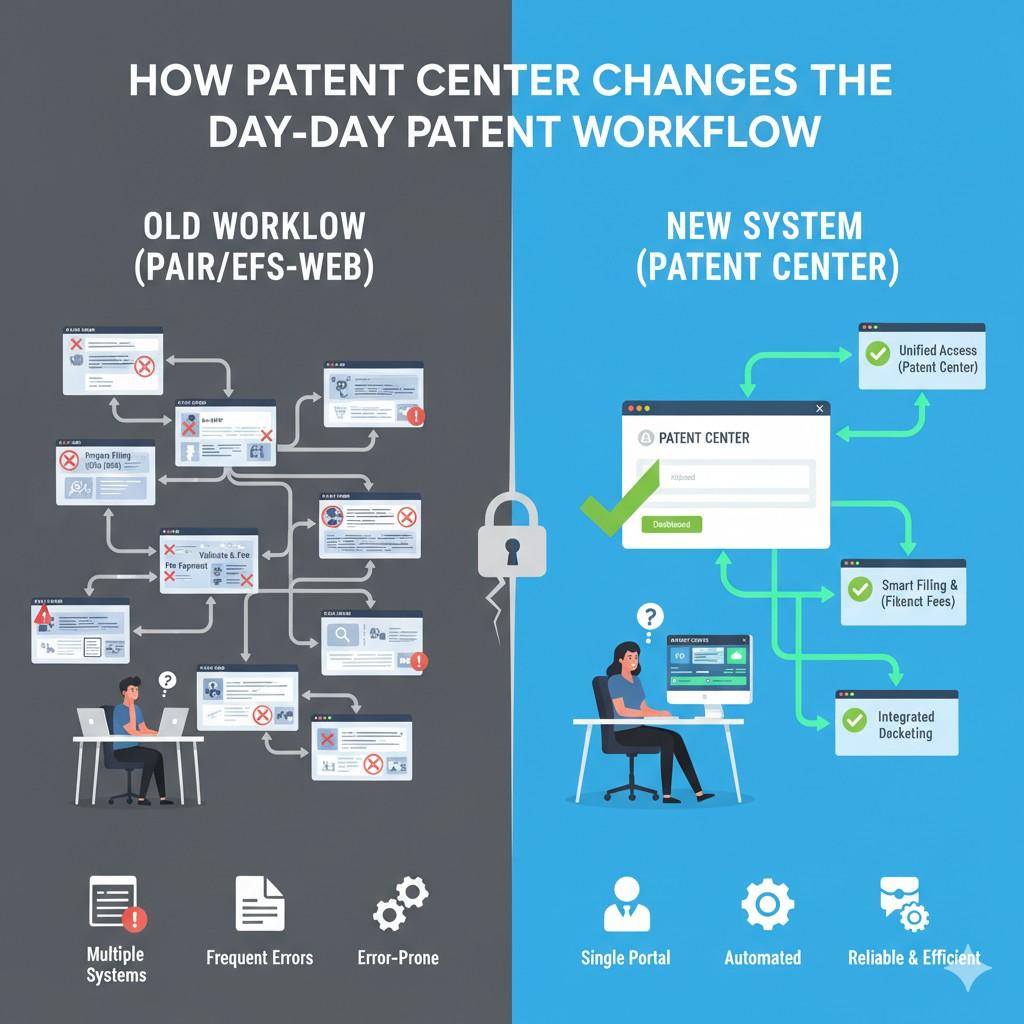
Practical advice: define a clear review process for every USPTO message. Decide who reads it, who interprets it, and who decides next steps. Do not let alerts drive emotional reactions. Let strategy drive responses.
Collaboration Is Easier, Accountability Is Not Automatic
Patent Center allows multiple users to access applications. Attorneys, agents, and internal team members can work from the same system.
This makes collaboration easier, but it also makes responsibility fuzzy. When everyone can see something, it is easy to assume someone else is handling it.
Practical advice: assign a single internal owner for every patent family. That person does not need to be a lawyer, but they must be accountable. Ownership prevents silent failures.
Corrections Feel Less Scary, But Still Cost Time
Compared to EFS-Web, correcting mistakes in Patent Center feels less intimidating. The interface is clearer and less brittle.
This is an improvement, but corrections still cost time and money. The system being nicer does not change that reality.
Practical advice: never rely on the idea that you can fix things later. Build review checkpoints before every submission. Use structured workflows that require confirmation of claims, descriptions, and drawings before filing.
Deadlines Are More Visible, Pressure Is More Subtle
Patent Center shows deadlines more clearly than PAIR did. That visibility helps, but it also shifts pressure. Instead of missing deadlines accidentally, founders may now cut things close on purpose.
Seeing a date can create false comfort.
Practical advice: set internal deadlines earlier than what the system shows. Treat USPTO deadlines as absolute last resorts, not planning targets.
Day-to-Day Work Still Favors Experts
Despite improvements, Patent Center still assumes familiarity with patent concepts. Founders will still see terms and actions that are not explained in plain language.
The workflow is smoother, but it is not educational.
Practical advice: do not expect to learn patent strategy by using Patent Center. Learn strategy separately, then use the system as a tool.
Platforms like PowerPatent exist to bridge this gap by turning patent work into something founders can understand and control. Learn more here: https://powerpatent.com/how-it-works
The Real Workflow Shift for Startups
The biggest change is not technical. It is behavioral. Patent Center lowers the barrier to action. That makes discipline more important, not less.
Founders who treat Patent Center as a button-clicking tool will make faster mistakes. Founders who treat it as the final step in a thoughtful process will benefit.
The system rewards preparation.
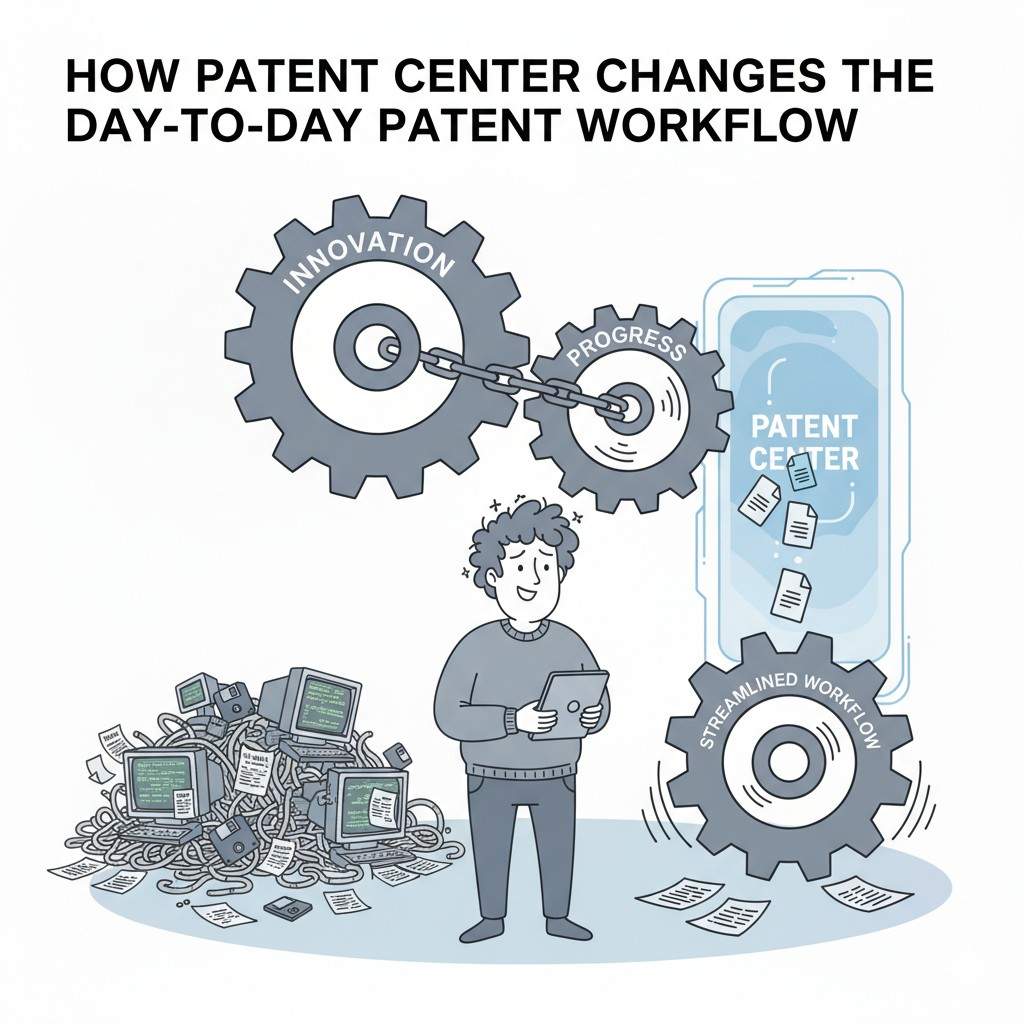
This is why the smartest teams build a patent workflow that lives outside the USPTO and only touches Patent Center when everything is ready.
Why Patent Center Still Is Not Built for Startups—and What Actually Works
Patent Center is a real upgrade over PAIR and EFS-Web. It is cleaner, faster, and more stable.
But it was not designed with startups in mind. It was designed to modernize a government workflow. That difference matters more than most founders realize.
This final section explains where Patent Center still falls short for startups and what practical systems founders should use instead if they want strong, defensible patents without slowing down their company.
Built for Compliance, Not Strategy
Patent Center helps you follow rules. It does not help you make decisions. The system ensures forms are submitted, documents are stored, and timelines are tracked. It does not ask what you are trying to protect or why.
Startups need strategy first. They need to decide which parts of their product create leverage, which parts will change, and which parts must be protected early.
Patent Center assumes those decisions have already been made.
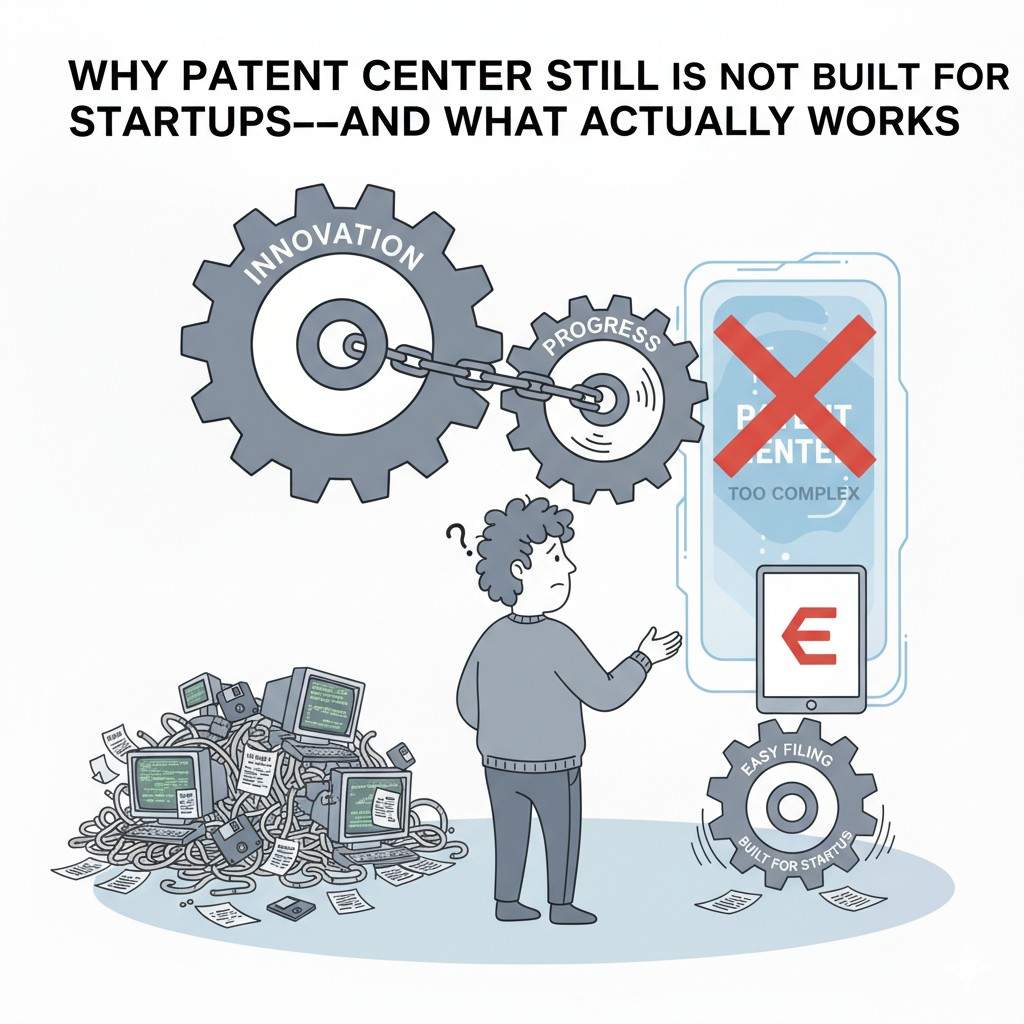
Practical guidance: never open Patent Center to figure out what to file. Open it only after your invention story, scope, and future roadmap are clear. Strategy should happen upstream, not inside a government portal.
No Help Translating Technology Into Protection
Founders build in code, systems, and models. Patent Center speaks in forms and documents. There is no bridge between how technology is created and how patents are written.
This gap forces founders to translate complex work into legal structure without help.
Practical guidance: use tools that start where you build. Diagrams, flows, features, and technical decisions should feed directly into your patent drafting process.
PowerPatent was built to do exactly this by turning real product details into patent-ready structure with attorney oversight. You can see how that works here: https://powerpatent.com/how-it-works
Assumes You Know What a Good Patent Looks Like
Patent Center treats all filings equally. A weak patent and a strong patent look the same in the system. There is no feedback loop that tells you whether what you filed will actually protect you later.
Founders often find out too late that their patent is narrow, easy to design around, or disconnected from the product they shipped.
Practical guidance: evaluate patents based on business outcomes, not filing success. Ask whether a competitor could easily work around it. If the answer is yes, the patent needs work, regardless of what Patent Center shows.
Encourages Reactive Behavior
Patent Center is event-driven. Something happens, and you respond. This trains founders to be reactive instead of proactive.
Strong patent strategy is proactive. It anticipates future products, future competitors, and future risks.
Practical guidance: plan patent work around product milestones, not USPTO notices. File when your product reaches meaningful technical inflection points, not just when the system tells you to respond.
Still Intimidating for First-Time Founders
Even with improvements, Patent Center can feel intimidating. The language, structure, and stakes create hesitation. Founders may delay action because they are unsure.
Delay is costly.
Practical guidance: reduce fear by using systems that explain what is happening in simple terms. When founders understand the process, they move faster and make better decisions.
Hard to See the Big Picture
Patent Center shows individual applications well. It does not show how they connect. Families, continuations, and priorities require mental mapping.
For startups building portfolios over time, this creates blind spots.
Practical guidance: maintain a clear portfolio view outside the USPTO. You should be able to explain your patent coverage in one simple story. If you cannot, your portfolio is too complex or poorly aligned.
Not Designed for Speed With Safety
Startups need speed, but not reckless speed. Patent Center improves speed, but it does not add safety. It will happily let you file something that hurts you later.
Practical guidance: combine fast tools with enforced review. Speed without guardrails leads to regret. The right system helps you move quickly while preventing irreversible mistakes.
What Actually Works for Modern Startups
The winning approach today is layered. Use Patent Center as the official interface with the USPTO. Do not use it as your thinking tool.
Founders who succeed build their patent process around three principles. Clarity before filing. Strategy tied to product. Ownership by the founding team.
Platforms like PowerPatent were created to support this exact approach. They sit between your product and the USPTO, helping you shape strong patents before they ever reach Patent Center, while still working seamlessly with it.
You can explore that model here: https://powerpatent.com/how-it-works
The Real Takeaway
Patent Center is progress. It is not the solution.
The solution is understanding that patents are business tools, not government paperwork. When founders treat them that way, the system becomes manageable. When they do not, even modern tools feel painful.
The teams that win are not the ones who master Patent Center. They are the ones who master their own invention story and use the right tools to protect it properly.
Wrapping It Up
The move from PAIR and EFS-Web to Patent Center marks an important shift, but not the one many founders think. The USPTO did not suddenly make patents easy. It made them more manageable at the system level. That distinction is everything. The old tools failed founders because they were slow, confusing, and built for a different era. Patent Center fixes many of those surface problems. It centralizes access, improves visibility, and supports ongoing interaction. That progress matters. But it does not change the core truth that patents are still complex business assets that require clear thinking long before anything is submitted.