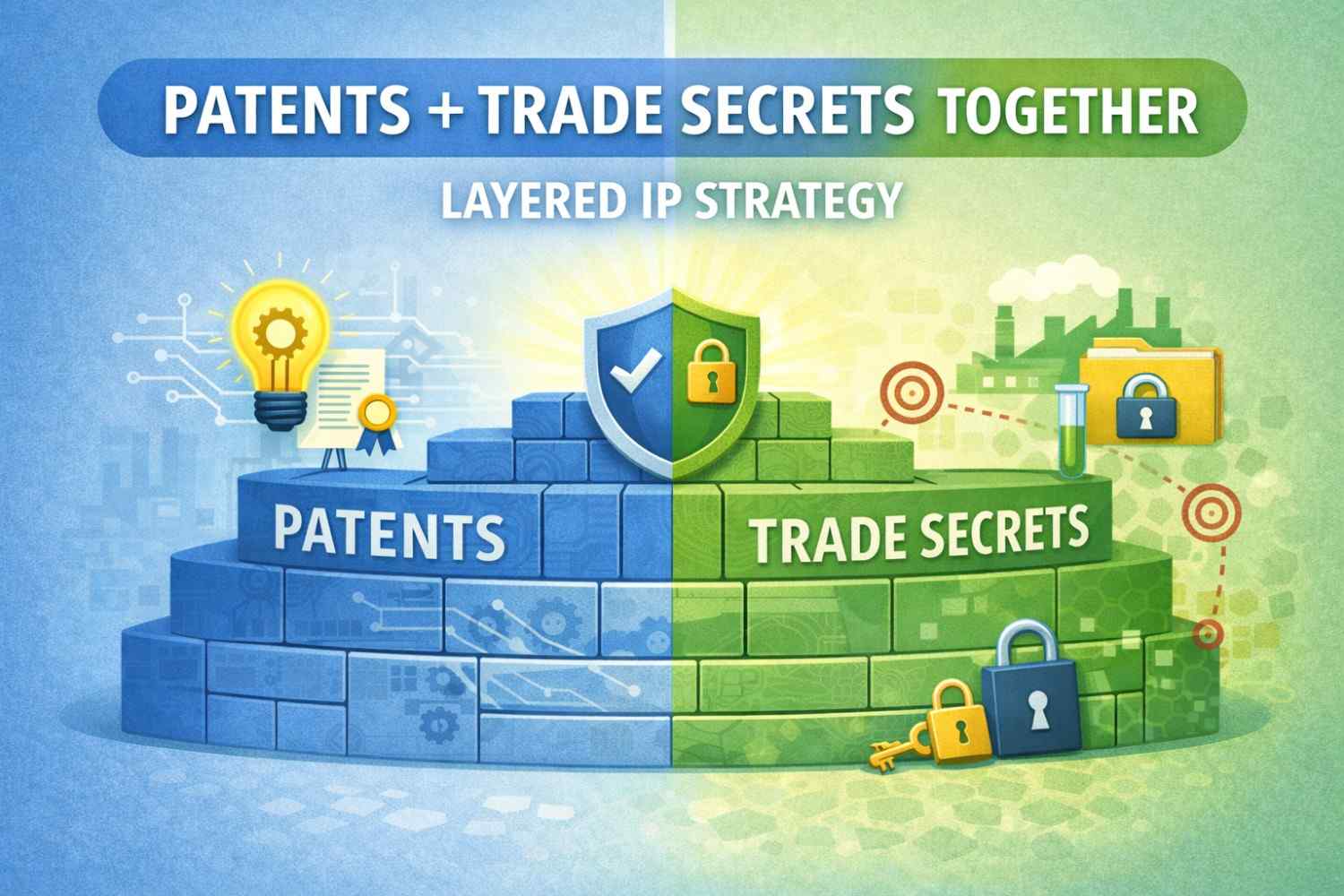
Most founders think patents and trade secrets are an either-or choice, but the strongest companies never pick just one. They use both at the same time to build layers of protection around what really matters. A patent protects what must be shared with the world, while trade secrets protect what should never be seen. Together, they create a quiet but powerful shield that makes copying slow, risky, and expensive. This layered IP strategy lets founders keep building fast, raise money with confidence, and stay in control of their technology instead of reacting to competitors.
Why Choosing Between Patents and Trade Secrets Is a False Choice
Many teams believe they must decide early. Either file patents and share details, or keep everything secret and move fast. This thinking sounds logical, but it leads to weak protection and regret later.
Strong companies do not frame the problem this way. They treat patents and trade secrets as tools that work best together, not as rivals.
The Real Risk Is Not Choosing Too Little, Not Too Much
Most founders worry they will overprotect and slow down. In reality, the bigger danger is leaving value unprotected because of fear or confusion.
When you delay patent work too long, you risk losing rights forever.
When you rely only on secrecy, you risk leaks, employee exits, or reverse engineering. The false choice forces you to accept one type of risk when you could reduce both at the same time.
A smarter move is to ask one question early: what parts of this product will eventually be visible, and what parts will always stay hidden?
That single question changes everything.
Patents and Trade Secrets Solve Different Business Problems
Patents are not about hiding. They are about ownership. They give you the legal right to stop others from using the same idea, even if they build it on their own.
Trade secrets are about control. They protect know-how that gives you speed, quality, or cost advantages that others cannot see from the outside.
If your product ships software, hardware, or a service customers interact with, parts of it will be exposed by default.
APIs can be inspected. Devices can be taken apart. User flows can be copied. Those parts should usually be patented early.
At the same time, there are always inner workings that never need to be shared. Training data choices, tuning logic, internal tools, deployment tricks, pricing logic, or workflows. These are better kept as trade secrets.
Trying to force everything into one bucket weakens both.
Why Investors Expect a Layered Approach
Sophisticated investors rarely ask, do you have patents or trade secrets. They look for signs that you understand what creates durable advantage.
A company with only patents often exposes too much and still gets copied around the edges. A company with only secrets often cannot prove ownership or defend itself in a dispute.
When investors see both in place, it signals maturity. It shows the team understands what should be locked down and what should be claimed publicly.
It also shows the company is thinking long term, not just about launch day.
A simple but powerful action is to map your core value into two groups before fundraising. One group is what competitors could learn by looking at your product.
The other is what they could never learn without working inside your company. The first group points to patent strategy. The second points to trade secret discipline.
The Timing Trap That Hurts Fast-Moving Teams
Founders often say they will think about patents later. Later usually never comes.
Public demos, sales calls, blog posts, and customer pilots slowly reveal how your system works. Once that happens, patent rights may be gone. Trade secret protection also weakens if information spreads without controls.
The false choice creates delay. Teams wait because they think they must decide everything at once.
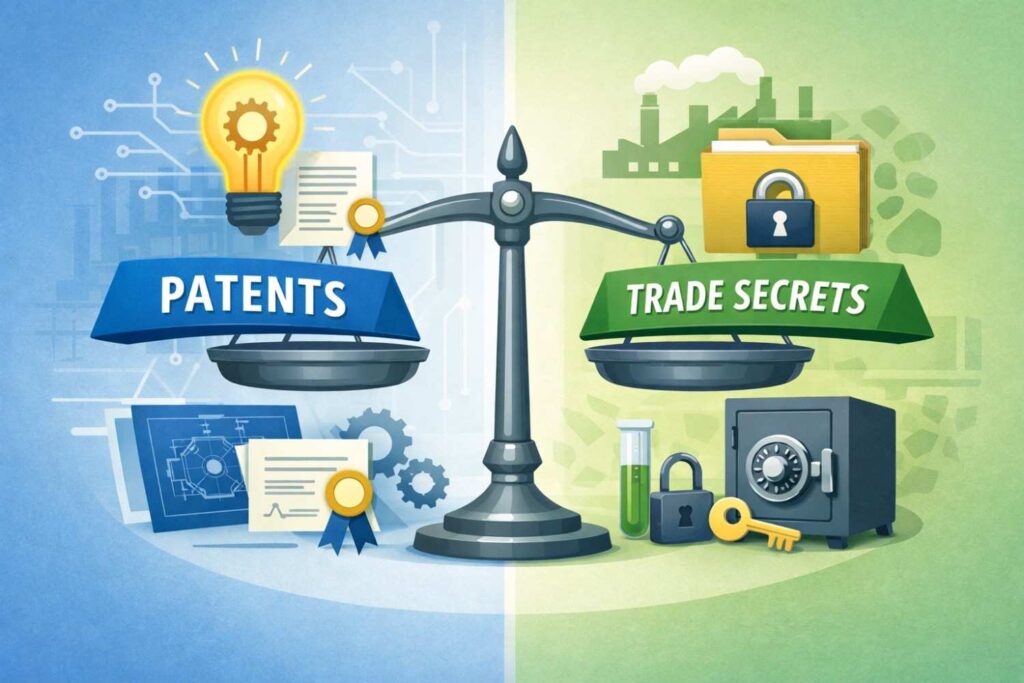
A better approach is staged protection. File patents early on the core ideas that are easiest to observe. At the same time, lock down internal processes as secrets from day one.
This does not require a huge budget. It requires awareness and intent.
PowerPatent is built around this exact reality. Founders can move quickly, capture ideas as they build, and get attorney-reviewed protection without slowing product work. You do not need to pause building to protect value.
You can start here: https://powerpatent.com/how-it-works
Trade Secrets Fail Without Patents Backing Them Up
Many teams overestimate trade secrets. They assume secrecy alone is strong enough.
In practice, secrets are fragile. Employees leave. Vendors learn more than expected. Partners change priorities. If a competitor independently builds the same idea, trade secret law does not stop them.
This is where patents quietly do their job. A patent blocks others even if they figure it out themselves. It creates a legal fence around ideas that might leak or be guessed.
An actionable habit is to review your trade secrets every quarter and ask which ones could realistically be reverse engineered within a year. Those are prime candidates for patent coverage before it is too late.
Patents Are Stronger When You Keep Some Things Secret
The opposite is also true. A patent does not need to explain everything to be valid.
Founders often think they must put every detail into a patent. That is not required. In fact, strong patents often describe the system clearly while leaving out tuning details, thresholds, heuristics, and internal optimizations.
Those details can remain trade secrets while the patent claims the broader method or system.
This is the heart of layered IP. You publish enough to claim ownership, while keeping enough private to stay ahead.
A simple tactic is to write down your invention at two levels. First, the high-level idea that competitors would try to copy. Second, the small choices that make it work well in real life.
The first belongs in patents. The second usually belongs in your vault.
The Cost Myth That Stops Founders Early
Another reason founders think they must choose is cost. They assume doing both is expensive.
The truth is that poor timing is what makes IP expensive. Rushed filings, emergency cleanups, and disputes cost far more than early, lightweight protection.
Using a modern platform that blends smart software with real attorney review lets teams capture ideas as they are built, not months later from memory. That reduces cost, stress, and mistakes.
PowerPatent was designed for this exact problem. Engineers can explain what they built in plain language, and attorneys shape it into strong protection without slowing the company down.
If you want to see how this works in practice, explore it here: https://powerpatent.com/how-it-works
The False Choice Creates Weak Companies
When founders believe they must choose one path, they often underprotect the business they are risking years of their life to build.
Layered IP is not about being aggressive or paranoid. It is about being realistic. Some things will be seen. Some things should never be seen. Treating those differently is not complex. It is common sense.
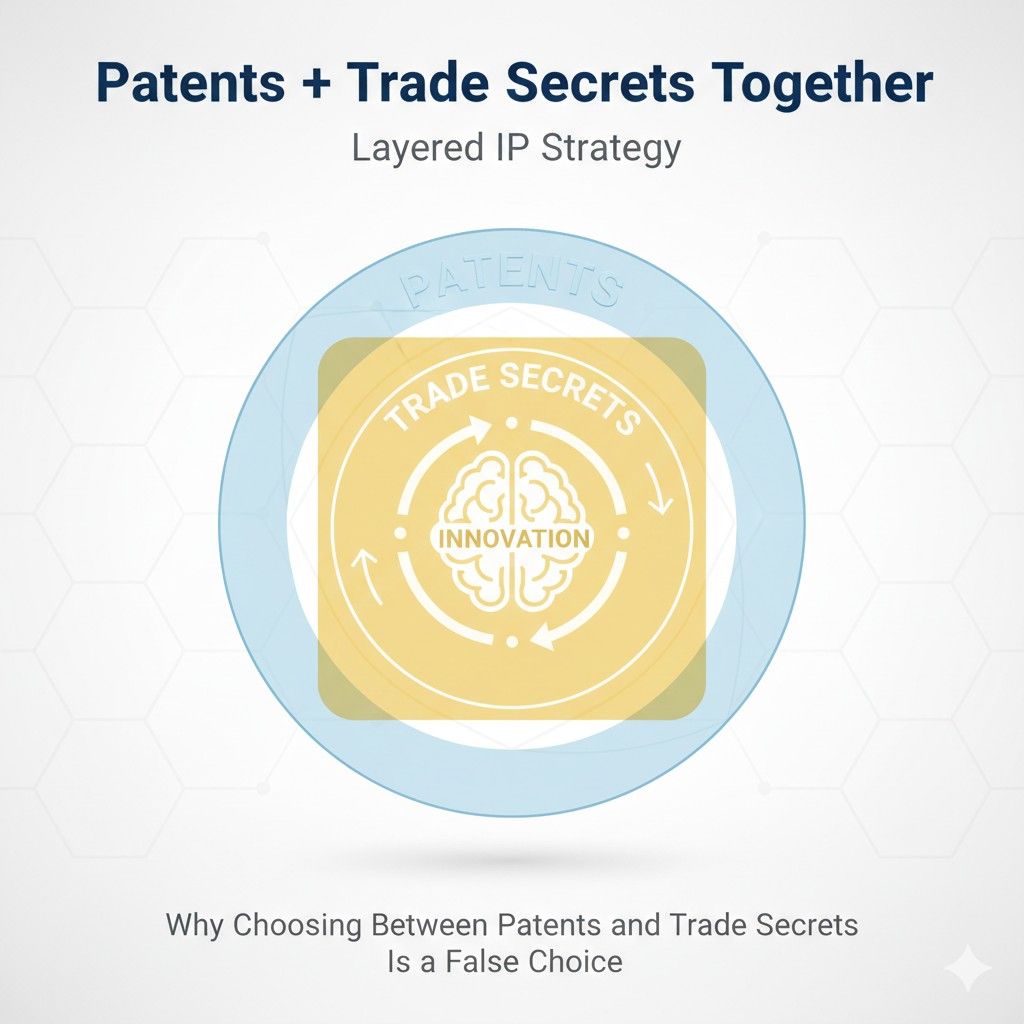
Companies that win long term do not rely on one wall. They build several, each designed for a different kind of threat.
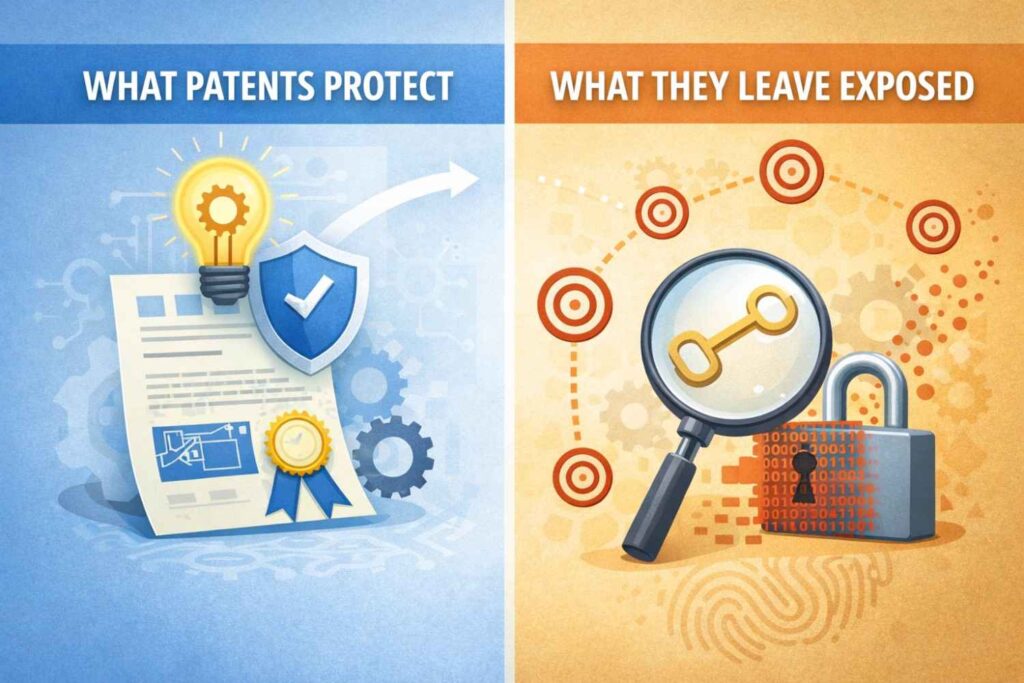
What Patents Protect and What They Leave Exposed
Patents are often misunderstood. Many founders think a patent is a full blueprint of their product, laid bare for anyone to copy. That belief causes fear and hesitation.
In reality, patents protect ownership, not every tiny detail. When used correctly, they lock down the most important ideas while still leaving room to keep key advantages private.
A Patent Is About Claiming the Idea, Not Showing Your Playbook
At its core, a patent answers one question: who owns this idea?
It does not exist to teach competitors how to beat you. It exists to give you the right to say no when someone tries to use the same core approach.
The patent focuses on the concept that makes your product work, not the many small decisions that make it work well. That difference matters.
Competitors can read your patent and still fail to build something useful without the hidden knowledge you keep internal.
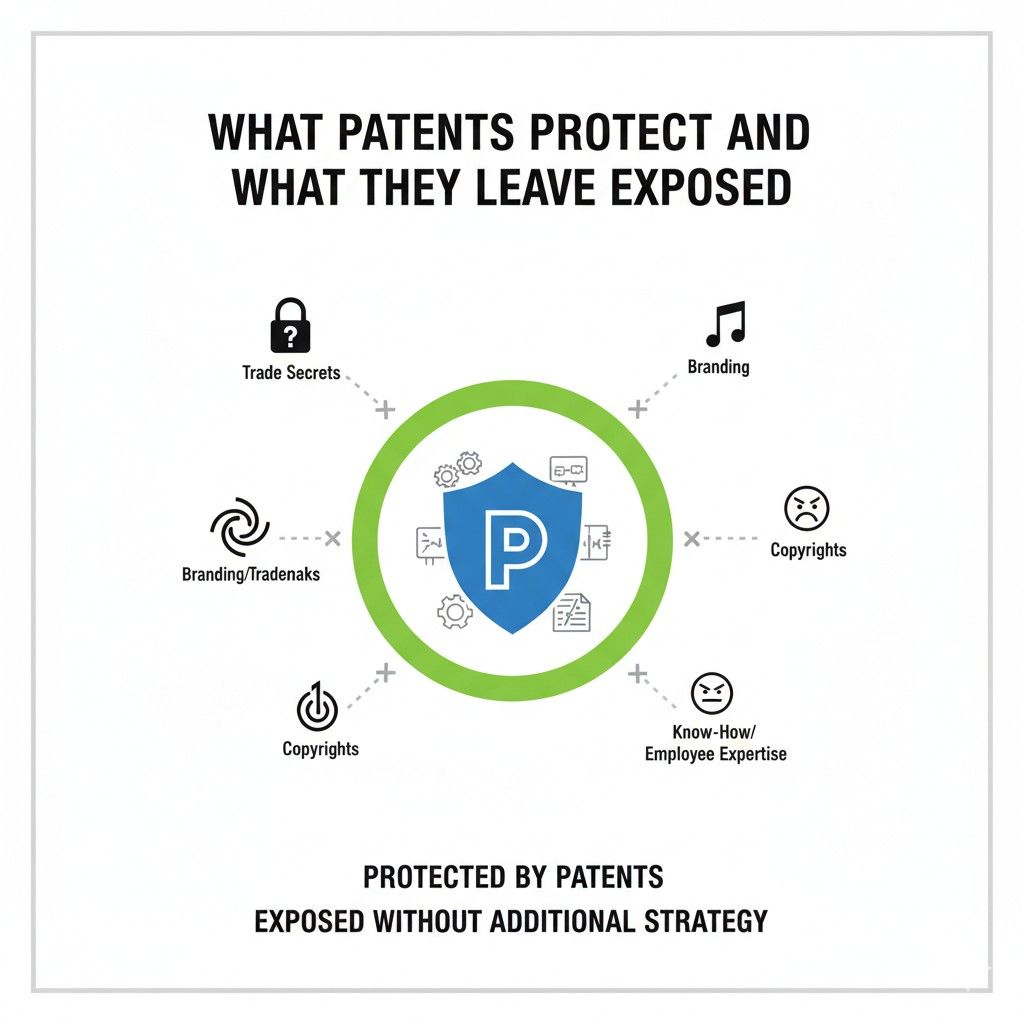
This is why founders should stop thinking of patents as exposure and start seeing them as boundaries.
The Parts of Your Product the World Will See Anyway
Some parts of your product cannot be hidden no matter what you do. Once customers use it, those parts are visible.
Software behavior can be tested. Hardware can be taken apart. APIs can be probed. User flows can be copied. Even services reveal patterns over time.
These visible elements are the most dangerous to leave unprotected. If a competitor can see them and you have no patent coverage, there is nothing stopping them from copying fast.
A strong strategy is to watch your product like an outsider would. Ask what someone could learn just by using it for a week. Those learnings often point directly to what should be patented.
Why Core Architecture Belongs in Patents
The structure of your system is usually the hardest thing to change later. It shapes performance, cost, and scale.
If your architecture gives you an edge, it should be protected early. Even if you plan to refine it, the core layout often stays the same for years.
Patents are well suited for this because they can cover systems and methods at a high level. You do not need to lock yourself into one implementation. You are claiming the idea of doing things this way instead of that way.
This gives you room to evolve without losing protection.
What Patents Intentionally Do Not Cover
A patent does not need to explain how you tuned every parameter or why you picked one threshold instead of another.
Those details are often where the real magic lives. They come from testing, failure, and learning. They change over time. They are hard to reverse engineer.
Leaving these out is not a weakness. It is a strategy.
By keeping optimization details out of patents, you reduce exposure while still holding strong legal ground on the main invention.
The Mistake of Over-Explaining Too Early
Founders sometimes rush to file and include too much. They describe internal dashboards, data handling tricks, or workflow shortcuts that no customer will ever see.
Once published, those details are public forever.
A better approach is restraint. Explain enough to clearly define the invention and support the claims. Save the rest.
This is where experienced patent guidance matters. Knowing what to include and what to hold back is not obvious without help.
PowerPatent helps founders strike this balance by combining software that captures ideas clearly with real attorney review to shape what belongs in the patent and what does not.
You can see how that works here: https://powerpatent.com/how-it-works
Patents as a Signal, Not Just a Shield
Beyond legal protection, patents send signals.
They tell competitors that copying will not be easy. They tell partners that you own what you are bringing to the table. They tell investors that the company is serious about protecting value.
Even when enforcement never happens, the presence of patents changes behavior.
That signal is strongest when patents clearly map to the visible parts of your product. It shows foresight and discipline.
How to Decide If Something Is Patent-Worthy
A simple test helps. Ask whether someone outside your company could build the same thing without ever talking to you.
If the answer is yes, that idea likely belongs in a patent.
If the answer is no because it depends on internal knowledge, judgment, or process, it may be better as a trade secret.
This test keeps you focused on real risk instead of abstract fear.
Patents Create Time, Not Perfection
No patent stops all copying forever. What it does is buy time.
Time to scale. Time to build brand. Time to deepen your secrets. Time to move further ahead.
That time is often the difference between leading a market and chasing it.
Founders who understand this stop chasing perfect coverage and start building smart coverage.
The Right Question to Ask Before Filing
Instead of asking how much should we patent, ask which parts of our value would hurt the most if copied.
Those parts deserve attention first.
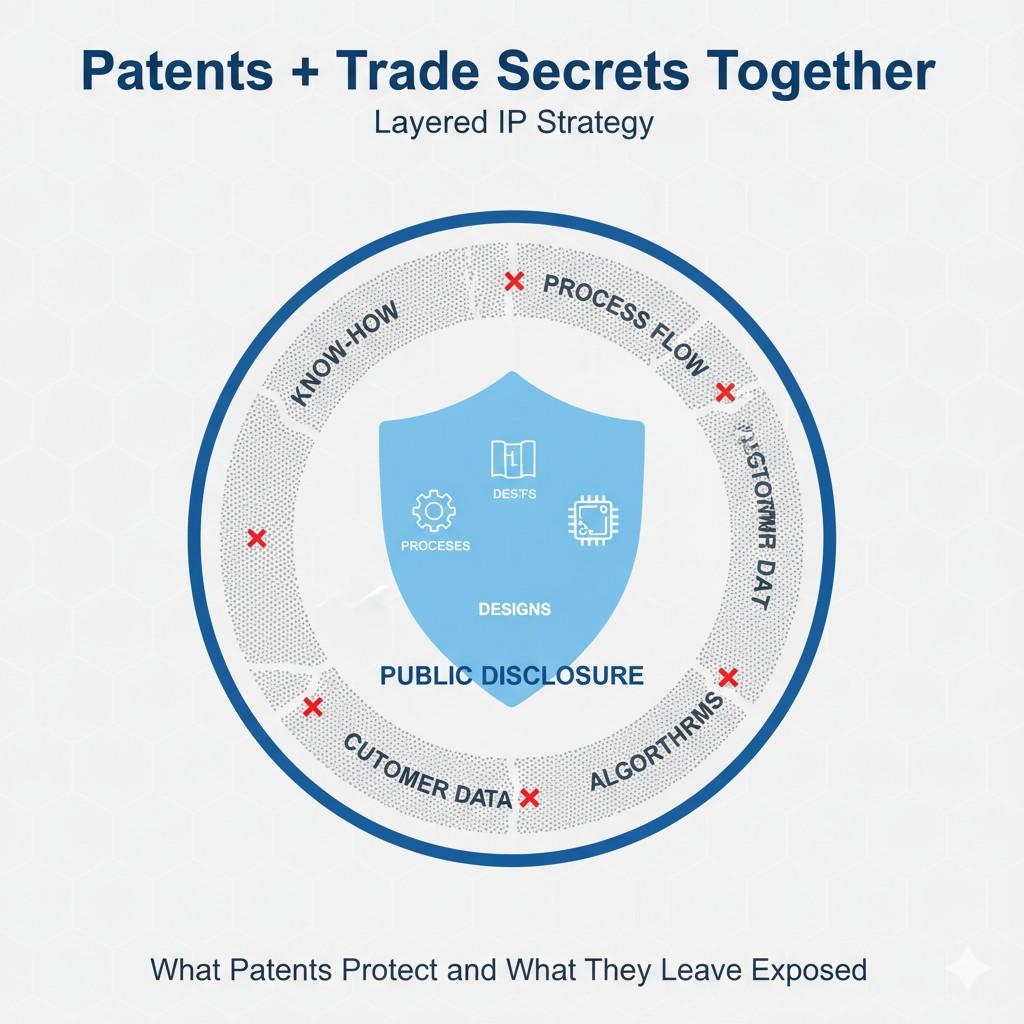
Patents work best when they are targeted and intentional, not broad and rushed.
How Trade Secrets Guard the Parts You Never Want Shared
Trade secrets protect the quiet advantages that never show up in a demo, a sales call, or a pitch deck.
They cover the knowledge that makes your company faster, cheaper, or more reliable in ways outsiders cannot easily see.
When used correctly, trade secrets turn everyday execution into a long-term moat that competitors struggle to cross.
Trade Secrets Are About Discipline, Not Paperwork
Unlike patents, trade secrets do not start with a filing. They start with behavior.
A trade secret exists when valuable information is kept private and treated as private.
That sounds simple, but many teams fail here without realizing it. Files are shared too widely. Docs are copied into tools with weak access controls. Contractors are brought in without clear boundaries.
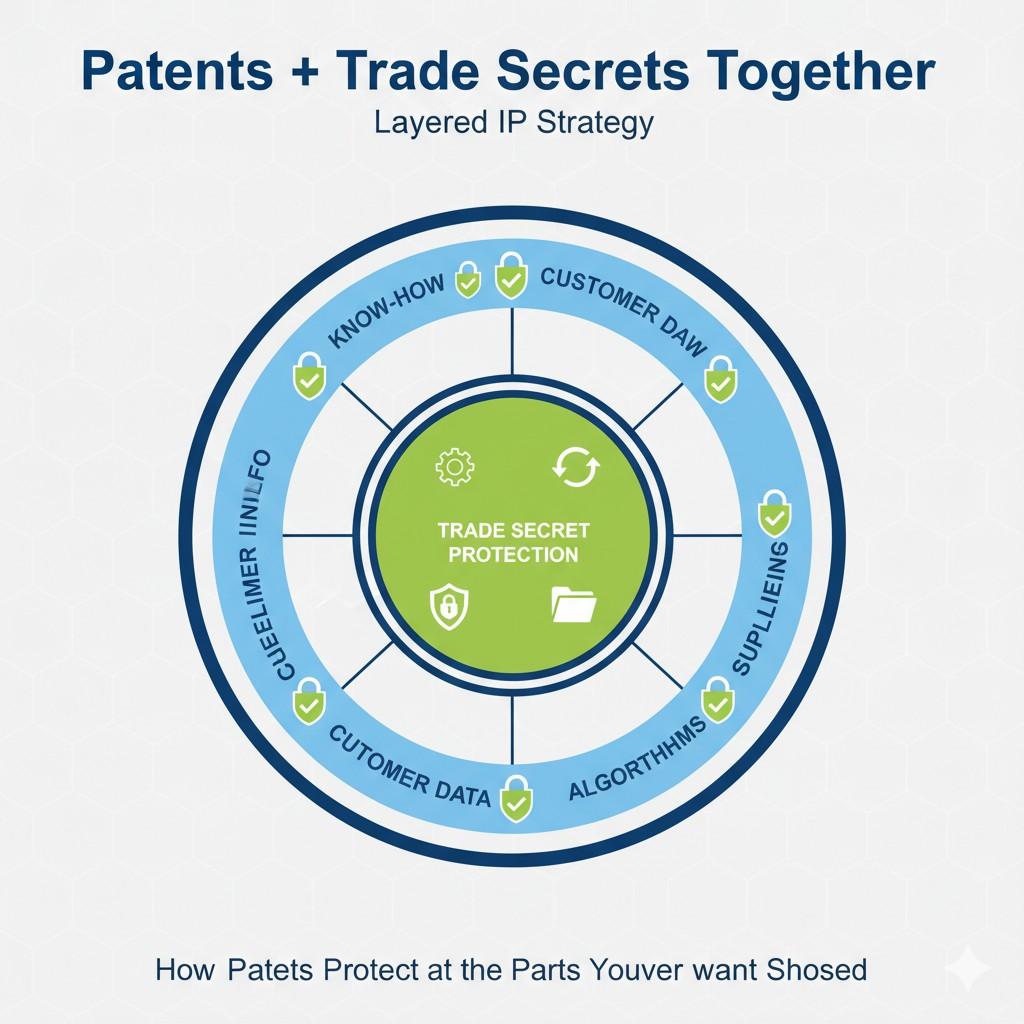
Protecting trade secrets means building habits early. Decide what information truly matters and limit who sees it.
Even small steps, like separating core logic into restricted repos or limiting access to sensitive dashboards, make a real difference over time.
The Knowledge That Gives You Speed
Some advantages are not about what you built, but how fast you can change it.
Internal tools, scripts, workflows, and shortcuts often let teams move weeks faster than competitors. These tools rarely appear in the final product, but they shape everything behind the scenes.
These are ideal trade secrets. They are hard to observe, hard to recreate, and deeply tied to how your team works.
Founders should periodically ask what internal systems would slow them down the most if they disappeared tomorrow. Those systems deserve extra care and tighter controls.
Data Choices That Should Stay Hidden
Data is often the most misunderstood asset.
The value is not just in the raw data, but in how it is collected, cleaned, labeled, filtered, and updated. Two teams can have similar data sources and still get very different results based on these choices.
These decisions rarely belong in patents. They change often and depend on context. They also tend to be invisible from the outside.
Treat these choices as trade secrets. Document them internally, restrict access, and avoid casual sharing in talks or blog posts.
Why Trade Secrets Need Clear Ownership
Many companies assume secrecy is automatic. It is not.
If employees are not clearly told what is confidential, or if contractors are not bound properly, trade secret protection weakens. Courts look at whether a company took reasonable steps to keep information private.
This does not mean heavy rules or legal language everywhere. It means clarity.
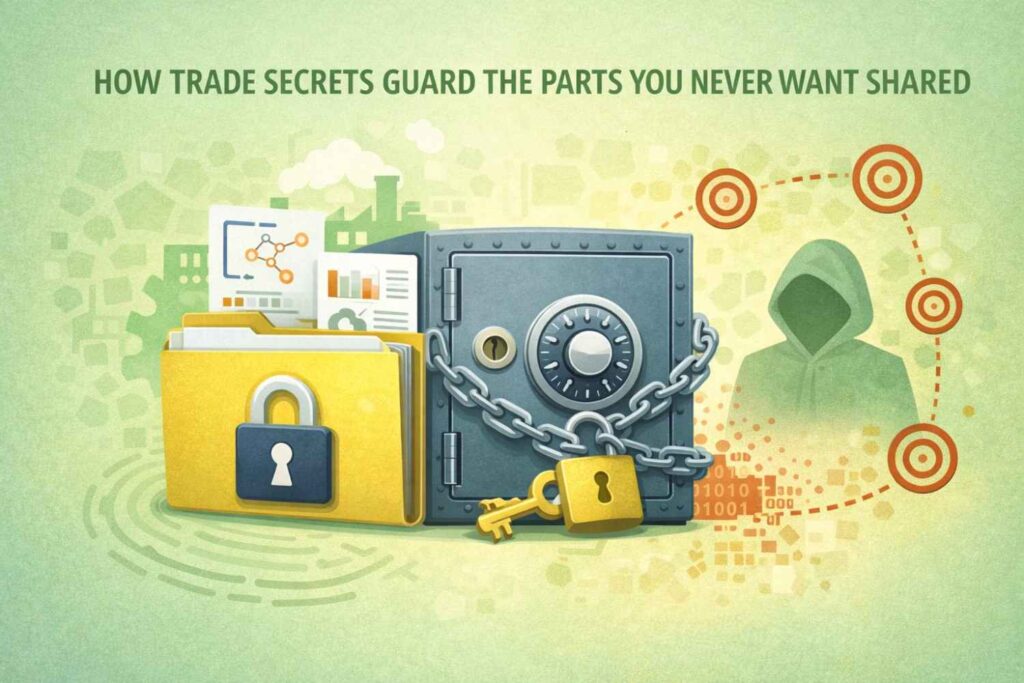
Make it clear which information matters most. Reinforce it during onboarding. Remind teams during growth phases when sharing increases.
This kind of clarity protects the company without slowing it down.
Trade Secrets Become Stronger Over Time
Unlike patents, which have a fixed life, trade secrets can last as long as they remain secret.
As your company grows, your secrets deepen. More data flows in. More edge cases are learned. More small optimizations stack up.
Competitors may copy your surface features, but they fall behind where it counts.
This is why trade secrets pair so well with patents. The patent protects the idea at launch. The trade secrets protect the learning curve that follows.
The Danger of Talking Too Much
Founders love to share. It builds trust and attracts talent.
But oversharing can quietly destroy trade secrets.
Conference talks, podcasts, blog posts, and even investor meetings can leak more than intended. A single slide explaining how something really works can erase years of advantage.
A useful habit is to review public materials from the lens of a competitor. Ask what they could infer. If the answer makes you uncomfortable, it may be time to adjust how much you share.
Trade Secrets Do Not Replace Patents
It is tempting to rely on secrecy alone. Many teams do this because it feels faster.
The problem is that secrecy does not stop independent invention. If someone else builds the same thing without ever seeing your work, trade secret law does not help you.
This is why layering matters. Trade secrets protect what is hidden. Patents protect what could be discovered or copied.
Together, they close the gaps each one leaves open.
How to Build a Simple Trade Secret Culture
You do not need heavy process to protect secrets. You need awareness.
Start by naming your secrets. Even an informal internal list helps. Then decide who truly needs access. Over time, adjust as roles change.
This creates a shared understanding that some knowledge is special and deserves care.
When paired with smart patent coverage, this culture turns everyday execution into durable advantage.
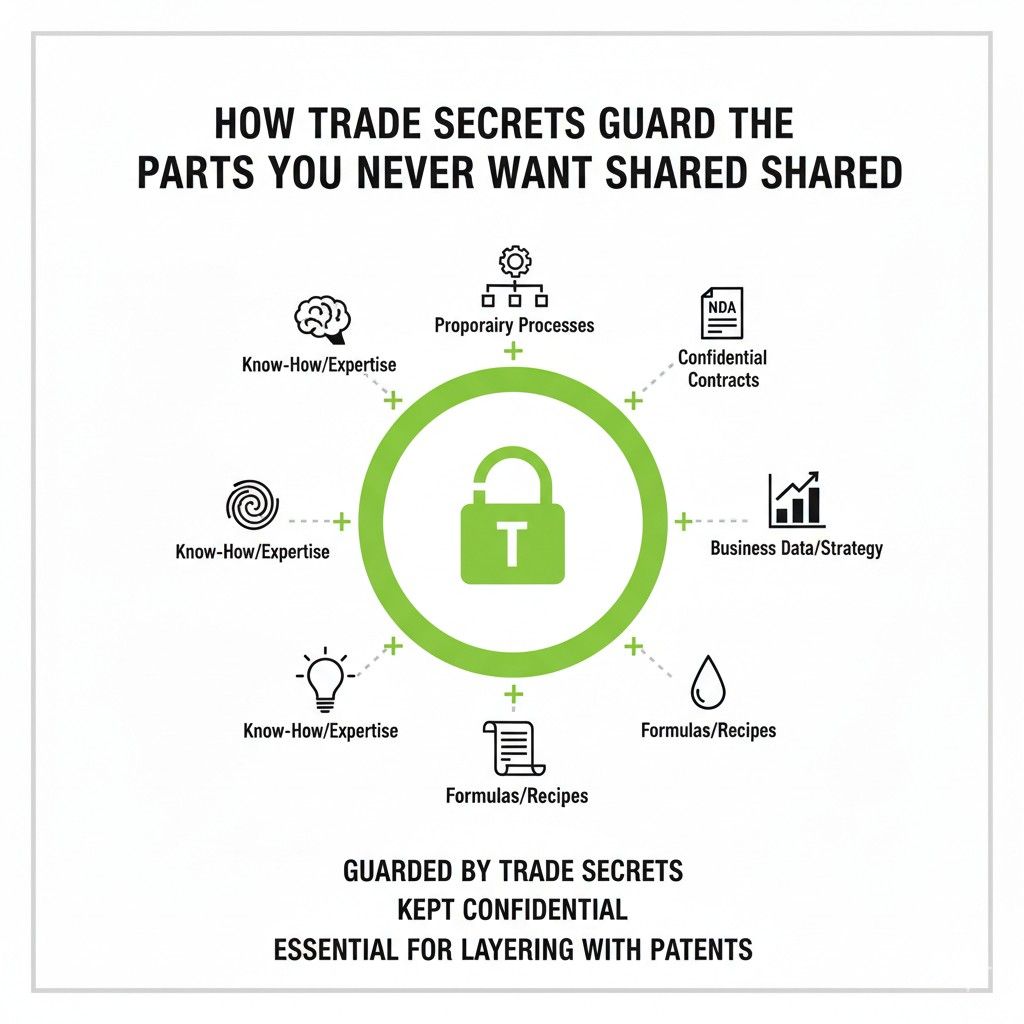
PowerPatent helps founders think this way from the start. By capturing inventions early and shaping patents that leave room for secrecy, teams avoid exposing what should stay private while still claiming what matters. You can explore how that works here: https://powerpatent.com/how-it-works
Building a Layered IP Wall That Grows With Your Company
A layered IP strategy is not something you set once and forget. It grows with your product, your team, and your market.
The strongest companies treat IP as a living system, not a static document. They add layers as new risks appear and as new value is created.
Layered Protection Starts Earlier Than Most Think
Many founders wait until revenue or fundraising to think seriously about IP. By then, important moments have already passed.
The first layer should form while you are still building the core. Early prototypes often contain the clearest expression of the idea. Waiting too long blurs that clarity and makes protection weaker.
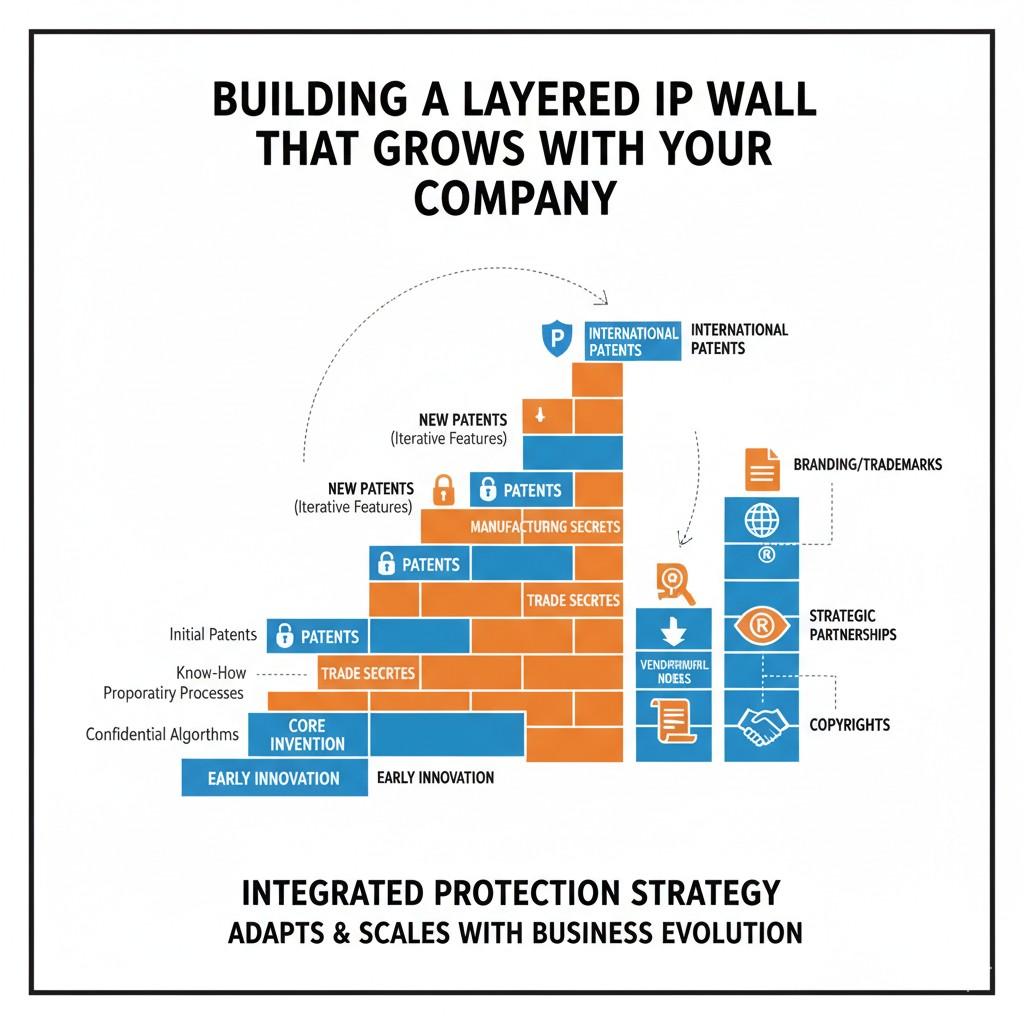
This does not mean filing dozens of patents on day one. It means capturing what makes your approach different while it is still fresh, then deciding what belongs in public claims and what should stay private.
Treat IP as Part of Product Development
The best teams do not separate IP from building. They connect them.
When a major feature ships or a system changes, they pause briefly and ask whether new value was created. If so, they record it. That record becomes the seed for a patent, a trade secret, or both.
This habit turns IP into a byproduct of progress instead of a distraction.
Using tools that fit how engineers think makes this easier. PowerPatent lets teams describe what they built in plain language, while attorneys shape it into real protection behind the scenes.
You keep momentum without losing ownership. You can see how it works here: https://powerpatent.com/how-it-works
Different Stages Need Different Layers
What you protect at the idea stage is not the same as what you protect at scale.
Early on, the focus is often on the core method or system. Later, it shifts to performance, reliability, and cost advantages. Even later, it includes operational knowledge and data depth.
A layered strategy accepts this change. Patents tend to cover earlier, visible ideas. Trade secrets grow stronger as execution compounds.
Revisiting your IP posture as the company evolves keeps protection aligned with real value.
Use Patents to Shape the Competitive Landscape
Patents are not just shields. They can influence how competitors design around you.
Well-written patents define a space and force others into less efficient paths. Even if they avoid direct copying, they may end up with worse solutions.
This effect compounds when paired with trade secrets. Competitors may think they found a workaround, only to discover they still cannot match your performance because the real advantage is hidden.
This combination quietly limits competition without public conflict.
Use Trade Secrets to Deepen the Moat
While patents create boundaries, trade secrets deepen the gap inside those boundaries.
As your team learns more, those insights rarely need to be published. They stay internal and build on each other.
The longer this goes on, the harder it becomes for anyone else to catch up, even if they understand the basic idea.
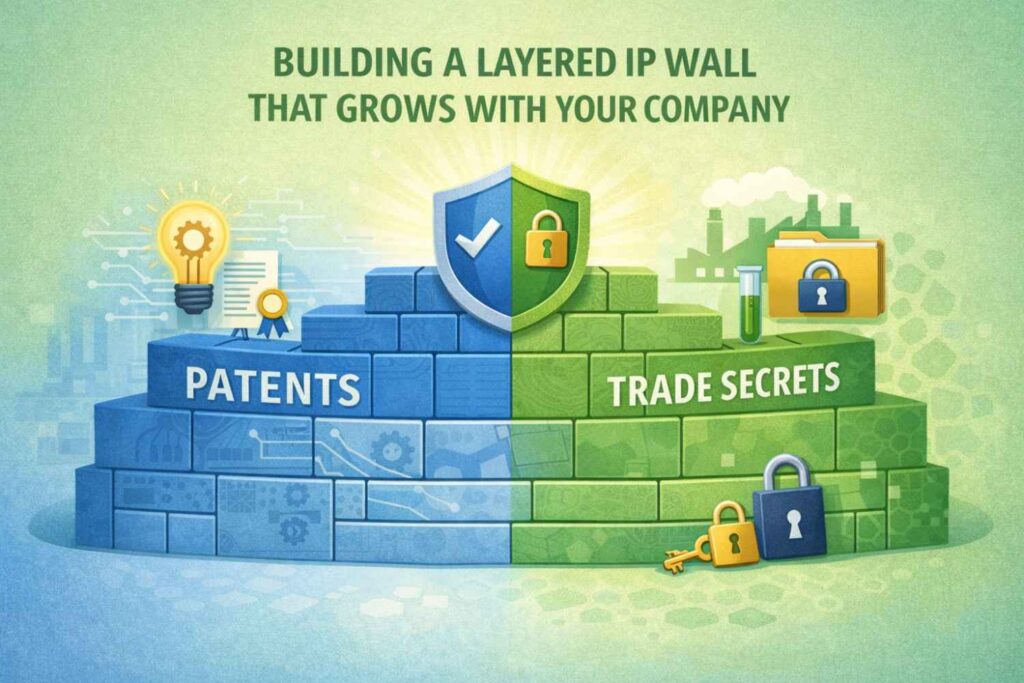
A layered strategy protects both the map and the terrain.
Align IP With Hiring and Growth
As teams grow, risk increases.
More people means more access. More access means more chances for leaks, even without bad intent.
A layered approach helps here. Patents protect you even if someone leaves and builds something similar. Trade secrets require clearer internal boundaries as the team scales.
Founders should revisit access and confidentiality during hiring bursts. Growth without structure quietly erodes protection.
Layered IP Supports Confident Fundraising
When investors see a clear, evolving IP strategy, it reduces perceived risk.
They do not need every detail. They want to know the company understands what is valuable and has taken steps to protect it.
A mix of patents and trade secrets shows balance. It shows the team is not reckless with disclosure and not naive about competition.
This confidence often translates into better terms and smoother diligence.
Make IP a Source of Calm, Not Stress
Founders often feel anxious about IP because it feels complex and unforgiving.
A layered approach reduces that stress. You are not betting everything on one move. You are building protection step by step, alongside the company.
Missed something early? You can add a layer later. Learned something new? Protect it.
This mindset turns IP from a fear into a tool.
The Companies That Win Think in Layers
Strong companies rarely talk about their IP strategy publicly. They do not need to.
It shows up in how hard they are to copy, how confident they are in partnerships, and how calmly they face competition.
They did not choose between patents and trade secrets. They used both, each where it made sense.
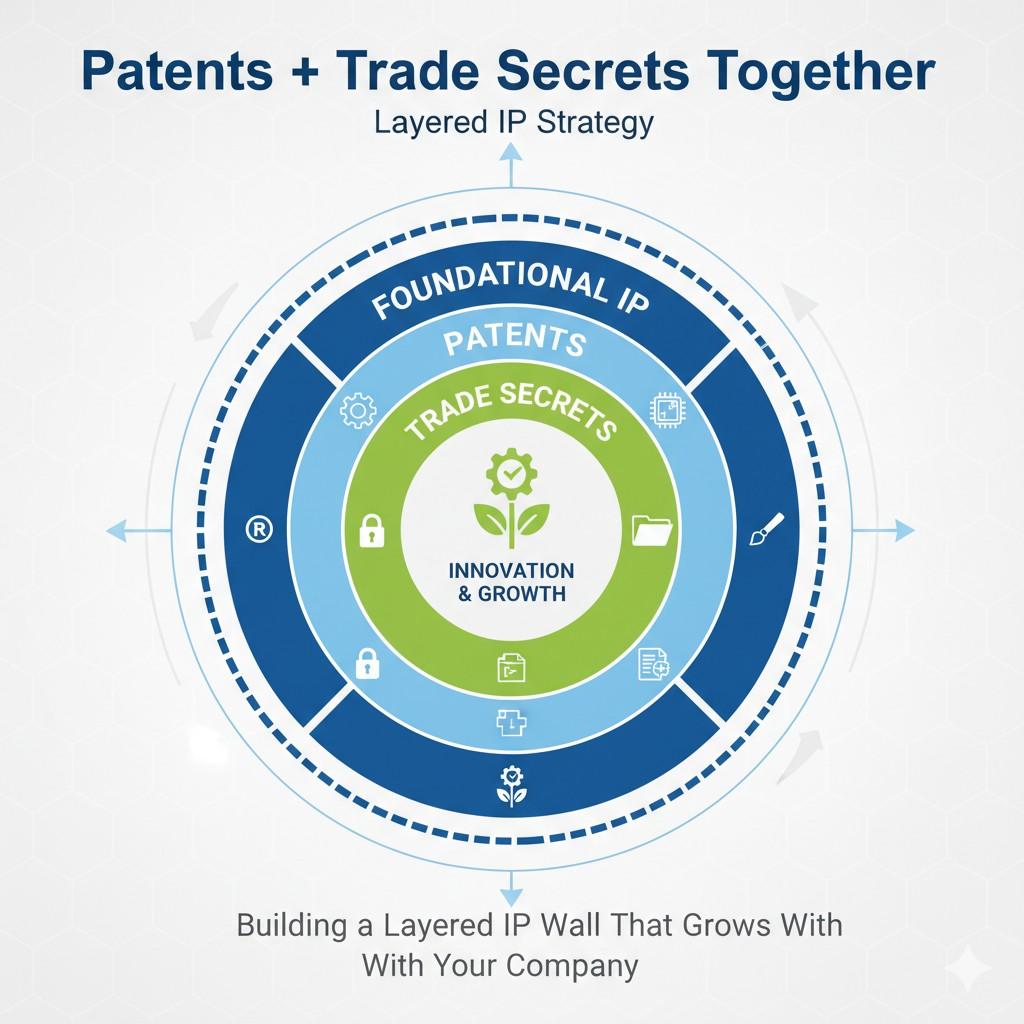
If you want help building this kind of layered strategy without slowing down your team, PowerPatent was built for exactly that.
Smart software, real attorneys, and a founder-first approach to protecting what you are building. Learn more here: https://powerpatent.com/how-it-works
Wrapping It Up
A strong IP strategy is not about picking sides. It is about understanding what you are really building and protecting it in the smartest way possible. Patents and trade secrets are not competitors. They are partners. One claims ownership of ideas the world can see. The other protects the quiet knowledge that makes those ideas work better in real life. Founders who choose only one usually do so out of fear, cost concerns, or confusion. Founders who use both are thinking like long-term builders. They know some value must be declared early, before it leaks. They also know some value should never be shared, no matter how big the company becomes.