You should not pay another dollar on a patent until you know exactly what it is worth to your startup. Not what you hope it is worth. Not what your lawyer says. Not what feels impressive in a pitch deck. What it is actually worth. Every patent you file, every renewal fee you pay, every response you send to the patent office is an investment decision. If you are a founder or engineer building real technology, you need a simple way to score each patent asset before you keep funding it. This article will show you how to build a clear, practical Patent ROI Framework so you can decide what to protect, what to push, and what to stop paying for—without slowing down your startup. If you want to see how modern patent tools make this easier from day one, you can explore how PowerPatent works here: https://powerpatent.com/how-it-works.
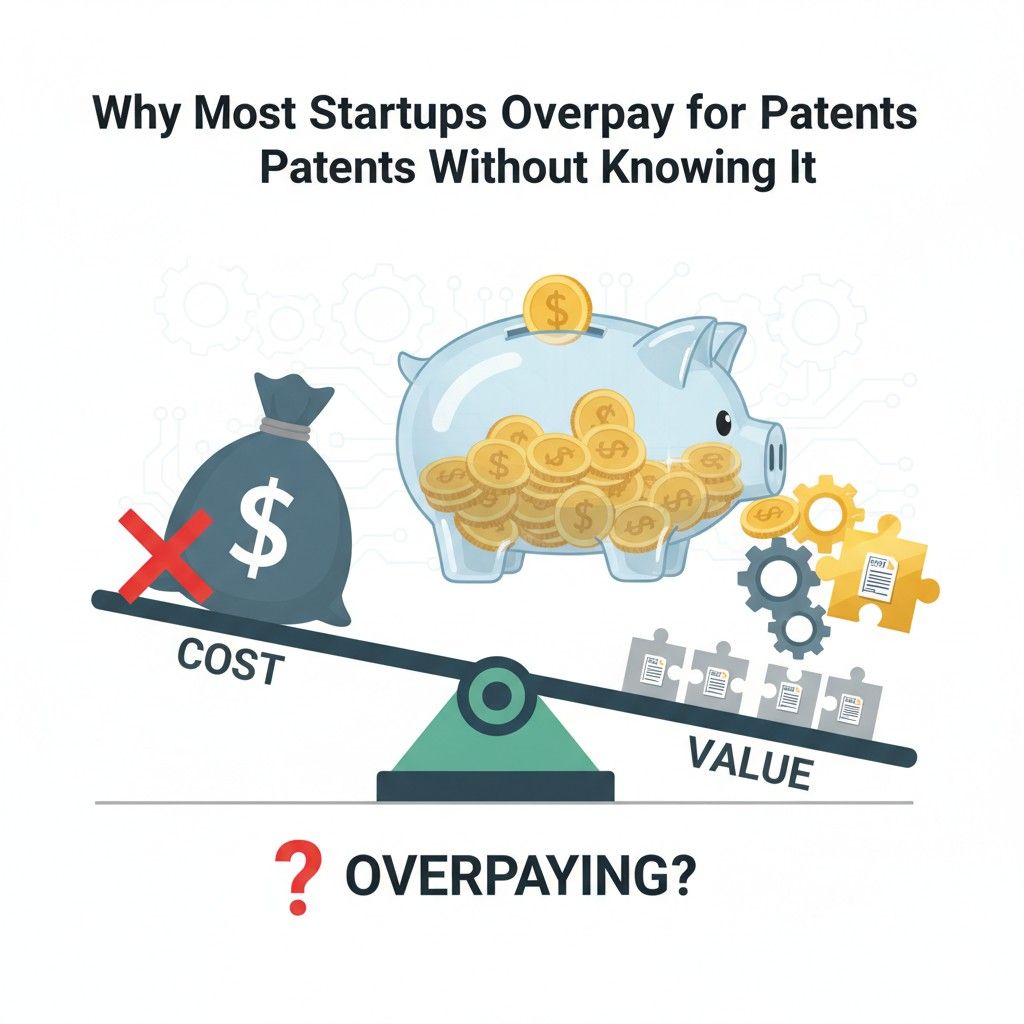
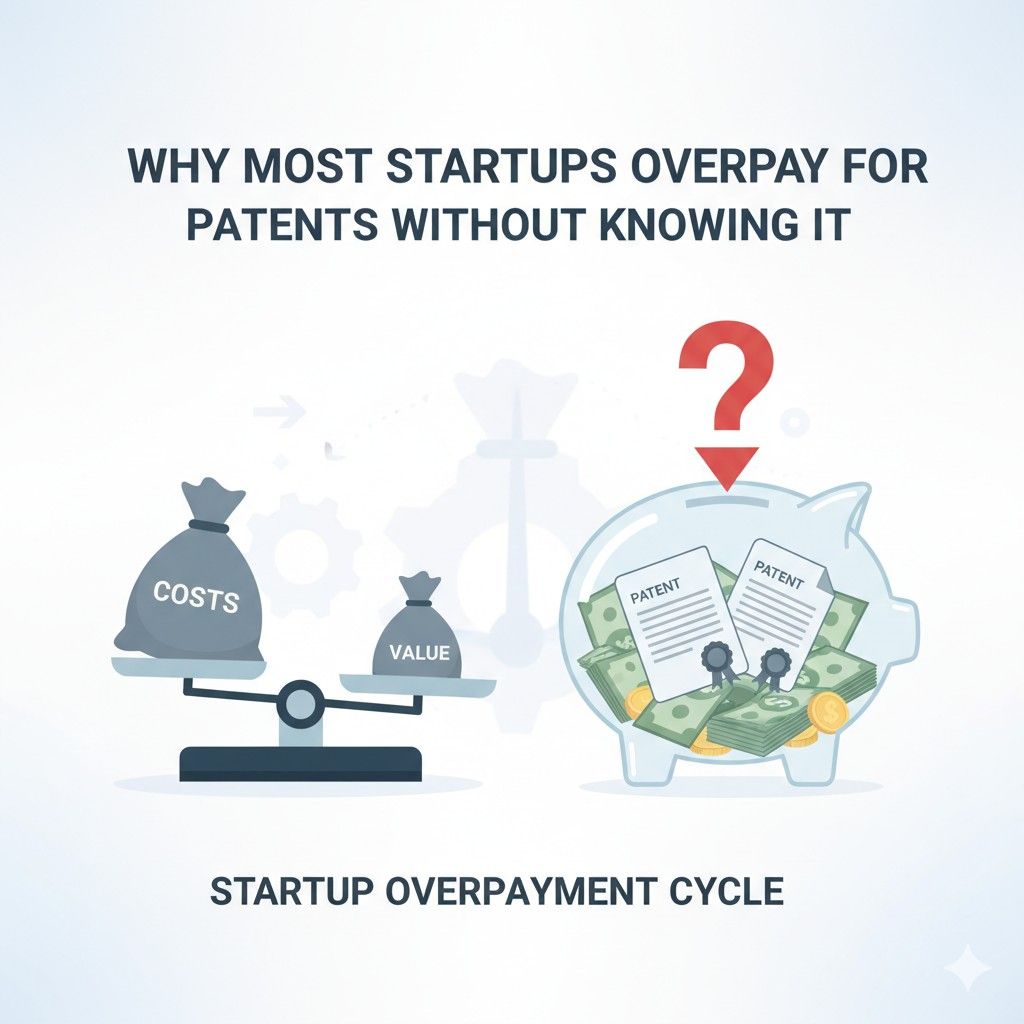
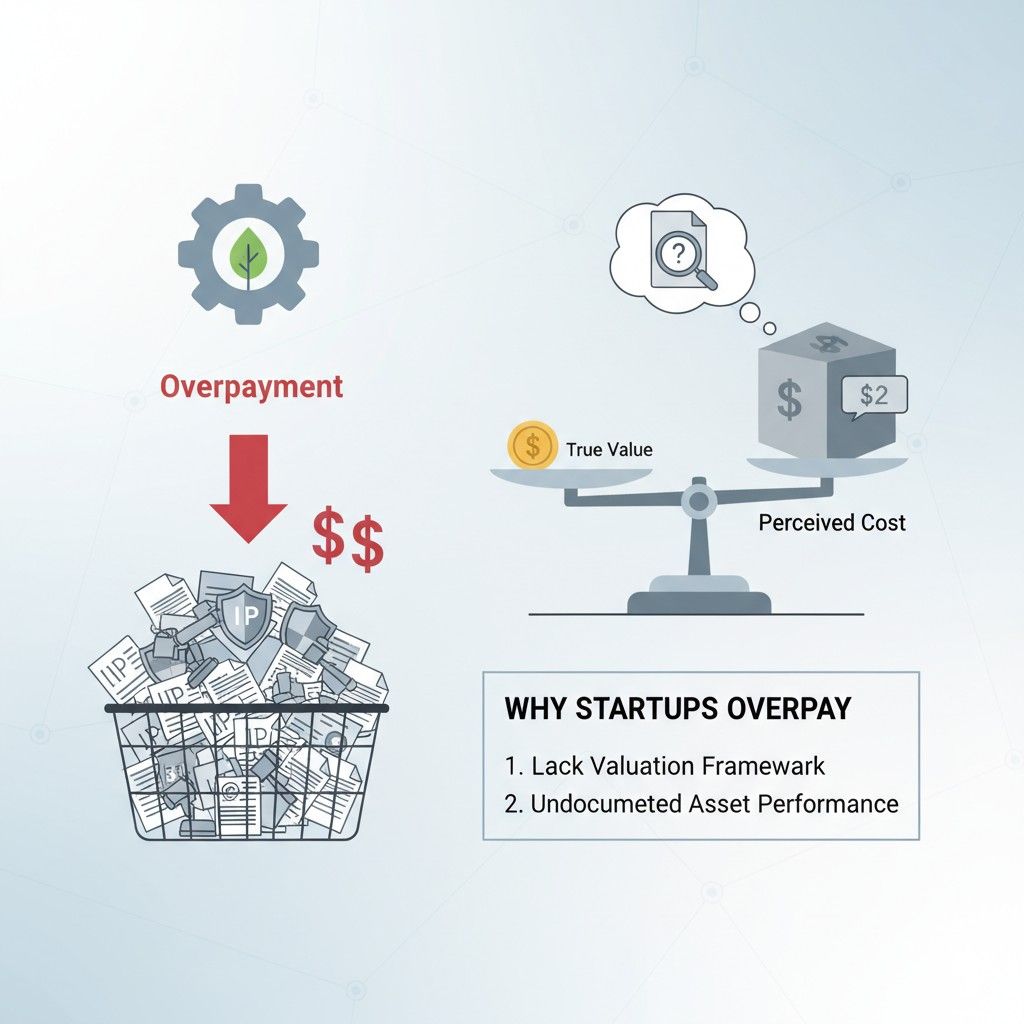
Why Most Startups Overpay for Patents Without Knowing It
Many startups do not waste money on patents because they are careless. They waste money because they are moving fast.
When you are building product, hiring engineers, and trying to close your next round, patents feel like something you “just handle.” You file. You respond. You pay the invoice. You renew. You move on.
But every one of those steps is a capital allocation decision.
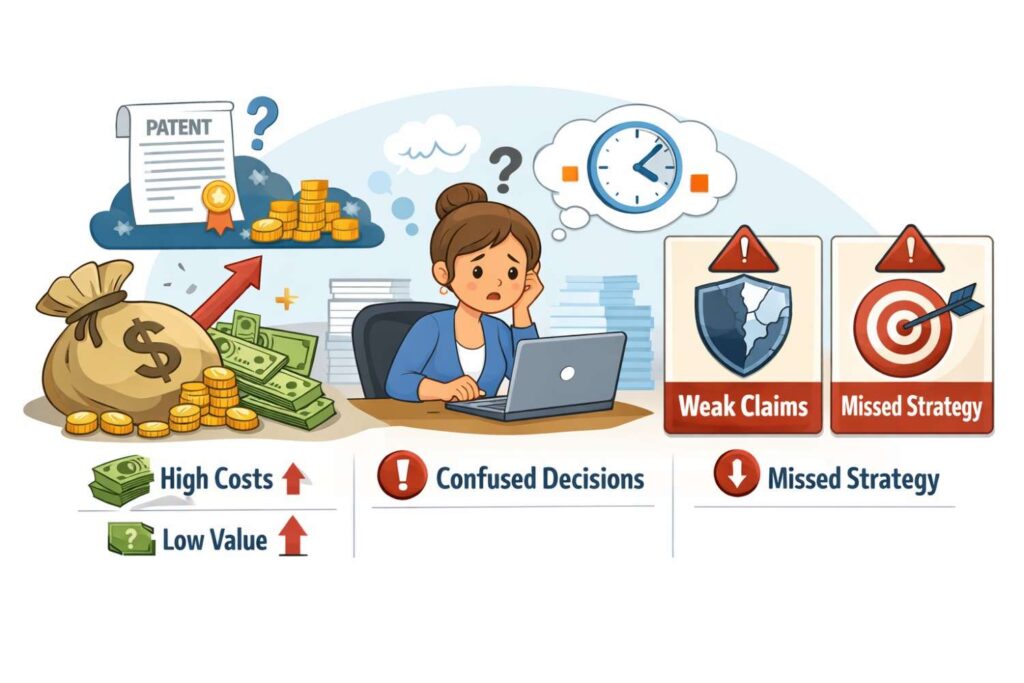
Most founders never stop to ask a hard question: Is this patent asset still earning its keep? Or are we paying for something that no longer supports the business we are actually building?
That gap between activity and strategy is where overpaying begins. Let’s break down where it really happens.
Filing Before Product-Market Clarity
Startups often file early, which is smart. Protecting core technology before you go public is wise. The mistake happens when that early filing never gets revisited after the company evolves.
Your first version of the product is rarely the final one. Features change. Use cases shift. Customers surprise you. Revenue comes from a different angle than you expected.
But the patent you filed two years ago may still be focused on the original concept.
If you continue paying to prosecute or maintain a patent that no longer maps to your real revenue engine, you are funding history instead of protecting the future.
Before paying another invoice, pause and compare the patent claims to your current product roadmap. Do they cover the exact mechanism that drives adoption today?
Or do they protect a version of your technology that no longer exists?
If the patent does not align with where revenue is headed, you have three options.
You can narrow focus and adjust strategy around what matters. You can file continuation applications to shift claim coverage toward what is now core. Or you can decide that continued investment does not make business sense.
The key is that the decision should be intentional, not automatic.
If you want to see how a modern system helps you map patents directly to product evolution, take a look at how PowerPatent approaches it: https://powerpatent.com/how-it-works.
Treating Patents Like a Legal Expense Instead of a Business Asset
Many founders see patent costs as a line item under “legal.” That framing alone creates the problem.
Legal costs feel defensive. They feel like something you must endure. When patents are treated this way, they are not measured against growth, leverage, or strategic value.
But a patent is not paperwork. It is a competitive tool. It is leverage in fundraising. It is a shield in partnership talks. It is a bargaining chip in acquisition discussions.
It can block competitors or force licensing conversations.
If you do not measure those outcomes, you will not know whether the patent is doing its job.
Before approving another payment, ask how this asset increases your control in the market. Does it make it harder for a larger competitor to copy your core advantage?
Does it give investors confidence that your moat is real? Does it strengthen your position in enterprise sales conversations?
If the answer is unclear, you are not evaluating ROI. You are simply maintaining a file.
Smart founders build a habit of tying each patent to a business objective. When that objective changes, the patent strategy should change too.
Chasing Patent Counts Instead of Patent Power
There is a quiet pressure in startup culture to show numbers. Number of users. Number of customers. Number of partnerships. And sometimes, number of patents.
But investors do not invest in patent counts. They invest in defensibility.
Ten weak patents that protect minor variations will not help you in a serious competitive battle. One well-crafted patent that covers your core technical method can change everything.
Overpaying often happens when companies continue filing incremental patents that do not expand strategic coverage. They are filed because “we have new features” or because someone suggested building a larger portfolio.
Volume without strategy is expensive.
Before funding another application, step back and ask what gap it fills. Does it block a real competitive threat? Does it extend your coverage into a new market? Does it protect a monetization path you plan to open?
If it does not increase leverage, it may not deserve ongoing funding.
PowerPatent was built to help founders focus on strength, not volume. You can see how it keeps filings aligned with real business goals here: https://powerpatent.com/how-it-works.
Letting Attorneys Drive Strategy Without Product Context
Traditional patent firms operate outside your product team. They work from documents you send. They respond to office actions. They bill by the hour.
What they often lack is deep visibility into your roadmap, your pivot decisions, and your competitive positioning.
When the legal team does not fully understand your technical direction, they may continue pushing a patent forward simply because it is in progress. From their view, it is a file to manage. From your view, it is capital.
Overpaying happens when prosecution continues on autopilot.
You should treat each major patent office response as a checkpoint. Before paying for amendments or arguments, review whether the claim scope you are fighting for still matters.
Is the narrowed claim still powerful? Does it protect something core? Or are you spending thousands to secure protection around a secondary feature that no longer moves the needle?
Modern founders stay close to the process. They do not disappear after filing. They review claim language. They question strategy. They align legal moves with product shifts.
With tools that combine software and real attorney oversight, this becomes much easier. Instead of reacting to bills, you drive decisions with clarity. That is the philosophy behind PowerPatent’s model: https://powerpatent.com/how-it-works.
Paying Maintenance Fees Without Re-Scoring the Asset
Maintenance fees feel routine. They arrive years after filing. By then, your company may look completely different.
Yet many startups pay them automatically.
This is one of the biggest hidden drains on capital.
Every maintenance deadline should trigger a fresh ROI score. Not an emotional decision. A structured one.
Ask how the patent has been used in the past few years. Did it support fundraising? Did it deter competitors? Did it strengthen negotiation positions? Is the technology it covers still central to revenue?
If the patent has been dormant and irrelevant to your current strategy, the fee is not just a small expense. It is a signal that the asset may not deserve continued investment.
Letting go of a patent can feel uncomfortable. Founders attach meaning to what they created. But smart capital allocation requires discipline.
Your goal is not to own the most patents. Your goal is to own the right ones.
Ignoring the Cost of Narrow Claims
Another quiet way startups overpay is by pursuing protection that becomes too narrow to matter.
During prosecution, examiners push back. Claims get amended. Scope shrinks. This is normal.
But if the final allowed claims are so narrow that competitors can easily design around them, the asset may not justify its cost.
Yet companies continue paying because “we already invested so much.”
This is sunk cost thinking.
Instead, treat claim scope as a measurable factor in ROI. Wide claims that cover core architecture may justify ongoing fees. Narrow claims that protect small implementation details may not.
Before funding another response, ask for a clear explanation of what competitive behavior the claim actually blocks. If the answer is vague, reconsider the investment.
Working with a system that keeps claim drafting closely tied to your real code and architecture reduces this risk from the start.
That is one reason many technical founders prefer a software-first approach backed by real attorneys: https://powerpatent.com/how-it-works.
Forgetting That Patents Compete With Product Investment
Every dollar you spend on patent prosecution or maintenance is a dollar not spent on product, hiring, or marketing.
This does not mean patents are less important. It means they must compete for capital like everything else.
When founders fail to view patent spending in this light, overpayment becomes invisible.
Before approving continued investment, compare expected patent leverage to alternative uses of capital. Would this same budget generate more growth if deployed into engineering?
Or does the patent create a barrier that protects millions in future revenue?
When you frame the decision this way, clarity improves.
Strategic founders do not ask, “Can we afford this patent?” They ask, “Is this the highest return use of this capital?”
That mindset alone prevents unnecessary spending.
Moving Forward With Awareness
Overpaying rarely happens because founders are careless. It happens because patent management feels distant from daily product work. Bills arrive. Deadlines approach. Momentum carries the process forward.
The solution is not to abandon patents. It is to bring them into your strategic dashboard.
Score each asset. Revisit alignment often. Tie protection directly to revenue paths and competitive risk. Demand clarity before funding continuation.
When you treat patents like serious business assets instead of background legal files, spending becomes intentional.
If you want a system that helps you stay in control while still getting real attorney support, explore how PowerPatent works: https://powerpatent.com/how-it-works.
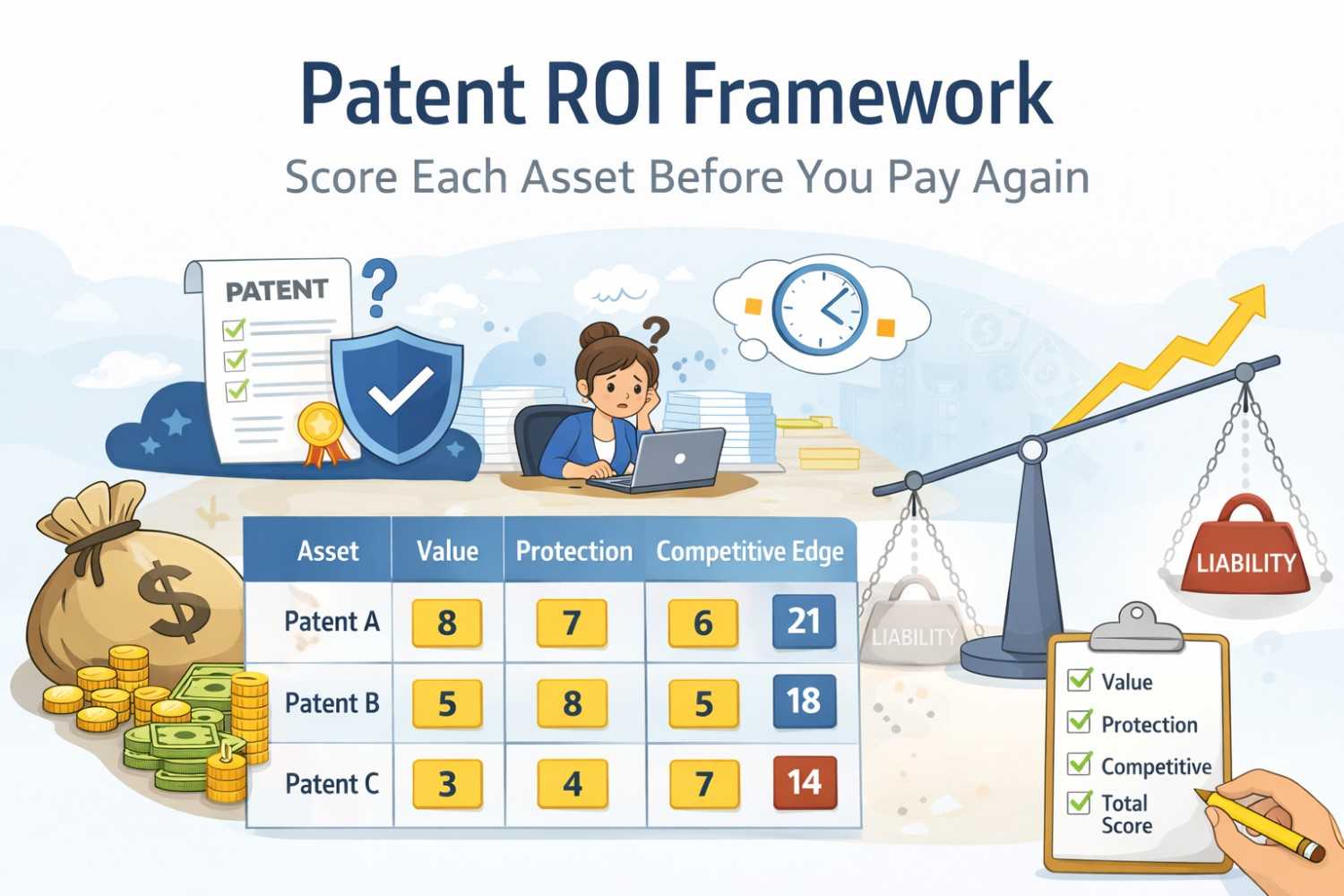
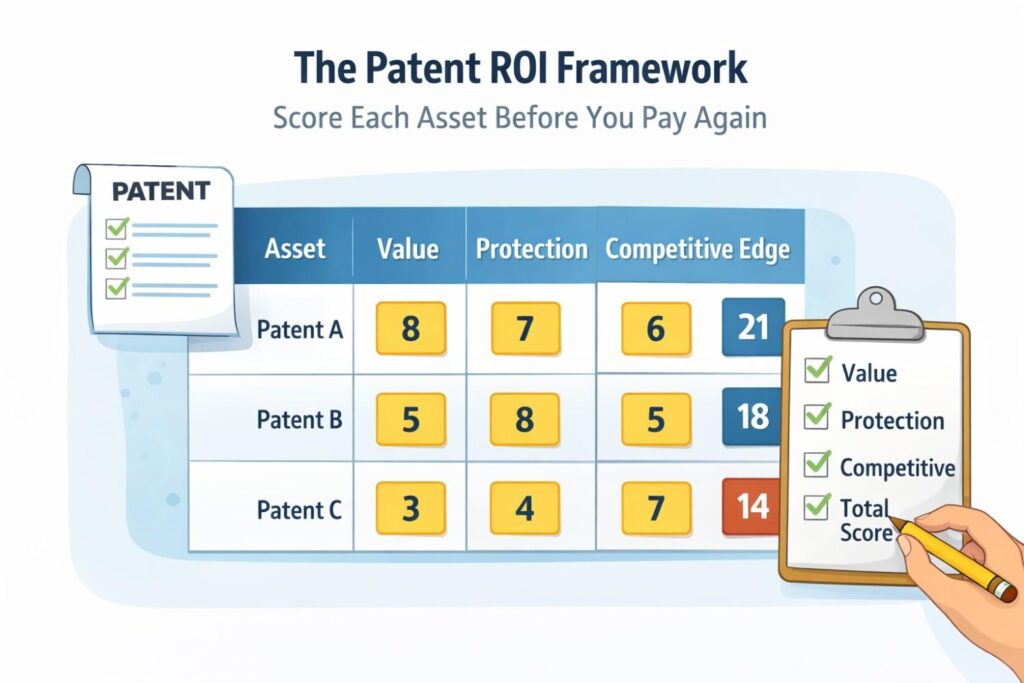
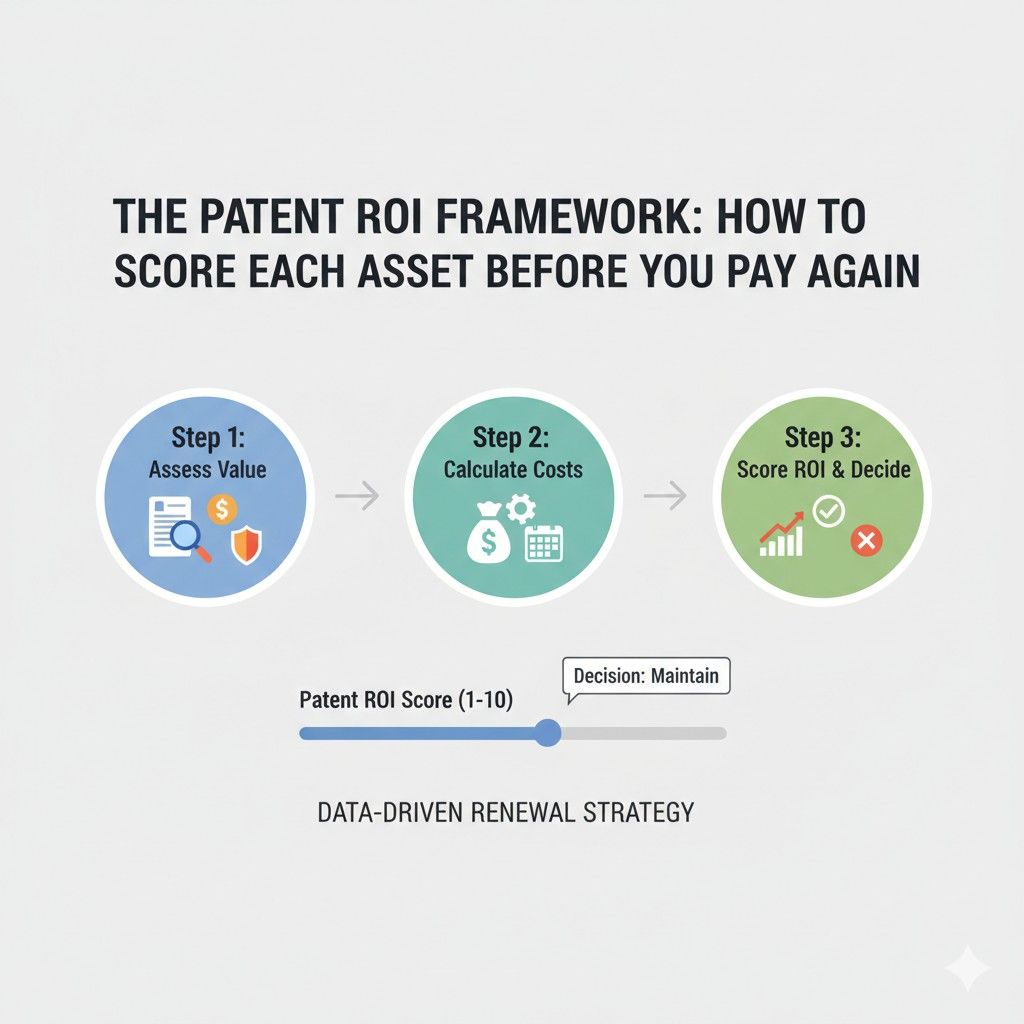
The Patent ROI Framework: How to Score Each Asset Before You Pay Again
Most founders never build a scoring system for their patents. They rely on instinct. Or they rely on their attorney. Or they wait until cash feels tight and then make reactive cuts.
That approach creates stress and weak decisions.
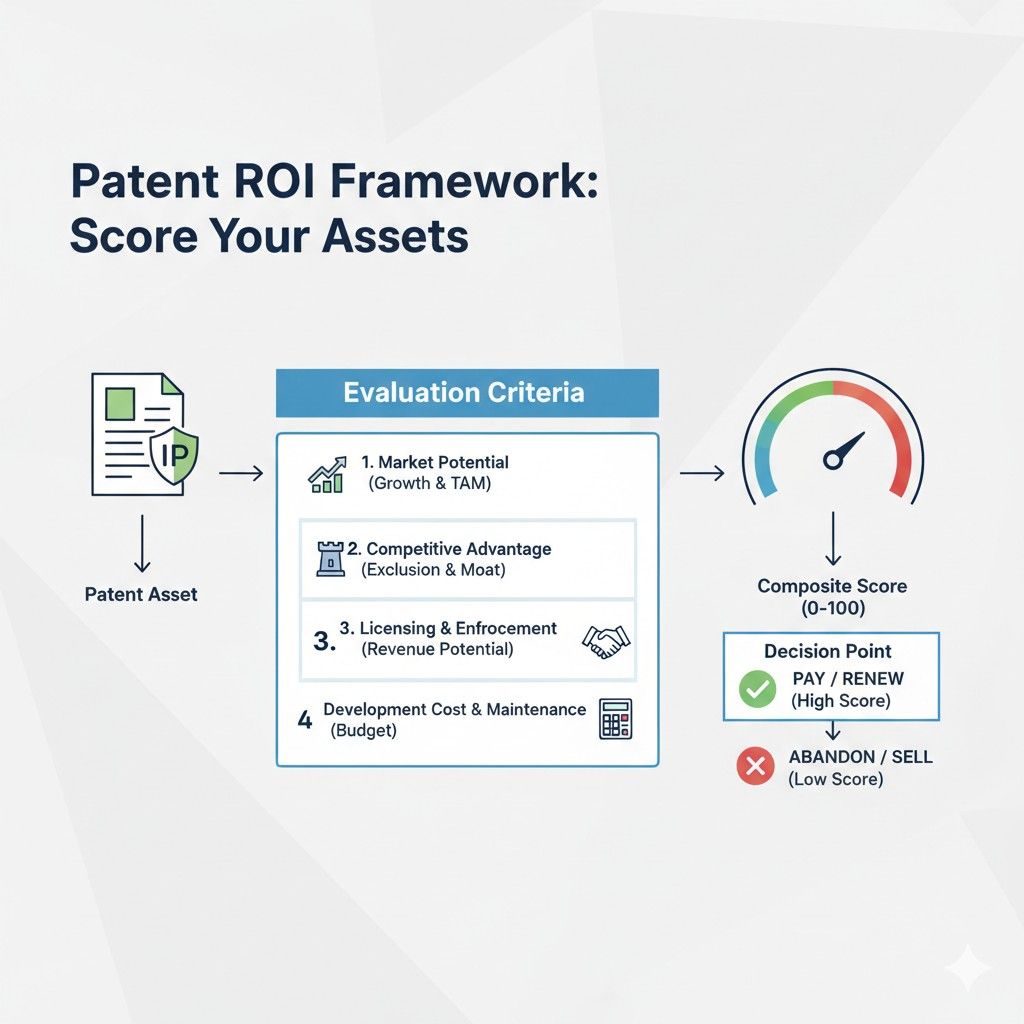
A Patent ROI Framework gives you control. It turns patent spending into a clear business process.
Instead of guessing, you score each asset using the same logic you apply to product features or growth experiments. You decide based on impact, not emotion.
This framework is not complex. It does not require financial modeling software. It requires honest answers and alignment with your roadmap. When you use it consistently, you stop paying blindly and start investing with purpose.
Start With Revenue Proximity
Before you look at legal status or filing history, ask one simple question: how close is this patent to revenue?
A patent that protects the core engine of your product sits close to revenue. A patent that covers an experimental feature that never launched sits far away.
The closer the patent is to revenue, the higher its strategic weight.
Do not think in abstract terms. Look at your actual sales motion. When customers sign contracts, what technical capability are they really buying? What part of your system makes switching away difficult?
What feature drives expansion revenue?
If the patent claims map directly to those mechanisms, its ROI potential is high.
If the claims cover something your team barely talks about anymore, the asset may not justify continued cost.
This exercise forces alignment between legal coverage and real business value. It also reveals gaps. You may discover that your highest revenue driver is not yet protected at all. That insight alone can reshape your filing priorities.
If you want help translating your actual product architecture into strong, revenue-aligned claims from the start, review how PowerPatent approaches the process: https://powerpatent.com/how-it-works.
Measure Competitive Block Power
A patent has value when it can stop or slow a competitor.
Not in theory. In practice.
Imagine a well-funded competitor building a similar product. If they read your patent, would they have to redesign their system in a meaningful way to avoid infringement? Or could they adjust a small detail and move forward without risk?
The answer determines real leverage.
When scoring an asset, visualize the strongest competitor in your space. Study their public documentation, product demos, and technical architecture if available. Then compare that to your claim scope.
If your patent covers the same technical path they rely on, that asset has block power. If it only covers a narrow variation that competitors can easily avoid, its defensive strength drops.
This evaluation should happen before you pay to continue prosecution or before you renew maintenance. If the asset does not meaningfully constrain the market, it may not deserve ongoing funding.
Strong patents create friction for competitors. Weak ones create paperwork.
Evaluate Claim Breadth Versus Business Focus
Not all patents are equal in scope. Some claims are broad and cover core methods. Others are narrow and tied to specific implementations.
Broad coverage can be powerful, but only if it aligns with your strategic focus. A broad patent on a peripheral feature does not carry the same weight as a moderately scoped patent that protects your main engine.
When scoring, review the actual independent claims. Read them slowly. Do they describe the essence of your system? Or do they focus on one technical detail?
Then compare that to your three-year roadmap. Is this technology becoming more central or less central?
If the patent grows in importance as your roadmap unfolds, that supports continued investment. If your roadmap moves away from the covered technology, the asset may decline in priority.
This alignment check keeps your portfolio dynamic. It evolves with your company instead of freezing at the moment of filing.
Factor in Fundraising Leverage
Investors do not read every claim in detail. But they do evaluate defensibility.
A patent that protects your core technical advantage can increase confidence during due diligence. It signals that you are not just building fast, but building with protection.
When scoring an asset, consider whether it strengthens your next fundraising round. Does it clearly map to the innovation you highlight in your pitch? Can you explain in simple terms how it blocks copycats?
If yes, the patent has fundraising leverage.
If you would struggle to explain why it matters in a board meeting, that is a signal.
This does not mean filing patents only for optics. It means understanding how certain assets reinforce your story. Strategic IP makes your growth narrative stronger.
A modern system that ties patent drafting directly to your technical documents and codebase makes this much easier. It ensures your patents reflect what investors actually care about. That is one reason founders explore PowerPatent early: https://powerpatent.com/how-it-works.
Assign a Risk Score
ROI is not only about upside. It is also about risk reduction.
Ask what happens if you do not maintain or pursue this patent.
Would a competitor gain freedom to copy your main innovation? Would your differentiation weaken? Would your negotiating position in partnerships decline?
If abandoning the asset creates real exposure, that increases its retention score.
On the other hand, if dropping it has little impact on competitive risk, the asset may not require continued funding.
This mindset shifts the decision from emotional attachment to strategic defense.
It also prevents overprotection. Some patents feel important because they represent hard work. But if losing them does not increase real business risk, paying ongoing fees may not be justified.
Consider Enforcement Realism
A patent only creates value if you are willing and able to enforce it when needed.
This does not mean you plan to sue everyone. It means the patent is strong enough and clear enough to support enforcement if necessary.
When scoring, evaluate clarity. Are the claims understandable? Do they clearly describe a technical process that can be observed in competitor systems? Or are they so abstract that proving infringement would be difficult?
Also consider your company’s growth path. As you scale, will you have the resources and confidence to defend your position?
If the answer is yes, strong assets gain importance.
If enforcement feels unrealistic due to claim weakness or ambiguity, that reduces expected ROI.
This step ensures you are not funding theoretical protection that cannot be activated in the real world.
Weigh Ongoing Cost Against Strategic Gain
Every patent has a future cost curve. Office action responses. Continuations. Foreign filings. Maintenance fees.
Before approving the next payment, project the total remaining cost. Then compare that to the strategic gain identified in the previous steps.
If the asset protects a revenue driver that could generate millions, the cost may be minor in comparison.
If it protects a declining feature in a crowded niche, the cost may outweigh the gain.
This is where discipline matters. Avoid sunk cost bias. Past investment does not justify future spending.
Your decision should focus on forward value, not historical effort.
Create a Simple Internal Scorecard
Once you evaluate revenue proximity, block power, claim alignment, fundraising leverage, risk reduction, enforcement realism, and cost, assign a simple internal score.
Do not overcomplicate it. Even a scale from one to five across these dimensions works.
The key is consistency. Score every asset the same way before major payments. Document the reasoning. Revisit scores annually or when strategy shifts.
Over time, patterns emerge. You will see which types of patents drive real leverage and which do not. That insight shapes smarter filings in the future.
A structured system also strengthens board discussions. Instead of vague updates on “patent progress,” you present a portfolio view grounded in ROI logic.
Keep the Process Integrated With Product
The biggest mistake founders make is separating patent evaluation from product review.
Your patent scorecard should sit next to your roadmap planning. When you plan new features, ask whether they deserve protection. When you sunset features, reassess related patents.
Integration prevents drift.
Modern platforms that combine software tools with real attorney guidance make this integration smoother.
When your patent system understands your codebase and product architecture, scoring becomes faster and more accurate. You stay in control while still benefiting from legal expertise.
You can explore how this hybrid model works here: https://powerpatent.com/how-it-works.
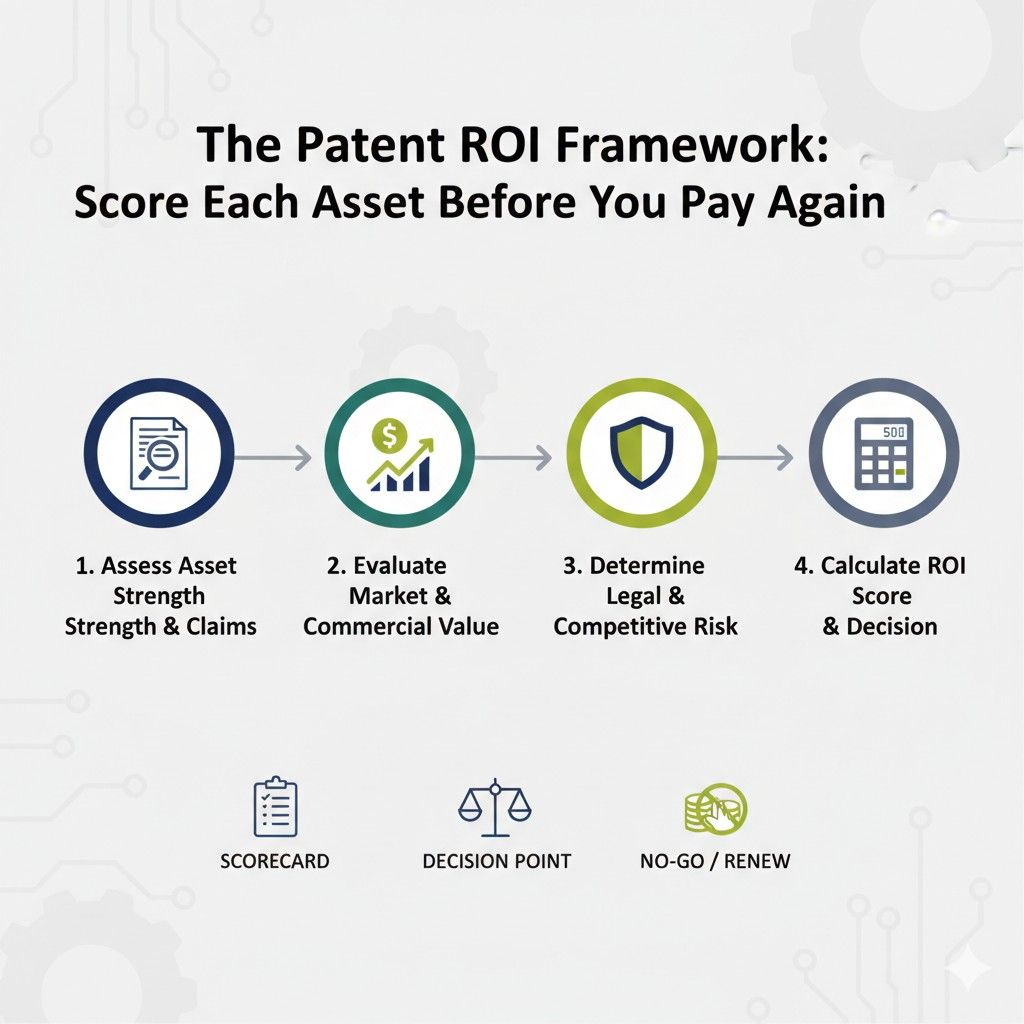
The Patent ROI Framework is not about cutting costs blindly. It is about funding strength and removing waste. It helps you protect what matters and stop paying for what does not.
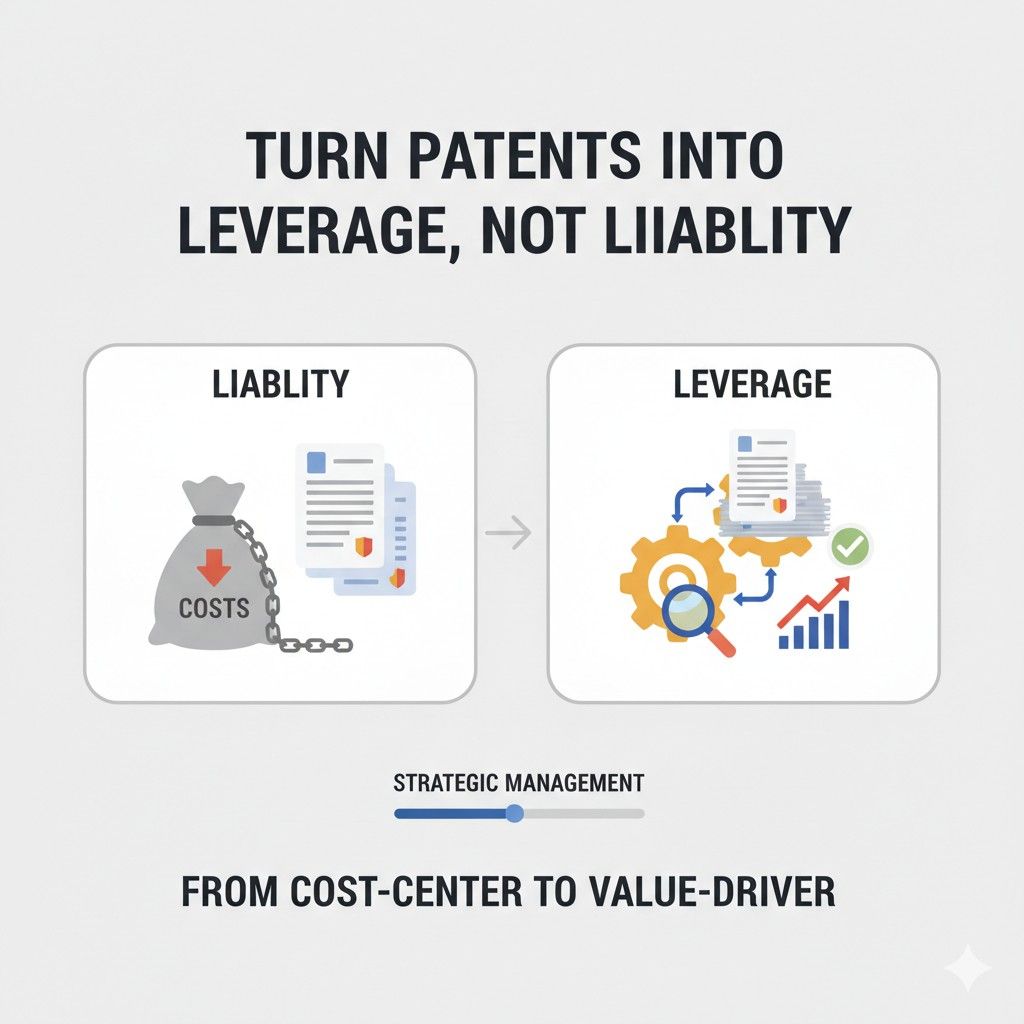
Turn Patents Into Leverage, Not Liability
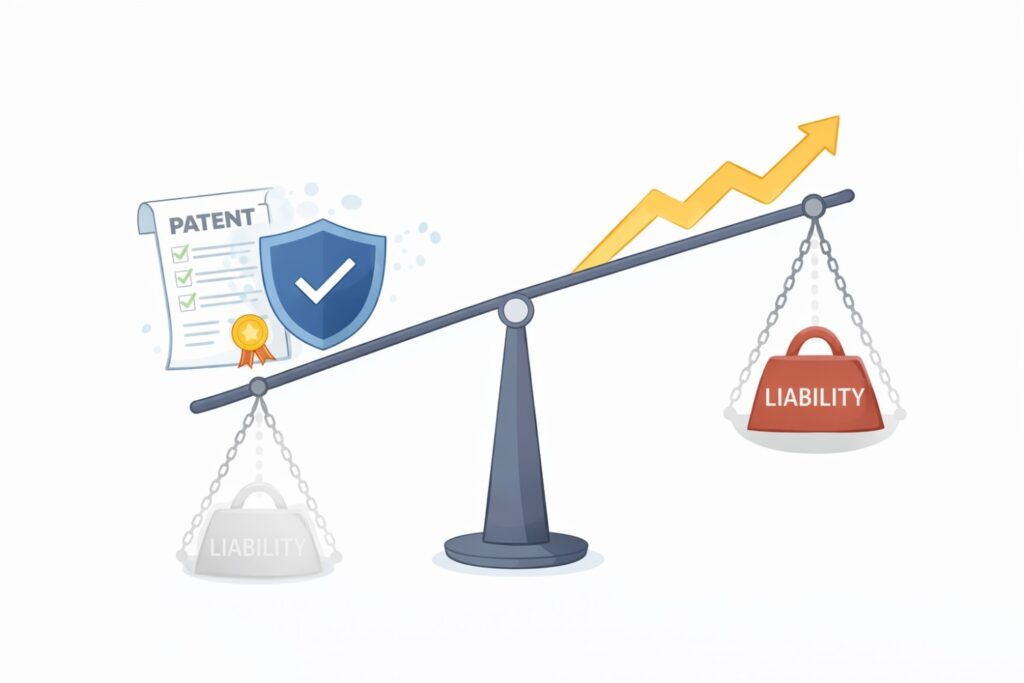
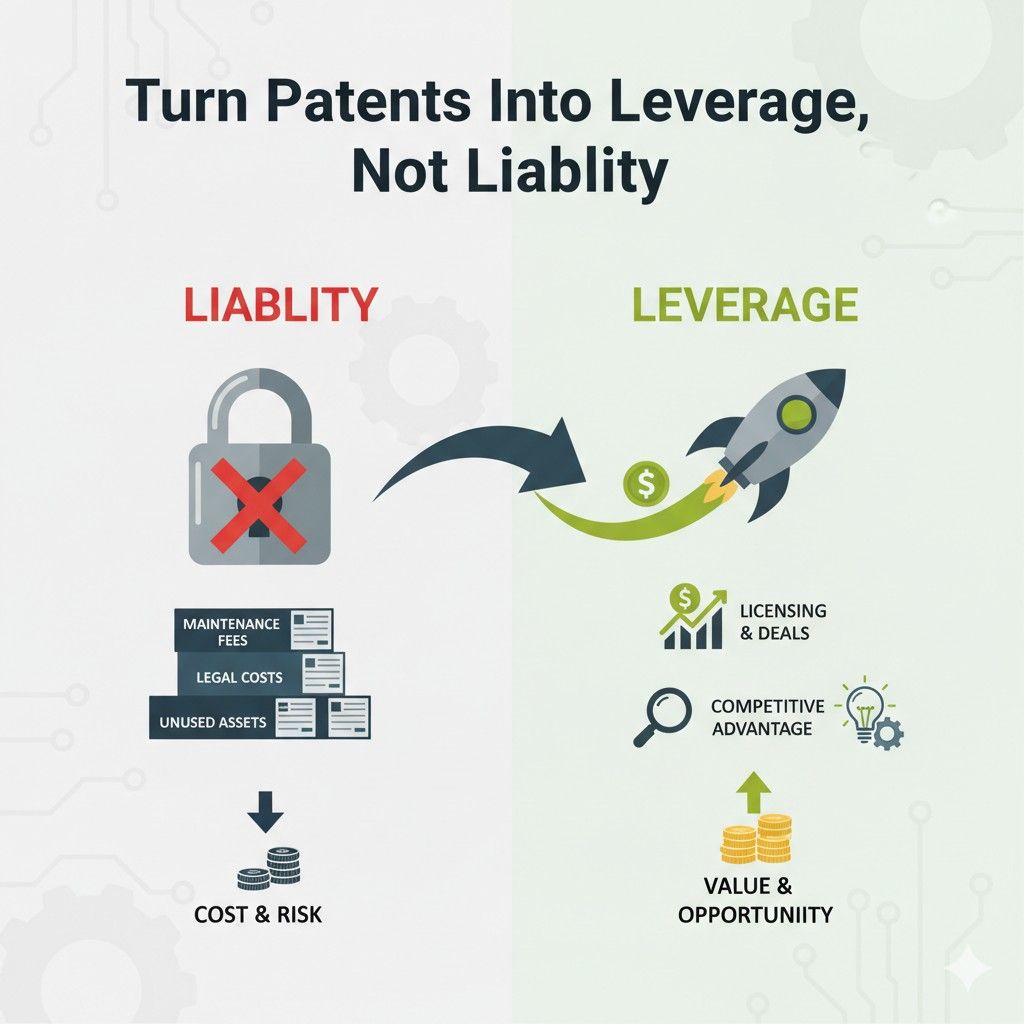
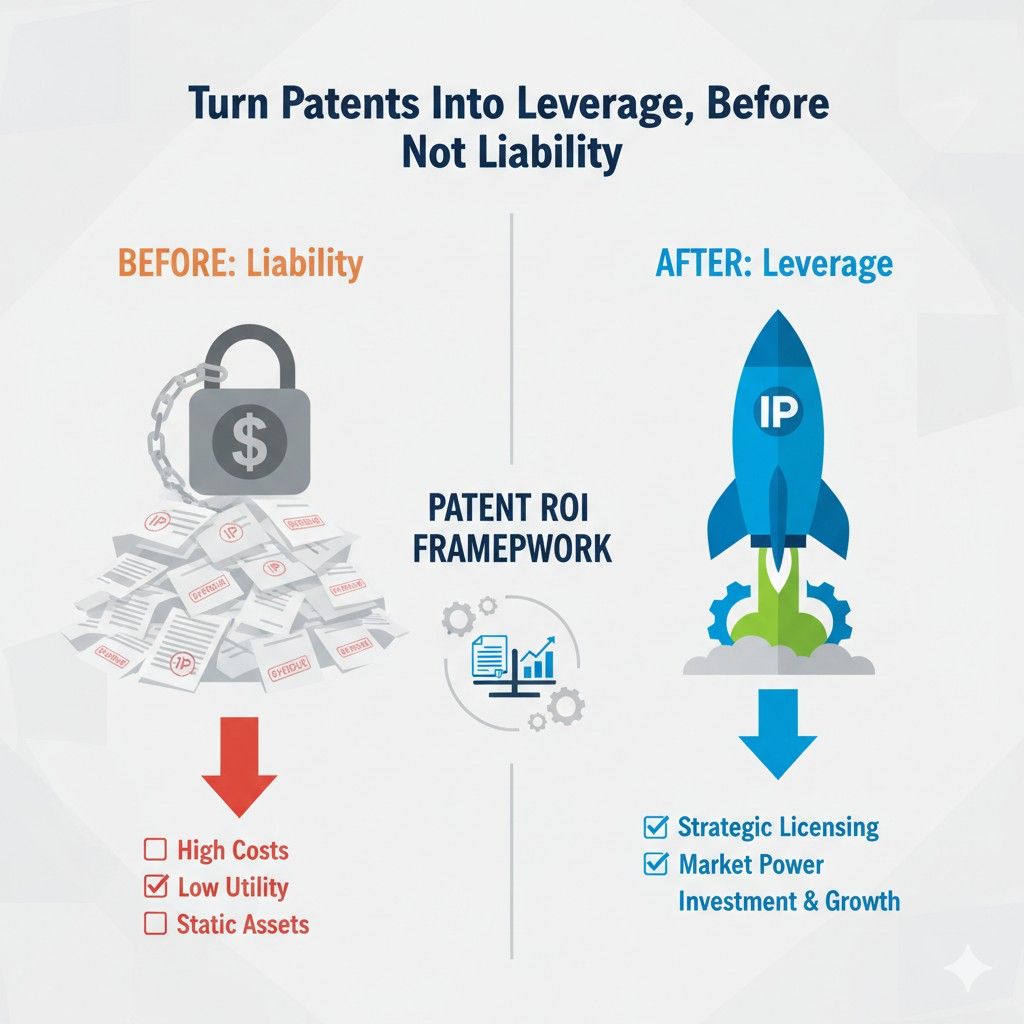
A patent that just sits in a folder is a liability. It costs money. It requires attention. It creates deadlines.
A patent that shapes deals, blocks competitors, and strengthens your market position is leverage.
The difference is not luck. It is how you use it.
Once you score your assets and identify which ones truly matter, the next step is activation. A high-scoring patent should not simply exist. It should work for you. It should support growth, improve negotiations, and increase control over your space.
This section is about turning strong patents into active business tools.
Align Patents With Your Sales Narrative
Most startups treat patents as background proof. A slide near the end of the deck. A small badge on the website. That is passive use.
Instead, your strongest patents should support your main value story.
When speaking to enterprise customers, especially in deep tech, security, AI, hardware, biotech, or complex software markets, buyers care about long-term stability. They want to know you will still be here in five years. They want to know your solution cannot be easily copied by a larger player.
If your patent protects the exact system that delivers your product’s edge, integrate that into conversations. Explain in simple terms what is protected and why that matters for them.
You are not threatening competitors. You are signaling durability.
This builds trust.
When patents reinforce your technical credibility, they stop being legal artifacts and start becoming sales assets.
If your patent language is too abstract to explain clearly to a customer, that is feedback. It may mean your claims are not closely tied to real product architecture.
A modern drafting process that starts from actual code and system diagrams helps prevent that disconnect. You can see how that approach works here: https://powerpatent.com/how-it-works.
Strengthen Fundraising With Clear IP Positioning
Investors often ask about defensibility. Many founders answer with vague statements about being “first” or “innovative.” That is not enough.
If you have scored your portfolio properly, you know exactly which patent protects your core advantage. You understand its revenue proximity and block power. You know how it reduces competitive risk.
Use that clarity in fundraising.
During due diligence, be ready to explain in plain language what your strongest patent covers and how it limits competitor freedom. Show how it maps directly to your most valuable technical asset.
This shifts the tone of the conversation. Instead of defending your moat with hope, you defend it with structure.
When patents align tightly with product and growth, they increase investor confidence without exaggeration.
Founders who use integrated patent tools from the start often find this process smoother because documentation, claims, and product architecture stay connected. That clarity compounds over time. If you are curious how that system works, explore it here: https://powerpatent.com/how-it-works.
Use Patents to Shape Partnerships
Strategic partnerships can change a startup’s trajectory. Distribution agreements. Technology integrations. Joint ventures. Licensing deals.
In these conversations, leverage matters.
If your patent protects a component the partner needs, your negotiating position improves. You can structure deals from strength rather than dependency.
Before entering major partnership talks, review your highest-scoring patents. Identify which claims map directly to the shared technical surface area. Understand how your IP creates optionality.
This is not about being aggressive. It is about being prepared.
When both sides recognize that your innovation is protected, discussions become more balanced. You are not just providing code or features. You are contributing protected technology.
That changes dynamics.
Create Strategic Continuations
A powerful but often underused tool is the continuation application. When used correctly, it extends leverage over time.
If you have a high-scoring patent that protects a core system, consider whether follow-on claims could expand its reach as your product evolves.
Instead of filing random new patents, build around your strongest foundation. Shape claim strategy to follow market expansion. As new use cases appear, align continuation claims with those revenue paths.
This creates layered protection.
But this must be intentional. Filing continuations without business alignment recreates the overpaying problem. Every continuation should pass through the same ROI framework before funding.
When done right, continuations strengthen your moat without bloating your portfolio.
Signal Strength Without Revealing Strategy
Public patents reveal information. That is part of the system. But strategic communication about your patents does not require exposing every detail of your roadmap.
Use high-level messaging that emphasizes protected innovation without disclosing implementation secrets beyond what is already public.
This balance is important. You want the market to understand that core systems are protected. You do not want to hand competitors your next product direction.
Work closely with counsel to ensure public summaries and marketing statements are accurate and measured. Overstating coverage can create legal risk. Understating it can waste leverage.
Clear, simple communication wins.
Avoid Defensive Overreaction
Sometimes startups overcorrect. They discover competitors and respond by filing aggressively without strategic filtering.
This turns patents into reactive expenses again.
Instead, return to the framework. If a competitor enters your space, rescore your existing assets first. You may already have coverage that blocks key elements. If gaps exist, file with purpose, targeting specific competitive risk.
Reaction without scoring creates cost. Reaction guided by structured analysis creates leverage.
Build Internal Awareness
Leverage increases when your leadership team understands the value of your strongest patents.
Do not confine IP knowledge to legal folders. Brief your product leaders. Educate your sales team at a high level. Ensure your board understands which assets drive protection.
When IP becomes part of strategic thinking across the company, it stops being a background cost center.
This internal clarity also improves future filings. Engineers who understand what is protected can innovate around strategic priorities rather than scattering efforts.
Modern platforms that make patent documents accessible and readable for technical teams help create this alignment. When patents are drafted from real technical material and stored in structured systems, they are easier to use as internal assets. You can explore that model here: https://powerpatent.com/how-it-works.
Prepare for Long-Term Optionality
Even if you never plan to enforce a patent aggressively, strong assets create optionality.
They can support licensing discussions. They can increase acquisition valuation. They can discourage copycat behavior quietly. They can provide cross-licensing leverage if disputes arise.
Optionality is value.
But only if the patents are strong, aligned, and maintained intentionally.
When you score and maintain only high-impact assets, your portfolio becomes lighter but more powerful. You spend less while gaining more strategic flexibility.
That is the shift from liability to leverage.
Make IP a Living System
The final step is cultural.
Do not treat patent decisions as isolated events. Make them part of quarterly strategy reviews. Tie them to roadmap updates. Rescore assets when revenue streams change. Reassess when entering new markets.
Your product evolves. Your patents should evolve with it.
When you adopt a structured ROI framework and pair it with tools that combine smart software and real attorney oversight, you avoid both extremes. You do not overspend blindly. You do not underprotect carelessly.
You build a focused, defensible portfolio that grows with your company.
If you are building deep tech and want a faster, clearer way to turn code and inventions into strong, business-aligned patents, take a serious look at how PowerPatent works: https://powerpatent.com/how-it-works.
Your patents should not drain your runway. They should protect it.
Wrapping It Up
You do not need more patents. You need the right ones. Every time you file, respond, or renew, you are making an investment decision. The mistake most startups make is treating those decisions like background admin work. They are not. They shape your leverage, your fundraising power, your competitive edge, and your long-term control. When you score each asset before you pay again, everything changes.