Most founders don’t think about litigation risk until it’s already too late. You’re busy building, shipping, hiring, raising, and trying to keep the whole machine moving. The last thing you want to worry about is someone coming after your product, your tech, or your business. But here’s the truth no one really says out loud: if you don’t run a proper litigation risk check, you can lose something far more valuable than time. You can lose your rights to your own invention.
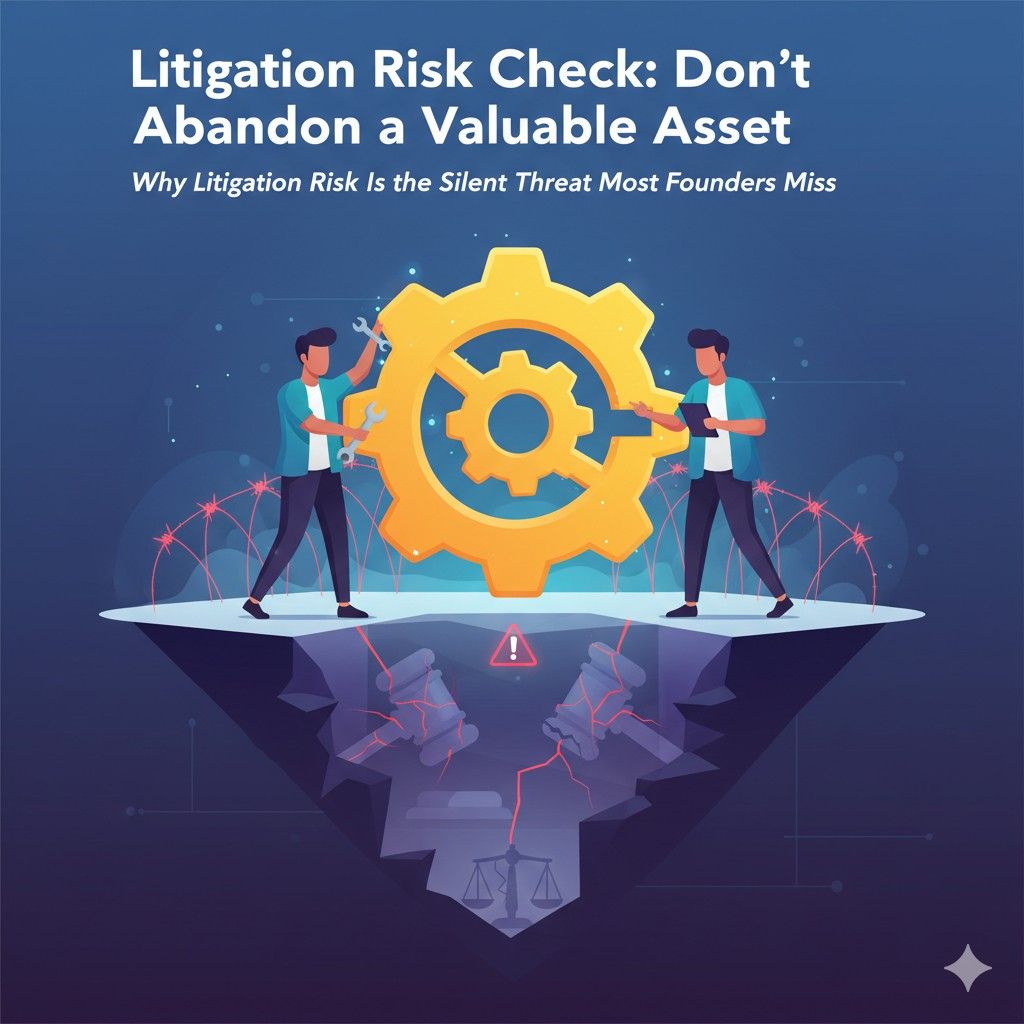
Why Litigation Risk Is the Silent Threat Most Founders Miss
Many founders think litigation risk is something that only matters once they are big, visible, funded, or profitable. But risk does not wait for you to scale. It grows quietly in the background while you are busy building.
The danger shows up when you least expect it, and by that point the damage is already done. Litigation risk becomes silent because it rarely screams.
It whispers. It hides behind small decisions that feel harmless in the moment, like pushing a patent filing to next quarter or skipping a quick check before launching a new feature.
This section explains why so many startups overlook the danger and what they can do right now to stay in control.
The Comfort Trap: Why Early-Stage Teams Assume They Are Too Small to Matter
Most founders underestimate how much others are watching. Competitors track your releases. Investors look for signals. Larger companies monitor emerging markets and try to spot who is building something threatening.
When a startup sees itself as invisible, it leaves its ideas unprotected. That is exactly when a bigger player can step in, either by filing first, blocking your future filing, or setting up a claim that puts you on the defensive.
A simple way to avoid this trap is to run short internal audits every time you ship something new. It does not need to be a long project.

You just need a quick pass that asks whether new work touches areas where others already hold patents, or where you might need one soon.
PowerPatent makes these moments easy because the platform is built for fast checks, simple guidance, and clear answers. You can see how it works anytime at https://powerpatent.com/how-it-works.
The Hidden Clock: How Delays Turn Small Risks Into Big Problems
Litigation risk escalates quietly over time. The longer you wait to document your invention or protect it, the easier it becomes for someone else to claim they were there first.
Laws around timing can be unforgiving. A delay that seems small from a startup’s point of view can become a major legal weakness for someone trying to defend their product later.
The best way to manage the clock is to treat your invention like a living asset. As soon as you make meaningful technical progress, capture it. Record dates. Save diagrams. Document architecture changes.
These small habits create a timeline that helps you defend your work if anyone ever challenges you.

This is also where a risk check becomes more than a legal task. It becomes a way to protect the future value of your company with simple, consistent steps that take only a few minutes each week.
The Quiet Competitor: Why Copycats Strike Before You Even Notice Them
Copycats do not wait for you to grow. They wait for you to move too slow. Many early-stage companies lose ground not because their competitors are smarter, but because those competitors understand the patent landscape better.
They check what is unprotected. They check what is newly published. They check what your product exposes through demos, docs, and public launches.
To stay ahead, you need to assume that someone else is always studying your product. This is not paranoia. It is preparation.
A quick litigation risk check tells you whether there are openings where others could force a claim against you.
It also shows you the areas where your own protection is missing. When you cover those gaps early, you prevent someone from locking you out of your own market later.
The Confidence Problem: Why Founders Avoid Risk Checks Until It Is Too Late
Many founders avoid litigation risk checks because they fear what they might find. They think it will slow them down, cost too much, or create work they cannot handle.
But avoiding risk does not make it go away. It only makes the surprise bigger when it hits.
A more strategic approach is to use tools designed for speed and clarity. PowerPatent keeps everything simple, straight to the point, and built for startups that need answers quickly.
With clear guidance and attorney oversight available inside the platform, you get the confidence you need without the stress of navigating the system alone. If you want to see how smooth this can be, the walkthrough is here: https://powerpatent.com/how-it-works.
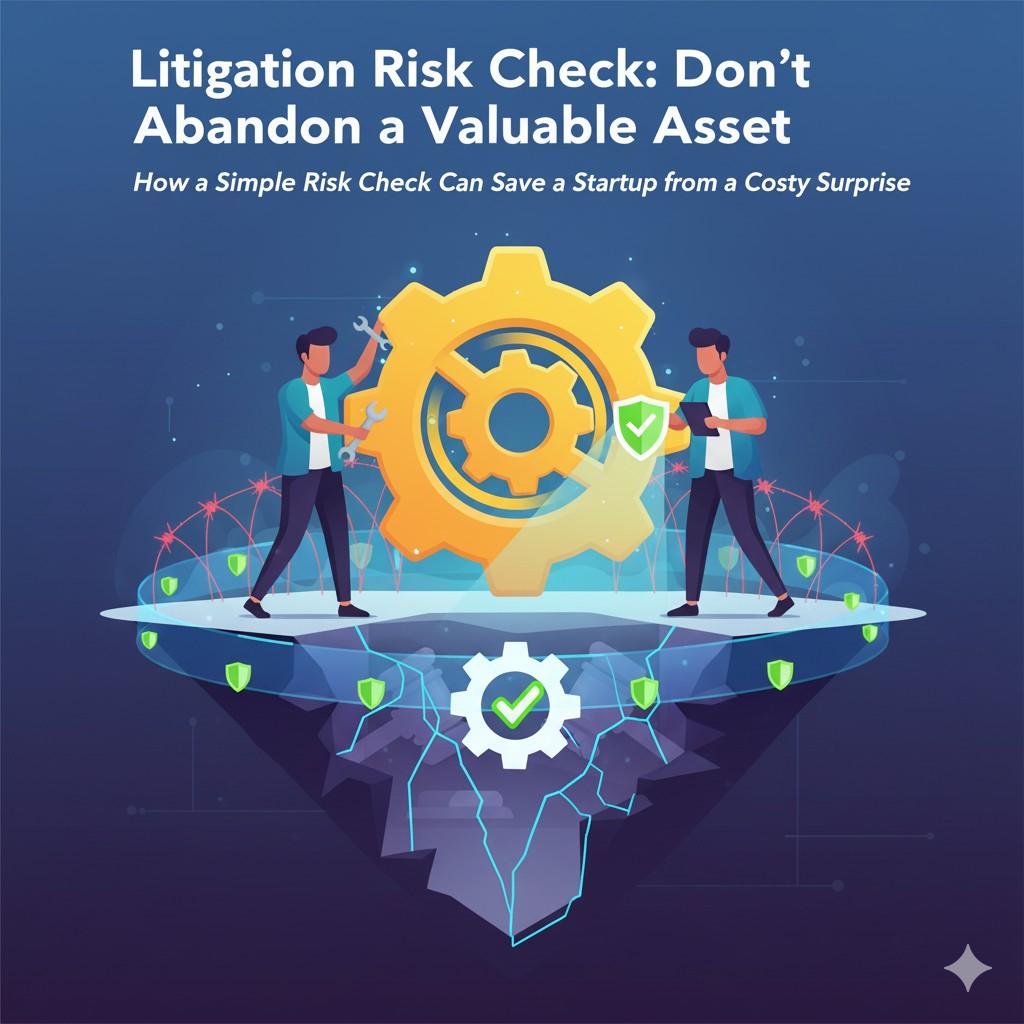
How a Simple Risk Check Can Save a Startup from a Costly Surprise
Every growing company reaches a moment where the product is moving fast, users are coming in, and momentum feels strong.
That is usually the same moment when hidden legal risks start forming around the edges. A simple litigation risk check acts like a spotlight.
It reveals the things you cannot see while you are sprinting. It shows you where trouble could appear and gives you the chance to fix it before it becomes expensive, distracting, or damaging.
This section explains how a quick check works, why it matters, and how it can protect your team from problems that can derail progress.
Understanding Your Real Exposure Before Someone Else Uses It Against You
Startups often assume that if they built something themselves, they are safe. But that is not how patent risk works. Even if your entire product is original, you can still run into claims if someone else holds a patent that covers a similar method or function.
A simple risk check helps you understand where your invention sits in the broader landscape.
It shows whether similar patents exist, whether anyone could claim conflict, and whether your work touches a sensitive area someone else already controls.
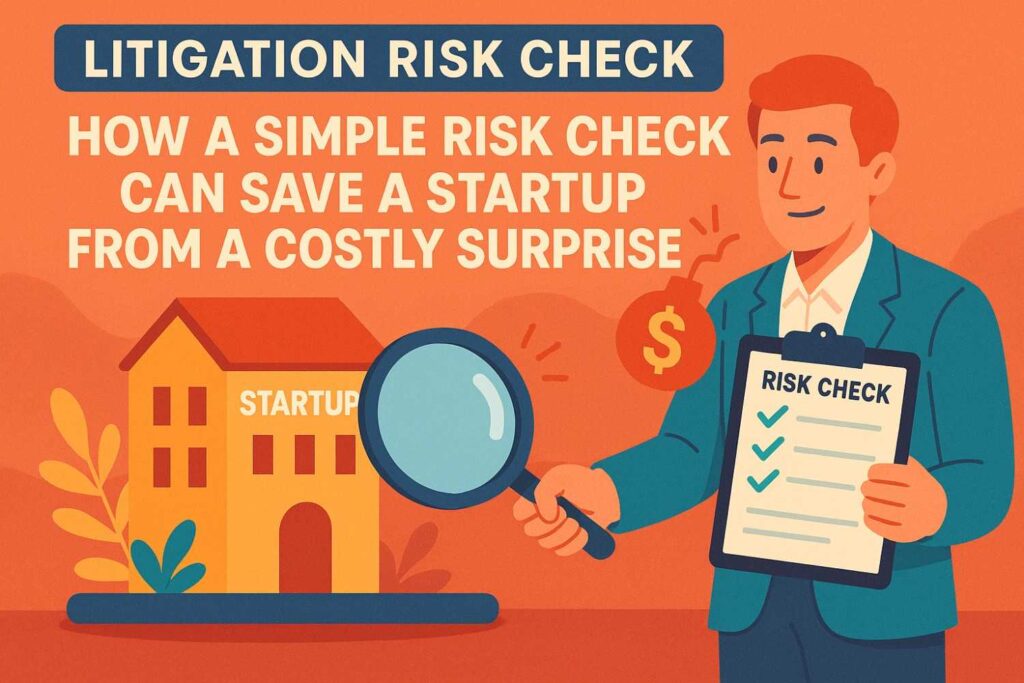
The benefit here is speed. When you know your exposure early, you can adjust your roadmap, update a feature, or file for protection before a competitor takes advantage of the gap.
PowerPatent makes this process fast enough that it becomes part of your regular product cycle instead of a heavy chore. You can see the workflow here anytime: https://powerpatent.com/how-it-works.
Strengthening Your Position Before Investors Look Under the Hood
Investors do not ask about litigation risk because they expect you to be a legal expert. They ask because they want to know if your tech is safe to scale.
A single unresolved risk can hurt valuation or slow down a funding round. When you run risk checks early and consistently, you show investors that your IP is protected, your approach is thoughtful, and your team can handle complexity without drama.
This also gives you leverage.
When you have clean documentation, active filings, and a clear view of the patent landscape, you move from reactive to proactive. Instead of scrambling to explain yourself during diligence, you walk in with clarity and confidence.

This is one of the quiet advantages smart founders use. They run these checks long before investors ever ask for them, and by the time the meeting happens, everything is already organized.
Preventing Product Roadmap Delays That Cost Time and Money
One of the most painful moments for a startup happens when the team has already built a feature, polished it, and prepared a release, only to learn that shipping it may cause a legal problem.
Fixing the issue after the fact can mean rewriting core features, slowing down the launch, or even canceling something the market was waiting for.
A simple risk check prevents this heartbreak. When you make it part of your process before large releases, you catch conflicts early. You avoid building yourself into a corner.
You stay in control of your timeline instead of letting external risks force changes you did not plan for. It is far more cost-effective to adjust the design early than to rebuild everything after a claim appears.
Creating a Culture Where Your Team Thinks Ahead Instead of Reacting
Litigation risk checks are not just legal tasks. They shape how your team thinks about the product. When engineers, product managers, and founders build the habit of asking early whether a new idea touches sensitive areas, they reduce uncertainty.
They make smarter design choices. They stop leaving your company exposed by accident.
This mindset does not require special training. It only requires a simple, repeatable workflow that fits into your existing process.
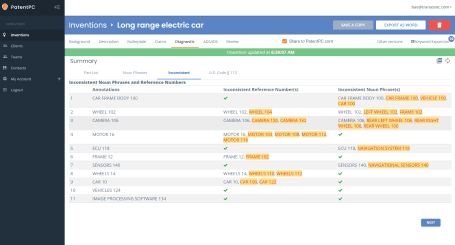
PowerPatent helps by giving teams a place to track inventions, evaluate new ideas, and flag potential risks.
This keeps everyone aligned and prevents the last-minute panic that happens when you realize the team built something that now needs legal cleanup.
The Hidden Value Inside Your IP That You Should Never Walk Away From
Every startup has hidden value that does not show up in revenue, users, or demos. It lives inside your code, your systems, your models, your architecture, and the way you solve problems.
This value often becomes clear only when someone else tries to copy it or when an investor asks what makes your solution defendable.
Many founders underestimate how powerful this value is because they are focused on building faster rather than thinking about what those building blocks are worth.
This section explains why your IP is one of the strongest assets you own and why you should never abandon it without checking the true risk and cost of letting it go.
Understanding Why Your Invention Holds Future Leverage You Cannot See Today
Most inventions do not show their full value in the early days. When everything is still moving, changing, and evolving, it is easy to think the tech is too small or too early to matter.
But IP works differently from product features.
What looks small today can become the foundation of a future breakthrough, a new product line, a licensing opportunity, or a competitive advantage that keeps rivals from entering your space.
A litigation risk check helps you see pieces of value you may not realize you already created. When you understand how your idea fits into the broader landscape, you start to see why protecting it now matters for later stages.
It becomes clear which parts of your tech others may want to borrow, copy, or build around.

This clarity stops you from dropping something that becomes worth far more than it looks right now.
Recognizing When a Competitor Gains More From Your Invention Than You Do
There are moments when a competitor studies your product more carefully than some of your own team members. They analyze how it works, what it does differently, and how it solves problems they also want to solve.
If you walk away from an invention without checking the risk and opportunity, you may be handing them a strategic gift.
A litigation risk check helps you understand how easily someone else could claim ownership over your idea or block you from scaling it later.
It shows whether parts of your tech could be used by others to build their own advantage. This prevents you from giving away leverage without realizing it.
Startups win by protecting the ideas that drive their edge, even when those ideas feel small or early.
Seeing the Real Cost of Abandoning Something That Could Become a Core Asset
Abandoning IP always sounds easier in the moment. Filing takes time. Research feels slow. The team wants to ship.
You want to keep moving. But the price of giving up on an invention can be far higher later, especially if you discover that the idea you let go becomes central to your product or to the market you are growing into.
The smart move is to slow down just long enough to understand what you are leaving behind.
A simple risk check shows whether the invention supports future features, blocks competitors, adds long-term value, or creates new revenue potential.

These insights help you make a choice that protects both your current momentum and your long-term position.
Protecting Your Work Before Someone Else Claims It as Their Own
One of the worst outcomes for a startup happens when someone else files for protection on an idea that originated inside your company. This can happen without you ever knowing, especially if you delay your filings or leave inventions undocumented.
Once a competitor gains that position, you lose both control and freedom. You may have to redesign your product or license a concept you created.
A litigation risk check helps prevent this by showing you where your team must take action now.
It reminds you that the value of your idea does not lie in the code alone. It lies in the rights that prove you were the one who built it first.
Tools like PowerPatent help you secure this point quickly, with simple workflows and real attorney oversight to avoid costly errors. You can explore how it works at https://powerpatent.com/how-it-works.
How PowerPatent Helps You Protect Your Ideas Without Slowing Down Your Build
Every startup faces the same tension. You want to move fast, ship updates, and keep energy high. At the same time, you need to protect what you are building so you do not lose the rights to your own invention.
Most founders assume they must choose one or the other. They believe good protection slows the team, complicates workflows, or introduces extra steps that break momentum. But that is not true anymore.
PowerPatent was built to remove this tension. It gives you the freedom to protect your ideas with the speed and clarity your product team expects.
This section explains how the platform fits directly into your build cycle, why it makes litigation risk checks simple, and how it helps you keep control without adding friction to your roadmap.
Making Protection Feel Like a Natural Part of Your Product Workflow
Most legal tools feel like they live outside your normal process. They require different systems, different people, and different timelines. That is why so many teams avoid them until the last minute. PowerPatent takes the opposite approach.
It brings IP protection into the same space where you already work. Instead of long back-and-forth messages or unclear requests, you get simple steps that match how product teams think. You capture inventions as soon as they come up.

You store updates whenever something changes. You run risk checks as naturally as you run code reviews. This turns IP from a burden into a habit. By the time your team is ready to file, everything is already organized, clear, and mapped out.
Ensuring You Never Guess When You Need to Protect an Idea
Guessing is one of the biggest risks in the patent world. Founders guess when something is important. They guess when to file. They guess whether a competitor is close.
When you make these decisions without good information, you either delay too long or spend money on the wrong things. PowerPatent removes the guesswork by giving you guidance at the exact moment you need it.
When you enter a new idea, the system helps you understand what should happen next. When you update a feature, the platform shows whether your change affects the original invention.
When you build something that touches a sensitive area, you get clear signals that you may need attorney input. This gives you control without leaving you to figure everything out alone.
Bringing Attorney Oversight Into a Fast, Founder-Friendly Workspace
One of the biggest problems with traditional patent work is the gap between the founder and the attorney. You build fast.
The legal process moves slow. You explain something once, and then you spend weeks correcting misunderstandings.
PowerPatent closes this gap by blending smart software with real attorney oversight in a single place. You get both speed and accuracy.
The platform handles the heavy lift of drafting, organizing, checking claims, and preparing filings. An attorney steps in to refine the work, ensure compliance, and reduce the risk of mistakes that could hurt you later.

This combination saves you time and gives you the confidence that everything is done correctly. If you want to see how the workflow connects both sides, you can view it here: https://powerpatent.com/how-it-works.
Giving Your Team a Clear View of What Is Protected and What Still Needs Attention
One of the most stressful things for a founder is not knowing where the company stands with its IP.
You may have some ideas drafted, some filings pending, and others still in someone’s notes or buried inside documents. Without a clear overview, you are always playing catch-up.
PowerPatent solves this by giving your team a single place where everything is visible. You can see active filings, pending drafts, past ideas, captured updates, and areas that still need review.

This clarity keeps your team aligned. When everyone sees the same map, no one accidentally builds around an unprotected idea or forgets to document something important. It becomes easy to stay protected even as the company grows.
Wrapping It Up
Every startup reaches a point where the pressure to move fast feels heavier than the need to slow down and protect what is already built. It is easy to think that patents can wait, that risk is low, or that nothing bad will happen because the team is still early. But the truth is simple. The biggest threats often stay hidden until they are too late to fix. A litigation risk check is not about fear. It is about clarity. It gives you the information you need to make smart choices without slowing your momentum.