Most founders don’t think about design patents until it’s too late. You build something new, something that looks and feels different from anything out there, but the rules for keeping that design protected aren’t always obvious. And the biggest risk is not the time or the money—it’s forgetting one small detail that can kill your protection for good.
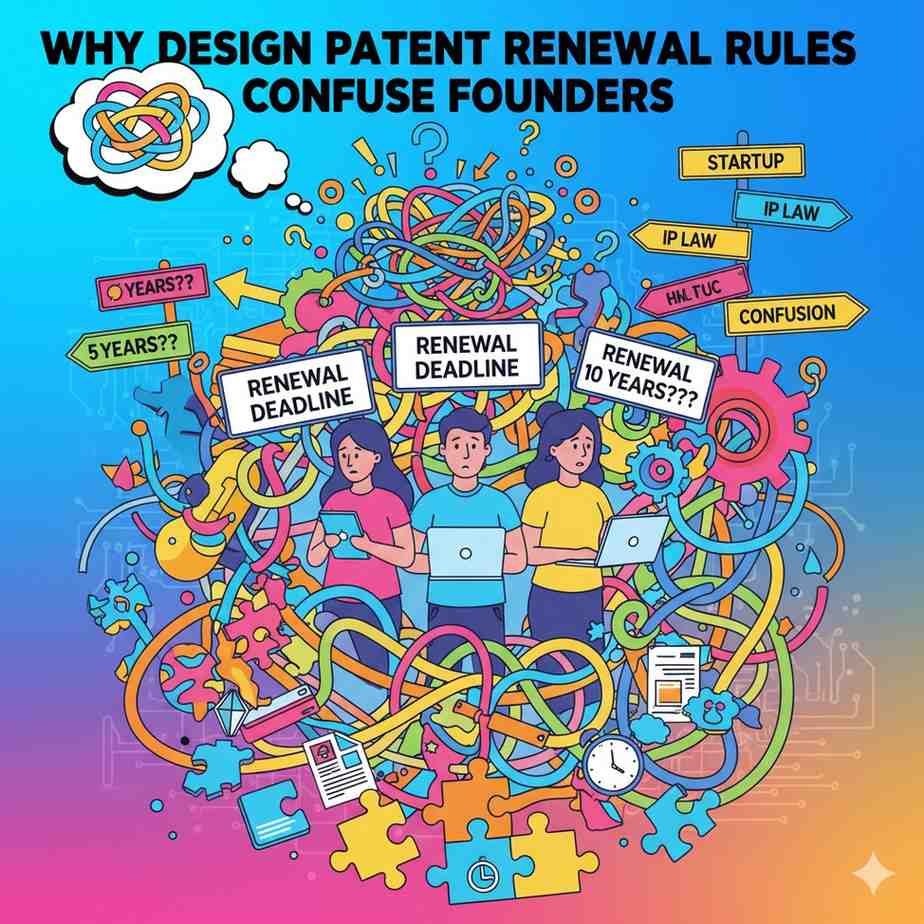
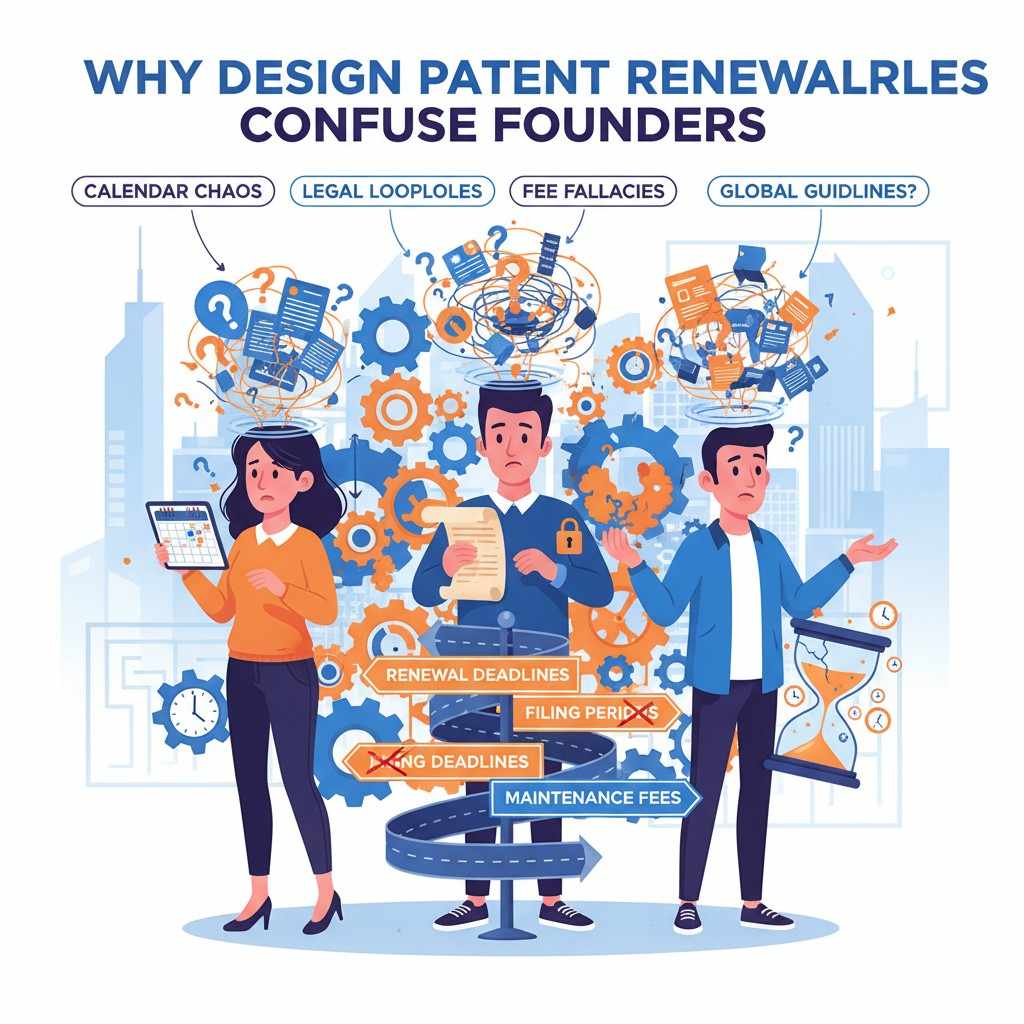
Why Design Patent Renewal Rules Confuse Founders
Most founders assume design patents work just like utility patents, and that simple misunderstanding is where the confusion begins. A lot of early-stage teams move fast, push updates, and constantly iterate on product look and feel.
When you operate at that speed, it’s easy to blend the rules for different types of IP into one mental bucket.
But design patents follow their own path, and the timing, maintenance, and long-term strategy behind them can feel unclear if no one has ever broken it down in plain language.
Why the rules feel hidden
Design patent renewal rules are simple once explained, but they are rarely explained in a straightforward way. Many startups read government documentation only to walk away more confused.
The language feels formal, the steps feel scattered, and the process seems like a maze. This leaves founders thinking they need to constantly pay fees or file updates every few years to keep a design patent alive, which simply isn’t true.
The result is a harmful mix of fear and false assumptions that leads to poor planning.
What makes it worse is that many teams hear about maintenance fees for utility patents and assume design patents work the same way. This is where small mistakes begin to snowball.
When teams don’t understand what is due and what is not, they start guessing.
Guessing leads to bad habits, missed steps, and wasted money. It’s hard to prioritize product building when you’re unsure whether your protection will last.

This confusion is also why established companies keep dedicated IP teams on staff. They know missing a rule once can cost years of protection. But startups rarely have this luxury, which is why clarity matters even more for them.
The real rule nobody tells you
Most founders are shocked when they learn that design patents in the United States actually do not require renewal fees during their lifetime. You file it once.
You secure it. It lasts for a set number of years. That’s it. No hidden checkpoints. No recurring payments. No surprise notice from the government telling you something is due next month.
The confusion mostly comes from mixing design and utility systems. Utility patents need maintenance. Design patents do not. But when team members assume otherwise, they often waste time planning for imaginary deadlines.
Some even send payments for fees that were never required. Others let their design strategy decay because they think they will be forced to pay expensive renewals later on.
When you finally understand that design patents have no renewal fees, you can shift your energy toward a different question: how do you use the lifetime of that patent to strengthen your business? This is where real strategy begins.
The problem isn’t the rule, it’s the planning
Even though design patents don’t require renewal payments, founders still get tripped up because they don’t track the expiration date correctly. A design patent has a clear life span.
Once it ends, your protection ends too. That moment matters more than most teams realize. If a competitor wants to mimic your product’s look, they simply wait for the patent to lapse.
If you forget the expiration date or assume it lasts longer than it does, you could find copycats stepping into your space before you are ready.
A smart founder plans backward. They look at the expiration window and decide how that window supports their company’s long-term goals. Maybe the design will evolve before the patent expires.
Maybe the original look becomes iconic and needs to stay protected for the full term. Maybe the design is tied to brand recognition, packaging, or a product edge that competitors love to imitate.
When you know the expiration date and the strategic value of the design itself, you have more control. You can plan future filings, update your design IP, or shift your product roadmap to stay two steps ahead.
How to remove all confusion before it starts
The easiest way to stay on top of design patent rules is to build a simple system that makes the information impossible to lose. This doesn’t require a legal team or complicated spreadsheets.
It requires one thing: a clear home where every patent filing, date, and strategy lives.
Most teams overcomplicate this. They scatter patent information across email threads, Slack messages, private drive folders, and individual laptops. By the time they need to confirm a date or look up a filing, no one knows where the truth lives.
One person swears the patent lasts fifteen years. Another thinks it’s enforceable for a decade. Someone else is sure there is a renewal fee due because another company they worked at had to pay one.
With a simple organized system, the confusion disappears. You always know the filing date. You always know the expiration date. You always know the type of patent you have. And you always know what is required to keep it alive.
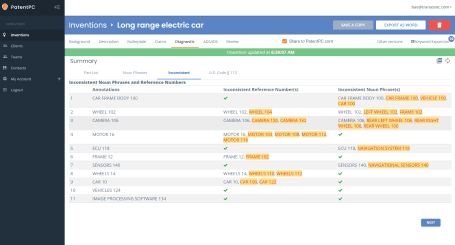
This is exactly why so many teams lean on tools like PowerPatent. It pulls all your filings, deadlines, and notes into one clean place, and it helps you track updates without trying to memorize anything.
When you can glance at one dashboard and see every detail of your design protections, renewal rules no longer feel stressful or mysterious. You just stay in control. If you want to see how this works, you can explore it at https://powerpatent.com/how-it-works.
The strategic edge most founders forget
Once you understand how simple design patent renewals truly are, you can use that simplicity to your advantage. Instead of worrying about future fees, you can invest in building a broader design strategy.
You can file follow-up design patents when the product evolves. You can protect variations, packaging, user interface layouts, and any visual elements that set your product apart.
You can build a wall of design IP around your brand without dealing with recurring payments that drain your budget.
This is one of the rare edges design patents give startups. You can secure many of them without being weighed down by long-term maintenance.
This allows you to protect your entire product ecosystem piece by piece, and it becomes much harder for competitors to copy you without running into blocked paths.
And when your design portfolio grows, investors notice. Buyers notice. Retail partners notice too. A strong design patent portfolio signals that you take your brand seriously and that your product is defensible.
That matters in negotiations, pricing, and strategic partnerships. A single design patent is good. A well-planned suite of them is a competitive moat.
The bottom line
Design patent renewal rules confuse founders because no one teaches them clearly. But once you understand that there are no ongoing renewal fees and that the true focus should be on expiration timing and strategic planning, everything becomes easier.
You gain clarity. You gain control. And you build a smarter, stronger IP foundation for your business.
If you want simple tools to manage all of this with no stress and no guesswork, you can see how PowerPatent supports founders at https://powerpatent.com/how-it-works.
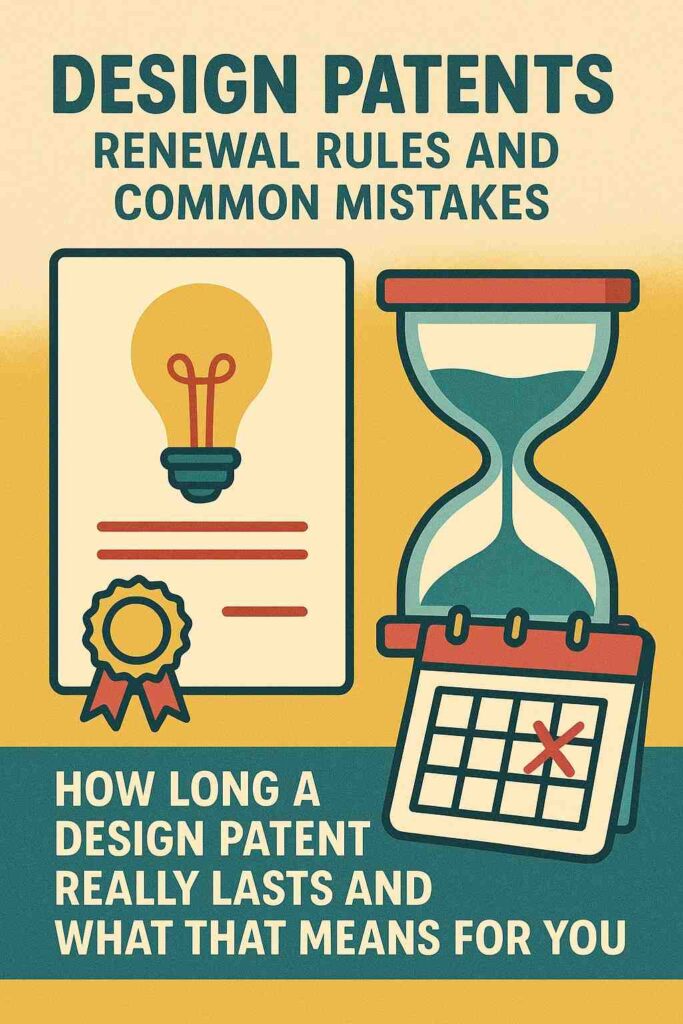
How Long a Design Patent Really Lasts and What That Means for You
Most founders hear different numbers when they ask how long a design patent lasts. Some say ten years. Others say fifteen. Some swear it depends on the filing date.
And then you have people who mix in utility rules again and talk about fees that don’t apply at all. When the information around you feels inconsistent, it’s hard to build a clear plan. But the truth is simple once you strip away the noise.
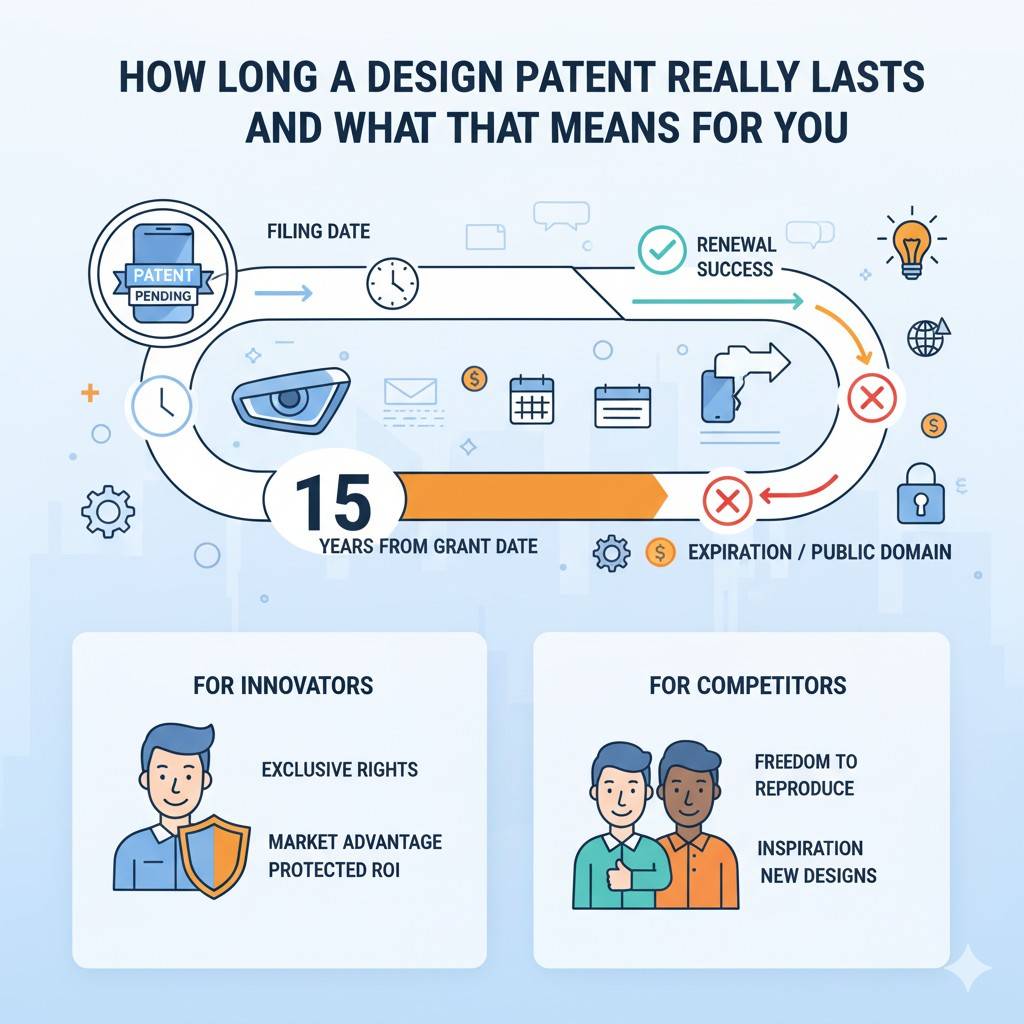
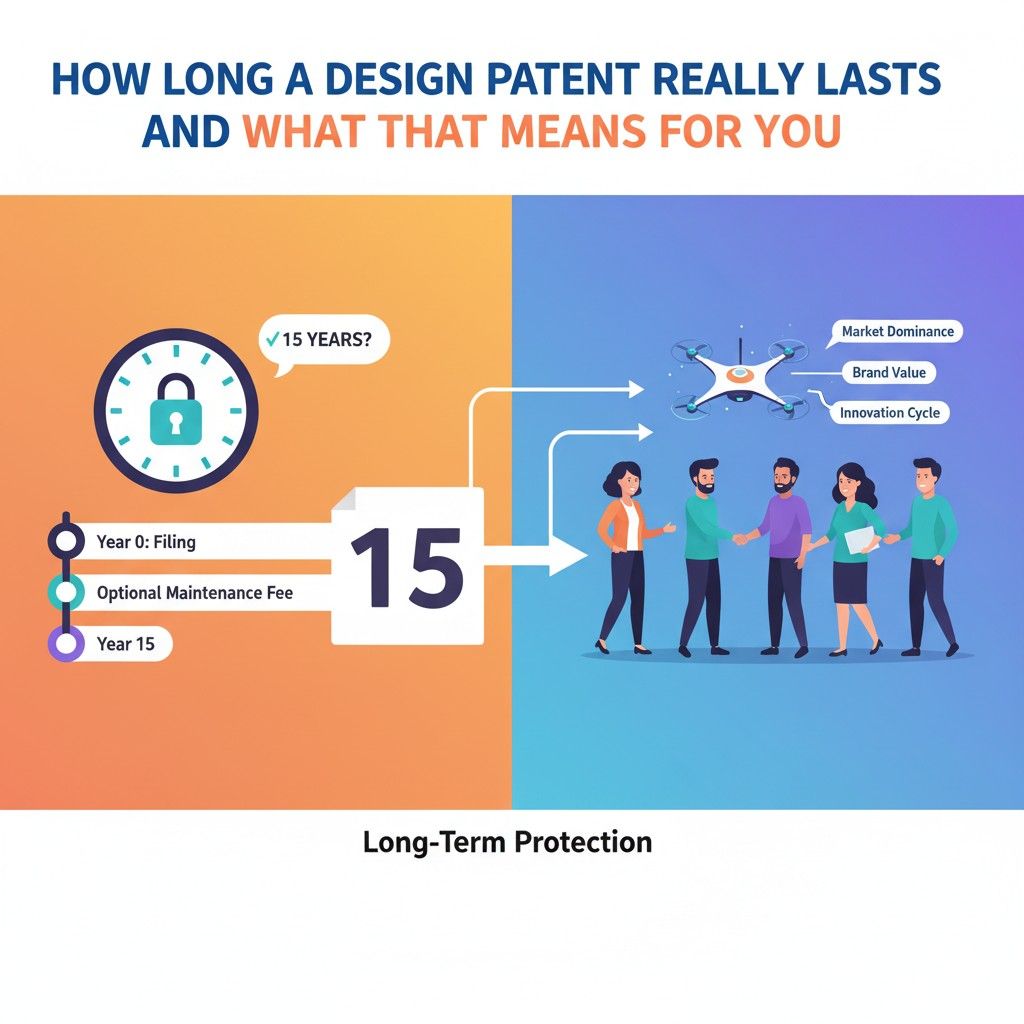
A design patent in the United States lasts fifteen years from the date it issues. Not the date you file. Not the date you announce your product. Not the date you ship your first version.
The countdown begins only when the patent is officially granted. This single detail changes how you plan your design and how you build timing into your roadmap.
Why the issue date matters more than founders expect
Most teams focus on filing quickly because they want early protection. That instinct makes sense, especially when you worry about competitors watching every move you make.
But the real clock on protection starts at issuance. This means if your design patent takes a year or two to move through the system, you still keep the full fifteen years once the government approves it.
This affects how you think about your product timeline. If your product is still evolving when you file, it doesn’t break your protection.
The design you submitted stays locked for the full term, even if you release newer versions later. Some founders find comfort in this because it lets them keep iterating without losing protection on an earlier design that still matters.
It also means you need a clear record of the issue date. When you treat the issue date as just another email notification or system update, you risk misplacing it.
But that date controls everything about your long-term IP strategy. If you ever plan to enforce, license, or build future designs around that original filing, knowing the exact timeline is critical.
This is why PowerPatent centralizes these dates for you automatically. When you have one place that keeps every critical milestone visible, you don’t have to trust memory or search through old inboxes.
If you want to see how that works in practice, the process is explained at https://powerpatent.com/how-it-works.
What the fifteen-year window means for your roadmap
A fifteen-year lifespan is both long and short depending on what type of product you build.
For hardware, it often covers several product cycles. For consumer goods, it can define entire brand eras. For technology products, especially fast-moving ones, fifteen years can be a full generation.
Understanding the window lets you make better decisions. If the design you patented is foundational to your brand, you know exactly how long you can market it without worry.
If the design is just one chapter in a long evolution, you know when to plan new filings so there’s never a gap in protection. The smartest founders treat design IP like a relay race.
You protect one version, evolve the look, then file again before the old one expires. This creates uninterrupted coverage and blocks competitors from copying your product at any stage.
The same window also impacts your fundraising strategy. Investors like clarity. When you can confidently say your design protection lasts until a specific year, it signals predictability. It shows you have a clear grasp of your IP and aren’t guessing.
This matters more than people admit. Strong IP gives investors trust. Trust turns into higher valuations. And when your IP is well-organized and strategically planned, it tells investors your team thinks ahead.
Why some founders still lose protection early
Even though design patents don’t require renewal fees, some founders lose their protection long before the fifteen-year mark—not because the patent expires, but because they unintentionally weaken it. The number one cause is poor documentation.
When a team cannot prove what the design protected or how it relates to later versions, enforcement becomes harder. Competitors use this weakness by arguing that the original design is outdated or no longer relevant.
Another cause is failing to file additional design patents for variations over time.
When your product changes and you don’t protect the new look, you leave open doors for copycats. They study your updates and match the parts you never patented.
They know a single design patent only covers one specific look. If you never file again, they can create near-identical versions of newer designs without technically violating your first patent.
A third cause is simple neglect. Some teams forget where their patent documents are. They forget which drawings were approved. They forget the exact version of the design that was filed.
When something goes wrong and they need to enforce the patent, they scramble to collect data they should have had from the start. By then, the damage is usually done.
This is why having a system that pulls every document, drawing, grant notice, and date into one space is such a strong advantage.
You remove the risk of losing control over your design story. You always know what you filed, why you filed it, and how it fits into your product’s evolution.
PowerPatent handles this automatically without forcing you into complicated workflows, which gives founders more breathing room. The full process is shown at https://powerpatent.com/how-it-works.
The hidden value of tracking changes over time
Most founders don’t realize that design patents become more powerful when combined with clear product history.
If you can show how your design developed, how the updates connect, and how your brand identity stays consistent, you build a stronger narrative. This helps during enforcement and during fundraising.
For example, if a competitor copies your updated version instead of your original one, and you have documented evolution, it becomes clear that your design line is deliberate and meaningful.
Courts and investors understand your product better. They see intention instead of random changes. It makes your IP story easier to defend and harder to attack.
But this narrative only works if you track your design versions as you grow. Too many teams create version after version without keeping a visual record of what changed. By the time they look back, they have no timeline, no clear story, and no proof of continuity.
Having a simple place to store each version ensures that your design history becomes an asset instead of a missing piece of the puzzle. It keeps enforcement strong, licensing simple, and strategic planning predictable.
Why design patents matter even after fifteen years
A surprising number of founders think their design patent loses all value when it expires. This isn’t true. Even though legal protection ends, the impact it had during the fifteen-year window continues.
The patent forces competitors to stay away from your design while you establish your brand. That early head start often cements your product’s identity in the market.
Consumers associate your brand with that look, which means knockoffs that appear after expiration feel like copies, even if they are legally allowed.
This type of long-term brand anchoring is why big companies treat design patents as serious strategic tools. They know short-term exclusivity can create long-term loyalty.
Startups can use the same advantage. The key is covering your design early, enforcing when needed, and building recognition during the protected window.
If you know your design will remain part of your brand for more than fifteen years, you can plan follow-up filings.
You protect variations, packaging refreshes, or updated design features that carry the original look forward. This keeps your brand protected even after the first patent expires.
How to keep full control without slowing down
Design patents should never slow down your ability to build, launch, and iterate. The best approach is to create a rhythm: build your product, lock down the design when it stabilizes, and keep moving.
When the next version evolves, protect that too. When you adopt a new visual style, protect it again. You’re never stuck. You’re simply adding layers of protection that move with your product.
This is the exact workflow PowerPatent is built for. It keeps the process fast, simple, and founder-friendly. You upload your design. The system organizes it.
Attorneys check it. You stay in motion the entire time. There is no waiting, no confusion, and no stress about missing rules. You can see the full workflow anytime at https://powerpatent.com/how-it-works.
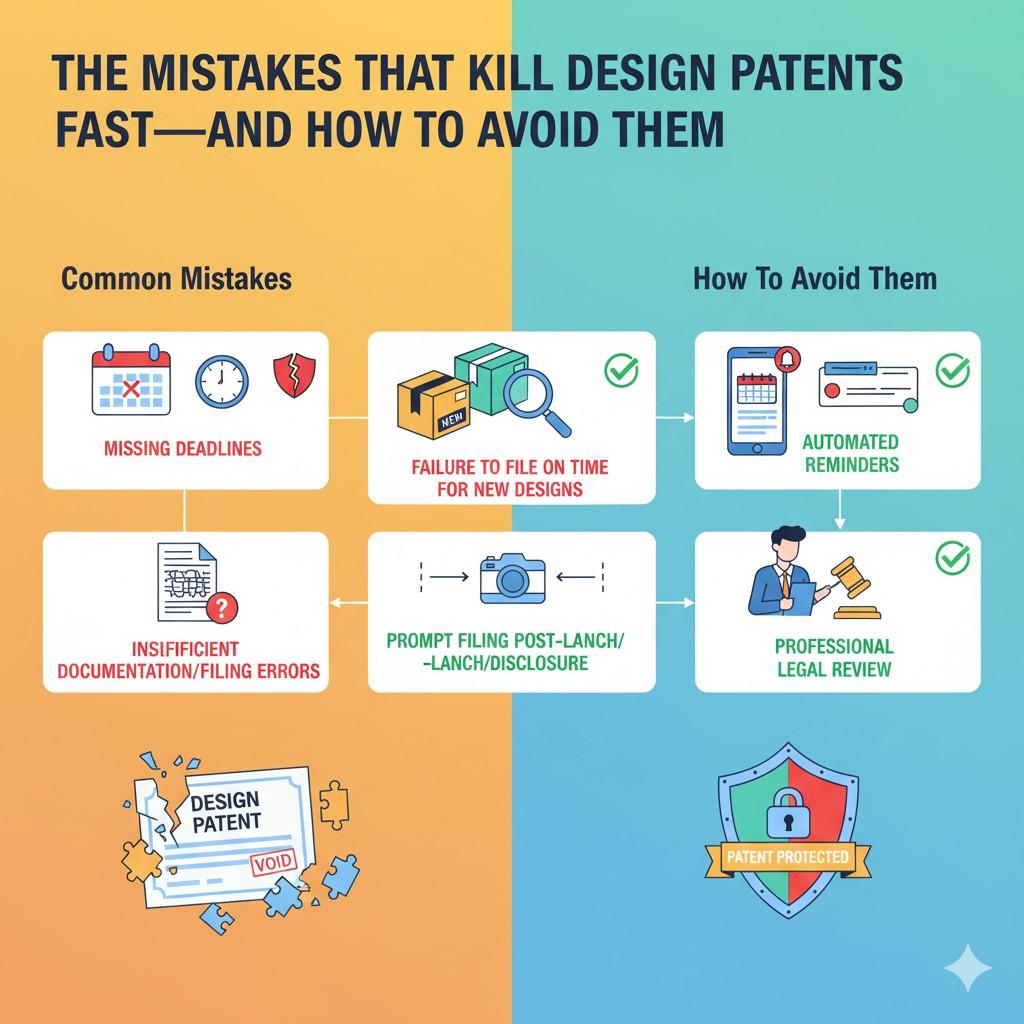
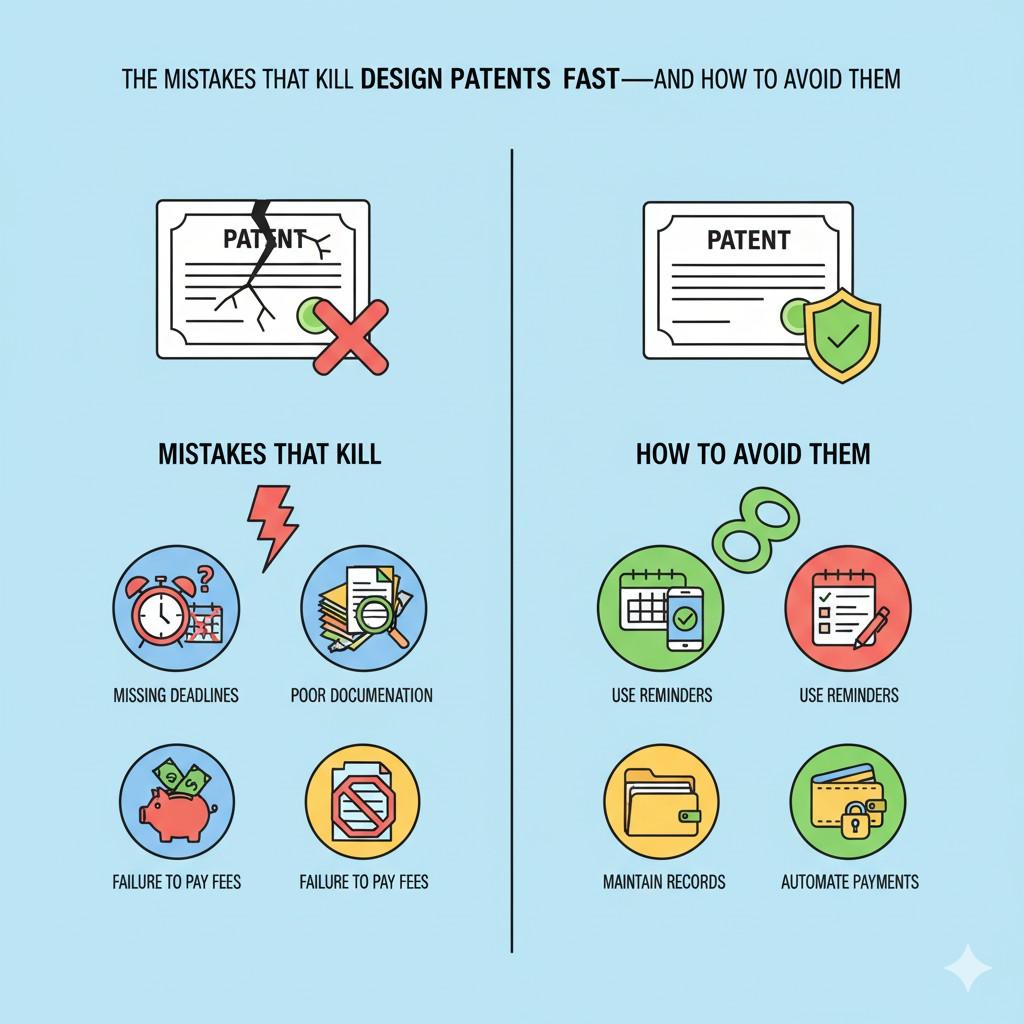
The Mistakes That Kill Design Patents Fast—and How to Avoid Them
Most founders think design patents fail because competitors find clever loopholes. But more design patents die because of preventable mistakes made inside the startup itself.
These mistakes don’t come from lack of effort. They come from speed, pressure, and the nonstop push to ship fast. When you’re building a product while raising money, hiring a team, and trying to stay alive in your market, it’s easy to make small decisions that quietly weaken your protection.
The worst part is that most of these mistakes don’t show up until months or years later—long after you can fix them.
The silent risk of filing too late
A common mistake founders make is waiting too long to file. Design patents only protect what you submit, and if you publicly show the design before filing, you limit your options.
Many startups do soft launches, pitch events, investor meetings, or early demos without realizing they are exposing the design. Once that happens, the countdown toward losing rights begins.
A lot of founders think they can wait until the design feels final, but holding off can cost you the chance to protect it altogether.
The tricky part is that early exposure does not always look like exposure. Designers post progress shots on social media. Hardware teams share prototypes in community forums.
Marketing teams add product renders to landing pages to collect early sign-ups. These actions feel harmless, even helpful.
But they count as public disclosure. If you don’t file soon after showing the design, someone else could copy it or file a competing application before you take action.
The smartest approach is simple. File the design as soon as the external look is stable enough to represent your product. You don’t need every internal component finalized.
You don’t need full packaging. You just need the core design to be close to what you plan to ship. Filing early protects you while you keep building.
And if you’re working through multiple versions, you can file follow-up design patents as the product evolves. This gives you far more freedom than waiting until everything is perfect.
PowerPatent makes this easy because you can submit updated designs quickly, stay organized, and avoid missing opportunities while you iterate. You can see how this workflow works at https://powerpatent.com/how-it-works.
Overlooking the importance of drawings
The most overlooked part of a design patent is the drawings. Many founders think drawings are just a technical requirement. Something the attorney handles. Something no one reads.
But in reality, drawings are the entire patent. They define your protection. They show what the government approves.
They are the first thing competitors analyze when deciding whether to copy you. And they are the tool courts use if there is ever a dispute.
A weak drawing means weak protection. A drawing with missing angles, unclear lines, or inconsistent shapes gives competitors room to argue that your design is vague or incomplete. Even small drawing errors can limit what the patent covers.
If you leave out a side view, a competitor will copy that side because the patent doesn’t claim it. If your shading is wrong, someone can argue the shape is different. If your drawing looks inconsistent, a skilled competitor can design around it.
This is where many DIY attempts fail. Teams use CAD screenshots, rough sketches, or inconsistent renderings because they want to move fast or save money.
But small shortcuts in drawings can cost far more later when the patent is too weak to enforce.
The better approach is to use a process that creates clean, consistent, attorney-reviewed drawings every time. Founders don’t need to become experts in patent drawings.
They just need a system that ensures every view is precise and complete. PowerPatent handles this by guiding you through the drawing process and ensuring every detail meets legal standards without slowing your workflow. More details are at https://powerpatent.com/how-it-works.
Forgetting to protect variations
One of the most painful mistakes founders make is assuming one design patent covers everything. It doesn’t. A design patent covers exactly what you show. Nothing more.
If your product comes in three slightly different shapes, that might require multiple filings. If your product has optional features that can appear or disappear, those may need separate design protection.
If your packaging, UI layout, or accessory design matters, those can be covered too.
When founders skip variations, they leave openings competitors can exploit. A competitor sees your design patent, changes one minor feature, then sells a nearly identical version.
They stay just outside the patent’s coverage but inside the customer’s perception of your brand. The result is brand confusion. Customers think they’re buying something similar.
You feel like your protection failed. But what actually failed was the filing strategy, not the law.
You never want to file only one design patent when your product has multiple looks that matter. Filing multiple design patents is often faster and easier than teams expect.
And because there are no renewal fees, the long-term cost is far lower than maintaining utility patents.
The simplest way to avoid gaps is to track your variations visually. Store each version, colorway, or shape change in one place so you can see what is and isn’t protected.
This pulls variation management out of guesswork and into a clear system. PowerPatent’s dashboard helps founders see these gaps instantly, so you never rely on memory or scattered files.
Losing track of documentation as the team grows
As a startup scales, people change roles. Designers come and go. Product files move across laptops. Cloud storage folders shift or get renamed. Slack channels get archived.
Somewhere in that shuffle, design documentation gets lost. This becomes a major issue if you ever need to prove what you invented, when you invented it, or how the design changed over time.
The worst moment to realize you’ve lost old designs is when a competitor challenges your patent.
Without documentation, your legal position weakens. Without clear version history, your narrative falls apart. Your entire design story rests on your ability to show how your product evolved and what you intended from the start.
Strong documentation isn’t about being formal or slow. It’s about securing your future by staying organized.
When you centralize every design file, drawing, and timeline, you maintain control no matter who joins or leaves the team. It becomes impossible to lose the information that protects your business.
This is one of the reasons founders use PowerPatent as a single home for IP documents. You remove the risk of misplacement and keep your entire design history preserved and ready for any future need.
Underestimating the value of enforcement readiness
Founders often make the mistake of assuming they will never need to enforce their design patent. They think competitors will respect the protection automatically.
But competitors copy the moment they think you’re not ready for a fight. If they believe your documentation is weak, your strategy unclear, or your design barely protected, they take the risk.
Enforcement readiness doesn’t mean being aggressive. It means being prepared. When you maintain clean drawings, file variations, track versions, and organize documentation, you signal strength before any dispute even begins.
Many potential copycats walk away once they see your portfolio is well-structured. Most infringement fights end long before they start simply because your preparation makes copying look unprofitable.
Preparation protects you. Clarity protects you. Organization protects you. Structure wins before lawyers even enter the picture.
PowerPatent helps founders stay enforcement-ready without needing a dedicated legal team. Everything lives in one place. Everything is clean. Everything is easy to review.
You can explore the system anytime at https://powerpatent.com/how-it-works.
A Smarter Way to Stay Protected Without Slowing Down Your Startup
Most founders want strong IP, but they don’t want to move slower. They don’t want to deal with legal stress. They don’t want to chase down filings or guess whether something is protected.
They want to build, ship, and grow without worrying that a small mistake today will cost them a big piece of their future. The truth is, design patent protection becomes far easier when you set up a system that does the thinking for you.
When your filings, drawings, variations, and timelines live in one clean workflow, you get freedom instead of friction. That’s the shift every startup needs to make if they want real, defensible design IP without losing momentum.
Why moving fast doesn’t mean being unprotected
There’s a common belief in startups that patents slow you down. Many founders think anything involving lawyers or filings or government systems must be slow. But design patents don’t have to interrupt your speed.
The only thing that slows teams down is confusion. When you don’t know what to file, when to file it, or what rules apply, you hesitate. You postpone. You push IP decisions into the future because you don’t want to deal with the complexity right now.
But the delay is the real risk. The longer you wait, the more likely you are to expose your design to the public, miss filing opportunities, or fall out of sync with your product roadmap.
When you remove confusion, you stop delaying. You file sooner. You protect sooner. And you free your mind to focus on actually building.
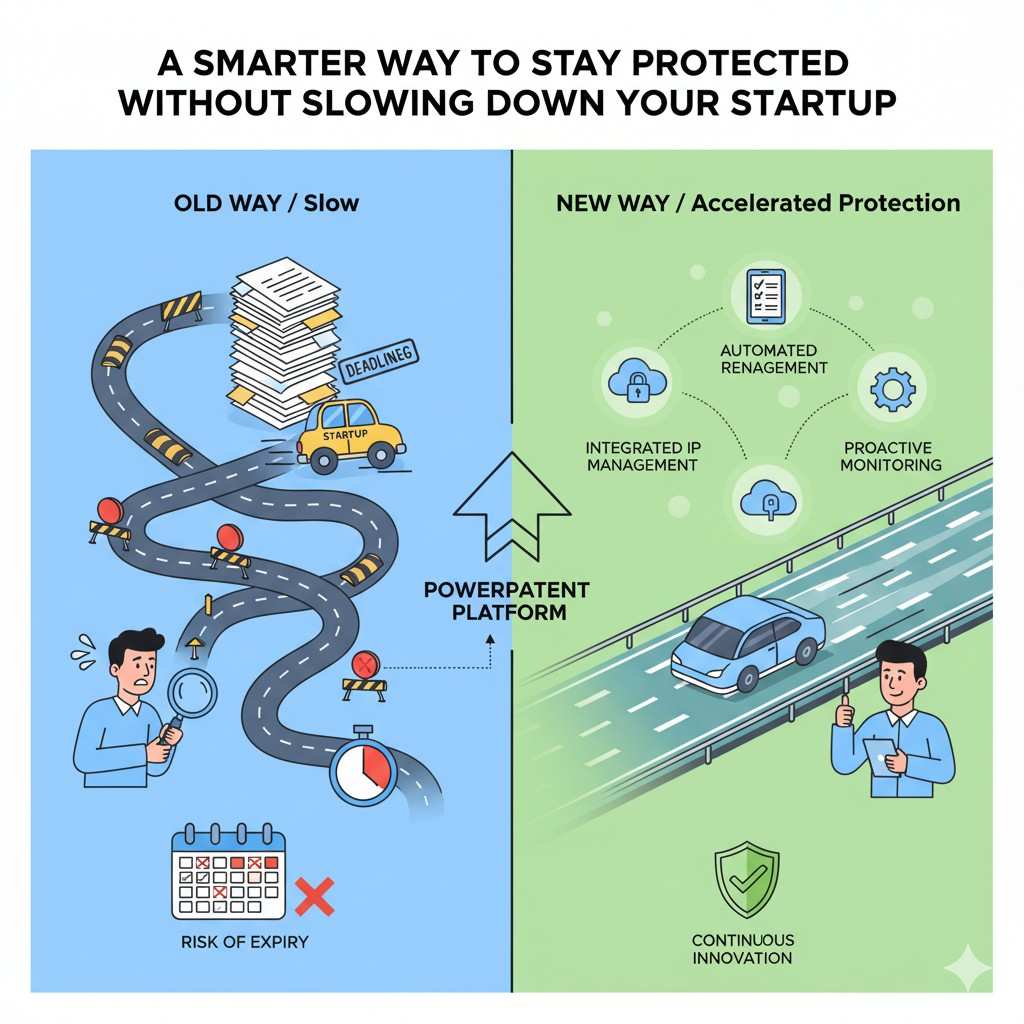
A design patent process that matches your speed is not about moving slower. It’s about removing friction so you can act without second-guessing. The faster you get clear, the faster you stay protected.
Turning your design workflow into a protection workflow
Every founder already has a design workflow. You create versions. You test prototypes. You polish the look. You ship updates. The problem is that most teams treat design protection as a separate process that happens outside the product cycle.
But design patents work best when they connect directly to product development. When you treat IP as part of design, everything becomes simpler.
The moment your team thinks the external look is final enough, that’s the moment a design patent should be triggered. Not weeks later. Not after a big launch.
Not after investors ask about IP. Filing early becomes a natural extension of your design process instead of a last-minute scramble.
This gives founders two major advantages. First, you avoid the risk of public disclosure hurting your protection.
Second, you stay one step ahead of competitors who might try to reverse-engineer your look. You protect your design while it’s still fresh and hard to imitate.
A smart system automatically prompts you to file at the right moments. You shouldn’t need to remember deadlines. You shouldn’t need to guess when a version is ready.
You shouldn’t need to search old folders for the right files. PowerPatent makes design filing feel like just another part of your product’s natural evolution, not a separate legal event. You can see how the workflow supports this at https://powerpatent.com/how-it-works.
Keeping everything in one place creates real leverage
The biggest cause of design patent failure isn’t bad drawings or weak filings. It’s fragmentation.
When IP information spreads across multiple tools, inboxes, Slack channels, and team members, clarity disappears. And when clarity disappears, risk grows.
A founder might know the filing date, but the designer might not. The engineer might have old prototypes, but the legal team never sees them. An investor might ask a simple question about your IP timeline, and no one on the team remembers the exact expiration date.
This isn’t because the team is disorganized. It’s because startups move fast, and things get lost when everything is scattered.
Centralizing your design patent information gives you leverage. You can see your entire IP picture in a single moment. You know what’s protected. You know what’s not protected yet.
You can see upcoming filings you need to prepare for, versions that need documentation, and gaps competitors could exploit. Instead of reacting to problems, you prevent them.
A clean dashboard with every design filing, drawing, and expiration date gives you confidence. It makes your team stronger. It removes fear around IP because you always know exactly where you stand.

Tools like PowerPatent exist for this exact reason—to keep everything in one place so founders never lose control over their own protection.
Why attorney oversight still matters even with great software
Some founders believe software alone can handle everything. Others believe only attorneys can be trusted with IP. The truth is that neither approach works well on its own.
Software moves fast, keeps things organized, and removes manual errors. Attorneys provide judgment, experience, and legal strategy. You need both if you want real protection.
Design patents look simple from the outside, but the details behind drawings, shading, consistency, and claim strategy matter more than most teams realize.
A small mistake in a line or a missing view can affect your entire legal position. Software can help you prepare clean materials, but an experienced attorney ensures those materials actually stand up if challenged.
This blend of software and human expertise is the new standard for strong startup IP. It gives you speed without sacrificing quality. It gives you clarity without making you learn the legal system.
It gives you protection without slowing your runway. This balance is exactly how PowerPatent is built—smart software doing the heavy lifting, and real attorneys verifying everything before it becomes part of your official protection.
Your design portfolio becomes a business asset, not just a legal document
Most startups view design patents as something you “get out of the way.” But design patents aren’t chores. They are assets. They influence your valuation. They increase the confidence of investors.
They make your brand harder to copy. They give you leverage in negotiations. They allow you to license parts of your product. They even become negotiation tools if a competitor wants to acquire you.
A smart founder uses design patents the same way they use financial strategy. They treat them as tools that strengthen the business.
When your design portfolio is strong, clean, and organized, it becomes part of your competitive edge. It signals maturity. It shows you think long term. It sends a message that your visual identity isn’t optional—it’s part of your moat.
And when your portfolio grows over time—covering your original design, your variations, your packaging, your UI, your accessories—you build a wall around your brand that is hard for anyone to challenge.
You stay ahead not because you fight harder, but because your IP foundation quietly protects you in the background.
This is the difference between founders who treat patents as tasks and founders who treat them as strategy. One group survives. The other group wins.
Making design IP simple enough that you never avoid it
The only reason founders avoid IP is because it feels complicated. But complexity isn’t the nature of design patents—it’s the result of unclear processes.
When the steps are clean, the timeline is clear, and everything is organized, design protection becomes natural.
It becomes part of your rhythm. You no longer delay filings. You no longer guess deadlines. You no longer fear missing something important.
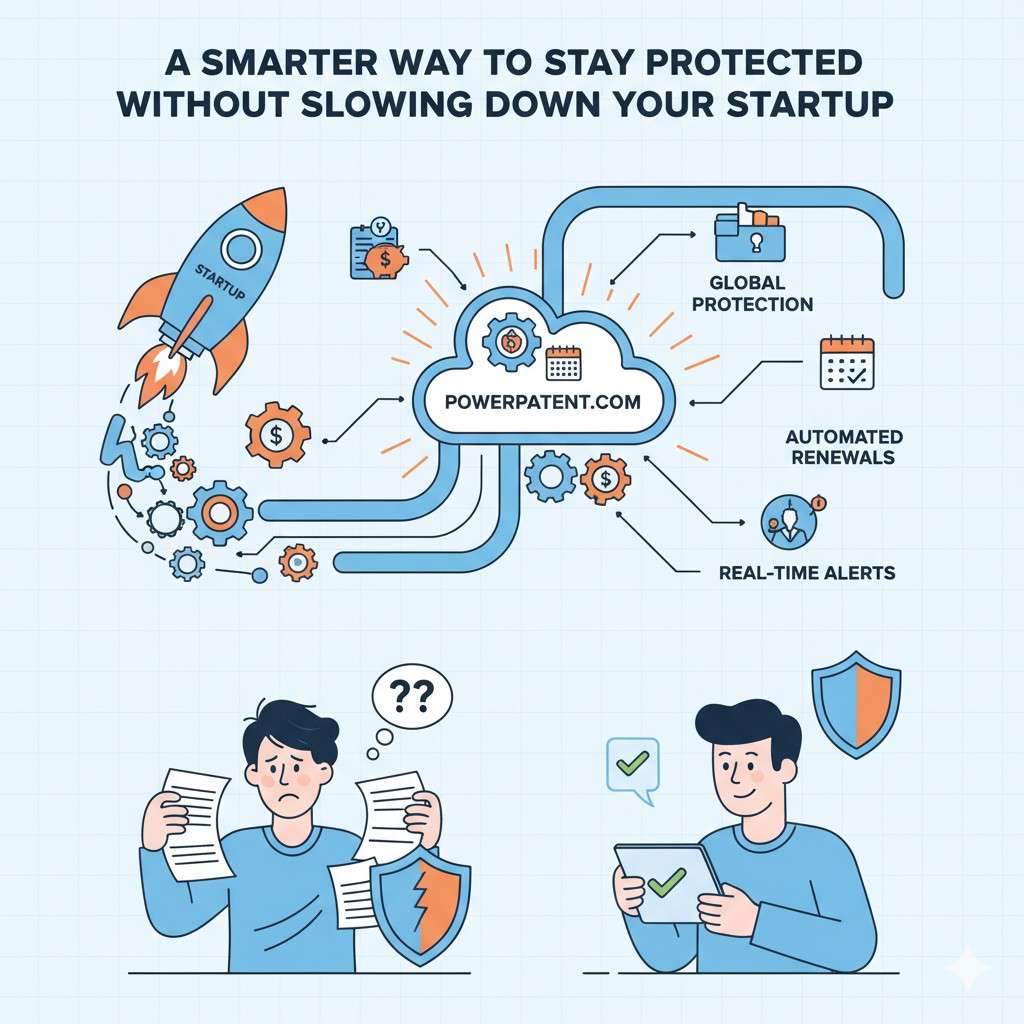
You simply build, protect, and grow in one continuous cycle.
This is the level of simplicity PowerPatent is built to create. It removes the noise. It removes the mystery. It removes the hesitation that holds teams back.
If you want an easier way to protect every design your team creates—without slowing your momentum—you can see exactly how the system works at https://powerpatent.com/how-it-works.
Wrapping It Up
Design patents don’t have to feel confusing, risky, or slow. When you understand how they work, they become one of the simplest and most effective tools you can use to protect the look and feel of your product. They give you space to grow without worrying about knockoffs. They give you a real edge in fundraising. They help you build a brand customers recognize and trust. And they fit naturally into the fast pace of a startup once you remove the mystery behind the rules.