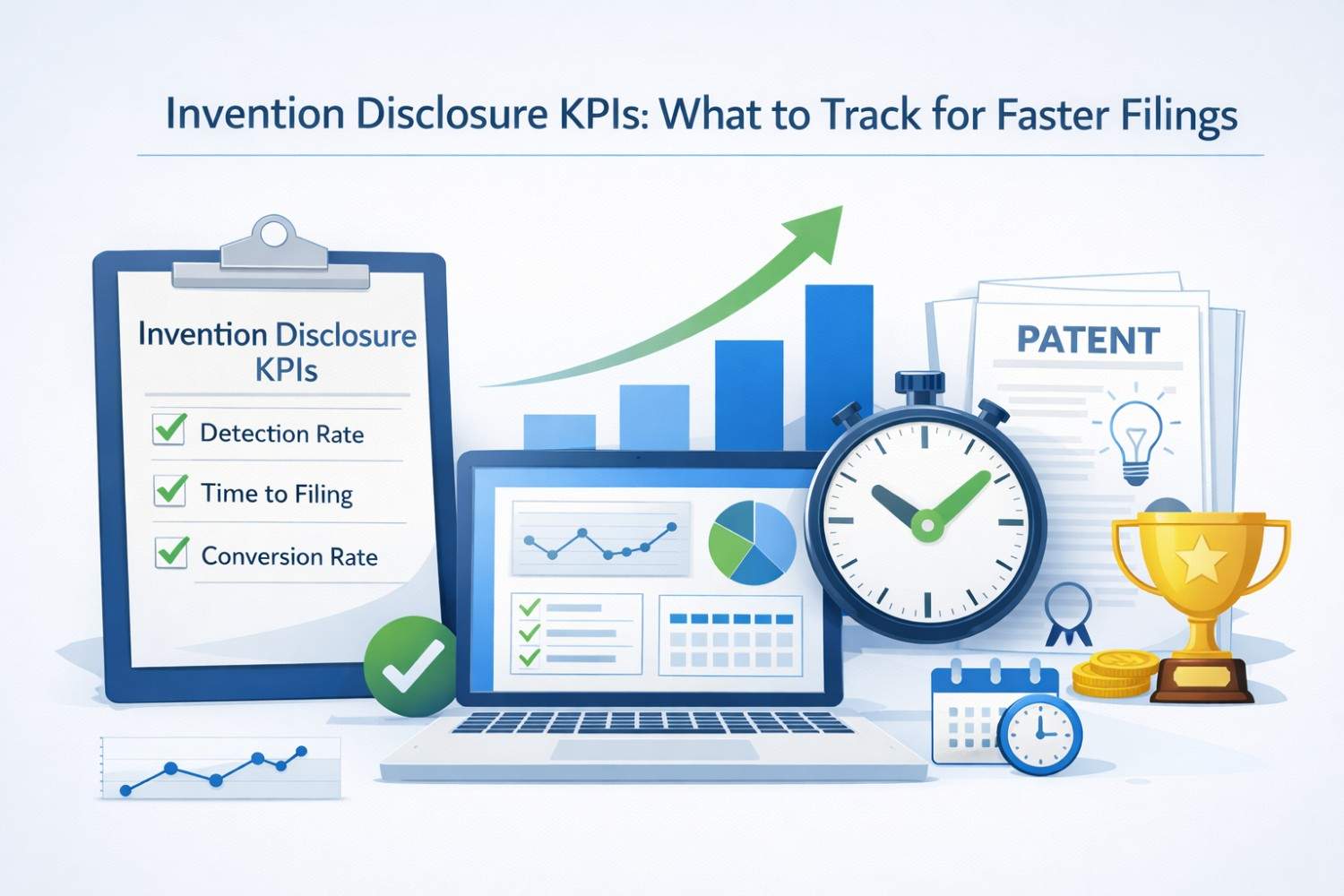
Every strong patent starts long before the filing. It starts when someone on your team spots something new, useful, and worth protecting, then captures it clearly before the details fade or the product moves on. That is why invention disclosure KPIs matter so much. They help you see where good ideas get stuck, where teams slow down, and what needs to change if you want to file faster without cutting corners. In this guide, we will break down the numbers that actually matter, how to track them in a way your team will use, and how to turn patent work from a slow legal task into a repeatable business process that protects what you are building.
Why Invention Disclosure KPIs Matter More Than Most Teams Think
Most companies do not lose patent value because their teams lack ideas. They lose value because good ideas are noticed too late, written down too vaguely, or passed around without clear ownership.
By the time someone decides an invention is worth filing, the product may have changed, the engineer may have forgotten key details, or the company may already be close to a launch, demo, or investor update.
That creates pressure, rushed work, and weak filings.
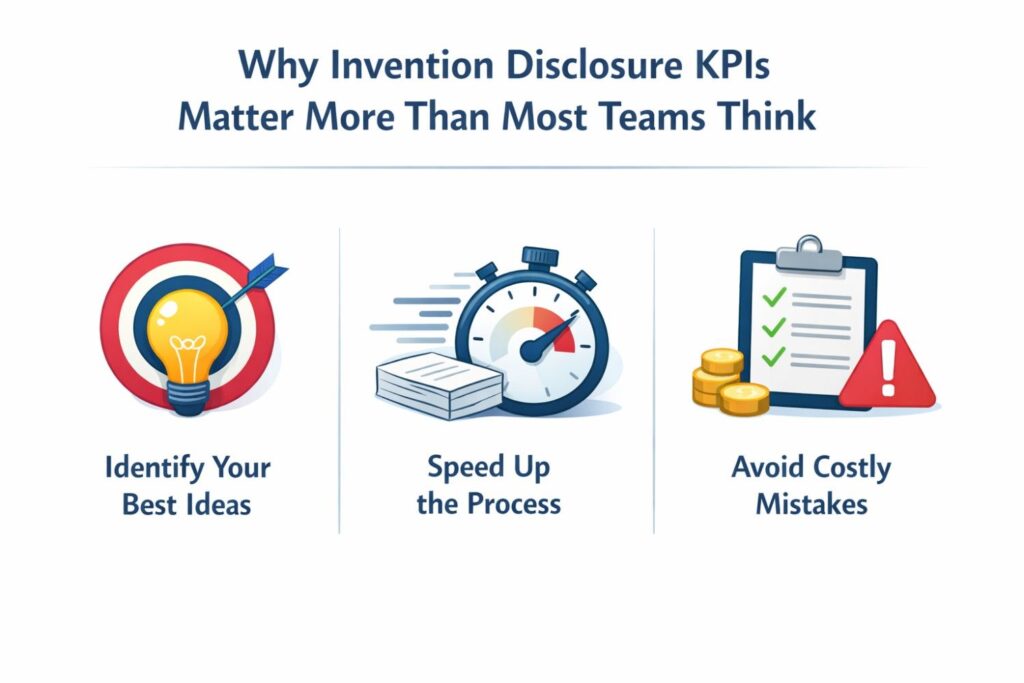
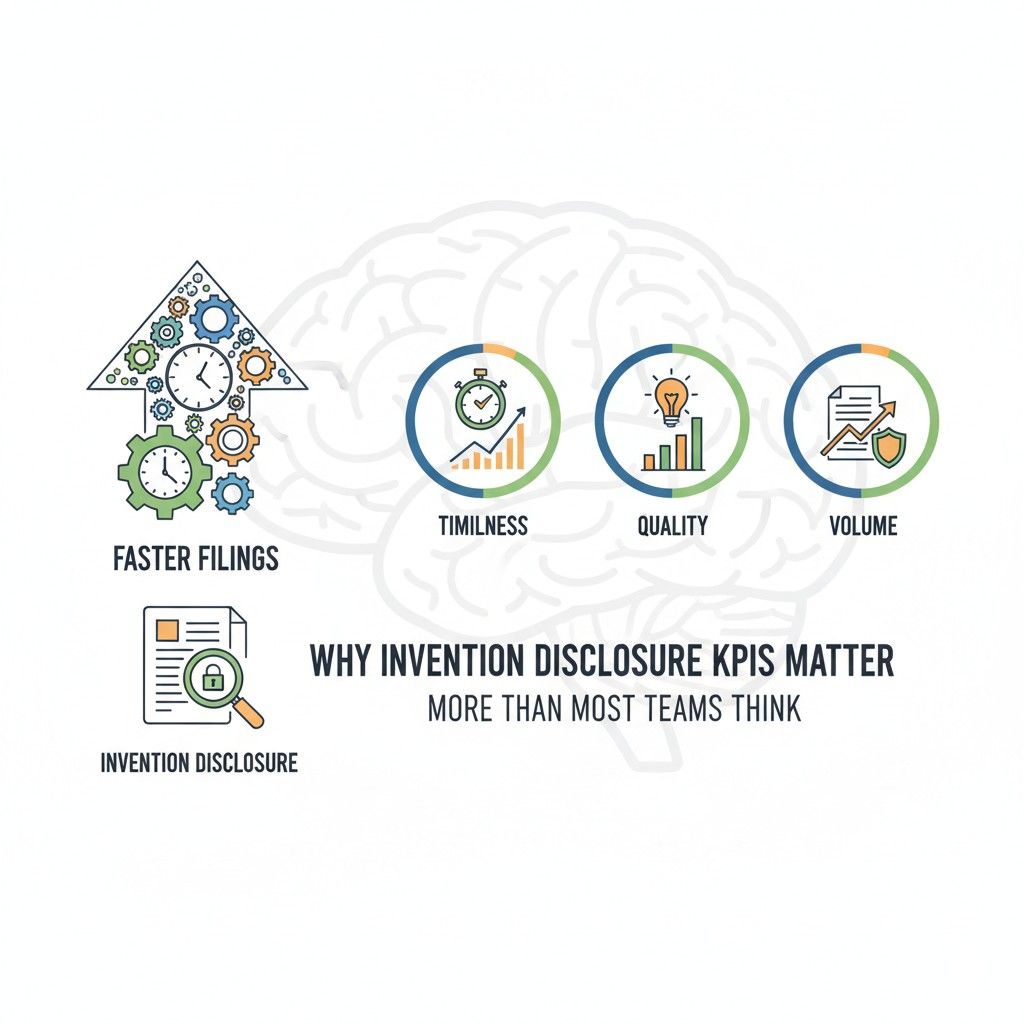
This is why invention disclosure KPIs matter more than most teams think. They give the business a way to see what is happening before the filing process breaks down.
When a company tracks the right signals, invention capture becomes easier to manage.
Leaders can see whether teams are surfacing important work early enough, whether reviews are happening fast enough, and whether the company is building a repeatable path from idea to protection.
This is not just about measuring legal work. It is about protecting product advantage, reducing delay, and helping the business make better decisions while it is still moving fast.
Most patent slowdowns start far earlier than filing
A slow filing is often blamed on the legal stage, but the real problem usually starts much earlier. In many teams, invention capture is informal. A founder hears about a breakthrough in a meeting.
An engineer mentions a clever workaround in chat. A product lead knows a feature took real technical effort, but no one writes down what made it new. Weeks pass.
Then someone says the company should file a patent, and now everyone is trying to rebuild the story from memory.
That is where KPIs become powerful. They show whether your team is spotting inventions at the right time or only reacting when the pressure is already high.
A business that tracks the gap between invention creation and disclosure submission can catch this issue fast. If that gap is large, the company has a visibility problem, not just a filing problem.

That insight matters because it tells leaders where to fix the process. Instead of pushing attorneys to move faster at the end, they can help teams capture inventions sooner at the start.
What looks like a legal issue is often an operating issue
Many businesses treat patent work as a separate legal task. That view creates distance between the builders and the filing process. Engineers focus on shipping.
Leaders focus on growth. Legal gets pulled in later. The result is a broken handoff. Important context gets lost because the invention was never gathered in a structured way from the people who actually built it.
Tracking invention disclosure KPIs helps companies see patents as part of how the business runs, not as a side task.
If review time is slow, maybe there is no clear owner. If disclosure quality is weak, maybe the intake questions are too vague.
If only one team ever submits ideas, maybe managers are not encouraging invention spotting across the company. These are business process issues. Once a company sees that clearly, it can improve the system in practical ways.
A very useful move here is to place invention tracking inside the same operating rhythm used for product or engineering review.
When disclosure metrics show up where leadership already looks at product health, they stop being ignored. That one shift can change patent work from reactive to planned.
Strong KPIs protect speed without hurting quality
A lot of growing companies worry that putting process around invention disclosures will slow teams down. That fear makes sense. No founder wants engineers buried in paperwork.
But the right KPIs do the opposite. They reduce waste. They help teams spend time only where it counts. They make it easier to decide what deserves attention and what does not.
The key is to track signals that support action, not vanity numbers that sit in a dashboard and do nothing. For example, counting total disclosures may sound useful, but by itself it can push teams to submit weak ideas just to raise the number.
A smarter business looks at submission volume together with review quality, decision speed, and filing conversion. That gives a clearer view of whether the system is producing real IP value.
This is where strategy matters. A good KPI does not just tell you what happened. It helps you decide what to do next.
If your company sees that review cycles are fast but only a small share of disclosures become filings, that could mean intake is too loose.
If filings are happening but too close to product launch, that may mean invention capture starts too late. Good metrics point to next steps. That is what makes them valuable.
Faster filings begin with earlier visibility
The earlier a business sees a potentially patentable idea, the more choices it has. It can ask better questions.
It can compare the invention to the roadmap. It can align the filing with launch timing, fundraising, partnerships, or market entry. Early visibility gives the company control, and control leads to stronger decisions.
Invention disclosure KPIs help create that visibility. They reveal whether technical work is surfacing at the point when the company can still act calmly and carefully.
A useful measure is how long it takes from invention event to first disclosure. Another strong signal is how often disclosures arrive before public release, not after.
These numbers are simple, but they tell a deep story about whether the company is protecting value before it leaks into the world.
Businesses that want faster filings should focus less on rushing the end and more on making the beginning visible. One practical approach is to tie invention prompts to natural product moments.
After a major sprint, architecture change, model improvement, or hardware breakthrough, ask a short set of questions that helps the team flag anything new. This makes invention capture part of normal work instead of a special project people avoid.
Missed disclosures are usually silent losses
One of the hardest parts of managing patent work is that missed opportunities rarely show up as obvious failures. A product launches. A competitor notices.
A key technical edge goes unprotected. The business moves on without realizing what it lost. Because those losses are silent, many teams underestimate them.
This is another reason invention disclosure KPIs matter. They make the invisible more visible. They help a company compare how much innovation is happening to how much is being captured.
No metric can show every missed invention, but a business can build useful signals. It can compare engineering output against disclosure trends. It can track which teams create major technical changes but rarely submit ideas.
It can monitor repeated areas of innovation and ask why only some of them enter the pipeline.
This kind of tracking is especially helpful for deep tech startups, where the most valuable inventions may sit inside infrastructure, training methods, architecture choices, workflows, optimization systems, or hardware design changes that are easy to overlook.
A company that waits for people to self-report every invention will miss too much. A company that uses KPIs to spot quiet gaps can act earlier and more confidently.
Good metrics help leaders coach teams better
Most leaders do not need more raw activity. They need better behavior across the company.
They want product, engineering, and leadership teams to notice protectable work earlier, explain it more clearly, and move it through review without confusion. Good KPIs support that kind of coaching.
For example, when leaders see that one team submits high-quality disclosures with short review cycles, they can study what that team does differently.
Maybe the manager regularly asks invention questions in technical reviews. Maybe the team keeps simple notes as features evolve.
Maybe they understand what kinds of technical choices are worth flagging. That insight can then spread across the business.
This is far more useful than telling everyone to “submit more ideas.” Broad pressure often creates noise. Focused coaching creates better input. A smart company uses KPI patterns to coach teams in context.
If a team submits very little, the issue may be awareness. If they submit often but vaguely, the issue may be structure.
If they submit strong ideas but decisions stall, the issue may be review ownership. Metrics make those differences easier to see, which leads to better action.
The best companies measure timing, not just output
A common mistake is to judge patent health by final filing count alone. Filing count matters, but it is a lagging signal. By the time you see it, the earlier problems have already happened.
Stronger companies track timing at each step because timing shows where momentum is being lost.
A company should want to understand how fast an invention becomes a disclosure, how fast a disclosure gets reviewed, how fast a decision gets made, and how fast the filing process begins after approval.
Each stage reveals something different. Long delays at the front suggest invention capture problems. Long delays in the middle suggest review friction. Long delays near the end suggest process or resource issues.
This is highly actionable because it allows the business to solve the right problem. If the bottleneck sits in disclosure completion, simplify the intake form. If the delay sits in review meetings, set a standing cadence.
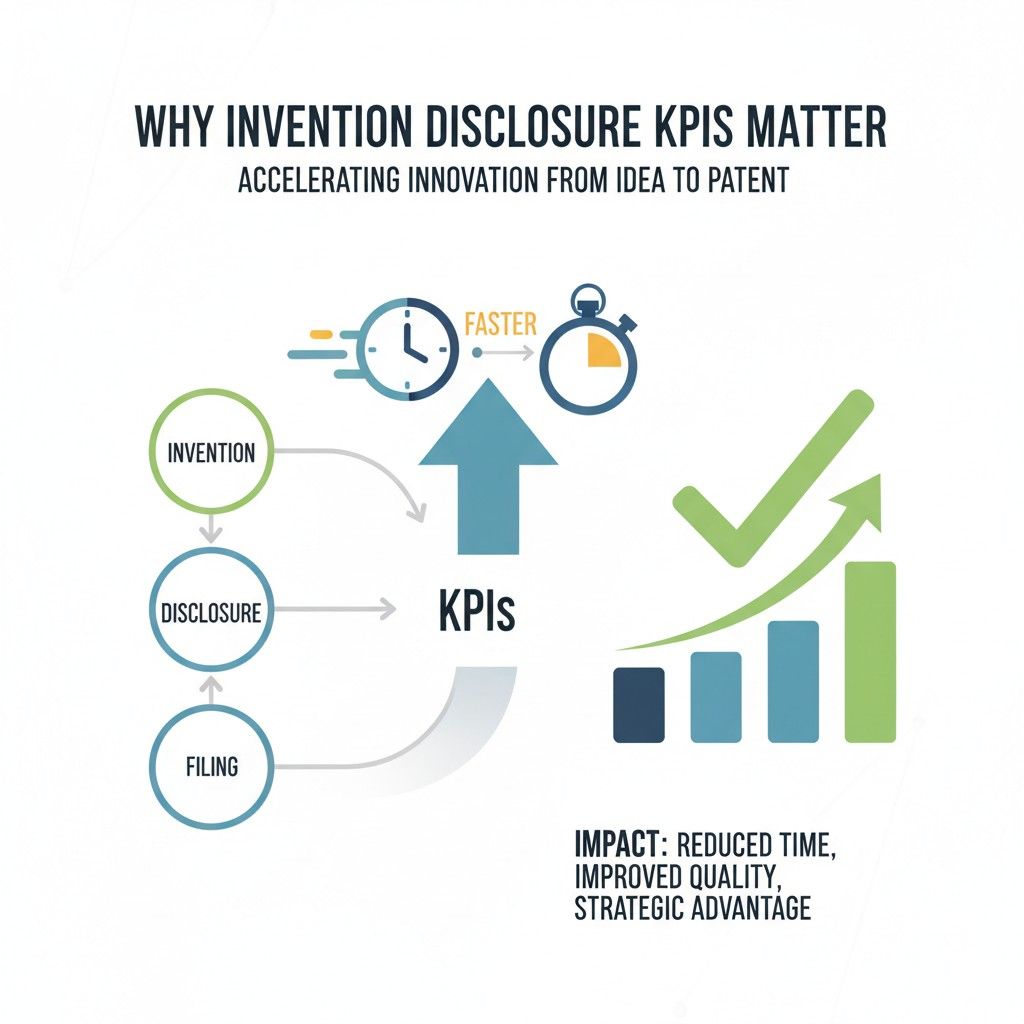
If the lag begins after approval, tighten handoff to filing. Without timing metrics, these problems blend together. With timing metrics, they become fixable.
The Numbers That Help You File Patents Faster
Most teams say they want faster patent filings, but very few know which numbers actually drive speed. They often watch the final result, like how many patents were filed this quarter, while missing the signals that show why filings move quickly or why they stall.
That is a problem because by the time a filing is late, the delay has already happened somewhere upstream. The smartest companies do not just look at outcomes.
They track the small operating numbers that shape those outcomes every week.
When you measure the right numbers, patent work becomes easier to manage. You can spot friction earlier, fix process gaps before they grow, and help inventors move with less confusion. These numbers are not just for legal teams.
They are useful for founders, heads of product, engineering leaders, and anyone responsible for turning innovation into business value. The goal is simple.
You want to know where good ideas are slowing down and what to change so the best inventions get filed while they still matter.
Disclosure submission rate
This number shows how often inventions are entering your system. It gives you a basic view of whether teams are regularly surfacing new work that may deserve protection.
If this number is very low, it may not mean your company lacks innovation. It often means teams are too busy to stop and capture what they are building, or they do not know what is worth flagging.
A useful way to think about this metric is not as a volume contest, but as a pulse check. If engineering output is rising, product work is shipping, and technical breakthroughs are happening, but disclosures are staying flat, something is off.
That mismatch tells you the company is creating value faster than it is documenting it. That is dangerous because missed disclosures usually become missed filings later.
The best way to improve this number is to reduce the effort needed to submit a disclosure. Do not ask inventors to write a long legal memo. Ask them to explain what problem they solved, how they solved it, and why the approach is meaningfully different.
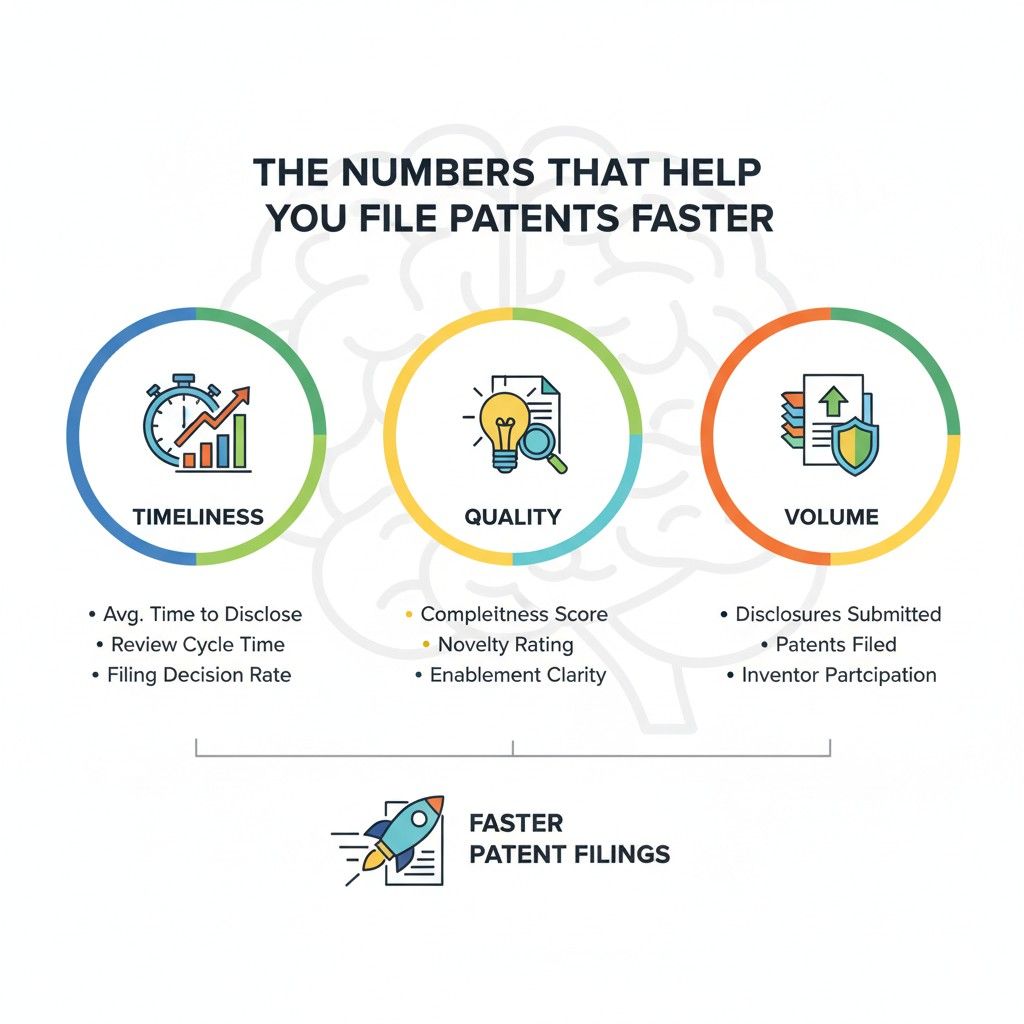
That one shift can increase submissions without lowering quality. Teams are more likely to participate when the first step feels simple and useful.
Disclosure rate by team
Looking at disclosure rate across the whole company is helpful, but it can hide where the real issues sit. One team may be highly active while three others almost never submit anything.
That makes the total look healthy even though the pipeline is uneven. Tracking submissions by team gives leaders a clearer picture of where invention capture is working and where it is being missed.
This number becomes especially powerful when compared with what each team is actually building. A platform team doing major architecture work should not look identical to a team making small front end updates.
A machine learning team refining core models may create more protectable work than a team focused on support tooling. Context matters. You are not judging teams by raw count alone.
You are asking whether invention capture reflects the level and type of technical work happening inside each group.
This metric is also useful for coaching. If one team consistently submits strong disclosures, study its habits. Maybe the manager asks better questions during sprint reviews.
Maybe the team records technical decisions more clearly. Those habits can be copied across the business. That turns one good team into a model for the rest.
Time from invention to disclosure
This is one of the most important numbers in the entire process. It measures how long it takes for a new invention to go from being created to being formally disclosed.
That gap matters because every extra day increases the chance that details get lost, teams move on, or public exposure comes too close for comfort.
A short gap usually means your company has good invention visibility. Teams are noticing patentable work early, capturing it while facts are fresh, and giving the business time to make a clear decision.
A long gap often means invention disclosure is an afterthought. People remember to submit only when a launch is near, a fundraise is coming, or a founder suddenly asks about patents. By then, the process is rushed.
To improve this number, connect disclosure prompts to natural points in the product cycle. Do not wait for someone to remember on their own.
Ask invention capture questions after major releases, model wins, hardware changes, architecture shifts, and technical breakthroughs. When the prompt appears close to the work itself, the time gap shrinks naturally.
Time from disclosure to first review
Once a disclosure is submitted, speed depends on how fast someone actually looks at it. This number measures whether your review process is alive or whether submissions are sitting quietly in a queue.
Many companies think they have a filing problem when they really have a review delay problem.
A fast first review creates momentum. It tells inventors their effort mattered. It helps legal or IP leads ask follow-up questions while memory is fresh. It prevents good ideas from going stale.
A slow first review sends the opposite message. It makes the system feel like a black hole, which often leads teams to stop participating.
The easiest way to improve this metric is to assign clear review ownership. Every disclosure should have a known next step and a person responsible for taking it.
When ownership is vague, delays grow. When ownership is explicit, even a simple weekly review rhythm can dramatically improve speed.
Time from review to filing decision
This number tracks how long it takes to move from an initial look at the invention to a real business decision about whether to file. It matters because many processes do not fail at intake.
They fail in the middle, where disclosures get discussed, revisited, delayed, and never clearly advanced or closed.
A long delay here usually means the company has not defined how patent decisions are made. Maybe no one knows who has final say. Maybe product, engineering, and legal have different priorities.
Maybe teams lack a shared standard for what makes an invention worth filing. Without decision rules, every disclosure becomes a debate.
A practical fix is to create a simple internal decision frame. Ask whether the invention supports a core product edge, whether it is hard for others to copy, whether it matters for future value, and whether the company can explain its uniqueness clearly.
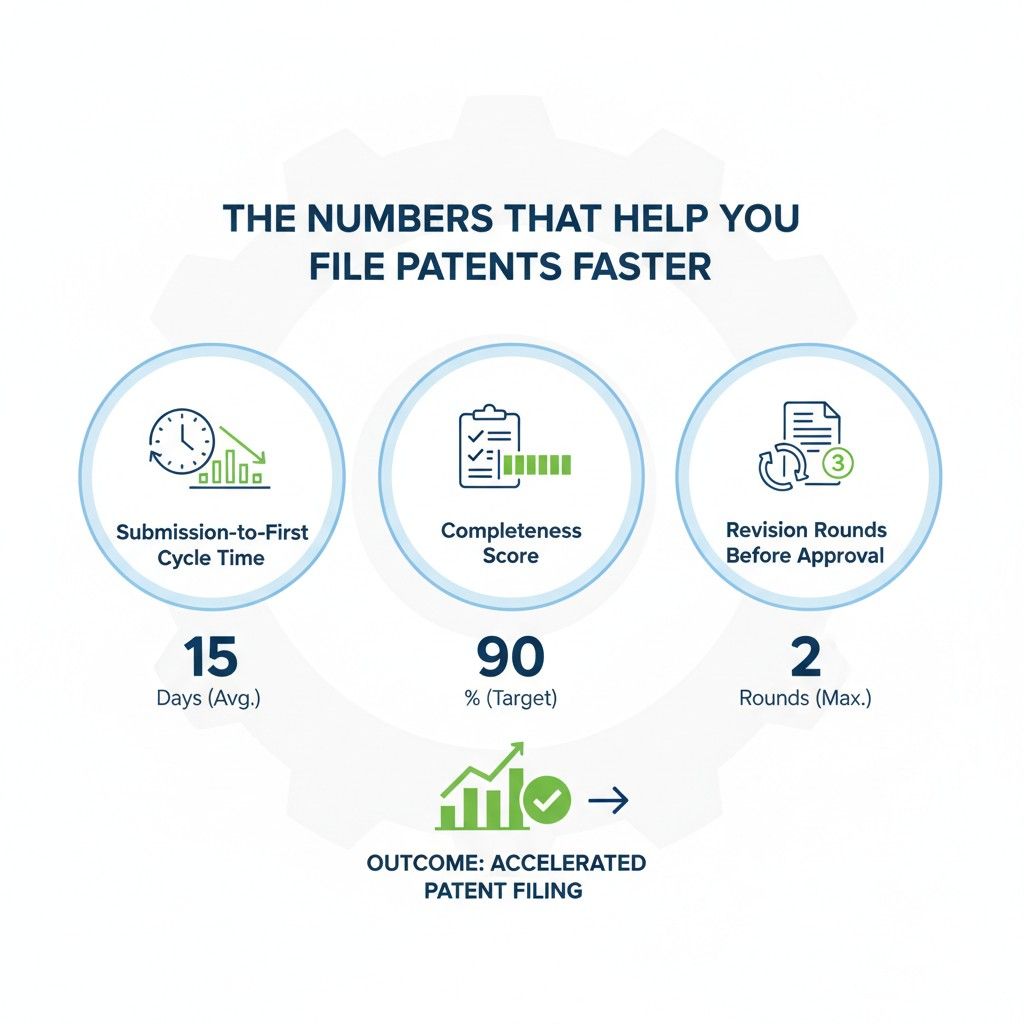
A team does not need a long meeting every time. It needs a repeatable way to decide. That brings down decision time and creates more consistent filings.
Time from approval to drafting start
Many companies assume that once a disclosure is approved, the hard part is over. In reality, another delay often starts right there.
The invention has been accepted for filing, but drafting does not begin quickly because of handoff problems, scheduling issues, or missing information.
This number helps you catch that hidden lag. If approvals happen quickly but drafting starts much later, the process is breaking between strategy and execution.
That can waste the very speed your earlier work created. It also increases the risk that product plans move ahead before the patent effort catches up.
The best way to improve this number is to make approval trigger action automatically. Once a disclosure is approved, drafting should not depend on a chain of loose emails or a vague next step.
The invention should move directly into a prepared workflow with the needed materials attached. That simple operational design can save weeks.
Time from drafting start to filing
This is the number most teams expect to care about first, but by itself it does not tell the full story. It measures how quickly the patent filing gets completed once drafting begins.
It matters, but it should be read together with the earlier numbers so you can tell whether the delay is in writing or somewhere else.
When this number is high, one common reason is not attorney speed alone. It is often poor input quality. If the original disclosure lacks clarity, the drafting phase turns into a long cycle of follow-up questions, revisions, and technical backtracking.
That is why this number should always be viewed next to disclosure completeness and response speed from inventors.
If you want this stage to move faster, prepare inventors before drafting starts. Make sure they know what information will be needed. Gather examples, diagrams, technical differences, and implementation details in one place.
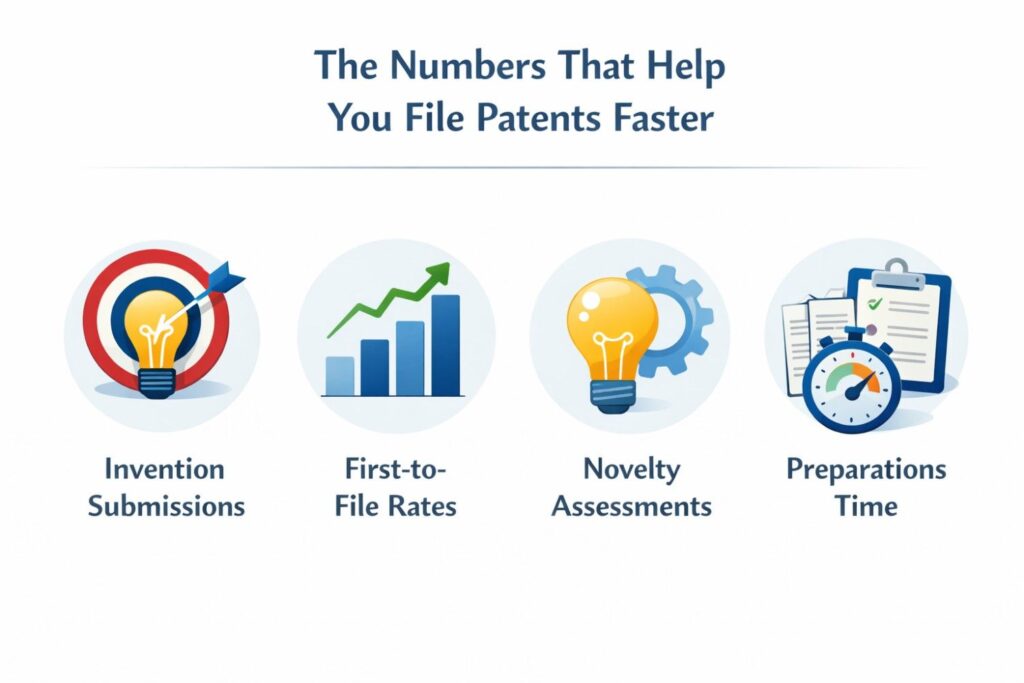
The more complete the starting package, the smoother the drafting stage becomes.
Disclosure completeness score
Not every disclosure is equally useful. Some give a clear, practical view of the invention. Others are thin, vague, and hard to act on. That is why it helps to track some form of completeness.
The point is not to create a complex grading system. The point is to know whether disclosures are ready for real review or whether they are forcing the process to start over.
A simple completeness check can look at whether the disclosure explains the problem, the solution, what makes it different, and how it works in actual use. It can also consider whether drawings, code logic, workflows, or technical examples are attached where needed.
You are not trying to make inventors write a perfect patent application. You are checking whether the core story is present.
This metric is highly actionable because it reveals whether low speed is really a quality issue in disguise. If most slow filings begin with weak disclosures, then your process does not need more urgency.
It needs better intake guidance. Improving the submission template can do more for speed than pushing everyone to move faster.
Follow-up question volume
One overlooked number is how many follow-up questions are needed after a disclosure is submitted. This is a very practical signal.
If reviewers or attorneys constantly have to ask basic questions, it means the first submission did not carry enough detail to support forward motion.
High follow-up volume creates hidden delay. Each question adds back and forth.
Each reply depends on busy technical people finding time to re-engage. Each round raises the chance that details get lost or the invention loses momentum. This is why the number matters more than many teams realize.
The fix is usually not harder work. It is smarter structure. Use prompts that help inventors explain the invention in plain language from the start. Ask for one example use case.
Ask what older method this replaces or improves. Ask what technical step makes the result possible. When the right questions appear early, the need for later rescue drops sharply.
Inventor response time
Even with a strong intake process, some follow-up is normal. What matters is how quickly inventors respond once questions are sent.
This number can have a major effect on filing speed, especially in fast-moving startups where engineers are juggling product deadlines.
A long response time usually does not mean inventors do not care. It often means patent work is arriving outside their normal flow. It feels separate from the work they are measured on, so it slips.
That is why leaders should not treat this as an individual failure. It is a system design issue.
A simple way to improve this number is to give patent follow-up a clearer place in team planning. If managers know active disclosures matter, they can help create time for answers.
Another good move is to keep questions tight and focused. A single clear prompt gets answered much faster than a long legal-style request.
Filing conversion rate
This number tells you what share of disclosures turn into actual filings. It helps you understand whether the invention intake system is producing real filing candidates or just collecting ideas with no clear outcome.
A healthy conversion rate does not have to be extremely high, but it should be meaningful and stable enough to guide planning.
If conversion is very low, there are a few possible causes. Teams may be submitting too broadly. The company may not be giving enough guidance on what should enter the system.
Review standards may be too strict or poorly defined. The key is not to react blindly. This number is useful only when paired with the rest of the process data.
A business can use this metric strategically by looking at conversion by team, by invention type, or by technical area.

Over time, this helps reveal where the strongest filing opportunities tend to come from. That makes future patent investment more focused and more efficient.
How to Build a Simple KPI System Your Team Will Actually Use
A KPI system only works when people trust it, understand it, and can use it without slowing down their real work. That is where many companies get stuck. They do not fail because metrics are a bad idea.
They fail because they build something too heavy, too abstract, or too disconnected from the day-to-day work of engineers, product teams, and leadership.
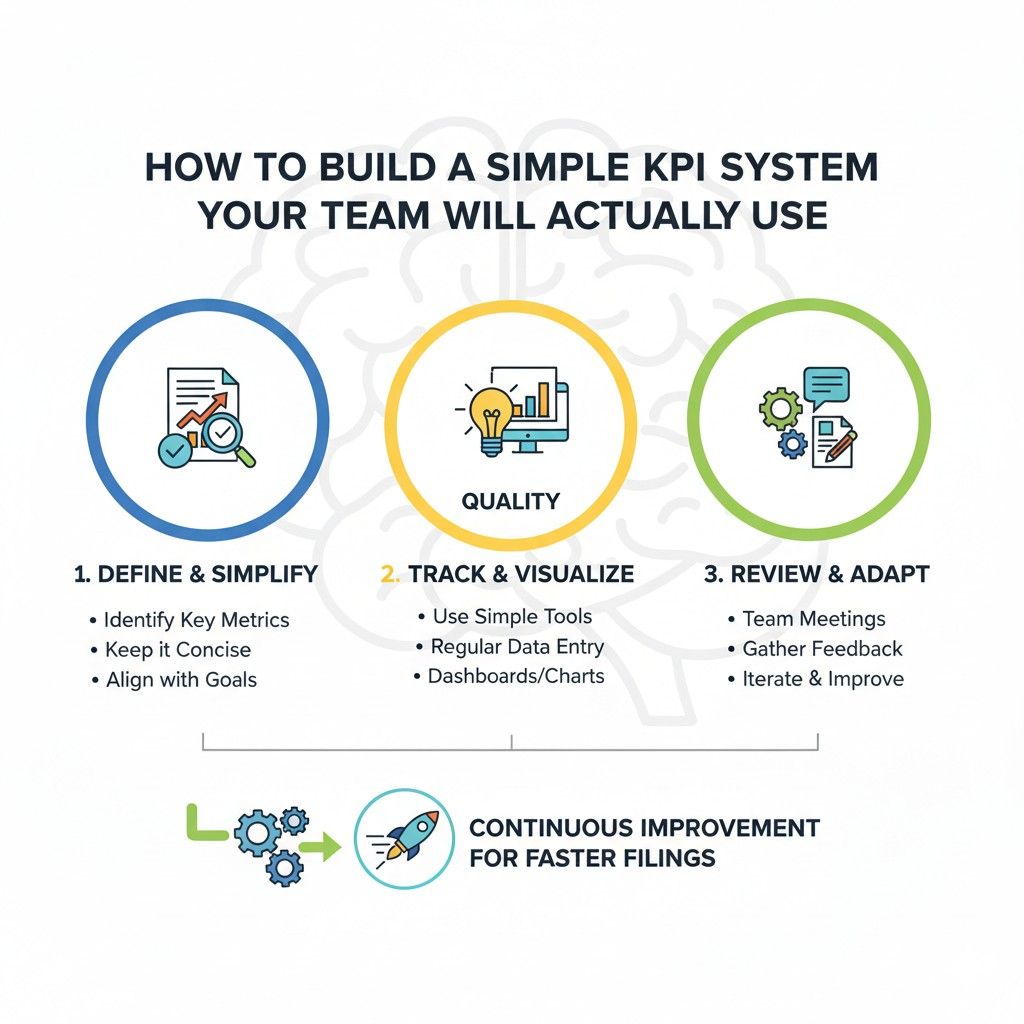
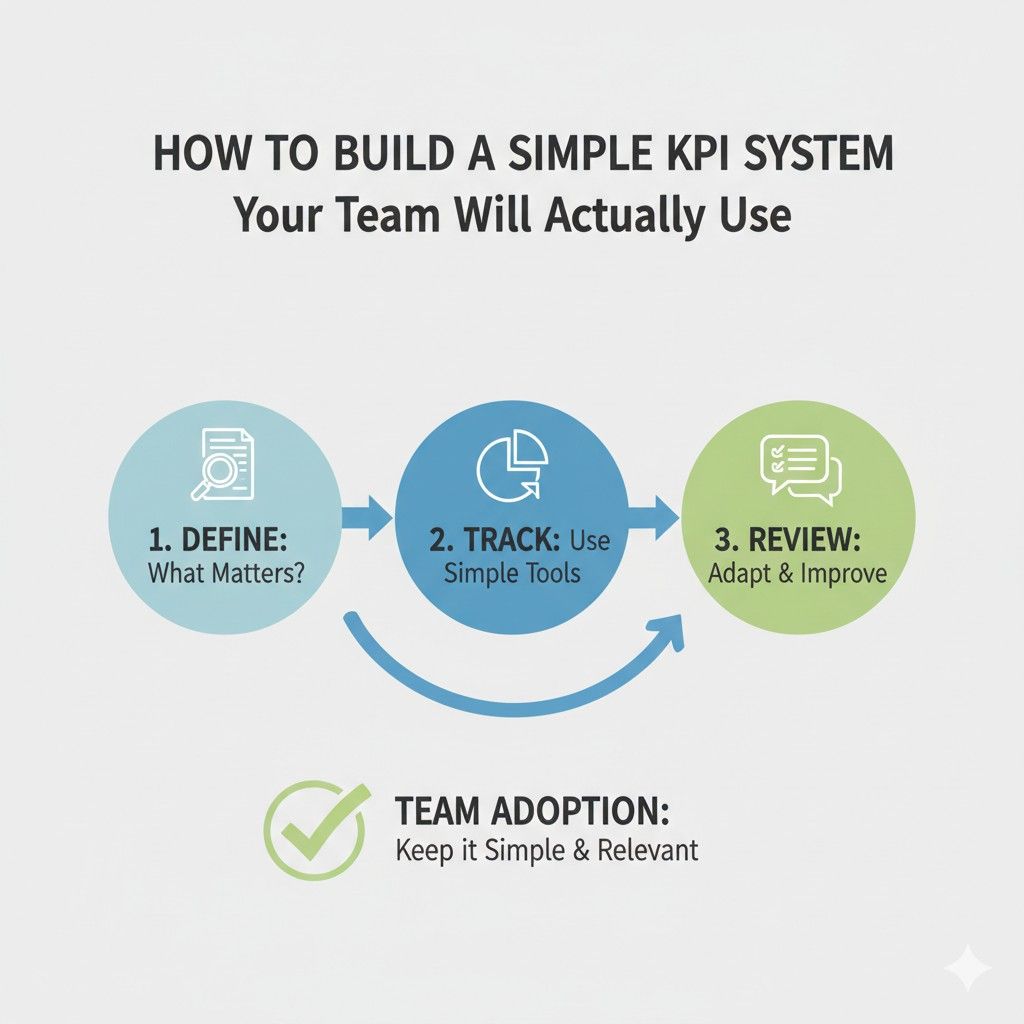
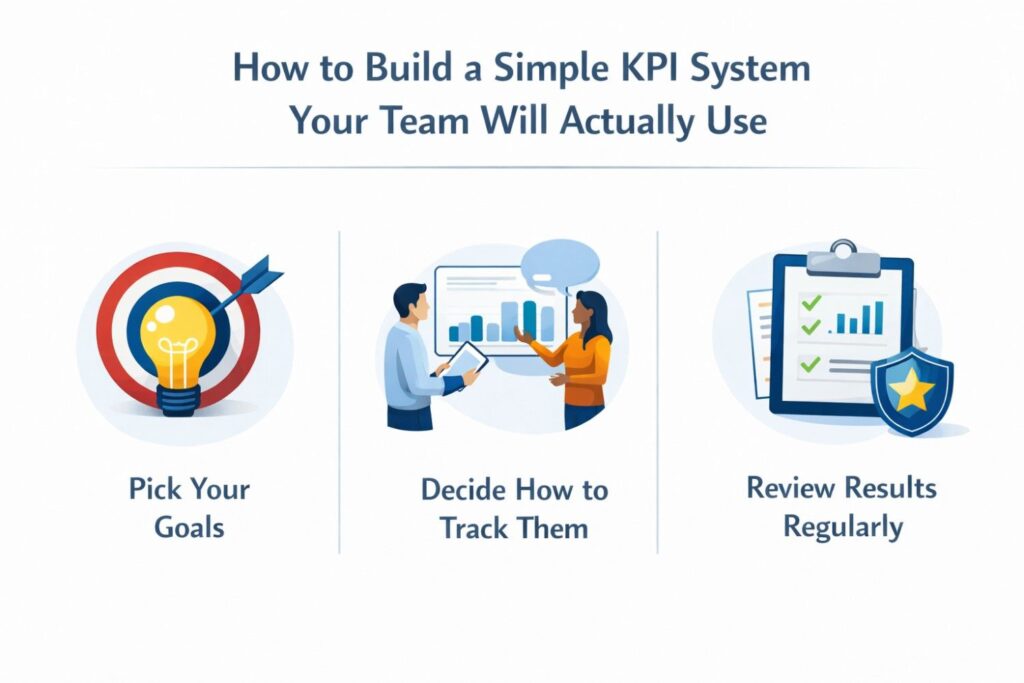
A simple KPI system should feel like a support tool, not an extra job. It should help the business see what is happening, where work is getting stuck, and what needs to improve so more strong inventions become strong filings.
The goal is not to build a perfect reporting machine. The goal is to create a system that gets used every week, improves decisions, and makes patent work easier to manage.
That means choosing a few metrics that matter, connecting them to real operating moments, and making sure each number leads to action. When teams can see the point of the system, adoption gets much easier.
And when the system helps people save time, spot issues faster, and protect valuable work earlier, it becomes part of how the company runs.
Start with the outcome you actually want
The biggest mistake companies make is starting with the dashboard instead of the result. They begin by asking what they can measure, not what they are trying to improve.
That usually leads to a cluttered KPI system full of numbers that look useful but do not change behavior. A better starting point is to ask one simple question. What outcome are we trying to create?
For most teams, the answer is not “more patent metrics.” The real answer is something like this. We want to catch good inventions earlier. We want to make filing decisions faster.
We want fewer delays between technical breakthroughs and patent action. We want stronger filings with less back and forth. Once those goals are clear, the KPI system becomes easier to design because every number has a purpose.
This matters because teams adopt systems faster when the reason is obvious. If people can see that the KPI process helps them protect important work without extra confusion, they are far more likely to engage.
The system feels practical. It feels connected to real business value. That is exactly where you want to start.
Keep the first version small
A simple KPI system should begin with a narrow scope. It does not need to cover every edge case, every team, or every possible reporting angle from day one.
In fact, trying to do too much too early is one of the fastest ways to make the system fail. The first version should focus on only the few numbers that reveal where patent work is moving and where it is slowing down.
That often means starting with timing and quality signals rather than a giant set of activity data.
You want to know how long it takes for an invention to be disclosed, how long review takes, whether disclosure quality is high enough to move forward, and whether approved inventions actually become filings without delay.
Those core signals usually tell you enough to improve the process before you ever add more detail.
A small system is also easier to explain. That matters more than many leaders realize. When teams hear a short and clear message about what is being tracked and why, they are less likely to resist it. The system feels manageable. It feels fair. It feels like something they can actually use.
Build around existing workflows
A KPI system becomes much easier to maintain when it fits inside work that already happens. If teams must leave their normal flow, open a separate tool, and fill out extra records just to support reporting, the data will become patchy very quickly.
People are busy. If the process feels detached from product and engineering work, it will be ignored.
That is why the best KPI systems are tied to moments that already exist in the company.
Product reviews, sprint wrap-ups, release planning, architecture reviews, model updates, and technical milestone meetings are all natural places to capture invention signals.
These moments already involve discussion of what changed, what improved, and what technical problems were solved. That makes them ideal for lightweight invention tracking.
This approach does two important things at once. It raises the chance that important inventions get noticed early, and it makes KPI capture feel natural instead of forced.

When the system lives inside normal work, adoption becomes much easier because people are not being asked to do something strange or separate. They are simply adding structure to a conversation they were already having.
Define what counts as an invention signal
A KPI system works only when people know what they are supposed to notice. If the company says it wants more invention disclosures but never explains what kinds of work are worth flagging, the system will produce uneven data.
Some teams will submit too little because they think only major breakthroughs count. Others will submit too much because they are unsure where the line is.
That is why you need a clear working definition of an invention signal. It should be simple enough for engineers and product leads to use without legal translation. A good definition often sounds like this. Did we solve a technical problem in a new way.
Did we improve performance or function through a method others may not be using. Did we create a process, system, model flow, architecture choice, or hardware design that gives us an edge and is not obvious from standard practice.
This kind of shared language makes the KPI system much more useful. It improves data quality at the front end. It helps teams submit the right things. It reduces noise.
It also creates stronger cultural alignment because people begin to see patent-worthy work as part of building valuable technology, not as a mystery reserved for lawyers.
Choose a small set of core metrics
The numbers you pick will shape behavior, so they must be chosen carefully. A simple KPI system should not reward noise, rushed submissions, or vanity activity.
It should highlight timing, movement, and usefulness. That is what makes the system practical instead of decorative.
For most teams, a good starting set includes how many disclosures are submitted, how long it takes for an invention to be disclosed after the work happens, how long review takes, whether the disclosure is complete enough to act on, and how many approved disclosures become filings.
These few metrics already tell a strong story.
They show if inventions are entering the system, whether they are entering early enough, whether someone is responding quickly, whether the input is usable, and whether the process is turning good ideas into protection.
The reason this works is simple. Each metric points to a possible action. If disclosures are low, the company may need better prompting. If time to review is slow, ownership may be weak.
If completeness is poor, intake guidance may need work. If filing conversion is low, review standards may be unclear. A KPI system becomes valuable when every number can lead to a practical next move.
Make every metric easy to capture
If a metric is hard to record, it will not stay accurate for long. This is one of the most important design rules in any KPI system.
A number may sound smart in theory, but if it depends on too many manual steps or too much judgment, the team will not maintain it consistently. Then the dashboard becomes unreliable and trust disappears.
That is why each metric should be tied to a simple event or field. A disclosure was submitted on this date. A review happened on this date. A decision was made on this date. The intake was marked complete or incomplete.
Drafting began on this date. Filing occurred on this date. These are clean operating points. They can be captured without argument, and they create a strong view of movement through the process.
This design principle is powerful because it keeps the system grounded in facts instead of opinions.
Once teams see that the KPI process is based on visible milestones and not subjective scoring everywhere, resistance tends to fall. The system feels more credible, which makes it more useful.
Use plain language in the process
Many KPI systems fail because they are written in language that normal teams do not use. If the tracking system sounds like a legal memo or an operations textbook, people tune out.
A simple KPI system should use everyday language that engineers, founders, and product leads can understand fast.
This matters in both the intake form and the reporting layer. Do not ask for terms that feel abstract or too formal. Ask what changed, why it matters, what problem it solves, and what makes it different.
Do not describe a metric in a confusing way. Say what it measures in human terms. Instead of a cold label that sounds technical, connect the number to a simple question the business cares about.
Plain language improves adoption because it lowers friction. People do not have to translate the system in their heads before using it. They can act right away.
That one change often does more to increase participation than adding more training sessions ever could.
Assign one owner for the system
A KPI system without ownership becomes a background idea instead of a working process. Even if many people contribute data, one person or one small function should be clearly responsible for the health of the system.
This does not mean they do all the work. It means they make sure the process stays alive, clean, and useful.
The owner should know whether disclosures are being reviewed on time, whether data fields are being captured, whether reports are reaching the right leaders, and whether recurring bottlenecks are being discussed.
Without that role, small gaps pile up. Dates get missed. Definitions drift. Reports lose meaning. Soon the system looks active on paper but does not actually help the business.
This is one of the highest leverage steps a company can take. Clear ownership creates continuity. It keeps the KPI system from becoming another half-used internal project.
And because someone is watching the process closely, the business can improve much faster.
Wrapping It Up
Invention disclosure KPIs are not just numbers to track for the sake of reporting. They are a way to see whether your company is doing a good job of catching valuable ideas before they slip away. When the right signals are in place, patent work stops feeling random. You can see where inventions are getting stuck, where teams need support, and where the process needs to be tightened so strong work turns into strong protection faster.