Here’s the simple truth most founders never hear: when your patent gets allowed, you’re not done. Not even close. The world keeps moving, new prior art keeps popping up, and the rules around what you must share with the USPTO don’t magically disappear just because your patent crossed the finish line. Many inventors think the duty ends once the examiner says “yes.” But the duty to disclose is a living thing. And in the post-grant phase, it can come back to bite you if you ignore it.
Why the Duty to Disclose Doesn’t End When Your Patent Gets Allowed
Before diving deeper, it helps to understand one simple truth that often catches businesses off guard. The patent system is built on trust. The USPTO expects applicants to share anything they know that could affect whether their invention is truly new.
That expectation does not disappear the moment an examiner says the application is allowed.
The paperwork may feel done, but the responsibility stays alive. For growing companies, ignoring this part of the process can quietly introduce risk that shows up years later, usually at the worst possible time.
The Duty Continues Because Risk Continues
Even after allowance, new information can surface. Competitors publish something close to your idea. Academic papers come out. A customer shares an earlier product that seems similar.
Maybe you discover a forgotten GitHub project or an old internal prototype. These moments matter because the patent you worked hard to secure is now an asset.
And an asset that can be challenged is an asset that can lose value. The duty to disclose pushes you to keep the record clean, even when the case has moved into its final stages.
Why This Matters For Revenue, Deals, And Future Enforcement
When investors, partners, or acquirers look at your company, they review your patents with the same care they use for your financials. A tiny gap in disclosure can raise questions that slow a deal or force a lower valuation.
On the enforcement side, if someone challenges your patent later and discovers you knew about prior art but didn’t submit it, your patent can weaken fast.
This does not mean you need to panic. It means staying proactive is cheaper and safer than trying to fix things after the fact.
What To Do When You Discover Something New After Allowance
If something surfaces that seems relevant, the first step is not to decide whether it hurts you. The first step is to document it. Capture when you learned about it, who found it, and why it might matter.
This simple habit protects businesses long term because it preserves a clean trail of good faith. After documenting it, the next step is checking whether the information is material.
You do not need to submit irrelevant noise, but you do need to submit anything a reasonable examiner would want to see.
Why Timing Still Matters Even When the Patent Is Almost Issued
Many founders think timing stops mattering after allowance. But two periods still matter. The period before paying the issue fee, and the period after paying it but before the patent formally grants. In both pockets, you may still need to file disclosure.
Missing these windows can create problems that cannot be fixed without reopening prosecution, which delays issuance and drives cost. Moving quickly protects your momentum and keeps your launch plans stable.
Keeping The Record Clean Without Slowing The Business
For most companies, the real challenge is not knowing what to disclose. The challenge is building a simple workflow so nothing gets lost. That means giving your engineering, product, and research teams an easy way to flag things that might be relevant.
It means having a central place where your team can drop links, papers, old prototypes, or anything that feels close.
You do not need a complicated system. You need a light, predictable path so information never disappears into a Slack message or a hallway conversation.
Turning Disclosure Into a Competitive Advantage
It sounds strange, but companies that treat disclosure properly often move faster, not slower. When your team knows the rules are simple and the process is clear, they spend less time guessing and more time building.
And when investors look at your patents, they see a business that manages risk like a grown-up company, even at an early stage.
Clean records also make future filings easier because your attorneys and tools can reuse the earlier documentation to strengthen new applications.
How Smart Tools Make This Entire Process Easier
Many teams fall behind on disclosure because they try to manage everything in spreadsheets or email threads.
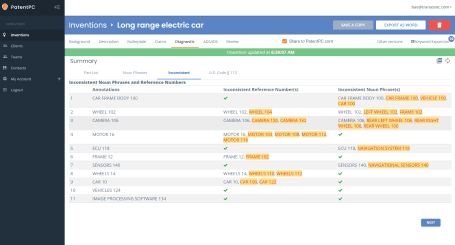
A better path is using a platform that tracks references, timestamps discoveries, and alerts you when something might need to be filed. With PowerPatent, this happens automatically.
The system organizes references, shows you what’s been submitted, and involves real patent attorneys to review material before anything goes out.
That means you avoid panic filing, avoid overdisclosing, and avoid missing something that should have been submitted earlier. If you want to see exactly how this works, you can explore it at https://powerpatent.com/how-it-works.
Building A Disclosure Culture That Scales
The highest-performing teams treat disclosure not as a legal chore but as a normal part of their engineering culture. When someone finds relevant prior art, they share it the same way they share a bug report or a test result.

The easier you make this, the more consistent your team becomes. And when your company scales, the habits you set now prevent months of cleanup later.
What Happens If You Find New Prior Art After Grant (And What You Must Do Next)
Before stepping into the details, it helps to slow down and look at the big picture. Once a patent is granted, many founders assume they have crossed the finish line.
The certificate shows up, the patent number is live, and the world sees your invention as real property. But this moment is not the end of your relationship with prior art.
It simply marks the start of a new phase where your patent is public, your competitors are watching, and new information can surface at any time. When that happens, your decisions matter more than you think.
Understanding the New Reality After a Patent Issues
Even though your patent is now official, the law still cares about what you know and when you knew it.
The duty to disclose does not carry into the post-grant world in the same formal way as during examination, but your actions still affect the strength of your patent.
If you discover prior art after the patent issues and ignore it, the risk is not that the USPTO punishes you. The risk is that someone else uses it against you when you try to enforce your patent.
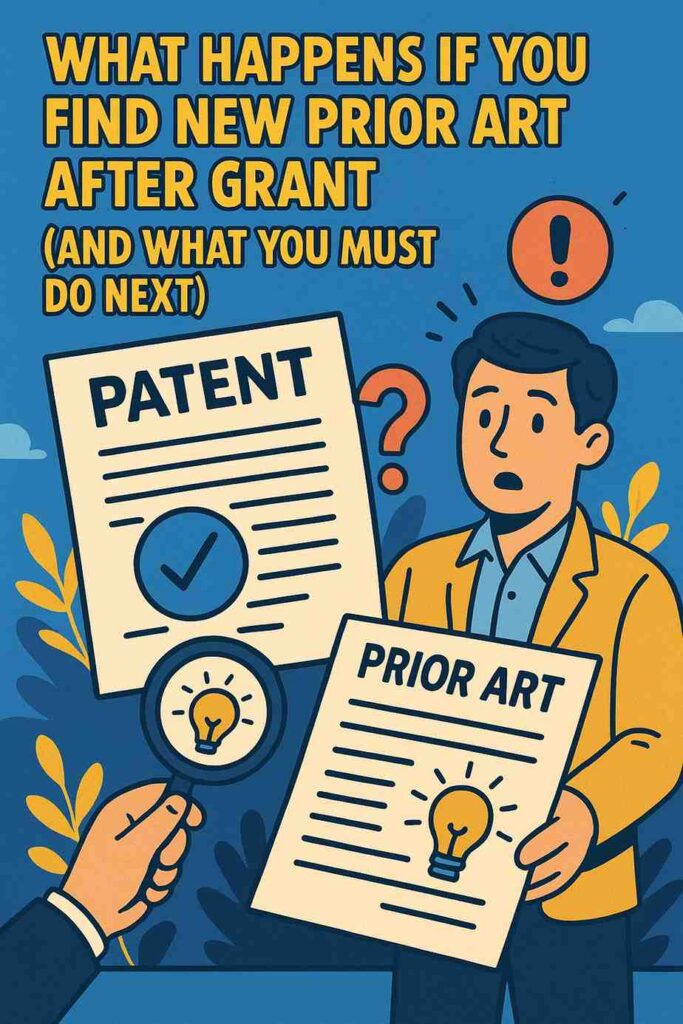
A court might ask why this information was never shared or why your team held onto references that look important. These questions can weaken your position and create doubt about your patent’s validity.
Why Post-Grant Prior Art Feels Scary But Is Usually Manageable
When companies find new references after grant, the first reaction is often panic. But panic is not needed. The proper response is understanding. Prior art discovered after grant does not automatically destroy your patent.
What matters is materiality. If the reference is unrelated or only loosely connected, you might not need to take any action. But if it raises questions about novelty or obviousness, pretending it doesn’t exist never helps.
The safest move is to capture it, evaluate it, and decide whether it requires a formal correction process.
When You Should Consider Filing a Supplemental Examination Request
One tool that exists in the post-grant world is supplemental examination. This mechanism allows a patent owner to ask the USPTO to re-review specific references or information to confirm whether they affect patentability.
This is especially useful when the reference is significant, and you want to clean the record before someone else uses it against you.
The process does not reopen full prosecution unless the examiner finds an actual problem. Instead, it gives you a chance to protect yourself from accusations of hiding information.
This is often the smartest path when the risk is real and litigation is likely.
Why Some Companies Choose Reissue Instead
Sometimes the new information shows that the claims should be narrowed or corrected. In that case, supplemental examination may not be enough. A reissue application allows you to adjust the claims, fix mistakes, or clarify language.
Many founders fear this process because it feels like admitting something is wrong. But the best businesses do not fear corrections. They value long-term strength over short-term pride.
Filing a reissue voluntarily can preserve the enforceability of the patent and block future challenges before they start.
When Doing Nothing Is Actually the Right Move
There are moments when the smart choice is simply to document the reference internally and continue. Not all prior art is meaningful. Some looks similar but is limited in scope.
Some describes a concept far outside your claims. And some is so late in time that it cannot possibly be used against you. The trick is knowing which situation you’re in. Companies that try to handle this alone often overcorrect or undercorrect.
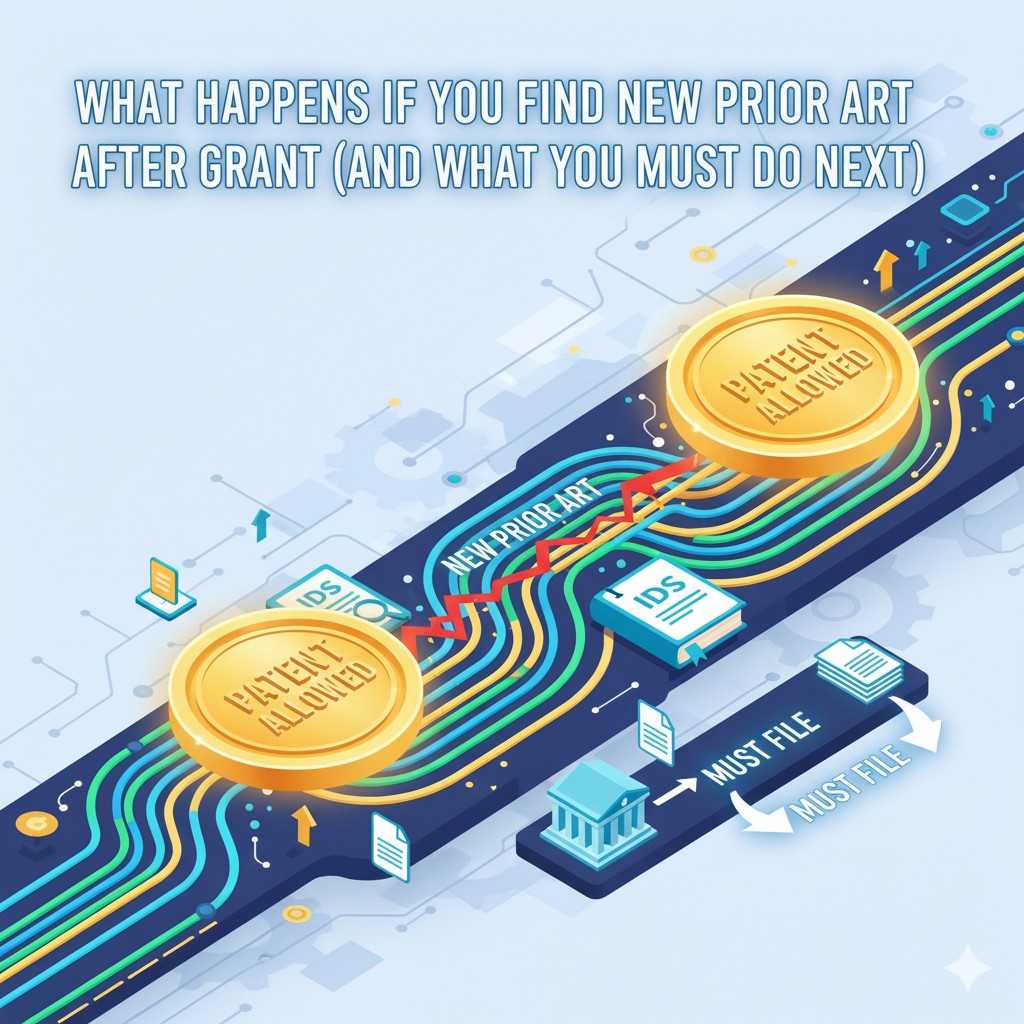
Both paths create hidden risks. The better path is a structured evaluation so your team can confidently decide whether action is needed.
How New Prior Art Affects Licensing And Business Deals
When you license your patent, prospective partners will review its strength. If they discover new references that were never evaluated or disclosed, they may ask for stronger indemnification, lower royalties, or more restrictive terms.
This happens because uncertainty always reduces value. By handling post-grant prior art proactively, you protect your negotiating leverage.
A clean, well-documented approach shows partners that your company treats IP as a core asset, not an afterthought.
Why Investors Care About How You Handle Post-Grant Information
Many founders think investors only look at issued patents and count them like trophies. But investors, especially sophisticated ones, ask deeper questions. They want to know whether your patents can survive challenges.
They want to know whether your team has internal controls for managing prior art. When they see a mature process around post-grant disclosure and review, it signals operational strength.
It tells them your patents are real assets, not fragile certificates. It also reduces the risk of unexpected IP problems during due diligence.
How To Build A Simple Internal Flow For Handling New References
The easiest way to handle post-grant discoveries is to set up one predictable path where the information goes. When someone on your team finds a new reference, it should enter a single system.
That system timestamps it, stores the link or file, and alerts whoever manages IP. The person responsible reviews the material, compares it to the claims, and consults counsel or your IP software tools if needed.
This avoids confusion, avoids loss of information, and creates an immediate, clear record of good faith. No one needs a giant process. You simply need consistency.
Why PowerPatent Makes Post-Grant Management Easier For Fast-Growing Teams
Many companies struggle with post-grant obligations because their IP is spread across emails, chat messages, or individual spreadsheets. PowerPatent eliminates this problem by giving you one place to track everything.
The platform organizes references automatically, keeps the history clean, and brings attorneys into the loop before anything risky happens. If a supplemental examination might be smart, you get expert guidance. If no action is needed, you get clarity fast.
This keeps the patent strong and protects you during fundraising, partnerships, and future enforcement. You can see how this works at https://powerpatent.com/how-it-works.
Why Staying Calm And Staying Organized Is The Founder’s Best Play
When new prior art shows up after grant, the worst reaction is ignoring it. The second-worst is rushing into unnecessary filings.
The best reaction is calm evaluation. A clean system, a simple workflow, and professional review give you everything you need to stay safe.

Patents are long-term assets. Treat them with care now, and they will continue to support your business when it matters most, whether that’s during a funding round, a partnership discussion, or a legal challenge.
How Post-Grant Disclosure Choices Affect Validity, Funding, and Enforcement
Before exploring the deeper consequences, it helps to understand why post-grant decisions matter far beyond the legal world. Once your patent issues, it becomes an economic asset.
It influences your fundraising, your valuation, your partnerships, and even the way competitors react to your product. Every choice you make after the grant can either strengthen that asset or quietly weaken it.
This section shows how those choices ripple across your business and what you can do to stay in control.
How Post-Grant Information Shapes the Strength of Your Patent
Even though the duty to disclose formally ends when the patent issues, courts can still examine your actions if the patent is ever enforced.
If you knew about prior art after grant and never evaluated it, a challenger might argue that the patent was built on incomplete information.
This does not mean courts expect you to keep filing IDS forms forever. It means they care about whether you acted responsibly when new information surfaced.
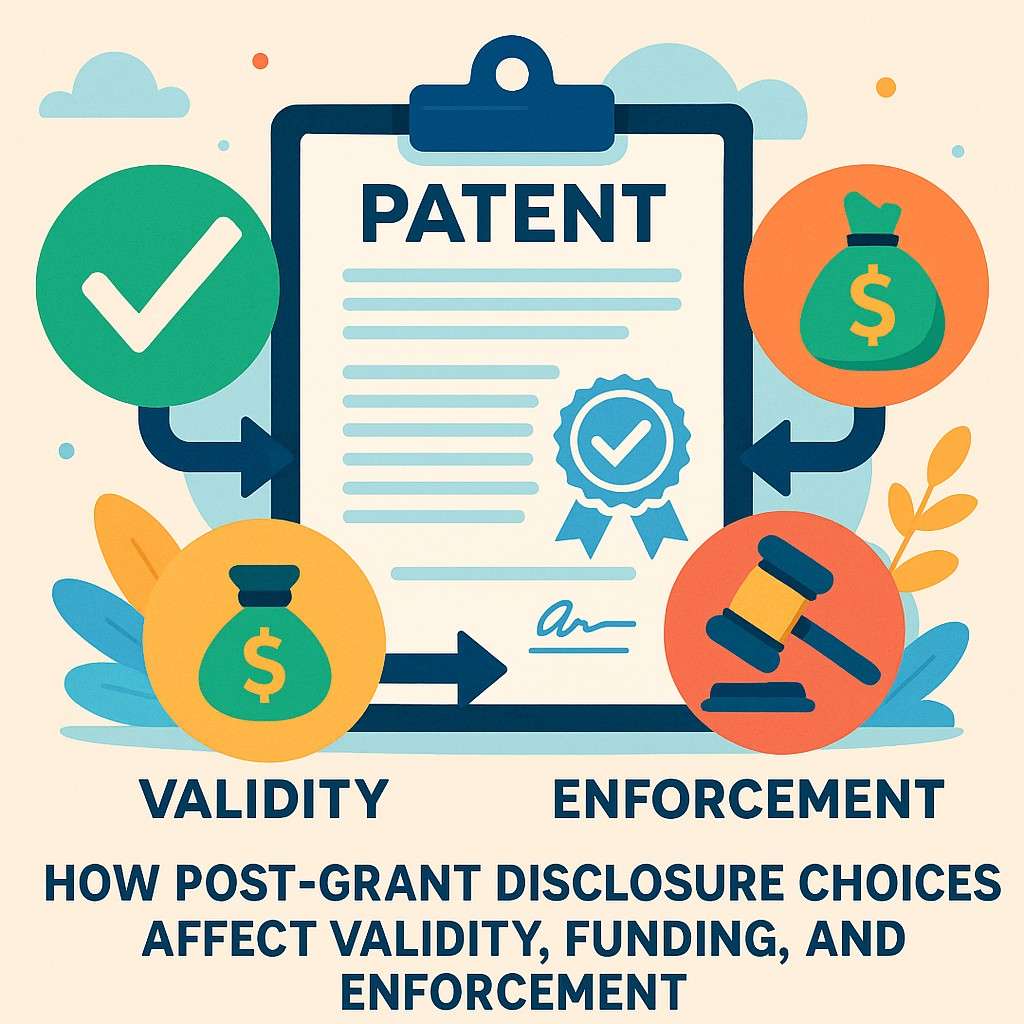
A patent that has been evaluated carefully after grant feels stronger and more defensible because you have already tested it against anything new.
Why Courts Look Closely at What You Knew and When You Knew It
In litigation, timelines matter. A challenger often tries to show that the patent owner ignored something important. If they can suggest that prior art was known internally and never reviewed, it becomes easier for them to frame your patent as vulnerable.
Even harmless references can create friction if they appear mishandled. This is why documenting discoveries is so important. You do not need heavy bureaucracy.
You simply need a clean record showing you acted in good faith. When your documentation shows clear review and clear reasoning, you remove opportunities for doubt.
How Proper Handling Boosts Your Leverage in Licensing
A company that wants to license your patent will always do its own diligence. Their lawyers will look for holes, inconsistencies, or anything that signals risk. If they find references that were never reviewed, or gaps in how your company managed post-grant information, their confidence drops.
That drop shows up in the deal terms. They may ask for stronger indemnity, lower royalties, or clauses that allow them to exit the agreement if someone challenges the patent.
These changes reduce the value of your asset. But when you show a thorough and organized post-grant process, you flip the dynamic.
You become the party with the stronger position, and your terms improve because your patent looks clean and well-maintained.
Why Investors Care About Post-Grant Behavior More Than You Think
During fundraising, investors expect your IP to be stable. A patent is not just a trophy for the pitch deck. It is a long-term moat, and investors evaluate how durable that moat really is.
If your team shows that you track new references, review them promptly, and document everything, investors see that your patents are future-proofed. They see maturity. They see a reduced risk profile. But if your process looks ad-hoc or unclear, even small doubts can affect your valuation. Investors want confidence, and your post-grant habits are one of the simplest ways to signal it.
How Competitors Use Post-Grant Prior Art to Plan Their Attacks
When a competitor wants to invalidate your patent, they search for anything that looks close to your invention. But the strongest attacks come when they find references that appear to have been known but never considered.
They use these moments to make the patent look careless. They also use inconsistencies to find openings in the claims.
A competitor who sees that your company updates its internal records, tracks new references, and stays organized may think twice before launching an attack.
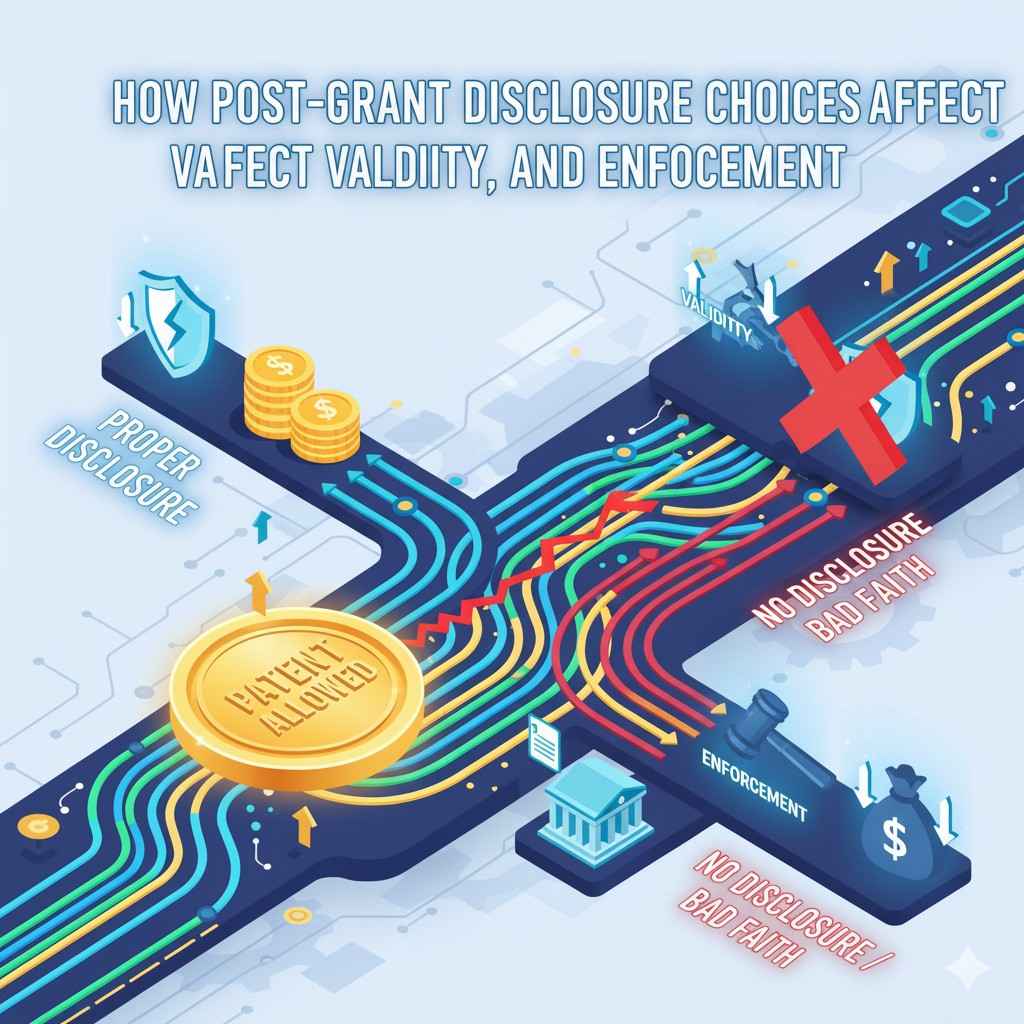
A strong post-grant structure acts like a quiet shield, discouraging challenges before they begin.
Why Large Enterprises Take Post-Grant Management So Seriously
Big companies have teams dedicated to tracking prior art long after a patent issues. They know that post-grant behavior is part of the patent’s lifecycle. They train engineers to flag possible references.
They build systems that log discoveries automatically. They run periodic audits before major deals. This is not because they enjoy extra work. It is because they know the cost of a weak patent is far higher than the cost of maintaining a good process.
When startups adopt even a small piece of this discipline, they operate with the same strength as much larger companies. This levels the playing field and sends strong signals to future partners.
How Startups Can Apply These Principles Without Slowing Down
The biggest fear founders have is that post-grant review will slow their team or add friction to innovation. But it doesn’t have to. The trick is making the process lightweight.
When your engineers or product team find something that looks similar to your invention, they just need one simple place to drop it. Once it’s captured, your IP lead or your software tools can evaluate it without interrupting the team’s flow.
Instead of asking everyone to understand patent law, you give them one simple habit: flag what looks relevant. This keeps the system humming without slowing the build cycle.
Why Clean Records Make Enforcement Cheaper and Faster
If you ever need to enforce your patent, the first thing your legal team will ask for is the history of how you handled prior art discoveries. If the record is clean, the case moves quickly and predictably. The evidence shows responsibility.
Your counsel can explain timelines clearly. There are no embarrassing moments where someone needs to admit they forgot something. A clean record lets your attorneys build a stronger case with fewer surprises.
And in litigation, fewer surprises means lower cost. It also means stronger negotiating power if the case settles.
How PowerPatent Supports Stronger Post-Grant Positions
PowerPatent was built for this exact moment in the patent lifecycle. Fast-moving technical teams often struggle to keep track of references, timestamps, and decisions.
PowerPatent centralizes everything automatically. When a new reference appears, the platform captures it, sorts it, and gives attorneys the context they need to evaluate it.
This means you always know what has been reviewed, what has been submitted, and what still needs attention. You avoid gaps, avoid confusion, and avoid the long-term risks that come from messy records.
For founders who want a strong, simple workflow, this becomes a natural extension of their engineering process. You can see how it works at https://powerpatent.com/how-it-works.
The Long-Term Value of Getting Post-Grant Decisions Right
Your patent will last twenty years. During that time, your company will grow, pivot, expand, and evolve. New competitors will appear. Markets will shift. Technologies will leap forward.
Through all of that, your patent will keep working for you if you keep it clean, reviewed, and well-managed. Post-grant choices are not about bureaucracy.
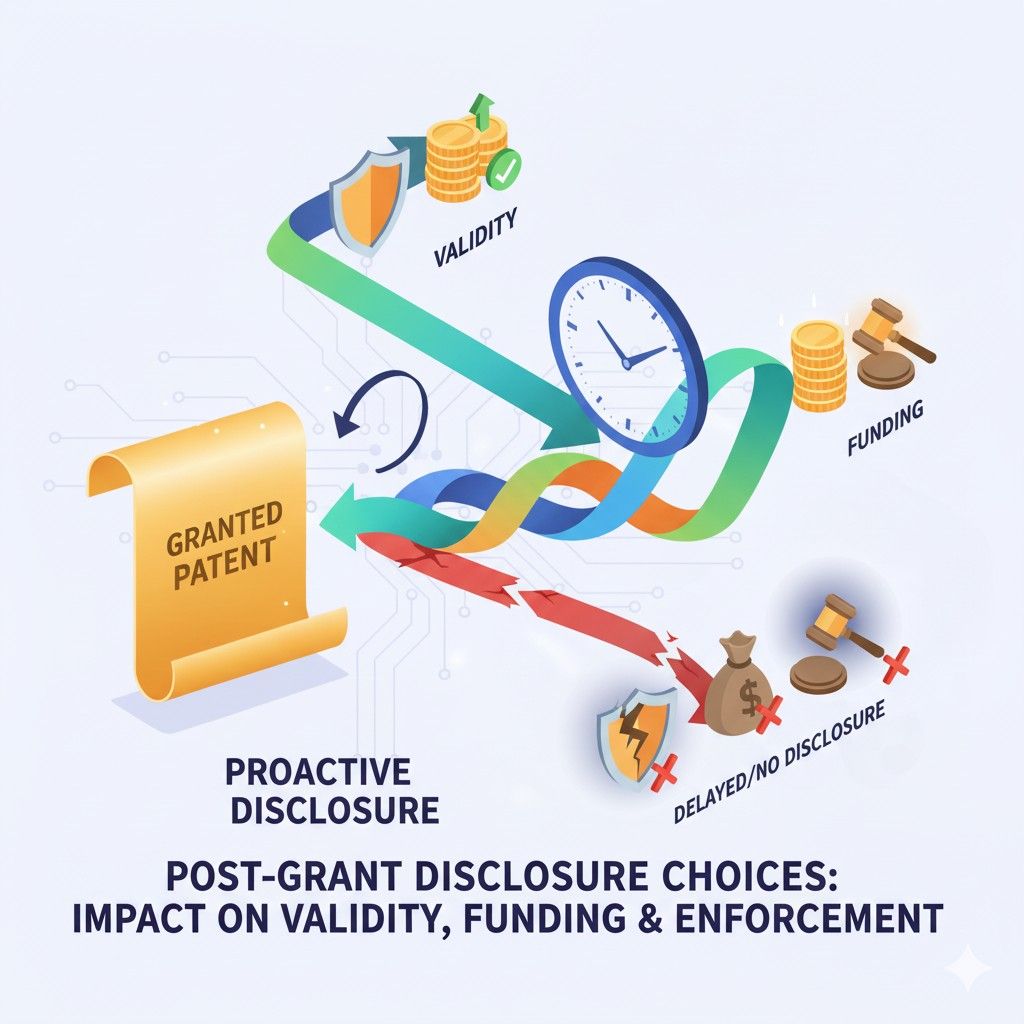
They are about maintaining the strength of an asset that protects your innovation. When you take the time to handle new references responsibly, you ensure your patent stays valuable across every phase of your business.
A Faster, Cleaner Way to Stay Compliant Without Stress or Extra Work
Before we walk deeper into the details, it helps to step back for a moment and look at the real goal. You are not trying to become a full-time patent administrator.
You are not trying to memorize rules or chase down tiny references across your team. What you really want is simple. You want your patent to stay strong without slowing your company down.
You want to keep risk low without drowning your team in process. And you want a workflow that feels natural, not heavy. This section shows how to handle all of this with speed, clarity, and almost no friction.
Why Most Teams Struggle With Post-Grant Workflows
Many founders believe post-grant management is hard because the rules are complicated, but that’s not really the cause. The real problem is that teams usually lack a single place to capture information. Engineers find new references but forget where to put them.
Product managers see competing features but do not know who should review them. Someone flags a relevant article but leaves the link in a chat thread that gets buried.
These tiny moments add up. They create gaps, confusion, and delay. Not because the team is careless, but because the system was never designed to make it easy.
When there is no central system, information flows through random channels. And when information flows through random channels, the business loses visibility.

This creates uncertainty, and uncertainty increases risk. To avoid this, you need a structure that is simple enough for everyone to use without thinking. Once that structure exists, the entire workflow becomes lighter, not heavier.
How a Centralized Approach Reduces Errors
A centralized workflow does not just make things easier. It actively reduces risk. When every reference enters the same channel, you eliminate the danger of missing something important.
You also reduce duplicates, reduce miscommunication, and reduce those moments where someone says they thought another team member had it covered.
Centralization gives your company a clear memory. It ensures that everything gets reviewed, nothing gets lost, and the reasoning behind decisions stays documented for years.
This matters because years from now, your team will be different. Roles change. People leave. New people join.
But the references you collect today still matter later. A centralized system ensures that no matter who is on your team in five or ten years, the full history is preserved without depending on individual memory.
Why Lightweight Processes Work Better Than Heavy Ones
You do not need a complex workflow. In fact, heavy systems fail more often because people avoid using them. The best post-grant workflows feel almost invisible.
They fit naturally into everyday work. When someone spots something relevant, they should be able to flag it in seconds, not minutes.
A simple upload, a quick note, or a direct link into a shared system is all that’s needed. When the process is easy, people use it. When people use it, the record stays clean. When the record stays clean, your patent stays strong.
This is why so many fast-moving teams rely on software designed specifically to keep the process light.
The fewer steps you require from people, the stronger the workflow becomes. Simplicity is not the enemy of good IP management. It is the foundation of it.
How Automation Removes Guesswork
Automated tools make post-grant management far easier than older, manual approaches. Automation ensures references are sorted, categorized, timestamped, and associated with the right applications without manual oversight.
This removes the chance of human error and speeds up attorney review. Automation also makes it easier for your team to see what has already been evaluated and what still needs attention.
This visibility prevents confusion and cuts your review time dramatically.
Automation also helps you avoid overfiling. Without structure, some companies panic-file every reference they see. This clutters the record and creates unnecessary cost.
A good tool filters material automatically and guides you toward what actually matters. Over time, this produces a clean, strategic file history that strengthens enforcement and improves negotiation power during deals.
How Attorney Oversight Fits Into a Modern Workflow
Even the best automated system cannot fully replace attorney insight. The law still requires professional judgment when deciding whether a piece of prior art is material.
The secret to a strong post-grant workflow is combining automation with human expertise. Software collects and organizes the references. Attorneys evaluate the ones that matter.
This hybrid model gives you the best of both worlds. You get speed, accuracy, and clarity, without paying for unnecessary attorney hours.
For founders who want to make fast, smart decisions, this partnership between software and attorney oversight is crucial. It allows you to keep building quickly while staying fully protected.
It also gives your investors confidence that your patents are maintained with professional care rather than guesswork or inconsistent habits.
How Real-Time Tracking Protects You During Fast Growth
When your company grows, you move faster and break into new markets. This means you will encounter more publications, more competitors, and more references that might intersect with your claims.
Real-time tracking ensures you never fall behind. When the flow of information increases, the system scales with you.
Whether you see two references a month or twenty a week, everything remains organized and easy to manage.
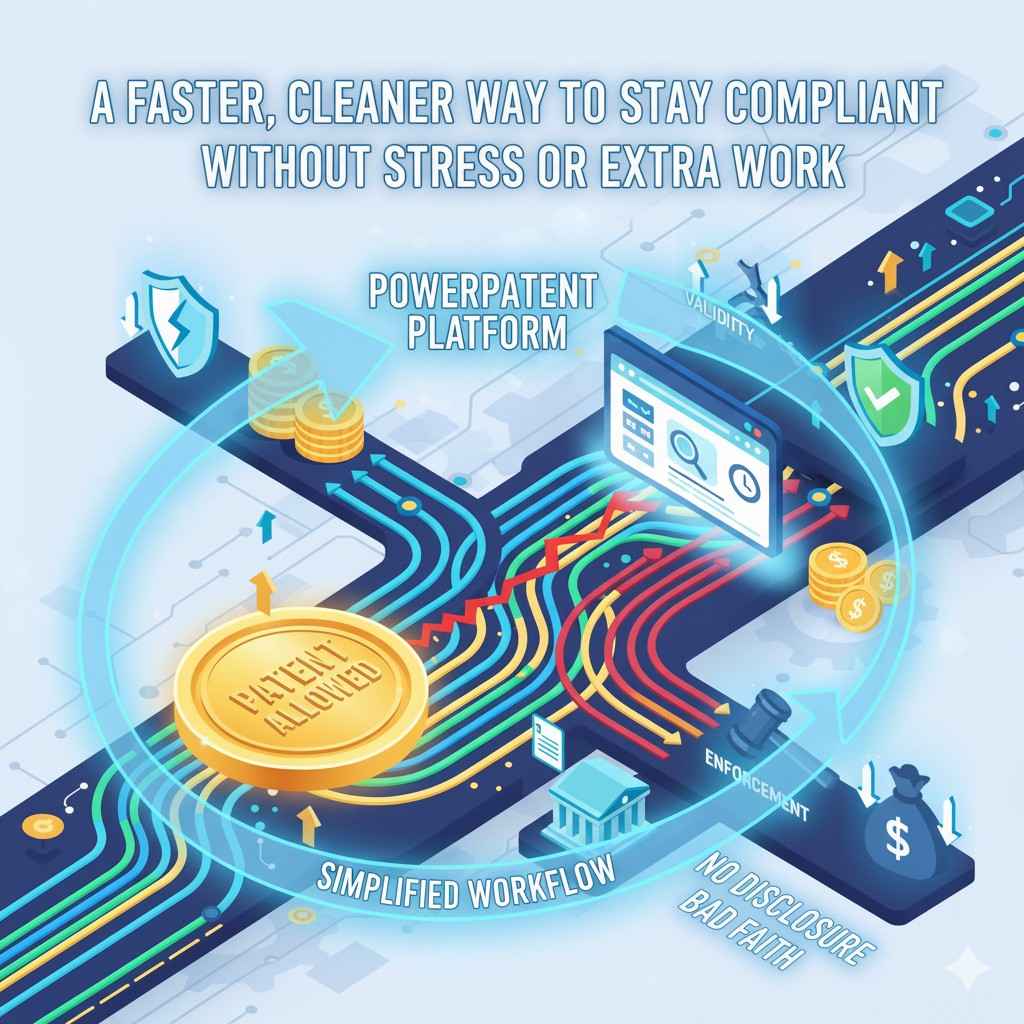
This matters because fast growth is often the phase where teams drop the ball. When things get busy, documentation is the first thing to suffer. But your patent’s strength depends on it.
A system that updates in real time protects you during these busy periods and removes the chance of missing something critical during rapid expansion.
How Good Post-Grant Habits Strengthen Future Filings
The references you collect after grant are not just for maintaining the existing patent.
They also strengthen future filings. When you file continuation applications, divisional applications, or new patents for related technologies, having a complete and organized record of references helps your attorneys build stronger claims.
They can see the full landscape of related art, anticipate examiner questions, and craft arguments that stand up to scrutiny.
This is another hidden benefit of strong post-grant habits. You are not just maintaining one patent. You are building a foundation of knowledge that supports your entire IP portfolio.
Companies that treat post-grant references casually lose this strategic advantage. Companies that manage them well get faster allowances, cleaner file histories, and stronger families of patents.
How Clear IP Management Raises Confidence Across Your Company
When your team sees that IP is handled cleanly and consistently, they feel more confident experimenting, sharing ideas, and filing new inventions. They know the company takes protection seriously.
They know their work will be respected and secured. This cultural confidence matters because it encourages more innovation and more invention disclosures.
Strong post-grant workflows create a healthy feedback loop inside the company. Clear IP systems produce more invention activity. More invention activity strengthens the company, which in turn reinforces the value of IP.
Why PowerPatent Gives You an Advantage
PowerPatent was built to make this entire process effortless. Instead of scattered reference lists, confusing emails, and manual tracking, you get a system that organizes everything the moment you upload it.
It tracks what has been reviewed, what still needs review, and what should be escalated to attorneys. It guides your team through decisions, offers clarity, and minimizes risk.
And because it combines smart software with real attorney oversight, you always know your decisions are sound.
The result is a post-grant workflow that feels almost invisible. It runs quietly in the background while your team builds your product.
And yet, it protects your patent, keeps your record clean, and gives you the confidence that you are managing your IP the way a world-class company would. If you want to see exactly how this looks in practice, you can explore it at https://powerpatent.com/how-it-works.
Turning Compliance Into a Strategic Advantage
What most founders do not realize is that strong post-grant habits do more than protect you from risk. They give you leverage. They show partners you are serious.
They show investors you operate with discipline. They show courts and competitors that you have nothing to hide. And they show your team that their inventions matter enough to be protected properly.
This is why compliance is not just a legal requirement. It is a competitive advantage.
When you stay organized, stay proactive, and stay thoughtful, you gain power across every area of your business. Strong patents become shields, signals, and negotiation tools.
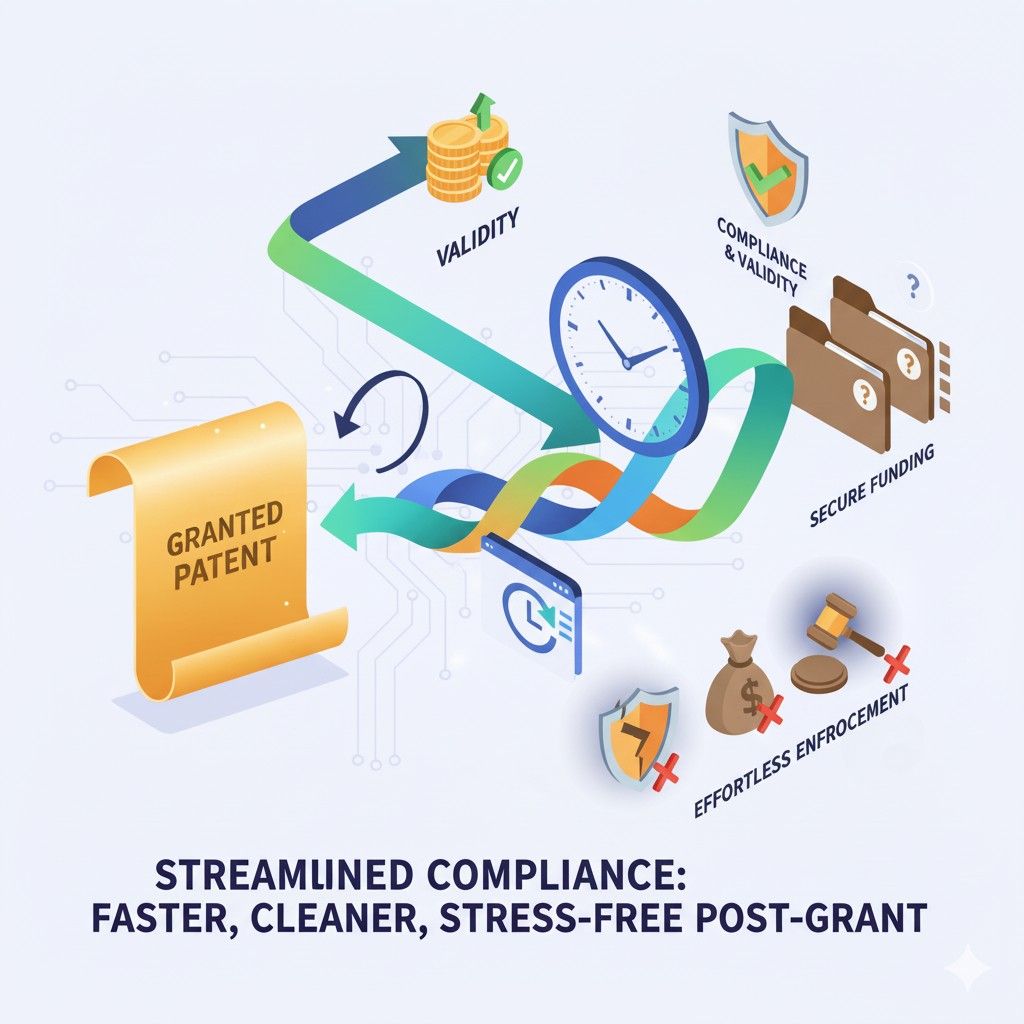
And all of it begins with a simple, clean, predictable way to manage the information that comes in after your patent has already been granted.
Wrapping It Up
Before closing out, it helps to step back and look at what all of this really means for you as a founder or technical leader. Managing IDS obligations and post-grant disclosures is not about chasing paperwork. It is not about memorizing rules or worrying about every new publication that pops up. What matters is building a simple, reliable way to keep your patent strong long after it issues. Your patent is a twenty-year asset, and every small decision you make today shapes how powerful that asset will be tomorrow.