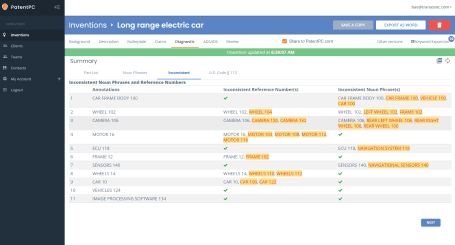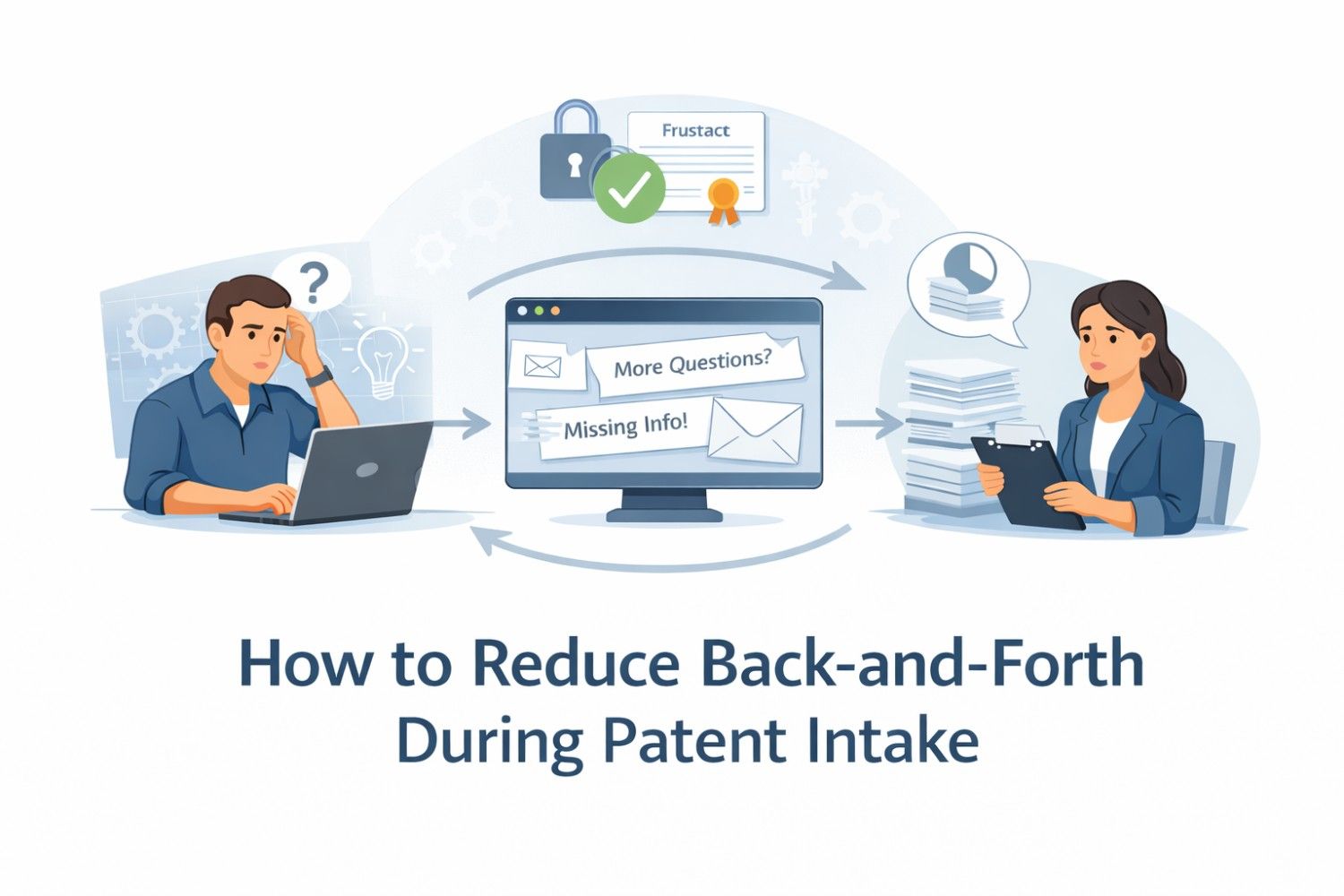
If you have ever tried to file a patent, you know the real pain is not the idea. It is the endless back-and-forth. Long email threads. Follow-up questions. “Can you clarify this?” “Can you send more details?” “What exactly does this part do?” Weeks go by. Your product moves forward. The patent lags behind. This is how strong ideas lose momentum. The good news is this: most of that back-and-forth can be avoided. If you set up your patent intake the right way, you can move fast, stay in control, and get to a strong filing without the drag. That is exactly what we are going to break down.
Why Patent Intake Turns Into Endless Back-and-Forth
Most founders think patent delays happen because attorneys move slowly. In reality, the delay often starts much earlier. It starts during intake.
This is the stage where you explain your invention, share documents, and answer early questions. If this stage is messy, unclear, or rushed, everything that follows becomes slower and more expensive.
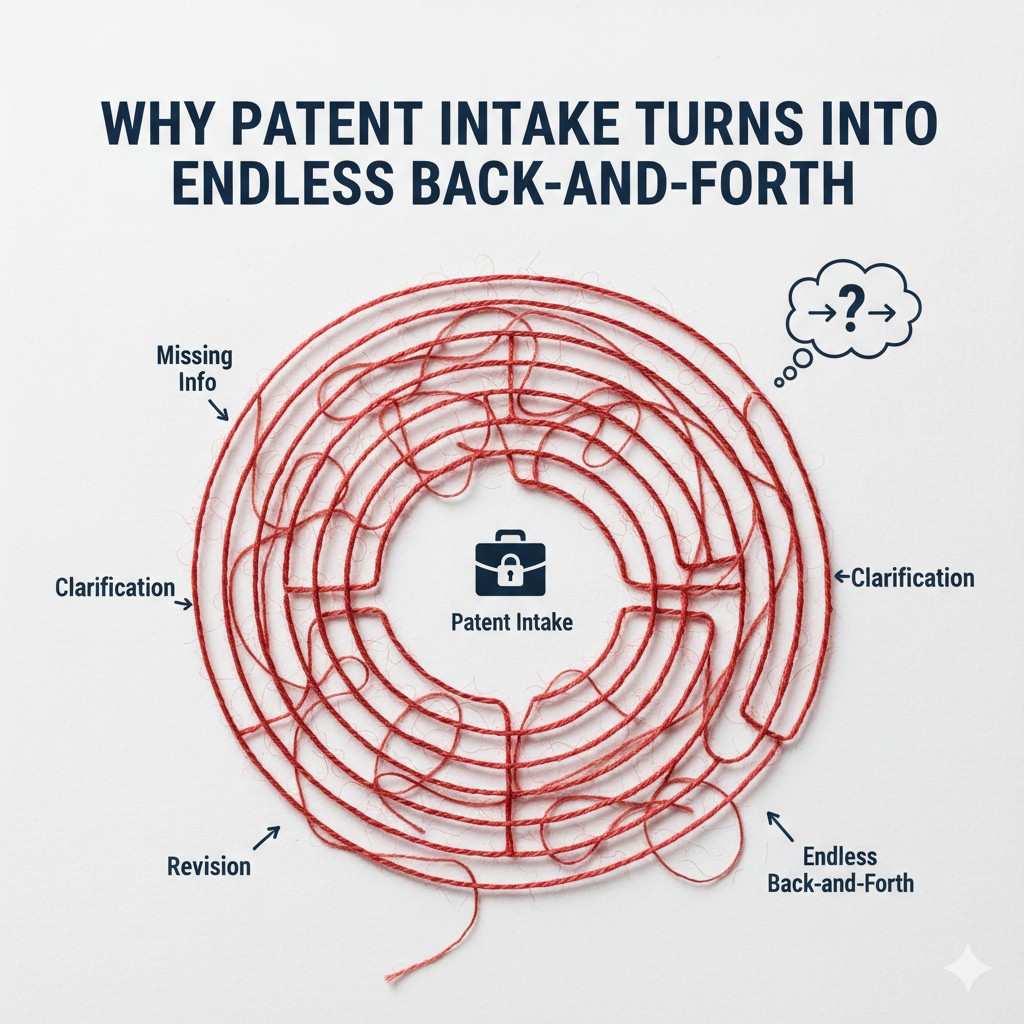
When intake is not structured, it creates confusion. Confusion leads to more emails. More emails lead to more calls. More calls lead to more rewrites. That is the loop most startups fall into.
The good news is this: once you understand why intake breaks down, you can fix it at the source.
The Founder Knows Too Much — But Says Too Little
One major reason for back-and-forth is something that sounds strange at first. Founders understand their product so deeply that they skip key details without realizing it.
Inside your own head, everything makes sense. You know why you built it. You know what problem it solves.
You know how the parts connect. But when you explain it to someone else, you often compress the story. You leave out the small steps. You assume certain things are obvious.
They are not obvious to a patent professional who did not build your system.
When those gaps appear, the attorney has no choice but to come back and ask for more clarity. What seems small to you can be critical in a patent document.
To reduce this friction, slow yourself down during intake. Pretend the person reading your explanation has never seen your product before.
Walk through it like you are teaching a new engineer on your team. Explain not only what it does, but how and why.
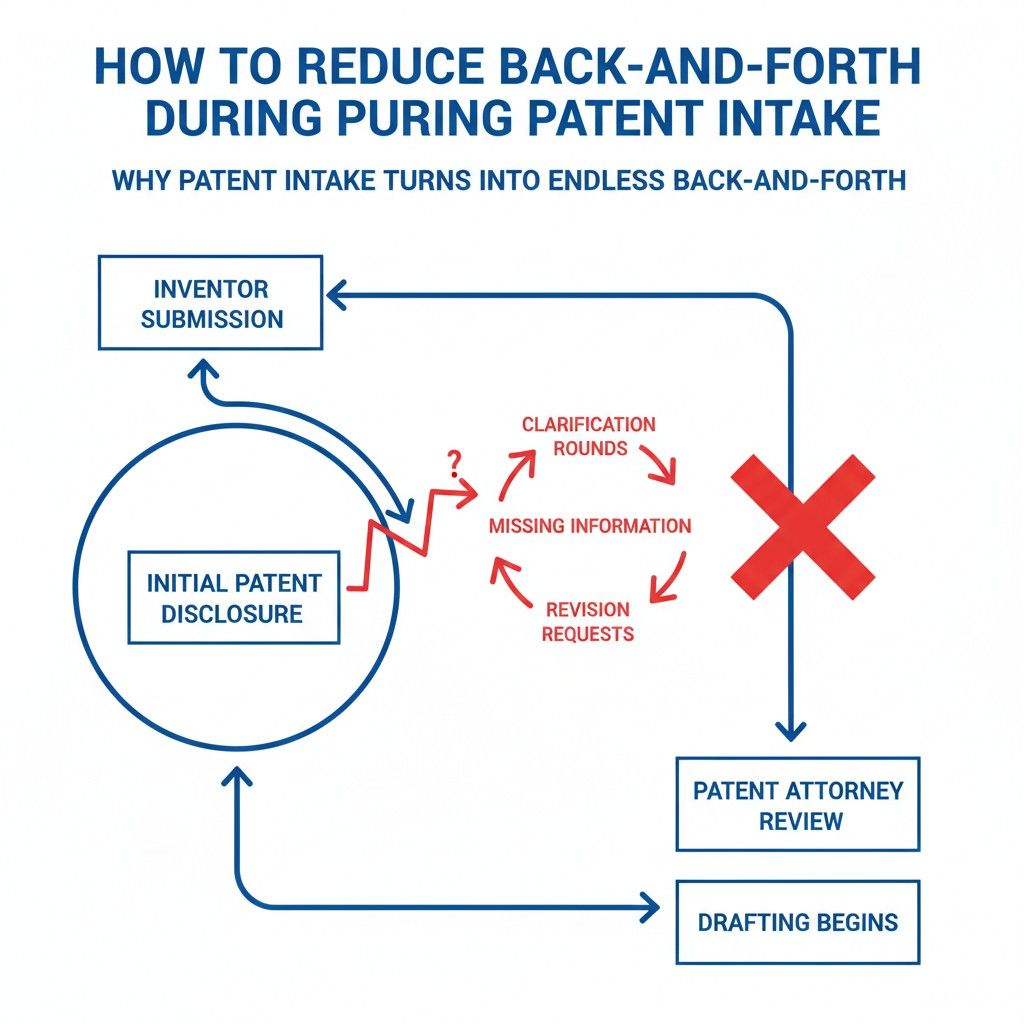
This small mindset shift cuts down rounds of clarification more than you would expect.
Vague Language Creates Expensive Follow-Ups
Another common problem is soft or vague language. Founders often say things like “the system optimizes performance” or “the algorithm improves efficiency.” That sounds fine in a pitch deck. It does not work well in a patent intake.
Words like optimize, improve, enhance, and automate are not specific. They do not show what actually happens inside the system.
When your intake answers use high-level claims without detail, the patent team cannot draft strong claims. They have to ask follow-up questions to unpack what “optimize” really means.
Instead of writing “the model improves accuracy,” explain how accuracy improves. Does it change the weighting of inputs? Does it filter noise differently? Does it adjust thresholds based on past outcomes?
The more concrete your description, the fewer questions you will receive later.
This does not mean writing pages of complex theory. It means replacing general claims with clear descriptions of behavior.
Product Teams Move Faster Than Documentation
In startups, product evolves quickly. Features change. Code gets refactored. Architecture shifts. That speed is a strength in the market, but it can cause chaos in patent intake.
If you submit early answers based on one version of the product, and then the system changes a week later, your patent team may draft language that is already outdated. That creates more rounds of review and correction.
Back-and-forth increases because no one is working from a stable snapshot.
A smarter approach is to freeze a version of your invention for intake purposes. Before you start, align internally on what exactly you are patenting. Is it the current architecture? A specific feature? A workflow? A model structure?
Make sure the team agrees on the scope before sharing details. This reduces revisions caused by internal shifts.
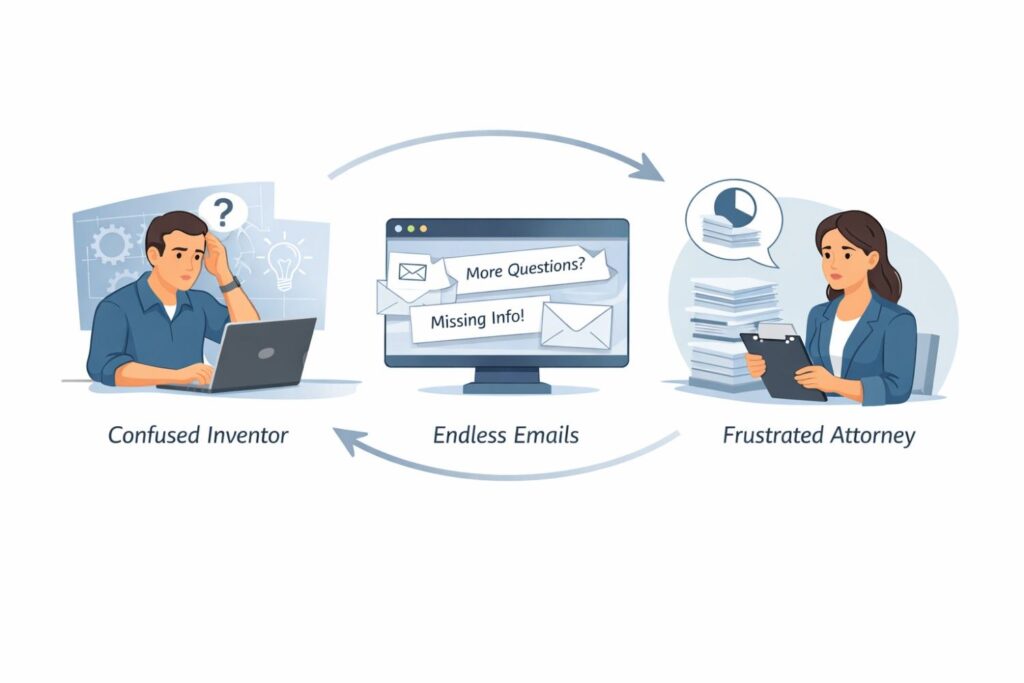
If your product changes constantly, document the core idea separate from implementation details. That way, even if code evolves, the patent foundation remains stable.
Intake Is Treated Like a Form Instead of a Strategy
Many founders approach patent intake like a box to check. They answer questions quickly, attach a few diagrams, and move on. The thinking is simple: just get something on file.
This mindset leads to shallow answers. Shallow answers lead to deeper questioning.
Intake is not paperwork. It is strategy. The quality of what you provide at this stage shapes the strength of your patent.
When you treat intake as a serious planning session, the dynamic changes. Instead of reacting to attorney questions, you guide the conversation from the start.
Block focused time to prepare your materials. Gather technical leads if needed. Review your architecture before answering. Think through edge cases. Ask yourself how a competitor might design around your idea.
When intake becomes intentional, back-and-forth shrinks because fewer blind spots remain.
Diagrams That Raise More Questions Than They Answer
Visuals are powerful during patent intake. But messy diagrams can create more confusion than clarity.
Founders often share screenshots from internal tools, partial flowcharts, or system diagrams filled with shorthand labels. While the team understands these visuals, an outside reader may struggle to follow them.
If a diagram forces the attorney to ask what each block means, you are back in the loop again.
Before sending visuals, clean them up. Use clear labels. Spell out acronyms. Show data flow step by step. Keep each diagram focused on one concept instead of trying to show everything at once.
A well-prepared diagram can reduce pages of follow-up questions. A cluttered one can create an entire extra call.
Think of each diagram as a teaching tool, not a memory aid for your team.
Technical Depth Without Business Context
Sometimes the problem is the opposite of vagueness. Some founders provide heavy technical detail but skip the business context.
They describe the architecture perfectly but never explain why it matters. The attorney then has to circle back to understand the real value and use case.
Patent drafting depends on both how the system works and why it is important. Without context, it is harder to frame claims that protect the commercial edge.
When explaining your invention, connect the technical solution to the problem it solves. If your model reduces latency, explain why lower latency changes user experience or system performance. If your system reduces hardware needs, explain the cost impact.
This business layer helps shape stronger language from the start and reduces rounds of strategic revision later.
Multiple Voices, No Single Owner
In many startups, patent intake becomes a group effort. One engineer answers part of the form. Another adds comments later. A founder edits sections. A product lead adds diagrams.
Without a clear owner, answers become inconsistent. Terminology changes between sections. Definitions shift. That forces the patent team to ask which version is correct.
Assign one person to own intake coordination. This person does not need to write every technical detail, but they should review everything before submission. They should ensure consistent language and complete answers.
This small governance step prevents confusion that often leads to avoidable back-and-forth.
Fear of Sharing “Too Much”
Some founders hold back details because they worry about exposing secrets too early. They provide partial descriptions during intake, thinking they can add more later.
This cautious approach often creates the opposite effect. When details are missing, attorneys must request more information. Each round feels repetitive and frustrating.
Remember that patent intake happens under confidentiality. Holding back critical technical depth slows the process and weakens the end result.
If you want strong protection, the patent team needs a full picture early. Strategic filtering can happen later during claim drafting, but intake should be thorough.
When you share openly at the start, you reduce the need for repeated digging.
Lack of Clear Boundaries Around What Is “The Invention”
Another hidden cause of endless clarification is scope confusion. Founders often mix core innovation with supporting infrastructure.
For example, you may have built a new model training method, but you also describe your cloud stack, front-end interface, and analytics dashboard in the same breath.
The patent team then has to sort out what truly matters and what is background. That sorting process leads to more questions.
Before intake, define the center of gravity. What is the unique part competitors would struggle to copy? What is the new step, system, or logic that creates your edge?
If you separate core invention from standard components upfront, you reduce scope debates and speed up drafting.
Clarity of focus is one of the most powerful ways to cut back-and-forth.
Reactive Communication Instead of Structured Flow
Finally, many intake processes become reactive. An attorney asks one question. You answer. They ask another based on your answer. This continues in small increments.
While this feels manageable in the moment, it stretches the timeline and drains focus.
A better approach is batching. Instead of answering questions one by one, gather them and respond with complete explanations. When possible, anticipate likely follow-ups and address them in the same message.
For example, if asked how a model selects features, do not just state the selection rule. Also explain what happens if inputs are missing, how weights adjust over time, and whether thresholds are static or dynamic.
By thinking one step ahead, you reduce future rounds.
Proactive communication shortens cycles dramatically.

Patent intake does not turn into endless back-and-forth by accident. It happens because information is incomplete, unclear, or unstructured. Once you see these patterns, you can prevent them.
How to Prepare Your Invention Details So Attorneys Don’t Have to Chase You
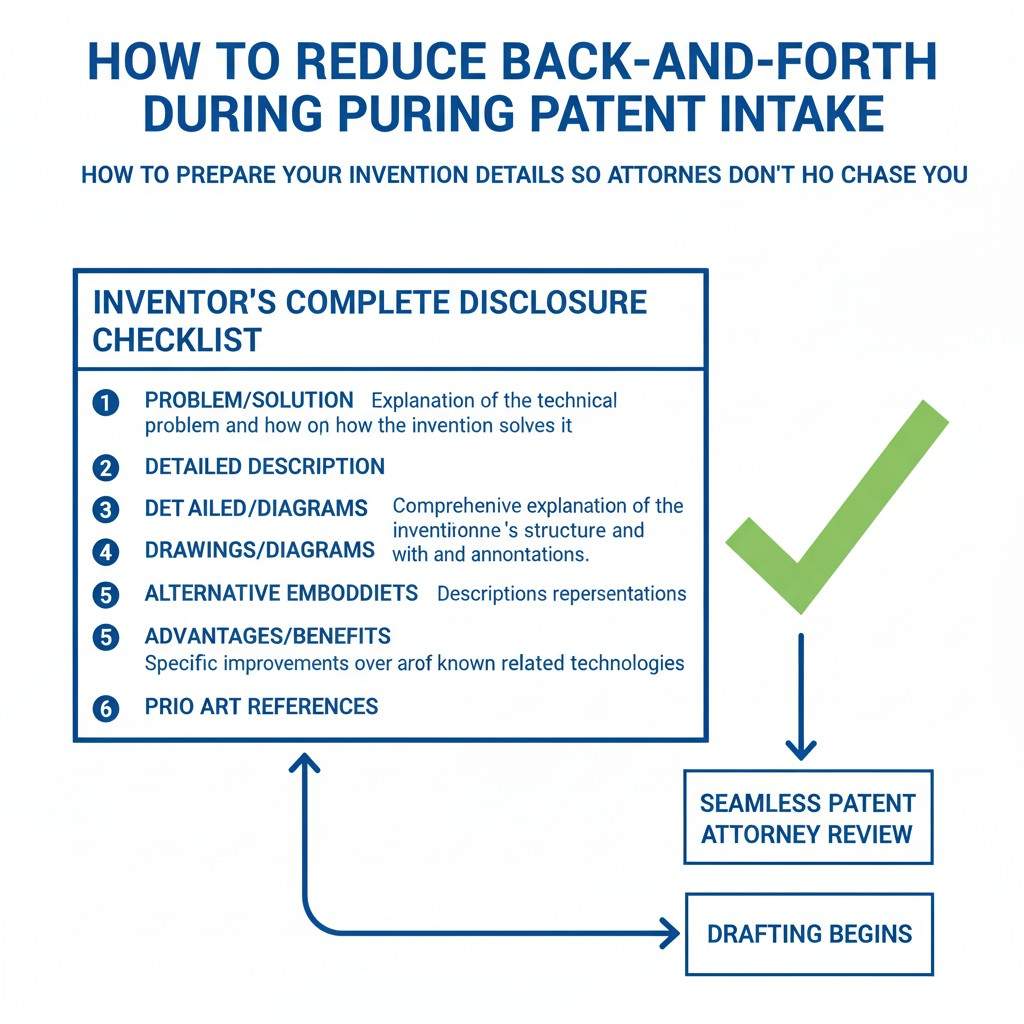
Most of the delay in patent drafting does not come from legal review. It comes from incomplete inputs. When attorneys have to chase you for missing steps, unclear diagrams, or half-formed explanations, the process slows down.
Not because they want more paperwork, but because they cannot write strong protection without a clear foundation.
If you prepare your invention details the right way from the start, you remove the friction. You shorten timelines. You reduce revisions. And you end up with a patent that actually protects what you built.
This section is about control. When you prepare properly, you control the speed of your filing instead of reacting to questions.
Start With the Problem Before the Solution
Most founders jump straight into describing their system. They talk about architecture, models, workflows, and APIs. But if you do not clearly explain the problem first, your explanation floats without context.
Before describing how your invention works, write down what was broken in the world before you built it.
Was it slow? Expensive? Manual? Inaccurate? Hard to scale?
Be specific. Do not say “existing systems were inefficient.” Explain why they were inefficient. Did they require too much human review? Did they fail under high traffic? Did they produce inconsistent results?
When you anchor your invention to a clear problem, attorneys do not need to circle back to understand the purpose. They can frame your solution correctly from day one.
This simple shift reduces entire rounds of strategic clarification.
Break the System Into Clear Stages
One of the fastest ways to confuse a patent team is to describe everything at once. If your invention has multiple moving parts, do not present them in one long paragraph.
Instead, mentally walk through your system step by step. What happens first? What happens next? What triggers each stage? What changes in the data along the way?
You do not need fancy language. You need sequence.
For example, if your invention processes input data, describe the input format, how it is received, what happens during preprocessing, how decisions are made, and what the output looks like.
When you describe stages in order, attorneys can draft with confidence. They do not have to guess how pieces connect.
Clarity in flow reduces follow-up questions more than anything else.
Explain What Is New Compared to What Already Exists
Founders often assume their invention is obviously new. But patent professionals cannot rely on assumptions. They need to understand what is different.
When preparing your intake materials, directly address this question: what part of this system did not exist before?
Do not say “the whole thing is new.” Break it down.
Is it a new data transformation method? A new training loop? A new way to combine hardware and software? A new feedback cycle?
If you clearly point out the novelty, attorneys do not have to reverse engineer it from your explanation. They can focus on protecting that edge.
This step alone can eliminate multiple rounds of “what exactly is inventive here?” conversations.
Go Deeper on the Core Logic
Many founders describe outputs but skip the internal logic. They say what the system achieves, but not how it achieves it.
Strong patent drafting depends on internal mechanics.
If your model adjusts weights, explain how the adjustment is triggered. If your system prioritizes certain inputs, explain the rule behind that prioritization. If thresholds shift over time, explain what drives that change.
You do not need to reveal proprietary code line by line. But you should explain the logic clearly enough that another skilled engineer could understand the concept.
When logic is described at the right depth, attorneys do not have to request technical follow-ups just to understand the engine behind the results.
Include Edge Cases and Failure Scenarios
This is where many intakes fall short.
Founders explain the ideal case. Clean input. Normal usage. Perfect data. But real systems handle messy situations.
What happens if input data is incomplete? What if a sensor fails? What if a user enters unexpected values? What if latency spikes?
When you explain how your system reacts to edge cases, you strengthen your patent and reduce back-and-forth.
Attorneys often ask about these scenarios because they help broaden protection. If you include them upfront, the drafting process moves faster.
Think like someone trying to break your system. Then explain how your invention responds.
Define Terms Clearly and Stick to Them
Inconsistent terminology creates silent confusion.
If you call something a “node” in one section and a “module” in another, it may seem harmless. But it forces clarification. Are those the same thing? Are they different?
When preparing your details, choose clear names for each key component. Then use those names consistently.
This is especially important in AI systems, distributed systems, and hardware-software combinations.
Consistency saves time. It avoids emails that exist purely to confirm definitions.
Separate the Big Idea From Implementation Variations
Your invention may have multiple ways to be implemented. Different programming languages. Different hardware setups. Different deployment methods.
Do not mix these variations into your core explanation too early.
Start with the central concept. Then explain that it can be implemented in various environments.
If you blend everything together, attorneys may ask which version to focus on.
By separating concept from implementation detail, you give flexibility without creating confusion.
This helps reduce scope debates later.
Prepare Clean, Simple Diagrams With Intent
A strong diagram can answer five questions at once. A weak one can create ten new ones.
When preparing visuals, design them with clarity in mind.
Show data flow with arrows. Label each component clearly. Avoid internal shorthand. Make sure someone outside your company could follow it.
If needed, create more than one diagram. One for system architecture. One for process flow. One for data transformation.
Well-prepared visuals speed up drafting because they reduce interpretation errors.
Write as If You Will Not Be Available for Follow-Up
This mental trick changes the quality of your intake dramatically.
Imagine that after you submit your materials, you will be unavailable for two weeks. Would your explanation still make sense? Would someone be able to draft from it without asking questions?
When you prepare details with that mindset, you naturally add more clarity. You explain transitions more carefully. You fill in missing logic.
This reduces dependency on real-time clarification and shortens the drafting cycle.
Capture the Business Impact in Concrete Terms
Strong patents protect technical ideas that drive business value.
When you prepare your invention details, explain how your system changes cost, speed, scale, reliability, or user experience.
If your system reduces server usage by forty percent, say so. If it cuts human review time in half, include that. If it enables real-time response where competitors cannot, explain it.
Concrete impact helps attorneys frame claims that align with commercial value.
When business impact is clear, fewer strategic revisions are needed later.
Align Internally Before Submitting
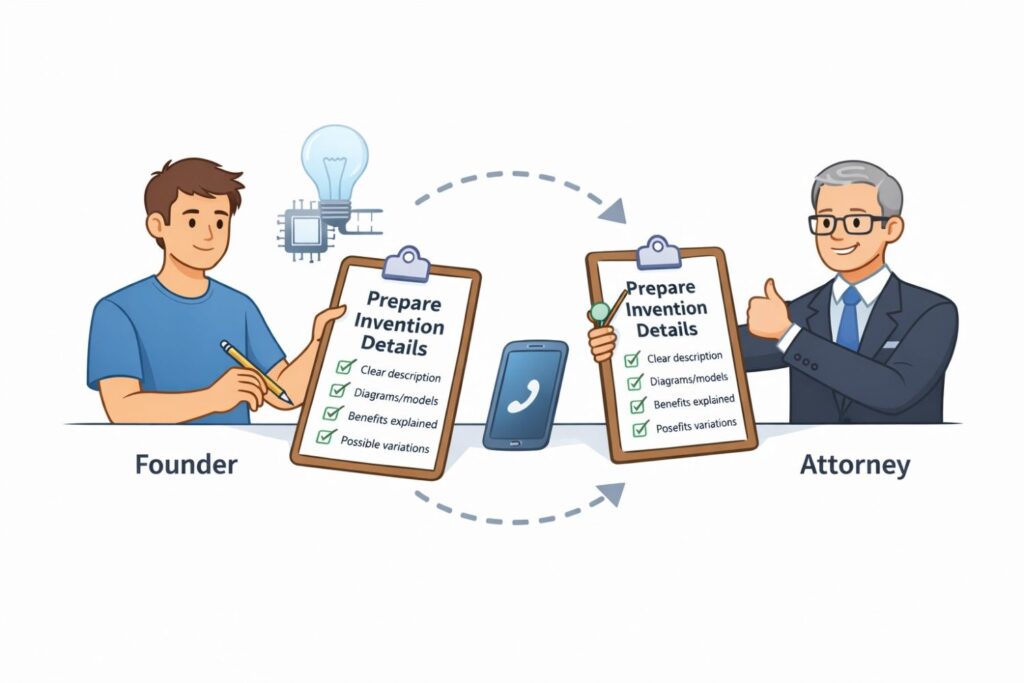
Before sending your invention details to your patent team, review them with your technical leads.
Make sure everyone agrees on how the system works. Confirm that descriptions match current architecture. Resolve internal disagreements first.
If your patent team uncovers internal inconsistencies, it creates additional back-and-forth that could have been avoided.
A short internal alignment session can save weeks of external clarification.
Treat Intake as the Blueprint, Not a Draft
Your intake materials are not rough notes. They are the blueprint for your protection.
When you treat them seriously, the drafting phase becomes smoother, faster, and more strategic.
This is exactly where modern tools make a difference.
At PowerPatent, we built our system to guide founders through structured invention capture so key details are not missed.
Our software helps you think through your invention step by step, and real patent attorneys review everything to make sure it is strong and complete. This reduces the messy email loops that traditional firms often rely on.
If you want to see how a more structured intake process works, you can explore it here: https://powerpatent.com/how-it-works

Preparing your invention details well is not about writing more. It is about writing smarter. When you give clear, structured, thoughtful input, attorneys do not need to chase you.
And when they do not need to chase you, your patent moves forward faster.
Building a Simple Intake System That Saves Weeks of Delay
Most startups do not have a patent problem. They have a process problem.
The invention is strong. The team is sharp. The vision is clear. But the intake process is loose, reactive, and scattered. Emails replace structure. Calls replace documentation. Memory replaces clarity.
That is where weeks disappear.
If you build a simple, repeatable intake system, you remove friction before it starts. You stop chasing missing pieces. You stop rewriting the same explanation. You stop answering the same question in three different ways.
And most importantly, you stop slowing down your own protection.
Let’s walk through how to build an intake system that actually works.
Treat Patent Intake Like Product Development
You would never build a product without a clear process. You define requirements. You assign ownership. You review before launch.
Patent intake deserves the same discipline.
When you treat intake as a structured project instead of a one-off task, everything changes. You prepare before engaging. You gather inputs intentionally.
You reduce random back-and-forth because you have already thought through the system.
This shift alone can cut your timeline in half.
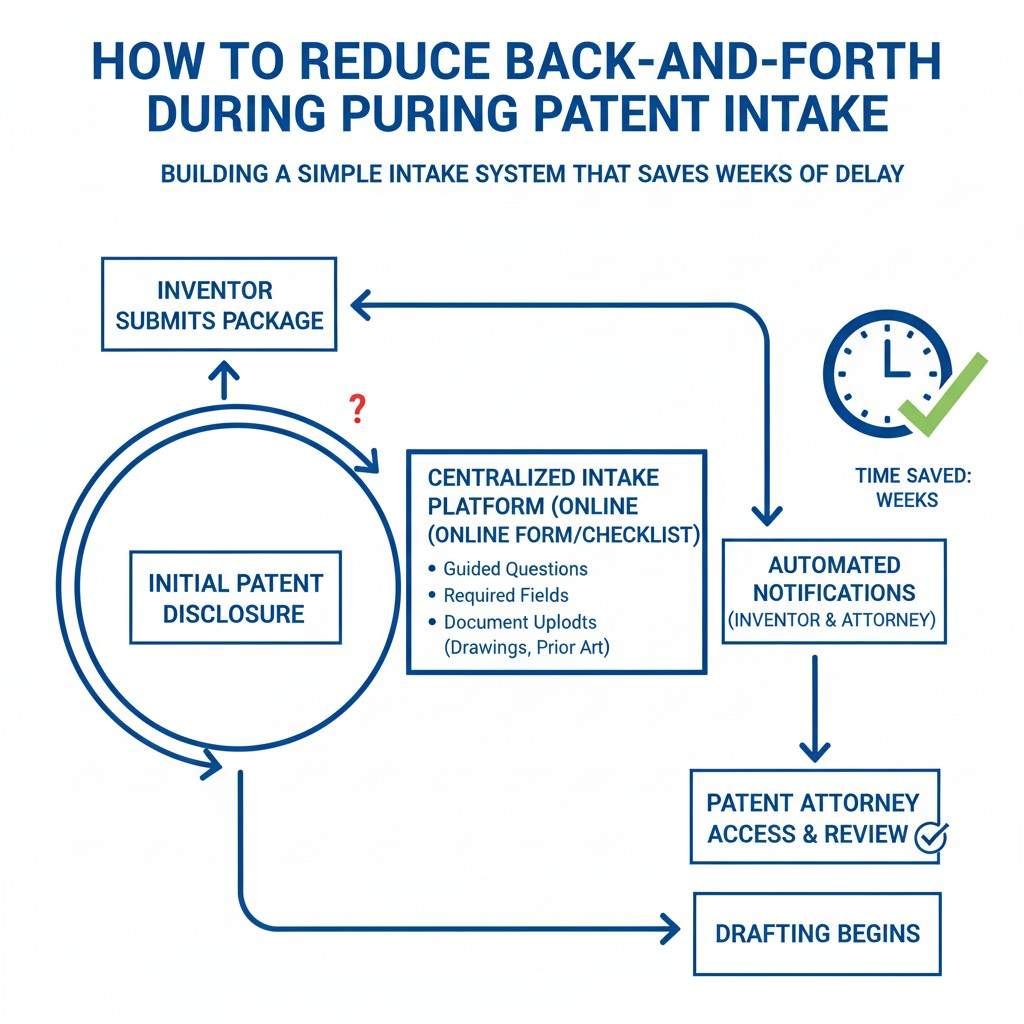
Instead of asking, “What does the attorney need from me?” start asking, “What information would someone need to fully understand and rebuild this invention?”
That is the standard.
Create a Standard Internal Invention Capture Template
If every patent starts from scratch, chaos follows.
Build a simple internal template that your team uses every time you want to protect something. It does not need to be complex. It just needs to guide thinking.
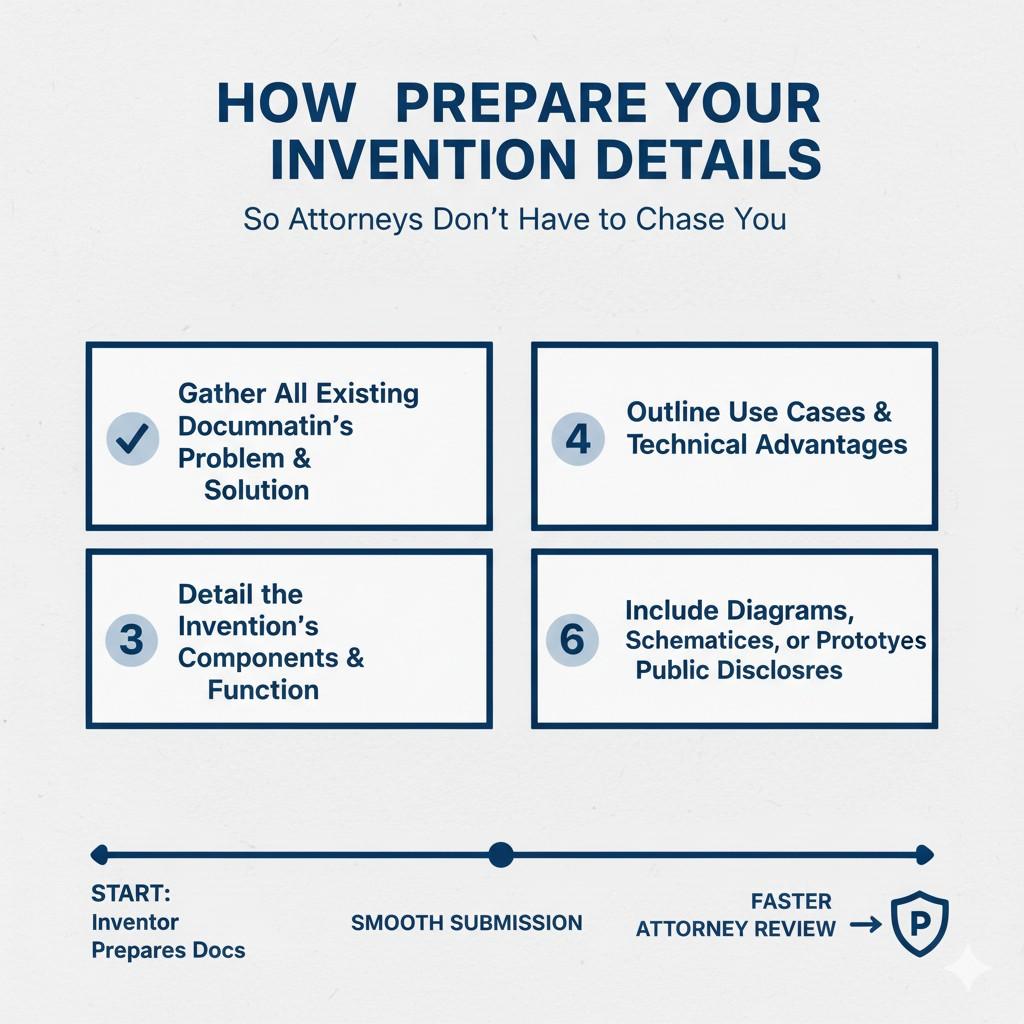
Your template should walk through the problem, the solution, the system flow, the core logic, variations, and business impact. It should prompt engineers to explain not only what the system does, but how it does it and why it matters.
When this structure exists, you avoid random, unorganized submissions.
Even better, once your team gets used to this format, invention capture becomes faster over time. Engineers know what depth is expected. Founders know what clarity looks like.
This is exactly the approach we support at PowerPatent. Our platform guides you step by step so you do not miss key details, and real attorneys review your inputs to strengthen them early.
That combination of smart software and human oversight eliminates the messy loops that traditional firms often create.
You can see how this works here: https://powerpatent.com/how-it-works
Assign a Clear Intake Owner
A simple system needs ownership.
When no one owns intake, everyone assumes someone else will clarify details. That is when gaps appear.
Choose one person to manage the process. This does not mean they write every technical explanation. It means they coordinate, review, and finalize.
They make sure terminology stays consistent. They confirm diagrams are clear. They ensure that answers are complete before submission.
Without ownership, intake becomes fragmented. With ownership, it becomes controlled.
Control reduces delay.
Set a “Complete Before Submit” Rule
One of the biggest time drains is partial submission.
Founders often send what they have and promise to send more later. Attorneys begin reviewing, then pause when they hit missing information. Follow-ups start. Momentum slows.
Instead, create a rule internally: do not submit until the explanation feels complete.
This does not mean perfect. It means thoughtful, structured, and detailed enough that someone outside the company could understand it.
If you are unsure whether something is clear, rewrite it. If a diagram looks rushed, clean it up. If a step in the flow feels assumed, spell it out.
Front-loading effort prevents repeated cycles later.
Capture Inventions in Real Time, Not Months Later
Memory is unreliable.
If you try to document an invention months after it was built, key insights are lost. Engineers forget why certain decisions were made. Trade-offs fade. Edge cases disappear.
This creates gaps that require follow-up clarification.
A smarter system captures inventions close to when they are created. When a major feature is completed or a breakthrough occurs, document it immediately.

Even short internal notes stored in your template can make a huge difference later. When you are ready to file, you already have structured material.
Real-time capture reduces reconstruction effort and cuts clarification rounds dramatically.
Align Product and Patent Roadmaps
In many startups, patent work runs separately from product planning. That separation creates friction.
If the patent team is working on version one while product is already on version three, revisions are inevitable.
Instead, align your patent timeline with your product roadmap. Decide when key innovations will be documented. Freeze scope intentionally when preparing for filing.
When product and patent teams communicate clearly, surprises decrease.
Alignment saves weeks.
Run a Pre-Submission Review Meeting
Before sending invention details externally, hold a focused internal review.
Walk through the explanation step by step. Ask basic questions. Does this flow make sense? Is anything assumed? Are we clear about what is new?
This meeting should be short and sharp. Its purpose is to catch confusion before it leaves the company.
Often, a fresh internal reviewer will spot unclear sections immediately.
Fixing those internally is far easier than rewriting after external feedback.
Reduce Email, Increase Structured Collaboration
Endless email threads create fragmentation. Questions get buried. Answers get split across messages. Context is lost.
A better system centralizes communication.
Whether through a structured platform or a shared workspace, keep invention details, diagrams, and clarifications in one place.
At PowerPatent, our platform keeps everything organized in a guided environment. Founders answer structured prompts. Attorneys review directly within the system.
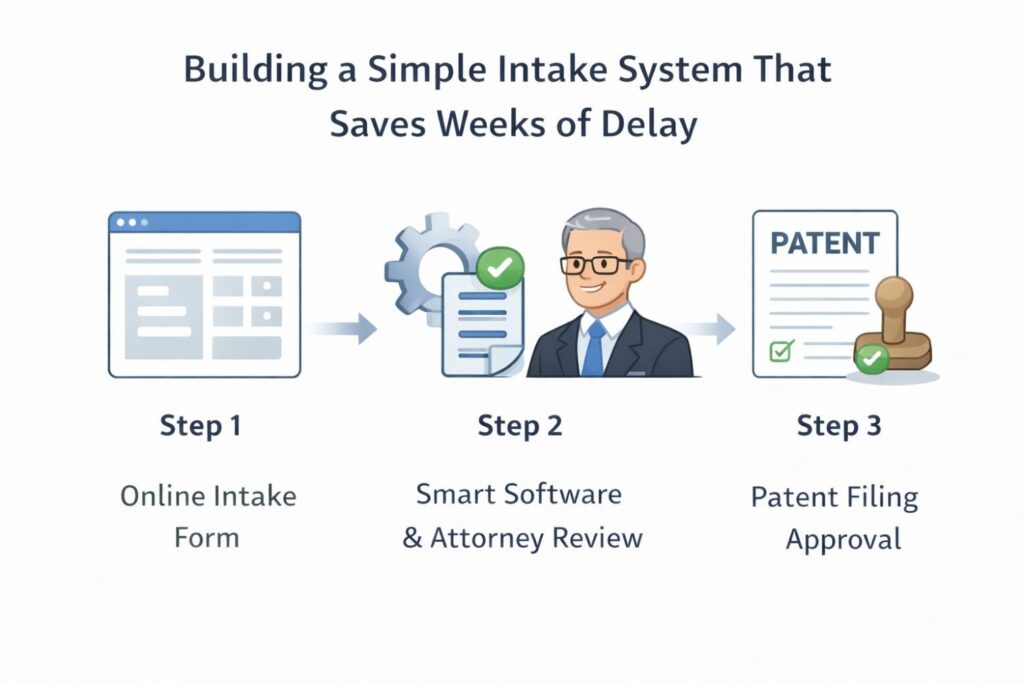
Nothing gets lost in inboxes. That alone removes a huge amount of friction.
If you are tired of chasing email chains, take a look at how a structured workflow feels in practice: https://powerpatent.com/how-it-works
Clarity in communication reduces the need to repeat yourself.
Build for Scale, Not Just One Patent
Even if you are filing your first patent, design your intake system as if you will file ten more.
Because if your startup grows, you will.
A repeatable system saves time every cycle. The first patent may take effort to structure properly. The second becomes smoother. The third becomes efficient.
Without a system, each filing feels heavy and disruptive. With a system, it becomes part of your operating rhythm.
That rhythm protects your innovation without slowing down growth.
Measure Time and Improve the Process
What gets measured improves.
Track how long intake takes. Track how many clarification rounds occur. Identify where delays happen.
Is it unclear diagrams? Missing technical depth? Scope confusion?
Once you see patterns, you can refine your template and process.
Continuous improvement applies to patents just as much as product.
When you tighten your intake system, you gain speed without sacrificing quality.
The Real Goal: Speed With Strength
Reducing back-and-forth is not just about saving time. It is about protecting your invention properly before competitors catch up.
When intake is smooth, drafting is faster. When drafting is faster, filing happens sooner. When filing happens sooner, your priority date is secured.
Speed matters. But strength matters too.
That is why the right system combines structured software with real attorney oversight. Technology organizes your thinking. Experienced patent professionals ensure nothing critical is missed.
That is the model we built at PowerPatent. Founders move quickly, stay in control, and avoid the painful cycles that slow traditional firms down.
If you want to protect what you are building without drowning in back-and-forth, see how a modern intake system works here: https://powerpatent.com/how-it-works
A simple intake system is not complicated. It is intentional.
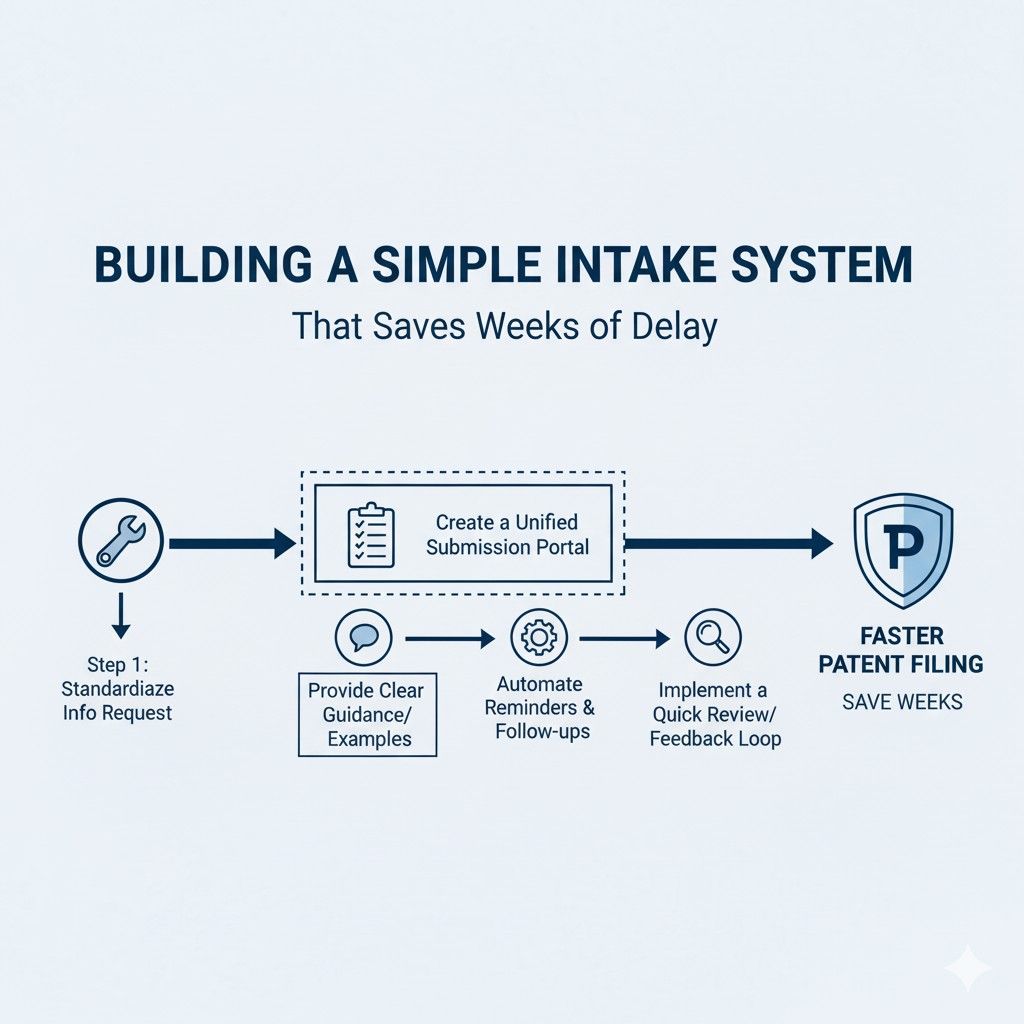
When you design it well, you save weeks. You reduce stress. And you turn patent filing from a burden into a strategic advantage.
Wrapping It Up
Patent intake does not have to feel slow, messy, or draining. Most of the frustration founders experience is not because patents are complicated. It is because the intake process is unstructured. Details are scattered. Explanations are rushed. Ownership is unclear. Questions come in waves instead of being handled upfront. When you fix the structure, you fix the speed.