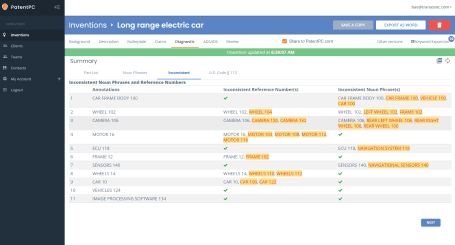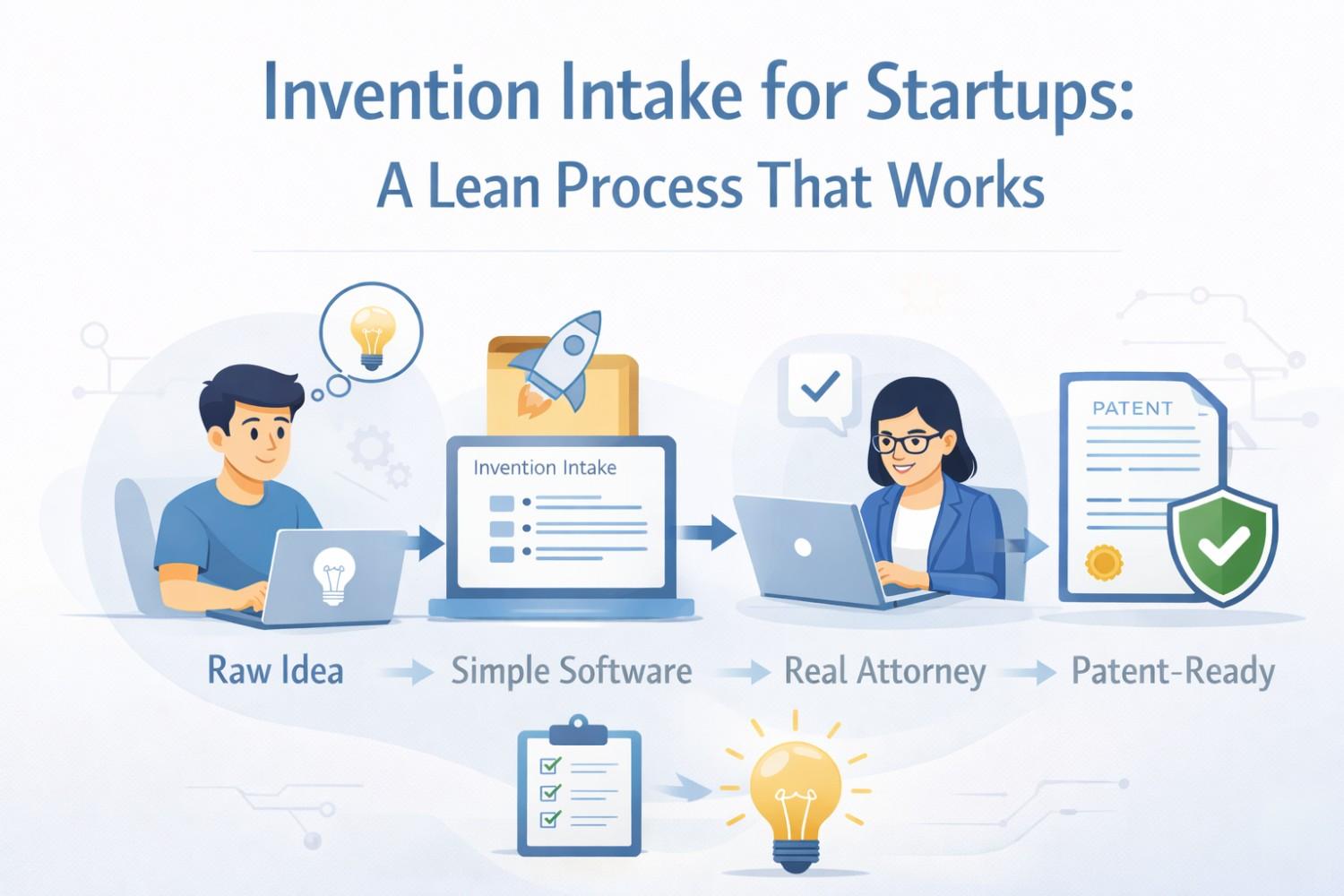
Startups move fast. Ideas turn into code, and code turns into products almost overnight. But one thing many founders forget is this: if you do not capture your invention details early, you risk losing protection later. Invention intake is simply the act of collecting your ideas in a clear way before filing a patent. It does not need to be slow or painful. In fact, a lean intake process can fit right into your startup workflow. When done right, it gives you clarity, saves time, and helps you protect what you are building without slowing down your team. PowerPatent makes this simple by combining smart software with real attorney review, so you can move fast and still get strong protection. If you want to see how this works in practice, you can explore the process here → https://powerpatent.com/how-it-works.
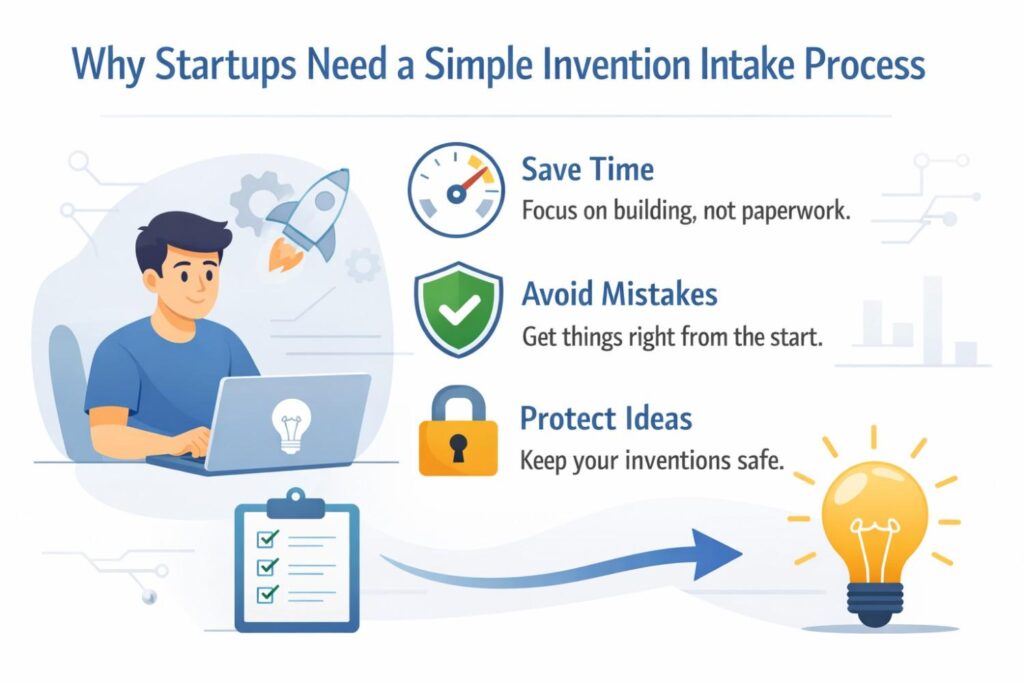
Why Startups Need a Simple Invention Intake Process
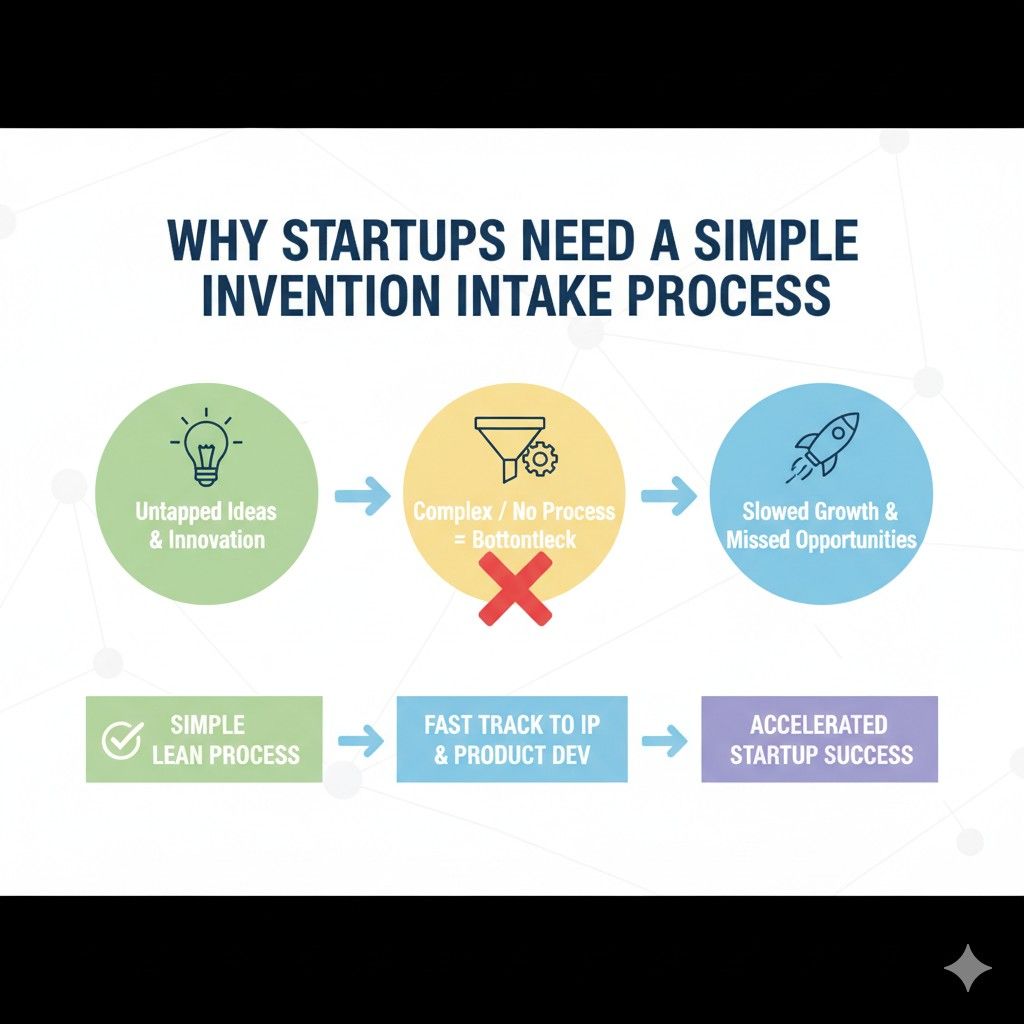
Startups do not fail because they lack ideas. They fail because they lose control of those ideas. A simple invention intake process gives founders a way to capture what they are building before it slips through the cracks.
When teams move fast, new features, models, and systems are created every week. Without a clear intake flow, these breakthroughs stay in someone’s head or buried in code commits.
That makes it hard to protect them later. A lean process keeps everything organized and ready for patent protection without slowing down product work.
The Cost of Waiting Too Long
Many founders believe they can “deal with patents later.” The problem is that later often means too late. Once a product launches, public disclosure starts the clock.
Investors may ask about intellectual property, and competitors may begin copying features. If the invention details are not captured early, it becomes difficult to prove what was created first.
A simple intake process avoids this risk by creating a habit of documenting ideas as they happen.
This does not mean long forms or legal documents. It means short, clear descriptions that explain what the invention does, how it works, and why it is different.
Founders can build this into their weekly sprint routine. For example, after a new feature is shipped, the team can spend ten minutes writing down what makes it unique.
Over time, this creates a strong record that can turn into patent filings without stress.
Protecting Value Before Investors Ask
Investors look for defensible advantages. They want to know that your technology cannot be easily copied.
When a startup has a clear intake process, it can show that its inventions are tracked, reviewed, and protected. This builds confidence during fundraising.
A strategic approach is to align invention intake with investor updates. When founders prepare monthly reports for investors, they can include a short section about new technical breakthroughs.
This keeps the team aware of what needs protection and signals to investors that the company takes intellectual property seriously.
With tools like PowerPatent, founders can turn these notes into real patent drafts quickly, with attorney oversight ensuring quality.
You can see how this fits into a startup workflow here → https://powerpatent.com/how-it-works.
Reducing Legal Surprises Later
Many startups only think about patents when a problem appears. Maybe a competitor files first, or a partner asks about ownership. At that point, it becomes a reactive process, often expensive and rushed.
A simple intake flow prevents these surprises by keeping invention tracking proactive.
One helpful tactic is to assign ownership of invention capture to a specific role, such as a product lead or engineering manager. This person does not need legal training.
Their job is simply to ensure that new technical ideas are recorded in a shared system. By doing this consistently, the company avoids last-minute scrambles to gather details. When it is time to file, everything is already organized.
Making Patents Part of Product Development
Startups succeed when product and protection move together. If patents feel separate from daily work, they will always be delayed. A lean intake process ties invention capture directly to product milestones.
When a feature reaches beta, the team notes the technical approach. When a model reaches a new level of performance, the team records what made that possible.
This integration keeps patents from feeling like a legal burden. Instead, they become a natural part of building technology. Founders can even include invention discussions in sprint retrospectives.
Asking simple questions such as “What did we build that is new?” or “What did we solve that others cannot?” keeps the team focused on innovation and protection at the same time.
Avoiding Knowledge Loss as Teams Grow
Early-stage startups often rely on a few key engineers. These individuals hold deep knowledge about how systems work. As the company grows, that knowledge can become scattered.
People change roles, join new teams, or even leave the company. Without a simple intake process, valuable invention details may disappear.
To prevent this, startups can treat invention capture as part of onboarding and offboarding routines.
New hires can be trained to document their technical contributions from the start. When someone leaves, their invention notes remain in the system, ready to support future patent filings. This protects the company’s long-term value.
Keeping Speed Without Sacrificing Protection
Founders often worry that adding processes will slow them down. The goal of a lean intake approach is the opposite. It removes friction by replacing long legal meetings with quick, structured idea capture.
Instead of waiting months to prepare patent drafts, startups can collect information in real time.
A practical method is to use short templates with prompts such as “What problem does this solve?” and “How is this different from existing solutions?” These prompts guide engineers to provide the right level of detail without extra effort.
When paired with software like PowerPatent, these inputs can be transformed into patent-ready material quickly, reviewed by real attorneys who ensure everything is accurate and strong.
Founders can explore how this streamlined approach works here → https://powerpatent.com/how-it-works.
Creating a Culture of Ownership and Innovation
A simple intake process does more than protect technology. It shapes company culture. When teams know their ideas are valued and protected, they feel more ownership over their work. This encourages deeper innovation and long-term thinking.
Leaders can reinforce this culture by celebrating invention milestones. When a patent application is filed, the team behind the invention can be recognized.
This shows that capturing ideas is not just a legal step but a core part of building the company’s future. Over time, this mindset strengthens both morale and competitive advantage.
Turning Intake Into a Strategic Advantage
Startups that treat invention intake as a strategic tool gain an edge over competitors. They can respond faster to market changes, secure stronger partnerships, and build a more defensible position. The process does not need to be complex. It only needs to be consistent.
By setting aside small moments each week to capture technical breakthroughs, founders create a pipeline of patent-ready inventions. When the time comes to file, they are prepared.
With modern platforms that combine smart software and attorney guidance, startups can move quickly without sacrificing quality.
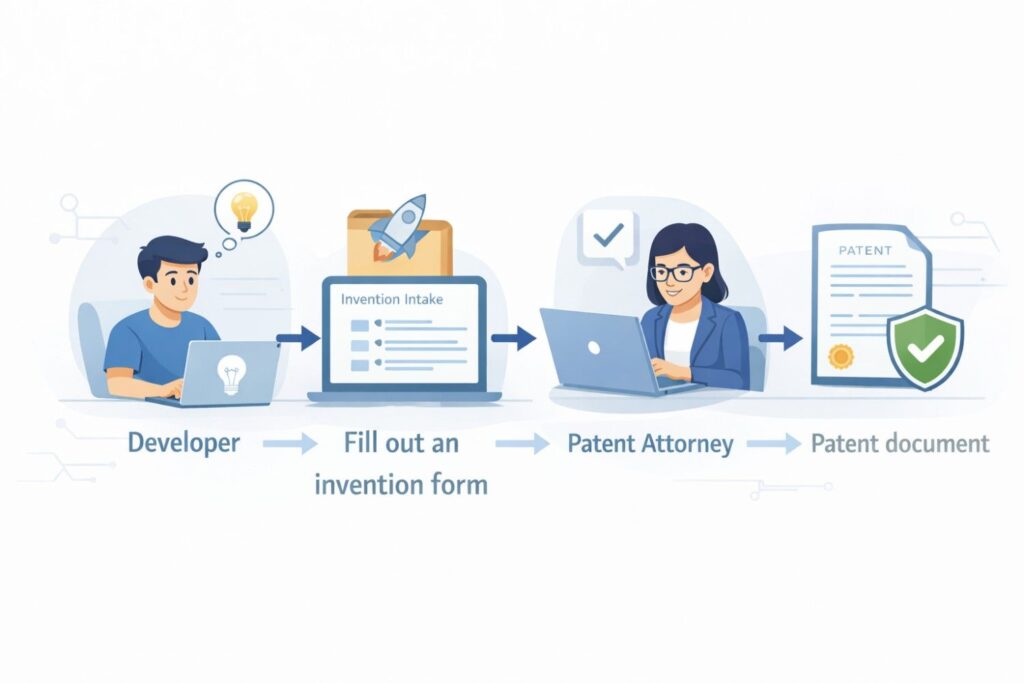
If you want to see how a lean intake process can turn into real protection, take a look at how PowerPatent supports founders here → https://powerpatent.com/how-it-works.
What a Lean Intake Process Looks Like in Real Startup Workflows
A lean invention intake process should feel natural, not forced. It should fit into the way startups already build products. When done right, it does not slow down engineers or add extra meetings.
Instead, it captures innovation as it happens. The goal is simple: turn everyday product work into protected intellectual property without adding friction.
Startups that succeed with patents do not treat intake as a separate legal step. They make it part of their normal workflow, just like code reviews or sprint planning.
Intake Starts Inside Product Sprints
Every startup runs on sprints. Features are planned, built, tested, and shipped in short cycles.
A lean intake process connects directly to this rhythm. When a team completes a feature that solves a new technical problem, that moment becomes the trigger for invention capture.
The key is timing. Intake should happen right after a feature is stable, while the technical details are still fresh.
Engineers can spend a few minutes describing what was built, why it is different, and what technical approach made it work. This short capture step prevents knowledge from fading.
It also avoids the stress of trying to reconstruct ideas months later.
Founders can support this by adding a simple prompt at the end of each sprint review.
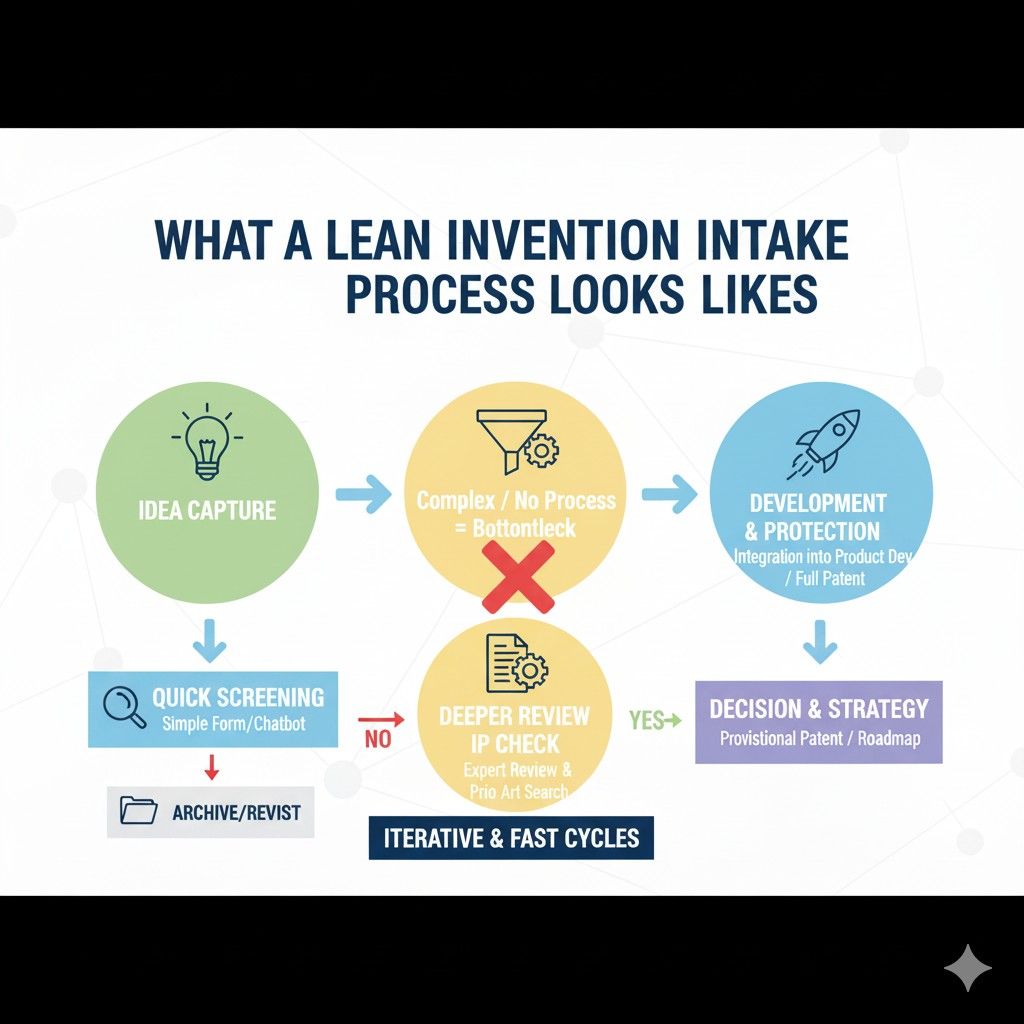
Asking, “Did we build anything new or technically unique?” keeps the team aware of invention opportunities. Over time, this habit becomes automatic.
Using Simple Prompts Instead of Long Forms
Startups avoid paperwork for a reason. Long legal forms slow teams down and often lead to incomplete information. A lean intake process replaces heavy forms with short, focused prompts.
These prompts guide engineers to share the right level of detail without feeling like they are writing legal documents.
For example, a prompt might ask for the problem being solved, the technical approach used, and what makes the solution different from known methods. Engineers can answer these questions in plain language.
The goal is clarity, not perfection. Once captured, this information becomes the foundation for a strong patent application.
Modern tools like PowerPatent turn these simple inputs into structured drafts that attorneys can review and refine.
This keeps the process fast while ensuring the final result is accurate and defensible. Founders who want to see how this works in real workflows can explore the process here → https://powerpatent.com/how-it-works.
Integrating Intake Into Engineering Tools
A lean process works best when it lives where engineers already spend time. Instead of asking teams to log into a separate legal system, startups can integrate invention capture into tools they use every day.
This could be a shared document, an internal portal, or even a lightweight form connected to project management software.
When intake is embedded in familiar tools, adoption increases. Engineers are more likely to document ideas if it takes less than five minutes and fits naturally into their workflow.
Some startups create a simple “innovation” tag in their issue tracker. When a ticket involves a new technical method, it gets tagged, and the engineer adds a short description of the invention.
This small step builds a steady stream of patent-ready ideas without interrupting development.
Keeping Intake Collaborative, Not Isolated
Invention capture should not sit on one person’s shoulders. It works best when product, engineering, and leadership all participate.
Engineers understand the technical details, product managers understand user impact, and founders understand business value.
When these perspectives come together, the invention description becomes stronger and more complete.
A helpful approach is to review invention notes during product sync meetings. Teams can spend a few minutes discussing whether a feature has patent potential.
This keeps everyone aligned and ensures that valuable innovations are not missed. It also reduces the risk of filing patents on features that do not support the company’s long-term strategy.
Moving From Intake to Draft Without Delay
One of the biggest mistakes startups make is capturing ideas but never acting on them.
A lean intake process includes a clear next step: turning captured ideas into draft patent applications quickly. Speed matters because public launches, demos, and investor pitches can count as disclosures.
Startups can set a simple rule. When an invention note meets certain criteria, such as solving a core technical problem or creating a competitive edge, it moves to the drafting stage within days, not months.
With PowerPatent, this transition is smooth.
The captured details feed directly into AI-assisted drafting, and real attorneys review the output to ensure strength and clarity.
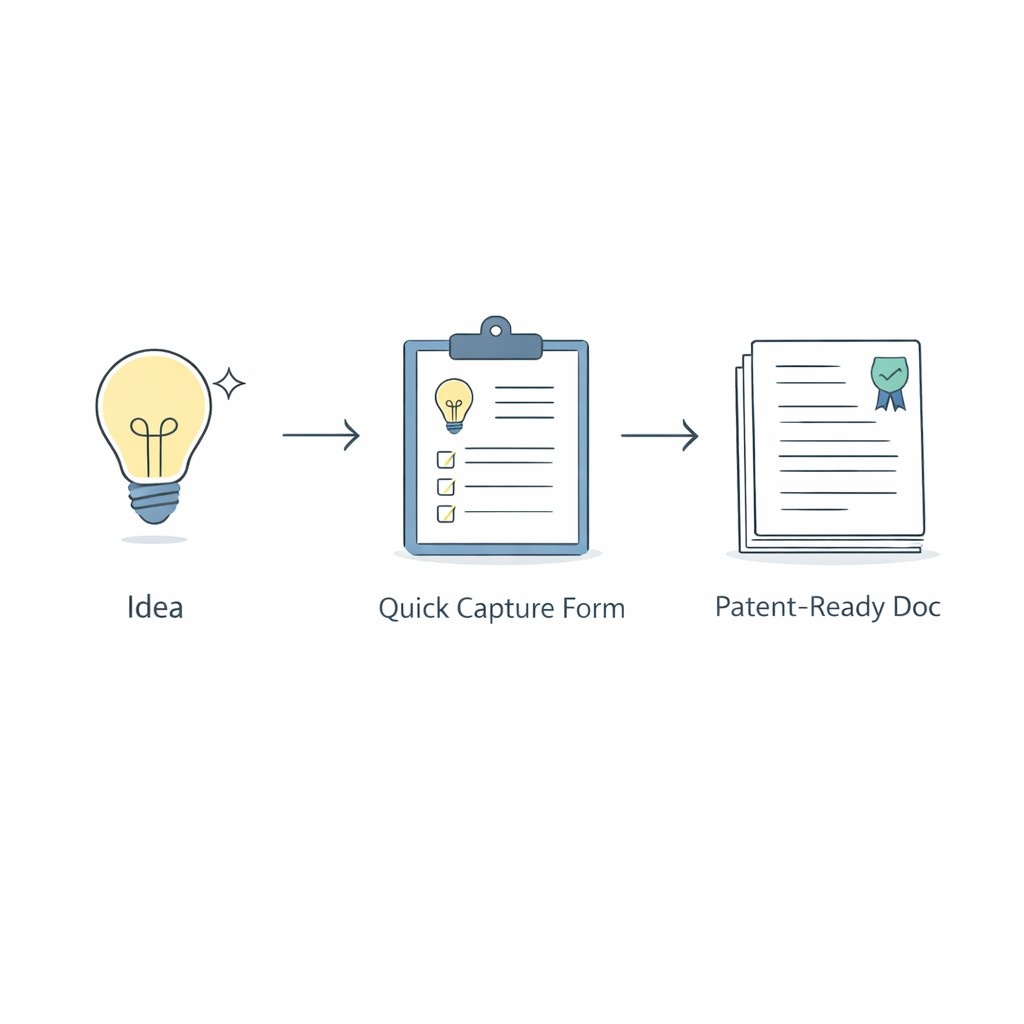
This reduces turnaround time and helps startups secure protection before going public. You can see how this streamlined path works here → https://powerpatent.com/how-it-works.
Making Intake Part of Weekly Founder Routines
Founders often juggle many priorities, from fundraising to hiring to product strategy. A lean intake process should support, not burden, these responsibilities.
One way to achieve this is by including invention review in weekly founder check-ins. During these sessions, leaders can quickly scan new invention notes and decide which ones deserve patent attention.
This habit keeps intellectual property aligned with business goals. If a feature supports a key revenue stream or differentiates the product, it becomes a priority for filing.
If not, it can be documented and revisited later. This approach ensures that patent efforts stay focused on what truly matters for growth.
Creating Feedback Loops That Improve Over Time
A lean intake process is not static. It improves as the startup learns what works best.
Teams can review past invention captures and identify gaps. Maybe some notes lacked technical depth, or maybe certain breakthroughs were missed entirely.
By reflecting on these outcomes, the company can refine its prompts and workflows.
Regular feedback loops also help engineers understand what makes an invention patent-worthy.
When teams see how their captured ideas turn into filed applications, they gain confidence in the process. This encourages better participation and more detailed submissions in the future.
Keeping the Process Lightweight as the Company Scales
As startups grow, processes tend to become heavier. The challenge is to keep invention intake simple even as teams expand. This requires clear ownership, consistent templates, and tools that scale with the company.
Leaders can maintain simplicity by avoiding unnecessary approvals or long review chains. Instead, they can rely on structured intake prompts and fast attorney feedback.
Platforms like PowerPatent are built for this stage, combining automation with human oversight so startups can scale their patent efforts without adding complexity.
Founders who want to build a process that grows with their team can explore how this works here → https://powerpatent.com/how-it-works.
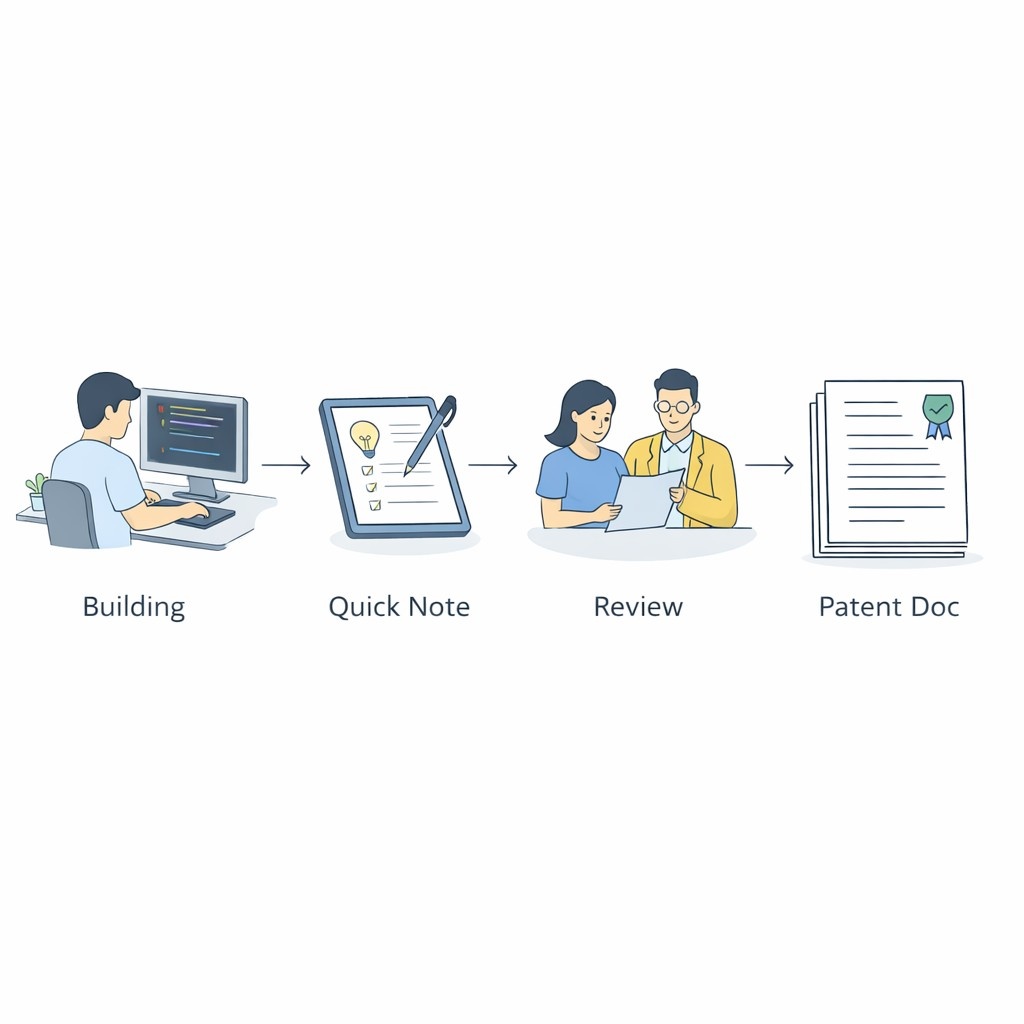
A lean intake process does not require legal expertise or extra headcount. It requires intention, consistency, and the right tools. When invention capture becomes part of everyday workflows, startups protect their innovations without slowing down their momentum.
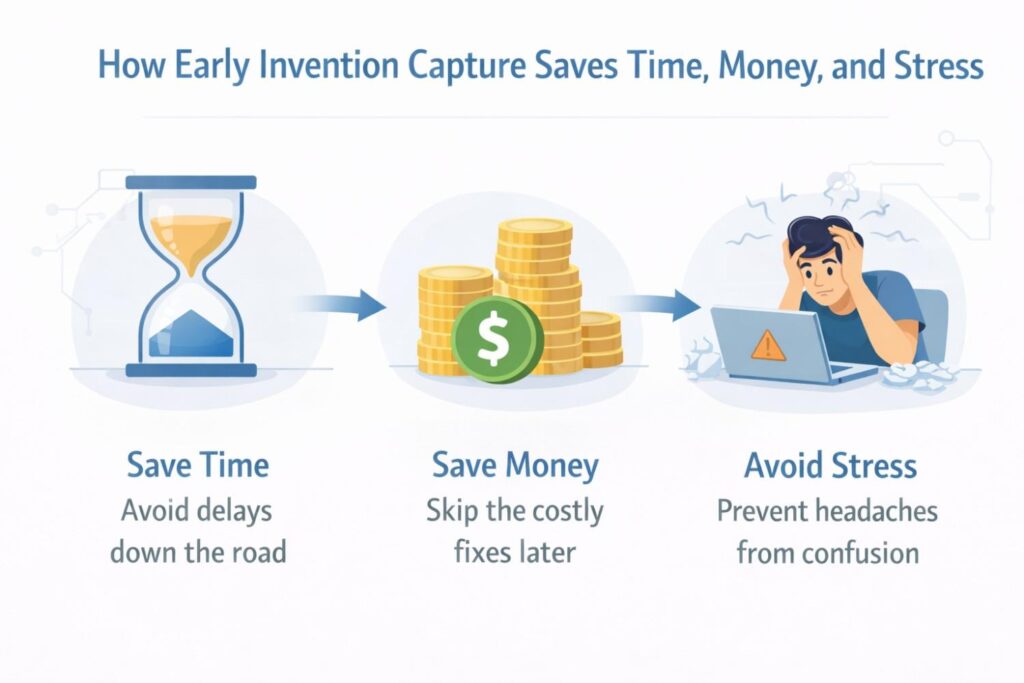
How Early Invention Capture Saves Time, Money, and Stress
Startups often think patents are slow, costly, and full of friction. That belief usually comes from waiting too long to start the process. When invention capture begins early, everything changes.
The work becomes lighter, decisions become clearer, and the cost stays under control. Early capture is not about adding extra steps. It is about removing chaos later.
When founders document ideas as they happen, they build a smooth path toward protection instead of facing a last-minute scramble.
Time Is Lost When Details Are Forgotten
One of the biggest hidden costs in patent work is time spent trying to remember what happened months ago. Engineers move fast. They solve problems, push code, and shift focus to the next challenge.
When it is finally time to prepare a patent, the team may struggle to recall the technical decisions that made the solution unique.
Early invention capture prevents this loss. By writing down the key details right after a breakthrough, the team preserves the full picture.
This includes why certain approaches were chosen, what alternatives were tested, and what technical tradeoffs were made. These details are often the difference between a weak patent and a strong one.
A simple habit can protect this knowledge. After shipping a new feature, the engineer responsible can spend a few minutes describing the technical path taken.
This short reflection keeps information fresh and saves hours of reconstruction later. When drafting begins, the team already has a clear foundation.
Faster Drafting Means Faster Protection
Speed matters in startups. Products launch quickly, and public exposure can happen before founders even realize it. If invention capture starts early, the transition from idea to patent draft becomes much faster.
Instead of collecting information from scratch, the drafting process begins with structured notes that already explain the invention.
This shortens the timeline from weeks to days. Founders can move forward with confidence, knowing their ideas are protected before investor demos or public releases.
Tools like PowerPatent make this even smoother by turning captured invention details into draft applications that real attorneys review. This blend of speed and oversight helps startups secure protection without slowing down product momentum.
Founders who want to see how early capture leads to faster filings can explore the process here → https://powerpatent.com/how-it-works.
Lower Costs Come From Better Preparation
Patent costs often rise when information is incomplete or unclear. Attorneys may need extra time to understand the invention, ask follow-up questions, and revise drafts multiple times.
Each round of clarification adds time and expense.
Early invention capture reduces these back-and-forth cycles. When the team provides clear descriptions from the start, attorneys can focus on refining and strengthening the application instead of chasing missing details.
This efficiency lowers overall costs and keeps the process predictable.
Startups can support this by creating simple prompts that guide engineers to capture the right information.
Asking questions like “What technical challenge did this solve?” and “How is this method different from known approaches?” leads to stronger inputs. When these answers are ready early, the drafting stage becomes smoother and more affordable.
Avoiding Emergency Filings and Last-Minute Stress
Many founders first think about patents when a big event is coming. Maybe a product launch is scheduled, or an investor demo is planned. At that moment, the team realizes they need protection fast.
This leads to rushed filings, late-night drafting sessions, and unnecessary pressure.
Early invention capture removes this stress. When ideas are documented continuously, the company always has a pipeline of patent-ready material.
Instead of reacting to deadlines, founders can file strategically, choosing the right timing and scope for each application.
A helpful approach is to review invention notes during regular planning cycles. If a feature is about to be shared publicly, the team can move forward with filing using information that is already prepared. This keeps the process calm and controlled, even during busy product launches.
Reducing Risk of Missed Opportunities
When invention capture is delayed, some ideas never get protected at all. Teams may forget smaller technical breakthroughs that later turn out to be critical.
Competitors may file similar patents first, limiting the startup’s ability to defend its position.
Capturing ideas early ensures that no innovation slips through the cracks. Even if a feature seems minor at first, documenting it creates an option for future protection.
As the product evolves, these early notes can support continuation filings or broader claims.
Founders can encourage this by treating invention capture as a routine activity rather than a special event. Every meaningful technical improvement deserves a short record. Over time, these records build a strong intellectual property portfolio that supports long-term growth.
Better Alignment Between Business and Legal Strategy
Early invention capture does more than save time and money. It also helps founders make smarter strategic decisions.
When leadership has visibility into ongoing technical innovation, they can align patent filings with business priorities. This ensures that resources are focused on the features that truly differentiate the product.
For example, if a new algorithm becomes central to the company’s value, early capture allows the team to file patents that protect that core technology.
If another feature turns out to be less important, the company can choose not to pursue protection, saving costs. This level of control is only possible when invention information is available early.
Building Confidence Across the Team
Stress often comes from uncertainty. When founders are unsure whether their ideas are protected, every public release feels risky. Early invention capture replaces that uncertainty with clarity.
Teams know that their work is documented and ready for protection when needed.
This confidence allows startups to move faster in the market. They can share demos, talk to partners, and pitch investors without worrying that their ideas are exposed.
With platforms like PowerPatent, captured inventions can quickly turn into attorney-reviewed filings, giving founders peace of mind. You can see how this support works in practice here → https://powerpatent.com/how-it-works.
Creating a Sustainable Rhythm for Intellectual Property
The biggest advantage of early invention capture is sustainability. Instead of treating patents as rare, stressful projects, startups turn them into a steady rhythm.
Small, consistent efforts replace large, overwhelming tasks. This keeps the team focused on building while still protecting what they create.
By integrating invention capture into daily workflows, startups save time, control costs, and reduce stress. The process becomes predictable, efficient, and aligned with product development.
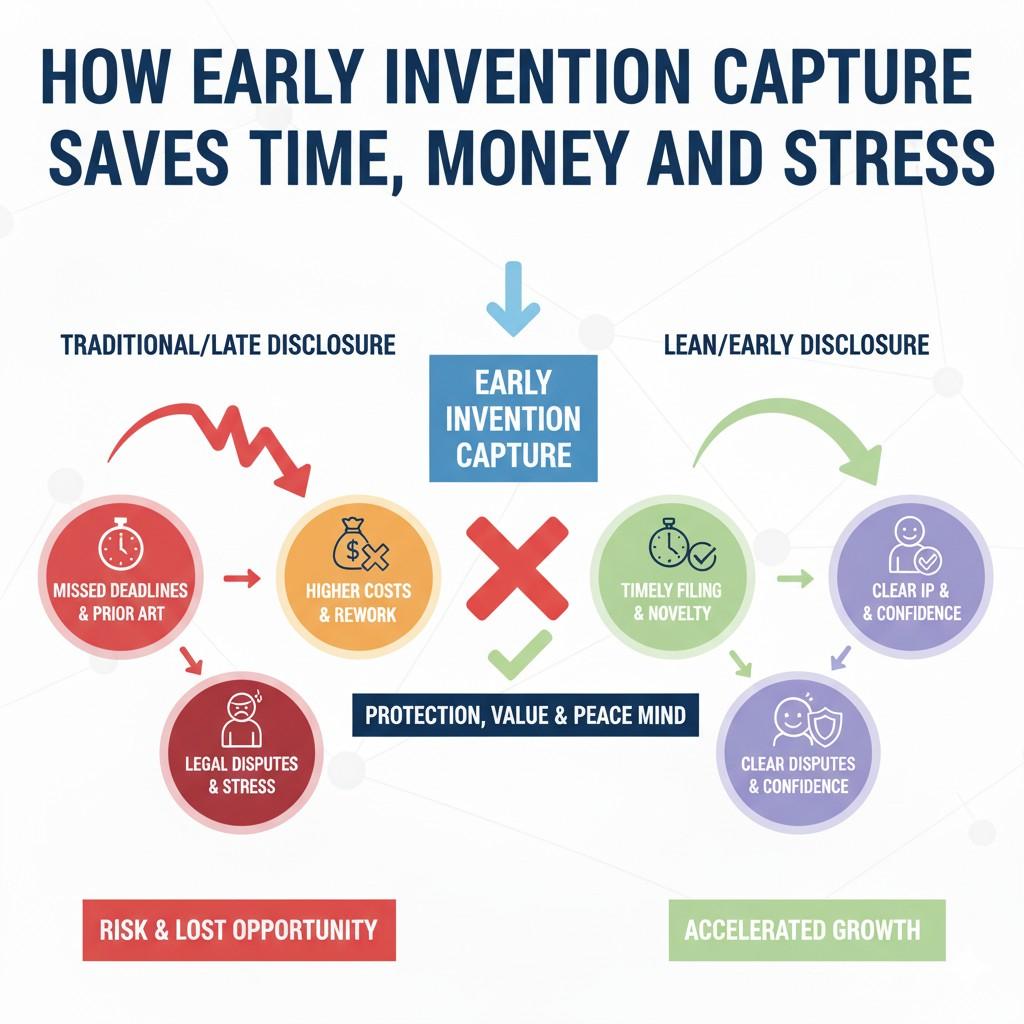
When founders adopt this approach early, they build a strong foundation for long-term protection and growth.
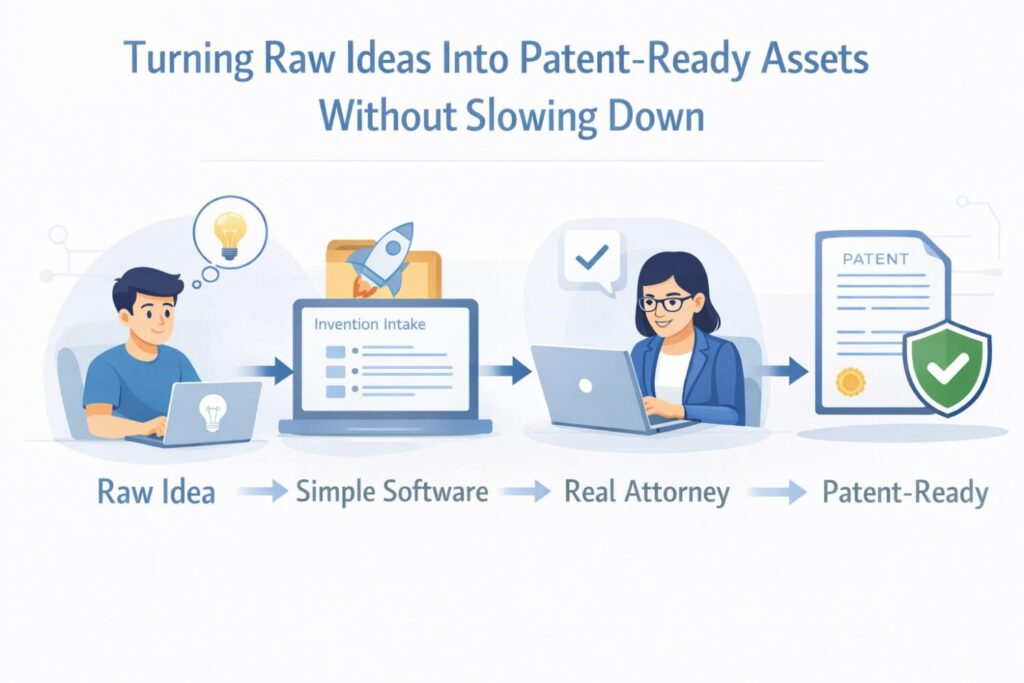
Turning Raw Ideas Into Patent-Ready Assets Without Slowing Down
Startups are full of raw ideas. Engineers solve problems in creative ways every day. Founders test new features, adjust models, and build systems that did not exist before.
The challenge is not a lack of innovation. The challenge is turning those raw ideas into assets that can be protected.
Many teams believe this requires long legal meetings or heavy documentation.
In reality, it can be fast and simple. When the right process is in place, raw ideas can move smoothly into patent-ready form without interrupting product work.
Capturing Ideas While Momentum Is High
The best time to capture an invention is right after it is created. At that moment, the details are clear and the reasoning behind each technical choice is still fresh.
Waiting even a few weeks can blur that clarity. Engineers move on to new tasks, and the small decisions that made the solution unique may be forgotten.
To avoid this, startups can connect idea capture to moments of completion. When a feature is merged, when a model reaches a new performance level, or when a system design is finalized, that is the signal to record the invention.
The capture does not need to be long. A short explanation of the problem, the approach, and the technical benefit is enough to start.
This approach protects the company’s speed. Instead of pausing development for long documentation sessions, the team spends only a few minutes preserving key insights.
Over time, these small captures add up to a strong pipeline of patent-ready material.
Translating Technical Work Into Clear Descriptions
One reason founders delay patent work is that they worry about how to explain complex systems in simple terms. Engineers often write code, not legal descriptions.
A lean process solves this by focusing on clarity, not perfection. The goal is to describe what the invention does and why it matters, using plain language.
Teams can support this by encouraging engineers to write as if they are explaining the solution to another developer. This removes pressure and keeps the description natural.
Once captured, tools like PowerPatent can transform these plain-language inputs into structured patent drafts.
Real attorneys then review and refine the content, ensuring it meets legal standards without requiring engineers to learn legal writing.
Founders who want to see how raw technical notes become formal filings can explore the process here → https://powerpatent.com/how-it-works.
Keeping Engineers Focused on Building
Startups succeed when engineers stay focused on product development. Any process that pulls them away for too long will face resistance. A lean invention intake system respects this reality.
It limits the time required for capture and avoids unnecessary meetings.
One effective tactic is to use short, guided prompts that engineers can complete quickly. These prompts help them share the most important details without extra effort.
Because the process is lightweight, engineers do not feel that patent work competes with their core responsibilities.
Leadership plays a key role here. When founders show that invention capture is quick and valuable, teams are more likely to participate. Over time, the process becomes a natural part of development rather than a separate task.
Moving From Concept to Draft Without Bottlenecks
Raw ideas become valuable assets only when they move forward. If captured notes sit unused, the company loses protection and momentum. A lean process includes a clear path from capture to drafting.
Once an idea meets certain criteria, such as supporting a key product feature or creating a technical advantage, it moves quickly into the drafting stage.
With platforms like PowerPatent, this transition is smooth. Captured invention details feed directly into AI-assisted drafting tools. Attorneys review the output, ensuring accuracy and strength.
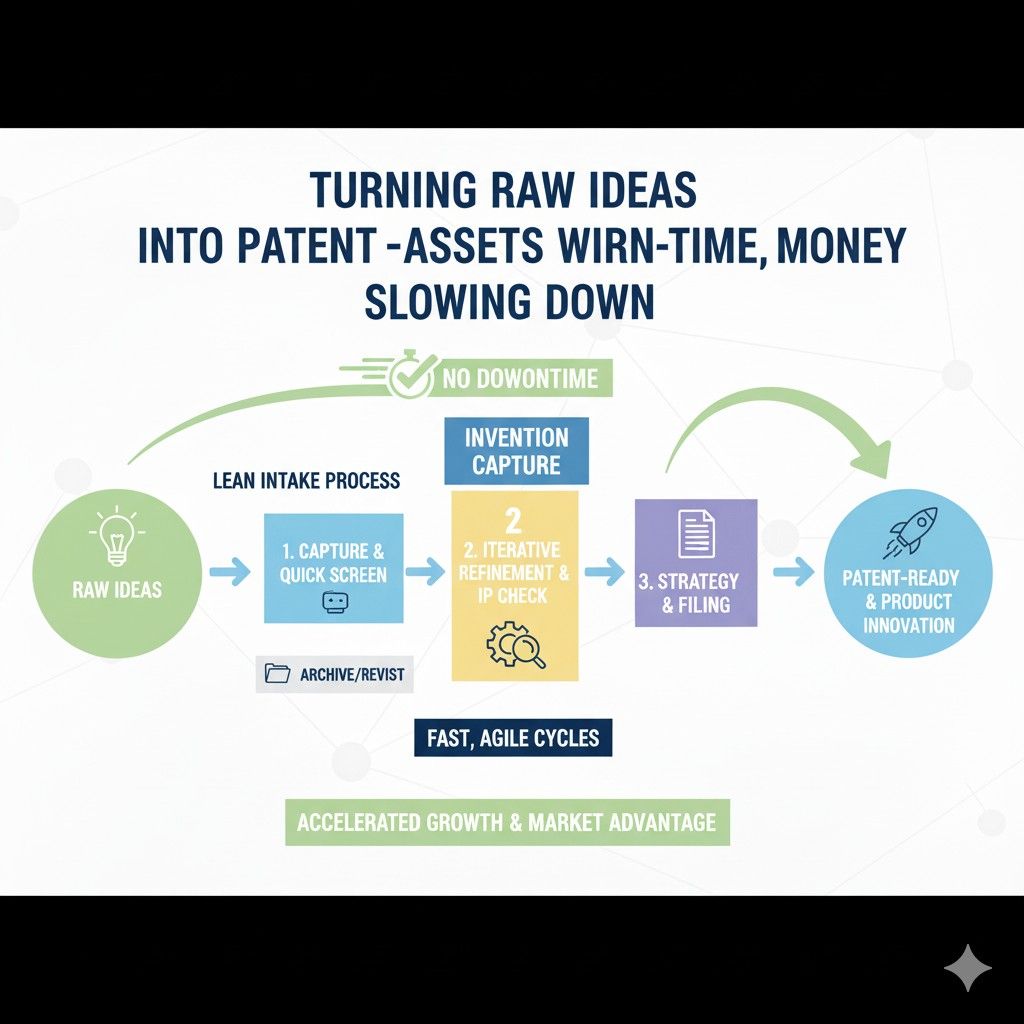
This combination removes bottlenecks that often slow traditional patent preparation. Startups can move from concept to draft in days instead of months, maintaining their product velocity while securing protection.
Aligning Patent Efforts With Product Priorities
Not every idea needs immediate patent protection. Startups must balance resources and focus on what drives growth. Turning raw ideas into patent-ready assets requires thoughtful prioritization.
Founders should ask whether the invention supports a core feature, strengthens competitive advantage, or increases company value.
By aligning patent efforts with product priorities, startups avoid wasting time on low-impact filings.
Early capture ensures that all ideas are documented, but strategic review determines which ones move forward first. This approach keeps the process efficient and aligned with business goals.
Reducing Friction Between Teams and Legal Support
In many companies, the gap between engineering and legal teams creates delays.
Engineers may feel that legal processes are slow or unclear. A lean system removes this friction by simplifying communication. Engineers provide clear technical notes, and attorneys focus on refining and protecting those ideas.
PowerPatent is built around this collaboration. The platform bridges the gap between raw technical input and formal patent language.
Founders and engineers can stay focused on innovation while attorneys ensure that filings are strong and defensible. This balance allows startups to scale their intellectual property efforts without adding complexity.
Building a Repeatable System for Growth
As startups grow, the number of ideas increases. Without a repeatable system, invention capture can become inconsistent. Some ideas are documented, while others are missed.
Turning raw ideas into patent-ready assets requires consistency. The process should be simple enough that every team member can follow it.
Startups can achieve this by creating shared templates and clear ownership. Engineers know when to capture ideas, product leads know when to review them, and founders know when to prioritize filings.
With the right tools, this system scales with the company, ensuring that innovation is always protected.
Protecting Innovation Without Losing Speed
The fear of slowing down is one of the biggest barriers to patent work. Founders worry that adding processes will reduce agility. A lean intake approach proves the opposite.
By capturing ideas quickly and turning them into drafts efficiently, startups protect innovation while maintaining speed.
The key is simplicity.
Short captures, fast drafting, and attorney oversight create a streamlined flow from idea to protection. Startups do not need to pause development or schedule long legal sessions. Instead, they build protection into their normal rhythm.
When raw ideas become patent-ready assets through a lean process, startups gain both speed and security. They continue building at full pace while ensuring that their technology is protected.
Platforms like PowerPatent make this possible by combining smart software with real attorney support.
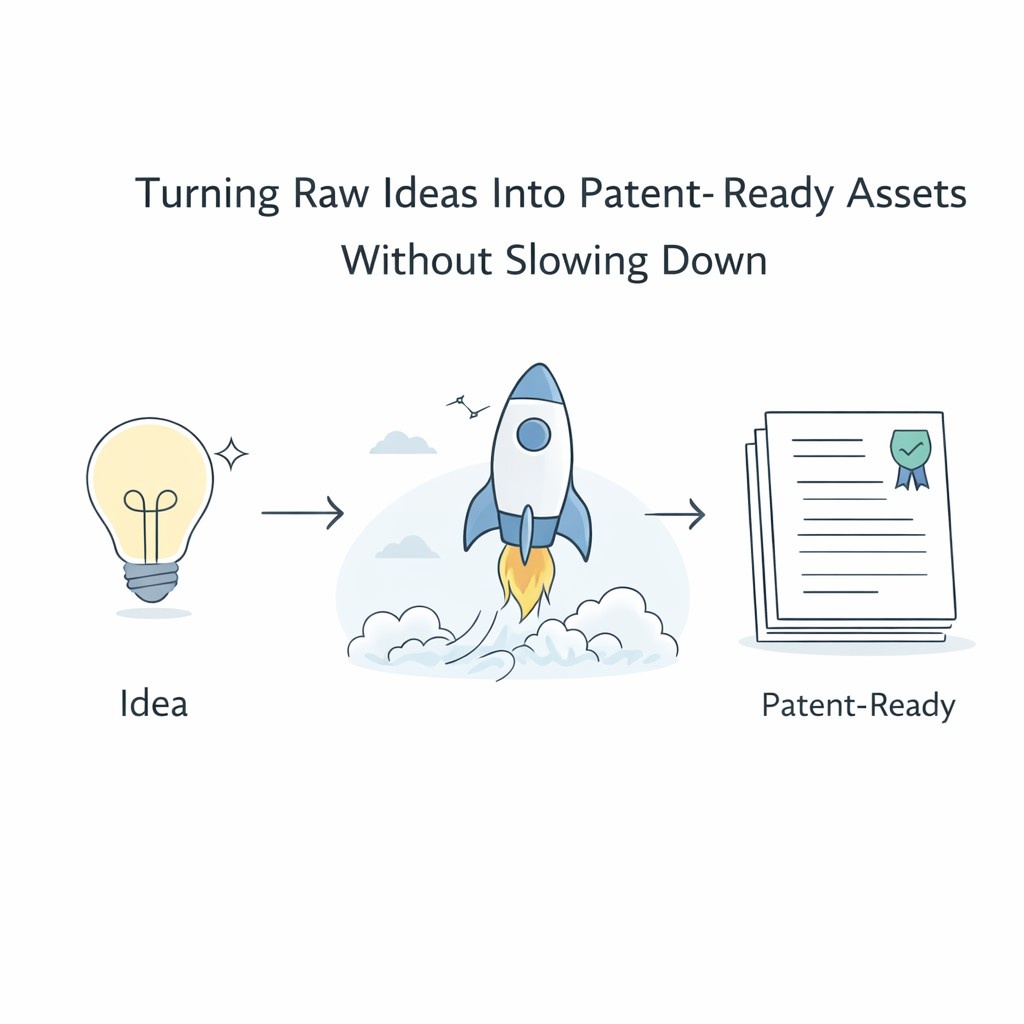
Founders who want to turn everyday innovation into strong intellectual property can see how the process works here → https://powerpatent.com/how-it-works.
Wrapping It Up
Startups win when they move fast, but they win bigger when they protect what they build. A lean invention intake process gives founders both speed and security. It turns everyday product work into long-term assets without adding heavy steps or slowing the team down. By capturing ideas early, translating them into clear descriptions, and moving them quickly into patent-ready form, startups avoid the stress, cost, and confusion that often come with traditional patent workflows.