If you are building technology that talks to other technology, you are already close to the world of FRAND, whether you know it or not. FRAND sounds complex. It feels legal. It feels slow. It feels like something only big companies with giant legal teams should care about. That feeling is wrong. FRAND matters to startups, engineers, and founders much earlier than most people expect.
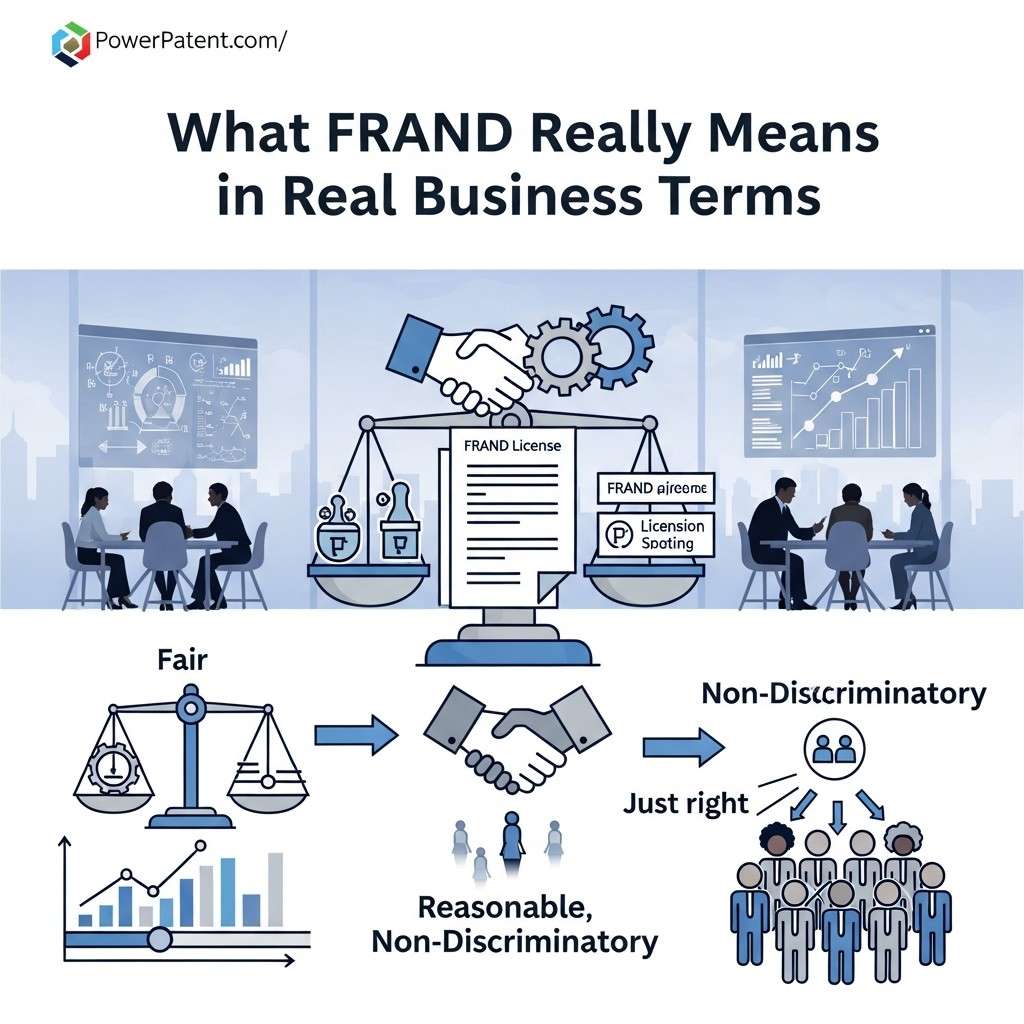
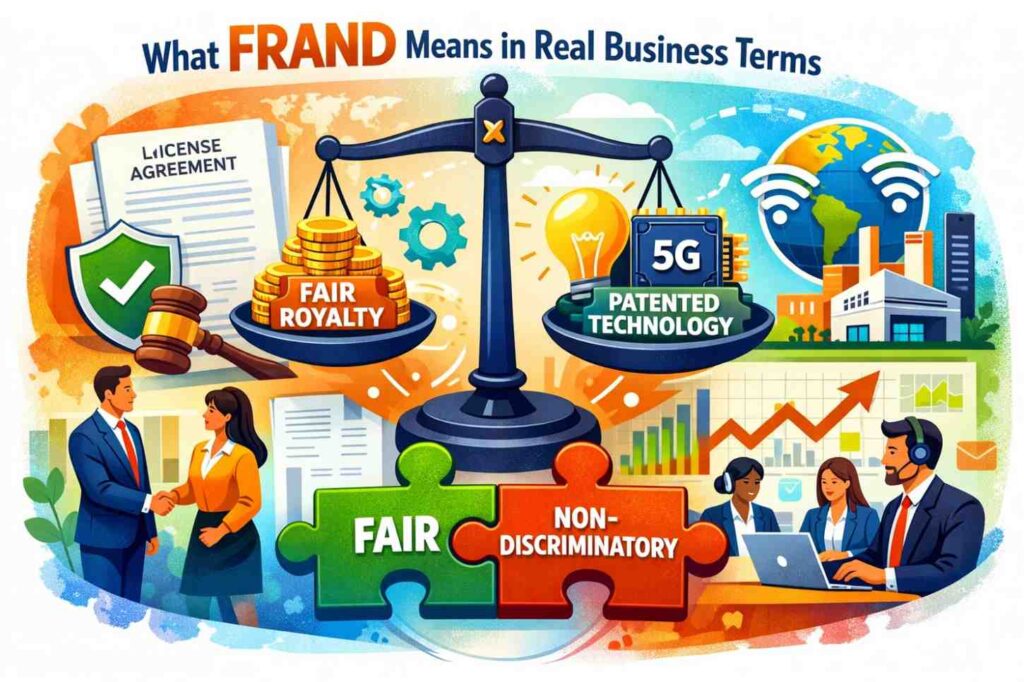
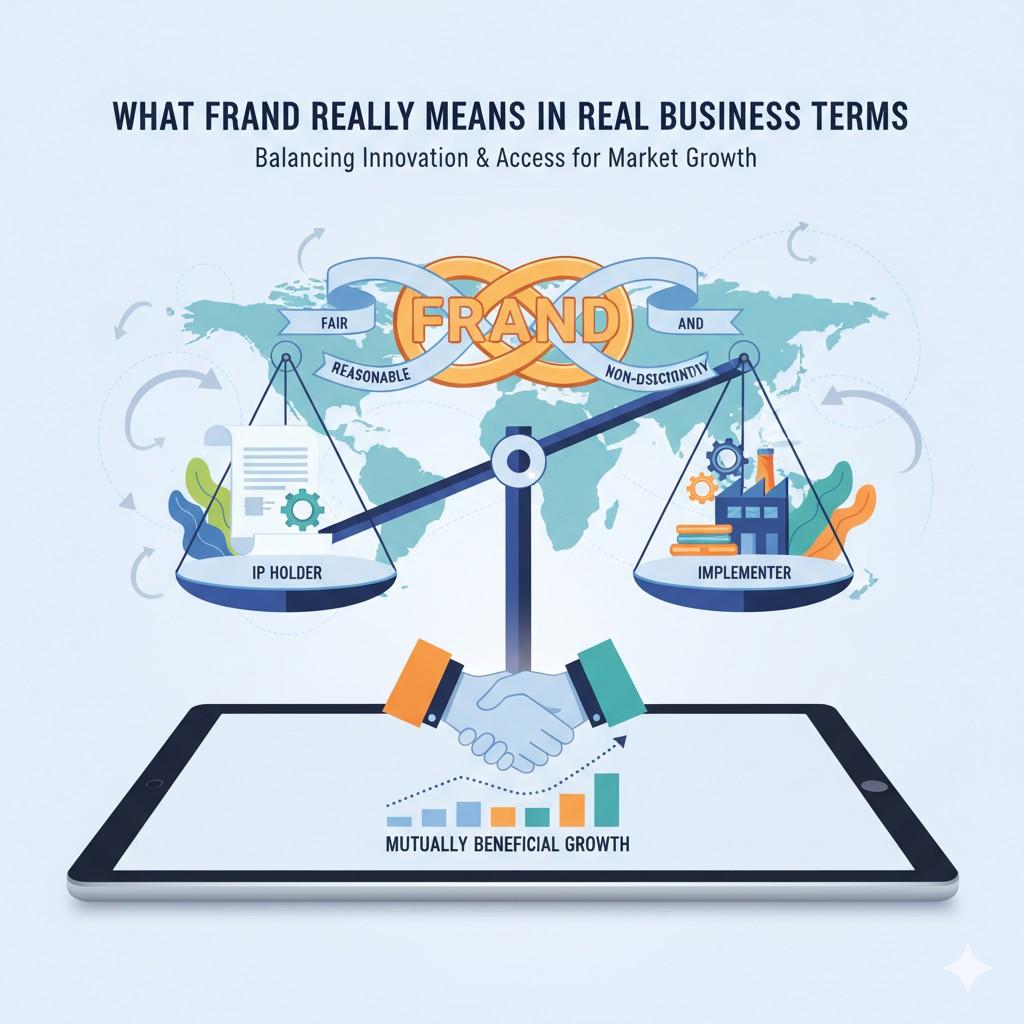
What FRAND Really Means in Real Business Terms
FRAND is often explained in legal language, but businesses do not operate in legal language.
They operate in money, risk, timing, and leverage. To understand FRAND in a way that actually helps your company, you have to strip it down to what it does in the real world.
At its core, FRAND is a business promise that shapes pricing power, negotiation strength, and long-term strategy.
This section explains what FRAND means when you are making product decisions, raising money, signing deals, or protecting your technology. The goal here is not theory. The goal is control.
FRAND Is a Pricing Promise, Not a Discount
Many founders think FRAND means cheap. That is one of the most costly misunderstandings in this space. FRAND does not mean low cost or friendly pricing. It means pricing that can be justified with facts.
In business terms, FRAND is a promise that you will not abuse your position after a standard wins. Once a technology becomes a standard, everyone needs it.
FRAND exists to prevent a patent owner from raising prices just because others are locked in. That is it.
For your business, this means the royalty rate must be defensible, not minimal. If you own a standard-related patent, you are allowed to make real money from it.
You just need a clear story that explains why the number makes sense. If you use a standard, you are expected to pay a rate that reflects real value, not whatever feels convenient.
The actionable takeaway is simple. Never treat FRAND as a reason to undervalue your patent or ignore licensing costs. Treat it as a framework that forces clarity.
FRAND Is About Balance, Not Fairness Feelings
The word fair causes confusion because people think it refers to emotions. In FRAND, fair is not about kindness. It is about balance between the patent owner and the product maker.
From a business view, FRAND asks one core question. Does the royalty allow both sides to run a healthy business?
If the rate kills the product maker’s margin, it will not hold. If the rate ignores the value of the patented technology, it will not hold either.
This matters when you negotiate. Strong FRAND positions are built by showing how your rate fits cleanly into the cost structure of the product while still rewarding innovation. Weak positions rely on feelings or threats.
If you are building technology that may become part of a standard, start modeling how your invention fits into someone else’s product economics. This thinking early on makes later FRAND discussions much easier.
FRAND Is Tied to Standards, Not Just Patents
A patent on its own does not trigger FRAND. FRAND only matters when a patent is essential to a standard. That detail changes everything.
Standards are created so products can work together. Once a standard is adopted, companies cannot avoid it without losing market access. That is why FRAND exists in the first place.
For businesses, this means timing is critical. The moment your technology is submitted to a standards body, your future pricing freedom changes. You gain reach and adoption, but you give up the ability to price however you want later.
The smart move is to plan for FRAND before you join a standards process.
Know what you are giving up and what you are gaining. Too many founders treat standard participation as free marketing without realizing it reshapes their licensing future.
FRAND Shapes Negotiation Power Early
FRAND is often discussed when disputes happen, but its real power shows up long before any conflict.
If you own a standard-essential patent, FRAND gives you legitimacy. Licensees know you must be paid, even if the number is debated. That changes the tone of negotiations.
You are not asking for permission. You are defining terms.
If you are a licensee, FRAND gives you leverage against extreme demands. You can ask for justification, comparisons, and logic. You are not stuck accepting the first number on the table.
Actionable advice here is to document everything early. Keep records of how your technology contributes to performance, cost savings, or reliability. These facts become negotiation tools later.
PowerPatent helps founders do this work upfront by structuring patents around real technical value instead of vague ideas. That preparation matters when FRAND discussions start.
FRAND Is About Comparable Deals, Not Opinions
In business terms, FRAND lives and dies on comparisons. What did others pay? What rates exist for similar technology? What deals were signed before and after the standard was adopted?
This is why large companies invest heavily in licensing data. They are not guessing. They are benchmarking.
For startups, the lesson is not to panic. You do not need a giant legal team, but you do need awareness.
If you are building in a standards-heavy space, start tracking public licensing deals and industry norms. Even rough awareness puts you ahead of most early-stage companies.
The more you anchor your thinking in real deals, the less abstract FRAND becomes. It turns into normal pricing logic.
FRAND Connects Legal Risk to Product Strategy
FRAND is not just a licensing issue. It is a product decision.
If your product relies deeply on a standard, your margin, pricing, and growth plans must account for FRAND royalties. Ignoring this early can lead to painful surprises later when costs appear after launch.
On the flip side, if your product contributes technology to a standard, your roadmap should reflect long-term licensing income, not just short-term product sales.

This is where founders gain an edge. By aligning product design with patent strategy early, you reduce future friction. PowerPatent exists for this exact reason.
It helps founders protect what matters while they are still building, not after the market sets the rules. You can explore how that works here: https://powerpatent.com/how-it-works
FRAND Is Predictable When You Prepare Early
One of the biggest myths is that FRAND outcomes are random. They are not. They feel random only when companies wait too long.
Businesses that prepare early usually land within a narrow range of outcomes. They know their value. They know the market. They know the math behind their position.
Preparation means filing strong patents that clearly map to standard features. It means understanding where your technology sits in the overall system. It means thinking about licensing as a business model, not an afterthought.
If you do this early, FRAND becomes manageable. If you do not, it becomes reactive and expensive.
FRAND Is a Business Skill, Not Just a Legal One
At the end of the day, FRAND is not owned by lawyers. It belongs to founders, product leaders, and business teams who understand how value flows through technology ecosystems.
The companies that do best with FRAND treat it like pricing strategy, not legal defense. They speak clearly. They stay grounded in facts. They move early.
If you are building technology that touches standards, learning FRAND is not optional. It is part of being a serious builder in modern tech.
Why FRAND Royalty Rates Are Not Fixed Numbers
Many founders look for a single correct FRAND number. They want certainty. They want a formula that spits out a clean answer. That instinct makes sense, but it leads people in the wrong direction.
FRAND royalty rates are not fixed because technology markets are not fixed. Products change, standards evolve, and value shifts over time. FRAND is designed to move with those changes, not fight them.
Once you understand this, FRAND stops feeling unstable and starts feeling flexible in a useful way.
This section explains why there is no single FRAND rate and how smart businesses use that flexibility to their advantage instead of fearing it.
FRAND Moves Because Value Moves
A FRAND rate is supposed to reflect value. Value is never frozen in time.
When a standard is first adopted, the technology inside it may be new, risky, and unproven. Years later, that same technology might be reliable, widely used, and critical to performance.
The business value of the patent can grow or shrink depending on how the market evolves.
That is why locking FRAND into a single number forever would make no sense. A rate that was reasonable at the start of a standard may be wrong later on.
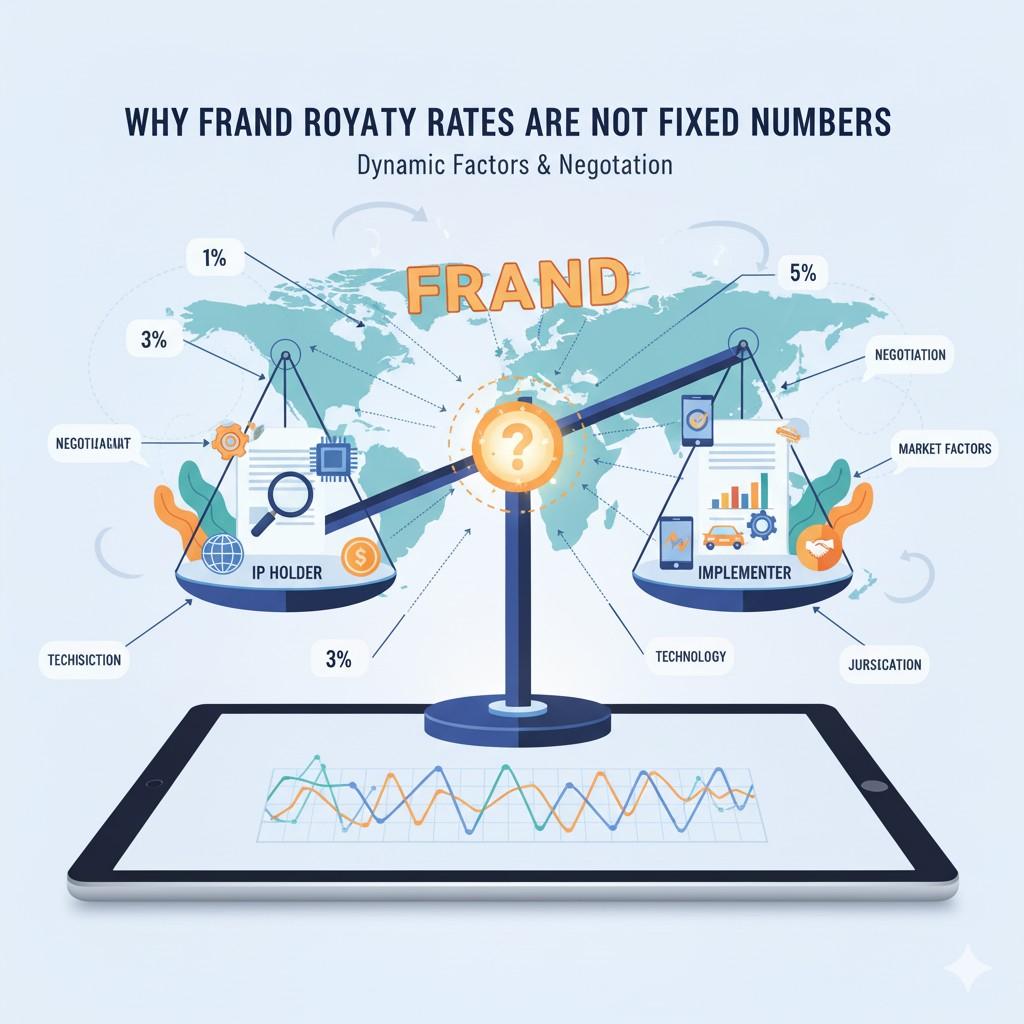
FRAND allows room for adjustment so pricing can track real-world impact.
For businesses, the key action here is to revisit assumptions over time. Do not rely on an old number just because it once made sense. Markets reward companies that update their thinking.
FRAND Depends on Context, Not Just Math
Two companies can use the same patented technology and still justify different royalty outcomes. That surprises many founders.
Context matters. A mass-market device with thin margins feels royalties very differently than a premium product with high margins. A startup entering a market faces different pressures than an established player with scale.
FRAND allows these differences to be considered. The goal is not identical outcomes. The goal is reasonable outcomes given the situation.
This is powerful if you know how to use it. When negotiating, explain your context clearly. Show how the royalty fits into your business reality. Silence creates assumptions, and assumptions usually hurt the smaller party.
FRAND Rates Are Influenced by Timing
Timing shapes almost every FRAND discussion.
Licenses signed before a standard is finalized often look different from those signed after adoption. Early adopters may accept lower rates in exchange for certainty.
Later entrants may pay more because the value is proven and unavoidable.
From a business perspective, this means early action creates leverage. If you own technology likely to become standard-essential, licensing early can set anchors that influence future deals.
If you rely on standards, addressing licensing early can reduce surprise costs later.
Founders who delay usually lose control of timing. Those who act early shape it.
FRAND Is Affected by the Full Patent Stack
A single product often touches hundreds or thousands of patents. FRAND does not look at one patent in isolation. It looks at how many patents are needed to practice the standard.
If too many patent owners demand high rates, the total cost becomes unreasonable. Courts and negotiators call this royalty stacking, and FRAND exists partly to avoid it.
This means your individual FRAND rate is shaped by the bigger picture. Even a strong patent must fit within the overall cost of using the standard.
Actionable insight here is to understand where you sit in the stack. Are you a core contributor or a minor one? Are your claims broad or narrow?

PowerPatent helps founders draft patents that clearly show technical importance, which strengthens positioning when stack discussions arise.
You can see how that approach works here: https://powerpatent.com/how-it-works
FRAND Reflects Technical Contribution, Not Brand Size
Another myth is that big companies get better FRAND rates just because they are big. In reality, size matters far less than contribution.
FRAND analysis focuses on what the patented technology actually does. Does it improve speed, reliability, power use, or cost? Does the standard work without it? These questions matter more than market cap.
For startups, this is good news. A small team with a meaningful technical breakthrough can command real value if the contribution is clear and well-documented.
The action step is to connect your patent claims directly to performance gains. Avoid vague language. Specific impact builds credibility.
FRAND Rates Are Shaped by Past Deals
History matters in FRAND. Previous licenses act like gravity. They pull future negotiations toward a certain range.
If a patent owner has licensed at low rates in the past, it becomes harder to argue for much higher rates later. If licensees have accepted certain numbers, those numbers become reference points.
This is why early deals matter so much. The first few licenses often influence everything that comes after.
Businesses should treat early licensing decisions as long-term strategy, not quick wins. A short-term gain can limit future upside if it sets the wrong benchmark.
FRAND Leaves Room for Negotiation
FRAND is not automatic. It does not enforce itself. It is a framework that still requires negotiation.
That negotiation space is where preparation pays off. Companies that show up with data, clear reasoning, and an understanding of the market usually land closer to their goals.
Those who rely on slogans or threats often stall or escalate into disputes.
Practical advice here is to invest time before talks begin. Know your story. Know your numbers. Know what you can justify. Confidence backed by facts changes outcomes.
FRAND Is Designed to Avoid Extremes
FRAND sits between two extremes. It avoids abuse by patent owners, and it avoids free use by implementers.
That balance is intentional. It means most reasonable positions fall somewhere in the middle. Extreme demands often collapse under scrutiny.
For founders, this means you do not need to win every point to succeed. You need a rate that works and can be defended.
Understanding this reduces stress. FRAND is not about domination. It is about sustainability.
FRAND Becomes Clearer the Earlier You Plan
Uncertainty around FRAND usually comes from late planning. When companies wait until a dispute arises, everything feels unclear and risky.
Early planning removes much of that fear. Filing strong patents early. Mapping them to standards. Tracking market deals. Thinking about licensing before launch.
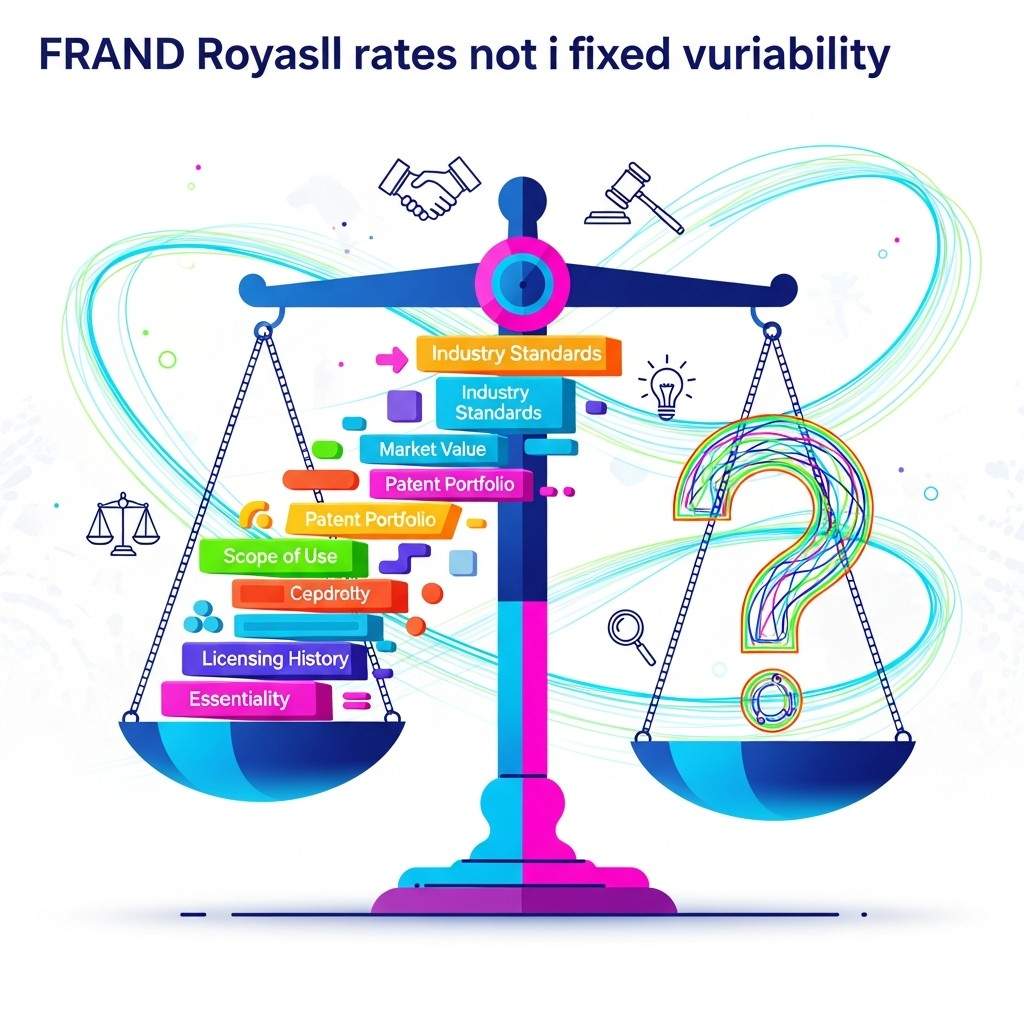
This is why PowerPatent focuses on speed and clarity. By helping founders protect real technical value early with real attorney oversight, it reduces future uncertainty. You are not scrambling. You are ready.
Where the FRAND Number Actually Comes From
The FRAND number does not appear out of thin air. It is not guessed. It is not chosen because it feels right.
In strong negotiations, the number is built slowly, piece by piece, from real inputs that reflect how technology creates business value.
This section explains where that number actually comes from in practice. Not from theory. From how companies, investors, and decision-makers reason through it when real money is on the line.
The FRAND Number Starts With the Product, Not the Patent
One of the most common mistakes is starting with the patent itself. In reality, FRAND analysis begins with the product that uses the standard.
The question asked first is simple. What is the product worth in the market? This includes its price, margin, and role in the value chain.
A chip inside a phone is evaluated differently than a feature inside software or a module inside infrastructure equipment.
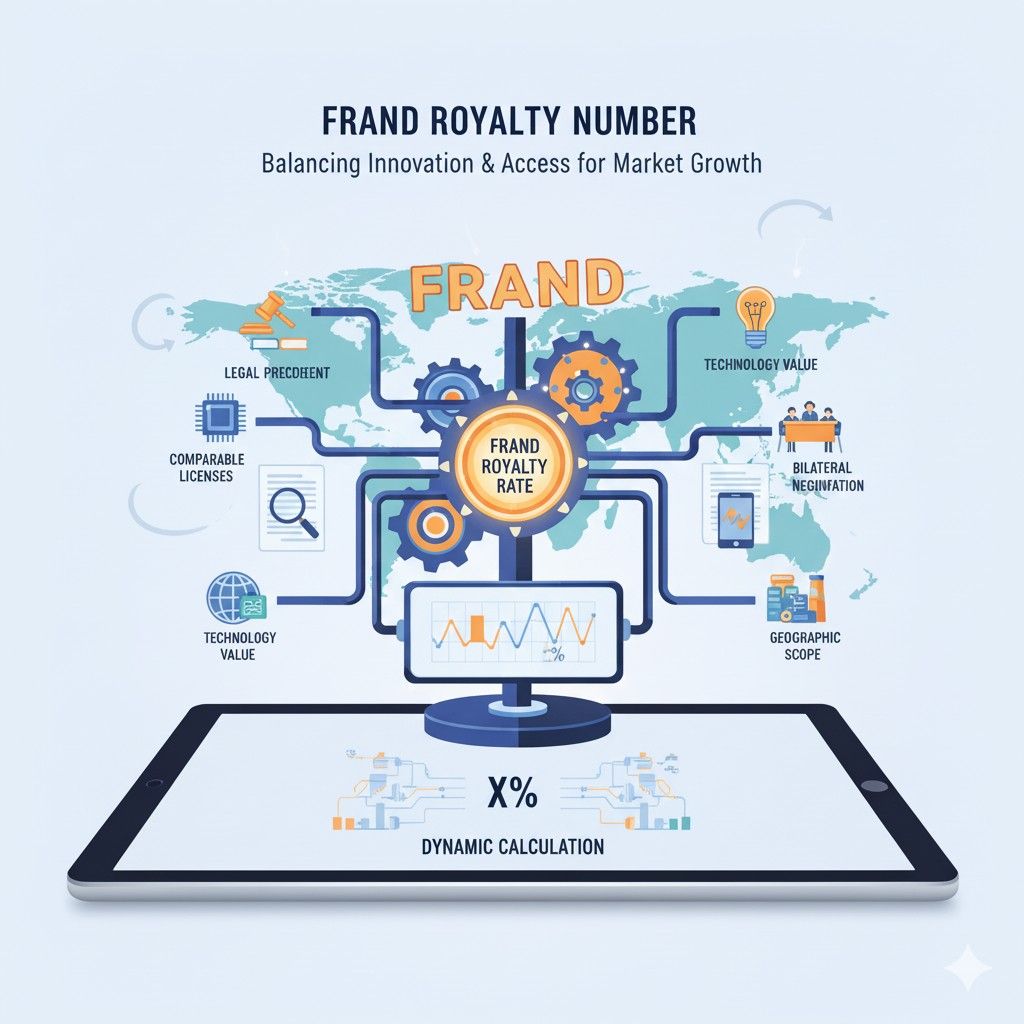
From a business standpoint, royalties must fit within the economics of the product. If the product cannot survive after paying the royalty, the rate will not hold.
Actionable advice here is to know your product math. Whether you are paying or collecting, understand unit pricing, gross margin, and volume assumptions. Numbers grounded in product reality carry weight.
The Role of the Smallest Saleable Unit
Once the product is understood, attention turns to what part of the product actually uses the patented technology.
FRAND practice often focuses on the smallest saleable unit. This means identifying the smallest component or module that can be sold and that still practices the standard.
The reason is practical. It helps avoid overcharging by tying royalties to the full price of a complex product when only part of it uses the invention.
For businesses, this affects both sides. If you are a licensee, pushing the discussion toward the relevant component can limit exposure.
If you are a patent owner, clearly showing how your technology drives value beyond the component can support broader valuation.
The key action is clarity. Map the invention to where it lives in the product. Ambiguity weakens positions.
How Technical Contribution Shapes the Rate
Not all standard-essential patents are equal. Some are critical. Others are optional or narrow.
FRAND numbers rise and fall based on technical contribution. Does the standard still function without the patented technology? Does it improve speed, security, or reliability in a measurable way? Does it reduce cost or power use?
Businesses that can answer these questions with evidence do better. Charts, benchmarks, and engineering explanations matter more than abstract claims.
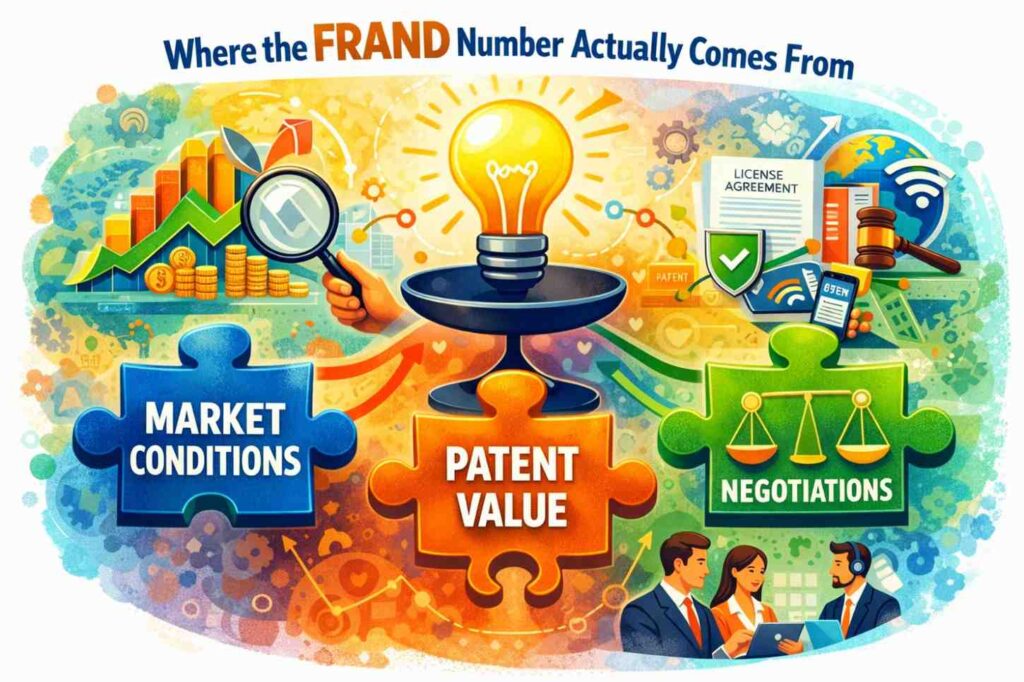
This is where early patent drafting matters. Patents that clearly describe technical impact create stronger FRAND positions.
PowerPatent helps founders write patents that tie inventions directly to system-level outcomes, which becomes valuable when FRAND discussions happen later. You can explore that approach here: https://powerpatent.com/how-it-works
The Importance of Comparable Licenses
One of the strongest inputs into a FRAND number is what others have already paid.
Comparable licenses act as reference points. They show what the market has accepted for similar technology under similar conditions. The closer the comparison, the more persuasive it becomes.
Businesses should not rely on rumors. Public filings, court records, and announced deals offer real signals. Even partial data helps narrow the range.
Actionable guidance here is to build a simple internal database. Track known deals. Note dates, technologies, and contexts. Over time, patterns emerge that make negotiations less uncertain.
Geographic Scope and Market Reach
FRAND rates often reflect where and how widely a product is sold.
A global license covering multiple markets usually commands a different rate than a regional one. High-growth regions may influence value differently than mature markets.
From a business lens, scope must match reality. Paying for worldwide rights when you only sell in a few countries makes little sense. Collecting worldwide royalties when the product has limited reach may not be justifiable.
Clear communication about market footprint helps align expectations and avoid conflict.
The Impact of Volume and Scale
Volume changes everything. A royalty that works at low volume may break margins at scale. FRAND analysis takes this into account.
Some agreements reflect this by adjusting rates based on volume tiers. Others account for scale implicitly by choosing conservative per-unit numbers.
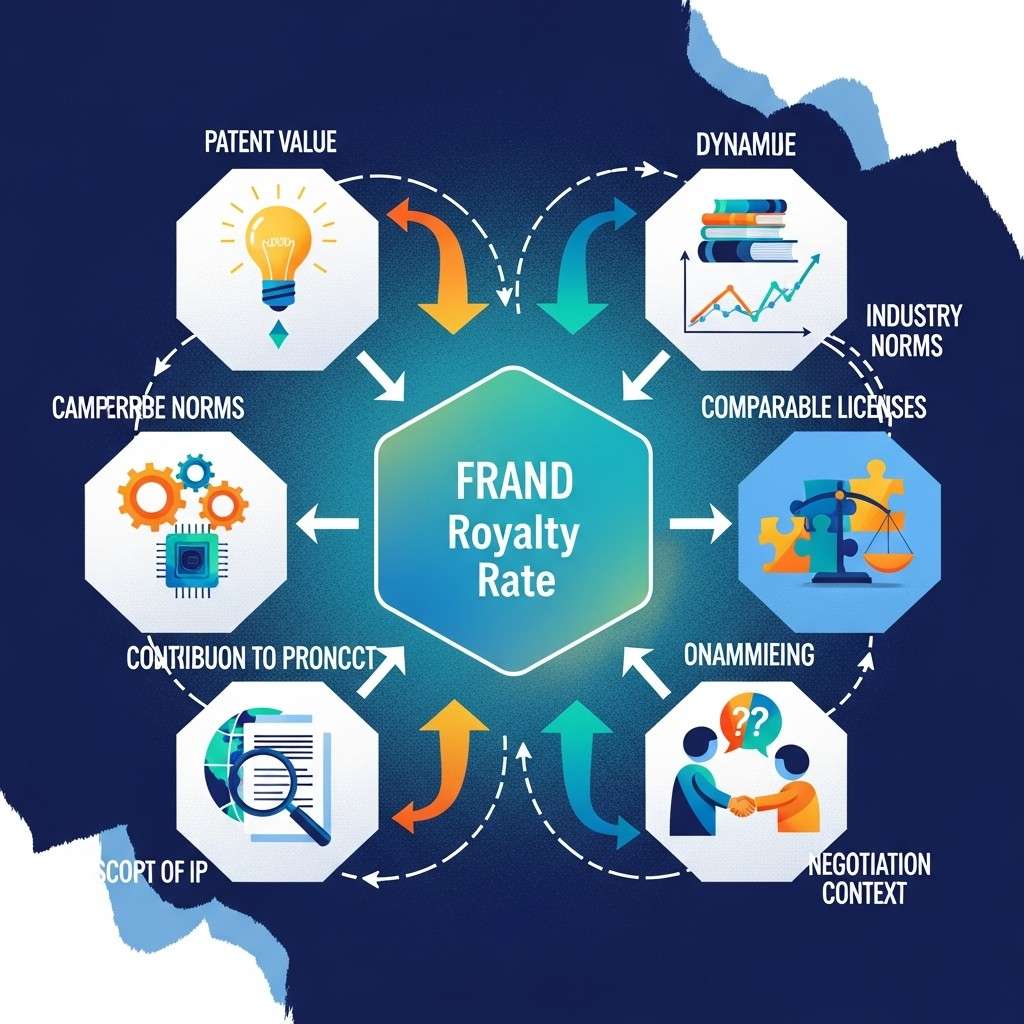
The business lesson is to model growth honestly. Overpromising volume to lower rates can backfire later. Underestimating scale can leave money on the table.
Transparency builds trust, and trust smooths negotiation.
How Risk and Uncertainty Affect the Number
FRAND numbers are shaped by risk. Technical risk, market risk, and legal risk all play roles.
Early in a standard’s life, uncertainty is higher. Technology adoption is not guaranteed. Products may fail. Rates at this stage often reflect that uncertainty.
As adoption grows and risk drops, value becomes clearer. Rates may adjust accordingly.
Businesses should recognize where they are in this lifecycle. Align expectations with reality rather than hoping for best-case outcomes.
The Role of Good-Faith Behavior
FRAND is not only about math. Behavior matters.
Courts and counterparties look at whether parties acted reasonably. Did they respond promptly? Did they share information? Did they negotiate honestly?
From a business perspective, good-faith behavior reduces escalation. It keeps discussions commercial instead of adversarial.
Actionable advice here is simple. Document communication. Be responsive. Explain reasoning. These habits cost little and protect a lot.
How Early Patent Strategy Influences the Final Number
The FRAND number you end up with is shaped years earlier by how your patents were written and filed.
Clear claims. Strong technical grounding. Direct links to standards. These details quietly influence valuation long before licensing begins.
This is why early patent decisions matter so much. Founders who treat patents as checkboxes often struggle later. Those who treat them as business assets gain leverage.
PowerPatent was built around this insight. By combining smart software with real attorney oversight, it helps founders create patents that stand up when value is tested. That preparation often makes the FRAND number clearer and stronger.
Wrapping It Up
By now, one thing should be clear. A FRAND royalty rate is not a mystery number controlled by lawyers behind closed doors. It is a business outcome shaped by preparation, clarity, and early decisions. FRAND exists because modern technology is shared. Standards allow products to work together, markets to grow faster, and innovation to scale. In exchange, patent owners agree to license their technology in a way that makes sense for everyone involved. That agreement is not a weakness. It is a trade that creates massive reach and long-term value.