Most founders talk about patents. Very few talk about trade secrets. Yet for many startups, trade secrets are the real gold. Your code logic. Your model tweaks. Your internal process. The quiet details that make your product hard to copy. The problem is simple. You cannot protect what you do not track. Trade secrets do not live in a filing. They live in people, systems, habits, and decisions made every day. If even one of those breaks, the secret can leak. Once it leaks, it is gone forever. No redo. No second chance.
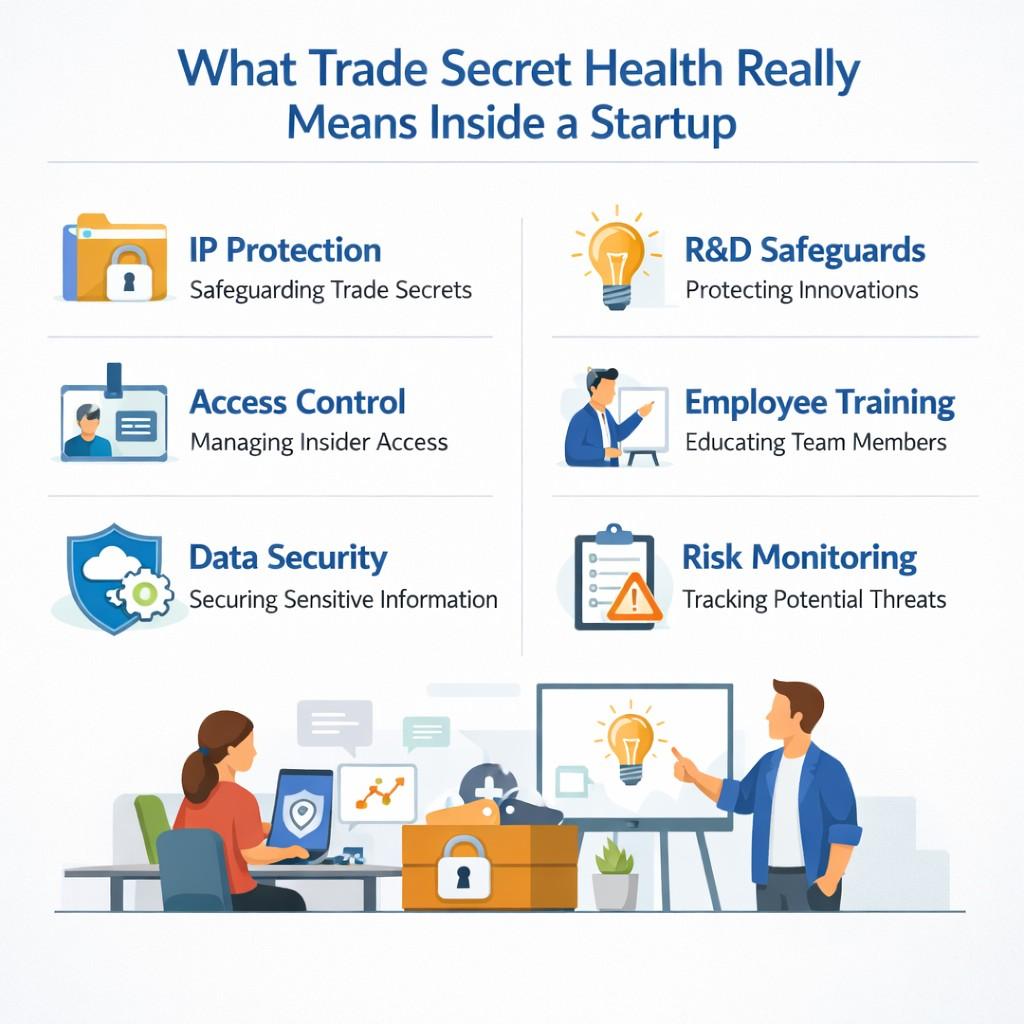
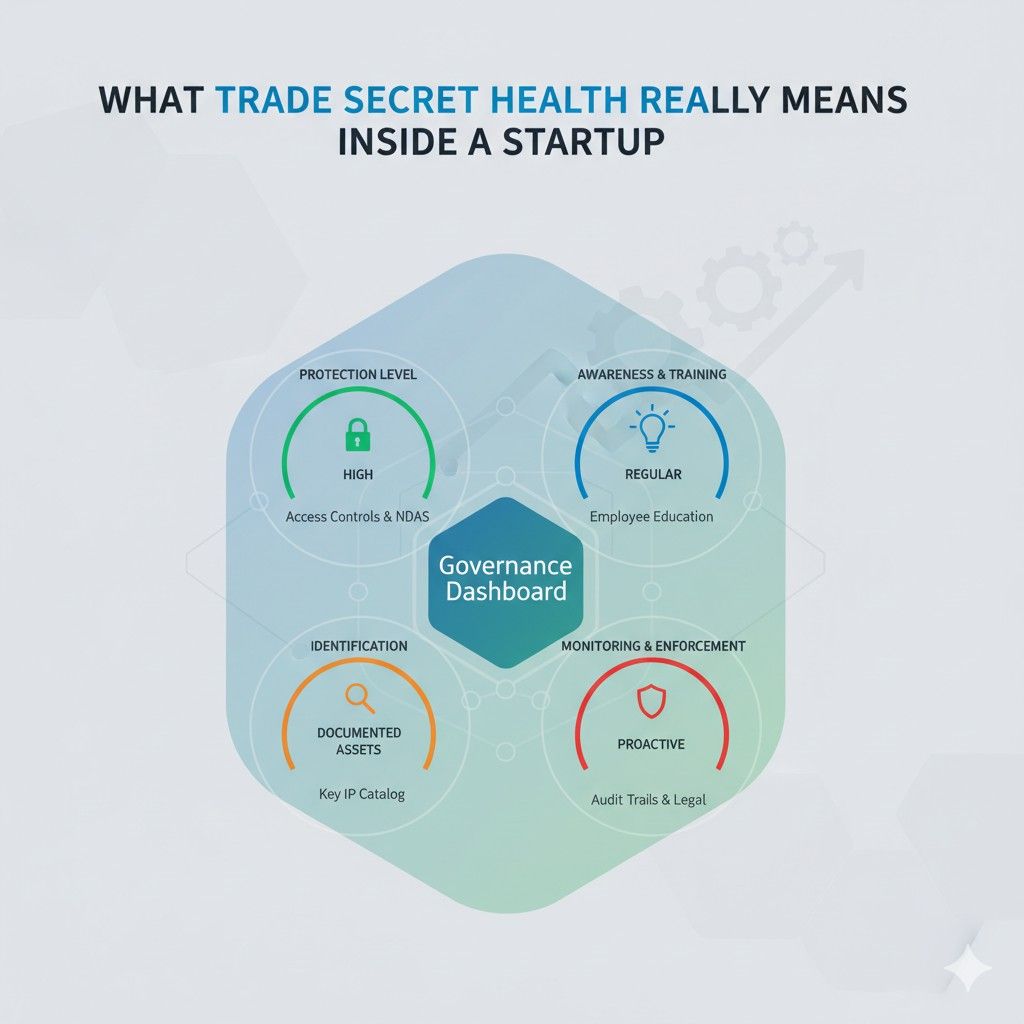
What Trade Secret Health Really Means Inside a Startup
Trade secret health is not about fear or control. It is about clarity. A healthy trade secret environment means your company knows what matters, who touches it, and how it stays protected as the business changes.
Most teams think they are safe because nothing bad has happened yet. That is not health. That is luck.
Real health shows up in everyday actions. It shows up in how people talk about sensitive work, how systems are set up, and how decisions are made when speed is high and pressure is real.
This section breaks down what trade secret health truly looks like inside a growing startup, without legal language and without slowing you down.
Understanding What Actually Counts as a Trade Secret
Many teams only think of trade secrets as formulas or algorithms. In reality, trade secrets are often much simpler and much closer to daily work.
They include the way your system is tuned, the logic behind key decisions, the data paths that took months to refine, and even internal playbooks that competitors would love to see.
Trade secret health begins when leadership clearly agrees on what the company cannot afford to lose. This does not require a long document. It requires honest discussion.
Founders should be able to say, in plain words, what would hurt the company if it showed up in a competitor’s product tomorrow. If you cannot say it simply, it is likely not being protected well.
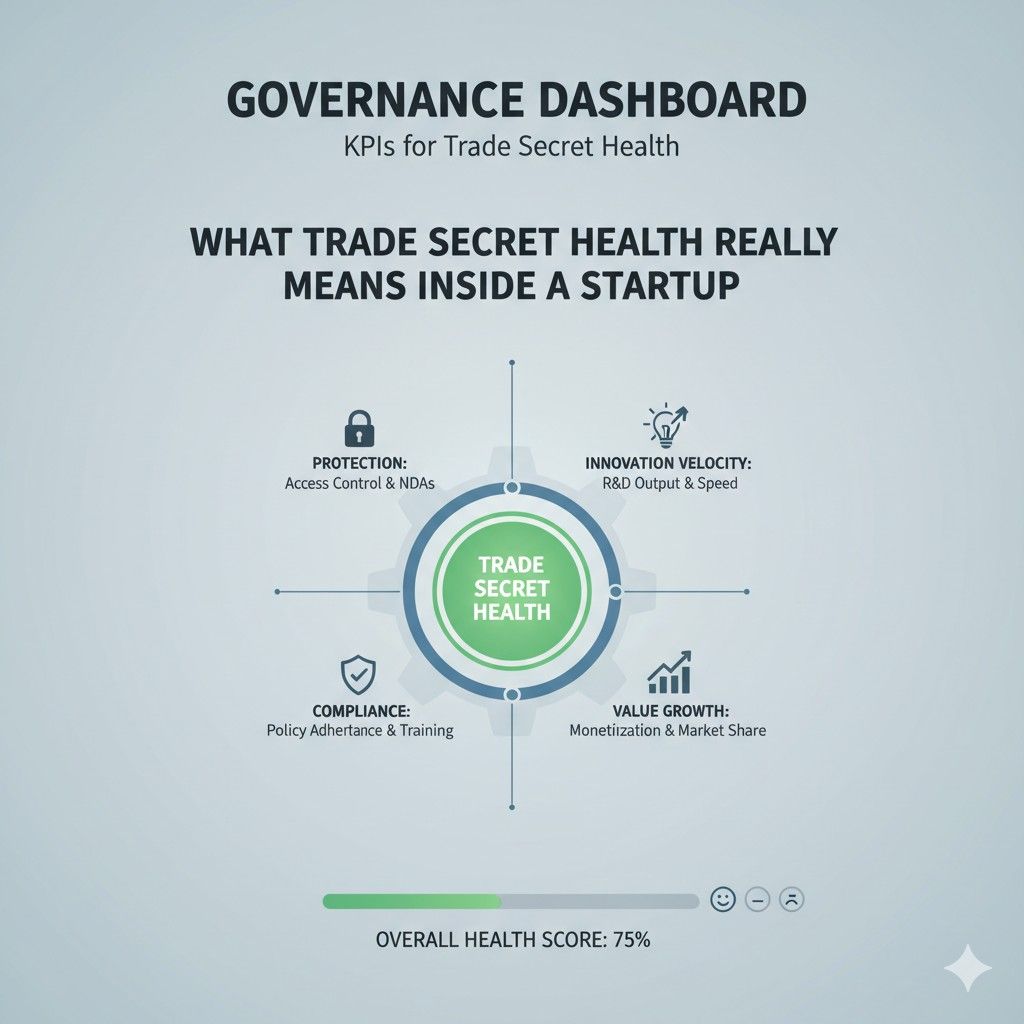
A strong move here is to connect trade secrets directly to value. Ask how each core secret supports revenue, speed, or market edge. When teams see the connection to survival and growth, protection stops feeling abstract and starts feeling necessary.
Trade Secrets Live in People, Not Files
One of the biggest misunderstandings is thinking trade secrets are locked in code repos or documents. In truth, they live in human heads.
Engineers, product leads, data scientists, and even contractors carry pieces of the puzzle.
Healthy startups accept this reality and design around it. They do not assume loyalty or memory will do the work. Instead, they build simple guardrails.
This includes clear role boundaries, thoughtful access controls, and regular reminders about what information is sensitive and why.
A practical habit is to treat sensitive knowledge like a shared asset with rules. When someone joins a team, they should know what they are trusted with. When someone changes roles or leaves, that trust should be adjusted.
This is not about distrust. It is about maturity.
Silence Is Not Protection
Many founders believe that not talking about trade secrets is enough. This silence often backfires. When people are not told what is sensitive, they guess. Some guess wrong. Others overshare without realizing it.
Healthy trade secret culture replaces silence with simple clarity. Teams talk openly about what should stay inside the company and what can be shared. They do this in onboarding, in project kickoffs, and when collaborating across teams.
A strong signal of health is when employees pause before sharing details and ask if something is safe to disclose. That pause does not happen by accident. It comes from repeated, calm guidance from leadership.
Speed Without Structure Is a Hidden Risk
Startups move fast by nature. That speed is a strength, but it can quietly weaken trade secret health. New tools are adopted overnight. External partners are added quickly. Data flows expand without review.
Healthy startups match speed with light structure. They do not block progress, but they create moments of review.
Before a new tool is connected, someone asks what data it will touch. Before a partnership starts, someone checks what information will be shared.
These moments do not need to be heavy meetings. They can be simple questions built into existing workflows. The key is consistency. Over time, these small checks prevent large leaks.
Ownership Makes Protection Real
Trade secret health improves when ownership is clear. When everyone is responsible, no one really is. Healthy teams assign clear responsibility for trade secret care, even if it is only part of someone’s role.
This person or small group does not need to be legal experts. They need awareness and authority.
They track where sensitive knowledge lives, flag new risks, and keep leadership informed. They also become the go-to voice when questions come up.
This ownership creates accountability without fear. It signals that trade secrets are a business priority, not just a legal concept.
Measuring Health Without Overcomplicating It
You cannot manage what you do not observe. Trade secret health becomes real when it is measured in simple ways. This does not mean spreadsheets full of metrics. It means paying attention to behavior and patterns.
Healthy signs include controlled access, thoughtful sharing, clean offboarding, and fewer surprises. Unhealthy signs include unknown data flows, casual sharing with outsiders, and confusion about what is sensitive.
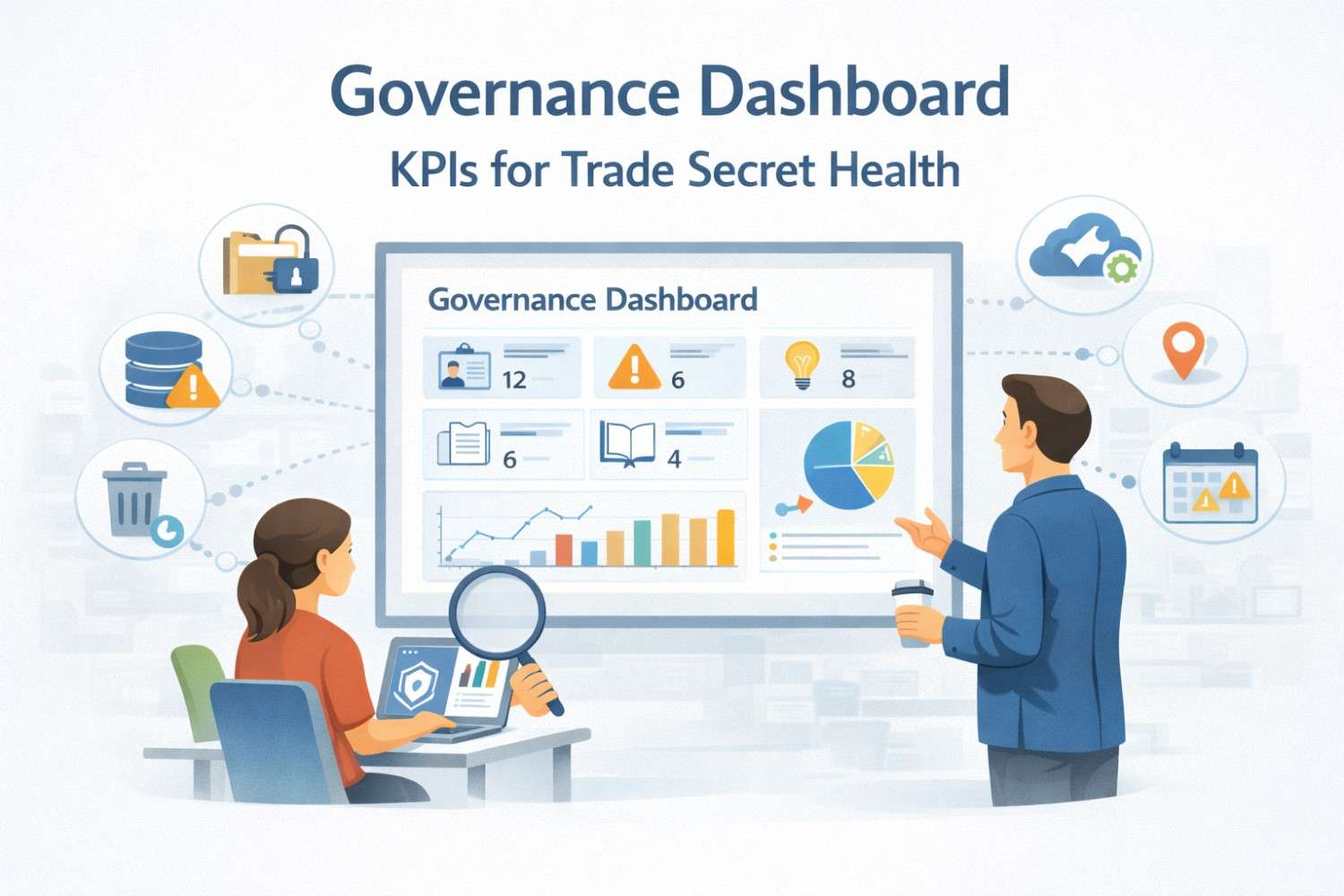
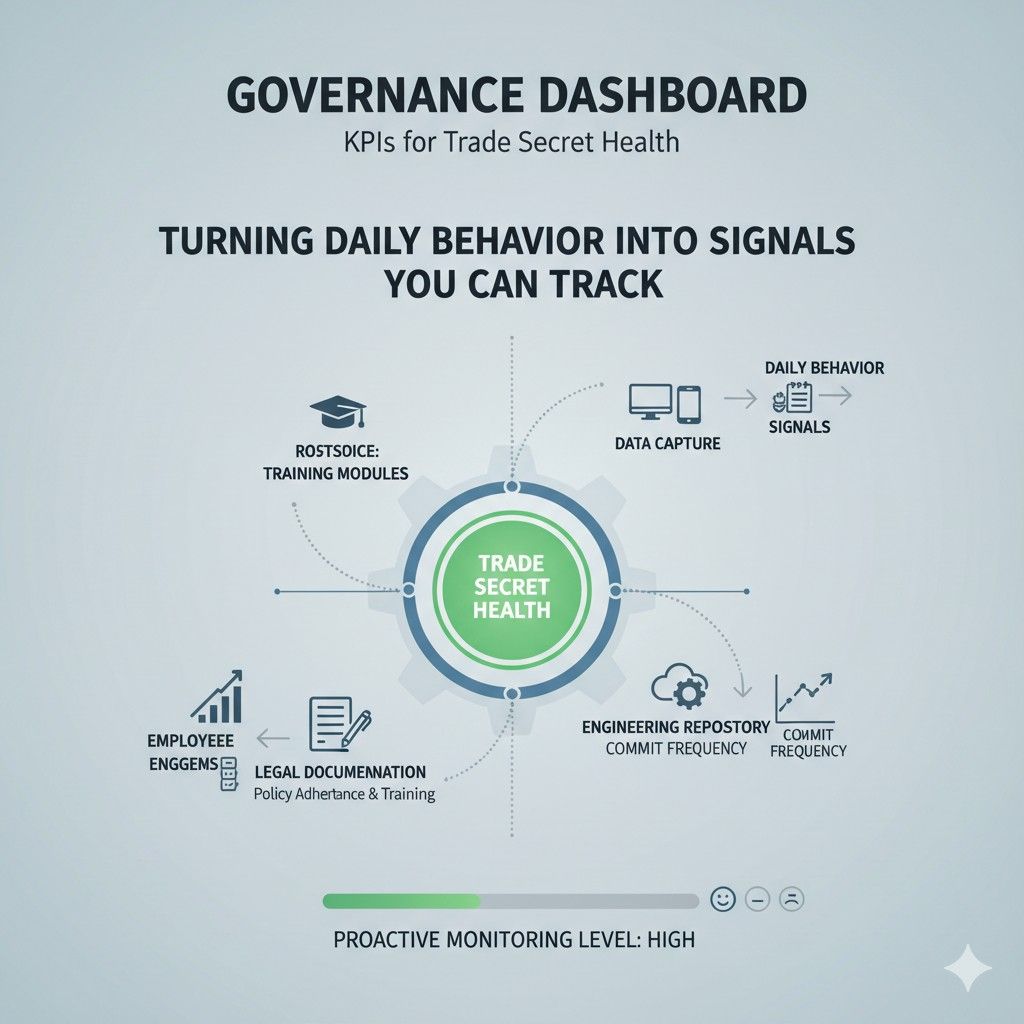
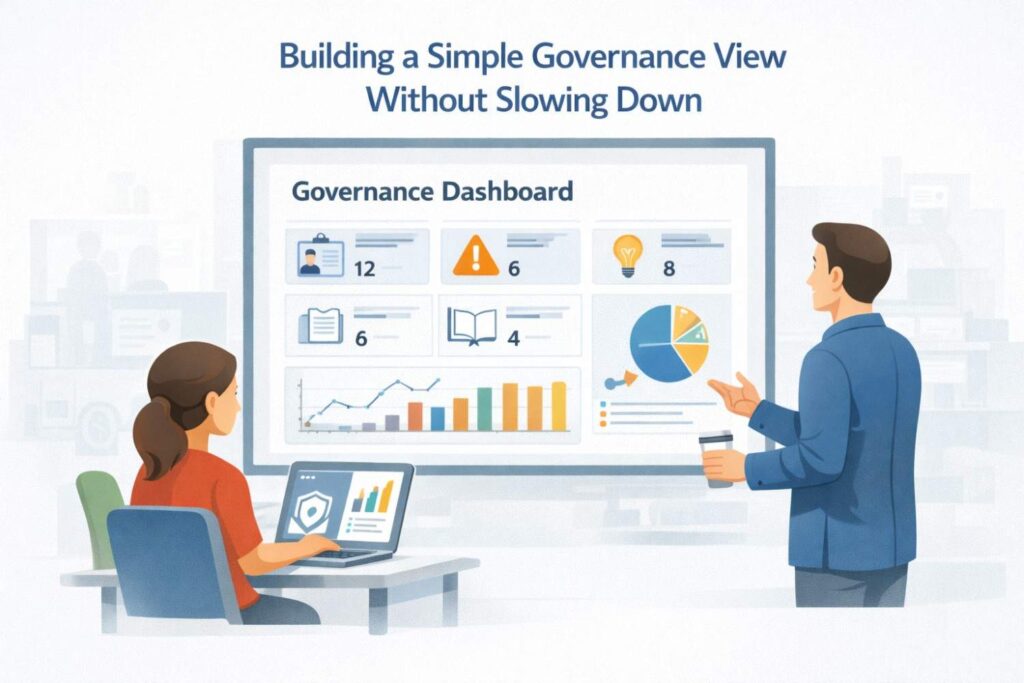
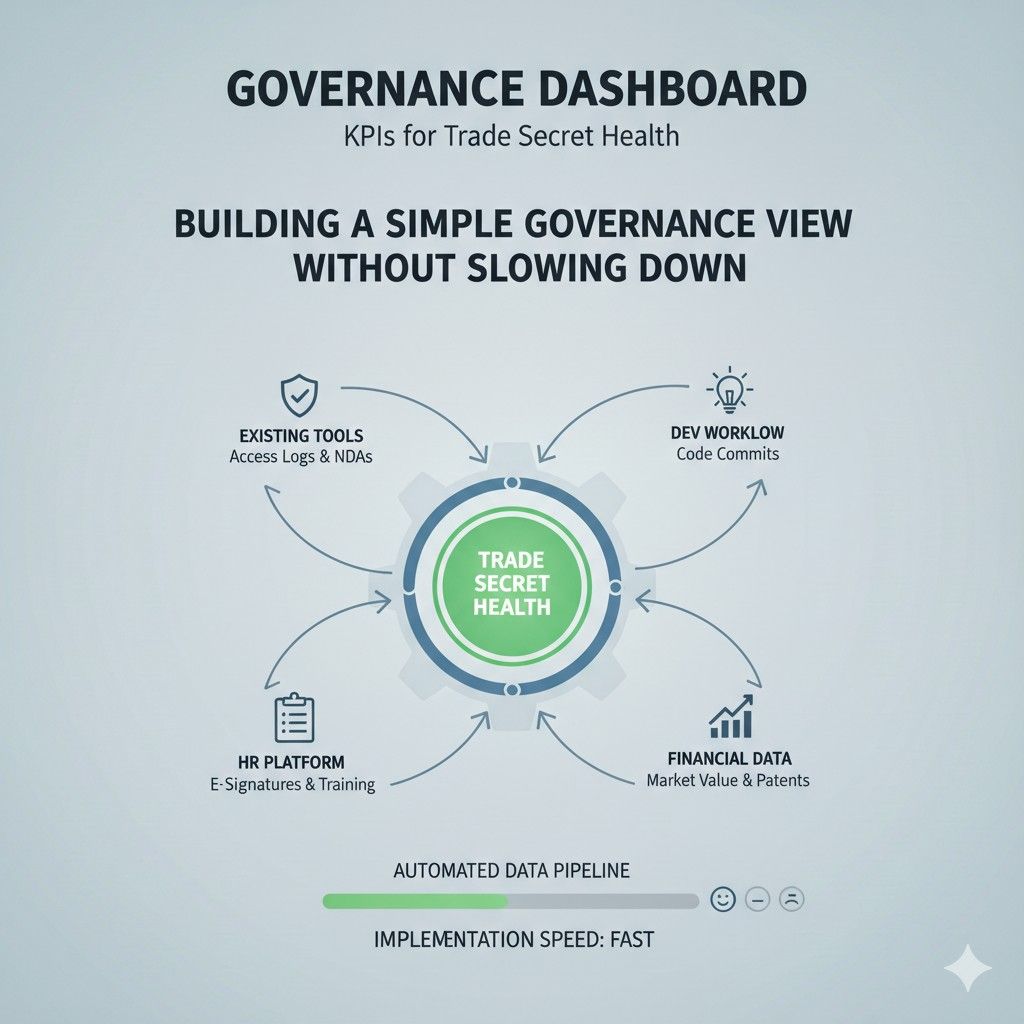
A governance dashboard brings these signals into one view. It helps leaders see trends early and act before damage happens. This is not about perfection. It is about awareness.
Trade Secrets and Patents Work Better Together
Some founders treat trade secrets and patents as separate worlds. Healthy companies understand they support each other. Trade secrets protect what should stay hidden. Patents protect what must be shared to block others.
Knowing which path to take requires clarity about your invention and your business goals. This is where many teams make costly mistakes, either by keeping something secret too long or by sharing too early.
PowerPatent helps teams make these decisions with confidence. By combining smart software with real attorney insight, founders can protect what matters without slowing down.
If you want to see how this works in practice, you can explore it here: https://powerpatent.com/how-it-works
Trade secret health is not a one-time task. It is a living system that grows with your company. When done right, it gives you control, confidence, and freedom to build fast without fear.
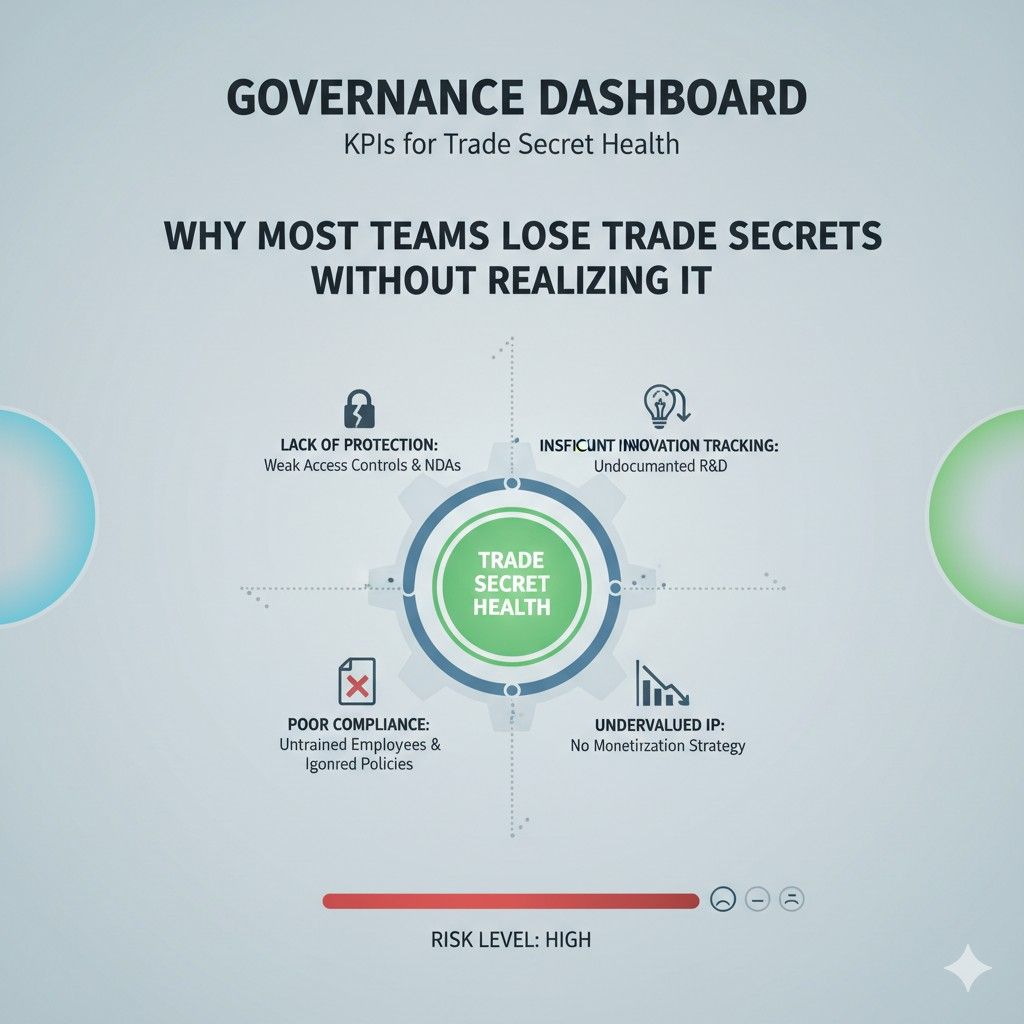
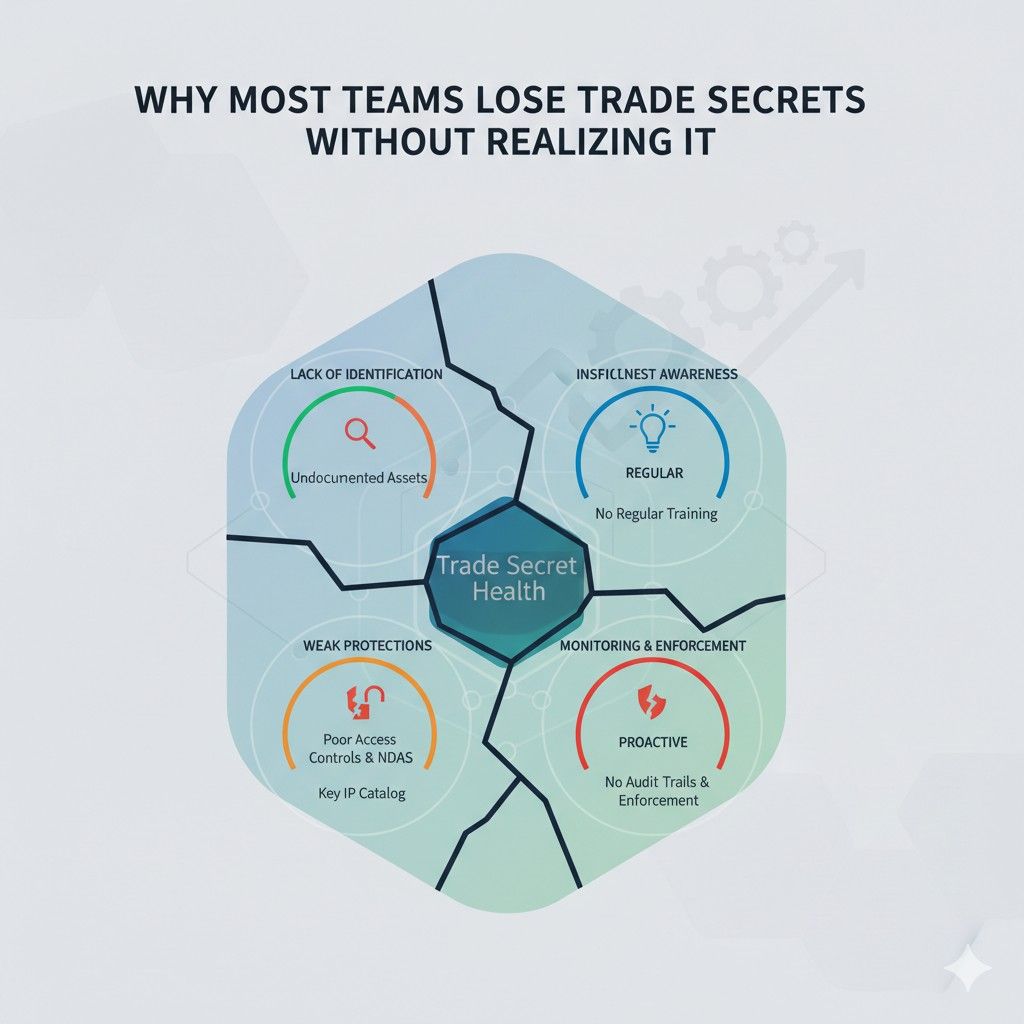
Why Most Teams Lose Trade Secrets Without Realizing It
Trade secrets are rarely lost in dramatic ways. They do not usually disappear because of theft or bad actors. Most of the time, they fade away quietly through normal work.
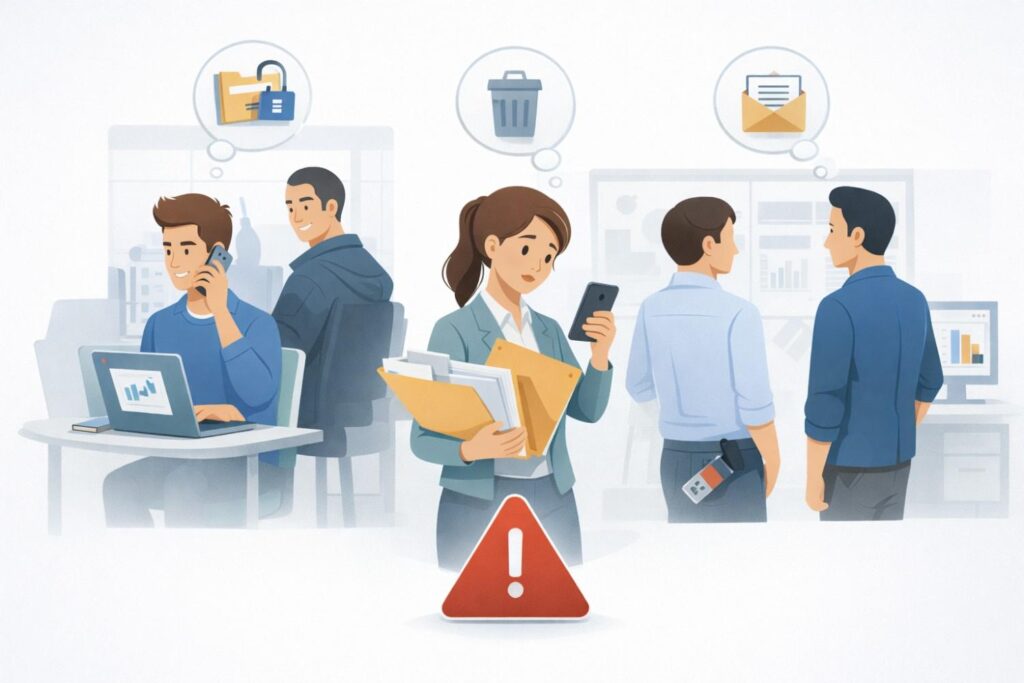
A quick message. A rushed demo. A shared folder that stayed open too long. By the time anyone notices, the advantage is already gone.
This section explains why good teams with good intentions still lose control of their most valuable knowledge. More importantly, it shows how to spot these risks early and stop them before damage is done.
Growth Changes Everything Faster Than You Expect
In the early days, founders know everything. The team is small. Information flows naturally. Trust is high, and risk feels low. This stage creates habits that do not scale.
As the company grows, those same habits become dangerous. More people join. Roles blur. Access expands. What used to be a tight circle becomes a wide network, but the rules often stay the same.
Teams lose trade secrets when growth outpaces awareness. Healthy companies revisit assumptions as they scale.
They accept that what worked at five people will fail at fifty. This mindset shift alone prevents many silent leaks.
Tools Become Back Doors Without Anyone Noticing
Modern startups rely on tools to move fast. Collaboration platforms, analytics tools, cloud services, and AI assistants all touch sensitive data. Each tool adds value, but also adds exposure.
The risk is not the tool itself. The risk is forgetting what data it can see. Many teams connect tools once and never review them again. Over time, access piles up.
Old integrations remain active. Former employees still have permissions.
A simple but powerful practice is regular access review. Not once a year, but often enough to match your pace. When tools change, data paths change too. Trade secret health depends on keeping those paths visible.
Sharing to Win Deals Can Quietly Cost You
Startups need partners, customers, and investors. Sharing is part of winning trust. The danger comes when sharing becomes automatic instead of intentional.
Teams often overshare during demos, pilots, or technical discussions. They want to prove value. They want to look smart. In doing so, they reveal how the product works, not just what it does.
Healthy teams prepare boundaries before these conversations happen. They decide what can be shown and what stays internal. They practice explaining value without exposing core logic.
This preparation turns sharing into a strength instead of a risk.
Informal Culture Can Undermine Protection
Many startups pride themselves on open culture. Transparency, fast communication, and low barriers are seen as virtues. These are good values, but without care, they can erode trade secret health.
Informal chats, public channels, and casual documentation can spread sensitive details widely. Once information is everywhere, it is effectively nowhere. Control disappears.
Healthy culture balances openness with awareness. Teams stay friendly and fast, but they also respect boundaries.
They know when to switch from public to private, from general to need-to-know. This balance must be taught, not assumed.
Departures Are the Most Overlooked Risk
People leave startups all the time. Some leave on good terms. Some do not. Either way, they carry knowledge with them.
The biggest mistake teams make is treating departures as an HR task only. Laptops are returned, accounts are closed, and the team moves on. What is often missed is the knowledge transition.
Healthy teams plan exits as carefully as entries. They review access, remind departing employees of confidentiality, and ensure sensitive projects are handed off cleanly. This is not about suspicion. It is about closing loops.
Assumptions Replace Reality Over Time
Many founders believe their trade secrets are safe because they were careful once. They signed agreements. They set rules early. Over time, those rules fade from memory while reality changes.
New hires may not fully understand old agreements. New workflows may bypass old controls. What was once protected becomes exposed through drift.
Trade secret health requires regular reality checks. Leaders should ask simple questions. Who knows this? Where is it stored? Who can access it today? The answers often surprise them.
No One Is Watching the Whole Picture
One of the biggest reasons teams lose trade secrets is fragmentation. Engineering sees one part. Product sees another. Legal sees a snapshot. No one sees the whole system.
Without a central view, risks hide in gaps. Each team assumes someone else is handling it. This is how important details slip through.
A governance dashboard solves this by pulling signals together. It does not replace teams. It connects them. It shows leadership where attention is needed before problems grow.
PowerPatent was built with this reality in mind. Founders need speed, but they also need visibility. By combining structured guidance with real attorney oversight, teams can avoid blind spots without slowing down. You can see how this works here: https://powerpatent.com/how-it-works
Trade secrets are not lost because teams do not care. They are lost because no one notices the small breaks forming. Once you see these patterns, you can fix them early and keep control as you scale.
Turning Daily Behavior Into Signals You Can Track
Trade secret health becomes real when you stop treating it as an idea and start treating it as behavior. Every company already sends signals about how well it protects its knowledge.
Most teams just do not look at them. These signals live in daily actions, small choices, and routine workflows. When you learn how to see them, you gain control without adding friction.
This section shows how to turn everyday behavior into clear signals you can track, understand, and improve over time.
Behavior Tells the Truth Faster Than Policy
Written rules are helpful, but behavior tells the real story. You can have strong agreements on paper and still be exposed if daily actions do not match them. Trade secret health shows up in how people actually work when no one is watching.
Pay attention to how teams share work internally. Notice how often sensitive details are discussed in open spaces. Watch how quickly people grant access to tools or files. These moments reveal far more than any document.
A smart move is to observe before you change anything. Spend time understanding how work flows today. This baseline helps you spot weak points without guessing.
Access Patterns Are Early Warning Signs
Who has access to what is one of the clearest signals of trade secret health. Over time, access tends to grow but rarely shrinks. People move roles. Projects end. Permissions stay.
Healthy teams treat access like a living system. They expect it to change and review it often. When access reviews are normal, they feel routine instead of threatening.
A useful signal to track is access drift. When many people have access to sensitive systems without a clear reason, risk is rising. Catching this early is far easier than fixing it later.
How Work Is Documented Matters More Than You Think
Documentation is a gift to future teammates, but it can also be a risk if handled carelessly. Trade secret health depends on where sensitive details are written and who can see them.
Healthy teams separate general knowledge from core logic. They document outcomes and usage widely, while keeping deep mechanics more controlled. This does not slow teams down. It makes information easier to manage.
Watch where detailed explanations live. If critical logic is scattered across shared docs and chat threads, that is a signal worth acting on.
Conversations Reveal Culture Gaps
Listen to how people talk about sensitive work. Do they pause before sharing details? Do they ask if something is okay to disclose? Or do they assume everything is open by default?
These small conversational cues reflect culture. When teams have strong trade secret health, caution feels natural, not forced. People protect what they understand.

Leaders shape this through example. When founders model thoughtful sharing, others follow. Over time, this creates a culture where protection happens quietly and consistently.
External Interactions Are High-Value Signals
Meetings with outsiders are moments of truth. Demos, support calls, sales talks, and partnerships all test trade secret health.
Healthy teams prepare for these moments. They know what story they want to tell and what details stay inside. They rehearse explanations that focus on value, not mechanics.
A strong signal to track is how often teams need to correct or pull back after sharing. Frequent pullbacks suggest boundaries are unclear. Clear boundaries reduce stress and mistakes.
Onboarding Shows What the Company Truly Values
How you onboard new hires says a lot about what matters. If trade secrets are never mentioned, new employees assume they are not important.
Healthy onboarding includes simple guidance on sensitive information. Not legal lectures, but practical examples. New hires should know what to be careful with and why.
Track how often new team members ask questions about sharing. Curiosity here is a good sign. Silence often means confusion.
Offboarding Is a Moment That Deserves Attention
Departures are one of the strongest signals of trade secret health. Smooth offboarding shows maturity. Rushed offboarding creates risk.
Healthy teams have clear steps when someone leaves. Access is reviewed. Sensitive work is reassigned. Expectations are restated calmly and clearly.
If offboarding feels chaotic or inconsistent, that is a signal worth addressing. Improving this process protects knowledge and builds trust with the team.
Turning Signals Into a Simple Dashboard
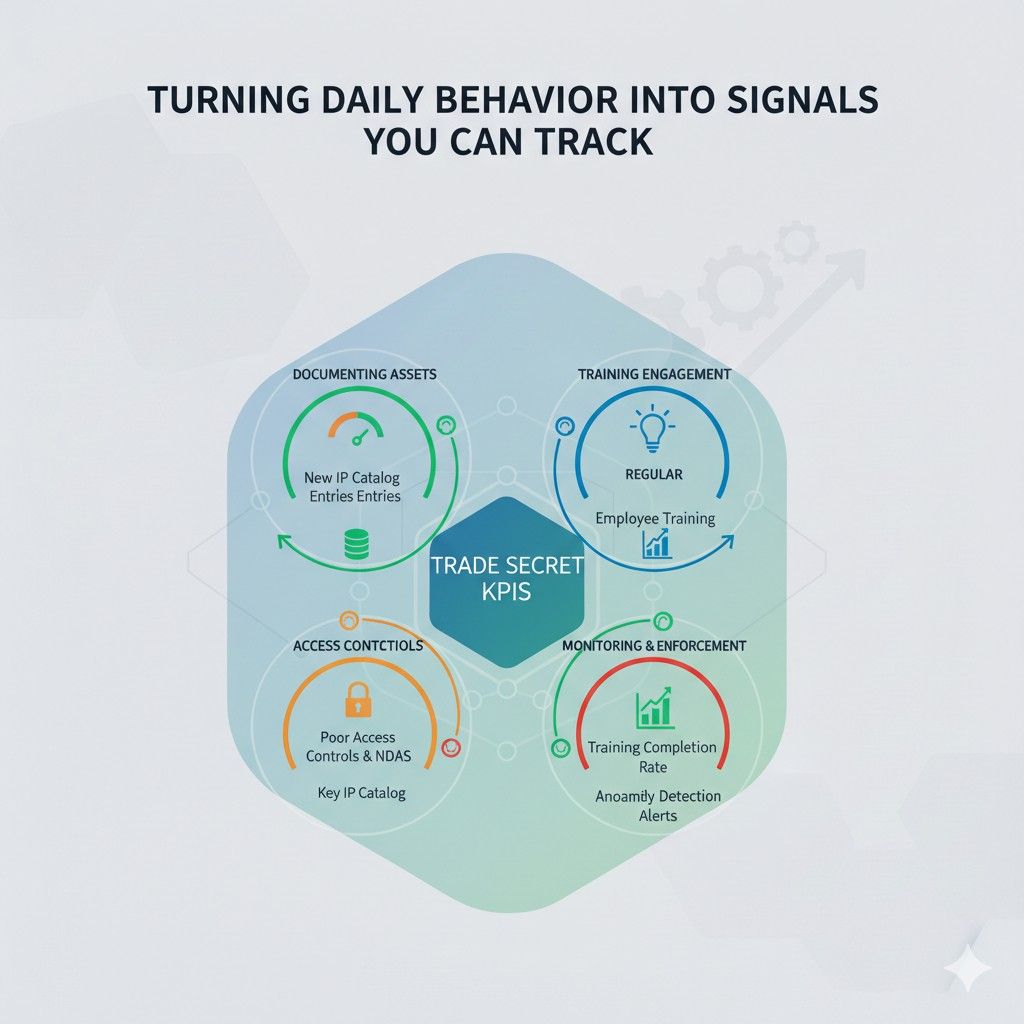
Once you see these behaviors, the next step is visibility. A governance dashboard brings signals together in one place. It does not need to be complex. It needs to be honest.
Track trends, not perfection. Are access reviews happening? Are sharing boundaries clear? Are exits clean? These answers guide action.
The goal is not to control people. It is to support them with clarity.
PowerPatent helps teams build this clarity while protecting what matters most.
By combining smart systems with real attorney guidance, founders can move fast without losing control. You can see how it works here: https://powerpatent.com/how-it-works
When daily behavior becomes visible, trade secret health stops being abstract. It becomes manageable, measurable, and strong.
Building a Simple Governance View Without Slowing Down
Most founders worry that governance will slow everything down. They picture meetings, forms, and long approvals. That fear keeps many teams from building any real oversight at all.
The truth is simpler. Good governance is quiet. It fits into work that already happens. When done right, it removes friction instead of adding it.
This section explains how to build a clear governance view of your trade secrets without hurting speed, focus, or morale.
Governance Is About Visibility, Not Control
The goal of governance is not to police people. It is to see what is happening early enough to act. When leaders have visibility, they can make small adjustments instead of big corrections.
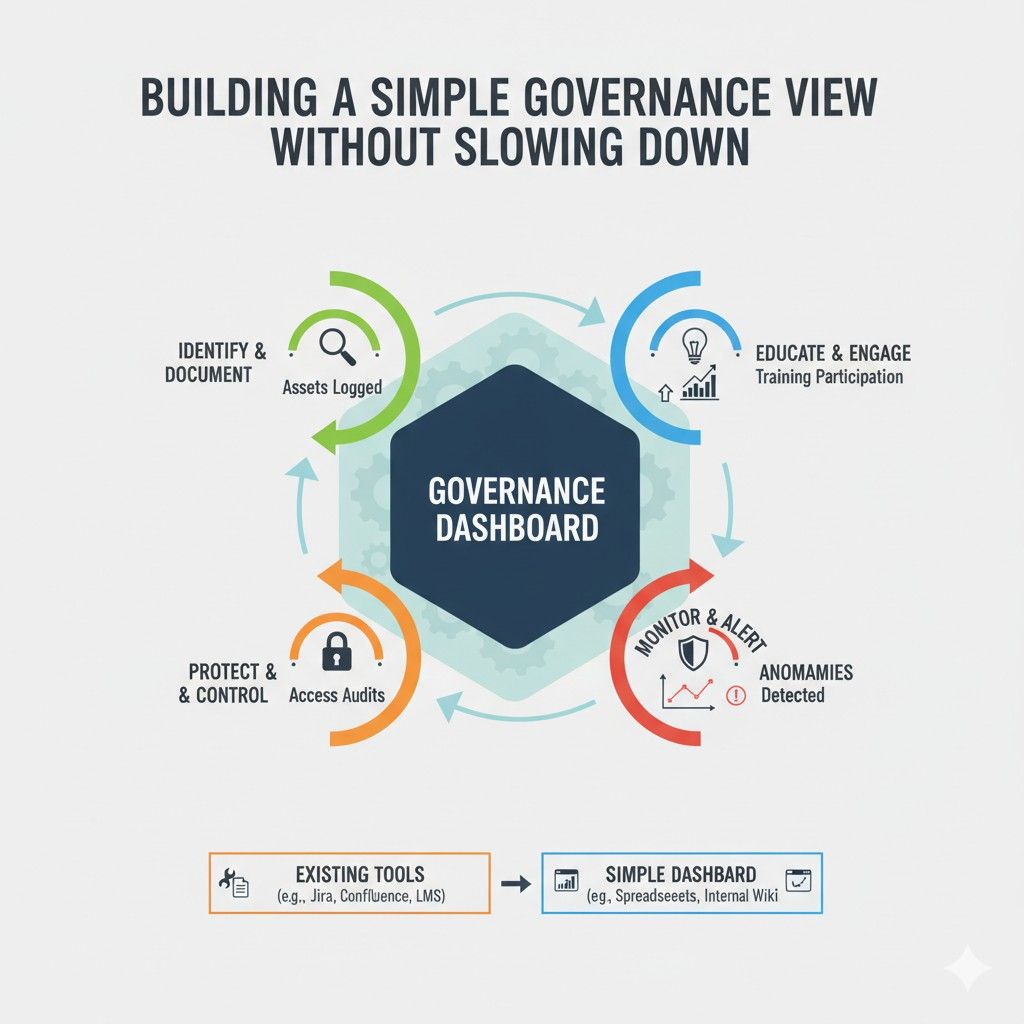
Healthy governance shows patterns. It highlights where access is growing too wide, where sharing is becoming casual, and where tools are touching sensitive data. This view helps leaders support teams before problems grow.
When governance is framed as support, not restriction, teams accept it more easily and even rely on it.
Start With What You Already Have
You do not need new systems to start. Most companies already have the data they need. Access logs, onboarding flows, tool permissions, and project records all contain signals.
The first step is pulling these signals together. Not in a perfect way, but in a visible one. Even a simple shared view reviewed regularly can reveal gaps.
The key is consistency. A rough view looked at often beats a perfect view ignored.
Make Reviews Part of Existing Rhythms
Governance works best when it fits into routines. Instead of creating new meetings, attach trade secret checks to existing ones. Product reviews, security check-ins, or leadership syncs are natural places.
During these moments, ask simple questions. Has anything sensitive moved? Has access changed? Are new partners involved? These questions take minutes but prevent months of regret.
Over time, teams expect these checks. They stop feeling special and start feeling normal.
Keep Language Simple and Practical
Governance fails when it sounds legal or abstract. People tune out. Healthy teams use plain language focused on work.
Instead of talking about compliance, talk about risk. Instead of rules, talk about habits. Instead of enforcement, talk about protection.
This language shift matters. It makes governance feel like a business tool, not a burden.
Assign Clear Stewardship
Every system needs a steward. This does not require a new role or a large team. It requires clarity.
One person or a small group should own the governance view. They keep it updated, flag changes, and bring issues forward. They do not block work. They guide decisions.
This stewardship creates continuity as the company grows. It ensures knowledge does not disappear when people change roles.
Review, Adjust, Repeat
Trade secret governance is not static. Tools change. Teams grow. Markets shift. Healthy governance adapts.
Regular review keeps the system honest. When something feels heavy, simplify it. When something feels loose, tighten it slightly. This balance keeps speed intact.
The best governance systems evolve quietly alongside the business.
Where Patents Fit Into the Governance View
A strong governance view also helps decide when to patent and when to keep things secret. Visibility into what matters makes these choices clearer.
Many teams delay patents because they are unsure or overwhelmed. Others file too late and lose protection. Governance brings timing into focus.
PowerPatent was built to support this moment. By turning real work into strong patents with speed and clarity, teams avoid costly delays.
With real attorney oversight and smart tools, founders stay in control of their IP strategy. You can explore how it works here: https://powerpatent.com/how-it-works
Good governance does not slow startups down. It keeps them steady as they move fast. It protects the quiet details that make your company hard to copy and easy to grow.
Wrapping It Up
Trade secrets do not protect themselves. They stay safe only when a company chooses to see them, respect them, and manage them with intention. The strongest startups are not the ones with the most rules. They are the ones with the clearest view of what matters and the discipline to protect it every day. A governance dashboard is not about fear or complexity. It is about calm confidence. It gives leaders a way to see risk early, guide teams gently, and make smart decisions without slowing momentum. When trade secret health is visible, it becomes manageable. When it is managed, it becomes a real advantage.