When your startup uses university tech or government-backed research, the rules behind that funding can shape what you can own, what you can control, and how strong your patents really are. Most founders hear words like Bayh-Dole or march-in rights and think, “That sounds like legal noise someone else can worry about.” But these rules matter in very real ways. They decide who gets to keep rights to an invention, who can step in and take them back, and how safe your IP truly is as you grow.
How Bayh-Dole Shapes Who Really Owns Federally Funded Inventions
Before diving deeper, it helps to step back and look at why the Bayh-Dole Act even exists. Most founders hear the name and assume it is another slow government rule that blocks progress.
In reality, the law was created to speed up innovation by allowing universities and small businesses to own inventions that came out of federal funding. But the part that matters for you, the builder, is how ownership actually works in practice.
Bayh-Dole gives you room to keep control, but only if you understand the quiet rules buried underneath the surface. Missing these rules does not just create legal noise.
It creates real cracks in your patent story, and those cracks can spread when you start raising money, signing deals, or preparing for acquisition.
Why Ownership Under Bayh-Dole Depends on How You Handle Disclosure
A simple but often missed truth is that Bayh-Dole only works in your favor if you follow its disclosure steps exactly the way the law expects.
When your invention is touched by federal money and you fail to disclose it on time, you risk losing ownership back to the government.
This sounds dramatic, but it happens more often than founders realize simply because research teams, labs, or early collaborators never synchronized their reporting timelines.
If any part of your invention was developed using a federal grant or flowed through a university lab funded by one, the disclosure clock starts earlier than most teams expect.
This is why founders need a clear line of communication between engineering, academic partners, and whoever tracks grants. In fast-moving startups, it is easy to push paperwork aside and focus on shipping the next version.
But under Bayh-Dole, paperwork becomes the foundation of your right to own and protect your IP.
The government does not want to take your invention. It simply wants to make sure the public benefit created with public money is not locked away or forgotten.
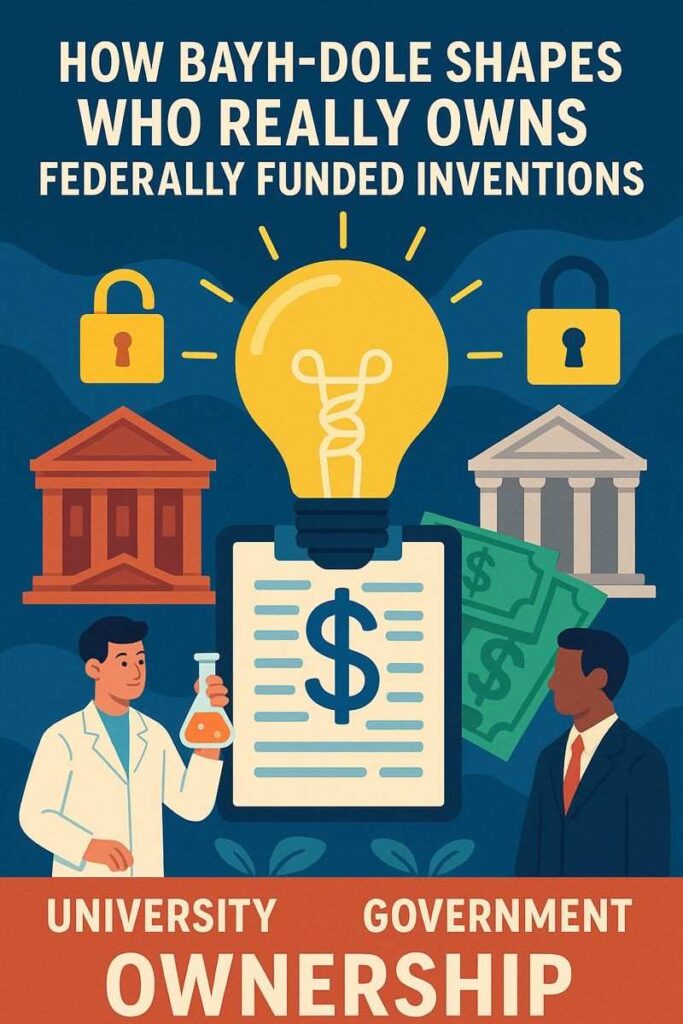
When you show you are handling the disclosure responsibly, ownership stays with you. When you ignore it, control slips away even if you already built a patent strategy around it.
How Funding Sources Shape What You Can Claim in a Patent
Another subtle point under Bayh-Dole is that federal funding can shape not only who owns the invention but what your patent can actually cover.
When part of the invention was built using federal support, you need a clean record describing what was funded, how it was used, and whether the final invention traces back to it.
Without that clarity, your patent claims can be challenged later. Investors and potential partners look closely at this. They do not want a messy chain of title. They want certainty. They want to know that your claims will stand if they are ever tested.
This means your business benefits directly from maintaining tight boundaries around what was federally supported and what was internally developed.
You may have an invention that began with federal funding but evolved far beyond it.
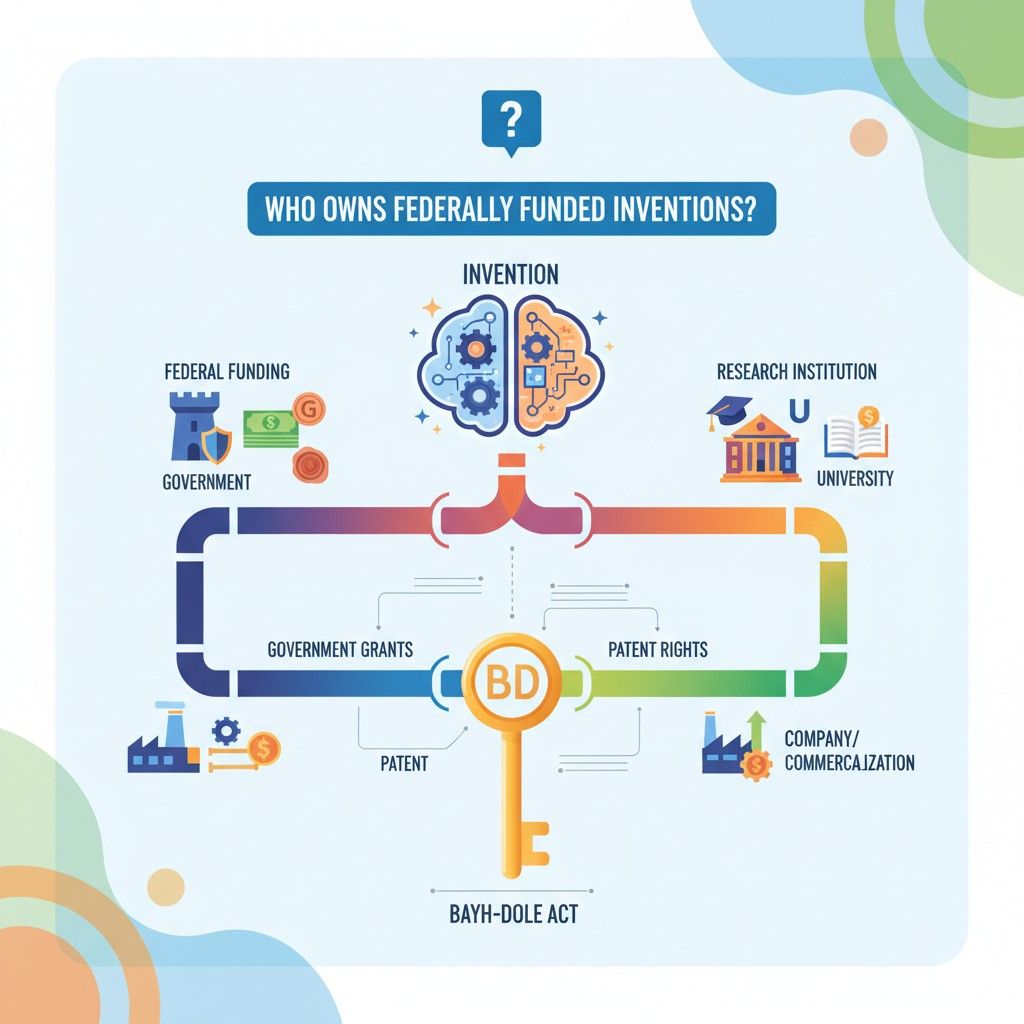
The clearer your record is, the easier it becomes to show which parts belong entirely to you. When you can draw that line well, you reduce risk, strengthen patent claims, and speed up negotiations.
When you cannot, you slow everything down.
How Startups Can Work With Universities Without Losing Ownership
Many startups spin out of universities or partner with them for early technical help. This is where Bayh-Dole sits quietly in the background but shapes every decision. Universities must comply with the law, and that means they often hold rights first—until they formally assign them to you.
Startups that understand this dynamic treat IP rights as a core operational step from day one.
Those that do not often discover too late that the university still owns parts of their invention, making the path to a clean patent harder and sometimes more expensive.
The most practical step is to create a simple agreement with the university early that clearly states who will own what. Do not assume verbal agreements count.
Do not assume a research collaboration automatically transfers rights. The cleanest path is a written assignment that passes rights from the university to the startup, plus a clear record that you fulfilled Bayh-Dole’s disclosure and reporting steps.
This keeps your ownership story clean when you file patents through PowerPatent or work with investors who want to see airtight control.
Why Clear Ownership Strengthens Your Patent Strategy
Founders sometimes worry that Bayh-Dole adds friction. The reality is that it gives you a strong framework for proving ownership as long as you follow it.
When your documentation is clean, your disclosures are on time, and your assignments are properly executed, you walk into the patent process with confidence.
Strong patents start with clear rights. If your ownership chain is solid, you can file faster, defend easier, and negotiate from a stronger position.
This is exactly where platforms like PowerPatent make a difference. They help you keep your records aligned, surface compliance steps early, and guide you through the process with real attorney oversight.
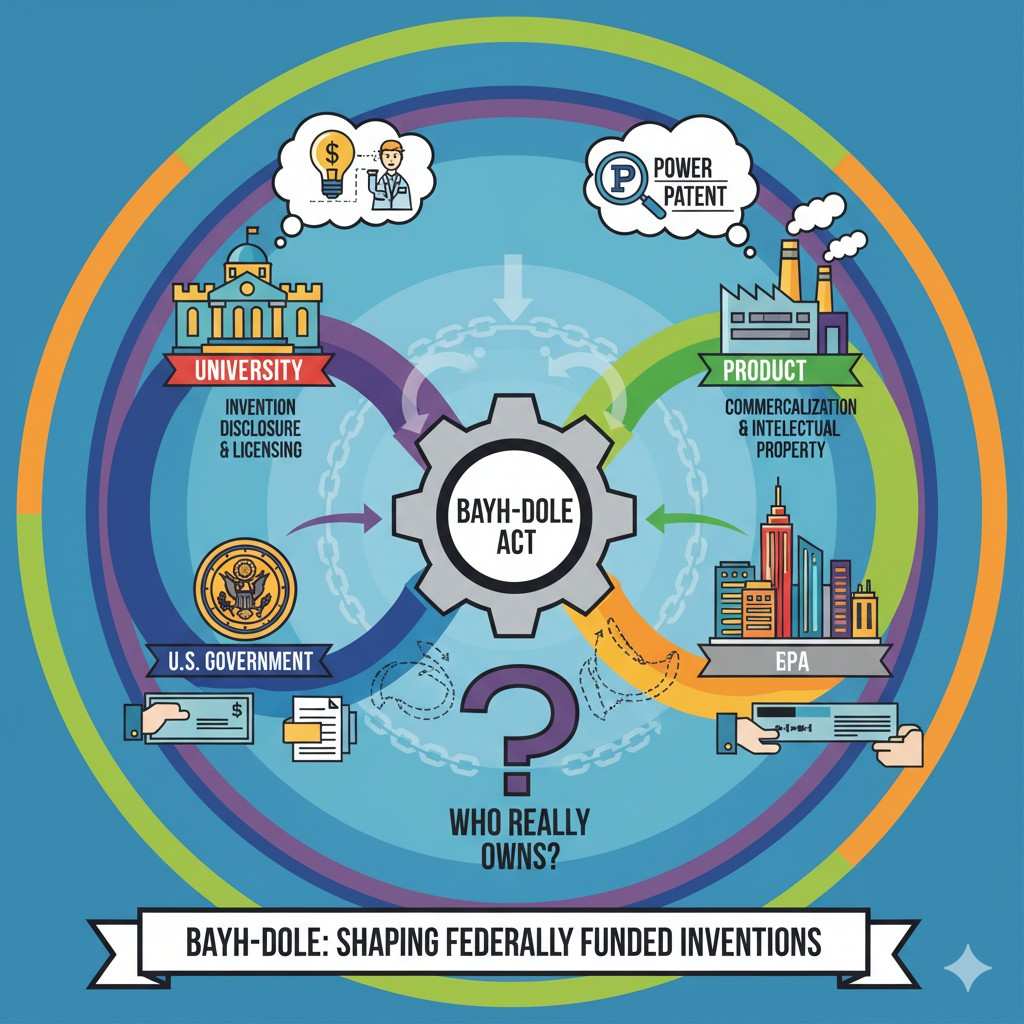
Instead of worrying about the hidden steps in Bayh-Dole, you can focus on building your invention while knowing the foundation is handled. If you want to see how that process works in practice, you can explore it at https://powerpatent.com/how-it-works.
Why March-In Rights Make Investors Nervous—and What They Actually Mean
Before you can understand why march-in rights matter, it helps to see how they fit into the bigger picture. Bayh-Dole gives universities and small businesses the chance to own inventions that come from federal funding. March-in rights sit inside that law as a safety switch.
They allow the government to step in and take control of an invention if the owner fails to use it in a way that serves the public. Most founders hear this and assume it means the government can grab their patent at any moment.
That fear often grows inside investor conversations, even when the real risk is much smaller than people assume. To use march-in rights, the government must meet very specific conditions, and these conditions rarely apply to startups that are actively building real products.
Still, understanding how these rights work helps you control the narrative, keep investors calm, and structure your IP with confidence.
How March-In Rights Actually Work, Without the Myths
Many founders imagine march-in rights as a sudden takeover. In reality, the government cannot simply step in because it feels like it. The law only allows action when the patent owner fails to make the invention available in a reasonable way.
That usually means no meaningful effort to commercialize, no progress, no plan, or no steps that show the invention will reach users who could benefit from it.
If your startup is developing, improving, testing, or even planning to launch, you are already demonstrating that you intend to use the invention. That alone removes most of the risk.
March-in rights are designed for extreme cases where the invention sits unused, blocked, or abandoned even though it was created with public funding.
This is why you almost never see march-in actions in practice. The government does not want to manage patents. It does not want to take over your company’s work.

It simply wants to prevent a situation where public money creates a breakthrough that never reaches the public. As long as you continue developing your technology and show that you are moving forward, you are already meeting the spirit and the legal standard of the law.
Why Investors Look for Clarity, Not Guarantees
Investors often bring up march-in rights because they want to reduce anything that could cloud the long-term value of your IP. They do not expect you to eliminate the risk entirely.
They simply want to see that you understand it, that you have managed it, and that you can explain it clearly.
When you can explain march-in rights in simple terms and show that your invention is moving toward the market, you remove the uncertainty that makes investors uneasy.
The real fear for investors is not march-in itself. The real fear is sloppy compliance, missing disclosures, or a confused story about who owns what. When those issues combine with federal funding, the situation feels unpredictable.
Avoiding that worry is less about legal jargon and more about predictable habits. Keep a clean timeline of development. Track what federal funding touched.
Show progress. Explain your commercialization path in plain words. When investors see these things, the idea of march-in has less power.
How Proper Documentation Reduces March-In Risk to Almost Zero
The safest way to stay out of march-in territory is to keep a simple record of steady progress. Even small steps help you build a story of active commercialization.
It could be a prototype, a user test, a pilot, or a version release. What matters is that you can show forward motion. March-in rights trigger only when there is a failure to act. As long as you are acting, you are out of the danger zone.
Another key practice is to track whether each part of your invention is tied to federal funding.
If only a small slice of your work came from a grant, keep that slice clearly documented. If your core innovation came later, make sure that timeline is visible.
The more clearly you can separate early funded research from later independent development, the easier it is to show that the invention is being used responsibly.
What often helps founders is having one central place where these records live. It does not need to be complex.
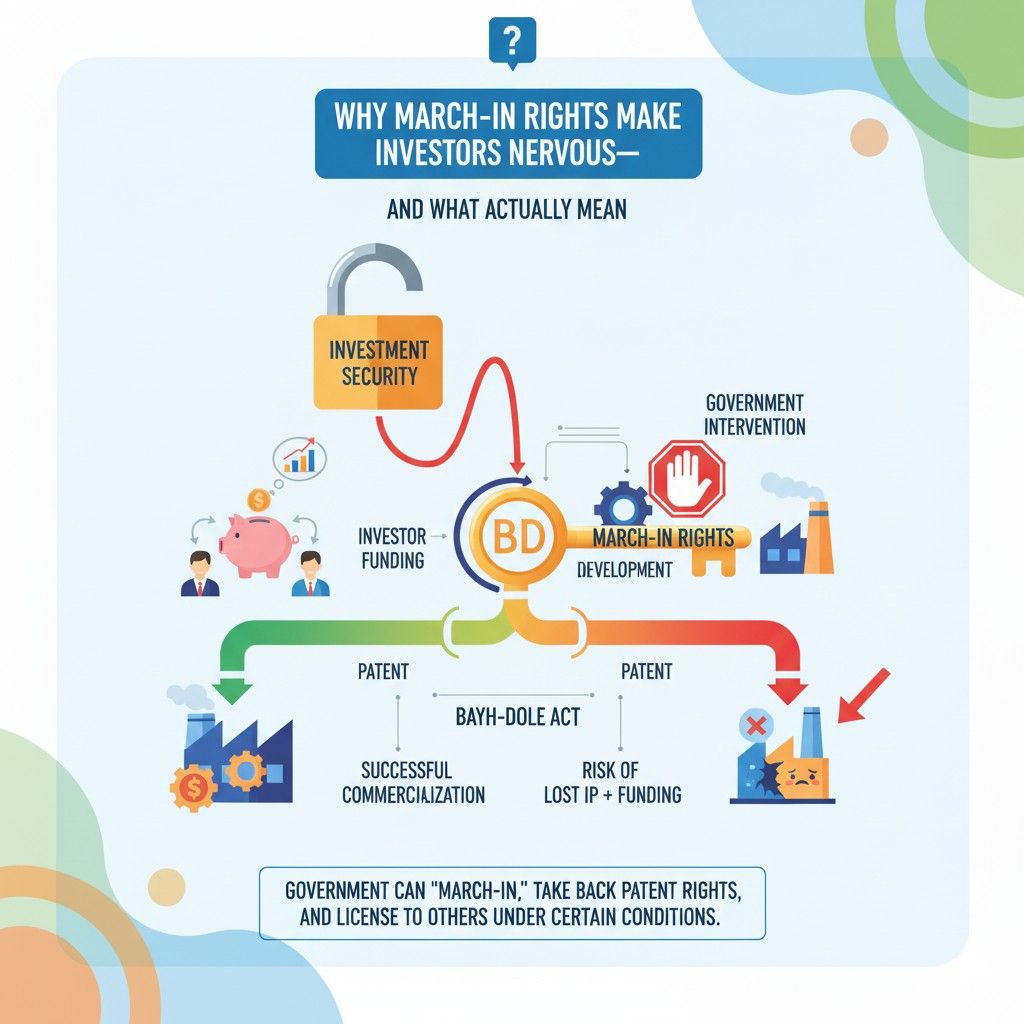
It just needs to be reliable. A clean document trail is not about pleasing auditors. It is about protecting the patent that your entire business may stand on.
How to Talk About March-In Rights During Fundraising
The moment march-in rights appear in a term sheet discussion, founders often freeze. But this is actually one of the easiest concerns to defuse. Investors are not testing you; they are checking whether you understand your risk profile.
The best approach is simple and direct. Acknowledge that march-in rights exist. Explain that they only apply when a patent owner refuses or fails to bring an invention to market.
Then show a clear line of progress in your development. When you do this with calm and confidence, the issue usually disappears from the conversation.
A strong move is to show that you track compliance by design, not by accident. If you can confidently say that you maintain disclosure timelines, document funding sources, and maintain commercialization plans, you show maturity.
Investors trust founders who understand how to protect their IP just as much as they trust founders who know how to build their product.
Why March-In Rights Are Becoming a Bigger Talking Point Today
Even though march-in rights have almost never been used, they appear in headlines more often now because the government receives public pressure to use them for drug pricing or critical technologies.
This noise can make founders feel exposed, especially in health, biotech, climate tech, or defense-adjacent fields. But the key is separating political discussion from actual legal action.
Public debates do not change how the law works. They do not expand the government’s authority. The conditions remain narrow and highly specific. Noise is not risk.
Still, founders should understand how outside pressure shapes investor perception. When a field becomes politically sensitive, investors worry about anything that feels uncertain.
The way to counter that is not with long legal memos. It is with clarity. Make sure your data room includes simple explanations surrounding funding history, ownership, and commercialization progress.
When investors see clean documentation, the noise in the headlines becomes irrelevant to your company.
How PowerPatent Helps You Stay Ahead of March-In Concerns
The most powerful way to reduce march-in fear is to build a patent process where compliance is baked in from the start. PowerPatent helps founders do this without slowing down their roadmap.
The platform keeps your documentation organized, flags compliance steps, and connects you with real attorneys who understand how Bayh-Dole and march-in rights apply to your situation.
This gives you a clean story for investors, a strong ownership chain for your patents, and a clear path to protecting your invention with confidence.

If you want a straightforward walkthrough of how PowerPatent supports founders working with university or government-touched inventions, you can explore it at https://powerpatent.com/how-it-works.
How Startups Can Use University or Government Research Without Losing Control
Before diving into the details, it helps to understand the core challenge. University labs and government-funded programs can give your startup a huge boost.
They offer talent, specialized tools, early technical breakthroughs, and often lower costs. But the moment you bring your invention into these environments, you step into a world with rules that can quietly shift ownership if you are not paying attention.
Many founders do not notice these risks until they try to file a patent, raise a round, or negotiate a license. By then, untangling the rights becomes harder and sometimes expensive.
This section helps you understand how to work with these partners in a simple, safe, and business-friendly way so you can grow without giving up control of your invention.
Why Early Conversations About Ownership Prevent Problems Later
One of the most overlooked parts of working with universities is that they often assume they own anything developed using their space, staff, or equipment. This assumption comes from decades of policies designed to comply with Bayh-Dole.
Startups sometimes walk in thinking they are just getting technical help, but the university sees the work as part of its research output. When both sides operate on different assumptions, misunderstandings pile up quickly.
The simplest and most powerful step is to talk about ownership early. Before any research begins, agree on who owns the results, who controls the patents, and how the university will transfer rights if its team contributes.
This does not need to be a complicated process. It just needs to be written down.

When you put expectations in writing, you protect yourself from confusion later. Investors appreciate this level of clarity because it shows maturity in managing IP, especially when public research money is involved.
How to Keep Your Startup’s Work Separate From University Work
Founders who use university labs often mix their startup’s technology with academic projects without realizing the long-term consequences. The moment work becomes blended, the university may claim rights, and Bayh-
Dole may apply even if you did not plan for it. To avoid that problem, separate your startup’s work from university research as much as possible. Use different repositories.
Maintain separate lab notebooks. Keep your internal design files away from shared servers. Treat every step of development with intention.
This separation helps you draw a clean line between what the university helped with and what your team built independently. That line becomes extremely valuable during patent filings because it strengthens your ownership and makes licensing smoother.
When the boundaries are clear, it is easier for the university to confirm that it does not have rights to the core invention, which keeps your patent story simple and clean.
How to Structure Collaboration Without Giving Up Ownership
When you need university expertise or specialized tools, the goal is not to avoid collaboration. The goal is to structure it correctly.
A well-structured collaboration agreement lets the startup retain ownership of its invention while still gaining access to academic resources.
These agreements usually include clear assignment language, use-of-facility terms, and rules on how joint contributions will be handled.
What matters most is that the agreement is signed before the research starts. If a university researcher contributes to your invention without an agreement in place, the university may gain rights automatically.
Fixing that after the fact is possible but creates stress and delays. Setting expectations early keeps your path smooth and gives your company the ability to file patents without turbulence.
Why Funding Sources Need to Be Traced Back to Every Piece of Work
Whenever a university project uses federal funding, Bayh-Dole rules apply by default. This does not mean you lose rights, but it does mean the university must follow specific procedures, including reporting the invention to the government.
If your invention is touched by that funding, then your company must follow those rules too. But you can only follow the rules if you know which parts of your work were supported by which grants.
Startups that trace funding carefully gain a huge advantage. You can show investors a clean IP chain.
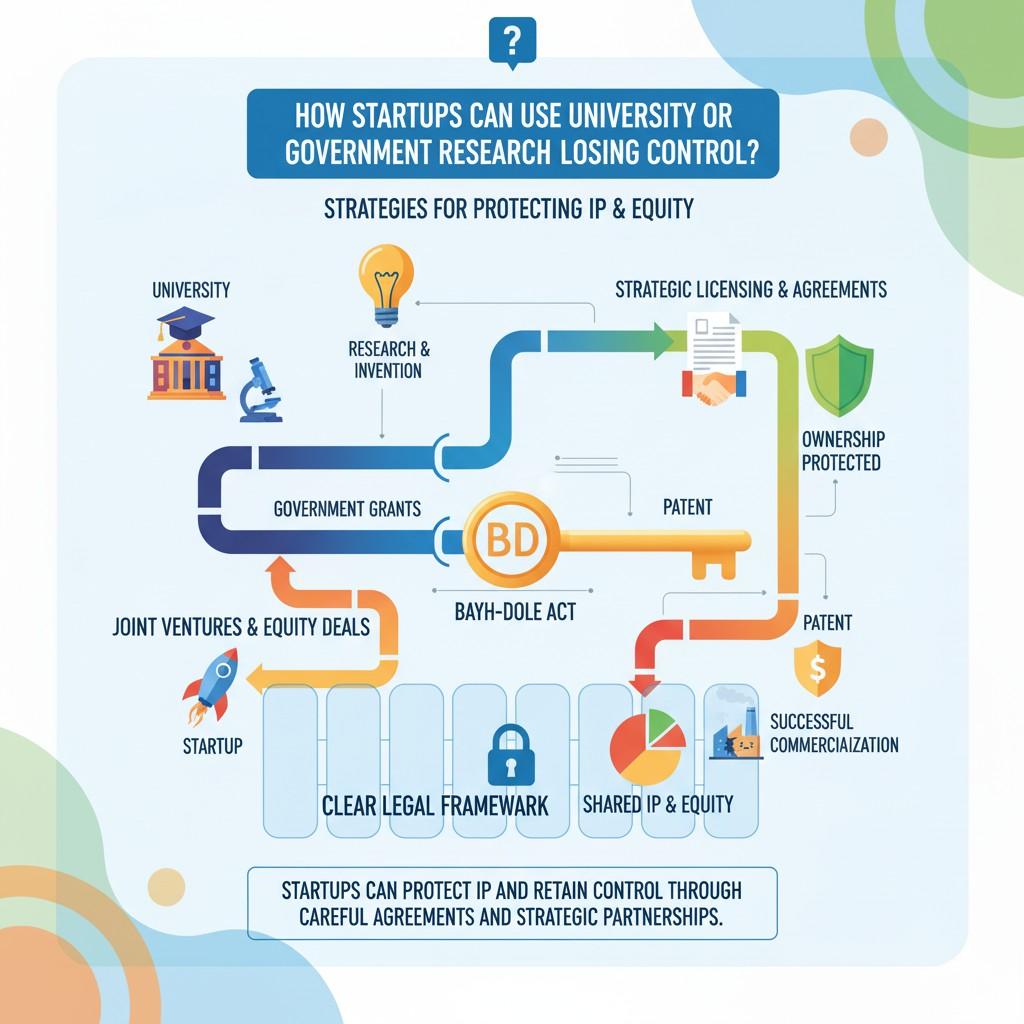
You can prove that you complied with Bayh-Dole. You can demonstrate that the government cannot step in or take rights. When you control your documentation, your patent position becomes stronger and more defensible.
How to Avoid Accidental Joint Inventorship
Joint inventorship is one of the trickiest areas when working with universities.
A university researcher may make a small suggestion, contribute a minor improvement, or help refine a method. In their eyes, they are just being helpful.
In legal terms, they may have just become a co-inventor. And co-inventors automatically gain rights unless they assign them. This can fragment ownership and complicate your patent filing.
The safest approach is to define roles clearly. Let university partners know what you expect and what they should avoid contributing unless an assignment is planned.
Encourage them to provide feedback through a structured channel rather than jumping into design changes. The more controlled the collaboration, the fewer surprises you face when preparing a patent application.
How to Manage IP While Participating in Government Programs
Government programs such as SBIR, STTR, and federal innovation grants can bring your startup funding, validation, and visibility. But they also introduce rules that affect your IP.
These programs often require formal disclosure of any invention developed under the award. They may also grant the government certain rights, such as a non-exclusive license, even if you keep ownership.
The key is understanding the terms before you start the work. If you know what the government expects, you can build your process to meet those expectations effortlessly.
This might mean tracking progress more carefully, filing disclosures in a timely way, or keeping development records separate from privately funded work.
When you build these habits from the start, government funding becomes a growth tool instead of a source of risk.
Why Documentation Is the Most Powerful Protection You Have
The strongest startups treat documentation as a shield. Clean records prevent disputes, simplify patent filings, and give investors peace of mind. Documentation does not need to be complex.
It only needs to be consistent. Track who contributed what. Capture design changes.
Keep dates aligned with funding schedules. Record what came from the university and what came from your team. When everything is clear on paper, there is no room for confusion or claims that weaken your ownership.
This is also where platforms like PowerPatent help founders stay ahead of problems. With structured workflows, integrated support, and real attorneys reviewing your work, you get a streamlined process that keeps your IP safe even when government or university partners are involved.
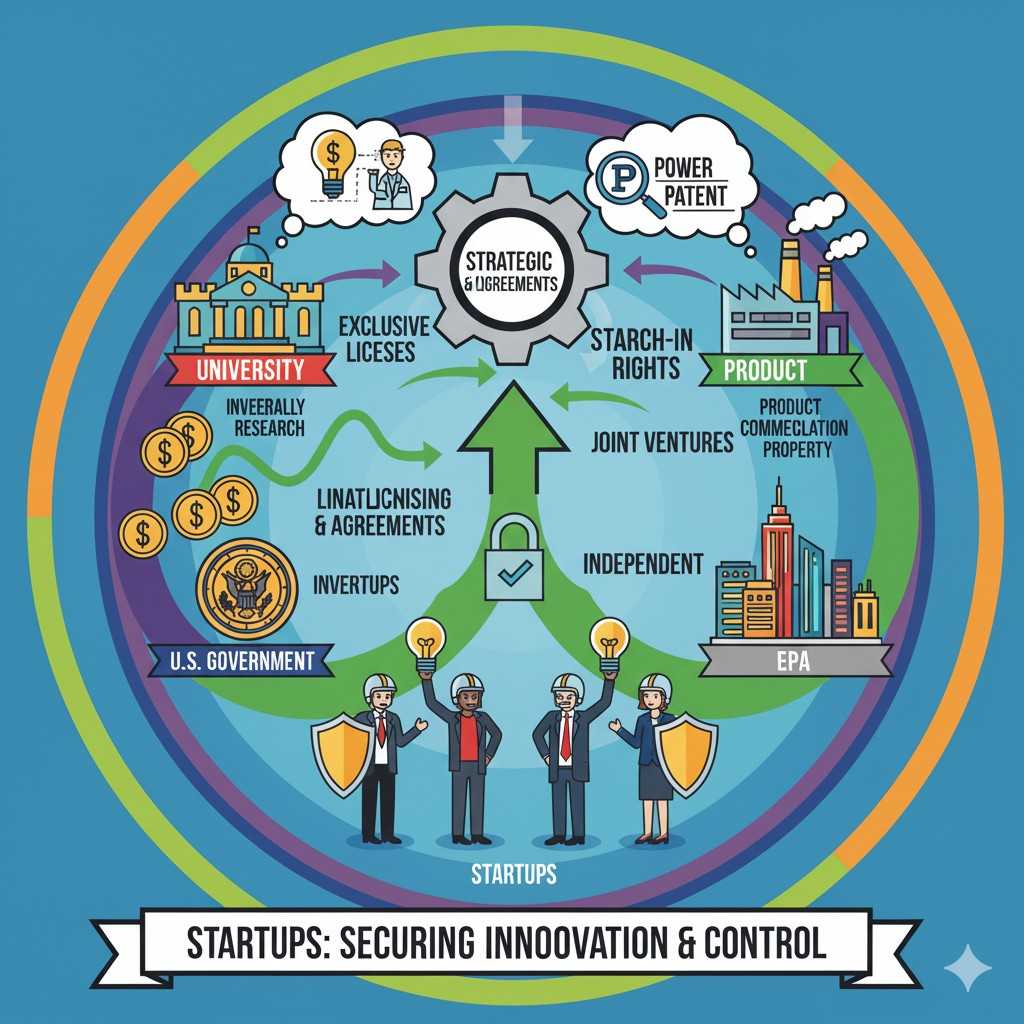
You do not have to become an expert in Bayh-Dole or march-in rights. You just need the right tools and guidance built around your fast-moving startup environment. You can explore how that all works at https://powerpatent.com/how-it-works.
Building Patent Strength in a Bayh-Dole World: Practical Steps to Stay Safe and Move Fast
Before going deeper, it helps to understand why Bayh-Dole is not just a legal framework but a business factor. When your startup grows, your patents become more than documents.
They become leverage in fundraising, shields in competitive markets, and assets investors measure when calculating your value. The way you handle government or university involvement shapes how strong those patents will be.
Many founders think compliance is something you deal with after the research is done. In reality, the strength of your patent begins long before you file anything.
It begins with how you manage contributors, funding sources, timelines, and ownership signals from day one.
This section helps you build patents that can stand on their own even when federal funding or academic collaboration sits behind your invention.
How Consistent IP Habits Help You Move Faster Instead of Slowing You Down
Most founders worry that paying attention to IP too early will slow down innovation. The truth is the opposite.
When your team builds simple habits around tracking contributions, keeping notes, and tagging funding sources, you create a smoother path to filing strong patents without stopping your momentum.
These habits protect you from last-minute surprises and help you avoid situations where you have to stop everything to clean up ownership gaps or inventorship disputes.
When your engineers know what information to record, your university partners understand the boundaries, and your internal team keeps development threads organized, your entire patent process becomes faster. Strong IP comes from predictability.

When there are no missing pieces, attorneys can move quickly, filings stay clean, and investors see stability instead of risk. Startups that embrace this mindset early gain speed, not friction.
Why You Should Align Technical Milestones With Patent Milestones
When your invention grows, it goes through natural phases. You test ideas, refine prototypes, reduce noise, and build toward something that can scale. Each of these phases has moments where the invention becomes more patentable.
Mapping your technical milestones to your patent strategy turns Bayh-Dole compliance into something predictable. You know when disclosures need to happen.
You know when assignments must be updated. You know which team members count as contributors at each stage.
This alignment helps you file at the right moments. Instead of filing too early with incomplete data or too late with extra risk, you file when your invention is clear, supported, and ready.
You control the timing instead of reacting to outside pressure. When investors ask about your patent road map, you can show intentional steps rather than vague plans. That confidence builds trust.
How to Keep Control When Your Invention Evolves Beyond the Funded Work
Most inventions that start in a university lab or under a federal grant grow far beyond their early research stage. Your startup builds new features, improves performance, develops new architectures, and matures the product.
The moment your invention evolves beyond the original funded work, your ownership becomes stronger. But that strength only matters if you can prove how and when the evolution happened.
This is why documenting version changes, dates, and internal development is so important. When you can show that the funded work sparked the idea but the real innovation came later under your company’s control, your patent coverage becomes broader and more secure.
You gain room to file additional applications that belong entirely to your startup. You reduce the influence of Bayh-Dole on the later-stage claims. You also make it much easier to explain your IP position during fundraising.
Why Your Relationships With University Partners Matter More Than the Rules
A surprising truth is that most Bayh-Dole problems come from strained relationships, not the law itself. When communication breaks down, assumptions get made.
When assumptions get made, ownership becomes uncertain. The cleanest way to stay out of conflict is to treat university partners as collaborators, not obstacles.
Clear expectations lead to fewer misunderstandings. When you explain your commercialization plan and your patent strategy, university partners see how their work fits in without threatening their own compliance requirements.
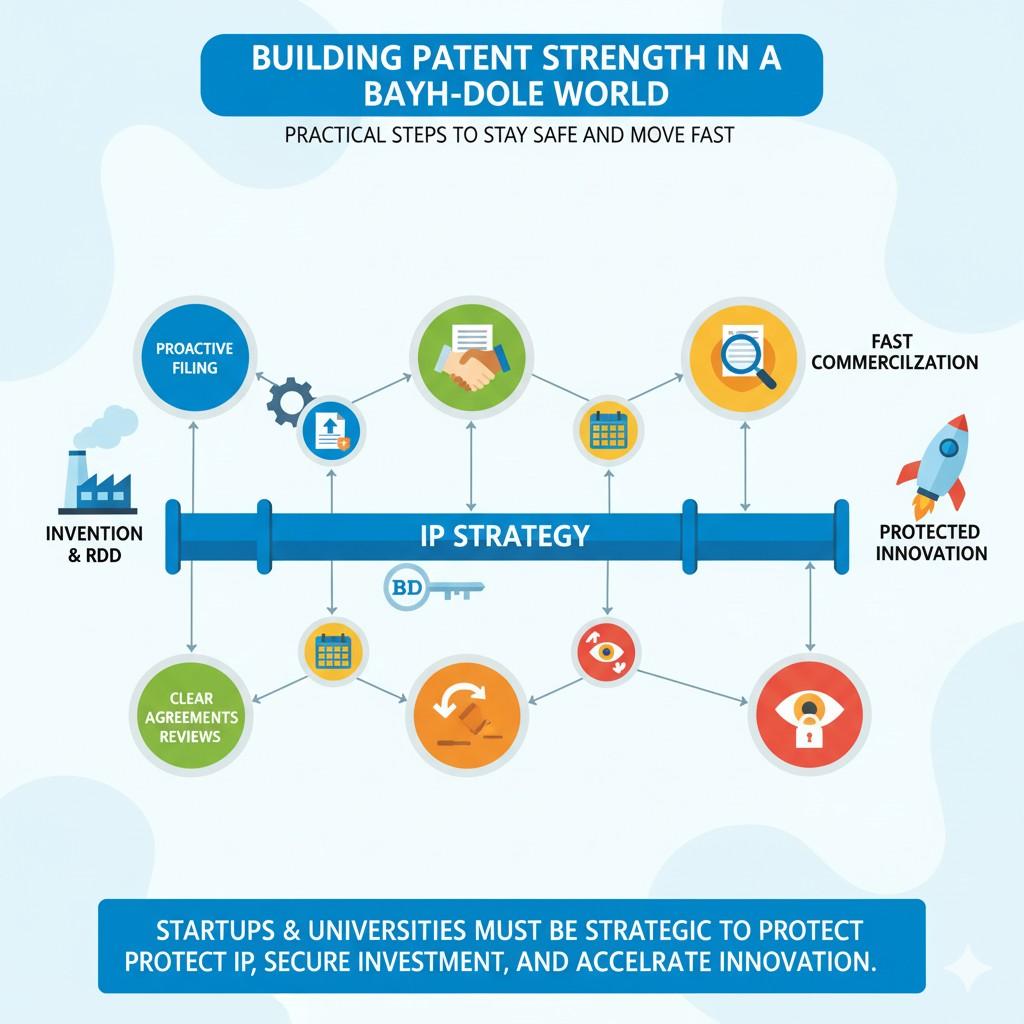
When both sides understand each other’s needs, assignments move faster, disclosures stay accurate, and invention ownership remains clear. The law becomes easier to navigate because the partnership itself is healthy.
This matters more than founders expect. A supportive university partner makes IP protection significantly smoother.
How Attorney Oversight Protects You From Hidden Pitfalls
Even with good habits, founders should not have to decode Bayh-Dole alone. Real attorney oversight is essential because the risks often hide in the details.
One missed disclosure, one misinterpreted funding source, or one unclear inventorship note can weaken a patent. Attorneys who understand Bayh-Dole can spot these issues early and fix them before they cause damage.
But founders also need speed. You cannot slow your development cycle every time a legal question appears. This is why having tools that guide compliance and attorneys who step in at the right moments creates the best outcome.
You get the protection without the delay. You get the clarity without the confusion. You get strong patents without carrying the burden of managing every legal nuance yourself.
Why The Right Patent Filing Process Helps You Stay Ahead
A powerful patent process is not reactive. It is proactive. It brings structure to the chaos of early innovation. It helps you gather what you need before filings begin.
It keeps your disclosures aligned with the law. It creates a clean inventorship record. It organizes your documentation so future investors or partners see stability instead of uncertainty.
It makes sure your patent tells the right story about your invention’s origins and evolution.
This is where PowerPatent gives founders an edge. The platform blends smart software with real attorney insight so you can file patents that hold up under pressure without slowing your team.
You get guidance shaped around how startups actually build products. You get reminders for key compliance steps tied to Bayh-Dole.
You get review from attorneys who catch risks before they become expensive problems. If you want to see how this works in real workflows, you can explore the platform at https://powerpatent.com/how-it-works.
How Clean IP Makes Your Startup Stronger in Every Direction
When your patent strategy aligns with Bayh-Dole from the beginning, everything else in your business becomes easier. Fundraising becomes smoother because investors see stability.
Partnerships move faster because ownership is clear. Patent filings get stronger because your documentation supports your claims. Government funding becomes a tool instead of a threat. University partnerships become assets instead of risks.
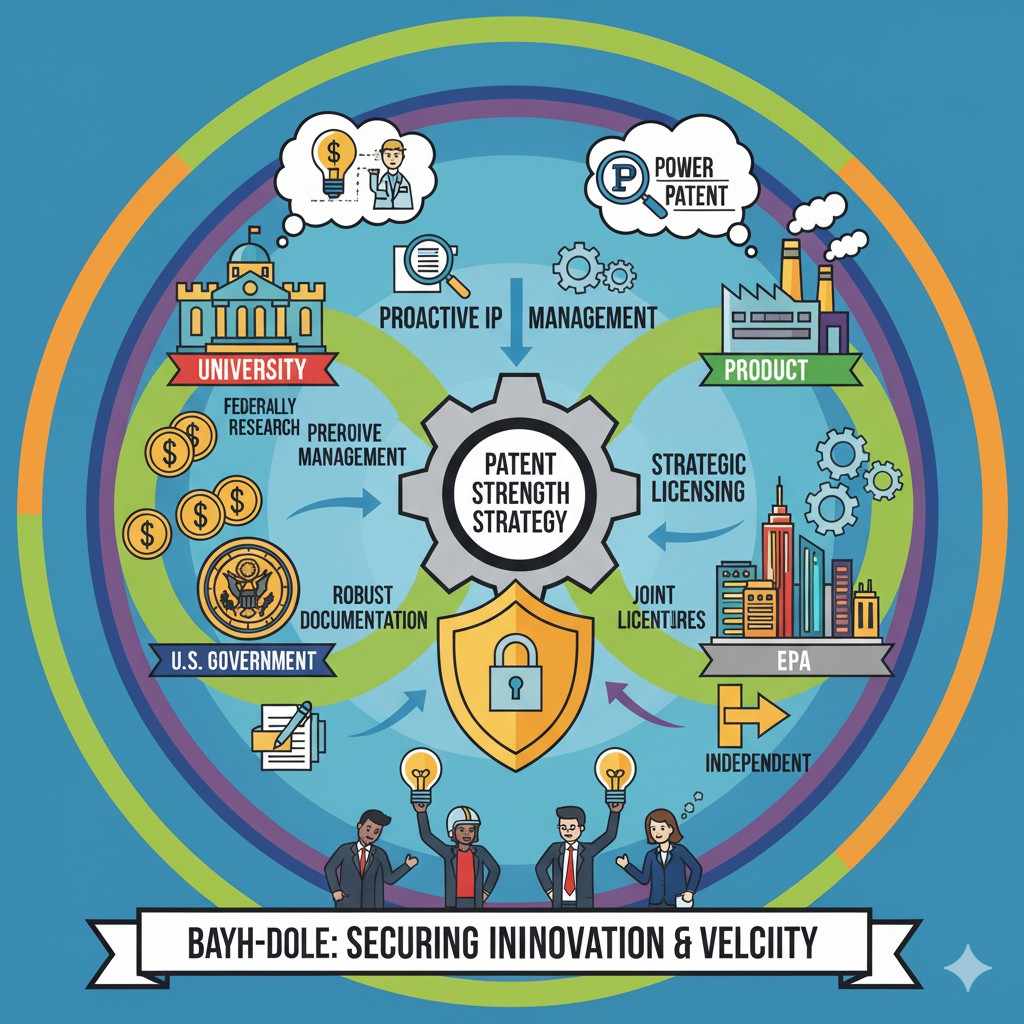
The value of your invention increases because its ownership story is simple, defensible, and trustworthy. That clarity protects your company, speeds up your growth, and strengthens your position in any negotiation.
Wrapping It Up
Before closing, it helps to zoom out and see the bigger picture. Bayh-Dole and march-in rights often look complicated from the outside, but at their core, they are simply rules designed to make sure inventions funded with public money continue to serve the public. For startups, the real challenge is not the law itself. The real challenge is fitting these rules into a fast, constantly shifting build cycle where things move quickly, people collaborate from different places, and ideas evolve every week. That pace is what makes startups powerful, but it is also what creates risk if no one is watching how ownership forms.