When an investor looks at your startup, they don’t just look at your product. They look at your name, your domain, your trademarks, and every piece of brand identity you’ve built. They want to know one thing: Is this brand safe to bet on, or is there a hidden legal mess waiting to explode later? Most founders don’t realize this until they are already deep into fundraising or acquisition talks. A deal suddenly slows down. Someone asks for proof you own your brand.
Why Investors Care So Much About Your Brand Rights
When investors look at your company, they want to know that the name, the domain, and the identity you use every day are actually yours to use.
They want to see that your brand has a solid foundation and will not fall apart under legal pressure.
This is not about fear. It is about reducing risk. A clean brand shows discipline and gives them confidence that you take control of the small things that matter later.
When your brand rights are secure, it becomes easier for them to believe in your long-term story.
How a Clean Brand Signals Discipline and Long-Term Thinking
A startup that has its trademark, domain, and brand rights in order sends a message that feels louder than any pitch deck slide. It shows you understand that a company is more than code and customers.
It is also a legal identity that needs to be protected early. Investors pay close attention to these signals because they often hint at how well you will manage bigger and harder problems later.
When they see a startup that has secured its brand rights before being asked, it makes the whole company look more stable.
Why Investors Try to Avoid Brand Conflicts at All Costs
If an investor puts money into your company and you later run into a trademark conflict, everything slows down. It becomes harder to market. Harder to raise again. Harder to sell the business.
Investors know that name disputes drain time, money, and attention, and they want no part of it. Even a small conflict can force a painful rebrand, which can undo months of work and momentum.
By having your rights secured early, you remove the chance of a surprise that makes investors nervous.
How Brand Ownership Affects Valuation Conversations
When you truly own your brand, your valuation story becomes easier to tell. A brand with a registered trademark, a locked-down domain, and clear ownership records looks more valuable because it is protected from threats.
Investors often look for signals during due diligence that show whether your brand can scale without friction.
If you can show clear proof that everything is properly registered and defended, your valuation becomes more defensible. This helps you hold your ground in negotiations.
The Hidden Power of a Brand That Can Survive Global Growth
Investors think far ahead. They imagine you not just serving your first market, but selling across borders. A brand that is not protected early often breaks when it tries to enter new regions.
Different countries have different trademark rules, and conflicts can appear in places you never expected.
When investors see that you have a plan for protecting your brand outside your home market, it makes them feel like you can grow without running into walls.
Why Investors Need Proof, Not Promises
Saying your brand is safe is not enough. Investors need to see documents, filings, registration numbers, and legal work that backs up your words. They know that early-stage companies often move fast and skip steps.

That is why they want evidence that what you claim to own is actually yours. When you can show clean documents without delays, it removes tension from the room. You look prepared and dependable, which helps deals move faster.
How Secure Brand Rights Remove Roadblocks During Due Diligence
Due diligence is where many deals stall. Small problems become big ones when lawyers start asking questions.
If your trademark is still pending, your domain is owned by someone else on your team, or your brand files are scattered, the process slows dramatically.
Investors notice these gaps the moment they appear. When your brand rights are already organized and stored in a single place, you help them move smoothly through due diligence without hesitation.
The Role Brand Rights Play in Reducing Legal Costs Down the Road
Investors think about future costs because those costs affect your runway and speed. A brand that is not protected becomes expensive to defend later.
Legal fights, forced rebrands, and disputes burn money that should be going toward product and growth. Investors know that strong brand rights block these costs before they ever appear.
By tightening your brand protections early, you show them that you respect your future budget and will not waste capital on avoidable issues.
Why Smart Investors Prefer Founders Who Think About Brand Foundations Early
Seasoned investors have seen companies rise and fall because of simple mistakes that were easy to avoid. That is why they often gravitate toward founders who take brand rights seriously from the beginning.
It tells them that you understand how fragile a brand can be and how important it is to protect it before it becomes valuable.
When you treat your brand like an asset instead of an afterthought, investors see you as someone they can trust with bigger decisions.
How Strong Brand Rights Unlock Faster Investor Decisions
When everything about your brand is clean and clearly owned, investors can make decisions quicker because nothing needs to be fixed first. A clean brand creates momentum.
It makes conversations smoother. It reduces pushback from lawyers. It frees investors to focus on growth instead of risk. Many founders underestimate how much speed matters during a deal.
The ones who understand this get funded faster because they remove the small obstacles that slow everyone else down.
Turning Your Brand Into a Signal of Strength
In the end, investors care about brand rights because they care about clarity. They want to know that your identity is yours, your name is safe, and your future is protected.
A strong brand is not just a logo or a tagline. It is a legal asset that either builds trust or creates doubt. When you treat your brand as something worth guarding, it becomes a magnet for investor confidence.
If you ever want help making your brand and IP investor-ready without slowing down your product work, you can always explore how PowerPatent’s smart platform supports founders every step of the way at https://powerpatent.com/how-it-works.
How to Know If Your Trademark Is Truly Deal-Ready
Most founders think their trademark is fine because they filed something, or because they have been using the name for months without trouble. But investors look at trademarks through a sharper lens.
They want certainty, not hope. They want proof, not a placeholder. A trademark becomes deal-ready only when it can hold up under pressure and still come out strong.
This means you understand what your trademark protects, what risks it still carries, and how well it can support your next round or a future exit.
When your trademark is clear and clean, investors breathe easier because your brand becomes an asset they can trust.
Why A Trademark Search Needs More Than a Quick Look
A surface-level search rarely shows the full picture. Many founders type their brand name into a government database and assume the absence of an identical name means they are safe. But investors know the real world is not that simple.
A proper search looks for names that sound similar, look similar, or feel close in meaning. It looks for names in the same market and nearby markets.
It reviews pending filings, abandoned marks, and marks owned by companies that may enforce their rights aggressively.
A search that digs deeper gives investors confidence that you understand the complete landscape instead of trusting what you hope is true.
How Examining Risk Areas Strengthens Investor Trust
Every trademark carries risk until you understand its weak points. Some weak points come from crowded markets where many brands resemble each other.
Some come from marks that are too general, too descriptive, or built from common words that are hard to own.
Investors want to know you have looked at these risks honestly and that you have taken steps to reduce them.
When you can explain the risk areas clearly, you show a level of maturity that investors rarely see in early-stage teams. It tells them you think ahead and do not hide from the details.
When a Pending Trademark Is Not Enough for a Deal
A pending application alone does not make a trademark deal-ready. Investors know the application can still be denied.
They know office actions can appear months later. They know that another company could still oppose your mark during publication.
When your trademark is still in limbo, the uncertainty becomes part of the deal conversation.
The more you can show progress, evidence, or legal support behind your application, the easier it becomes for investors to move forward without fear that the foundation of your brand might collapse later.
Why Clarity Around Goods and Services Matters
Many founders do not realize that the goods and services they list in their trademark filings determine what their protection actually covers. A trademark that is too narrow leaves space for competitors to move in.
A trademark that is too broad may be rejected or challenged. Investors pay attention to how well your trademark aligns with your actual business model.
When the goods and services match your real-world product and future plans, it signals that your filing has been done thoughtfully and not rushed.
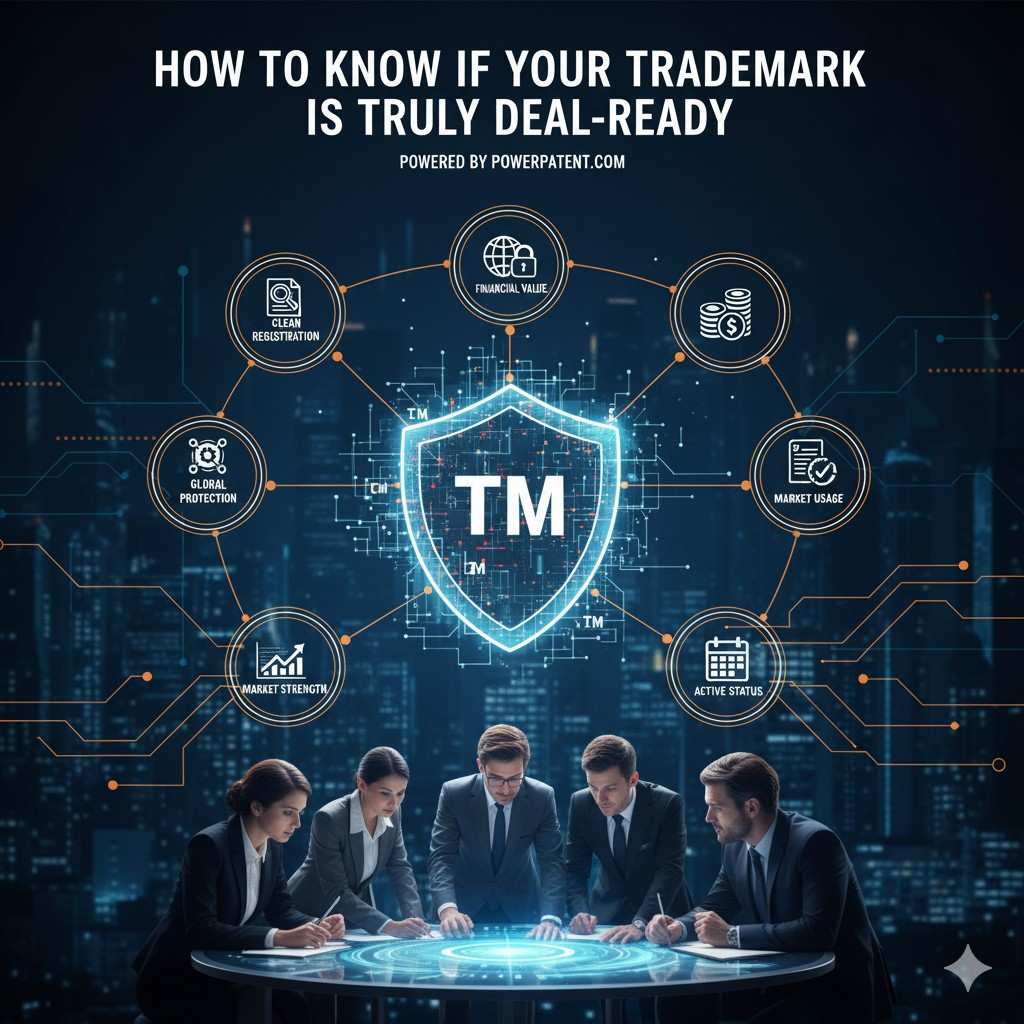
A clean alignment between your work and your trademark language helps everyone feel safer.
How Strong Documentation Speeds Up Due Diligence
Clear records often matter more than founders expect. When an investor asks for trademark documents, they want quick access to everything: the filing, the status updates, the correspondence, the legal notes, and the search reports.
If these documents are scattered across old emails or saved in random folders, the process slows down. When you have every record organized in one place, investors feel the strength of your preparation.
They see a founder who respects their time and takes ownership seriously. This simple act often changes the pace of the entire negotiation.
What a Trademark Means for Long-Term Brand Stability
A deal-ready trademark is more than a legal form. It is a sign that your brand can survive growth, pressure, and expansion. Investors look for this because they want to imagine your company at a much larger scale.
A strong trademark today means fewer legal surprises tomorrow. It means you can expand your market, launch new products, and move into new regions without rethinking your identity.
This kind of stability becomes part of your long-term value story. Investors think in curves, not straight lines, and a secure trademark gives them a smoother curve to believe in.
The Signals Investors Read From Trademark Strength
Investors often read between the lines. When they examine your trademark, they are not just checking boxes.
They are studying your thinking. A strong trademark signals that you understand how fragile a brand can be. It shows that you respect the legal structure behind your work.
It signals discipline, attention, and forward vision. Each of these signals makes you a safer investment. A weak or untested trademark, on the other hand, suggests loose edges.
Investors want to know the edges of your company are sealed, and your trademark is often the first place they look.
How a Deal-Ready Trademark Protects Your Brand Story
A solid trademark also protects something softer but equally valuable: your brand story. The story you tell investors depends on trust. You want to show that your brand stands for something clear and consistent.
When your trademark is secure, you do not need to worry about changing your name or losing control of your identity.
This gives your story stability. Investors can picture your brand growing in a straight line instead of being interrupted by a forced rebrand.
Stability in your brand story becomes stability in your future earnings, which investors value deeply.
Using Smart Tools To Stay Ahead of Problems
Most founders do not have time to manage trademark issues on their own. But leaving it to chance is dangerous. This is where smart tools like PowerPatent help.
You get simple workflows, automatic reminders, easy document storage, and attorney oversight that helps catch mistakes early.
This gives investors confidence that your trademark process is handled thoughtfully and with professional support.
When they see that your IP foundation is built on both smart software and real legal review, they feel better about investing in you.
Turning Your Trademark Into a Signal of Confidence
When your trademark is deal-ready, it becomes more than a line item. It becomes a sign that you understand what it takes to build a real company with real value.
Investors want to see that you take ownership seriously. They want to see that your brand is not just something you use but something you protect. This creates confidence. And confidence is often the key that moves a deal forward.
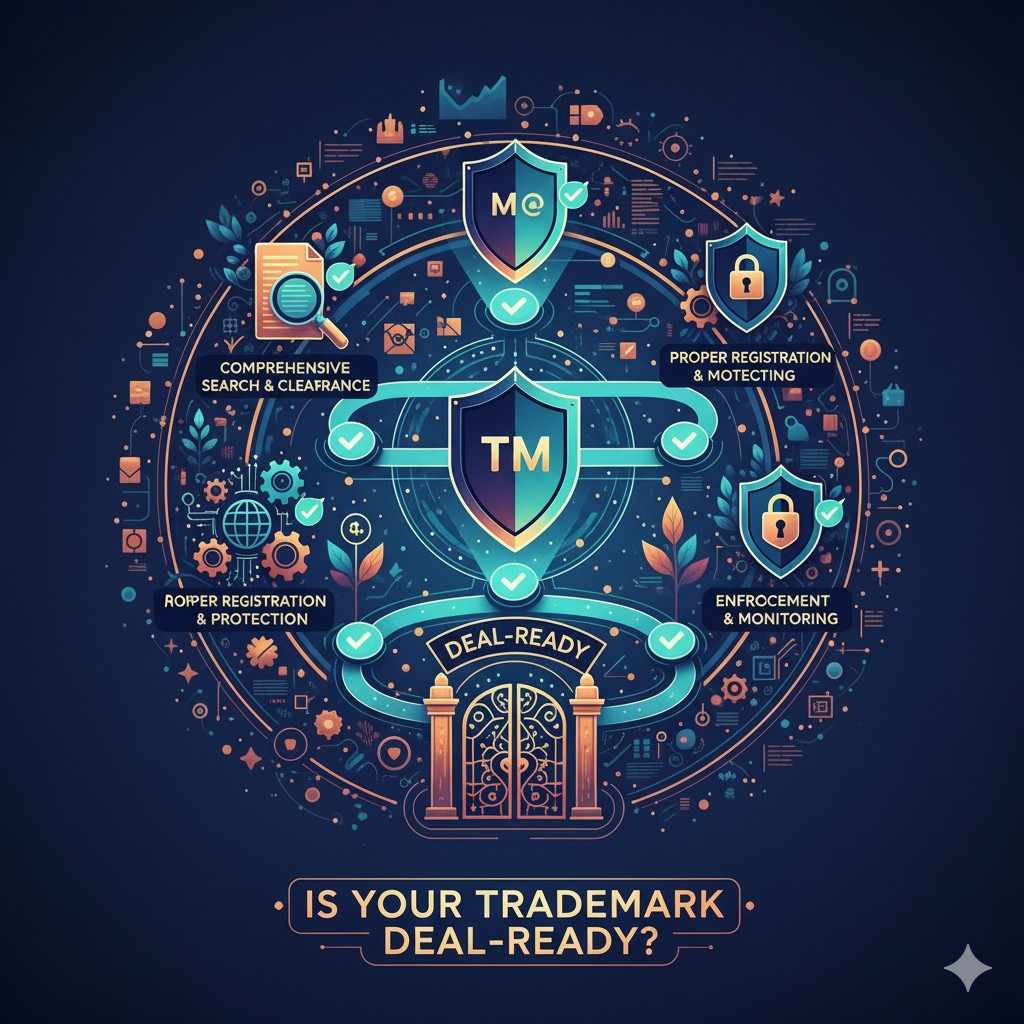
To see how you can make your trademark and broader IP deal-ready without slowing down product work, you can explore the PowerPatent workflow at https://powerpatent.com/how-it-works.
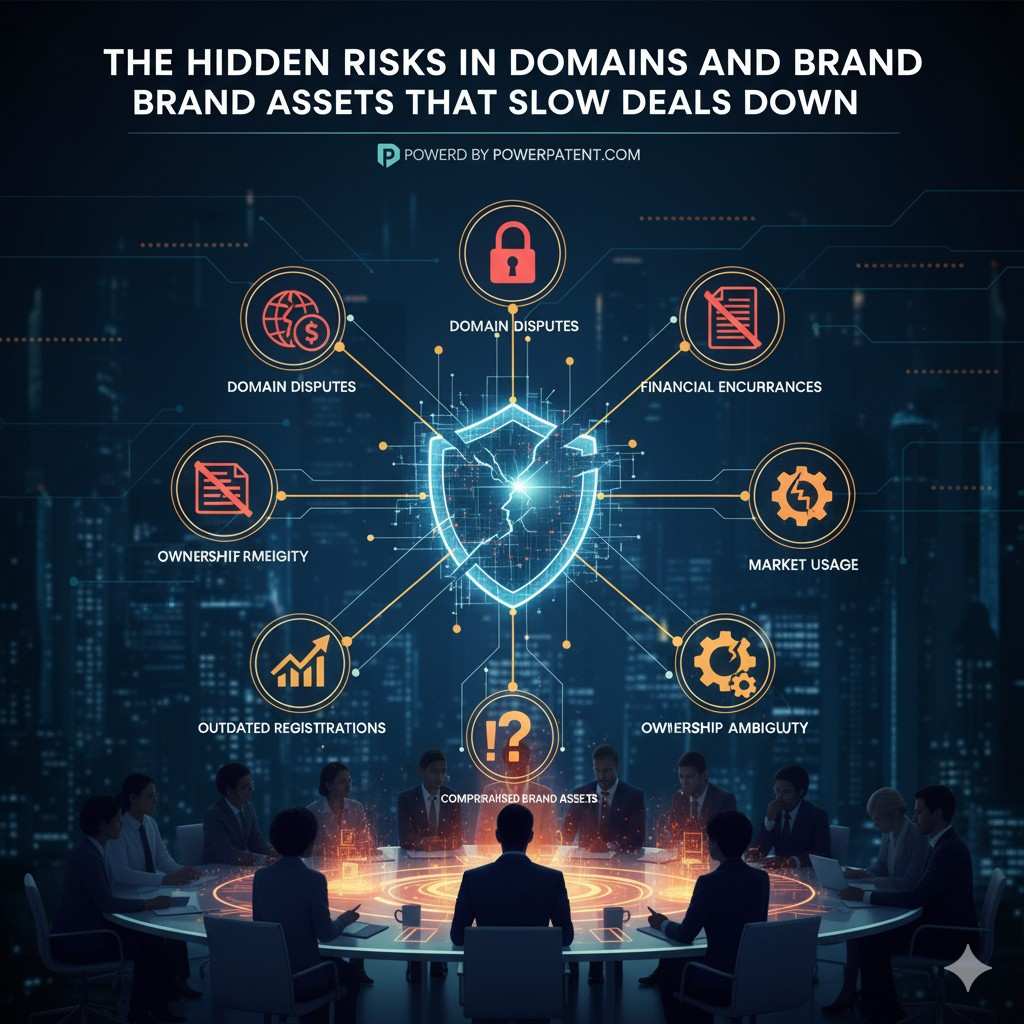
The Hidden Risks in Domains and Brand Assets That Slow Deals Down
Many founders believe their domain is secure simply because they bought it years ago and nobody has complained. But investors look at domains with the same level of care they apply to trademarks.
A domain is not just a web address. It is the front door of your business. If something looks messy, unclear, or risky, it becomes a point of concern during a deal.
The moment investors begin due diligence, even tiny gaps turn into large questions.
When your domain and brand assets are predictable, clean, and easy to prove, you remove a major source of friction that quietly affects your deal momentum.
Why Domain Ownership Needs Clear, Centralized Control
A surprising number of startups have their primary domain registered under a personal email, a former team member, or an outside contractor. This may not seem like a problem until an investor asks who truly owns the asset.
Investors want to see simple, traceable proof that your company—not an individual—controls the domain. When a domain is not registered to the company, it creates doubt about who actually has authority over it.
This uncertainty can force delays, require legal fixes, or even put pressure on your negotiation power.
A domain registered cleanly under the company’s name sends a clear message that everything important is held at the company level where it belongs.
How Expiring Domains Create Anxiety for Investors
Investors look at domain expiration dates because renewal lapses create serious risks.
A domain that renews in a few weeks or months may appear stable, but if no system is in place to guarantee that renewal, it becomes a weak link.
Investors want to know that your brand will not disappear because of a simple oversight. They want to see auto-renew enabled, payment methods updated, and long-term stability secured.
A domain that is set to expire soon without a clear renewal plan feels like a risk no investor wants to absorb.
What Happens When Your Domain Does Not Match Your Trademark
Many founders operate under a brand name that does not match their domain. Investors notice this quickly. A mismatch sends mixed signals, especially when the domain is too generic, too different, or owned by someone outside the company.
When the brand name and domain are aligned, investors feel that the company has a unified identity. When they do not match, investors want to understand why.
This often leads to deeper questions about strategy, protection, and long-term plans. The more aligned your domain and brand are, the faster investors relax into your story.
How Third-Party Tools and Accounts Complicate Domain Ownership
Over time, many startups connect their domain to thousands of tools, from email hosting to web apps to integrations. But investors want to know that these connections are under control.
When too many tools hold access to your DNS or domain settings, they create a web of dependencies that can cause security risks. Investors look for signs that access is limited, organized, and stored in safe hands.
When you can show clear control over every connection, you reassure investors that there are no hidden vulnerabilities waiting to surprise them later.
Why Investors Look for Domain Disputes and Past Ownership Records
Domains have histories. Investors often check whether your domain has ever been involved in disputes, ownership transfers, or past content issues.
If your domain was previously owned by someone in a sensitive industry or associated with content that could damage your reputation, investors want to know.
They understand that a domain with a messy past can affect brand safety. When you know the history of your domain and can speak about it clearly, you show investors that you take reputation seriously.
How Unprotected Social Handles Create Brand Weak Points
Social platforms play a major role in shaping your public identity. Investors expect your main social handles to match your brand name and be controlled by the company.
When handles are missing, mismatched, or owned by others, investors worry that your brand may be hard to defend.
They want to see that you own your presence across key platforms, even if you are not active on all of them. Clean ownership of social handles signals that your brand has room to grow without complications.
When Subdomains and Internal Naming Create Confusion
Subdomains often get created quickly during product development, and over time they multiply. Investors sometimes find inconsistencies in how these subdomains are structured, named, or controlled.
A scattered subdomain setup suggests chaos behind the scenes. A clear subdomain system shows investors that your brand identity scales in an organized way.
The way you manage these internal naming layers reflects how well you manage complexity across the company.
Why Investors Worry When Domains Are Held in Multiple Countries Without Strategy
Many startups buy versions of their domain across several countries. While this can be smart, it becomes a liability if you do not have a clear reason or plan for doing so.
Investors want to know which regions matter to your business and why you hold certain domain extensions. When this strategy is unclear, it suggests you may be reacting instead of planning.
When it is intentional, it demonstrates vision and foresight. Investors respond well to founders who can explain not just what they own but why they own it.
How Clean Branding Files Make Deals Move Faster
Every company builds brand assets such as logos, style guides, design files, and brand kits. Investors often request these during due diligence to confirm you own the full rights to use them.
If these files were created by freelancers or agencies without proper agreements, investors worry that someone else might claim ownership later.
When you have clear contracts showing the company owns every pixel and every file, it removes uncertainty. This helps deals move faster because investors know your visual identity is fully protected.
When Brand Assets Become Proof of Operational Maturity
Investors want to see that your brand assets are not scattered, outdated, or difficult to access. They want evidence that your identity is consistent and stable.
When brand assets are stored in a single place, updated, and clearly organized, it sends a message that you run a disciplined operation.
Investors often judge how well a company is managed by how well it manages the simple things. A clean brand system becomes a sign of maturity and care, even if you are still early-stage.
Turning Domain and Brand Hygiene Into Investor Confidence
A deal becomes easier when investors do not have to hunt for missing pieces or chase clarity around who owns what. A clean domain and well-organized brand assets remove questions before they appear.
They speed up negotiations, reduce uncertainty, and show investors that your company moves with intention. This kind of clarity makes your brand feel safe. And when your brand feels safe, your deal becomes smoother.

If you want a simple way to keep trademarks, domains, agreements, and brand assets together in one place—with attorney support when you need it—PowerPatent makes this process fast and stress-free.
You can learn how it works here: https://powerpatent.com/how-it-works.
A Simple Path to Making Your Brand Safe, Strong, and Investor-Ready
Every founder wants a brand that feels solid, clear, and ready for any deal conversation. But most founders do not know where to start or how to keep everything in order while building the actual product.
Investors expect your brand to be clean, documented, and protected, yet they also understand that early teams move fast and wear many hats.
The key is to build a simple system that keeps your trademark, domain, and brand assets aligned so you never scramble during due diligence.
When your brand foundation is steady, every conversation with investors becomes easier because they sense order instead of uncertainty.
Why Starting Early Makes Everything Cheaper and Faster
Fixing brand problems late is one of the most expensive mistakes founders make. When an investor points out a missing filing or a domain issue, fixing it under pressure becomes stressful and costly.
But when you start early, small steps create huge advantages. You avoid conflicts. You avoid rushed decisions. You avoid rebrands.
Investors love when you start early because it shows you protect the business before it grows. Early action becomes a quiet proof of discipline. It speaks louder than you expect.
How to Build a Clear Brand Ownership Structure Inside the Company
Investors want to know exactly who owns your trademark, your domain, your brand assets, and your creative files. If ownership lives with individuals instead of the company, problems appear quickly.
A clear ownership structure means every core asset is owned by the business entity, not a founder, not a contractor, and not a past team member. When ownership is clean, investors see stability.
When ownership is messy, investors hesitate. A clean structure also helps you move faster because you no longer worry about tracking down people for signatures or permission.
Why You Need a Central Home for Every Brand Document
Too many companies store their trademark papers, renewal notices, domain files, logo files, and contracts across random places. When an investor asks for these documents, you waste hours searching.
A central home for everything turns chaos into order. It shows investors that nothing gets lost and nothing is left to chance. When you can pull every brand document instantly, you look prepared.
You look professional. You look ready for real growth. This simple habit removes stress in moments when you need clarity the most.
How Continuous Monitoring Protects Your Brand Without Effort
Brand protection is not something you do once. New filings appear. Competitors move into your space. Domains go up for sale. Social handles get claimed.
Investors know that a brand can lose value if it is not watched over time. Continuous monitoring helps you catch issues early, before they grow into expensive problems.
It helps you defend your brand calmly instead of reacting in panic. When investors see that you monitor your brand, even in simple ways, they view you as someone who builds defensible assets, not fragile ones.
Why Predictability Matters More Than Perfection in Branding
Many founders think investors want everything perfect. But that is not true. What investors want is predictability. They want to know nothing about your brand will surprise them later.
A predictable brand has clean paperwork. A predictable brand has safe ownership. A predictable brand has consistent naming. Investors care about predictability because it reduces risk.
When your brand is predictable, it becomes easier for investors to trust the next steps of your company. Perfection is not the goal. Predictability is.
The Power of Clean Naming Across Every Touchpoint
Your trademark, domain, and social handles should feel like one single identity. When investors see your name used consistently everywhere, they feel a sense of cohesion.
When names differ, they sense confusion. Clean naming eliminates doubt. It shows that your brand is not scattered. It reduces friction across marketing, sales, and legal work.
When naming is consistent, your identity feels strong, and strong identities are easier for investors to support.
How to Show Investors You Understand Brand Risks
One of the best ways to build investor confidence is to speak about brand risks openly and simply. Investors know every brand has risks. What matters is whether you understand them.
When you can explain what risks exist, what steps you have taken, and what plans you have for future protection, you create trust. Investors do not need you to be perfect.

They need you to be aware. Awareness becomes a sign of operational maturity and thoughtful leadership.
Why You Need Agreements for Every Creative Asset You Use
Every logo, design, illustration, or brand element needs clear ownership. If a contractor or designer created something without a written agreement assigning rights to your company, investors worry that ownership is unclear.
A single missing agreement can slow or even block a deal. When you have simple written agreements for every asset, investors breathe easier.
They know no one can later claim rights to your visual identity. Clean agreements turn creative assets into real company property.
How Smart Tools Reduce Brand Stress for Fast-Moving Teams
Most founders do not have time to manage IP manually. They need software that saves them time.
They need workflows that keep everything organized. They need reminders that keep filings on track. They need attorney oversight to avoid painful mistakes.
Smart tools like PowerPatent make this part of the work easy. Instead of worrying about filings, renewals, and documents, you get simple steps and expert review.
This gives investors confidence that your IP is handled with care, not left to luck. It makes your brand feel protected, predictable, and ready for bigger things.
When Investors Feel Your Brand Is Truly Deal-Ready
A deal-ready brand is calm. It has no loose ends. It has no unclear ownership. It has no mismatched naming. It has no lost documents.
It has no trademark gaps. When investors feel the ease of a deal-ready brand, the whole tone of negotiation changes.
They move faster. They ask fewer questions. They push fewer concerns. A deal-ready brand becomes a magnet for momentum. It becomes a signal that your company is not only building, but building with intention.
A Brand That Stands Tall Under Pressure Becomes an Asset You Can Leverage
When your brand is strong, you can use it in fundraising, partnerships, expansion, hiring, and even an exit. It becomes something real that your company owns and controls.
Investors love seeing companies treat their brand this way because it shows discipline. It shows stability. It shows long-term thinking. A protected brand is not just an identity. It is a business asset that grows with you.

If you want to secure your brand and make it truly deal-ready using simple software plus real attorney support, you can explore how PowerPatent works at https://powerpatent.com/how-it-works.
Wrapping It Up
Every founder wants a business that feels strong in the eyes of investors, partners, and possible acquirers. And while product and growth get most of the attention, your brand rights often determine how smooth or stressful a deal becomes. When your trademark is clear, your domain is clean, and your brand assets are owned and organized, everything about your company becomes easier to trust. Investors see a company that protects what it builds. They feel a level of confidence that helps them say yes faster. Bringing all of this together does not require complex legal knowledge. It simply requires awareness, intention, and the right tools to keep everything moving in the right direction.