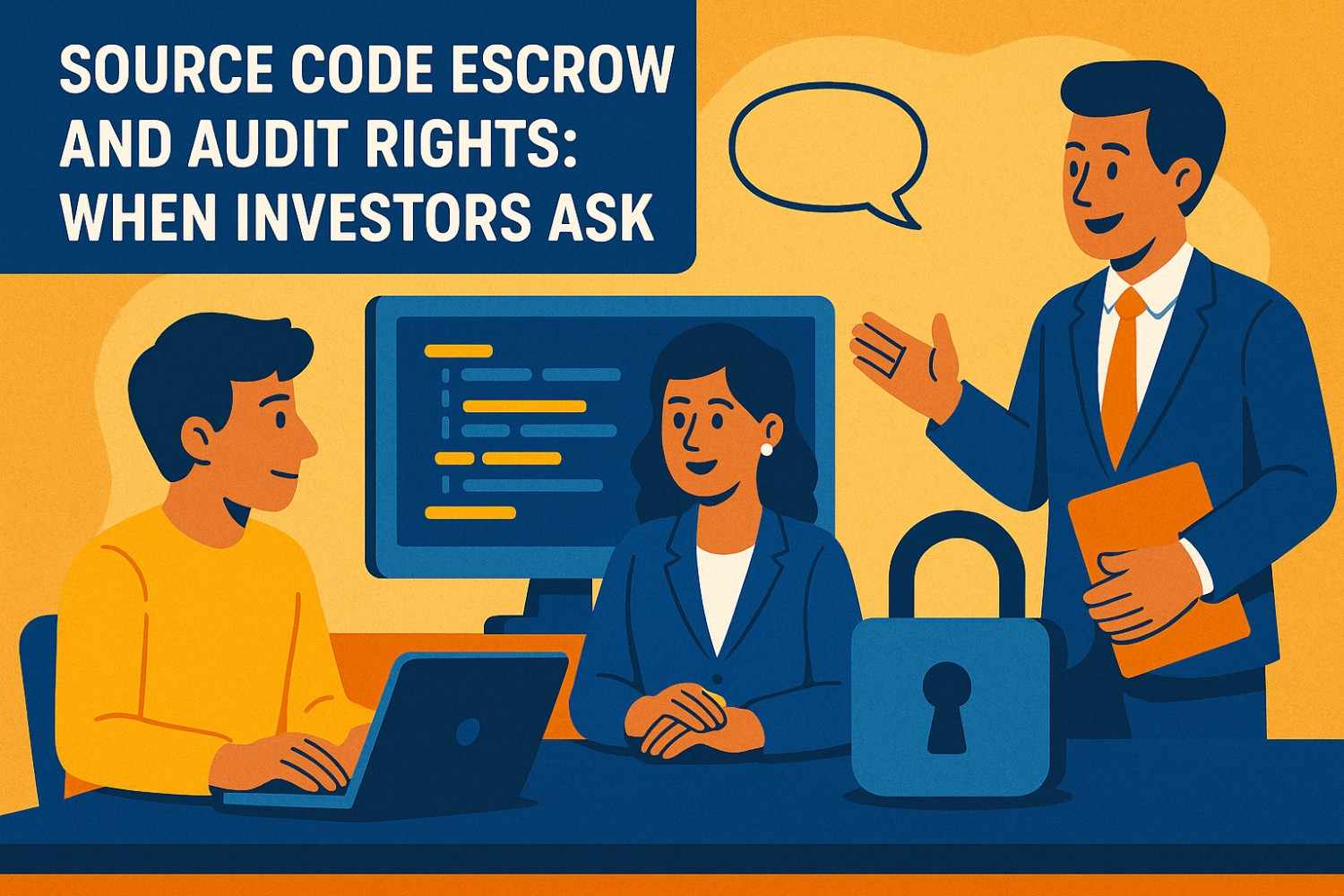
Investors will ask for many things, but few topics make founders pause like source code escrow and audit rights. The moment these words appear in a term sheet or due-diligence request, you can almost feel the air change. It sounds technical, risky, and maybe even a bit unfair. But here’s the truth: investors ask for these rights because they want confidence, not control. And as a founder, you can use this whole process to your advantage—if you understand what’s really going on behind the scenes.
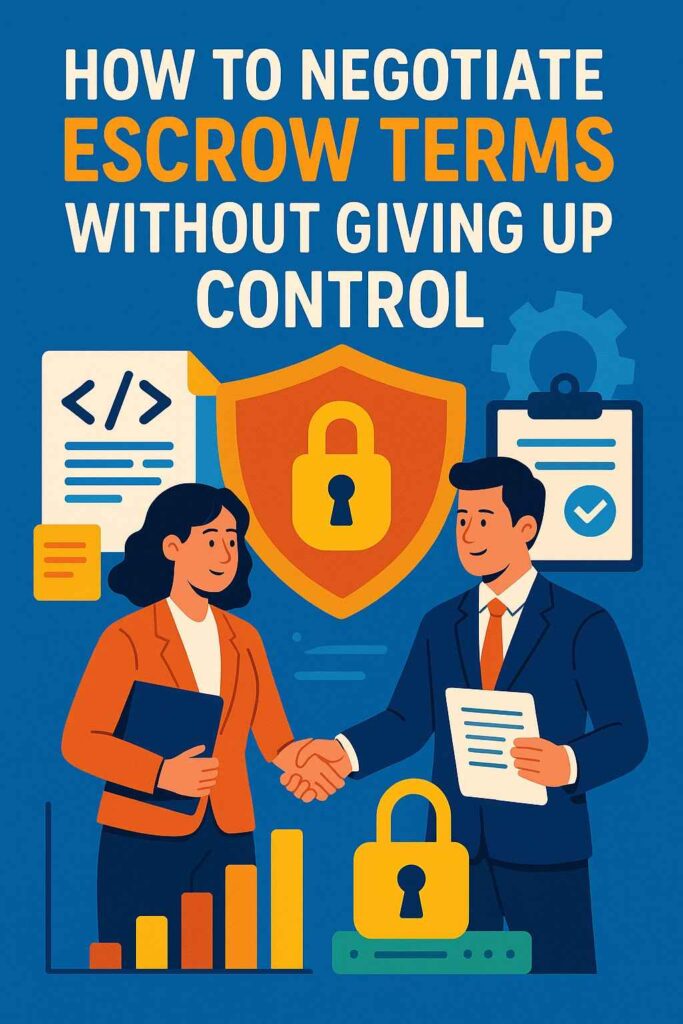
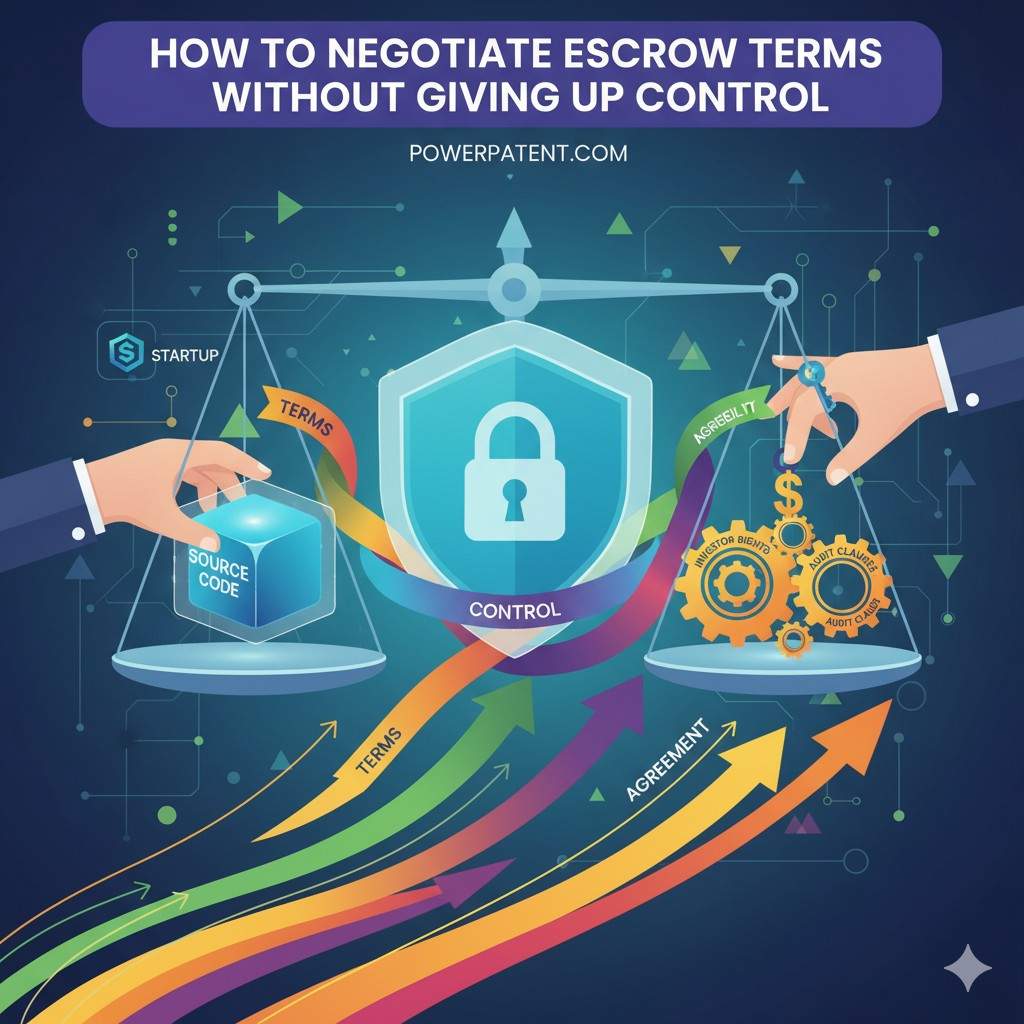
How to Negotiate Escrow Terms Without Giving Up Control
Most founders hear that an investor wants source code escrow and assume they need to agree to whatever terms are placed in front of them. But escrow is not a one-sided protection tool.
When handled the right way, it becomes a shield for the business rather than a window into your technology.
The goal is to give investors confidence without opening the door too wide, and you can do that by shaping the structure of the escrow from the very beginning.
With the right approach, you keep ownership, you keep control, and you set clear rules that protect the long-term future of your product.
Why the First Draft of the Escrow Terms Is Only a Starting Point
Many founders don’t realize that escrow terms are almost always drafted to lean in the investor’s favor at first.
This does not mean they expect you to sign it as is. It simply means they are starting from the maximum level of protection for themselves.
Your job is to reshape the terms so the triggers, access rules, and update requirements match your operational reality. When you approach the document this way, the negotiation becomes less emotional and more practical.
You are not pushing back on trust—you are defining the conditions that allow your technology to remain truly yours.
How Trigger Events Should Be Narrow and Clearly Measurable
The heart of escrow negotiation lies in the trigger events. These are the exact situations under which your code can be released. The broader the triggers, the more risk you carry.
The narrower the triggers, the safer you are. You should aim for triggers that are objective and precise, because vague conditions create loopholes that can lead to premature release.
This is where clarity matters more than anything. A well-defined trigger makes the investor feel protected while still keeping your code completely sealed in normal business conditions.
How to Prevent Continuous Access by Setting Strict Release Procedures
Many escrow agreements fail because they don’t define the steps that must happen immediately before a release. Investors might propose fast or automatic release procedures, thinking it keeps them safe, but automatic procedures also create risk for you.
Instead, you want procedures that require documentation, verification, and formal notice.
The extra steps are not obstacles—they are safeguards. They ensure nobody can request your code casually or prematurely. They also create time for you to correct any issue that might have triggered a release in the first place.
Why Your Update Schedule Should Match Your Product Rhythm
A common mistake founders make is agreeing to unrealistic update schedules.
Investors want the most current version of the code in escrow, but they rarely understand your deployment cycles or internal development workflows.
When the schedule does not match your real production pace, you either fall out of compliance or spend unnecessary time and stress making updates only for escrow.
You can avoid this by proposing an update rhythm tied to meaningful releases.
This protects you from operational strain and gives investors exactly what they need: confidence that the escrow contains a usable version of your technology.
How to Protect Sensitive Components Before Anything Goes Into Escrow
Your codebase might contain elements that do not need to be part of the escrow to fulfill the investor’s safety concerns.
For example, infrastructure secrets, integration keys, or experimental components should not go into escrow. These pieces often have no use to anyone outside your team and can introduce unnecessary risk if stored improperly.
Before anything goes into escrow, you should separate the functional, ship-ready code from the sensitive operational material. This keeps the package secure while still meeting all investor expectations.
Why It Helps to Tie Escrow Terms to Your Existing IP Strategy
If your patents, provisional filings, or internal invention reports already capture the core mechanics of your technology, you have far more leverage when defining the scope of what goes into escrow.
Investors become less pushy when they see that your intellectual property is documented and defensible. This is because the risk of losing the value of the technology drops dramatically.
When your IP is strong, you can confidently explain why certain components do not belong in escrow or why certain triggers should be restricted. An organized IP strategy makes every part of the negotiation smoother.
How a Third-Party Escrow Agent Protects Both Sides
The escrow agent is often overlooked, but choosing the right one shapes the entire relationship. You want an agent who understands software, understands confidentiality, and understands the importance of neutral handling.
When an agent is experienced, they prevent misunderstandings, enforce contract rules, and keep everything predictable. This benefits both you and the investor.
It takes emotion out of the process and ensures everything unfolds according to the contract rather than someone’s interpretation of the contract.
How to Use Escrow to Build Trust While Protecting Your Edge
When you negotiate confidently, escrow becomes a signal to the investor that you are serious about reliability and continuity.
It shows that you understand the responsibilities that come with taking capital, especially when your product is mission-critical.
At the same time, your boundaries show that you are committed to protecting your company’s competitive advantage.
This balance helps strengthen the relationship, because investors respect founders who protect their technology with intention and clarity.
Why You Should Document Every Part of the Negotiation
Escrow terms often evolve through several rounds of discussion. If the changes are not tracked carefully, misunderstandings can later lead to disputes.
Documentation keeps the whole process clean. Every adjustment, every agreed definition, and every clarified trigger should be written into the final contract or kept as a supporting exhibit.
This isn’t merely good housekeeping. It protects you if there is ever a disagreement about whether conditions for a release were actually met.
How a Well-Negotiated Escrow Agreement Supports Your Future Rounds
Investors in later stages often review your early escrow agreements. When they see them structured carefully, they gain confidence not only in your technology but in your leadership discipline.
A sloppy or overly broad escrow agreement can slow down future rounds or raise questions about what rights earlier investors might have.

A strong, founder-friendly agreement makes later diligence smoother and reduces friction when bigger capital steps in. In many ways, the escrow terms you negotiate today become part of your strategic foundation for tomorrow.
Setting Fair and Safe Audit Rights That Don’t Slow You Down
Audit rights can feel intimidating the first time an investor brings them up.
The phrase alone suggests someone shining a flashlight into every corner of your technology and operations. But audits do not have to intrude on your work or expose your competitive edge.
When shaped correctly, they become a structured, predictable process that protects both sides. Investors want reassurance, not access. They want to confirm stability, not invade your code.
Your job is to create boundaries that give them the clarity they need while keeping your innovation fully insulated.
Why Audit Rights Should Be Framed as a Continuity Check, Not a Code Review
The biggest misunderstanding is that an audit means someone will comb through your source code. In reality, most investors do not want or need access to your code at all.
What they want is confirmation that your product can continue operating under pressure and that you are managing your technology responsibly.
When you frame audits around operational continuity instead of technical exposure, you shift the conversation away from sensitive IP and toward predictable processes you can control.

This keeps the investor confident without placing your internal work under a microscope.
How the Scope of an Audit Defines the Entire Experience
Audit rights often fail founders because the scope is too broad. Scope is simply the definition of what an auditor is allowed to examine. If you leave this undefined, the audit becomes a moving target. You get asked for things that were never part of the deal.
You spend time preparing areas that are unrelated to the investor’s real concerns. But when you define the scope clearly, audits become smooth and limited.
They focus on uptime, support obligations, compliance matters, or other specific elements tied to the safety of the investment. With a clear scope, you avoid mission creep and you keep your IP fully protected.
Why You Should Require an Independent Third Party for All Audits
Allowing an investor or their internal team to conduct an audit can create pressure, misunderstandings, and even accidental exposure of sensitive details.
This is why most strong agreements insist that audits be handled by neutral third-party experts. These auditors already understand confidentiality expectations.
They work within strict boundaries. They follow predefined evaluation protocols. And they do not share anything beyond what the contract allows.
This structure reduces risk dramatically and turns the audit from a stressful event into a managed professional service.
How to Set the Frequency of Audits So Your Team Stays Productive
Investors sometimes propose audit rights that allow them to check in whenever they feel it’s necessary. That kind of open-ended timing is dangerous for your workflow because it introduces constant potential disruption.
Instead, the frequency should be tied to specific milestones or events. For example, an audit might be allowed once per year, or only if there is a reasonable belief that you are not meeting commitments.
When the timing is predictable, your team can plan for it and treat it like any other operational review. This keeps your engineering cycles intact and protects your ability to move quickly.
Why You Should Require Notice Periods Before Any Audit Begins
Short notice audits put founders at a disadvantage. They force your team to drop everything. They create confusion about what needs to be provided. They also increase the risk of misinterpreted findings because preparation was rushed.
A proper notice period gives you time to gather documentation, stabilize any ongoing work, and prepare an accurate picture of your systems.

It also lets you correct small operational issues before the audit starts, which protects the perception of reliability. Notice periods protect your time, your team, and your ability to present your technology clearly.
How You Can Protect Your Competitive Edge Through Confidentiality Layers
Even with a third-party auditor, you should not assume confidentiality is automatic.
You need explicit confidentiality rules written into the agreement, including rules that prevent auditors from retaining data, discussing findings beyond the allowed summary, or sharing structural details about your system.
These layers create a sealed environment around your information. They also send investors a strong signal that you treat your IP seriously.
When confidentiality expectations are precise, you reduce the risk of leakage and protect the parts of your system that give you your competitive advantage.
Why You Should Require Investors to Pay for Routine Audits
If audits are meant to protect the investor, the investor should carry the cost. This is the industry norm, and for good reason. When investors pay, they are more thoughtful about when they request an audit and why.
It discourages unnecessary checks and ensures the process happens only when it genuinely matters.
You also avoid draining your own resources or budget for a process that provides reassurance primarily to them. This is a small negotiation point, but it has a big impact on how often audits are used.
How Audit Summaries Should Be Limited to High-Level Outcomes
The output of an audit should never include technical detail or operational secrets. Instead, the summary should focus only on whether you met the defined requirements.
This creates a protective barrier around your process while still giving investors the clarity they need.
A high-level summary is enough to confirm continuity, stability, and compliance. The more you restrict the contents of the final report, the less risk you carry in the long term.
Why You Should Tie Audit Rights to Your Broader IP Strategy
When your patents or filings already describe the workings of your technology, investors have fewer questions.
Your intellectual property becomes proof of structure, proof of ownership, and proof of long-term stability.
This reduces the depth of inquiries during audits because the foundation of your tech is already documented.
Strong IP gives you the power to say no to unnecessary access without looking defensive. It becomes your shield in every negotiation involving audits.
How Well-Defined Audit Rights Build Investor Confidence Without Sacrificing Speed
The moment audit rights become clear and fair, the investor feels protected, you feel secure, and the entire relationship becomes more grounded.
Investors respect founders who create structure and push for boundaries that support long-term growth.

It shows discipline. It shows foresight. And it shows leadership. When you set audit rights carefully, you build trust while still preserving the agility that makes your startup strong.
How Strong IP Protection Changes Every Investor Conversation
When you start raising money, something becomes clear very quickly. Investors care deeply about the technology you are building, but they care even more about whether you truly own it.
Strong intellectual property protection changes the entire tone and direction of these conversations. It reduces friction, lowers doubt, and speeds up diligence.
Instead of trying to convince investors that your code, models, or systems are safe from copycats or former employees, you can point to real filings and documentation that back your claims.
This shifts you from defending your work to demonstrating control, and that shift makes everything easier.
Why Investors Relax When They See You Have Protected What You Invented
A founder with strong IP sends a quiet but powerful message: the company is built on real innovation.
When investors see your patents or pending applications, they understand that your technology has structure, intention, and legal protection.
This takes pressure off every other part of the conversation. It reduces the urgency to ask for broad audit rights. It narrows the need for intrusive technical review.

It gives them certainty that even if the market becomes crowded, your defensible position remains strong. Strong IP becomes the foundation that supports your long-term story.
How IP Protection Shapes the Way Investors View Your Risk Profile
Every investor is trying to minimize risk without slowing you down. When your IP is scattered across documents, old code branches, or unfiled ideas, investors get nervous because the future feels fragile.
But when your IP is organized and filed properly, the risk profile changes instantly. Instead of wondering whether your moat is real, they can see it documented.
Instead of worrying about claims from former contractors or competitors, they know your rights are secured.
Proper filings turn invisible value into tangible assets, and that shift makes your company safer in the eyes of every serious investor.
Why Clear IP Ownership Speeds Up Due Diligence
Due diligence often slows or even stalls when investors find gaps in IP ownership. Missing assignment agreements, unclear contributions, or undocumented breakthroughs create confusion.
Confusion leads to more questions, which leads to delays, which can become deal fatigue.
But when everything is laid out cleanly—your code lineage, your invention notebooks, your filings, your attorney-reviewed descriptions—the process moves fast.
The investor feels reassured that they are buying into something real. Strong IP converts diligence from a stressful audit into a predictable checkbox exercise.
How Patents and Filings Strengthen Your Negotiation Position
When your tech is protected, you negotiate from a position of power. You can confidently push back on overly broad escrow triggers or wide audit scopes because you already have legal proof of your technological foundation.
Investors are less likely to insist on intrusive rights when they see your portfolio is robust. You are no longer trying to convince them that your innovation exists; you are simply showing them the documents that prove it.
Strong IP turns abstract claims into grounded evidence, and that changes everything about how you negotiate.
Why Investors Value Startups That Treat IP as a Strategic Asset
The most respected founders understand that IP is not paperwork. It is part of the company’s engine. When you treat IP as something to build early instead of something to fix later, you demonstrate maturity and vision.
Investors see that you are not only building a product but also building a durable business. This mindset signals that you are preparing for follow-on rounds, strategic partnerships, and eventual acquisition opportunities.

When IP becomes part of your strategic story, investors begin to picture a larger and safer future for the company.
How Strong IP Reduces Pressure for Escrow Access
When investors know your technology is already protected, they worry far less about losing access to it in a worst-case scenario. Patents and filings provide a blueprint of the underlying innovation.
They give investors confidence that the value will not vanish even if a crisis occurs. Because of this reassurance, they often become more flexible when negotiating escrow triggers, update schedules, or release procedures.
Strong IP protection makes investors feel less exposed, which leads to less aggressive demands.
Why IP Protection Lets You Share Less During Audits
Audits become smoother when your core inventions are already documented. Instead of showing internal diagrams, architecture details, or sensitive algorithms, you can refer auditors and investors to your filings.
These documents set clear boundaries around what exists and how it works. They replace deep technical dives with simple confirmations.
This reduces the amount of material you need to prepare and lowers the chances that sensitive details leave your control. Strong IP gives you a safe and neutral anchor point whenever questions arise.
How a Tight IP Strategy Prepares You for Enterprise Deals
Large companies ask the same questions as investors, only louder and with more lawyers involved.
They want to know if your technology is yours. They want to know if it is protected. They want to know if adopting your product introduces risk.
When your IP is strong, enterprise customers move forward faster because they see you as trustworthy.
This confidence makes pilots easier to sign, renewals easier to secure, and expansions easier to negotiate. Strong IP becomes part of your commercial momentum.
Why IP Makes Your Company More Valuable Over Time
When your inventions are captured and protected, they become assets that grow in value as your business grows. They can be licensed, sold, defended, and leveraged.
Investors know this, and it affects how they calculate your long-term worth. A startup with strong IP is not just selling software.
It is building a protected technology platform that can be monetized in multiple ways. This can affect your valuation, your negotiation leverage, and your future exit options in ways that compound over time.
How Patents Reduce Copycat Risks and Strengthen Market Position
Without IP protection, your competitors can mimic your ideas the moment you succeed. With IP protection, they hit a legal wall. This difference changes how investors view your growth potential.
A company with protected innovation can outpace competitors more confidently because the market knows there are real consequences for copying.
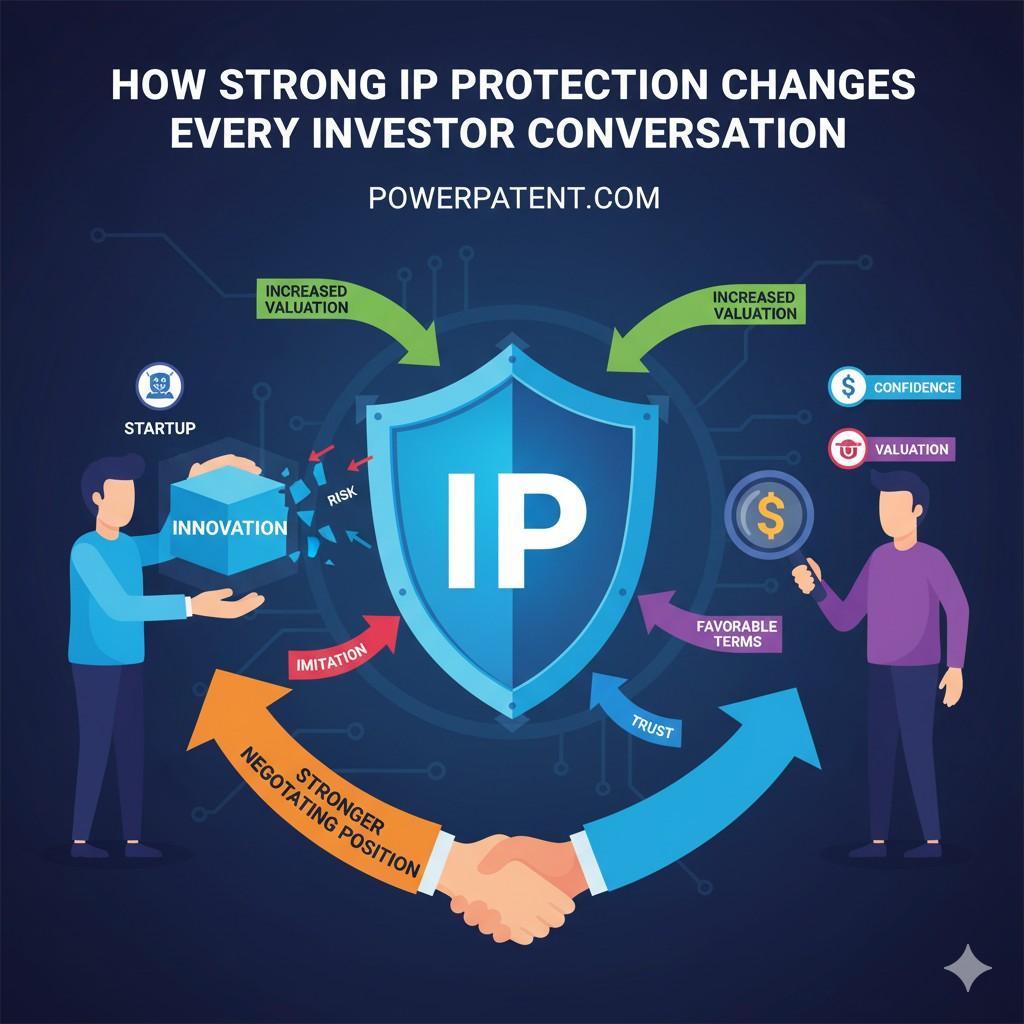
This gives your growth story more strength and your strategy more stability. Investors prefer companies that can defend their lead rather than constantly chase the next move to stay ahead.
What Founders Should Do Before Investors Ever Ask
Many founders only start thinking about escrow, audit rights, and intellectual property when an investor finally asks about them. By then, the pressure is high, the timeline is short, and small gaps in documentation can turn into stressful roadblocks.
But the smartest founders prepare long before these requests appear. When you take simple, steady steps early, you transform investor conversations from reactive to confident.
Instead of scrambling to explain how your technology is protected, you get to show that everything has already been thought through. This changes the tone of the entire fundraising process.
Why Proactive Preparation Gives You the Power Position
When you wait for an investor request, you lose leverage because you must move quickly to satisfy someone else’s timeline. When you prepare early, you choose the pace, the structure, and the framing.
You get to define your own standards instead of scrambling to meet theirs. This proactive stance makes investors trust you more because it signals discipline, clarity, and long-term thinking.

You are not simply building a product. You are building a company that knows how to protect itself.
How Founders Benefit From Documenting Their Technology Early
Every invention, process, and insight gains value the moment it is written down.
Documentation makes your innovation real and traceable. It helps you show exactly who created what, when it was created, and how it evolved over time.
This becomes extremely important during diligence because investors want to know that your IP has a clear origin. When the documentation is already there, it becomes effortless to answer questions.
You never want to chase old files, track down contributors, or reconstruct timelines in the middle of a fundraising round. Starting early makes everything smoother.
Why Early Patent Filings Remove Future Stress
Many founders assume they need everything perfect before filing anything. But provisional filings exist exactly to help early-stage teams capture their ideas quickly.
When you file early, you secure your priority date and lock in ownership of the underlying invention.
This one move eliminates a huge amount of stress later because you no longer fear being exposed during audits or escrow discussions.
Investors love seeing filings because they indicate that you treat your technology seriously. Early filings also give you more freedom to share your product roadmap, because you know the core ideas are already protected.
How Clean Code Ownership Records Prevent Surprises
One of the biggest problems investors find is unclear code ownership. Maybe a contractor committed a critical piece of the architecture. Maybe an intern wrote part of the algorithm.
Maybe a co-founder left without signing proper agreements. These loose ends create real legal risk.
They can slow down or even block investments. The way to prevent this is simple: ensure every contributor signs clear assignment agreements long before you raise.
When your codebase has a clean ownership history, investors stop worrying about disputes, claims, or surprises that might appear later.
Why Founders Should Separate Core Innovation From Operational Details
When preparing for future escrow or audit discussions, it helps to separate what is essential from what is operational. Core innovation includes the algorithms, logic, and systems that define your product.
Operational details include deployment tools, staging environments, experimental code branches, or internal scripts.
Keeping these separate makes it much easier to comply with future escrow or audit requests without exposing unnecessary information.
It also helps you maintain a clean internal structure, which supports both patent filings and investor discussions.
How Early IP Strategy Helps You Shape Future Negotiations
When you think about IP early, you gain the ability to guide future discussions instead of reacting to them.
You can decide which elements of your invention are patentable, which parts should remain trade secrets, and which parts can be openly described.
This clarity becomes an anchor point when investors ask tough questions. Instead of giving vague answers, you can point to a structured strategy.
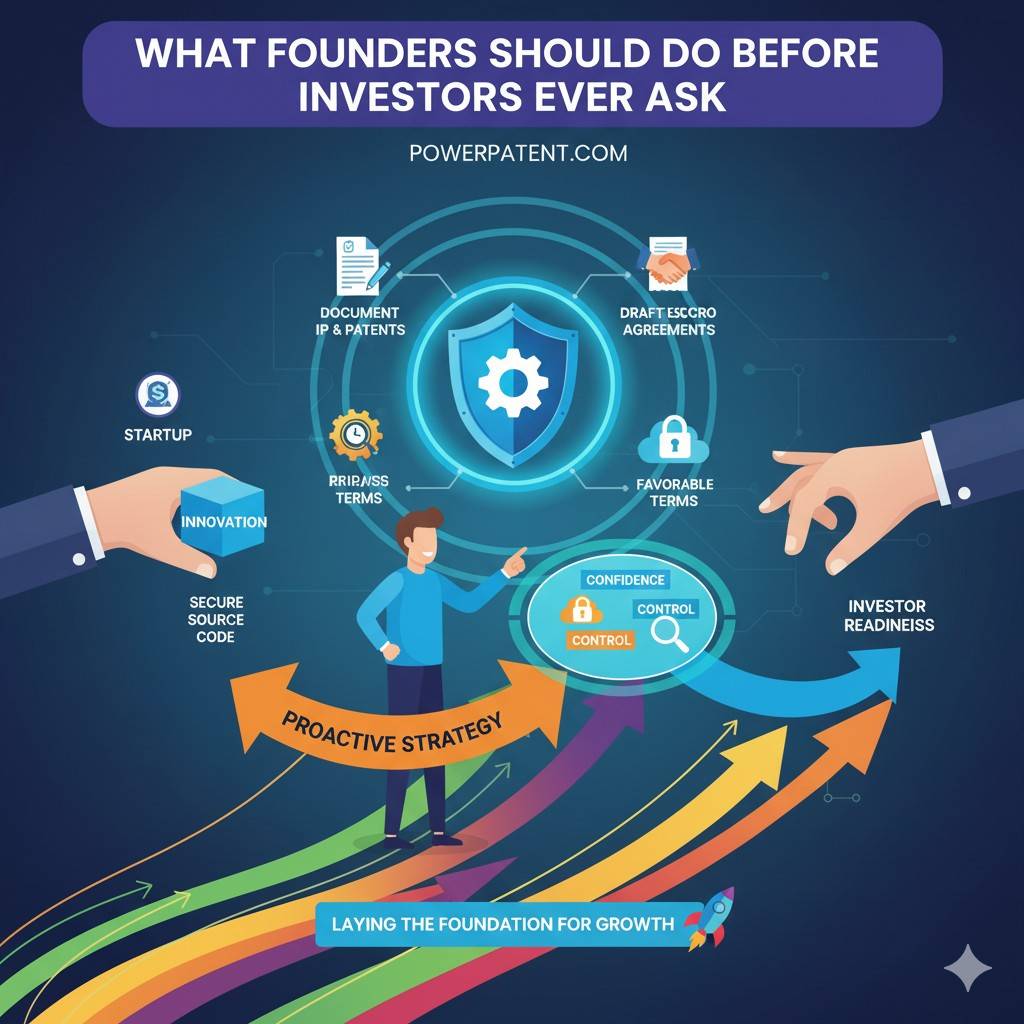
Investors respect this because it shows you think like a leader preparing for scale, not just a builder writing code.
Why You Should Establish Escrow-Ready Processes Ahead of Time
Even if no investor has asked yet, it helps to imagine what your escrow process would look like. You can decide what version of the code would go into escrow, how often it would be updated, and what sensitive elements would be removed.
This preparation makes future negotiations smoother and faster. You may never need to activate escrow, but the act of preparing gives you a clear operational pathway.
It also shows investors you have already thought about continuity, which increases their confidence in your maturity.
How Preparing for Audits Early Makes Diligence Effortless
If you build simple audit-friendly habits now, future reviews become non-events. For example, keep lightweight logs of uptime, maintain clear internal processes for handling incidents, and track your release cycles in a structured way.
You don’t need heavy systems. You just need consistency.
These habits give you stable proof points when investors ask about reliability or resilience. And because the data is already there, you never have to scramble at the last minute to reconstruct your performance history.
Why Early Preparation Helps You Control the Narrative
When you walk into investor meetings with well-established IP, documented systems, clean ownership records, and thought-out continuity plans, you are no longer reacting to questions.
You are guiding the story. Investors follow your lead. They see your confidence, not your uncertainty. They see preparation, not gaps. This makes your company look stronger, safer, and more investable.
Founders often underestimate how much control they can have over these conversations simply by preparing before anyone ever asks.
How Being Ready Before the Ask Speeds Up Fundraising
Fundraising always takes longer when you are chasing documents, fixing agreements, or scrambling to patch weak areas.
When everything is ready ahead of time, the round moves faster because nothing causes friction. Investors appreciate clarity.
They move quicker when they see a business that already understands how to protect itself.

This speed compounds across rounds, partnerships, and enterprise deals. By staying ahead, you avoid the delays that slow so many promising companies.
Wrapping It Up
Every founder eventually reaches the moment when an investor asks about source code escrow or audit rights. It may feel sudden. It may sound technical. It may even trigger a little fear. But when you look more closely, these requests are not obstacles. They are signals that what you are building matters. They show that investors see potential, and they want structure around that potential. When your intellectual property is strong, when your code ownership is clean, and when your operational habits are clear, these conversations become simple instead of stressful.