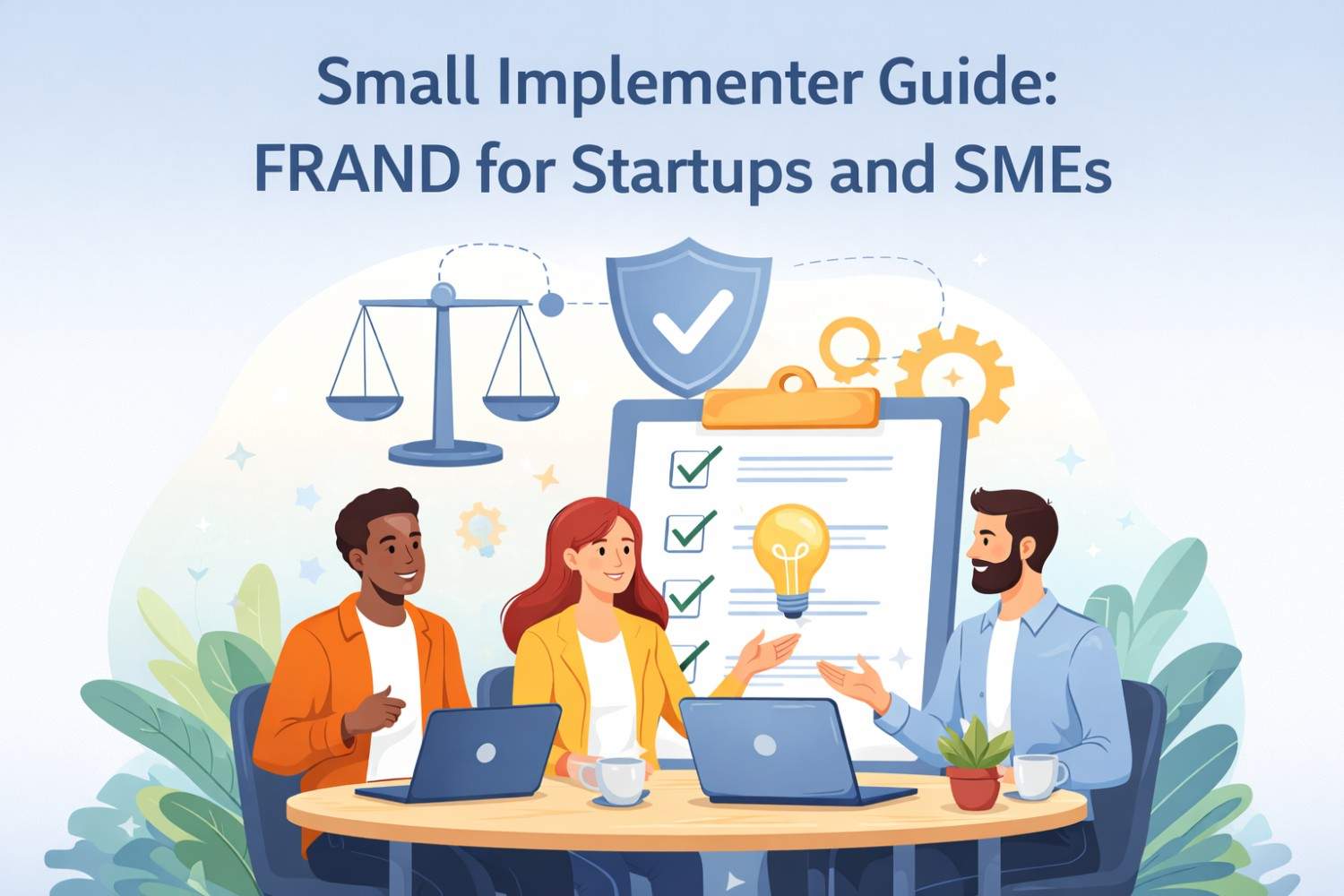
If you are building a real product and plan to sell it at scale, you will run into patents you do not own. Some of those patents are tied to industry standards. That is where FRAND shows up, often without warning. Most founders hear the word only when there is already a problem. This guide exists so that does not happen to you.
What FRAND Really Means (Without the Legal Noise)
FRAND sounds like one of those terms that only matter to big companies with long contracts and full legal teams. That belief causes many startups real damage.
FRAND shows up in everyday products, common technologies, and fast-growing markets. You do not need to become a legal expert to understand it, but you do need to understand how it works in practice.
This section breaks FRAND down in plain language. The goal is not theory. The goal is control.
When you understand FRAND early, you make better product decisions, avoid bad deals, and protect your company while you grow.
FRAND Exists Because Standards Exist
Standards are the reason devices talk to each other. Wi-Fi works because everyone follows the same rules. Mobile phones connect because networks use shared technical standards.
Video streams load because codecs follow agreed designs.
Behind many of those standards are patents. Someone invented a key part of how the standard works.
To make the standard usable by everyone, patent owners promise to license those patents on FRAND terms. That promise is what keeps the system moving.
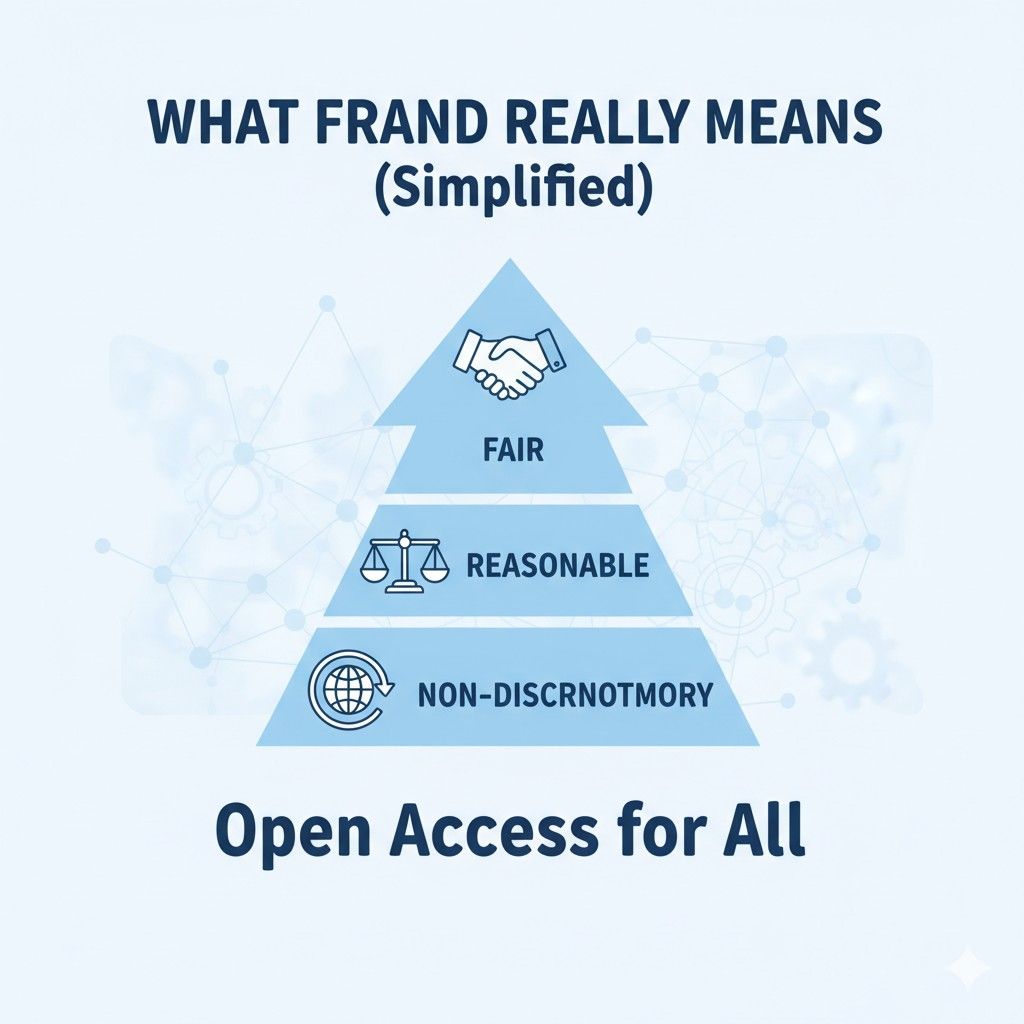
For startups, the key insight is simple. If your product uses a standard, you are already inside the FRAND world whether you planned to be or not.
What Fair Really Means in Practice
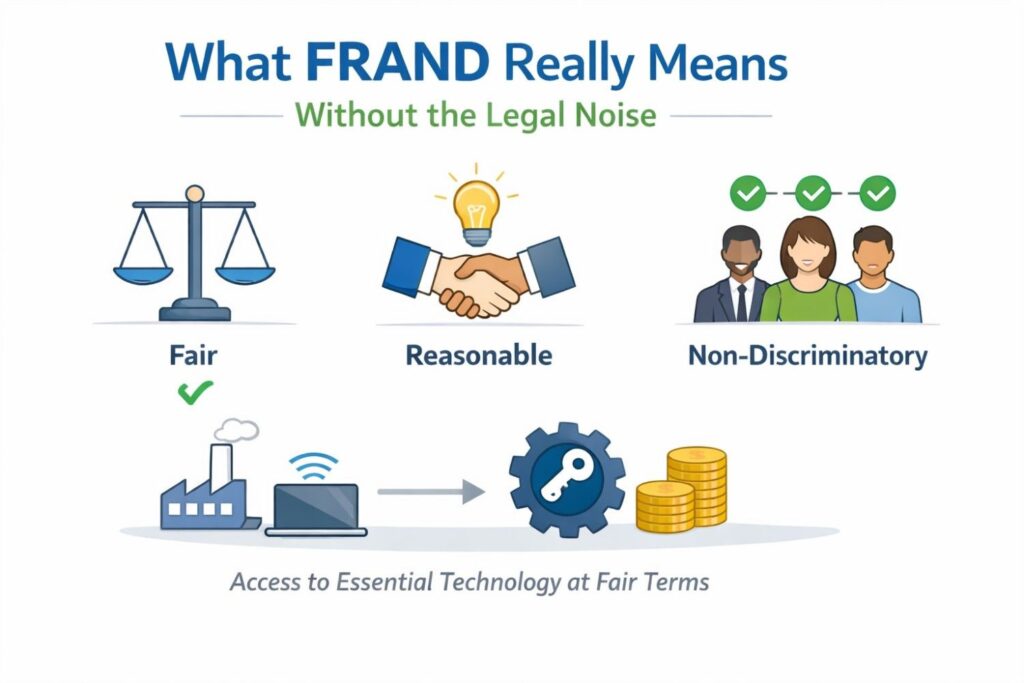
Fair does not mean cheap. It also does not mean free. Fair means that the price should make sense when compared to the value of the invention and the market using it.
In real life, fairness often comes down to consistency. If one company paid a certain rate to use a standard, another similar company should not be forced to pay ten times more just because they are smaller or newer.
This is where many startups feel pressure, even when the law is on their side.
The most important action you can take here is to document your use of the standard clearly.
Know which parts of your product rely on it and how central those parts are to your value. This context matters when fairness is discussed.
Reasonable Is About Real Business Reality
Reasonable is tied to how products are actually built and sold. A license is not reasonable if it makes the product impossible to sell at a profit. It is also not reasonable if the payment structure ignores how your business works.
For example, some licensors push per-device fees even when a startup sells software subscriptions or services layered on hardware. Reasonableness allows room to question that structure.
Actionable advice here is to model licensing impact early. Even a rough spreadsheet that shows how a license fee affects margins can help you push back intelligently instead of reacting emotionally.
Non-Discriminatory Protects Small Players
Non-discriminatory is the part of FRAND that protects startups the most. It exists to prevent patent owners from favoring large incumbents while squeezing smaller companies.
In practice, discrimination often hides behind silence. A startup is quoted a number but has no idea what others paid. That lack of transparency creates fear and rushed decisions.
One smart move is to ask direct questions early. You are allowed to ask whether similar companies received similar terms. You may not get full answers, but asking sets a tone and creates a record that matters later.
FRAND Is a Promise Made Before You Show Up
This is one of the most misunderstood parts of FRAND. The promise to license fairly is made to the standards body long before your startup exists. You are not asking for a favor. You are stepping into an existing commitment.
That means negotiation power exists even when you feel small. The patent holder agreed to FRAND rules because they wanted their technology inside the standard. That agreement benefits you.
A practical step here is to identify which standards bodies are involved with the technology you use. Knowing where the promise was made helps you understand your position and options.
FRAND Is Not Automatic or Self-Enforcing
FRAND does not magically protect you. You still need to engage. Silence or delay can hurt your position, even if you are right.
Many startups ignore early licensing messages because they feel premature or distracting. That often leads to worse outcomes later. Engagement does not mean agreement. It means showing up informed and calm.
A strong move is to respond early with curiosity instead of fear. Ask for clarity on which patents apply and how they relate to your product. This slows aggressive tactics and buys time.
Why FRAND Disputes Feel So Confusing
FRAND mixes law, business, and technology. Each side often speaks a different language. Founders hear numbers without context and terms without explanation.
The confusion benefits whoever controls the conversation. That is rarely the startup.
Your best defense is clarity. Even basic internal notes explaining what the patent is said to cover and how your product works can change how discussions unfold. You do not need perfection. You need understanding.
FRAND Is About Leverage, Not Just Risk
Most founders see FRAND only as a threat. That is incomplete. FRAND can also be leverage.
If a patent owner refuses reasonable terms, they risk violating their own promise. That risk matters to them, especially if they rely on the standard’s credibility.
An actionable step is to avoid rushing into signatures. Time spent understanding terms often shifts leverage back in your favor. Pressure is a tactic, not a rule.
How Courts Usually Think About FRAND
Courts tend to focus on behavior. Did both sides act in good faith. Did one side refuse to engage. Did someone make extreme demands without justification.
Startups often lose not because they are wrong, but because they stayed silent or reacted too late.
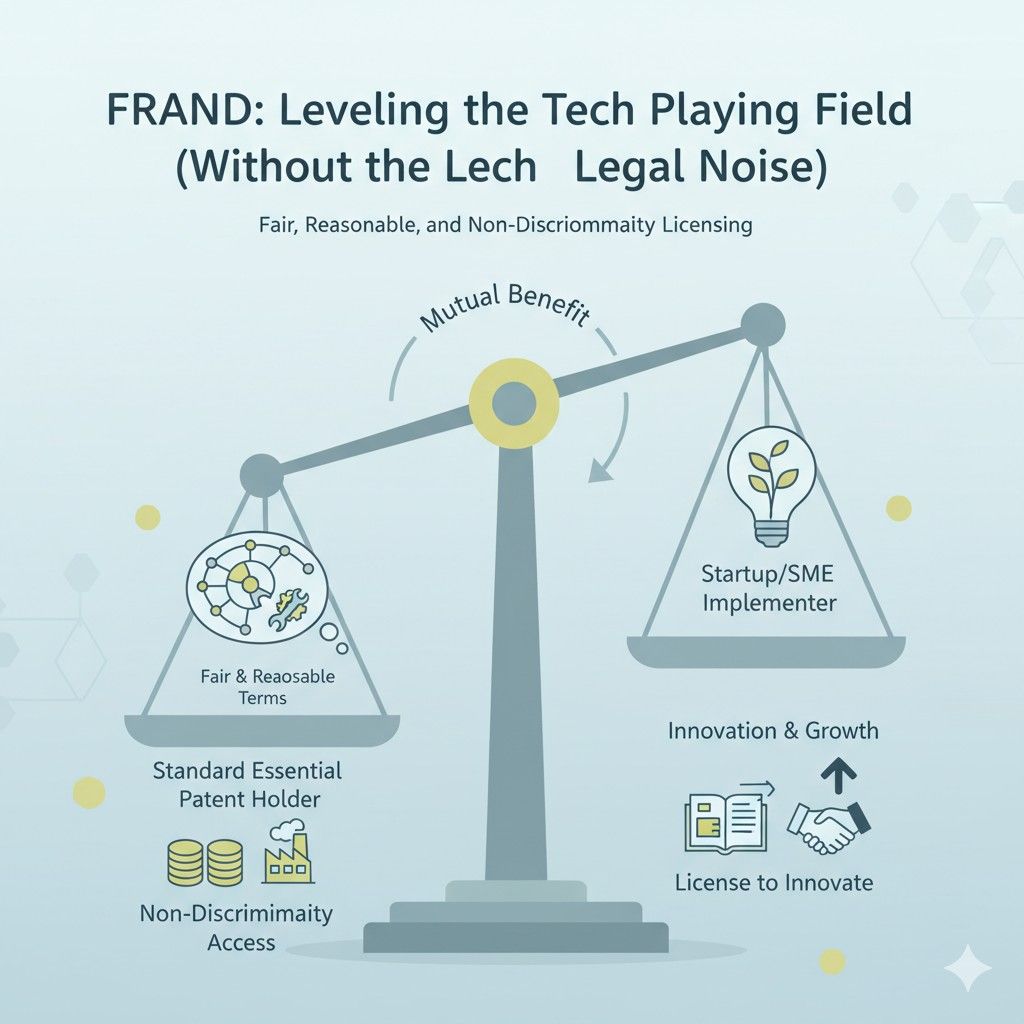
Good faith starts with documentation. Keep records of communication, questions asked, and responses received. This habit is simple and powerful.
FRAND Is a Business Topic, Not Just a Legal One
Treating FRAND as purely legal is a mistake. Licensing terms affect pricing, growth, fundraising, and partnerships.
Investors care about hidden risks. A clear FRAND story builds confidence. A vague one raises questions.
You can take control by including FRAND awareness in product planning discussions. This does not slow teams down. It prevents painful pivots later.
Why Early Understanding Changes Everything
Founders who understand FRAND early behave differently. They choose standards intentionally. They price products with awareness. They negotiate from knowledge instead of fear.
This understanding is not about winning arguments. It is about building with confidence.
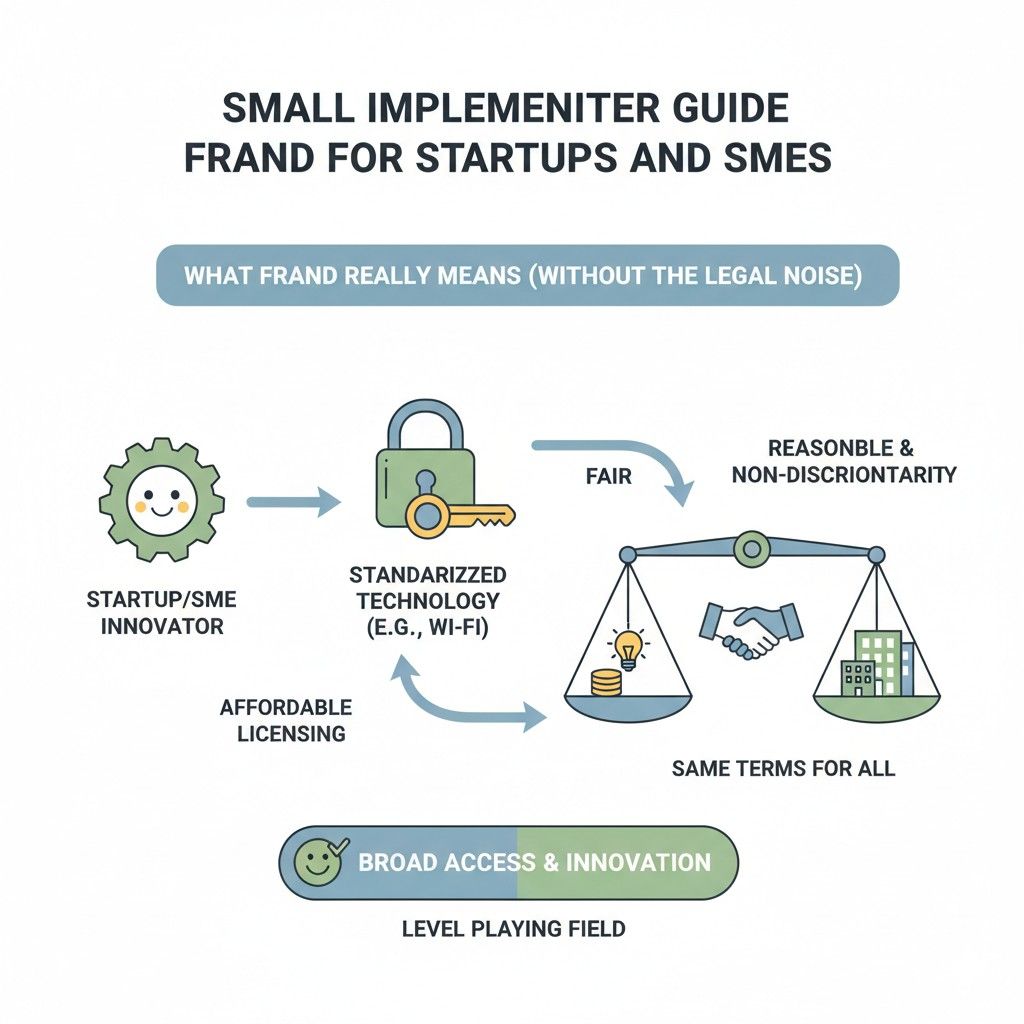
If you want to move fast without stepping into traps, this is the level of clarity you need.
Why Startups Run Into FRAND Problems Sooner Than They Expect
Most founders believe FRAND issues only show up once a company is large, profitable, and visible. That belief is one of the most common and costly mistakes early teams make.
In reality, FRAND problems tend to appear much earlier, often right when momentum starts to build.
This section explains how and why startups collide with FRAND obligations long before they feel ready, and what signals usually trigger those first uncomfortable conversations.
Growth Is the Real Trigger, Not Size
FRAND attention does not arrive because you are big. It arrives because you are growing in a way that matters.
The moment your product ships widely, integrates with common systems, or touches regulated or standardized markets, you become visible.
Patent holders track standards usage, not headcount. A ten-person startup shipping thousands of connected devices can attract more attention than a hundred-person company still in beta.
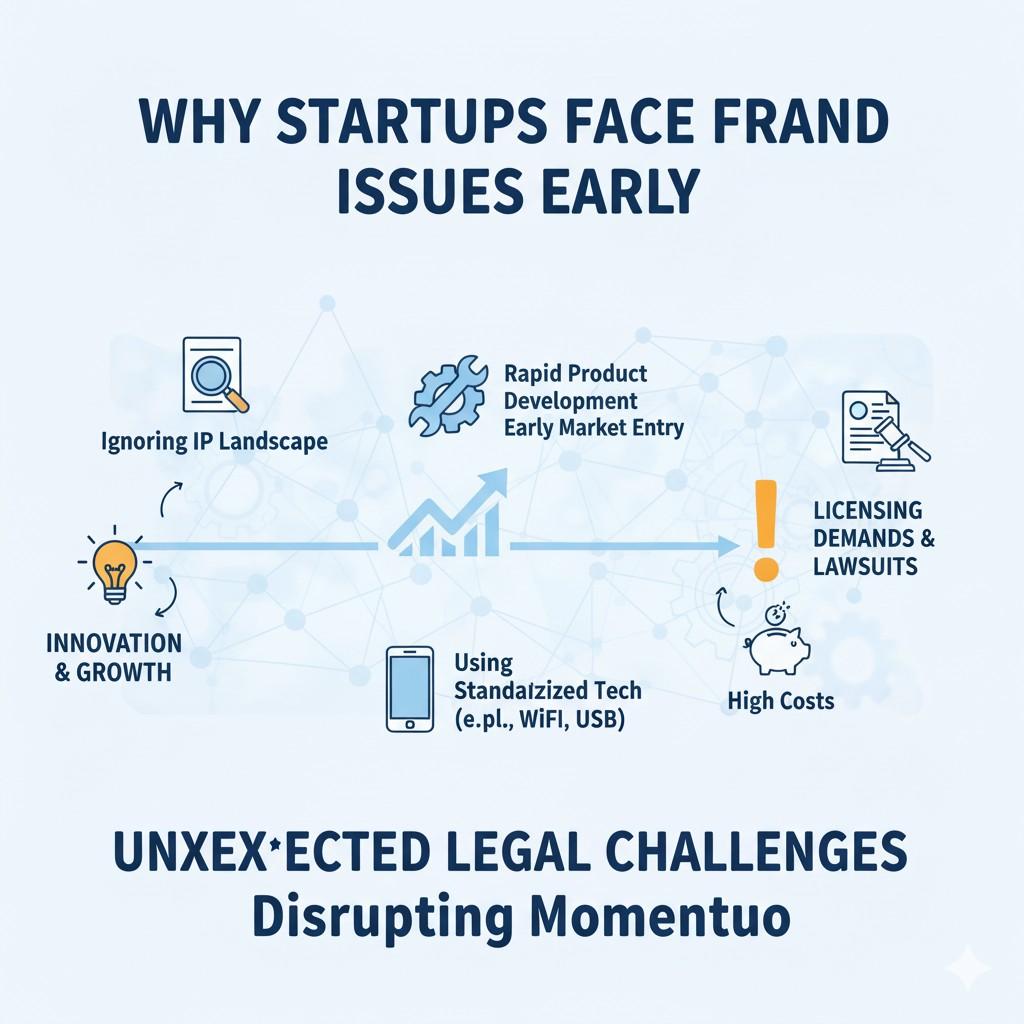
The most practical action here is to treat growth milestones as legal milestones. When you expand markets, add hardware, or integrate a new standard, pause and ask what hidden obligations come with that move.
Using Popular Standards Pulls You Into the Spotlight
Standards are attractive because they save time. You get compatibility, trust, and faster adoption. But popular standards are also heavily patented.
When your product relies on things like wireless communication, video encoding, payment rails, or device interoperability, you are building on top of inventions owned by others.
Startups often assume that open documentation means open usage. That is not always true. Many standards are open to implement but still require licenses for patented parts.
A smart step is to treat every standard as a business dependency, not just a technical one. If your roadmap depends on it, your risk profile does too.
Success Makes You Easier to Find
Patent owners do not randomly reach out. They look for signals. Product launches, press mentions, app store traction, partnerships, and fundraising announcements all increase visibility.
Ironically, the same signals that attract customers also attract licensing attention. This does not mean you should hide. It means you should be prepared.
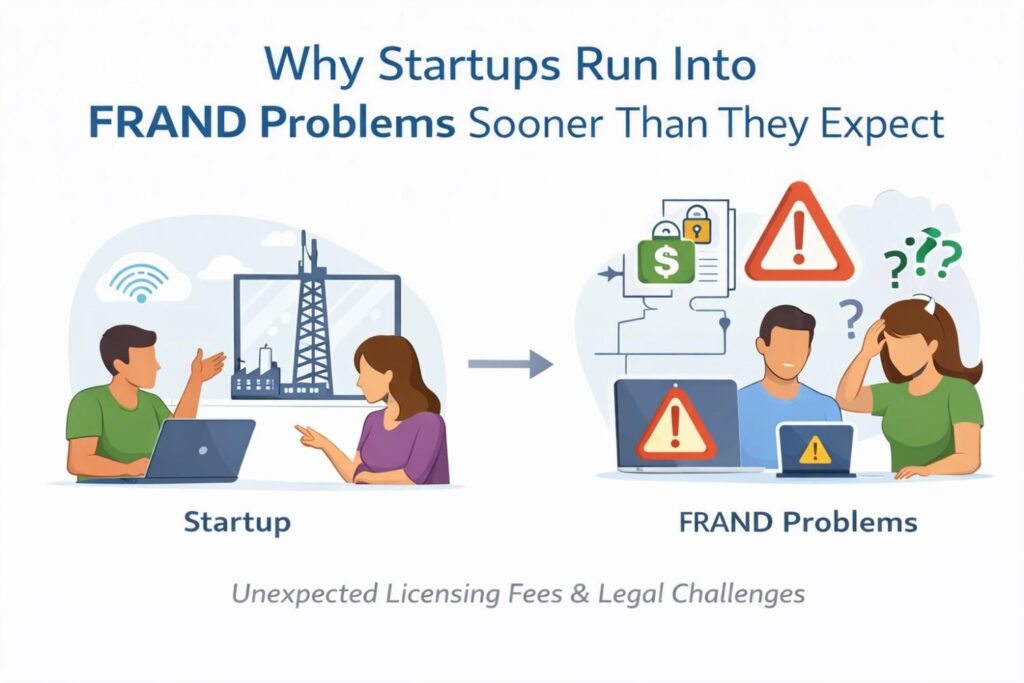
One actionable habit is to assume that public success equals private scrutiny. If you are celebrating growth, make sure your internal understanding of IP exposure keeps pace.
Founders Often Ignore Early Signals
Many startups receive early emails or notices that seem vague or harmless. They are often framed as friendly introductions or informational outreach.
These messages are easy to dismiss when the team is focused on shipping. That delay can change the tone later.
Engaging early does not mean accepting terms. It means acknowledging the conversation exists. Even a simple response asking for clarification can prevent escalation and shows good faith.
Investors and Partners Can Trigger Reviews
Sometimes FRAND issues surface during diligence, not enforcement. An investor, acquirer, or enterprise partner may ask how you handle standards-related patents.
If you cannot answer clearly, that uncertainty becomes a risk factor. Deals slow down or valuations change.
A proactive move is to prepare a simple internal explanation of which standards you use and how you think about licensing. This does not require legal language. It requires awareness.
This is also where platforms like PowerPatent help founders think through IP exposure early, before it becomes a negotiation under pressure. You can see how that works here: https://powerpatent.com/how-it-works
Global Markets Multiply Exposure
Many standards are global. The moment your product ships internationally, you may face different expectations, rates, or enforcement styles.
Startups often expand globally for growth without realizing that patent landscapes shift across borders. What feels quiet in one region may be active in another.
An important action is to map where your customers are and where the standard is enforced. This helps you prioritize conversations instead of reacting everywhere at once.
Product Design Decisions Lock In Risk
FRAND issues are often baked in early through design choices. Once a product architecture depends on a standard, changing it later can be expensive or impossible.
Founders rarely revisit these decisions because they feel technical. But they have long-term business consequences.
A helpful practice is to document why a standard was chosen and what alternatives exist, even if you never plan to switch. That knowledge becomes leverage if discussions arise.
Licensing Pressure Often Arrives Before Revenue
One of the hardest moments for startups is receiving a licensing request before meaningful revenue exists. The timing feels unfair.
FRAND does not require you to be profitable before obligations exist. It requires reasonableness. That distinction matters.
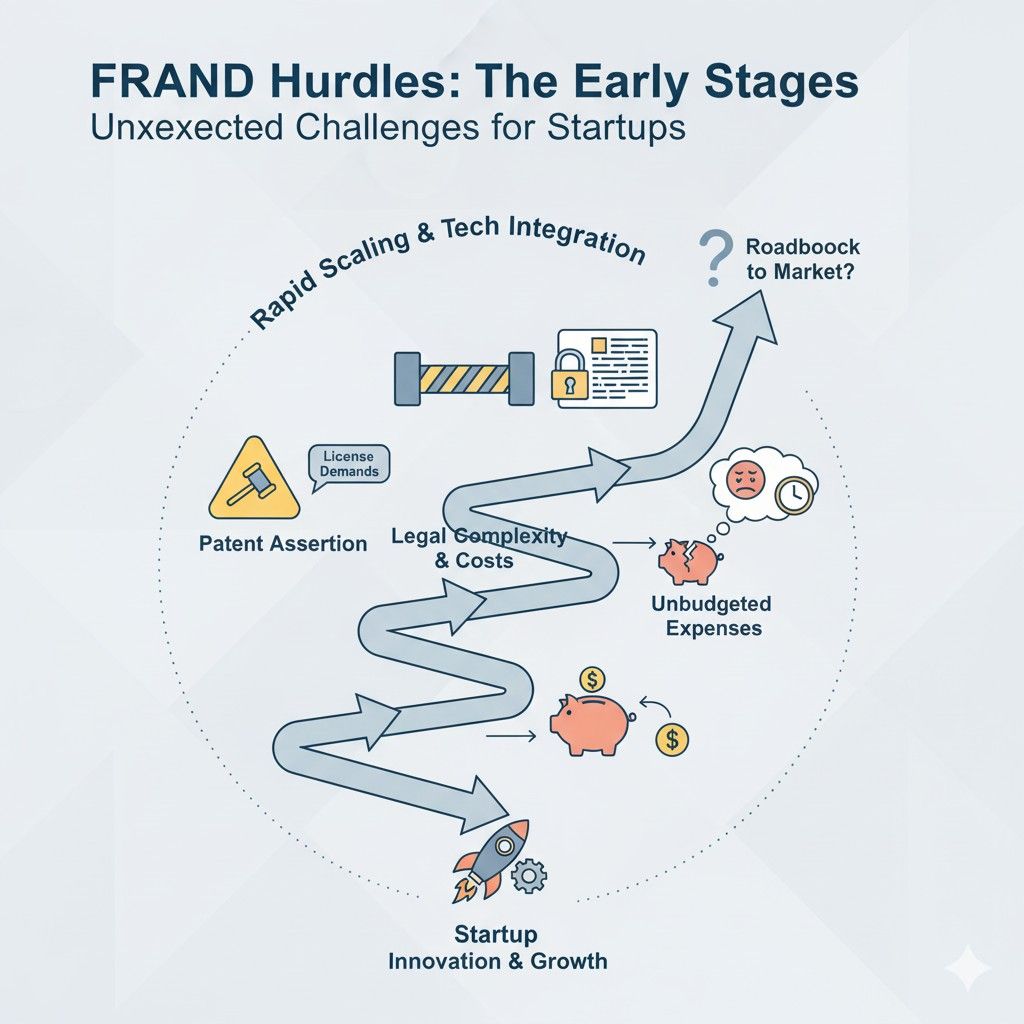
If you can clearly explain your stage, margins, and roadmap, you are in a stronger position to argue for terms that scale with your business instead of crushing it early.
Fear Causes Rushed Decisions
The word patent creates fear. Fear leads to fast signatures. Fast signatures lead to bad deals.
Many startups agree to terms they do not understand simply to make the problem disappear. Those terms often last for years and affect every unit sold.
The most actionable advice here is simple. Never treat urgency as truth. Take time to understand what is being asked and why.
Silence Can Be Misread
On the other side, ignoring FRAND outreach entirely can be framed as unwillingness to engage. That framing hurts you if things escalate.
Balanced engagement is the goal. You do not need to commit. You need to communicate.
A short, calm response asking for detail keeps doors open without giving anything away.
Why Preparation Changes the Outcome
Startups that prepare for FRAND do not panic when it appears. They recognize it as a normal business conversation, not a crisis.
Preparation does not mean spending heavily on lawyers early. It means building awareness into product and growth decisions.
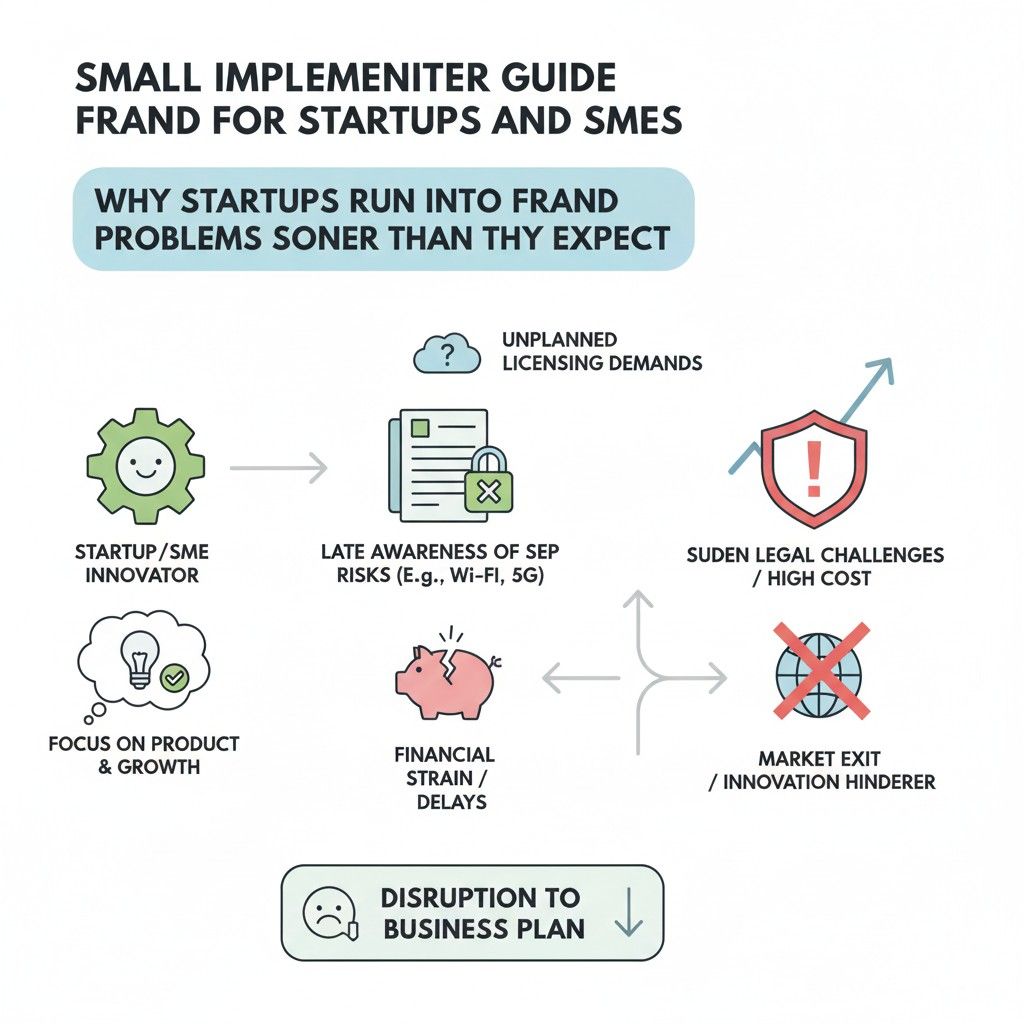
When founders understand where FRAND comes from and why it appears, they stay in control.
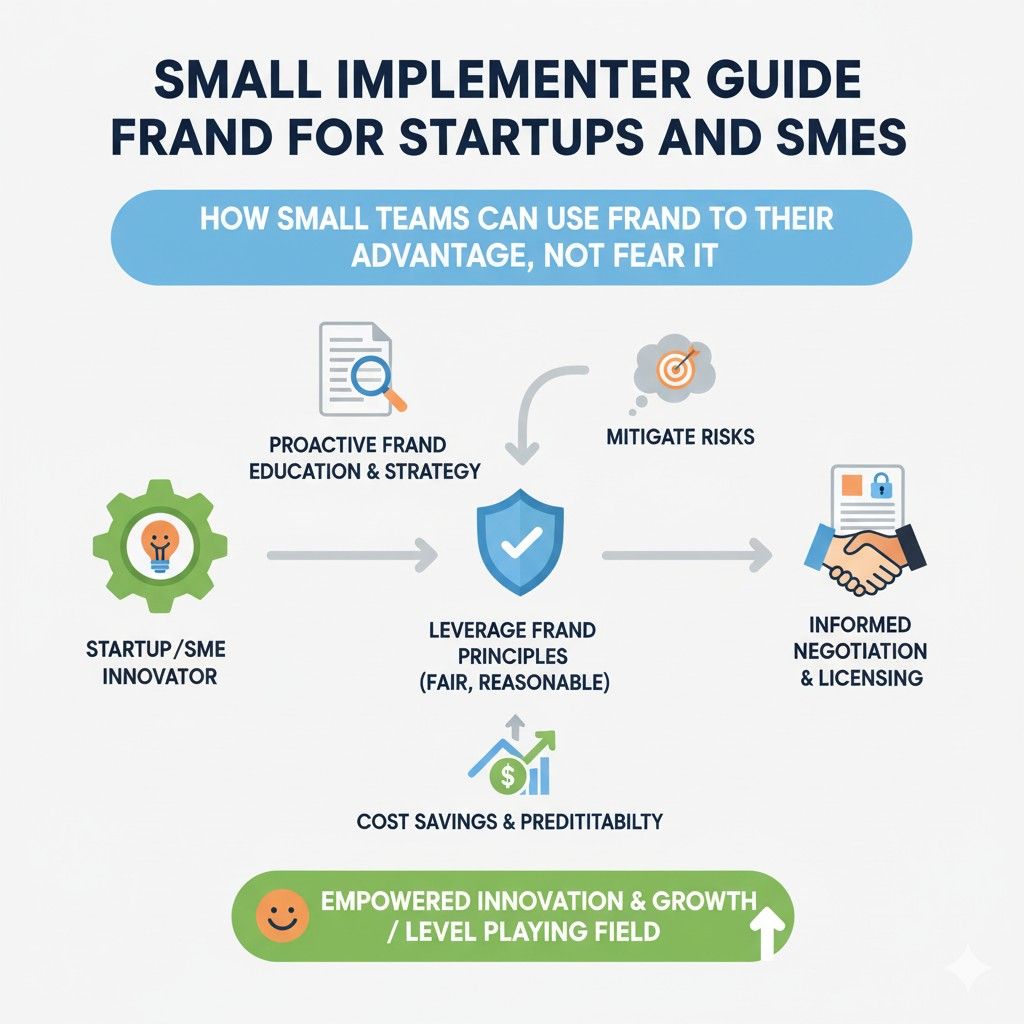
How Small Teams Can Use FRAND to Their Advantage, Not Fear It
FRAND feels threatening only when it is misunderstood. For small teams, it can actually become a source of leverage, clarity, and long-term stability.
The founders who handle FRAND well are not the ones with the biggest budgets. They are the ones who stay calm, informed, and deliberate.
This section focuses on how startups and SMEs can turn FRAND from a risk into a strategic tool that supports growth instead of slowing it down.
Confidence Changes the Power Dynamic
The biggest shift happens when you stop seeing yourself as the weaker party. FRAND exists to prevent abuse of power. That means it is designed to protect implementers, including small ones.
Patent owners expect fear. They expect silence or fast agreement. When they encounter a founder who understands the basics and asks clear questions, the tone often changes.
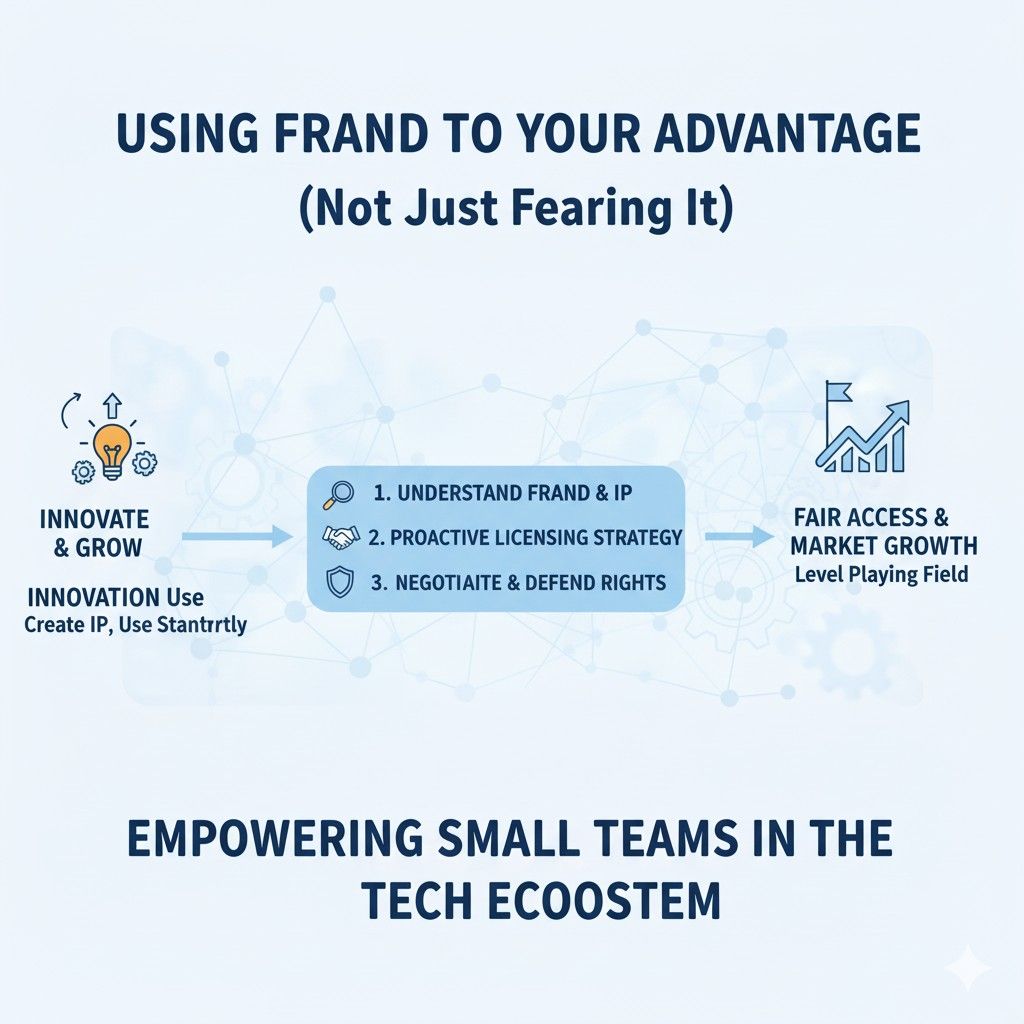
Confidence does not come from knowing everything. It comes from knowing enough to engage without panic.
Good Faith Is Your Strongest Asset
FRAND heavily rewards good faith behavior. Courts, arbitrators, and even licensors care about whether both sides tried to be reasonable.
For startups, good faith looks like timely responses, thoughtful questions, and honest explanations of business reality.
You do not need to accept demands to show good faith. You need to show willingness to talk and understand.
A simple internal rule helps here. Always respond. Never rush. That balance alone puts you ahead of many larger players.
Use Your Size as Context, Not a Weakness
Being small is not a disadvantage under FRAND. It is context. Reasonableness considers scale, margins, and stage.
Large licensors know that early-stage companies cannot carry the same terms as global giants. The mistake is failing to explain that clearly.
Prepare a short narrative about your business. What you sell. How you make money. Where you are today. Where you are going. This story anchors negotiations in reality instead of assumptions.
Ask Better Questions to Slow Pressure
Pressure thrives in confusion. Questions create space.
When a licensor makes a demand, ask how the number was calculated. Ask which patents apply. Ask how others in your position handled similar situations.
These questions are not aggressive. They are normal. And they often reveal flexibility that was not obvious at first.

The goal is not to challenge everything. The goal is to replace urgency with understanding.
Timing Is a Negotiation Tool
Startups often think timing works against them. In reality, timing can be a tool.
If your product is early, revenue is limited, or the standard feature is not core, that matters. Licensing terms can reflect future growth instead of present burden.
One smart move is to frame licensing as a journey. Start small. Adjust later. FRAND allows for this kind of thinking when approached correctly.
Use Documentation to Stay Grounded
You do not need legal memos. You need notes.
Track conversations. Save emails. Write down what was asked and what was answered. This simple discipline prevents confusion and builds credibility.
If discussions ever escalate, this record becomes proof of your good faith. Even if they do not, it helps your team stay aligned and calm.
Avoid Overpaying Through Assumptions
Many startups overpay because they assume the first number is fixed. Under FRAND, it rarely is.
Initial offers are often starting points, not final truths. The absence of negotiation does not signal fairness.
A practical approach is to pause before reacting. Ask yourself whether the terms reflect your reality. If not, explain why in plain language.
Build FRAND Awareness Into Product Planning
The best time to manage FRAND is before it becomes urgent.
When planning features, integrations, or expansions, include a simple question. Does this rely on a standard with known patents.
This habit takes minutes and can save months later.
This is also where tools like PowerPatent help founders think proactively instead of reactively.
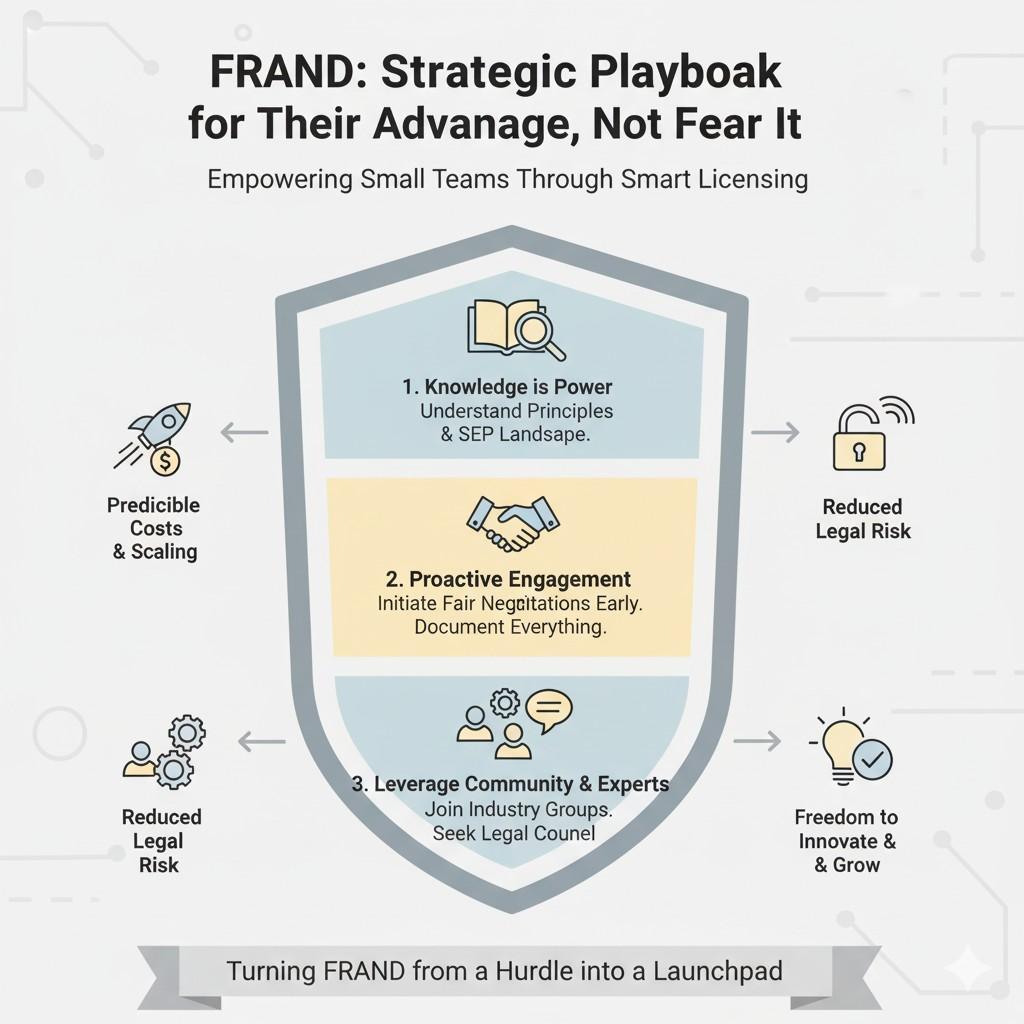
By combining smart software with real attorney oversight, founders can understand IP exposure early and avoid surprises. You can explore how that works here: https://powerpatent.com/how-it-works
Turn Licensing Into Predictability
FRAND can actually reduce risk when handled well. Clear terms create predictable costs. Predictability helps pricing, forecasting, and fundraising.
Investors prefer known obligations over unknown threats. Even an ongoing discussion is better than silence.
If you treat licensing as part of building a real business, not as an emergency, it becomes manageable.
Do Not Let Fear Define the Outcome
Fear leads to bad decisions. Calm leads to leverage.
You do not need to win every point. You need terms that let your business grow without hidden traps.
FRAND gives you room to ask for that outcome. The founders who use it well are not aggressive. They are steady.
Why the Right Support Matters
No founder should navigate FRAND alone, but that does not mean hiring a massive law firm.
What matters is having guidance that understands startups, speed, and real-world constraints.
PowerPatent exists for exactly this reason. It helps founders protect what they are building, understand their IP landscape, and make smart decisions early without slowing down.
If you want to see how modern patent support works for builders, you can explore it here: https://powerpatent.com/how-it-works
FRAND does not have to be scary. When understood and handled well, it becomes another part of building something real and defensible.
Wrapping It Up
FRAND is not a trap designed to catch startups off guard. It is a system built to keep innovation moving while balancing power between those who invent standards and those who use them. The problem is not FRAND itself. The problem is that most founders only learn about it when the stakes are already high. If you take one thing away from this guide, it should be this. FRAND is manageable when you understand it early and engage with it calmly. You do not need to master legal language. You need awareness, preparation, and the confidence to ask clear questions.