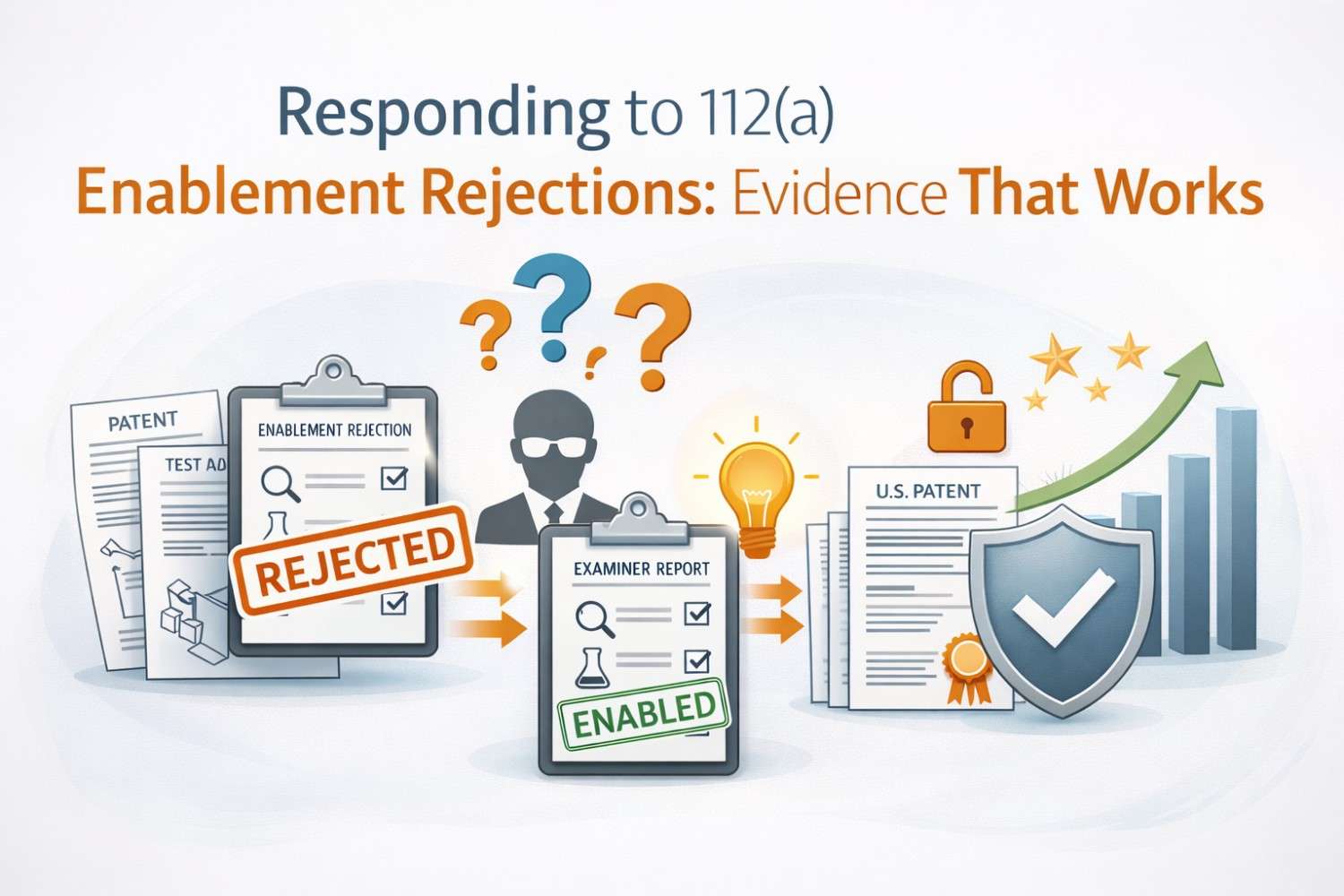
If you are building real technology, a 112(a) enablement rejection can feel frustrating and confusing at the same time. You explained your invention, you built it, and yet the patent office is saying it is not clear enough to actually make and use. What the examiner is really asking for is proof, not prettier words. They want to see clear technical substance that shows someone skilled in your field could build and run what you claimed without guessing or filling in gaps. Most founders respond the wrong way by rephrasing sentences or adding vague language, which only leads to more delays or weak patents.
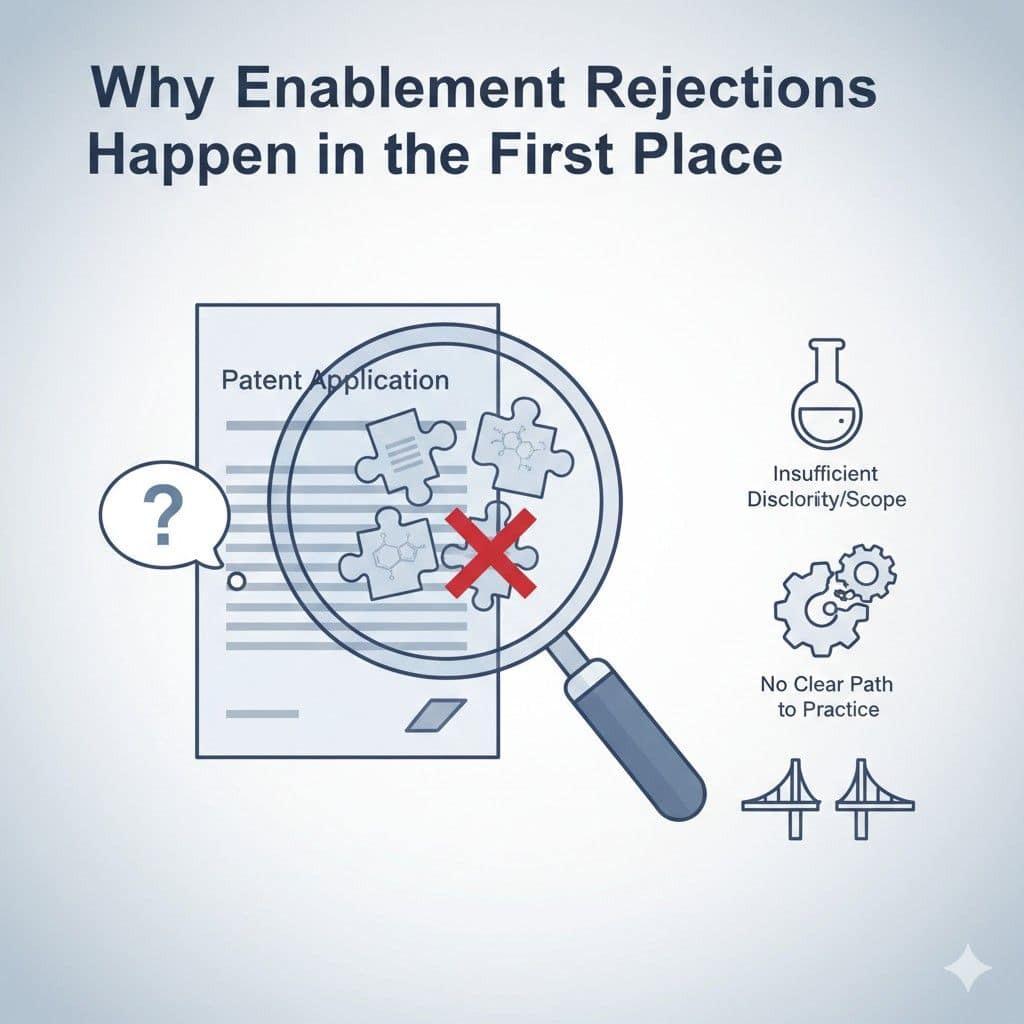
Why Enablement Rejections Happen in the First Place
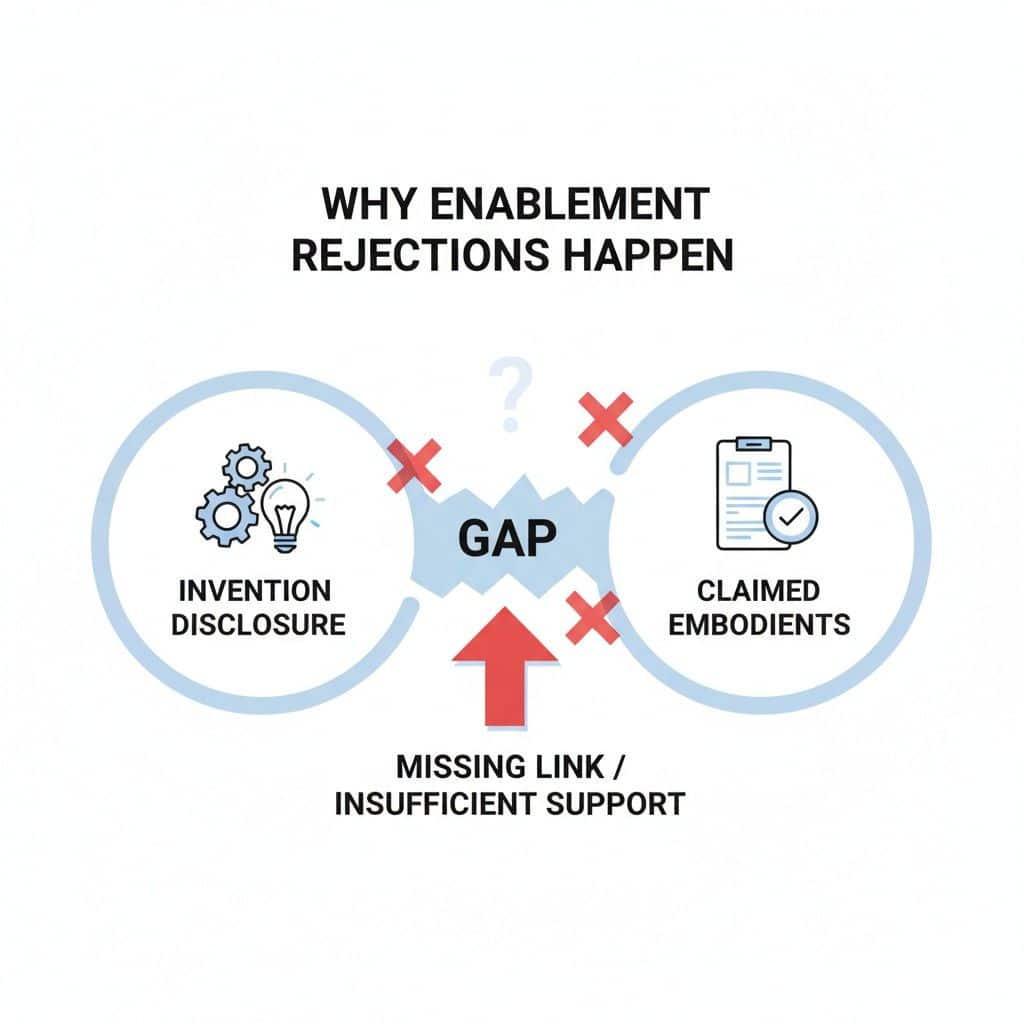
Enablement rejections do not happen because an examiner is being difficult. They happen because something important is missing between what you claimed and what you actually taught.
For businesses, especially startups moving fast, this gap usually comes from writing patents the way pitch decks are written. High level, confident, and forward-looking.
That style works for investors, but it raises red flags at the patent office. Understanding the real reasons behind these rejections helps you avoid them and respond in a way that strengthens your patent instead of patching it.
The Invention Sounds Bigger Than What Is Explained
Many enablement rejections start with a mismatch between scope and detail. The claims are wide, but the explanation underneath them is narrow. From a business point of view, this feels natural. You want broad protection. You want room to grow.
But the examiner reads this as a problem. If you claim a whole category of solutions, they expect to see enough technical teaching to cover that entire category, not just one example.
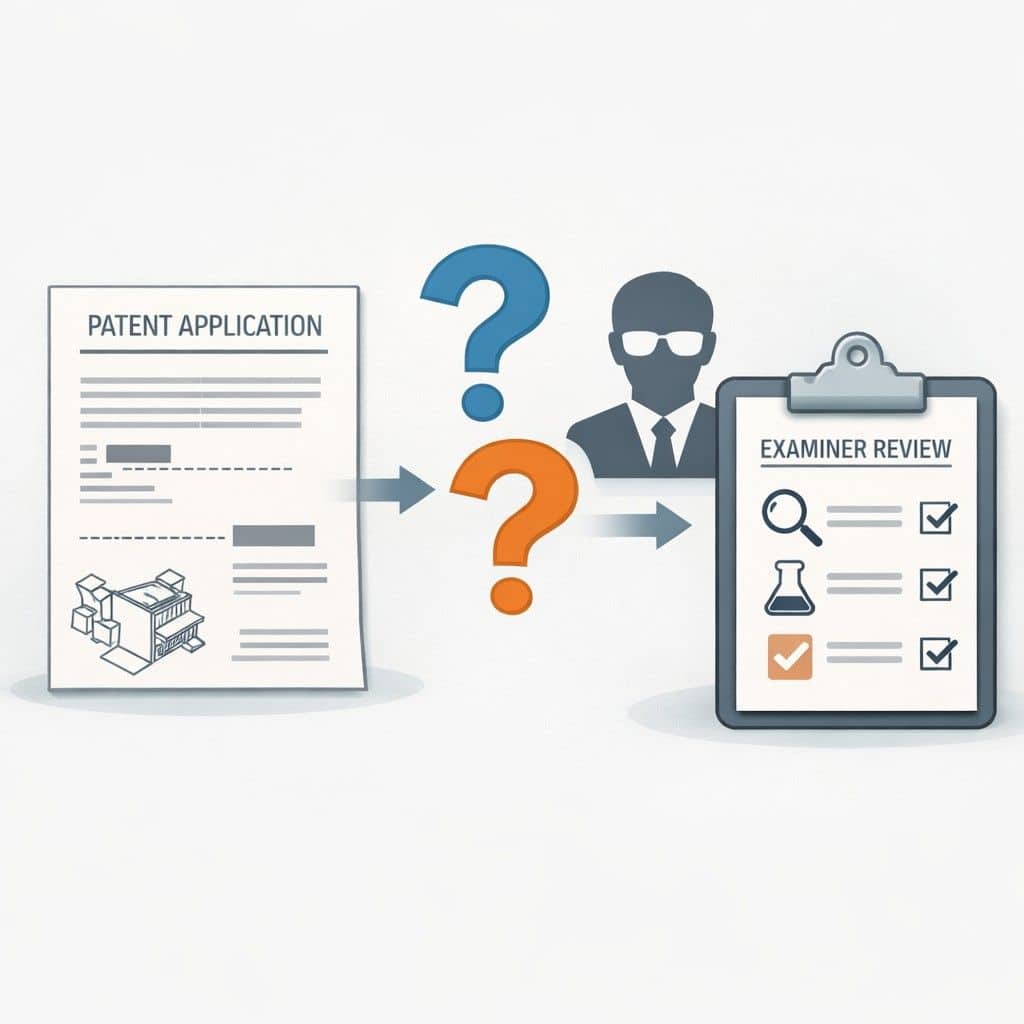
A smart move here is to step back and look at your claims as if you were a stranger trying to build the product with no help from you.
If parts of the claim rely on assumed knowledge that is not clearly spelled out, that is where the rejection is coming from.
Founders who succeed treat the specification as a build guide, not a concept paper. Even if you never expect someone else to build it, the document must make that feel possible.
The Description Relies Too Much on Results
Another common trigger is focusing on what the system does instead of how it does it. Business teams love outcomes. Faster processing, better accuracy, lower cost.
Examiners care far less about results and far more about the path to get there. When a patent spends pages describing benefits but only a few lines describing the mechanism, enablement becomes questionable.
A strong response strategy is to reframe your explanation around cause and effect. When you describe an outcome, immediately anchor it to a concrete technical step.
This trains the examiner to see logic instead of leaps. Over time, this habit also improves the quality of your future filings, because you start thinking in systems rather than slogans.
Critical Technical Steps Are Treated as Obvious
Founders often skip over the hardest parts of their invention because those parts feel obvious to them. You lived with the problem. You solved it. The solution feels simple in hindsight.
The examiner does not have that context. When key steps are waved away with phrases like conventional techniques or standard methods, enablement problems arise.
For businesses, the actionable insight is to document friction.
Any step that took real engineering effort to figure out is a step that deserves explanation. If your team debated it, tested it, or failed before getting it right, it probably needs to be described.
Ironically, the more obvious something feels to you, the more suspicious it can look to an examiner if it is not explained.
The Field Is Moving Too Fast
In fast-moving areas like AI, software infrastructure, or advanced hardware, enablement rejections are more common because the baseline knowledge of the field is unstable.
What feels standard today may not be considered settled knowledge by the patent office. Examiners become cautious when they see broad claims in areas where implementations vary widely.
Businesses can respond strategically by anchoring their explanation to concrete architectures, workflows, or system boundaries.
Even if your product evolves, showing one or more solid ways to implement the invention helps establish credibility. The goal is not to predict the future but to show that at least one real, workable path exists today.
The Patent Was Written Too Early or Too Late
Timing matters more than most teams realize. Patents written too early often lack implementation detail because the product is still forming.
Patents written too late sometimes gloss over details because the team assumes everything is already known. Both situations can lead to enablement issues.
A practical approach is to treat patent drafting as a snapshot of technical truth at a specific moment. Capture what you actually know and can explain right now.
If parts are still experimental, explain them as such. If parts are stable, describe them clearly. This honesty often reads as strength, not weakness, to an examiner.
The Examiner Is Testing Claim Boundaries
Sometimes enablement rejections are not about confusion at all. They are a way for the examiner to test how serious you are about the breadth of your claims.
If you claim very wide protection, they may push back to see if you can support it.
From a business perspective, this is a negotiation point. You can respond by adding evidence that supports the breadth, or by adjusting claims in a way that still protects what matters commercially.
The mistake is responding emotionally or defensively. The smart move is to decide what protection actually drives value for your company and focus your enablement there.
The Specification Was Written for Approval, Not Survival
Many patents are written just to get through examination. Enablement rejections often expose this mindset. When a document is thin, abstract, or overly polished, examiners sense it. They respond by asking for proof.
Founders should see this as an opportunity. A response that strengthens enablement also strengthens enforceability.
Investors, acquirers, and courts all look for the same thing the examiner is asking for: does this patent actually teach something real. Treating enablement as a business asset instead of a legal hurdle changes how you write and respond.
This is where platforms like PowerPatent make a difference. By combining structured technical capture with real attorney oversight, the process forces clarity early, before enablement becomes a problem.
If you want to see how that works in practice, you can explore it here: https://powerpatent.com/how-it-works
What Examiners Actually Mean by “Not Enabled”
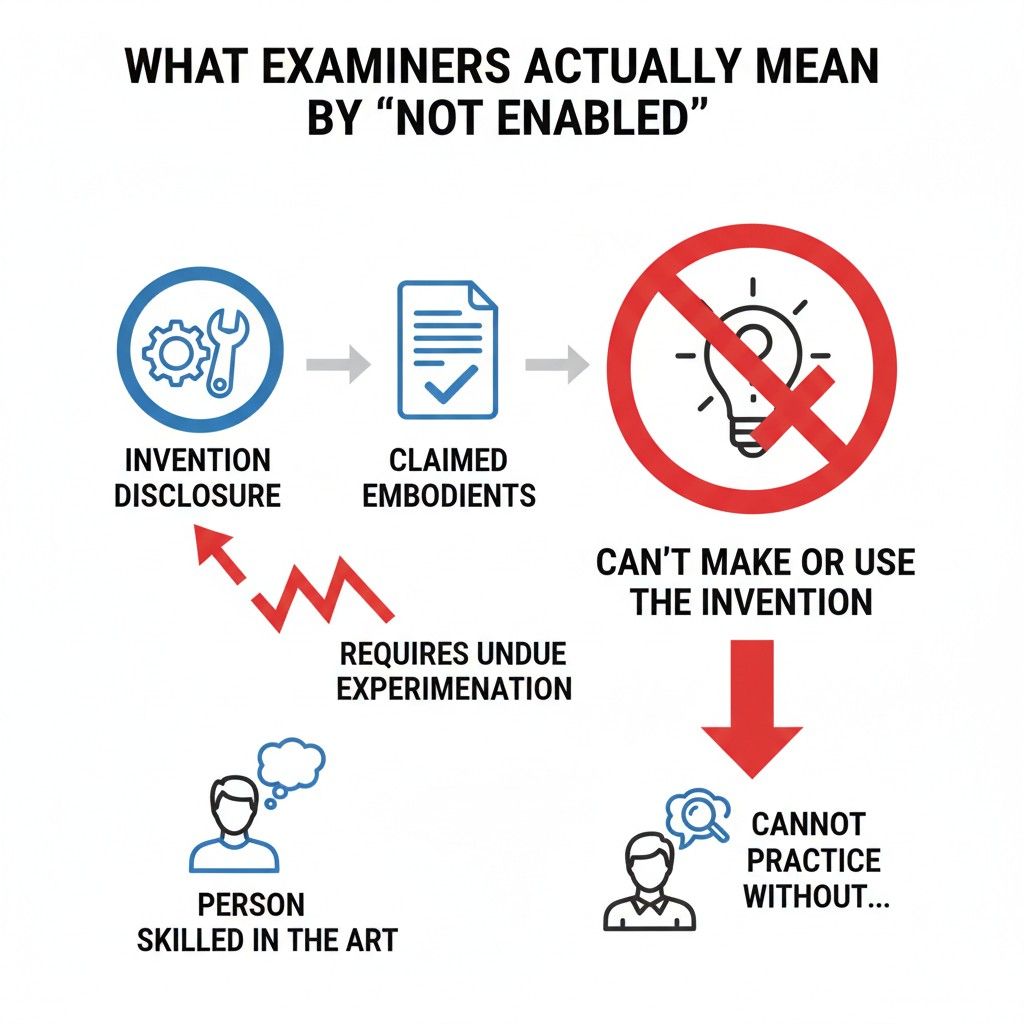
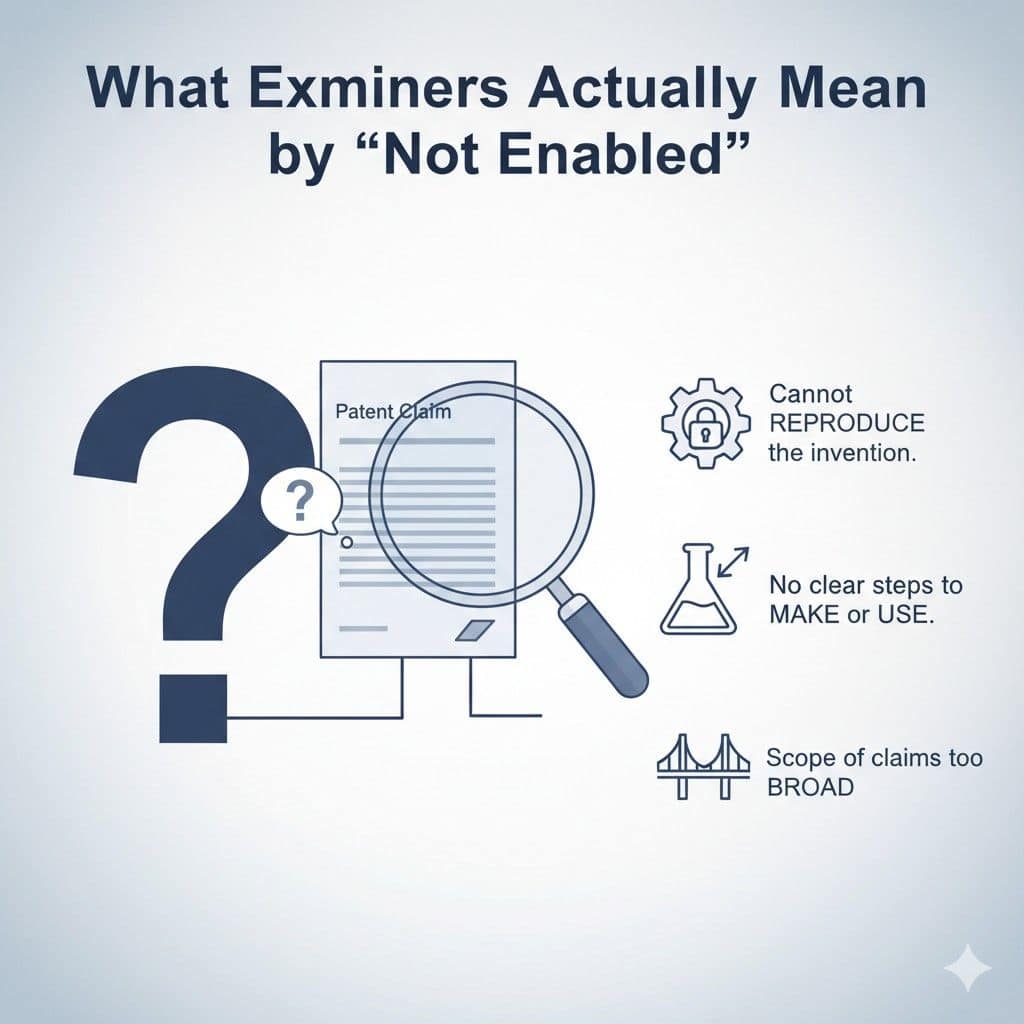
When an examiner says your invention is not enabled, they are rarely saying they do not understand the words on the page. Most of the time, they are saying they do not trust the invention yet.
Enablement is about trust. It is about whether the document convinces a technical reader that the invention can be built and used across the full scope of what you claimed, without luck, guesswork, or hidden effort.
For businesses, this distinction is critical. If you treat enablement as a writing critique, you will respond the wrong way. If you treat it as a credibility check, your response strategy changes completely.
Enablement Is About Teaching, Not Describing
A common misunderstanding is thinking that enablement means describing the invention clearly.
Description is necessary, but it is not enough. Teaching is active. It shows progression. It walks the reader from problem to solution in a way that feels repeatable.
Examiners read patents asking a simple internal question: could someone else actually do this? If the answer feels uncertain at any point, enablement becomes an issue. This is why patents that sound impressive but skip steps often fail this test.
A strong business mindset here is to imagine onboarding a new engineer to your team using only the patent.
If that engineer would need a meeting, a whiteboard session, or access to internal docs to make progress, the examiner will feel the same discomfort.
The Examiner Is Testing the Edges, Not the Center
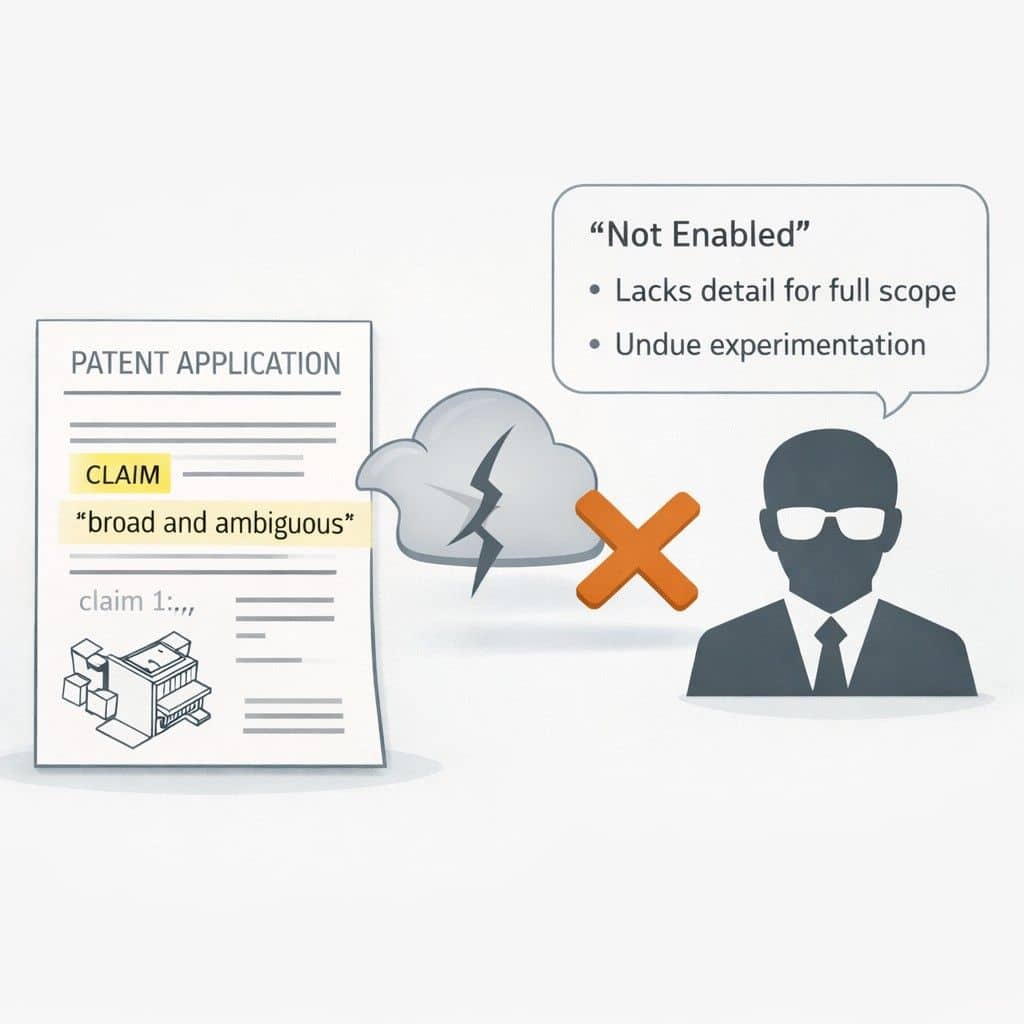
Most founders assume the examiner is focused on the main embodiment, the version of the product they built first. In reality, examiners focus on the edges of the claims.
They look at the widest reasonable interpretation and ask whether the specification supports that full range.
This is why enablement rejections often feel unfair. The examiner is not saying your core product does not work. They are saying that some corner of what you claimed might not work based on what you explained.
The actionable takeaway for businesses is to read your claims slowly and ask where flexibility exists. Any word that allows variation creates an obligation to teach that variation.
If you cannot support it, you either add teaching or narrow the claim. Both can be smart moves if done intentionally.
“One Example” Is Often Not Enough
Founders often believe that showing one working example should be sufficient. In some cases it is. In many modern technologies, especially software and AI, it is not.
Examiners worry that a single example may rely on special conditions that do not generalize.
When an examiner raises enablement, they may be asking whether your example is representative or exceptional. This is not about volume. It is about coverage.
Showing different ways the system can operate, even at a high level, can dramatically increase confidence.
For businesses, this means thinking in variations early. If your product can run in different environments, handle different data types, or scale in different ways, those are opportunities to demonstrate robustness.
You do not need to explain everything exhaustively, but you do need to show that the invention is not fragile.
Enablement Is Not the Same as Prior Art Knowledge
Another subtle point examiners care about is what can be assumed versus what must be taught. Founders often rely on what they believe is standard knowledge in the field.
Examiners are conservative about these assumptions, especially in fast-evolving spaces.
If your explanation leans heavily on phrases that push work onto the reader’s background knowledge, the examiner may push back. They are not accusing you of hiding anything. They are asking you to carry more of the teaching burden.
A practical business strategy is to identify which parts of your invention create differentiation. Those parts should almost never be assumed.
Even if the techniques involved are known, their application in your system is what matters. Showing that connection explicitly often resolves enablement concerns.
The Examiner Is Reading With a Legal Lens
Even though enablement feels technical, it is applied with future legal disputes in mind. Examiners are trained to consider how a claim would be challenged later.
If a claim looks like it could be enforced without sufficient teaching, they slow it down early.
This is why vague language becomes risky. Words that sound flexible to founders can sound evasive to examiners.
When a rejection mentions enablement, it often signals discomfort with how much power the claims might have relative to the teaching provided.
For businesses, this is a reminder that a slightly narrower but well-enabled patent is often more valuable than a broad but shaky one. Investors and acquirers care deeply about enforceability, even if they do not use that word.
Enablement Rejections Are Often an Invitation
It is easy to read a 112(a) rejection as a failure. In practice, it is often an invitation to strengthen the patent. Examiners use enablement when they believe something real might be there but needs more support.
Responding well means leaning into clarity instead of resisting it. When you add substance, diagrams, flow explanations, or concrete steps, you are not just appeasing the examiner. You are building a stronger asset for your company.
This is also where process matters. Platforms like PowerPatent help founders surface technical detail that usually stays locked in engineers’ heads.
That detail is exactly what examiners are asking for when they raise enablement. If you want to see how that capture works without slowing down your team, you can explore it here: https://powerpatent.com/how-it-works
The Kind of Evidence That Changes an Examiner’s Mind
When it comes to enablement, evidence is the only thing that matters. Not confidence. Not intent. Not how impressive the invention sounds.
Examiners are trained to look for signs that the invention lives in the real world, not just on paper. The right evidence does not overwhelm them. It reassures them. It quietly answers their doubts before they fully form.
For businesses, especially fast-growing startups, this is where responses either unlock approval or spiral into months of back and forth. Knowing what evidence actually works lets you respond once, respond well, and move forward.
Concrete Technical Pathways
One of the strongest forms of evidence is a clear technical pathway from input to output. This does not mean adding code or blueprints. It means explaining the sequence of operations in a way that feels inevitable. Each step should lead naturally to the next, with no magic jumps.
Examiners gain confidence when they can trace how data, signals, or components move through the system. If there is a decision point, it should be explained.
If there is a transformation, the nature of that change should be clear. This kind of explanation shows that the invention is not just functional in theory, but operational in practice.
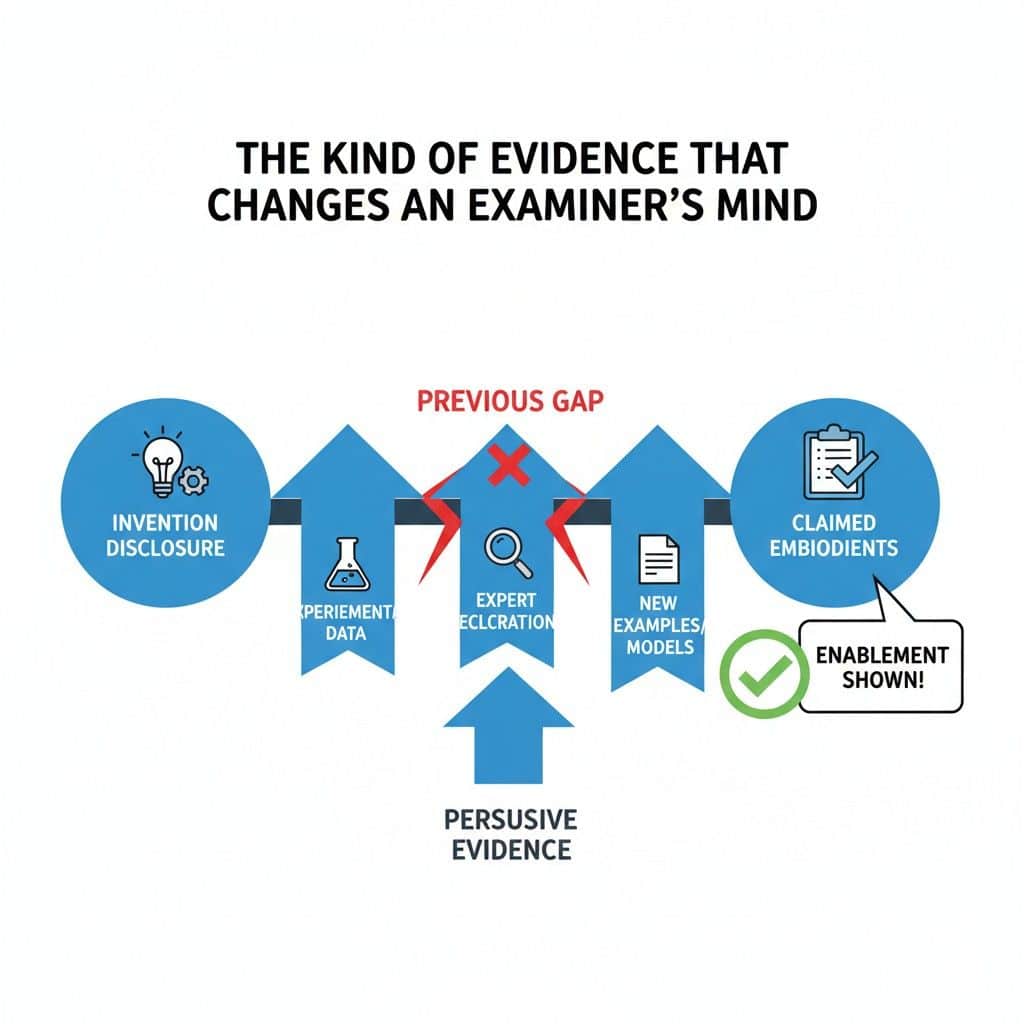
From a business standpoint, this is actionable because it forces alignment between engineering reality and patent language. When your patent mirrors how the system actually works, enablement issues tend to disappear.
Specific Examples Tied to Claims
Examples are powerful only when they are connected to the claims. A common mistake is adding examples that feel detached, like optional illustrations instead of proof.
Examiners look for examples that demonstrate how the claims are carried out, not side stories.
A strong response often walks through one claim and shows how a specific example satisfies each part. This is not done mechanically. It is done narratively.
The examiner should feel like the example breathes life into the claim language.
For businesses, this is a reminder to stop thinking of claims and specification as separate documents. They are two halves of the same argument. Evidence works best when it bridges them directly.
Implementation Detail at the Right Depth
Too little detail raises enablement concerns. Too much detail can confuse the point. The evidence that works sits in the middle. It focuses on the parts of the invention that require judgment, design choice, or technical insight.
Examiners do not need to see every possible configuration. They need to see that the inventor understood the tradeoffs and made deliberate choices.
Explaining why one approach was used over another often adds more enablement value than explaining five variations poorly.
For founders, this means leaning into decision-making moments. Any place where your team had to choose between options is a place where explanation builds credibility.
System-Level Context
Enablement is not just about components. It is about how those components fit into a system. Evidence becomes stronger when the invention is placed within a broader technical context.
What does it interact with. What assumptions does it make about its environment. What does it require to function properly.
When these boundaries are clear, examiners feel safer allowing broader claims. They can see where the invention begins and ends. Vague boundaries, on the other hand, make enablement feel risky.
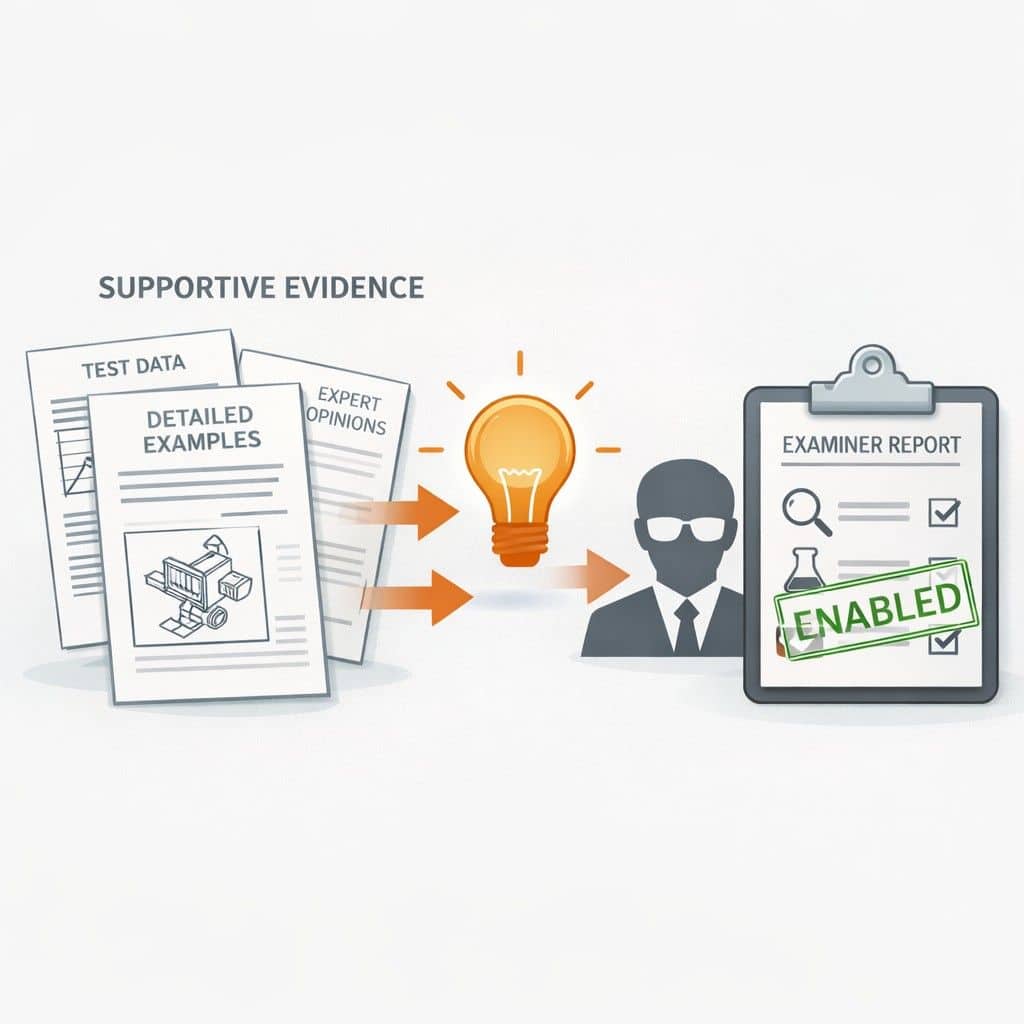
From a business perspective, system context also helps future readers. Partners, acquirers, and even your own future team benefit from patents that clearly show how the invention fits into a larger stack.
Explanation of Edge Conditions
One of the most effective but underused forms of evidence is explaining what happens when things do not go perfectly. Edge conditions show maturity. They signal that the inventor has thought beyond the happy path.
This does not mean documenting every failure mode. It means acknowledging constraints. What happens with large inputs.
What happens with noisy data. What happens when resources are limited. Even a brief explanation can dramatically increase enablement confidence.
For startups, this is actionable because edge conditions often align with real-world scaling challenges. Capturing them in a patent response strengthens both legal protection and internal understanding.
Alignment With Technical Reality
Examiners are skilled at sensing when language has drifted away from reality. Evidence works when it feels grounded in how engineers actually build things. That means avoiding overly abstract phrasing and focusing on mechanisms.
If your response reads like it could only have been written by someone who worked on the system, it will land well. If it reads like marketing copy cleaned up by legal edits, enablement doubts remain.
This is why founder involvement matters. The best evidence often comes from engineers explaining their own work in simple terms.
Platforms like PowerPatent are designed to capture that voice and translate it into patent-ready language without losing substance. You can see how that process works here: https://powerpatent.com/how-it-works
Consistency Across the Document
Evidence loses power when it is inconsistent. If one part of the document suggests flexibility and another suggests rigidity, examiners notice. Enablement rejections often arise from these internal tensions.
A strong response reviews the entire specification through the lens of the rejection. Language is aligned. Terms are used consistently. The story the patent tells becomes cohesive.
For businesses, this is a reminder that patent responses are not just edits. They are revisions to a narrative. Taking the time to make that narrative coherent pays off in faster allowance and stronger protection.
Evidence Is About Reducing Risk
At its core, enablement evidence reduces risk for the examiner. It shows that allowing the patent will not create uncertainty later. Every explanation that removes ambiguity helps.
Founders who approach responses with this mindset tend to succeed. Instead of asking how to argue with the examiner, they ask how to make the invention feel undeniable.
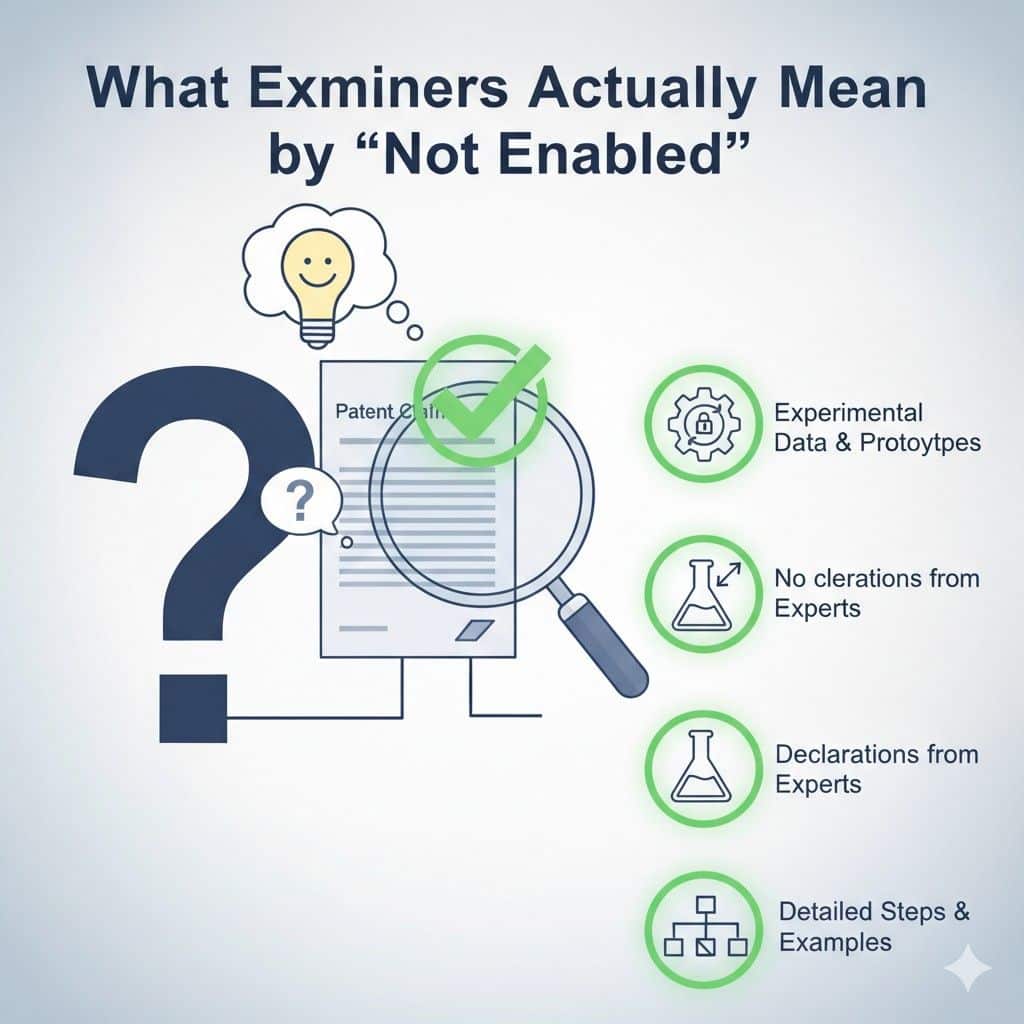
In the next section, we will look at how to structure an enablement response so that this evidence lands clearly and persuasively, without overwhelming the reader or slowing down your business.
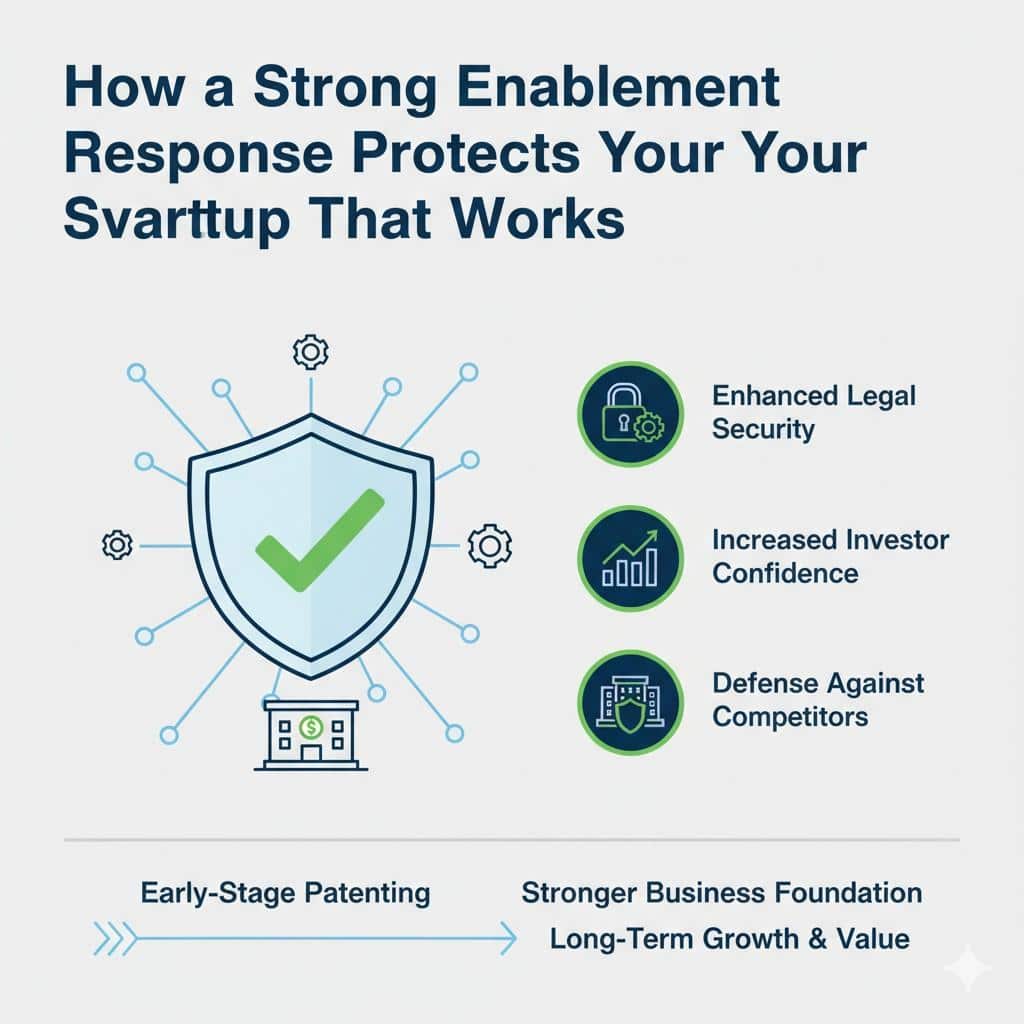
How a Strong Enablement Response Protects Your Startup Long Term
An enablement response is not just about getting past an examiner. It is about shaping how your invention will be judged for years to come. Many startups treat this step as a short-term hurdle.
The ones that win long term treat it as a chance to lock in clarity, strength, and confidence around what they built.
When done right, an enablement response becomes part of the foundation of your intellectual property. It influences how investors view your technology, how competitors assess risk, and how future lawyers argue your case if it ever matters.
It Turns Your Patent Into a Credible Technical Record
A strong enablement response forces specificity. That specificity becomes part of the permanent record. Anyone reading the patent later will see not just what you claimed, but how you backed it up when challenged.
This matters for startups because credibility compounds. A patent that reads like a real engineering document carries weight. It signals that the company understands its technology deeply and can explain it clearly.
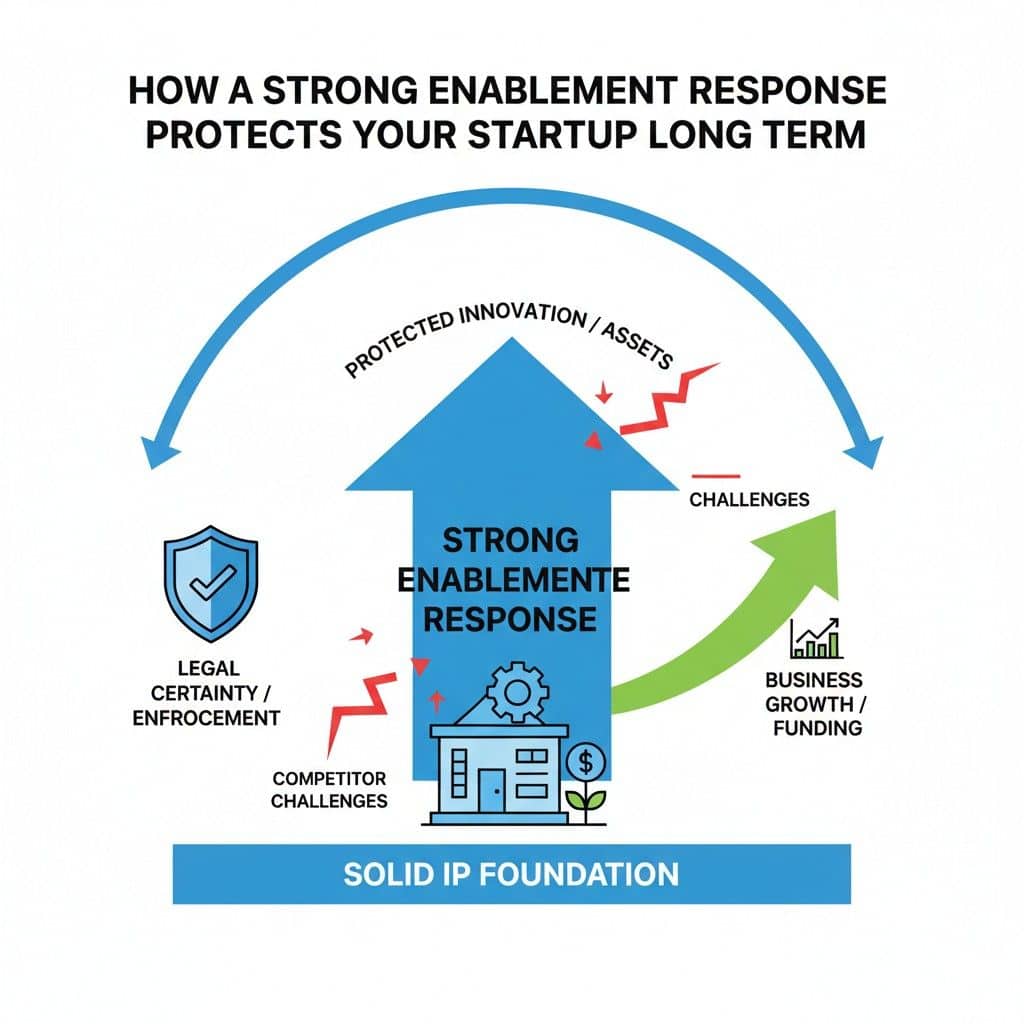
In due diligence, this often shows up quietly. Investors may not comment directly on enablement, but they notice when a patent feels solid. That feeling often traces back to how well enablement was handled during prosecution.
It Narrows Risk Without Shrinking Value
There is a fear among founders that responding to enablement will force them to give something up. In practice, the opposite is often true. A thoughtful response helps you define the most valuable part of your invention more precisely.
By focusing on what you can truly enable, you reduce the risk that your patent will be challenged later. At the same time, you preserve the core protection that matters to your business.
This is a strategic exercise. It requires understanding where your competitive edge actually lives. When enablement responses are guided by business priorities, they sharpen protection instead of diluting it.
It Creates a Stronger Story for Enforcement
If a patent is ever enforced, enablement becomes a focal point. Opposing counsel will look for gaps. They will argue that the invention was never fully taught. A strong enablement response makes those arguments harder.
From a business perspective, this increases leverage. Even the perception that your patent is well-enabled can deter competitors from pushing too close.
Most disputes are settled long before a courtroom, and perceived strength matters.
Enablement evidence added during prosecution often becomes the quiet backbone of that strength.
It Improves Future Patent Filings
Founders who go through a serious enablement response learn something valuable. They learn how to explain their technology in a way that stands up to scrutiny. That skill carries forward.
Future filings become clearer. Specifications become more grounded. Claims align better with reality. Over time, this reduces friction with the patent office and speeds up the overall process.

For growing startups, this efficiency matters. Strong early responses pay dividends across an entire portfolio.
It Aligns Legal Strategy With Product Reality
One of the hidden benefits of enablement work is internal alignment. When founders and engineers are forced to explain how something really works, assumptions get tested. Gaps get noticed. Sometimes improvements are discovered.
This alignment strengthens not just the patent, but the product roadmap. It ensures that legal protection tracks what the company is actually capable of delivering.
Businesses that integrate patent thinking into product thinking tend to move with more confidence. They know what they own and why.
It Signals Maturity to the Market
Well-enabled patents signal maturity. They show that the company is not just chasing ideas, but building real, defensible systems. This matters in partnerships, acquisitions, and competitive positioning.
Enablement responses are rarely visible on the surface, but their effects are. They shape how your IP is perceived by people who know what to look for.
This is especially important for deep tech startups, where value is often tied more to intellectual property than revenue in the early stages.
It Makes the Patent Office an Ally, Not an Obstacle
When you respond to enablement thoughtfully, you change the tone of the conversation. Examiners recognize effort and substance. Over time, this builds trust.
That trust can make future interactions smoother. It can reduce scrutiny. It can speed decisions. While examiners are neutral by design, they are human in practice.
Businesses that invest in quality responses often find that the patent office becomes more predictable and less adversarial.
Building Enablement Into the Process Early
The best way to protect your startup long term is to avoid enablement problems before they start. That means capturing technical detail early, while it is fresh, and translating it into clear explanations.
This is exactly why PowerPatent exists.
By combining structured invention capture with real attorney review, it helps founders document how their technology actually works from day one. When enablement questions arise, the evidence is already there.
If you want to see how this approach helps startups move faster while building stronger patents, you can explore it here: https://powerpatent.com/how-it-works
Wrapping It All Up
A 112(a) enablement rejection is not a dead end. It is a signal. It tells you where the patent office needs more confidence and where your invention deserves clearer explanation. When founders understand this, the response stops feeling like damage control and starts feeling like strategy. The strongest enablement responses do not argue. They teach. They show how the invention works in the real world, why the choices were made, and how the claims are supported by real technical substance. This approach does more than move an application forward. It builds a patent that can stand up to scrutiny from investors, competitors, and future partners.