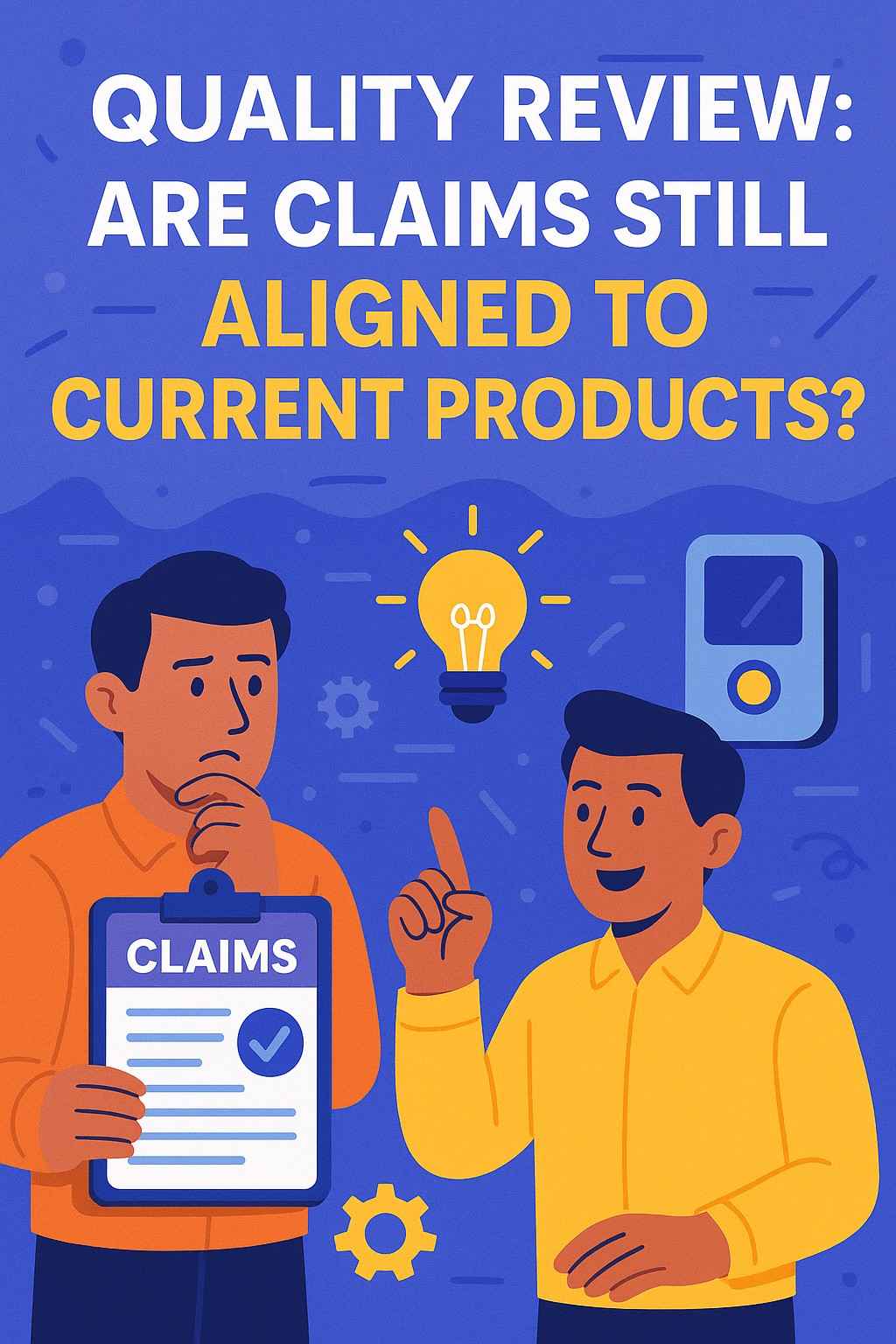
Most founders don’t think about this, but it quietly decides whether your patent actually protects anything: Are your patent claims still aligned with the product you’re building today?
Startups move fast. Products evolve every week. Code shifts. Models get rebuilt. Features get added or killed overnight. But patents don’t update themselves. If your claims fall out of sync with your real product, you can end up with a patent that looks strong on paper but doesn’t actually cover what you sell. That’s the worst place to be—thinking you’re protected when you’re really wide open.
Why Claim Alignment Matters More Than Most Founders Realize
Before diving into the details, it helps to understand one simple truth that many founders overlook: patent claims are not a description of your product.
They are the legal boundary lines around what you own. If those boundaries drift away from the real thing you are building, the protection you think you have becomes thin, shaky, or almost imaginary.
Claim alignment is the quiet heartbeat of a strong patent strategy, and when it’s done well, it becomes a real advantage for any business trying to move fast without exposing itself.
How Product Evolution Outpaces Old Patent Language
Startups rarely sit still. Teams rebuild features, swap out models, improve architecture, and respond to customer feedback in real time.
But the claims in a patent, once filed, stay frozen unless you update your filings or prepare follow-on applications. This gap between old language and new product behavior grows wider with every sprint.
Many businesses don’t notice the gap until a competitor emerges using something dangerously close to their work—and suddenly the claim language feels like it belongs to a previous version of the product.

Keeping claims aligned means checking that every major shift in your tech still fits within the words meant to protect it.
Why Misaligned Claims Hurt More Than Missing Claims
It’s easy to assume that a patent that doesn’t perfectly align is still better than nothing. In reality, misaligned claims can hurt more than having no claims at all.
A patent that doesn’t actually reach your product gives you false confidence, which affects decisions around fundraising, go-to-market, pricing, and partnerships.
Investors assume your core advantage is protected. Customers assume you can defend the value you promise. Competitors assume you know what you’re doing.
When these assumptions collapse, the cost is staggering. This is why smart founders treat claim alignment as an ongoing operational health check, not an afterthought.
How Claim Alignment Shapes Long-Term Leverage
A strong patent does more than block copycats. It shapes your negotiating power. The ability to show that your claims match the product you are selling right now makes licensing talks smoother, partnership deals easier, and due-diligence processes faster.
Misaligned claims create friction because lawyers on the other side spot the cracks immediately. When claims match the product, it signals maturity, foresight, and technical precision.
This increases your leverage at moments that matter, especially when you are raising capital or exploring acquisitions.
How Claim Alignment Directly Impacts Enterprise Sales
If your growth strategy involves selling into enterprise or government segments, claim alignment becomes even more important. Large buyers care deeply about risk and long-term support.
They want to know that the technology they adopt is protected and defensible. When your claims match exactly what your product does today, you give them confidence that your solution is stable and safe to integrate.

Many founders underestimate how often procurement teams investigate IP strength. Aligned claims speed up deal cycles because they reduce fear and uncertainty.
Why Claim Alignment Protects Against Quiet Competitors
Competitors rarely copy your product overnight. They nibble at the edges first. They test boundaries by building near your features, not directly inside them.
If your claims are outdated or narrow, these near-copies slide around your protection. But when your claims evolve alongside your product, the fence around your innovation stays tight.
This forces competitors to do real work instead of imitation. It pushes them to innovate instead of borrow. For many businesses, this difference decides who becomes the market leader and who stays a follower.
How Claim Alignment Strengthens Your Internal Strategy
A well-aligned patent forces your team to stay crisp about what exactly makes your product inventive. When you review claims regularly, you naturally sharpen your understanding of your differentiators.
This clarity helps product teams stay focused, engineering teams understand what is critical to keep, and leadership stay grounded in what truly sets the business apart.
Claim alignment becomes a strategic mirror that reflects your most valuable ideas back at you, helping teams make decisions faster and with more confidence.
Practical Ways to Keep Claims and Product in Sync
The best way to keep claims aligned is to treat patent maintenance the same way you treat code hygiene. Small, regular updates are easier than rare, massive overhauls.
Any time you introduce a new feature, change your architecture, or add a new model workflow, it helps to check whether the existing claims still describe the core inventive steps.
Even a quick internal review every few weeks can prevent major gaps from forming. The goal is not perfection. The goal is noticing misalignment before it becomes expensive.
If you want a faster way to keep everything aligned without slowing down your team, this is exactly where PowerPatent’s workflow shines.

By combining smart software with real attorney oversight, it gives founders a real-time view of claim fit, so you can adjust your filings before your product moves too far ahead. You can see how this works in practice here: https://powerpatent.com/how-it-works
How Product Drift Quietly Weakens Your Patent Protection
Before exploring how product drift creates real risk, it helps to understand what drift actually looks like inside a fast-moving startup. It usually doesn’t feel dramatic.
No one wakes up and says the product is brand new. Drift happens through dozens of tiny decisions that feel harmless in the moment. A refactor here. A new model pipeline there.
A feature added because a customer asked. A workflow removed because users weren’t clicking it. None of these feel big, but over time they quietly reshape your invention until it no longer resembles the version described in your patent claims. This gap is where danger slips in.
How Drift Begins with Small Product Improvements
Drift usually starts with good intentions. The team wants faster performance, fewer bugs, or a smoother flow. They swap out an algorithm for a better one. They restructure the data layer.
They change how inputs get pre-processed because the original design was clunky. These changes feel like polishing. But patent claims capture specific steps or interactions.
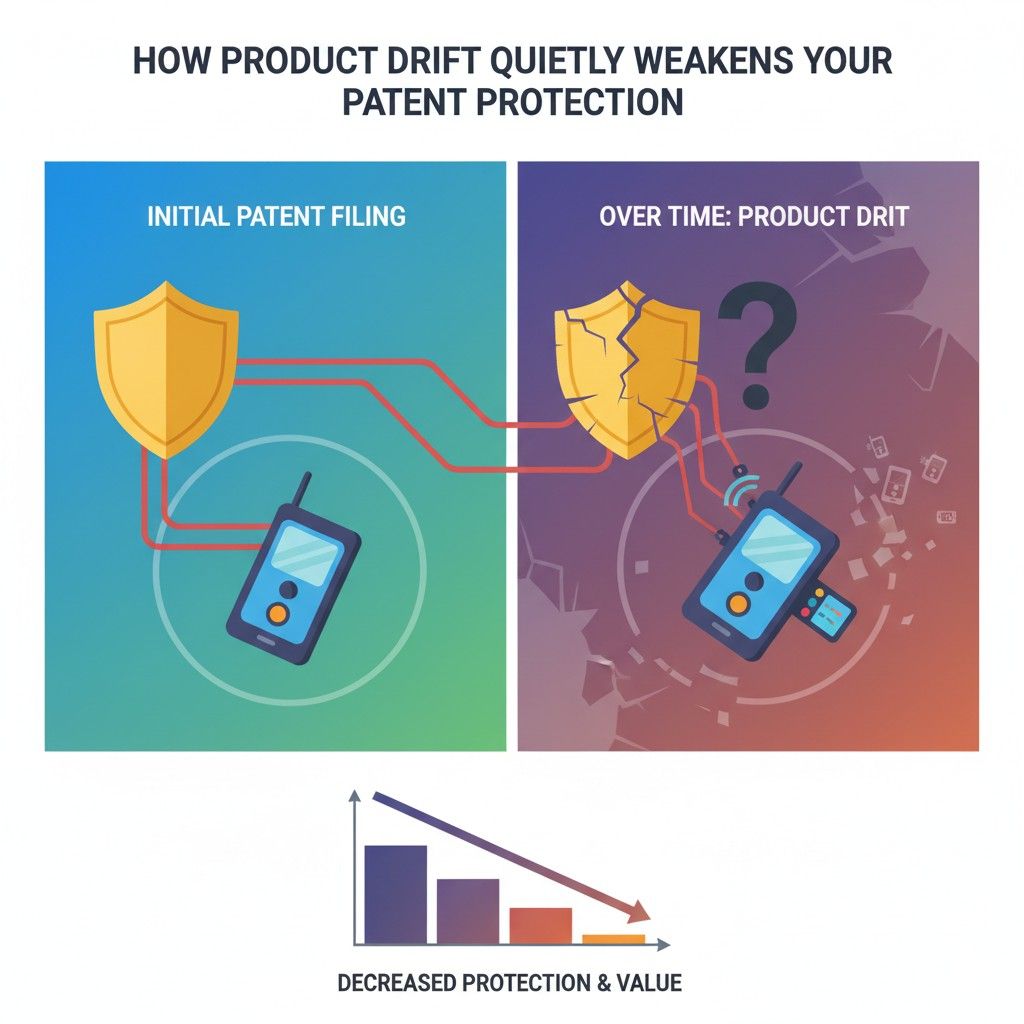
When the way your product performs those steps changes, even slightly, the language in your claims can be left behind. Drift isn’t about wrong choices. It’s about untracked changes.
How New Features Stretch the Original Claim Scope
Adding new features is often the most natural form of drift. The team ships an add-on that customers love. A dashboard becomes richer. A model starts generating recommendations instead of just filtering data.
But if these new capabilities become central to the value you deliver, and they fall outside your original claim boundaries, you suddenly have core product elements not covered by your own patent.
The scariest part is that this usually goes unnoticed. No one stops mid-sprint to analyze claim scope. But competitors do. They look for uncovered ground. They see opportunity where you see progress.
How Removing Features Disrupts Claim Foundations
Drift also happens in the opposite direction. Sometimes you strip out a feature because it wasn’t working or wasn’t used. Maybe a particular module is retired or a model step gets bypassed.
If your claims were built around that older workflow, removing the feature can cut the legs out from under your protection. Claims written to match the original version may no longer map to the new, simpler system.
You end up with claims describing a process your product no longer performs. That mismatch weakens everything.
How Architecture Updates Create Silent Gaps
Architecture changes can be the most dangerous type of drift because they happen deep inside the system. For example, you shift from local processing to cloud processing.
Or you replace a rule-based engine with a learned model. Or you move from batch operations to streaming pipelines. These changes often happen to boost scalability or reduce cost.
But in patent terms, they can represent major differences. Claims usually describe how the system behaves, not how the UI looks.
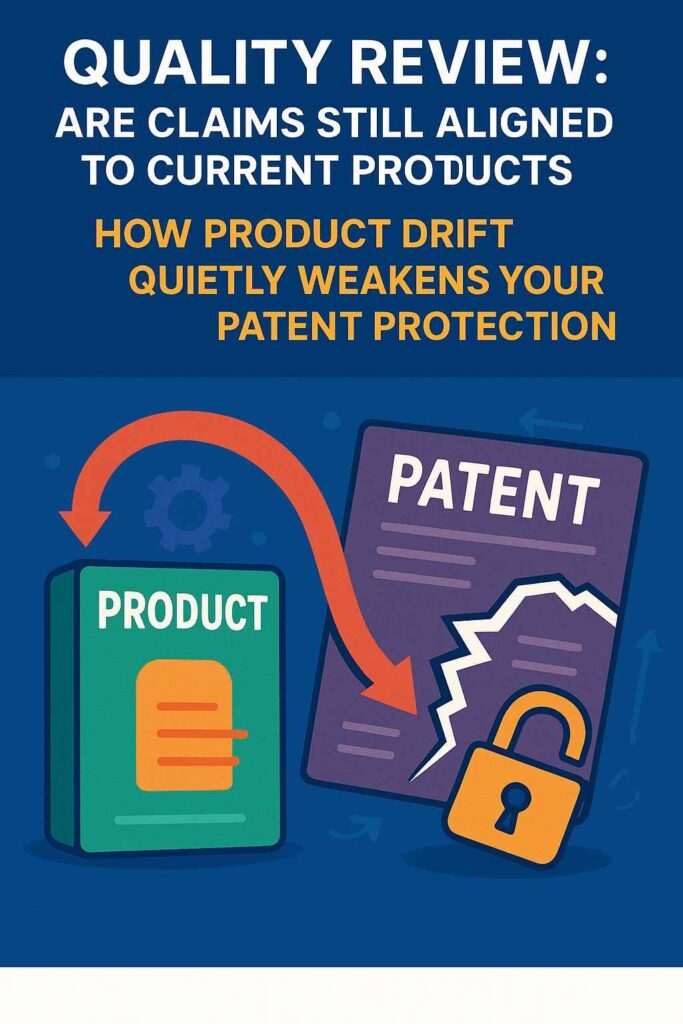
When the behavior changes beneath the surface, the claims must change too. Failing to track architectural drift is the fastest way to lose protection without realizing it.
How Your Team’s Growth Contributes to Drift
As your team scales, product decisions become more distributed. Early on, everyone knows how everything works. Later, engineering leads become specialized, product managers own features, and new hires bring their own ideas.
This natural growth creates a fragmentation of knowledge. People change parts of the system without knowing which elements are patent-critical. Drift increases because tribal knowledge decreases.
Teams start building based on what is useful today, not what was protected last year.
How Market Feedback Pulls You Off the Original Path
Market signals exert enormous pressure on a startup. Customers push you toward the features they need most. Competitors push you to respond quickly. Investors push you to show traction.
These forces often pull your product away from what you originally filed. A system that once focused on detection may shift toward prediction. A workflow that once automated one task now automates three.
Over time, the product becomes shaped by the market, not by the initial inventive idea. This is natural, but unless you update your patents along the way, your claims stay frozen in an older reality.
How Product Drift Opens Doorways for Competitors
When your product evolves but your claims do not, competitors gain a clear path to build around you. They study your patents, see what is protected, compare it to what your current product actually does, and find the gaps. These gaps are not always obvious to founders.
But to a motivated competitor, they are bright beacons. They can copy your newer features without touching your older workflow. They can use modern architectures your patent never mentioned.
They can mimic your new value proposition while claiming they didn’t infringe anything. Drift gives them room to operate. Aligned claims take that room away.
Why Most Startups Don’t Notice Drift Until It’s Too Late
Drift rarely becomes visible until a triggering moment. This moment could be a fundraising round where investors ask hard IP questions. It could be a competitor launching something suspiciously similar.
It could be a due diligence request during an acquisition. It could be a legal threat from a third party claiming you are infringing them. In all these situations, the strength of your claims becomes a live issue.
If the claims don’t match your current product, fixing the problem takes time you don’t have. The best time to handle drift is far before anyone is looking.
How Regular Claim Checks Prevent Drift from Becoming Damage
The best way to stay protected is to run simple claim checks at regular intervals.
Every time your team ships something meaningful, it helps to confirm that the new shape of your product still sits inside your claim boundaries. This doesn’t need to be complex or slow.
You just need to track whether the core inventive steps are still there, whether new behavior has become central, and whether anything has been dropped that your claims depend on.
The goal is to notice drift early, while it is easy to fix.
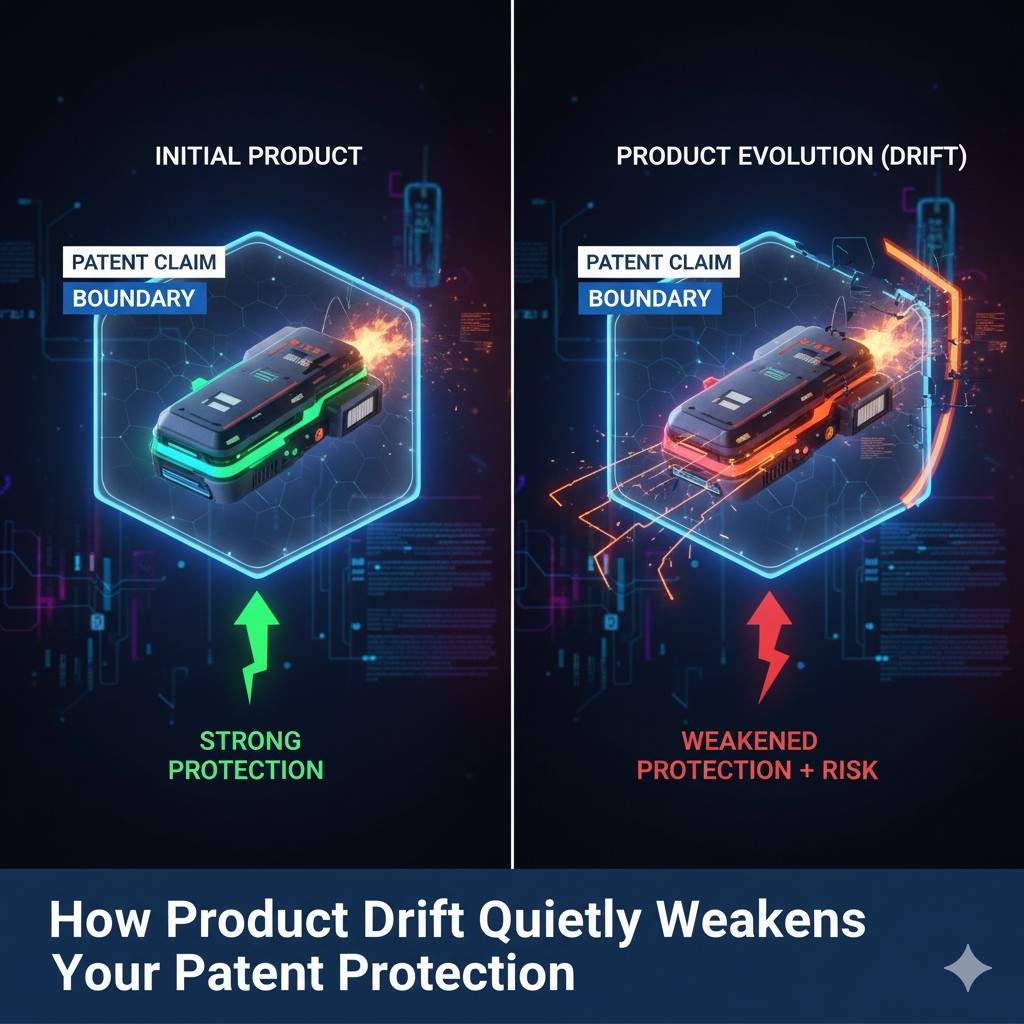
This is exactly where PowerPatent helps startups move fast without leaving their patents behind.
By pairing software that tracks product changes with real attorney oversight, it keeps your patent coverage synced with your evolving tech. You can see how this workflow works here: https://powerpatent.com/how-it-works
A Simple, Practical Way to Check If Your Claims Still Match Your Tech
Before stepping into the details of how to run a strong claim review, it helps to understand that this process is not a legal exercise. It is a product exercise. It is a clarity exercise.
It is a moment where you pause, look at what you have built, compare it to the boundaries you set in your patent filings, and ask a simple question: do these two still match?
When you approach it this way, the process becomes far less intimidating and much more useful. It becomes something that strengthens your product thinking rather than something that slows you down.
How to Start by Understanding What Your Claims Are Actually Protecting
Many founders have read their claims only once, usually at the moment they filed. Claims can feel dense, but at their core they describe the critical steps, structure, or logic that makes your invention unique.
The first step in a practical review is simply to restate those claims in plain language. This helps you see the essential pattern your patent protects.

Once you do this, it becomes much easier to notice whether your product still behaves the same way.
How to Compare Your Current Workflow Against Your Claim Structure
The next step is mapping what your product does today. You do not need a long diagram. You only need a clear description of your current workflow. Then you can place those steps next to the simplified version of your claims.
The question is whether the product still includes the same core steps or relationships described in the patent.
If the workflow changed but the essence stayed the same, you are still aligned. If the workflow changed and the logic behind it also changed, you may have drift.
How to Spot Areas Where Your Product Has Expanded Beyond Your Claims
As your product grows, you may notice that new capabilities have become central. These may include new data flows, optimized model behavior, new automation layers, or new ways your system interacts with the user.
If these features are now part of your core value but do not appear anywhere in your claims, you have discovered a coverage gap.
This is not a failure. It is an opportunity to strengthen your patent family by filing new applications that capture the new version of your invention.
How to Identify When Your Product Has Moved Away From an Older Claim Element
Sometimes you notice that your claims still depend on components or steps that no longer exist in your product. For example, your claims might describe a multi-step pipeline that your product has now replaced with a single model.
Or your claims might describe a manual step that is now automated. If the missing step was essential to your original invention, your claim may no longer match your real product.
This is where many founders get caught without even knowing something changed. Once you notice this, you can address it early.
Why It Helps to Look at How Competitors Would Interpret Your Claims
A practical tactic is to imagine how a competitor might analyze your claims. Competitors look for gaps, not strengths.
They ask where they can build without infringing. When you run your review, asking the same question helps you see your invention from the outside.
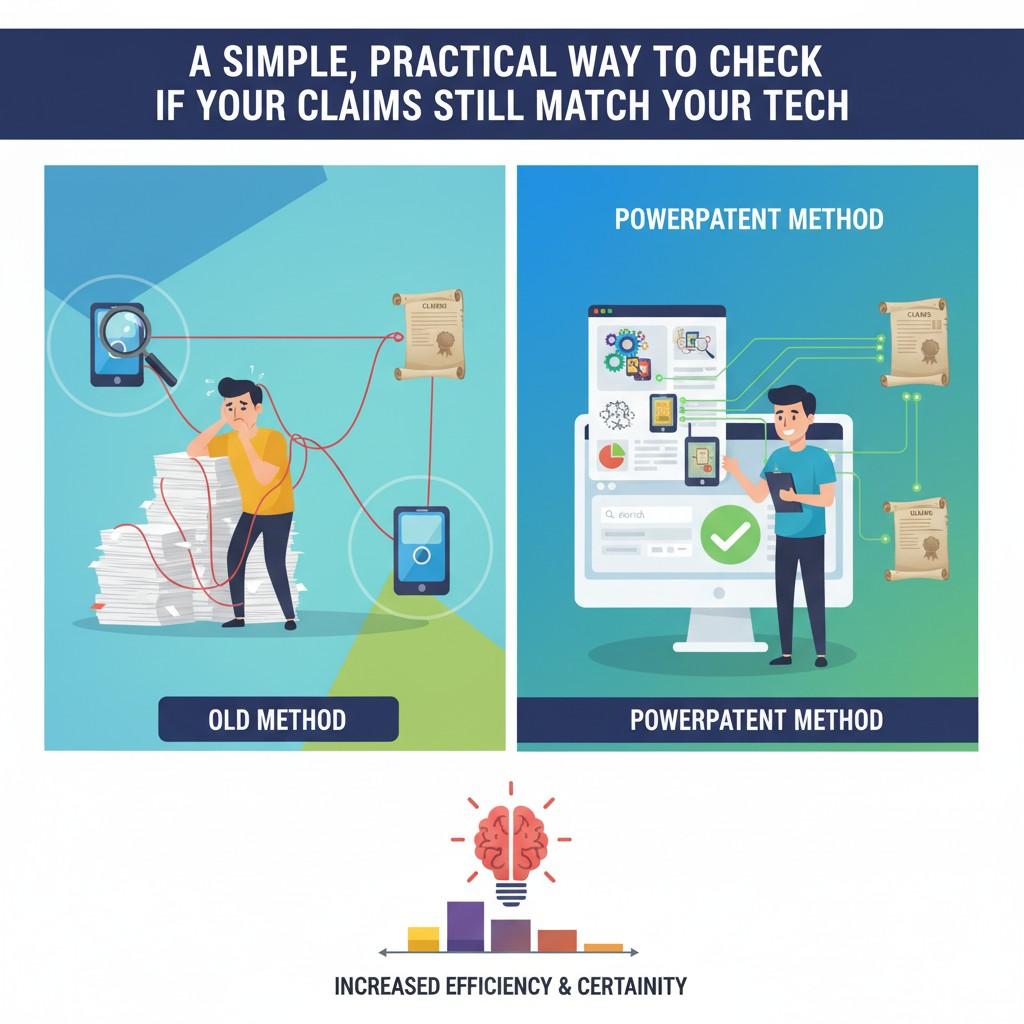
If you can easily imagine a competitor copying your new feature without touching the old steps described in your patent, that tells you your protection is slipping. This perspective is extremely helpful in noticing misalignment long before it becomes urgent.
How to Check Whether Your Claims Still Match What You Call Your Value Proposition
Many founders forget that their patent protection should evolve alongside their positioning.
If you have changed how you talk about your product, how you market it, how you describe its value, or how customers understand its magic, then your patent should reflect this reality too.
Claims should support the story you tell the world. If they describe an older version of what made your product special, your IP no longer supports your business narrative. That gap weakens both perception and protection.
How to Keep the Review Lightweight So It Does Not Slow Your Team
A strong claim review does not require a long process. It can be a simple recurring session where your product lead, your technical lead, and your IP partner quickly compare the latest product updates to your claim structure.
Ten minutes is enough to notice whether anything meaningful has changed. The goal is to make alignment checks part of your rhythm, not a special event. When done consistently, this simple habit protects you from years of slow drift.
How to Use Claim Reviews to Plan Future Patent Filings
Claim alignment reviews do more than protect what you already have. They reveal new opportunities to expand your protection.
When you spot features or workflows that have grown into important pieces of your product but do not appear in your claims, this is exactly where strategic new filings come from.
These are the moments where you strengthen your moat. These new filings can form a family of related patents that evolve with your product, giving you a living IP strategy rather than a static one.
How a Good Review Builds Confidence Across Your Company
When your team knows that the product and claims match, they feel more confident building, shipping, selling, and negotiating. They know the technology is defensible.
This helps founders make bolder decisions, helps product teams innovate without fear, and helps sales teams speak clearly about what makes your solution original.
This alignment creates momentum. When everyone on your team sees that your core invention is both real and protected, it becomes easier to push forward with speed.
How PowerPatent Makes Claim Review Faster and More Accurate
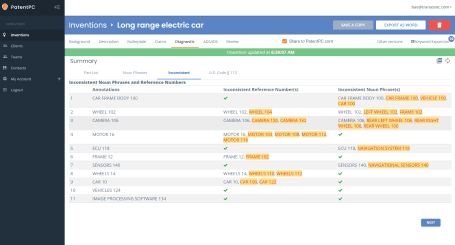
One of the hardest parts of staying aligned is simply keeping track of product changes while managing everything else that comes with building a company. PowerPatent makes this easier by turning the entire process into a guided workflow.
The software helps you track how your product evolves, highlight where claims might need attention, and prepare updates before misalignment becomes a problem. Real attorneys review everything so you are never guessing alone.

This gives you the speed of automation with the confidence of human oversight. If you want to see how teams keep their claims aligned without slowing down, you can explore it here: https://powerpatent.com/how-it-works
How PowerPatent Makes Ongoing Claim Reviews Fast, Accurate, and Painless
Before looking at the details, it helps to understand why most startups struggle with claim reviews in the first place. It’s not because the process is difficult. It’s because it feels disconnected from the day-to-day work of building and shipping.
Teams are already stretched. Product moves fast. Engineering moves faster. Legal feels slow, expensive, and separate from the pace of real work.
This is why claim alignment gets pushed aside until it becomes a problem.
PowerPatent solves this by removing friction at every step, blending software and attorney oversight into a workflow that fits the speed of a startup rather than slowing it down.
How PowerPatent Connects Your Product Changes to Your Patent Strategy
The first advantage of using PowerPatent is that it naturally brings product and IP into the same flow. Instead of waiting for a quarterly or yearly review, PowerPatent helps track shifts in your system as they happen.
When you change a workflow, adjust a model, or add a new capability, the system helps you capture these updates so they can be compared against your existing claims.
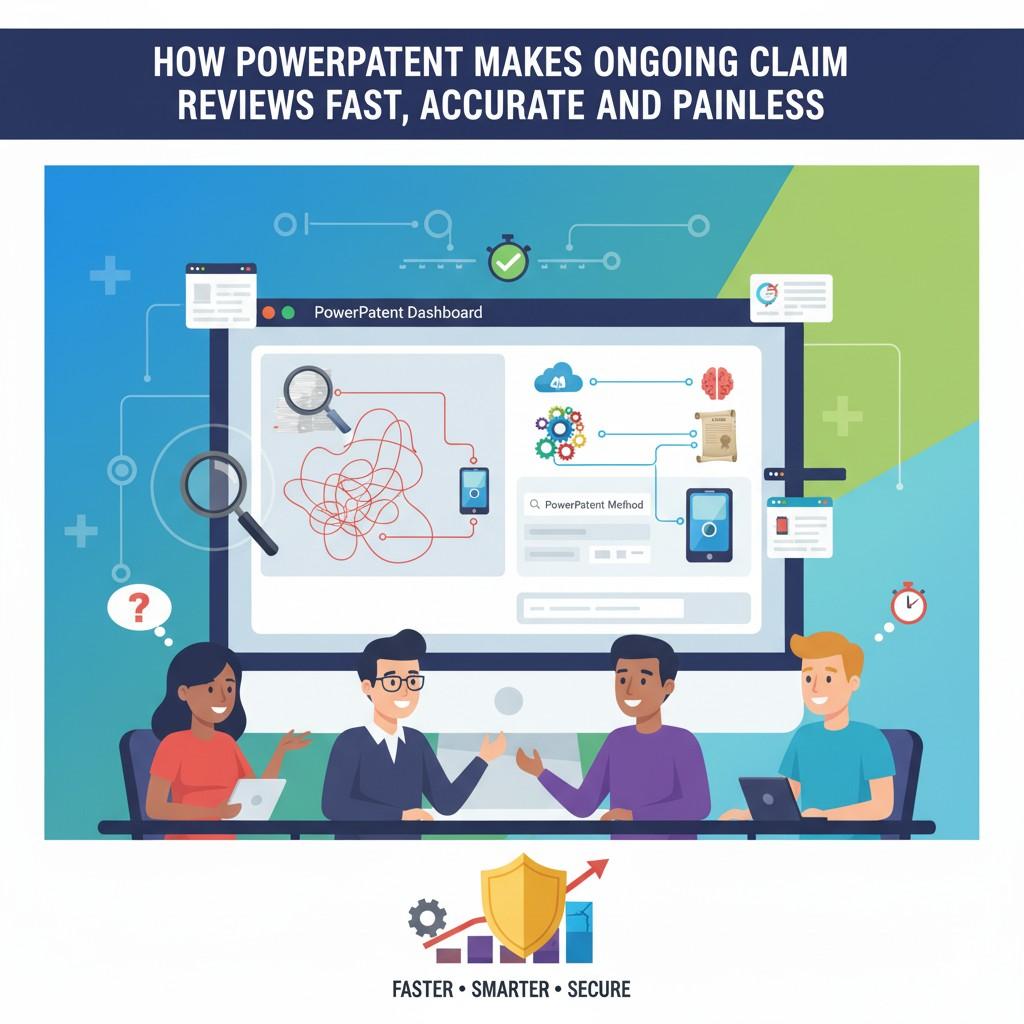
This keeps your patent strategy connected to the work your team is doing every day, preventing the slow drift that causes misalignment.
How Clear Guidance Helps You Understand Your Own Claims
Many founders feel lost when reading claim language. PowerPatent solves this by turning dense legal text into simple explanations that match how you actually talk about your product.
When you understand the core idea your claims are protecting, it becomes much easier to see whether your evolving product still fits inside that boundary.
This clarity removes the guesswork and gives founders more control over their own IP decisions.
How PowerPatent Highlights Potential Gaps Before They Become a Problem
One of the most powerful parts of the platform is its ability to surface mismatches early. When your team introduces something new that does not appear anywhere in your existing claims, PowerPatent flags it.
When a key part of your claim structure no longer exists in your modern workflow, it identifies that too.
This early detection gives you the time and space to fix issues long before they reach investors, partners, or competitors. The goal is to stay ahead rather than catch up.
How Attorney Oversight Eliminates the Stress of Getting It Wrong
Startups move quickly, but patent mistakes can last for decades. PowerPatent solves this tension by pairing software automation with real patent attorneys who review your work.
You are not left alone to interpret claim scope or decide what needs an update. You get expert input without the cost, delays, or formality of old-school firms.
This combination helps founders act quickly while still feeling confident that every decision is correct.
How PowerPatent Makes Filing Follow-On Applications Simple
When your product has outgrown your original claims, the smartest move is often to add a new filing that protects the updated version of your invention.
This is where many founders freeze because traditional filings feel slow and expensive. PowerPatent makes this process straightforward.
The platform helps you translate your new features or workflows into a structured draft, then attorneys refine it so it is legally strong.
This smooth path encourages founders to build healthy patent families that evolve alongside the product instead of leaving important innovations unprotected.
How PowerPatent Reduces the Cost of Staying Protected long term
Many founders delay claim reviews because they assume updates or new filings will cost too much.
PowerPatent changes that math. Because the system automates the heavy lifting and attorneys step in only where needed, the cost stays predictable and light.
This removes the financial pressure that often leads to outdated patents. Staying protected becomes a normal part of your operations rather than a rare expense you try to avoid.
How PowerPatent Helps You Build a Patent Strategy That Scales
As your startup grows, your product becomes more complex, your team becomes more distributed, and your IP needs grow with you. PowerPatent gives you a long-term structure that scales with your roadmap.
Each time you update your tech, the platform helps you capture what changed. Each time you refine your positioning, you can check whether your claims still support your story.
Over time, this creates a living patent portfolio that mirrors your product’s evolution and keeps you one step ahead of competitors.
How Aligned Claims Strengthen Every Part of Your Business
PowerPatent is not just about legal protection. It strengthens your business everywhere. Investors trust you more when your patents match what you actually sell.
Enterprise buyers move faster when they see your IP is strong. Competitors hesitate when they see clear boundaries around your invention.
Your team moves confidently because they know the innovation they build is secured. Claim alignment is a quiet force multiplier, and PowerPatent makes it easy to keep it strong.
How PowerPatent Brings Speed Without Sacrificing Quality
The biggest shift PowerPatent creates is speed. Traditional firms ask for long meetings, endless documents, and back-and-forth emails. PowerPatent replaces all of that with a workflow that takes minutes instead of weeks.
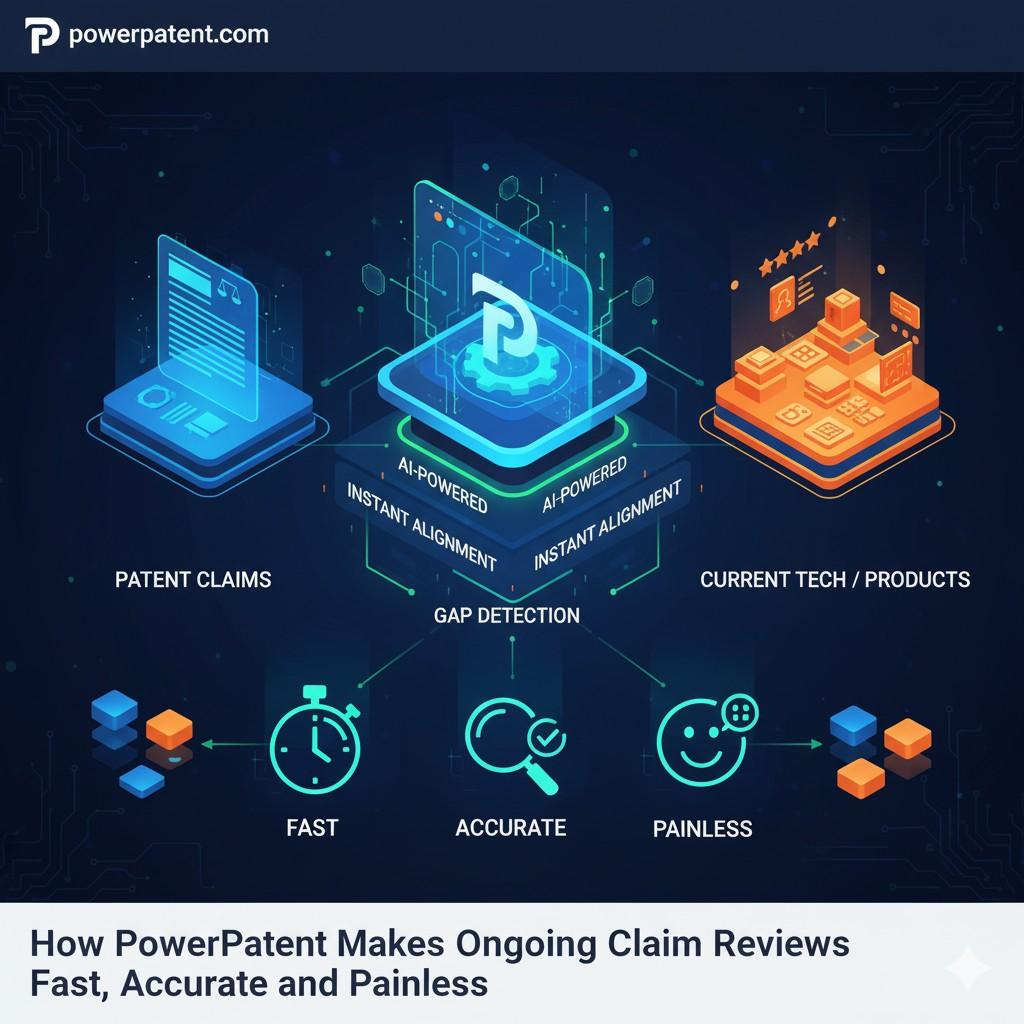
But the speed never weakens the quality because every output is refined by attorneys who understand both technology and patent strategy. You get the best of both worlds: rapid movement and strong protection.
How to See PowerPatent in Action
If you want to see exactly how founders use PowerPatent to stay aligned, avoid drift, and keep their patent protection strong as their product evolves, you can explore the full workflow here: https://powerpatent.com/how-it-works
Wrapping It Up
Before closing everything out, it helps to step back and look at the bigger picture. Patent protection is not just paperwork. It is not a box you check once and forget. It is a living shield meant to grow with your invention. But that shield only works when it matches the real thing you are building. When your claims stay aligned with your product, you protect your edge, strengthen your business, and give yourself room to innovate without fear. When they fall out of sync, even the strongest ideas become vulnerable.