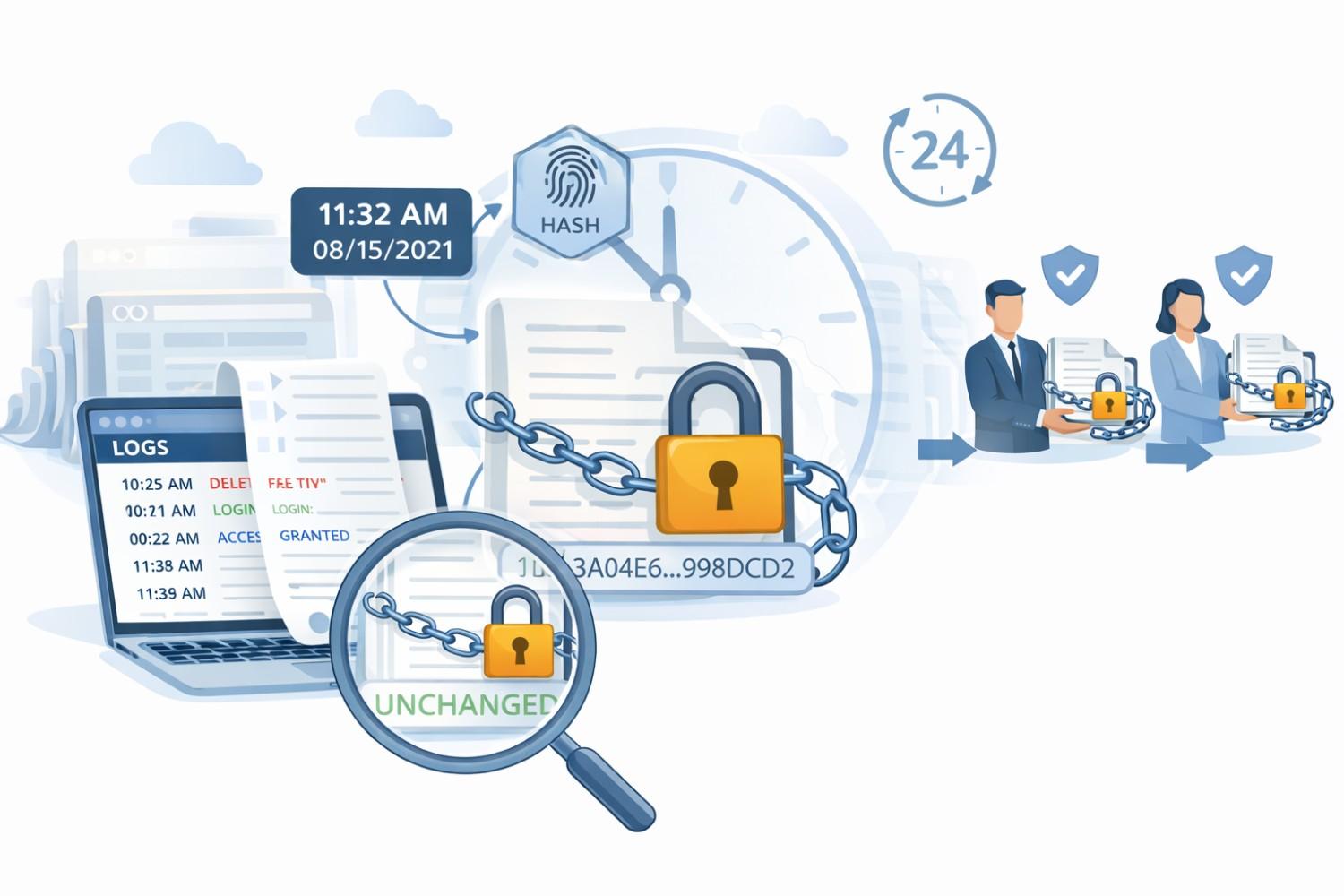
If someone takes what you built and claims it as their own, feelings do not matter. Stories do not matter. What matters is proof.
This is where many founders get blindsided. They know, deep down, that their work was copied. They can see it in the code, the model behavior, the data flow, or the product decisions. But when it comes time to prove it, everything suddenly feels fuzzy. Memories fade. Files move. Emails disappear. And the truth becomes harder to show than it should be.
Why Proof Matters More Than the Idea Itself
Ideas feel powerful when you are the one who created them. They feel obvious. They feel personal. But in business, ideas alone do not carry weight. What carries weight is proof that can survive pressure, time, and doubt.
This section is about shifting your mindset from protecting an idea in your head to protecting evidence on record.
When disputes happen, nobody asks who felt inspired first. They ask who can show what existed at a specific moment, who controlled it, and how it moved.
This is where most businesses fail, not because they were wrong, but because they were unprepared.
Ideas Are Easy to Claim After the Fact
The moment a product shows traction, stories start changing. People remember things differently. Partners suddenly recall early involvement. Contractors say they helped shape core features. Competitors claim parallel thinking.
This is normal. It happens quietly and then all at once.
What makes these moments dangerous is that ideas are easy to describe after the fact.

Anyone can say, “I had that idea too.” Without proof, it becomes your word against theirs. Proof removes that argument completely. It freezes the story in time.
Proof Is What Turns Suspicion Into Certainty
Suspicion does nothing on its own. You may feel certain your work was taken, but certainty inside your head does not transfer to others. Proof does.
Proof does not argue. It shows.
When you have records that show exactly what existed before access was given, before partnerships formed, or before demos happened, you stop guessing. You stop reacting emotionally. You gain leverage.
Business Risk Grows Faster Than Legal Risk
Most founders think proof only matters if lawyers get involved. That is too late.
Proof matters earlier, when deals are negotiated, when partnerships are formed, and when trust is assumed instead of verified. A lack of proof weakens your position in everyday business decisions long before a courtroom is ever mentioned.
When you cannot show clean ownership and clear timelines, you accept worse terms, delay fundraising, or walk away from opportunities because uncertainty feels risky to others.
Memory Is Not Evidence
Human memory is unreliable, even when people are honest. Files get renamed. Folders get moved. Systems change. Repos get cleaned up. Slack messages disappear. Email accounts close.
If your protection plan depends on remembering what happened, it is already broken.
Evidence must exist outside of people. It must survive turnover, time, and stress. That means systems, not stories.
Proof Must Exist Before Conflict Starts
The biggest mistake companies make is trying to gather proof after something goes wrong. By then, access has already been shared. Files have already moved. Systems have already changed.
Good proof is boring because it is created when nothing is happening. It exists quietly in the background. It does not depend on trust or goodwill. It just exists.
This is why building proof into your workflow matters more than reacting later.
Control Beats Speed in the Long Run
Many teams move fast by cutting corners on documentation and records. It feels efficient in the moment. But speed without control creates future drag.
When questions arise, everything slows down. Teams scramble. Confidence drops. Deals pause.

Having proof ready keeps momentum. It lets you move fast without losing control.
Proof Is a Business Asset
Proof is not just defensive. It increases the value of what you are building.
Clean records make due diligence smoother. They reduce friction with investors. They signal maturity and seriousness. They show that your company understands ownership, risk, and responsibility.
This is especially true for technical products where value lives in systems, data, and logic rather than physical assets.
Action Starts With Treating Proof as Infrastructure
Proof should not be an afterthought or a special project. It should be treated like infrastructure, just like version control, security, or backups.
This means deciding early where records live, how access is tracked, and how changes are recorded. It means assuming that one day, someone will ask hard questions and preparing answers in advance.
Why Most Teams Get This Wrong
Most teams are focused on building, not defending. They assume good intentions. They trust relationships. They believe problems can be solved later.
This mindset works until it does not.
The teams that avoid painful disputes are not paranoid. They are prepared. They understand that proof is not about distrust. It is about clarity.
Building Proof Without Slowing Down
The good news is that proof does not have to mean paperwork, meetings, or friction. Modern tools make it possible to capture evidence automatically as work happens.
When done right, proof feels invisible. It supports your work instead of interrupting it.
This is where platforms like PowerPatent come in. They are designed to help founders capture ownership, timelines, and technical substance without breaking flow or pulling engineers away from building.
If you want to see how that works in practice, you can explore it here: https://powerpatent.com/how-it-works.
Proof Protects You From Yourself
One final point that rarely gets discussed is this: proof also protects you from your own future confusion.
Months or years later, when details blur, records bring clarity. They help you remember why decisions were made and what existed at each stage. They preserve truth even when people change their minds.
This is not about fear. It is about stability.

Proof is the quiet foundation that lets ideas grow without fear of being taken, challenged, or erased.
Logs: The Silent Witness That Never Forgets
Logs are not exciting. They do not feel creative. Most teams treat them as background noise, something that exists only when something breaks. That is a mistake.
Logs are one of the strongest forms of proof you can have when misappropriation is questioned.
They tell a story without opinion. They show actions instead of intentions. And when kept correctly, they become very hard to argue with.
This section explains how logs quietly protect your work, why most companies fail to use them correctly, and how to turn everyday system activity into powerful evidence without changing how your team builds.
Logs Capture Reality, Not Interpretation
People explain events differently depending on what they want to prove. Logs do not do that.
A log simply says that something happened at a specific time, from a specific place, by a specific system or user. It does not guess. It does not assume. It records.

This makes logs uniquely valuable when someone claims they built something independently or did not access your work.
Logs can show access patterns, download events, execution traces, and usage behavior that contradict those claims.
Time Is the Hidden Weapon Inside Logs
One of the strongest qualities of logs is time.
When misappropriation disputes happen, timelines matter more than features. It matters what existed before access was granted.
It matters what happened immediately after a demo. It matters how behavior changed once information was shared.
Logs create an exact timeline that cannot be recreated later.
This timeline often reveals patterns that human memory misses, such as sudden bursts of activity, repeated access attempts, or behavior that only makes sense if someone understood internal systems.
Most Teams Log for Debugging, Not Proof
The default mindset around logging is technical troubleshooting. Teams log errors, crashes, and performance issues. They rarely think about logs as legal or business evidence.
This leads to gaps.
Important events go unrecorded. Access logs are overwritten too quickly. Identity information is missing. Context is lost.
The problem is not that teams lack logs. It is that they lack intention behind logging.
Intentional Logging Changes Everything
When you design logs with proof in mind, small changes make a big difference.
Recording who accessed what, when, and from where becomes routine. Tracking read actions, not just writes, becomes normal. Preserving logs instead of rotating them away becomes a priority.
None of this slows development. It simply reframes logging as part of ownership, not just engineering hygiene.
Logs Show Behavior After Exposure
One of the clearest signs of misappropriation appears after exposure to sensitive material.
This could be after a demo, a shared repo, a pilot program, or a partnership discussion. Logs often show a spike in access, unusual queries, or activity that mirrors internal workflows.

This behavioral shift is hard to explain away. It connects access to action in a way that stories cannot.
Access Logs Are Often the Most Valuable
If you only focus on code logs, you miss half the picture.
Access logs show who entered the room, not just what happened inside it. They reveal which accounts were active, which credentials were used, and whether access happened outside expected patterns.
In many disputes, access alone is enough to shift the conversation. You do not need to prove copying line by line. You need to show opportunity combined with behavior.
Logs Protect You Even When Trust Breaks
Many misappropriation cases involve people who were trusted at some point. Early employees. Contractors. Partners. Advisors.
Logs do not take sides. They remain neutral when relationships change.
This neutrality is powerful. It allows you to present facts without accusation. It keeps discussions grounded in reality instead of emotion.
Preservation Matters as Much as Collection
A log that gets deleted is useless.
Retention policies matter. Storage decisions matter. Knowing who can modify or delete logs matters.
Logs only protect you if they survive long enough to be needed. This means thinking about preservation early, not after a conflict begins.
Logs Are Stronger When They Are Boring
The best logs are dull. They are consistent. They follow patterns. They are hard to manipulate without leaving traces.
When logs feel chaotic or inconsistent, they invite doubt. When they feel routine and systematic, they inspire confidence.
This is why automated logging is better than manual notes or ad hoc tracking.
Turning Logs Into Business Confidence
When founders know their systems tell the truth, decision-making changes.
You share information more confidently. You collaborate without fear. You negotiate from a position of calm strength.
Logs remove uncertainty. They allow you to say, quietly and confidently, that facts exist if questions arise.
How This Fits Into a Bigger Protection Strategy
Logs are one layer of proof, not the whole system. On their own, they show activity. Combined with hashes and chain of custody, they show ownership, integrity, and control.
This is why tools that tie technical activity to ownership records are so valuable. PowerPatent is designed to help founders capture this full picture without turning engineers into record keepers.

If you want to understand how that works in real workflows, you can explore it here: https://powerpatent.com/how-it-works.
Logs are not glamorous. But when things go wrong, they speak louder than anyone in the room.
Hashes: Locking Your Work in Time
Hashes solve a problem that logs alone cannot. Logs show activity. They show access. They show behavior. But they do not prove that a specific file, model, or system looked exactly the same at a specific moment. Hashes do.
A hash is a short digital fingerprint created from data. If the data changes even slightly, the fingerprint changes.
This makes hashes one of the strongest tools for proving that something existed in a fixed form at a fixed time. When misappropriation is questioned, hashes remove doubt about originality and timing.
Why File Names and Dates Are Not Enough
Many teams rely on file names, timestamps, or folder structures to prove when something was created. These signals feel convincing, but they are fragile.
Files can be renamed. Dates can change when systems migrate. Copies can be made. Even honest actions like backups or transfers can alter metadata.

Hashes do not care about file names or locations. They only care about content. This makes them far more reliable than anything visible on the surface.
Hashes Freeze the Exact State of Your Work
When you generate a hash, you are capturing the precise state of a file or dataset at that moment. Not the idea. Not the intent. The actual bytes.
This matters when someone claims your work evolved later or that similarities are coincidence. A hash proves that your version existed before theirs, in that exact form, without needing explanation.
Hashes Turn “We Built This First” Into Fact
Timing disputes are common in misappropriation cases. Two parties claim they built similar systems independently. Without hashes, these claims turn into arguments about credibility.
With hashes, timing becomes factual.
If you can show that a specific version of your system produced a specific hash at a specific time, the conversation changes. It becomes less about belief and more about sequence.
Small Changes Leave Big Traces
One of the most powerful aspects of hashing is sensitivity.
Even a one-character change in code produces a completely different hash. This makes hashes excellent for proving that two things are not the same, even if they look similar.
When someone claims they made minor changes or that their version is different enough, hashes provide a clear answer without debate.
Hashes Protect Against Quiet Alterations
Misappropriation does not always involve copying from scratch. Sometimes it involves subtle reuse, small adaptations, or internal borrowing that is later denied.
Hashes help expose this by anchoring earlier versions. When later systems resemble earlier hashed versions too closely, explanations become harder to sustain.
When Hashes Matter Most in Business
Hashes are especially valuable during moments of sharing.
This includes investor demos, customer pilots, technical evaluations, and partner discussions. These moments often require exposing internal systems or logic.

Generating hashes before and after sharing creates a clear boundary. It shows what existed before access and what changed after. This boundary is critical when questions arise later.
Hashes Work Best When They Are Routine
The power of hashes increases when they are part of normal workflow.
Hashing only after a problem starts looks defensive. Hashing consistently looks professional.
When hashes are generated regularly, they form a timeline of evolution that feels natural and trustworthy.
Hashes Do Not Replace Trust, They Support It
Using hashes does not mean you distrust partners or employees. It means you value clarity.
Clear records reduce misunderstandings. They prevent honest disagreements from becoming serious conflicts. They allow everyone to focus on building instead of defending.
Storing Hashes Matters as Much as Creating Them
A hash written on a sticky note is useless.
Hashes must be stored securely, with clear timestamps and limited access. They should be linked to the work they represent and preserved over time.
Without proper storage, hashes lose their power.
Hashes Are Stronger When Paired With Context
On their own, hashes prove integrity. Paired with logs, they prove behavior and access. Together, they tell a complete story.
Logs show who interacted with the system. Hashes show what the system was at that moment.
This combination is difficult to challenge.
Making Hashes Practical for Real Teams
Many founders avoid hashes because they sound technical or heavy. In reality, they can be automated and invisible.
Modern platforms can generate and store hashes in the background as work happens. Engineers do not need to think about them. Founders still get the benefit.

This is where PowerPatent plays a key role. It helps teams capture technical proof like hashes in a way that fits real startup workflows, without adding friction or slowing progress.
You can see how that works here: https://powerpatent.com/how-it-works.
Hashes lock your work in time. They turn moving parts into fixed points. And when misappropriation is questioned, fixed points win.
Chain of Custody: Showing Nothing Was Touched
Chain of custody sounds like something reserved for crime scenes and courtrooms, but in business and technology, it is much simpler and far more practical.
It answers one quiet but critical question: from the moment something valuable was created, can you show who controlled it, where it lived, and that it was not secretly changed along the way.
When misappropriation is alleged, this question often matters more than the work itself.
Even perfect logs and strong hashes lose force if someone can claim the records were altered, swapped, or manipulated. Chain of custody closes that door.
Chain of Custody Is About Control, Not Drama
At its core, chain of custody is about control over time.
It shows that your work moved through known systems, under known permissions, without gaps or mystery. It proves continuity. Nothing disappeared. Nothing appeared out of nowhere.
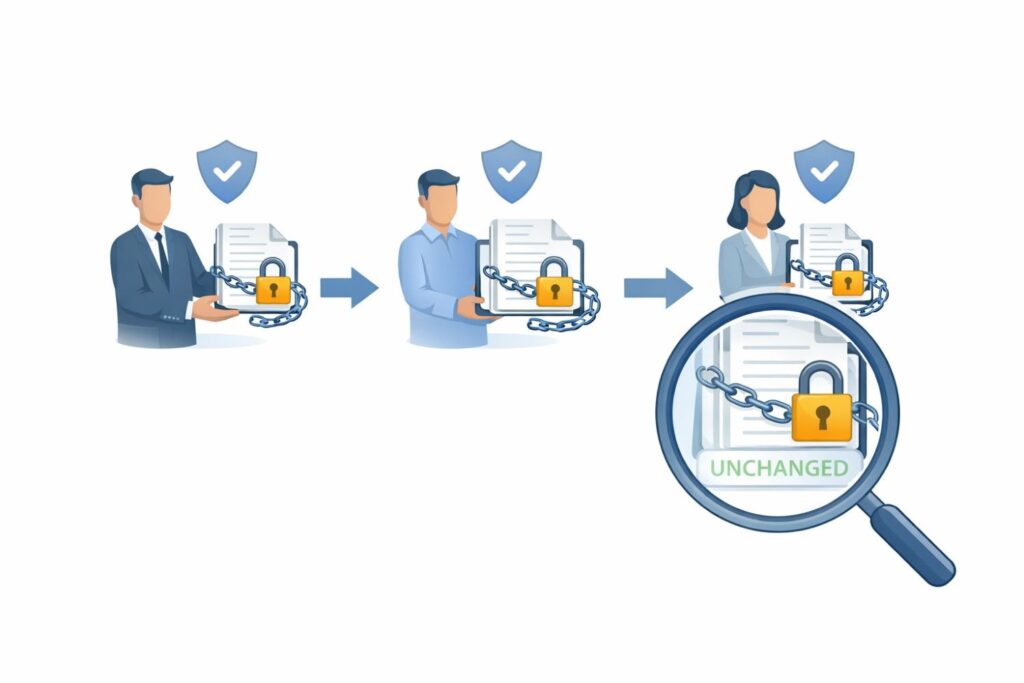
This calm, steady continuity is what decision-makers trust.
Gaps Are Where Doubt Lives
Most disputes do not hinge on what is known. They hinge on what is missing.
If there is a gap where files were copied manually, emailed informally, or stored on personal devices, doubt enters the story. That doubt weakens everything around it.
Chain of custody removes gaps by keeping work inside systems that record movement automatically.
Informal Sharing Is the Silent Risk
Founders often share work quickly to move faster. A zip file sent over email. A repo shared without limits. A dataset copied for convenience.
These moments feel harmless, but they break custody.
Once custody breaks, proving what happened next becomes harder. Even if nothing bad occurred, you lose the ability to show that clearly.
Systems Matter More Than Intentions
Good intentions do not protect ownership. Systems do.
When work lives in controlled environments with clear access rules, the chain stays intact. When work moves into personal folders, private messages, or unmanaged tools, custody weakens.
Strong chain of custody depends on boring consistency, not trust.
Custody Shows Who Had the Opportunity
Misappropriation often comes down to opportunity.
Who could access the work. When they could access it. How long they had access.
Chain of custody makes opportunity visible. It connects access to time and control in a way that speculation cannot undo.
Transfers Are the Most Vulnerable Moments
Every transfer is a risk.
Whether it is sharing with a partner, onboarding a contractor, or moving systems internally, transfers create moments where custody can break.
Documented transfers preserve continuity. Undocumented transfers create doubt.
Chain of Custody Protects Clean Collaborations
Many founders fear that strict custody will slow collaboration. In reality, it does the opposite.
Clear custody rules make collaboration safer. They allow you to share confidently, knowing that boundaries are visible and enforceable.
This reduces friction, not increases it.
Custody Is About Showing What Did Not Happen
One of the strongest uses of chain of custody is negative proof.
It shows that something did not change. That no hidden access occurred. That no silent copying took place.

This absence of suspicious activity is powerful when questioned later.
Consistency Builds Credibility
A chain of custody that spans months or years builds credibility naturally.
It shows that protection was not added as an afterthought. It shows discipline. It shows maturity.
This credibility often resolves disputes before they escalate.
Making Chain of Custody Invisible to Teams
The best custody systems do not require effort from engineers or founders.
They work in the background. They rely on permissions, automation, and standard workflows. They capture movement without interrupting creation.
When custody feels invisible, teams actually follow it.
How Chain of Custody Completes the Proof Stack
Logs show activity. Hashes show integrity. Chain of custody shows continuity.
Together, they form a complete story that is hard to challenge. Remove one, and doubt finds a way in.
This is why proof must be designed as a system, not a collection of tools.
Turning Proof Into Peace of Mind
Strong chain of custody does more than defend against misappropriation. It creates peace of mind.
Founders stop worrying about what might happen. They focus on building. They negotiate calmly. They share strategically.
Confidence grows when control is visible.
Where Most Teams Need Help
Very few startups intentionally design chain of custody early. Not because they do not care, but because it feels complex and unfamiliar.
This is where guided platforms matter. PowerPatent helps founders capture logs, hashes, and custody together in a way that fits real startup behavior. It brings structure without bureaucracy.

You can see how that works here: https://powerpatent.com/how-it-works.
Chain of custody is not about preparing for conflict. It is about building with confidence.
Wrapping It Up
Misappropriation is rarely loud at the start. It does not announce itself. It shows up as small doubts, strange similarities, uncomfortable questions, or quiet shifts in behavior. By the time it becomes obvious, the damage is often already done.The founders who stay in control are not the ones who argue better. They are the ones who prepared earlier. Logs give you a clear memory that does not fade. Hashes lock your work to a moment in time. Chain of custody shows that nothing slipped, shifted, or disappeared along the way. Each one is useful on its own, but together they form something far stronger than defense. They form confidence.