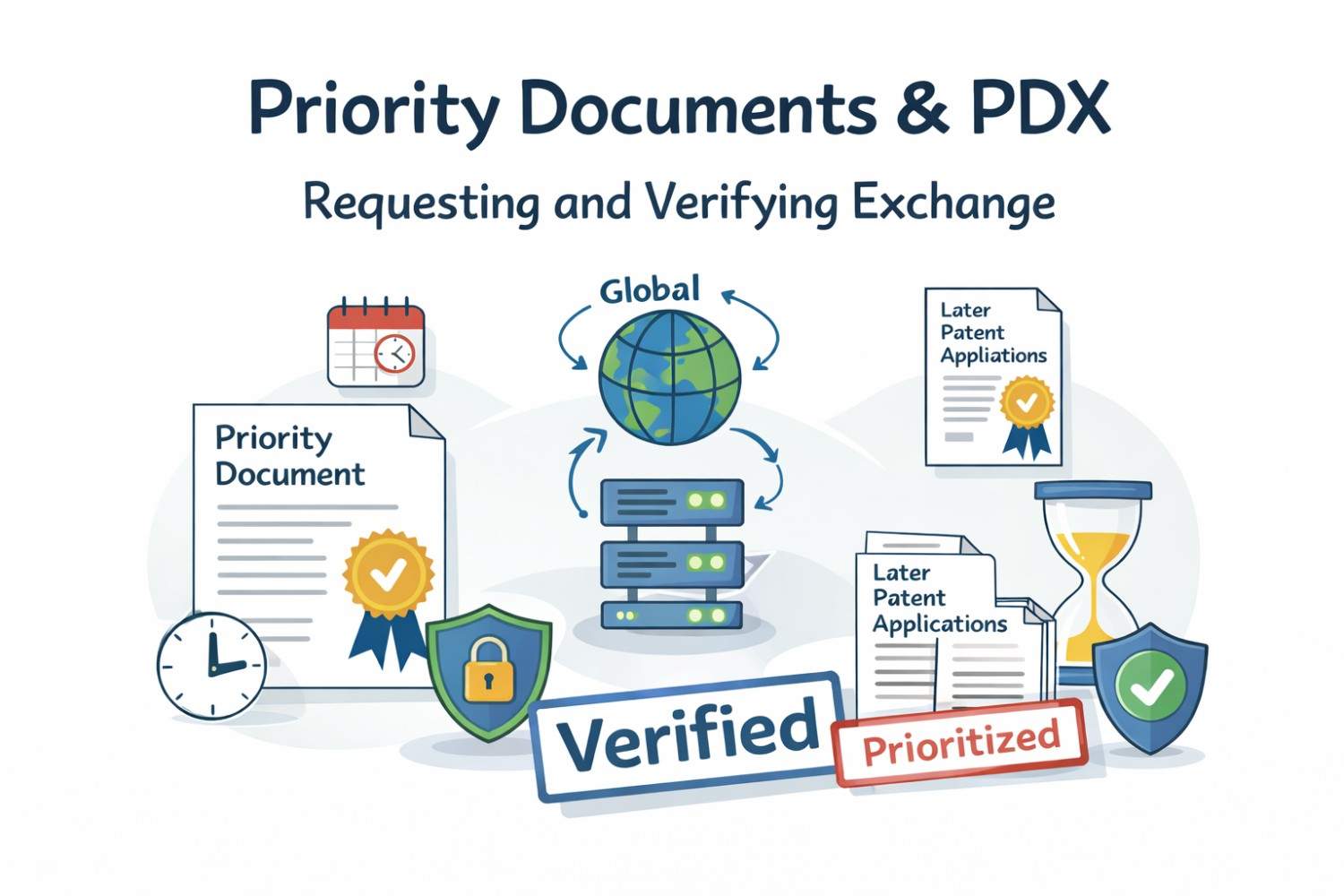
Priority can make or break a patent. One missed step can cost you the date that proves you were first. This article explains priority documents and the Priority Document Exchange, or PDX, in plain words, without legal noise or filler. If you are building fast and filing in more than one place, this matters more than most founders realize. We will walk through what priority really means, how PDX works, how requests and checks happen, and how to avoid quiet mistakes that can weaken your patent later. If you want strong protection without slowing down, this is exactly the kind of detail PowerPatent was built for. You can see how the platform handles this end to end here: https://powerpatent.com/how-it-works
What a Priority Document Really Does for Your Patent
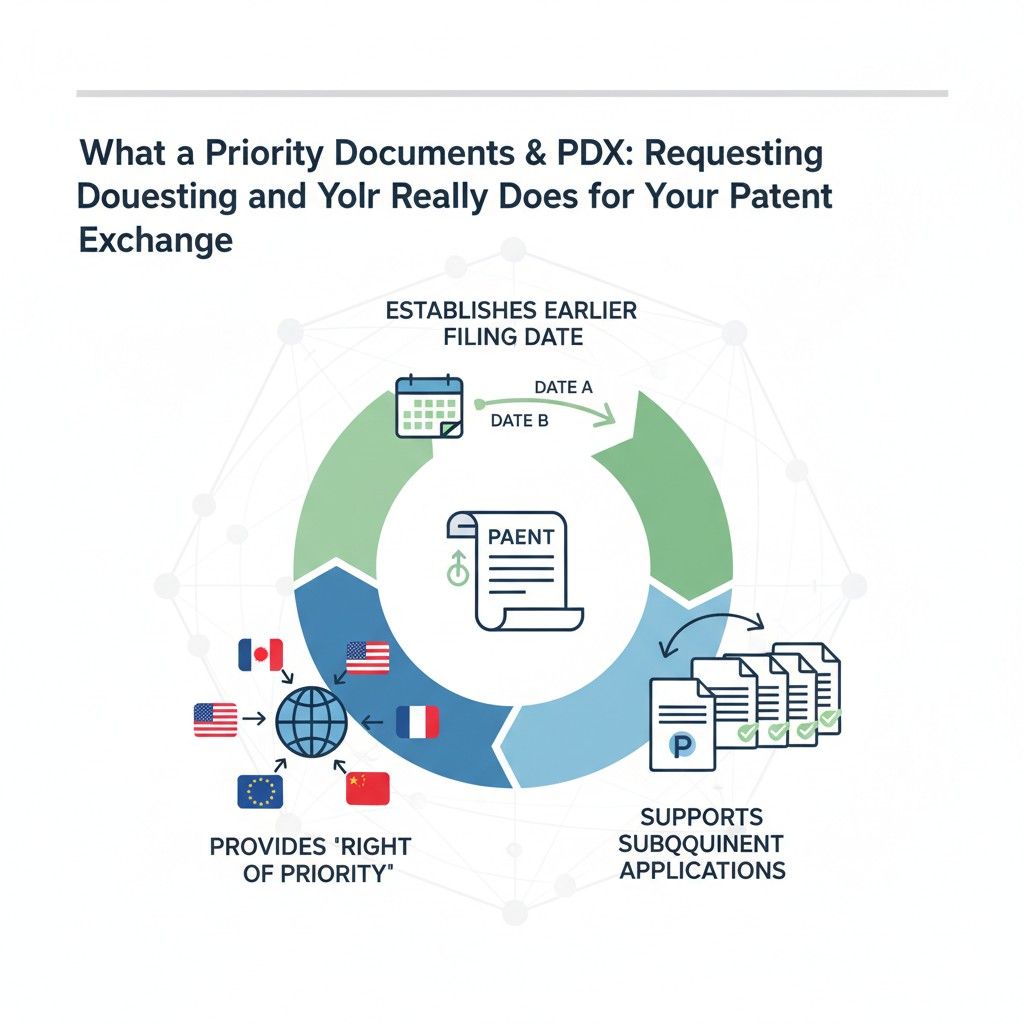
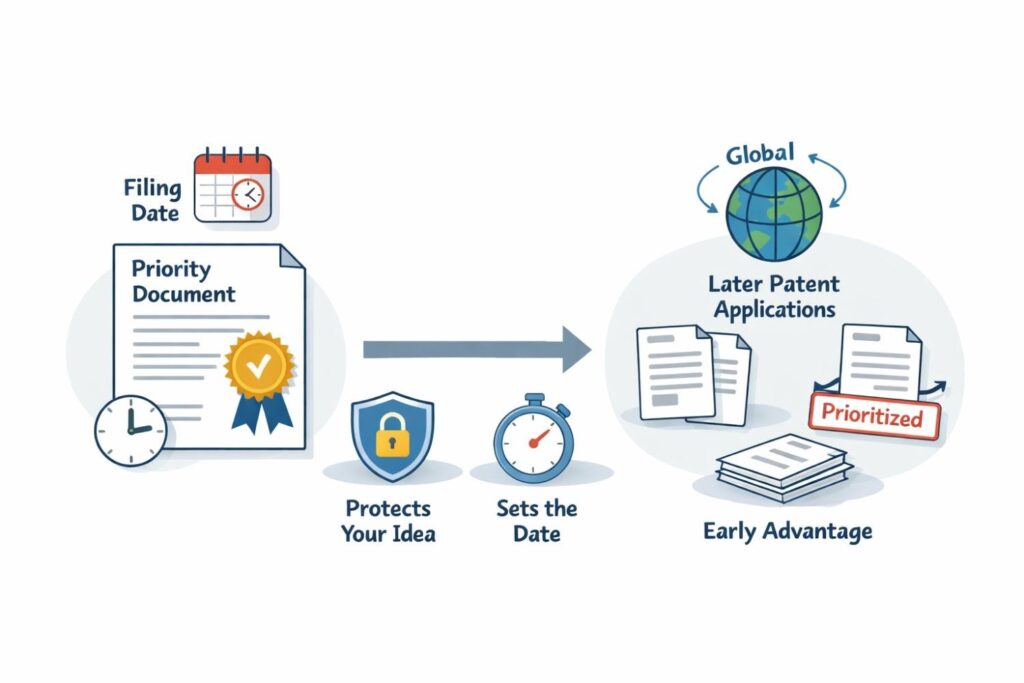
A priority document is not just paperwork. It is the proof that anchors your invention to a moment in time.
For businesses moving fast, this single document often decides whether a patent becomes a strong shield or a weak promise.
Understanding what it really does helps founders make better calls early, when those calls matter most.
At its core, a priority document lets you say, “This is when we had it first.” But in practice, it does much more.
It shapes how broad your protection can be, how safe you are from competitors, and how confident investors feel when they look under the hood of your IP.
The Priority Date Is Your Real Asset
The priority date is the real value, not the filing receipt.
When people talk about having a patent, they often mean having something pending or filed. But what matters is the date attached to it. That date is what examiners, competitors, and courts look at. Your priority document locks that date in place.
For a business, this means your ideas are judged against the world as it existed on that day. Anything published or filed after that date should not be used against you.
If your priority is solid, you get breathing room. If it is shaky, every new paper, blog post, or patent filed by someone else becomes a risk.
Actionable advice here is simple but often missed. Treat your first filing like a foundation, not a draft. If the document does not clearly explain what you built and how it works, your priority date may not fully protect you later.
Tools like PowerPatent help founders capture enough detail early without slowing down, which is exactly what keeps that date strong. You can see how this works in practice here: https://powerpatent.com/how-it-works
Why Priority Is More Than Just Being First
Being first only helps if you can prove it clearly.
Many teams assume that filing something, anything, is enough. But priority only applies to what is actually described in that first document.
If a key part of your system is missing or unclear, later filings cannot magically fix that gap while keeping the old date.
For businesses, this means strategy matters from day one. You want to think about what parts of your product or system are likely to become core value later.
Those parts must show up clearly in the priority document. This is not about guessing the future perfectly. It is about making sure the core idea is fully there, even if details evolve.
A good habit is to ask one simple question before filing. If a smart engineer at another company read this document, would they understand how to build around us? If the answer is yes, your priority is likely doing its job.
Priority Documents Shape Your Global Strategy
Priority is what allows you to expand safely across borders.
When companies file in multiple countries, they usually rely on the first filing to claim priority elsewhere.
That means the original document becomes the reference point for everything that follows. If it is weak, every later filing inherits that weakness.
For growing businesses, this is critical. You may start with one market, then later realize that another region is strategic. A strong priority document lets you move into those regions with confidence, even months later.
Actionable guidance here is to plan for optionality. Even if you are not sure you will file internationally, assume that you might. That mindset changes how carefully you document the invention at the start.
Platforms like PowerPatent are designed to support this kind of forward-looking approach without turning it into a heavy legal project. You can explore that workflow here: https://powerpatent.com/how-it-works
Investors Care About Priority More Than You Think
Priority documents quietly influence funding decisions.
Most founders never hear this directly, but experienced investors and acquirers pay close attention to priority.
They know that a patent with a weak priority story can fall apart under pressure. During diligence, gaps in early filings raise red flags.
A clear and well-supported priority document signals maturity. It shows that the team understood the value of their invention early and took steps to protect it properly. This builds confidence, even if the patent is still pending.
If you are preparing for fundraising, it is smart to review your priority documents with fresh eyes. Make sure they clearly support the claims you plan to pursue.
Fixing this later is much harder and sometimes impossible. Getting it right early is one of the quiet advantages PowerPatent gives technical founders.
Priority Defines the Boundaries of Your Protection
Your first document draws the fence around your idea.
Everything you can claim later must live inside the boundaries set by the priority document. If a feature or method is outside that fence, it may get a later date or no protection at all.
For businesses, this means you should think in terms of systems, not just features. Describe how parts interact, how data flows, and how decisions are made.
These broader descriptions give you room to grow while still staying anchored to the early date.
A practical approach is to capture the problem you are solving and the core approach you use to solve it.
Even if your implementation improves, that core approach often stays the same. Locking that into the priority document gives you leverage later.
Priority Mistakes Are Hard to Undo
Once the date is set, you cannot go back.
This is why priority deserves attention early. If something is missing, unclear, or inconsistent, you may not realize it until much later, often when it is expensive or impossible to fix.
The best prevention is process. Use a system that guides you to include enough technical depth without drowning you in legal language.

This is exactly the gap PowerPatent fills by combining software structure with real attorney review. It helps founders move fast without cutting corners that matter.
You can see how teams do this in practice here: https://powerpatent.com/how-it-works
How the Priority Document Exchange Actually Works
The Priority Document Exchange, often called PDX, is meant to make life easier. In theory, it removes manual steps, reduces errors, and helps patent offices talk to each other directly.
In reality, many businesses do not fully understand how it works or where things can quietly break. Knowing how PDX really functions gives you more control over your priority and fewer surprises later.
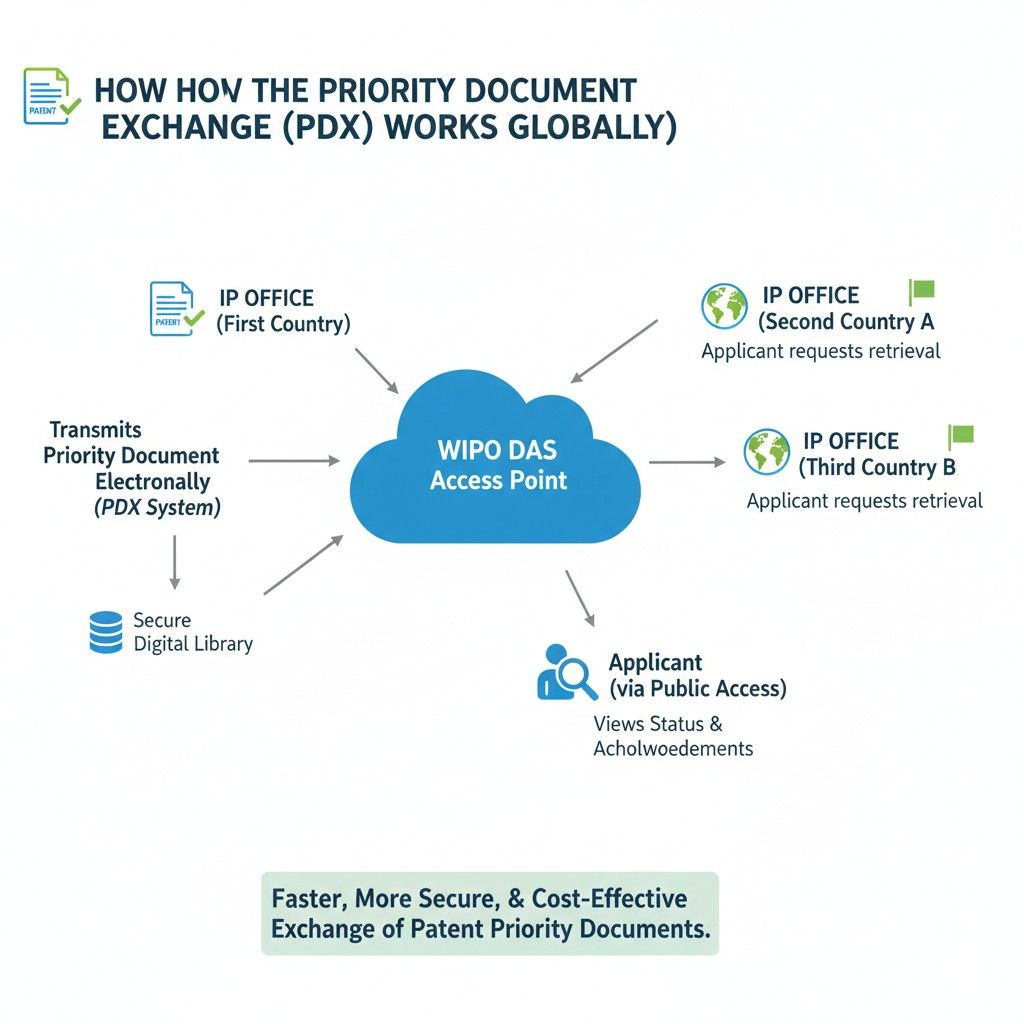
At a high level, PDX is a system that lets one patent office securely share your priority document with another office.
Instead of you sending certified copies back and forth, the offices handle it. That sounds simple, but the details matter a lot.
What Actually Moves Through PDX
PDX does not move your entire patent file.
Only the priority document is exchanged. This is the earlier application that you are relying on to claim your original filing date.
If that document is wrong, incomplete, or not properly linked, PDX will still move it, but it will not fix the underlying problem.
For businesses, this means PDX is not a quality check. It is a delivery system.
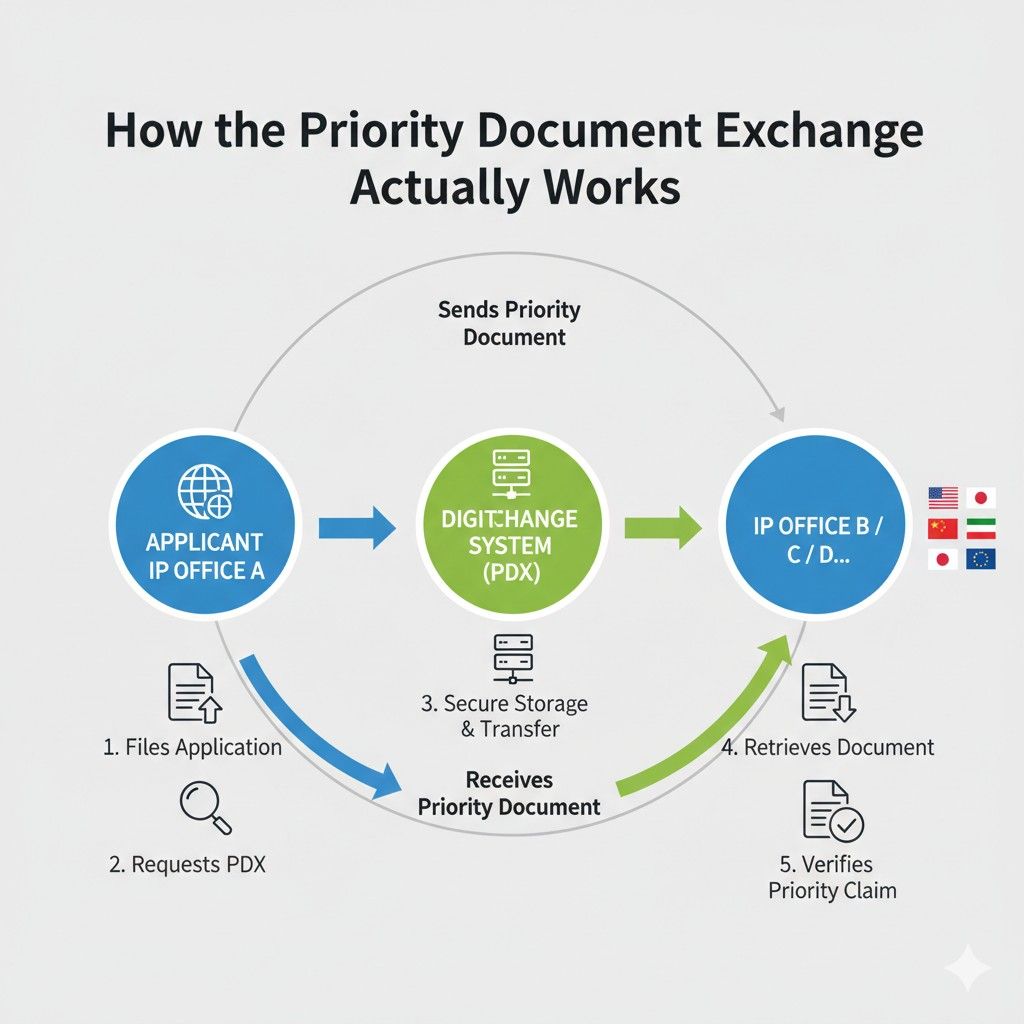
You still need to be sure that what is being delivered is worth delivering. Before relying on PDX, it is smart to confirm that the priority document clearly supports what you plan to claim later.
Timing Matters More Than Most Teams Expect
PDX works on deadlines, not intentions.
Each patent office has specific windows during which priority must be claimed and verified. If a request is made too late, PDX cannot save you. The system does not bend rules. It simply follows them.
A common mistake is assuming that because two offices participate in PDX, priority will automatically be recognized. That is not true. The request must be made correctly and on time.
For fast-moving startups, this is where things often slip, especially when filings happen close to major launches or fundraising events.
A strong internal rule is to treat priority requests as part of the filing itself, not a follow-up task.
PowerPatent builds this thinking into the workflow so priority steps are not left hanging while teams move on to the next milestone. You can see how that process is handled here: https://powerpatent.com/how-it-works
Requesting Exchange Is Still Your Responsibility
PDX does not start on its own.
Even though offices exchange documents automatically once set up, the initial request usually has to come from you or your filing system. If that request is not made, nothing moves.
For businesses, this means ownership matters. Someone on the team or in your tools must be clearly responsible for triggering and tracking the exchange.
Assuming that an external firm or office will handle it without confirmation is risky.
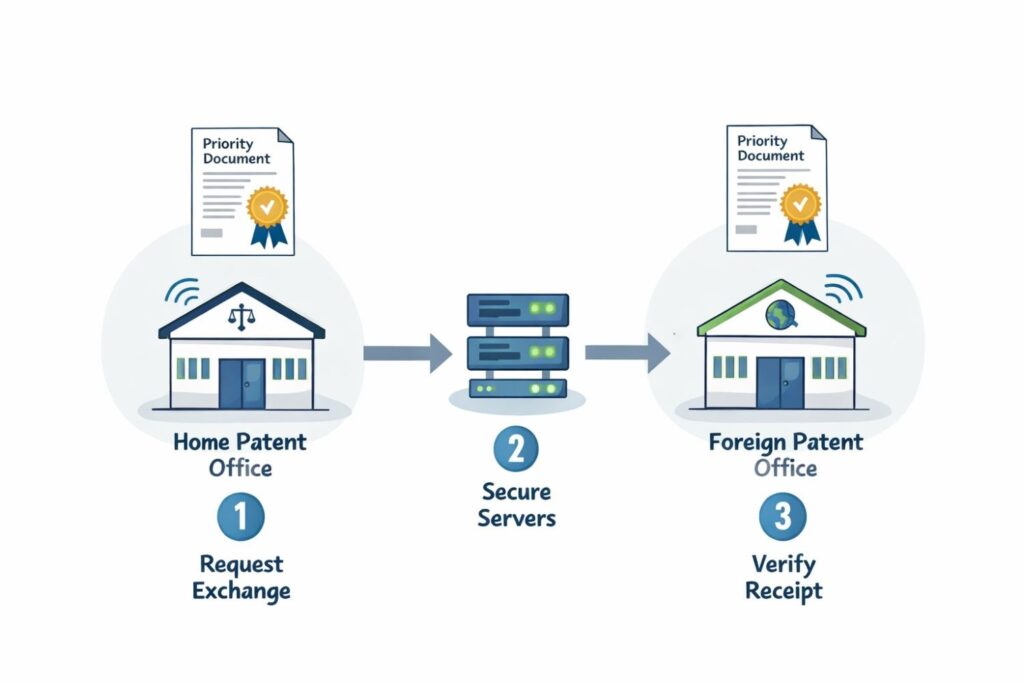
A practical habit is to always confirm two things after filing. First, that priority has been formally claimed. Second, that the exchange request has been acknowledged by the receiving office.
These confirmations reduce the chance of silent failures.
Verification Is Not Instant or Guaranteed
Just because a document is sent does not mean it is accepted.
After the exchange, the receiving office still needs to verify the document. They check whether it matches the claimed priority and whether it meets formal requirements.
If there is a mismatch, the office may issue a notice or simply treat the priority as unproven.
For businesses, this can surface months or even years later, often during examination. At that point, fixing the issue may be costly or impossible. This is why early verification matters.
An actionable step is to monitor official acknowledgments. Do not stop at “sent.” Look for confirmation that the priority document was received and matched correctly.
Systems that centralize these signals, like PowerPatent, reduce the chance that these details get buried in email threads or filing portals.
PDX Does Not Cover Every Situation
Not all filings qualify for exchange.
Some offices or filing types fall outside PDX, and some older applications may not be eligible. Assuming universal coverage can lead to gaps.
For companies with complex filing histories, especially those involving continuations or provisional applications, it is important to check whether each priority link is actually supported by PDX. Where it is not, manual steps may still be required.
The key business lesson here is to avoid assumptions. Treat PDX as a powerful tool, not a blanket solution. When used correctly, it saves time and reduces errors. When misunderstood, it creates a false sense of security.
Why PDX Still Matters for Scaling Teams
Despite its limits, PDX is a big advantage when used well.
For growing companies, it reduces administrative load and lowers the risk of lost documents. It also creates a cleaner record, which matters during diligence and enforcement.
The real value comes from pairing PDX with a strong priority document and a clear process.
Software-driven platforms like PowerPatent are designed around this idea, helping teams handle both the content and the exchange without slowing product work.
You can explore that integrated approach here: https://powerpatent.com/how-it-works
Requesting Priority the Right Way (and What Usually Goes Wrong)
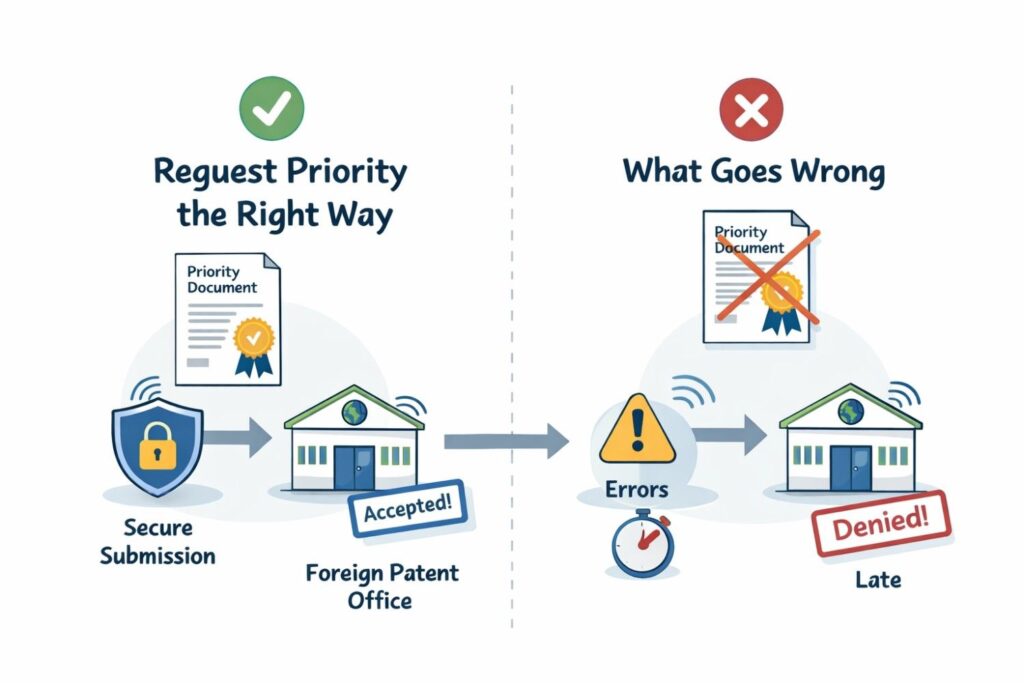
Requesting priority sounds like a simple checkbox. In practice, it is one of the easiest places for strong patents to quietly weaken. Most problems do not come from bad intent or lack of effort.
They come from small gaps in timing, wording, or follow-through. For businesses, understanding how priority requests really work helps avoid mistakes that only show up when it is too late to fix them.
This section focuses on what actually happens during a priority request and how growing teams can stay in control without adding friction to their build process.
Priority Is Claimed, Not Assumed
Priority does not exist unless it is formally claimed.
Even if you filed earlier, the later application must clearly say that it relies on that earlier filing.
If this step is missed or done incorrectly, the priority date may be lost. Patent offices do not infer intent. They only follow what is on record.
For businesses, this means precision matters. The application number, filing date, and office of the earlier filing must all be accurate. A small typo or mismatch can create doubt, which may later turn into rejection of the priority claim.
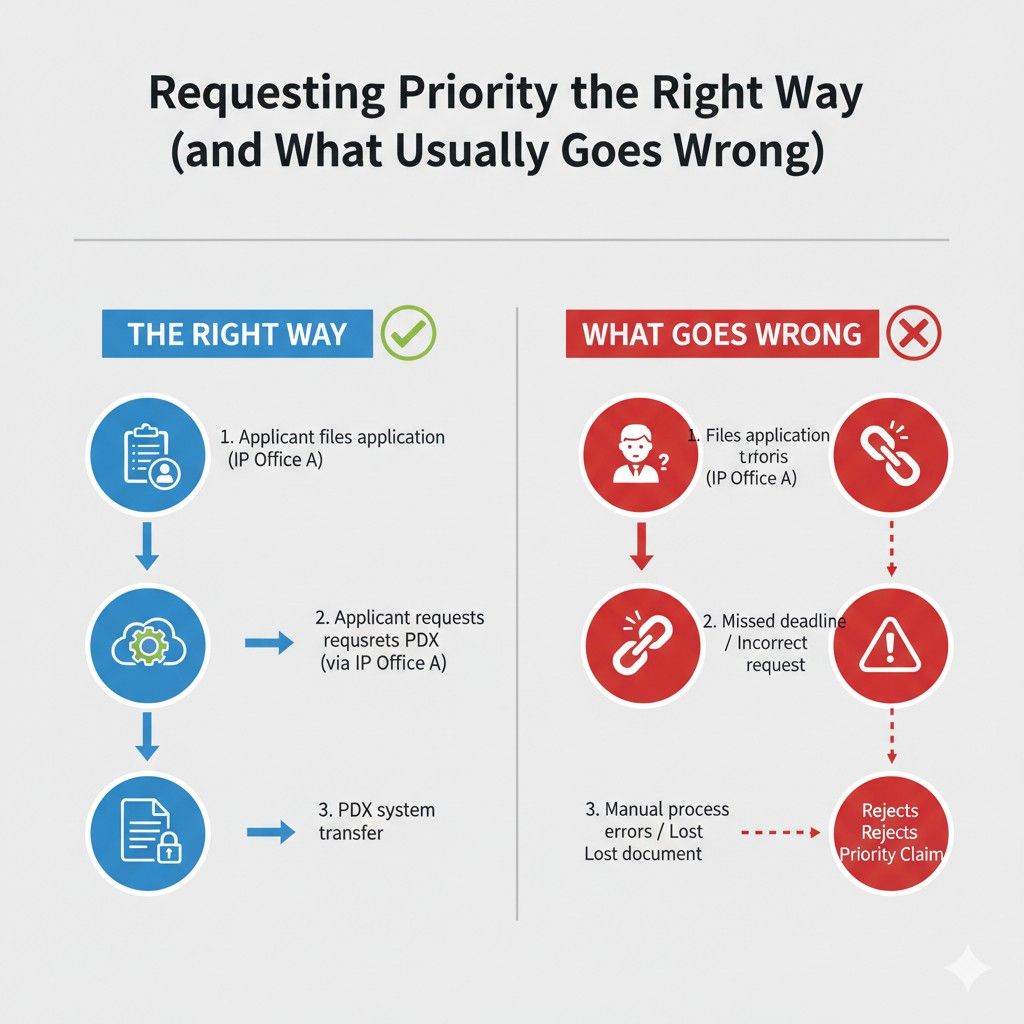
A practical step is to treat priority data like financial data. Double-check it before submission.
Systems that auto-link filings, like PowerPatent, reduce human error by pulling this information directly from your existing records. You can see how this works here: https://powerpatent.com/how-it-works
The First Filing Sets the Tone
Your earliest filing influences how easy priority is to claim later.
If the first document is clear and well-structured, later filings can reference it cleanly. If it is messy or vague, priority claims become harder to defend.
For fast-moving companies, there is often pressure to file quickly. Speed is fine, but clarity cannot be sacrificed.
A rushed document that skips key explanations may technically exist, but it may not fully support priority for all aspects of your invention.
An actionable mindset is to view the first filing as a reference manual, not a placeholder. Even if it is not perfect, it should clearly explain the core idea in a way that stands on its own.
Timing Windows Are Narrow and Unforgiving
Most priority claims live inside strict time limits.
Miss those limits, and priority is gone, no matter how strong the invention is. This often happens when teams are juggling product launches, hiring, and fundraising at the same time.
For businesses, this means priority deadlines should be treated like product deadlines. They deserve visibility and ownership. If they live only in someone’s inbox, they are at risk.
A useful tactic is to align filing timelines with business milestones. For example, if you plan a major launch, make sure priority claims are locked in well before that date.
Platforms that surface these deadlines clearly, like PowerPatent, help teams stay ahead without constant manual tracking.
Incomplete Claims Create Hidden Gaps
You can claim priority and still lose protection.
This happens when the later application includes material that is not clearly supported by the priority document. In those cases, the new material may get a later date, even though priority was claimed.
For businesses, this creates uneven protection. Some parts of your patent are strong, others are exposed. Competitors can exploit these gaps.
A practical approach is to map new features back to the original filing before adding them. Ask whether the earlier document truly supports the new claims. If not, consider whether a new filing or updated strategy is needed.
Human Error Is the Most Common Failure Point
Most priority problems are not technical. They are human.
Missed checkboxes, wrong numbers, or forgotten follow-ups cause the majority of issues. These errors often go unnoticed until examination or enforcement.
For growing teams, relying on memory or manual tracking is risky. This is where structured workflows matter.
PowerPatent is built to catch these details early by guiding users through each required step and layering in attorney review. That combination reduces the chance of silent mistakes. You can learn more about that process here: https://powerpatent.com/how-it-works
Priority Requests Should Be Verified, Not Just Filed
Filing is only half the job.
After a priority request is made, it needs to be confirmed. Offices issue acknowledgments and later confirmations. If those are ignored, problems can linger unnoticed.
A simple but effective habit is to schedule a check after filing to confirm that priority was both claimed and accepted. This extra step takes little time but can save years of trouble.
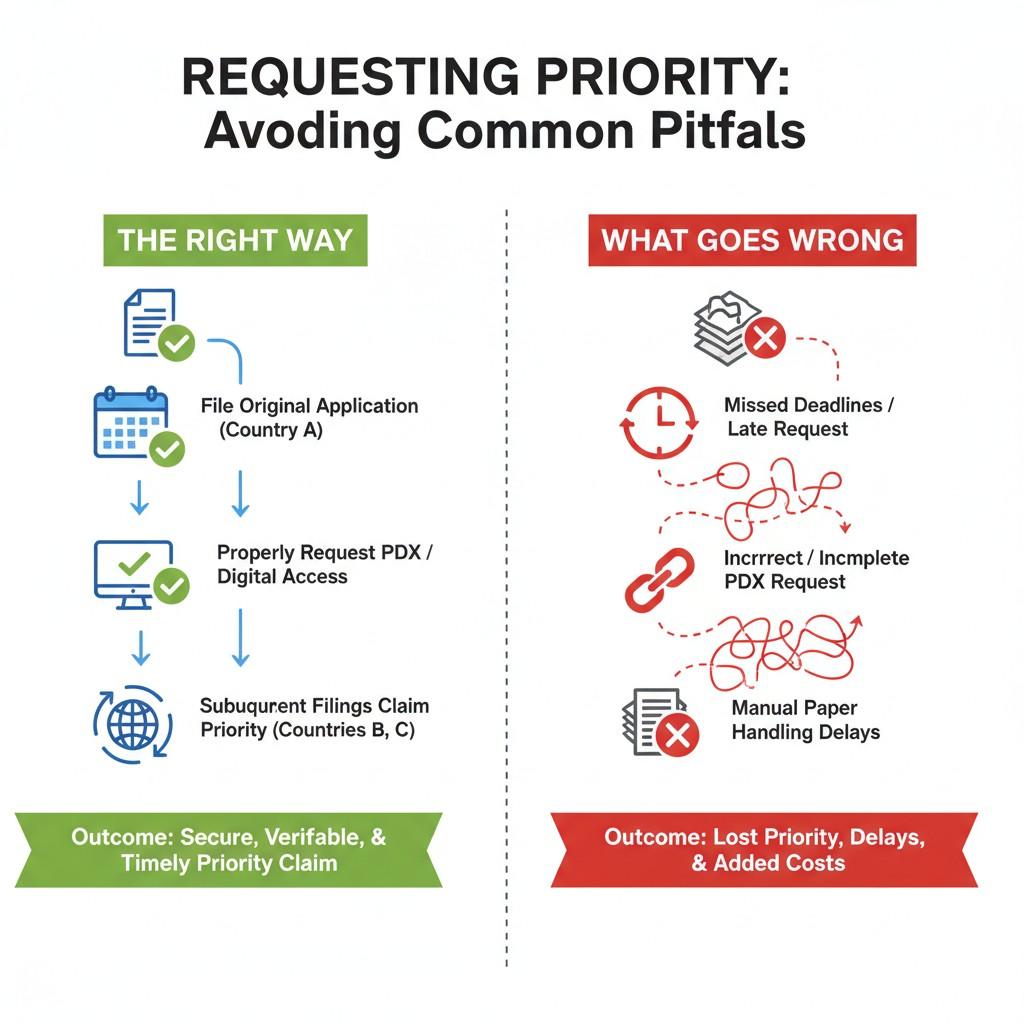
For businesses that want to move fast without losing control, building this verification into the filing process is key. That is why modern platforms focus not just on submission, but on confirmation and tracking as well.
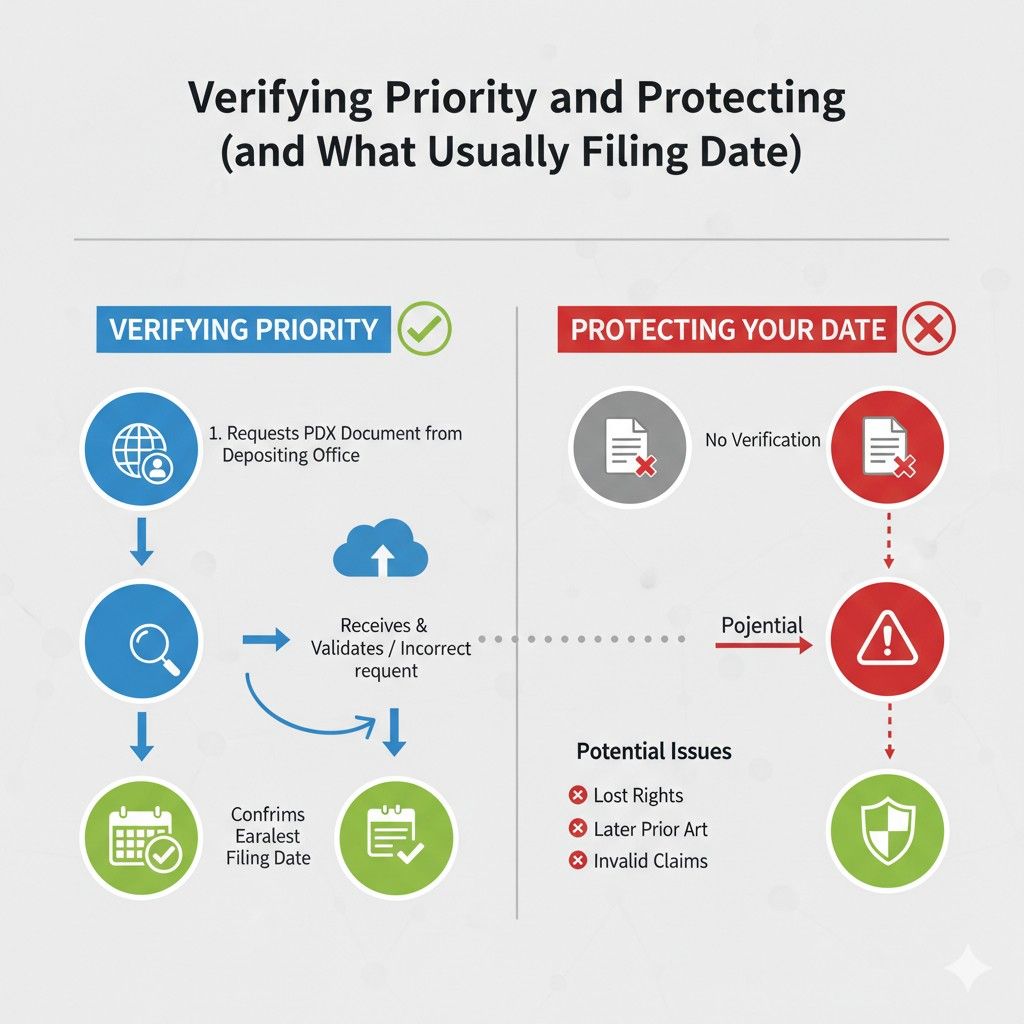
Verifying Priority and Protecting Your Earliest Filing Date
Verifying priority is where strong patent strategy quietly pays off. Many businesses assume that once priority is requested, the job is done.
In reality, verification is the step that confirms your earliest filing date is real, recognized, and enforceable. This is the point where assumptions either hold up or fall apart.
For companies building long-term value, verification is not a formality. It is the final lock on the door that protects everything you filed first.
Verification Is an Active Process, Not a Passive One
Priority does not verify itself.
After a request is made and a document is exchanged, patent offices still need to confirm that the priority document matches the claim.
This includes checking dates, application numbers, and whether the content truly supports the later filing.
For businesses, this means someone must actively watch for confirmation. Silence does not always mean success. Sometimes it means the issue has not yet surfaced.
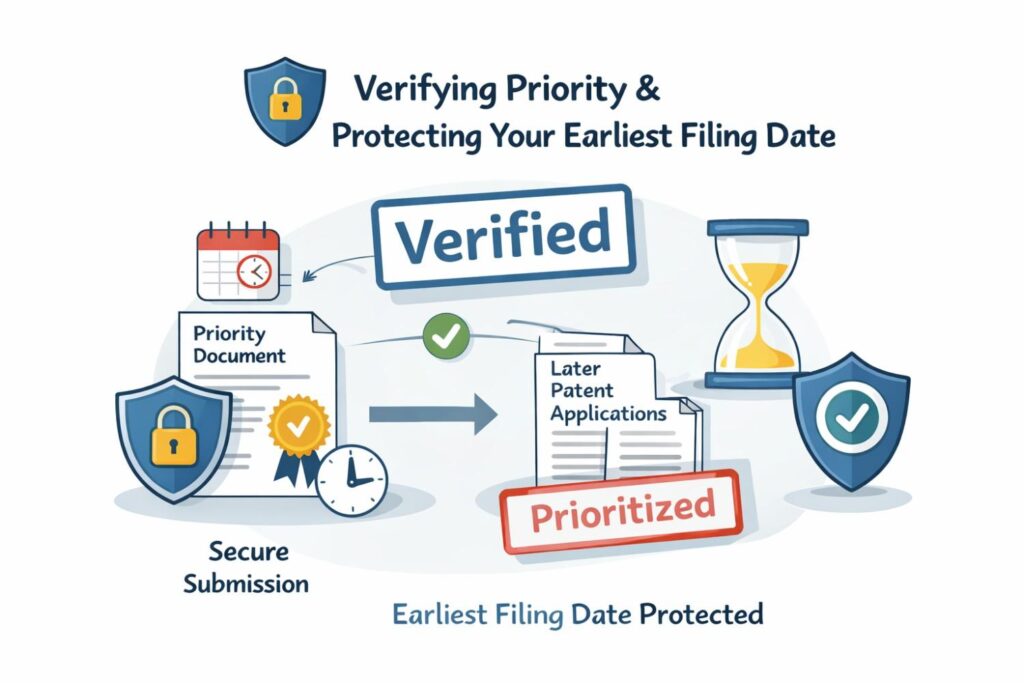
A smart move is to track verification status the same way you track key product metrics. If it is not clearly confirmed, treat it as unresolved.
Platforms like PowerPatent make this easier by centralizing these signals instead of spreading them across portals and emails. You can see how that visibility works here: https://powerpatent.com/how-it-works
Office Communications Are Easy to Miss
Verification issues often arrive quietly.
Patent offices may issue notices that look routine but contain questions about priority. If these messages are overlooked or misunderstood, deadlines can pass without response.
For busy teams, this is a real risk. Technical founders are focused on building, not decoding office language. Yet missing a response can weaken or erase priority.
An actionable habit is to review every office communication with one question in mind. Does this affect our filing date? If the answer might be yes, it deserves immediate attention.
This is where attorney oversight layered into a modern system adds real value.
Priority Problems Often Surface Late
Many priority issues do not appear until examination.
By the time an examiner reviews your application, months or years may have passed. If they find a priority problem then, options are limited.
For businesses, this delayed risk is dangerous because it creates false confidence. Everything looks fine until it suddenly is not.
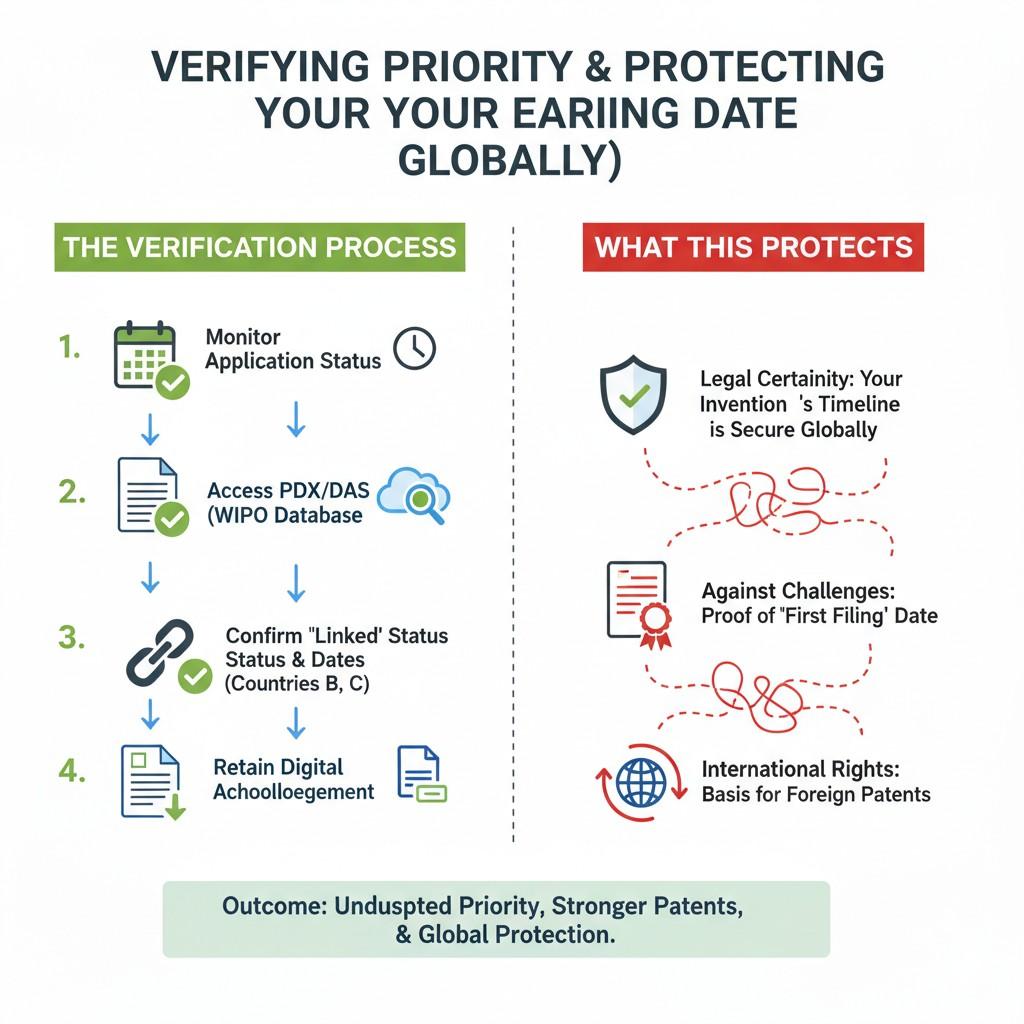
The best defense is early verification. Confirm acceptance as soon as possible and keep records organized. This makes later stages smoother and reduces surprises during diligence or enforcement.
Verification Strengthens Your Negotiating Position
A verified priority date is leverage.
Whether you are fundraising, partnering, or facing a competitor, being able to clearly show that your priority is solid strengthens your position. It turns your patent from a promise into proof.
For companies thinking about acquisition or licensing, this matters even more. Buyers and partners look for clean, verified records. Any uncertainty around priority can lower perceived value.
Taking the time to verify and document priority early is an investment in future leverage.
PowerPatent is designed with this long view in mind, helping founders build IP that stands up when it matters most. You can explore that approach here: https://powerpatent.com/how-it-works
Protecting Priority Is an Ongoing Discipline
Priority protection does not end after filing.
As your product evolves and new filings are added, you need to ensure that priority relationships remain clear. Each new application should fit cleanly into the existing timeline.
For growing businesses, this is about discipline. Keep a clear record of what was filed when and how each piece connects. Avoid shortcuts that trade short-term speed for long-term risk.
Modern patent strategy is not about doing more work. It is about doing the right work at the right time. With the right tools and process, verifying and protecting priority becomes part of your normal operating rhythm, not a distraction.
Wrapping It Up
Priority is not a technical detail. It is the backbone of your patent and, in many ways, the backbone of your business protection. Everything discussed in this article comes back to one simple truth. The value of your patent depends on how well you lock in and defend your earliest filing date.