Power of Attorney and authorization forms sound boring, but they decide who can act for you, who can file your patent, and whether the Patent Office even listens to what you submit. If these forms are wrong, missing, or filed late, your patent can stall, cost more, or even fail. This article explains what these forms really do, why they matter so much, and how to file and link them the right way so nothing slows down your startup. We will keep this simple, clear, and practical, so you can move fast and stay protected.
Why Power of Attorney Forms Quietly Control Your Patent
Power of Attorney forms decide who speaks for your invention when you are not in the room. Most founders do not realize this until something breaks.
This section explains how these forms quietly shape speed, control, and outcomes for your patent, and how smart businesses use them as leverage instead of paperwork.
The Invisible Switch That Turns Your Patent On or Off
A Power of Attorney form is not just permission. It is an on and off switch. When it is filed correctly, the Patent Office will talk to your attorney or platform as if they were you.
When it is missing or wrong, the Patent Office goes silent. Letters go unanswered. Deadlines creep closer. Decisions get delayed.
For a business, this matters because patents move on strict timelines. If your product is live, fundraising is active, or competitors are close, silence is dangerous. A simple action you can take is to treat the Power of Attorney as a core filing, not an extra.
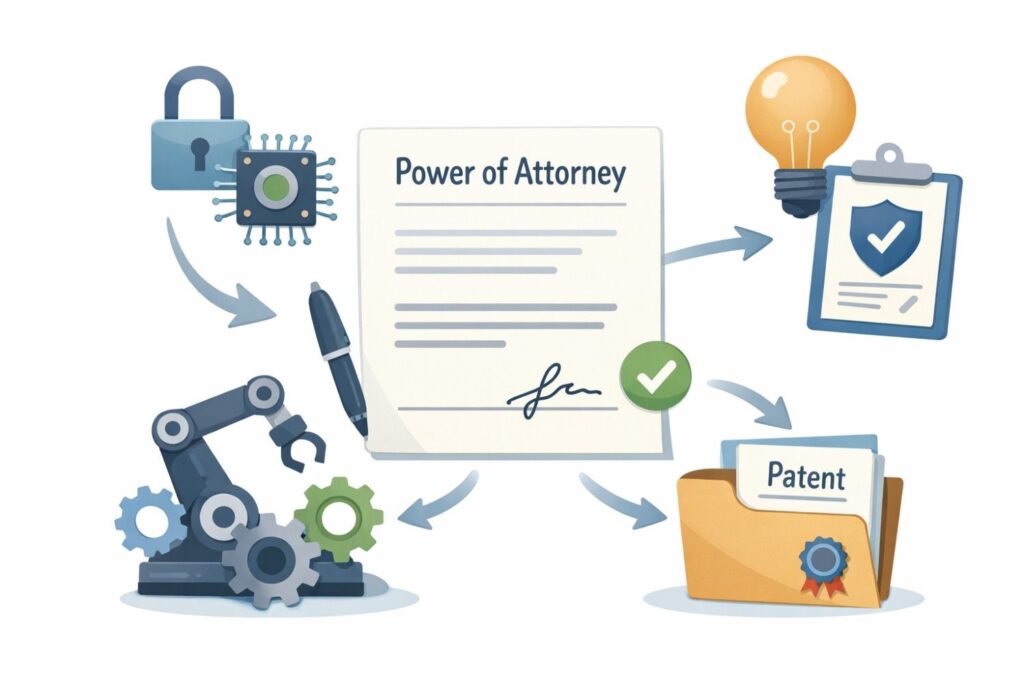
File it early, link it correctly, and confirm it is accepted. At PowerPatent, this is handled as part of the flow so nothing slips, which is why founders can move fast without chasing forms.
You can see how that works at https://powerpatent.com/how-it-works.
Why Founders Lose Control Without Knowing It
Many founders think signing a Power of Attorney means giving up control. The truth is the opposite. Not filing one is what removes control. Without it, only the named inventor can respond to the Patent Office.
That sounds fine until you realize inventors are busy building, shipping, hiring, and raising money.
When a response is due and the inventor misses it, the application can go abandoned. That is not a theory. It happens every day. The actionable move here is to decide early who should manage patent communication.
If it is not you, file the Power of Attorney immediately and confirm it is on record. Control comes from clarity, not from holding everything yourself.
How Patent Speed Is Tied to This One Document
Speed is everything for startups. A patent that drags for years loses value. A patent that moves cleanly gains leverage with investors and partners.
The Power of Attorney directly affects speed because it allows experienced professionals to act without delay.
When an office action arrives, an attorney with Power of Attorney can review it, draft a response, and file it without waiting for signatures on every step. That saves weeks. Sometimes months.
Businesses that want speed should bake this into their process instead of reacting later. Platforms like PowerPatent are built around this idea, combining software speed with real attorney authority so nothing slows you down.
The Cost Trap Hidden Inside Delayed Authority
Every delay costs money. Missed deadlines lead to revival fees. Confusion leads to extra attorney hours. Back and forth emails pile up. All of this often traces back to authority not being clear.
A smart business move is to reduce uncertainty upfront. File the Power of Attorney once, correctly, and let the system run. This avoids surprise invoices and last-minute scrambles.

If you are budgeting for IP, this single step can quietly protect your runway.
Why Investors Care Even If They Do Not Say It
Investors rarely ask about Power of Attorney forms. But they feel the impact. During diligence, they want to see clean ownership, clean filings, and no loose ends.
If your patent file shows missed deadlines or messy communication history, confidence drops.
A properly filed Power of Attorney signals that your company treats IP like a real asset. It shows process, seriousness, and foresight. That confidence transfers.
If you are preparing for a raise, check your patent records now. Make sure authority is clear and documented. This is a small fix with outsized impact.
The Link Between Authority and Enforcement
A patent is not just about filing. It is about what happens later if someone copies you. Enforcement starts with clean records. If your filings show confusion about who had authority, it can weaken your position.
Businesses that think long term use Power of Attorney forms to create a clear chain of action. Everything filed on your behalf should be traceable and proper.
This is not about fear. It is about readiness. Taking care of this early makes future steps easier and stronger.
How Teams Break Things Without Meaning To
Startups grow fast. Early inventors leave. New leaders step in. Attorneys change. Without updated Power of Attorney forms, the system breaks quietly. The Patent Office still thinks the old person is in charge.
An actionable habit is to review authority anytime your team changes. New counsel means new forms. New structure may mean updates. This review takes minutes but saves months of confusion.
PowerPatent builds this awareness into the workflow so authority stays current as your company evolves.
Why DIY Filings Often Miss This Entirely
Founders who file on their own often focus on claims and drawings. Authority feels secondary. But the Patent Office does not see it that way. They care deeply about who is allowed to act.
If you are handling filings yourself, pause and confirm that every submission is backed by proper authority.
If that feels stressful or unclear, that is a signal. Using a platform that handles this end to end removes that mental load and lowers risk. You can explore that approach at https://powerpatent.com/how-it-works.
Turning a Boring Form Into a Strategic Tool
The biggest mindset shift is this. Power of Attorney is not a form to get through.
It is a tool to move faster, stay in control, and protect value. Businesses that understand this treat it with the same care as their product roadmap.

When you file it early, link it correctly, and keep it updated, everything else gets easier. Communication flows. Decisions move. Costs stay predictable. That is how something quiet ends up controlling everything.
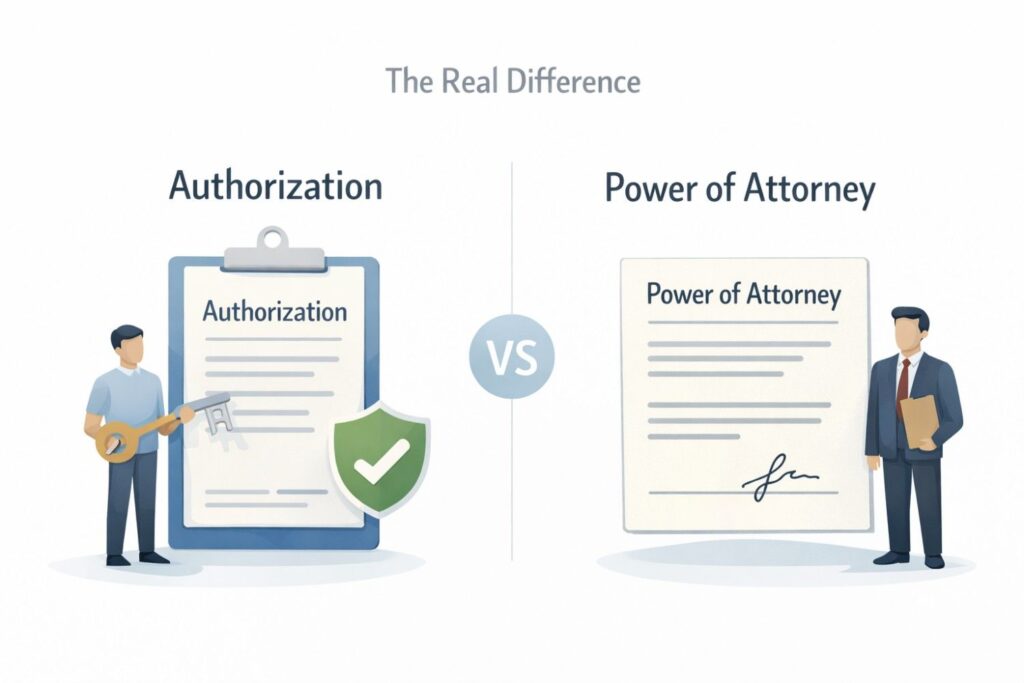
The Real Difference Between Authorization and Power of Attorney
Most problems around patent filings do not come from bad ideas or weak inventions. They come from confusion.
One of the most common points of confusion is the difference between an authorization form and a Power of Attorney.
They sound similar, they are often mentioned together, and many founders assume one replaces the other. It does not.
This section explains how they differ, how each one works, and how businesses should use them together to stay fast and protected.
Why These Two Forms Get Mixed Up So Often
The names alone cause trouble. Both forms talk about permission. Both involve letting someone act for you. But they serve very different roles inside the patent system.
When founders are moving fast, they often sign whatever is put in front of them and assume it is handled.
The Patent Office does not assume. It reads forms very literally. If the wrong form is filed, or the right form is missing, the result is delay. The actionable takeaway here is simple.
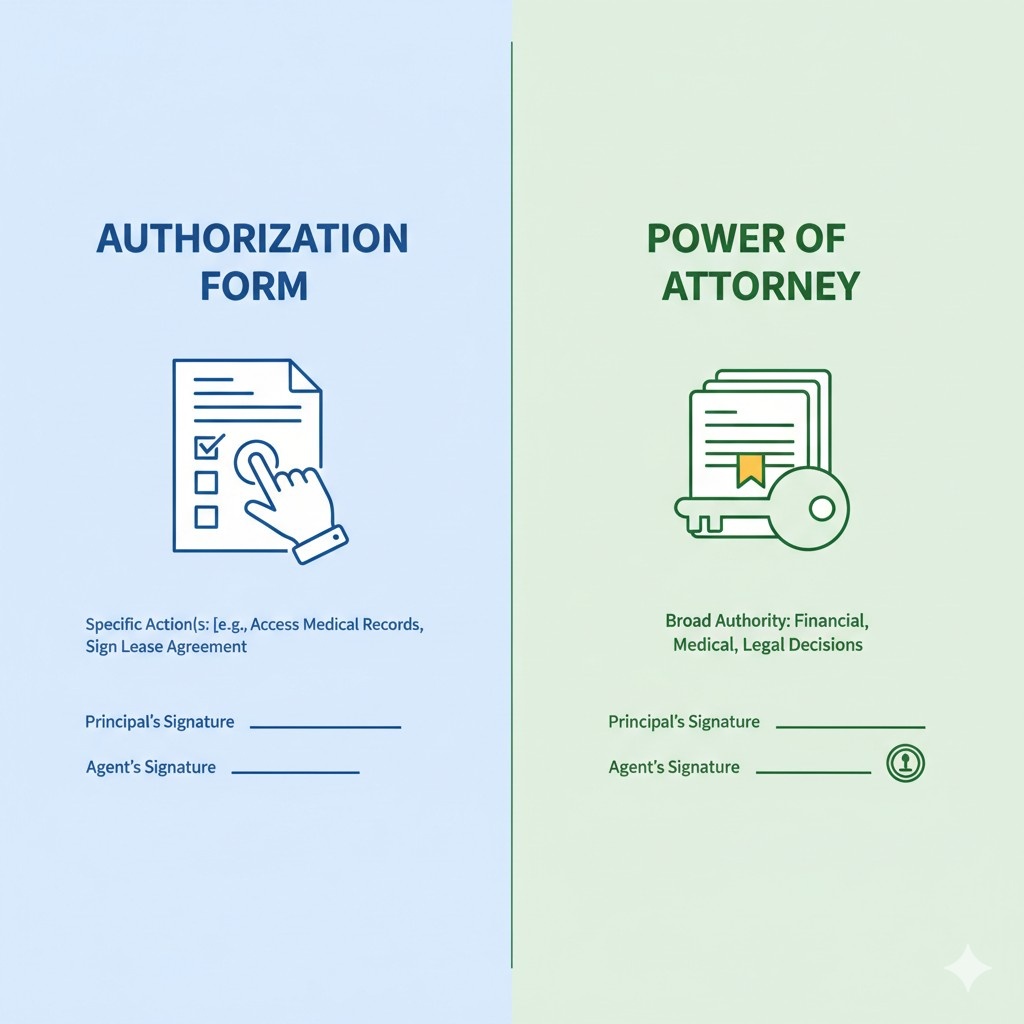
Never treat these forms as interchangeable. Each one has a job, and skipping either can block progress.
What Authorization Really Means in Practice
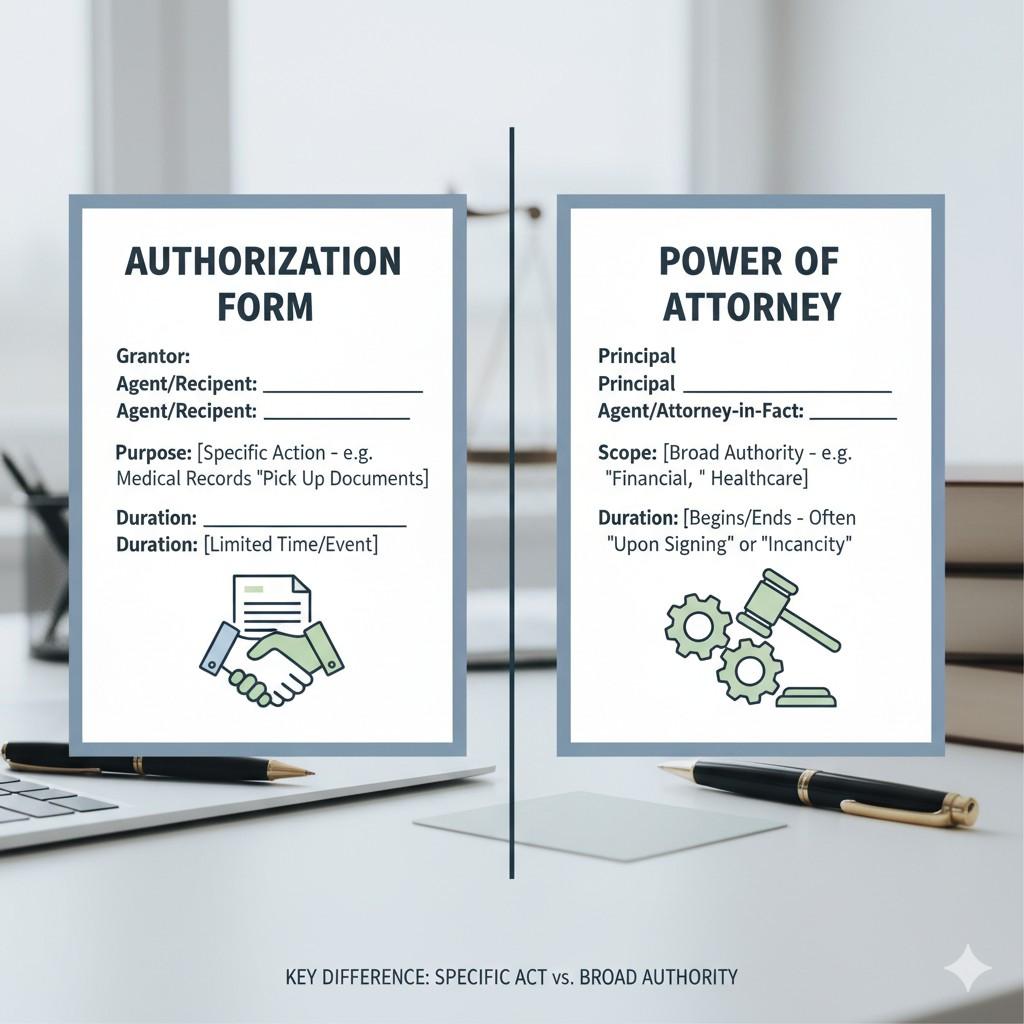
An authorization form is narrow. It usually allows someone to take a specific action, like paying fees or accessing a file. It does not give broad power. Think of it as permission to open the door, not to run the meeting inside.
For businesses, authorization is often used early or in limited cases. It can help with setup tasks, transfers, or basic access.
But it does not allow an attorney to fully represent you before the Patent Office. If a response is needed or a decision must be made, authorization alone is not enough.
A smart move is to review what your authorization actually allows. Many founders believe their attorney can act freely, only to find out later that the authority was too limited. This review takes little time and prevents major frustration later.
What Power of Attorney Actually Unlocks
Power of Attorney is broad. It allows the attorney or platform you name to act fully on your behalf for the patent.
They can receive official letters, respond to rejections, amend claims, and move the application forward without waiting on you for every step.
This matters for businesses because patents are not one-time filings. They are ongoing conversations with the Patent Office. Each round needs clear authority. With Power of Attorney in place, those conversations stay smooth and fast.
If speed and focus matter to you, this is the form that makes it possible. It lets you keep building while experts handle the back and forth.
PowerPatent is designed around this idea, pairing real attorney authority with software that keeps everything visible and controlled. You can see how that works at https://powerpatent.com/how-it-works.
Why Authorization Alone Often Breaks Midway
Many startups begin with authorization only. It feels lighter. It feels safer. Then the first office action arrives. Suddenly, the person helping you cannot respond fully. They need more permission. Time passes. Deadlines approach.
This break in momentum is common and avoidable. The actionable step is to plan for the full life of the patent from day one.
If you know you will need responses, amendments, and strategy, file Power of Attorney early. Do not wait for the moment of pressure.
How Businesses Should Think About Scope
The key difference between these forms is scope. Authorization is narrow and task-based. Power of Attorney is wide and ongoing. Businesses should choose based on how much responsibility they want to hand off.
If your goal is control through oversight, not control through micromanaging, Power of Attorney is the better tool. You still approve strategy. You still see what is filed. But you are not the bottleneck.
A useful habit is to ask one question before filing. Who do I want handling this when I am busy or unavailable. If the answer is not you, then Power of Attorney should already be in place.
The Risk of Layering Forms the Wrong Way
Some companies file authorization, then later add Power of Attorney, without linking or updating records correctly. This creates confusion inside the Patent Office system.
Different names appear on different documents. Communication gets misrouted.
To avoid this, always treat Power of Attorney as the primary authority once it is filed. Make sure older authorizations do not conflict or linger in ways that confuse the record.
Platforms that manage this automatically reduce human error and save time.
How This Difference Affects Scaling Companies
As companies grow, their IP footprint grows too. More filings. More inventors. More jurisdictions. In this environment, clarity matters more than ever.
Authorization forms do not scale well. They are too specific and too easy to forget. Power of Attorney scales because it creates a clear, repeatable path for action.
Businesses that plan to file multiple patents should standardize around this early.
This is one reason many fast-growing startups choose systems instead of one-off filings.
They want repeatability without constant oversight. PowerPatent supports that by keeping authority consistent across filings while still giving founders full visibility.
Cleaning Up After Early Mistakes
If you already filed with authorization only, or if you are unsure what is on record, do not panic.
This is fixable. The actionable step is to audit your patent file. Look at who is listed as having authority. Confirm what forms were accepted.
If something is missing, file a clean Power of Attorney and link it properly. Doing this sooner rather than later prevents bigger problems. It also sends a signal to anyone reviewing your IP that your house is in order.
Choosing Clarity Over Convenience
The biggest lesson here is that convenience today can create cost tomorrow. Authorization feels easy. Power of Attorney feels formal. But formality is what keeps things moving when stakes are high.
Businesses that win with IP choose clarity every time. They decide who is in charge, document it properly, and let the process run. That choice removes friction and frees focus for what matters most.
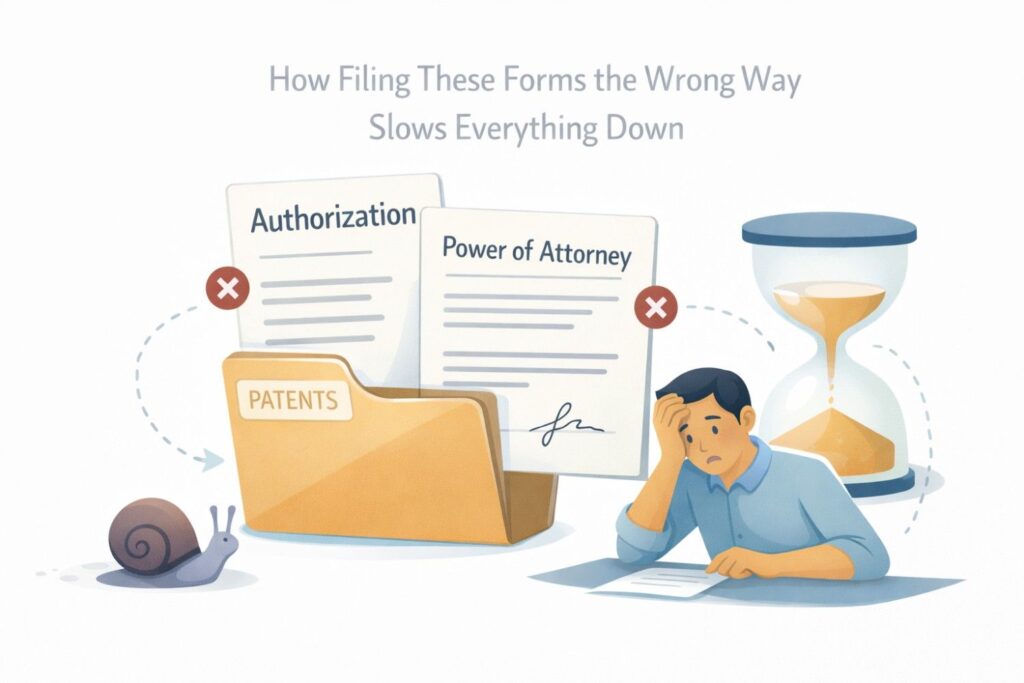
How Filing These Forms the Wrong Way Slows Everything Down
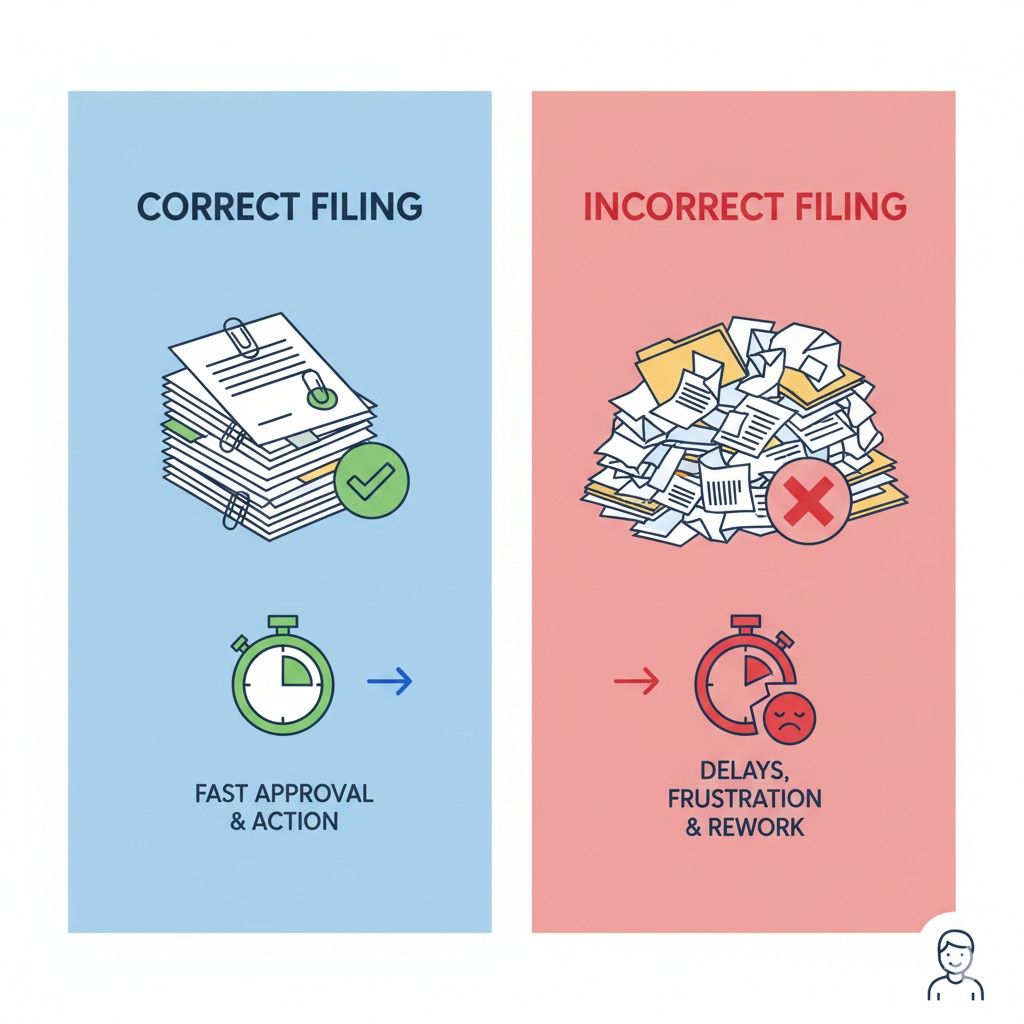
Most patent delays are not caused by hard questions from the Patent Office. They are caused by small filing mistakes that block action.
When Power of Attorney and authorization forms are filed the wrong way, everything feels slower than it should.
This section explains where things usually go wrong, how that slowdown spreads across your business, and what you can do to prevent it before it costs time and money.
The Silent Delay That Starts at Submission
The first slowdown often begins the moment a form is submitted.
A missing signature, the wrong name format, or a mismatch between inventors and applicants can cause the Patent Office to ignore the form without clearly rejecting it.
Founders assume authority is in place, while the system quietly disagrees.
For a business, this creates a false sense of progress. You think help is authorized, but responses cannot be filed. The actionable move here is to always confirm acceptance, not just submission.
Authority only exists once the Patent Office recognizes it. Platforms like PowerPatent surface this clearly so you are never guessing. You can see how that flow works at https://powerpatent.com/how-it-works.
How One Small Error Creates Weeks of Back and Forth
When authority is unclear, every action triggers extra communication. Attorneys ask for clarification. The Patent Office sends notices to the wrong person.
Emails bounce between founders and counsel asking who can sign what.
Each message adds days. Together, they add weeks. During that time, your application sits still.
If you are building fast, that pause hurts. A simple habit that prevents this is to align names, roles, and ownership across all forms before filing. Consistency keeps the system moving.
Why Timing Matters More Than Most Founders Think
Authority forms filed late cause more damage than forms filed wrong. If an office action arrives before Power of Attorney is on record, the clock starts anyway. You lose response time while fixing paperwork.
This is especially dangerous for startups that file close to launches or funding rounds. The actionable advice is to file authority forms at the same time as the application, not after.
Treat them as one package. Early clarity protects future flexibility.
The Compounding Effect on Growing Portfolios
One mistake is manageable. Repeated mistakes compound. When a company has multiple filings with inconsistent authority records, confusion spreads. Attorneys must check each file.
Responses slow. Strategy discussions turn into administrative cleanup.
Businesses with growing patent portfolios should standardize their authority process. One approach. One structure. One source of truth. This reduces mental load and speeds decision-making.
PowerPatent is built to support this kind of repeatable system, which is why scaling teams lean on it instead of reinventing the wheel each time.
How Wrong Authority Blocks Strategic Moves
Patents are not just filings. They are tools used in deals, partnerships, and enforcement. If authority is wrong, you may not be able to act when opportunity strikes.
Imagine a partner asking for proof of status, or an investor requesting an update, and you cannot respond quickly because authority is unclear. Momentum fades.
Confidence drops. The fix is proactive. Clean authority records let you move at business speed, not legal speed.
Why Fixing Mistakes Later Always Costs More
Correcting authority after the fact often means refiling forms, paying extra fees, and explaining gaps. It also means revisiting decisions that should already be settled.
From a business view, this is wasted energy. The actionable lesson is to invest a small amount of care upfront to avoid large costs later. This is one of those areas where doing it right once is far cheaper than fixing it later.
How DIY Filers Fall Into the Same Trap
Founders who file on their own often assume forms are secondary. They focus on the invention and rush through administration. The Patent Office does not share that priority.
If you are filing without a system, slow down at this step. Double-check authority. Confirm links. If that feels heavy, that is a signal that you need support.
Using a platform that bakes this into the process removes risk and frees your time. You can explore that option at https://powerpatent.com/how-it-works.
The Role of Clear Records in Future Disputes
Even if everything seems fine today, records matter later. If a dispute arises, clean authority history strengthens your position. Messy records raise questions.
Businesses that think ahead treat authority forms as part of their defense strategy. Clear records show professionalism and care. That perception can influence outcomes long before any formal conflict.
Turning Speed Back On
The good news is that most slowdowns caused by authority issues are preventable. They are not complex. They just require intention.

By filing the right forms, at the right time, in the right way, you remove friction from the entire patent lifecycle. That frictionless path is what lets founders stay focused on building while their IP quietly moves forward.
How to File and Link Everything Correctly Without Losing Time or Control
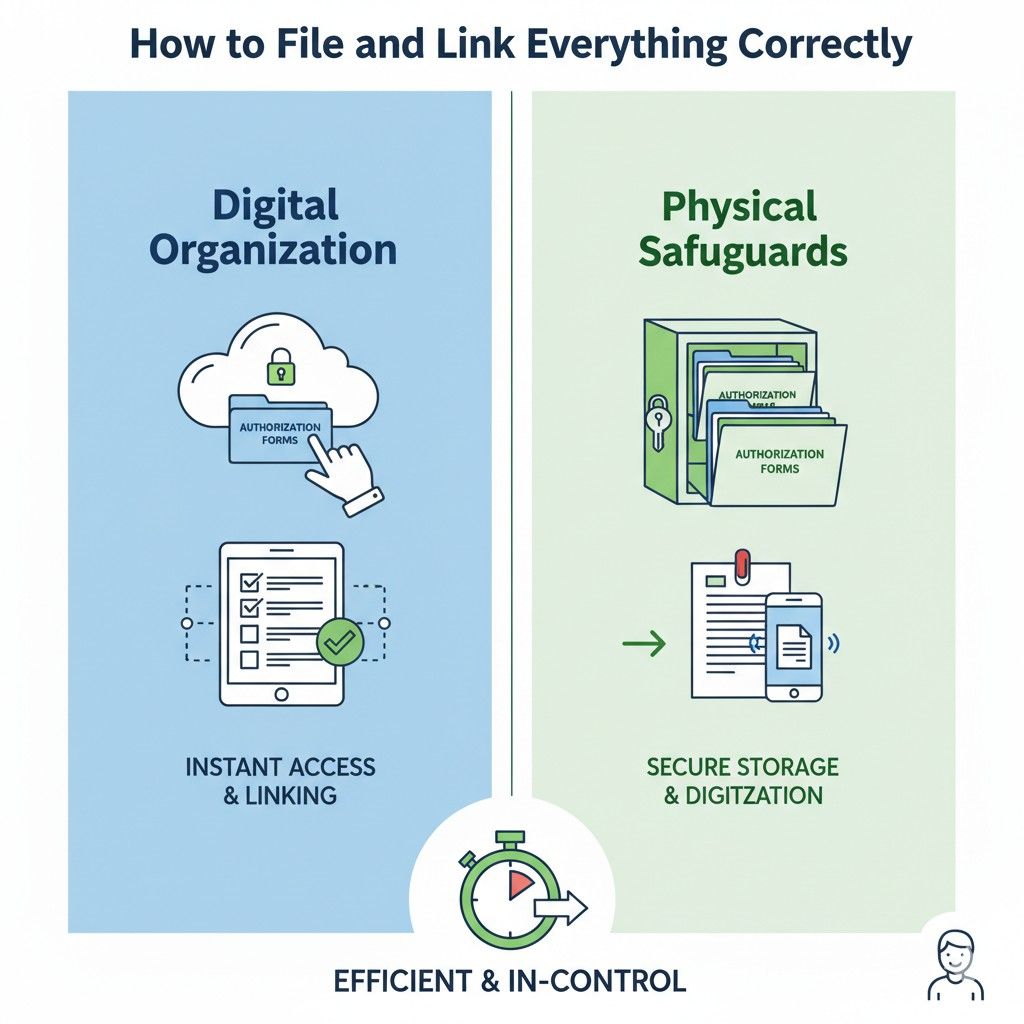
Filing Power of Attorney and authorization forms correctly is not about being perfect. It is about being intentional. When these forms are filed and linked the right way, they disappear into the background and do their job quietly.
When they are not, they demand attention at the worst possible times. This section shows how businesses can set this up cleanly from the start so control stays with you and time stays on your side.
Start With Ownership Clarity Before Any Form Is Touched
Before any form is signed, the most important step is knowing who actually owns the invention.
This sounds obvious, but many startups rush past it. Founders, contractors, advisors, and early employees may all be involved, and the Patent Office cares deeply about accuracy here.
If ownership is unclear, authority forms cannot be clean. The actionable move is to pause and confirm inventors, applicants, and company ownership before filing anything.
This one check prevents downstream fixes and confusion. Businesses that do this upfront move faster later because every form aligns naturally.
Why Names and Details Must Match Exactly
The Patent Office is not forgiving with names. A missing middle initial, a company suffix left out, or a mismatch between documents can cause authority to be ignored.
To a founder, these details feel minor. To the system, they are blockers.
A practical habit is to copy names directly from the application into every authority form. Do not rely on memory.
Do not shorten. Exact matches keep records clean and communication flowing. This small discipline saves weeks over the life of a patent.
Filing Authority as Part of the Core Workflow
One of the biggest mistakes businesses make is treating authority forms as follow-up tasks. They file the application, celebrate, then plan to handle forms later. Later often arrives too late.
The better approach is to treat Power of Attorney as part of the main filing workflow. Application and authority should move together. When this is done, there is no gap where communication stalls.
Platforms like PowerPatent are built around this idea, making authority a default step instead of an afterthought. You can see how that process works at https://powerpatent.com/how-it-works.
How Proper Linking Prevents Lost Communication
Filing a form is not enough. It must be linked correctly to the right application. If it is not, the Patent Office may accept the form but fail to apply it where needed.
The actionable step here is confirmation. After filing, verify that the authority is reflected in the application record. Check who is listed to receive correspondence.
If it is not correct, fix it immediately. Early fixes are simple. Late fixes are painful.
Keeping Authority Updated as Your Company Evolves
Startups change fast. Attorneys change. Companies restructure. Founders step back from daily operations. Authority forms must reflect these changes.
A useful business rhythm is to review patent authority during major company moments like funding rounds, leadership changes, or IP audits.
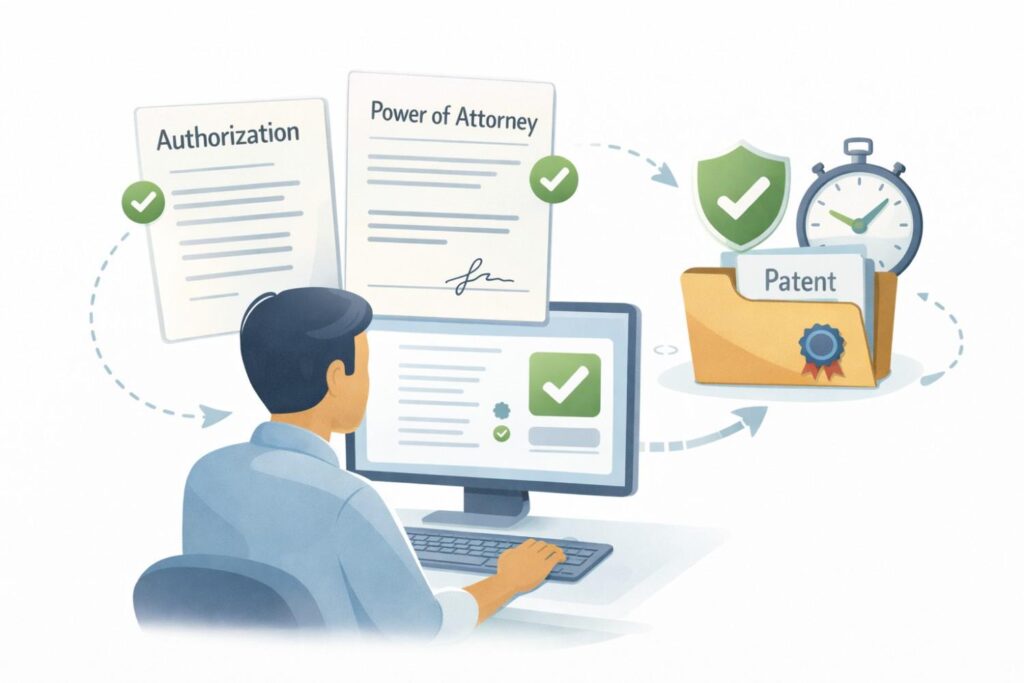
This keeps records aligned with reality. It also shows maturity to investors and partners who review your filings.
Avoiding Overreach While Maintaining Control
Some founders worry that filing Power of Attorney means losing say. In practice, control comes from structure, not from bottlenecks. The key is choosing the right partner and setting expectations early.
When authority is paired with transparency, founders stay informed without being overloaded. This balance is critical for businesses that want both speed and confidence.
PowerPatent supports this by combining real attorney authority with clear visibility into every action, so nothing happens in the dark.
How Clean Authority Reduces Mental Load
Every unclear form adds cognitive weight. Founders wonder who can act, who needs to sign, and what happens next. Clean authority removes those questions.
From a business perspective, this is about focus. When authority is settled, attention returns to product, customers, and growth. That mental clarity is often overlooked, but it is one of the biggest benefits of doing this right.
Preparing for Diligence Before It Happens
Many founders only think about clean records when diligence begins. At that point, fixes feel urgent and stressful. The smarter move is preparation.
When authority is filed, linked, and maintained correctly, diligence becomes easy. Documents are ready. Questions are answered quickly. Confidence stays high.
This readiness is not accidental. It is built through small, early decisions like how you handle Power of Attorney.
Turning Process Into a Competitive Advantage
Most startups treat patents as chores. The best ones treat them as systems. When your authority process is clean, repeatable, and quiet, it becomes an advantage.
You file faster. You respond quicker. You look more serious. All of this stems from getting the basics right. Power of Attorney and authorization forms may feel small, but they shape everything that follows.
That is why modern teams rely on structured platforms instead of scattered filings.

If you want a way to file, link, and manage authority without losing control or time, you can explore how PowerPatent does this at https://powerpatent.com/how-it-works.
Wrapping It Up
Power of Attorney and authorization forms will never feel exciting, but they quietly decide how strong, fast, and reliable your patent process is. When they are handled with care, everything else flows. Communication stays clean. Deadlines stop feeling scary. Your team stays focused on building instead of chasing paperwork.