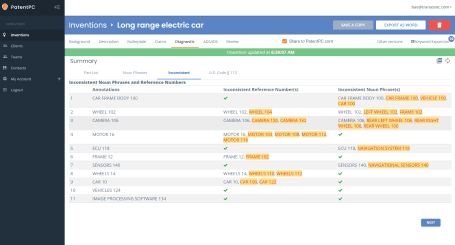
If your company works with standards like 5G, Wi-Fi, or video, your patents can quietly be worth a lot of money. Not someday. Right now. The problem is that most founders do not know how that value is measured, or how to defend it when real negotiations start. That is what this article is about.
This guide will explain, in very clear and simple words, how patent portfolios are valued in SEP negotiations, why most teams get it wrong, and how to put yourself in a strong position without slowing down your company or burning cash. Everything here is practical. No theory. No filler.
Why SEP Portfolio Value Is Fought Over So Hard
The value of an SEP portfolio is not just a number on paper. It is leverage. It decides who pays, who waits, who settles fast, and who gets dragged into years of noise.
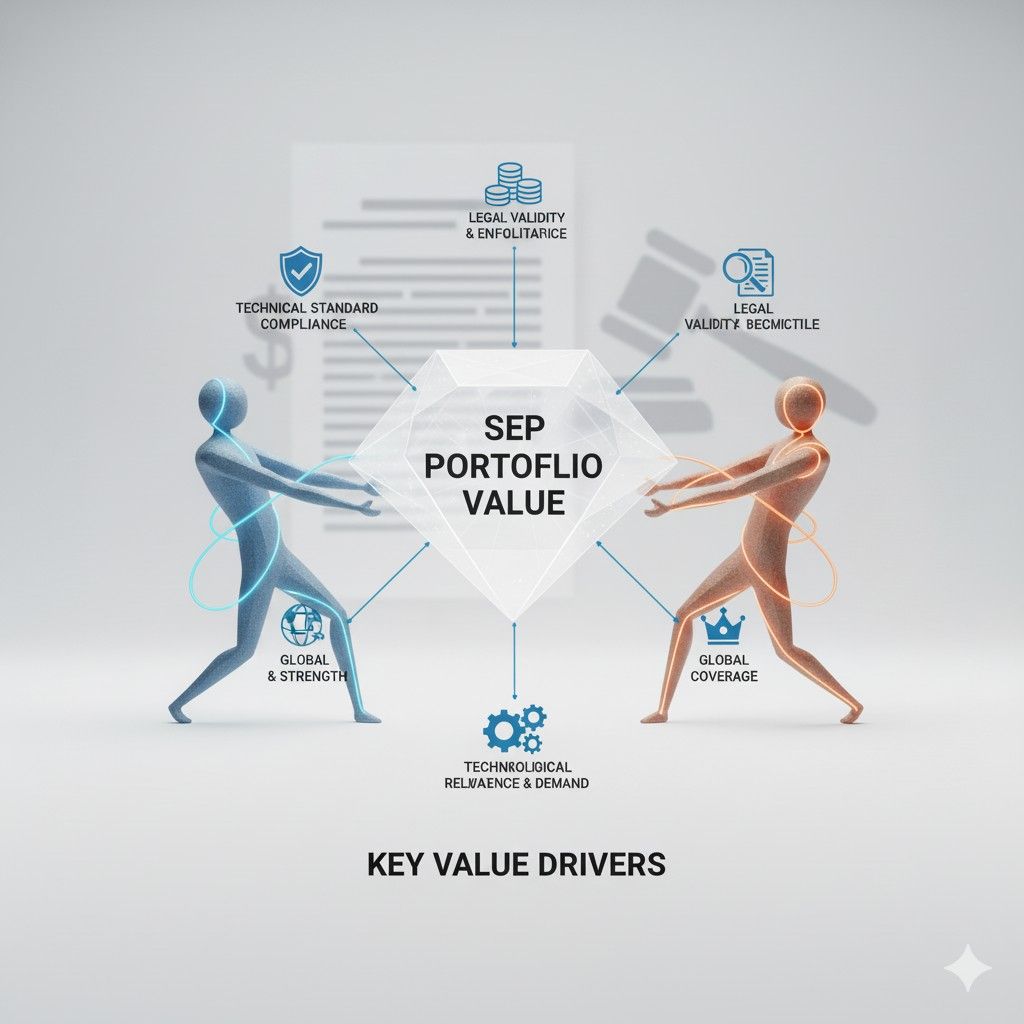
This is why every serious SEP negotiation turns into a quiet tug of war over valuation. Both sides know that once a number sticks, everything else follows from it.
For businesses building or using standard-based technology, understanding why this fight is so intense is the first step toward not losing it.
SEP Value Decides Who Has Control
In SEP talks, control matters more than being right. The party that frames the value of the portfolio early often controls the pace and tone of the entire discussion. If your portfolio is seen as strong and fairly priced, conversations move forward. If it is seen as weak or unclear, the other side slows things down, asks more questions, and pushes harder.
This is why large companies invest so much time shaping the story around value before they ever sit at the table. They know that once negotiations start, changing the story is very hard.

For a business, the lesson is simple. Do not wait until talks begin to think about value. By then, you are already reacting.
Small Changes in Value Mean Huge Money Swings
In SEP licensing, even tiny shifts in valuation can mean millions of dollars. A small change in assumed royalty rate or portfolio share can swing the final number in a big way.
That is why both sides fight over every input, every assumption, and every comparison.
What looks like a small disagreement is often a high-stakes move. This is also why SEP negotiations feel slow and tense. Each side knows that giving up ground early can echo for years across many deals.
Businesses should treat every early discussion about value as real negotiation, even if it feels casual. Offhand comments often come back later as anchors.
SEP Value Is Not Just About Patent Count
One of the biggest reasons SEP value is fought over is that there is no single clean formula.
It is not about how many patents you have. It is about which parts of the standard they touch, how often those parts are used, and how hard they are to design around.
This gray area creates room for argument. One side will say the portfolio is core and unavoidable. The other will say it is narrow and easy to work around. Both claims can sound reasonable if you are not prepared.
Businesses that win these debates usually have done the work early to map their patents to real product features and real standard sections. They do not rely on abstract claims.
Courts Are Watching, Even When You Are Not in Court
Another reason SEP value is so contested is that everything said in negotiations can later be seen by a court. Even when no lawsuit is planned, both sides act as if one might happen.
This makes every valuation position more rigid.
Companies avoid admitting high value if they might be a licensee later. They avoid admitting low value if they might enforce later. This tension makes compromise harder and fights sharper.
A practical move for businesses is to separate internal valuation work from external messaging. Know the full value inside, but be careful and consistent in how you describe it outside.
SEP Valuation Sets a Precedent
Once a company agrees to a valuation approach, it rarely applies to just one deal. It often becomes a reference point for future licenses. This is why companies resist numbers they feel are too high or too low.
They are thinking several deals ahead.
This is also why first licenses matter so much. Early deals shape expectations. Later partners will ask what others paid and why.

For growing companies, this means early SEP strategy is not optional. Even one poorly framed agreement can cap upside for years.
Information Gaps Create Pressure
SEP negotiations often happen between parties with very different levels of information.
One side may deeply understand the standard and the patent landscape. The other may not. This imbalance creates pressure and frustration, which fuels conflict over value.
The side with better data can push harder and wait longer. The side without it often feels forced to guess.
Businesses can reduce this gap by investing early in clear portfolio analysis. Knowing which patents matter and why gives confidence and reduces costly delays.
Valuation Is Used as a Delay Tool
In many SEP negotiations, arguing about value is not about reaching agreement. It is about buying time. Licensees may question valuation to delay payments. Licensors may hold firm to signal strength.
Understanding this dynamic helps businesses stay calm and strategic. Not every challenge needs a full response. Sometimes the goal is to keep talks moving without conceding ground.
Clear internal thresholds help here. Know what you will defend, what you will explain, and what you will ignore.
Engineers and Lawyers See Value Differently
Another hidden reason SEP value is fought over is that technical and legal teams often see value through different lenses. Engineers focus on how the tech works. Lawyers focus on how claims read. Negotiators sit in between.
Misalignment inside a company can weaken its position outside. Conflicting messages confuse the other side and reduce trust.
Businesses should align teams early around a shared story of value that is simple, honest, and repeatable.
The Market Is Always Changing
Standards evolve. Products change. Use cases expand. SEP value today may not match value three years from now. This uncertainty makes parties defensive.
Both sides worry about locking into terms that age poorly. This leads to harder positions and more aggressive valuation debates.
Companies that track how their patents map to current and future products are better positioned to argue that their value grows, not shrinks.
Why This Matters More Than Ever
As more industries adopt shared standards, SEP negotiations are becoming more common, not less. Companies that once ignored patents now find themselves pulled into complex talks they did not expect.

Understanding why SEP portfolio value is fought over so hard helps businesses prepare, not panic. The goal is not to win every argument. The goal is to avoid being cornered by one.
What Actually Makes an SEP Patent Portfolio Valuable
Before any negotiation begins, before any number is spoken out loud, the real value of an SEP portfolio is already taking shape. This value is not created during talks.
It is revealed during talks. Businesses that understand this early put themselves in a much stronger position, even if negotiations are still years away.
This section explains where SEP value truly comes from, in very practical terms, and how companies can quietly strengthen that value while they are still focused on building products.
Value Starts Long Before a Standard Is Final
Most people assume SEP value appears once a standard is published. In reality, value often starts much earlier.
Patents filed during the early stages of standard development tend to map closer to the core ideas that everyone later relies on.
Companies that track standards work and align invention timing with it often end up owning the parts that others cannot avoid. This is not about gaming the system. It is about being present when the rules are written.

A very practical move is to treat standards timelines as product timelines. If your engineers are contributing ideas, those ideas should be captured and filed quickly.
PowerPatent was built to make that process fast and founder-friendly, so innovation does not get stuck waiting on paperwork. You can see how that works at https://powerpatent.com/how-it-works.
Technical Relevance Is More Important Than Legal Elegance
A patent can be beautifully written and still have little SEP value. What matters more is whether real products must use the idea to comply with the standard. If they do, value rises. If they can work around it, value drops.
This is why strong SEP portfolios are closely tied to real-world implementations. They are not abstract. They solve specific problems that standards require solving.
Businesses should regularly test their patents against actual products. Ask simple questions.
Does a phone, router, or chip need this idea to function under the standard? If the answer is yes, that patent deserves attention and support.
Mapping Patents to the Standard Changes Everything
One of the clearest signals of value is a clean mapping between patent claims and specific parts of the standard. Without this, even strong patents look weak in negotiation.
Mapping does not need to be complex. It needs to be clear. A short explanation that shows where and why a patent applies often carries more weight than long legal arguments.
Companies that invest early in this mapping reduce friction later. They also shorten negotiations, because fewer questions remain unanswered.
Claim Scope Drives Negotiation Power
In SEP portfolios, narrow claims often struggle. Broad claims that still read on compliant products carry more weight.
The balance is subtle. Claims must be specific enough to survive scrutiny, but broad enough to matter across implementations.
This is why drafting quality matters so much. It is also why rushing filings without strategy can hurt long-term value.

Founders should not think of patent claims as paperwork. They are business tools. The right claim scope gives negotiators room to move without giving up strength.
Portfolio Consistency Builds Credibility
A single strong SEP patent can help, but a consistent portfolio does more. When patents point in the same technical direction and reinforce each other, they tell a clearer story.
In negotiations, consistency builds trust. It shows intent. It signals that the portfolio was built thoughtfully, not randomly.
Businesses can improve consistency by reviewing filings as a group, not one by one. Look for gaps. Look for overlap. Adjust future filings to strengthen the whole, not just the next idea.
Use in the Market Shapes Perceived Value
SEP value is closely tied to adoption. If the standard is widely used and growing, the patents tied to it gain weight. If adoption is slow, value feels uncertain.
This is why licensors often reference market data during talks. It is not just about patents. It is about impact.
Companies should track where and how standards-based products are used. This information supports valuation arguments and shows relevance beyond theory.
Geography Still Matters
Not all patents are equal in every country. Some markets matter more to licensees. A portfolio with coverage in key manufacturing or sales regions often commands more respect.
This does not mean filing everywhere. It means filing with intent. Knowing where your technology will matter helps focus resources.
Early planning here avoids costly gaps later. Once a market becomes important, it is often too late to go back.
Timing Affects Leverage
The moment when a patent issues can influence value perception. Issued patents often feel more concrete in negotiation than pending ones, even if the underlying idea is the same.
This affects strategy. Sometimes accelerating prosecution makes sense. Sometimes patience does.
Businesses benefit from aligning patent timelines with business milestones. When negotiations are likely, clarity helps.
SEP Value Is a Story, Not a Formula
At its core, SEP portfolio value is a story backed by facts. The story explains why the technology matters, why it cannot be avoided, and why fair payment makes sense.
Facts without a story feel cold. A story without facts feels weak. Strong portfolios blend both.
Founders and teams should practice telling this story simply. If it cannot be explained clearly, it will be challenged aggressively.
Building Value Without Slowing Down
Many founders worry that focusing on SEP strategy will distract from building. It does not have to. With the right tools and guidance, capturing value becomes part of the build process, not a break from it.
This is where modern platforms matter.
PowerPatent is designed to fit into fast-moving teams, so patents grow alongside products, not behind them. If you want to see how teams do this without friction, visit https://powerpatent.com/how-it-works.
How SEP Valuation Really Happens in Negotiations
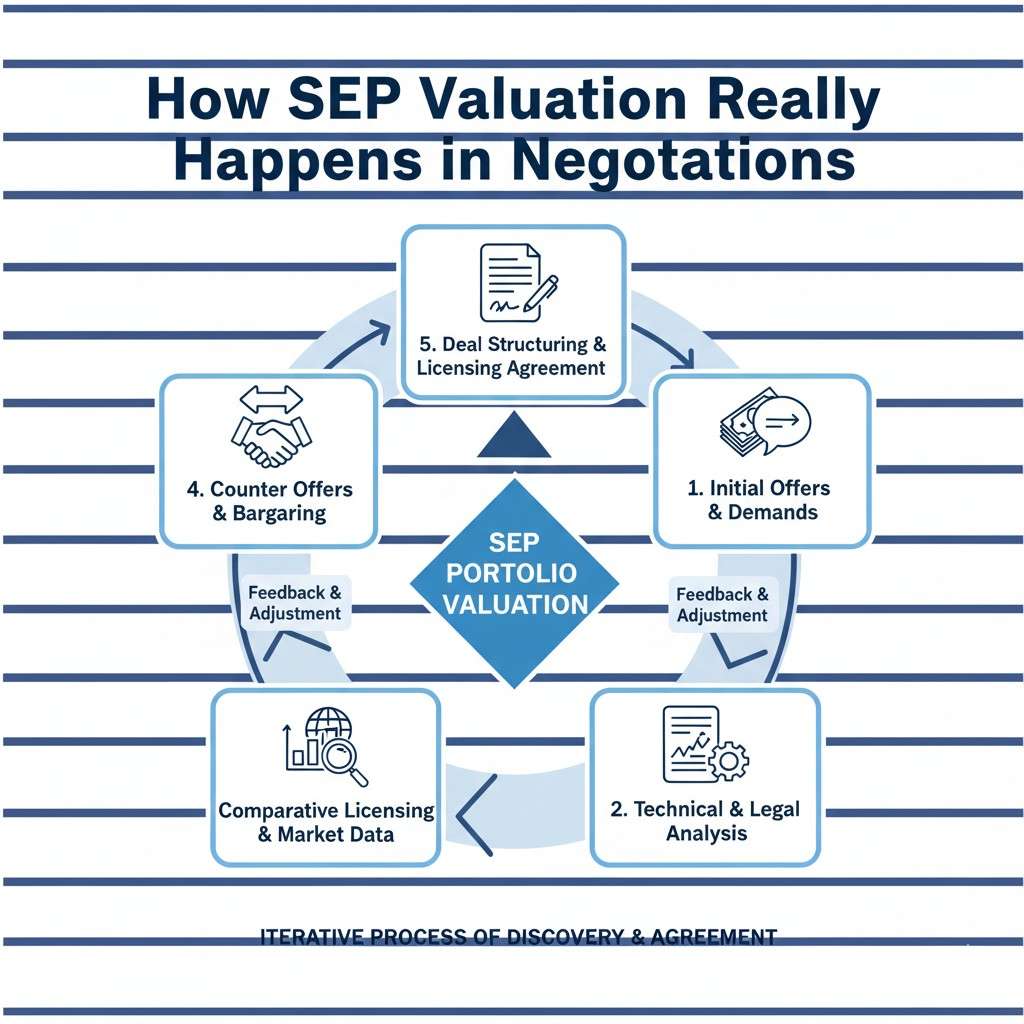
Most people imagine SEP valuation as a clean math exercise. They picture spreadsheets, formulas, and neutral experts calmly agreeing on a number. That is not how it works in real life.
In real negotiations, valuation is a living process shaped by timing, pressure, behavior, and strategy. Understanding this reality helps businesses avoid surprises and make smarter moves.
This section walks through how valuation actually unfolds once talks begin, and what companies can do to stay in control.
Valuation Starts Before the First Meeting
By the time the first call happens, both sides usually already have a number in mind. That number may not be shared, but it shapes everything. Questions, tone, and pacing all reflect it.
This is why preparation matters so much. Companies that walk in without a clear internal view of value end up reacting to the other side’s assumptions. That reaction often sets a weak frame that is hard to undo.

A practical step is to decide on a value range early and agree internally on what drives the top and bottom of that range. This gives negotiators confidence and consistency.
Early Anchors Shape the Entire Discussion
The first numbers mentioned in a negotiation tend to stick. This is not about fairness. It is about human behavior. Once a number is out there, every later adjustment is measured against it.
Because of this, parties fight hard over early anchors. A licensor may open high to signal strength. A licensee may push back hard to pull the range down.
Businesses should treat early exchanges with care. Even informal statements can become anchors. Clear internal guidelines help avoid accidental signals.
Data Is Used to Support Positions, Not Discover Truth
In SEP negotiations, data rarely changes minds. It is used to support positions that already exist. Comparable licenses, patent counts, and market shares are all tools, but they are not neutral.
Each side chooses data that supports its story. This is why debates over relevance and comparability consume so much time.
Companies gain leverage by understanding common data sources and preparing responses in advance. Knowing how your portfolio compares on multiple dimensions reduces surprise.
Comparable Licenses Are Never Truly Comparable
One of the most common valuation tools is the use of past licenses. On the surface, this seems fair. In practice, no two licenses are the same. Terms, timing, pressure, and context all differ.
This creates room for argument. One side will say a license proves a high rate. The other will say it was unique and cannot be reused.
Businesses should document the context around their own deals. Details matter later. Silence often gets filled by the other side’s interpretation.
Technical Debates Mask Value Disputes
Many SEP valuation fights appear technical. They focus on claim charts, standard sections, or implementation details. Often, these debates are really about money.
Understanding this helps negotiators stay focused. Winning every technical point is not always necessary. The goal is to protect overall value, not score small victories.
Clear summaries that tie technical points back to business impact help keep discussions grounded.
Delay Is a Common Strategy
Valuation debates are often used to slow things down. A licensee may ask for more analysis. A licensor may hold firm and wait. Both sides know time has value.
Recognizing delay tactics helps businesses decide when to push and when to pause. Not every request deserves immediate action.
Setting internal timelines and decision points prevents endless drift.
Internal Alignment Affects External Strength
Negotiations expose internal cracks. If business, legal, and technical teams are not aligned, the other side will notice. Mixed messages weaken valuation positions.
Strong teams agree on the story before talks begin. They know who speaks on what and why.
Businesses should invest time aligning teams early. This reduces stress and speeds decisions later.
Courts Linger in the Background
Even when talks are friendly, courts influence behavior. Parties think about how positions might look later. This makes some arguments more rigid.
Understanding this dynamic helps explain why some offers feel cautious. It is not personal. It is strategic.
Clear documentation and consistent reasoning protect companies whether talks settle or escalate.
Flexibility Without Weakness Is Key
Successful SEP negotiations balance firmness with flexibility. Rigid positions can stall talks. Too much flexibility signals weakness.
The best negotiators know where they can move and where they cannot. This clarity comes from preparation, not instinct.
Businesses should define non-negotiables early and empower negotiators within clear boundaries.
Valuation Is Ongoing, Not One-Time
SEP valuation does not end when a deal is signed. Future renewals, new standards, and market changes all reshape value.
Companies that treat valuation as a living process stay ahead. They update mappings, track adoption, and refine stories.
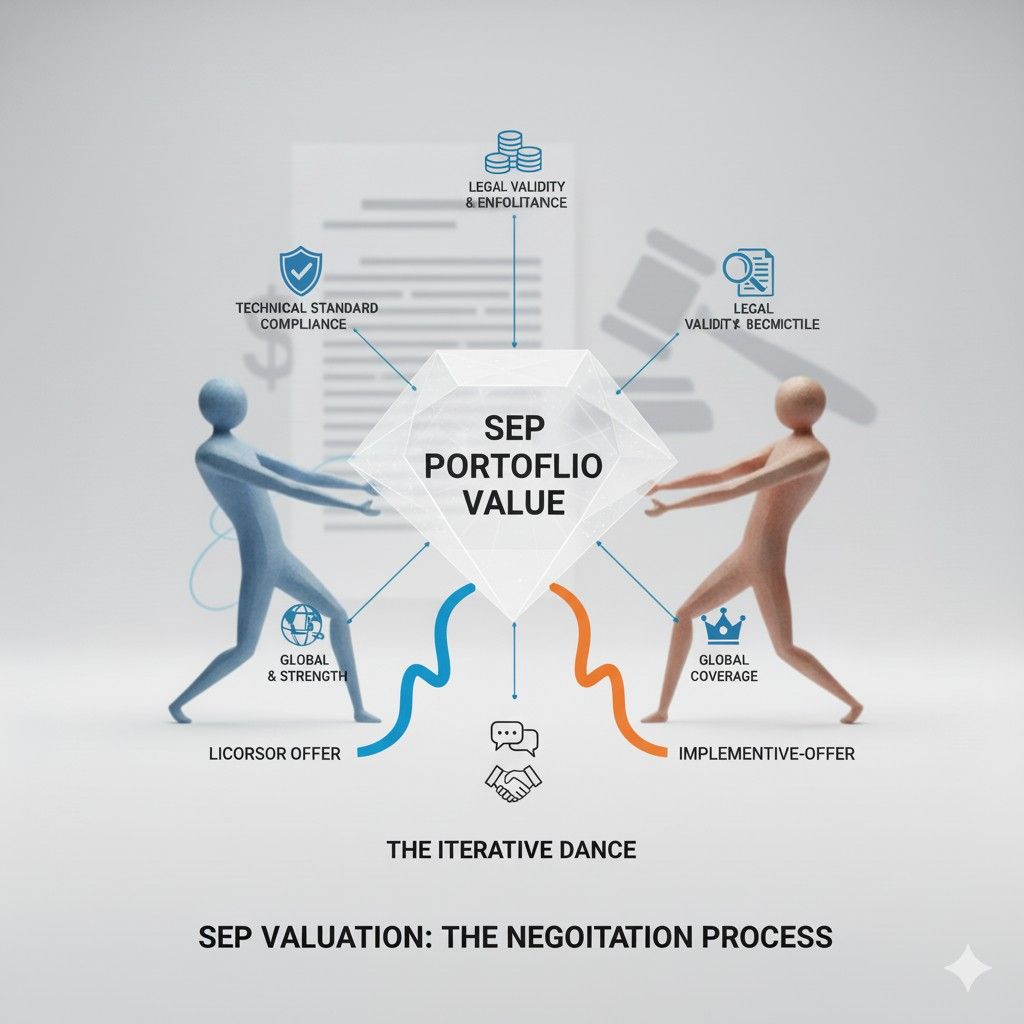
Modern tools make this easier. Platforms like PowerPatent help teams keep IP aligned with real-world progress without slowing down. You can see how at https://powerpatent.com/how-it-works.
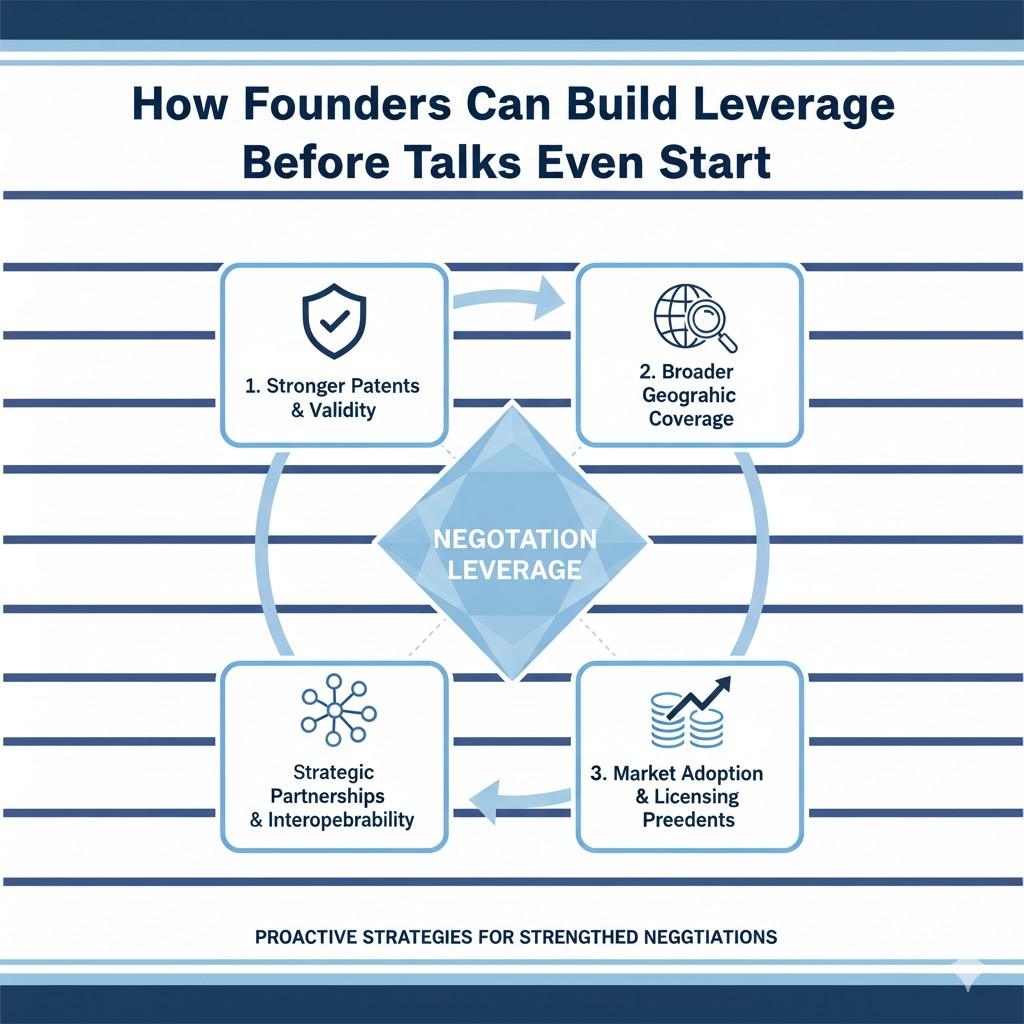
How Founders Can Build Leverage Before Talks Even Start
Most leverage in SEP negotiations is created quietly, long before any emails are sent or calls are booked. By the time formal talks begin, the balance of power is often already set.
Founders who understand this stop thinking of SEP leverage as a legal move and start treating it as a business habit.
This section focuses on what founders and leadership teams can do early, while they are still building, shipping, and hiring, to make future negotiations smoother and stronger.
Leverage Comes From Readiness, Not Aggression
Strong leverage does not mean being loud or threatening. It means being ready. When the other side senses that you understand your portfolio, your position, and your options, the tone of negotiation changes.
Readiness shows up in small ways. Clear answers. Consistent messaging. Calm responses to pressure. These signals matter more than forceful words.
Founders should aim to feel prepared, not combative. That mindset shapes every interaction.
Building Leverage While Focused on Product
Many founders believe they must choose between building product and building IP leverage. That tradeoff is false. The best leverage grows alongside the product.
When teams capture inventions as they happen, value compounds naturally. There is no scramble later to reconstruct decisions or explain why something matters.
The key is to lower friction. If documenting innovation feels heavy, it will be skipped. Modern tools exist to make this light and fast.
PowerPatent was built to fit into real build cycles, not interrupt them. You can explore that approach at https://powerpatent.com/how-it-works.
Clear Ownership Strengthens Your Position
Leverage weakens when ownership is unclear. Questions about inventorship, assignments, or prior art create doubt. Doubt invites pressure.
Founders should treat clean ownership as part of company hygiene. It is not exciting, but it is powerful. Clear records remove distractions and keep talks focused on value.
Regular reviews help catch issues early, when fixes are simple.
Internal Confidence Changes External Outcomes
Negotiators sense confidence. Not bravado, but quiet certainty. Teams that trust their understanding of the portfolio behave differently under stress.
This confidence comes from preparation. Knowing which patents matter. Knowing why. Knowing where you can stand firm.
Founders should invest time in learning their own IP story. You do not need to be a patent expert. You need to understand the role your technology plays.
Documentation Is Silent Leverage
Well-kept records rarely appear in negotiations, but they shape them. Clear invention timelines, standards contributions, and development notes support credibility.
When questions arise, answers come quickly. This reduces room for doubt and delay.

Treat documentation as an asset. It supports valuation without needing to be waved around.
Market Awareness Sharpens Arguments
Leverage improves when you understand how the market uses the standard. Who adopts it. Where growth comes from. What features matter most.
This knowledge grounds valuation arguments in reality. It shows that your position reflects how the world works, not just theory.
Founders should stay close to customers and partners. These insights feed directly into stronger SEP stories.
Consistency Builds Reputation
Over time, companies develop reputations in the SEP space. Consistent positions, fair reasoning, and clear communication earn respect.
Reputation is slow to build and easy to damage. Early behavior matters more than many founders realize.
Acting thoughtfully from the start sets the tone for future dealings.
Choosing When Not to Engage
Sometimes the strongest move is patience. Not every potential negotiation needs immediate action. Knowing when to wait preserves leverage.
This requires clarity about priorities and risks. It also requires confidence that your position will hold.
Founders should resist pressure to rush without understanding the full picture.
Preparing for Growth and Change
Leverage must scale. As companies grow, portfolios expand, and standards evolve. Early systems should support this growth, not break under it.
Planning for change keeps leverage intact. It prevents gaps and confusion later.
This is where having the right foundation matters. Tools and processes chosen early shape outcomes years later.
Leverage Is Built, Not Claimed
The most important lesson is simple. Leverage is not something you declare in negotiation. It is something you build quietly over time.
Founders who understand this approach SEP talks with calm control. They are not surprised. They are not rushed. They are ready.

PowerPatent exists to help founders build that readiness without slowing down innovation. If you want to see how teams do this in practice, visit https://powerpatent.com/how-it-works.
Wrapping It Up
SEP portfolio valuation is not a one-time exercise and it is not something that magically appears when negotiations begin. It is the result of many small decisions made over time. Decisions about what to file, when to file, how clearly ideas are captured, and how closely patents stay tied to real products and real standards.