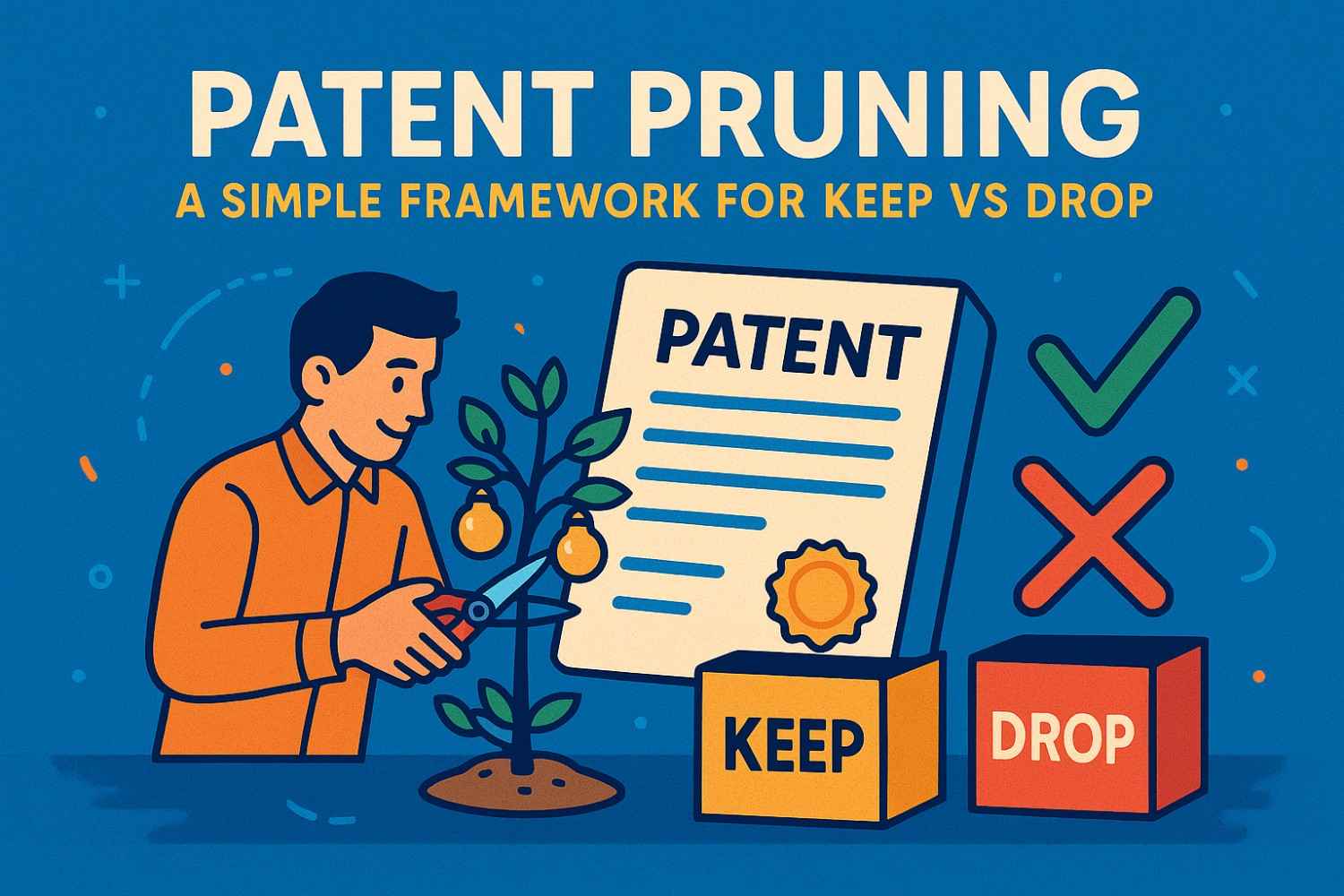
Most founders don’t think about pruning their patents. They think the hard part is filing them. But the real challenge comes later—when your startup grows, your roadmap shifts, and you now have a pile of filings you’re paying for but not sure you still need. Patent pruning is the quiet skill that helps smart teams stay lean, focused, and protected without wasting money. It’s not about cutting for the sake of cutting. It’s about keeping patent rights that matter to your next stage of growth and letting go of the ones that no longer move the business forward.
Why Pruning Your Patents Makes Your Startup Stronger
Before diving into the tactics, it helps to understand why pruning matters at all. Many teams assume more patents automatically mean more strength. But a patent portfolio is not like a trophy case.
It is more like a living system that needs care, focus, and direction. When you prune it the right way, your entire business becomes clearer, lighter, and better aligned with where you are going.
That is why pruning is not a cost-cutting trick. It is a growth move.
When Your Roadmap Changes, Your Patent Strategy Should Change Too
Every startup evolves faster than expected. Features shift. Tech stacks shift. Even markets shift. As this happens, some patents will no longer sit at the center of your story.
This is normal, but ignoring it creates a kind of hidden drag inside the business.
You might keep paying fees for ideas you no longer build. You might protect tech that no longer matters. You might allow old filings to distract you from the real inventions happening today.
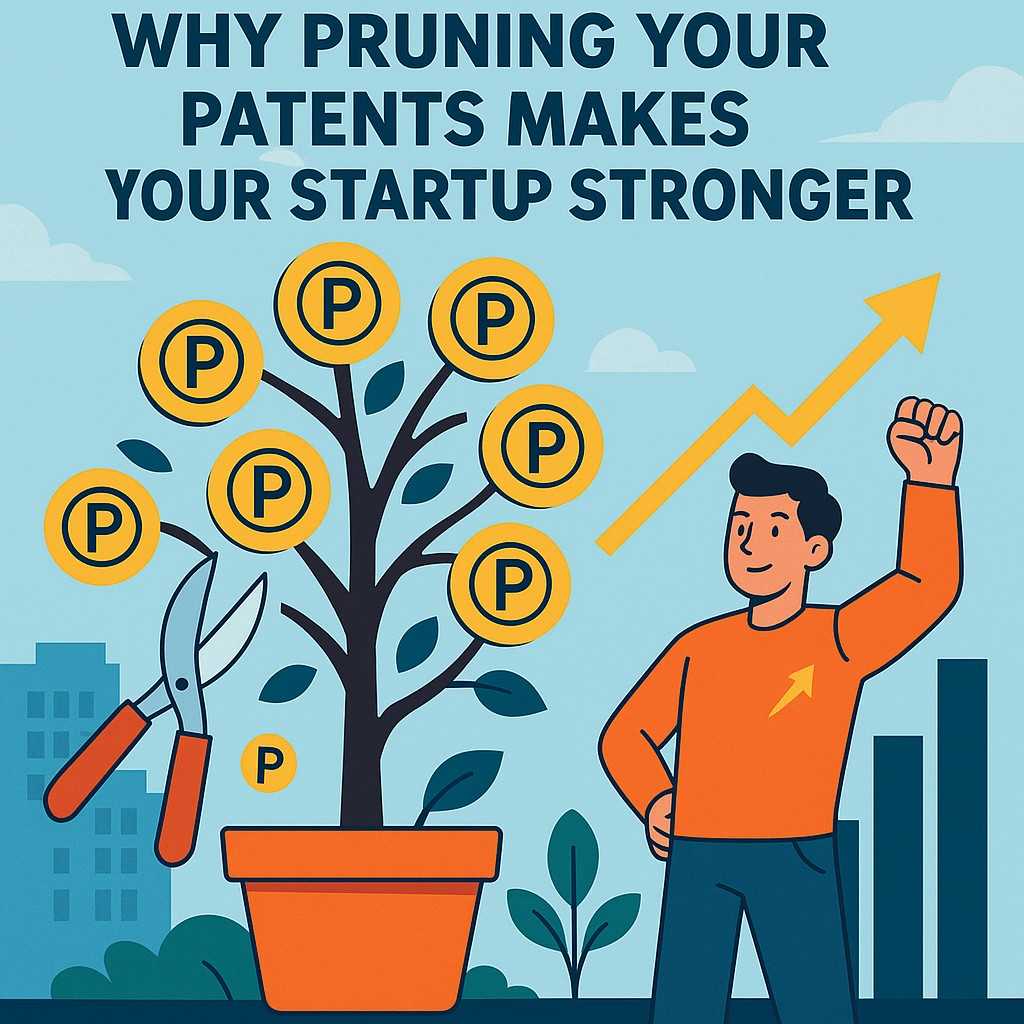
When you prune on purpose, you give your patent portfolio permission to evolve with your roadmap. This simple act keeps your protection aligned with your next milestones instead of your old ones.
It keeps your team focused on the inventions that actually drive value, not the ones that were exciting two years ago.
Pruning Makes Space For Stronger Patents To Emerge
Patents demand time, attention, and sometimes a lot of rewriting. If your team feels buried under a long backlog of low-priority filings, they have less room to invest in the breakthroughs that matter right now.
A crowded portfolio can make it harder to see the real gems hiding beneath it.
When you prune, you clear mental and operational space so your next generation of patents can be sharper and more intentional. This helps you file with more confidence.
It also helps your attorneys or patent software tools understand what truly matters, so they craft stronger claims around your core technology instead of spreading effort across everything.
How Pruning Helps You Spend Smarter Without Sacrificing Protection
Many founders misunderstand patent costs. They think the expensive part is the filing. But the real costs show up later in maintenance fees, foreign filings, and attorney time.
These expenses pile up quietly. When you prune early and regularly, you stop money from leaking into assets that no longer support revenue or defensibility.
This creates a healthier balance between cost and value. You are not cutting corners. You are re-allocating resources toward patents that actually protect your moat.
The beauty is that this shift does not weaken your IP position. Instead, it strengthens it by letting you double down on filings tied directly to your product, your market, and your competitive edge.
Why Investors Prefer A Lean, Tight Patent Portfolio
Investors care less about the number of patents you hold and more about the story those patents tell. A portfolio filled with random filings can create confusion. It can signal that your strategy is scattered.
On the other hand, a portfolio that is trimmed and intentional shows discipline and clarity. It tells investors that you know exactly what matters and that you protect your most important assets with purpose.
When a patent portfolio is pruned with thought, it reads like a clean narrative. It tells a story about where the company is going and how it plans to defend its position.

This makes investor conversations easier and often more exciting, because the IP strategy aligns directly with the growth strategy.
When Pruning Reveals Gaps You Did Not Know Existed
One of the surprising benefits of pruning is that it exposes missing pieces in your patent coverage.
When you revisit each patent and ask whether it still fits your direction, you sometimes discover areas where protection is thin or outdated. This is not a setback. It is a valuable insight.
Seeing these gaps early means you can file stronger, more targeted patents before competitors catch up.
It also lets you strengthen your portfolio around the edges of your core tech instead of spending energy on areas that no longer hold value. The act of pruning becomes a simple way to keep your protection fresh and relevant.
Pruning Helps Your Team Understand What Truly Matters
Most founders assume everyone on the team already knows which inventions are important. But in fast-moving companies, priorities can blur quickly.
Engineers might keep working on ideas that are no longer strategic. Product teams might assume a patent exists for a feature that was never fully protected.
Leadership might believe certain filings are critical when the market has moved on.
A regular pruning cycle resets this alignment. It reminds everyone what your core technology actually is. It brings clarity to what the company protects and why. This shared understanding supports cleaner product decisions, faster engineering cycles, and smarter long-term planning.
Why Pruning Creates A Natural Sense Of Focus Inside The Company
Startups thrive on focus, yet patent portfolios often grow without it. When too many patents sit in the background, they create quiet noise. They split your attention.
They make your IP strategy feel like something you hope is working rather than something you control.
Pruning reverses this. It gives you a chance to refocus your energy on the inventions that have real business impact. It turns IP into a living part of your strategy instead of a dusty archive.
With that clarity, founders make faster choices, teams move with more confidence, and the entire business runs with more intention.
How Pruning Reduces Risk You Might Not See Coming
Old patents can create hidden risk. Some might cover tech you no longer use. Some might contain claims that no longer reflect your actual implementation. Some might unintentionally overlap with a competitor’s newer filings.
These issues rarely surface until they become problems.
By pruning regularly, you revisit each filing before it becomes outdated or misaligned. You can choose whether to update, strengthen, or safely drop it. This keeps your portfolio clean and reduces the chance of surprises down the road.
Why Pruning Makes Your Patent Workflow More Efficient
A leaner portfolio is easier to manage. You spend less time reviewing old filings, responding to office actions that do not matter, or tracking fees for assets that add no value.
You also give your patent tools and attorneys clearer guidance, which speeds up drafting and improves quality.
This smooth workflow means your team can move faster when new inventions appear. You do not get stuck inside the backlog. You stay ready for rapid innovation, which is exactly what early-stage companies need.
Why Pruning Works Best When Paired With Modern Patent Tools
Pruning is powerful on its own, but it becomes even stronger when you pair it with tools that help you evaluate your filings with clarity and speed.
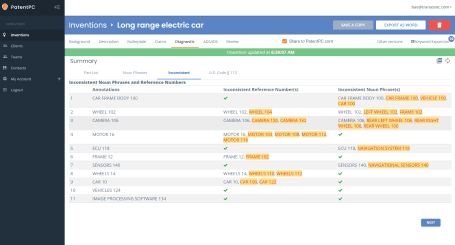
Modern platforms like PowerPatent make the process simpler by showing which patents map to your core tech, which no longer align with your roadmap, and where new filings might be needed.
This approach gives you a system instead of guesswork. It helps you prune with confidence, supported by real attorney oversight and smart software that catches blind spots human teams often miss.
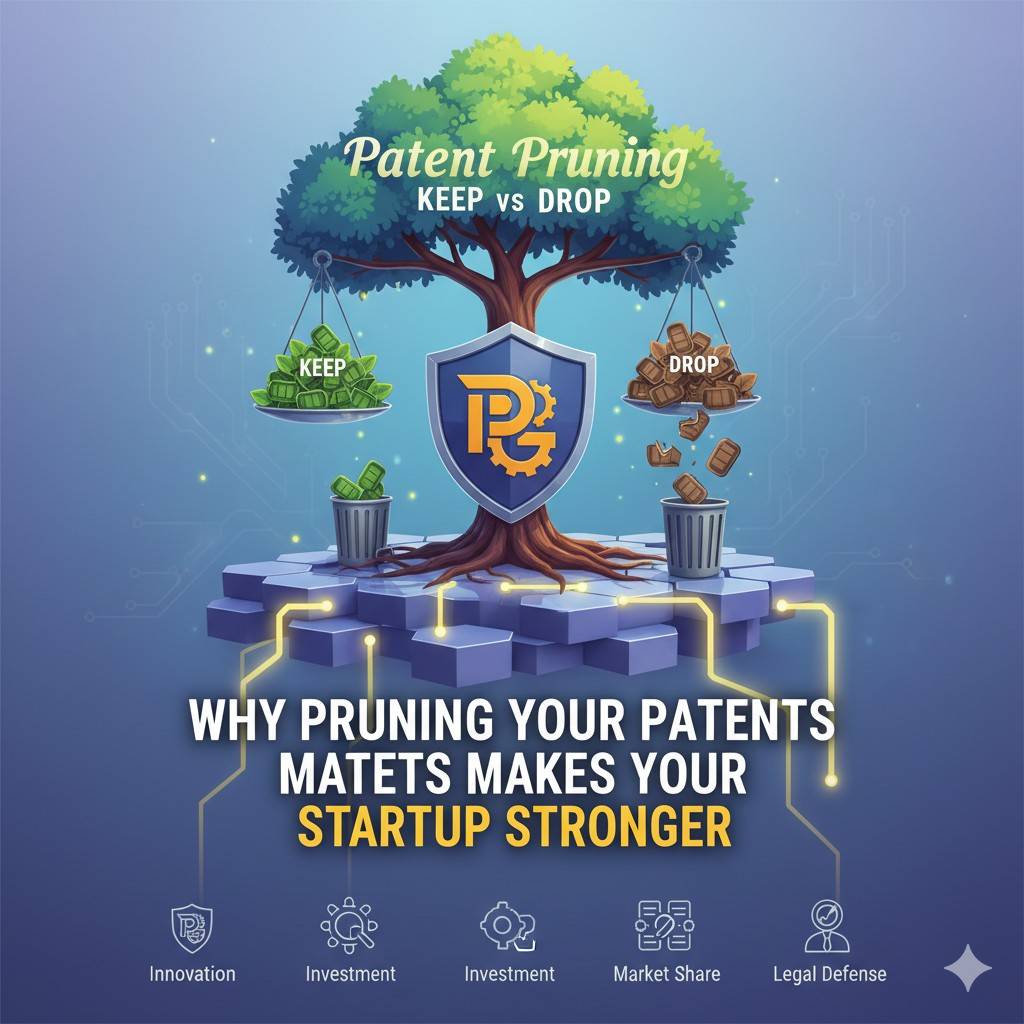
The result is a more resilient and intentional patent portfolio that grows with your business.
A Simple Way to Judge If a Patent Still Matters
Every founder reaches a moment where they look at their patent filings and feel unsure which ones still matter. It is normal to feel this way because startups move fast, and patents move slowly.
A simple framework helps you see each patent with fresh eyes so you can decide, with confidence, whether to keep it, update it, or let it go. This section breaks down how to do that in a clear, practical way without needing legal training or complex analysis.
It is about making choices that support your product, your market, and your long-term moat.
And if you ever want help turning this into an easy, guided workflow, you can explore how PowerPatent does it in a simple step-by-step way at https://powerpatent.com/how-it-works.
How To See Whether A Patent Still Fits Your Product Path
The first signal to look for is whether the idea inside the patent still connects to what you are actually building today.
Many patents begin from early prototypes, ideas that sounded promising, or experiments that helped shape the product but never became core features.
When your product vision shifts, some patents shift with it while others fall behind.
A simple way to check is to imagine explaining your product to an investor right now. If the patent supports that story, it still fits.
If it feels like a side note or a leftover version of something you no longer offer, that is a sign it might not deserve space in your portfolio.
This does not require deep legal reading. It requires honesty about what you are building and where you are heading.
When A Patent Protects Something Your Users Actually Pay For
Your patents should protect the parts of your product that users value the most. If a filing maps directly to the feature that keeps customers coming back, then it still matters.
If the patent covers an idea that never made it into your paying product, it may no longer support revenue.
Founders sometimes get stuck believing every early invention is priceless. But what matters most are the patents that shield your revenue engine. These patents block competitors from recreating the magic your users depend on.
When a patent no longer ties to value, you gain more strength by letting it go and making space for filings that reflect what customers love today.
If you want a simple way to see your patents mapped against your actual product features, tools like PowerPatent make that comparison clean and visual so you do not have to guess.
How To Check Whether A Patent Still Matches Your Tech Stack
Tech changes quickly. Codebases get refactored. Models get rebuilt. Architectures shift from one approach to another. When this happens, some patents lose relevance because they protect a method you no longer use.
A useful question is whether the claims inside the filing still describe how your system works at a technical level.
If you would not defend that method today because it is obsolete, the patent may not offer meaningful protection. Sometimes it can be updated or continued. Sometimes it should be retired.
The goal is not to keep old technical snapshots. The goal is to protect the living version of your technology. If a patent freezes an outdated method, it may not serve you in the next funding round or the next competition cycle.
When A Patent Blocks A Competitor’s Most Likely Path
Some patents matter not because you use the method yourself but because they protect the route a competitor is most likely to take. This is where pruning becomes strategic rather than simple housekeeping.
To check for this, imagine how a competitor would try to recreate your core advantage. If the patent blocks that path, it remains valuable even if it does not match your current architecture.
If the patent no longer blocks anything meaningful, its strategic value fades.
This is where many founders make their strongest decisions. Even a single patent that blocks a rival’s easiest shortcut can be worth more than dozens of patents that sit in the background doing nothing.
How To Judge Whether A Patent Supports A Market You Still Want
Market focus shifts as companies grow. Sometimes you start in one use case and discover a better one. Sometimes you leave a market behind because the buyers were slow or the margins were thin. When this happens, some patents may protect markets you no longer care about.
You can check whether the patent still matters by asking whether the market it protects is still part of your future story. If not, keeping that patent might only drain funds and attention.

Letting it go does not shrink your vision. It frees you to invest in patents that shield the market where your company is actually winning.
This kind of clarity often sparks new patent ideas because you see your new market with fresh urgency. PowerPatent helps teams identify these gaps automatically so founders do not overlook new protection opportunities.
When A Patent Still Strengthens Your Funding Narrative
Investors do not want complexity. They want clarity. They want to see how your moat ties to your business model. When a patent clearly supports that story, it still carries weight.
But if a patent creates confusion or makes your strategy look scattered, it may do more harm than good.
Imagine explaining each patent during a funding pitch. If a filing strengthens your explanation of why your technology is hard to copy, it is worth keeping. If it forces you to detour into a long explanation, it may not be part of your best narrative. This is a simple but surprisingly effective filter.
Why Some Patents Deserve To Be Expanded Instead Of Dropped
Not every patent you question should be pruned. Sometimes the filing points to a bigger opportunity. A patent may feel incomplete because your product has evolved or because your understanding of the market deepened.
In these cases, the right move is not to drop the patent but to expand it, continue it, or file a new one that strengthens the original idea.
This is where pruning becomes part of creative strategy. You prune the weak branches so the strong concepts have space to grow.
Modern tools like PowerPatent make this easy by showing which filings have room for improvement and how they map to your new roadmap.
How To Check Whether A Patent Still Offers Legal Strength
Legal strength is not just about having a patent. It is about having one that would actually hold up if challenged. Some older patents may have weaker claims than you realized.
Some may rely on prior art that now looks crowded. Some may lack support for the features your team thought they protected.
A practical check is to ask whether you would feel confident enforcing the patent today. If the answer is yes, it stays. If the answer is no, you can evaluate whether to update, continue, or prune.
You do not need deep legal background to ask this question. You only need clarity about what you expect the patent to do for you.
PowerPatent helps founders spot these weak areas early with both software insight and attorney oversight so you protect yourself before problems appear.
Why A Patent Should Stay Only If It Moves Your Business Forward
At the end of the day, every patent should support momentum. It should help your product, your market, your moat, your team, or your investors. If it does none of these, it drains energy instead of contributing to it.
A simple conversation with your leadership team can reveal whether a patent still moves the business forward. If people struggle to name one real way the patent helps your next chapter, that is a signal it may no longer earn its place.

Pruning it allows your IP strategy to match the speed and clarity of your business.
This approach gives you a clean, strong portfolio that grows with purpose instead of clutter.
How to Protect Your Core Tech Without Wasting Money
Before diving into the details, it helps to shift the way you think about protection.
Many founders try to protect everything because they fear leaving something uncovered. But the strongest patent portfolios are not the largest ones.
They are the ones that guard the few things that truly matter to the business. Protecting your core tech is about precision, not volume.
When you understand what deserves protection and what does not, you spend less, move faster, and build a cleaner moat that grows with your company.
This section walks you through how to do that with clarity and confidence, using simple questions and practical habits you can apply right away.
How To See Your Tech Through The Eyes Of A Competitor
One of the simplest ways to understand what to protect is to imagine how a competitor would try to copy you. Competitors rarely recreate your entire system.
They look for the fastest path to your value. They focus on the parts of your tech that customers actually notice or that give you operational leverage.
When you think like a competitor, you begin to see which parts of your technology are fragile. You notice where someone could slip in with a cheaper imitation.
Those are the areas where patent protection gives you real power. The parts that would be hard for a competitor to copy, even without patents, are usually not worth heavy investment.

This mindset removes the guesswork. It shows you where your moat needs a wall and where it does not. And when combined with structured tools like PowerPatent, you can test these assumptions with visual maps rather than gut feelings.
Why Your Core Algorithm Deserves Extra Protection
If your product has any kind of unique algorithm, model, or decision logic, that is often the beating heart of your advantage. Even if all the surrounding features shift over time, the core logic usually remains the irreplaceable part.
When founders skip patent protection for this layer, they risk giving competitors an open door into the engine that powers their product.
Protecting an algorithm does not mean exposing your secrets. It means capturing the novel method behind how you process data, make predictions, or automate decisions.
It means defining the technical insight you created that saves time, improves accuracy, or delivers a result others cannot match easily.
When you protect this layer early, you secure the foundation that all future features depend on.
When you skip it, you risk losing your edge the moment a competitor reverse-engineers your behavior. It is far easier to keep the advantage than to fight to reclaim it later.
How To Protect The Hidden Parts Customers Never See
Some of the most valuable inventions in a product are invisible to users. These are the internal systems that make the product run smoothly. The caching system that speeds things up.
The training workflow that reduces cost. The automation that saves engineering hours. The integration method that removes friction between tools.
Competitors rarely copy your user interface. They copy your efficiency. They copy your shortcuts. They copy the invisible tricks that make your product feel polished while costing less to operate.
When you protect these hidden layers, you block competitors from matching your performance, even if they understand your surface-level features.
This is one of the most overlooked parts of patent strategy. And it is often where the greatest long-term defensive strength lives.
When To Protect A Feature Even If It Seems Small
Startups often dismiss small features because they feel unimportant. But sometimes a tiny feature becomes the thing customers love most. It becomes the moment of delight.
It becomes the reason they choose you instead of a competitor. If a small feature creates big value, you should consider protecting it.
The size of the feature does not matter. What matters is whether the feature creates a lock-in effect. If customers would miss it, or if it would be painful for competitors to recreate it without copying your work, it deserves real attention.
These small but sticky features often serve as entry points for broader patent protection because they anchor your position in the market.
The best founders protect the details that define their product’s personality, not just the giant breakthroughs.
Why Protecting Future Roadmap Features Matters
Your roadmap today might be different from your roadmap three months from now. Some features you have not built yet may become the most important parts of your business.
Filing patents before launching these features gives you the strongest position. If you wait until after release, your own product launch might count as an early disclosure that limits your options.
The smartest teams protect future inventions before they go public. They file when the idea is formed, even if the code is not complete. This prevents competitors from racing behind you with a similar implementation.

It also helps you tell a stronger story to investors because you can show a forward-looking moat, not just protection for what you built in the past.
When To Protect The Way You Scale, Not Just The Way You Operate
Many founders protect their first version of an invention but forget to protect the improved version that solves scalability problems. As your product grows, you may discover smarter ways to handle load, speed, accuracy, memory, or cost.
These improvements are often more valuable than the original invention because they unlock a new stage of your business.
Protecting these improvements gives you a competitive edge that grows with your user base. It prevents others from copying the efficiencies that allow you to run at scale while maintaining performance.
Without this protection, a competitor could copy your improved system and catch up quickly, even if you held the first patent.
How To Know When A Patent Should Be Continued Instead Of Rewritten
Sometimes you want to protect a feature that builds on an older patent. Instead of filing a separate new patent, a better move can be to continue the earlier one.
A continuation lets you expand your earlier filing and add new claim language that reflects how your invention evolved.
This approach keeps your protection connected so that enforcing it becomes easier. It also allows you to adjust your claims over time as you learn more about your technology and your market.
When you use continuations at the right moments, your portfolio becomes flexible instead of rigid. It grows with your invention rather than freezing your early ideas in place.
Why Protecting Your Moat Is Cheaper Than Rebuilding It
Some founders avoid filing patents because they want to save money. But skipping the right filings often becomes far more expensive later. You may face copycats who force you to lower prices.
You may lose an investor who worries about your defensibility. You may need to rebuild a feature completely because a competitor beat you to the filing.
Protecting your moat early is not a cost. It is insurance against much larger costs. And when you prune your portfolio regularly, you keep the cost focused on the things that matter, not scattered across outdated ideas.
How To Align Your Patent Strategy With Your Growth Goals
Your patent strategy should never feel disconnected from your business goals. Every filing should connect to a real plan. Maybe you want to enter a new market.
Maybe you want to secure a funding round. Maybe you want to sign a partnership. Maybe you want to raise the barrier for a competitor who is getting close.
When your patent decisions map directly to these goals, your portfolio becomes a growth tool instead of a pile of documents. You know why each filing exists. You know what it protects. You know what it supports.
This alignment makes pruning simple, filing simple, and long-term planning clear.
Why Using The Right Tools Makes Protection Faster And Smarter
Founders do not have time to dig through dense legal documents. They want clarity. They want speed. They want to know exactly which patents matter and which do not.
This is where modern platforms like PowerPatent change everything. You can see your portfolio mapped to your product. You can spot gaps and overlaps instantly. You can make decisions without confusion.
More importantly, you get attorney oversight built into the workflow so nothing slips through the cracks. You get protection that fits your business without slowing you down.

And you avoid the costly mistakes that come from filing too late or dropping the wrong assets.
Turning Pruning Into a Regular Habit That Guides Your Roadmap
Before diving into the details, it helps to see pruning not as a one-time clean-up task but as an ongoing rhythm that grows with your company. Most founders only think about their patents when a renewal fee is due or when a funding round forces them to explain their IP.
But when pruning becomes a regular habit, it turns into a strategic tool. It shows you what direction your product is taking. It reveals what your team believes is important.
It highlights which parts of your technology deserve more attention. Most importantly, it helps you stay ahead instead of reacting late.
A healthy pruning habit gives your roadmap structure and clarity, and it builds a patent portfolio that actually matches what your company is becoming, not just what it once was.
How A Regular Pruning Cycle Keeps You From Falling Behind
Startups evolve fast. Features move in and out. Markets shift. Tech stacks change. But patents remain frozen unless you make a conscious effort to adjust them.
Without a regular pruning habit, a portfolio becomes outdated quietly and then suddenly. By the time you look at it again, half the filings may no longer match your product.
A consistent pruning cycle prevents this. It helps you catch misalignment early instead of years later. You see which patents still support your core tech and which ones no longer tell the right story.

This is not just about cost. It is about staying current. It is about making sure your patent moat grows at the same pace as your product and your market. A simple quarterly or twice-yearly review is enough to keep everything sharp.
Why Pruning Sessions Bring Clarity to Your Product Vision
Every time you revisit your patents, you see your product with fresh eyes. You notice what has changed. You notice what is now central to your story.
You also notice which inventions turned out to be stepping stones rather than permanent features.
This kind of reflection strengthens your product vision. It forces you to clarify what really matters and why.
Many founders find that pruning sessions become quiet strategy sessions. They reconnect teams around the core insight that drives the product. They refine the message they use with investors, partners, and customers.
When patents and product vision stay aligned, the company moves with more confidence and less noise.
How Regular Pruning Helps You File New Patents At The Right Time
Pruning does not just show you what to drop. It also shows you where new patents are missing. When you look at your old filings with honesty, it becomes easier to see the new inventions that deserve protection.
You may notice a new algorithm that is becoming essential. You may see a workflow that saves huge amounts of time. You may realize a small feature has become a signature part of your product.
Pruning turns the lights on in areas you might not have noticed before. It creates a natural moment to update your protection and file new applications with precision.
This rhythm keeps your portfolio fresh instead of letting it stagnate behind your growth.
How Pruning Aligns Teams Across Engineering, Product, and Leadership
In fast companies, teams often move in different directions without realizing it. Engineering builds what seems important. Product shifts based on customer feedback.
Leadership focuses on market scale. When no one compares notes, the patent portfolio becomes a patchwork of ideas from different eras.
A regular pruning habit brings these teams back together. It forces shared understanding. It helps everyone see which inventions belong at the center of the company.
It encourages teams to explain why a certain piece of tech deserves protection. These conversations reduce friction and create clearer priorities. Instead of guessing what is important, everyone sees it at the same time.
Why Pruning Helps You Stay Ahead Of Competitors Instead Of Reacting To Them
Without pruning, you often do not notice when a competitor begins moving into your territory. Your patents may no longer block the methods they are now using.
Or your protection may focus on ideas that no longer reflect your current product edge. By the time you react, they may already be too close.
Pruning keeps your competitive picture up to date. It shows you which patents still create barriers and which ones need reinforcement. It helps you stay proactive instead of defensive.

When you maintain this habit, you often spot competitive risks long before they become real threats. This extra awareness gives you more time, more options, and more strategic freedom.
How Pruning Keeps Your Patent Costs Predictable Instead Of Surprising
One of the biggest frustrations for founders is unpredictable patent spending. Fees come up unexpectedly. Old filings demand attention at inconvenient times.
You may find yourself paying for a patent you no longer believe in simply because the renewal notice arrived too late for thoughtful decision-making.
Pruning removes these surprises. When you review your portfolio regularly, you know which patents you plan to keep long before the next fee hits. You know which ones you will drop ahead of time.
This makes budgeting easier and reduces financial stress. Instead of reacting to invoices, you plan your spending with purpose.
Why Making Pruning A Habit Builds Investor Trust
Investors look for founders who make clear, disciplined choices. A well-maintained patent portfolio signals that you understand what drives your moat and that you protect it with intention.
When pruning is part of your regular rhythm, you always have clean answers to investor questions about your patents. You know why each filing matters. You know how it connects to your roadmap. You know how it blocks competitors.
This sends a powerful message. It shows maturity. It shows strategic depth. It shows that you are building not just a product but a defensible company.
Investors feel more confident backing a team that treats IP as a living asset instead of a chaotic collection of documents.
How A Regular Pruning Habit Helps You Avoid Unnecessary Legal Risk
Old patents that no longer match your product can accidentally create confusion. They may cover methods you no longer use. They may describe ideas you pivoted away from.
They may even overlap with new filings in a way that creates internal contradictions. These issues do not always cause problems immediately, but they can become messy over time.
Pruning stabilizes your foundation. It keeps your portfolio clean and coherent. It allows you to adjust or retire filings before they become liabilities.
This reduces the risk of internal conflicts, misaligned claims, and outdated disclosures that could weaken your IP position. Clean portfolios are far easier to defend, expand, and leverage.
Why Pruning Makes New Innovation Easier
Innovation becomes easier when the playing field is clear. When your patent portfolio is cluttered, new ideas can feel tangled in old constraints.
Teams hesitate because they worry about overlapping work or unclear ownership. When you prune regularly, those barriers disappear. Your product and engineering teams move freely again.
A clear portfolio inspires creativity. It lets teams explore new directions without fear. It turns patents from a burden into a tool that supports exploration.
You create an environment where innovation feels open, supported, and aligned with your vision.
How Tools Like PowerPatent Make The Pruning Habit Effortless
The biggest barrier to regular pruning is time. Founders feel overwhelmed by the idea of reading old filings. Teams do not want to decipher legal language. This is where modern tools change everything.
PowerPatent gives you a simple view of your entire portfolio, mapped to your product and your roadmap. It highlights what is outdated. It shows where coverage is weak. It reveals where filings overlap.

With attorney oversight woven into the workflow, you get clarity without drowning in complexity. This turns pruning from a chore into a smooth process that fits naturally into your company’s rhythm.
You can understand your patent health in minutes, make decisions quickly, and adjust your strategy without slowing down your team.
Wrapping It Up
Before closing, it helps to remember that patent pruning is not about cutting for the sake of cutting. It is about shaping your patent portfolio so it grows in the same direction as your company. Most founders carry the weight of old filings without realizing how much those assets influence their decisions, their spending, and even the story they tell investors. When you prune with intention, you take back control. You decide what matters. You decide what stays. You decide what deserves to be protected as you scale.