If you are building real tech, not slides, not ideas, but working systems that touch standards like wireless, video, or connectivity, patent pools will show up in your world whether you like it or not. Most founders hear about them too late. Usually when a letter lands in their inbox and suddenly patents feel scary, slow, and expensive.
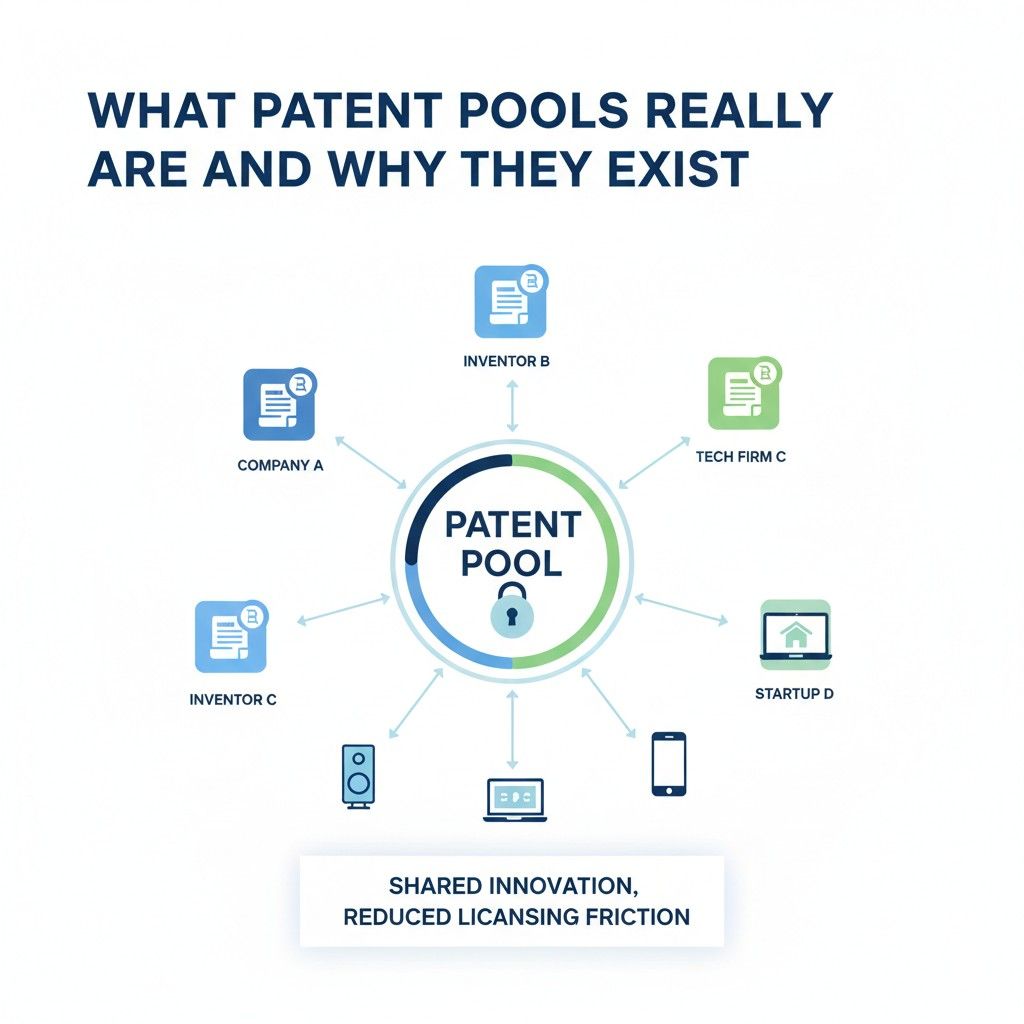
What Patent Pools Really Are and Why They Exist
Patent pools did not come from theory or policy papers. They came from pain. Real companies building real products kept running into the same problem again and again.
Too many patents. Too many owners. Too much time wasted just to ship something that already worked.
This section breaks down what patent pools truly are beneath the surface and why they became almost unavoidable in modern tech markets. The goal here is not to explain history for history’s sake.
It is to help you see how these structures shape power, money, and leverage so you can make better business decisions early.
Patent Pools Are a Response to Tech Getting Layered
Every modern product sits on layers of shared technology.
Your phone talks to towers using cellular rules. Your video stream uses compression rules.
Your car connects using wireless rules. These rules are called standards, and standards only work when everyone follows the same playbook.
The problem is that standards are built by groups, not single companies. Each contributor files patents along the way. Over time, dozens or even hundreds of patents become tied to one standard. No single company owns it all.
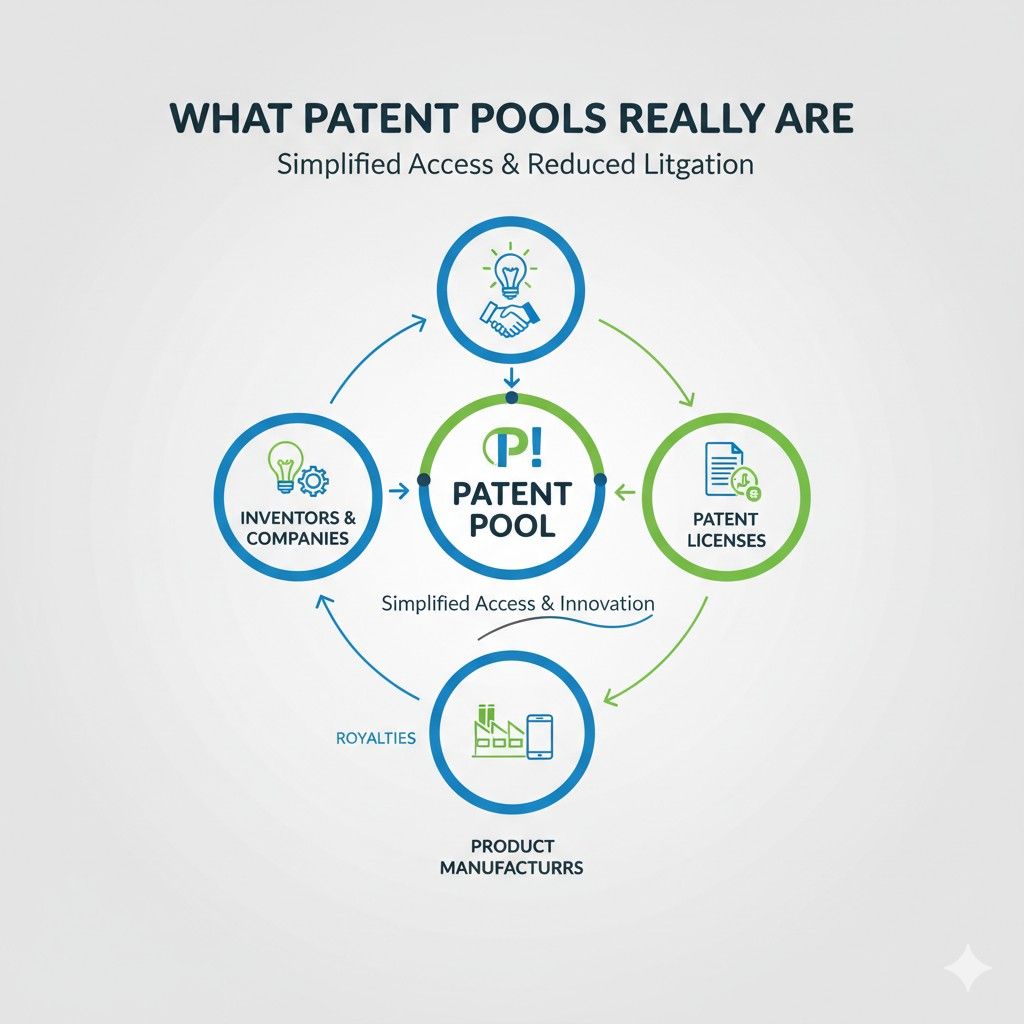
Patent pools exist because licensing each patent one by one became impossible.
Without a pool, a company shipping a product would have to track down every patent owner and negotiate separate deals. That slows markets, raises costs, and kills smaller players.
The pool is a shortcut. It bundles patents together and offers one door instead of fifty.
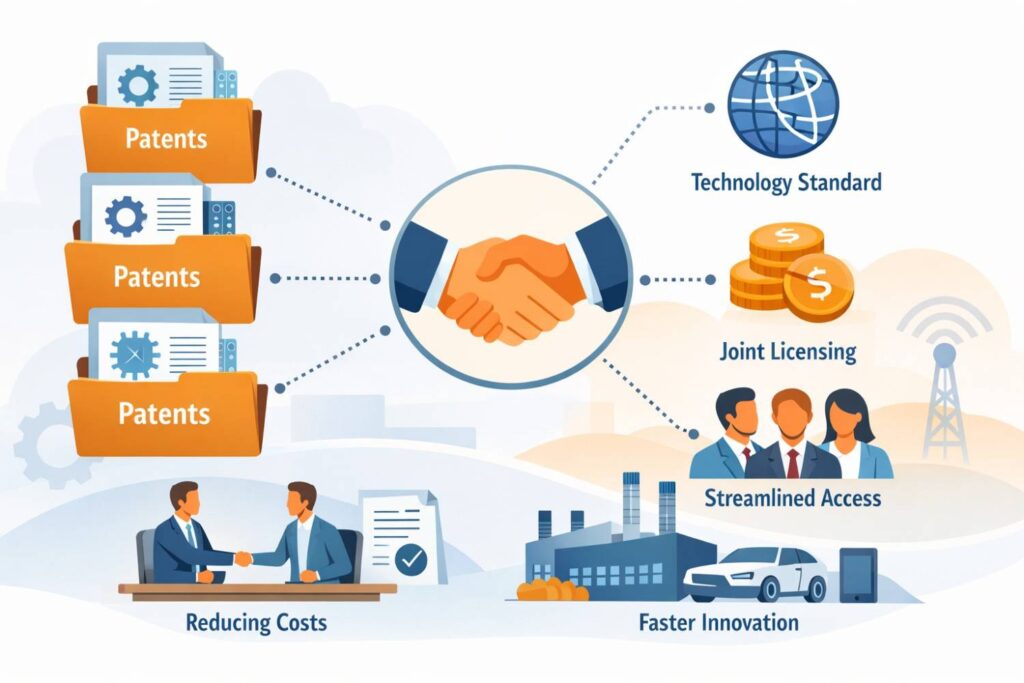
For a business, this means something important. If your product touches a standard, you are already inside a patent ecosystem whether you planned to be or not.
Ignoring that fact does not make it go away. Understanding it early gives you options.
Why Individual Licensing Failed at Scale
In the early days of tech, companies licensed patents directly. This worked when products were simple and patent counts were low. That world is gone.
As standards matured, licensing turned into gridlock. Patent owners demanded different terms. Some refused to license at all. Others moved slowly.
Product companies faced launch delays or legal threats before selling a single unit.
Patent pools formed to break that gridlock.
They created shared rules for pricing, coverage, and enforcement. This allowed entire industries to move forward together instead of fighting over toll booths.
For a founder, the lesson is simple. When a market adopts a pool, it is usually because the old way collapsed. Fighting that shift rarely works. Planning around it often does.
Pools Are Market Infrastructure, Not Legal Tricks
Many founders see patent pools as legal constructs. That is the wrong mental model.
Patent pools are market infrastructure. They shape who gets paid, who gets sued, and who gets access. Once a pool becomes dominant, it quietly sets the rules of the game.
If you are building in a space touched by a pool, you should treat it like you would treat an app store, a cloud provider, or a hardware supply chain. It is not optional context. It is part of the environment.
This is where strategy comes in. Some companies only interact with pools when forced. Others design their patent strategy to work with pools from day one.
The second group usually ends up with more leverage and fewer surprises.
Why Pools Care About Predictability
Pools exist to reduce chaos. They want predictable revenue for patent owners and predictable costs for licensees. That predictability is what makes them attractive to large companies and regulators.
This has a side effect that matters for startups.
Pools tend to reward clean, well-documented patents that clearly map to standards.
Vague ideas or half-finished filings rarely carry weight. This means the way you write and file patents early directly affects whether they will ever matter inside a pool.
Actionable insight here is straightforward. If you think your tech may touch a standard, file with clarity. Tie your invention to real system behavior. Avoid abstract claims.
This is exactly where modern tools like PowerPatent help founders file faster without losing precision.
Pools Shift Risk Away From the Market
Before pools, risk sat everywhere. Product companies risked lawsuits. Patent owners risked being ignored. Investors risked delays.
Pools centralize that risk.
Once a pool is active, enforcement usually becomes more coordinated. Licensing becomes normalized. The chaos drops. This is good for markets, but it changes negotiation dynamics.
If you are early, this means timing matters. Joining or engaging before norms harden can give you more say. Waiting until terms are locked can reduce flexibility.
Founders who understand this treat patent pools like timing plays. They watch adoption curves and decide when to step in rather than reacting after pressure shows up.
Pools Are Not Neutral
It is important to say this clearly. Patent pools are not neutral marketplaces. They are run by organizations with incentives.
Some pools prioritize patent owners. Some prioritize licensees. Some balance both. Governance structures, voting rules, and payout formulas all affect outcomes.
For a business, this means you should never assume a pool works in your favor by default. You need to understand who it serves best and why.
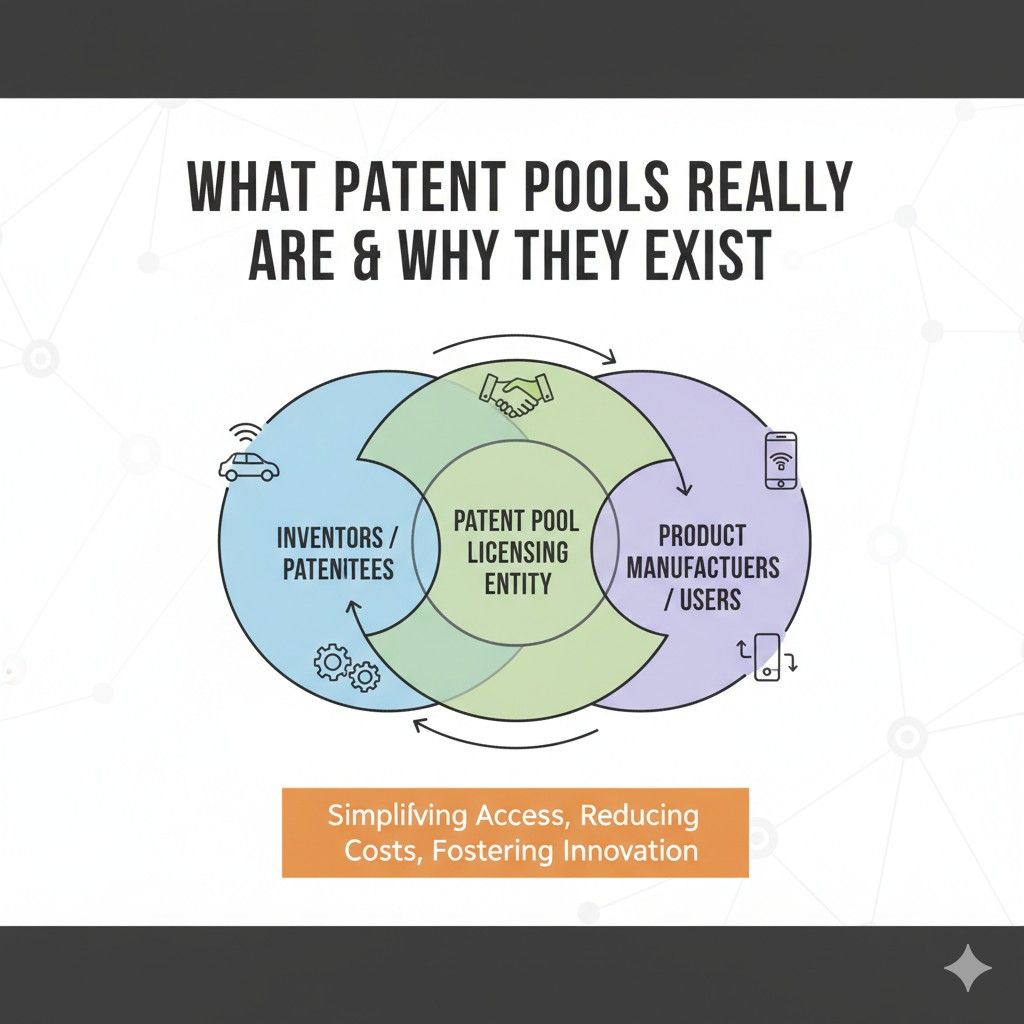
The actionable move here is to map your role early. Are you more likely to be a licensor, a licensee, or both? Each position comes with different risks. Designing your patent filings without this clarity often leads to regret later.
How Pools Influence Valuation and Exits
Patent pools quietly affect company value.
Investors look at whether your tech depends on licensed standards. Acquirers look at whether your patents generate pool revenue or reduce licensing costs.
These factors shape diligence conversations even if no one says the word pool out loud.
A company with pool-relevant patents that are properly filed and recognized often looks cleaner and safer. A company surprised by pool obligations late in the game often looks risky.
The takeaway is not to chase pools. It is to avoid being surprised by them. Filing early, documenting clearly, and understanding where your tech sits gives you leverage in rooms where decisions are made fast.
Where Founders Usually Get This Wrong
Most founders make the same mistake. They treat patent pools as a future problem.
They focus only on product-market fit, which makes sense. But they delay patent thinking until after standards adoption, after customers ask questions, or after letters arrive.
By then, choices shrink.
The better approach is light but intentional planning. You do not need to join a pool early. You do need to understand whether one is likely to matter. That awareness shapes smarter filing, smarter disclosures, and calmer growth.
This is exactly why PowerPatent exists. Founders should not need a law firm to think clearly about IP. They should have tools that fit how startups actually move.
If you want to see how modern patent strategy works without slowing you down, you can explore it here: https://powerpatent.com/how-it-works
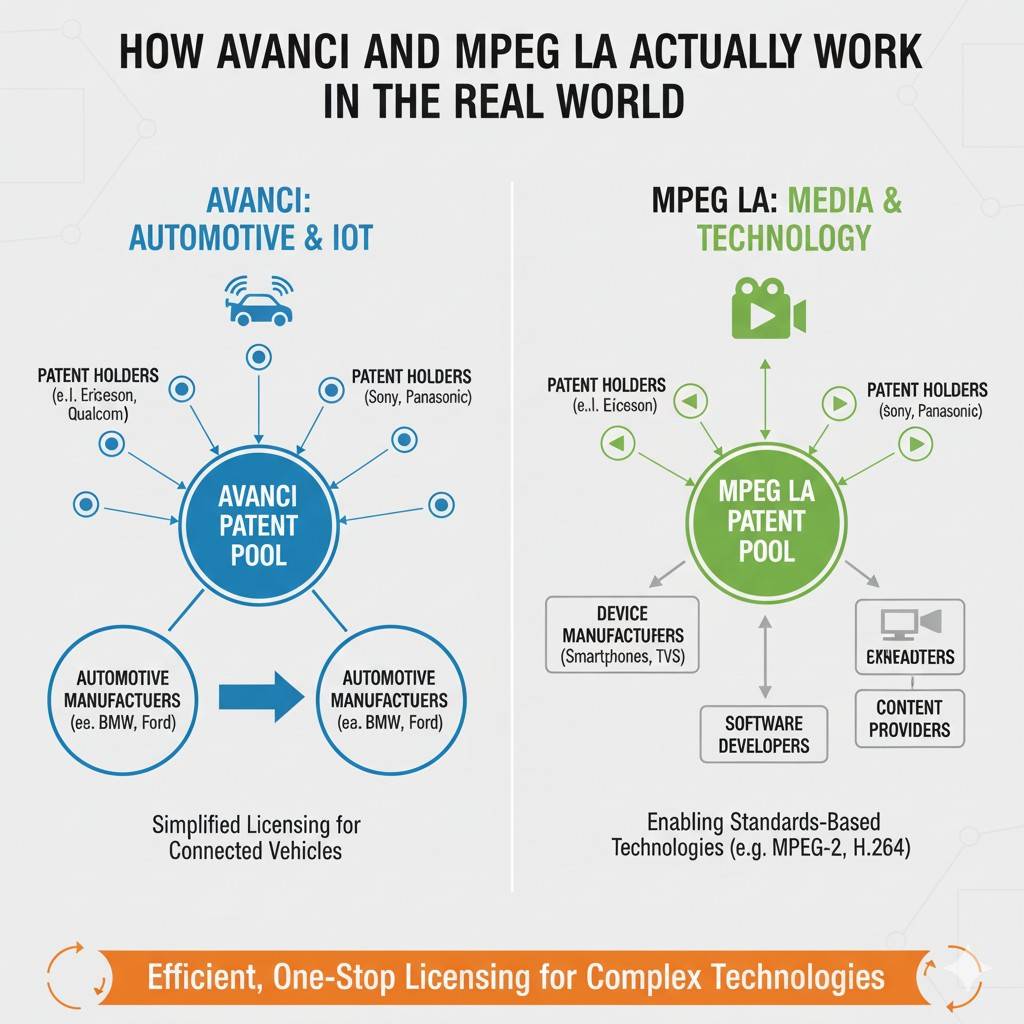
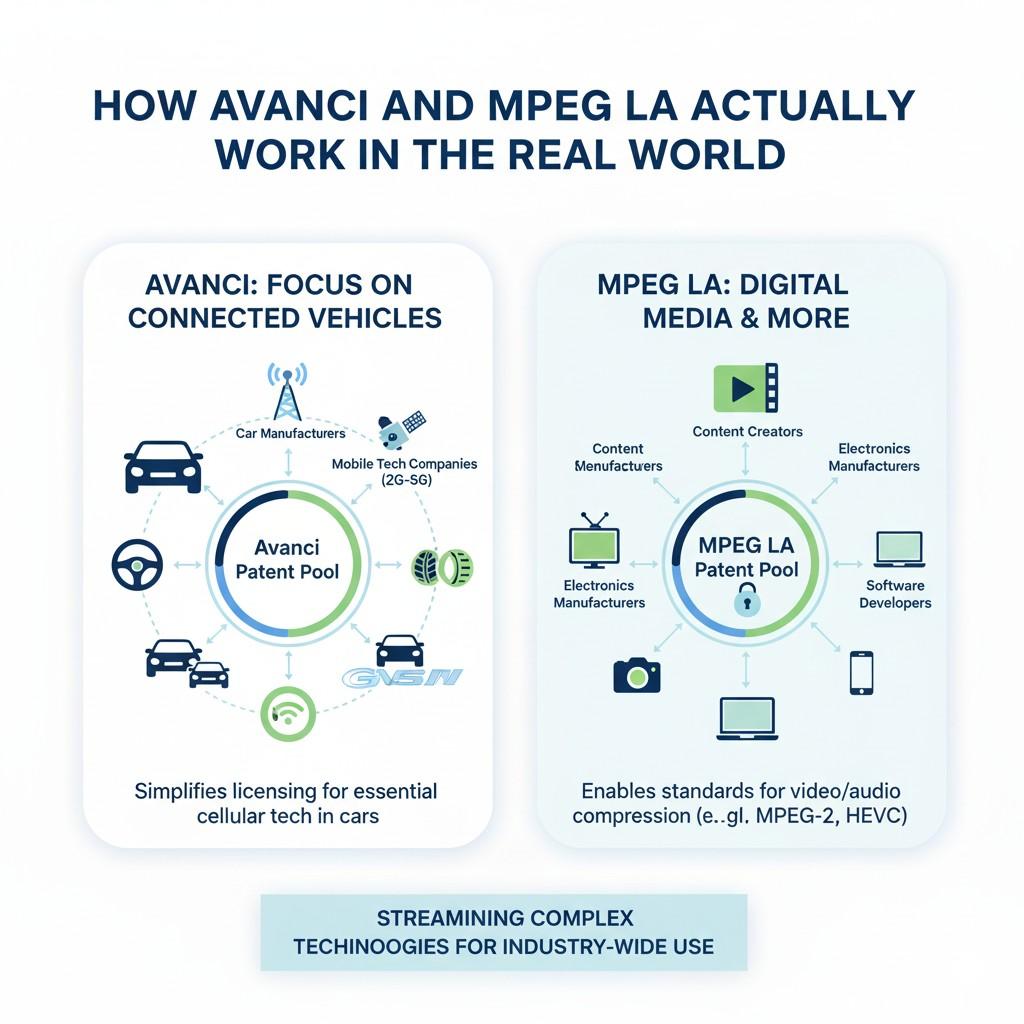
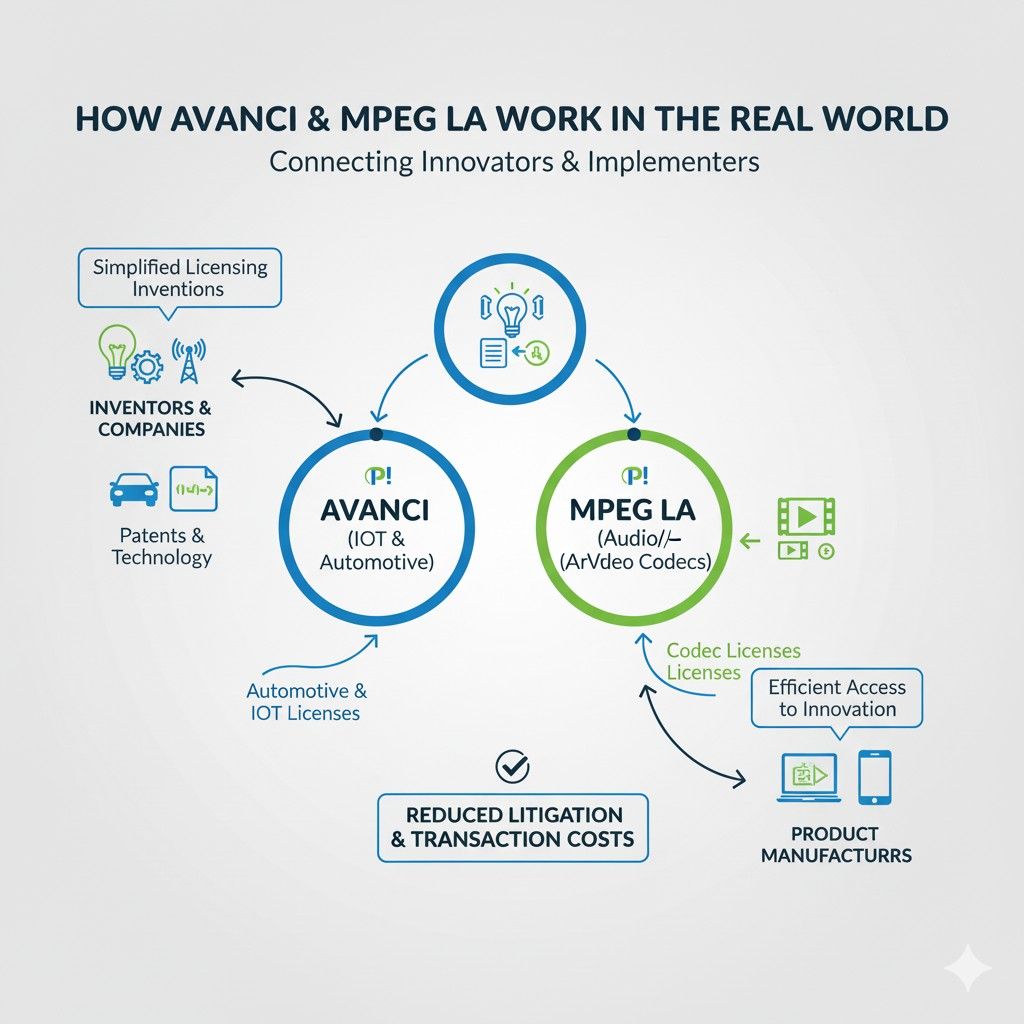
How Avanci and MPEG LA Actually Work in the Real World
This is where patent pools stop being abstract and start affecting real businesses. Avanci and MPEG LA are two of the most influential pools in modern tech.
They operate differently, serve different markets, and create very different outcomes depending on where your product sits.
Understanding how they actually function, not how they are described on websites, helps you avoid bad assumptions and spot leverage early.
This section focuses on how these pools behave in practice and what that means for companies building and scaling products.
Avanci Exists Because Connectivity Spread Everywhere
Avanci was created to solve a very specific problem. Cellular technology moved beyond phones. Cars, sensors, trackers, and machines all started using cellular standards.
Each of those products touched the same core patents, but the companies making them were not telecom experts.
Without a pool, every car maker or device maker would need to negotiate with dozens of telecom patent owners.
That was not realistic. Avanci stepped in to create a single license covering many standard-essential patents tied to cellular tech.
The key point here is that Avanci was built for industries that did not grow up with patents at the center.
Automotive companies did not want to manage telecom licensing. Avanci made it easier for them to comply and move forward.
If your product includes embedded connectivity, Avanci may already be part of your future whether you see it or not.
How Avanci Makes Money Flow
Avanci collects license fees from product companies and distributes them to patent owners inside the pool. The rates are usually fixed per unit and tied to product categories.
This structure creates predictability. Product companies know their cost upfront. Patent owners know there is a steady stream of revenue.
For a startup, this predictability cuts both ways. On one hand, it reduces surprise risk. On the other, it caps negotiation. You do not get custom terms just because you are small or early.
The strategic takeaway is timing. If you are building toward a product that will ship at scale, knowing these costs early helps you price, model margins, and avoid shocks later.
Avanci Cares Deeply About Patent Quality
Avanci does not accept every patent. Patents must clearly map to the cellular standards they cover. They are reviewed. Weak or vague filings rarely make it in.
This is where early patent decisions matter. If your invention improves how connectivity works, how devices interact with networks, or how systems manage signals, the way you file determines whether it is ever pool-relevant.
Founders often assume patents are binary. Filed or not. In reality, structure matters. Claims need to align with how standards operate. This is why filing fast without losing technical clarity is critical.
Why Avanci Is Mostly Invisible Until It Isn’t
Many startups do not hear about Avanci until a large customer asks a licensing question. At that point, pressure appears quickly.
The pool usually does not chase early-stage companies aggressively. It engages when products reach the market at scale. That delay creates a false sense of safety.
The smarter move is awareness. If your roadmap includes connected devices, vehicles, or infrastructure, assume Avanci is relevant and plan filings accordingly.
MPEG LA Grew Out of Media Chaos
MPEG LA emerged from a different pain point. Video and audio compression standards were exploding. Companies could not ship media products without touching dozens of patents.
Unlike Avanci, MPEG LA focused heavily on consumer electronics, media platforms, and software. Think video codecs, streaming, and playback.
This meant startups, not just large manufacturers, often ran into MPEG-related licensing issues. Software companies felt this pressure early.
The pool created order where lawsuits were common. It bundled patents tied to formats like MPEG-2, AVC, and others, making licensing simpler.
MPEG LA’s Model Is More Visible to Startups
Unlike Avanci, MPEG LA often interacts with smaller companies sooner. Software products, apps, and platforms hit users quickly, which triggers licensing relevance earlier.
This changes how startups should think. If you are building anything related to video, media processing, or compression, MPEG LA should be on your radar from day one.
Ignoring it does not make the problem disappear. It usually shows up as friction during partnerships, distribution, or fundraising.
How MPEG LA Evaluates Patents
MPEG LA also screens patents, but its scope is broader. Software-based innovations tied to codecs, processing pipelines, or playback behavior can qualify.
This makes patent drafting especially important. Claims must describe how your invention fits into the technical flow of media handling. Generic descriptions rarely survive scrutiny.
Actionable advice here is simple. Document your system behavior clearly while you are building. Turn those insights into filings early. Waiting until after launch often weakens your position.
Licensing Pressure Feels Different With MPEG LA
MPEG LA licensing tends to feel closer and more immediate. Companies distributing software globally cannot hide from it easily.
This means founders should think defensively and offensively at the same time. Defensive in understanding obligations. Offensive in building patents that could later join pools or offset costs.
Companies that only think defensively usually pay forever. Companies that build patent assets early sometimes turn licensing from a cost into leverage.
Pools Shape Industry Norms Quietly
Both Avanci and MPEG LA shape how industries behave. They influence how products are priced, how partnerships are structured, and how disputes are resolved.
Once norms are set, breaking them is hard. This is why understanding these pools before scaling matters.
Founders who see pools early design products, patents, and business models that fit the landscape. Those who ignore them often feel boxed in later.
What This Means for Strategy
If your tech touches connectivity, media, or standards-heavy areas, these pools are not optional knowledge. They are part of your operating environment.
You do not need to join anything early. You do need to file smartly early. Clear patents tied to real system behavior give you options later, whether you license, join a pool, or negotiate.
This is where modern patent workflows matter. Tools that help founders capture real technical value quickly without slowing product teams make a real difference.
If you want to see how that works in practice, you can explore it here: https://powerpatent.com/how-it-works
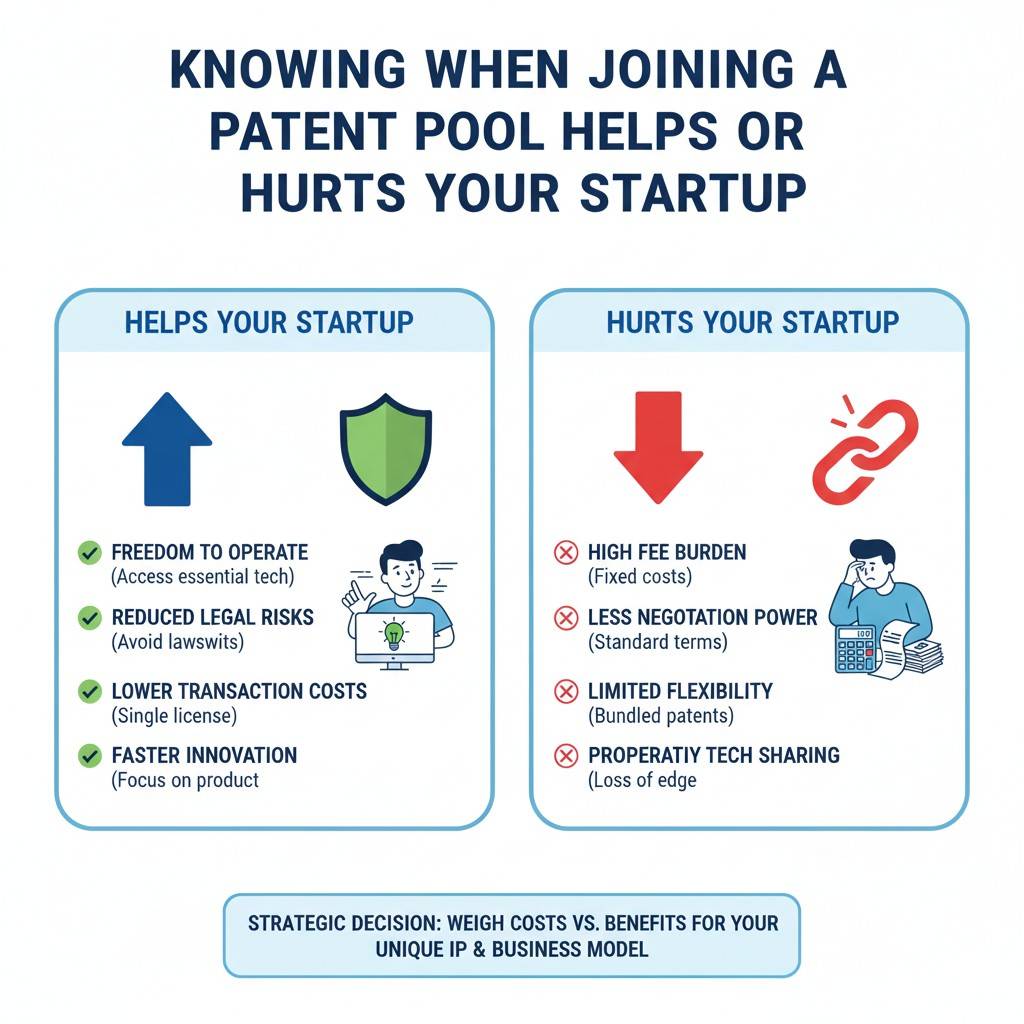
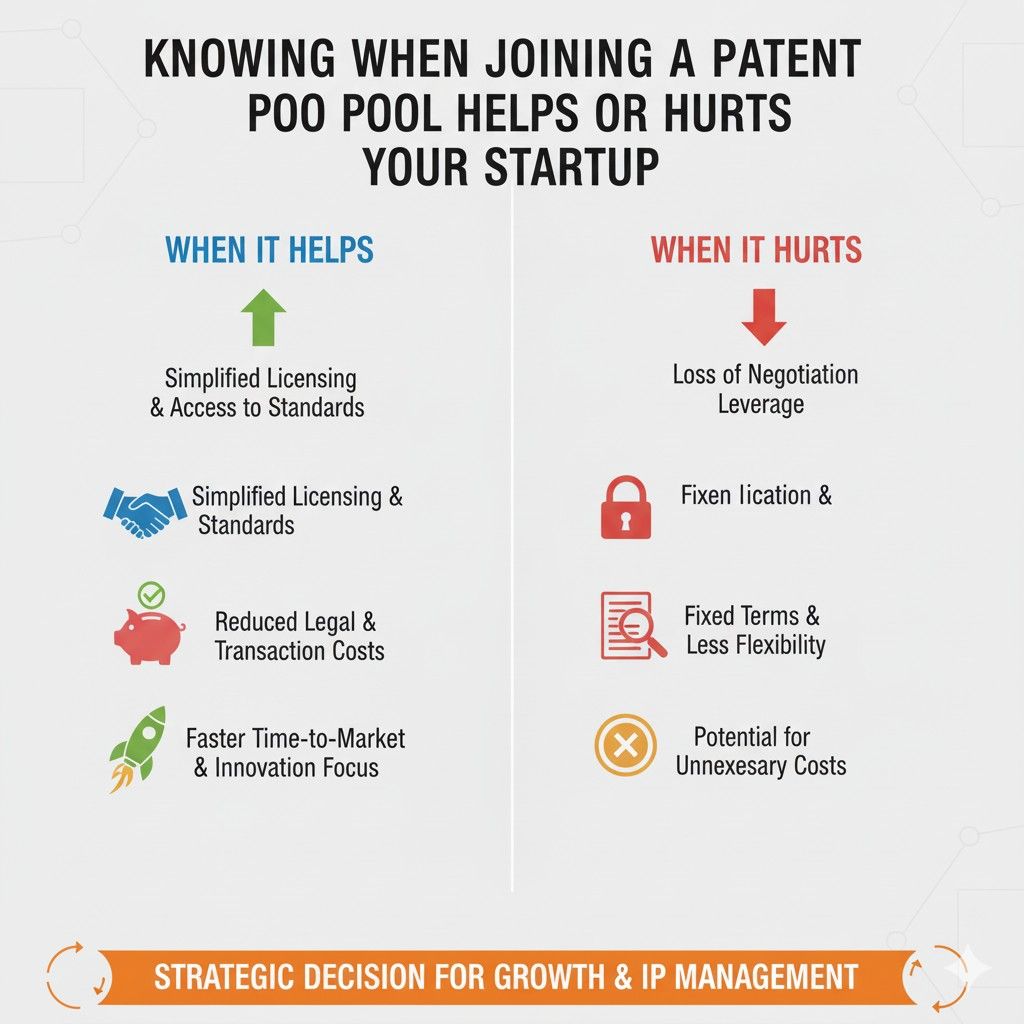
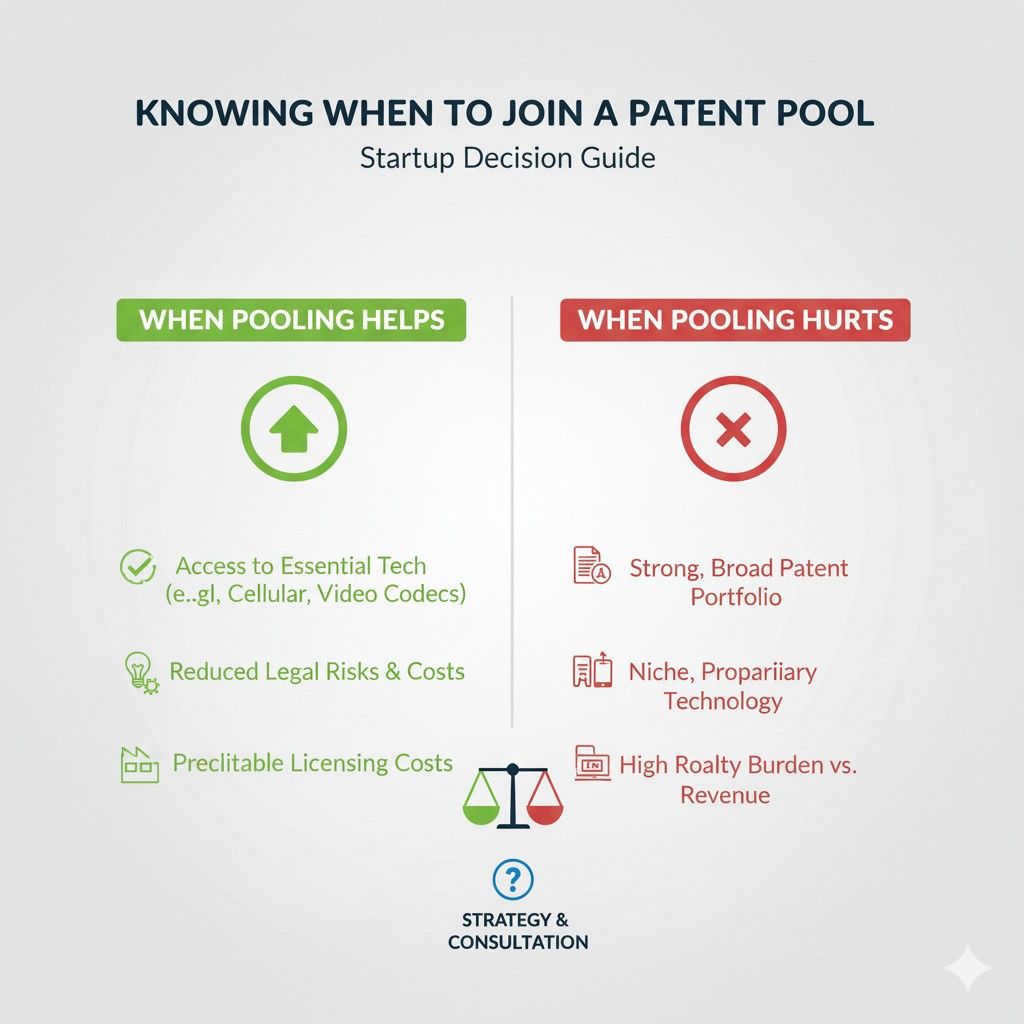
Knowing When Joining a Patent Pool Helps or Hurts Your Startup
This is the question that actually matters. Not what patent pools are. Not how famous ones work. But when joining one is a smart business move and when it quietly limits your future.
Most founders think joining a patent pool is a legal decision. It is not. It is a timing and leverage decision. The same pool can be helpful at one stage and harmful at another.
Understanding that difference is what separates companies that feel trapped later from those that stay in control.
This section is about judgment. About reading signals early and acting before pressure forces your hand.
Joining a Pool Is a One-Way Door in Many Cases
Once you commit patents to a pool, you often give up individual control over how they are licensed. The pool sets terms. The pool collects fees. The pool distributes revenue.
That tradeoff can make sense. It can also cap upside.
Early-stage companies often underestimate this. They see small early revenue and think joining early is harmless. In reality, the cost is usually not money. It is flexibility.

Before joining anything, you should assume that you are locking in a path. Ask whether you are ready to give up direct negotiation power in exchange for simplicity.
Pools Favor Scale, Not Experiments
Patent pools are built for markets that have stabilized. They work best when products are shipping at volume and standards are settled.
If your product is still changing, your use of the standard may shift. Joining too early can mean committing patents before you fully understand where your value truly sits.
A smart approach is patience. File early. Observe adoption. Let your product settle. Pools will still be there later. Your leverage is usually higher once your tech proves itself.
When Joining Early Can Actually Help
There are moments when early participation makes sense.
If your business model depends heavily on industry trust, joining a pool can signal maturity. Large partners often prefer dealing with companies that align with industry norms.
In these cases, the pool acts as a credibility layer. It reduces friction in deals and speeds up adoption.
The key is intention. You join to unlock distribution or partnerships, not because someone told you it was required.
When Pools Quietly Hurt Startups
The most common harm comes from joining without understanding alternatives.
Some startups join pools to avoid conflict, even when conflict is unlikely. Others join because advisors default to conservative advice.
The risk is that you give up future leverage before you need to. Once inside, renegotiation is rare. Exit is often impossible.
Founders should always ask a simple question before joining. What problem does this solve right now? If the answer is vague, wait.
The Difference Between Being a Licensee and a Contributor
Your role matters.
If you are mainly a product company that needs coverage, joining as a licensee can reduce risk and speed launches. This is often the safer side of pools.
If you are contributing patents, the decision is heavier. You are putting assets on the table. Assets that may grow in value as your product scales.
Contributing too early is the most common mistake. Many startups do this before they even know which patents truly matter.
Using Time as Leverage
Time is one of the few advantages startups have.
Patent pools move slowly. Standards evolve slowly. You can use that gap.
Filing patents early without committing them gives you optionality. You can later decide to join a pool, license directly, or use patents defensively.
This is why early filing is not about lawsuits. It is about buying time and choices.
Reading Market Signals Before You Commit
Certain signals suggest that pool engagement is approaching.
Customers asking about licensing. Partners raising compliance questions. Investors flagging standards risk. These are early warnings, not emergencies.
When you see these signals, you prepare. You do not panic.
Preparation means understanding which of your patents might be relevant, how strong they are, and what role you want to play.
Pools and Fundraising Dynamics
Patent pools often surface during diligence.
Investors want to know if your product will face licensing costs or disputes. Clear answers build confidence.
Being able to say that you understand the pool landscape and have a plan is often more valuable than having already joined one.
This is another reason not to rush. Clarity beats commitment.
The Hidden Benefit of Waiting
Waiting gives you data.
You learn which patents matter. Which standards gain traction. Which pools dominate.
Startups that wait strategically often enter pools later with stronger positions and clearer expectations.
The mistake is not waiting. The mistake is waiting without preparing.
How PowerPatent Fits Into This Decision
All of this only works if your patents are solid.
Weak filings give you no leverage. Strong filings give you options.
PowerPatent is built for this exact reality. Founders can capture real technical value early, with clarity, without slowing product teams. That gives you room to decide later, on your terms.
If you want to see how that works in practice, you can explore it here: https://powerpatent.com/how-it-works
Wrapping It Up
Patent pools are not good or bad by default. They are tools that shape markets once technology matures and standards take hold. The mistake most startups make is treating them as surprises instead of structures that can be planned around. Avanci and MPEG LA exist because modern technology is shared, layered, and interconnected. When many companies rely on the same technical rules, coordination becomes necessary. Pools are how industries avoid chaos. But coordination always comes with tradeoffs.