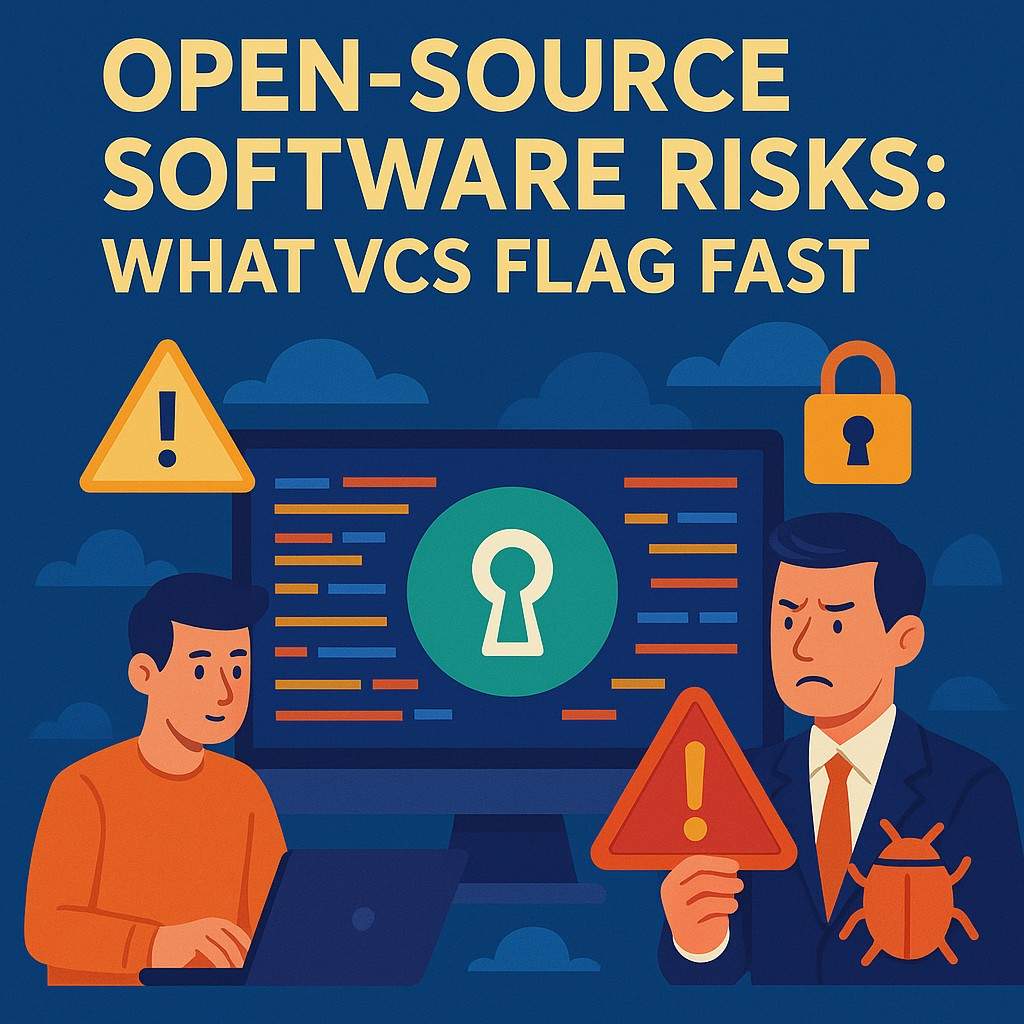
Open-source feels like magic when you’re building fast. You find a repo, drop it into your stack, ship something new in an hour, and move on. It’s a superpower for early teams because it removes friction and lets you build your product without reinventing the wheel. But the moment you step into a room with a serious investor, that same open-source magic becomes a bright blinking warning light.
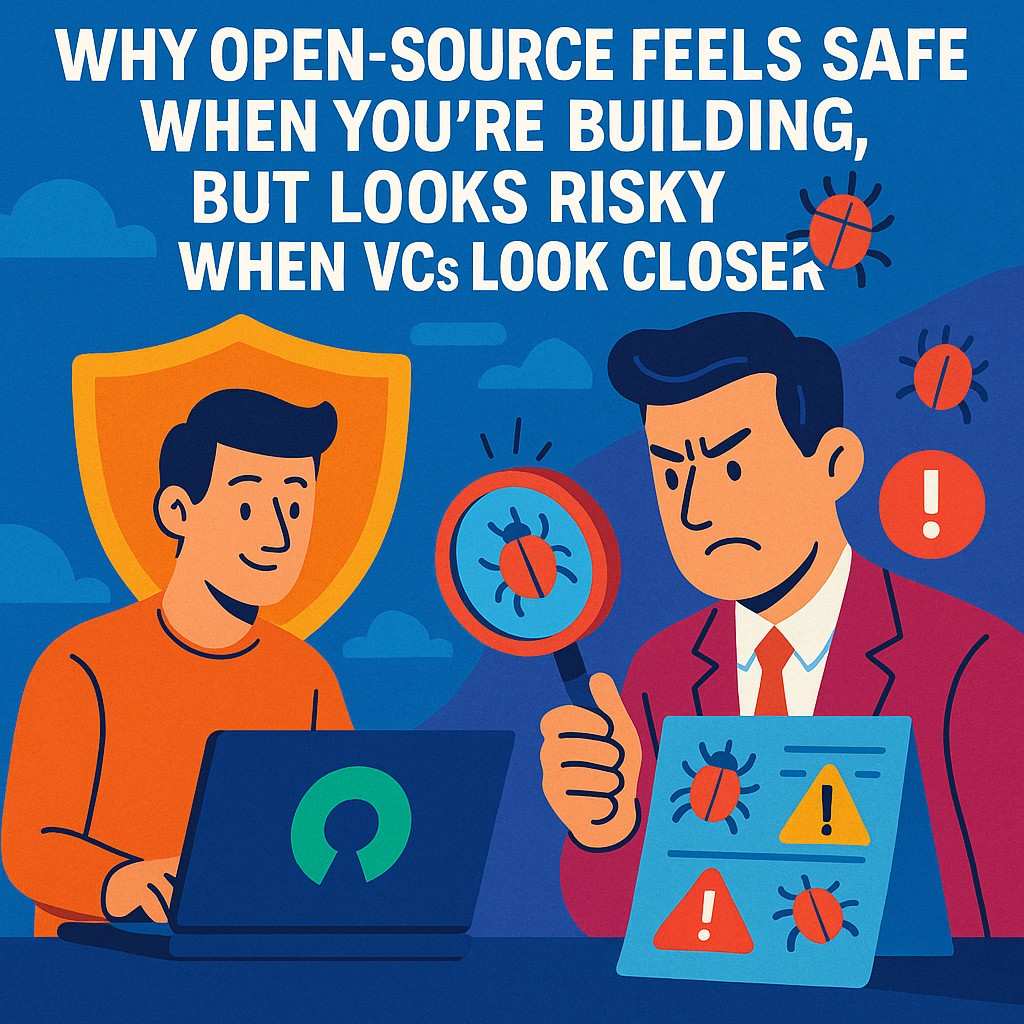
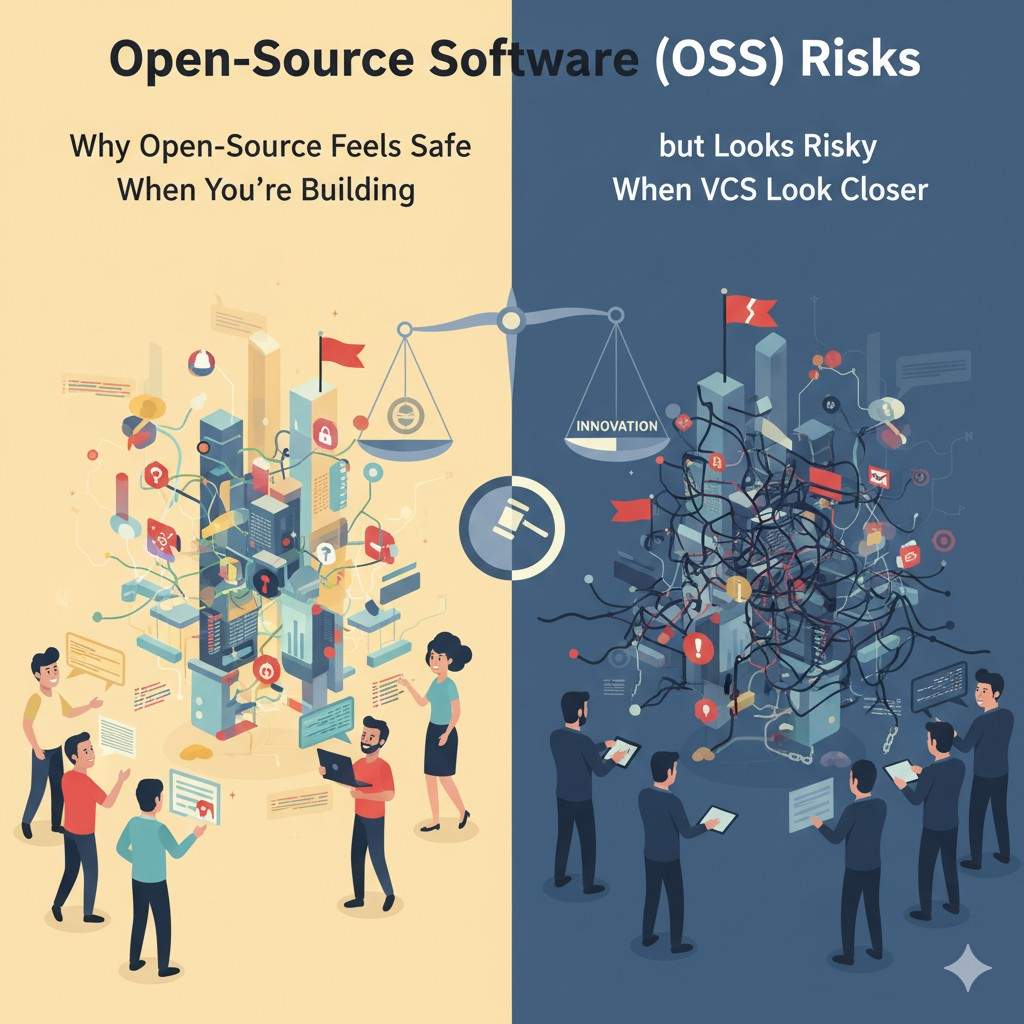
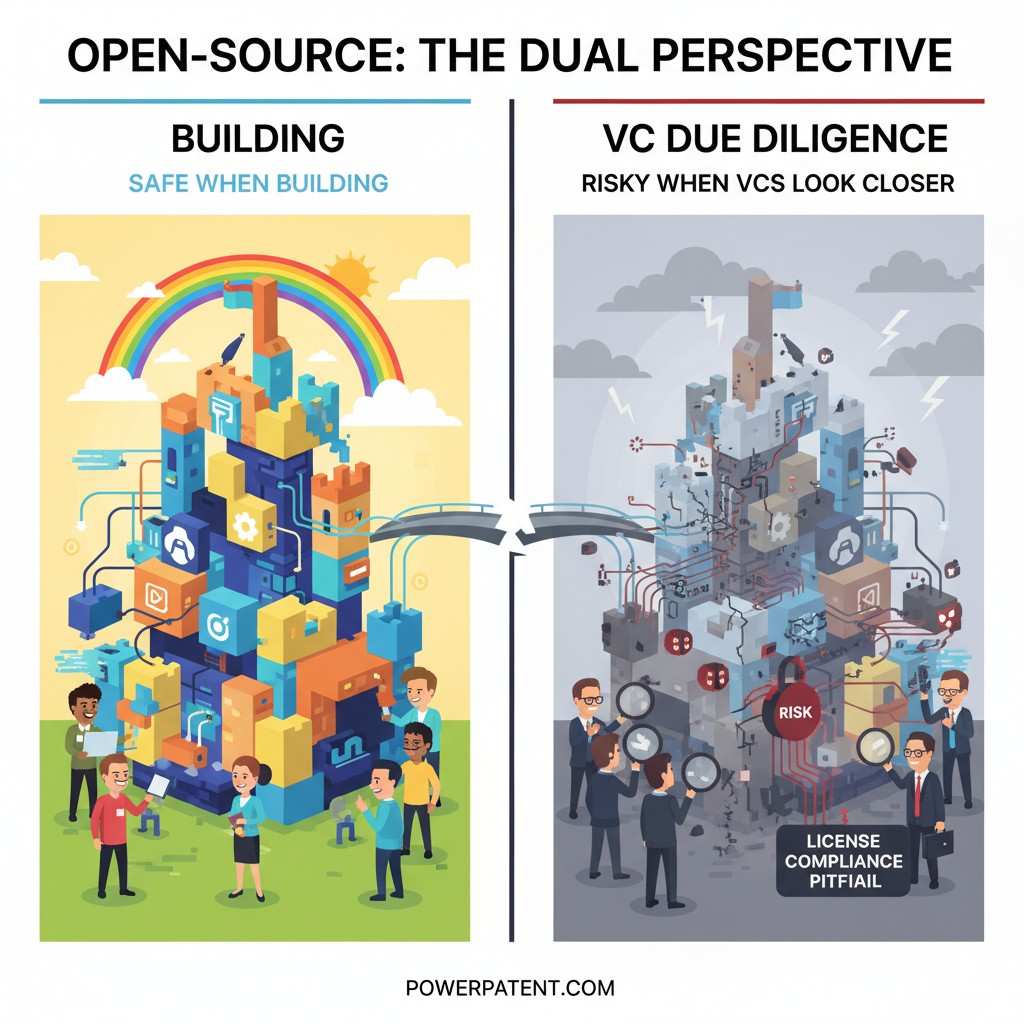
Why Open-Source Feels Safe When You’re Building, but Looks Risky When VCs Look Closer
When you are building fast, open-source feels like a friendly shortcut. It gives you speed, tools, and momentum without slowing your roadmap. You can install something, wire it up, and keep shipping.
This speed feels harmless because nothing looks dangerous on the surface. The code works. The team moves faster.
The product comes alive quicker. But when a VC reviews your stack, they see something very different. They are not judging your speed.
They are judging your long-term ownership, risk profile, and the strength of the moat you are trying to build. What feels like a gift to you can look like a hidden trap to them.
The Invisible Line Between Building Fast and Owning What You Built
Open-source is helpful because it lets you avoid building common features from scratch. But the line between using OSS and relying on it too deeply is thin. VCs want to know that the core of your company is something you truly own.
If the essential logic, models, or infrastructure of your product sits on top of someone else’s open-source terms, you may not have full ownership. This is not obvious while you are building.
Everything works. No alarms go off. But investors see the long-term risk because they have watched deals fall apart when founders discover too late that they used code that forces disclosure or limits exclusivity.
A smart approach is to make a habit of tagging the pieces of your system that create differentiation. Treat them like crown jewels. Keep them clean. Keep them separate from anything with unclear licensing.
Even something small, like adding a thin internal wrapper around an OSS module, can give you more control and protect your architecture from license spread.
The goal is not to remove OSS from your stack, but to keep your unique parts isolated and protected so investors see a clean boundary between your innovations and the parts you borrowed.
Why VCs Worry When You Can’t Trace Your Stack’s DNA
When you are building, you rarely think about the ancestry of your code. You grab a repo, plug it in, and trust that someone else already handled the legal details.
But investors assume the opposite. If you cannot explain where key modules came from, they assume nobody has checked them.
This is a problem because if you cannot trace the origins of your components, you cannot prove that you have the right to use them in a commercial context.
A helpful practice for founders is to set up a simple internal habit of tracking which open-source components touch sensitive areas. This does not need to be complicated.
A plain text file, a lightweight audit tool, or a shared doc with notes about where each module is used is enough to show investors that you have visibility into your stack.
The point is not perfection. The point is control. When VCs see you treat OSS like a strategic ingredient instead of a random shortcut, your risk profile drops immediately.
How Hidden Licensing Rules Turn Into Big Funding Problems
Open-source licenses are not scary when you understand them, but they are dangerous when you do not.
Some licenses are permissive. Some require credit. Some require disclosure. Some demand you open-source your entire codebase if you combine it the wrong way.
These rules are not obvious when you first add a dependency. You might never see them again.
But investors know that one overlooked rule can force uncomfortable choices later, especially when you are trying to patent a feature or protect a model.
A useful strategy is to check the licenses of any OSS that touches your proprietary logic. If something carries obligations you cannot meet, replace it early.
If something is risky but essential, encapsulate it to reduce exposure. If something has ambiguous terms, talk to someone who understands the legal side.
This small amount of early discipline makes investors feel confident that you are building a company, not just a product. It shows that you understand that OSS is a tool, not a foundation for your moat.
If you ever need to understand whether your code or model is safe to patent, you can always explore how PowerPatent handles this without slowing your build: https://powerpatent.com/how-it-works
Why OSS Risk Grows With Every New Line of Code, Even If You Don’t Notice It
When a team moves fast, OSS risk quietly grows with each new feature, module, or integration. It does not announce itself. It does not break your build.
But every new dependency adds weight to your long-term obligations. The more your product evolves, the harder it becomes to unwind a problematic piece buried deep inside your system.
Investors know this, which is why they want to see awareness early instead of cleanup later.
A simple, effective habit is to treat each new dependency as something your future self must one day explain to an investor or acquirer. This mindset shift alone reduces risky choices.
It nudges your team to pause before adding something heavy. It encourages you to replace something questionable while it is still easy. It reminds you that every line of OSS you introduce carries terms you must honor.
This level of discipline helps you build faster, not slower, because it prevents painful rewrites during fundraising or due diligence. And when a VC asks how you manage OSS risk, you can answer with confidence instead of worry.
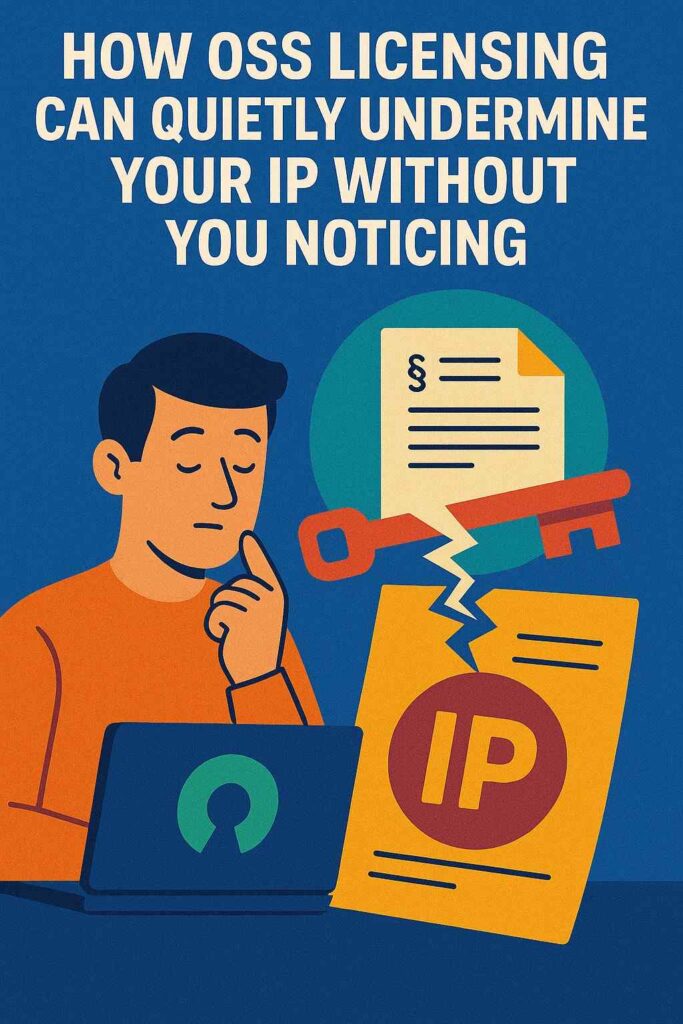
How OSS Licensing Can Quietly Undermine Your IP Without You Noticing
When your team is moving fast, licenses feel like background noise. You see a repository, you trust that it is widely used, and you drop it into your system. Nothing looks dangerous. The code runs. The feature ships. The sprint closes. But licenses operate in the shadows.
They shape what you can protect, what you can patent, what you can claim as proprietary, and what you must share.
VCs understand this deeply because they have seen strong technology lose its defensive edge simply because its foundation was built on the wrong terms.
What feels harmless during development can quietly limit what you are allowed to own, and that becomes a serious problem the moment your company is evaluated for investment.
When Licenses Create Boundaries Around What You Can Claim as Your Own
Most founders think open-source is free to use however they want. But every license defines a boundary. Some boundaries are gentle and flexible. Others are rigid and binding.
If a core part of your system depends on a license that restricts commercial use or requires source disclosure, you may lose the freedom to position that part as proprietary.
This becomes especially painful when the very part restricted by the license is also the part you thought was your moat.
The safest approach is to treat every new OSS component as a contract. Ask yourself what it allows, what it demands, and what it limits.
This habit alone can prevent you from building critical features on top of components that weaken your ownership.
And when VCs ask how you control IP risk, you can explain that your team checks license direction early, instead of discovering a constraint during due diligence when it is too late to fix.
How Subtle Licensing Terms Disrupt Your Ability to Patent Core Features
Founders often think patents are about technical novelty. But patents also depend on clarity of ownership.
If the core idea you want to protect relies on open-source code that comes with restrictions on derivative works or patent rights, you may not be able to claim the invention as fully yours.
Even small traces of restrictive OSS can reduce your ability to obtain broad protection.
A practical tactic is to isolate the inventive part of your system. Keep it away from components that may carry obligations. Encapsulate it. Give it a clean, well-defined boundary.
This ensures that when you describe your invention to a patent team, you are not accidentally including elements that complicate your rights.
If you are ever unsure how to structure your invention so it becomes patent-ready without rewriting your whole system, PowerPatent explains that process here: https://powerpatent.com/how-it-works
Why Investors Care About License Contamination Even When You Don’t See It
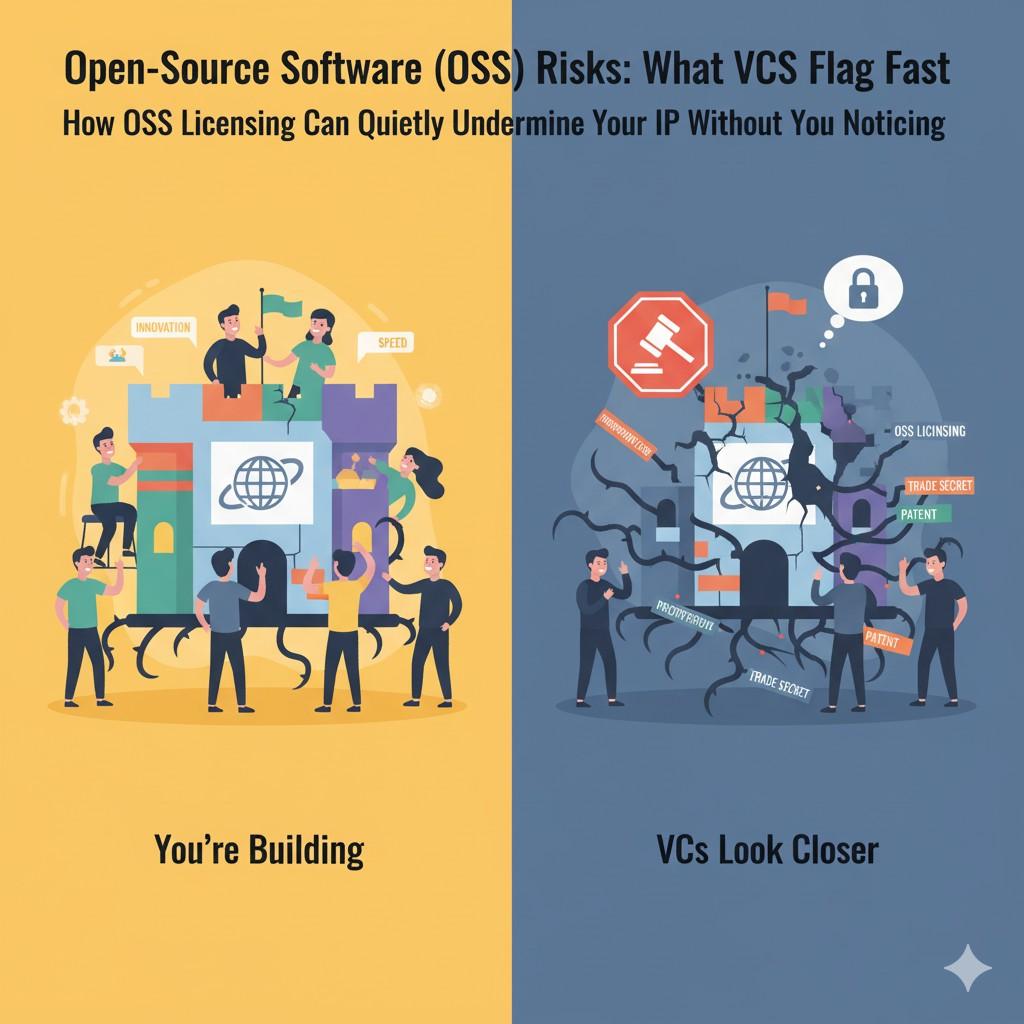
To a founder, contamination sounds extreme, but in the eyes of a VC, it is a simple idea. Certain licenses are like dyes. If you mix them with your proprietary code in the wrong way, they spread their requirements across your whole system.
This is invisible in your day-to-day development. The code looks the same. The tests pass. The product works. But from an investor’s viewpoint, your ownership becomes uncertain, and uncertainty lowers valuation.
A strong strategy is to adopt a clean boundary rule inside your engineering culture.
Anything with a viral or restrictive license stays outside your core logic. Anything that touches your proprietary logic must be permissive. Anything ambiguous must be reviewed before it lands in the codebase.
This is not about slowing your team. It is about protecting your ability to defend what you build so you do not face hard choices during fundraising.
How Unclear OSS Use Can Turn Future Funding Into a Negotiation Problem
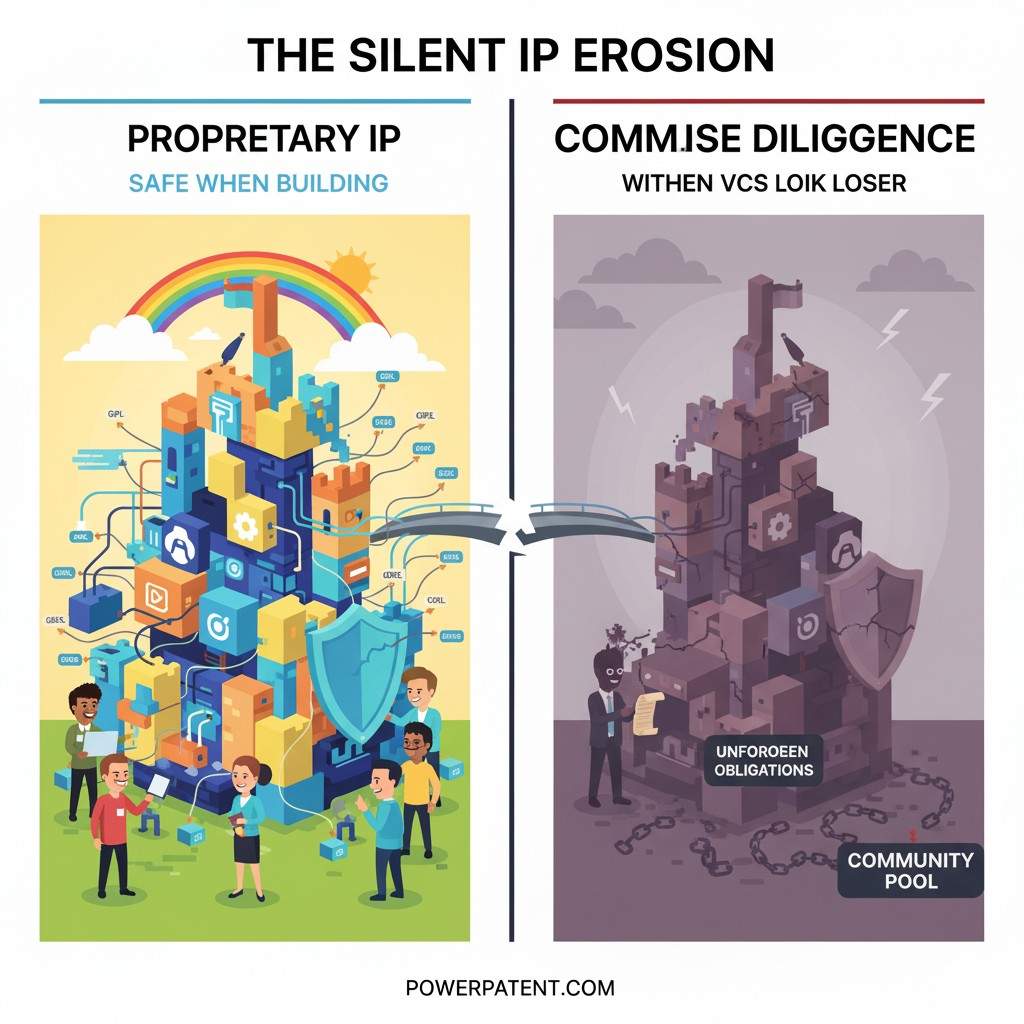
Most deals fall apart not because the tech fails but because ownership is unclear. When investors sense that you cannot fully control the IP inside your product, they hesitate. They negotiate harder.
They adjust valuation. They ask for warranties you do not want to sign. This happens not because they distrust you, but because they do not want to invest in a company whose core might be governed by someone else’s license terms.
A powerful way to stay ahead of this is to make your OSS stance visible and intentional. Keep a simple internal record of which licenses touch your product. Keep the record updated. Make sure the CTO can explain the choices.
When a VC asks how you manage OSS risk, a confident, simple answer instantly positions you as a founder who is thinking long-term, not just sprint-to-sprint.
That confidence becomes part of your pitch. It signals discipline and reduces friction in negotiations.
The Warning Signs VCs Spot Fast When Reviewing Your Codebase
When investors review your product, they are not just checking for technical strength. They are looking for clues that show how much control you have over what you are building.
They look for patterns that reveal whether your codebase is stable, safe, and defensible. These clues appear quickly, often within the first few minutes of a technical discussion.
What feels normal to you as a builder can feel like a warning sign to someone evaluating long-term risk. The way you manage open-source is one of the strongest signals of how mature and fundable your company looks.
When You Can’t Explain the Licensing Footprint of Your System
Investors pay close attention to how confidently you talk about the code you rely on. If you cannot explain which parts of your system depend on open-source and what types of licenses they fall under, they begin to assume your team has not taken ownership of the risk.
It is not about memorizing license names. It is about showing that someone has paid attention.
If you answer vaguely or say the team just uses whatever works, the investor hears something very different. They hear that the company might not know where its boundaries are.
A strong way to avoid this signal is to build a regular habit around OSS awareness. Once a month, or once a sprint, make it normal for the engineering lead to verify what open-source is being used and where it sits.
This gives you confidence when speaking to investors later. Even a simple explanation such as describing how you keep track of dependencies gives them assurance that you control your stack instead of being shaped by it.
When the Core of Your Product Depends on Unvetted OSS Components
Another signal that raises concern fast is when the most important part of your system relies heavily on open-source modules that were never reviewed. Investors know that many OSS projects stop receiving updates or fall behind on security patches.
If your core logic sits on top of an outdated or unstable dependency, they worry about long-term safety and future scalability. They do not expect you to build everything from scratch.
They just want to know that the pieces you rely on are intentional and stable.
A useful approach is to treat the heart of your product like a protected zone. Before adding any open-source inside that zone, take a small moment to check its health, its popularity, its update history, and its license terms.
This habit is simple but powerful.
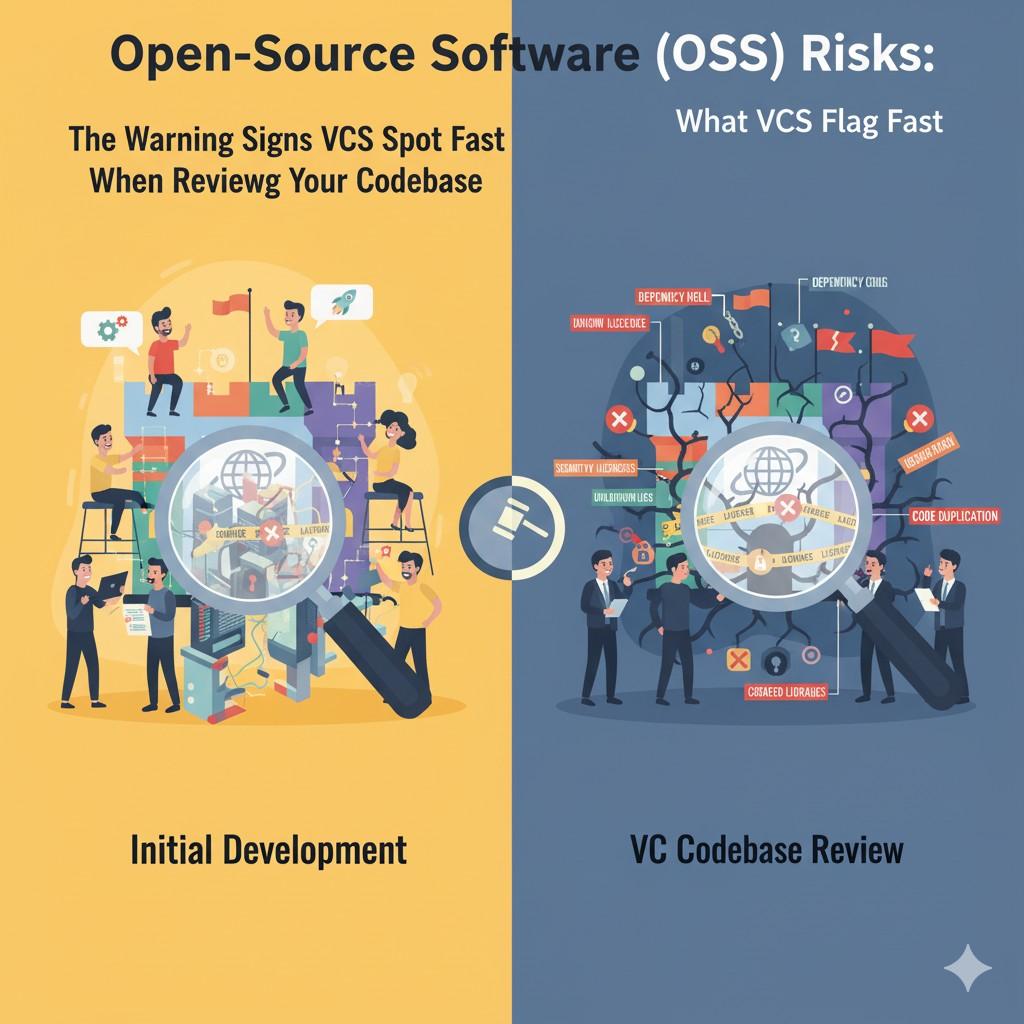
It shows investors that your relationship with OSS is strategic, not reactive. It signals maturity and reduces the chance that future audits uncover weak spots.
When Your Codebase Shows Too Much Rapid Copy-Paste or Patchwork Integration
Sometimes founders move so fast that the codebase becomes a mixture of snippets, samples, and borrowed logic. This is understandable during early experiments.
But at scale, it can show up as a warning to investors. A patchwork codebase often means the team relied on quick fixes and open-source shortcuts instead of building a stable architecture.
It also makes it harder to trace where code came from, which creates uncertainty around ownership.
A helpful strategy is to clean up these areas before fundraising. You do not need a perfect codebase, but investors appreciate seeing that you have taken the time to replace low-quality borrowed snippets with your own logic where it matters.
Even a small refactor in high-sensitivity areas can reduce IP ambiguity and give your company a more polished and reliable appearance.
When There’s No Clear Separation Between Proprietary Logic and OSS Code
This is one of the biggest red flags for VCs. If your proprietary logic is mixed directly into open-source components without boundaries, the investor begins to question how much of your product you actually own.
When there is no line between what you created and what you borrowed, it becomes harder to defend your invention. It becomes harder to patent your work. It becomes harder to convince an investor that your technology can stand on its own.
A powerful solution is to make separation a core engineering principle. Keep OSS modules at the edges. Put your unique algorithms, your proprietary models, your custom infrastructure, and your business logic inside a protected layer.
Wrap open-source modules instead of embedding your logic directly inside them. This practice not only reduces license exposure but also strengthens your architecture.
When an investor asks how your system is structured, you can clearly point to the parts that belong to you and the parts that act as utilities.
If you ever need help ensuring that your proprietary logic is actually patent-ready and cleanly separated from open-source influence, you can explore how PowerPatent supports that here: https://powerpatent.com/how-it-works
When Dependency Management Looks Like a Black Box Instead of a System
Investors often ask how you manage updates, patches, and versioning. If the answer is that you rely on automated installs without any oversight, they begin to worry.
They want to know that your team has visibility into what is entering the codebase. When dependencies update silently or stack grows without review, it signals risk.
Investors know that neglecting dependency management can lead to licensing surprises and security issues that surface later.
A smooth fix is to adopt a simple internal rule. Any time a major dependency changes, someone reviews its license and its update notes before merging it into main.
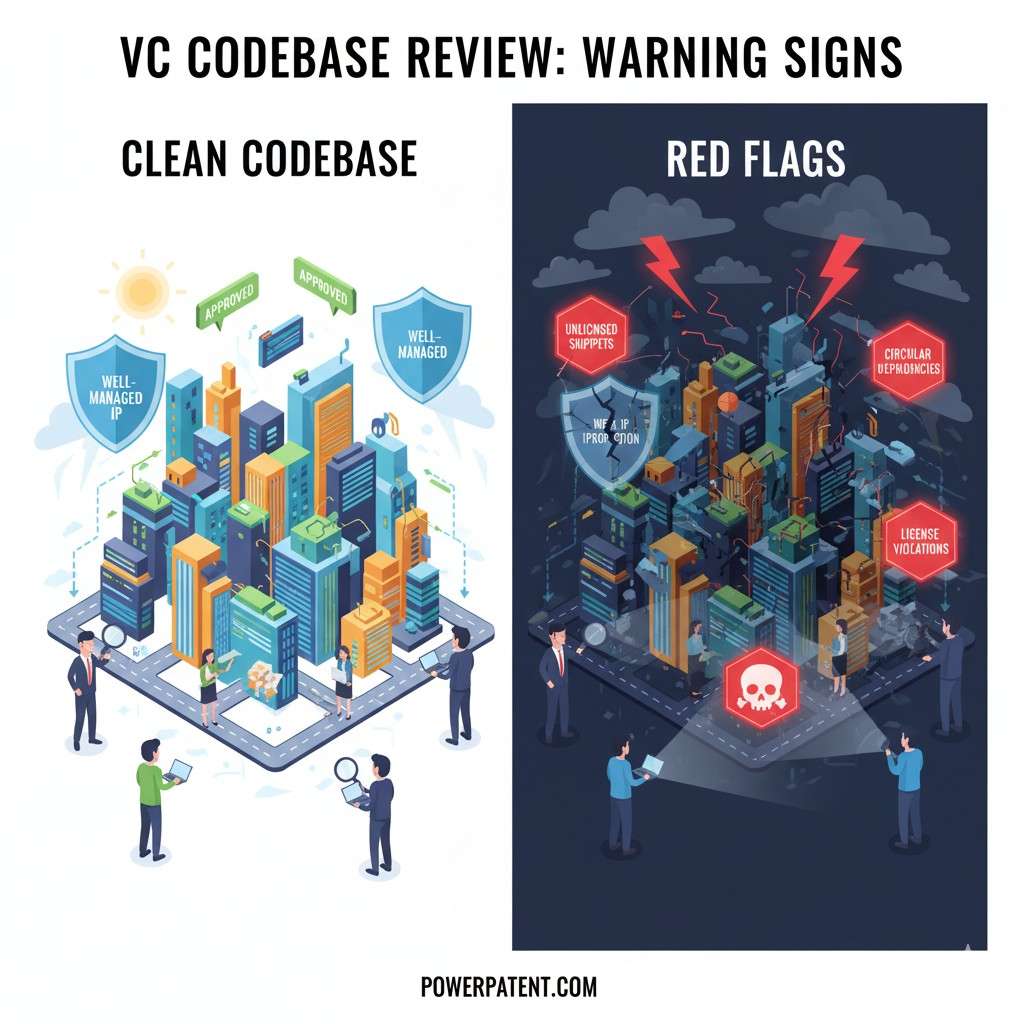
This takes minutes but sends an important signal to investors: you are paying attention. You run your engineering process intentionally. You protect your IP instead of leaving it vulnerable to random updates.
How to Protect Your Startup, Keep Your Speed, and Stay Investor-Ready
When your team is growing and momentum matters, the last thing you want is a process that slows down shipping. But protecting your company does not require slowing down.
It requires clarity. It requires habits that fit naturally into your existing workflow. Investors do not expect you to abandon open-source. They expect you to use it with intention.
They want to see that you are building something you can defend, not something held together by terms you did not read. Protecting your IP is much easier when you integrate simple steps early instead of repairing issues late.
The goal is to build fast while keeping the road ahead clear and fundable.
Establishing a Culture of Awareness Instead of Fear
You do not need every engineer to become a licensing expert. What you need is a mindset inside your team that treats open-source as a strategic choice, not a casual shortcut.
When your team understands that licenses shape what the company can claim, defend, and patent, they become more intentional by default. This cultural shift alone reduces risk.
When someone considers adding a new dependency, they pause briefly to check its health, terms, and fit. This pause takes seconds, not hours, but it prevents careless mistakes that will cost far more time later.
A helpful way to build this culture is through short, simple internal guidance.
Something as small as a single shared document explaining which licenses are safe, which ones carry obligations, and which ones require caution is enough to steer decisions.
You are not trying to create bureaucracy. You are giving your team a compass so they can build freely without exposing the company. That clarity makes investors trust your team more because they see discipline without friction.
Protecting Your Proprietary Core Without Sacrificing Speed
Speed matters. But so does ownership. The strongest companies create a clear line around the parts of their product that define their value. These parts should remain free from restrictive open-source influence.
Investors want to know that the core of your product belongs to you. They want to see that the logic, algorithms, models, and infrastructure you rely on are clean, controlled, and unencumbered.
A simple way to do this is by structuring your system so that the innovative parts sit in their own space. Build wrappers around OSS modules instead of tying your logic directly to them.
Keep your algorithmic or model layers free from dependencies with problematic terms. When your architecture reflects these boundaries, you make your product easier to patent and easier to defend.
And when you explain your system to a VC, you can clearly point to the part that makes your company unique, which gives them confidence that your moat is real.
If you ever need help translating your proprietary core into strong, investor-ready IP, PowerPatent gives founders a simple way to do that without slowing down product development. You can explore that process here: https://powerpatent.com/how-it-works
Making Dependency Management an Advantage Instead of a Liability
Many teams treat dependency management as a task they will deal with later. But investors treat it as a signal of engineering discipline.
If your dependency graph grows unchecked, if updates flow in without review, and if no one knows which version is running where, investors begin to worry. They imagine hidden obligations, security holes, and licensing surprises buried inside your system.
You can turn this around by adopting a lightweight process that fits into existing workflows.
Every time a major dependency is added or updated, review its license and check its change history. This step does not need a committee. It just needs consistency.
A single engineer spending a minute on each change is enough to show that your team takes control of OSS instead of leaving it to chance.
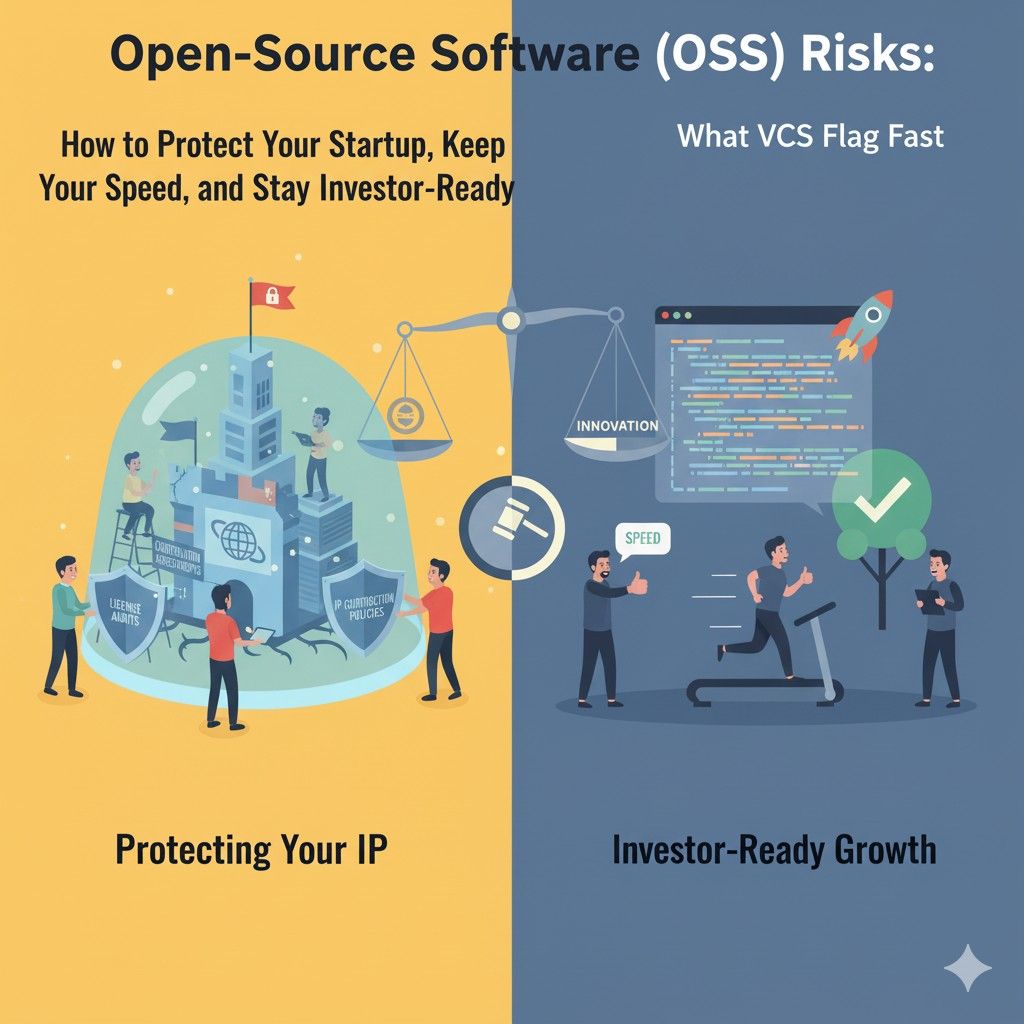
When investors see a stable versioning story, they see reduced risk. They see a team that respects velocity but refuses to compromise on ownership.
Keeping Your IP Ready for Patents Without Rewriting Your Codebase
Many founders assume they need a perfect system before thinking about patents.
But investors know that patent work is much easier when done early, even while the product is still evolving. You do not need every detail set in stone.
You simply need clarity about the parts that are novel, the parts that are yours, and the parts influenced by open-source. The earlier you identify these pieces, the easier it becomes to build around them and protect them.
You can keep your IP patent-ready by describing your core mechanism in clean terms. Focus on what your system uniquely does, not the code that implements it.
This lets you continue shipping features while preserving the ability to file strong patents later. And when investors ask whether your invention can be protected, you can answer with clarity instead of hesitation.
If you want help building this kind of clarity, PowerPatent’s system makes it simple to extract what is patentable from your existing system without forcing your team to stop building. You can learn more at https://powerpatent.com/how-it-works.
Building Trust With VCs Before They Even Ask Questions
The biggest advantage of managing open-source well is not just reducing risk. It is building trust. When you talk confidently about how your team handles OSS, investors see that you understand the long-term game.
They see that you build with intention. They see that your product sits on a stable foundation. This trust shapes the tone of the entire funding conversation.
Instead of defending your choices, you get to highlight your strengths. Instead of explaining gaps, you show maturity. Instead of looking reactive, you look ahead.
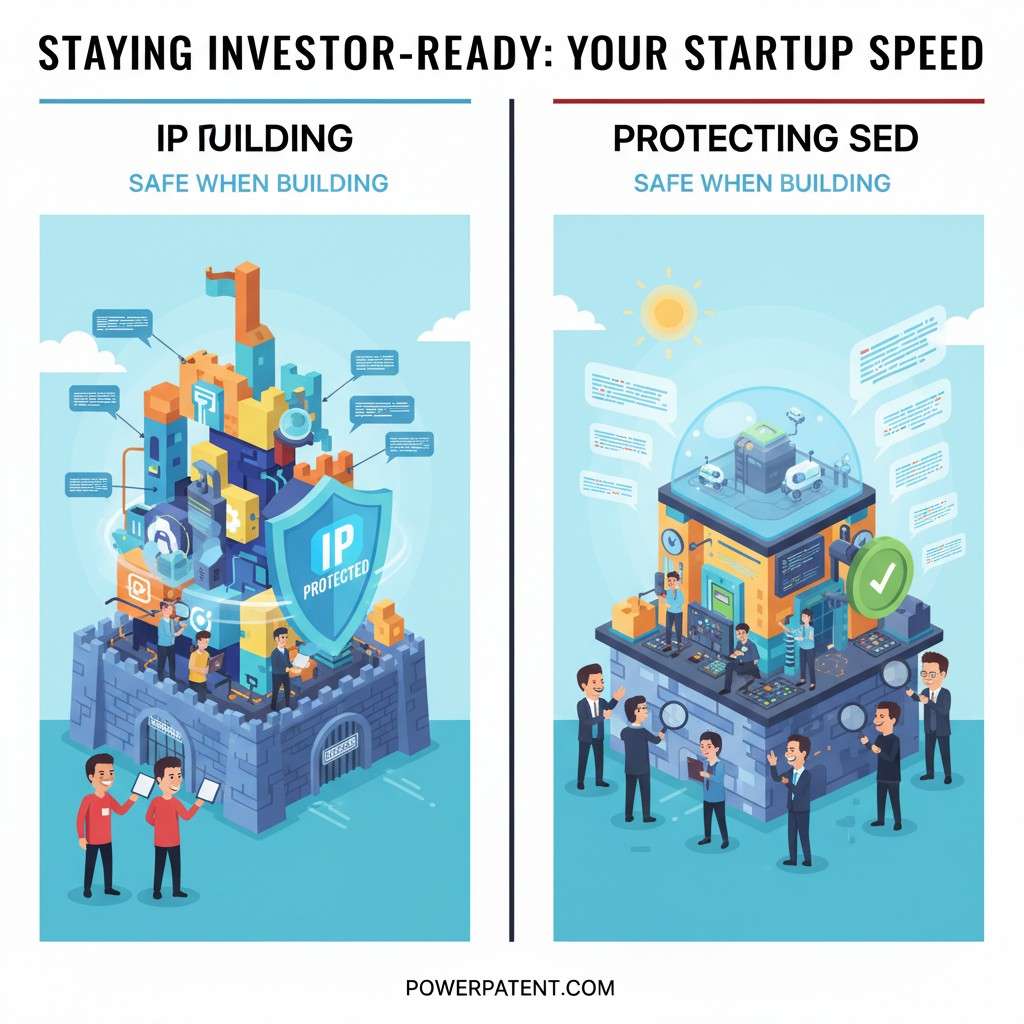
When VCs trust that your IP is clean, safe, and well-structured, every part of the process becomes easier. Your valuation strengthens. Your round moves faster. Your negotiation becomes smoother. And your company looks like a business ready to scale, not just a prototype held together by borrowed parts.
Wrapping It Up
As a founder, you move fast because you have to. You use open-source because it saves time, lowers friction, and helps you ship more with less. None of that is wrong. In fact, it is exactly how great products begin. But the moment your company reaches the stage where investors start evaluating your risk, the rules shift. What once felt like harmless shortcuts now become signals about ownership, discipline, and long-term defensibility. Investors do not look at open-source as a threat. They look at it as a mirror that reflects how your team thinks. If the mirror shows intention, structure, and awareness, they feel safe. If the mirror shows gaps and improvisation, they hesitate.