If you build technology, your ideas are valuable long before they turn into revenue. The moment you talk to a partner, investor, or large company, your leverage starts to change. This is where NDAs, term sheets, and FRAND promises quietly shape your future. Most founders sign these papers fast and move on. That is a mistake. These documents decide who controls the deal, who sets the rules later, and who wins when things get serious.
Why NDAs Quietly Decide Who Really Owns the Conversation
An NDA looks harmless. It often shows up early, sometimes before a real discussion even starts. Most founders sign it without much thought because it feels like a formality.
But this document quietly sets the rules for how value moves between people. It shapes what you can say, what you can prove later, and how much leverage you keep when talks turn serious.
In many deals, especially those tied to patents and standards, the NDA decides who is in control long before a price is ever discussed.
When you understand how NDAs work in practice, not theory, you start to see them as strategic tools rather than paperwork. This is where businesses either protect their future or give it away for free.
The NDA as the first power shift
Every deal has a moment when power starts to move. That moment often happens when the NDA is signed. Once both sides agree on what counts as confidential, the flow of information changes.
The side that shares more details loses leverage unless the NDA is written to protect them.
Large companies know this well. They often ask startups to explain how their technology works in detail, knowing that ideas are hard to put back once they are shared.
If the NDA is narrow, vague, or one-sided, the startup may have no real way to stop the other side from using what they learned.
Actionable advice here is simple but often ignored. Never assume the NDA protects you just because it exists. Read it as if a dispute will happen later, because that is when it matters.
Ask yourself whether it clearly covers your technical ideas, your roadmap, and your future use cases, not just what you say today.
This is also why having patent protection in motion before these talks is critical.

When your invention is already documented and backed by real attorney review, like with PowerPatent, the NDA becomes a layer of protection, not the only one.
You can explore how founders do this quickly at https://powerpatent.com/how-it-works
Who defines confidential information and why it matters
The most important part of an NDA is often a single sentence defining what is confidential. If that sentence is narrow, you are exposed. If it is broad but unclear, you may still lose.
Many NDAs say information is confidential only if it is marked as such. In real conversations, ideas flow fast. Whiteboards get erased. Calls happen. Slides get shared. If something is not clearly marked, it may not be protected.
A smarter approach is making sure the definition covers any information shared related to your business, whether written, spoken, or implied.
This shifts the burden away from constant labeling and puts responsibility on the receiving party to treat your ideas with care.
Businesses should push for language that protects context, not just documents. The value often lies in how pieces fit together, not in any single file.
NDAs and the illusion of mutual protection
Most NDAs are presented as mutual. That sounds fair, but fairness on paper does not mean balance in reality. A startup usually shares far more than a large company ever will. This creates a false sense of equality.
When one side reveals core technology and the other shares high-level goals, the risk is not mutual at all. The NDA should reflect that imbalance. Otherwise, the startup is taking on more risk without extra protection.
A practical move is to ensure remedies are clear. If the NDA is breached, what happens next should not be vague.
While NDAs rarely stop misuse by themselves, clarity increases your leverage in negotiations later. Even the possibility of enforcement changes behavior.
How NDAs shape later FRAND conversations
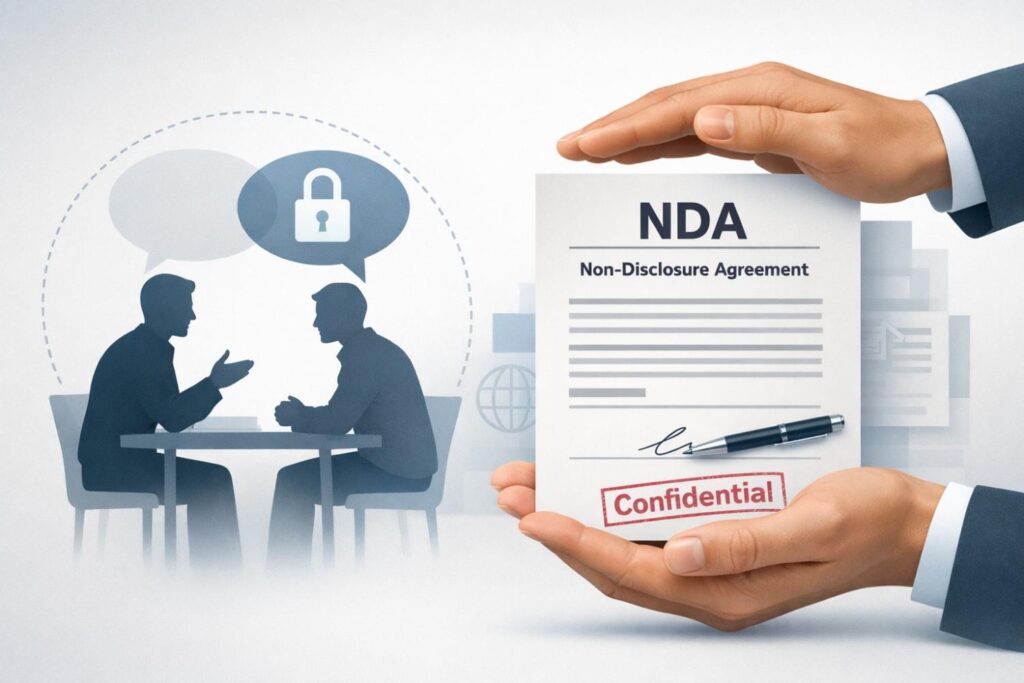
In FRAND settings, NDAs play an even bigger role. These deals often involve standard-essential patents, licensing talks, and discussions about fair pricing. Early NDA terms can limit what you can reference later when disputes arise.
If the NDA restricts your ability to disclose terms or compare deals, it can quietly block your leverage under FRAND principles. You may be unable to show that another party received better terms, even if fairness demands it.
Businesses should think ahead here. Ask whether the NDA allows disclosures required by law, regulators, or dispute resolution. This is not about planning a fight. It is about not tying your own hands.
The silent trap of residuals clauses
Some NDAs include residuals clauses. These allow the receiving party to use ideas remembered by their employees, even if those ideas came from confidential talks. This is one of the most dangerous clauses for technology companies.
Residuals sound harmless but can erase the point of the NDA entirely. If a company can claim it built something independently based on memory, proving misuse becomes almost impossible.
Highly actionable advice is to push back hard on residuals in technical discussions. If removal is not possible, limit them tightly.
Exclude source code, designs, models, and any invention-related material. Silence on this point almost always benefits the larger party.
Timing the NDA around your patent strategy
One of the biggest mistakes founders make is discussing inventions before their patent strategy is clear. NDAs do not replace patents. They only create contractual duties, which are harder to enforce across borders and over time.
The smart move is to align your NDA timing with your patent filings. Even a provisional application can change the conversation. Once your invention is on record, you can speak more freely and with confidence.
This is where speed matters. Traditional patent processes are slow and expensive, which pushes founders to delay.
PowerPatent solves this by helping founders turn real work into real protection quickly, with attorney oversight. That speed directly improves your position in NDA-driven talks.
You can see how that works here: https://powerpatent.com/how-it-works
NDAs as negotiation filters
An NDA also tells you a lot about the other side. How they react to reasonable changes is a signal. If they refuse to adjust anything, even when risks are clear, that tells you how future negotiations may go.
Businesses should treat NDA discussions as low-cost tests. If alignment is impossible here, deeper deals will be harder. This insight helps you decide where to spend time and where to walk away early.
Using NDAs to slow information leaks without slowing deals
Founders often fear that pushing back on NDAs will slow momentum. In reality, thoughtful changes rarely delay serious partners. What slows deals is confusion later.
A well-crafted NDA creates clarity. It lets both sides know what can be shared, what cannot, and how long obligations last. This clarity actually speeds up meaningful discussions because everyone knows the boundaries.
The key is focusing on substance, not legal noise. Clear definitions, realistic obligations, and alignment with your patent strategy matter far more than fancy wording.
The long shadow of a short document
An NDA may be five pages, but its impact can last years. It can decide whether your ideas stay yours, whether you can enforce fairness later, and whether your patents retain their full value.
Businesses that treat NDAs as strategic tools gain quiet control over conversations that shape their future. Those that rush through them often realize too late that the rules were set against them from the start.
This is why protecting your inventions early and clearly is not optional. It is the foundation that makes every NDA stronger and every negotiation safer.

If you want to build that foundation without slowing your company down, PowerPatent is designed exactly for that moment. Learn how founders do it here: https://powerpatent.com/how-it-works
Term Sheets: The First Draft of Power, Not Just a Summary
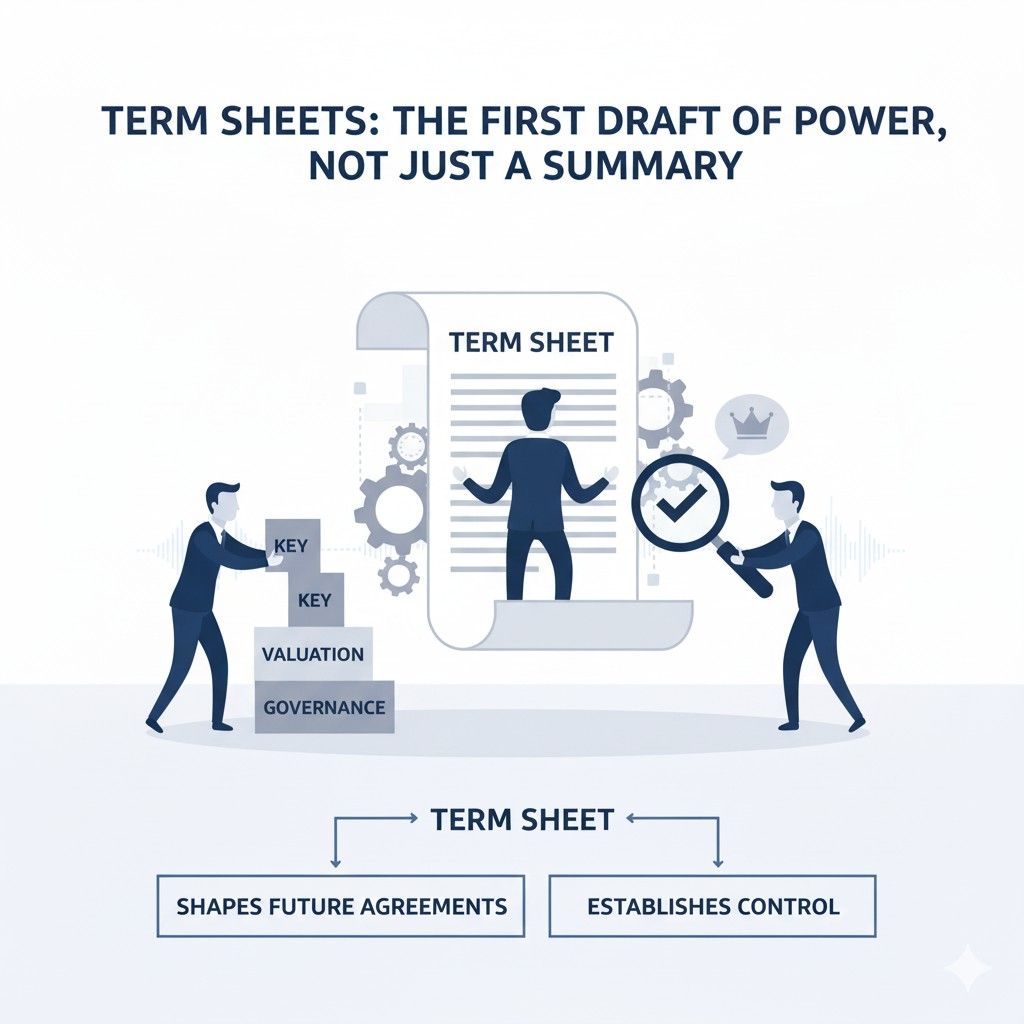
A term sheet often feels informal. It is described as non-binding, high level, and just a way to align before real contracts show up. That framing is dangerous. In reality, a term sheet is where expectations harden.
It shapes how each side views value, control, and fairness. By the time full agreements are drafted, the term sheet has already done most of the work.
For businesses dealing with patents, licensing, or FRAND-related talks, the term sheet is not a placeholder. It is the first real transfer of leverage. Understanding that early changes how you negotiate everything that follows.
Why non-binding does not mean low impact
Many founders relax when they hear the words non-binding. They assume nothing truly matters yet.
But humans anchor on early numbers and concepts. Once something is written down, it becomes the reference point for all later talks.
If a term sheet sets a narrow view of your technology’s value, it becomes harder to expand later. If it frames licensing as limited or temporary, pushing for broader rights later feels like a change, even if it is justified.
The practical advice here is to treat the term sheet as if it will be enforced socially, even if not legally.
Ask whether you would still be comfortable if every later discussion started from these terms. If the answer is no, the term sheet needs work.
How term sheets quietly lock in valuation logic
In FRAND and patent licensing deals, valuation is rarely just about price. It is about how value is measured. Is it per unit, per market, per standard, or per feature? Term sheets often sneak in this logic early.
Once a valuation model is implied, changing it later becomes difficult. The other side will argue consistency, not fairness. This is how businesses end up stuck with structures that no longer fit their growth.
A smart move is to slow down here. Focus less on the number and more on how the number is calculated. Even simple language can lock you into a future you did not intend.
Term sheets and the future of your patent rights
Term sheets sometimes include language about scope, field of use, or exclusivity. These phrases may sound harmless, but they directly touch your patent rights.
If a term sheet suggests broad use rights without clear limits, it may signal an expectation of deep access. Later contracts will likely follow that expectation. Pulling back then can feel like bad faith, even if the term sheet was vague.
Businesses should align term sheet language with their long-term patent strategy. If your patents could apply across markets or evolve with standards, the term sheet should not box them in too early.
This is another reason to have your patent work underway before term sheets are exchanged. When your invention is clearly documented and protected, you negotiate from strength, not hope.
PowerPatent helps founders get there fast, so early documents reflect real ownership, not assumptions. You can see how that works here: https://powerpatent.com/how-it-works
The emotional weight of early agreement
Term sheets carry emotional momentum. Once teams shake hands on high-level terms, there is pressure to move forward. No one wants to reopen settled points.
This emotional weight often works against smaller companies. Larger players rely on it to push deals through with minimal changes later. They know walking back early terms feels uncomfortable.
The actionable insight is to resist emotional closure. Treat agreement as provisional until you are confident it reflects your interests. Calm firmness early prevents stress later.
Term sheets as signals to internal teams
Term sheets do not just affect the counterparty. They shape how your own team thinks. Engineers, product leaders, and investors read them as signals of direction.
If a term sheet undervalues your technology or limits future use, your team may internalize that view. This can influence decisions long after the deal closes.
Founders should review term sheets not just as negotiators, but as leaders. Ask whether the document reflects how you want your company to see its own value.
How term sheets interact with NDAs
Term sheets are often shared under NDAs, which adds another layer of complexity. If the NDA restricts how term sheets can be discussed or compared, you may lose flexibility.
In FRAND contexts, this matters deeply. Fairness often depends on consistency across deals. If your NDA blocks you from referencing earlier term sheets, you may weaken your ability to argue fair treatment later.
Businesses should ensure that NDAs and term sheets do not conflict. Alignment here is subtle but powerful. It protects your future arguments without triggering friction now.
The danger of rushed timelines
Term sheets are often tied to artificial deadlines. There is pressure to move fast, especially when large partners are involved. Speed can be good, but rushed decisions compound risk.
A rushed term sheet often reflects the other side’s priorities, not yours. Once signed, even informally, the clock starts ticking toward final agreements that mirror those terms.
The practical approach is to separate urgency from importance. Respond promptly, but not blindly. Ask for time where it matters. Serious partners respect thoughtful pauses.
Using term sheets to test alignment
Like NDAs, term sheets are also filters. How the other side reacts to reasonable clarifications tells you a lot. If flexibility disappears at this stage, deeper issues may follow.
Businesses should watch behavior more than words. Willingness to explain, adjust, and acknowledge long-term impact is a positive sign. Resistance and deflection are warnings.
This insight helps founders choose partners, not just terms. The right deal with the wrong partner still becomes a problem.
Term sheets and the shadow of MFN clauses
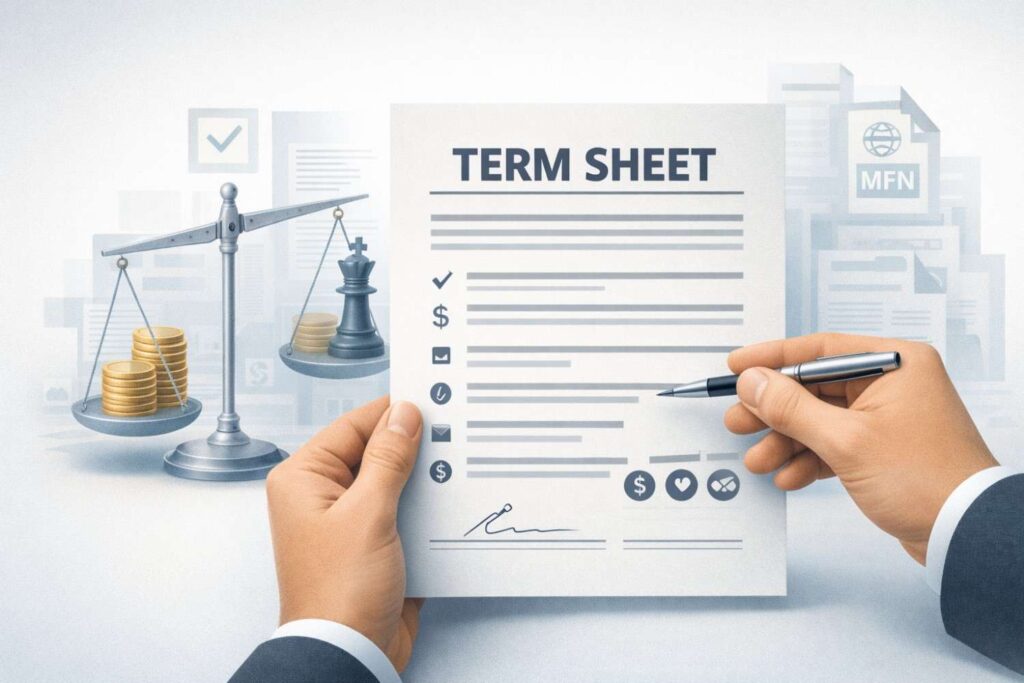
Even when MFN clauses are not explicitly included, term sheets can hint at them. Language about matching future deals or maintaining parity often starts here.
Once hinted at, these ideas tend to resurface later with more force. If not addressed early, they can limit your freedom to negotiate future licenses.
Founders should watch for language that sounds fair but lacks limits. Fairness without boundaries often benefits the party with more deals and more leverage.
Writing the story before others do
At its core, a term sheet tells a story about your business and your technology. It frames who you are, what you offer, and how you should be treated.
If you do not shape that story early, someone else will. And once written, stories are hard to rewrite.
This is why preparation matters. Clear patent protection, clear goals, and clear boundaries allow you to guide the narrative instead of reacting to it.

PowerPatent exists to give founders that clarity early, so term sheets reflect reality, not guesswork. Learn how founders do this here: https://powerpatent.com/how-it-works
What FRAND Actually Means When Money Is on the Line
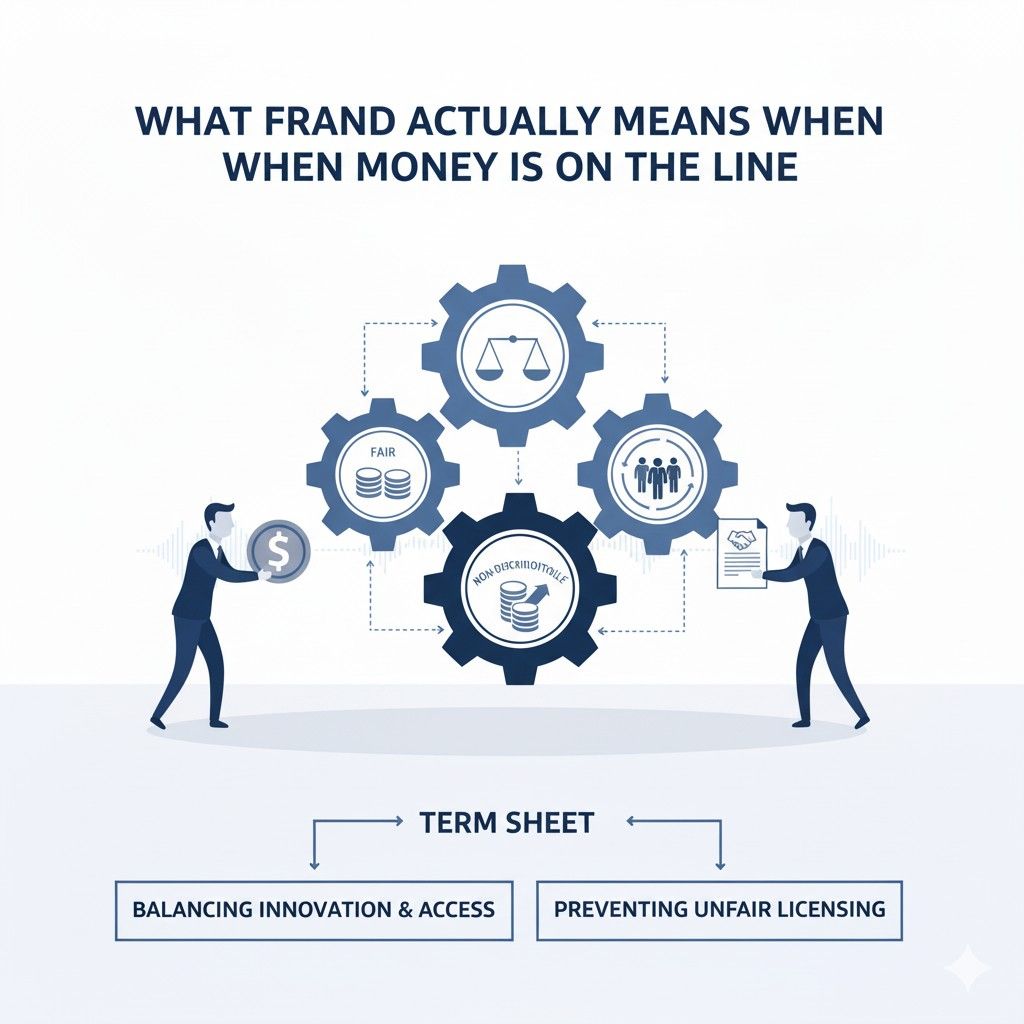
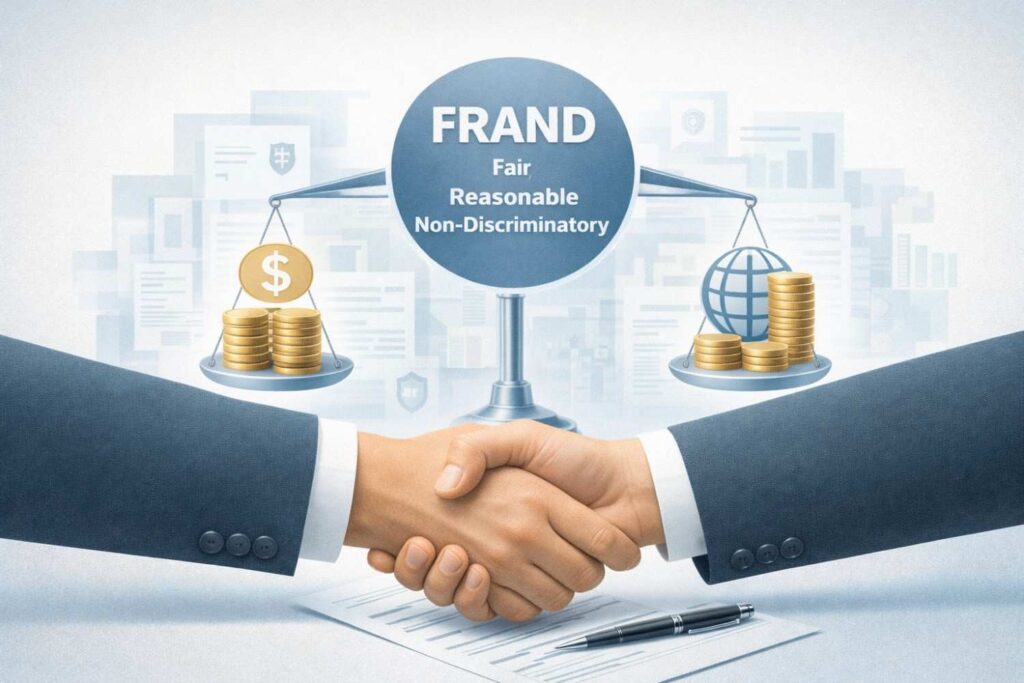
FRAND sounds friendly. Fair, reasonable, and non-discriminatory feels like a promise of balance. Many founders hear the term and assume it guarantees good behavior.
In practice, FRAND is not a safety net. It is a framework that still depends heavily on how early conversations are handled and how well a business protects its position from the start.
When real money is involved, FRAND becomes less about ideals and more about interpretation. The companies that win in FRAND situations are rarely the ones with the best arguments.
They are the ones that prepared early, documented everything, and controlled the narrative before disputes ever began.
Why FRAND is not self-enforcing
FRAND does not automatically set prices or terms. It does not stop aggressive tactics. It simply creates a standard that can be argued over later. That later moment is often expensive, slow, and uncertain.
Large companies understand this dynamic well. They may push for lower rates or broader rights knowing that enforcing FRAND fairness takes time and resources.
Smaller businesses often assume fairness will naturally prevail. That assumption is costly.
The actionable insight is to treat FRAND as a tool, not a shield. It only works when supported by clear records, consistent behavior, and strong patent positions.
How early documents define what is “reasonable”
What counts as reasonable is shaped early. NDAs, term sheets, and initial offers create a baseline. Later, those early positions are used as evidence of market norms.
If you accept weak terms early, even informally, they may be cited as proof of what you considered reasonable. This is how founders unintentionally undercut their own future arguments.
Businesses should document why early concessions are temporary or limited. Even simple language noting uncertainty or future review can preserve flexibility.
FRAND and the power of comparables
FRAND often relies on comparisons. Deals with similar parties, technologies, or markets are used to argue fairness. This makes consistency valuable, but it also makes transparency risky.
If your NDAs block you from referencing past deals, you may lose access to your strongest evidence. On the other hand, if others can reference your deals while you cannot, the balance shifts against you.
The strategic move is to think about comparables before they exist. Structure early deals with an eye toward how they might be viewed later. This requires foresight, not legal complexity.
The role of patents in FRAND credibility
FRAND discussions are grounded in patents. Without strong, clearly defined patents, FRAND arguments weaken. Parties may challenge whether your technology is truly essential or whether alternatives exist.
Founders sometimes delay patent work until deals are imminent. In FRAND contexts, that delay can erode trust and leverage. A patent filed late feels reactive. A patent filed early feels foundational.
PowerPatent helps founders document inventions as they are built, with attorney oversight, so FRAND talks start from a position of credibility.
This early work often matters more than any single negotiation tactic. You can see how founders do this here: https://powerpatent.com/how-it-works
Non-discrimination does not mean identical terms
Many misunderstand the non-discriminatory part of FRAND. It does not require identical terms for everyone. It allows differences based on context, scale, and risk.
This flexibility cuts both ways. It allows you to tailor deals, but it also allows others to argue that your differences are unfair.
The practical advice is to be intentional about differences. Know why terms vary and be able to explain those reasons later. Silence or inconsistency creates doubt.
How silence becomes consent in FRAND disputes
In FRAND settings, what you do not say can matter as much as what you do. If you do not object to an interpretation early, it may be treated as acceptance.
This happens often when founders feel pressure to move fast. They postpone hard conversations, assuming they can revisit them later. In FRAND disputes, later is often too late.
Businesses should speak up early, even if only to reserve rights or note open questions. This keeps options alive without derailing progress.
FRAND timelines favor the prepared
FRAND enforcement moves slowly. Courts, regulators, and arbitrators take time. Companies with resources can afford to wait. Startups often cannot.
This imbalance means preparation is critical. The goal is not to fight later, but to avoid needing to. Clear early positions reduce the chance of drawn-out disputes.
Preparation includes patents, documentation, and consistent messaging. It is not glamorous work, but it shifts leverage quietly and effectively.
How FRAND interacts with global markets
FRAND deals often cross borders. Different regions interpret fairness differently. What seems reasonable in one market may be challenged in another.
This global complexity increases the value of simplicity. Clear, well-documented positions travel better than nuanced arguments.
Founders should aim for clarity that survives translation, both linguistic and legal. Simple explanations rooted in protected inventions tend to hold up best.
The myth of the neutral middle ground
FRAND is often described as a middle ground between extremes. In reality, there is no neutral center. Each party pulls the interpretation toward their interests.
Recognizing this helps founders engage more realistically. Instead of hoping for balance, they can actively shape what balance looks like.
This shift in mindset turns FRAND from a vague promise into a strategic framework.
Building leverage before fairness is tested
Fairness is easiest to argue when you have leverage. Leverage comes from preparation, not from principles.
Strong patents, thoughtful early documents, and consistent behavior give weight to your claims. Without them, FRAND becomes a slogan, not a safeguard.

This is why early action matters. PowerPatent exists to help founders build that leverage early, without slowing down product development. When FRAND conversations start, you are ready, not reactive.
Learn how founders do this here: https://powerpatent.com/how-it-works
Most-Favored-Nation Clauses and the Hidden Risk to Your Patents
Most-Favored-Nation clauses sound fair on the surface. The idea feels simple. No one wants to be treated worse than anyone else.
In patent and FRAND deals, this logic is often framed as a way to ensure balance and trust. In reality, MFN clauses can quietly reshape your entire licensing strategy and limit how your business grows.
These clauses rarely cause problems right away. Their real impact shows up later, when your company evolves, your patents become more valuable, and your deals become more complex. By then, the damage is already locked in.
Why MFN clauses are rarely about fairness
MFN clauses are often presented as protections. The other side claims they just want assurance they will not be disadvantaged. But in practice, MFNs are about control.
When one party secures MFN rights, they tie your future deals to their past one. Every improvement you make for someone else automatically flows back to them.
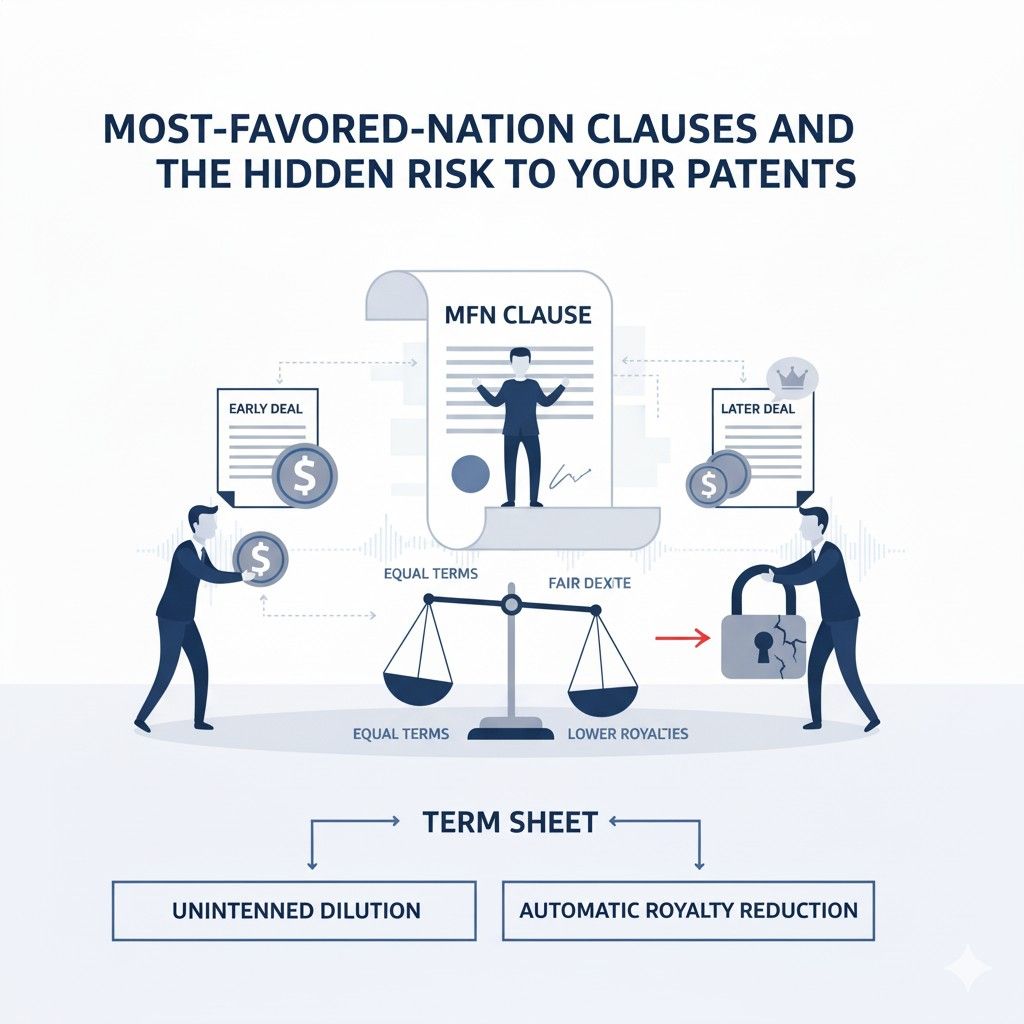
This gives them long-term influence over pricing and structure, even as markets change.
The actionable insight is to question the motive, not the wording. Ask what problem the MFN is solving and who benefits over time. If the answer is unclear, the clause likely favors the party with more scale and more deals.
How MFNs limit future flexibility
Businesses change. New markets open. New standards emerge. New use cases appear. MFN clauses do not adapt well to change.
If your early deal includes an MFN, every later license becomes a negotiation with the past. You may hesitate to offer creative terms to new partners because you know they will ripple backward.
This hesitation slows growth. It pushes you toward uniform deals, even when flexibility would create more value.
A practical approach is to resist broad MFNs early, especially when your business is still forming. Early deals should leave room for evolution, not lock it out.
MFNs and the compounding effect over time
The danger of MFNs is not linear. It compounds. Each new deal becomes more constrained than the last.
Over time, this can flatten your pricing, limit experimentation, and reduce the strategic use of your patents. What began as a single clause becomes an invisible ceiling on your business model.
Founders often do not notice this until they try to do something new and realize they cannot without reopening old agreements.
The interaction between MFNs and FRAND obligations
In FRAND contexts, MFNs can create additional pressure. Parties may argue that MFNs are required to ensure non-discrimination. This argument is persuasive but incomplete.
FRAND allows for differences based on context. MFNs erase that nuance. They force sameness where fairness may require variation.
If you accept MFNs too easily, you may unintentionally redefine what non-discriminatory means for your patents, narrowing your options later.
How MFNs can weaken your negotiation position
Once an MFN is in place, savvy partners know you are constrained. They may push harder, knowing concessions will echo across your portfolio.
This shifts leverage away from you. Instead of negotiating deal by deal, you are negotiating against your own history.

The actionable move is to recognize MFNs as leverage multipliers for the other side. Treat them with the same seriousness as pricing and scope.
The subtle link between MFNs and disclosure duties
MFN clauses often come with disclosure requirements. You may be required to notify a party when you offer better terms elsewhere.
This creates administrative burden and strategic exposure. Your deal flow becomes visible to others, which can influence future negotiations in ways you did not intend.
Businesses should consider whether they are prepared to manage this transparency long-term. If not, the MFN may cost more than it appears.
How early patent clarity reduces MFN pressure
One reason MFNs are pushed so hard is uncertainty. When the value of a patent portfolio is unclear, parties seek guarantees.
Clear, well-documented patents reduce this pressure. When your technology is clearly defined and protected, you can justify differences in terms more confidently.
PowerPatent helps founders create this clarity early, turning real technical work into defensible patents with attorney oversight.
This clarity often removes the perceived need for MFNs altogether. You can see how founders do this here: https://powerpatent.com/how-it-works
Narrowing MFNs without killing the deal
Sometimes MFNs cannot be avoided. In those cases, scope is everything.
Limiting MFNs by time, market, or specific terms can reduce long-term harm. Even small limits can preserve future flexibility.
The key is to focus on intent. If fairness is the goal, narrow protections should be enough. Resistance to limits often reveals deeper control motives.
The psychological comfort MFNs provide and why it is misleading
MFNs make the other side feel safe. That comfort can speed deals. But comfort for one party often means risk for the other.
Founders should be cautious about trading long-term flexibility for short-term speed. Deals that move fast but age poorly create hidden costs.
True alignment does not require MFNs. It requires trust, clarity, and shared incentives.
When MFNs turn into strategic handcuffs
The most damaging MFNs are the ones forgotten. Years later, when your company is stronger, they resurface as obstacles.
At that point, renegotiation is hard. The other side has little incentive to release control.
This is why MFNs deserve attention early, when leverage still exists. Ignoring them is not neutral. It is a choice with consequences.
Protecting your future before it exists
Most founders negotiate based on what their business is today. MFNs require you to think about what your business could become.
That future version of your company deserves protection too. Leaving room for growth is not selfish. It is responsible.
Strong patents, clear early documents, and thoughtful resistance to overreach protect that future.

PowerPatent is built to support founders at this exact stage, helping them secure their inventions early so negotiations reflect strength, not uncertainty. Learn how founders do this here: https://powerpatent.com/how-it-works
Wrapping It Up
Most founders believe real leverage shows up when money is discussed or contracts are signed. In reality, control is decided much earlier. It is shaped in NDAs that define what you can say, term sheets that frame your value, FRAND promises that sound fair but rely on preparation, and MFN clauses that quietly reach into your future.