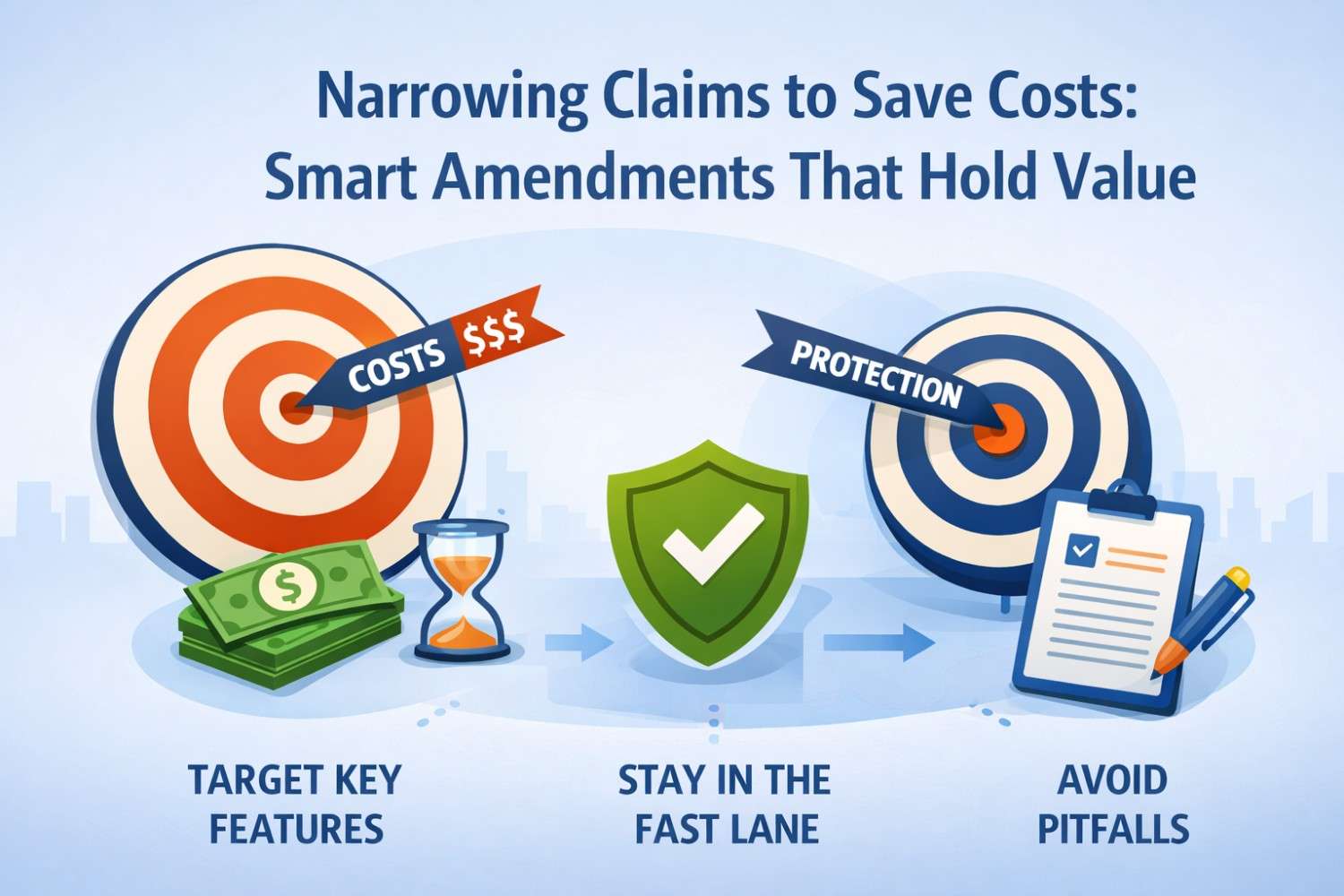
You do not win a patent by asking for everything. You win by asking for the right thing. Most founders think broader claims mean stronger protection. It feels logical. Cast a wide net. Cover it all. Block everyone. But in the real world, broad claims often mean long delays, high legal bills, and endless back-and-forth with the patent office. And that can drain your time, your money, and your focus. Smart founders know a different move. They narrow with purpose. They adjust their claims in a way that keeps real business value while cutting cost and speeding approval. They protect what matters most and let go of what does not move the needle. That is how you save money without giving up power.
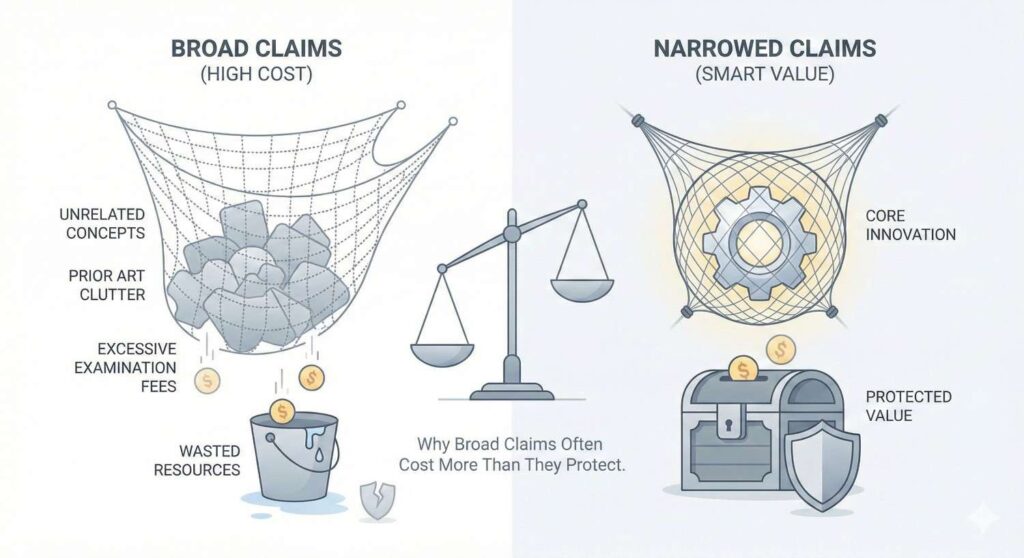
Why Broad Claims Often Cost More Than They Protect
Many founders believe the widest claim is the safest claim. It feels strong. It feels defensive. It feels like you are locking the entire market down in one move.
But broad claims often create more friction than freedom. They can slow down approval, increase legal costs, and expose weak spots that competitors can attack later.
When you ask for too much at once, the patent office pushes back harder. That pushback turns into months of delay, rounds of revisions, and rising bills. For a startup that needs speed and focus, that drag can hurt more than it helps.
Let’s break down why this happens and what it means for your business.
Broad Claims Invite Broad Rejections
When you draft a claim that tries to cover every possible version of your idea, you increase the chance that the examiner will find something similar in old patents or public research.
The broader the language, the easier it is to match it with something that already exists.
This is not because your invention is weak. It is because broad words connect to more prior work. Even if your solution is new in a specific way, a wide claim may ignore the exact detail that makes it special.
The result is a rejection that forces you into long arguments or costly changes.
A smarter approach is to identify the exact feature that gives you market leverage. Is it the way your model trains? Is it how your hardware reduces latency?
Is it the data flow between systems? Focus your claim around the true difference. This reduces the chance of rejection and shortens the path to approval.

If you are unsure which part of your system truly sets you apart, that is where structured guidance matters.
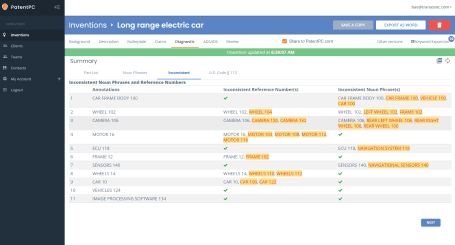
PowerPatent helps you break down your invention so your claims match what actually drives value. You can see how that works here: https://powerpatent.com/how-it-works
The Hidden Cost of Office Action Battles
Every broad claim increases the chance of multiple office actions. Each office action means your attorney must respond. Each response takes time and money. And each round stretches your timeline.
For startups, time is not neutral. Delays can affect fundraising. They can slow partnership talks. They can reduce leverage during acquisition talks. Investors like clean, moving assets.
A patent stuck in endless review does not give the same signal as one that is allowed or close to allowance.
You need to think beyond the filing cost. The real cost is in the back-and-forth. Broad claims often create debates that are not even tied to your core product. You end up arguing over edge cases that are not central to your business.
A practical move is to ask this simple question before filing: If this feature disappeared from the claim, would it weaken my competitive moat?
If the answer is no, it may not need to be in the independent claim. Keeping the focus tight can save you thousands in response fees later.
Overly Broad Claims Can Be Harder to Enforce
Even if a broad claim gets approved, it may not be as strong in court as you think. Courts often look closely at how broad language is interpreted. If the language is too vague, it can be challenged.
If it tries to cover too many variations, a competitor may find a way around it by making small changes.
Narrow claims, when crafted with precision, can be easier to enforce. They tie directly to a defined structure or method. That clarity can make infringement clearer. It reduces gray areas.
This does not mean you should make claims tiny or overly specific. It means you should align them with how your product actually works in the real world. Precision often beats ambition.
When you work with a system that combines smart software and real attorney oversight, like PowerPatent, you can model different claim scopes and see how they connect to your product roadmap.
That clarity helps you avoid weak, abstract coverage and focus on practical protection. Learn more here: https://powerpatent.com/how-it-works
Broad Claims Increase Examiner Scrutiny
Examiners are trained to test the limits of wide claims. When they see language that tries to cover a full category or broad function, they look for references that can narrow it down.
That means deeper searches and more citations.
The broader the claim, the more likely it will trigger a stronger review. That often leads to more cited references, even if those references only partially relate to your invention.
You then spend time explaining small differences instead of moving toward approval.
If your goal is speed and cost control, a strategic narrowing early in the process can reduce this friction. Instead of waiting for a rejection to force your hand, you can shape the claim in a way that balances protection with realism.
Think of it as negotiating before the fight starts. You are not giving up power. You are positioning yourself to move forward faster.
Wide Claims Can Misalign With Business Goals
A common mistake is drafting claims based on what sounds impressive rather than what supports the business plan. Founders sometimes try to patent the entire vision instead of the core engine that makes revenue possible.
This can create claims that are broad in concept but weak in commercial value. You end up protecting ideas that you may never build while leaving your key differentiator less defined.
A better move is to tie claim scope directly to your near-term roadmap. What feature will customers pay for in the next 12 to 24 months? What component would hurt the most if a competitor copied it? Focus your independent claims there.

Then, you can use dependent claims to explore variations and future paths. This layered approach allows you to maintain flexibility without starting with an oversized claim that triggers heavy resistance.
The Psychological Trap of “More Is Better”
There is also a mindset issue at play. Founders often equate breadth with strength. It feels like asking for less is a sign of weakness. But in patents, clarity and precision often signal strength.
The goal is not to win on paper. The goal is to secure a right that supports your growth. A claim that is too broad and never gets allowed is worth less than a narrower claim that issues quickly and signals real ownership.
You need to think like a strategist, not a gambler. The smartest founders play a long game. They file with intention. They adjust with purpose. They build a portfolio over time instead of trying to grab everything in one filing.
If you want a system that helps you think through these tradeoffs without slowing your build cycle, PowerPatent was built for exactly that.
It helps you move fast while keeping attorney-level quality in the loop. Explore the process here: https://powerpatent.com/how-it-works
Broad Claims Can Hurt Future Filings
Another hidden risk is how your first set of claims shapes your future filings. If you push for very wide claims and narrow them late in prosecution, you may create statements on record that limit how your invention is interpreted.
These statements can affect related applications or future patents in the same family. Words matter. Arguments matter. Once they are on record, they can shape how your technology is viewed.
A more measured narrowing strategy from the start can reduce the need for extreme arguments later. That keeps your future options cleaner.
When you combine smart drafting tools with experienced oversight, you can anticipate these issues before they become problems. That is how you protect not just one patent, but your broader IP strategy.
Cost Control Is a Strategic Advantage
Startups operate under constraints. Cash is limited. Attention is limited. Energy is limited. Every dollar spent on extended patent battles is a dollar not spent on product, hiring, or growth.
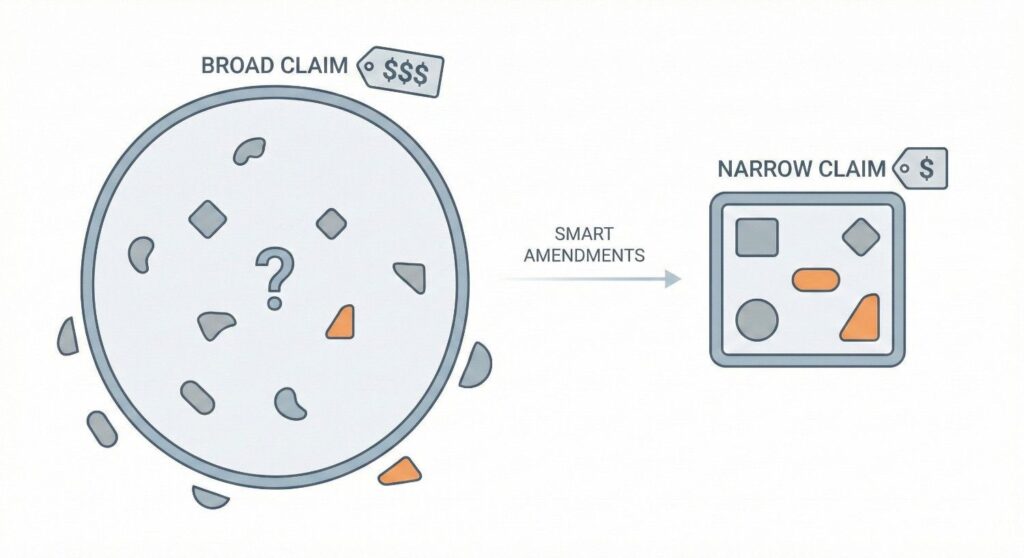
Narrowing claims early can be a tool for cost control. It is not about shrinking your protection. It is about aligning your spend with your actual competitive risk.
Before filing, map your main competitors. Look at how they build similar products. Identify the specific area where your design is different. Aim your claims there.
This focused approach often leads to fewer objections and faster movement.
You are not trying to patent the universe. You are trying to defend your position in the market.
That is the difference between a theoretical patent and a strategic patent.
At PowerPatent, we help founders think in this way. We blend software that structures your invention clearly with real attorney guidance that sharpens the claims.
The result is protection that fits your business, not just a document that sits in a folder.
If you care about speed, control, and smart cost management, take a closer look at how we work: https://powerpatent.com/how-it-works
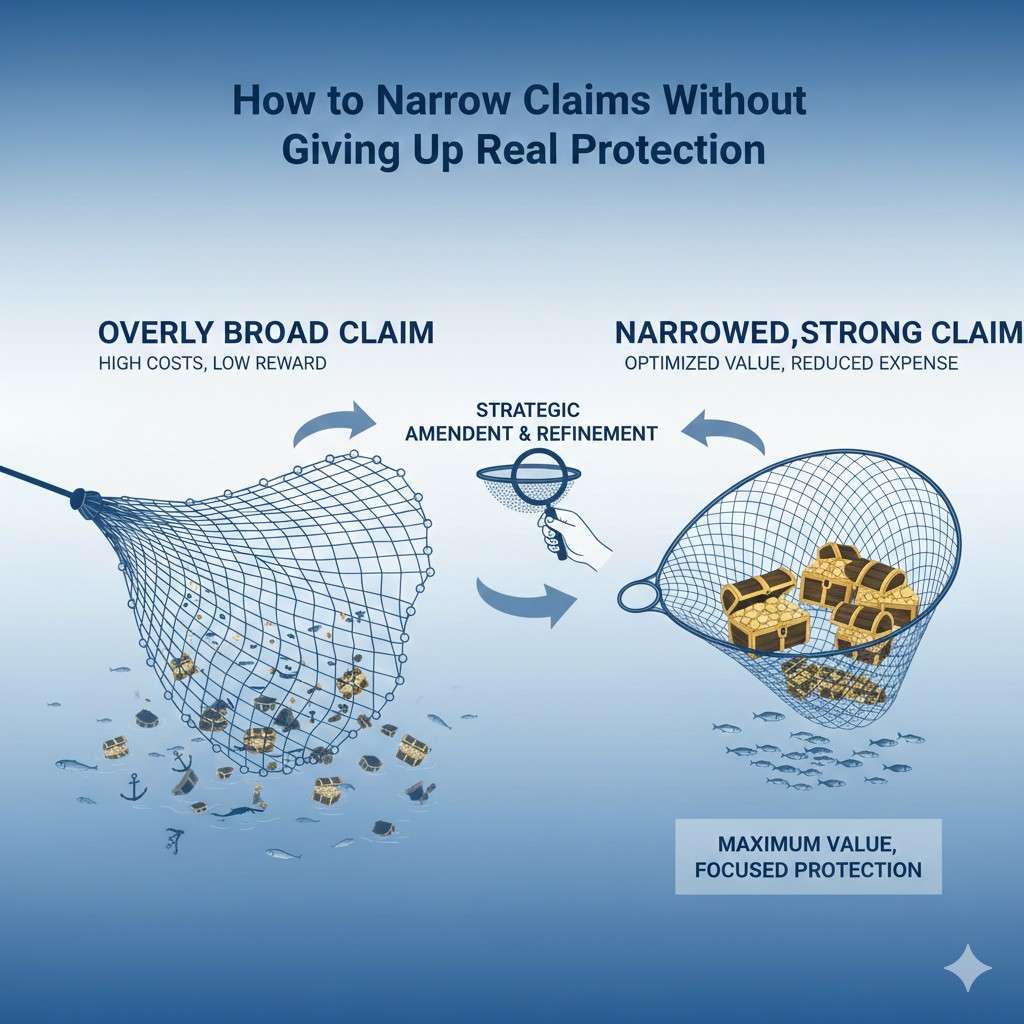
How to Narrow Claims Without Giving Up Real Protection
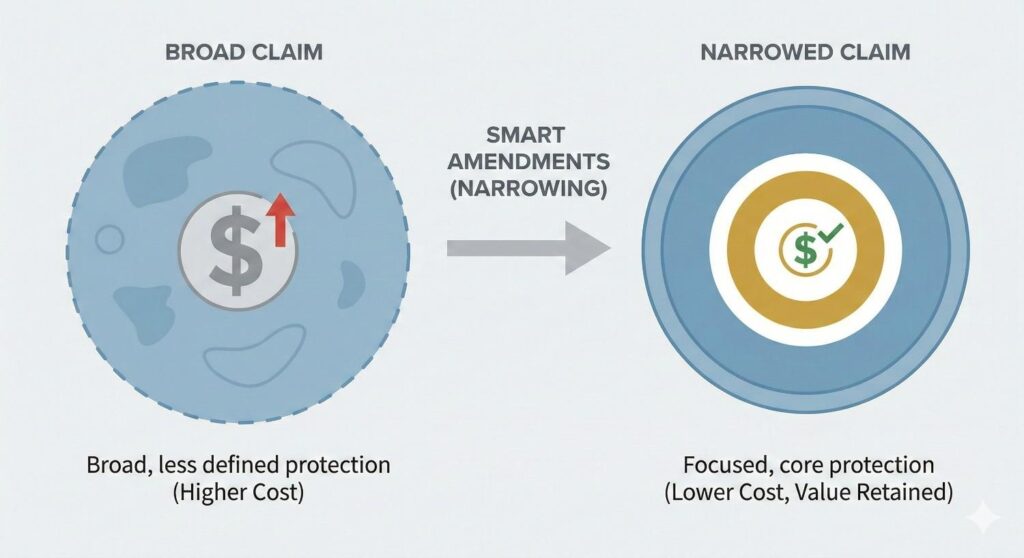
Narrowing claims does not mean shrinking your ambition. It means sharpening your focus. When done right, narrowing is not a retreat. It is a move toward strength.
The key is this: you are not trying to protect every version of your idea. You are trying to protect the version that gives you leverage. The one that makes customers choose you. The one that makes competitors nervous.
If you narrow in the wrong way, you can box yourself in. But if you narrow with intent, you can speed up approval, reduce cost, and still keep a strong moat around your core advantage.
Let’s walk through how to do that in a smart and practical way.
Start With the Business, Not the Draft
Before you touch claim language, step back and look at your product strategy.
Your patent should protect what drives revenue or future leverage. Not every feature deserves the same level of coverage. Some parts of your system are replaceable. Others are your engine.
If your startup builds an AI system, for example, the user interface may matter less than the training method or data processing structure. If you build hardware, the real edge might be the internal mechanism, not the casing.
When narrowing, ask yourself where the true power sits. What part of your invention would hurt the most if copied? That is where you focus.

This business-first thinking changes the entire narrowing process. You are no longer reacting to a rejection. You are steering your protection toward what matters.
Protect the Core Mechanism
A strong narrowing move often means anchoring your claim to a specific mechanism that competitors cannot easily design around.
Instead of claiming a broad result, focus on the method or structure that achieves it. Results are easy to describe in wide terms. Mechanisms are harder to avoid.
For example, claiming “a system that improves processing speed” is broad and likely to face heavy scrutiny. Claiming a defined way of arranging components that produces that speed is tighter but more defensible.
The goal is not to limit yourself unnecessarily. It is to move from abstract language to concrete steps or structures that reflect your real innovation.
This is where founders often need guidance. You know your system deeply, but translating that into focused claim language takes experience.
PowerPatent combines smart software that helps extract technical detail with real attorney review to shape it into precise claims.
That balance is what keeps narrowing strategic instead of reactive. You can see how the process works here: https://powerpatent.com/how-it-works
Use Dependent Claims to Keep Optionality
Narrowing does not mean putting all your protection into one tight box.
A powerful tactic is to maintain a clear, focused independent claim and then layer additional features in dependent claims. This allows you to test scope during examination without losing flexibility.
If the broadest version faces rejection, you can fall back on a dependent claim that already includes the extra detail needed for approval. This avoids rewriting from scratch and keeps your timeline cleaner.
Think of it as building steps into your strategy. You create multiple levels of protection in one filing. That way, if you need to narrow during prosecution, you are not scrambling. You are choosing from options you planned ahead of time.
The founders who save the most money during patent review are often the ones who designed this flexibility early.
Narrow Along Competitive Lines
Another smart move is to narrow based on real competitor behavior.
Look at how others in your space solve similar problems. Identify where your solution diverges. That difference is often the best place to narrow.
If competitors rely on one type of architecture and you use another, focus your claim on that structural difference. If others use centralized processing and you use distributed logic, anchor your protection there.
This approach does two things. First, it reduces the risk of prior art conflicts because you are claiming a distinct path. Second, it increases enforcement strength because you are targeting the area where your competitors operate.
Narrowing becomes a competitive strategy, not just a legal response.
Avoid Emotional Attachment to Scope
It is easy to fall in love with broad language. It feels big. It feels powerful. But patents are tools, not trophies.
If an examiner challenges your claim, do not see narrowing as defeat. See it as refinement. The goal is issuance with value, not endless debate.
Sometimes the smartest amendment is the one that trims a feature you thought was essential but is not central to your moat. Other times, adding one technical detail can shift the entire conversation and unlock approval.
Stay flexible. Protect the business outcome, not your ego.
Narrow Early to Control Timeline
One of the most overlooked strategies is narrowing before the examiner forces you to.
If you see early signals that your broad claim is likely to face strong resistance, you can proactively amend it to a more focused version. This often shortens prosecution and reduces the number of office actions.
Every round of review adds cost and delay. If your startup is raising capital or preparing for a product launch, timing matters.
A patent that is allowed sooner can strengthen investor confidence. It shows momentum. It shows execution.
By narrowing at the right moment, you control the pace instead of reacting to it.
At PowerPatent, we help founders evaluate when to hold scope and when to refine it. Because we combine software-driven clarity with real attorney oversight, you get both speed and informed judgment.
That means fewer surprises and smoother progress. Learn more about that approach here: https://powerpatent.com/how-it-works
Keep the Long Game in Mind
Narrowing one claim does not define your entire portfolio.
You can file continuation applications later. You can pursue different aspects of your invention in future filings. A smart patent strategy is rarely one document. It is a sequence of moves over time.
When you narrow a claim to secure faster approval, you are not closing doors forever. You are strengthening your foundation. An issued patent can support future filings and give you leverage while you expand coverage strategically.
Think in phases. Secure a strong core claim now. Expand intelligently as your product evolves.
This mindset reduces fear around narrowing. It turns it into a tactical step instead of a compromise.
Align Narrowing With Fundraising and Exit Goals
Your patent strategy should support your capital strategy.
If you are preparing for a seed round, speed and clarity may matter more than maximum theoretical breadth. Investors often look for signs that your IP is real and progressing, not stuck in review.
If you are planning an acquisition path, enforceable and clearly defined claims can carry more weight than broad, uncertain ones.
Narrowing with these milestones in mind helps you make smarter choices. It ties your patent decisions to real business events.
Instead of asking, “How wide can we go?” you ask, “What scope gives us leverage at the next stage?”
That shift changes everything.
Build Claims Around What You Actually Ship
One of the strongest narrowing principles is simple: align your claims with what you are building now.
Speculative features can be covered in additional claims or future filings. But your core claim should match your working system.
This alignment makes it easier to prove infringement later. It also makes it easier to explain your patent to investors, partners, and potential acquirers.
When your patent reads like your product, it feels real. It supports your story.
At PowerPatent, our process is built around your code, models, and real architecture. We help translate what you are actually shipping into structured claims that protect your edge without unnecessary bulk.
That is how you narrow without shrinking value. See how founders are doing this today: https://powerpatent.com/how-it-works
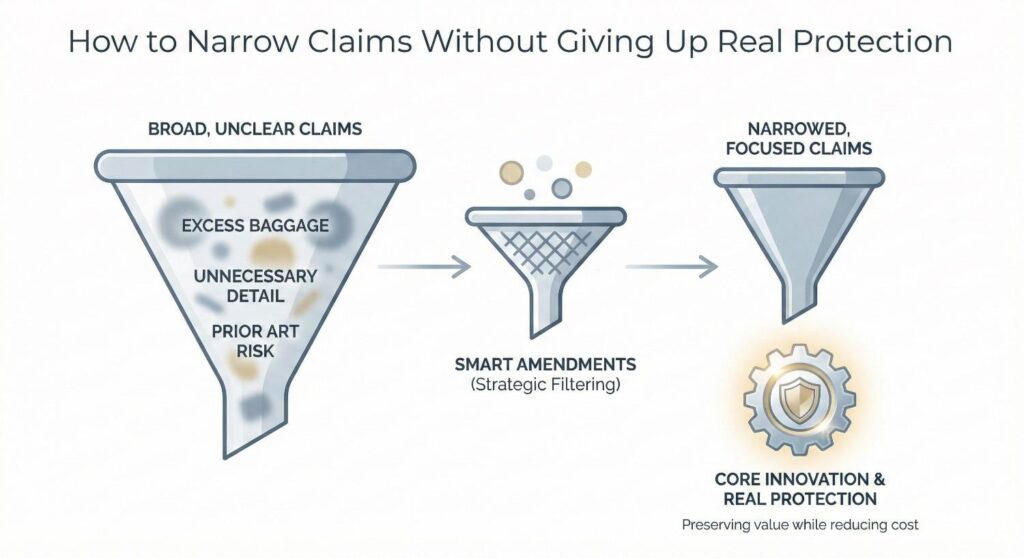
Narrowing claims is not about playing small. It is about playing smart. It is about choosing precision over excess and speed over delay.
When you approach amendments with strategy instead of fear, you turn what seems like a concession into a competitive move.
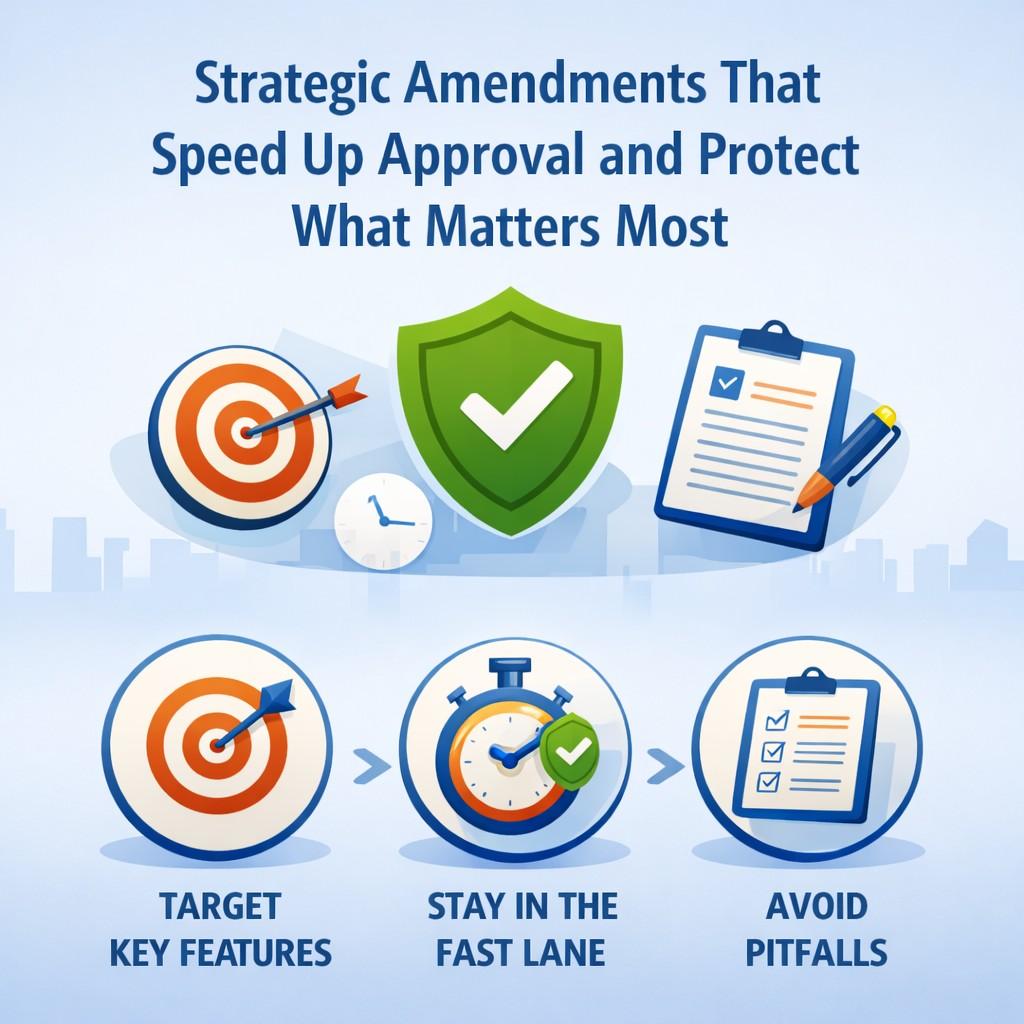
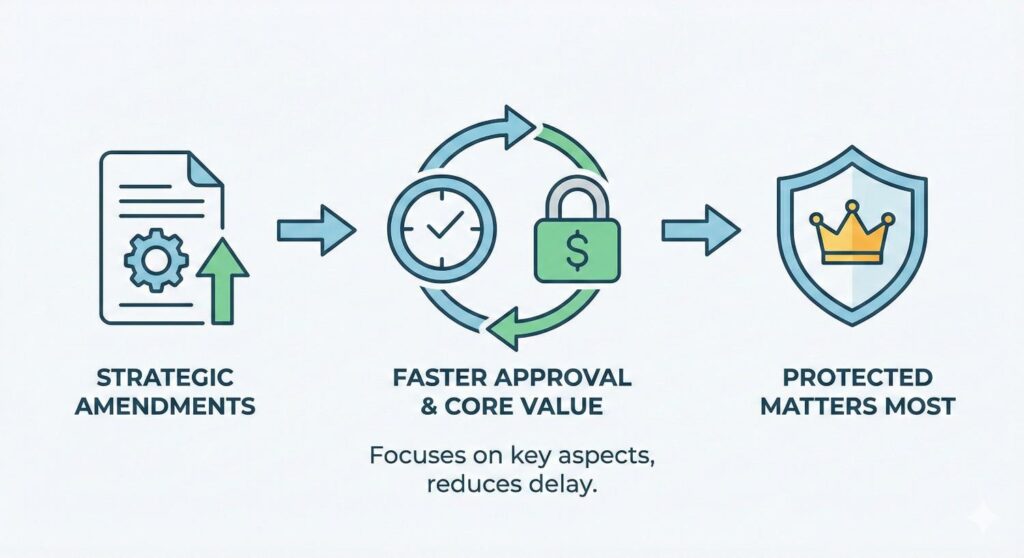
Strategic Amendments That Speed Up Approval and Protect What Matters Most
Every amendment you make during patent review sends a signal. It tells the examiner how you see your invention. It shapes how your rights will be interpreted later.
It can either tighten your protection in a smart way or create limits you did not intend.
This is why amendments should never feel rushed or random. They are not just edits. They are strategic moves.
When handled well, amendments can reduce back-and-forth, shorten your path to approval, and still guard the part of your technology that gives you power in the market. The key is knowing how to adjust with purpose.
Amend With a Clear Objective
Before you change a single word, define your goal.
Are you trying to overcome a specific reference the examiner cited? Are you aiming to speed up allowance before a funding round? Are you preserving room for a continuation filing?
Without a clear objective, amendments become reactive. You end up trimming language just to get past the current hurdle. That can create problems later.
Instead, treat each amendment like a business decision. Ask yourself what outcome you want from this round. Faster approval. Cleaner scope. Better alignment with your shipping product. Then shape the language to serve that outcome.
When your amendment has a defined purpose, it becomes a tool instead of a compromise.
Focus on the Distinguishing Detail
Most rejections are based on prior art that shares broad similarities with your invention. The examiner often points to references that look similar at a high level.
Your job is not to argue that the reference is completely different in every way. Your job is to identify the specific detail that separates your invention from what came before.
That detail might be a unique data flow, a specific training step, a hardware configuration, or an interaction between components. By amending your claim to highlight that feature, you create distance from the cited reference.
This type of amendment is powerful because it is precise. It does not narrow randomly. It narrows around the feature that carries your competitive edge.
The more your amendment reflects how your system actually works, the more natural it feels. That is why grounding claims in real architecture from the start makes later adjustments smoother.
At PowerPatent, we structure your invention in a way that makes these distinguishing features clear early on. That clarity makes strategic amendments easier and less costly. You can explore how we do this here: https://powerpatent.com/how-it-works
Reduce Abstract Language
Examiners often push back on claims that sound too abstract. Broad functional phrases without concrete steps can trigger stronger scrutiny.
A smart amendment replaces vague outcomes with defined actions.
If your claim says “optimizing performance,” you might amend it to describe the actual sequence that produces the improvement. If it mentions “processing data,” you can specify how the data is transformed or routed.
This shift from result-focused language to action-focused language often makes a big difference. It shows the examiner that your invention is not just an idea but a defined technical solution.
At the same time, you want to avoid adding unnecessary detail that locks you into one narrow embodiment. The art is in adding just enough structure to overcome the rejection while keeping room for variations.
That balance requires judgment. It is where many startups either overcorrect or undercorrect.
Amend in a Way That Supports Enforcement
Every amendment becomes part of the public record. What you say to overcome a rejection can later be used to interpret your claim.
This is why careless arguments can create unintended limits.
When you amend, think beyond approval. Think about enforcement.
If you add a feature, ask yourself whether competitors could easily design around it. If you describe a component in very specific terms, consider whether small tweaks could avoid infringement.

A strategic amendment protects your real-world leverage. It does not just satisfy the examiner. It keeps your claim strong against future workarounds.
One way to approach this is to focus amendments on structural relationships rather than minor implementation details. Relationships between components, defined sequences, and clear interactions are often harder to bypass than surface-level specifics.
Use Examiner Interviews to Guide Amendments
Many founders do not realize how helpful examiner interviews can be.
Speaking directly with the examiner, often through your attorney, can clarify what concerns truly matter. Sometimes a rejection looks broad on paper, but a short conversation reveals a narrow issue.
By understanding the examiner’s reasoning, you can craft an amendment that addresses the core concern without over-narrowing.
This saves time and reduces guesswork. Instead of making multiple rounds of speculative changes, you move with informed precision.
Strategic communication paired with focused amendments can dramatically shorten prosecution.
At PowerPatent, our model combines smart drafting tools with real attorney involvement. That means when interviews or nuanced amendments are needed, you have experienced guidance built into the process. Learn more here: https://powerpatent.com/how-it-works
Time Amendments Around Business Milestones
Amendments do not exist in isolation. They should align with your startup timeline.
If you are weeks away from investor meetings, it may make sense to amend toward quicker allowance. If you are expanding into new product lines, you might preserve broader scope for future filings.
Treat your patent timeline as part of your growth strategy.
A well-timed amendment can help you secure an issued patent before a key announcement or partnership. That issued asset can strengthen your negotiating position.
On the other hand, rushing into overly narrow language just to get approval fast can reduce long-term value.
The smartest founders weigh both sides. They consider short-term optics and long-term protection.
Preserve Future Options
One of the most strategic amendment tactics is preserving space for future filings.
If you need to narrow a claim significantly to overcome prior art, consider whether other aspects of your invention remain unclaimed. Those aspects might support a continuation application.
This allows you to secure one focused claim now while keeping the door open for broader or alternative claims later.
The idea is not to win everything in one round. It is to build a layered portfolio over time.
Each amendment should be viewed within that larger arc. What are you locking in? What are you leaving for future protection? What narrative are you building around your technology?
When amendments are guided by portfolio thinking, they feel less like concessions and more like calculated steps.
Avoid Over-Explaining in Written Arguments
It can be tempting to write long, detailed arguments explaining why the examiner is wrong.
While clear reasoning is important, excessive explanation can create statements that narrow how your claim is interpreted.
Sometimes a well-crafted amendment that speaks for itself is more effective than pages of argument.
Precision in language often works better than volume of text.
Your goal is to resolve the issue with minimal collateral impact. Focus on the essential difference. Let the claim reflect that difference cleanly.
This disciplined approach keeps your record tight and reduces risk down the line.
Keep the Founder in the Loop
Strategic amendments should not happen in a vacuum.
As a founder, you understand your roadmap, your competitors, and your product direction. Your input matters.
If your patent counsel suggests narrowing in a certain way, ask how it affects future versions of your product. Ask whether competitors could bypass the new language. Ask how it fits into your long-term IP plan.
When software-driven clarity is combined with real attorney oversight, you can stay informed without being overwhelmed. That is the model we built at PowerPatent.
It gives you visibility and control while removing the usual friction and delays. See how founders use it here: https://powerpatent.com/how-it-works
Strategic amendments are not about shrinking your protection. They are about shaping it with intention.
When you narrow with clarity, align changes with your business goals, and think beyond the current rejection, you turn amendments into leverage.
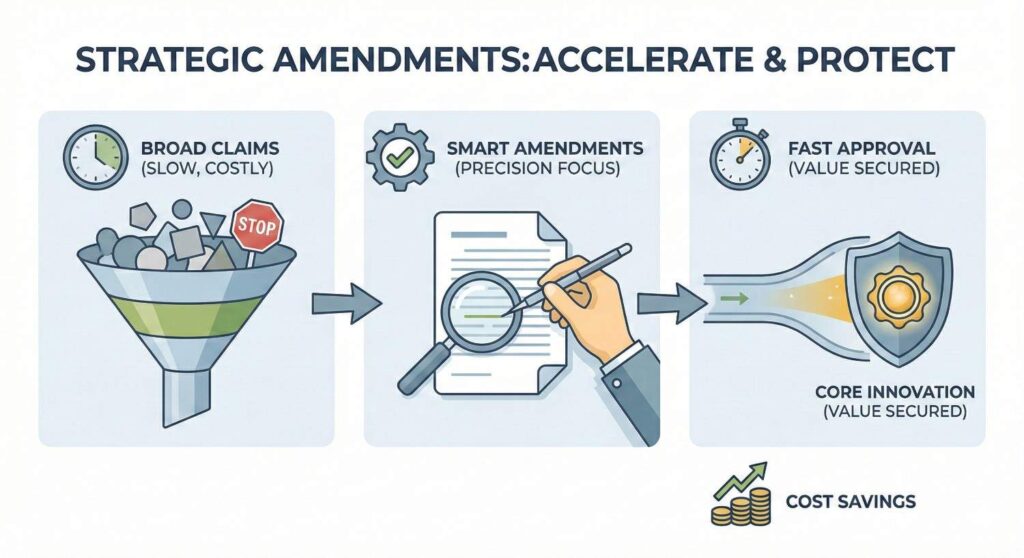
That is how you save costs without losing value. That is how you move faster without cutting corners. And that is how you build a patent portfolio that supports real growth.
Wrapping It Up
Broad claims feel powerful. But power without strategy is expensive. If you take one lesson from this guide, let it be this: the goal is not maximum width. The goal is maximum leverage. A patent is not a trophy. It is a business tool. It should help you raise money. It should support partnerships. It should protect your edge. It should give competitors pause. If your claims are so broad that they trigger endless rejections, rising legal bills, and long delays, they are not serving that purpose. Smart narrowing changes the game.