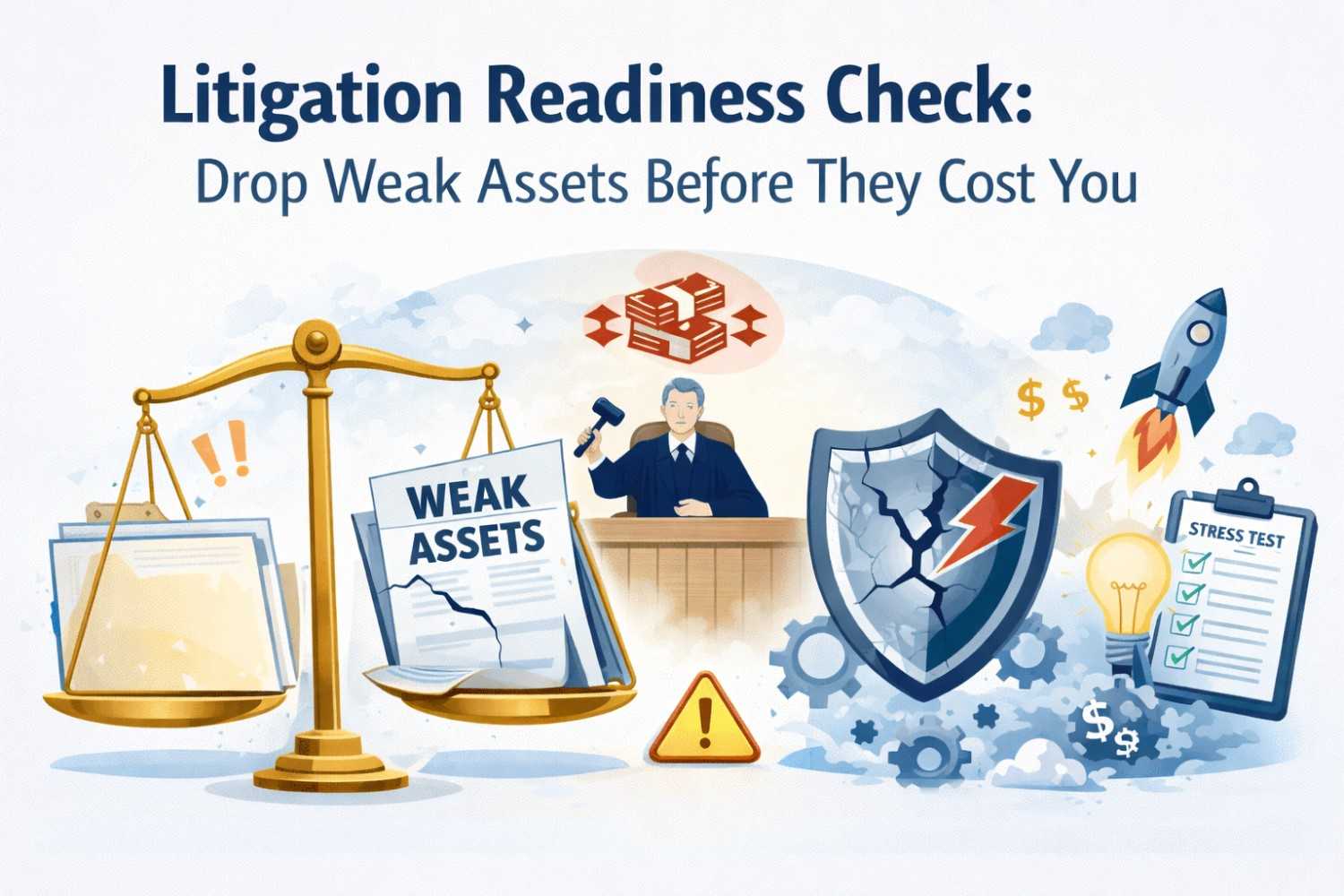
If someone copies your product tomorrow, are you truly ready to fight back? Most founders think they are. Most are not. They assume their patents will protect them. They assume their paperwork is strong. They assume their IP is clean. But assumptions are expensive. In court, weak assets do not just sit quietly in the background. They become weapons used against you. This is why smart founders run a litigation readiness check early. They fix gaps. They remove weak pieces. They strengthen what matters. And they do it before a problem shows up. If you are building serious tech and want real protection without slowing down, this is exactly why platforms like PowerPatent exist. You can see how it works here: https://powerpatent.com/how-it-works
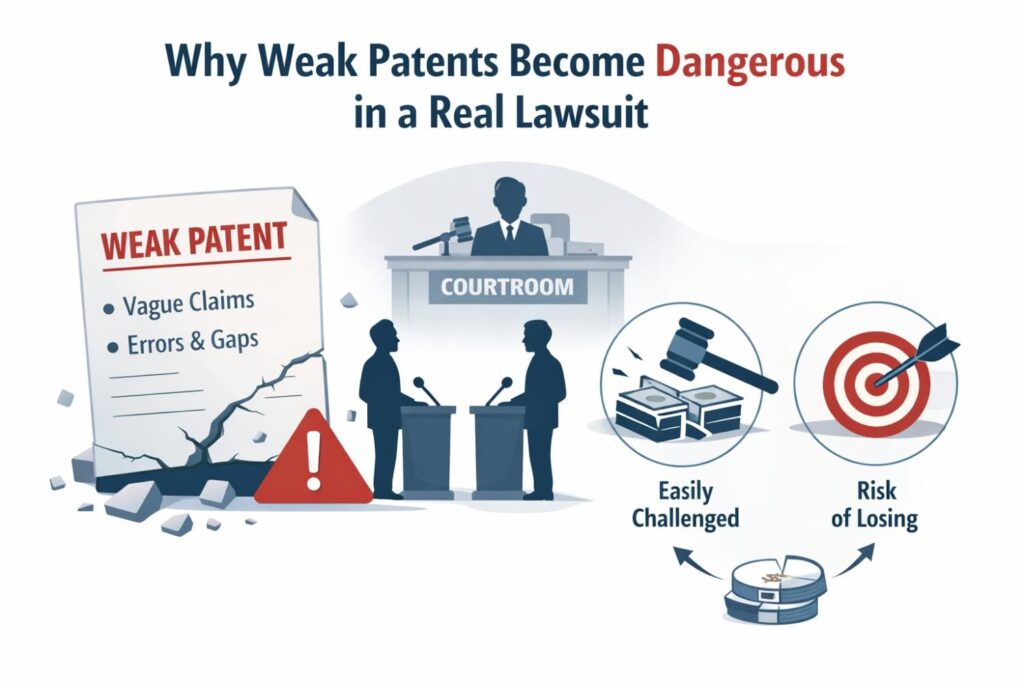
Why Weak Patents Become Dangerous in a Real Lawsuit
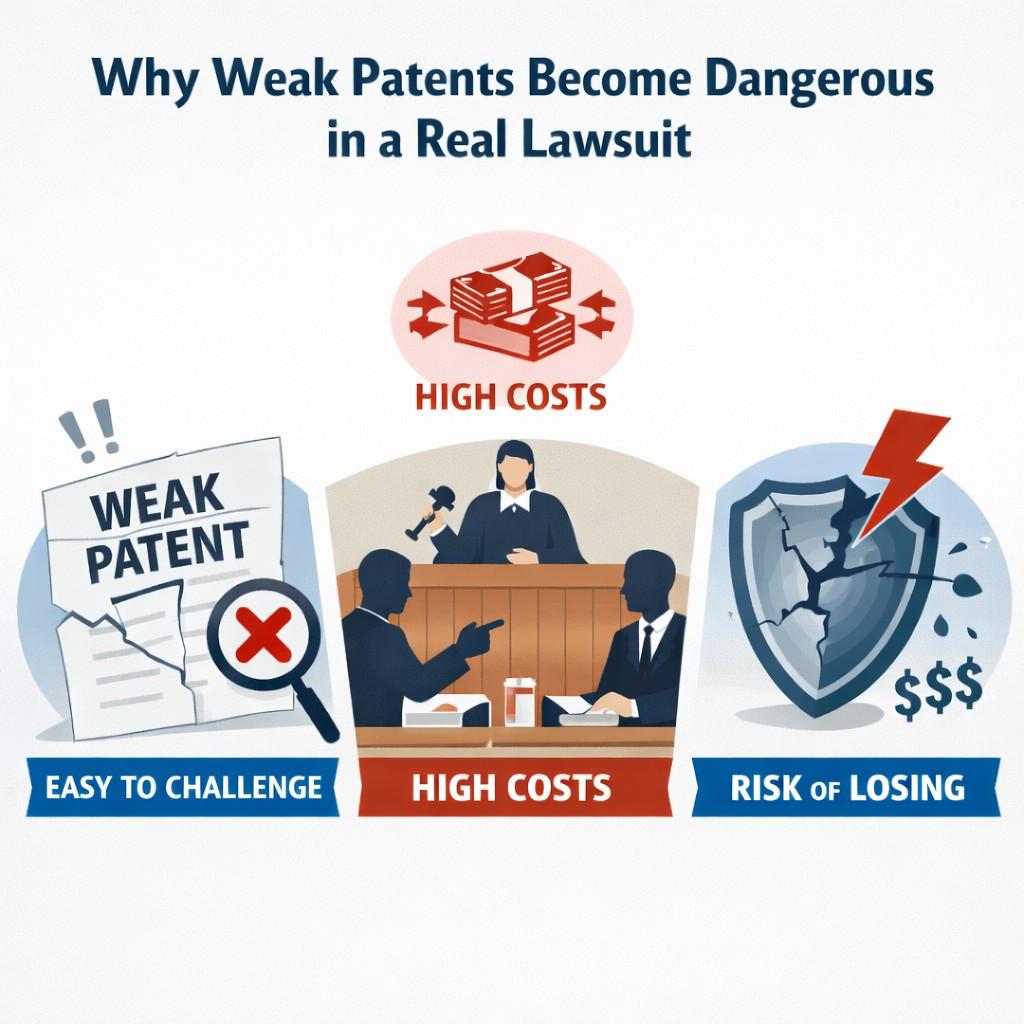
Most founders think a weak patent is simply one that may not hold up. That is only half the story. In a real lawsuit, a weak patent does not just fail quietly. It creates risk.
It drains money. It opens doors for the other side to attack you in ways you did not expect.
When you step into a courtroom, every claim, every word, every filing choice becomes part of a larger story. If that story has gaps, the other side will shine a bright light on them.
This is where smart companies separate themselves from hopeful ones. Hope is not a strategy. A litigation readiness check forces you to look at your patents the way a hostile lawyer would.
If you do not do this early, you may discover the problem only after you have already spent hundreds of thousands of dollars defending something that should have been fixed or removed years ago.
If you want to build patents that are ready for battle, not just ready for filing, you should understand how strong protection is created from day one. PowerPatent was built for exactly this purpose.
It helps you turn real technical work into solid protection, backed by real attorneys who review every step. You can see how it works here: https://powerpatent.com/how-it-works
Weak Claims Invite Direct Attacks
A patent lives or dies by its claims. If your claims are too narrow, they are easy to design around. If they are too broad without support, they are easy to invalidate.
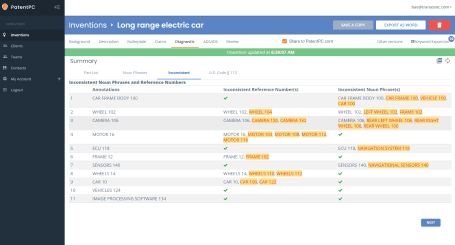
In litigation, the other side studies your claims line by line. They look for vague language. They look for words that are not clearly defined. They look for missing technical detail.
If they find it, they will argue that your patent should never have been granted. And if a judge agrees, your entire case can collapse.
This is why founders should not treat claim drafting as a simple form. Before filing, ask yourself whether your claims truly match how your product works today.
Then ask whether they cover how your product will evolve next year. If they do not, you may be building on sand.
A strong move is to map each claim to real product features and actual code. If you cannot point to something real in your system that supports each key phrase, that is a warning sign. Fix it before someone else forces you to.
Poorly Documented Inventions Create Doubt
Courts care about proof. If your patent describes a system in abstract words but your internal documents tell a different story, you have a problem.
Opposing counsel will ask for emails, design files, early versions of your code, and technical notes. If your patent says one thing and your development records show something else, credibility takes a hit.
Doubt spreads fast in litigation. Once the judge or jury senses that your documentation is messy, they start questioning everything.
To avoid this, treat invention documentation as part of your core process. When engineers build new features, record the problem being solved. Save design decisions.
Capture diagrams. Keep version history organized. When you later file or amend patents, make sure the language reflects the real system.
This is not about adding busy work. It is about protecting the story of your invention so it holds together under pressure.
Old Patents Can Turn Into Liability
Many startups file early patents during their first year. At that time, the product is rough. The market is unclear. The technology may change. Years later, that early filing may not match what the company actually sells.
In litigation, the other side will compare your product to your patent. If the gap is too wide, they will argue non-infringement. Worse, they may argue that your patent lacks written support for what you now claim is the invention.
This is why a litigation readiness check should include a portfolio review every year. Do not assume older patents are still aligned. Ask whether they protect your current revenue drivers.
If not, consider filing continuation applications or new patents that better reflect where your technology has matured.
Dropping weak or outdated assets can also strengthen your overall position. A lean portfolio of strong patents is more powerful than a long list of papers that do not connect to real products.
Vague Technical Language Weakens Enforcement
In a lawsuit, words matter more than you think. If your patent uses broad phrases without clear explanation, judges may interpret them narrowly. That can shrink your protection overnight.
Founders often rush filings to secure a date. Speed is important. But clarity is even more important.
If your description does not explain how key parts of your system function, you are giving the other side room to argue that your claims are unsupported.
During a readiness check, read your patents as if you have never seen the product.
Can an engineer understand exactly how the system works? Are there diagrams that match the claims? Are there multiple examples that show variations?
If the answer is no, you may need to strengthen future filings. Smart drafting anticipates attack. It explains the invention in layers, from high-level concept down to detailed implementation.
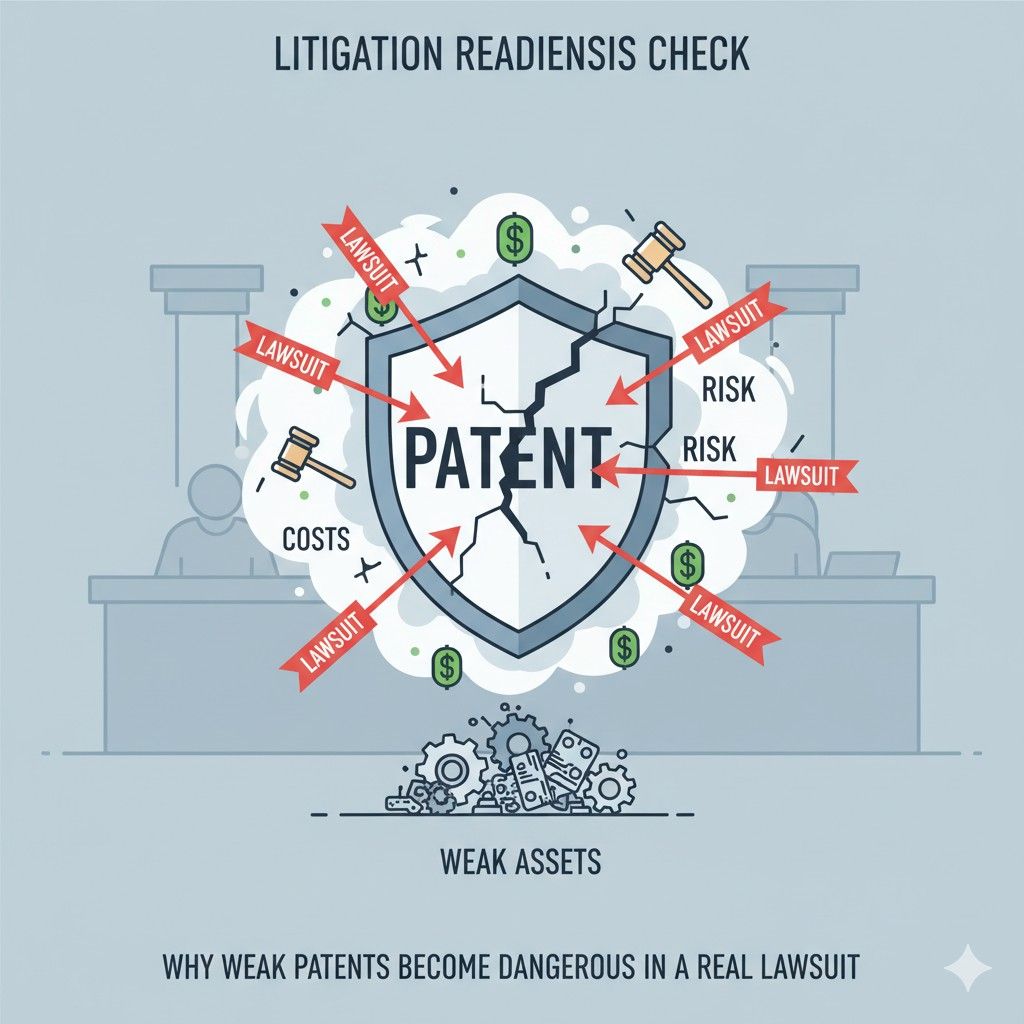
Platforms like PowerPatent combine software tools with real attorney oversight to help founders avoid these weak spots before they become expensive mistakes. You can explore the approach here: https://powerpatent.com/how-it-works
Inconsistent Ownership Can Break a Case
One hidden danger many startups ignore is ownership. If a patent is not properly assigned from inventors to the company, enforcement becomes complicated.
If a contractor contributed but never signed assignment paperwork, that gap can be used to challenge standing in court.
Litigation moves fast once it starts. You do not want to scramble for signatures or search for old agreements when the other side is demanding proof.
A simple but powerful action is to audit your assignment records. Confirm that every inventor signed a proper assignment. Confirm that assignments were recorded.
Check contractor agreements to ensure IP rights are clearly transferred.
This may feel like paperwork. In reality, it is armor. A clean ownership chain prevents procedural attacks that can derail your case before it even reaches the substance of the technology.
Weak Patents Increase Settlement Pressure
Even if you never intend to sue anyone, weak patents can hurt you during negotiations. When a larger company challenges your IP, your leverage depends on confidence.
If your own advisors quietly admit that parts of your portfolio are fragile, your ability to negotiate drops.
The other side senses hesitation. They push harder. They offer lower settlements. They stretch out talks, knowing you may not want to risk a court battle.
Strong patents change the tone of conversation. They create clarity. They reduce fear. They allow you to stand firm.
A litigation readiness check is not about being aggressive. It is about being prepared. When you know your assets are solid, you negotiate from strength.
The Cost of Defending the Indefensible
Litigation is expensive. Every motion, expert report, and deposition costs money.
If you are defending a patent that has obvious weaknesses, your legal team will spend time trying to patch holes instead of advancing your core arguments.
That is wasted energy. Worse, if the patent is invalidated, you may not recover those costs.
It is far cheaper to review and refine your portfolio early. Dropping a weak patent does not mean failure. It means discipline. It means focusing your resources on the assets that truly support your business.
Think of it like pruning a tree. Cutting off weak branches helps the strong ones grow.
Competitors Study Your Patents Too
You are not the only one reading your filings. Competitors review them. They look for clues about your roadmap. They search for areas where your coverage is thin.
If they see weak patents, they may feel safe copying certain features. If they see inconsistent claim language, they may design around you.
A strong, clear, well-supported patent portfolio sends a signal. It tells the market that you are serious about protection.
If you are building deep tech, AI systems, hardware, biotech tools, or complex platforms, your patents should reflect the depth of your work. That does not happen by accident. It requires thoughtful drafting and review.
PowerPatent was designed for founders who care about this level of precision but do not want to get stuck in slow, traditional processes.
The combination of smart software and real attorneys helps you create patents that are aligned with your actual technology and built for long-term strength. You can learn more here: https://powerpatent.com/how-it-works
Readiness Is a Business Strategy, Not a Legal Exercise
The biggest mistake founders make is treating patents as isolated legal documents. In reality, they are business tools. Weak tools create risk. Strong tools create options.
A litigation readiness check should connect your patents to your revenue, your roadmap, and your competitive edge. Ask whether each patent supports a real business goal.
Ask whether it would matter in a dispute. Ask whether you would feel confident putting it in front of a judge.
If the answer is no, do not ignore that feeling. Investigate it. Strengthen what can be improved. Let go of what cannot.
Your time, money, and focus are limited. Spend them on assets that can stand up under pressure.

This is how disciplined startups build real protection. Not by collecting filings, but by building a portfolio that is clean, aligned, and ready.
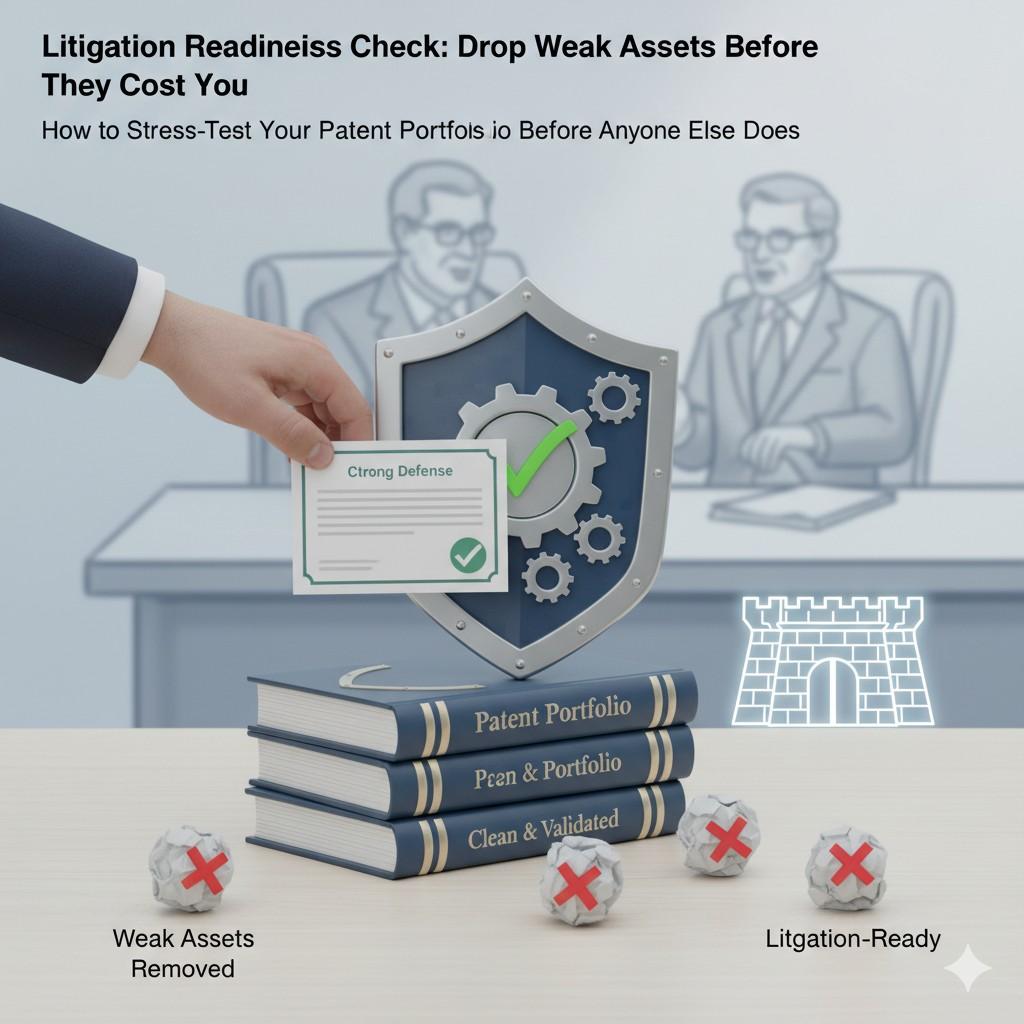
How to Stress-Test Your Patent Portfolio Before Anyone Else Does
Most founders only discover the weakness in their patents after a demand letter arrives. By then, the clock is ticking. Emotions are high. Legal bills start stacking up fast. That is the worst time to evaluate your strength.
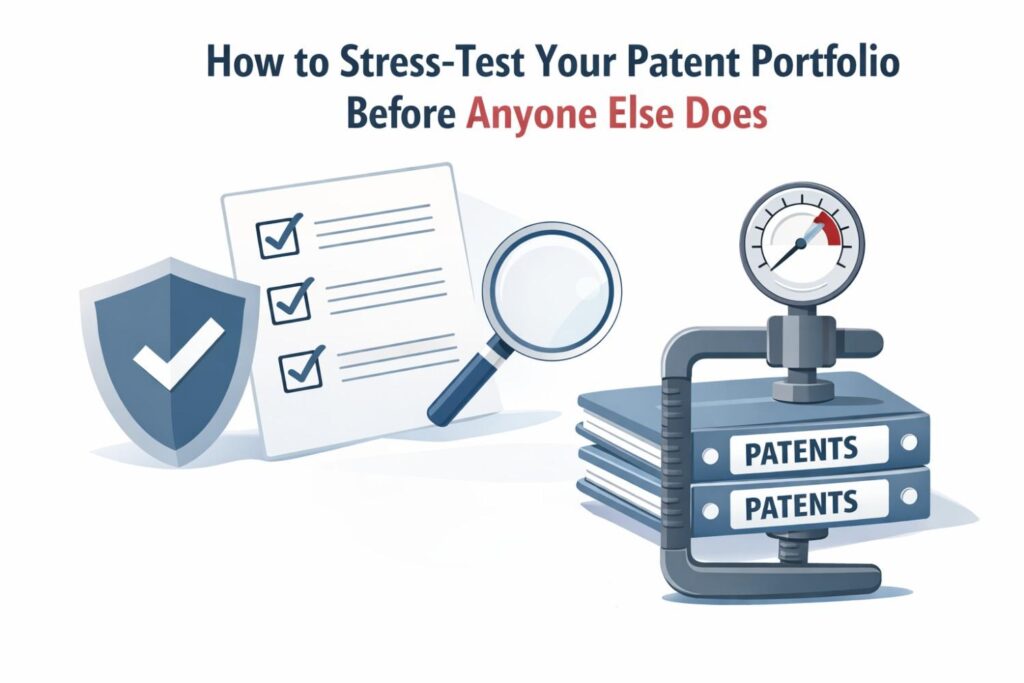
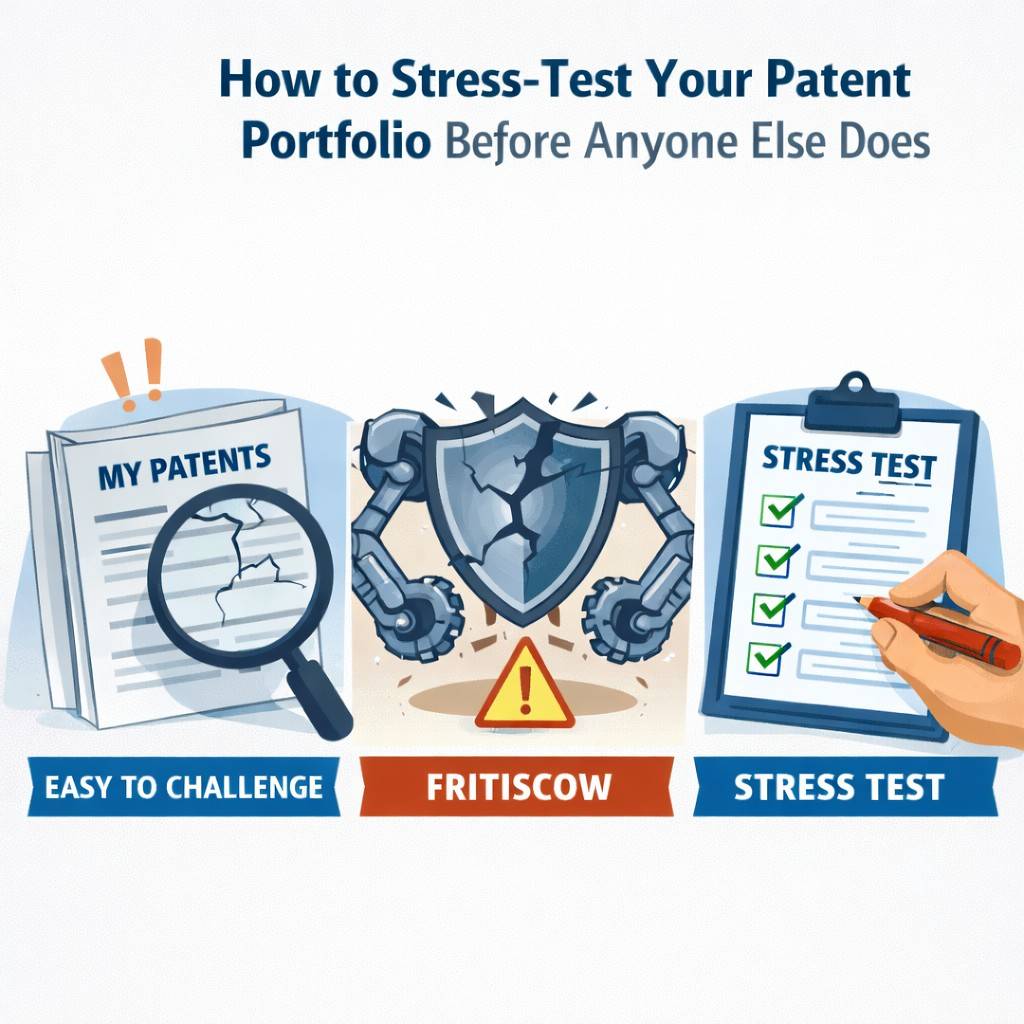
A real advantage comes from testing your portfolio before anyone forces you to. Think of it like pressure testing a bridge before cars start driving over it. You want to know where it bends. You want to know where it cracks.
And you want to fix those spots while you still have control.
A stress test is not about fear. It is about clarity. It shows you which assets truly protect your business and which ones only look impressive on paper. When done right, this process gives you calm confidence.
You know what you have. You know where you stand. And you know what to improve.
If you want help building patents that pass this kind of test from day one, you can see how PowerPatent approaches it here: https://powerpatent.com/how-it-works
Look at Your Patents Like an Opponent Would
The first shift is mental. Stop reading your patents like a proud inventor. Start reading them like a skeptical competitor.
Imagine you are a well-funded rival. You want to enter the same market. You pull up your patent filings. What would you attack first?
You would search for broad words that are not clearly defined. You would look for areas where the claims describe results but not the technical steps that achieve them.
You would search for gaps between what is claimed and what is actually described in detail.
This is not a comfortable exercise. But it is powerful.
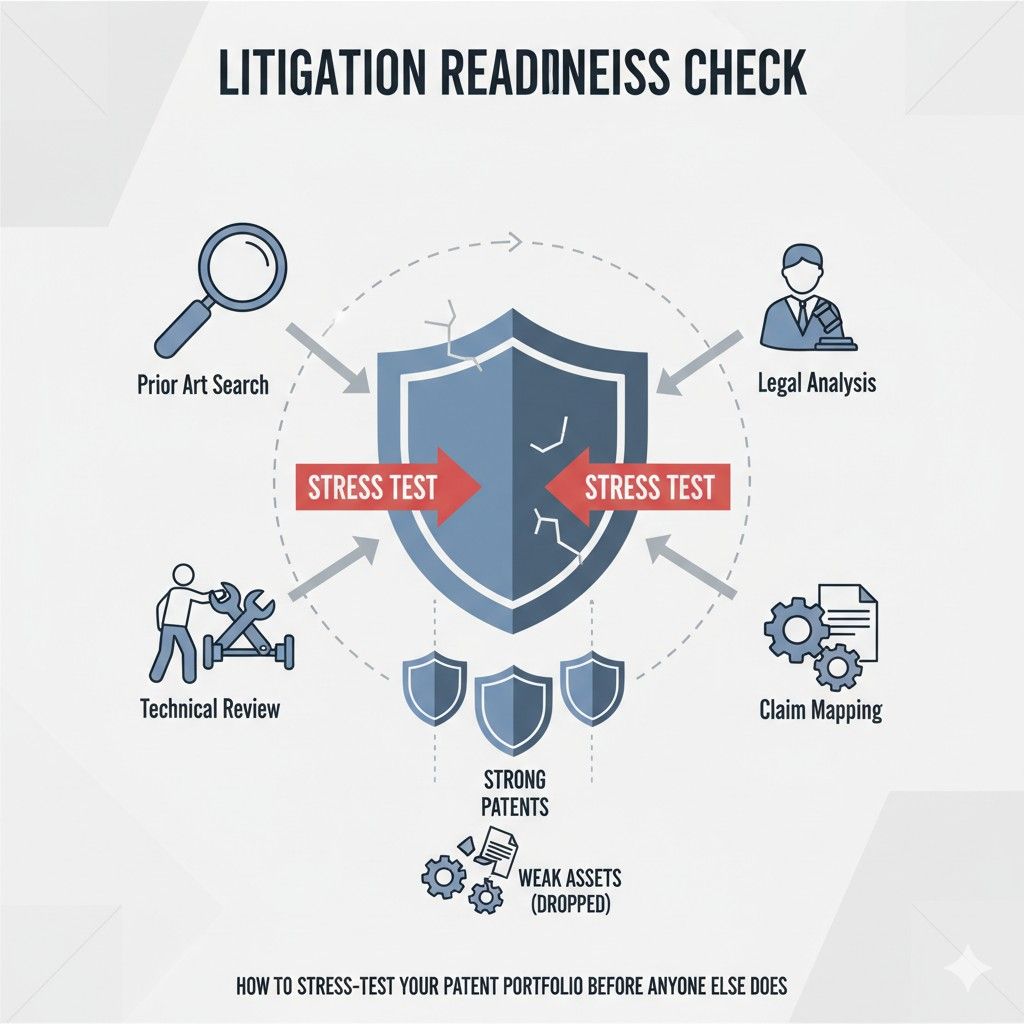
Sit down with your technical team and walk through each key patent. Ask them to explain how they would design around it.
If they can quickly sketch an alternative approach that avoids your claims, that is a sign your protection may be too narrow.
This is not about making claims as wide as possible. It is about making them precise and well-supported. Precision backed by detail is harder to break than vague ambition.
Compare Your Patents to Your Current Product
Many startups evolve quickly. Features change. Architecture shifts. New layers are added. Over time, your live product may drift away from what your original patents describe.
That drift creates danger.
During a stress test, pull up your product documentation, system diagrams, and even code repositories. Then place them side by side with your patent claims. Do they still match?
Do your strongest revenue features sit clearly inside the scope of your claims?
If the answer is unclear, dig deeper. If the answer is no, you may need new filings that capture your current system.
This step alone can save you from a painful surprise later. Imagine discovering in court that your best-selling feature is not actually covered the way you assumed. That is avoidable. But only if you check early.
Strong companies treat patent review as part of product strategy, not an afterthought.
Test for Prior Art Risk
One of the most common ways patents get attacked is through prior art. This means someone claims your invention was already known before you filed.
Even if your patent was granted, that does not mean it is immune. In litigation, the other side may search aggressively for old research papers, open-source projects, blog posts, or forgotten products that look similar.
A smart readiness check includes a fresh look at the landscape. Search for similar technical work that existed before your filing date. Do not rely only on the original patent search. Technology moves fast. New references surface over time.
If you find close material, do not panic. Instead, evaluate how your claims differ. Are the differences clearly described in your patent? Are they technical and meaningful?
If the line between your invention and earlier work is blurry, consider whether future filings can better define your unique contribution.

The goal is not perfection. The goal is awareness. When you know the prior art risk, you can prepare strong responses instead of scrambling under pressure.
Examine the Depth of Your Technical Disclosure
In court, experts often dissect the technical details of a patent. They ask whether the description truly teaches how to build and use the invention.
If your patent only describes high-level ideas without showing real implementation details, it may face challenges.
During your stress test, read the technical sections carefully. Are there specific examples? Are there variations? Do the diagrams connect clearly to the claims?
If your patent describes an AI system, does it explain model training, data flow, and system architecture in a concrete way? If it covers hardware, does it show configurations and interactions?
The more grounded your description, the stronger your position.
This is where working with real patent attorneys who understand deep tech matters.
PowerPatent combines software tools that help founders capture technical detail with attorney oversight to ensure that detail is legally meaningful. You can explore the approach here: https://powerpatent.com/how-it-works
Review Inventorship Carefully
Inventorship errors can quietly weaken a patent. If someone who contributed to the core idea was left off, or if someone was listed who did not truly contribute, problems can arise.
In a lawsuit, the other side may examine emails, commit history, and internal discussions to question inventorship. If they find inconsistencies, they may argue that the patent is invalid.
As part of your readiness check, revisit how inventors were determined. Talk to your technical leads. Confirm that each named inventor contributed to at least one claimed idea.
If you discover an issue, address it properly with legal guidance. Fixing inventorship early is far easier than defending it in court.
Evaluate Geographic Coverage
Your market may not be limited to one country. If you operate globally, your patent protection should reflect that reality.
A stress test includes asking where your revenue is likely to grow. Are you protected in those regions? Or are you relying on filings in only one jurisdiction?
If a competitor manufactures abroad or sells in another country, limited geographic coverage can restrict your enforcement options.
Strategic international filings should align with your business plan, not happen randomly. If your product roadmap points to expansion, your patent strategy should move in sync.
Consider How a Judge Would Explain Your Patent
In litigation, judges often summarize complex technology in simple language. If your patent cannot be explained clearly, that becomes a challenge.
As a test, try describing your core invention in plain words without losing accuracy. Then read your patent and see if it matches that clarity.
If the patent feels confusing even to your own team, imagine how it may appear in court.
Clarity strengthens enforcement. Confusion weakens it.
This is another reason why patents should be drafted with both technical depth and simple explanation in mind.
PowerPatent was designed to help founders capture their work clearly while attorneys ensure the structure is strong. The result is protection that is both detailed and understandable. Learn more here: https://powerpatent.com/how-it-works
Assess Your Portfolio as a Whole
Individual patents matter. But in real disputes, your entire portfolio tells a story.
Does your collection show a steady build of innovation over time? Does it cover different layers of your system? Or does it look scattered and unfocused?
A cohesive portfolio is harder to attack. Even if one patent is challenged, others may still stand strong and cover related aspects.
During your readiness check, map your patents to core parts of your technology stack. Identify overlaps and gaps. Strengthen areas tied directly to revenue. Consider whether some weaker assets add little value and create unnecessary maintenance costs.
This is not about volume. It is about alignment.
Build a Habit of Annual Review
Litigation readiness is not a one-time event. Technology changes. Markets shift. Teams grow. What was strong two years ago may now be outdated.
Create a simple annual review cycle. Revisit claims. Compare them to the product. Check ownership records. Evaluate new prior art. Adjust strategy as needed.
When this becomes routine, you reduce surprise. You also build a culture where intellectual property is treated as a living asset, not a forgotten filing.
Founders who take this seriously gain leverage. They negotiate from strength. They sleep better knowing their foundation is solid.
If you want to build patents that are structured for this kind of ongoing strength without slowing your team down, explore how PowerPatent works with founders and engineers here: https://powerpatent.com/how-it-works
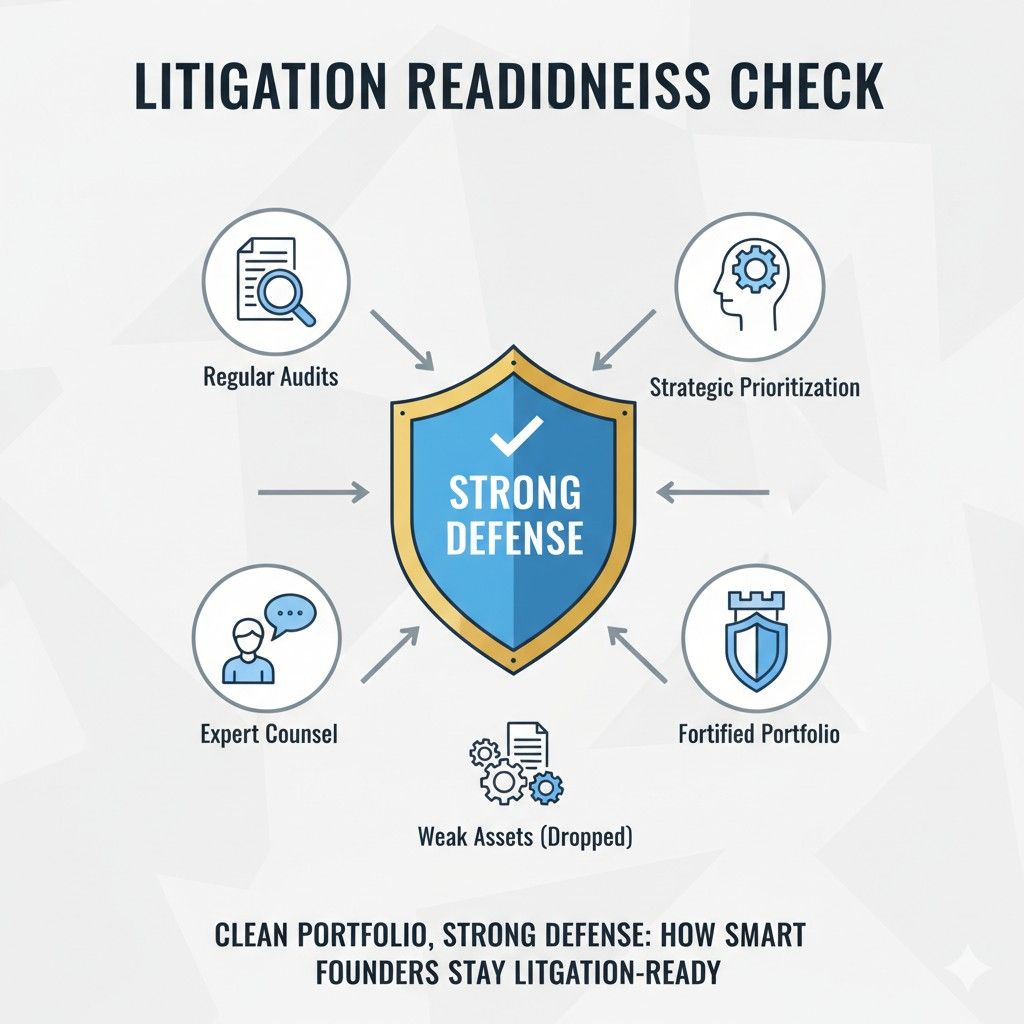
Clean Portfolio, Strong Defense: How Smart Founders Stay Litigation-Ready
A strong defense does not begin when a lawsuit is filed. It begins years earlier, when decisions are calm and thoughtful. The founders who handle disputes well are rarely the ones with the most patents.
They are the ones with the cleanest portfolios.
Clean does not mean small. It means focused. It means every patent has a purpose. It means each filing connects to real technology and real revenue. It means there are no loose ends that a competitor can grab and pull.
When your portfolio is clean, you move with confidence. When it is messy, you move with doubt.
Litigation readiness is not about preparing to fight every battle. It is about making sure that if a battle comes, you are not carrying unnecessary weight.
If you want to see how modern tools and real attorneys can help you build this kind of clean structure from the start, take a look at how PowerPatent works: https://powerpatent.com/how-it-works
Clarity Beats Volume Every Time
Some startups chase numbers. They want to say they have ten patents, or twenty, or fifty. But a stack of weak filings does not scare serious competitors. In fact, it may signal inexperience.
What matters is clarity.
A clean portfolio clearly shows what you invented, how it works, and why it matters. It covers the engine of your product, not just the surface features. It protects the pieces that create switching costs and deep value.
During your readiness review, ask yourself a simple question. If you had to rely on only three of your patents in a dispute, which ones would you choose?

If that question feels hard to answer, that is a signal. It may mean your filings are not tightly connected to your core advantage.
Smart founders focus on protecting what truly differentiates them. They avoid filing just for the sake of filing. They invest where it counts.
Remove Assets That Create Noise
Holding on to weak patents can create distraction. They require maintenance fees. They require tracking. They create false confidence.
Worse, they can complicate strategy. If you assert a weak patent in a dispute, the other side may attack it aggressively. If it falls, it can weaken your overall position and shift attention away from your stronger assets.
There is discipline in letting go.
During your litigation readiness check, identify patents that no longer align with your product or roadmap. Consider whether they add real defensive value. If not, think carefully about whether keeping them makes sense.
Pruning your portfolio sharpens it. It makes your strategy easier to explain and defend.
This is not about reducing protection. It is about strengthening it.
Align Patents With Revenue Streams
Your most important patents should sit close to your revenue.
If a large share of your income comes from a specific system, feature, or workflow, your protection should clearly cover that area. If your strongest patents protect ideas you no longer monetize, your risk increases.
During your review, map revenue lines to patent coverage. Look at your biggest customers. Look at the features they rely on most. Then confirm that those features are clearly protected.
If there are gaps, act early. File new applications that reflect your matured product. Build coverage around how your system actually works today, not how it worked in an early prototype.
When patents and revenue are aligned, enforcement becomes more powerful. You are not arguing about abstract ideas. You are defending real business value.
PowerPatent was built to help founders capture inventions directly from real product work, not from vague summaries.
That alignment between code, architecture, and patent language is what creates strength over time. You can see the process here: https://powerpatent.com/how-it-works
Keep Ownership Clean and Simple
A clean defense depends on clean paperwork.
Every patent should clearly belong to the company. Every inventor agreement should be signed and stored. Every transfer should be recorded properly.
This may sound basic, but many fast-growing startups overlook small details. They move quickly. They hire contractors. They spin up side projects. Years later, those small gaps can surface.
In a dispute, procedural attacks can be just as damaging as technical ones. If the other side argues that you do not fully own the patent, the focus shifts away from infringement and toward paperwork.
Prevent that shift.
Make ownership review part of your annual process. Confirm assignments. Double-check employment agreements. Keep records organized and accessible.
Clean structure reduces risk.
Prepare a Simple Enforcement Story
In court, complex technology must be explained in a way that judges and juries can understand. If your patent portfolio is scattered, telling that story becomes difficult.
A clean portfolio allows you to present a clear narrative.
You invented a specific solution to a defined problem. You built it into a working system. You protected it properly. And the other side copied it.
That story should flow naturally from your filings.
During your readiness check, try to outline this narrative in plain language. Does each key patent support part of the story? Do they build on each other logically?
If your portfolio feels disjointed, consider how future filings can create continuity. Think in terms of building layers over time instead of isolated filings.
Clarity in storytelling often influences outcomes more than founders expect.
Anticipate Counterclaims
In real disputes, enforcement is rarely one-sided. If you assert your patents, the other side may assert theirs.
A clean, well-structured portfolio can discourage aggressive counterclaims. It signals that you have done your homework.
As part of staying litigation-ready, monitor the patent landscape around your space. Be aware of major filings by competitors. Understand where their claims may overlap with your product.
This awareness does not mean you live in fear. It means you operate with eyes open.
When your own portfolio is tight and well-supported, you are in a stronger position to respond calmly if counterclaims arise.
Make IP Part of Company Culture
Litigation readiness is not just a legal task. It is cultural.
When engineers understand that their design decisions may one day be described in court, they document more carefully.
When product leaders know that key features should be protected early, they coordinate with IP strategy. When leadership treats patents as strategic assets, not trophies, better decisions follow.
This does not require slowing down innovation. It requires small, consistent habits.
Capture invention details while they are fresh. Review filings before submission to ensure accuracy. Revisit strategy as the roadmap evolves.
PowerPatent supports this kind of culture by integrating patent drafting into the real workflow of builders, while real attorneys provide guidance and review. It removes friction without removing rigor.
Learn more here: https://powerpatent.com/how-it-works
Confidence Is the Real Advantage
At the end of the day, litigation readiness is about confidence grounded in reality.
When you know your patents are strong, aligned, and well-documented, you negotiate differently. You partner differently. You raise capital with more credibility.
Investors often ask about intellectual property, not just to check a box, but to understand risk. A clean, thoughtful portfolio signals maturity.
It shows that you are building for the long term.
Weak assets create silent anxiety. Strong assets create leverage.
If you are building serious technology and want protection that grows with you instead of slowing you down, now is the right time to evaluate your portfolio honestly. Do not wait for conflict to expose gaps.
Start with a clear look at what you have. Strengthen what matters. Let go of what does not. And build future filings with intention and depth.
If you want a smarter way to do that without getting buried in old-school processes, explore how PowerPatent combines modern software with real attorney oversight to help founders move faster and safer: https://powerpatent.com/how-it-works
Wrapping It Up
Most founders do not lose lawsuits because they lack innovation. They lose because they trusted paperwork that was never built to handle pressure. A weak patent rarely looks weak at first glance. It sits in a folder. It has a filing number. It feels official. But in a real dispute, formalities do not protect you. Strength does.