When a company is preparing for an IPO or getting ready to be acquired, everything suddenly becomes very real. Investors and buyers want to know what they’re actually buying, what risks might be hiding under the hood, and whether the technology is truly yours. And when they dig in, they almost always start with your IP. This is the moment when your patent story gets tested for the first time in public. It’s fast, it’s serious, and it happens whether you feel ready or not.
What Buyers Look for First When They Dig Into Your Patents
Before a buyer even gets deep into the technical weeds, there is always a first pass.
This pass is fast, quiet, and incredibly important because it sets the tone for the whole diligence process. Buyers want an early sense of whether your IP story is solid or shaky.
They are not trying to catch you; they are trying to understand what they are stepping into. When the foundation looks clean from the start, they move forward with trust.
When it looks messy, they slow down, bring in more lawyers, and start asking harder questions. The early impression matters more than most founders expect, and this is where strong preparation pays off in a very real way.
How Buyers Form Their First Impression of Your IP
Buyers often begin by opening your patent documents side by side with your website, pitch deck, and product demo. They are simply trying to see if everything matches.
They look at the title and ask if it speaks to what you actually built. They review the claims and see if they match the core value proposition you’ve been selling. They compare filing dates to your earliest press releases.

This quick scan is not formal diligence; it is the buyer trying to get a feel for whether you run a disciplined operation. When the story is consistent, they lean in. When the story is scattered, they lean back.
Why Buyers Want to Understand Your Filing Strategy
One of the first questions in any diligence meeting is why you filed the patents you filed. Buyers want to understand your logic. They want to know if you filed patents because you were checking a box or because you were building a real moat.
When they sense that your filings were random or rushed, they lose confidence in the depth of protection. But when they see a clear pattern tied to actual product development, they feel safer.
This is why documenting your filing strategy matters. Even a simple one-page explanation can make you look organized and intentional.
How Buyers Evaluate Your Earliest Patent Decisions
Buyers almost always look at your earliest filing because early patents reveal how carefully the company thought about IP from day one. If the earliest patents are well written, clear, and aligned with what the company later became, buyers gain confidence.
If the earliest filings are vague, overly narrow, or irrelevant to your present technology, they assume there may be bigger gaps ahead.
This is why startups benefit from treating their first patent as a long-term asset instead of a placeholder. You cannot hide a weak first filing; it will always be reviewed.
What Buyers Look For in Your Assignment Paperwork
The first ownership check is always simple. Buyers look at who is listed as the applicant and who signed the assignment agreement. They check whether the company had clear title at the time of filing.
They check whether any co-founders, advisors, or contractors ever touched core code or hardware before signing proper agreements.
Even small inconsistencies raise questions. Many deals slow down because a founder filed a provisional under their personal name years ago.

This is avoidable, but you have to fix it early. Buyers notice clean paperwork immediately, and it gives them comfort that nothing unexpected will surface later.
How Buyers Check for Gaps Between Invention and Filing
One of the fastest ways buyers test your IP hygiene is by checking the gap between when the invention was created and when it was actually filed. If the gap is short, buyers feel safe.
If the gap is long, buyers worry about potential public disclosures that could harm patent rights. This is especially relevant in fields like AI and robotics where teams often publish research or give demos before filing.
You can help yourself by keeping internal invention logs or simple engineering notes. Buyers appreciate any record that shows your invention date was earlier than your first public reveal.
Why Buyers Care About How You Describe Your Technology
Before technical experts dive into claims, buyers do a simpler test: they scan the specification and look at how clearly you describe the technology. They are not judging your writing style; they are checking whether the patent shows a real technical contribution.
When the description is rich and detailed, buyers see that you invested time into capturing the core idea.
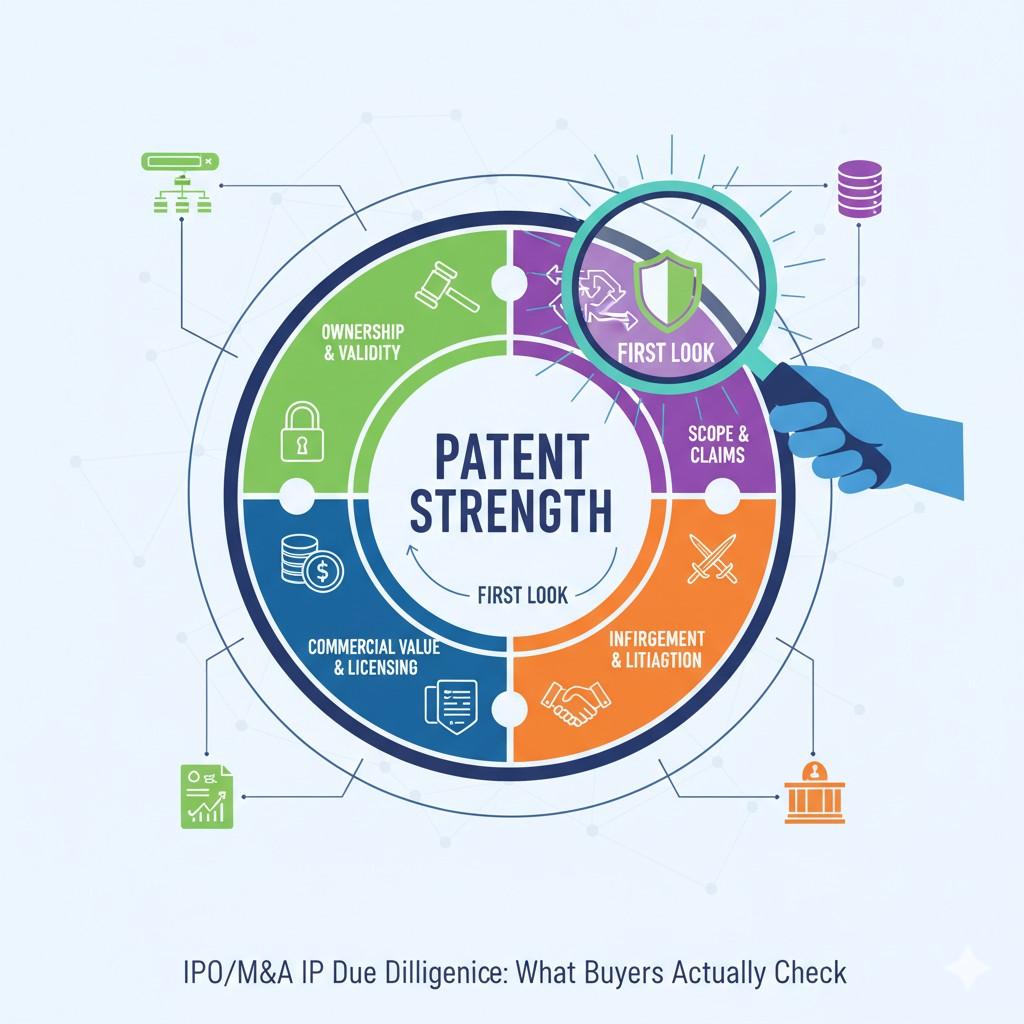
When it reads thin or shallow, buyers question whether the patent would hold up in a dispute. A clear description tells buyers you took the process seriously. A vague description signals future problems.
How Buyers Judge the Connection Between Patents and Product
During the earliest phase of diligence, buyers want to see whether your patents create real leverage in the market. They want to feel that if someone tried to copy you, your patents would actually matter. This is not a legal test; it is a practical one.
If buyers see that your claims cover the very heart of your product, they get excited. But if the patents only cover side features or outdated prototypes, they worry the moat isn’t real.
This is why keeping your claims aligned with your evolving product line is crucial. Even simple continuation filings can make a massive difference.
Why Buyers Look at Your Competitor Landscape Right Away
A surprising part of early diligence is that buyers check your competitors’ patents before they even finish reviewing your own. They want to see how your portfolio fits in the larger landscape.
They want to know if your moat stands alone or if it sits in a crowded space. This helps them understand whether your advantage is defensible or just temporary.
You can help yourself here by having notes on how your patents differ from key competitors. Buyers love seeing that a founder has already thought this through.
How Buyers React When They See a Clean, Organized IP Folder
One of the simplest but most powerful ways to impress a buyer is to present a clean IP folder. Not fancy. Not overloaded.
Just clear. Buyers love seeing everything organized by family, with assignments easy to locate and dates easy to understand.
It shows discipline. It shows that you take ownership seriously. And it makes them trust that the rest of the diligence process will be smooth.
Even a small amount of preparation can dramatically change how buyers feel about your company in these early moments.
How to Prepare for These Early Checks
The simplest way to get ahead is to regularly clean and update your patent documents. Make sure assignments are signed early. Make sure your filings reflect your real technical direction. Make sure you capture inventor contribution. Make sure you file before you publish.
You do not need to be perfect. You just need to be organized enough that a buyer can look at your folder and feel calm about what they see.
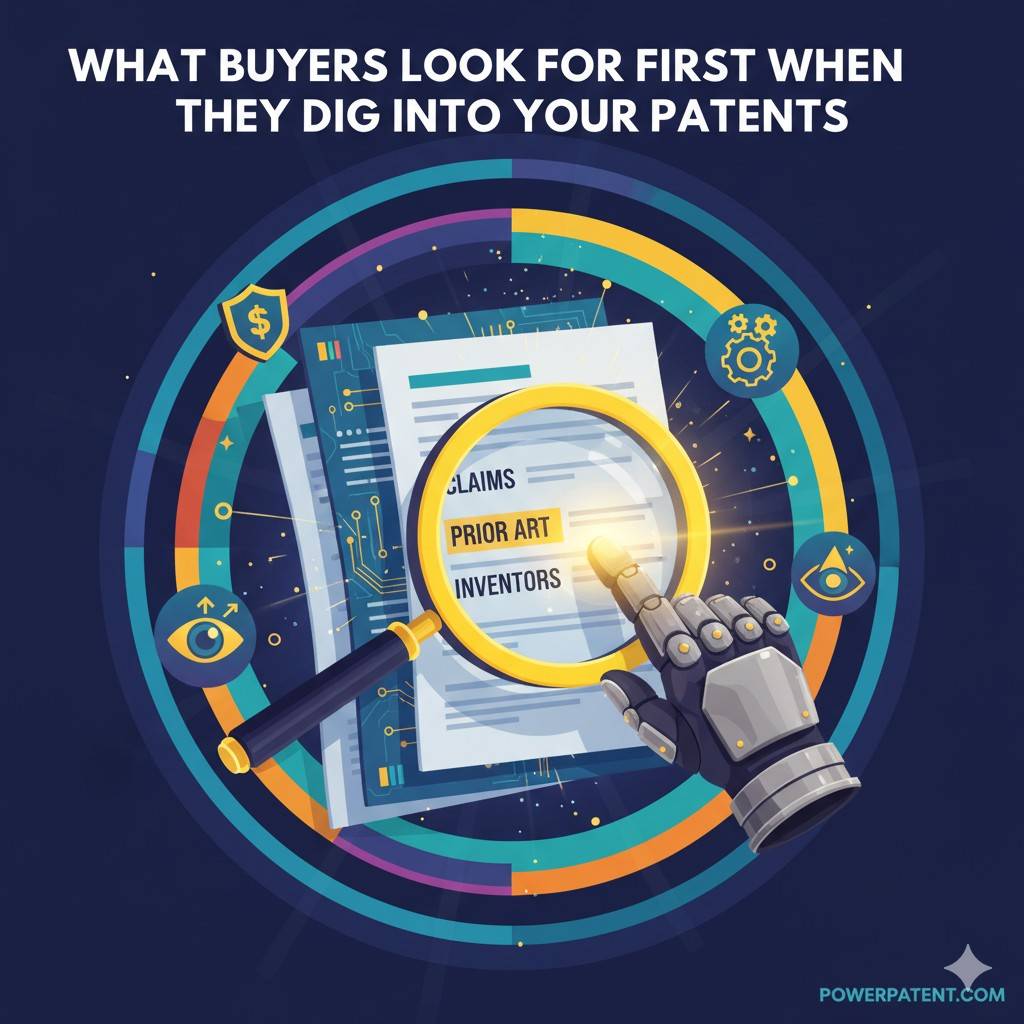
This is where tools like PowerPatent help because they keep everything structured, clean, and aligned with how real diligence works in the wild.
The Hidden IP Risks That Slow Down Deals and Cut Valuations
Before a deal closes, buyers always want to know where the hidden risks might be. They expect surprises in product, team, and operations. But what they truly fear are surprises inside the IP.
This is because IP is the one part of the deal they cannot easily change after the acquisition. Everything else can be fixed. Everything else can be replaced. IP cannot.
If a buyer discovers a serious gap late in diligence, the entire deal can slow down or lose momentum.
Even small issues can shave millions off a valuation because buyers view IP risks like cracks in the foundation. What matters most is making sure those cracks do not exist in the first place.
Why Small IP Mistakes Become Big Deal Problems
In the early stages of diligence, buyers look for signals that the company maintained good IP hygiene from the beginning. When something looks off—even something small—they assume they will find more problems if they keep digging.
That is why small mistakes turn into big deal concerns. A missing signature might seem trivial to a founder, but it looks like a structural risk to a buyer.
A late filing might feel like a harmless oversight, but in diligence it creates doubts about global rights.
A missing inventor name might seem like a minor paperwork issue, but it raises the fear that a former employee could challenge ownership in the future.
These small details matter because they change the buyer’s perception of risk. And once the buyer sees risk, their legal team starts driving the process instead of their business team.
Legal-driven diligence moves slower, asks harder questions, and demands more proof.

When that shift happens, the deal loses its ease and energy. The fastest way to keep the deal smooth is to eliminate these small mistakes early—long before diligence starts.
How Old Provisional Filings Become Unexpected Risks
Provisional filings are often done quickly, sometimes by founders themselves. Buyers know this, and they always review provisionals carefully. They look to see whether the provisional truly supports the later non-provisional.
If the provisional is too short, too vague, or incomplete, buyers worry that the full patent may not actually be valid. This can create long discussions about filing dates, priority rights, and prior art.
Many founders keep old provisionals in their filing history without realizing how much scrutiny they will attract later. If the provisional does not strongly support the final patent, it becomes a risk.
The good news is that you can fix this before diligence by reviewing old provisionals and filing continuations or new applications that clean up the record. Buyers love seeing that a company took steps to strengthen old filings before going to market.
Why Public Disclosures Create Hidden Weak Points
Every founder has shared some version of their invention with the world. Maybe it was a pitch event, a funding announcement, an early customer call, a demo day, or even a GitHub repository.
Buyers know this, and they always try to match public disclosures with patent filing dates. If they see that you talked about the invention before filing, they worry about what rights may have been lost.
This is one of the most common diligence problems for fast-moving startups because the team is usually focused on building and shipping. The fix is simple: create a clear timeline of your public disclosures. Buyers appreciate transparency.
Even a simple timeline reassures them that you understand your history. And if something risky did happen, showing that you are aware of it builds trust.

Most issues can be managed if the founder is upfront and organized. The worst problems arise when disclosures exist but founders never documented them.
How Missing Inventor Records Slow Down Acquisitions
Buyers care deeply about whether inventors were properly listed. This is not because they want to judge your team. It is because misnamed or missing inventors create opportunities for future disputes.
If someone was left off, that person could raise a challenge later. If someone was included by mistake, it could weaken the patent.
These issues are surprisingly common because startup teams change fast, contractors come and go, and early work often happens before the team formalizes roles.
To avoid this, create a simple system where engineers record who contributed to which invention.
Even a shared note or an internal form helps. Buyers are always impressed when founders can clearly explain who invented what. It shows discipline and reduces fear of future claims.
Why Confidential Information in Patent Filings Can Become a Deal Risk
Many founders accidentally include sensitive details in their patent applications—details about customers, trade secrets, training data, or partnerships. Buyers notice this right away.
They worry about what was disclosed, whether it harms competitive advantage, or whether any confidential agreements were violated. If the patent reveals something that should have stayed quiet, it becomes a legal and business risk.
This is why founders should always review their filings to remove any sensitive internal details.

A strong patent describes the invention without revealing the parts that must remain locked inside the company. Buyers appreciate patents that strike this balance because it signals maturity and careful judgment.
How Employee IP Assignment Gaps Turn Into Deal Slowdowns
When buyers review your employment agreements, they look for one thing: proof that every person who contributed to the invention assigned their rights to the company.
If they see gaps, they worry. Maybe you worked with a contractor before having them sign an assignment. Maybe a former co-founder left before signing paperwork.
Maybe early employees built something before the company was formally formed. These gaps happen all the time. But in M&A or IPO diligence, they slow everything down.
The fix is simple: run an internal check early. Make sure every employee, contractor, advisor, and co-founder has signed an invention assignment agreement.
Do not wait until diligence to fix this. Buyers will spot the gaps in minutes, and fixing them under time pressure is much harder.
Why Buyers Worry About Ownership Chains in AI and Software
In software companies, especially AI companies, buyers check the chain of ownership for data, models, and third-party dependencies. They want to know if the company used open-source code with restrictive licenses.
They want to know if any of the training data came from sources that could create legal risk. They want to know if contractors touched core code without proper agreements. Anything unclear in this chain becomes a red flag.
Founders can help themselves by documenting where their data comes from, how their models were trained, and which licenses they rely on.
Even a short explanation can go a long way because it shows the company understands these risks instead of ignoring them.
Why Buyers Care About Geographic Rights
Buyers always check whether your patents cover markets they care about. If you only filed in one region but the company sells globally, buyers see a gap. This does not mean you need worldwide protection.
It simply means your rights should match your business. If you plan to expand, buyers want to see that you filed in the right places.
If you only filed in the US but your largest growth market is Europe or Asia, buyers may ask you to fix this before closing.
You can anticipate these concerns by filing in regions that align with your long-term strategy, or by using the PCT system to keep options open. Buyers like flexibility. They want to know they can expand without hitting walls.
How Buyers Respond When They See a Clean Risk Profile
When buyers see that your IP has no major risks, they move faster, negotiate more fairly, and push fewer conditions into the purchase agreement. Deals become smoother. Timelines shrink.
Valuation feels justified. Confidence rises. A clean IP record does not just avoid problems; it actively increases the buyer’s appetite for the deal.

It makes them feel like they’re acquiring a company that cares about discipline. And disciplined companies are easier to integrate, easier to scale, and easier to trust.
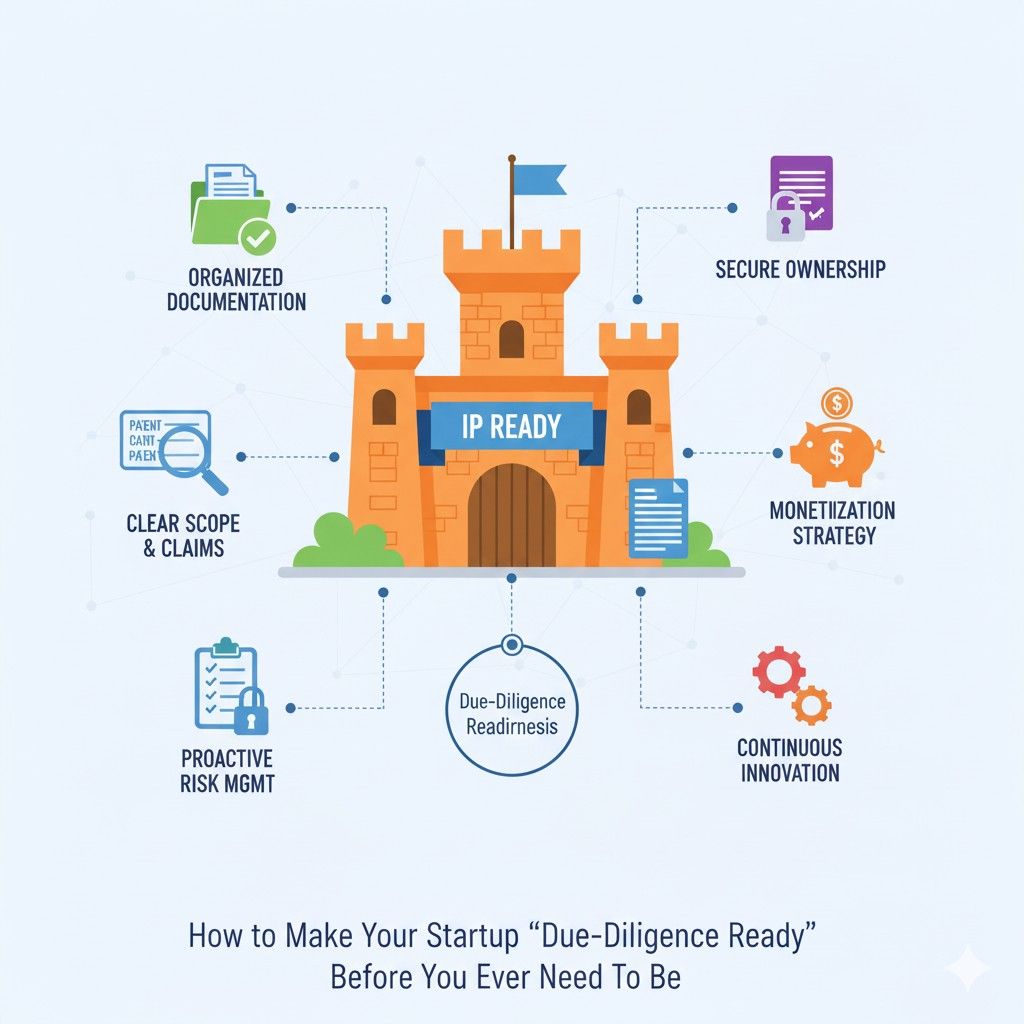
How to Make Your Startup “Due-Diligence Ready” Before You Ever Need To Be
When founders think about diligence, they often imagine it as something that happens far in the future. But buyers look for signs long before the deal is in motion. They want to acquire companies that are built on solid ground. They want technology that is safe to rely on.
They want patents that show discipline, not luck. The companies that glide through diligence are rarely the ones that start preparing at the last minute.
They are the ones that build good habits early, even when the team is small and the product is still changing. Preparing early is not busywork. It is one of the strongest forms of leverage you can give your future self.
Why Early IP Discipline Pays Off More Than You Expect
When you maintain your IP in a clean and structured way, everything becomes easier. Investors trust you more. Buyers feel safer.
Your team has fewer surprises. And you avoid the chaotic rush that most founders experience right before a deal.
Early discipline is not about filing huge numbers of patents. It is about building simple habits: documenting inventions, capturing ownership, and aligning filings with actual product decisions. These habits compound over time.

By the time diligence comes around, you have a track record that speaks for itself.
How Clean Documentation Speeds Up Every Stage of Diligence
One of the simplest ways to give yourself an advantage is to keep your documentation organized. Buyers love companies that can produce clean records on demand.
When everything is located in one place, your company seems more prepared and confident. When documents are scattered across laptops, old emails, or random folders, buyers assume the company has not been careful.
The difference between these two impressions is huge. It shapes the tone of the entire process.
A clean folder with your patents, assignments, employment agreements, invention logs, and disclosure timelines sends a powerful message. It shows you take ownership seriously.
It signals that your IP is not an afterthought. This level of organization is surprisingly rare among startups, which is why buyers react so strongly when they see it.
How Founders Benefit From Simple Invention Logs
An invention log does not need to be complex. It can be a shared document where engineers jot down what they built, when they built it, and who contributed.
This simple habit helps you track the evolution of your technology. It also gives you a clear story to tell in diligence. Buyers love invention logs because they show the company understands what it owns and when it invented key features.
When this record is missing, buyers have to guess, and guessing leads to slowdowns and extra questions.
Keeping an invention log is one of the most practical steps a founder can take.
It helps you decide what to file, when to file, and how to prove ownership if you are ever challenged. And when diligence begins, it becomes one of your strongest pieces of evidence.
How Regular Filing Keeps Your IP Aligned With Your Product
Your product changes fast. Your code changes even faster. If your patents do not evolve with your product, they stop reflecting what makes your company valuable. Buyers notice this right away.
They want to see that your filings match your current product, not the early version you built years ago.
This is why regular filing matters. Even a few strategic filings each year show that your team is keeping its moat aligned with the company’s actual direction.
Continuations, improvements, and follow-on filings help keep your claims fresh.
They also help you expand protection as your technology improves. When buyers review your portfolio and see filings that mirror your evolution, they feel confident that your moat is real and durable.
Why You Should Capture Ownership the Moment Work Begins
The easiest IP problems to fix are the ones you solve right when work begins. When someone joins the team, they should sign their invention assignment before touching the code, hardware, or research.
When a contractor starts a project, their contract should clearly state that the company owns everything they create. When an advisor contributes to a technical breakthrough, their rights should be assigned immediately.
These steps prevent future disputes. They also send a signal to buyers that your team understands the importance of clean ownership. Buyers hate dealing with missing assignments, especially when the person involved has left the company.
Fixing this after the fact is possible, but it creates anxiety, and anxiety slows deals.
How Internal IP Reviews Keep You Ahead of Future Buyers
You do not need a massive legal process to review your IP. Even a short quarterly review can keep everything healthy. This review can be simple: check your filings, check your assignments, check your documentation, check your disclosures, and check your roadmap.
This review helps you catch small issues before they turn into big ones. It also shows your investors that you take your moat seriously.
When buyers eventually ask for your IP story, you can confidently present a clean and updated record. This makes their job easier and reduces the friction that usually appears during diligence.
Why Clear Technical Descriptions Matter More Than You Realize
Strong patents do not just protect inventions; they communicate them. Buyers value patents that explain the heart of the technology in simple, clear terms. When your description is strong, buyers understand what you built and why it matters.
When your description is weak, buyers wonder whether the patent will stand up in real-world scenarios.

The best time to craft clear descriptions is when the invention is fresh. That is when your team understands the details best.
Filing early ensures you capture the real substance of the invention before memories fade and product decisions move on.
How to Prepare Your Team for Diligence Before It Starts
Your team plays a bigger role in IP diligence than founders expect. Buyers often want to speak with engineers, product managers, or scientists to understand how the technology was built.
When those team members understand the basics of IP ownership, they can answer questions confidently. When they are unsure, buyers pick up on it.
You can prepare your team by giving them a simple explanation of how your IP works, what filings you have, and why certain decisions were made. You do not need to train them in legal terms.
You simply need them to understand the story of your IP. That confidence makes buyers feel that the company is well-run and thoughtful.
Why Aligning IP With Your Future Roadmap Builds Buyer Trust
Buyers do not just look at what you have today. They look at where your technology is going. When they see that your patents align with your roadmap, they interpret this as a sign of strategic planning.
They know that your IP will continue protecting the company as it grows. This alignment also shows that your moat is not static. It is evolving alongside your product.
Buyers pay close attention to this because it reduces their long-term risk.
You can build this alignment by reviewing your roadmap and identifying which upcoming features or technologies deserve protection.
Even if you are not ready to file yet, documenting your plan helps you stay ahead. And when you do file, buyers will see a smooth connection between your technology’s past, present, and future.
How Tools Like PowerPatent Keep You Deal-Ready
Founders often delay patent work because the process feels slow and expensive. But with modern tools, you no longer need to choose between building fast and protecting your work.
Platforms like PowerPatent help founders create strong filings quickly, while still giving them the oversight of real patent attorneys.
This combination gives you the speed of software with the security of expert review. It also helps you stay organized, disciplined, and aligned with what buyers expect to see during diligence.
Being deal-ready is not about filing dozens of patents. It is about having clean records, strategic filings, and a story that makes buyers feel safe.
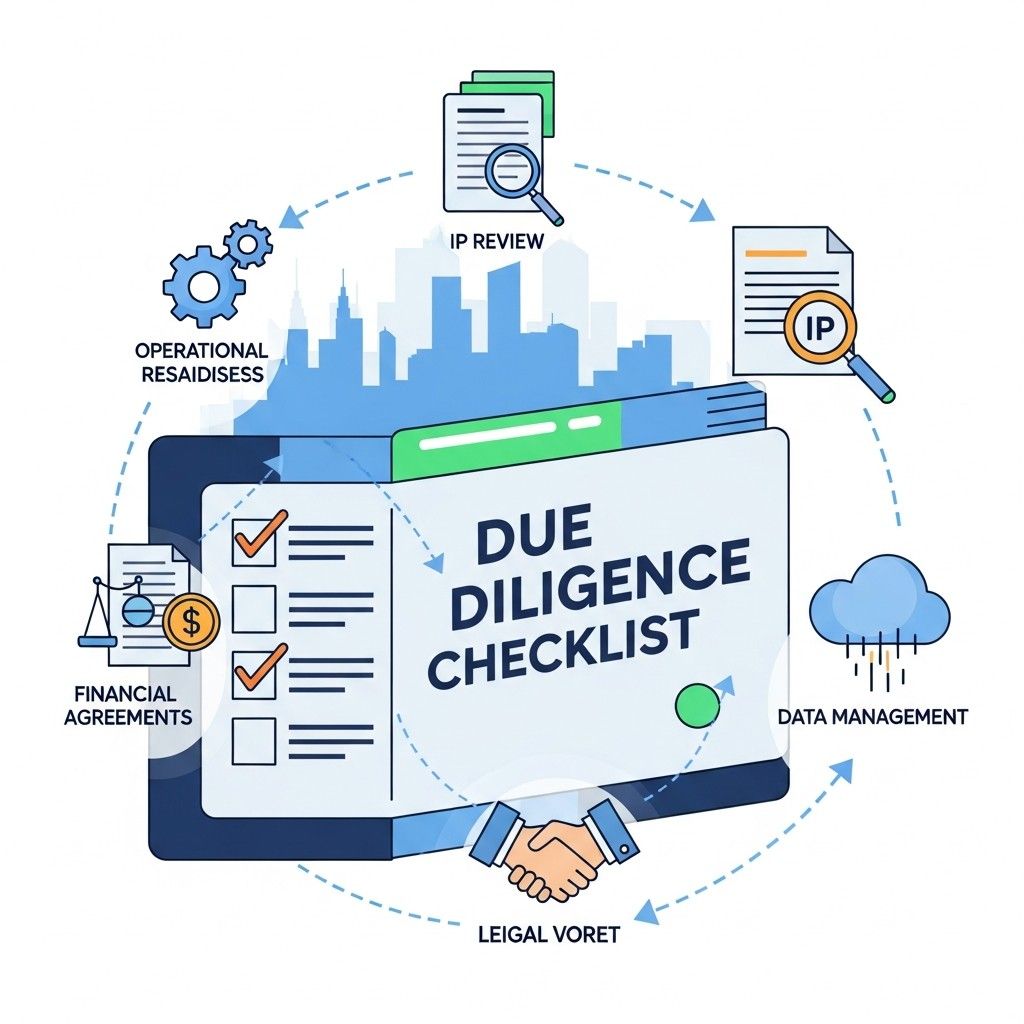
With the right tools and habits, you can build that foundation long before your first investor or buyer asks for it.
Wrapping It Up
When you look at how IPO and M&A diligence works in the real world, one theme shows up again and again: buyers trust companies that treat their IP like a real asset. They do not expect perfection. They do not need a giant portfolio. They simply want confidence that the invention at the heart of the company is truly owned, clearly protected, and supported by clean records. That is what lets deals move fast and valuations stay strong.