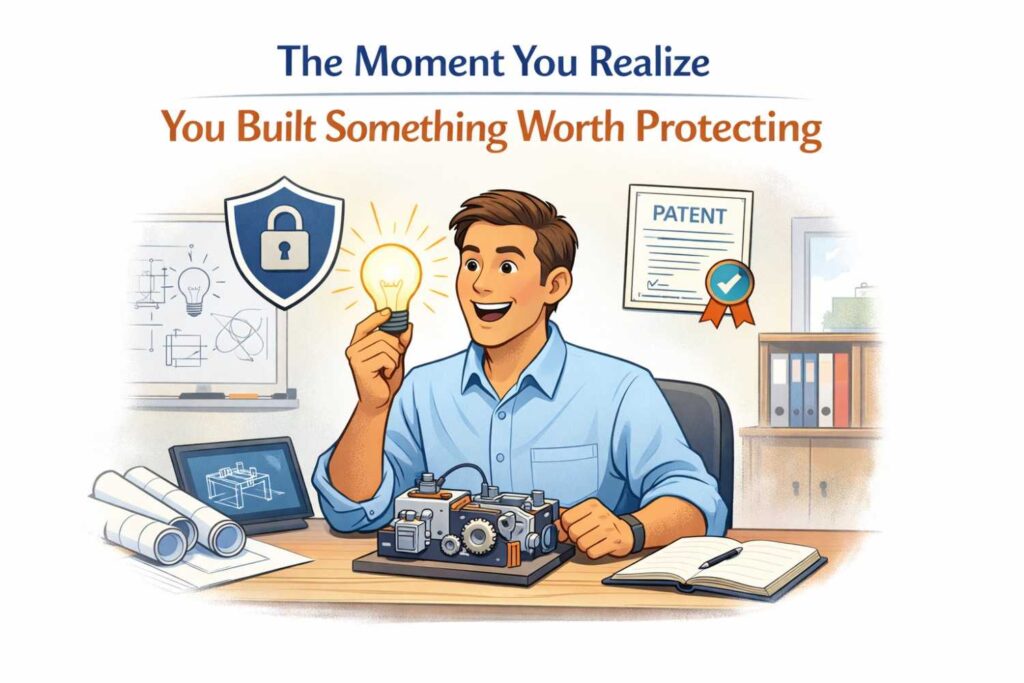
Every founder hits this moment. You’ve built something new. It works. It feels special. Maybe it’s code, a system, a model, or a process that makes everything faster, cheaper, or smarter. And then the question shows up, usually late at night or right before a demo. Do I patent this… or do I keep it secret? This is not a small choice. It shapes how you build, how you share, how you raise money, and how safe you really are once people start paying attention. Make the right move, and you protect years of work. Make the wrong move, and you might hand your edge to someone else without knowing it.
The Moment You Realize You Built Something Worth Protecting
This moment rarely feels dramatic. There is no alarm or clear signal. It usually happens quietly, in the middle of building. One small result works better than expected.
One customer reacts differently. One demo lands a little too well. That is when your invention stops feeling like an experiment and starts feeling like an asset.
Many founders miss this moment because they are moving fast. Speed is good, but blindness is not.
This section is about learning how to spot that shift early and knowing what to do right when it happens, before the world gets a look at what you built.
When Your Work Stops Being Just Code or Just a Feature
At first, everything feels like part of the product. Code is code. Models are models. Systems are systems. Nothing feels special yet.
Then something changes. Your solution starts solving a problem in a way others cannot. Maybe it removes a step no one else thought to remove. Maybe it cuts cost in half. Maybe it makes something possible that used to feel hard or slow.
That is the point where your work becomes more than execution. It becomes a method. A system. A way of doing things. That is the raw material patents are built on.
If someone could copy how you do it, not just what the user sees, then you are holding something worth protecting.
The First Signal Is Often a Question, Not a Result
Founders often wait for traction to think about protection. That is usually too late.
The first real signal shows up earlier. It shows up when someone asks how you did it. Not what tool you used, but how it works under the hood. Investors do this.
Engineers do this. Partners do this. Even customers do this when they feel something is different.
When people stop asking what and start asking how, you are already standing on valuable ground.

That is the moment to pause and think about disclosure. Not next quarter. Not after launch. Right then.
Why Timing Matters More Than Quality
Many founders think protection is about how good the invention is. That is only half true.
Timing matters just as much.
If you wait until the invention is perfect, you will already have shared too much. Demos, decks, docs, and casual talks add up fast. Once the core idea is out in the open, your options shrink.
Smart founders think in stages. Early protection does not mean freezing your product. It means locking in the core idea while you keep improving everything around it.
PowerPatent is built for this exact moment. It helps founders capture what matters now, without slowing down the build. You can see how that works here: https://powerpatent.com/how-it-works
The Danger of Assuming You Will Remember Later
Founders trust their memory too much.
You assume you will remember how things started. You assume you can write it down later. You assume you will know what was new when the time comes.
That rarely works.
Invention value lives in small decisions. Why you chose one path over another. Why this system talks to that one. Why the order matters. These details fade fast.
The moment you realize you built something worth protecting is the moment you should start capturing it. Not polishing it. Capturing it.
The Shift From Building for Speed to Building With Awareness
This does not mean slowing down. It means building with awareness.
You keep shipping. You keep testing. But you also start noticing patterns. You notice repeatable steps. You notice logic that could apply beyond one use case.

That awareness helps you decide what to talk about publicly and what to keep internal for now.
Founders who win at IP do not hide everything. They choose carefully.
Why This Moment Feels Uncomfortable for Founders
Founders like to share. Sharing brings feedback. Feedback brings momentum. Protection feels like friction.
This is why many delay it.
But protecting your invention does not mean secrecy forever. It means choosing the order. Protect first. Share freely after.
Once your foundation is protected, you can talk openly, sell confidently, and partner without fear.
That confidence shows. Investors feel it. Customers feel it. Competitors feel it too.
Turning the Realization Into Action
The worst move at this moment is doing nothing.
The second worst move is telling everyone.
The right move is simple. Pause. Capture what makes your solution different. Decide what is core and what is surface. Then put a stake in the ground.
You do not need to know everything. You just need to know enough to protect the heart of what you built.

PowerPatent was designed to help founders act at this exact point, without legal headaches or long delays. If you are at this moment right now, it is worth understanding your options: https://powerpatent.com/how-it-works
What Really Happens When You Share Your Idea Too Early
Sharing feels like progress. It feels like momentum. It feels like doing the right thing because everyone around you tells you to talk, pitch, demo, and explain.
In startup culture, silence often looks like weakness. But when it comes to inventions, silence at the right time is strength.
This section goes deeper into the real mechanics of early sharing. Not surface-level warnings, but how small, everyday decisions slowly shape your future power as a business.
Why Founders Underestimate the Value of What They Built
Most founders do not wake up thinking they built something rare. You are too close to it. You see the messy parts. You remember how hard it was to get working. You assume others could do the same.
This mindset makes sharing feel harmless.
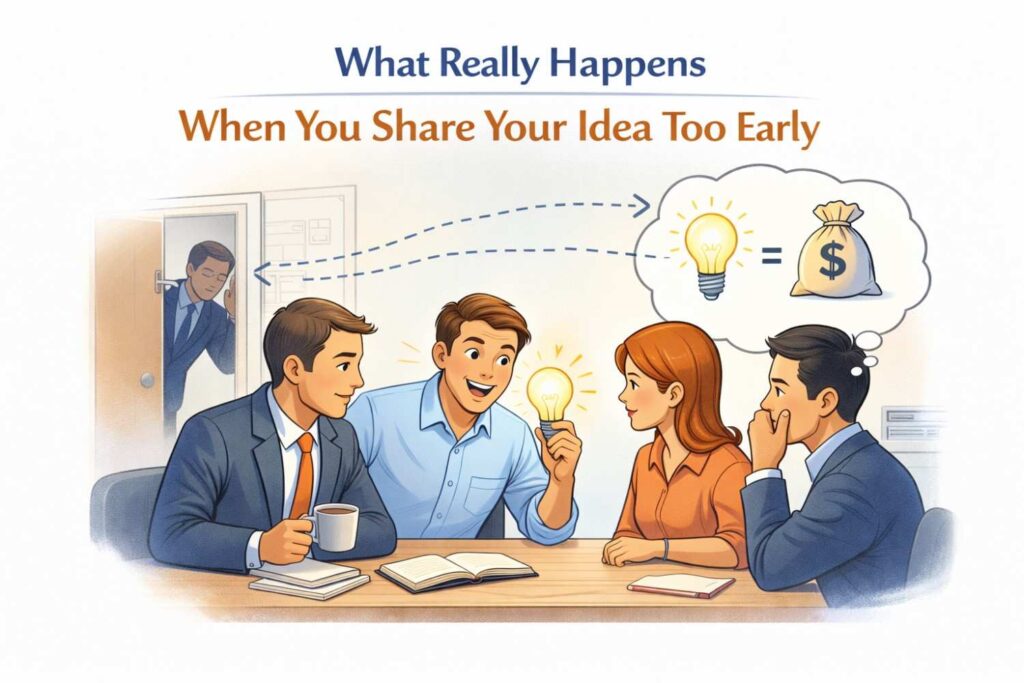
But outsiders do not see the struggle. They see the result. They see something that works. Something clean. Something useful. That gap between effort and outcome is where value lives.
By the time you feel confident enough to protect it, others may already see it clearly.
How Casual Conversations Turn Into Permanent Records
A quick chat feels informal. A coffee meeting feels off the record. A call feels private.
In reality, many of these moments leave traces.
Notes get written. Slides get saved. Emails get forwarded. Screens get recorded. People remember more than you expect. And sometimes, they repeat what you said to someone else.
You cannot control where information travels once it leaves your mouth. You can only control when it leaves.
Early sharing creates records you never planned to create.
The Compounding Effect of Small Disclosures
One explanation does not give away everything. Neither does one demo or one answer.
The risk comes from accumulation.
Over time, you explain different parts of the system to different people. No one hears the full story, but the story exists across many conversations.
When those pieces come together, intentionally or not, your invention is no longer just yours.

This is why early-stage disclosure is dangerous. It feels fragmented, but the market connects dots faster than founders expect.
Why Being Open Feels Like the Right Strategy
Transparency is praised in startup culture. Founders are told to share lessons, write threads, give talks, and be visible.
This advice is not wrong. It is just incomplete.
Transparency works best when your foundation is already protected. Without that, openness becomes exposure.
The best founders are not secretive. They are selective.
The Difference Between Marketing and Disclosure
Marketing talks about what the product does. Disclosure talks about how it works.
This difference is subtle, but critical.
You can describe value without describing structure. You can show results without showing mechanics. You can sell outcomes without teaching methods.
Founders often blur this line because they want to sound impressive. Ironically, that is when they give away the most.
Strong protection lets you market boldly without fear.
How Early Sharing Weakens Future Negotiations
When you negotiate partnerships, deals, or acquisitions, having protected inventions changes the tone of the room. It signals seriousness. It signals durability.
If you share too early and lose that protection, you lose leverage before you even enter those conversations.
Later, when terms feel weaker than expected, founders often do not connect it back to early disclosure. But the link is there.
The Myth That Speed Alone Will Save You
Many founders believe moving fast is enough.
Speed helps, but it is not a shield.
Fast movers still get copied. Fast movers still face competitors. Fast movers still slow down at some point.
Protection ensures that when speed alone is not enough, you still have ground to stand on.
The Emotional Cost of Watching Others Circle Your Idea
Even without direct copying, seeing others move into your space changes how you feel.
You start questioning what to share. You hesitate. You pull back. You become reactive instead of proactive.
This emotional drag hurts execution more than people admit.
Founders who protect early avoid this spiral. They know where they stand. That certainty frees mental space.
Why “We’ll Fix It Later” Rarely Works
Later feels safer than now.
Later is when traction comes. Later is when money comes. Later is when things feel more stable.
But later is also when disclosure has already happened.

You cannot undo exposure. You can only work around it. That often means weaker protection, higher costs, and more complexity.
Acting earlier is almost always simpler.
How to Change Your Sharing Behavior Without Hurting Growth
You do not need to shut down conversations. You need to reshape them.
Focus on the problem, not the mechanism. Focus on impact, not architecture. Focus on why it matters, not how it is built.
This allows growth without leakage.
It also forces clarity. If you cannot explain value without explaining internals, that is a signal to sharpen your story.
Turning Early Sharing Into a Strategic Choice
Once you see disclosure as a choice, not a habit, everything changes.
You decide when to go deep. You decide who gets details. You decide what stays internal until protected.
This is not about paranoia. It is about professionalism.
Founders who treat invention disclosure seriously are easier to trust, easier to back, and easier to partner with.
Where Most Founders Get Stuck
Founders know sharing too early is risky, but they do not know what to do instead.
They do not know what is protectable. They do not know what counts as disclosure. They do not know how early is too early.
That confusion leads to inaction, which is its own kind of decision.
This is exactly the gap PowerPatent was built to fill. It helps founders understand what matters, capture it at the right time, and move forward without slowing down.
You can see how that works here: https://powerpatent.com/how-it-works
Building With Confidence Instead of Caution
The goal is not to be careful forever. The goal is to be confident.
Once your core invention is protected, you can share freely. You can teach. You can speak. You can publish. You can sell hard.

That freedom is the reward for early clarity.
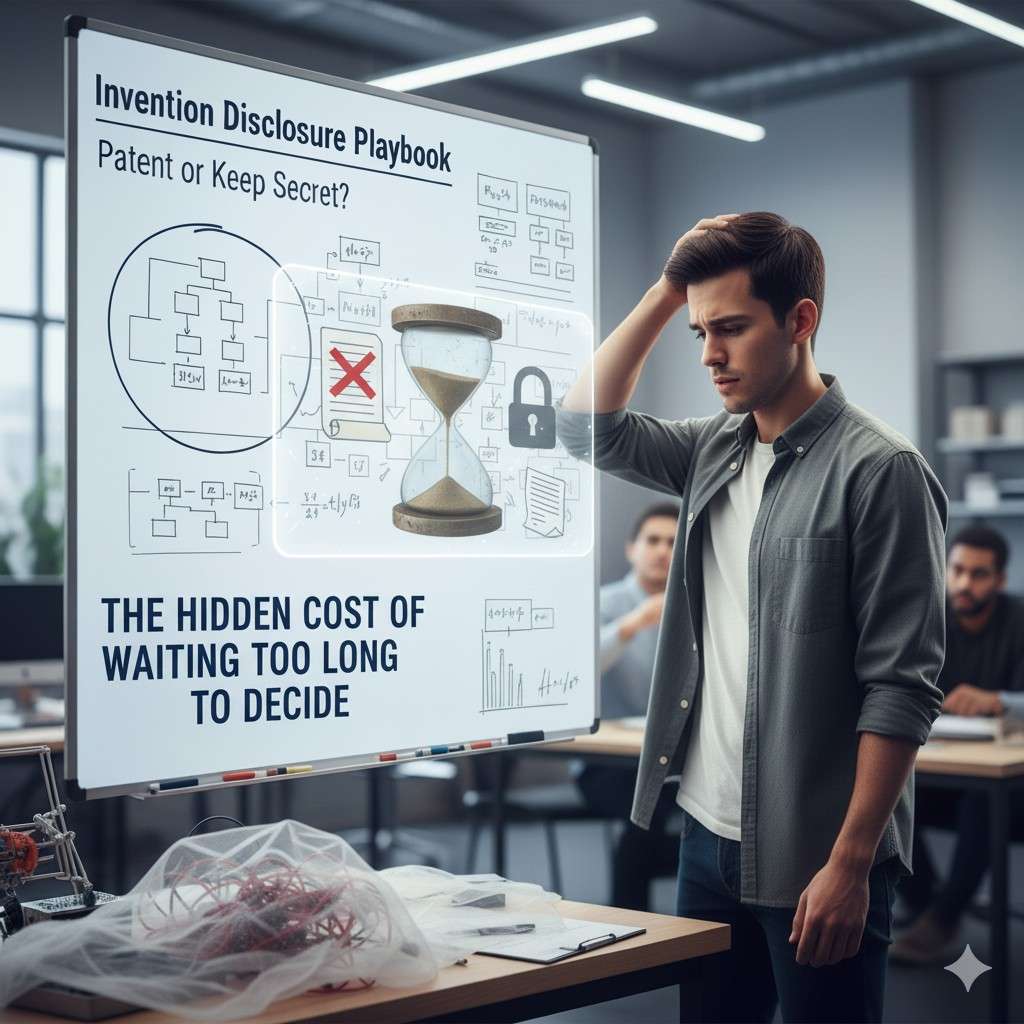
The Hidden Cost of Waiting Too Long to Decide
Waiting feels harmless. It feels like you are buying time. It feels like you are staying flexible.
For many founders, delaying the decision between patenting and keeping things secret feels like the safest option because it avoids commitment. But this waiting period is not neutral.
It is active, and it quietly shapes your future in ways most teams only understand after it is too late.
This section goes deep into what really happens when founders wait. Not in theory, but in day-to-day company life, where small delays stack up and turn into permanent limits.
Waiting Creates Invisible Decisions You Never Meant to Make
When you do not decide, the world decides for you. Every demo, every pitch, every customer call becomes a default disclosure decision.
You may think you are still “figuring things out,” but in reality you are choosing openness without protection.
This is dangerous because it feels passive. You do not feel like you are giving anything up.
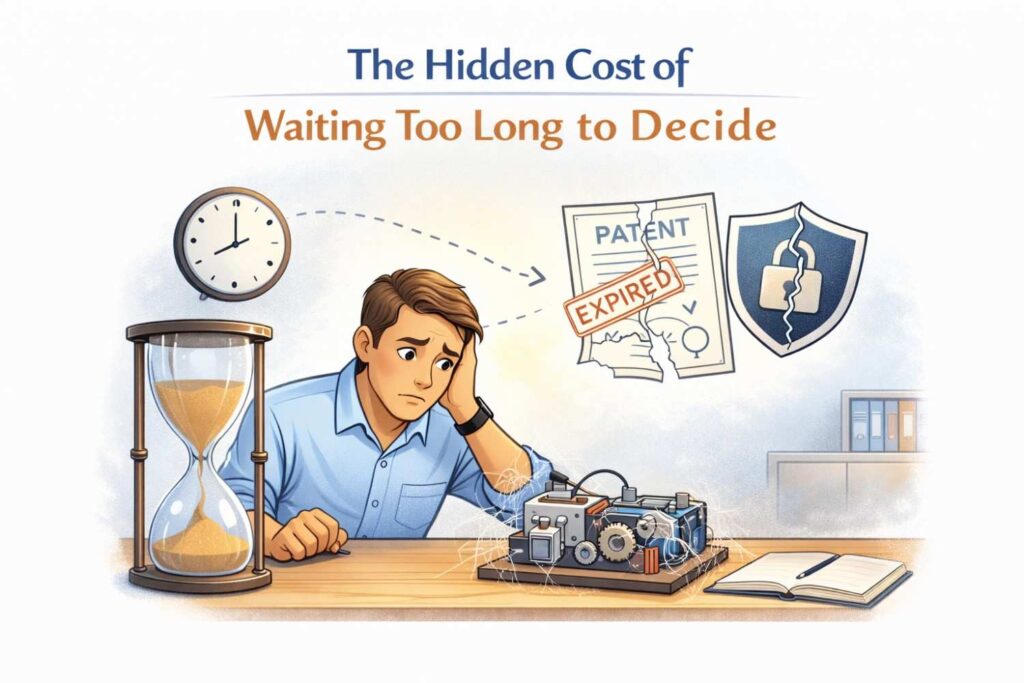
But with every conversation, you narrow your future options without realizing it. By the time you feel ready to decide, many doors have already closed quietly.
Time Does Not Stand Still While You Think
Founders often assume time is on their side. They believe waiting gives them clarity. In practice, time keeps moving while your invention keeps being exposed.
Your product evolves. Your story evolves. Your team grows. And with growth comes more sharing, more explaining, more exposure.
The longer you wait, the harder it becomes to draw a clean line around what is new and what was already shared.
Time does not make decisions easier. It makes them messier.
How Delay Blurs the Core of Your Invention
In the early days, your invention has a clear shape. You remember why choices were made. You know what problem you solved in a new way.
As months pass, layers get added. Features pile on. Workarounds become normal. What was once a sharp idea becomes buried under progress.
When founders finally try to protect something, they struggle to define the core. They are no longer sure what the invention actually is. That confusion weakens protection and increases cost.
Early clarity is always stronger than late reconstruction.
Waiting Often Comes From Fear of Being Wrong
Many founders delay because they fear choosing the wrong path. They worry about patenting too early. They worry about locking in something that might change. They worry about wasting time or money.
This fear is understandable, but it is misplaced.
Protection does not freeze your product. It captures a moment. It gives you a foundation you can build on. Waiting, on the other hand, offers no protection at all.
The bigger risk is not choosing too early. It is choosing too late.
The Silent Impact on Fundraising Conversations
Investors care about defensibility. Even when they do not say it directly, they are always evaluating how hard you are to copy.
When founders wait too long to decide, they enter fundraising conversations with vague answers. They talk about speed, talent, and vision, but cannot point to clear protection.
This weakens confidence. Investors may still move forward, but the dynamic changes. Terms shift. Questions linger. Doubt grows quietly.
Founders who act early walk into these rooms with a stronger stance.
How Internal Alignment Suffers When You Delay
Teams need clarity. When founders are unsure about what is protected and what is not, teams default to sharing everything.
Engineers explain details proudly. Sales teams overshare to close deals. Marketing publishes deep content to build trust.

None of this is wrong in isolation. But without a clear protection strategy, it creates risk.
Delay at the top creates chaos at the edges.
Waiting Makes Secrecy Harder, Not Easier
Some founders think waiting allows them to keep things secret longer. In reality, secrecy gets harder over time.
More people touch the system. More tools are used. More integrations happen. More explanations are required.
What could have been kept quiet early becomes impossible to contain later.
Deciding early gives you control over what stays internal and what goes public.
The Cost of Rebuilding the Past
When founders finally decide to act, they often face a painful task. They have to recreate history.
They dig through old commits. They search emails. They interview early team members. They try to remember what was new at the time.
This process is slow, frustrating, and imperfect. Important details get lost. Context disappears. The result is weaker than what could have been captured easily months earlier.
Waiting turns a simple task into a complex one.
Why “We’re Still Early” Is a Dangerous Thought
Founders love to say they are early. Early stage. Early traction. Early product.
But early does not mean invisible.
Even small startups operate in public spaces. Online demos, open repos, social posts, and community chats all count as exposure.
Being early does not protect you. Acting early does.
Delay Often Leads to Rushed, Poor Decisions Later
Ironically, waiting often results in rushing.
A big deal appears. A competitor emerges. An investor asks a hard question. Suddenly, protection becomes urgent.
Founders scramble. Decisions get made under pressure. Shortcuts are taken. Mistakes happen.

What could have been thoughtful and clean becomes reactive and stressful.
How Waiting Changes the Way You Build
When protection is unclear, founders sometimes unconsciously avoid deep innovation. They simplify. They avoid bold moves. They keep things vague.
This happens because uncertainty creates hesitation.
Clear protection frees you to build bigger and bolder because you know where you stand.
The Mental Weight of an Unmade Decision
Undecided issues drain energy. They sit in the background of every conversation.
Should we share this? Should we explain that? Should we publish this post?
This constant hesitation slows teams down.
Making a decision removes that weight. Even if the path is not perfect, clarity beats doubt.
Why Early Action Is Actually More Flexible
Many founders think deciding early limits flexibility. In reality, it increases it.
Early protection gives you options. You can expand, pivot, license, or partner from a position of strength.
Waiting removes options. You can only react.
Turning Delay Into a Moment of Action
The moment you realize you have been waiting is the moment to act.
You do not need perfection. You need momentum in the right direction.
Capture what matters now. Protect the core. Then move forward with confidence.
This is exactly what PowerPatent helps founders do. It removes the guesswork and friction from this decision and helps you act at the right time without slowing your company down. You can see how it works here: https://powerpatent.com/how-it-works
Wrapping It Up
By now, one thing should be clear. The decision to patent or keep something secret is not a legal exercise. It is a business decision. It affects how you build, how you share, how you raise money, and how safe your company really is once it starts to matter. Most founders do not fail at this because they are careless. They fail because no one ever gave them a clear way to think about invention disclosure in real life. They were told to move fast, share openly, and figure things out later. That advice works for growth, but it breaks down when your core invention is on the line. The real playbook is simpler than people think.