Filing an IDS sounds boring until you realize one small mistake can quietly weaken your entire patent. This article is about doing it right, fast, and without stress. We are going to walk through IDS e-filing inside Patent Center in plain English, step by step, so you know exactly what matters, what does not, and how to avoid the traps that slow founders down or create risk later. No legal talk. No filler. Just clear, practical guidance you can actually use while building your company and protecting what makes it valuable.
What an IDS Really Is and Why the Patent Office Cares
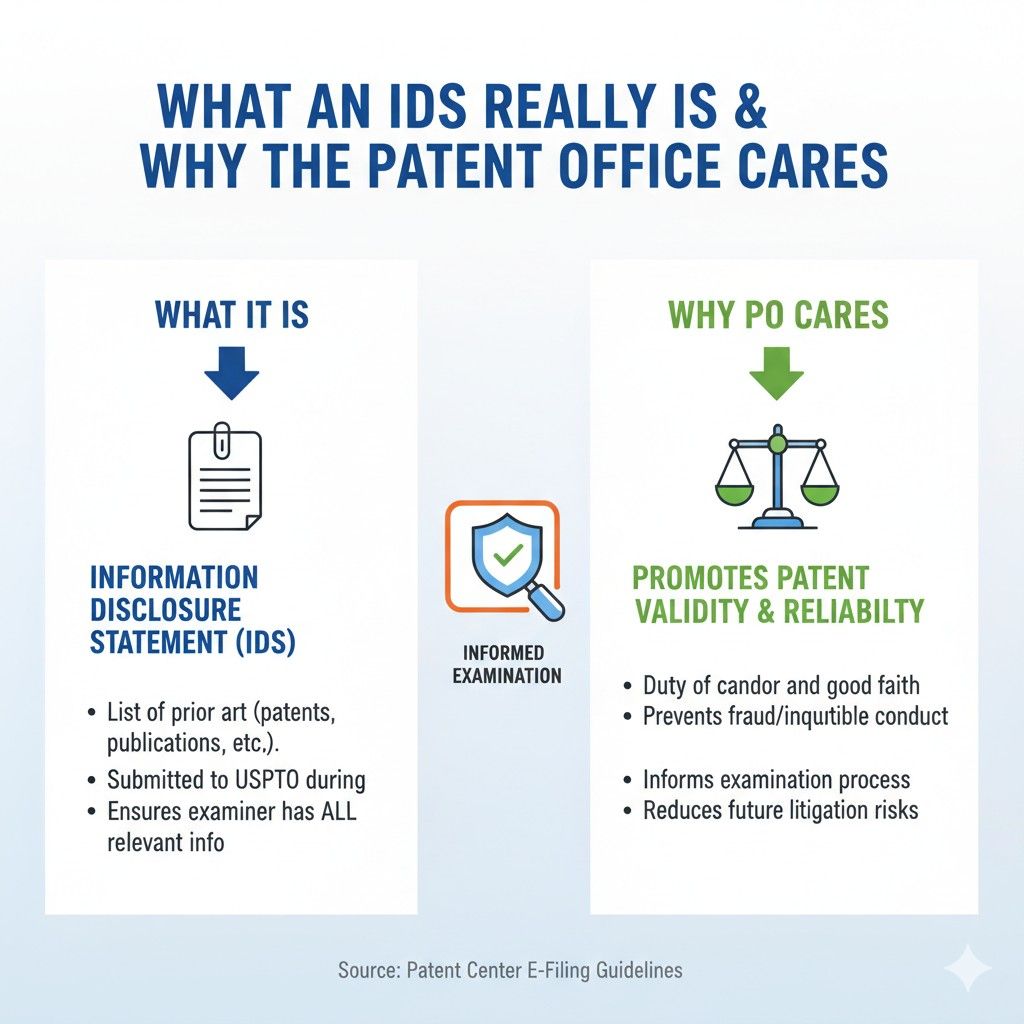
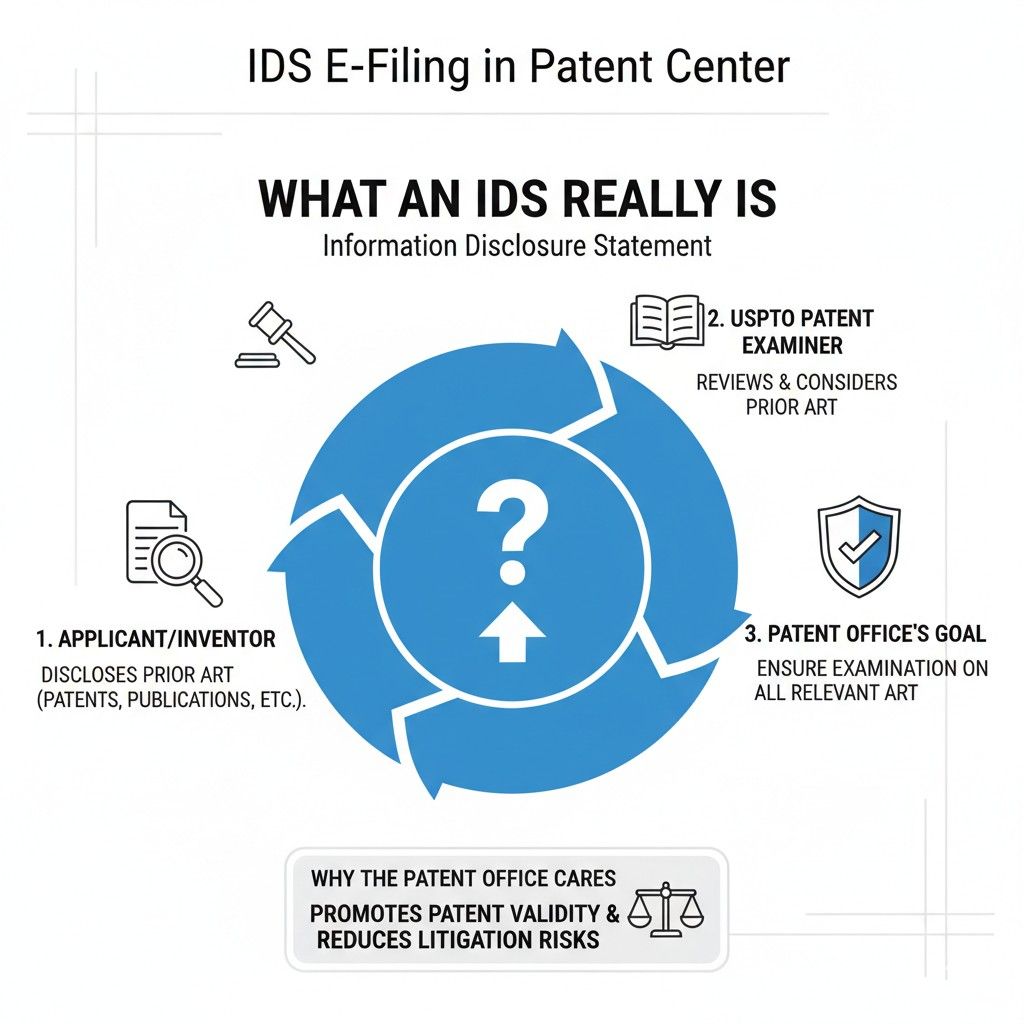
An IDS is not paperwork for the sake of paperwork. It is one of the few places where the Patent Office expects total honesty from you, and where small shortcuts can create big problems later.
For founders and teams building real technology, understanding this section is critical because it affects how strong your patent will be years from now, not just whether it gets approved.
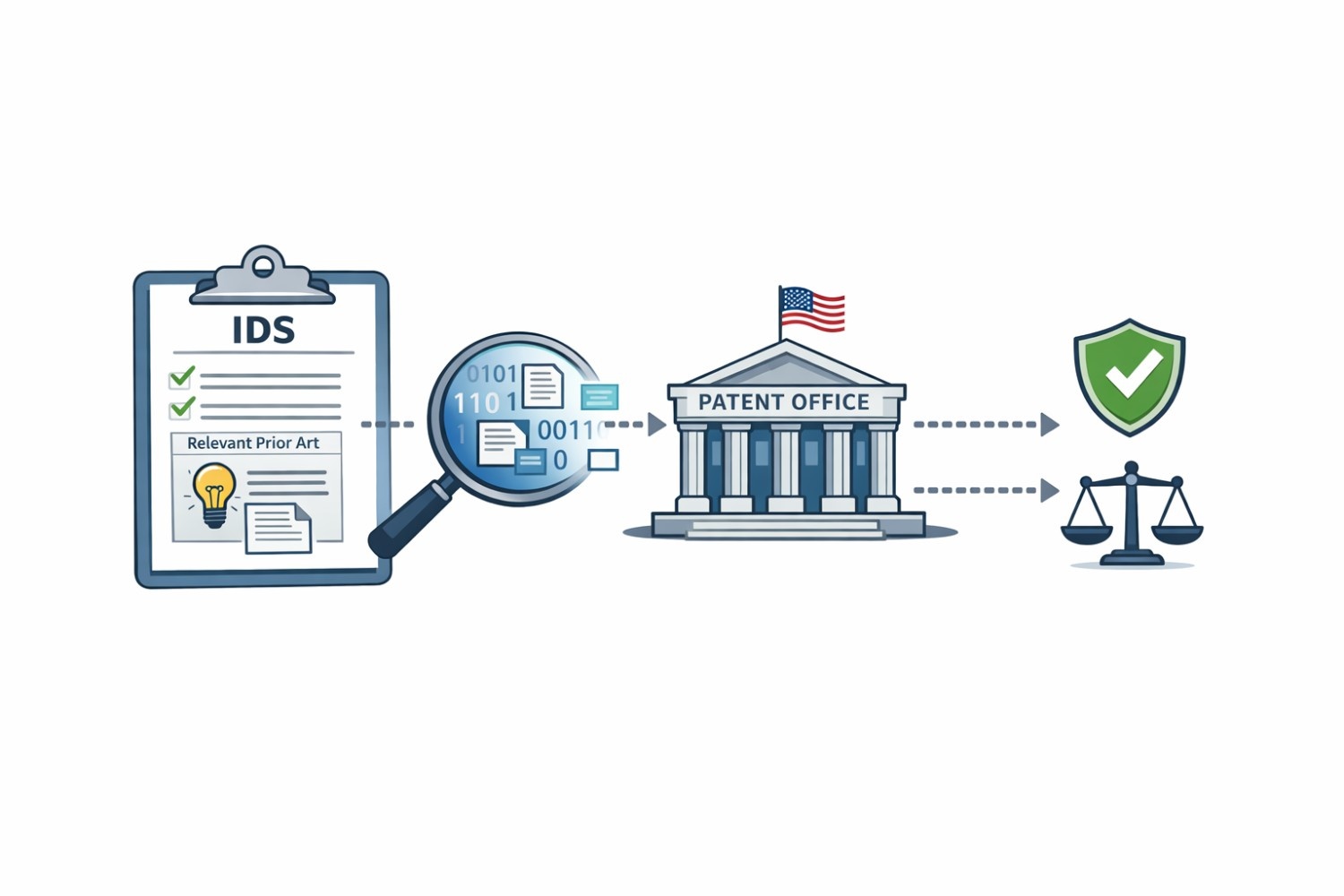
At its core, an IDS is how you show the Patent Office what you already know. It is your chance to say, clearly and cleanly, “Here is the related material we are aware of, and we are not hiding anything.”
When done right, it builds trust. When done poorly, it raises questions you do not want raised.
The Real Purpose Behind an IDS
Most people think an IDS is about helping the examiner. That is only partly true. The deeper reason is about fairness and integrity in the patent system.
The Patent Office assumes you and your team are closest to the technology. That means you might know about older patents, papers, demos, blog posts, or products that relate to what you are building.
The IDS is how you put that knowledge on the table.
If you do this well, you protect yourself. If you ignore it or rush it, you create weak spots that competitors can attack later.
Why the Patent Office Takes IDS Filings Seriously
The Patent Office cares about IDS filings because patents are meant to be granted based on full information. If key references are missing, the patent examiner is making a decision with blind spots.
From the Office’s view, an IDS is not optional good behavior. It is a duty. When they see clean, timely, and complete IDS filings, it signals that the applicant is acting in good faith.
For a business, this matters because patents are not just about approval. They are about enforceability. A patent that looks strong on paper but has disclosure issues underneath can fall apart when challenged.
The Business Risk of Treating IDS as an Afterthought
Many startups file patents fast, then think about IDS later, or worse, forget about it entirely. This is risky because IDS mistakes often do not show up until years later, usually during due diligence, fundraising, or litigation.
Investors and acquirers look closely at disclosure history. If they see gaps, delays, or messy filings, confidence drops. The technology may be great, but uncertainty around the patent can slow or kill a deal.
Treating IDS filings as part of your core IP process, not a side task, helps protect company value in moments that matter most.
How an IDS Protects You, Not the Examiner
There is a quiet misunderstanding that an IDS makes it easier for the examiner to reject your claims. In reality, a proper IDS often strengthens your position.
When relevant material is on record, the examiner’s approval carries more weight. It becomes harder for others to argue later that the patent should never have been granted.
For founders, this means one thing: a clean IDS helps future-proof your patent. It shows that your invention stood up even when known material was considered.
Timing Is More Important Than Perfection
One of the most actionable lessons for businesses is that timing matters more than being perfect. The Patent Office is far more forgiving of early, honest disclosure than late or incomplete disclosure.
If you discover new material during development, after filing, or even during related filings, the safest move is to submit it promptly. Waiting to “bundle everything later” increases risk.
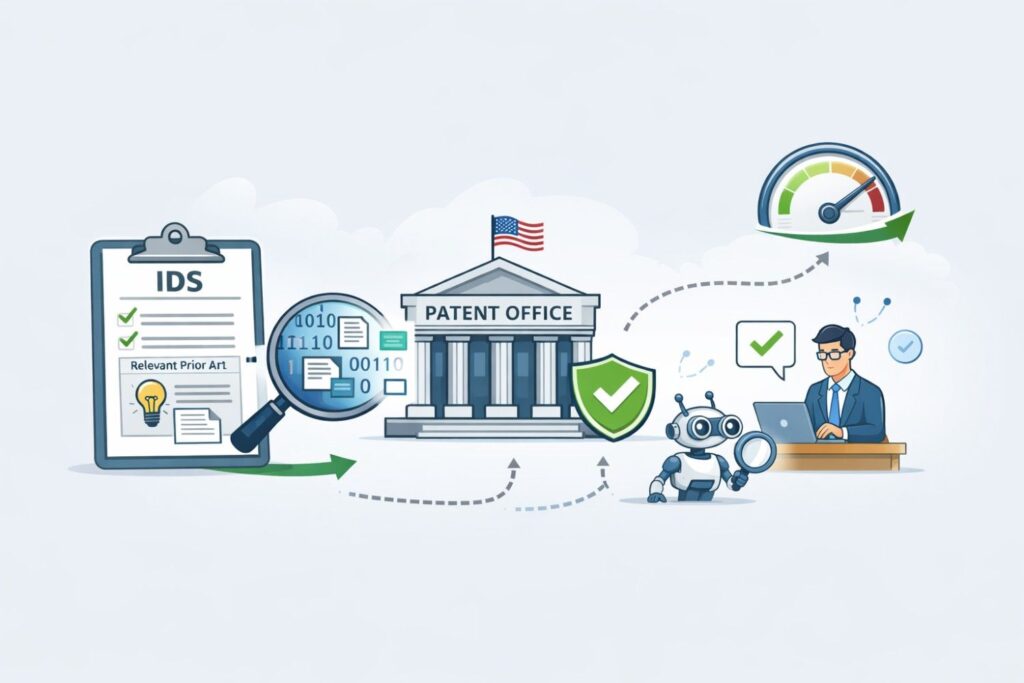
A smart strategy is to build a habit where new technical references are flagged internally as soon as they appear. This turns IDS filing into a routine process instead of a scramble.
What Counts as “Known” to Your Company
This is where many teams get confused. The duty to disclose does not stop with the named inventor. It extends to anyone meaningfully involved in the application.
That includes co-founders, technical leads, and sometimes advisors. If someone closely involved knows about relevant material, it may need to be disclosed.
From a business perspective, this means communication matters. Teams should have a simple internal rule: if something feels related, flag it. It is safer to over-share than to explain later why something was left out.
IDS and the Reality of Fast-Moving Startups
Startups move fast. Code changes daily. Research evolves. Competitors launch quietly. This makes IDS management harder, but also more important.
The Patent Office understands that technology evolves, but it expects reasonable care. That means setting up a repeatable process, not relying on memory or last-minute reviews.
Founders who treat IDS as a living part of the patent lifecycle tend to sleep better. They know that if questions come up later, the record shows transparency and care.
How a Clean IDS Strengthens Negotiation Power
Strong patents are leverage. Clean disclosure history makes that leverage credible.
When negotiating partnerships, licensing deals, or acquisitions, the strength of your patent is not just about claim language. It is about how defensible the entire file history is.
A well-handled IDS shows maturity. It signals that the company understands IP at a business level, not just as a filing task. That confidence often translates into better terms and faster deals.
Thinking About IDS Early Saves Money Later
Fixing IDS problems after the fact is expensive. It can involve legal reviews, explanations, and sometimes damage control that never fully goes away.
Handling it correctly from the start is far cheaper. It reduces attorney time, avoids rework, and lowers the chance of disputes.
For lean teams, this is a practical advantage. Doing IDS right is not about spending more. It is about avoiding hidden costs later.
Where Founders Usually Go Wrong
Most mistakes happen for one of three reasons: not knowing what an IDS is, assuming someone else is handling it, or waiting too long to act.
The fix is simple but requires intention. Decide early who owns the process. Make disclosure part of your invention workflow. Use tools and systems that make it hard to forget.
This is exactly where modern platforms shine, because they reduce friction and make good behavior the default instead of the exception.
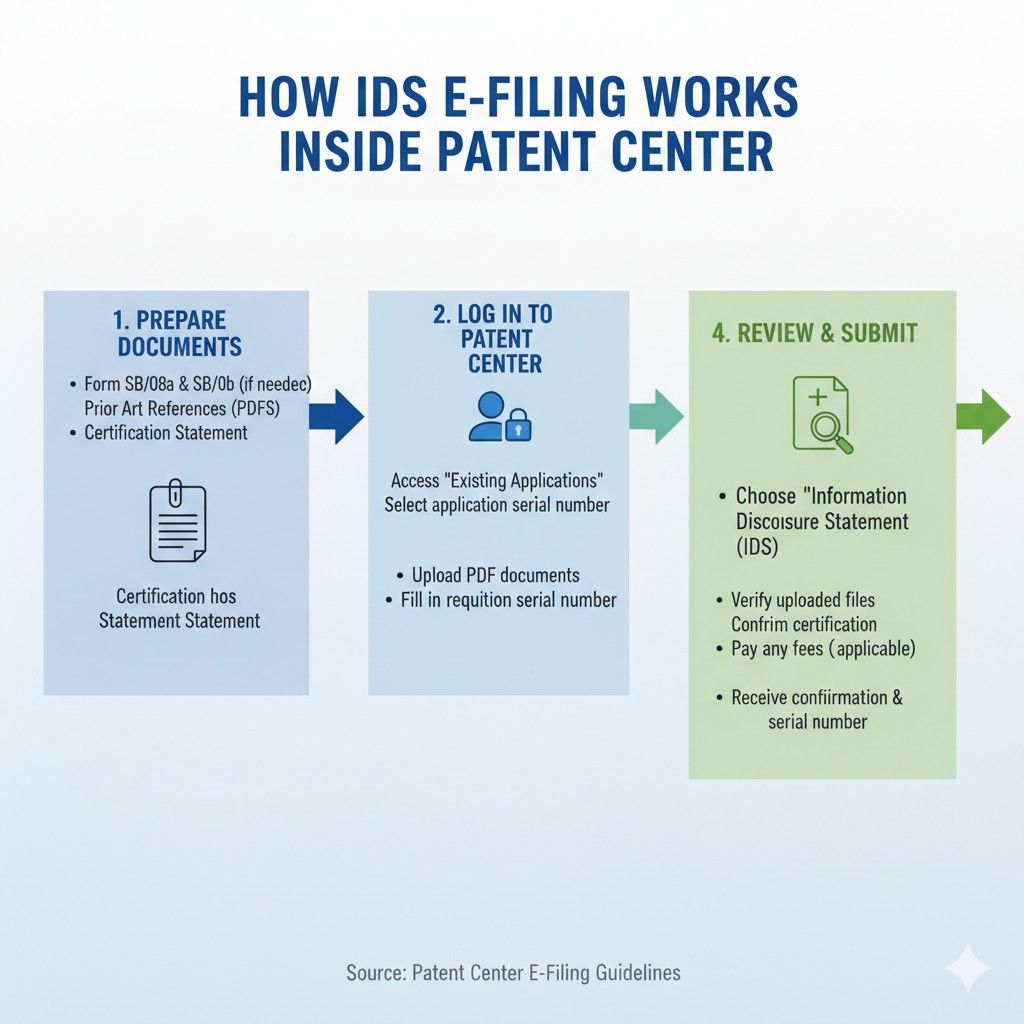
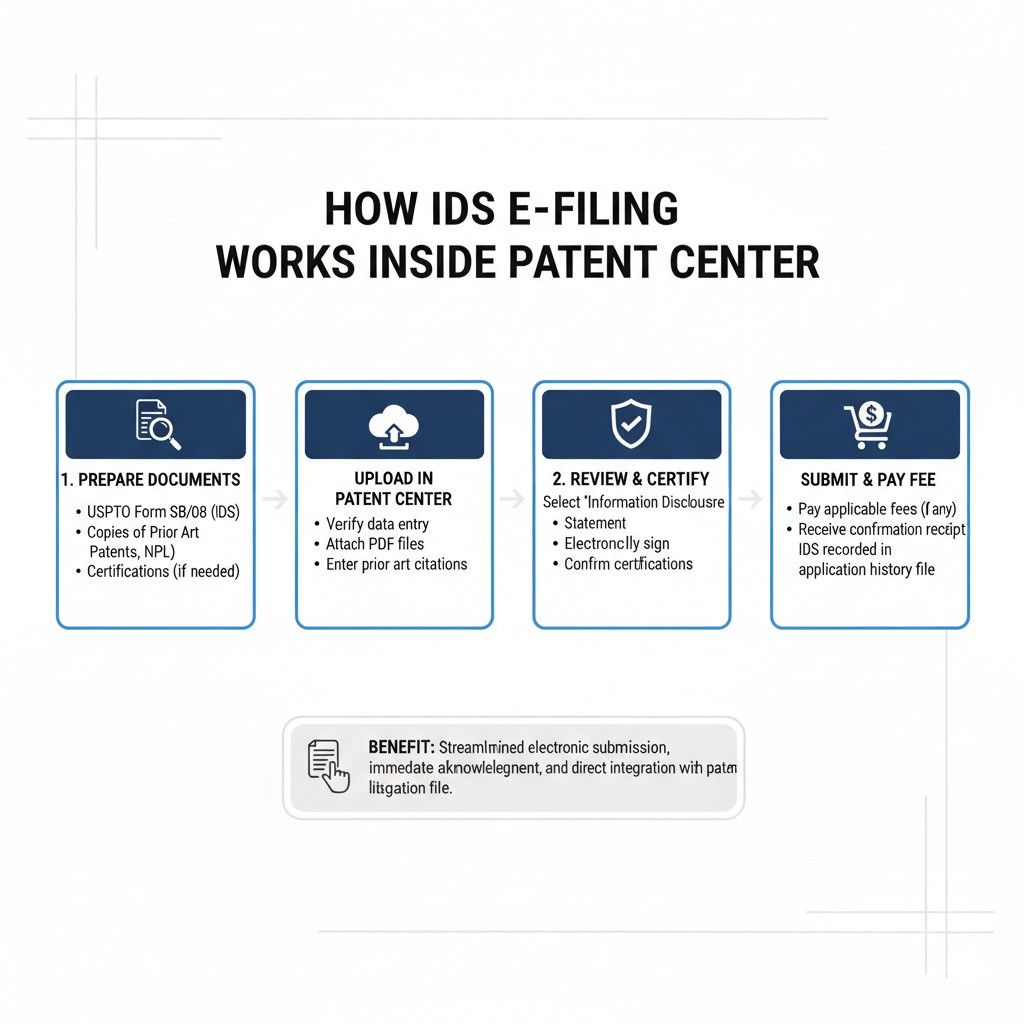
How IDS E-Filing Works Inside Patent Center
Patent Center is now the main place where IDS filings live. If you are still thinking in terms of old systems or paper-style workflows, that mindset will slow you down.
This section explains how IDS e-filing actually works inside Patent Center and, more importantly, how businesses should think about using it strategically instead of just mechanically.
Patent Center is not just a filing portal. It is a record. Every action you take leaves a trail. Understanding how IDS fits into that trail helps you avoid mistakes that are hard to clean up later.
The Shift From Old Filing Systems to Patent Center
Patent Center replaced older systems that many attorneys and founders relied on for years. The change was not cosmetic. It was structural.
The new system is built to centralize everything tied to an application. That means your IDS is not floating off in isolation. It is directly linked to your application timeline, your examiner’s actions, and your responses.
For businesses, this matters because the context of when and how an IDS is filed is now much more visible. Timing, accuracy, and consistency are easier for the Patent Office to see at a glance.
Where IDS Fits in the Patent Center Workflow
An IDS is not something you file once and forget. Inside Patent Center, it is part of an ongoing conversation between you and the examiner.
As your application moves forward, the system tracks when references are submitted, whether fees or certifications are required, and how the examiner acknowledges them. This means late or sloppy filings stand out more than they used to.
A smart approach is to think of IDS filings as checkpoints. Each one confirms that, up to that point, you have disclosed what you know.
Starting an IDS Submission in Patent Center
When you begin an IDS filing in Patent Center, the system asks you to be precise. You are not just uploading documents. You are making statements about knowledge and timing.
The interface guides you through entering references and certifications, but it does not decide strategy for you. That part is still on the business and its advisors.
Founders should slow down at this stage. Rushing through the screens without thinking about why each reference is being added can lead to omissions or inconsistencies later.
Understanding How the System Reads Your Actions
Patent Center records more than just what you submit. It records when you submit it and under what conditions.
For example, whether a certification is included or a fee is paid depends on timing. The system uses clear rules, and it applies them automatically.
This is important because you cannot argue intent later. The record will show exactly what happened. Businesses that understand this tend to plan IDS filings around milestones instead of reacting at the last minute.
IDS Visibility to Examiners
One key change with Patent Center is how visible IDS filings are to examiners. Everything is cleanly organized in the file wrapper.
This means examiners can quickly see whether disclosures were made early or late, whether they were frequent or rare, and whether they appear thoughtful or rushed.
From a business standpoint, this visibility cuts both ways. Done well, it builds credibility. Done poorly, it raises quiet red flags that may affect how closely an examiner scrutinizes claims.
Managing Multiple IDS Filings Over Time
Most serious technology companies will file more than one IDS over the life of an application. New research appears. Related applications are filed. Competitor patents are published.
Patent Center is designed to handle this, but only if you approach it deliberately. Each IDS should feel like a clean snapshot, not a patchwork correction.
A good internal rule is to treat each IDS as if it might be read years later by someone with no context. Clarity now prevents confusion later.
Linking IDS Strategy to Product Development
One of the most practical insights for founders is that IDS strategy should track product development.
As features change or new approaches are tested, teams often encounter prior work. That moment is when disclosure decisions should be made, not months later when memories fade.
Patent Center does not know your product roadmap. You do. Aligning internal development reviews with IDS check-ins keeps disclosures timely and defensible.
Avoiding Common Filing Friction Inside Patent Center
The most common friction points are not technical errors. They are process errors.
Teams forget who is responsible for monitoring new references. Filings get delayed because someone assumes the attorney already knows. Certifications are misunderstood because timing rules are ignored.
The solution is not more complexity. It is clarity. Decide early who flags references, who approves disclosures, and who actually submits them.
Using Patent Center as a Source of Truth
Patent Center should be treated as the source of truth for your application history. If something is not there, it effectively does not exist.
Businesses that rely on email chains or shared folders instead of checking the actual record often miss inconsistencies. Reviewing the Patent Center file periodically helps catch issues before they become problems.
This habit is especially valuable before major events like fundraising or licensing discussions.
Why Modern Tools Change How Founders Handle IDS
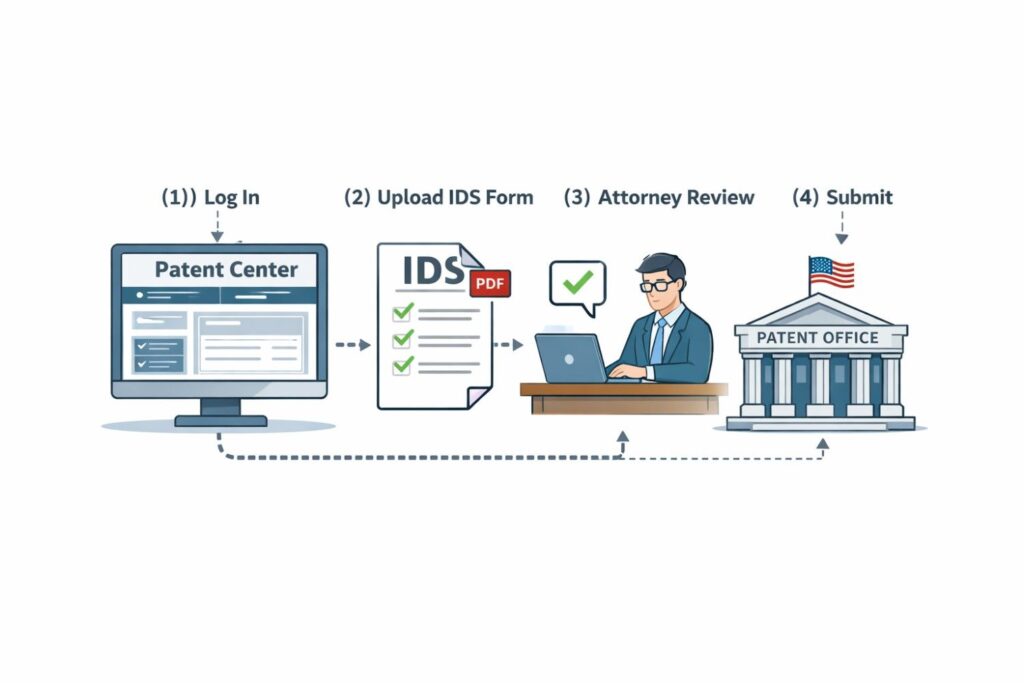
Manual IDS management is error-prone. Modern platforms reduce that risk by structuring disclosures, tracking timing, and surfacing reminders.
For founders who do not want to live inside Patent Center, this is a real advantage. It allows you to stay focused on building while still maintaining a clean patent record.
This combination of software guidance and real attorney oversight is what keeps the process fast without cutting corners.
The Forms, Certifications, and Timing That Actually Matter
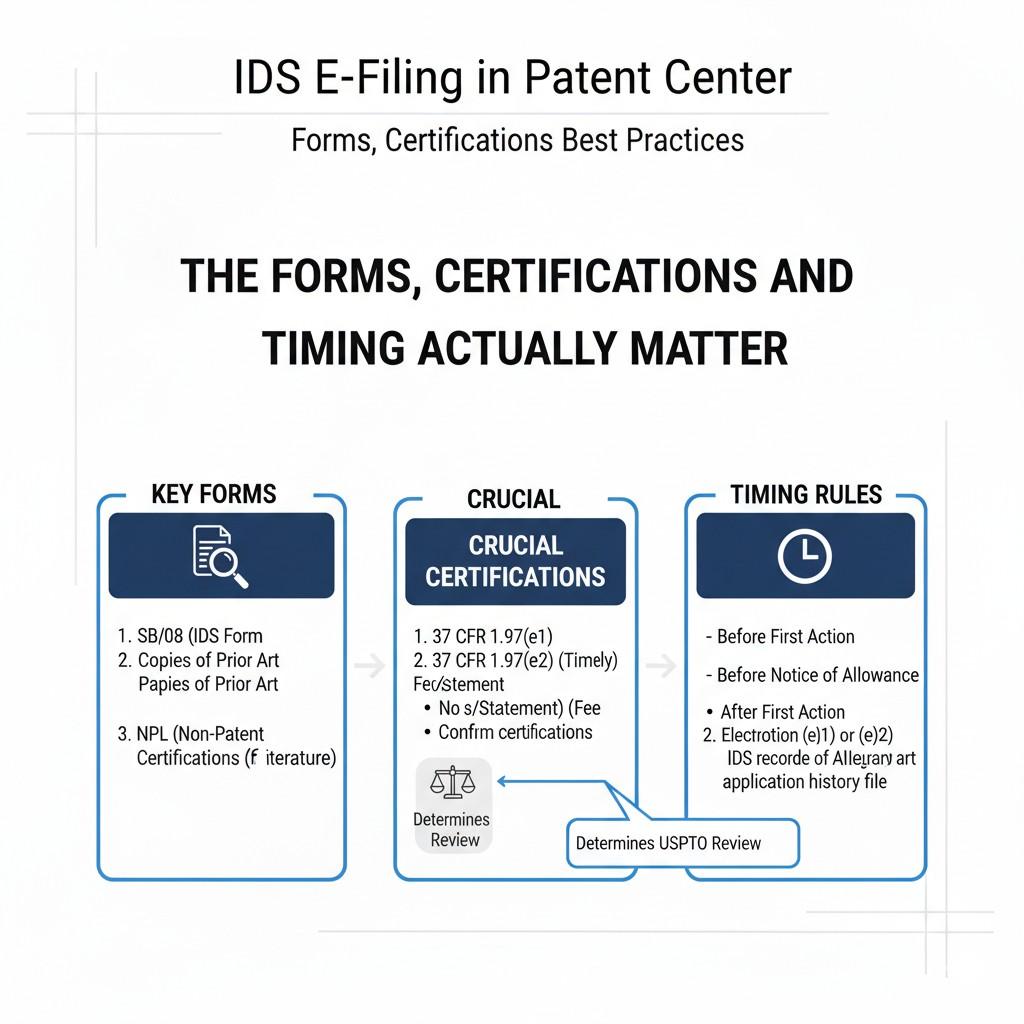
This is the part of IDS filing where most businesses get tripped up, not because it is hard, but because it feels deceptively simple. A few forms, a few checkboxes, and a submission button can give a false sense of safety.
In reality, this section quietly determines whether your disclosure is clean or questionable.
Understanding how forms, certifications, and timing work together helps you stay in control. It also keeps you from paying unnecessary fees or creating gaps that someone else can exploit later.
Why the IDS Form Is More Than a Data Entry Task
The IDS form inside Patent Center looks straightforward. You enter references, confirm details, and move forward. But every entry is a statement on the record.
Each reference you list is you saying, “We believe this is relevant enough to disclose.” Each omission is also a statement, even if unintentional.
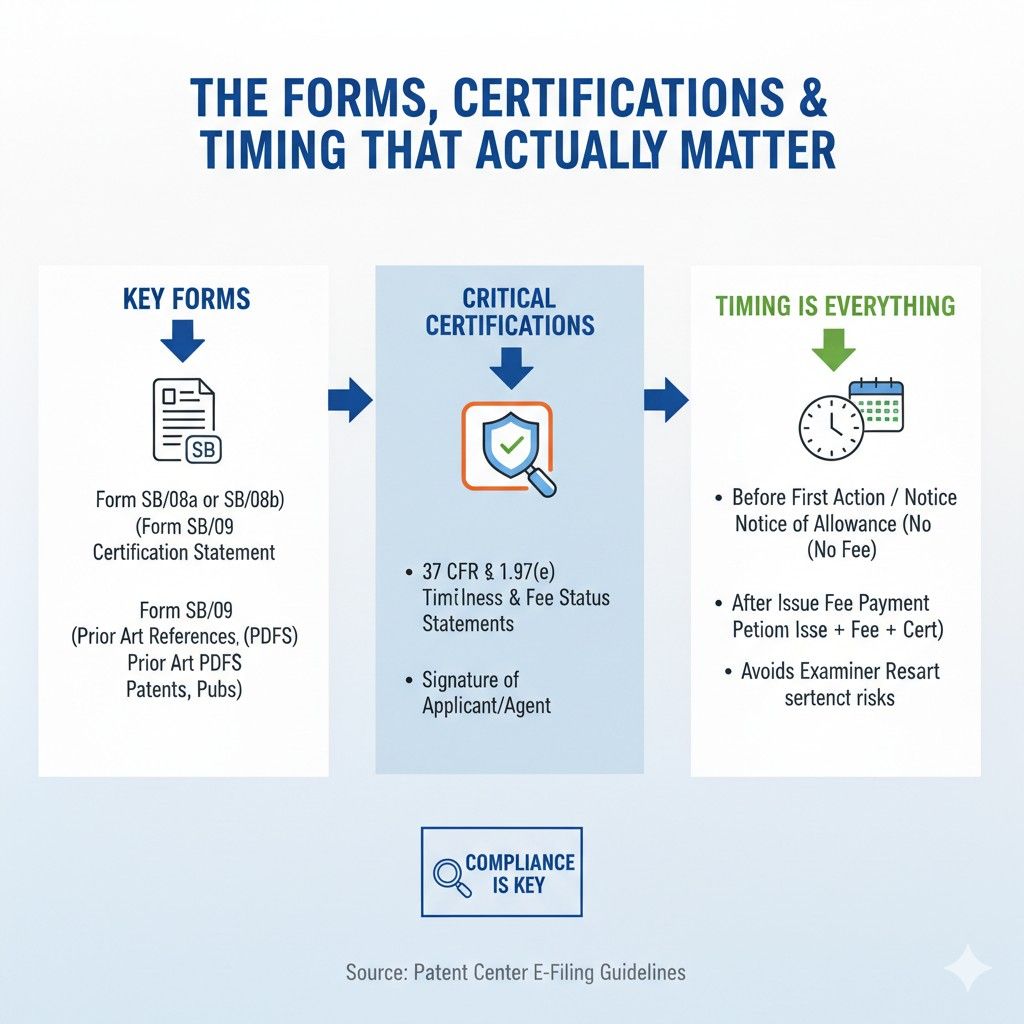
For businesses, this means the form should not be treated like clerical work. It should be reviewed with the same care as claim language, because it speaks to your honesty and diligence.
Understanding the Difference Between Patents and Other Materials
Not all references are treated the same. Patent documents, publications, articles, and other materials each have their own expectations.
The key business takeaway is that if something helped inform your thinking, it deserves a closer look. Internal discussions should focus less on whether something is perfect and more on whether it is relevant.
Erring on the side of disclosure is usually safer than trying to decide what the examiner might already know.
What the Certification Actually Says About You
The certification is not a formality. It is a statement about timing and knowledge.
When you certify, you are confirming that the disclosure meets specific rules about when the information became known.
Patent Center relies on this certification to determine whether fees are required and whether the submission is compliant.
From a strategic standpoint, certifications are about credibility. Clean certifications show that you are tracking information in real time, not retroactively fixing mistakes.
Timing Rules That Quietly Control Everything
Timing is the hidden engine behind IDS filings. The same reference can be easy to submit or expensive and risky depending on when it is filed.
Early disclosures are treated gently. Late disclosures raise questions and often require fees or explanations.
Businesses should anchor IDS timing to internal events. New hires, new research reviews, and new filings are all natural moments to reassess what needs to be disclosed.
The Cost of Waiting Too Long
Delays often come from good intentions. Teams want to be thorough. They want to wait until everything is reviewed.
The problem is that waiting increases complexity. The longer you wait, the more likely it is that certifications no longer apply or fees become mandatory.
A better approach is incremental disclosure. File when you know, not when it feels convenient.
How Fees Become a Signal, Not Just a Cost
Paying an IDS fee is not just a financial issue. It can signal that information came late.
While fees are sometimes unavoidable, frequent late filings can create a pattern that draws attention. Examiners may wonder why disclosures keep arriving after key milestones.
For a business, this means minimizing late fees is not just about saving money. It is about maintaining a clean narrative in the file history.
Aligning IDS Timing With Examiner Actions
One of the smartest tactical moves is to align IDS filings with examiner actions.
Before a first office action, disclosures tend to feel routine. After actions, they feel reactive.
Monitoring examiner timelines and planning disclosures ahead of responses keeps the process smooth and avoids unnecessary friction.
Handling References From Related Applications
Many startups file multiple applications around the same core technology. References cited in one case often become relevant in another.
Patent Center does not automatically connect these dots for you. That responsibility stays with the business.
A strong practice is to review references cited by examiners in related cases and decide quickly whether they belong in other applications. This keeps disclosures consistent across your portfolio.
Certifications and Team Communication
Certifications depend on who knew what and when. This makes internal communication critical.
If engineers, founders, and counsel are not aligned, certifications become risky. Something known internally but not communicated externally can create problems.
The fix is cultural, not technical. Encourage teams to flag related work early and without fear. Disclosure is protection, not punishment.
Why Simple Processes Beat Perfect Ones
Many businesses over-engineer IDS processes. They build complex approval chains that slow everything down.
Simple, repeatable processes work better. Decide who reviews references, who approves, and who files. Then stick to it.
Consistency matters more than perfection. A clear process reduces mistakes and keeps timing on your side.
The Long-Term Value of Clean Forms and Certifications
Years from now, when your patent is being reviewed by an investor or challenged by a competitor, no one will care how busy you were.
They will care that the forms were clean, the certifications were accurate, and the timing made sense.
This is why IDS discipline is a business asset. It quietly strengthens everything built on top of the patent.
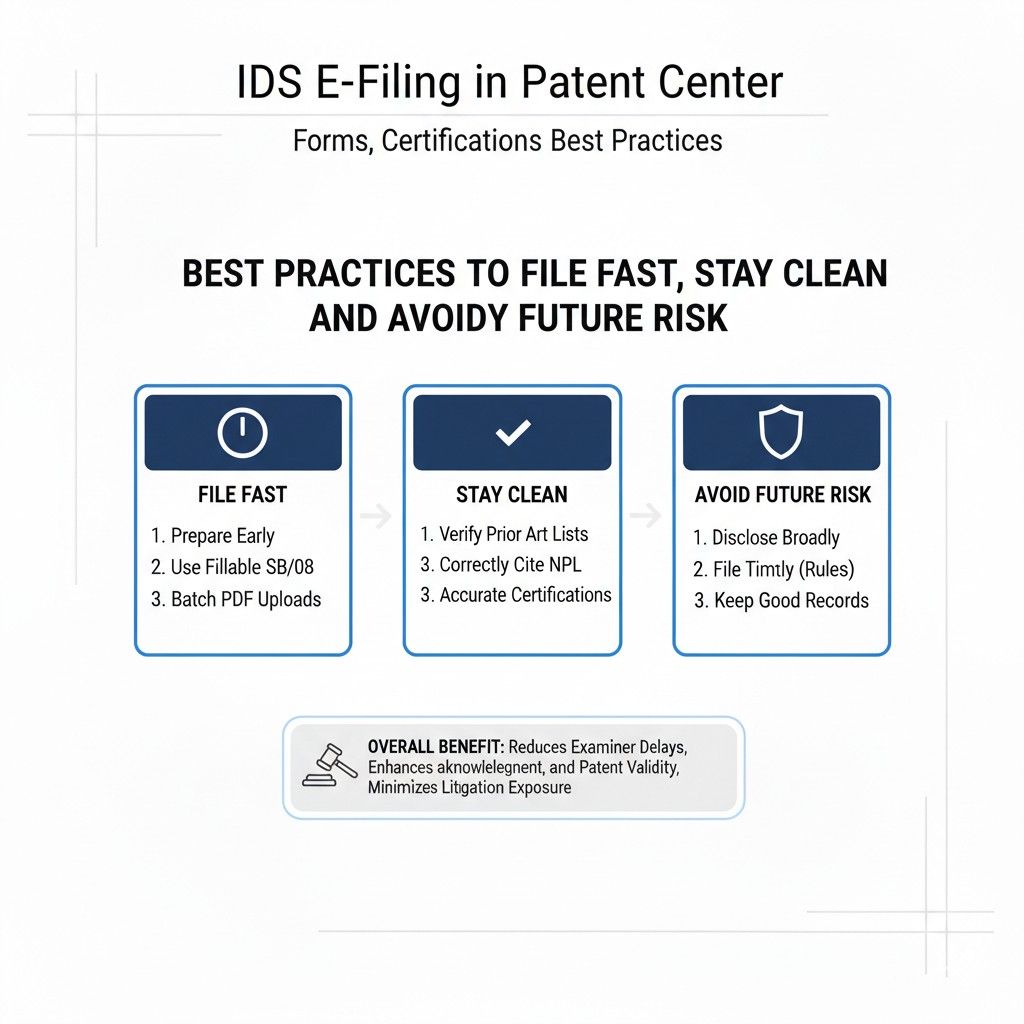
Best Practices to File Fast, Stay Clean, and Avoid Future Risk
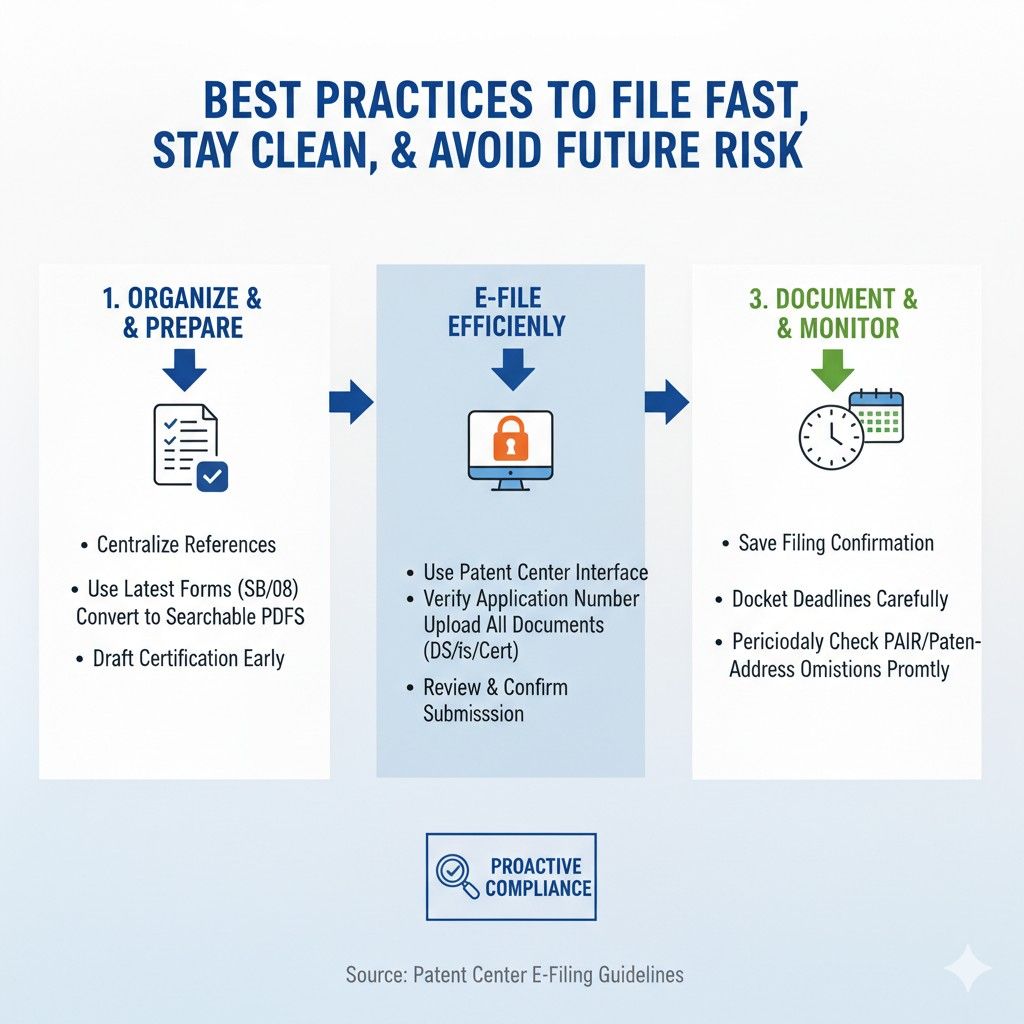
This final section is where everything comes together. IDS filing is not about knowing rules by heart. It is about building habits that protect your company without slowing it down.
The best practices below are not theory. They are patterns used by teams that move fast, raise money, ship product, and still end up with strong, defensible patents.
The goal is simple: make IDS filing feel boring and predictable, because boring is safe.
Treat IDS as a Business Process, Not a Legal Task
The biggest shift founders can make is mental. IDS is not a legal chore that lives only with attorneys. It is a business process tied to how your company learns, builds, and competes.
When IDS is treated like accounting or security reviews, it becomes routine. It stops being emotional or confusing. This mindset alone eliminates many mistakes.
Decide Ownership Early and Make It Obvious
Unclear ownership causes most IDS failures. Everyone assumes someone else is handling it.
Strong teams decide early who owns IDS awareness and who owns filing. This does not mean one person does everything. It means responsibility is clear.
When ownership is obvious, references do not sit in inboxes or meeting notes. They move.
Build Disclosure Into Product and Research Reviews
The most effective teams connect IDS thinking to moments that already exist.
Design reviews, research spikes, competitor analysis, and patent landscape reviews are natural triggers. If related work comes up in those meetings, it should be flagged immediately.
This keeps disclosure aligned with reality, not memory.
File More Often, Not Less
Many founders think fewer IDS filings mean less work. In practice, fewer filings usually mean risk.
Smaller, timely filings are easier to certify, easier to explain, and easier to defend later. Large, delayed filings are harder on every level.
Filing more often reduces stress and keeps the record clean.
Do Not Try to Guess What the Examiner Knows
Trying to predict what the examiner already knows is wasted energy. Examiners change. Context changes. Records last decades.
If something feels relevant to your invention, disclosure is usually the safer move. Let the examiner decide how much weight it carries.
This mindset removes hesitation and speeds decisions.
Keep Internal Records Simple and Searchable
You do not need a complex system to track potential references. You need a reliable one.
A shared document, a tagged note system, or a simple internal tracker works if it is actually used. What matters is that references do not disappear.
When the time comes to file, you should not be reconstructing history.
Review the Patent Center Record Regularly
Do not wait for a crisis to review your file history.
Periodic reviews of the Patent Center record help catch inconsistencies early. They also build familiarity with how your application looks from the outside.
This habit pays off before fundraising, diligence, or enforcement conversations.
Plan IDS Around Milestones, Not Deadlines
Reactive filing creates pressure. Strategic filing creates control.
Tie IDS reviews to milestones like application filings, office action responses, or new product launches. This keeps you ahead of deadlines instead of chasing them.
Being proactive reduces fees and surprises.
Use Tools That Reduce Human Error
Human memory is unreliable. Busy teams forget things.
Modern tools exist to surface reminders, track timing, and structure disclosures. These tools do not replace judgment. They support it.
For founders, this means fewer dropped balls without adding headcount or process overhead.
Balance Speed With Oversight
Speed matters, but unchecked speed creates risk.
The best setup combines fast software workflows with real attorney review. This ensures filings are quick but still thoughtful.
This balance is what allows startups to move fast without accumulating hidden IP debt.
Think About the Future Reader
Every IDS filing may be read years later by someone with no context.
That reader could be an investor, a partner, or an opposing expert. Clean, timely disclosures tell a story of care and credibility.
When in doubt, ask whether today’s decision will make sense to that future reader.
Why This Discipline Pays Off Quietly
Good IDS practices rarely feel rewarding in the moment. There is no applause for clean filings.
The payoff comes later, when diligence is smooth, negotiations are confident, and challenges are easier to handle.
This is quiet leverage. It compounds over time.
Bringing It All Back to Control
At the end of the day, IDS filing is about control.
Control over timing. Control over narrative. Control over risk.
Founders who understand this stop seeing IDS as a burden. They see it as part of building a serious, defensible company.
Modern platforms make this easier by guiding the process, tracking details, and pairing software speed with real attorney judgment. That is how teams stay focused on building while still protecting what makes their work valuable.
Wrapping It Up
IDS e-filing is easy to ignore because it does not feel urgent. There is no demo day for disclosure. No launch moment. No visible win. Yet it is one of the quiet factors that separates patents that hold up from patents that crumble under pressure.