When you hold a patent, you’re really holding time. Not just protection. Not just rights. Time. Time to build. Time to grow. Time to win before anyone else can copy what you made.
But that time only stays yours if you keep your patent alive.
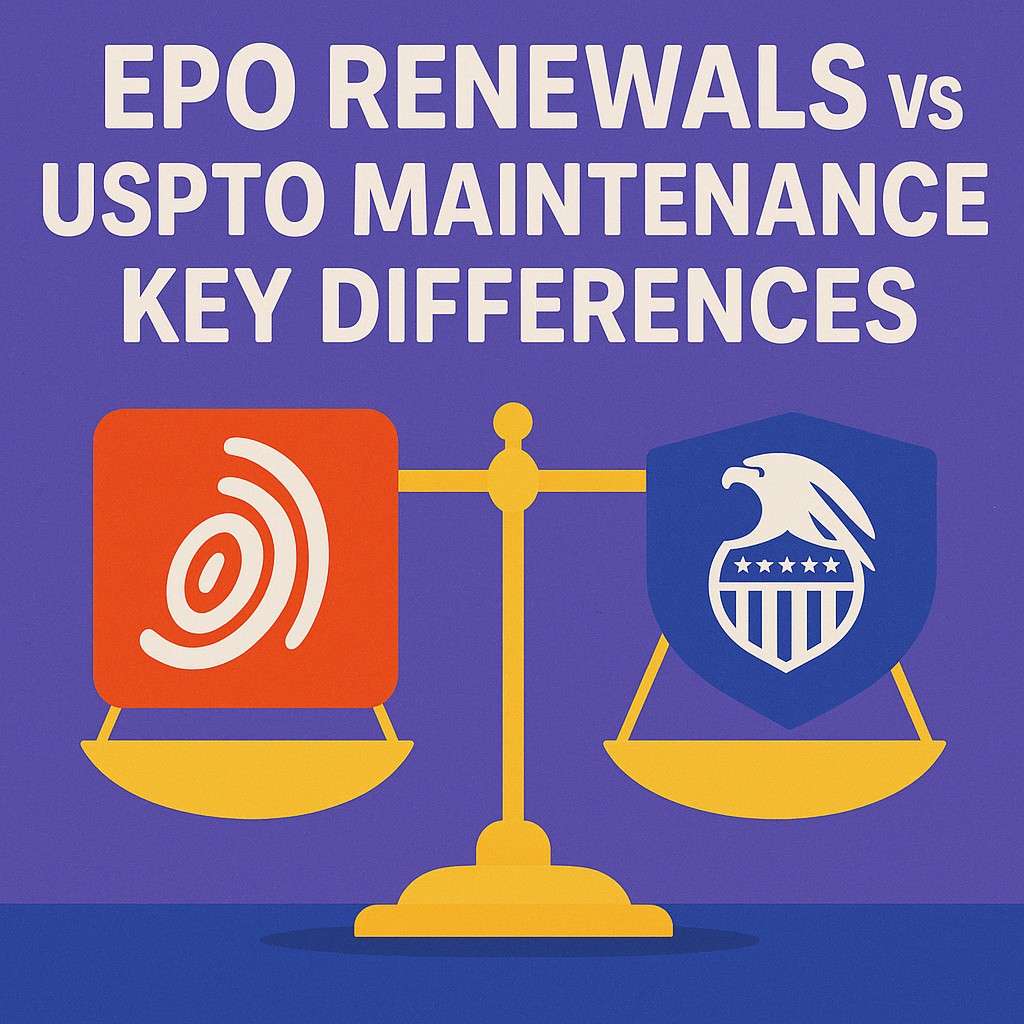
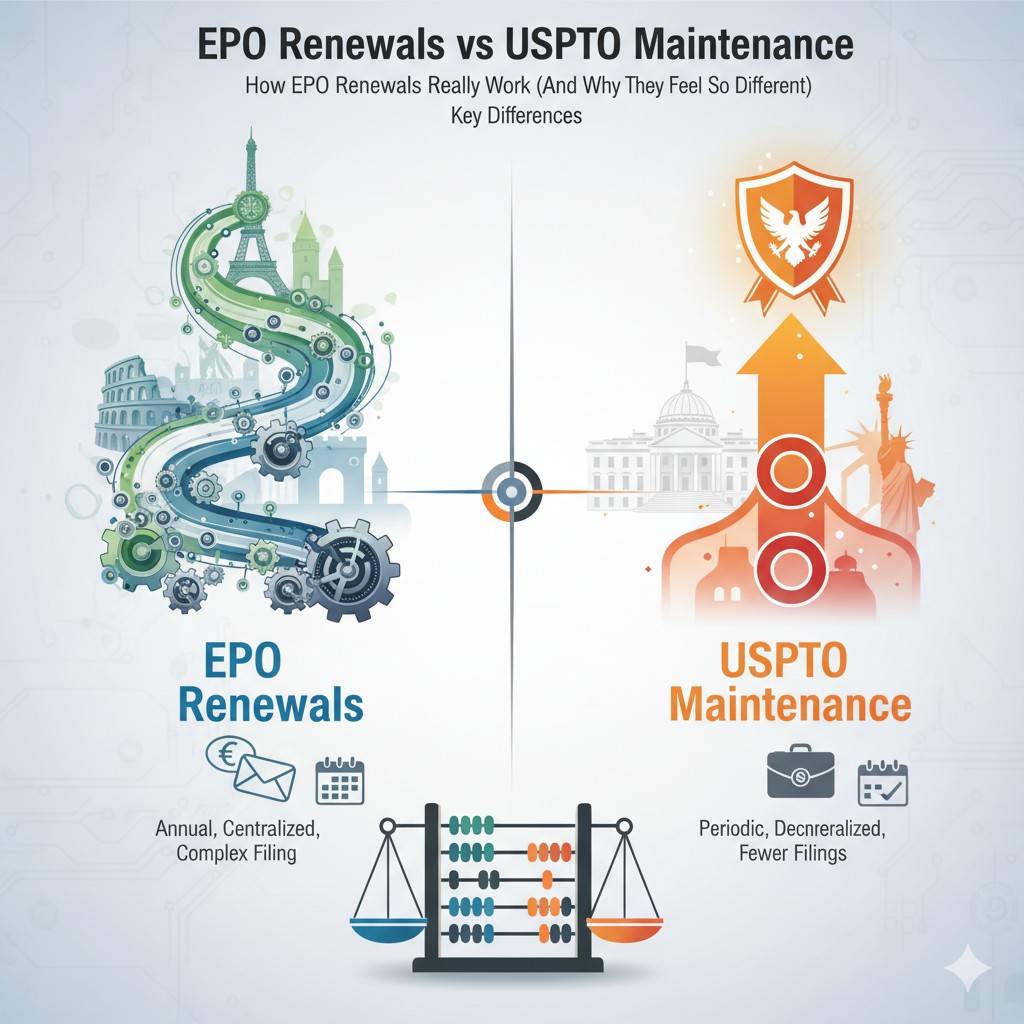
And this is where founders often hit a wall. The rules for keeping a patent alive in Europe are not the same as the rules in the United States. The European Patent Office (EPO) uses renewals. The U.S. Patent and Trademark Office (USPTO) uses maintenance fees. Both sound simple, but they work in completely different ways, follow different calendars, use different cost structures, and carry different risks if you miss a deadline.
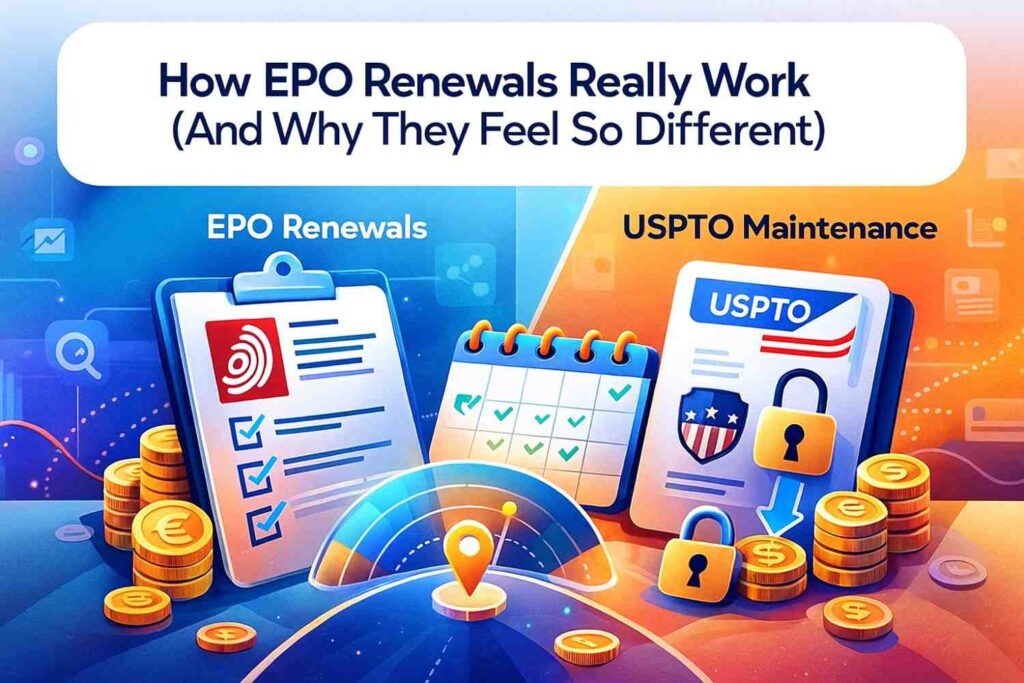
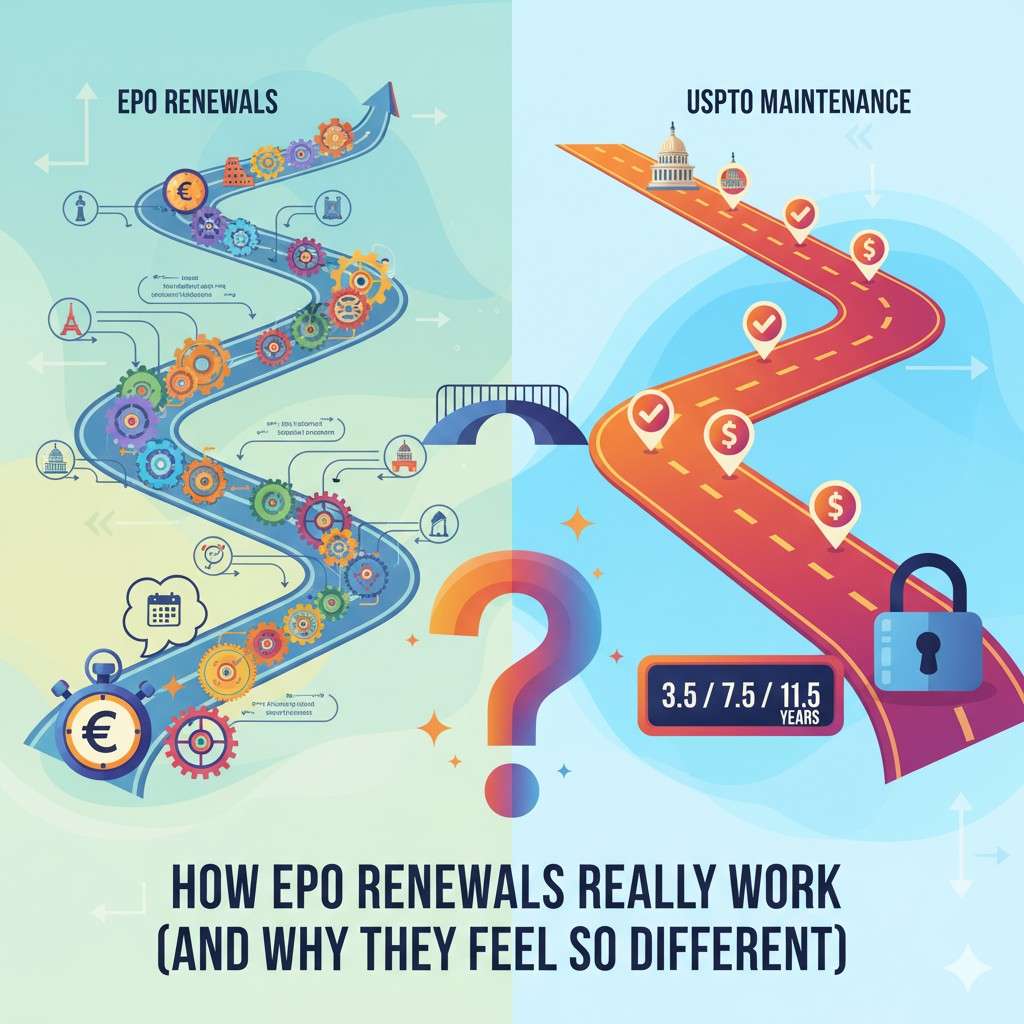
How EPO Renewals Really Work (And Why They Feel So Different)
Keeping a patent alive in Europe moves on a rhythm of its own, and many founders feel the difference the moment they try to manage it.
The EPO system does not behave like the U.S. system, and that shift can feel strange at first, especially if you’re used to the slower, spaced-out pace of USPTO maintenance fees.
But once you understand the structure behind it, the EPO process becomes much easier to work with. It can even give your company more control, as long as you plan ahead and stay organized.
Why EPO Renewal Fees Start Early
Before you ever receive a granted European patent, the renewals already begin. This surprises many founders who assume renewals only start after grant.
In Europe, renewal fees start while the application is still pending, which means you are paying to keep your place in the process.
This is very different from the United States, where no maintenance fees are due until years after grant. The early timing often pushes companies to think strategically sooner.
You must decide how important the invention is before you pour more time and fee payments into it.
This can actually work in your favor, because it forces you to be honest about what you want to protect long term, instead of waiting too late and paying for something that no longer matters to the business.
How the Annual Renewal Cycle Shapes Your Planning
EPO renewals are due every single year. There is no three-year gap, six-year gap, or multi-year pause. The clock ticks annually, and you must meet that rhythm or risk losing rights.
This annual structure gives inventors more opportunities to adjust, but it also demands steady attention. When you know every year has a cost attached to it, you naturally think about whether the invention still supports your product roadmap or if your strategy needs to shift.
The yearly cycle also helps founders forecast costs in a predictable way. You can map it alongside development cycles and budget cycles, which keeps surprises low as long as someone inside the company is watching the dates closely.
The Big Shift After Grant
Once your patent is granted by the EPO, something important happens. The responsibility for renewals moves from the EPO to each individual European country you pick.
This is a moment where many businesses accidentally create chaos. Instead of one office charging you a single renewal fee each year, every national office expects its own renewal fee on its own schedule.
This means you are now tracking several renewals instead of one. If you don’t prepare for that shift, the risk of missing a payment grows fast. Good systems matter here. Good reminders matter even more.
The Strategy Behind Choosing Countries
Because you pay renewals country by country after grant, the countries you choose at grant can have a huge financial impact. Not all countries have the same fees.
Some are high, some are low, some increase quickly with each year of the patent, and some stay steady.
A startup with tight funding often does better by focusing on the countries that truly matter to the business, instead of trying to cover all of Europe.

That’s why founders who plan ahead save more money and maintain stronger coverage. You don’t need to defend everywhere. You only need to defend where competitors will actually show up.
Why EPO Deadlines Feel Less Forgiving
The EPO gives you deadlines that feel strict and fast. If you miss a payment, the clock does not give you extra time unless you pay additional fees to recover your rights. This can become expensive quickly.
The EPO also expects payments to be made on time with precision. There is very little room for error.
For a fast-moving startup, this can feel uncomfortable, especially if you do not have a dedicated IP person on your team.
The best way to avoid stress is to automate reminders and use tools that track upcoming fees for you. This keeps your engineering team focused and prevents panic near the deadlines.
How Early Planning Helps You Avoid Surprises
Because EPO renewals happen every year and begin early, planning becomes your strongest advantage. If you know the total cost of renewals for the next few years, you can match those costs to funding rounds, product launches, or expansion plans.
This lets you pace your spending and choose which inventions deserve long-term protection. The EPO system rewards founders who make decisions based on clear business priorities rather than emotion or habit.
When you pair strong planning with clean documentation, the entire renewal process becomes smoother and far less risky.
Why EPO Renewals Teach You Patent Discipline
The European system pushes teams to stay organized. Because the fees come every year, because the rules change after grant, and because each country has its own expectations, startups learn quickly how important it is to maintain order.
This discipline benefits the company in many other areas, too. A team that can track European fees with confidence is a team that will manage U.S., Asian, and worldwide deadlines with far less stress. It’s not just about staying compliant.
It’s about building the habit of managing your intellectual property like a real business asset. Many founders discover that this discipline pays off later when investors ask about their patent strategy.
The Hidden Power of Knowing When to Stop Paying
One of the biggest advantages of the EPO renewal system is that it gives you many chances to let go of patents that no longer move your business forward. You might realize an invention has become outdated. Maybe you moved in a different direction.
Maybe a product didn’t grow the way you expected. With annual renewals, you can choose to stop paying and reallocate the money toward newer ideas. This ability to pivot helps startups stay lean and avoid sinking money into old inventions out of habit.
Smart founders stay honest about which patents deserve long-term investment, and they use the yearly renewal cycle as a checkpoint for strategy.
How Tools Like PowerPatent Make Renewals Simpler
European renewals become overwhelming only when you manage them manually. When deadlines, country rules, early renewal dates, and shifting fees start stacking up, human error becomes the biggest threat.
This is exactly why many startups use PowerPatent to stay organized. The platform tracks deadlines, helps you understand costs, prevents lapses, and keeps attorneys in the loop so nothing slips through the cracks.
Instead of trying to juggle renewal schedules across multiple countries, you get a clear, simple system that handles the complexity for you. This gives you the freedom to stay focused on building your product while your IP stays protected in the background.
Why EPO Renewals Can Actually Strengthen Your Global IP Strategy
A surprising thing happens when you get comfortable with the way EPO renewals work. You become more confident in managing patent portfolios across other regions too.
The discipline, planning, and clarity that the EPO system demands make you a stronger operator everywhere. You learn how to protect your ideas with intention instead of fear. You learn how to budget with precision.
You learn how to maintain a portfolio that matches your company’s growth instead of slowing it down. In this way, EPO renewals are not just a cost. They are a training ground for building a world-class IP strategy.
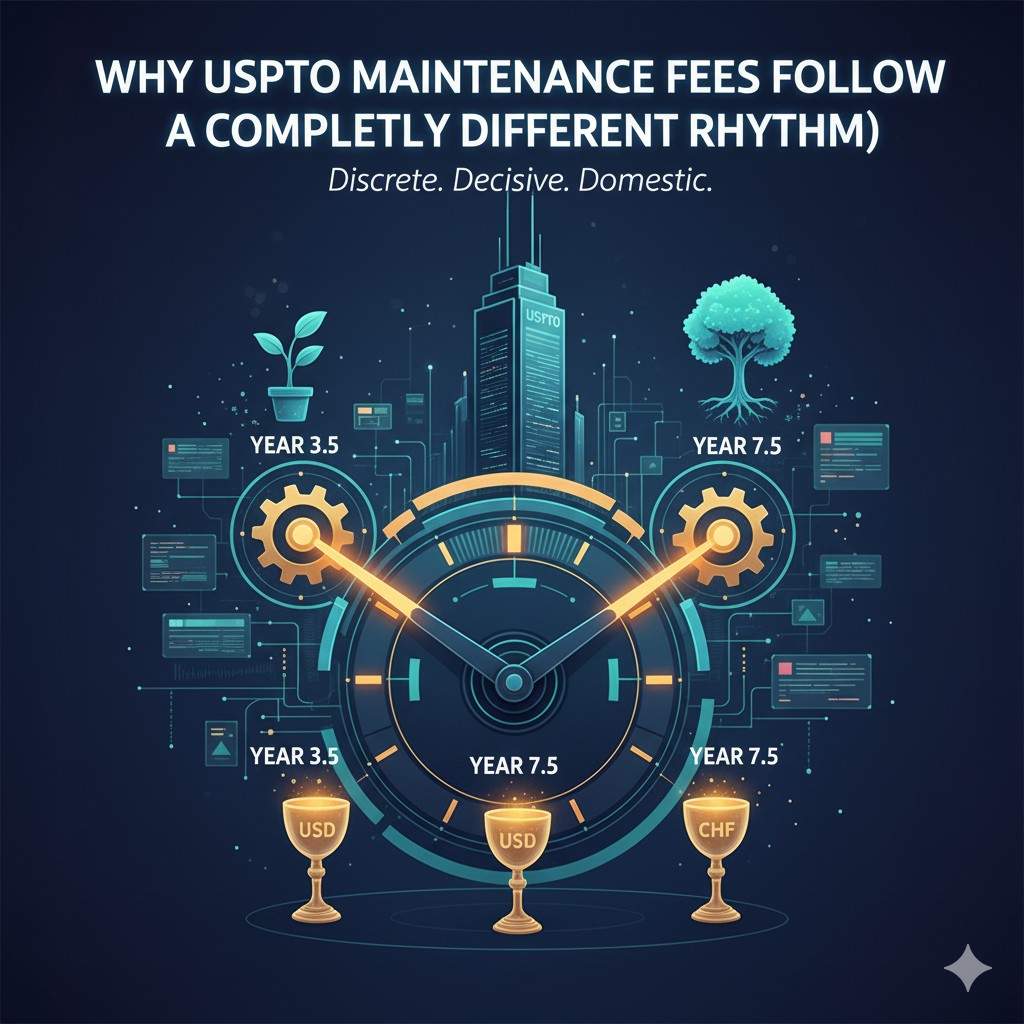
Why USPTO Maintenance Fees Follow a Completely Different Rhythm
The U.S. system moves at a slower, steadier pace than Europe, and that difference changes how founders think about long-term protection.
Instead of annual fees and early payments, the USPTO waits until after your patent has been granted, and then it gives you long spaces between each required payment.
This rhythm can feel calmer, but it also brings its own risks. Understanding how the system works helps you make smarter decisions about timing, budgeting, and portfolio growth.
Why U.S. Fees Only Start After Grant
The USPTO does not charge maintenance fees while the patent is still being examined. This gives you time to get through the process without worrying about renewals.
Many founders appreciate this because it keeps early costs lower and lets them focus on getting to grant. But this delay can create a false sense of comfort.
Because no money is due during examination, startups often forget that significant fees will arrive later.
When the patent finally issues, the first maintenance fee feels far away, but the timeline moves quicker than many expect. Planning early helps avoid surprises when those fees finally come due.
How the Three-Stage Payment Schedule Shapes Your Strategy
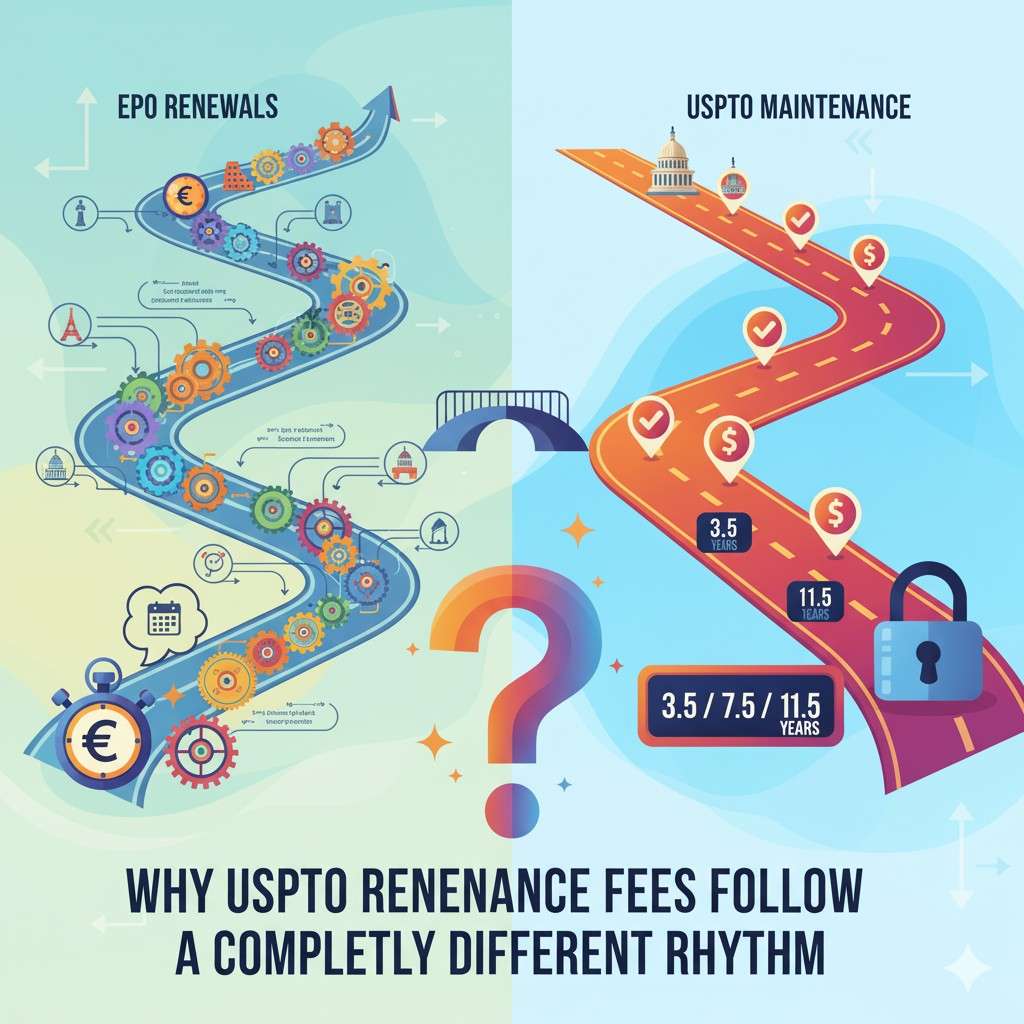
Instead of annual payments, the USPTO only asks for three fee payments during the lifetime of your patent. These occur at three and a half years, seven and a half years, and eleven and a half years after grant.
This spacing gives you long quiet gaps where no payments are required. For a growing startup, this can feel like a relief. You have time to see whether the invention becomes valuable, whether customers adopt the technology, and whether competitors begin to appear.
These gaps let you match your spending to what is happening in your business. If the invention becomes a core part of your company, the maintenance fees feel like a natural investment. If it becomes less important, you can decide not to continue paying.
Why the Gaps Can Actually Create Risk
Long gaps might feel easy, but they also make it easier to forget. Teams change. Roles shift. Emails get lost. A company that had plenty of time to plan suddenly finds itself close to a deadline without noticing.
Many patent lapses in the United States happen not because founders choose to stop paying, but because the date slipped by unnoticed. This risk becomes bigger as a startup scales.
More projects. More filings. More moving parts. Without a strong tracking system, even well-funded companies lose patents simply because no one was watching the clock.
That’s why setting reminders early, automating tracking, and assigning ownership matter far more than most founders realize.
Why Maintenance Fees Increase Over Time
Each maintenance fee in the U.S. is larger than the one before it. This is the opposite of many European countries, where fees rise each year but in smaller steps. In the United States, the jump between fee stages is big.
The fee at eleven and a half years is the highest. This increasing cost reflects the fact that older patents tend to be more valuable because they survived the early years.
By the time you reach the last fee, the patent likely covers something mature, tested, and important to your market.
The rising cost is a natural checkpoint that helps you ask the right questions. Is this invention still powering your business?
Is it still blocking competitors? Does it still support your growth? If the answer is yes, the fee feels justified. If the answer is no, letting it lapse can be a strategic choice.
How Investors Look at Maintenance Decisions
Many founders don’t realize that investors often look at how companies manage their maintenance fees. The way you handle these payments shows discipline, long-term thinking, and understanding of what actually matters in your portfolio.
Paying the right fees on time signals strength. Paying fees on old inventions with no business purpose signals waste. Missing deadlines signals disorganization.
Strategic choices around maintenance fees tell a story, and that story affects investor confidence. Good founders use these decisions to show clarity and control, which makes a stronger impression during diligence.
Why the U.S. Grace Period Is Not Something To Rely On
The USPTO gives you extra time after the deadline to pay a fee with a surcharge. Many founders hear this and assume the grace period is a safety net. But relying on this extra window is risky.
It increases costs. It sends the wrong signal to anyone reviewing your IP portfolio. And if you miss this extra window as well, the patent expires. Getting it reinstated becomes expensive and sometimes impossible.
The grace period is meant for emergencies, not regular planning. A good system should help you make every payment before the deadline without needing to touch this safety margin.
How Business Milestones Should Guide Your Payment Choices
Because the U.S. schedule has long gaps, your company will hit many milestones before each payment date arrives. Funding rounds. Product pivots. Market insights.
Customer adoption. Team growth. All of these moments shape the importance of your invention.
The maintenance fee becomes a quiet checkpoint that helps you pause and ask whether the patent still serves your future. If it does, paying the fee is an easy decision.
If it does not, you save money and redirect energy to more valuable ideas. This is how you turn maintenance fees into a strategic tool instead of a burden.
Comparing USPTO Fees to Your Long-Term Roadmap
Each maintenance stage lines up with a predictable part of your company’s growth. The first fee comes when your business is still young. The second arrives when you have more traction and clearer product direction.
The last fee comes at a stage where your company is either established or has fully moved on to new technology.
These natural checkpoints help you evaluate the invention through the lens of real-world performance. A patent that still matters a decade after grant likely protects something meaningful.
A patent that never gained traction can be allowed to expire without hurting the business. Conscious decisions at each stage make your portfolio stronger and leaner.
How PowerPatent Helps You Stay Ahead of Maintenance Fees
Managing long-spaced deadlines can be harder than managing frequent ones because human memory is unreliable.
That’s why many startups use PowerPatent to track upcoming maintenance fees. The system surfaces deadlines early, creates clear reminders, and keeps attorneys aligned so nothing gets missed.
This removes the burden from your internal team and frees you from worrying about long-term dates buried in a spreadsheet. With clean automation and real attorney oversight, you stay compliant without spending mental energy on something that shouldn’t take time away from building your company.
Why Understanding the U.S. Rhythm Makes You a Better Founder
Once you understand why the USPTO uses this structure and how it affects your decisions, you begin to approach your patents with more confidence.
The U.S. system rewards founders who think long term, stay organized, and make choices based on clear business outcomes.
When you manage the timing well, maintenance fees become predictable markers that help you shape your product direction, defend your market, and control your costs.
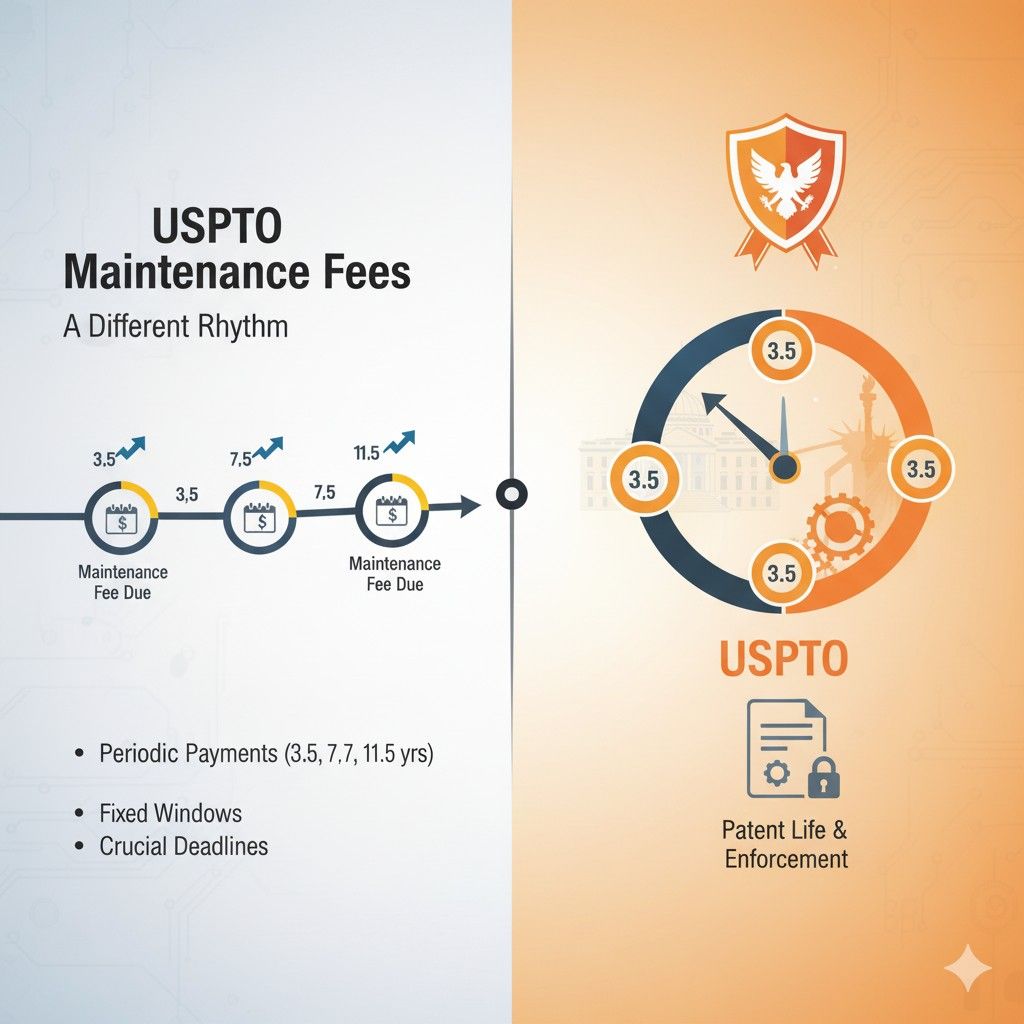
Instead of feeling like surprise expenses, they become part of the natural rhythm of scaling your company.
The Hidden Risks Founders Miss When Managing Both Systems at Once
Working with both the EPO and the USPTO at the same time can feel manageable at first. The rules seem clear, the dates seem far apart, and the payments feel straightforward.
But the moment your portfolio starts growing, the cracks begin to show. The two systems run on completely different schedules, and many founders underestimate how those differences collide in real life.
Understanding these hidden risks puts you in a stronger position and helps you avoid costly mistakes that can surface years later.
Why Different Rhythms Create Silent Gaps
When you track an EPO renewal every year while also waiting years between USPTO fees, your attention naturally shifts to whichever deadline is closest.
This leads to a quiet imbalance where the U.S. deadlines fall off your radar. Even smart teams experience this. The human brain focuses on the urgent, not the distant.
Over time, the quiet gaps in the U.S. schedule become blind spots. By the time someone checks the dates again, the window may already be closing. This is one of the most common ways patents lapse unintentionally.
How Team Changes Introduce Risk Without Anyone Noticing
Startups move fast. People join. People leave. Responsibilities shift. A founder may assume the operations lead knows the deadlines. The operations lead may assume the outside attorney is tracking everything.
The attorney may assume the company will inform them when the business wants to continue paying. These handoff gaps silently build over time.
Because EPO and USPTO deadlines run so differently, they require different monitoring habits. If one person leaves without passing the knowledge forward, an entire portion of your portfolio can end up exposed without anyone realizing what happened.
Why Spreadsheet Tracking Breaks Down Over Time
Many early-stage teams track their deadlines in simple spreadsheets. It feels practical at first, especially when you only have a few filings. But as soon as you add multiple European countries and U.S. maintenance cycles, a static spreadsheet struggles to keep up.
Someone forgets to update a date. Someone enters the wrong year. Someone overwrites a cell.
A spreadsheet does not warn you when something looks off. It does not remind you of upcoming deadlines. It does not adjust automatically when grant dates change. The moment the portfolio grows, the spreadsheet stops being a tool and becomes a risk.
How Cost Surprises Hit When You Least Expect Them
Because the EPO charges renewals every year and the USPTO charges in large jumps every few years, the cash flow impact becomes unpredictable unless you plan ahead.
Many startups get caught off guard when a large U.S. fee arrives close to several European renewals.
This can happen during fundraising, during product development, or during a hiring sprint when money is tight.
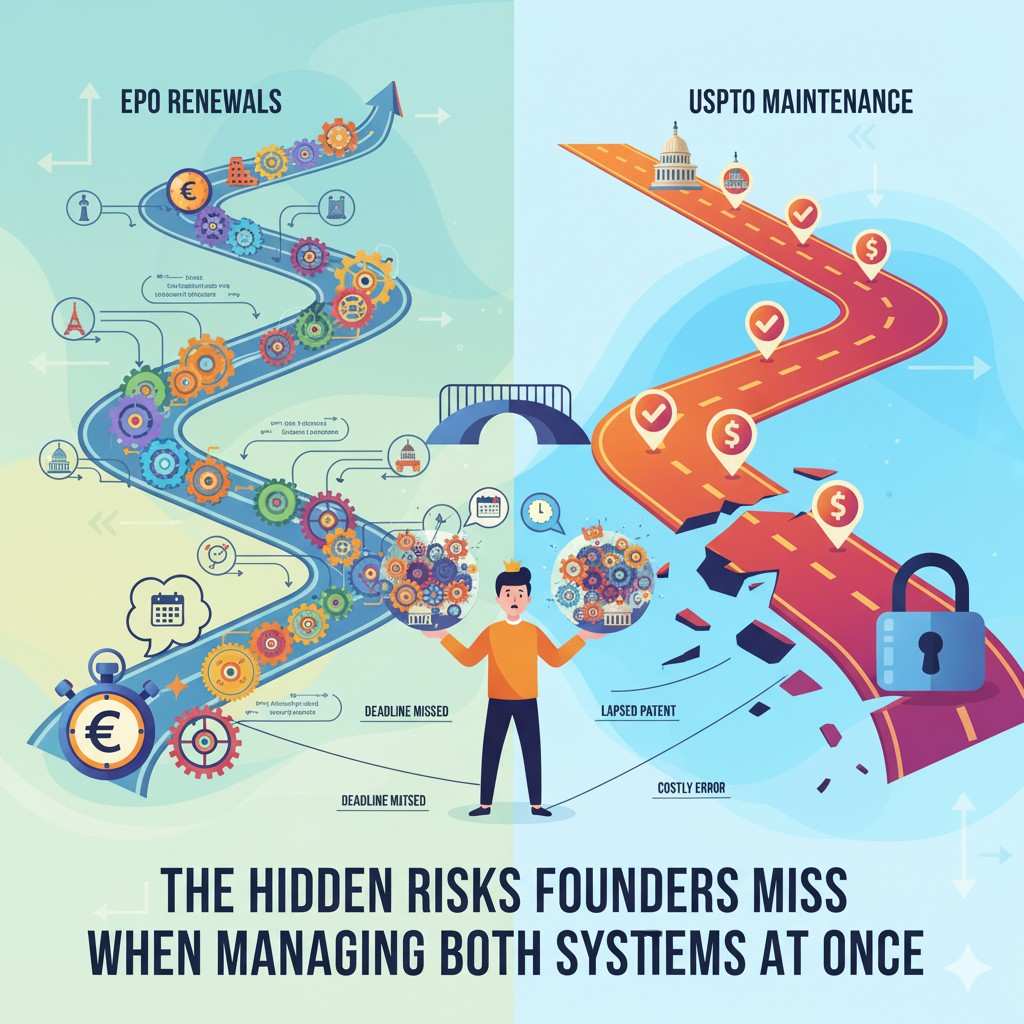
These surprise clusters can create unnecessary stress or even force founders to drop a patent they would have kept if they had clearer visibility.
Planning across systems helps you smooth out these cost spikes so they never interrupt your momentum.
Why Portfolio Decisions Become Harder When Timing Is Not Unified
A portfolio makes the most sense when every piece fits the future direction of the business.
But if you are only looking at EPO deadlines because they happen every year, and barely looking at U.S. deadlines because they feel far away, your decisions become skewed.
Some founders keep paying European renewals for inventions that have lost value, simply because the annual fee keeps them thinking about it.
At the same time, they forget to evaluate their U.S. patents until the deadline is near. When timing drives decisions instead of strategy, you end up protecting the wrong inventions and neglecting the ones that matter most.
How Pressure Builds During Rapid Growth
As your company scales, everything accelerates. More filings. More prototypes. More markets. More sales conversations.
More investor calls. Patent deadlines do not slow down just because your business is growing. The mismatch between EPO and USPTO schedules becomes even more noticeable as your pace accelerates.
Deadlines that once felt manageable begin to feel like interruptions. Many teams get overwhelmed not because the rules are hard, but because they did not build a system that grows with them.
The moment your company hits a phase of rapid progress, manual tracking collapses under pressure.
Why Investors Care About Your Ability to Manage Both Systems
During due diligence, investors often look deeper than the patents themselves. They want to see how you manage your intellectual property. Missed deadlines, unexpected lapses, and poorly documented decisions signal risk.
When they notice that your EPO deadlines are handled well but your USPTO deadlines seem inconsistent, it raises questions about discipline and internal organization.
A well-managed portfolio shows maturity. A scattered renewal schedule does the opposite. Investors want confidence that your core ideas will remain protected long into the future, not destabilized by administrative gaps.
How International Expansion Compounds the Challenge
Many startups eventually enter new markets beyond the U.S. and Europe. Filing in Asia, Canada, or Latin America adds more layers of timing, and each region has its own rules.
If your system for managing EPO and USPTO deadlines is already strained, adding more countries only multiplies the pressure.
When teams do not have a unified system, mistakes become more likely as each new jurisdiction brings new obligations.

Once you have multiple filings worldwide, the cost of a single missed deadline becomes much higher because entire protection chains can fall apart.
Why Founders Overestimate Their Ability To Juggle Everything
Many founders believe they can keep everything straight in their head or rely on calendar reminders. This confidence works when the company is small and the portfolio is tiny.
But the moment filings grow, the mental load becomes too heavy. Patent management is not something you should carry in your head while also building, hiring, pitching, and launching.
When the workload increases, the brain prioritizes immediate fires and pushes long-term deadlines aside. This is a natural behavior, not a failure. The key is building a support system that handles the complexity for you.
How PowerPatent Helps You Remove These Risks Entirely
The simplest way to eliminate all these hidden risks is to centralize your tracking across both systems.
PowerPatent gives startups one place where every deadline is monitored, every date is surfaced early, and every attorney stays aligned. You don’t have to wonder whether the U.S. fee is coming up or whether the next European renewal is close.
The platform brings everything into a single view so nothing slips through the cracks. With automated reminders and real attorney oversight, you stay in control without having to manually chase dates.
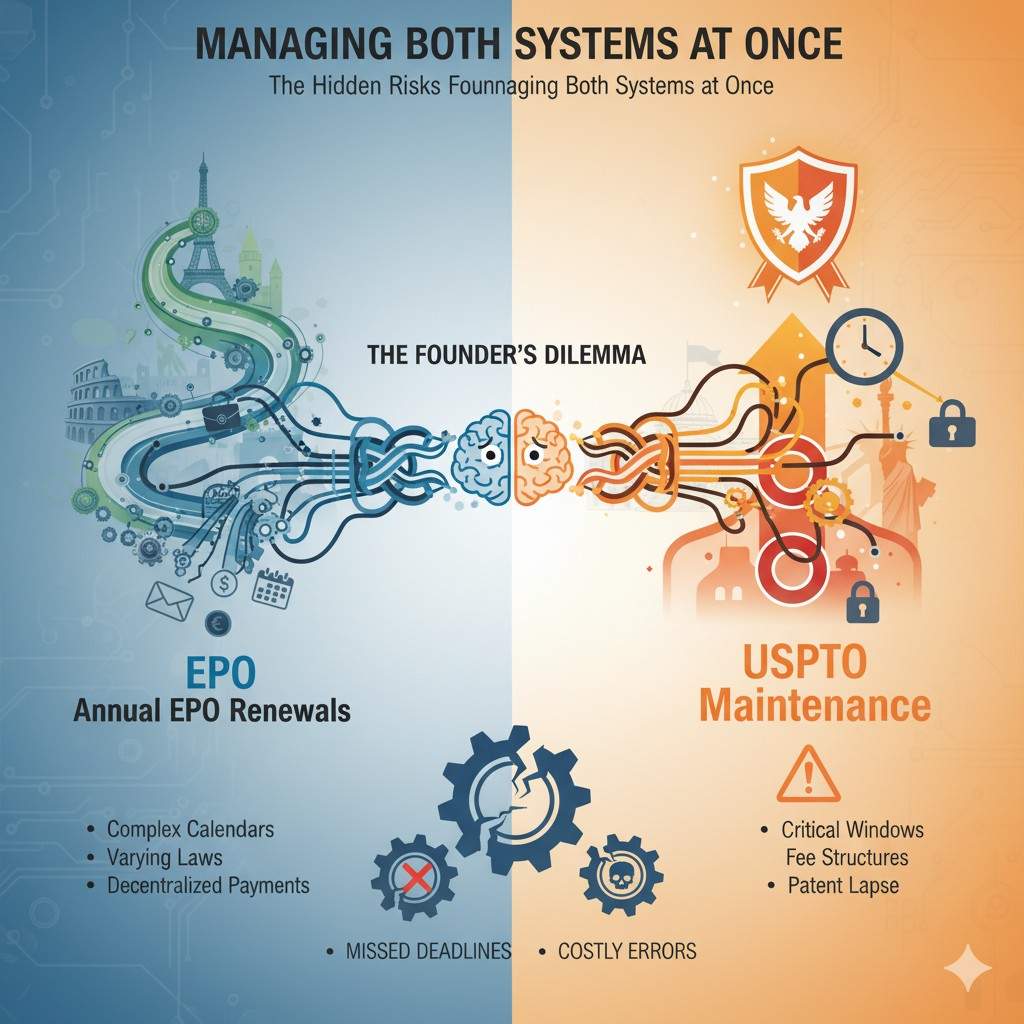
This frees founders to focus on what actually matters: building the company, shipping product, and staying ahead of competitors.
Wrapping It Up
Every founder wants the same thing. You want to build something real, protect it, and grow without tripping over confusing rules or deadlines. The world of patents should not pull you away from your product or your customers, yet it often does because the systems that protect your ideas were built long before startups moved at today’s speed.