If you are building something new and filing a patent, speed and clarity matter more than anything else. The e-Office Action Program was created to remove delays, confusion, and paper-heavy back and forth with the patent office, so you can see issues sooner and respond with confidence. In this guide, we will break down what the program really is, why it changes the game for founders and engineers, and how pairing it with a modern platform like PowerPatent helps you move faster without losing control or quality.
What the e-Office Action Program Really Is and Why It Exists
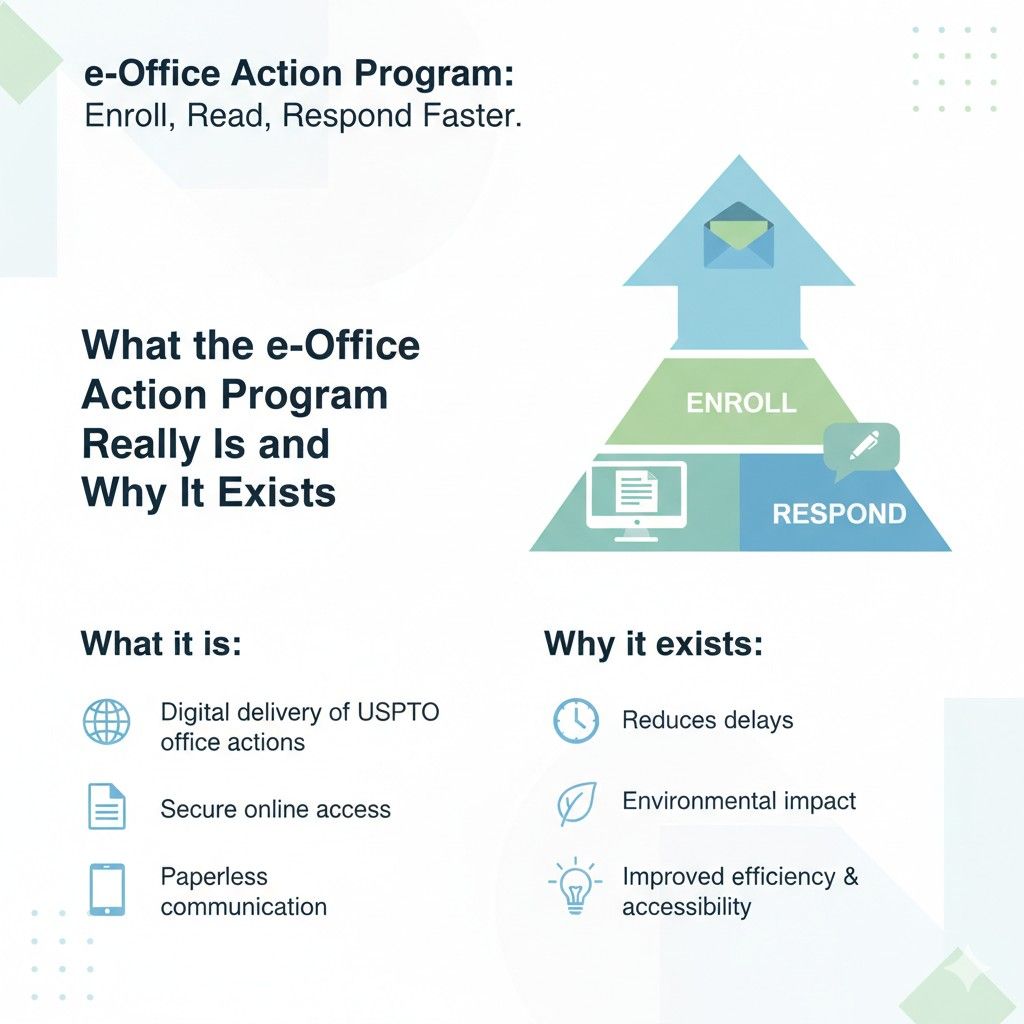
The e-Office Action Program exists for one simple reason: the old way of handling patent office communication was too slow for how fast businesses move today.
For founders and product teams, waiting weeks just to see feedback from the patent office can quietly kill momentum.
This program replaces delay with visibility. It gives you faster access to office actions so you can understand what the examiner is saying and decide your next move without losing time or energy.
The Problem With the Old Patent Communication Model
Before this program, office actions often arrived by mail or through clunky systems that required constant checking. That delay created a gap between what you built and how well you could protect it.
For startups, that gap can be risky. Competitors move fast, investors ask tough questions, and product roadmaps do not pause just because a letter is slow to arrive.
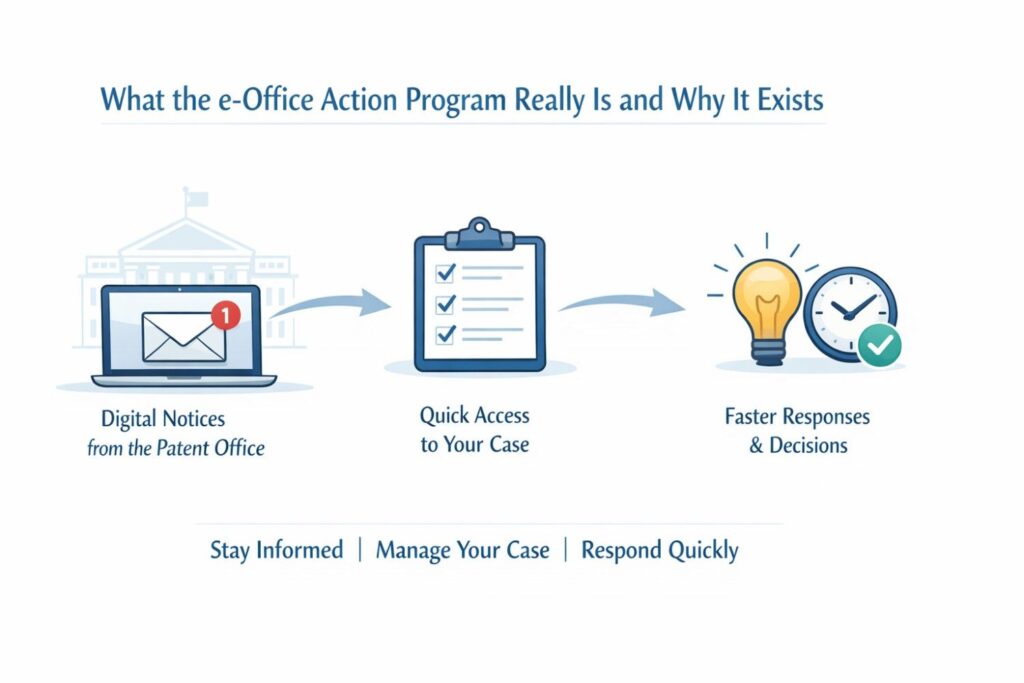
The e-Office Action Program was designed to close that gap. It brings communication into a digital-first flow where timing works in your favor instead of against you.
Why Speed Matters More Than Most Founders Realize
Speed in patents is not about rushing legal work. It is about reducing dead time. Every day you wait to read an office action is a day you are not making decisions.
When feedback arrives faster, you can align patent strategy with product updates, funding conversations, and hiring plans.
A smart move for businesses is to treat office actions like product feedback. The faster you see them, the faster you adapt. The program supports this mindset by removing unnecessary waiting.
What an Office Action Really Represents
An office action is not a rejection in the way many people fear. It is a conversation starter.
The patent examiner is pointing out what they see, what they need clarified, or where they believe changes are required. The e-Office Action Program helps you see this conversation sooner and with less friction.
When businesses understand that office actions are part of the normal path, they stop reacting with stress and start responding with strategy. Early access gives you room to think clearly instead of rushing close to deadlines.
Why the Program Was Built for Modern Teams
Modern teams are distributed, fast-moving, and data-driven. Paper-based systems do not fit that reality.
The e-Office Action Program was built to meet teams where they already work: online, collaboratively, and with real-time access to information.

For businesses, this means fewer handoffs, fewer missed messages, and better internal alignment. When everyone can see the same information quickly, decisions improve.
How Faster Access Changes Decision-Making
When office actions arrive faster, you gain optionality. You can decide whether to amend claims, push back, or adjust future filings based on real input rather than guesses.
This is especially valuable for startups that are still shaping their core technology.
A strong tactic here is to review office actions alongside your product roadmap. If the examiner flags something close to a planned feature, you can adjust both your patent response and your build plan at the same time.
The Hidden Cost of Slow Responses
Many businesses focus on filing costs but overlook response costs. Slow responses often lead to rushed answers, extra legal fees, and weaker protection.
The e-Office Action Program helps reduce this by giving you more time to think without extending deadlines.
Businesses that respond calmly and clearly tend to end up with stronger patents. Speed at the front creates quality at the end.
Why Enrollment Is a Strategic Choice
Enrolling in the program is not just a technical step. It is a strategic decision to treat intellectual property as a living part of your business. It signals that you care about visibility and control.
Once enrolled, make it a habit to review office actions as soon as they arrive. Even a quick first read can surface key themes and help you plan next steps early.
How Founders Should Read Office Actions
Many founders avoid reading office actions because they expect complex language. While the language can be formal, the core message is usually simple.
The examiner is either asking for clarity or pointing out overlap with existing ideas.
A practical approach is to read for intent first, not detail. Ask what the examiner is really unsure about. This mindset turns the document from something intimidating into something useful.
Turning Feedback Into Leverage
Office actions often reveal how others view your invention. This insight can be powerful.
It shows what parts stand out and what parts blend in. With faster access through the e-Office Action Program, you can use this feedback to sharpen how you describe and defend your work.
Businesses that do this well often end up with patents that are not only granted but also easier to explain to partners and investors.
Why Timing Affects Patent Strength
Patents are not just about what you claim but when you clarify it. Early, thoughtful responses tend to shape the rest of the examination process. The program supports this by giving you more breathing room early on.
A good practice is to align your response window with internal review cycles. That way, legal strategy and business strategy stay in sync.
How This Fits With Modern Patent Platforms
The e-Office Action Program works best when paired with tools built for speed and clarity. Platforms like PowerPatent are designed to help founders read, understand, and respond without getting lost in legal noise.
When software and attorney insight come together, office actions stop being blockers and start becoming checkpoints.
If you want to see how this kind of setup works in practice, you can explore it here: https://powerpatent.com/how-it-works.
Making Office Actions Part of Your Workflow
The biggest advantage comes when office actions are treated like regular work, not emergencies. With faster delivery, you can schedule time to review them just like product reviews or sprint planning.
This simple shift reduces stress and improves outcomes. It also helps teams stay proactive rather than reactive.
Why This Program Exists at All
At its core, the e-Office Action Program exists because innovation moves faster than paper. It was built to support builders, not slow them down. For businesses that care about protecting what they create, it is a clear step forward.
If you want to keep control, move faster, and avoid unnecessary friction in your patent journey, combining this program with a modern approach is one of the smartest moves you can make.
PowerPatent was built with exactly this reality in mind, and you can learn more about how it supports founders at https://powerpatent.com/how-it-works.
How Faster Office Actions Help Founders Stay in Control
Faster office actions are not just about convenience. They change who is in control of the patent process. When feedback arrives late, founders are forced into reaction mode.
When it arrives early, they stay in charge. This section explains how speed creates leverage, reduces risk, and gives businesses more say in how their ideas are protected as they grow.
Control Starts With Seeing the Full Picture Early
The moment an office action arrives, it shapes your options. If you see it early, you have time to think. If you see it late, you rush.
Faster delivery through the e-Office Action Program means you can review examiner feedback while your product decisions are still flexible.
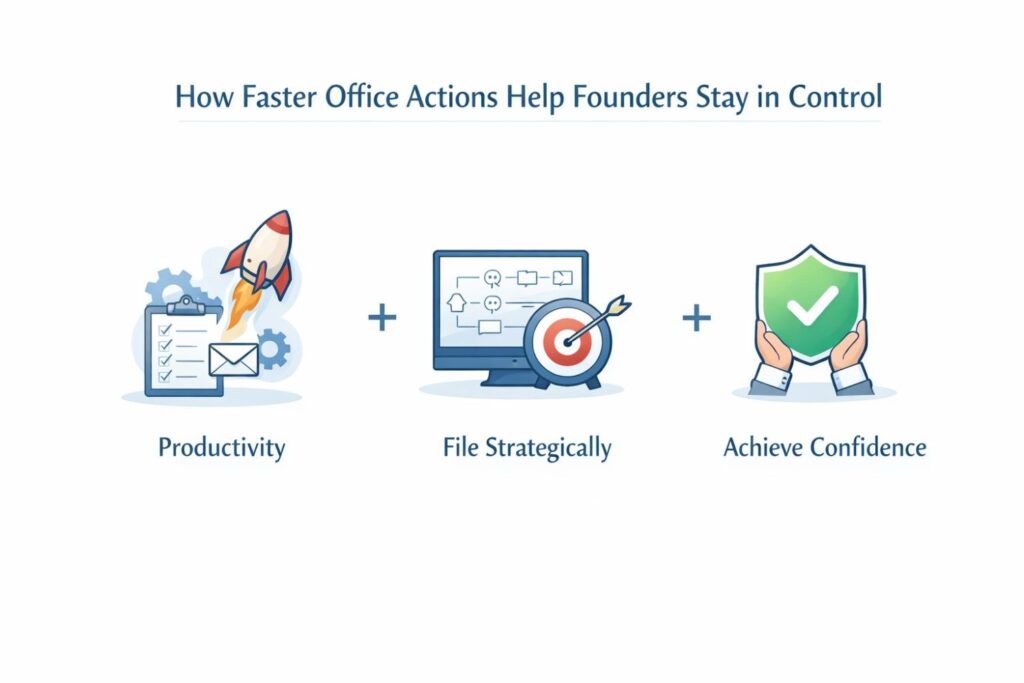
This early visibility allows founders to understand how their invention is being interpreted before too many business decisions are locked in. Control begins with awareness, and awareness depends on timing.
Why Delays Quietly Shift Power Away From Founders
When office actions take too long to arrive, founders often rely fully on outside counsel to summarize and decide next steps. That can be helpful, but it also removes founders from the driver’s seat.
Over time, this creates distance between the invention and the people who know it best.
Faster access keeps founders involved. You can read the same document, ask better questions, and make informed choices instead of approving changes blindly.
Staying Aligned With Your Product Vision
Startups evolve quickly. Features change, use cases sharpen, and markets shift. When office actions come in late, they may reference versions of your product that no longer exist.
This misalignment creates frustration and weak responses.
With faster office actions, you can respond while your original intent is still fresh. This helps ensure the patent continues to reflect what you are actually building, not what you built months ago.
Turning Patent Review Into a Strategic Moment
Many founders see office actions as chores. In reality, they are strategic moments. They show how the patent office understands your idea and where it sees uncertainty.
Faster access gives you time to think about whether that view matches your long-term goals.
A strong habit is to pause and ask whether the examiner’s feedback reveals something about how your invention might be copied or misunderstood. This insight can guide both your response and your business strategy.
Reducing Stress Improves Decision Quality
Stress leads to shortcuts. When deadlines feel tight, responses become narrower and less thoughtful. Faster delivery spreads the workload over more time, which lowers stress and improves clarity.
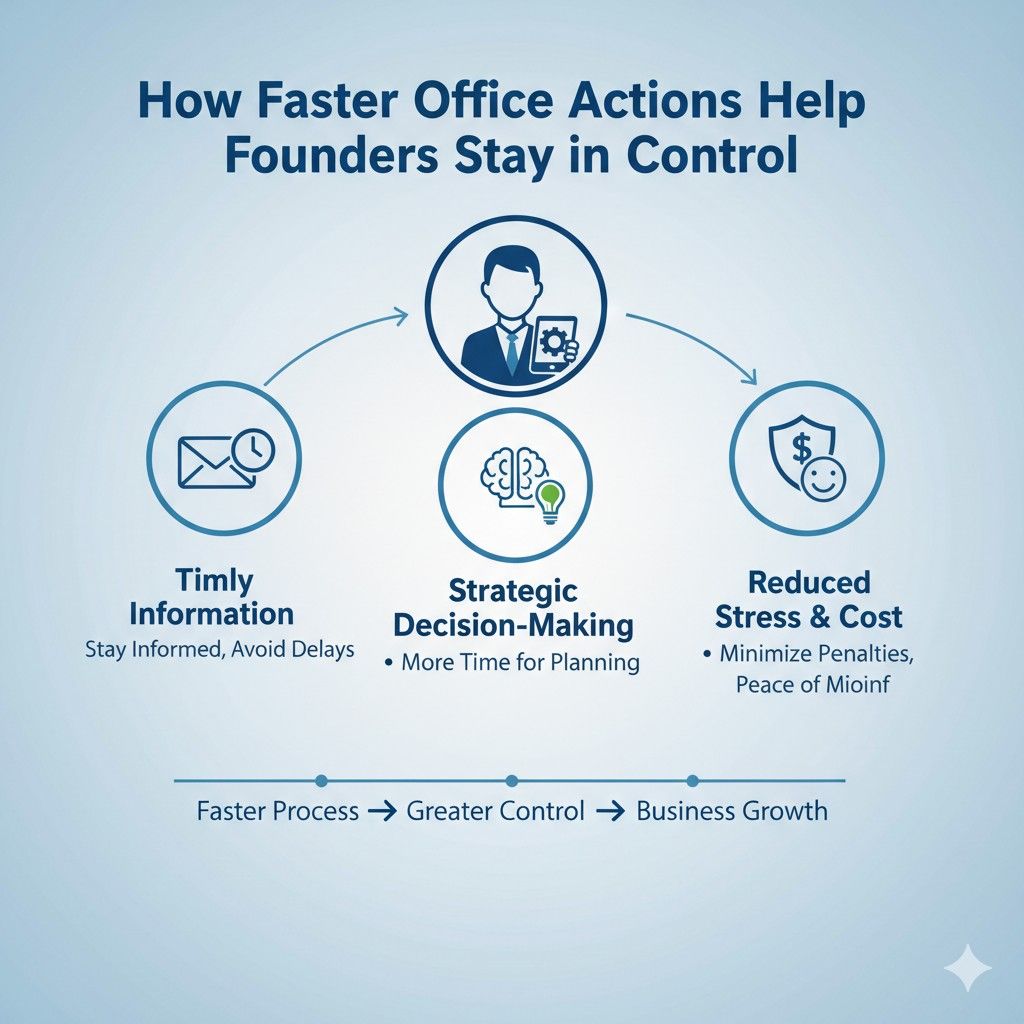
Founders who respond calmly tend to defend broader ideas more clearly. This often leads to stronger outcomes without extra cost or effort.
Better Timing Leads to Better Conversations
When you are not rushing, conversations with attorneys improve. You can ask why certain changes are suggested and explore alternatives.
Faster office actions give you the space to have these discussions instead of approving edits at the last minute.
This collaboration leads to responses that reflect both legal strength and business reality, which is where strong patents live.
Using Speed to Protect Optionality
Optionality is one of the most valuable assets a startup has. It means keeping paths open. Slow office actions force early decisions without enough information.
Faster ones let you delay choices until you understand the full impact.
For example, you may decide to narrow claims now and broaden them later, or the opposite. Speed gives you the flexibility to choose instead of being pushed.
Aligning Patent Strategy With Fundraising
Investors care about intellectual property, but they care even more about how well founders understand it. When you can speak clearly about examiner feedback and next steps, it builds trust.
Faster office actions make this easier. You can update investors with real information instead of vague timelines. This signals control and maturity.
Making Responses Part of the Build Cycle
The best founders treat patent work like product work. Faster office actions allow you to fold responses into your regular build cycle instead of treating them as interruptions.
This integration saves mental energy and keeps teams focused. Over time, it turns patents from a side task into a natural extension of building.
Avoiding Compounding Delays
One delay often leads to another. Late review causes late responses, which can slow the entire examination process. Faster office actions help break this cycle at the start.
Businesses that respond earlier often see smoother progress overall. This can mean protection arrives sooner, which matters when markets move fast.
Why Control Matters More Than Perfection
No patent process is perfect. What matters is who is steering. Faster office actions give founders the wheel back. You may still face challenges, but you face them on your terms.
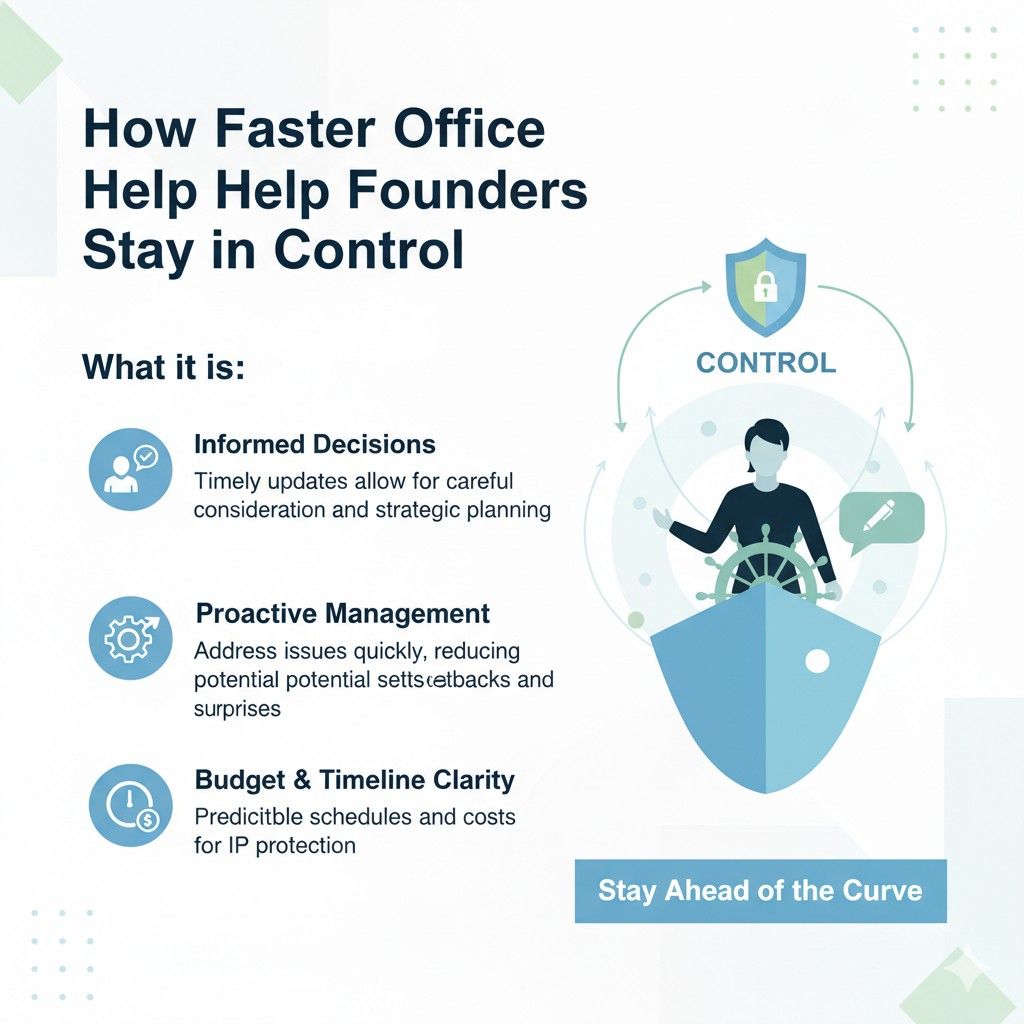
This sense of control reduces fear and builds confidence. Confident founders make clearer choices.
How Modern Tools Strengthen This Advantage
Speed alone is not enough. You also need tools that help you understand what you are reading. Platforms like PowerPatent are designed to pair fast access with clarity and guidance.
When founders can see office actions quickly and understand them without friction, control becomes real, not theoretical. If you want to see how this looks in practice, you can explore the flow here: https://powerpatent.com/how-it-works.
Building a Long-Term Advantage Through Process
Control compounds. Each fast, thoughtful response makes the next one easier. Over time, you build a rhythm that competitors without this setup struggle to match.
The e-Office Action Program supports this rhythm by removing delays at the source. When combined with a modern platform, it becomes a quiet but powerful advantage.
Why This Section Matters for Growing Companies
As companies grow, complexity increases. Faster office actions help keep one part of that complexity under control. They ensure intellectual property grows alongside the business, not behind it.

This alignment is what separates reactive companies from strategic ones.
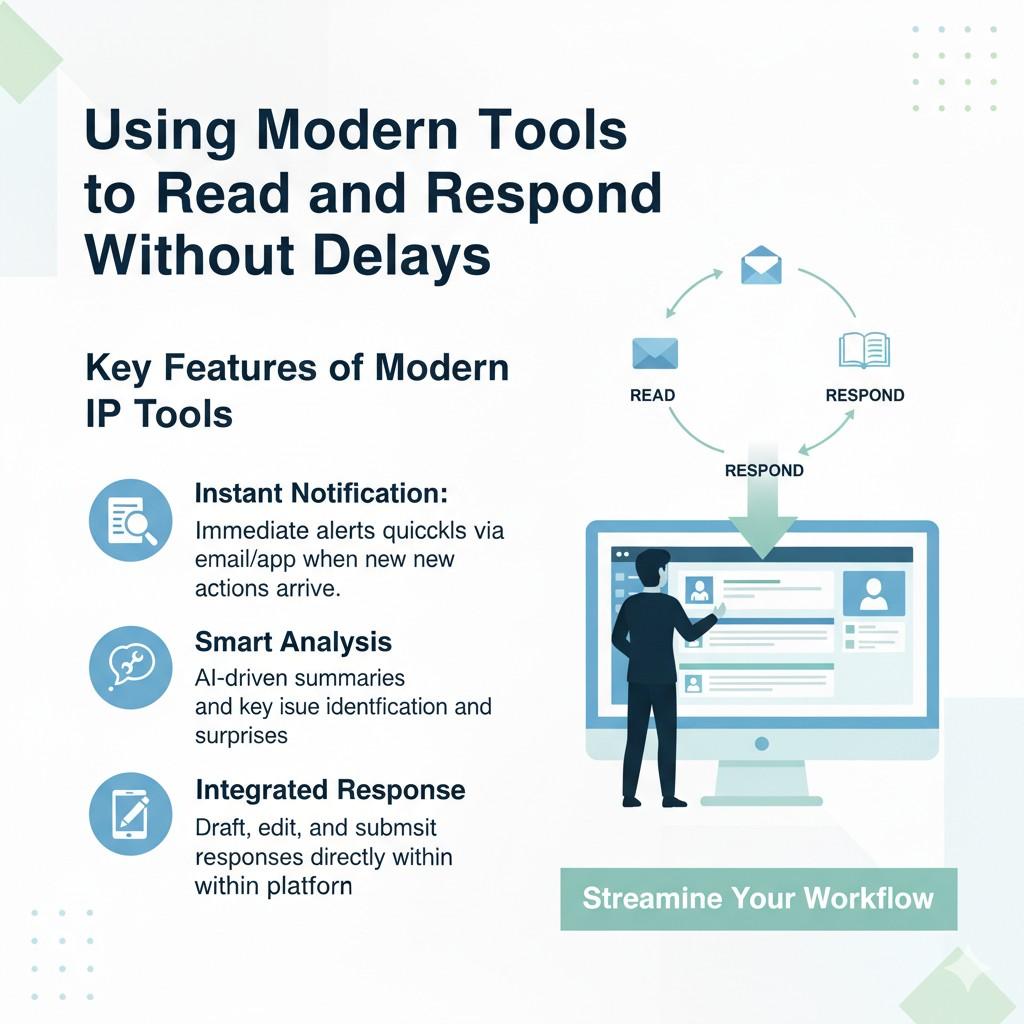
Using Modern Tools to Read and Respond Without Delays
Modern patent tools exist because the way founders build has changed. Code ships daily. Models improve weekly. Products evolve in real time. But the old patent process was never built for this pace.
Modern tools close that gap by helping founders read, understand, and respond to office actions without slowing the rest of the business down.
Why Tools Matter More Than Ever
When office actions arrive faster, the next bottleneck is understanding them. Many delays today do not come from the patent office but from confusion after the document arrives.
Modern tools remove this friction by turning dense language into something founders can work with quickly.
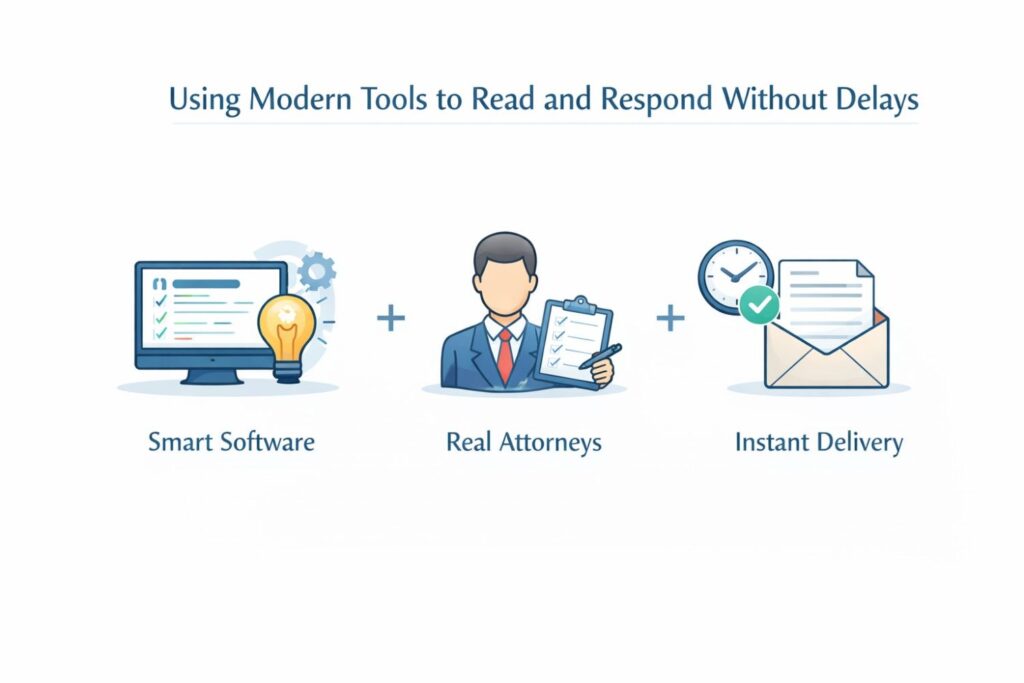
For businesses, this means fewer stalled days and fewer moments of uncertainty. The goal is not to replace judgment but to support it with clarity.
Reading Without Fear or Delay
Most founders delay reading office actions because they expect the worst. Modern tools change this experience. They frame the document as feedback, not failure.
When the language is easier to navigate, founders are more likely to read it early.
Early reading leads to better questions and better responses. It also reduces the emotional load that often slows action.
Turning Understanding Into Action
Understanding alone is not enough. Founders need to know what to do next. Modern tools help bridge this gap by showing how feedback connects to claims, descriptions, and real product behavior.
A practical approach is to review office actions alongside your actual implementation. When tools make it easy to see this connection, responses become grounded in reality rather than theory.
Keeping Responses Aligned With Business Goals
One risk in patent responses is overcorrecting. Without context, teams may narrow protection too much just to move forward. Modern tools help keep business goals visible during response drafting.
This ensures that responses protect what matters most, not just what is easiest to defend in the moment.
Reducing Back-and-Forth Overhead
Traditional workflows often involve long email chains and delayed feedback. Modern tools centralize communication so everyone sees the same information at the same time.
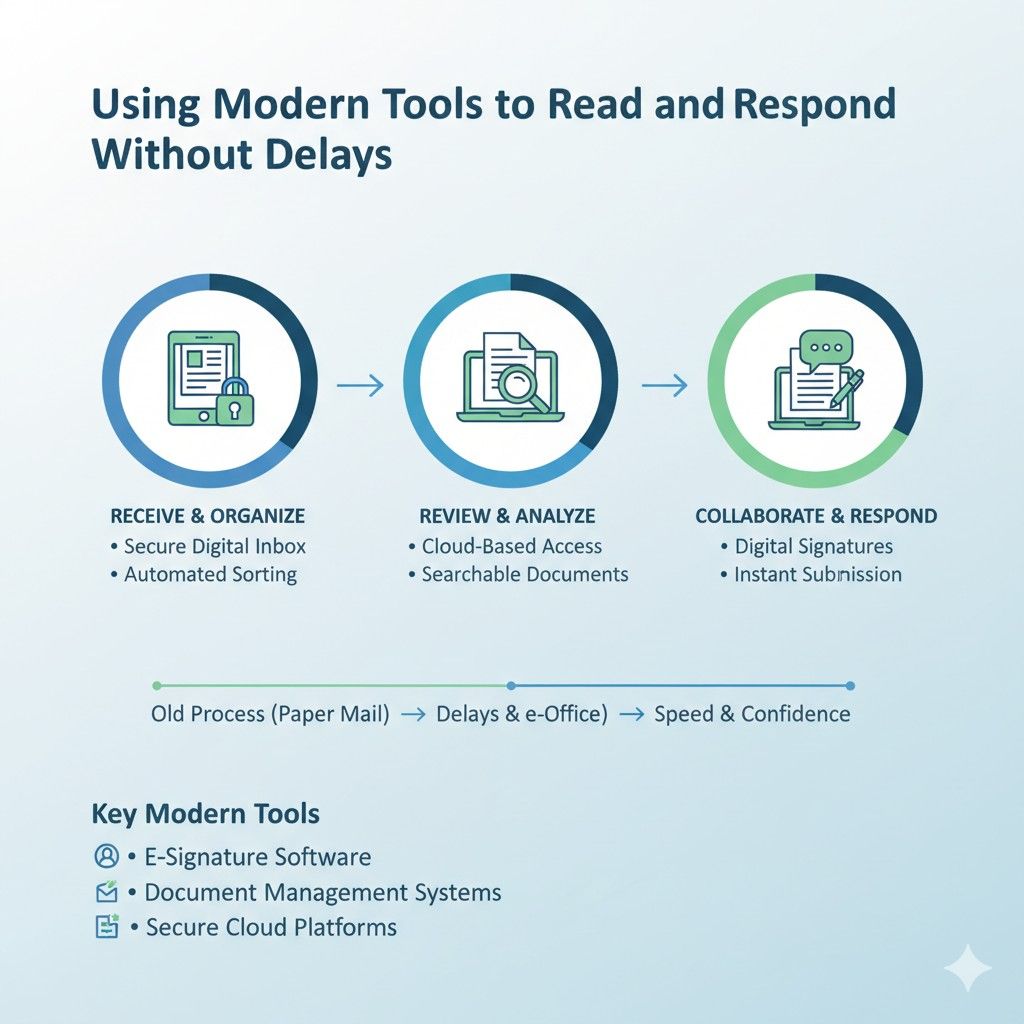
This shared visibility speeds decisions and reduces misunderstandings. For founders, it means fewer interruptions and clearer outcomes.
Making Attorney Time More Effective
Attorneys add the most value when they focus on strategy, not translation. Modern tools handle much of the heavy lifting around clarity, so conversations with attorneys become more meaningful.
This leads to better use of time and often lower overall cost, without sacrificing quality or rigor.
Responding Earlier Without Rushing
Early responses do not mean rushed responses. Modern tools support early starts by making drafts easier to review and adjust over time.
This allows founders to revisit responses with fresh eyes and improve them before submission, which is rarely possible under tight deadlines.
Learning From Each Interaction
Every office action teaches something about how inventions are evaluated. Modern tools capture this learning so it is not lost after one response.
Over time, this builds institutional knowledge inside the company. Founders become better at anticipating questions and shaping filings accordingly.
Creating a Repeatable Process
Consistency matters as companies file more patents. Modern tools help create repeatable workflows that scale with the business.
This reduces reliance on memory and heroics. Instead, patent work becomes a predictable part of operations.
Why Speed and Clarity Must Work Together
Speed without clarity creates mistakes. Clarity without speed creates delays. Modern tools are designed to balance both.
When founders can move quickly and confidently, patent work stops feeling like a risk and starts feeling like an asset.
How PowerPatent Fits Into This Model
PowerPatent was built specifically for founders and engineers who want this balance. It combines fast access, clear guidance, and real attorney oversight in one place.
This setup helps teams read office actions sooner, understand them better, and respond in a way that supports long-term business goals. You can see how this flow works in detail at https://powerpatent.com/how-it-works.
Making Patents Feel Like Part of Building
The biggest shift modern tools create is emotional. Patents stop feeling separate from building. They become another way of protecting progress.
When this happens, founders engage earlier, respond better, and build stronger protection almost by default.
Why This Approach Scales With Growth
As companies grow, speed and clarity become more valuable, not less. Modern tools ensure that patent strategy scales without adding friction.
This keeps intellectual property aligned with growth instead of lagging behind it.
The Real Advantage of Modern Tools
The real advantage is not technology itself but what it enables. Better timing. Better decisions. Better outcomes.
For founders who care about protecting what they are building without slowing down, this approach is no longer optional.

It is the new baseline. PowerPatent was designed around this reality, and you can explore how it supports fast-moving teams here: https://powerpatent.com/how-it-works.
Wrapping It Up
The e-Office Action Program exists to fix a simple but serious problem. Builders were moving fast, and the patent process was moving slow. By delivering office actions sooner and in a digital-first way, the program gives founders something they rarely get in traditional patent work: time to think. When you receive feedback earlier, you make better decisions. You stay aligned with what you are building. You respond with intention instead of pressure. Over time, this leads to stronger patents and fewer regrets.